Archive for the ‘Supernatural Phenomena’ Category

The Gift of Holy Orders

February 9, 2025

5th Sunday of Ordinary Time
By Fr. Victor Feltes

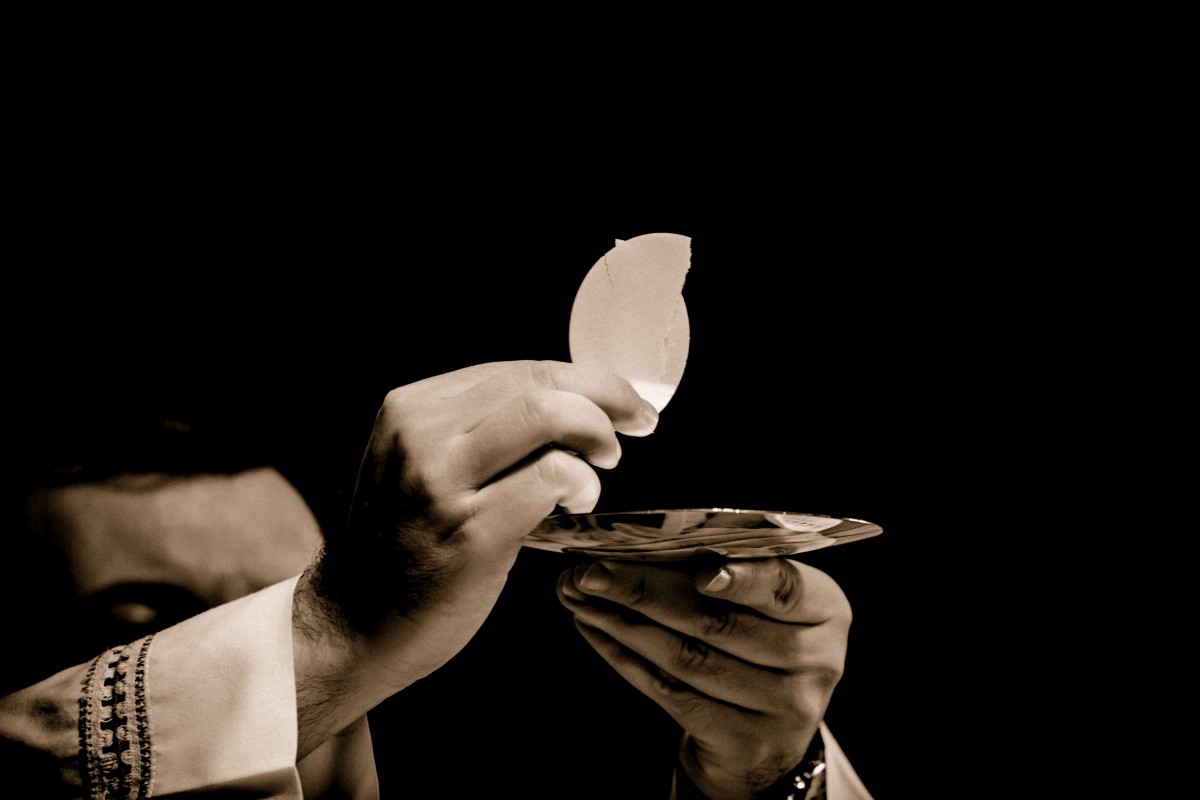
The seven sacraments of the Catholic Church are sensible signs instituted by Christ to gift us his grace. Sometimes the sacraments are powerfully moving experiences but a person can also receive graces and be transformed by them without feeling anything extraordinary. It is possible, for instance, for a baby sleeping in its mother’s arms to be born again through baptism without waking up. It is possible to hold the God of infinite glory upon your tongue in the Eucharist while being totally distracted with a wandering thought. From modern science, lethal amounts of radiation — though invisible — can kill you. From the sacraments, God’s graces can give you life even when you do not feel them. Ministers of the sacraments typically do not feel divine power flowing in or out from them, like Jesus at the healing of the hemorrhaging woman. However, I believe I felt the moment that I was ordained a priest.

Fifteen years ago, I was ordained a priest of Jesus Christ at our cathedral in La Crosse. The Sacrament of Holy Orders, which can ordain a man first a deacon, then a priest, and then a bishop, is celebrated through a bishop’s laying of hands and consecratory prayer. I had not studied the words of the ritual beforehand but I knew going in that my ordination would occur by the end of that consecratory prayer, and I wondered if there would be some moment before the “amen” when I would be ordained.

The prayer’s first ten sentences recount the Old Covenant priesthood, the high priesthood of Jesus Christ, and the priesthood of his apostles. God declares his people to be a priestly people, since all of us are called to offer spiritual sacrifices and help sanctify the world. But from this multitude, God has called certain men to be ministerial priests to serve him and his people.

Then I heard Bishop Listecki say these words: “Grant we pray, Almighty Father, to these, your servants, the dignity of the priesthood; renew deep within them the Spirit of holiness; may they henceforth…” and when he said “henceforth,” I began feeling a pleasant but unsettling wooziness. The words which followed were: “may they henceforth possess this office which comes from you, O God…” I felt the effect of those words.

There is one eternal priest, Jesus Christ, the source of all priesthood. He is the true priest, with all others being merely his ministers Jesus chose apostles to be his first New Covenant priests. These men then appointed and ordained through the laying of hands bishops, priests, and deacons to serve, sanctify, and shepherd the Church—an apostolic line of authority which endures to this day. In Jesus Christ, priest, prophet, and king, these ministers are called to lead worship, teach truth, and pastorally lead. Though history’s greatest and holiest woman who has ever lived was in their midst, Jesus and his apostles never ordained the Virgin Mother Mary nor any other female, and the Church lacks the authority to ordain women today. Men and women are equal in dignity, but a man is not a woman and a mother cannot be a father.

Priests, however faithful or unworthy, act in the person of Christ. Without them, we would not have the Eucharist, or Confirmation, or Anointing of the Sick, or the sacramental forgiveness of sins. Without the successors to St. Peter and the apostles, the pope and the bishops, the Magisterium of the Church whose definitive teachings are protected by the Holy Spirit from error, we could not know our one, holy, catholic, and apostolic Faith with certainty. How lost we would be without shepherds for our flock! Such is the importance of the Sacrament of Holy Orders.

Last week, when I asked different people what I should preach about this sacrament, more than one said to mention the importance of praying for priests. It is important to pray for more vocations to the priesthood, but these folks meant praying for the priests we have, for their holiness, endurance, and fruitfulness. Pray for your bishops, priests, and deacons, both the ones that you like and the ones that you don’t. St. Paul asked that “supplications, prayers, petitions, and thanksgivings” would be offered “for all in authority, that we may lead quiet and tranquil lives in all devotion and dignity.” Pray for your clergy that they may more effectively aid you and many to grow into saints in this world and one day reach heaven.

A man who thinks Jesus may be calling him like he called Simon Peter, James, and John in today’s gospel, should earnestly explore this vocation, since priesthood is likely the greatest mission, duty, and life he could ever pursue. In the words of St. John Vianney, “The priest continues the work of redemption on earth… If we really understood the priest on earth, we would die not of fright but of love… The Priesthood is the love of the heart of Jesus.”

Controversies & A Sign

August 3, 2024

18th Sunday in Ordinary Time
By Fr. Victor Feltes

Some of the people who were present at the feeding of the 5,000 caught up with Jesus and his apostles at Capernaum. Jesus told them, “You are looking for me not because you saw signs but because you ate the loaves and were filled.” If Jesus’ sign had generated proper faith in them they would be seeking him for what he might reveal from God. Instead, they were led by their desire for more free bread. Jesus redirects them to himself: “Do not work for food that perishes but for the food that endures for eternal life, which the Son of Man will give you.” They said, “Sir, give us this bread always.” And Jesus replied, “I am the bread of life; whoever comes to me will never hunger, and whoever believes in me will never thirst.

Though I do not own a TV, I do follow news and entertainment through the internet, yet you may have noticed that I rarely preach on current events. Most of what fills the 24-hour news cycle today is forgotten by next week. And even when its reports are important it’s rare that they impact the lives of you or me very much. With continuous controversy, it’s easy to denounce what’s bad without actually doing any good. It keeps you focused on the affairs of others without growing in prayer or virtue. The spiritual enemies of your soul want you to be endlessly anxious, angry, distracted. The demons want you fixated on passing things instead of holding fast to the good things which ever endure. But today, I would like to highlight a recent event I take as a sign pointing to Christ.

The opening ceremony of the Summer Olympics featured a scandalous likeness of the Last Supper. The Catholic bishops of France called it “outrageous and provocative.… scenes of derision and mockery of Christianity, which we deeply deplore.” This Saturday, the Vatican issued a brief statement criticizing it as well. Why does God hate blasphemy and sacrilege? Because those sins are so harmful to us. Belittling God and holy things, treating our Lord’s name like excrement or a joke, creates obstacles to people knowing and loving God. Christian leaders were right to denounce that display being broadcast on a world stage. However, I would not be mentioning the Olympics’ sorry transgression — which reflects particular errors of our time — if not for a sign which occurred the following night.

Last Saturday, July 27th, shortly before midnight, four administrative districts in the city of Paris experienced a blackout. For up to ten minutes, French cultural landmarks in “the City of Lights,” including the Louvre Museum, the Paris Opera, parts of the Arc de Triomphe, and the Moulin Rouge cabaret, went dark. The French power company told reporters this brief power outage affected nearly 85,000 customers. What was most striking about this event was captured in images which quickly spread across social media. Shining on a hill as the tallest and most visible building in the city, The Basilica of the Sacred Heart remained lit amidst the darkness surrounding it. That beautiful church’s construction began and in 1891 as an act of reparation, as penance for sins of France which had led to national disasters.

That moment last Saturday night was a sign to the world for anyone with eyes to see it: that in the darkness of our times there is one Light for us to turn to. So do not obsess over bread and circuses which perish, and do not lose hope. Focus rather on the Light, the Bread of Life, Jesus Christ, who gives life to the world.

Obey Christ For Abundant Life

January 28, 2024

4th Sunday of Ordinary Time
By Fr. Victor Feltes

The people of Capernaum witnessed the authority and power of Jesus, “He commands even the unclean spirits and they obey him.” The demons are mere creatures, but Jesus Christ is Lord. Will we heed and obey him? According to Catholic exorcists, a good confession is more powerfully effective than an exorcism. This makes sense. It is difficult to root out demonic influence in a person’s life when the person is siding with the demons in rebellions against God through grave sin. But once that person comes to Confession — repentant, seeking to sin no more — they are rejecting those sins and the demons lose some in-roads.

I once received a request from an unmarried, non-Catholic couple to help them with spiritual disturbances occurring in their home. They were hearing strange noises and voices, seeing and finding inanimate objects moving about, and their dogs were behaving strangely. Unless they were lying to me (and I can see no purpose in them lying) the couple sometimes witnessed phenomena together, which rules out the possibility of these being mere hallucinations. I visited and spoke with them, blessed their house, prayed for them, and blessed them.

When I reached out to them some months later, they said they had been thinking about contacting me again. They said that following the house blessing things had gotten better — quieter, for a time — but then the disturbances resumed and maybe worse than before. So I came back and blessed their house and both of them anew, but I admonished them again, just as I had before, that it was gravely important that they cease fornicating. I told them God’s will for them was either to marry, to live separately, or to live chastely like a brother and sister. Behaving otherwise is to lie with one’s body; simulating a permanent gift of self without vowing that same commitment before God and the world.

That man and woman and I did not know whether spiritual disturbances had occurred in that house before they moved in. However, I can see why the Lord might permit these unsettling signs for the couple’s own good: to deepen their faith in spiritual things, to help them recognize their sin, and to motivate them to change. I believe my first blessings had some effect to reveal to these non-Catholics that such blessings hold power and to validate me as a messenger. Yet these blessings did not make the disturbances go away forever since that would do them little good; making the symptoms disappear without curing the underlying disease. The couple was grateful for my visits, but I do not know what they went on to choose.

Jesus manifests his full authority over demons. “He commands…the unclean spirits and they obey him.” So one might ask, “Why doesn’t Jesus simply constrain all of the demons now, making them completely incapable of doing anything?” I suppose some imagine that without any demons there would be no further evil in the world, but temptations and sins would still remain. As St. James writes in his New Testament letter, “each person is tempted when he is lured and enticed by his own desire. Then desire conceives and brings forth sin, and when sin reaches maturity it gives birth to death.” Would our temptations be less if the demons were no more? Quite possibly. So why does Jesus allow them to prowl about the world at all? It must be for our greater good and glory, for “God works all things for the good of those who love him.” Why was Satan allowed to tempt Jesus in the desert if not for Christ’s glory and our greater good? And notice how once Jesus said, “Get away, Satan,” then the devil left him. Jesus Christ offers each of us the grace to do his will, but will we heed and obey him?

Someday, I would like to write a book imagining modern-day America if it suddenly became impossible to commit the vast majority of sins. How would people react to God the Father decreeing that much more of his active will must be done on earth as it is in heaven? My story would describe the initial disruptions for a society in which the markets for immoral things evaporate overnight, and many other goods and jobs (like door locks and security guards) are no longer needed. Then I would tell how much society would benefit from the abolishment of sin. Imagine all of the wealth wasted on sins or on repairing sins’ effects instead being spent more usefully; not to mention the greater peace people would enjoy from never being willfully mistreated anymore. Yet my narrative would also note how much people would complain; for instance, they would insist upon their “rights” to speed or curse or lie, or to misuse their bodies or their money however they desire. They would denounce God for his tyranny, and wail and grind their teeth. For these people, it would be like a hell on earth.

In Deuteronomy, Moses proclaims to the Hebrews, “A prophet like me will the Lord, your God, raise up for you from among your own kin; to him you shall listen.” God declares about that prophet, “[I] will put my words into his mouth… Whoever will not listen to my words which he speaks in my name, I myself will make him answer for it.” Jesus is that promised prophet raised up from his own people, the Incarnate Word of God. “People were astonished at his teaching, for he taught them as one having authority and not as the scribes.

Jesus does not instruct us in order to control us. He does not command us so that he may dominate us. Jesus declares, “A thief comes only to steal and slaughter and destroy; I came so that [you] might have life and have it more abundantly.” In this age, we are free to disobey God like the demons did. But in the age to come, such sins will no longer be permitted. If we die as friends of God, before we can enter heaven our love for sins will need to first be fully purged. God shall not force his enemies into heaven against their will.

Brothers and sisters, Christ is Lord. He is here to help us, not to destroy us. So choose love over sin, end your rebellions, and encounter him in the confessional. Heed his authority, obey his teachings, and embrace the more abundant life Jesus is offering you.

A Protest Against Paradise

The Power of Anointing

October 14, 2023

By Joan Herrmann

Fr. Victor Feltes with his aunt and godmother, Joan Herrmann, at his priestly ordination party in 2009.

When I was due to have my first lithotripsy (a non-invasive procedure using shock waves to break down my rather ginormous kidney stones) – they discovered that I had a pericardial effusion, that is, fluid around my heart.

Over several months, I had to see a cardiologist, and they monitored the effusion to see if it would go away on its own. It did not. So, I was scheduled for a pericardiocentesis, in which they use a needle to drain the fluid.

A visiting specialist in this arena was called in to do the procedure. I was in an operating room with a team of six hovering about and prepping me, and the doctor started checking out the area with an ultrasound. He asked the attendants for a history of the images of the effusion around my heart – the last one was from a week earlier, showing a large fluid buildup.

He looked at me and said, “Joan, this is your lucky day, I am sending you home – there is no fluid surrounding your heart.” Honestly, he seemed a bit annoyed and disappointed that his skills were not necessary that morning! I had to “recover” for a bit as they had already administered some meds to make me woozy… all the time wondering at this miraculous turn of events and so very relieved that I did not have a heart issue!

The most intriguing part of my story: I had attended the funeral of my Aunt Irene (my dad’s sister) just three days earlier. My godson, Father Victor, said the funeral Mass. Afterwards he asked me how I was doing, and I mentioned the procedure that was coming up. He asked for details, and then asked if he could pray over me.

It was just he and I in the church vestibule, the rest of the family and attendees had left for the funeral luncheon. He asked the church attendant who was still there for some blessed oil – and then he prayed, laid his hands on me, and anointed me. I seriously felt at peace afterward, knowing that the procedure and potential heart issue was in God’s hands. Then and there, I just let go of the anxiety. Based on the doctor’s perplexity, I know that I was a recipient of a miracle that day.

I celebrate and acknowledge September 26th, 2016 every year, when God’s providence and grace made itself known to me in a very personal and tangible way. That it was my nephew and godson who prayed over me and was the conduit to God’s saving grace and mercy – all the more profound!

Miracles Opened his Mind

October 14, 2023

By Fr. Victor Feltes

I love Catholic conversion stories because they always have happy endings. Toby, a friendly acquaintance of mine, recently shared with me this great story of how he became Catholic. He is a 42-year-old, married father of three in Colorado who entered the Church at the Easter Vigil of 2006:

“I was fairly young when my parents stopped taking me to the Dutch Reformed church (my uncle is a pastor in one). So I had mostly no religion, but a little. In high school, I suffered terrible migraines that would make me vomit. One day, in the middle of upchucking, I prayed to ‘the God of Abraham, Isaac, and Jacob’ to make it stop and if he did I would worship him. I have not had a migraine since—not even a little one. But a lot of people claim this God as theirs, so I had to figure out how to worship him.

So, every Sunday through high school, I went by myself to the closest church, a Calvary Chapel. In college, I tried other churches to see what seemed right, but nothing did. I ruled out Islam (since they do not claim all three patriarchs) and Catholicism because of my Protestant biases. So I looked at Judaism. I did a lot of research about the existence of Jesus and was convinced to try Messianic Judaism because I was convinced he was the Messiah. However, that also seemed empty. So I gave up. I lived a hedonistic life deciding that, though I believe, I would never know how this God really wanted to be worshiped.

Now midway through graduate school, I bought saint candles simply for décor (and because they are so cheap). One day, returning from vacation, I put a stone turtle souvenir I had just bought on my desk next to it, and took a shower. Coming back the turtle was in pieces on my desk. I looked up the saint, and the first webpage I found said Saint Jude was known for was casting demons out of statues and causing them to crumble. So I lifted my bias against Catholicism and attended RCIA (classes for joining the Catholic Church) and it fit. Things made sense in a way they didn’t elsewhere.

So, it took years and multiple miracles, but here I am. The Lord had to drag me to our Faith in a way that I could investigate the claims with an open mind, and not with the biases I had built up. It required a lot of changed views, but my journey left me docile. Two miracles and learning my own discernment was terrible can do that!”

Glimpses of our Future Glory

August 17, 2023

Solemnity of the Assumption
By Fr. Victor Feltes

The Church of Jesus Christ celebrates our Blessed Mother Mary. For instance, we mark her conception, her birth, and today the beginning of her life in glory. It is fitting the Church does this since her Lord commands us: “Honor your Father and mother.” And when the people we love have birthdays or anniversaries, we love to celebrate with them. Today we celebrate how the Virgin Mother of God was assumed body and soul into heaven.

She is the icon of the Church, the beginning and image of the Church’s coming to perfection. We are happy for Mary, but what we see in her is good news for us too. She is a sign of sure hope and comfort for our future, for what awaits for us in our resurrection to glory. To unpack what I mean, consider what the Blessed Virgin Mary has been up to in the centuries since her Assumption.

Enthroned beside her Son in a place of close intimacy and high honor, she is an intercessor for us, her spiritual children. How many children does Mary have? The Book of Revelation says “her offspring [are] those who keep God’s commandments and bear witness to Jesus.” Therefore, she has many, many millions of children. And how many “Hail Marys” and other prayers are sent her way every minute? Yet we believe that she hears us without becoming overwhelmed and that she knows each of us personally, as a mother knows her children. We also have reason to think that Mary has not merely remained in heaven for nearly 2,000 years, but has been active here below.

Though we are not obliged to hold belief any particular Marian apparition (since none of these later events belong to the ancient Deposit of the Faith) the Church has judged many proclaimed appearances of Mary to be credible, or “worthy of belief.” These apparitions offer us clues about Mary’s life now and what life will be like for us in resurrected glory.

In her Church-approved apparitions, the Blessed Virgin Mary comes in varying appearances. For example, in her appearances to St. Juan Diego in 1531, Our Lady of Guadalupe in Mexico had darker skin and black hair and wore traditional clothing indicating she was with child. In her appearances to the Belgian immigrant Adele Brise in 1859 near Green Bay, Wisconsin, Our Lady of Good Help had white skin and blonde hair in different apparel.

In Mary’s Church-approved apparitions she also speaks in varied languages. For instance, to St. Bernadette Soubirous at Lourdes, or the three shepherd children at Fatima, she did not speak ancient Aramaic, Hebrew, Greek, or Latin. She spoke to them in their local dialects. Mary resembles her seers and speaks their mother tongues because she is the mother of each of them.

Mary’s apparitions suggest a saint in his or her glorified body will have the power to change its age or appearance. Mary remains a woman, but race presents no barrier and different languages are no hindrance to communication. And if our glorified consciousness will become like hers, it will be no strain to know and be close friends with more than a billion people at once. Won’t that be wonderful?

Another detail that seers of Mary’s apparitions agree on is that she is now exceedingly beautiful. During the years of her life on earth, Mary may have looked quite ordinary. We do not imagine that Jesus Christ had to be the tallest, most muscular, or handsomest man who ever lived, so Mary need not have been the most beautiful woman alive either. In this fallen world, the holy can look ugly while the wicked can look very attractive. But now there appears to be no mismatch between Mary’s inner and outer beauty. This interior beauty is called holiness.

After our resurrection, the abundance (or lack) of holiness we have cultivated with God within us will be seen in our endless beauty (or ugliness) forever. The glory we are called to in Christ is like Mary’s and that gives us reason to rejoice with her today all the more.

Proclaim What Christ Has Done For You

May 13, 2023

6th Sunday of Easter
By Fr. Victor Feltes

In today’s first reading from the Acts of the Apostles, we heard how Philip went to Samaria and proclaimed Christ to them. “With one accord, the crowds paid attention to what was said by Philip when they heard it and saw the signs he was doing.” Who was doing these signs? The natural sense of this scripture passage refers to Philip, whom the crowds saw and heard and believed. But in a supernatural sense it was the Christ being proclaimed to them who was performing these signs through and with Philip. In our gospel, Jesus tells us, “I am in my Father and you are in me and I in you.” Jesus would have others behold and hear of his great works in you and me.

The psalmist in today’s psalm says, “Hear now… while I declare what he (the Lord) has done for me. Blessed be God who refused me not my prayer or his kindness!” It is good to declare and share what God has done for you. St. Peter teaches all Christians in today’s second reading to “always be ready to give an explanation to anyone who asks you for a reason for your hope.” What are your life’s best God stories? What is the Lord doing with and for you recently? I have two personal examples to share, one old and one current.

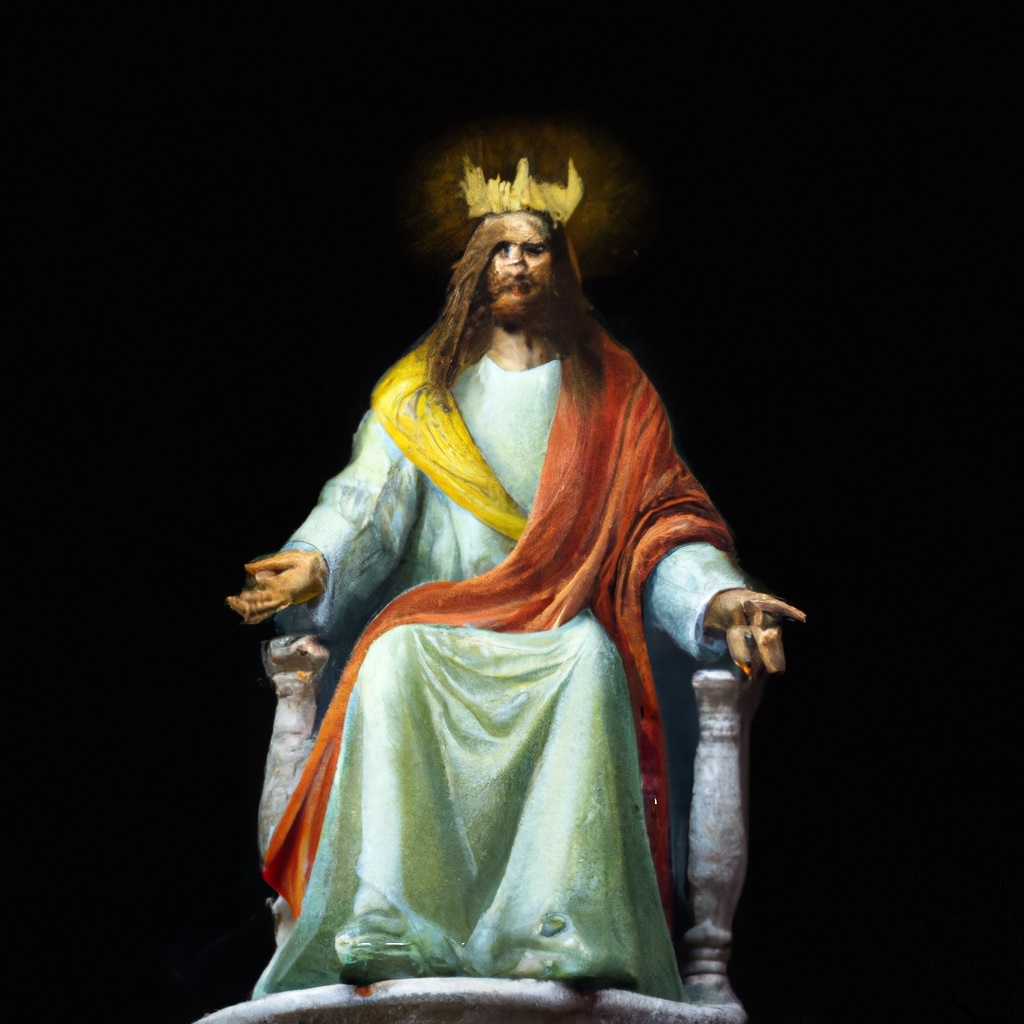
When I was about thirteen years old, I remember being in the living room of my house thinking about life and death, when nature called. While heading to the bathroom on the other side of the house, I got stopped in my tracks at the architectural crossroads of our home. It would be a crossroads moment of my life. In my imagination, I stood before Jesus’ judgement seat. He sat upon a white throne atop a white stone cube and the background behind him was all blackness. Jesus did not look at me angrily, but he seemed frustrated and disappointed. And he asked me, “Why didn’t you live your life like I wanted you to live it?

I did not know whether these ideas were coming from God or my own imagination, but either way I knew that I would not be a man of integrity if I just kicked this question down the road for the rest of my life. While still needing to use the bathroom, I felt a sense of urgency to face this valid question. I stood there thinking, ‘How would I answer this question in my own defense?’ I replied, ‘Well Lord, I wasn’t even sure that you were really, really real. How could you expect me to dedicate my life to you while being so uncertain? I wouldn’t stand out on an extending cliff-ledge if I wasn’t sure that it could hold up my weight. And what if I were commit my entire life to you and die and you’re not real — what would I have?

Once I had presented my best case, Jesus immediately replied, “Did you ever really try to find out (if I was real)? Did you even read my book?” That last line made me laugh a bit even as it convicted me. I realized that if I were really looking for the truth I would be searching for answers more seriously than I was. After that I started reading the Bible and praying every night and began earnestly learning more about our Catholic Faith.

When I eventually read the Book of Revelation at the end of the Bible, I found there a description of the Last Judgment. St. John wrote: “I saw a large white throne and the one who was sitting on it. The earth and the sky fled from his presence and there was no place for them. I saw the dead, the great and the lowly, standing before the throne, and scrolls were opened. Then another scroll was opened, the Book of Life. The dead were judged according to their deeds, by what was written in the scrolls.” A large white throne shrouded in darkness while the dead stand before him to be judged according to their deeds matches what I saw in my vision – a vision that has led to me standing here to tell you this story today.

And our Lord is still actively doing things among us today. Currently, according to our latest figures, St. Paul’s has well-surpassed $500,000 in pledges for our capital campaign, and things throughout this renovation effort have been going so providentially that I have a peaceful confidence that the Lord is helping us succeed.

What great things has the Lord done in your life? How has he been working with you recently? He is in you and you are in him. Know your stories and have the minimal courage to share with others what the Lord has done for you. Praying for the conversion of souls is important, but bearing witness to them is important too. Sharing your stories, sharing the reasons for your Christian hope, will be more effective than nagging or silence. Do not hide what God has done for you under bushel baskets. Instead, share your highlights with others.

Our Great Prayer

October 9, 2022

28th Sunday in Ordinary Time
Deacon Dick Kostner

Want to get to heaven? Jesus says obey the Commandments, the two greatest being love God with all your heart, soul and mind and the second, love your neighbor as yourself. Before Jesus returned to the Father he gave his followers a third commandment: “Love as I have loved you!” Love requires intimacy. It requires knowing someone’s very make up and for us humans, their faults and deficiencies and yes acceptance of those deficiencies because of their God given right of free will. It is not an easy task when you realize that people we love are going down the wrong road which will lead them to problems and maybe even death. True love requires we accept their right of choice even if its wrong our only real weapon against a bad choice being made by someone we love, is “Prayer.”

Prayer allows us to be intimate with both God and intimacy with others who we are praying for. I believe it was St. Paul who said we need to be in constant prayer to God 24/7. It shows God that we are obeying His two great commandments and Jesus’ third commandment, “Love as I have loved you.” So our next challenge is to learn how to pray every awaking hour of every day to God for our challenges and for help and guidance for those we love. What are the words of prayer? In today’s Gospel Jesus gives us a supernatural and a kind of magical word of prayer. It is easy to remember and it can transform and heal. This word of Prayer will always be heard by God and responded to by God and the Body of Christ. It is simple but bares the power of God, the word is “THANKS.”

You folks may not know this but your deacon is not very mechanically gifted. When I attempt to fix something it many times is not successful and can also result in a repair job at the doctor’s office and maybe even a new tattoo not made with ink but rather stitch’s. I can remember working at one of my rentals one morning and while trying to drive a stake into the hard ground with a hammer I missed the stake I was driving and smashed the web between my thumb and finger. Blood was all over but I was lucky to be across the street from Dr. Rosenbrook’s house and I ran to him who proceeded to take me into his kitchen and clean and stitch my wound. With age comes wisdom and now before attempting to do even a simple task I pray for safety and upon completing the task always say the prayer of thanks to God for a safe completion of that task. That pretty much covers hourly prayers for my weekend “Honey-do” projects.

Our Gospel today has Jesus instructing his readers that a “thank you” is the greatest gift we can give to God for help he provides for his faith followers. Many times we get so caught up in having been answered by God with his gifts that we forget to give thanks, for his help and miracles. Its a quick prayer but a very important prayer. When we forget to give thanks during the week God gives us another chance to say “Thanks” on Sunday by celebrating the Eucharist with the Body of Christ. “Eucharist” (in Greek) means “giving thanks.” It’s a time for us to gather as the family of God and reflect upon the grace gifts we have received the previous week. The little miracles society calls coincidences. Little things that show up out of no where, and which are many times opposed to the laws of nature that make us realize the supernatural presence of God within our lives, within our very being and existence.

Let me share with you my last encounter with the power and presence of God and the supernatural. I recently did a funeral service for a gentleman who had just died who had lived his life with a mental illness and who had been dependent on his family and friends his whole life. His name is Robbie. I did not personally know Robbie and learned about his life when his Aunt said a few words before we ended the Service. She told about a man who loved his family very much as well as the people who cared for him at the facility he lived in. She talked about how one of the caretakers would take him to Mass every Sunday and how thankful he was to have so many people who cared for him. She told the story about how Robbie and his siblings had taken him to an outdoor concert one summer day and how it began to rain at its conclusion and how they held hands running and following one of his brothers who had a flashlight trying to find their car and how they all laughed and so enjoyed the event, even though they were soaking wet when they finally found their car. After her comments I told the family and friends of Robbie that I now knew who to blame for the thunderstorm we were experiencing at the time Robbie’s funeral service. They laughed and thought I was just cracking a joke but I had a feeling that I had just done another funeral service for a saint I did not even know until that day.

As Matt (the funeral director) and I drove to the cemetery in Cornell with the crowd of family and friends of Robbie following us, Matt commented how wet it was going to be to do the committal service and I made the comment, “That will be up to Robbie!” He gave me a funny look and said he had a bunch of umbrellas in his car. When we arrived at the cemetery it was still raining and Matt told me to sit in the car until the casket was placed. I wondered if I had drawn the wrong conclusion as I held my book close to me as I went to the crowd to begin the service. I opened my book to begin and three drops of rain fell on it and then the rain stopped completely. I grinned and said to myself, “thanks Rob.” After the prayers I told the crowd that I believe Robbie was telling them that he was alright and thanked them for their attendance. I don’t think they realized that they had just experienced the spiritual presence of their brother as one of God’s chosen. (And I did say “Thank you Lord” for this experience!)

Invited Home ― Funeral Homily for Kathleen Zwiefelhofer, 82

August 12, 2022

By Fr. Victor Feltes

In my priesthood, I have visited many dying people and heard many stories told by family members about them. In this, I have found patterns among Christians dying. For instance, as I have spoken about before, the dying person may or may not know they are in their final week of life, yet he or she is often blessed to have “a last good day.” A happy day shared with loved ones or enjoying a dearly-loved activity is gifted to them by God, from whom all good things come.

Another providential pattern I often see when visiting the dying is how people come to for the Anointing of the Sick. Though wavering in consciousness when I call their names and they open their eyes and they realize a priest has come to share God’s grace. When I came Kathleen’s side in the emergency room to give her the sacrament for those in danger of death, I called her name and she opened her eyes, and knowingly received this consolation from God. Kathleen’s journey from this life features two more elements dying Christians commonly experience. The first was her desire “to go home.”

As we grow old, our bodies are beset with infirmities. This reminds us that all of us must “appear before the judgment seat of Christ, so that each may receive recompense, according to what [we] did in the body, whether good or evil.” Our physical frailty helps to detach us from this world so that we are open to something greater. Our weakness leads us pray like the psalm: “Put an end to my affliction and my suffering; and take all my sins away. … To you, O Lord, I lift my soul.”

Throughout this year, burdened in her mind and body, Kathleen has expressed a desire “to go home.” She said this while still living at home, in the house she grew up in, next-door to St. Paul’s Church. So what “home” did she mean? Kathleen, in faith, was expressing her longing for heaven. St. Paul writes, “We know that if our earthly dwelling, a tent, should be destroyed, we have a building from God, a dwelling not made with hands, eternal in heaven. [And so] we are courageous, and we would rather leave the body and go home to the Lord.

The second detail from Kathleen’s story which I have encountered before in others is visions of visitors. Kathleen’s parents, George and Catherine, and her husband, Leon, each died many years ago. Yet Kathleen reported being in dialogue with them. She said they discussed with her whether or not it was “time for her to go.” We are surrounded by a great cloud of witnesses, by saints and angels who desire us to dwell with them in God’s holy city, the new and heavenly Jerusalem. They pray for us and help us. On the morning before Kathleen was taken to the hospital, she had another vision. She extended her palm before her saying, “He’s right here. He’s right here,” though she did not clarify whom.

Jesus says, “I am the resurrection and the life; whoever believes in me, even if he dies, will live, and everyone who lives and believes in me will never die.” “Behold, I make all things new,” Jesus declares, “I am the Alpha and the Omega, the beginning and the end.” Jesus is the reason we are here. He is why Kathleen did not fear to die. And he is the cause we have for hope in unending life and a greater home. Let us pray for Kathleen’s soul, entrusting her to our loving Lord.

A Heaven-Sent Hug

July 10, 2022

15th Sunday in Ordinary Time
By Fr. Victor Feltes

Last month, a parishioner told me she looked forward to the great stories I would bring back from vacation. Today, I would like to tell you the best story from my time away. It’s actually a story of Tori, the wife of a former college roommate I visited. It is a God story which all involved are happy to share with others, and this story is entirely true.

Tori worked ten years at a Christian school in Oregon with a much-beloved Bible teacher named Dave. He was like a father figure for her. Tori did not really know his wife, Marcy, but he often spoke of her in glowing terms. When Tori had left her teaching job and moved away, Dave was diagnosed with an aggressive form of cancer shortly after his retirement. Dave and Marcy helped keep their friends and family in the loop through their joint Facebook account until he passed in 2017.

Amanda Robin Sandberg

Fast-forward to May of 2022. Tori and her family have lived in Northern Idaho for a little more than a year. And it so happens that Marcy, the now remarried widow, has also moved to Idaho and lives less than two miles away from Tori, though they still remain merely acquaintances. One Monday, Tori is scrolling Facebook and sees one of Marcy’s posts: it’s the picture (right) of a smiling 42-year-old woman paired with the caption “My beautiful daughter.” This seems like a rather benign item, but Tori’s thoughts keep returning back to it, over and over. So Tori revisits the post the next day and reads its many replies. From this she learns that Marcy’s daughter Amanda has died, recently and suddenly, in an unmentioned way.

Being a mother herself, Tori’s heart breaks; she weeps, moved with compassion. Seeing far away Facebook friends writing to Marcy saying “I wish we could be there for you,” Tori prays, “I’m right here, I’m close. God, what can I do?” And the idea she receives is, “Go! Go to her house!” Tori thinks, “I don’t know her very well. I should bring her cookies or flowers.” But this was answered with, “No, don’t bring anything. … Bring her a hug. That’s what you’re allowed to bring her and nothing else.”

Now Tori is very kind, but naturally an introvert. This plan to just drop-in on a mourning acquaintance was not her preference. She asked, “Is this really what you want me to do?” And the compelling idea continued urging her like a mantra: “Show up, bring her a hug. Show up, bring her a hug.” Like she had experienced in previous inspired episodes, this thought’s persistence despite Tori’s personal fears and doubts were a sign to her that it was coming from the Lord. Tori reports, “I felt stronger and stronger: ‘This hug is from her daughter. This is what she wants to give her.’

Late Tuesday afternoon, her stomach sick with anxiety, Tori went to Marcy’s home and rang the bell. Marcy soon opened the door with a surprised but friendly expression. Tori said, “I believe I saw something on Facebook.” Marcy’s face fell and she nodded. Extending her arms, Tori said, “I’m here to give you…” and Marcy interrupted, “A Hug!” Tori is ordinarily a light hugger but she gave Marcy strong embraces. Marcy joyfully said to her husband, “She hugs just like Amanda!” The two women smiled, cried, and hugged again and again.

Amanda had died just four days before in a car accident. She was the same age as Tori. Marcy had Christian faith her daughter was in heaven but was asking God for a sign that Amanda was alright. Just hours before Tori’s visit, Marcy had told her husband one of the things she was going to miss most were Amanda’s hugs. Marcy told Tori that Amanda had once hugged her mom so tightly that she broke some of her mother’s ribs. “I never told her,” Marcy said, “but I guess she knows now!” What beautiful things would the Lord do through us if we were more open to his promptings?

This morning, Jesus shares with us one of his greatest Gospel stories. In this famous parable, after evil befalls a traveler on the road at least three people happen by. When the priest, Levite, and Samaritan began their days’ journeys none of their plans had foreseen a detour to help a stranger in need. The priest and the Levite both saw the robbers’ victim but they were too busy or too afraid to help, or they simply assumed God didn’t want them to get involved. The Samaritan, however, was open to the will of the Lord that day in a way the other two were not. The Samaritan was moved with compassion and approached the man; cared for him, lifted him up, provided help for him, and left him better than he found him. Of the three, Jesus presents the Good Samaritan as an example for us to follow, telling us to “go and do likewise.”

You can do likewise by being open and asking, by asking the Lord and being open to his promptings. First, choose to increase your openness to loving “the Lord, your God, with all your heart, with all your being, with all your strength, and with all your mind, and your neighbor as yourself.” Then ask the Lord in prayer to use you as his voice, hands, and feet; as his conduit, his vessel, his powerful instrument in your daily life. (“God, please show me your will.”) Finally, as you go throughout your day, be open to his invitations.

What are the Lord’s promptings like? When some innocuous thing seems highlighted in Tori’s attention or when someone comes to her mind during prayer, in a dream, or in the course of her day, she pauses to ask Jesus about it. Maybe she is supposed to reach out to someone with inspired words or some good deed. Tori notices the Lord’s ideas hit her differently than her own, they stick with her rather than fade away, returning to her in quiet moments. And if she were ever to hear an evil suggestion, she would then know it’s not from him. Provided Tori does not give in to busyness or distraction, when she is welcoming heaven’s invitations, “Every time I’m open to God doing something,” she says, “he does stuff.”

This spiritual openness, asking and listening and doing, is a skill to practice. Like when cultivating a new garden or starting to lift weights, it is better to begin small and to grow over time than to never start at all. Be prepared to take some risks for Jesus. It is better to make small mistakes than to miss amazing opportunities. Christ died for us. We must be concerned about more than merely our own comfort and plans. Like the Good Samaritan, be interested in helping to save and bless others. Be open and ask God to use you, ask our loving Lord and be open to his great ideas.

The Power of the Sacraments, the Importance of the Priesthood

June 27, 2022

13th Sunday in Ordinary Time
By Fr. Victor Feltes

It is possible to receive the sacraments and greatly benefit from their graces without feeling very much. Some babies, for example, sleep entirely throughout their baptisms. The power of the sacraments do not depend upon our emotions. Yet sometimes God gives us the grace of sensible consolations from them. Consider, for instance, the St. Paul’s second grader who, when asked by her mother how she felt after her 1st Confession, joyfully answered, “My soul feels so light!

When I was in high school, as we drove to a restaurant following my Confirmation, I wondered at why I felt so very joyful. Then I remembered, “Oh yeah, the Holy Spirit.” In college, sometimes when I attended weekday Masses I felt very little but sometimes I experienced great consolations. Eventually, I realized that my most consoling Masses typically preceded hard times to come. After that, I would be at Mass and think to myself, “Wow, this feels wonderful. Oh no… Well Lord, thanks for heads up.”

Thirteen years ago this week, I was ordained a priest of Jesus Christ at our cathedral in La Crosse. I knew going in that my ordination would come through the bishop’s laying of hands and his consecratory prayer immediately thereafter. I realized I would be a priest by the time my bishop said “amen” at the end of the prayer, but I wondered if there were some precise moment before that when I would be ordained. I had not studied the words of the ceremony beforehand, so after the laying of hands I listened to the words of the bishop’s prayer closely.

For ten sentences, through more than twenty-two dozen words, the prayer recounts what God has done in the past: the Old Covenant priesthood, the high priesthood of Jesus Christ, and the priesthood of his apostles. Then comes these words:

Grant we pray, Almighty Father, to these, your servants, the dignity of the priesthood; renew deep within them the Spirit of holiness; may they henceforth…

At the moment I heard that word, “henceforth,” I felt a pleasant but unsettling wooziness. And the words which followed were these: “may they henceforth possess this office which comes from you, O God…” There was power in those words.

I answered God’s call to become a priest, forgoing the goods of natural marriage and children, because I believe the sacraments and teachings of Jesus Christ’s Catholic Church are that important for souls. The seven sacraments are not empty words and gestures, but important and effective instruments of God’s saving power.

My own ordination came to mind as I contemplated Fr. Matthew Bowe’s priestly ordination last Saturday. I’m reminded of my own ordination day whenever I attend an ordination. I imagine the same thing happens for those of you who are married when you attend a wedding; you’re reminded of your own wedding day and the vows that you made. Now a wonderful thing about entering into priesthood or marriage is that you now know your calling, your vocation, the state of life in which Jesus wants you to follow him. There is then no purpose to looking back, lamenting what was left behind, or looking to alternate life paths on left or right, but to simply plow ahead.

Jesus called Matthew Bowe, Fr. Matthew followed after him, and this brings all of us great joy. People tell me Matthew was so quiet and shy as a child. But if Jesus is calling you, he grows and strengthens you, so there’s no reason to be intimidated. Many feel unworthy to be a priest or a religious brother or sister. Of course! Everyone is unworthy, but Jesus still calls us like he did the apostles; asking us to follow him before long we’re perfect. The priesthood saves souls and God’s vocation for your life (whatever that is) is always the best, so if Jesus is calling you to be his priest, follow him. And if you see someone else who seems to have a calling to priesthood or religious life, do your part to encourage them to follow Jesus Christ.

Ephphatha! Be Opened!

September 5, 2021

23rd Sunday in Ordinary Time

What message does the Holy Spirit want you to hear through this homily? In what way does Jesus want you to be opened?

In today’s gospel, people bring to Jesus a deaf man with a speech impediment. They had heard Jesus’ teachings and reports of his miracles. Maybe they had seen and experienced his healing power themselves, so they bring this man to Jesus and beg the Lord to lay his hand and heal him. See how they lead someone they care about to meet Jesus and intercede before the Lord on his behalf. You and I are called to bring people to Jesus, too, and pray to God for their salvation. This gospel story shows that miracles can happen when we do.

Jesus takes this deaf man off by himself, away from the crowd. Like St. Zachariah, the father of St. John the Baptist, whose neighbors and relatives had resorted to making gestures to ask him the name of his newborn son, the deaf man’s speech problem is related (at least in part) to his inability to hear. Jesus wills to restore both the man’s hearing and speech, and see how our Lord does it: he puts his finger into the man’s ears and, spitting, touches the man’s tongue. Notice that Jesus does not heal this man through a word alone but through a physical encounter with himself. Likewise, Jesus encounters us today not only through his Scriptures and his Spirit, but through his Body and his Sacraments. The visible Church of Christ on earth and this material world have key parts to play in our salvation. And notice that this deaf man is delivered not merely through action alone, but also through prayer.

Jesus looks up to his Father God in heaven and groans, and says to the man, “Be opened!” (which is, “Ephphatha” in the Aramaic tongue). Behold the intensity of Jesus’ desire for this man’s good, the yearning in our Lord’s prayer. St. Paul writes in his Letter to the Romans that the Holy Spirit intercedes within us to help us intensely will what God wills, aiding our prayer with what Paul calls “inexpressible groanings.” St. Augustine preaches that the task of prayer “is generally accomplished more through sighs than words, more through weeping than speech.” So remember that you do not need many eloquent words in order to powerfully pray. A heartfelt groan can obtain a miracle.

Jesus says to the man, “Be opened!” and immediately the man’s ears are opened, the man’s mouth opens too, and he begins speaking plainly. The Holy Spirit inspired this story’s inclusion within St. Mark’s Gospel, and Christ’s Church recalls this episode in her Masses all around the world today. This is because Jesus’ healing of that deaf man has relevance for us all. This is reflected at sacrament of baptism. There is a custom of the priest or deacon touching the baby’s ears and lips with his thumb and praying: “May the Lord Jesus, who made the deaf to hear and the mute to speak, grant that you may soon receive his word with your ears and profess the faith with your lips, to the glory of God the Father. Amen.” This tradition is called the Ephphatha Rite. The story of Jesus curing that deaf man is meant to make us consider: how is the Lord wishing me, commanding me, to be opened?

Today’s first reading from the Prophet Isaiah proclaims that our God comes to save us, to clear the ears of the deaf and cause the tongues of the mute to sing. But this reading begins by saying “to those whose hearts are frightened: Be strong, fear not!” Do not be afraid of what our Lord wishes for you. Be strong and fulfill his command. Ephphatha! Be opened! But in what way does Jesus want you to be opened? Would he open your ears to somehow listen, or open your mouth to somehow speak, or open your heart to feel somehow, or open your mind to somehow think anew? The Holy Spirit can tell you.

Perhaps, like St. James talks about in today’s second reading, you are called to be more open to respecting and caring for the poor. Or perhaps there’s a person in your life whom you’ve been overlooking, neglecting someone you are called to be more open to. Maybe Jesus would take you off by yourself, away from the crowd, to be open to more daily prayer, or calling to follow him more closely in your vocation.

After curing the deaf man, Jesus ordered that the miracle be kept secret (for the time was not ripe for it to be shared). Yet the more he commanded this, the more they proclaimed it. Now we are commanded to share the Good News with others, and yet we are often silent. Perhaps Jesus wants you to be open to speaking with other people about your Faith. Maybe invite a non-Catholic person you’re close to to attend RCIA, which begins at St. Paul’s on September 16th.

I do not know in what particular way God desires you to be opened. But I believe that Jesus Christ, who “has done all things well,” who succeeded in making even the ears of a deaf man hear him, can surely tell you his will through the Spirit.

Lovingly Received — Funeral Homily for Allen Pietz, 62

June 22, 2021

Allen is a dear acquaintance of mine. Unlike many of the persons I offer funerals for, I know him really well. But today I’m going to begin by telling you about another warm acquaintance of mine and the story he once told me. I went to seminary with a fellow who is now a diocesan priest in South Carolina named Fr. Andrew Trapp. Fr. Andrew looks a lot like the actor Tobey Maguire (who starred in the Spider-Man movie franchise) and Andrew also has a Peter-Parker-like friendly goodness. Fr. Andrew got a little famous back around 2010 when he beat the champion poker player Daniel Negreanu on a TV game show. He won $100,000 and donated his whole prize (after taxes) to his parish’s renovation project. Before he was ordained, Andrew spent a summer in Paris, France improving his French and helping out at a Catholic church.

There he met a former satanic worshipper who had repented, reconciled to God, and became a member of that parish. Andrew knew that Satanists were known to steal the Holy Eucharist, the Body of Christ, for use and abuse in their rituals. (I’ve heard elsewhere that Satanists are interested in stealing only the Catholic Church’s Communion Hosts to perform Black Masses and other sacrileges.) Andrew asked the man whether it was true that Satanists test their followers using these stolen Hosts, placing a Consecrated Host in a line-up of identical, unconsecrated wafers to see if the person could identify which one it is. The man responded that he had undergone this test and successfully passed it. Andrew asked him, “How did you know which host was the Lord?” And the man replied, “It was the one that I felt hatred towards.”

No brief funeral homily can tell the whole story of a person’s life, but sometimes a particular aspect of a Christian’s life can proclaim the most important things. Allen did not grow up Catholic. He started attending Mass at St. Paul’s in the front row with Sylvia. And it was here that he fell in love with the Holy Eucharist. Sylvia remembers Allen pointing to the altar and saying, “I want that Bread.” This desire was the main reason Allen became Catholic, got Confirmed, and received his First Holy Communion here in 2020, exactly a year and one week before his death. Allen was always eager to receive the Holy Eucharist on Sundays. And whenever he couldn’t come, he missed it profoundly. Sometimes he could barely walk and he still came to Mass. What fueled this intense longing and devotion in Allen? It was the love he felt for Jesus in the Eucharist.

It was Jesus, who said, “I am the living bread that came down from heaven; whoever eats this bread will live forever; and the bread that I will give is my Flesh for the life of the world.” When those in the crowd murmured at this, objecting, “How can this man give us his flesh to eat?” Jesus answered, “Amen, amen, I say to you… [M]y Flesh is true food, and my Blood is true drink. Whoever eats my Flesh and drinks my Blood remains in me and I in him.” Jesus says, “Whoever eats my Flesh and drinks my Blood has eternal life, and I will raise him on the last day.”

In truth, Allen’s great love for Jesus in the Eucharist was only a weak reflection of Jesus’ love for Allen. And what will separate friends of Jesus Christ from the love of Christ? Neither death nor life, neither present things nor future things, neither height nor depth, neither angels nor powers, nor any other created thing will be able to separate them from the love of God in Christ Jesus our Lord. It is right that we pray today for the perfection and glory of our friend Allen’s soul, but we do so with great peace and confidence that Allen, who was so eager to receive our Lord in the Eucharist, will himself be eagerly received by our loving Lord.

Allen Pietz after his 1st Communion

Allen Pietz on the day of his First Communion, June 7, 2020

A Treasured & Entrusted Child — Funeral Homily for Adelaide Marie Borofka

April 26, 2021

The dominant culture in the days of Jesus’ public ministry oftentimes did not treasure children. A firstborn baby boy might have value to a Roman father, but a baby who was a girl, or malformed or disabled, or simply unwanted might be killed or abandoned in the woods, exposed to die. The early Christians, however, rejected infanticide and adopted foundlings, raising them as their own. This is reflected by a first century Christian text called The Didache (also known as “The Lord’s Teaching Through the Twelve Apostles to the Nations”) which commands: “You shall not procure an abortion, nor destroy a newborn child…” From where did the Christians get this countercultural concern for all children, born and unborn? From our Lord Jesus Christ, of course.

Adelaide Borofka feetThough children are small and weak, Jesus says, “See that you do not despise one of these little ones, for I say to you that their angels in heaven always look upon the face of my heavenly Father.” They have no wealth or worldly power, but Jesus says, “Unless you turn and become like children, you will not enter the kingdom of heaven.” Jesus, calling a child over and putting his arms around it, says, “Whoever humbles himself like this child is the greatest in the kingdom of heaven.” Jesus says that children are to be treasured and loved like himself: “Whoever receives one child such as this in my name receives me.” Jesus says, “Let the children come to me, and do not prevent them; for the kingdom of heaven belongs to such as these.” In just the same way as a good shepherd hates to lose even one of his many sheep, Jesus says, “it is not the will of your heavenly Father that one of these little ones be lost.” Indeed, ‘Jesus loves the little children, all the little children of the world.’

So even when a child dies without baptism, we can entrust them to God’s mercy with great hope, that the love of God which has brought us into being will transform the painful mysteries of the Cross into a reunion of Easter joy. In the midst of any tragedy, we always have a general Christian hope that God will bring good out of what is bad. But in regards to little Adelaide it appears that God has granted us a special, particular consolation. This is Veronica’s story, which she has given me permission to tell you, and which she wants me to share for your benefit.

On Easter Sunday, Veronica began to feel severe abdominal pain. She was admitted to Sacred Heart Hospital in Eau Claire with a blood pressure so high that she was in grave danger of suffering a stroke, even dying. Then, through an ultrasound, it was discovered that the child within her, the child she lovingly carried for seven months, no longer had a heartbeat. Around 2 AM on Monday, April 5th, while she was in great physical and emotional pain, her husband Zach and their gathered family members were praying a Rosary with her. Veronica was praying along with them, off-and-on, as she could manage. And in the midst of all this painful suffering, as she paused with her eyes closed, she saw something. Even though Veronica is certain that she was awake at that moment, she beheld something remarkable. Before I describe Veronica’s experience and what she saw, I will speak briefly about private revelation.

As Catholics we believe that Jesus is not dead, but risen and living. We believe that his saints in heaven are all alive with him. We believe that Jesus and his saints and angels know us, that they care about us, and that they continue to lovingly help us here on earth. We believe visions, messages, and miracles still happen in our day. And sometimes instances of these phenomena are judged by the Church’s authority to be “worthy of belief.” However, unlike public revelation (which consists of Sacred Scripture and the apostolic teachings in the Deposit of Faith) private revelation, even when officially recognized by the Church, is not binding to be believed by all the faithful. I am not personally qualified to make any official judgment for the Church about private revelations, but I tell you: if I did not personally believe that what Veronica saw was of a heavenly origin, I would not be about to share it with you.

Veronica, with her eyes closed during that Rosary in the hospital, saw a woman standing before her bed. There were pretty, puffy, white clouds behind the woman and to each side of her. And rays of sunlight from the left peaked through gaps in the clouds. The woman wore a dazzling, bright white gown. The fabric of her beautiful, full-length dress looked like satin. It had a modest scoop neckline and sleeves that went down to her wrists. The woman also wore a blue, cathedral-length veil of traditional lace, which extended down to the floor. She was dressed similarly to a statue of the Blessed Virgin Mary from Germany which Veronica’s grandfather had given her years before; a statue Veronica used to play with as a girl.

The woman had long, curly, dark hair, snow white skin, and beautiful blue eyes which gazed at Veronica. The expression on the woman’s face was very pleasant, calming and peaceful, concerned for Veronica and reassuring. Veronica says “she looked absolutely beautiful and gorgeous,” such that “no model could compare.” The woman’s lips moved as she slowly spoke with a very feminine, light and calming, beautiful voice, which echoed with some reverberation. And this is what she said: “Veronica, do not be afraid. I will take care of this child as I have taken care of my Son, Jesus. Do not worry and do not cry.

In this vision, Veronica held in her hands her swaddled baby, wrapped in the gray swaddling cloth she had bought for its birth. (Veronica did not yet know whether she had a girl or a boy, since Adelaide had not yet been delivered.) Hearing the Virgin Mary’s words gave Veronica great relief, for who could be better than the Blessed Mother to care for her lost child? Veronica raised up her arms in the vision, completely entrusting her child to Mary. Mysteriously, Mary remained where she stood but seemed to come closer. Veronica says, “I handed her my child and then she was gone.” The entire vision was very brief, perhaps just ten or fifteen seconds, about the length of one Hail Mary prayer.

Veronica was left with feelings of peace, calm, reassurance that everything was OK, and wonder that the Blessed Mother would make herself known to her. Veronica did not share her story right away—she was worried people might think she was crazy—but after this vision she began comforting those gathered around her bedside. When her mother began to cry, Veronica told her, “Don’t cry, you don’t have to cry.” As St. Paul told the Corinthians, “[God] encourages us in our every affliction, so that we may be able to encourage those who are in any affliction with the encouragement with which we ourselves are comforted by God.

Veronica is saddened, of course, still grieving and mourning, but not crushed or depressed like one might expect. She always had faith in God and Jesus Christ, but this experience has reinforced it, and she desires the same growth in Christian faith for you. “There’s beauty in the suffering,” she told me, adding, “I just want everyone to know what I know and to feel the peace that I feel with God and his love.” This is the Lord Jesus Christ’s wish for you, too. Clouds may limit our vision in this world, preventing us from seeing all that God is up to, but even in the hardest times rays of light still shine through. This light comes from the Lord Jesus who loves us, who treasures little Adelaide and who also treasures you.

“You Have Nothing to be Ashamed of”

April 17, 2021

3rd Sunday of Easter

When I was 26 years old, in my second year of major seminary, I was bothered by a worrisome question or doubt. “Of course, God loves me,” I thought to myself. “He loves everyone – even those in hell. But does he like me? Even the eternally damned are loved by God though they don’t love him back. I know that God loves me, but is he pleased with me?” I was burdened by this question for several weeks until, I believe, God personally addressed my concern.

During the summer of 2007 near the end of an hour of prayer (which is called a “Holy Hour”) sitting in a chapel before Jesus in the tabernacle, I heard him say in my thoughts: “You have nothing to be ashamed of.” I replied that I would love for him to say that, but how could it possibly be true? I knew my sins, and he knew them far better than I. So he would have to convince me.

He asked me, again in my mind, “When you sin in a big way, you always try to get to Confession, right?

Yes,” I answered.

And when you sin in a small way, once you realize you’re doing it, you try to stop, right?

Yes, that’s true.”

And then he said, “You’re for me.”

I recognized in this an echo of a verse from the Letter to the Romans: “If God is for us, who can be against us?” Jesus was telling me, “If you’re for me, how could I possibly be against you?” The nagging doubt I had carried for a couple of months he resolved in a couple of minutes by highlighting my concern over the very sins which had made me feel ashamed.

On Pentecost Sunday, fifty days after Easter, St. Peter preaches to the crowd in Jerusalem:

[Jesus the Christ] you handed over and denied in Pilate’s presence when [the governor] had decided to release him. You denied the Holy and Righteous One and asked that a murderer be released to you. The Author of life you put to death, but God raised him from the dead; of this we are witnesses.

Peter is charging them as accessories to deicide. He is declaring them guilty accomplices in the murder of God. And this crime is ours as well, because the sins of all humanity sent Jesus to the Cross. But Peter is preaching not to condemn the world to hopeless shame, but so that the world might be saved through Christ. “Repent, therefore, and be converted,” Peter proclaims, “that your sins may be wiped away.

In our Gospel, Jesus shows his disciples the wounds in his hands and feet not as a bitter reproach but that they may share his joy. The greeting of the risen Lord is not “I condemn you,” but rather, “Peace be with you.

As St. John writes in our second reading:

My children, I am writing this to you
so that you may not commit sin.
But if anyone does sin,
we have an Advocate with the Father,

Jesus Christ the righteous one.
He is expiation for our sins,
and not for our sins only
but for those of the whole world.

In conclusion, know and remember that guilt is different than shame. We should feel guilt for the sins we commit. When I sin, guilt says, “I have done foul, ugly, and unlovely things, and I must repent.” But shame says, “I am foul. I am ugly. I am unlovable. And I cannot be saved.” The feeling of guilt can be a gift from God, but the Evil One wants you to feel ashamed. Shame is unhealthy, causing us to despair and hide from God. Guilt, on the other hand, is useful when it spurs us to conversion, to spiritual health and our salvation.

Jesus loves you and he likes and is pleased by every good thing about you. Repent, therefore, and be converted that your sins may be wiped away and your love of God may be truly perfected in you.