Archive for the ‘Supernatural Phenomena’ Category

You are Called to Read the Gospels

January 24, 2021

Word of God Sunday, The 3rd Sunday in Ordinary Time

When I was about thirteen years old, I remember once being in my living room thinking about death, until nature called, and I headed toward the bathroom on the other side of the house. Our entryway was the crossroads of my childhood home, with doorways and stairs leading to different rooms and levels. This would be the setting for a crossroads moment of my life. For as I set foot there I pictured myself standing before God’s judgement seat after my death. The Lord sat on a white stone throne. He didn’t look angry (that would have scared me off) but he seemed disappointed and frustrated, like I had promised to meet him somewhere and never showed up. And he asked me, “Why didn’t you live your life like I wanted you to live it?

I knew what he meant. I was a cradle-Catholic and not a terrible kid but I also wasn’t much of a disciple of Jesus Christ either. I still needed to use the bathroom but I knew this question would be wrong to ignore. So I stayed there, though pacing a bit, thinking with urgency what would I say, what could I say, in this situation? You only get one Last Judgment. So I replied, “Well God, I wasn’t even sure that you were really real. How could I entirely commit my one life to you while being so uncertain? How could you expect me to stand out on a cliff-ledge without me being sure that it would hold up my weight?

Once I had made my case, he promptly replied, “Did you ever really try to find out? Did you even read my book?” I laughed at that pithy line and said something slightly stronger than “Oh crud” because the Lord had called me out. If I were really looking for the truth, if I were truly seeking after him, I would be searching more seriously than I was. Soon after, I resolved to pray every day and read the whole Bible. I remember sneaking around my mother to fetch our big, family Bible from our dining room cabinet and quietly take it back to my room. I didn’t want her asking me, “What are you doing with that?” because then I’d have say, “Well, Mom, I may have had a vision and I need to read the Bible now.

I started regularly praying before bed and reading the Scriptures fifteen minutes a night, starting with the Book of Genesis. If I happened to miss one night, I’d read for thirty minutes the next. In this way I learned a lot more about the important and famous biblical characters and events I had previously only heard of. I saw the consistency of human nature throughout history and humanity’s need for a savior. I recognized Jesus Christ prefigured within the Old Testament, such as in the lambs of sacrifice at Passover and at the Temple. Somewhere in the midst of reading the books of the prophets I realized I didn’t want to risk dying without ever having read the gospels, so I skipped ahead. And reading the gospels changed my life.

The Sermon on the Mount in Matthew’s Gospel challenged me with a beautiful, new way of living: for instance, trusting in God rather than living in fear, generosity in giving rather than clinging to my every possession, and forgiveness with goodwill towards my enemies rather than nurturing poisonous hatreds. I did not wish to wind up someday on my deathbed without having given these teachings a try, so I did, and experienced their benefits. And Jesus Christ in the gospels inviting the fishermen to follow him opened me up to answering his calling for my life.

I recount these stories this morning because of today’s feast. In September of 2019, Pope Francis decreed the 3rd Sunday of Ordinary Time to be henceforth celebrated as “The Sunday of the Word of God”; a day “to be devoted to the celebration, study, and dissemination of the word of God.” Pope Francis wrote:

“As Christians, we are one people, making our pilgrim way through history, sustained by the Lord, present in our midst, who speaks to us and nourishes us. A day devoted to the Bible should not be seen as a yearly event but rather a year-long event, for we urgently need to grow in our knowledge and love of the Scriptures and of the Risen Lord, who continues to speak his word and to break bread in the community of believers. For this reason, we need to develop a closer relationship with Sacred Scripture; otherwise, our hearts will remain cold and our eyes shut, inflicted as we are by so many forms of blindness.”

The fifth century Doctor of the Church, St. Jerome once said, “Ignorance of Scripture is ignorance of Christ.” Since no books of Scripture reveal Jesus Christ better than the gospels of Matthew, Mark, Luke, and John, today I am urging you to begin reading these, the most important books within the most important book in history.

Have you ever read an entire gospel? If not, why not? There are many easily readable, modern translations these days, without any “thee’s” and “thou’s.” You can even read or listen to the Bible for free over the internet (though I would recommend choosing a Catholic edition with all seventy-three books.)

Let none of us claim that we don’t have time to read the gospels. Based on their word counts and a typical reading speed, Mark (the shortest gospel) can be read in a little more than an hour, and Luke (the longest gospel) can be read in less than two. To read all four gospels requires just slightly more than six hours’ time. To put that in perspective, six hours is two NFL football games, or two Major League baseball games, or three NCAA or NBA basketball games. How many sporting events have we seen in our lives, and how many complete gospels have we read or listened to in comparison? Even before this pandemic, the average American—at home, not at work—spent seventeen-and-a-half hours a week on the internet. So it’s not a question of time, but a question of our priorities.

If you read for fifteen minutes a day, or fifteen minutes a night, you can complete Matthew’s Gospel in a week and can finish all four gospels in twenty-five days. Of course, if you pause to ponder and to pray it will take you longer, but that’s OK, even preferable. I hope you’ll accept this gospel challenge and invitation.

As an epilogue to my first story, when my younger self finally reached the Book of Revelation at the end of Sacred Scripture, I found something of a confirming sign. When God judges the living and the dead—all people on the last day, the Scripture says he sits upon a “great white throne.” When you reach your deathbed, or when you stand before God’s judgment seat, will you have read the gospels and been blessed by the experience in life? “I tell you, brothers and sisters, the time is running out.” “This is the time of fulfillment. … Repent, and believe in the gospel.” And part of believing in the gospel means devoting our time and attention to it.

My Ascension

May 23, 2020

Ascension of the Lord—Year A
By Deacon Dick Kostner

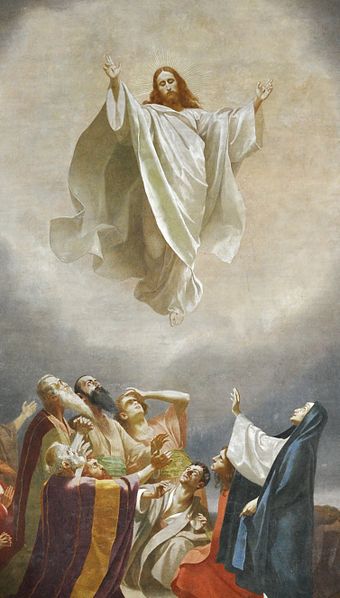
Today we celebrate the Solemnity of the Ascension of the Lord. We also need to celebrate the the fact that Jesus remains with us for all eternity individually for all to rejoice by and through the Sacraments gifted to us by Jesus and the vocation directed to all who have received the Sacrament of Baptism by being called to be the body, hands, mind, heart, and feet of Jesus here on Earth by and through his marriage with us as members of the Church of Christ. Wow, what a privilege, but what a responsibility.

Our readings tell us that we have been chosen to respond to the call to be the Body of Christ here on earth as we continue our journey, our “Ascension” to Jesus who resides with the Father and the Holy Spirit. It is through the Sacraments that we receive a helper to guide us on our mission. The Paraclete joins to our body and spirit whenever we celebrate the gift of Sacraments given us by Jesus when he walked in body here on earth. Through the gift of Sacrament we become one in Spirit with God who helps guide us on missions he has requested of us.

As told us in our second reading from the Letter of St. Paul to the Ephesians: “May the eyes of your hearts be enlightened that you may know what is the hope that belongs to his call, what are the riches of glory in his inheritance among the holy ones, and what is the surpassing greatness of his power for us who believe…

How do we know that Jesus is still with us. Good question, but all we need to do is watch and listen for he will speak to us and help us discern the will and hopes he has for us. I will share with you a personal example of knowing God is still here with us. Everyone knows the struggle and fear that exists about re-opening with the virus still spreading. It has not been easy for your clergy to celebrate private Masses without you, the larger Body of Christ, being present. How do we as clergy know what to do or how to continue ministry during these trying times? The answer lies in prayer. Personal prayer to the one who promised to be with us always on our journey to the Father’s house. Prayer need not be formal or fancy for prayer is nothing more than talking with God about problems or challenges we are experiencing. It is through communication, it is through prayer, that relationships are formed.

Recently I have been asking God for direction on knowing what God would like me to do during these challenging times when we are asked to curb our direct contacts with others. I have also asked for some communication from Jesus as to my personal mission he desires me to embark upon. A couple of weeks ago just before celebrating Mass with Father Victor, he requested that I pick out a couple of names for our parish calendar raffle. I reached in, stirred the tickets, and grabbed two raffle tickets which were sitting next to each other. The first name I picked was Steve Turner. Steve was one of the people who joined St. Paul’s Catholic Church a year ago and had attended our Parish RCIA classes. I remarked to Father that Steve is one of those guys that has always been lucky; whether in love in finding his gifted spouse, or in fishing at the right spot. The second name I picked was, guess who? Deacon Dick. What a coincidence!

It was during the Mass that I realized the event that had just happened. I had received an answer to what God wished me to continue to do. He told me that I was important in helping others find their way to the Church of Christ and to the vocation of being the Body of Christ. And how has this affected Steve’s life? He is now an adult server in our parish and he and his wife help out with our RCIA program, with him heralding the fact that since his marriage to Elaine he has been in Church more than all of his previous years of his life. What a coincidence!

Guess what? Jesus is not up in the clouds, He is still with us through the Body of Christ and his Sacraments. Thank you Jesus for being our supernatural friend. Wishing to all of you as the Body of Christ, a blessed Ascension!

His Cause for Joy — Funeral for Michael “Mike” Rufledt, 67

February 28, 2020

If you had the chance to visit Mike over these past months of his final illness, might have come expecting to see a man anguished and crushed in the face of impending death. You might expect to find a quiet, somber, sad, inconsolable house. But if you visited, you encountered a house of joy; tears—but tears of love; and a joyful man, full of peace. How is this possible? It is the Lord. God had prepared him, God strengthened him, and God accompanied him through it all. And this began long ago.

When Mike was 31 years old, his father Ted died, and this event hit Mike really hard. Mike struggled with heavy grief, a grief he could not let go of or move beyond. He confided his pain to his mother and she gave him wise advice: “Pray to the Holy Spirit, Mike.” He took her advice and prayed. And that night or the next, he had a remarkable dream. He saw his father, standing before him, glowing with light, and smiling a large smile. His father did not say any words in the vision, but his presence and appearance were the message. Despite death, Mike’s father lived on, departed but not gone, still very much alive in God. Mike said that he was fine after that, so happy for his father that he was never stressed about his dad’s death again.

When Mike was 37, his mother Toni also died. Sometimes death’s approach is foreseen and we have time to prepare for it, but her death was sudden and unexpected. Mike was the first into her hospital room after she passed. He mournfully asked, not expecting a response, “What happened, Mom?” and kissed her on the forehead. And then, Mike reports, “I could feel her presence in the room.” Her spirit, her soul, was in his midst. And he heard her say, “It’s OK.” As you can imagine, that was incredibly consoling for Mike. About that time, his sister Mary called him on the phone. She was understandably distressed, like he had been just moments before. He told her, “It’s OK. It’s OK.” She said, “It’s not OK!” But he repeated the same words, “It’s OK.” He was too embarrassed, until recently, to share the story of the source of and reason for his peace that day.

Last year, Mike was up at his hunting cabin when he got the call from his doctor. He called with a grim diagnosis: it was cancer, serious cancer; and most likely, in the not very distant future, it would kill him. Imagine how it would be to receive such a diagnosis yourself. Mike felt like you might imagine. As he drove back home to break the news to Patti, he prayed, “I really need you now, Lord. You’re going to have to help me with this one. Let’s make the best out of this that we can.” To either miraculous recovery or death, they would take this journey together. In that hour Mike was not giving up, but surrendering himself, entrusting himself, to the Lord Jesus. And by the time he arrived back home to the farm, Mike felt peace, an incredible peace that remained with him through the months, weeks, and days that followed. Mike said towards the end of his illness. “[The Lord] really took the reigns on this one. And he stepped up immediately. He’s always there, but he went overboard on this one. I couldn’t thank him enough. He’s there for us all the time, all we have to do is ask. This has been a wonderful journey.

This Wednesday, we were marked with ashes for the beginning of Lent, for we are dust and to dust we shall return. Today we come to a Good Friday; not because death is good—death is not good—but because it is a more than OK thing to die with Jesus Christ. His life, passion, death, and resurrection—it’s all real, it’s true, and Mike’s great wish, then and now, is that you will believe in it, too. Jesus has given us the signs we need, so repent and believe in the Gospel.

Jesus’ Mediated Miracles

May 30, 2019

Icon of the Wedding Feast of Cana
Most miracles in the Gospel of John share a common trait: Jesus works great deeds but in a somewhat withdrawn manner. There’s usually some degree of distance between the Lord and his miracles in John’s Gospel. Let me show you what I mean with several examples:

  • In the second chapter of John, at the wedding feast of Cana, Jesus does not fetch water from the well or hold his hands over the water jars to change their water into wine. Jesus instructs the servers what to do and his miracle is accomplished through their cooperating efforts.
  • Later at Cana, in John chapter four, a royal official whose son is gravely ill begs the Lord to come to Capernaum some twenty miles away and heal him: “Sir, come down before my child dies.” After a dialogue Jesus replies, “You may go; your son will live.” The father believes him and leaves. The next day, on his way home, the royal official’s servants meet him and share good news about his son: “The fever left him yesterday, about one in the afternoon.” And the father realizes that was the hour that Jesus had said “your son will live,” curing him at a distance.
  • In the next chapter, at the pool called Bethesda in Jerusalem, Jesus meets a man who has been ill for thirty-eight years. Jesus says to him, “Rise, take up your mat, and walk.” The Lord makes no physical contact with him, he simply says the word. And immediately the man becomes well, takes up his mat, and walks.
  • In John’s ninth chapter, Jesus encounters a man blind from birth. Jesus bends down, makes a paste of dirt and spittle, and smears it on the blind man’s eyes. The blind man is touched by Jesus but does not immediately see. Jesus tells him, “Go wash in the Pool of Siloam.” The man goes there and washes his eyes, but Jesus is not present when the man sees for the first time.
  • In John eleven, Jesus’ beloved friend Lazarus dies and the Lord journeys to the tomb. He tells others to roll away the stone and does not go inside. Instead, Jesus commands, “Lazarus, come out!” And Lazarus comes out by himself, wrapped head to foot in burial cloths. Then Jesus directs others to “untie him and let him go.”
  • Finally, in the last chapter of John, Jesus works a post-Resurrection miracle from a distance for seven disciples fishing on the sea of Galilee. Jesus is on the shore, about a hundred yards away from Peter, John, and the others in the boat. He asks, “Children, have you caught anything to eat?” They answer, “No.” He tells them, “Cast the net over the right side of the boat and you will find something.” So they cast the net and are not able to pull it back in because of the great number of fish they catch. Jesus was not in the boat with them, but he guides his disciples’ efforts and make them miraculously fruitful.

Why do the miracles of John’s Gospel share this theme of Jesus working once removed? (John observes in closing, “There are also many other things that Jesus did, but if these were to be described individually, I do not think the whole world would contain the books that would be written.” So this Gospel’s miracles have been curated, chosen over others.) Of the four Gospels, John’s was written last. By this stage in the late first century, the majority of Christian believers had never seen Jesus walking the earth and St. John was likely the last of the living Apostles. Perhaps they sensed that John too would soon pass on, which would lead to Christians questioning in their hearts, “What is our remaining connection to Christ?” John’s Gospel reassures its readers (then and now) that though Jesus is visibly removed from our eyes his power remains active among us.

In his Last Supper Discourse, Jesus says, “I am going away and I will come back to you.” (This speaks to Jesus’ death and Resurrection but also his Ascension and Second Coming.) “If you loved me, you would rejoice that I am going to the Father…. I tell you the truth, it is better for you that I go. For if I do not go, the Advocate will not come to you. But if I go, I will send him to you. …Amen, amen, I say to you, whoever believes in me will do the works that I do, and will do greater ones than these, because I am going to the Father.

Why didn’t Jesus stay? Surely he can do what his saints can do and numerous saints have manifested the power of bi-location (being at two places at the same time.) In the twentieth century, St. Padre Pio is reported to have bi-located repeatedly; to celebrate Mass, hear confessions, visit a deathbed, and other things. The seventeenth century nun Venerable Mary of Ágreda is well-documented as having evangelized Native Americans in the American Southwest without leaving her Spanish convent. She instructed Jumano tribe members where to travel to find Franciscan missionaries for sacraments, affirmed under oath to Church investigators in Spain that she was bi-locating, and possessed inexplicable first-hand knowledge of the New World. If his saints can bi-locate, why couldn’t Jesus multi-locate on earth? He already does this in a veiled way in the Holy Eucharist; he is truly present (Body and Blood, Soul and Divinity) living in every tabernacle in every Catholic Church. So why not be visibly present in this world throughout the centuries? Jesus could be the pastor of every parish, the teacher in every classroom, the doctor in every hospital, and the leader for every country. Wouldn’t he do a better job than us?

This is why it was better for us for Jesus to ascend. We are called to be children of God; daughter or sons of the Father, and brothers or sisters of Christ. We must be childlike to enter the Kingdom but we are not to be childish. We must rely on the Lord, for apart from him we can do nothing, but he desires us to become reliable as well. If everything of importance were solely Jesus’ job how would we grow out of immaturity. How would we mature into the full likeness of Jesus Christ? Jesus desires to work through us, and with us, and in us so that we may share fully in his glory. This is the work of love for God and neighbor and it is vitally important; it’s important for your soul, it’s important for the salvation of others, and important to God.

The Church Father, St. Jerome, living in the late 300’s A.D., leaves us this extra-biblical story about St. John the Apostle:

The blessed John the Evangelist lived in Ephesus until extreme old age. His disciples could barely carry him to church and he could not muster the voice to speak many words. During individual gatherings he usually said nothing but, “Little children, love one another.” The disciples and brothers in attendance, annoyed because they always heard the same words, finally said, “Teacher, why do you always say this?” He replied with a line worthy of John: “Because it is the Lord’s commandment and if it alone is kept, it is sufficient.”

This work of love in Christ is important for our souls and the salvation of others; it is the mission entrusted to us by the Lord so that we may share fully in his glory.

Mary in History: A Healing Spring

February 24, 2019

February 25, 1858 – Lourdes, France

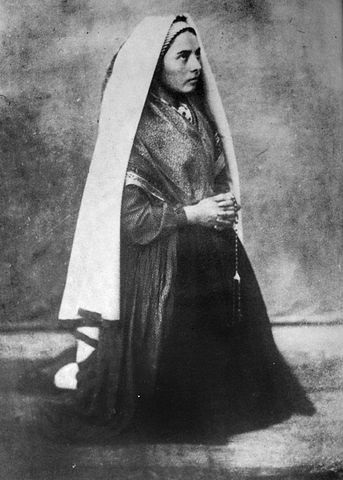
By the time of this, the ninth appearance of the beautiful Lady to the fourteen-year-old St. Bernadette Soubirous, word had spread about these apparitions and the visionary. On this date, about 300 people accompanied Bernadette to the grotto near the Gave River outside Lourdes. No one except Bernadette could see the Lady nor hear her speaking aloud in their local French dialect.

On this occasion, the Lady told Bernadette, “Go and wash and drink in the spring.” But Bernadette became confused because there was no spring to be seen. At first she thought she meant the river, but the Lady directed her to the back of the grotto cave. Bernadette walked there, kneeled down, and dug at the earth with her hands. Water began seeping into the hole, turning the soil to mud. Bernadette drank it and washed her face with it. She also, at the lady’s command, ate some of the grass there. Understandably, the crowd was dismayed and thought her crazy. Bernadette answered, “It is for sinners.”

There had been no spring there before, but by the next day the spot was producing a thin stream trickling down to the river. Later, Louis Bourriette, a blinded stonecutter, bathed his eyes in its water and regained his sight. In another famous case, a desperate mom prayerfully plunged her weak and dying infant into the cold spring waters and he became healthy and strong for the first time, amazing the doctors. (This child, Justin Bouhort, who would go on to attend the canonization of St. Bernadette seventy-five years later, on December 8th, 1933.) Though there is nothing scientifically unique about the chemical makeup of this water, more than 7,000 miraculous healings have been counted at Lourdes, of which 67 have been officially recognized as “medically inexplicable” by the International Medical Association of Lourdes. As we see in the spring at Lourdes, St. Bernadette, and Our Lady, the Lord exults the lowly, leading all future generations to call them blessed.

Sound Interpretations

February 17, 2019

Last year, the internet hotly debated whether a particular sound clip was saying Yanny” or “Laurel.” While most people can only hear one name or the other, some people can make out each. In fact, both of the names are sounding in the clip together but at higher and lower pitches. In another online curiosity, a short video shows a small figurine glowing and emitting a sound, either “Brainstorm” or “Green Needle.” The amazing thing is that if you listen to this clip with either phrase in mind then that is the phrase you’ll hear. You can even alternate back and forth between the two. In each of these examples, the messages are indeed there to be heard if one has the ears to hear them.

These phenomena suggest how people in the Bible may have been present to the same auditory events but heard things quite differently. On one occasion recorded in John’s Gospel, Jesus prayed aloud, “Father, glorify your name.” Then a voice came from Heaven, “I have glorified it and will glorify it again.” John notes, “The crowd there heard it and said it was thunder; but others said, ‘An angel has spoken to him.‘” Later, at Pentecost in The Acts of the Apostles, the disciples “were filled with the Holy Spirit and began to speak in different tongues, as the Spirit enabled them to proclaim.” At the sound of it others in Jerusalem from many nations gathered in a large crowd “but they were confused because each one heard them speaking in his own language. … They were all astounded and bewildered, and said to one another, ‘What does this mean?’ But others said, scoffing, ‘They have had too much new wine.’” Sometimes people can hear more than one thing in the same divine message, or dismiss it all as nonsense.

Does each passage of the Bible have only one true interpretation? Some reject that Isaiah 7:14 (“The virgin shall be with child and bear a son, and they shall name him Emmanuel”) could foretell the virgin birth of Jesus, arguing “the author was referring only to the political situation of his day, not to an event centuries later he couldn’t possibly have known.” But this view forgets or denies that human beings are not the sole authors of Scripture. They are co-authors inspired by the Holy Spirit. God is all-knowing and alive outside of time. He can inspire prophesies with both near and distant fulfillments. And God can invest passages with multiple true and divinely-intended meanings. For example, in the Book of Revelation, John beholds in the sky, “a woman clothed with the sun, with the moon under her feet, and on her head a crown of twelve stars.” She gives birth to a son, the Christ, and then she is protected by God from a red dragon, the Devil. Does this represent God’s people of the Old and the New Covenants, or does it symbolize Mary the Mother of God? Yes. The answer is both.

Sacred Scripture, like other things of God, may be compared to a magic pool. It is a pool in which a small toddler may safely play and a great whale may deeply swim. Let us not remain shallow in our understandings, but explore the true depths of God’s Word.

Mary in History: A Surprising Lady

February 11, 2019

February 11, 1858 – Lourdes, France

On the Tuesday before Ash Wednesday (which is called “Fat” or “Shrove” Tuesday,) Bernadette Soubirous, her sister, and a friend were gathering firewood in the cold outside their small French town. They were near a river and a grotto (a shallow cave) where the locals would dump their garbage. Then fourteen-year-old Bernadette heard the sound of a sudden swish of wind. As Bernadette would later recall:

“I had just begun to take off my first stocking [intending to cross the shallow river barefooted as my companions had done] when suddenly I heard a great noise like the sound of a storm. I looked to the right, to the left, under the trees of the river, but nothing moved; I thought I was mistaken. I went on taking off my shoes and stockings, when I heard a fresh noise like the first. Then I was frightened and stood straight up. I lost all power of speech and thought, when, turning my head toward the grotto, I saw at one of the openings of the rock a [rose] bush, one only, moving as if it were very windy. Almost at the same time there came out of the interior of the grotto a golden colored cloud, and soon after a Lady, young and beautiful, exceedingly beautiful, the like of whom I had never seen, came and placed herself at the entrance of the opening above the bush. She looked at me immediately, smiled at me and signed me to advance, as if she had been my mother. All fear had left me, but I seemed to know no longer where I was. I rubbed my eyes, I shut them, I opened them; but the Lady was still there continuing to smile at me and making me understand that I was not mistaken. Without thinking of what I was doing, I took my Rosary in my hands and fell on my knees. The Lady made a sign of approval with her head and took into her hands a rosary which hung on her right arm. When I attempted to begin the Rosary and tried to lift my hand to my forehead, my arm remained paralyzed, and it was only after the Lady had signed herself that I could do the same. The Lady left me to pray all alone; she passed the beads of her Rosary between her fingers but she said nothing; only at the end of each decade did she say the ‘Glory Be’ with me.”

St. Bernadette Soubirous then returned to her family’s poor home, but this would be just the first of eighteen apparitions to her by the Blessed Virgin Mary, Our Lady of Lourdes, over the five months to follow.

Mary in History: Our Lady of the Flowers

December 29, 2018

December 29, 1336 – Italy

Egidia Mathis, a pregnant, young wife, was walking alone at the edge of nightfall near Bra, Italy. Near a pillar bearing a coarsely painted image of the Virgin Mary with Child, she crossed paths with two foreign soldiers-for-hire (that is, mercenaries) whom she sensed wished to do her harm. Incapable of defense or escape, Egidia flung herself towards the pillar, begging Mary’s help. A great light came forth from the image. Mary scared off the wicked men with a commanding gesture and smiled at Egidia with maternal empathy. The stress of the moment caused Egidia to go into labor and she delivered her baby there. As she held her newborn closely in the winter cold, the blackthorn thicket surrounding the pillar was now in full bloom with thousands of white flowers. Upon reaching home, she told her husband of the whole episode and he with their relatives and neighbors all beheld the miraculous, out-of season flowering.

Some might dismiss this tale as merely pious legend. But virtually every winter since 1336, this blackthorn thicket, contrary to its species and scientific explanation, has flowered between December 25th and January 15th. Two rare exceptions were 1914 and 1939, the years the two World Wars began. Furthermore, on three occasions, this winter flowering has extended for months, corresponding each time with rare public expositions of the Shroud of Turin (the possible burial cloth of Christ) housed twenty-seven miles away.

St. Paul’s Vision Problems

July 11, 2018

 The oldest known depiction of St. Paul the Apostle, a fresco from the Catacomb of Saint Thekla in Rome dated to the 300’s A.D.

Paul’s encounter with the risen Jesus on the road to Damascus, accompanied by a great light from the sky which suddenly shone around him, left the great persecutor of the early Church blind. “Saul got up from the ground, but when he opened his eyes he could see nothing…” After three days, the Lord sent a Christian named Ananias to prayerfully lay hands upon Saul/Paul. “Immediately things like scales fell from his eyes and he regained his sight.” Yet problems with Paul’s vision seem to have lingered or later returned.

Writing to Christians in Galatia (central Turkey) more than a decade after his conversion, Paul recalls, “[Y]ou know that it was because of a physical illness that I originally preached the gospel to you…” While he does not directly identify the malady, he then observes, “Indeed, I can testify to you that, if it had been possible, you would have torn out your eyes and given them to me.” And in his personal closing to the letter he adds, “See with what large letters I am writing to you in my own hand!” These clues suggest that swapping-out Paul’s eyeballs for another pair would have improved his poor and ailing sight.

Paul, previously blinded by hatred of Christians, saw the light and was converted. The Lord forgave all of his sins through baptism but forgiveness does not always remove all of our sins’ consequences. In restoring Paul’s sight the Lord may have permitted some physical encumbrance to remain. For what purpose? For Paul’s greater good: to serve as an enduring sign to him that what he experienced on the way to Damascus had been real and to remind him of how far he had come; to keep him humble amid the incredible graces, revelations, and miracles of his epic ministry; and to help him remain faithfully dependent upon our Lord Jesus, who once told him, “My grace is sufficient for you, for power is made perfect in weakness.” May God grant that we would spiritually profit as much from our own divinely-permitted trials as St. Paul did through his.

Our Lady of Zeitoun

April 3, 2018

A Fascinating Marian Apparition from Egypt

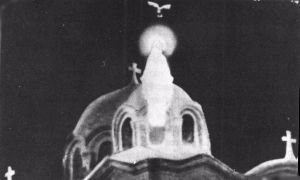
Fifty years ago this week, on the evening of April 2, 1968, a group of Muslim mechanics and drivers working across the street from Virgin Mary’s Coptic Church in Zeitoun, Egypt, saw a woman atop a dome of the church. Two other men also noticed the white figure on the top of the church and the matter was reported to the police. A crowd gathered on the site and interpreted the sighting as an apparition of the Blessed Virgin Mary. After a few minutes, the event ended. According to tradition, Zeitoun is on the route that the Holy Family took when fleeing King Herod’s efforts to murder the infant Jesus.

Our Lady of Zeitoun

One week later, on April 9, 1968, the phenomenon reoccurred, again lasting for only a few minutes. After that time apparitions became more frequent, sometimes two or three times a week, for several years, ending in 1971. The woman spoke no words, but moved about the church’s mysteriously illuminated domes. She would also face the people in the streets below and gesture warmly with her head or hands. Sometimes she was accompanied by luminous, dove-shaped bodies which moved about at high speeds. Muslims hold Mary in very high regard even though they deem Jesus to be merely a prophet of Islam. She was seen to kneel down before a cross on the church roof; significant, since Muslims deny Jesus’ crucifixion.

Pope (or Patriarch) Kyrillos VI, the head of the Coptic Orthodox Church of Alexandria, appointed a committee of high-ranking priests and bishops to investigate. On May 4, 1968, Kyrillos VI issued an official statement confirming and approving the apparition. These apparitions were witnessed by perhaps a million people, including President Gamal Abdel Nasser, and were documented by newspaper photographers and Egyptian television. Egyptian government officials concluded in 1968: “Official investigations have been carried out with the result that it has been considered an undeniable fact that the Blessed Virgin Mary has been appearing on Zeitoun Church in a clear and bright luminous body seen by all present in front of the church, whether Christians or Muslims.”

The Virgin Mary’s Wisconsin Apparition in 1859

August 4, 2016

This account is according to Sister Pauline LaPlant, to whom the visionary, Adele Brise, often told her story:

She [Adele] was going to the grist mill about four miles from here [Champion] with a sack of wheat on her head […]. As Adele came near the place, she saw a lady all in white standing between two trees, one a maple, the other a hemlock. Adele was frightened and stood still. The vision slowly disappeared, leaving a white cloud after it. Adele continued on her errand and returned home without seeing anything more. She told her parents what had happened, and they wondered what it could be — maybe a poor soul who needed prayers?

On the following Sunday, she had to pass here again on her way to Mass at Bay Settlement, about eleven miles from her home […]. This time, she was not alone, but was accompanied by her sister Isabel and a neighbor woman [Mrs. Vander Niessen]. When they came near the trees, the same lady in white was at the place where Adele had seen her before. Adele was again frightened and said, almost in a tone of reproach, “Oh, there is that lady again.”

adelebrise

The Visionary, Adele Brise, 1831-1896

Adele had not the courage to go on. The other two did not see anything, but they could tell by Adele’s look that she was afraid. They thought, too, that it might be a poor soul that needed prayers. They waited a few minutes, and Adele told them it was gone. It had disappeared as the first time, and all she could see was a little mist or white cloud. After Mass, Adele went to confession and told her confessor how she had been frightened at the sight of a lady in white. He [Father William Verhoef] bade her not to fear, and to speak to him of this outside of the confessional. Father Verhoef told her that if it were a heavenly messenger, she would see it again, and it would not harm her, but to ask in God’s name who it was and what it desired of her. After that, Adele had more courage. She started home with her two companions, and a man who was clearing land for the Holy Cross Fathers at Bay Settlement accompanied them.

As they approached the hallowed spot, Adele could see the beautiful lady, clothed in dazzling white, with a yellow sash around her waist. Her dress fell to her feet in graceful folds. She had a crown of stars around her head, and her long, golden, wavy hair fell loosely around her shoulders. Such a heavenly light shone around her that Adele could hardly look back at her sweet face. Overcome by this heavenly light and the beauty of her amiable visitor, Adele fell on her knees.

In God’s name, who are you and what do you want of me?” asked Adele, as she had been directed.

I am the Queen of Heaven, who prays for the conversion of sinners, and I wish you to do the same. You received Holy Communion this morning, and that is well. But you must do more. Make a general confession, and offer Communion for the conversion of sinners. If they do not convert and do penance, my Son will be obliged to punish them.”

Adele, who is it?” said one of the women. “O why can’t we see her as you do?” said another weeping.

Kneel,” said Adele, “the Lady says she is the Queen of Heaven.” Our Blessed Lady turned, looked kindly at them, and said, “Blessed are they that believe without seeing. What are you doing here in idleness…while your companions are working in the vineyard of my Son?

What more can I do, dear Lady?” said Adele, weeping.

Gather the children in this wild country and teach them what they should know for salvation.”

But how shall I teach them who know so little myself?” replied Adele.

Teach them,” replied her radiant visitor, “their catechism, how to sign themselves with the sign of the Cross, and how to approach the sacraments; that is what I wish you to do. Go and fear nothing. I will help you.”

The manifestation of Our Lady then lifted her hands, as though beseeching a blessing for those at her feet, and slowly vanished, leaving Adele overwhelmed and prostrate on the ground.

When the news spread about Adele Brise’s vision of the Blessed Virgin, most people believed the account and were astonished. Some considered the event a  demented delusion. Adele Brise, however, considered it a commission to catechize the children and admonish the sinners of the Bay Settlement. To honor the alleged apparition, Adele’s father erected a makeshift chapel near the spot of Adele’s vision.

Our Lady of Champion

February 12, 2016

Bishop Rickens at the Shrine of Our Lady of Good Help, Dec 8, 2010In 2010, on the Feast of the Immaculate Conception at the Shrine of Our Lady of Good Help (about sixteen miles northeast of Green Bay, Wisconsin) Bishop David Ricken formally endorsed our country’s first Church-approved Marian apparition:

“I declare with moral certainty and in accord with the norms of the Church that the events, apparitions and locutions given to Adele Brise in October of 1859 do exhibit the substance of supernatural character, and I do hereby approve these apparitions as worthy of belief (although not obligatory) by the Christian faithful.”


This is the account of that Marian apparition according to Sr. Pauline LaPlant, to whom Adele Brise often told her story:

She was going to the grist mill about four miles from here [Champion, WI] with a sack of wheat on her head … As Adele came near the place, she saw a lady all in white standing between two trees, one a maple, the other a hemlock. Adele was frightened and stood still. The vision slowly disappeared, leaving a white cloud after it. Adele continued on her errand and returned home without seeing anything more. She told her parents what had happened, and they wondered what it could be—maybe a poor soul who needed prayers?

On the following Sunday, she had to pass here again on her way to Mass at Bay Settlement, about eleven miles from her home … This time, she was not alone, but was accompanied by her sister Isabel and a neighbor woman. When they came near the trees, the same lady in white was at the place where Adele had seen her before. Adele was again frightened and said, almost in a tone of reproach, “Oh, there is that lady again.”

Adele had not the courage to go on. The other two did not see anything, but they could tell by Adele’s look that she was afraid. They thought, too, that it might be a poor soul that needed prayers. They waited a few minutes, and Adele told them it was gone. It had disappeared as the first time, and all she could see was a little mist or white cloud. After Mass, Adele went to confession and told her confessor how she had been frightened at the sight of a lady in white. He bade her not to fear, and to speak to him of this outside of the confessional. Father Verhoef told her that if it were a heavenly messenger, she would see it again, and it would not harm her, but to ask in God’s name who it was and what it desired of her. After that, Adele had more courage. She started home with her two companions, and a man who was clearing land for the Holy Cross Fathers at Bay Settlement accompanied them.

As they approached the hallowed spot, Adele could see the beautiful lady, clothed in dazzling white, with a yellow sash around her waist. Her dress fell to her feet in graceful folds. She had a crown of stars around her head, and her long, golden, wavy hair fell loosely around her shoulders. Such a heavenly light shone around her that Adele could hardly look back at her sweet face. Overcome by this heavenly light and the beauty of her amiable visitor, Adele fell on her knees. “In God’s name, who are you and what do you want of me?” asked Adele, as she had been directed.

I am the Queen of Heaven, who prays for the conversion of sinners, and I wish you to do the same. You received Holy Communion this morning, and that is well. But you must do more. Make a general confession, and offer Communion for the conversion of sinners. If they do not convert and do penance, my Son will be obliged to punish them.”

“Adele, who is it?” said one of the women. “O why can’t we see her as you do?” said another weeping.

“Kneel,” said Adele, “the Lady says she is the Queen of Heaven.” Our Blessed Lady turned, looked kindly at them, and said, “Blessed are they that believe without seeing. What are you doing here in idleness…while your companions are working in the vineyard of my Son?

“What more can I do, dear Lady?” said Adele, weeping.

Gather the children in this wild country and teach them what they should know for salvation.”

“But how shall I teach them who know so little myself?” replied Adele.

Teach them,” replied her radiant visitor, “their catechism, how to sign themselves with the sign of the Cross, and how to approach the sacraments; that is what I wish you to do. Go and fear nothing. I will help you.”

The manifestation of Our Lady then lifted her hands, as though beseeching a blessing for those at her feet, and slowly vanished, leaving Adele overwhelmed and prostrate on the ground.


Sister Adele Brise, Visionary of ChampionWhen word spread about Adele Brise’s vision of the Blessed Virgin some believed the account with astonishment, while others judged it a demented delusion. Adele, however, considered it a commission to catechize the children and admonish the sinners of the Bay Settlement. Adele’s father erected a makeshift chapel near the spot of Adele’s vision.
 

Peshtigo Fire Map

Twelve years later, on October 8th, 1871, disaster came. The Great Peshtigo Fire remains the largest and deadliest forest fire in U.S. history. Between 1,200 and 2,400 lives were lost in Green Bay region. Hundreds fled to the shrine for refuge, beseeching Mary’s help. They lifted a statue of Mary and carried it around the grounds. When the wind and fire threatened suffocation in one direction, they turned in another direction to pray. Hours later, rain began to extinguish the raging fire. The shrine grounds were a green island in an ocean of smoldering ashes in every direction, and all those who fled to Mary’s shrine were saved.

Charles Dickens’ Otherworldly Visitor

November 17, 2015

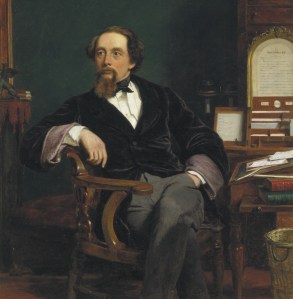
Charles Dickens by Frith, 1859        One night in 1844, the year after he published A Christmas Carol, a 32-year-old Charles Dickens seemingly encountered a visitor from beyond while vacationing in Venice, Italy. Within this dream or vision, Dickens thought himself speaking to his dearly-beloved sister-in-law, Mary Hogarth, who had died in 1837, yet he also observed that the spirit “bore no resemblance to any one I have known.” Dickens recorded this experience soon afterward in a letter to a friend:

“Let me tell you of a curious dream I had, last Monday night; and of the fragments of reality I can collect, which helped to make it up. [I] had laid awake nearly all that night…. [W]hen I fell asleep and dreamed this dream. Observe that throughout I was as real, animated, and full of passion as [the English actor William Macready] in the last scene of Macbeth.

In an indistinct place, which was quite sublime in its indistinctness I was visited by a Spirit. I could not make out the face, nor do I recollect that I desired to do so. It wore a blue drapery, as the Madonna might in a picture by Raphael; and bore no resemblance to any one I have known except in stature. I think (but I am not sure) that I recognized the voice. Anyway, I knew it was poor Mary’s spirit. I was not at all afraid, but in a great delight, so that I wept very much, and stretching out my arms to it called it “Dear.”

At this, I thought it recoiled; and I felt immediately, that not being of my gross nature, I ought not to have addressed it so familiarly. “Forgive me!” I said. “We poor living creatures are only able to express ourselves by looks and words. I have used the word most natural to our affections; and you know my heart.” It was so full of compassion and sorrow for me—which I knew spiritually, for, as I have said, I didn’t perceive its emotions by its face—that it cut me to the heart; and I said, sobbing, “Oh! give me some token that you have really visited me!

“Form a wish,” it said. I thought, reasoning with myself: ‘If I form a selfish wish, it will vanish.’ So I hastily discarded such hopes and anxieties of my own as came into my mind, and said, “Mrs. Hogarth is surrounded with great distresses (observe, I never thought of saying ‘your mother‘ as to a mortal creature) will you extricate her?” “Yes.” “And her extrication is to be a certainty to me that this has really happened?” “Yes.”

But answer me one other question!” I said, in an agony of entreaty lest it should leave me. “What is the True religion?” As it paused a moment without replying, I said—Good God in such an agony of haste, lest it should go away! “You think, as I do, that the Form of religion does not so greatly matter, if we try to do good? or,” I said, observing that it still hesitated, and was moved with the greatest compassion for me, “perhaps the Roman Catholic is the best? Perhaps it makes one think of God oftener, and believe in him more steadily?” “For you,” said the Spirit, full of such heavenly tenderness for me, that I felt as if my heart would break; “for you, it is the best!” Then I awoke, with the tears running down my face, and myself in exactly the condition of the dream. It was just dawn.

I called up [my wife] Kate, and repeated it three or four times over, that I might not unconsciously make it plainer or stronger afterwards. It was exactly this. Free from all hurry, nonsense, or confusion, whatever.”

One’s Catholic imagination wonders if this tender, compassionate, glorious “Mary” who visited Charles Dickens that night was actually the Blessed Virgin. Like Our Lady of Lourdes responded to Bernadette’s initial requests for her name with a silent smile, this visitor holds back at first to finally reveal a climactic answer. Whether this was a true vision or merely a dream we cannot say, but this visitor’s answer to his religious question does not disqualify our Blessed Mother: the glorious woman told him, “For you, [the Catholic religion] is the best!”

Would this statement imply that Catholicism would not be the best religion for some? Dickens himself held that the form of one’s religion did not greatly matter if someone tried to do good, and his strong distaste for formal religion had drawn him to Unitarianism. If our Mother Mary, who knew Charles through and through, wished to lead him into full communion with the Catholic Church, she would speak truth to him in the way which he could best receive it. Indeed, for him the Catholic faith truly would be best, but he may have balked-outright at her teaching that it is best for everyone. If his was a vision of the Blessed Virgin sent from God, the plan was to bring him into the fullness of the truth over time, as we often see God patiently doing with others.

Charles Dickens never did become a Catholic during his lifetime, but after 1847 (three years after this experience) he began attending the Anglican church near his home and prayed each morning and night. A year before his death, he wrote in his 1869 last will and testament, “I commit my soul to the mercy of God through our Lord and Saviour Jesus Christ….” Today his body lies buried in Poets’ Corner of Westminster Abbey.

Ghost Stories From Sts. Augustine & Gregory

October 31, 2014

In 398 AD, St. Augustine shared the following story about a probable visitor from beyond the veil in a letter to his friend, Evodius:

“Our brother, Gennadius … told us that he doubted once … whether there was any life after death. As God would not abandon a man of his disposition and works of mercy, there appeared to him in sleep a handsome youth of dignified appearance, who said to him: ‘Follow me.’ He followed and came to a certain city, where he began to hear, on his right, singing of such exquisite sweetness that it surpassed all known and ordinary sweetness. Then, as he listened, he asked what it was and his guide said it was the hymns of the blessed and the saints. I do not clearly remember what he said he saw on his left. When he awoke, the dream vanished and he thought of it only as one does of a dream.

But, on another night, behold, the same youth appeared to him again and asked whether he recognized him; he answered that he did so fully and perfectly. Then the youth asked where he had known him. He remembered what to reply to that, too, and described the whole vision and the hymns of the saints which the other had led him there to hear, recalling them with ease as a recent experience. Thereupon, the youth asked whether he had been asleep or awake when he saw what he had described. He answered: ‘It was in a dream.’ The other said: ‘You remember well, it is true, that you saw all that in a dream, but you must know that even now you see, although you are asleep.’ When he heard that, he believed it was so and expressed it by his answer.

Then the one who was teaching him continued and said: ‘Where is your body now?’ He answered: ‘In my bedroom.’ ‘And do you know,’ said the other, ‘that in that same helpless body, your eyes are fast shut and useless, and that you see nothing with those eyes?’ Gennadius answered: ‘I know it.’ His guide went on: ‘Then, with what kind of eyes do you see me?’ He fell silent at this, finding no reply, and, as he remained in doubt, the youth made known what he was trying to teach by these questions.

He went on: ‘As those eyes of flesh are now inactive and perform no function while your body lies asleep in bed, yet you have eyes with which you behold me and a sight of which you make use, so, when you die and the eyes of your flesh see nothing, there will be in you another life by which you will live and sense by which you will perceive. See to it that henceforth you do not doubt of the life which remains after death.’ Thus this faithful man says that his doubt on this matter was removed, and what was his teacher but the providence and mercy of God?”

In 593 AD, Pope St. Gregory the Great related this story in his Dialogues:

“Bishop Felix…said that he had been told of such a case by a saintly priest who was still living two years ago in the [Italian] diocese of Centum Cellae as pastor of the Church of St. John in Tauriana [on the toe of Italy.] This priest used to bathe in the hot springs of Tauriana whenever his health required. One day, as he entered the baths, he found a stranger there who showed himself most helpful in every way possible, by unlatching his shoes, taking care of his clothes, and furnishing him towels after the hot bath.

After several experiences of this kind, the priest said the himself: ‘It would not do for me to appear ungrateful to this man who is so devoted in his kind services to me. I must reward him in some way.’ So one day he took along two crown-shaped loaves of bread to give him.

When he arrived at the place, the man was already waiting for him and rendered the same services he had before. After the bath, when the priest was again fully dressed and ready to leave, he offered the man the present of bread, asking him kindly to accept it as a blessing, for it was offered a token of charity.

But the man sighed mournfully and said, ‘Why do you give it to me, Father? That bread is holy and I cannot eat it. I who stand before you was once the owner of this place. It is because of my sins that I was sent back here as a servant. If you wish to do something for me, then offer this bread to almighty God, and so make intercession for me, a sinner. When you come back and do not find me here, you will know that your prayers have been heard.

With these words he disappeared, thus showing that he was a spirit disguised as a man. The priest spent the entire week in prayer and tearful supplications, offering Mass for him daily. When he returned to the bath, the man was no longer to be found. This incident points out the great benefits souls derive from the Sacrifice of the Mass. Because of these benefits the dead ask us, the living, to have Masses offered for them, and even show us by signs that it was through the Mass that they were pardoned.”

Our Lady’s Wisconsin Message: The Meaning of the Two Trees

September 25, 2014

In the Garden of Eden, there were many fruit-bearing trees, but Genesis mentions only two by name: the Tree of Life, and the Tree of the Knowledge of Good and Evil. By partaking of the Tree of Life the human race could keep living forever, but the Lord warned that to eat from the other tree would mean our certain death. On October 9th, 1859, the Blessed Virgin Mary appeared near Green Bay to a 28 year-old Belgian immigrant named Adele Brise while she was walking eleven miles home from Sunday Mass. Interestingly, Our Lady chose to appear to Adele not in a church, or a thousand other places, but between two trees: a Maple and a Hemlock.

Maple LeavesYou’re familiar with the beauty and goodness of the Maple. In the fall, its leaves turn the most striking colors, and in the spring its sap yields sweet syrup. But do you know about the Hemlock tree? The poison that the Greek philosopher Socrates was condemned to drink came from this plant. Ingesting just six or eight fresh Hemlock leaves can kill a healthy adult. [Post-Script: The Hemlock Tree found in Wisconsin is not poisonous, but merely shares the name.]  The Maple is a tree of life while the Hemlock is a tree of death. Mary, the New Eve, stood between the two.

Three Conium Maculatum (or Poison Hemlock), Cedar Bog, Champaign CoMary told Adele, “I am the Queen of Heaven, who prays for the conversion of sinners, and I wish you to do the same. You received Holy Communion this morning, and that is well. But you must do more. Make a general confession, and offer Communion for the conversion of sinners. If they do not convert and do penance, my Son will be obliged to punish them.” Our Lady’s message between the two trees is akin the words of Moses, who told the Israelites: “I have set before you life and death, the blessing and the curse. Choose life, then, that you and your descendants may live, by loving the Lord, your God, heeding his voice, and holding fast to him. For that will mean life for you, a long life for you to live on the land….

Peshtigo Fire MapApparently, Our Lady’s warnings were not sufficiently heeded. In October of 1871, exactly twelve years later, disaster came. Both in terms of size and number of lives lost, the Peshtigo Fire remains the worst recorded forest fire in U.S. history. Between 1,200 and 2,400 lives ended in that firestorm which saw, according to an eyewitness, “large wooden houses torn from their foundations and caught up like straws by two opposing currents of air which raised them till they came in contact with the stream of fire.” This seems to be the punishment due to sin that Mary spoke of, yet this does not mean that everyone who perished in that fire was condemned. We should remember that at harvest time, the wheat and the weeds are pulled up together in a moment, but their future fates are not the same. Once uprooted, the good are gathered and kept in the barn, while the bad are thrown away forever.

The firestorm came and surrounded the shrine of Our Lady, where hundreds had come for refuge with their families and herds, beseeching her intercession before God. As many as fled to her there were saved. The shrine’s consecrated earth was an emerald-green island in an ocean of smoldering ashes as far as eyes could see.

Mary, the Queen of Heaven, prays for the conversion of sinners and she wishes you to do the same. You receive Holy Communion, and that is well. But you must do more. Begin by receiving the sacrament of reconciliation regularly, because it is powerful for growing in holiness. The sinner whose conversion you are most responsible for is your own.