Archive for the ‘Movies’ Category

“For God And Country”

November 21, 2015

A 32-year-old Ronald Reagan plays a (fictional) Catholic priest army chaplain in this 1943 short film. “Chaplain Michael O’Keefe” is depicted celebrating Mass, working alongside his Protestant and Jewish chaplain friends, visiting a prisoner, and being mourned among the fallen in New Guinea.

The film was made to give army personnel “a better understanding of the chaplain’s place, work, and accomplishments in the army.” It was produced by the U.S. Signal Corps and filmed at MGM Studios. [source]

Contemporary politics make a brief appearance in the dialogue: Vermont is referenced as being a Republican state and Georgia as a Democratic one. (Today, those political alignments are reversed, though Ronald Reagan did win Vermont while losing Georgia in 1980.)

A True Story of Pain, Transformation, & Hope

August 20, 2015

My hometown friend, pro-life speaker Katie Stelter, spoke at our parish’s youth group this evening. Her story was made into this powerful docudrama, Metamorphosis:

Reflections on The Passion of the Christ

February 26, 2015
  • Jesus Writing on the Ground from the Passion of the Christ with Jim CaviezelThe 2004 film begins quoting Isaiah 53, “He was wounded for our transgressions, crushed for our iniquities; by his wounds we are healed.” Isaiah foretold Christ’s sufferings seven centuries before they came to pass.
  • We see a full moon, for Passover was always celebrated upon a full moon (similar to how Easter is always the Sunday after the first full moon following spring equinox on March 20th.)
  • We find Jesus in the garden, praying the psalms to his Father: “Rise up, defend me” (Ps 94) “Save me from the traps they set for me” (Ps 141) “Shelter me, O Lord, I trust in you. In you I take my refuge.” (Ps 16)
  • Satan appears in the garden; androgynous, attractive, and deathly pale. He speaks doubts to Jesus: “Do you really believe that one man can bear the full burden of sin? No one can carry this burden… No one. Ever. No. Never. … Who is your Father? Who are you?” Jesus never speaks to the devil throughout the film, but here he stands, locks eyes with Satan, and crushes the snake’s head underfoot. This recalls God’s words to the ancient serpent in Genesis 3:15, “I will put enmity between you and the woman, and between your seed and hers; He will strike at your head, while you strike at his heel.
  • Awoken from her sleep, the Virgin Mother senses something is awry. She asks Mary Magdalene, “Why is this night different from every other night?” She answers, “Because once we were slaves and we are slaves no longer.” This quotes the traditional dialogue of the Jewish Passover meal ritual.
  • Given the choice, the crowd calls for the unsavory prisoner Barabbas, a violent revolutionary, to be freed instead of Jesus. “Barabbas” means “Son of the Father.
  • At the pillar, Jesus quotes Psalm 108: “My heart is ready, Father. My heart is ready.” In Hebrew, to say “very,” you repeat a word twice. To say something is so in the greatest measure, it is said thrice (e.g. “Holy, Holy, Holy.”) The Romans directing the flogging of Jesus say “Satis / Enough” three times.
  • The angry crowd from the Passion of the ChristPilate presents the lacerated Jesus saying, “Ecce Homo / Behold (the) man!” The shot is from behind, emphasizing the angry, riotous mob in the background, for these words are a critique of fallen man/mankind.
  • Pilate asks, “Shall I crucify your king?” The high priest replies, “We have no king but Caesar,” denying the kingship of God.
  • The 14 Stations of the Cross make appearances throughout the film, including the three times Jesus falls.
  • Embracing his cross, Jesus alludes to Psalm 116: “I am your servant Father. Your servant and the son of your handmaid.
  • Mary, recalling when Jesus once fell as a child, rushes to his side. Jesus tells her, “See, Mother, I make all things new,” foreshadowing Revelation 21:5, “Behold, I make all things new.
  • Veronica, who gives Jesus her veil to wipe his face, has a name which means “true image.”
  • Jesus’ experiences at Golgotha are paralleled with flashbacks to the Last Supper. Jesus is stripped, the bread is uncovered. The Host is lifted, his cross is raised.
  • The Virgin Mary at the foot of the cross calls Jesus, “Flesh of my flesh, heart of my heart…” echoing the words of Adam toward Eve.
  • On the cross, Jesus quotes Psalm 22: “My God, my God, why have you forsaken me?

Neat Things About “A Man For All Seasons”

August 21, 2014

“A Man For All Seasons” was 1966’s Academy Award winner for Best Picture, and it is my all-time favorite movie. This YouTube video I made presents a number of interesting things you never knew about this wonderful film. I invite you to watch, “like,” and “share” it.


Four Cheeks Turned — 7th Sunday in Ordinary Time—Year A

February 22, 2014

Gospel: Matthew 5:38-48

When attacked, our natural response is “fight or flight,” but Jesus suggests a  supernatural response: “When someone strikes you on your right cheek, turn the other one as well.” Since the Jews regarded the left hand as unclean, they would reflexively strike with the right hand. If the right cheek were hit, then one had been backhanded with contempt. Responding by turning the other cheek neither attacks not retreats, but insists on being regarded as an equal, whom one must strike (if at all) with an open hand. Jesus wants us to stand our ground in the face of injustice, assertively but lovingly, in hopes that the offender will reconsider his ways. Jesus modeled this response when he was struck during his trial before Annas:

The high priest questioned Jesus about his disciples and about his doctrine. Jesus answered him, “I have spoken publicly to the world. I have always taught in a synagogue or in the temple area where all the Jews gather, and in secret I have said nothing. Why ask me? Ask those who heard me what I said to them. They know what I said.” When he had said this, one of the temple guards standing there struck Jesus and said, “Is this the way you answer the high priest?” Jesus answered him, “If I have spoken wrongly, testify to the wrong; but if I have spoken rightly, why do you strike me?” (John 18:19-24)

Another saintly example was shown by Blessed Mother Teresa of Calcutta. Though reports vary, Mother Teresa was once begging bread from a baker for her orphanage. When the baker responded by spitting into her hand, she replied to effect, ‘I will keep this for me, but please give something for my children.’

In Victor Hugo’s Les Miserables, a bishop welcomes an impoverished convict to join his table and sleep at his home. However, that night, Jean Valjean steals his host’s silverware and goes away. The police catch him and take him to the bishop. Looking at Jean Valjean, the good bishop exclaims, “Ah! here you are! I am glad to see you. Well, but how is this? I gave you the candlesticks too, which are of silver like the rest, and for which you can certainly get two hundred francs. Why did you not carry them away with your forks and spoons?” Jean Valjean opens his eyes wide and stares at the venerable Bishop “with an expression which no human tongue can render any account of.” The bishop’s turn of the cheek spares the thief’s freedom and saves his soul.

And finally, a true story from a modern marriage: A woman’s husband had a terrible temper and every time it flared she would say, “That’s just like you to lose your temper!” But then, following a stroke of insight, she began responding differently. The next time he began to fly of the handle she told him, “That’s not like you to lose your temper,” and he nearly fell out of his chair. Even the kids looked at her funny, but she stuck with her new resolution. Months later, while at a restaurant together, he became irritated by the slow service. He started to fume about it, but then he suddenly stopped, turned to her, and said, “That’s not like me to lose my temper, is it?” This time, it is said, she nearly fell on the floor.

Was it true the first time the woman declared that it was not like her husband to lose his temper? The claim did not match his previous behavior, but perhaps he changed because she revealed to him that his uncontrolled anger was quite unlike the father, husband, and Christian man he truly and deeply wanted to be. This is the sort of realization and conversion we are to hope for in turning the other cheek.

Plus, a fifth story: “If a teen mugs you for your wallet…

Metamorphosis: A True Story of Pain, Transformation, and Hope

January 20, 2014

Can a mother forget her infant, be without tenderness for the child of her womb? Even should she forget, I will never forget you.” (Isaiah 49:15)

In the United States, for every four babies born alive, there is one whose life is ended by abortion. (In other words, look around a room and divide the number of people by four–that’s how many people are missing.) What leads a woman to this terrible choice? How can God save a soul from the darkness?

Katie, a hometown friend of mine, whose post-abortive testimony became the subject of a 30-minute film, will be coming to speak in Sacred Heart’s parish hall in Wauzeka, Wisconsin at 7pm this Wednesday, January 22, 2014.

All are welcome, especially young people who are mature enough for themes of out-of-wedlock pregnancy and abortion. If you cannot attend, the film can be viewed online.

Checkout Catholic Movies

July 14, 2010

Did you know the St. Vincent DePaul Society just two blocks from St. John’s (location) has a library of Christian movies, books, and CD’s free for checkout? Pick up the films below for a spiritually edifying and entertaining evening:

The Ten Commandments (1956, VHS, 219 min)
Moses faces Pharoah demanding “Let my people go!”
+ Charleton Heston, Yul Brynner, and a cast of thousands
+ Regarded as the greatest Biblical epic of all-time
+ In *Technicolor*!

For another film about a great shepherd of God’s people, I recommend…

John Paul II (2005, DVD, 180 min)
A dramatic biography about Karol Wojtyla, Pope John Paul II
+ Regarded as the best drama about the Great Pope
+ Cary Elwes (The Princess Bride) plays the young Wojtyla
+ Jon Voight stars as Pope John Paul II
— The latter half is better; I suggest skipping to the conclave

For another film about a character who becomes a new man midway into the film, I recommend…

Becket (1964, VHS,  150 min)
St. Thomas Becket’s conversion makes him King Henry II’s enemy
+ Good dialogue, verbal sparring
+ A great excommunication scene
+ Teaches that personal conversion is possible

For another film with another English Thomas crossing with another King Henry, I most highly recommend…

A Man for All Seasons (1966, DVD, 120 min)
St. Thomas More’s conviction makes him King Henry VIII’s enemy
+ Won Best Picture, Actor, Director, Cinematography
— This title can be mistaken for another starring Charlton Heston
+ Brilliant dialogue, drawn from More’s own words
+ My all-time favorite film, it’s almost perfect…
— Gives More a pride at heart inconsistent with his character
+ Teaches the awesomeness and the attractiveness of virtue

For another film about religious conviction not bowing to the politics of the age, I recommend…

Sophie Scholl: The Final Days (2005, DVD, 117 min)
A German girl is arrested for writing against the Nazis during WWII
— Subtitled
+ The lead actress is captivating
+ Great verbal combat throughout the interrogation and trial
— Ends sadly, like A Man for All Seasons
+ Shows times can cloud truth, but that conscience still speaks

For another film about another Christian who heroically resisted the Nazis, I suggest…

Maximilian: Saint of Auschwitz (1995, VHS, 76 min)
St. Maximilian Kolbe is a knight for Mary in a darkened age
+ All roles are interestingly played by one man, Leonardo Defilippis
— The recurring theme music is not bad, but overplayed
+ Satan’s speeches are enjoyable in a Screwtape Letters way
— A tad too preachy by way of the masonic, communist, Nazi foes
+ Presents the value and power of Marian devotion

For another film by Defilippis about a saint whose faith was a spiritual romance, I suggest…

John of the Cross (1997, VHS, 60 min)
A Spanish mystic seeks God and reform with St. Teresa of Avila
+ Leonardo and Patti Defilippis play all of the major roles
+ Gives a taste of John’s spirituality, quoting his Spiritual Canticle

For another film by Defilippis about a Carmalite Doctor of the Church, I suggest…

Therese (2004, DVD 96 min)
Thérèse of Lisieux’s story, the most popular saint of modern times.
+ Anyone with a fondness for her will gain from this movie
+ The lead actress, whom Providence led to this production, shines
— Criticized for not being as good as it should have been
— One gets no clear sense of her simple, “Little Way” spirituality
+ This film increases one’s love for this great, little saint

For another film about a holy nun’s experiences in the convent, I recommend…

Faustina (1994, DVD, 75 min)
Jesus tells a Polish nun, St. Faustina, to proclaim Divine Mercy
— Subtitled
+ A work of art of profound depth
+ Her love for Jesus and message of mercy are communicated well
+ Teaches that Jesus’ Mercy embraces all willing to receive it

For another film about supernatural phenomena and the value of suffering, I recommend…

Padre Pio: Miracle Man (2000, DVD, 214 min)
St. Padre Pio bears Christ’s wounds, reads souls, & battles Satan
— Subtitled; English is optional but its voices and dialogue are poor
— Long, 3 hours and 34 minutes, presented in two halfs.
+ Great scenes, like the actresses’ confession and His spiritual battles
+ Teaches, among other lessons, that holiness is manly

For another film about a Franciscan priest with amazing spiritual gifts, I recommend…

The Reluctant Saint: The Story of St. Joseph of Cupertino (1962, VHS, 104 min)
An unintelligent man rises to the heights of sanctity
— Black and white
+ Joseph is played handsomely and enduringly
+ Rather funny, if you are in a fun mood
— Runs about fifteen minutes longer than it needs to
+ Shows a little of the old ritual for exorcism, which is interesting
+ Teaches that God takes the weak and makes them strong

For another film about a simple mystic who was doubted in their day, I recommend…

The Song of Bernadette (1943, DVD or VHS 158 min)
St. Bernadette Soubirous’ sees Mary appear in Lourdes, France
— Black and white
+ Jennifer Jones, at her most innocent, in a Best Actress role
+ Vincent Price (Thriller) plays the skeptic
+ Teaches that God is still real and found among the small

For another film about the life of the Visionary of Lourdes, I recommend…

The Passion of Bernadette (1989, VHS, 106 min)
St. Bernadette Soubirous’ life after entering the convent
+ Sydney Penny reprises her role as Bernadette
+ Shows that humility is beautiful

For another film about a great French saint, I recommend…

Monsieur Vincent (1947, DVD, 114 min)
St. Vincent DePaul grows in his understanding and care of the poor
— Subtitled
— Black and white
+ Gritty, yet beautiful
+ Well crafted characters
+ Teaches us to love our neighbor as ourself

For another film about charity and our resposibility to the poor, I highly recommend…

Entertaining Angels: The Dorthy Day Story (1996, VHS, 112 min)
Dorthy Day’s journey from communist to Catholic humanitarian
+ Stars Moira Kelly (The Cutting Edge) and Martin Sheen
+ Heather Graham (Austin Powers 2) does surprisingly good acting
— Contains an historical, non-graphic nor explicit abortion subplot
+ Teaches that life’s meaning is in committed personal life

For another film with an American, pro-life message, I highly recommend…

Bella (2006, DVD, 91 min)
A man with emotional scars helps a friend through a crisis
— Not a true story
+ Rich characters
+ Shows that life is beautiful, in every sense of the word

For another film about escaping prisons of the heart, I recommend…

The Count of Monte Cristo (2002, VHS, 131 min)
A falsely-condemned Frenchmen escapes prison and plots revenge
— Not a true story
+ Stars Jim Caviezel (The Passion of the Christ) charmingly
+ Richard Harris (Harry Potter) portrays a good Christian
+ In a great scene, a fight to the death has a surprising end
+ Explores the Problem of Evil vs. Providence in a powerful way

For another film about an imposter who gradually becomes a real hero, I recommend……

Meet John Doe (1941, DVD, 122 min)
A feel good movie about American values and the little guy
+ This film is in the public domain; click above to watch it now
— Black and white
— Not a true story
+ Directed by Frank Capra (It’s A Wonderful Life)
+ Teaches about the enduring strength of the little guy

Gospel Movies

July 1, 2010

Below are five original shorts drawn from the Scriptures. Click the images to watch them.

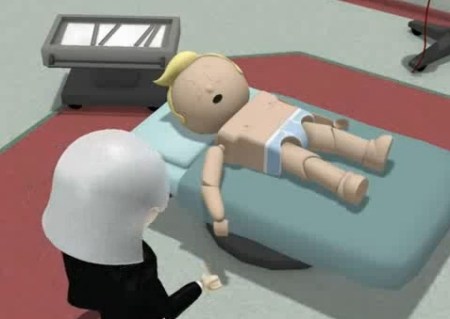
Teddy Bear Annunciation


The Annunciation of the Archangel Gabriel to the Blessed Virgin Mary; the Gospel of Luke, chapter 1, with teddy bears.

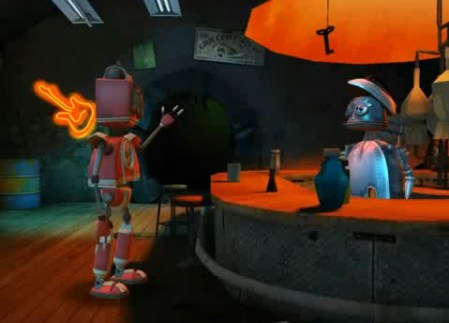
Robot Jesus at the Watering Hole

 
Jesus meets the woman at the well; the Gosple of John, chapter 4, starring robots.

The Rich Young Rapper

 
A rich young rapper questions Jesus on the subway; a remix of Matthew, chapter 19 and Mark, chapter 10.  

Doubting Thomas

 The resurrected Christ appears to a skeptical disciple in the Gospel of John, chapter 20.

The Importance of the Resurrection


From St. Paul’s 1st Letter to the Corinthians, chapter 15.

2nd Sunday of Advent—Year C

December 10, 2009

In the first year of the presidency of Barack Obama,
when Jim Doyle was governor of Wisconsin,
and Kohl and Feingold were its senators,
and Obey was the seventh district congressman,
and Favre was the quarterback in Minnesota,
when Benedict was pontiff and Jerome was bishop,
the word of God came here,
to Christ the King parish in Spencer:

“Prepare the way of the Lord,
make straight his paths.
Every valley shall be filled
and every mountain and hill shall be made low.
The winding roads shall be made straight,
and the rough ways made smooth,
and all flesh shall see the salvation of God.”

It isn’t a new word… It was the message of John the Baptist, and Isaiah wrote it long before that. Yet the word of God is not old in the sense that it has passed some kind of expiration date. When the Holy Spirit inspired the writing of these words, their human author who put the pen to parchment did not know the great audience and the impact they were to have. But the Holy Spirit saw us here and had these words written to us and for as well. These words were not meant only for Old Testament peoples, or for the time when Christ walked on the earth. These words are proclaimed to us, and meant for us, here today. Remember this every time you encounter the Scriptures, here at church or in your private prayer.

So what is God’s word saying to us today? In the Gospel, did you notice that of all the rulers and governors and leaders at that time, the word of God did not come to any one of them? “The word of God came to John the son of Zechariah in the desert.” The lesson is that God prefers to lead souls to salvation by working through common people. People who think that they have no power.

What politicians do is important, since good laws can help people and bad laws can hurt them, but what saves souls rarely comes through them. And though our Holy Father and our bishop strive to do important work for Christ, there is only so much they can do. The way of the Lord is prepared by the daily efforts of ordinary Christians, who sometimes have children and sometimes work jobs. Your family, friends, and co-workers probably don’t read papal encyclicals, but they always witness your words and example. And so, Jesus depends upon you to prepare His way for others, to make winding and rough roads straight and smooth, and so that all people see the salvation of God.

This is the Christian’s calling and important mission, yet we cannot share what we do not have. If were are going to prepare the way of the Lord and make straight his paths for others we must first fill the valleys and level the mountains for Christ within ourselves. To this end, I urge you to make the most of two gifts God gives us: the sacrament of confession and daily prayer. There is simply nothing that more quickly and effectively strengthens the average Catholic’s moral and spiritual life than frequent and regular confession. And daily prayer is indispensible for growing in relationship with Christ and for living a wonderful life.

Each year, many of our homes are visited a familiar and beloved character whom we associate with Christmas… I speak George Bailey from the movie “It’s a Wonderful Life.” This film, despite its flawed angelology, teaches the truth about how much difference one person can make for others. George Bailey’s an ordinary man who lives an extraordinary life without even realizing himself. By the end of the film, we see the impact for good that his life has had and we see George surrounded by his family and his many friends who all love and admire him.

Why does George Bailey live such a wonderful life?  Sure, he’s a nice guy, but he’s more than a nice guy. Time and again, he sacrifices what he wants to do what’s loving and best for the people God has placed in his life. I hope we can all see a little bit of George Bailey in ourselves. Because we can see a great deal of Christ in George Bailey.

This Advent season, let us prepare the way of the Lord within us, so that through us, all people may see the salvation of God.  This is the calling, the mission, and the privilege of the Christian.  In this or any age, it’s a wonderful life.

August 14 – Vigil of the Assumption of Mary

August 17, 2009

When I was younger, I used to wonder why Mary was such a big deal. It wasn’t that I was against her or anything. I prayed Hail Mary’s to her, and I wasn’t out to deny anything our Church said about her. I just didn’t understand why we, as Catholics, honored her so much.

Some people say that Mary is no big deal, that she’s just another Christian.  They might point to today’s Gospel as evidence, where a woman from the crowd calls out to Jesus, “Blessed is the womb that carried you, and the breasts at which you nursed.”  And Jesus replies, “Rather, blessed are those who hear the word of God and observe it.” “So you see,” they would say, “it’s nothing special to be the mother of Jesus.” But in this Gospel Jesus is not denying Mary’s greatness, He is rather affirming it.

If Mary had merely been the biological mother of Jesus, delivering Him, and nursing Him, she might have been just another Christian. But Mary is most blessed among the disciples of Christ, of which she is the first, because she heard the word of God and observed it. She heard the word of God from the angel Gabriel and answered,

“Behold, I am the handmaid of the Lord. Let it be done to me according to your word.”

The overwhelming evidence for Mary’s exceptional glory, and her unique loveliness, is to be found throughout the Bible. The two Testaments, the Old, together with the New, show us why Mary is worthy of our great admiration and deserving of our special affection.

In the first reading we heard of the ark, the ark of the covenant, which you may remember seeing in Indiana Jones and the Raiders of the Lost Ark.  The ark was a wooden box, plated with gold inside and out, with two gold statues of winged angels on its lid.  This box, the ark, was carried about using two long polls, since men would be struck down if they touched the holy ark. The ark bore the presence of the Lord, it was His throne amidst His people.

The Lord had told Moses, who constructed the ark, according to the Lord’s precise specifications, to have some interesting things placed inside of it.  First, the wooden staff of Aaron, which had miraculously grown shoots and blossoms. Second, the two stone tablets inscribed with the Ten Commandments which were written by God’s own hand. And third, an urn full of manna, the food which the Lord had given his people to eat during the Exodus.

That was the ark of the Old Testament.
Mary is the ark of the New Testament.

As the ark was a box of wood, plated with precious gold, inside and out, so Mary was a human being, surrounded and filled with divine grace. Like the dead wood of Aaron’s staff, which (naturally speaking) should not have borne life, the Virgin Mary miraculously blossomed life within her. Unlike the written word of God in stone, Mary carried within her the eternal Word of God in flesh. Mary borne within herself the true bread from heaven, Our Lord Jesus Christ.

In the first reading we heard how David led the ark of God’s presence into Jerusalem.  The ark’s coming to Jerusalem is also commemorated in the psalm we heard.  Jerusalem is sometimes poetically referred to as Zion, since Mt. Zion was the place of the temple in Jerusalem.

Just as the Lord’s presence came into Zion, the presence of the Lord came to dwell in Mary. Nine times out of ten, whatever Scripture says of Zion or Jerusalem, also goes for Mary. Mary is Jerusalem.  She is Zion.

“For the Lord has chosen Zion;”
says the Psalm
He prefers her for his dwelling.
Zion is my resting place forever;
In her will I dwell, for I prefer her.”

And, nine times out of ten, whatever can be said of Mary, also applies to Christ’s Church. Mary is the icon of the Church.

So, as you can see, Mary is a big deal. And none of us is more admirable, praiseworthy, and sweetly loveable than her.

‘Therefore her heart is glad and her soul rejoices,
her body, too, abides in confidence;
because God did not abandon her soul to the netherworld,
nor would He suffer His faithful one to undergo corruption.’

He assumed His beloved into heaven. Thanks be to God, who gave Mary this victory over death, through her Lord and ours, Jesus Christ.

20th Sunday in Ordinary Time—Year B

August 17, 2009

Fifteen years ago this summer, a movie hit theaters about a man with a below average intelligence who lives an above average life. Forrest Gump was the biggest movie of 1994, won the Oscar for Best Picture, and it is still entertaining to watch today.

When someone would ask Forrest, “Are you stupid or somethin’,” he would politely answer, “Stupid is as stupid does, sir.”

I have to admit that years passed before I mentioned to my dad that I really didn’t know what those words meant, which made me feel pretty stupid, but then my father taught me. “Stupid is as stupid does” means that even if you’re very intelligent, if you do foolish things, then you’re a fool. On the other hand, if you’re not that bright (like Forrest), but you act with wisdom (like Forrest did), then you are wise.

You can see this illustrated in the lives of Forrest’s friends: Jenny and Lt. Dan. They both have I.Q.’s well above Forrest’s, but they waste many years of their lives on foolishness. Lt. Dan isolates himself in the big city. He’s lost in bitter, alcoholic, self-indulgence. Jenny, goes out wandering far and wide to find happiness. She’s lost exploring all the romantic and chemical imposters of happiness. But, what eventually saves them both, what brings them both back, is Forrest’s steadfast love for them; his loving and generous gift of himself.

Forrest didn’t realize it, but his love was drawing his friends to wisdom and life. He’s like Lady Wisdom in the first reading. She joyfully calls and welcomes everyone to her feast:

“Let whoever is simple turn in here;
To the one who lacks understanding, she says,
Come, eat of my food, and drink of the wine I have mixed!
Forsake foolishness that you may live;
advance, in the way of understanding.”

Wisdom speaks to us today, but where is this meal prepared for us?

Before answering that, we first turn to today’s Gospel, where Jesus tells the people that they must eat his flesh and drink His blood. And He really means it too. In relating the teaching of Jesus today, John’s Gospel employs a Greek word over and over again, which is translated for us as “to eat” or “to feed.” However, the word’s meaning in the Greek is more literal than that; it means “to munch” or “to gnaw.” Therefore, more accurate translations of Jesus’ words would be this:

“Whoever ‘munches’ my flesh and drinks my blood remains in me and I in him,” and, “Whoever ‘gnaws’ my flesh and drinks my blood has eternal life, and I will raise him on the last day.”

The meal where we do this, is here, at the Mass. At Mass we truly receive, alive and whole, the body, blood, soul, and divinity of Jesus Christ.

Where is wisdom’s feast for us? It is here, at the Mass. At Mass we grow in wisdom whenever we worthily receive the Eucharistic Christ, because when we receive Him, we become more like Him. As Jesus says, “Whoever eats my flesh and drinks my blood remains in me and I in him.” We also grow in wisdom at Mass by hearing God’s teachings, through the Scriptures and the preaching we hear.

But something that you may never have ever realized, something you may never have been told, is that we can also grow in wisdom at Mass through witnessing the example of Jesus Christ set before us. At the Last Supper, Jesus offers up His body and blood, and tells His disciples, “Do this in remembrance of me.” He wants us to do what He is doing. This means that we are not only to continue celebrating the Mass until He comes again. We are to imitate, in our own lives, the sacrifice we see.

We are all called to steadfast love, for God and for other people, by making a loving, and generous gift of ourselves each day for them. Christ commands us to make a sacrificial offering of ourselves for those we work for, for those we care for, for those we love, for those we happen to be around, for Him and for all people. By this sacrifice, our sacrifice united with Christ’s own sacrifice, we will be saved, and we will help to save others, too, by drawing them to wisdom and life.

As Forrest Gump would say, “You don’t have to be a smart man to know what love is.” At Mass, Jesus teaches us wisdom; He shows us what love looks like.