Archive for the ‘Culture’ Category

The Magi & King Herod

December 6, 2023

By Fr. Victor Feltes
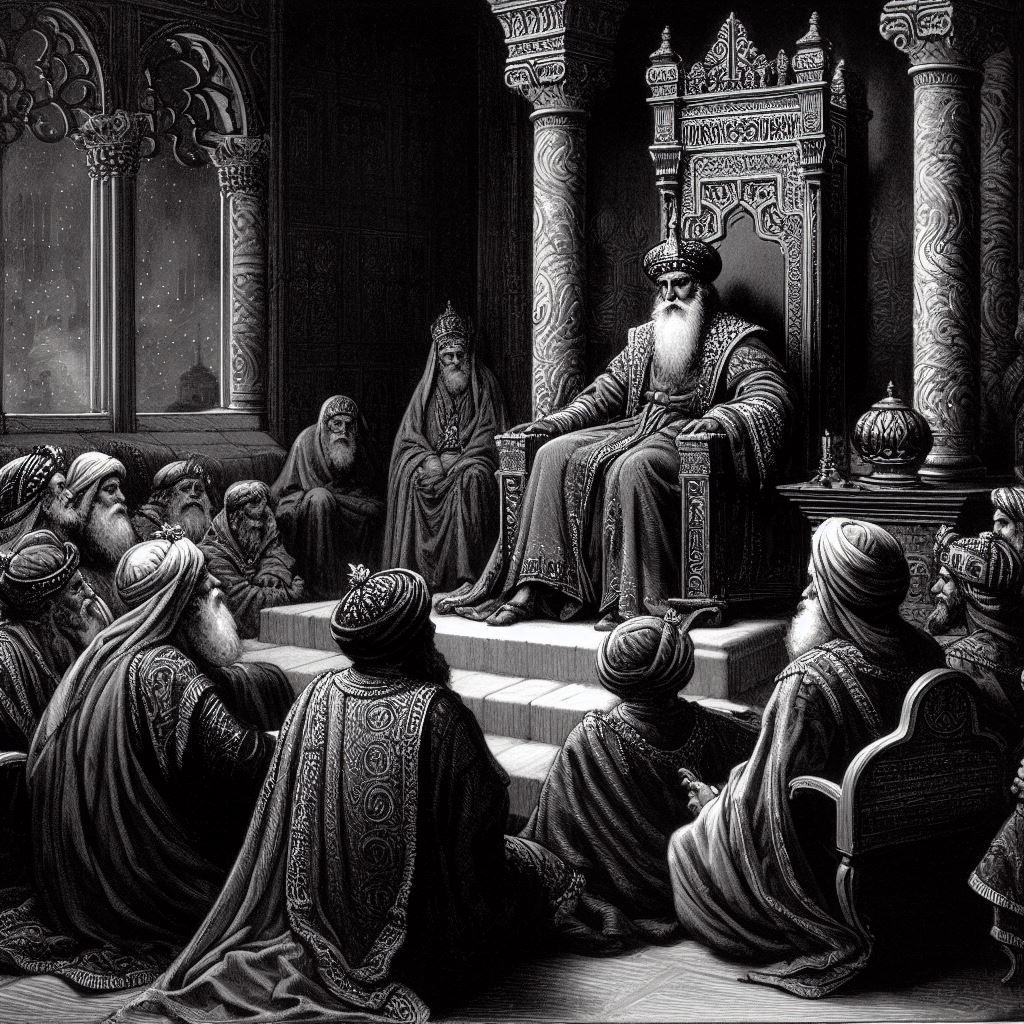
When Jesus was born in Bethlehem of Judea, in the days of King Herod, behold, Magi from the east arrived in Jerusalem, saying, “Where is the newborn king of the Jews? We saw his star at its rising and have come to do him homage.”

This is how the second chapter of St. Matthew’s Gospel introduces us to the noble Magi and the infamous King Herod. Their good and bad examples in the story of Christmas present much for us to learn from and reflect on.

The gospel tells us the Magi were astrologers from the East who saw a celestial sign which firmly convinced them the heir to the Jewish throne was born. The Magi were so convinced by this sign that they packed up valuable gifts and traveled far from their home to honor this newborn king. What are magi? “Magus” is the title which ancient civilizations east of Israel, such as the Persians and the Babylonians (or Chaldeans), bestowed upon their individual men of wisdom. These experts, their various teachers, priests, physicians, astrologers, soothsayers, Magicians, or interpreters of dreams, were collectively called magi.

How did the Magi who journeyed to Herod know how to recognize Heaven’s sign? In the 6th century before Christ., King Nebuchadnezzar of Babylon came and laid siege to Jerusalem. In response to his people’s unfaithfulness, God permitted them to be conquered and many Jews were taken east into Babylonian Captivity. The Babylonians reasoned that conquered peoples were more productive alive than dead and less likely to stage a successful rebellion when resettled outside of their homeland. Thus the Jews’ relocation deeper into the Babylonian Empire.

At that time, King Nebuchadnezzar told his chief chamberlain to bring in some of the Israelites of the royal line and of the nobility. He said, “They should be young men without any defect, handsome, proficient in wisdom, well informed, and insightful, such as could take their place in the king’s palace.” He was to teach them the language and literature of the Chaldeans. Among these chosen young men was the Prophet Daniel, who would go on to give prophesies about the coming of Christ recorded in the Old Testament book which bears his name.

Impressed by Daniel’s wisdom, Babylonian King Nebuchadnezzar “advanced Daniel to a high post… made him ruler of the whole province of Babylon and chief prefect over all the wise men of Babylon.” Perhaps Daniel’s prophetic wisdom, handed down for centuries, enabled these wise Magi from the East to recognize the significance of the starry sign and inspired them to journey to Jerusalem. The Bible does not record the Magi’s names, but a tradition hands down their names to us as Caspar, Melchior, and Balthasar.

Behold, Magi from the east arrived in Jerusalem, saying, “Where is the newborn king of the Jews? We saw his star at its rising and have come to do him homage.” When King Herod heard this, he was greatly troubled, and all Jerusalem with him.

More than thirty years prior to the arrival of the Magi, the pagan Roman Senate had appointed Herod as the region’s king. He is known as “Herod the Great” because of his vast territories and many building projects, including new cities, massive fortresses, and a complete renovation of the Jewish temple in Jerusalem. Herod heightened the architectural beauty of the temple to such greatness like it had in the days of King Solomon. However, Herod was not greatly loved.

He imposed extremely harsh taxes for the ancient world and ruled ruthlessly, executing many of his political opponents and family relatives, including three of his sons and at least one of his ten wives. No one ever mistook him for being the Messiah; besides being more of a pagan king than a Jewish one, Herod was not a descendant of Kind David like Scripture said the Christ would be. So when foreign Magi came to Jerusalem seeking the Messiah, word got around and King Herod became greatly troubled and all Jerusalem with him.

Why were the whole of Jerusalem troubled (that is, “stirred or agitated as in roiling water”) along with King Herod by this news of Christ’s possible coming? Because they knew Herod better than the foreign Magi did. The Magi had swooped in as innocent doves, but Herod was a cunning serpent. The Jews of Jerusalem realized King Herod was not eager to freely hand over power. Even if the Messiah had indeed been born, violence or a civil war would likely follow.

Assembling all the chief priests and the scribes of the people, [King Herod] inquired of them where the Messiah was to be born. They said to him, “In Bethlehem of Judea, for thus it has been written through the prophet: ‘And you, Bethlehem, land of Judah, are by no means least among the rulers of Judah; since from you shall come a ruler, who is to shepherd my people Israel.’”

There is a Jewish joke that two rabbis together produces three opinions, but here all of the priests and scribes assembled by King Herod cite the Old Testament Prophet Micah to identify Bethlehem as the promised Messiah’s birthplace. Maybe Herod asked them subtly amongst many other questions, inquiring about the Messiah’s birth in such a way that they did not suspect his motives. But if they grasped what Herod was after and why, then this was the first time Jewish religious leaders betrayed the Christ. Perhaps they reasoned that if God’s Anointed One had indeed been born in Bethlehem, then God would protect him, “For if the righteous one is the son of God, God will help him and deliver him from the hand of his foes.” God did protect the Infant Jesus, but Herod ended the precious lives of innocents in the little town of Bethlehem.

Our God will win in the end, all evil will ultimately be defeated, but we must not go along to get along in this world by cravenly cooperating with evil. Imagine if those religious leaders had refused to tell wicked Herod where the Messiah would be born; then they might now be celebrated throughout Heaven and earth as men who defended and died for Christ, instead of Bethlehem’s baby boys. We are all called to practice courage as Catholic Christians. Remember that it is better to innocently suffer or even die for Christ than to die as one of his enemies or betrayers.

I do not know whether the chief priests and scribes of the people knowingly betrayed the infant Christ, but there is no record in the Gospels of any of them going in search of the child. The Magi traveled hundreds of miles to find him, but it appears the priests and scribes never went the six miles from Jerusalem to Bethlehem in search of him. Beware of practicing your faith so feebly that you forego making the simplest sacrifices in service of Christ.

Then Herod called the Magi secretly and ascertained from them the time of the star’s appearance.

What was the star which the Magi saw? There are several interesting theories. It may have been one of the planets in a meaningful position, or perhaps a pair of planets combining their light. This is a possibility since the ancients deemed the other planets in our Solar System to be ‘wandering stars.’ Our word “planet” comes from the Greek word for “wanderer,” because the planets wander across the constellations. Some have suggested the Christmas star was a comet or a star’s supernova, but whatever the star was it was something too subtle for Herod to recall. In the ancient world, comets were regarded as foreboding omens and some supernovas have been notably bright to eye at night in recorded human history; however, the star which arose at Jesus’ birth was not of particular note to Herod and his royal counselors. This is why Herod must ascertain from the Magi the time of the star’s appearance.

As God once said, “As the heavens are higher than the earth, so are my ways higher than your ways and my thoughts than your thoughts.” This world and worldly people miss what is important, and what the world pays attention to are often fleeting things. So many things talked about today will be forgotten by next week, discarded like last week’s newspaper. Sports, movies, music, TV, social media, advertising, celebrities, politicians, and even much of the 24-hour news cycle will not show you what really matters. God tells us through St. Paul, “Do not conform yourselves to this age, but be transformed by the renewal of your mind, that you may discern what is the will of God, what is good and pleasing and perfect.” If you follow the nightly news you might naturally conclude that nothing good is happening anywhere, but remember that God is always quietly at work. I believe that many of the most important things which happened in the world today are good things, and things which the world will not notice, like the appearance of the star which announced our Savior’s birth, or a caravan of Magi beginning a journey west to meet God.

Herod called the Magi secretly and ascertained from them the time of the star’s appearance. He sent them to Bethlehem and said, “Go and search diligently for the child. When you have found him, bring me word, that I too may go and do him homage.”

Though their meeting was secret, Jesus says “nothing is concealed that will not be revealed, nor secret that will not be known.” Looking back, we can see that the Magi were sincere and faithful and sought to honor the Christ Child, while Herod was a cynical liar who sought to destroy him. No good or bad secret, of yours or mine or others’, will not be revealed in the end. St. Peter writes that “the day of the Lord will come like a thief… and the earth and everything done on it will be found out. Since everything is to be dissolved in this way, what sort of persons ought you to be? Conducting yourselves in holiness and devotion.” At the Presentation in the Temple, Simeon had told Mary that through her Son ‘the thoughts of many hearts would be revealed.’ That was true in the lives of King Herod and the Magi. In your personal response to Jesus Christ, your own heart is revealed, too.

After their audience with the king [the Magi] set out. And behold, the star that they had seen at its rising preceded them, until it came and stopped over the place where the child was. They were overjoyed at seeing the star, and on entering the house they saw the child with Mary his mother.

Notice that the Holy Family is no longer dwelling in a cave or a barn, but inside a house. This was not Christmas night but at least forty days later. We know this because when Joseph and Mary came to present Jesus at the temple, to offer a sacrifice God’s law required following the birth of a firstborn son, they could not afford a yearling lamb, so they offered “a pair of turtledoves or two young pigeons” instead, as the law of God permitted. And their humble gift pleased God. If the Magi had already visited them and provided their gift of gold, the Holy Family would have had the ability to purchase the more expensive lamb instead. The Magi arrived in Bethlehem between forty days and two years after Christmas. We know that upper bound from the cruel command which Herod issues later in hopes of destroying the Christ Child, targeting baby boys “two years old and under, in accordance with the time he had ascertained from the Magi.”

Upon entering the house the Magi unsurprisingly find the child with Mary his mother. She is the Lord’s new ark, his throne, the seat of Wisdom Incarnate. Sadly, some Christians consider her a harmful distraction from Jesus. However, the mother of the Christ is no hindrance to Jesus, for when you meet Mary she will joyfully show her Son to you.

[The Magi] prostrated themselves and did him homage. Then they opened their treasures and offered him gifts of gold, frankincense, and myrrh.

Unlike Herod, who grasps and clutches what he has, the Magi freely give gifts to Jesus. Three gifts of the Magi are mentioned by St. Matthew since they reveal who Jesus is; gold for a king, frankincense for a high priest and the true God, and myrrh resin used for external embalming, for one who has come to die. But the Magi’s best gift was the gift of themselves. What Christmas gift will you prepare for Jesus this Advent?

The Magi prostrated themselves, laying down on the floor with their faces towards the ground before Little Jesus in homage. Did they feel embarrassed to be bowing down to a baby, a child of poor parents in a humble house, far from the trappings of obvious power and glory? The Magi had deep faith in who Jesus was and faith in his future glory so they did not refuse to be seen paying him respect and honor. Do you feel embarrassed to be seen praying or honoring Jesus? Jesus says, “Everyone who acknowledges me before others I will acknowledge before my heavenly Father. But whoever denies me before others, I will deny before my heavenly Father.” Let us not be ashamed to acknowledge Jesus in others’ presence.

Having been warned in a dream not to return to Herod, [the Magi] departed for their country by another way.

These Magi took signs seriously. They previously followed such one sign hundreds of miles from home and it led them to the Christ Child. So they heed this message and bypass Herod on their trip back home. In that dream, the Magi might not have been warned that the Christ Child was in danger. Recall how Bethlehem is only six miles away from Jerusalem, just a two or three hour walk. If the Magi had sensed that Jesus was in danger, wouldn’t they have warned the Holy Family before they departed to caravan back east? Perhaps they did warn the Holy Family of possible danger, but Joseph and Mary simply did not know what to do next. But if this inspired dream told the Magi not to return to Herod without revealing the reason why, the Magi’s obedience provides a beautiful lesson for us.

Jesus and his Church teach us many precepts about what we must or must not do, what we should or should not do. There are good reasons behind these commands, and it is good to explore these teachings and ask questions to better understand them, but there will be times in your life when you are called to be faithfully obedient even before you fully understand. The Magi’s obedience served Jesus and likely saved the Magi’s lives. Your obedience to God will bless you, and more than you may realize.

[The Magi] departed for their country by another way.

They came to Jesus from one direction, but they departed for their country by another way. Servant of God Bishop Fulton Sheen makes a famous observation about this fact. He writes that it is fitting that the Magi left this way, since “no one who ever meets Christ with a good will returns the same way as he came.

When Herod realized that he had been deceived by the Magi, he became furious. He ordered the massacre of all the boys in Bethlehem and its vicinity two years old and under, in accordance with the time he had ascertained from the Magi.

Did Herod actually believe that the Christ Child has been born in Bethlehem? Probably not, but he was afraid that other people would believe it, rally around this child, and attempt to overthrow him. He reasoned that, ‘If all the baby boys in Bethlehem are dead, none of them can rise up against me as a rival.’

His calculation is like that of Pharaoh’s at the start of the Book of Exodus. Pharaoh said to his people in Egypt, “See! The Israelite people have multiplied and become more numerous than we are! Come, let us deal shrewdly with them to stop their increase; otherwise, in time of war they too may join our enemies to fight against us….” After enslaving the Hebrews, Pharaoh commanded all his people to “throw into the Nile every boy that is born, but you may let all the girls live.” Both Herod and Pharaoh aimed to prevent a future rebellion through the murder of baby boys. As ancient Machiavellians, they were willing to do great evils in hope of gaining good outcomes.

To the Romans, St. Paul records that ‘we are accused and some claim we say that we should do evil that good may come of it.’ Denying their false charge, he says, “Their penalty is what they deserve.” Remember that Christians are never allowed to do evil or sin in the hopes that good things will result. Good ends do not justify sinful means. Beware of how readily any evil deed can and will be justified with practical arguments.

When [the Magi] had departed, behold, the angel of the Lord appeared to Joseph in a dream and said, “Rise, take the child and his mother, flee to Egypt, and stay there until I tell you. Herod is going to search for the child to destroy him.” Joseph rose and took the child and his mother by night and departed for Egypt. He stayed there until the death of Herod, that what the Lord had said through the prophets might be fulfilled, “Out of Egypt I called my son.”

The Holy Family remained in Egypt until Herod’s death. Then Herod’s kingdom was divided among three of his sons: Archelaus who ruled Samaria and Judaea, Philip who ruled the Golan Heights, and Herod Antipas who ruled Galilee and the east bank of the Jordan River. This Herod Antipas is the Herod who would go on to murder St. John the Baptist and meet Jesus during the Passion, mocking him, dressing him in a splendid robe, and sending him back to Pilate. Fathers are important. I like to believe the sons of the Magi went on to find saving faith in Jesus Christ, then these sons would have born fruit following the example modeled by their fathers.

In conclusion, I invite you to take one or two of these ideas to contemplate and pray with. “Do not conform yourselves to this age, but be transformed by the renewal of your mind, that you may discern what is the will of God, what is good and pleasing and perfect.” What worldly things do you need to pay less attention to? What heavenly things do you need to pay more attention to? “The day of the Lord will come like a thief… and the earth and everything done on it will be found out.” So “what sort of persons ought you to be? Do not do evils in the hope that goods will follow. Do not justify your sins with rationalizations like Herod. Anyone searching for excuses can easily find them forever. Remember how simple obedience saved and blessed the Magi. We are called to be courageous and go extra miles for Christ. How can you better acknowledge him before others? In your personal response to Jesus, your heart will be revealed. Ask Mary’s help in this, for believers draw closer to her Son with her. What Christmas gift will you prepare for Jesus this Advent? Remember that the greatest gift to him is yourself. Embrace this Advent season with our Lord, for “no one who ever meets Christ with a good will returns the same way as he came.”
Call No Man “Father”?

November 5, 2023

31st Sunday in Ordinary Time
By Fr. Victor Feltes

Today’s gospel understandably prompts a question. Jesus says, “Call no one on earth your father; you have but one Father in Heaven.” So why are Catholic priests called “Father”? Some non-Catholic Christians object to calling Catholic priests “Father” and abstain from doing so. However, I have never witnessed anyone similarly object to using the title “father” for their own beloved, male, biological parent. Jesus also says, “Do not be called ‘Rabbi,‘” and “Rabbi” means “Teacher,” yet every Christian school is staffed by “teachers.” Does Jesus intend us to take his words here literally or is he teaching us something deeper?

It is good to use Sacred Scripture to interpret Sacred Scripture, since the Holy Spirit inspired every passage and, rightly understood, God’s Word will not contradict itself. When we read the New Testament we see many men referred to as fathers. The 1st Letter of St. John says, “I write to you, children, because you know the Father. I write to you, fathers, because you know him who is from the beginning.” St. Paul writes in his Letter to the Romans about “our father Abraham” and “our father Isaac.” The Holy Spirit also inspired St. Paul in his 1st Letter to the Corinthians to call himself a spiritual father to those Christians. He writes, “Even if you should have countless guides to Christ, you do not have many fathers, for I became your father in Christ Jesus through the gospel.” St. Paul similarly says in his Letter to Philemon, “I urge you on behalf of my child Onesimus, whose father I have become…” So we see that it can be fine to call some living or deceased men fathers. It can even be good to call yourself someone else’s father. So what does Jesus mean to warn us about by teaching, “Call no one on earth your father”?

Today’s gospel says Jesus was speaking to the crowds and his disciples about the authority and the flaws of the scribes and the Pharisees. In the ancient world, teachers would teach seated. For instance, Jesus sat down to give his Sermon on the Mount and sat in Simon Peter’s boat to preach to people gathered onshore. Ancient rulers reigned from chairs called thrones, so Christ is now “seated at the right hand of the Father.” Jesus said the Jewish scribes and the Pharisees had “taken their seat on the chair of Moses.” Before the establishment of the Church they apparently possessed legitimate authority to teach. “Therefore,” Jesus said, “do and observe all things whatsoever they tell you, but do not follow their example. For they preach but they do not practice.

Jesus noted these teachers’ lack of concern for others: “They tie up heavy burdens hard to carry and lay them on people’s shoulders, but they will not lift a finger to move them.” He noted their vain egotism: “All their works are performed to be seen. … They love places of honor at banquets, seats of honor in synagogues, greetings in marketplaces, and the salutation ‘Rabbi.’” Instead of this, Jesus teaches us: “The greatest among you must be your servant.”

We who are fathers, or teachers, or who have any role of authority must remain humble. We are not flawless or perfect. We are not the Lord, our God. We are not given authority over others in order to serve ourselves. Jesus says, “Whoever exalts himself will be humbled; but whoever humbles himself will be exalted.” Resemble Jesus Christ in this and your reward will resemble his. Christians must also remember that our fathers, our teachers, and all people in roles of authority on earth are not perfect. Even if they are trying their best, they are not the Lord, our God. Even popes, preserved by the Holy Spirit from teaching errors “ex cathedra,” can still misstep as shepherds in their words and actions.

A faithful leader is a great blessing; promoting truth, and love, and righteousness within their sphere of influence. That is why it is so important for each of us to be good servant-leaders. But we must not make idols of ourselves or others, as if we were perfect, this world’s savior, or the source of every good. We have only one such Good Teacher. We have only one such Father, in Heaven. And we have only one such Master, Jesus Christ our Lord, who is worthy of our absolute trust and devotion.

Our Greatest Moral Act

October 29, 2023

30th Sunday in Ordinary Time
Fr. Victor Feltes

Prior to his passing in 2011, the British author and journalist Christopher Hitchens was famously an atheist. In a June 2007 speech he said, “…I have a wager that I put to the religious… And you may be interested to know that I’ve tried it with everyone from the guy who founded Bush’s faith-based initiative… to various Baptist pastors, a Buddhist nun, a rabbi, a Charismatic Catholic, various pastors on radio and television, all up-and-down the country, no-not yet an answer from them. It’s simple: you have to name or cite a moral action performed or a moral statement made by a believer that could not have been made by an atheist. That’s all you have to do, and it cannot be done.” What moral thing can a Christian do that an atheist cannot?

Pastor Mike Winger is an Evangelical Christian in California who was watching footage of Christopher Hitchens and heard him pose this question in a debate, as he often would. Pastor Mike paused the video, sat and thought, “How would I answer that? …What is a moral thing a Christian could do that an atheist can’t do?” “And then,” he says, “it hit me—the most important moral thing that anybody can do: loving God. Like it doesn’t occur to the atheist, or even many Christians that were debating Christopher Hitchens, that loving God—the most important moral imperative of the universe—is something an atheist cannot do. So the atheist is deprived of the highest moral imperative that a Christian or a human is made for. That’s a big deal.

Indeed, Jesus cites this as the greatest commandment: “You shall love the Lord, your God, with all your heart, with all your soul, and with all your mind.” God is worthy and deserving of such love. He is our Creator, the source of our life and of every good thing we enjoy. And he not only deserves our gratitude but is worthy of our praise, for God is not merely good but the very essence of Goodness and Love. This divine love and goodness for us is best revealed to us through Jesus Christ.

The modern world neglects the love and worship of God. Many disregard the greatest commandment yet attempt to keep the second, which is, “You shall love your neighbor as yourself.” But what is authentic love and the genuine good? Many lust and call it love. Many steal and call it justice. Many murder and call it mercy. Not all loves are love, and without God love and goodness are harder to know and fulfill.

Many assume that God is unnecessary, that we can get on fine without him. Yet, in the words of the Vatican II document Gaudium et Spes on the Church in the modern world, “Without the Creator, the creature vanishes.” This is true in two ways. First it is literally true, because without God, whose essence is Existence (or Being), none of us creatures could continue existing. It is also true in another sense, since without our Good Creator who loves us, the objective value and importance of the human race vanishes.

The atheist scientist Carl Sagan once observed, “We’re made of star stuff.” Indeed, natural science indicates that the carbon atoms and all the other heavy elements inside our bodies were formed long ago inside of stars. It might at first feel inspiring to hear we are made from “stardust,” but Carl Sagan also said “there are maybe 100 billion galaxies and 10 billion trillion stars.” Does the material universe care when a trillion stars fizzle out? Natural science forecast the eventual, permanent death of every star. Apart from ourselves as a part of the universe, does the universe care what we do or what happens to us? Even if we are stardust, we are still dust which returns to dust through death. However, nature is not all there is.

Our supernatural God—who is above all, before all, behind and beyond all—loves and treasures each of us. Good and evil are not merely opinions from human preference, but objectively grounded eternally in him. And God would have us live with him forever, through the death and resurrection of Jesus Christ.

Much of the modern world enjoys the fruits of Christianity without acknowledging its Tree. But how is this sustainable? What becomes of human dignity if we are insignificant cosmic accidents? What becomes of human rights if nothing is really right or wrong? What becomes of human meaning and purpose if nothing survives death? Christianity’s blessed fruits, our dignity, rights, meaning and purpose, come from Christianity’s Holy Tree. This Tree is Christ and his Holy Cross.

Jesus Christ and his Cross are not mere myths but revealed in actual history. They bridge heaven and earth, east and west — uniting humanity with God and human beings with each other. They teach and enable us to love God with all our heart, soul, and mind, and to truly love our neighbors and ourselves. In Jesus Christ we have real hope and love which does not pass away. So let us worship God, for this is our highest calling, our greatest moral act, the source and the summit of our Christian life.

God & Government

October 22, 2023

29th Sunday in Ordinary Time
By Fr. Chinnappan Pelavendran

We generally hate to pay taxes, dues, and tithes. The rich and the poor both complain about taxes. We pay taxes to the government because the government maintains the infrastructure we enjoy and provides security for us. We are expected to contribute for other purposes, such as education and social services. However, we might forget that it is in the world of God that we live, move, and have our being: God is the universal King whose Kingdom does not have boundaries.

While we give respect to our president, we give honor, glory, and worship to God because He is the source of all power. The image of Caesar or the image of great men and women is found in our money, but the image of God is found in the souls of each one of us. The president, the prime minister, and every leader of the state belong to God.

The first reading teaches us about the relationship between God and Cyrus. He was the Persian king who conquered the Babylonians, who had taken the Israelites into captivity. Even though Cyrus did not know God, God worked through him. Talking to Cyrus through the prophet Isaiah, God says, “It is I who arm you, though you know me not, so that toward the rising and the setting of the sun men may know that there is none beside me. I am the Lord, there is no other.” (Isa 45:5-6) When the time came, King Cyrus allowed the Israelites to return home and he helped them to rebuild their temple. A very powerful king falls under the providence of God. God is working through him.

In the second reading, St. Paul, who was of course a great missionary, along with his friends Silvanus and Timothy, gives thanks to God for the Christians in Thessalonica. He tells the Thessalonians, the role of the Holy Spirit in their missionary work. “For our gospel did not come to you in word alone, but also in power and in the Holy Spirit and much conviction.” (1st Thess 1:5)

We know that Jesus the Son of God came into this world with a mission. Part of that mission was to teach us the truth about our relationship with God. In today’s Gospel, we see that Jesus was aware that the Pharisees and the Herodians were trying to trip him. Jesus gave the perfect answer to their difficult question. Jesus makes it clear that both political and religious obligations can be legitimately met. Paying taxes does not compromise one’s duties to God. Nor does serving God exempt one from civil responsibilities.

As Christians living in the world, we must respect our civil authority because in this way we cooperate with God’s plan. We give to Caesar by honest payment of taxes, voting in elections, serving in the military, obeying the law, and participating in public life. At the same time, we belong to God. We are celebrating World Mission Sunday today; it is our duty to preach the Good News to his people. This, too, is part of God’s plan.

The greatest way that we give back to God is to offer ourselves totally and completely for the service of God and our neighbor. There is nothing as great as offering ourselves to him who gave himself for us. God is generous to us, He gives us everything—even His own Son, “For God so loved the world that He gave His only Son.” How generous are we to God?

The Power of Anointing

October 14, 2023

By Joan Herrmann

Fr. Victor Feltes with his aunt and godmother, Joan Herrmann, at his priestly ordination party in 2009.

When I was due to have my first lithotripsy (a non-invasive procedure using shock waves to break down my rather ginormous kidney stones) – they discovered that I had a pericardial effusion, that is, fluid around my heart.

Over several months, I had to see a cardiologist, and they monitored the effusion to see if it would go away on its own. It did not. So, I was scheduled for a pericardiocentesis, in which they use a needle to drain the fluid.

A visiting specialist in this arena was called in to do the procedure. I was in an operating room with a team of six hovering about and prepping me, and the doctor started checking out the area with an ultrasound. He asked the attendants for a history of the images of the effusion around my heart – the last one was from a week earlier, showing a large fluid buildup.

He looked at me and said, “Joan, this is your lucky day, I am sending you home – there is no fluid surrounding your heart.” Honestly, he seemed a bit annoyed and disappointed that his skills were not necessary that morning! I had to “recover” for a bit as they had already administered some meds to make me woozy… all the time wondering at this miraculous turn of events and so very relieved that I did not have a heart issue!

The most intriguing part of my story: I had attended the funeral of my Aunt Irene (my dad’s sister) just three days earlier. My godson, Father Victor, said the funeral Mass. Afterwards he asked me how I was doing, and I mentioned the procedure that was coming up. He asked for details, and then asked if he could pray over me.

It was just he and I in the church vestibule, the rest of the family and attendees had left for the funeral luncheon. He asked the church attendant who was still there for some blessed oil – and then he prayed, laid his hands on me, and anointed me. I seriously felt at peace afterward, knowing that the procedure and potential heart issue was in God’s hands. Then and there, I just let go of the anxiety. Based on the doctor’s perplexity, I know that I was a recipient of a miracle that day.

I celebrate and acknowledge September 26th, 2016 every year, when God’s providence and grace made itself known to me in a very personal and tangible way. That it was my nephew and godson who prayed over me and was the conduit to God’s saving grace and mercy – all the more profound!

‘Keep My Commandments & Love as I Love You’ — The Riley Henneman & Emily Holloway Wedding

September 11, 2023

By Deacon Dick Kostner

These words of Jesus in today’s gospel spell out a wedding gift to Riley and Emily that enables them to live out a life together of happiness not only in this life but also an eternal life with Jesus and the children of the creator of happiness, in the kingdom of God. To Riley and Emily, your Father in heaven tells you today, to listen to His Son and you will find eternal happiness.

These words of Jesus will not eliminate for you pain and suffering in this life but it will allow you endure the misfortunes that all human beings will encounter in an imperfect world. I have spent in my life many hours of prayer asking the Father to share with me his gift of wisdom, so today I will share my thoughts on what it means to follow the Eleventh Commandment Jesus gave us to “Love as I have loved you.”

Oh, it may seem like an easy task when you face each other today for you love one another and feel that you have found the “perfect” spouse to spend a lifetime with, but I must burst that bubble and share with you some wisdom and the fact is that there exists no human being that is “perfect.” To be human is to be imperfect. You might try and fool yourself into thinking you’re perfect, but time will prove you wrong. Trust me when I tell you that God programmed spouses to remind you that you are not perfect. All we have to do is look at our Bible readings and we will find that our first pope, St. Peter, thought he was perfect and would never turn against his friend, Jesus, but guess what happened; he was put to the test and failed not once but three times in saying he did not know Jesus.

We all have fears that we will encounter in life, such as job failures; broken friendships; illnesses; and yes that big one, deaths that we must experience and live through. How in the world can we love someone who hates us? Answer—Ask Jesus. How can we overcome the feeling we get when someone we love, does something to us that causes us to wonder if they really care about my feelings? Ask Jesus. How do we have love for a God that allows his only son to go through pain and suffering and yes even death without offering help? Ask Jesus. And how about the big one why would anyone be willing to surrender their life for someone that is not a friend or for someone who not only dislikes you but hates you? Ask Jesus.

Riley and Emily, I know you really enjoy hunting as I do. But I will share with you some wisdom that I discovered recently that made me appreciate animals more to the point that I enjoy watching them teach me how to love, more than I enjoy pursuing them in the field. Recently, I watched a program on Paramount entitled “1883” about early settlers making there way to Oregon to find a new life. On their way, they were confronted with a shortage of food and one of the travelers set out with his young son who was about ten years of age to hunt for some food. They came upon some deer and the father allowed and taught his son how to aim his rifle and acquire his first kill which was a nice buck. After the kill the father took some of the blood of the deer and smeared it on his sons face and told him that this deer gave up its life so that they might live so its important that hunters express their thanks to animals killed for providing us with food, by saying “thanks.” He then told his son to say “thanks” to the deer, which he did.

This stuck in my mind and I thought about how Jesus gave up his earthly life and his friends whom he loved, so that we might live and how that mirrors our directive from him to “Love as he has loved us.” It also opened my eyes to how all of God’s creation has that same vocation, to give of oneself so that someone or something else can live even if it means giving up your life. Some times this isn’t easy but its worth it to know that God has blessed you with a spouse. Riley and Emily, God has given you another set of hands, feet, heart, and mind to consult with and care for you when something breaks on you and you are hurting and who will lovingly remind you that you are not perfect when we get out of hand. I learned this first hand when I had my knees replaced and Barb babysat me.

I also would recommend that, as that young man in the episode did, to give thanks to your spouse for their gift to you of their lives. I would also encourage that you, as a couple, at least once each week to give thanks to Jesus by attending his Mass, receiving the Living Bread, and thanking him for giving up his life so that you two may live a life of happiness not only in this world but also Everlasting Life in the Kingdom of God. Giving thanks acknowledges are pledge to Jesus to love as he has loved us. Now let’s celebrate the “Love as I have loved you” Sacrament of Marriage, where Riley and Emily will pledge their love for one another and become one in being through the love of the Father.

Like Gentiles or Tax Collectors

September 9, 2023

23rd Sunday in Ordinary Time
By Fr. Victor Feltes

Jesus teaches us today about how to practice fraternal correction. In short, if a brother or sister in the Church sins against you, approach him or her privately. If that fails to persuade, come again with one or two others. If that does not work, bring the matter to the Church. And “if he refuses to listen even to the Church,” Jesus says, “then treat him as you would a Gentile or a tax collector.” Jesus says to treat an obstinately unrepentant Christian like “a Gentile or a tax collector.” What are we to make of this?

How would the Jewish crowds hearing Jesus’ preaching treat Gentiles or tax collectors? The Old Covenant kept Jews and Gentiles (that is, non-Jews) separate. For example, archeologists have found stone signs from the Jewish temple dating to the Gospel era which warned Gentiles or foreigners not to enter its inner courts. Those signs’ chiseled, red letters declared in Greek: “No foreigner is to enter within the stone railing [balustrade] around the sanctuary and the enclosure. Whoever is caught will himself be responsible for his ensuing death.” Without full conversion to Judaism, Gentiles in those days could not enjoy full communion with God’s people. Meanwhile, Jewish tax collectors were viewed as collaborators with Israel’s enemies, traitors harming their own people, and shunned. So how would the early Church respond in the case of a persistently unrepentant Christian?

In the First Letter to the Corinthians, St. Paul addresses a scandalous matter brought to him concerning the Church in Corinth. He writes, “It is widely reported that there is immorality among you, and immorality of a kind not found even among pagans — a man living with his father’s wife,” that is, his stepmother. I imagine if you had asked this romantic couple why they were together, they might have answered, with sincerity, “We love each other!” They might have said what they were doing made them happy. They might have even said, “All love is love.” How would St. Paul answer? In today’s second reading from God’s inspired word, he says, “Love does no evil to the neighbor; hence, love is the fulfillment of the law.” But not all things called “love” are loving in accord with Christ’s commands. Not all pleasures lead to true and lasting happiness. Not all paths lead to God.

In the case of that scandal at Corinth, St. Paul the Apostle declares to the Church:

“The one who did this deed should be expelled from your midst. I, for my part, although absent in body but present in spirit, have already, as if present, pronounced judgment on the one who has committed this deed, in the name of our Lord Jesus: when you have gathered together and I am with you in spirit with the power of the Lord Jesus, you are to deliver this man to Satan for the destruction of his flesh, so that his spirit may be saved on the day of the Lord.”

St. Paul excommunicates the man. It is a strong response because grave sin is serious business. (The man’s partner who goes unmentioned was apparently not a member of the Church.) The goal of an excommunication, beyond the spiritual welfare of the community, is the sinner’s conversion and salvation. St. Paul’s loving hope was that this offender’s sufferings would eventually lead to the salvation of his soul. For better or worse, formal excommunications are uncommon today. Nevertheless, just because one’s body remains inside the church building does not mean his or her soul remains with Christ. If we are living in grave sin, we need to repent and go to confession. And if someone else gravely sins, we could be called, with discernment and prayer, to share the truth in love.

When Jesus says to treat the unrepentant like “a Gentile or a tax collector,” recall how he himself treated Gentiles and tax collectors. Though not yet converted, he loved them. He cared about them and wanted to draw them to himself. He wished for them to change their ways and eventually come into full communion with him in his Church. If we are prayerful and loving, Jesus will enable us to correct the errant in a Christ-like way, and perhaps they will be saved.

Like our Lord appointed the Prophet Ezekiel in today’s first reading to be a watchman for the house of Israel, the Lord may call on you to invite sinners to change their way. As a watchman who loves God’s holy city and wishes the blessed number within her to grow, without abandoning your post on the walls of truth, encourage those who are spiritually outside of her walls to pass through the gate of mercy.

Victory Over the Sirens’ Song

August 1, 2023

17th Sunday in Ordinary Time
By Fr. Victor Feltes

This morning, I wish to recount two tales from Greek mythology which shed light on how we can fully live the Gospel. I want to tell you the stories of how Odysseus and his ship’s crew and Jason with his sailors each survived encounters with the mythical Sirens. The Sirens were beautiful half-woman/half-bird creatures who would sing from their island to passing ships. Their song was so alluring and entrancing that sailors would jump overboard and drown in the sea or steer their vessels into deadly shipwrecks on the rocks.

In The Odyssey, the poet Homer tells how Odysseus on his epic voyage wished to hear the Sirens’ song but also wanted to survive with his men. So Odysseus instructed his crew to tie him to the ship’s mast telling them that, no matter how much he might beg them, they were not to untie him but bind him down all the more. Then Odysseus put wax into the ear canals of all his men so they could not hear the Sirens’ song. While rowing their ship past the Sirens, Odysseus pleaded to be released, but his crew faithfully followed his previous instructions until the Sirens were left far behind them and all of them survived.

In the Greek tale of Jason and the Argonauts, Jason and his crew survived the Sirens using a different approach. Aboard their ship was a great musician named Orpheus, a master of an ancient harp called the lyre. As they passed the Sirens’ island, Orpheus plucked the strings of his instrument. And though the Sirens’ sang their evil song, Jason and all his men were so engrossed in the beauty of their friend’s music that none of them were drawn to the Sirens’ temptation.

So we see three strategies reflected in these tales: Odysseus tying himself to the mast, his men keeping wax in their ears, and Jason and his crew being captivated by something more beautiful.

Some people approach certain sins like Odysseus, asking, “How far can I entertain this temptation without falling? How much can I enjoy this sin without suffering consequences?” But having such a divided heart makes it is very hard to restrain oneself. Others, with more success, approach such sins like Odysseus’ men by giving temptation no hearing. They are not seduced by temptation because they prudently avoid its near occasions. They know where they are weak and adjust their habits accordingly. This strategy should have some place in aspects of all our lives. However, the third strategy against the allure of sin is best of all: to be led by, delighting in, and loving the holy, good, and beautiful.

Jesus says, “The Kingdom of Heaven is like a treasure buried in a field, which a person finds and hides again, and out of joy goes and sells all that he has and buys that field.” The person in Christ’s parable sacrifices joyfully because he so values the treasure he has found. Jesus says, “The Kingdom of Heaven is like a merchant searching for fine pearls. When he finds a pearl of great price, he goes and sells all that he has and buys it.” A wise merchant can peacefully trade everything else for one most beautiful and desirable thing, to his great personal profit. Jesus, God, is the Pearl of Great Price. Christ’s Kingdom and life with his saints is the treasure we have found.

Let us pray: “Lord God, help me to love you more your goodness and beauty and love and to love all that you love as you love it.” Ask Jesus Christ to grow and deepen your love so that as you journey on your life’s voyage your faith may not be shipwrecked but be lived in fullest freedom with peaceful, loving joy.

“Take My Yoke Upon You & Learn From Me”

July 9, 2023

14th Sunday in Ordinary Time
By Fr. Chinnappan Pelavendran

When we are tested with trials and overburdened with pain and suffering, we ask, “God, Why me?” and we fail to count the innumerable blessing that we received. Arthur Robert Ashe was an American professional tennis player. He is considered the best African – American male tennis player of all time. He won three Grand Slam titles. Ashe was the first black player selected to the unites States David Cup team and the only black man ever to win the singles title at Wimbledon, the U.S. Open, and the Australian Open. At the end of his life, Ashe was dying of AIDS, which he got due to infected blood received during heart surgery in 1983. From the world over, he received letters from his fans. One of them asked, ‘Why does God have to select you for such a bad disease?’ To this Arthur Ashe replied, “The world over fifty million children start learning tennis, five million of them learn to play tennis, 50,000 come to the circuit, 5,000 reach the grand slam, fifty reach the Wimbledon, four to semi–finals, two to finals. When I was the one holding the cup, I never asked God why me. And today in pain, I should not be asking, ‘God, Why Me?’

All of us have problems in life. Big or small, these problems burden us and make us sad, tired, and distressed. When these problems go unsolved for a long time, we feel disappointed and become depressed. One of the most comforting words of Jesus in the gospel is, “Take my yoke… and you will find rest.” Anyone who feels tired, disappointed, abandoned, or depressed can easily be uplifted by the comforting promise of Jesus that He will give rest.

Here is the Good News. To all those who are alone and in need of someone to talk to, those who have no one to ask for help, and those who feel lost, lonely, and hopeless, worry no more. There is someone to turn to, someone who can listen to our endless complaints, a shoulder to cry on. He is Jesus who says, “Come to me, all you who labor and are burdened, and I will give you rest. Take my yoke upon you and learn from me, for I am meek and humble of heart, and you will find rest for yourself. For my yoke is easy, and my burden light.

Today’s readings give the same message in a more powerful way. In the first reading, the Prophet Zechariah consoles the Jews living in Palestine under Greek rule, promising them a meek Messianic King of peace riding on a donkey, who will give them rest and liberty. The Responsorial Psalm praises and thanks a kind and compassionate God who raises up those who are bowed down. In the second reading, St. Paul tells the Christian community in Rome about two yokes, namely, the flesh and the Spirit. He challenges them to reject the heavy yoke of flesh and to accept the light of the yoke of the Holy Spirit. In the gospel, Jesus offers rest to those “who labor and are burdened.”

We need to unload our burdens before the Lord. That may be our worries, anxieties, problems in the family, suffering, health, security, and a thousand other things. Give everything to Jesus. Our Lord will transform our lives. Try to count on your blessing, not your worries.

8 Great Reflections on the Passion

April 1, 2023

Palm Sunday (Year A)
By Fr. Victor Feltes

Today’s Gospel is long, but this reading is rich. So here, briefly, are eight great reflections on the Passion.

  • At the Last Supper, Jesus told his apostles, “One of you will betray me.” They each replied, “Surely it is not I, Lord?” except for Judas Iscariot, who said, “Surely it is not I, Rabbi?” (Rabbi means teacher.) There is a big difference between Jesus just being a teacher and being your Lord.
  • In the Garden of Gethsemane, Jesus lovingly willed to save us but his humanity understandably dreaded the tortures his self-sacrifice could entail. He prayed: “My Father, if it is possible, let this cup pass from me; yet, not as I will, but as you will.” In this, Jesus shows us that we are allowed to pray for any good thing, even for ourselves, if we remain open to God’s will.
  • When Judas arrived in the Garden, he approached Jesus and kissed him saying, “Hail, Rabbi!” Jesus replied, “Friend, do what you have come for.” Jesus did not say this sarcastically; Jesus would die for Judas. Our Lord remains a friend towards us even if we betray him.
  • When the guards and soldiers laid hands on Jesus to arrest him, Peter struck the high priest’s servant, cutting off his ear with a sword. But Jesus commanded his disciple to sheathe the sword. Christian violence cuts off the ears of our enemies’ servants making them unable to hear the Gospel.
  • At his religious trial before the Sanhedrin, Jesus responded with silence, until the high priest said, “I order you to tell us under oath before the living God whether you are the Christ, the Son of God.” Then Jesus affirmed it was so. Even when the high priest’s judgment was erring, Jesus obeyed his legitimate religious authority.
  • In his trial before Pilate, the governor hoped to let Jesus go: “Which one do you want me to release to you, Barabbas, or Jesus called Christ?” The name “Barabbas” means “the son of the father.” Barabbas was a murderous rebel, a political revolutionary. Like the crowd that day, every generation is tempted to choose a different savior than Christ.
  • On his Cross, Jesus cried out, “My God, my God, why have you forsaken me?” This is the beginning of the 22nd Psalm. That psalm says, “They have pierced my hands and my feet; I can count all my bones.” Not only did this psalm prophesy Christ’s sufferings but also his resurrection, saying, “I will live for the Lord; my descendants will serve you.”
  • Finally, when Jesus died, “the veil of the sanctuary (inside the temple, which separated the place of God’s presence from the rest) was torn in two from top to bottom.” This veil was torn from the top as an act of God. Formerly, only the Jewish priests could even enter the building. Now, today, we as Christians are invited to approach and adore and receive our Lord in his temple.

Zephaniah & the Beatitudes Call to Conversion

January 29, 2023

4th Sunday of Ordinary Time
By Fr. Victor Feltes

Jesus’ Beatitudes are words of consolation and hope but they are also a call to conversion. Our first reading today comes from the Old Testament prophet Zephaniah who proclaimed God’s words in the land of Judah. Zephaniah denounced his people’s unfaithfulness, warning them:

“Near is the great day of the Lord,
near and very swiftly coming…
A day of wrath is that day,
a day of distress and anguish,
a day of ruin and desolation…
A day of trumpet blasts and battle cries
against fortified cities,
against lofty battlements…
Because they have sinned against the Lord.”

Less than one lifetime after Zephaniah preached, Jerusalem was conquered by the Babylonians and Judah’s earthly kingdom fell.

Zephaniah denounced those rich in material things, who hungered for feasts and comforts, who thirsted for wines and pleasures, who fashionably clothed themselves in unrighteousness. These proud rich would not be satisfied. Zephaniah said, “They will build houses, but not dwell in them. They will plant vineyards, but not drink their wine…. Their wealth shall be given to plunder and their houses to devastation…. Neither their silver nor their gold will be able to save them.

However, Zephaniah’s strongest condemnations denounced the idolatry among his people. Some worshipped idols in pagan temples, while some bowed down on roofs to worship stars, and some bowed down to the one true Lord God but would swear oaths by other gods. Zephaniah notes some said in their hearts, “The Lord will not do good, nor will he do harm.” They lacked faith, and hope, and love for him in their divided hearts. But with unclean hearts, they would not see God.

Today we hear Zephaniah say, “Seek the Lord, all you humble of the earth… seek justice, seek humility; perhaps you may be sheltered on the day of the Lord’s anger.” Then Zephaniah announces that the Lord “will leave as a remnant in your midst a people humble and lowly, who shall take refuge in the name of the Lord: the remnant of Israel. …They shall pasture and couch their flocks with none to disturb them.”

In fulfillment of God’s word, in response to a Jewish revolt, the Babylonians conquered Jerusalem in 587 B.C. They tore down the city’s walls, systematically burned its palaces and houses, and destroyed the Jewish temple. Those Jews who had made war were either killed or deported far away to Babylon, along with everyone else their conquerors saw as a threat. Yet “they left in the land of Judah some of the poor who had nothing and at the same time gave them vineyards and farms.” Blessed were the meek, for they inherited the land.

Yet even before Judah was conquered and thousands of Jews were carried off to Babylonian exile, God promised them a future return to Jerusalem. The Lord foretells through the Prophet Zephaniah: “At that time I will bring you home, and at that time I will gather you.” Blessed would be those people who remembered to mourn the loss of God’s temple and holy city, for they would be consoled. Less than one lifetime after their departure, once that Babylonian empire had been conquered by a Persian empire, the Jews were allowed to return home.

The words of Jesus and Zephaniah and the stories of their people should give us pause today, for “near is the great day of the Lord” always. How are we using our great riches? Which desires do we feed? Do we mourn the evils that we see in the world? Unless we hunger and thirst for righteousness, we will never be satisfied. We might not worship golden idols or swear by pagan gods, but idolatry still exists today. If our priorities (as reflected by our finances, Sunday sports or vacations, worldly desires or addictions, or any other things) usurp our Lord from his rightful throne in our hearts, then our hearts are not yet so pure as he wills them to be.

Seek the Lord… seek justice, seek humility… do no wrong and speak no lies.” Practice mercy and pursue peace. Christ offers you his strengthening grace. Blessed are they who heed what Jesus tells us gains his Kingdom.

Something New Under the Sun — Funeral Homily for Marvin Weber, 94

December 30, 2022

By Fr. Victor Feltes

Ancient people thought about time differently than us. They did not picture time to be like a flying arrow, moving forward toward some end and purpose. They imagined time to be like a flat circle, going round and round. They saw history, in its broad strokes, repeating itself. The same four seasons, cycling over and over. Every empire eventually being replaced by another. This attitude is reflected in the Old Testament book of Ecclesiastes, whose author wrote:

“What has been, that will be; what has been done, that will be done. Nothing is new under the sun! Even the thing of which we say, ‘See, this is new!’ has already existed in the ages that preceded us.”

That author adds:

“There is no remembrance of past generations; nor will future generations be remembered by those who come after them.”

Indeed, very few people’s names are remembered by this world after just a handful of generations. To keep track of time in the ancient world, the custom was to refer to the years of the ruler’s reign (such as “the 15th year of the reign of Tiberius Caesar”). Yet those earthly rulers came and went, as history spun round and round with no apparent purpose.

But then, unexpectedly, something truly new happened under the sun. It is an event that we always celebrate during the present time of year. At the center of history, God entered history, becoming a human being like us. “Behold, God’s dwelling is with the human race.” We now number all the years of time as before or after the Christmas birth of Christ our King (“B.C.” or “A.D.”). Jesus says, “I am the Alpha and the Omega, the beginning and the end.” His life reveals that our lives, this world, and all human history are not merely random accidents but exist with purpose in God’s plan. As Pope Emeritus Benedict XVI said, “Each of us is the result of a thought of God. Each of us is willed, each of us is loved, each of us is necessary.”

We are gathered here for Marvin’s funeral at a meaningful time. He passed away two weeks ago, before the celebration of Christmas. Today, we offer his funeral Mass during the week between Christmas Day and a new year. His peaceful passing comes, in a sense, both before and after Christmas. Year after year, Marvin already knew and looked forward to the joy of Christ’s coming. He had already experienced great joy in Jesus but had not yet experienced its fullness in the time to come. The life of Jesus Christ causes us to see a Christian’s death through eyes which are different than the world’s. For a Christian, dying, “this momentary light affliction, is producing for us an eternal weight of glory beyond all comparison.” So Marvin’s passing is more than just a sad parting; it is a cause for joy in us as well.

Marvin married Betty inside this church 65 years ago. She told me many stories about her husband’s life, and there is no way I could retell them as thoroughly or as well as she. But I would like to highlight three anecdotes: First, Betty told me about Marvin’s dad who, when Marvin was about seven years old abandoned his family. Thirty years later, he appeared at his son’s doorstep and said, “I’m here.” He offered no apology, he gave no explanation, and Marvin was not happy about that, but Marvin valued forgiveness and forgave him. Marvin said he wanted his children to have a grandfather; he wanted them to know his father. Second, Betty tells me regarding Marvin, “If he found two pieces of wood he would make something.” Marvin has loved woodworking. He delights to repair or remake things into something greater. And third, at an age of 94, Marvin died relatively young. Because of the longevity of many of his ancestors who lived to be more than 100, Marvin died at a younger age than he had expected. For this reason, according to Betty he often put projects off for later saying, “I’ve got time.”

In our Gospel, Jesus tells us, “Where I am going you know the way. … I am the way and the truth and the life. No one comes to the Father except through me.” Christians’ lives throughout the centuries will reflect the One whom they have followed. For instance, despite our past unfaithfulness, our abandonment of God, Jesus forgave us, because he desired that we would come to know his Father. Christ took two pieces of wood for his Cross and used them to repair us and make us into something greater. And though our Lord died relatively young, with the resurrection he’s got time—everlasting life—to share with us forever.

The world will not remember us a few generations from now, but though the world may forget us, Jesus never will. Christ our King has come; entered time, our world, and our humanity to save us. So on this day of Marvin’s funeral, we are consoled by Jesus’ words: “Do not let your hearts be troubled. You have faith in God; have faith also in me. … Behold, I make all things new.”

Good News Needed by Each & All

December 24, 2022

Christmas Mass
By Fr. Victor Feltes

I proclaim to you good news of great joy!” Today is born our Savior, Christ the Lord. Why is his birth such good news? Well, why do people still need Jesus Christ today?

Would you say we presently live in a time of great wisdom? A time of advanced technology? Certainly. A time with more wealth than previous centuries? Sure. But is this a time of great wisdom? Relatively few know how to live rightly, anchored firmly in hope, and thrive. Would you say we live in a time of great heroes? Who would be our heroes now beyond paid athletes or fictional characters with superpowers? No U.S. politician in national office today has an approval above 50%. And even the best leaders among us are flawed. Would you say we live in a time of strong fatherhood? Rather, families are increasingly strained or broken. And many people have never had a good father. Would you say we live in a time of great peace? Bombs are not exploding around us like in Ukraine, but is there peace in our culture and peace in all our souls?

The good news of Christmas, as the Prophet Isaiah foretold in our first reading, is that ‘the people who walk in darkness see a great light; upon those who dwell in the land of gloom a light shines.’ “A child is born to us, a son is given us… They name him Wonder-Counselor, God-Hero, Father-Forever, Prince of Peace.” In our foolish world, Jesus is the wisest teacher whose counsel wondrously changes lives. In our unvirtuous world, Jesus is the only flawless hero; he is God among us. In our world lacking fatherhood, Jesus says he “only [does] what he sees his Father doing”— so Jesus acts and loves like his Good Father forever. And in our troubled world, Jesus is the Lord who would bring us peace, both around us and within us.

In the days of the birth of Jesus, St. Matthew’s Gospel notes a decree had gone out from the Roman Emperor that the whole world should be enrolled in a census. (This brought the Holy Family to Bethlehem.) Caesar Augustus wanted everybody grouped and tallied for his worldly purposes: to tax more efficiently, to draft more men for war, and to dominate more effectively. Beginning with the birth of Jesus at the center of history, God decrees for all the people of the world to be gathered into his Church for his holy purposes. It is not to tax us, but to give us his gifts. It is not for waging wars, but to bring about his peace. It is not to dominate us, but to share with us the freedom of his Kingdom. Like St. Paul says in our second reading, the grace of God has appeared in Christ to save and train us all to reject godless ways and worldly desires and to live temperately, justly, and devoutly in this age, as we await our blessed hopes: the return of Christ, the resurrection of the dead, and everlasting life with him.

On Christmas Day, Divine Providence brought the Holy Family (Jesus, Mary, and Joseph) and the shepherds all together. God’s Providence has likewise brought you and all of us together this morning with the Lord Jesus in this Church. Will you be here next Sunday? I pray the joyful news of Christmas will bring you back again. The Lord who loves you calls you. Our world needs Jesus Christ profoundly and so do you.

The Openness, Obedience, & One Word of St. Joseph

December 18, 2022

4th Sunday of Advent
By Fr. Victor Feltes

Our Gospel this final Sunday of Advent centers on St. Joseph. It recounts how St. Joseph received the stunning revelation of Mary’s pregnancy. We can learn from the great saint’s response — from his openness, his obedience, and his one word.

Mary was already Joseph’s wife when she conceived her child. In their Jewish culture, a newlywed couple would live apart for the first year of marriage. Thereafter, the husband would bring his betrothed into his home to live with him. When Mary conceived a child (whom Joseph knew was not his) why did he decide to divorce her? Was Joseph heartbroken because he believed she had betrayed him? Or was Joseph frightened, because he believed her story of the Annunciation and thought himself unworthy of this holy woman and her holy child? Whatever the case, Joseph was a righteous man and unwilling to expose Mary to shame, so he intended to divorce her quietly.

Then an angel of the Lord appeared to him in a dream and said, “Joseph, son of David, do not be afraid to take Mary your wife into your home because it is through the Holy Spirit that this child has been conceived in her. She will bear a son and you are to name him Jesus, because he will save his people from their sins.” Once Joseph awoke, he did as the angel of the Lord had commanded him and took Mary into his home.

I used to fret very much about precisely discerning God’s will. “What if the Lord wants me to do a specific thing but I can’t figure it out?” During my college and seminary years, I thought I had a vocation to the priesthood but how could I be sure? I worried, “What if I get this discernment terribly, terribly wrong?” Then a holy friend gave me peace of mind by pointing to St. Joseph. When Joseph was about to make a terrible mistake by separating himself from Mary and Jesus, it only took one night’s dream to get him back on the right track because Joseph desired to do whatever God willed. God can easily redirect a willing heart.

People sometimes complain, “I wish God would just tell me what to do!” But unless we are open to doing God’s will, what good would his directions do us? Imitate St. Joseph in his openness. Like with the Blessed Virgin Mary, Joseph’s openness allowed God to do great things through him. So resolve your will and pray for the grace to always be open to God’s will like St. Joseph. Another St. Joseph trait of we can imitate and profit from is his simple obedience.

St. Matthew’s Gospel records, “When Joseph awoke, he did as the angel of the Lord had commanded him and took his wife into his home… and he named [the boy] Jesus.” On this occasion, like later when told to flee to Egypt or told to return to Israel, Joseph does point-by-point what God commands. Like Moses in the Old Testament, whenever God instructs Joseph to do (A) and (B) and (C), the author notes how Joseph then does (A) and (B) and (C).

Moses and Joseph’s duties were different from ours today. We will not construct an Ark of the Covenant, nor protect and provide for the Holy Family, but each of us has persons and tasks entrusted to us by God; people to care for and works to be done. You already know a great deal of what God has commanded you to do; your own (A) and (B) and (C) according to your state in life. You will not fulfill your missions perfectly—and that’s OK—but imitate St. Joseph in his simple obedience because your basic, God-given duties are more important than you realize.

A third and final feature of St. Joseph reflected in today’s Gospel is his single word. Did you ever hear that in all of Scripture there are no recorded quotes from St. Joseph? It’s true: Jesus has many, Mary has several, but Joseph has none. Now there is no evidence that St. Joseph lacked the ability to speak or ever took a vow of silence.  Joseph probably said many things that were simply not written down. Yet today’s Gospel contains the strongest evidence of his having said any one particular word. What was that word?

The angel in Joseph’s dream said of the unborn child: “You are to name him Jesus.” And when Joseph awoke, he did as the angel of the Lord had commanded him. Joseph named him Jesus. The name of Jesus was St. Joseph’s greatest and most important word. Ever after, the name of Jesus defined his life.

Learn from St. Joseph, the husband of Mary and foster-father of Jesus. Imitate his openness to doing God’s will whatever it may be. Benefit from practicing his obedience in your daily duties. “And whatever you do, in word or in deed, do everything in the name of the Lord Jesus,” like St. Joseph did.

Hope, Joy, & Salvation

December 11, 2022

3rd Sunday of Advent
By Fr. Victor Feltes

On Friday afternoon, while Fr. Chinnappan offered the funeral Mass for Dr. John Eberle, I drove to McDonnell high school in Chippewa Falls to hear sacramental Confessions with several other area priests. Before everyone else arrived, I was able to spend some time with Fr. Paul Hoffman, whom I had not seen for a while. He heard my Advent confession and afterwards I asked him about what he had been reading lately. Fr. Paul has previously told me that his senior priest status allows him read more theology books like he has desired, to learn more about God before he ultimately departs to go to him. One of the questions Fr. Paul has been pondering lately is, “What will bring them back?” That is, what will bring the younger generations back to church?

I am now almost 42 years old, and I am among the youngest people at most Sunday Masses. This is a troubling trend. Young adults today usually do not believe they need the Church. Many disbelieve they even need Jesus Christ’s salvation. What could change this outlook? What might bring them back? The answer which occurred to me was: “Real Hope.”

As the culture continues to abandon the wisdom it has inherited from Christianity, the consequences of foolishness and sin will become increasingly clear. It will be seen in the sickness of society and felt in the pain of peoples’ personal lives. A life without true meaning or purpose in a world “with no hell below us and above us only sky” is an emptiness full of suffering. Where can people discover real hope—hope in something within this world and yet beyond this world? This real hope is found in Jesus Christ and his Catholic Church.

After our first round of hearing confessions from students and staff in the gym, we priests got a bit of a break, so I walked over to see Fr. Bill Felix and Fr. Brandon Guenther. We chatted a bit about Bishop Callahan, who was hospitalized with an illness this week, Then I asked them a question: “What are you thinking about preaching this weekend? I’m still looking for ideas.” Fr. Felix said, “Well, there’s always the obvious: Joy.” (“Oh, of course,” I thought. This Third Sunday of Advent is Gaudete Sunday and in Latin, “Gaudete” means “Rejoice.”)

Fr. Felix said the great thing about joy is that we can have it even when many things in our lives are bad. Happiness depends upon what happens, but joy does not and so it endures. To press this idea, I asked them in so many words how someone can feel joy when things are crummy? The answer given by both priests was: “Hope.” Fr. Guenther added, “Joy without hope is just optimism.” This reminded him of an old, witty observation: “An optimist is a happy fool. A pessimist is an unhappy fool. But someone with hope (real hope) is not a fool and will one day be happy.

We then returned to our confessionals to hear the older students’ confessions. Some people come to Confession after many months and confess rather superficially, but I was edified by hearing these teenagers confessed. Unlike many young people of their generation, their earnestness, honestly, and striving after God and his holiness were evident. I expect Christ’s Church to struggle in the coming decades, but our Faith is far from dead. Christian hope produces joy and manifest joy shines out. It shines out in the darkness of this world, drawing others to Jesus Christ and his Church. Our Lord lives and we possess a real hope. So let your Christian hope generate joy in you, and your joy will help save souls.