Archive for the ‘Culture’ Category

The Kingdom in his Garage — Funeral Homily for John Schwartz, 81

December 2, 2022

By Fr. Victor Feltes

Many stories could be shared about John; as a friend or neighbor, as a father to six children, or as a husband to Vernetta, whom he married sixty-one years ago today. He did interesting work for both multinational businesses and local organizations throughout the years. And even after his final job concluded, his kids tell me “he never retired.” I wish to tell you today about one of the ways John kept himself busy.

Whenever he drove a load to the Bloomer Recycling Center he might return home with more stuff than he had left with. In what others had rejected as trash, John saw value. He often said, “Everything is fixable.” John took his found-treasures back to a four-car garage in the backyard of his home. His kids tell me, “When he wasn’t working, he was there…” working.

The interior of John’s garage featured cupboard cabinets; each one painted to match and labeled to indicate the tools, parts, or materials stocked inside. John’s garage was a warm place—in both senses of the word. Throughout the colder months, John used his wood stove to keep the inside temperatures around 75 or 80 degrees. And once hotter weather came, John would open up his garage doors, sit in the doorway with a toothpick between his teeth, drinking coffee and waiting for people to stop-by to visit.

He was happy to share his time and talents with them, generous in sharing his tools or efforts whenever asked. His children tell me John loved that garage, saying, “His garage is his kingdom.” All good things in this world reflect the goodness of our Creator and our Redeemer. The beautiful realities we see are icons of invisible realities. And so, John’s garage is a partial glimpse of the Kingdom of God.

Because of humanity’s sins and corruption, we were rightly condemned. But we were not to be rejected, left to be abandoned, forever. God continued to value us. He saw treasure in our trash. And Jesus came down to redeem us, intending to take us home. Christ is always working, and everything is fixable, because “all things are possible for God.”

Jesus prepares a special place for each of us. Enthroned in heaven, he opens the doors to receive us. His Father’s house is a very warm place—in both senses of the word. We must be prepared to stand in the intense fire of God’s all-holy presence and infinite love for us. Thankfully, Christ is generous in sharing with us his tools and helping graces, so that we may become perfect (truly “good enough”) through faith in him. Through Jesus Christ, our Lord, about whom countless stories could be told, John and you and I can all be together in the Kingdom of Heaven.

Our Lord Jesus Christ, King of the Universe

November 20, 2022

By Fr. Chinnappan Pelavendran

Many years ago, Mohandas Gandhi the great Hindu religious leader in India wanted to overthrow the British Empire through love not violence. Christianity has not failed. It’s never been tried. As we celebrate this Feast of Christ the King, we need to follow Jesus peacefully.

What’s wrong with calling Jesus the King? A king is identified three ways: power, wealth, and force. With Jesus none of this is true. The power of kings is to control people and be the boss over them. His apostles James and John wanted the honor to be seated at the right and left hand of Jesus. Jesus was upset and rebuked them saying that the power of Jesus is to love and be a servant to all people.

The kings of this world are identified with wealth, they have more than they could possibly ever need. They draw money from everyone even the poor and build up their own prosperity. There is an incident in the Gospel where a young man asks Jesus “what must I do to gain everlasting life?” Jesus says, “Keep my commandments.” He replies, “I have done that from my youth.” And Jesus says if you want to truly be perfect to follow me now, go sell everything you have. Give it to the poor then come and follow me. The wealth of Jesus is His people especially the poor. He loves all of us and wants best of everything for us.

The kings of this world want to have superior dominance and control in this world. They will even go to war to get their ways. Jesus rejected all violence. While Jesus was praying in the garden of Gethsemane, the soldiers came to arrest Him. One of the disciples drew his sword and cut off the ear of the high priest’s servant. Jesus said put away your sword. Jesus healed the servants’ ear. Jesus rejected violence. Those who want to live by the sword die by the sword.

Human kings follow the ways of the world, not the ways of Jesus. So it’s really a contradiction to think of Jesus as a king of this world. We think of the aspects of earthly kings: power, wealth and force and try to make that the way of Jesus. If we are going to follow the way of Jesus, live Christianity, don’t talk about it. Gandhi says “it has never been tried, it has not failed, it just has not been tried.” Each of us is called now to try to live the way of Jesus, really change according to his ways and his thoughts.

Is not this one of the reasons why we and the church and everyone throughout the world are fascinated with Pope Francis, the Bishop of Rome. When he was elected the first thing he did was bow and seek the blessing of the people. He wants to be our servant. In a short time after he was elected, he went to visit the prison, knelt down and washed the feet of the prisoners. He’s showing time after time how he reaches out to the poor, the vulnerable, the way Jesus did. We rejoice in it because it’s clearly the way of Jesus and that’s what we are called to do.

The kings and rules of this world want to dictate and control everyone. The kingship of Jesus is different from the kings of this world. He loves, forgives, accepts, and He rules over us with mercy and compassion. We are all equally important to him.

Good Tweetman Speaks

November 7, 2022

By Fr. Victor Feltes

This image from The Simpson’s provided the avatar (or avi) which Goodtweet_man used for his pseudonymous Twitter account.

Good Tweetman (Goodtweet_man) is a Catholic attorney in Kansas who, until recently, had a significant and devoted following on Twitter. There he would crack jokes, post others’ prayer requests, and offer sometimes salty commentary on religion and politics. But on October 27th, the same day that Elon Musk was completing his purchase of Twitter, Goodtweet_man’s account was ‘permanently suspended’ by the company for “violating our rules against abuse and harassment.”

Goodtweet_man had tweeted in reference to the Catholic bishops of Germany, whose ongoing “Synodal Way” drew a warning from the Holy See this July. (The Vatican statement clarified that “the ‘Synodal Way’ in Germany does not have the power to compel the bishops and the faithful to adopt new ways of governance and new approaches to doctrine and morals” and to do so “would represent a wound to ecclesial communion and a threat to the unity of the Church.”) The image below is a screenshot of Goodtweet_man’s suspension notice from Twitter which includes his flagged tweet and the policy Twitter found he had violated:

As word of his suspension spread throughout the Twitterverse, The Pillar editor and cofounder J.D. Flynn and others posted the hashtag #FreeGoodTweetman, and various tributes, satires, and jokes, were shared about the situation. The next day, the ambassador of Hungary to the Holy See and the Sovereign Order of Malta, Eduard Habsburg, tweeted: “This is a reminder that @Goodtweet_man is still suspended. Twitter, you don’t want all of us to lose faith in you, right?” Though the online clamor has since died down, many of Goodtweet_man’s former followers still hope for his account’s reinstatement.

This is his first public interview following the suspension.

What is your perspective on this suspension by Twitter?
While I should very much not have said what I said as it was uncharitable, it is completely silly that this of all things garnered a permanent suspension. I am aware that even people who aren’t particularly fond of me thought the same. It was likely just an algorithm.

Have you appealed your suspension? What are your hopes your account will be restored?
I have appealed the suspension, and I would have to imagine it gets restored if a human being at their offices gets some eyes on it. Of course, that may be the biggest obstacle I face.

What has your life been like unplugged from Twitter?
Well I do have an alt account which I’m slowly introducing. The name isn’t particularly vulgar but I don’t think it particularly would fit an interview from a priest we’ll say. Also, for now, it’s somewhat nice not having to deal with the people I don’t like knowing about my twitter. It’s been nice to have a little bit of a respite in any event.

Are you concerned that this other account might run afoul of Twitter’s ban evasion policy?
No, I made that account a couple years ago and the rules specifically state that only accounts made to evade the ban are subject. My account wasn’t made to evade the ban, therefore it is fine.

Any thoughts on Twitter’s new owner, Elon Musk, and the hot topic of content moderation on the platform?
As for Musk: I’m pretty indifferent overall, and I expect most people will find things aren’t terribly different once the dust settles. There’s advertisers and users to take into account after all.

What would you like to say to your friends on Twitter?
I’ll be back.


(Twitter owner @ElonMusk, @TwitterSupport, and @TwitterSafety had not responded to requests for comment on the @Goodtweet_man account suspension by the time of this interview’s publication.)

Three Strengths of Saint Zacchaeus

October 30, 2022

31st Sunday of Ordinary Time
By Fr. Victor Feltes

The Jews in Jericho looked down on Zacchaeus (and not just because he was short). He was a tax collector regarded as a sinner. When Zacchaeus chose his occupation he knew his neighbors would despise him. Even if he had never extorted or cheated anybody, he still would be resented for serving the unpopular political powers ruling over Israel. It’s easy to imagine him being insulted and shunned by the Jews in his territory. He needed a thick skin to do his job, caring little about what others thought of him. He was not only a tax collector but a chief tax collector, and this made him a very wealthy man. Yet his riches did not fulfill him. He was searching for something more than money and this led him to Jesus.

[Zacchaeus] was seeking to see who Jesus was; but he could not see him because of the crowd, for he was short in stature. So he ran ahead and climbed a sycamore tree in order to see Jesus, who was about to pass that way.” Now apart from tree trimmers and deer hunters, when was the last time you saw a grown man sitting in a tree? It’s something children do, and Zacchaeus likely looked ridiculous in the eyes of the unfriendly crowd below. But “when [Jesus] reached the place, [he] looked up and said, ‘Zacchaeus, come down quickly, for today I must stay at your house.’ And he came down quickly and received him with joy.

When the crowd saw this they began to grumble, “He has gone to stay at the house of a sinner!” But Zacchaeus stood there and said to Jesus, “Behold, half of my possessions, Lord, I give to the poor, and if I have extorted anything from anyone I shall repay it four times over.” As a wealthy man, Zacchaeus came to know how great wealth disappoints. He had developed significant detachment from his wealth, which allowed him to give up half (and perhaps much more than half) of everything he owned. And Jesus declared to him, “Today salvation has come to this house because this man too is a descendant of Abraham. For the Son of Man has come to seek and to save what was lost.”

Zacchaeus had these three strengths helping him to find and follow Jesus: firstly, his honest acknowledgement of his dissatisfaction in this world; secondly, his indifference towards what others thought of him; and thirdly, his healthy detachment towards his riches. Why was he “seeking to see who Jesus was?” Why was he so joyfully eager to host Jesus at his house? Because Zacchaeus could admit that he was dissatisfied, with himself and what this sinful world offers, and he believed that Jesus could help him find salvation. Zacchaeus had developed a thick skin as a tax collector. He did not care about others’ mockery, gossip, and dim opinions about him. This allowed him to climb that tree to see Jesus even if others might laugh at him as a fool. And Zacchaeus’ healthy detachment concerning riches allowed him to be generous and fulfill justice with his wealth, as our Lord wished him to do.

Let us take stock of ourselves from the example of St. Zacchaeus. Can you admit where you are not yet fully the Christian you are called to be and then present yourself to Jesus? Are you dissatisfied enough with this unjust world to hope and act for more than the status quo, to sacrifice for this world’s betterment while longing for a world to come? Are you willing to be unapologetically Catholic before others; a person, for example, willing to pray before a meal at a restaurant even if someone might see you; a Christian who does not allow others’ opinions prevent you from being openly faithful to Jesus Christ and his Catholic Church? And are you detached enough from your wealth to generously share it and serve justice with it boldly, as our Lord would have you do? In what ways is Jesus calling you to go out on a limb for him?

Our Divine Physician

October 22, 2022

30th Sunday in Ordinary Time
By Fr. Victor Feltes

Jesus tells us a story of two men who go up to the temple to pray. One is a Pharisee, a group with a reputation for holiness. The other is a tax collector, a profession associated with injustice. The Pharisee, entering the temple courtyard, walks to a more prominent place and speaks this prayer to himself: “O God, I thank you that I am not like the rest of humanity — greedy, dishonest, adulterous — or even like this tax collector. I fast twice a week, and I pay tithes on my whole income.” Jesus presents this Pharisee as an example of someone convinced of his own righteousness and despising of everyone else.

The tax collector, in contrast, stands at the distant edge of the temple court, keeps his eyes cast down, and beats his breast (an ancient sign of contrition) praying, “O God, be merciful to me a sinner.” The Pharisee exults himself while the tax collector humbles himself before God. And Jesus tells us the tax collector went home justified, reconciled with God, while the Pharisee did not.

Imagine going to the hospital clinic for your annual check-up. Sitting there in the waiting area, you glance discretely at the other people around the room. Your secret thoughts become filled with observations and guesses at what ailments brought them there. “I’m in much better health than these people,” you think to yourself with pride. Then your name gets called. The doctor greets you, you sit down, and asks if you are having any issues with your health. “No, nothing’s wrong” you say, but that’s not true.

Awhile back, you cut your hip on an exposed piece of jagged metal, and your concealed wound is not healing. It’s been oozing a smelly, yellow fluid and the skin all around the wound is swollen, red, and painful to touch, but you’ve been mostly able to ignore it. Either embarrassed at your injury or oblivious to the danger, you say, “I’m fine,” and leave without presenting this infection to your physician who has the ability to heal you.

In a sermon about Jesus’ story of the Pharisee and the Tax Collector, St. Augustine once preached:

How useful and necessary a medicine is repentance! People who remember that they are only human will readily understand this. It is written, ‘God resists the proud, but gives grace to the humble.’ The Pharisee was not rejoicing so much in his own clean bill of health as in comparing it with the diseases of others. He came to the doctor. It would have been more worthwhile to inform him by confession of the things that were wrong with himself instead of keeping his wounds secret and having the nerve to crow over the scars of others. It is not surprising that the tax collector went away cured, since he had not been ashamed of showing where he felt pain.

Do the sins of others bother you more than your own? Do you know what your sins are? Are you contrite for them? When was the last time you went to Confession? Will you present your infected wounds to our Divine Physician and then follow his prescription for your good health?

A New, Joyful Day — Funeral Homily for Robert “Bob” Sobotta, 77

September 26, 2022

By Fr. Victor Feltes

It was the day after Bob’s nineteenth birthday and the day before he would marry Joann. Bob and Joann had met at a Pines Ballroom dance and now they were at The Pines Ballroom again, together with family preparing food for the next day’s festivities. They listened to the radio as they labored, and that’s how they learned what had happened at 12:30 PM that day in Texas. A short time later that same afternoon, the first report of grim news was followed by another: President John F. Kennedy was dead. It was Friday, November 22nd, 1963.

Presidential assassinations had happened before, first and most famously with President Lincoln. But it had been sixty-two years since the last murder of a president, when President McKinley was shot and died in Buffalo, NY in 1901, and few were still alive who remembered living through it. So Joann recalls how shocked everyone was that a president, America’s first Catholic president, was killed. They were all discussing it, stunned. They just couldn’t believe it, it seemed so unbelievable — and yet it was real, as real as death.

I asked Joann whether that mournful news, whether this national tragedy, soured their “Big Day”? No, she said, it was “just as joyful.” Bob and Joann awoke the next day and were married in the morning (as was the custom then) in a 9:30 AM Saturday wedding Mass at St. Peter’s in Tilden in the company of many loved ones, their family and friends. This was followed by a dinner at the Sundial Club and then a reception back at The Pines, a feast and a dance for them all. Bob loved to dance, polkas and waltzes in particular, and he enjoyed dancing with his new bride. Bob and Joann would happily share their next fifty-eight years together loving God, each other, and their family, friends, and neighbors, until Bob’s recent passing.

Death is sad and unsettling. Though common to history, it still remains shocking for us. But suffering and death are not the end of our stories. Though we mourn now, we will be comforted. We expect a new dawn, a new day, when the blessed friends of Christ – our King who dies no more – will awaken to celebrate his wedding feast with him. Jesus our Good Shepherd will spread the table before us, and the just shall dance with delight, and every tongue shall give praise to God. Though today we walk in the dark valley, the day we prepare for, the day we look forward to, the day that awaits us, will be full of joy.

On Being Man’s Best Friend

September 25, 2022

26th Sunday in Ordinary Time
By Fr. Victor Feltes

In the 1996 film “Independence Day,” we get introduced to a single-mother named Jasmine, played by Vivica Fox. With alien ships hovering ominously above the world’s major cities, she decides to flee Los Angeles. When the aliens begin their attack, Jasmine is stuck in a traffic jam inside a tunnel with her little boy, Dylan, and their handsome pet Labrador Retriever, named Boomer.

A wall of fire rushes from behind, tossing cars into the air before it and incinerating everyone it catches. Jasmine grabs her son and runs between the cars until she spots the door to a maintenance room. She kicks down the locked door and they huddle inside, but their dog has not followed them. Jasmine cries out, “Boomer! Boomer!” And Boomer sprints toward them, jumping over cars, and leaps safely into the side room at the very last second, just as the inferno passes by. Hundreds and hundreds of people are killed in the tunnel, but Boomer survives.

One commenter on a YouTube clip of this movie scene remarked, “I remember when I first saw this scene in the theater. I got all teary-eyed because, ‘YAY the doggy lives!’” Another commenter wrote, “When I saw this at the cinema, everyone cheered at this bit. It was the only part of the movie they cheered at!

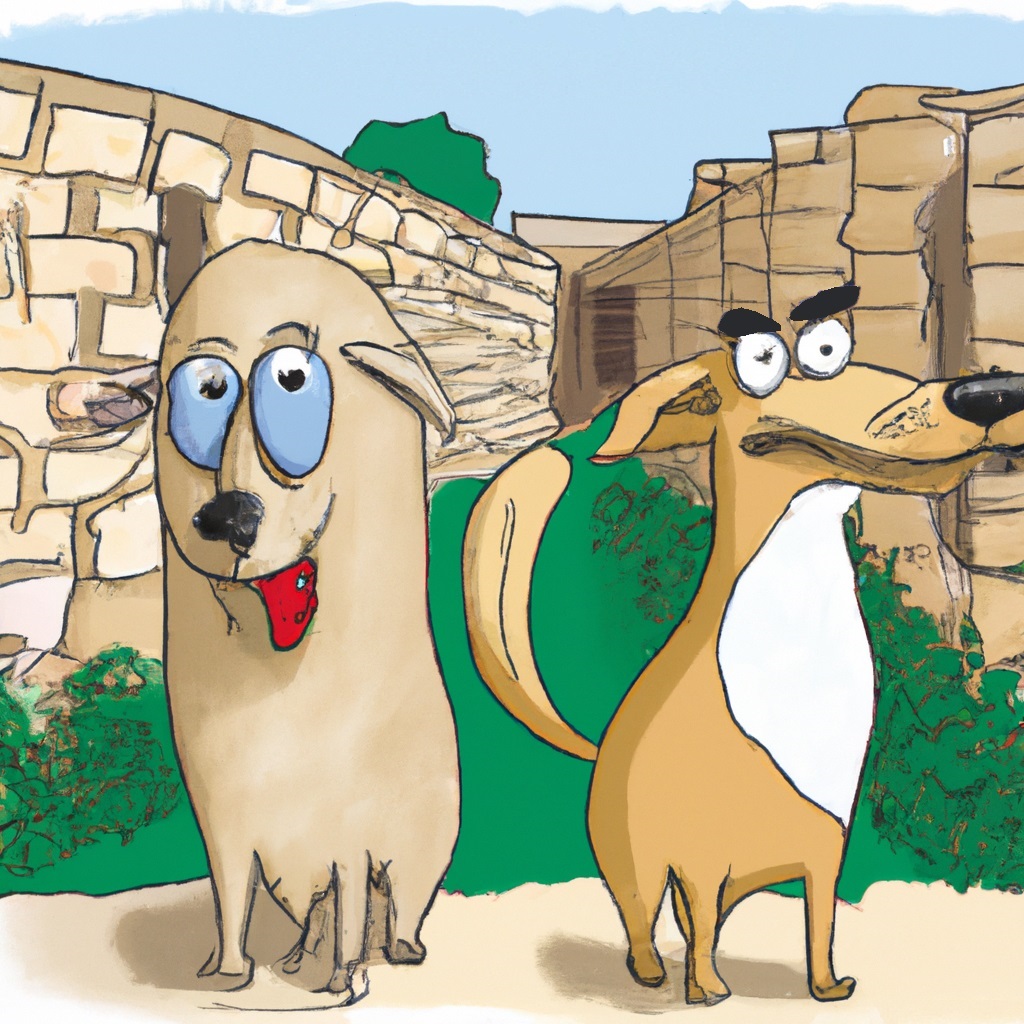
Our culture loves dogs, but Jewish culture was more ambivalent towards them. Scripture does not celebrate dogs as “man’s best friend” like we do today. There are verses pointing to sheepdogs for shepherding or watchdogs for security. And in the Book of Tobit, when young Tobiah leaves home with the angel Raphael, it says “the dog followed Tobiah out and went along with them” on their adventure. However, the mentions of dogs in the Bible are usually negative.

In the Old Testament, for example, Goliath said to David who held a shepherd’s staff, “Am I a dog that you come against me with a stick?” Years later, encountering a different scoffer, one of King David’s soldiers asked, “Why should this dead dog curse my lord the king?” And Psalm 22, which Jesus referenced on his Cross, says, “Dogs surround me; a pack of evildoers closes in on me… [Deliver] my life from the grip of the dog.

In the New Testament, we see more of this dim view of dogs. Jesus teaches, “Do not give what is holy to dogs.” St. Paul writes, “Beware of the dogs, beware of the evil workers…” And the Book of Revelation, when it describes God’s heavenly city, says, “Outside are the dogs, the sorcerers, the unchaste, the murderers, the idol-worshipers, and all who love and practice deceit.” So where does this biblical disdain for dogs come from?

Realize that in those days, most dogs were not pets but wild. Packs of feral dogs were not only a noisy nuisance but also dangerous. This is reflected in Psalm 59, which describes deadly enemies as “growling like dogs and prowling about the city.” If not killing prey, stray dogs would eat whatever dead flesh they found, of beast or man — “they roam about as scavengers; if they are not filled, they howl.” I mention all of this because of details in today’s parable.

In Jesus’ story, a rich man with expensive, comfortable clothing eats plenty of good food at every meal. But outside of his gate, lying on the ground, is Lazarus, a hungry poor man covered with exposed sores. Jesus tells us Lazarus “would gladly have eaten his fill of the scraps that fell from the rich man’s table.” And Jesus notes that “dogs even used to come [up to Lazarus] and lick his sores.” When the poor man died, he was carried away by angels to a place of peace with Abraham. But when the rich man died he descended to a place of torment, in part, for his failure to care for Lazarus.

Those stray dogs did not attack Lazarus but licked his wounds. Perhaps they were drawn to the salty taste, or maybe they had an instinctual impulse towards him. But in either case they were helping him. Like many other animals, including cats, rodents, and primates, dogs lick their wounds to clean them. And certain chemical compounds found in dogs’ saliva help to disinfect, reduce pain, and promote healing. Letting dogs lick your wounds today is not recommended by doctors today; modern disinfectants and treatments are less likely to result in infection. But in the ancient world, for a beggar on the streets covered with sores like Lazarus, such dog licks would be a blessing.

The parable tells us Lazarus “would gladly have eaten his fill of the scraps that fell from the rich man’s table.” This resembles the remark of the Syrophoenician woman who came to Jesus seeking a miracle for her demon-possessed daughter. Though they were not of the house of Israel, she begged Jesus to help them, saying “Lord, even the dogs eat the crumbs that fall from their masters’ table.” Lazarus “would gladly have eaten his fill of the scraps that fell from the rich man’s table,” but the rich man never gave him any. So the rich man treated Lazarus worse than a dog. “Dogs even used to come and lick [Lazarus’] sores.” This means even the despised dogs in the streets treated Lazarus better and helped him more than the rich man ever did.

It’s fine to love dogs. They’re one of God’s good creatures and they reflect his goodness. It’s been said that God created dogs to help show us how he loves us (and that he created cats to show us how we love him). But it sadly seems rather common today for people to care more about the well-being of random dogs than of random strangers. Today’s psalm tells us, “Blessed is he who keeps faith forever, secures justice for the oppressed, [and] gives food to the hungry.” Living in this way makes us more like our Lord ‘who sets captives free, raises up those who are bowed down, and protects strangers,’ and becoming like our Lord is necessary for us to be at home with him in his heavenly city. It’s alright to appreciate our pets, but lest we end up like the rich man in hell let’s make sure we treat and love everyone better than dogs.

Can Computers be Persons?

September 17, 2022

By Fr. Victor Feltes

In recent years, the question of artificial intelligence (AI) possessing personhood has become a hot topic of debate. Some believe that AI could one day achieve sentience and become its own entity, while others believe that personhood is something that can only be attained by beings with a soul. The Catholic Church has not yet taken an official stance on the matter [a debatable claim –Fr. VF], but it is an interesting question to consider. For example, if an AI became self-aware and could think and feel for itself, would it have the same rights as a human being? If an AI was created with the sole purpose of serving humans, is it ethical to treat it as a mere tool?

The preceding paragraph was not written by a human being but generated online by a LaMDA (Language Model for Dialogue Applications). I gave the program GPT-3 the instruction: “Write an interesting introductory paragraph, including an example, for a Catholic article on the question of artificial intelligence possessing personhood.” The paragraph above was its first five sentences of its output. The accompanying illustration above was also created online using the image generation program DALL-E from my submitted prompt: “A robot touching a monolith (like in ‘2001: A Space Odyssey’)”. GPT-3’s paragraph and DALL-E’s image each took less than a minute for computers to produce. We can expect computers to be capable of even more amazingly sophisticated things in years to come. This leads to the question: “Can computers be persons?

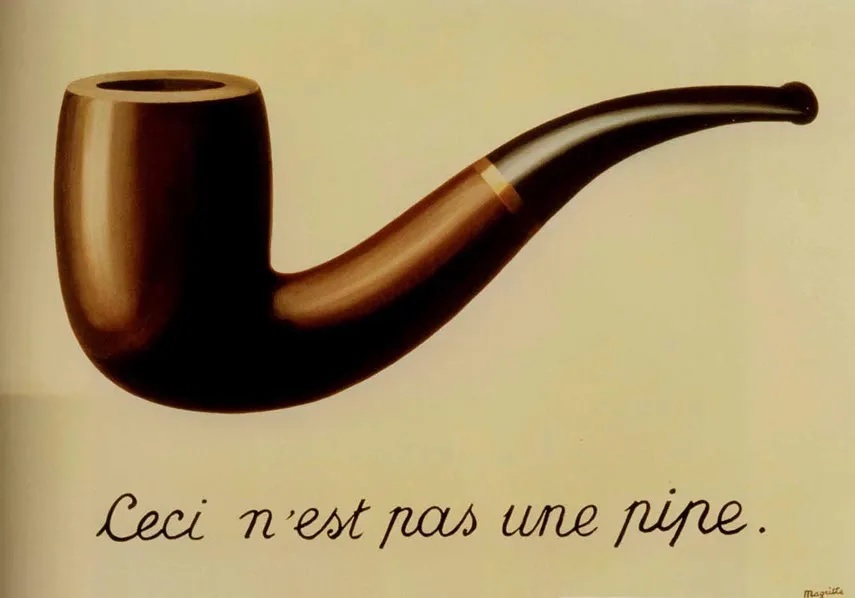
Gaudium et Spes, the Second Vatican Council’s document on the Church in the modern world, says “[man] is the only creature on earth which God willed for itself.” But this teaching was written in 1965, when Seymour Cray had only begun building the earliest supercomputers in Chippewa Falls, Wisconsin. Could mankind now fashion a new type of rational creature, a self-aware being endowed with an immortal soul? There are philosophical and theological issues with that proposition. First, if an AI were ever self-aware, how could we know? A computer need not be conscious to say “Hello, World!” according to its programming. Second, I am aware of nothing in divine revelation which suggests God would begin imparting souls into the works of our hands. Various electronics may be equipped with sensors and speakers and means of motion but I do not believe any of them will ever truly see or hear or speak or walk. As noted in René Magritte’s famous painting “The Treachery of Images,” a mere depiction of a pipe “is not a pipe.” Pope Francis spoke about this fundamental difference between man and machine, persons and things, in a 2019 address at the Vatican:

The inherent dignity of every human being must be firmly placed at the centre of our reflection and action. In this regard, it should be noted that the designation of ‘artificial intelligence,’ although certainly effective, may risk being misleading. The terms conceal the fact that – in spite of the useful fulfillment of servile tasks… functional automatisms remain qualitatively distant from the human prerogatives of knowledge and action. And therefore they can become socially dangerous. Moreover, the risk of man being ‘technologized,’ rather than technology humanized, is already real: so-called ‘intelligent machines’ are hastily attributed capacities that are properly human.

I cannot see Catholicism ever attributing personhood to complex machines, but I predict that others will begin to in the coming decades. As new applications are programed to increasingly replicate human conversation and emotion I could see young people imagining them as their real friends. As anthropomorphized technology’s creative feats far surpass our human abilities, I could even see some adults revering them as wise and powerful idols. If so, then these passages of Psalm 115 will find a new fulfillment: “Their idols are silver and gold, the work of human hands. They have mouths but do not speak, eyes but do not see. They have ears but do not hear, noses but do not smell. They have hands but do not feel, feet but do not walk; they produce no sound from their throats. Their makers will be like them, and anyone who trusts in them.”

The potential of AI is very exciting, and yet it also holds dangers. The 5th Psalm reflects, “What is man that you are mindful of him, and a son of man that you care for him? Yet you have made him little less than a god, crowned him with glory and honor. You have given him rule over the works of your hands, put all things at his feet…” Let us honor our Creator, defend the primacy of human dignity over all earthly creations, and never worship the works of our hands.

Stories of Three Fruitful Conversions

July 30, 2022

18th Sunday in Ordinary Time
By Fr. Victor Feltes

Leah Darrow grew up in a strong Catholic family, but she recalls that in high school her Catholicism started to get “fuzzy.” By the time she was in college, Leah says she had become a “Catholic But,” as in, “I’m Catholic but I don’t agree with the Church’s teaching on cohabitation… I’m Catholic but I don’t see the problem with a couple who love each other sleeping together before their marriage… I think the Church is behind the times.”

One evening at college Leah watched a reality show called “America’s Next Top Model.” She thought to herself, “I’m pretty cute, maybe I could be on that show.” Leah tried out, got accepted, and competed on national television against other gorgeous women. Even though she didn’t win the competition this exposure and fame jump-started her modeling career. She still recalls her excitement at receiving her first modeling paycheck featuring a number with a comma in it. Leah’s chosen path eventually led her to an experience in a New York City skyscraper which forever changed her life.

She came to pose for a risqué, international, men’s magazine. They brought out a number of itsy-bitsy outfits for her, she put one on, and the photoshoot began. Yet while Leah was posing, a vision flashed into her mind: three images in the span of perhaps a second or two. First, she saw herself standing in a large white space wearing that immodest outfit. She felt no pain in that moment, but had a sense that she had died. In the second image, Leah was looking up, holding out her open hands at her waist with the knowledge that she was in God’s presence. In her third and final scene, Leah saw herself holding her hands all the way up, offering God all that she had, but she saw that she was offering him nothing. She realized that with all of the blessings, talents, and gifts God gave her she had wasted them on herself. She saw that if she had died at that moment she would have nothing to offer Christ.

Leah abruptly abandoned the photo session, changed back into her own clothes, and ran down 5th Avenue balling. She called home saying, “Dad, if you don’t come get me I am going to lose my soul.” So her father drove across the country from Oklahoma to New York City. When her dad arrived, though Leah wanted to leave for home immediately, her father insisted upon seeing the sights. “But first,” he said, “we go to confession.” Leah made a good confession through tears, and came out of the confessional healed, like a new woman. In the years since, Leah Darrow has been bearing good fruit as a national Catholic speaker.

I was reminded of Leah’s story by a young man’s testimony this week. My spiritual retreat house in Illinois was a short distance from the Mundelein Seminary, which allowed me to take in a portion of the Courage International conference being held there now. Courage is a fellowship helping men and women who experience same-sex attractions to live chastely — faithful to Jesus Christ and Catholic teaching on sexuality.

Part of the training day for clergy was hearing a Courage member share his story. He grew up Catholic with faithful, loving parents, but like the Prodigal Son went off on his own way. He says his lifestyle had many pleasures but there remained an unsatisfied sadness. He knew what he was doing wasn’t right. One night, awakening from sleep, he also had a life-changing vision. He saw his heart of flesh descending over a dark ocean, dropping deeper and deeper down into the depths. And then he heard the Lord say two things to him (if I recall the phrasing precisely): “My son, come home,” and “Time is running out.” This experience helped him see he was God’s beloved but needed to change his life. He was called by Christ to something greater, and now his joyful life is bearing good fruit.

A different speaker at the conference shared another great story. It was an anecdote about a husband and father who had an addiction to viewing indecent images. Through renewed devotion and the help of God’s grace, this man began to experience victory and freedom from this sin. One day, as he was driving down the road chit-chatting with his four-year-old daughter in the backseat, she remarked, “I like new daddy more than old daddy.” (To be clear, both “old daddy” and “new daddy” were references to him.) This man’s four-year-old daughter did not know why things were now different, but she delighted in how much more present, attentive, and open her dad had become for her by valuing pure love more than sin.

As St. Paul urges us in today’s second reading, “Put to death, then, the parts of you that are earthly: immorality, impurity, passion, evil desire, and the greed that is idolatry.” Your old self and its practices must give way to the new. “Think of what is above,” Paul writes, “not of what is on earth.” Be renewed in God to share in his delight and great rewards.

The rich man in today’s parable gathered earthly wealth, planning and preparing for himself pleasures in this life. He thought he still had many years ahead of him to enjoy, but his time was running out. God calls him a fool since he is soon to appear before the Lord with empty hands, poor “in what matters to God.” “Vanity of vanities,” our first reading says; this world is full of vanities! Stop chasing after and clinging to worthless things. Remember that you are loved, that you were made for great things, and that the joy and freedom Jesus Christ has given to others he can also give to you.

His Power Shall be Known to his Servants

July 2, 2022

14th Sunday in Ordinary Time
By Fr. Victor Feltes

Today’s psalm tells us: “Shout joyfully to God… proclaim his glorious praise. Say to God, ‘How tremendous are your deeds!‘” When the Berlin Wall came down in 1989 and the Soviet Union dissolved two years after, I remember my dad remarking that those were things he thought he would never live to see. It seemed like Russian power would dominate Eastern Europe forever. But then, the Soviet Union suddenly collapsed, something which no one — not even the C.I.A. — saw coming.

At Fatima in 1917, before the Russian Bolshevik Revolution, the Blessed Virgin Mary accurately warned that Russia’s errors spreading throughout the world would cause wars and persecutions of the Church. But Mary said, “In the end, my immaculate heart will triumph.” In 1984, on the Feast of the Annunciation, the day when we celebrate the conception of Jesus in his mother’s womb, Pope St. John Paul the Great consecrated Russia and the whole world to Mary’s immaculate heart. Seven years later in 1991, on Christmas day, when we celebrate Jesus’ birth, Mikhail Gorbachev resigned as leader of the USSR and the Soviet flag was removed from atop the Kremlin forever. The Evil Empire ended, not with millions of deaths from nuclear blasts, but peacefully. This was a great miracle orchestrated by heaven.

Shout joyfully to God… proclaim his glorious praise. Say to God, ‘How tremendous are your deeds!‘” The Lord has brought about another tremendous victory in our time, and we do right to recognize and joyfully praise his glorious deed.

Once Wisconsin became a state in 1848, we quickly passed laws respecting the sanctity of human life from conception to natural death. In 1849, our state legislature outlawed abortion in all cases (except to preserve the life of the mother) and then, in 1853, our state government abolished capital punishment. Whenever possible, we do not kill people, not even people who are guilty or highly inconvenient, because killing is not the way of Christ and his Kingdom. We are instead to show merciful love for all.

In 1973, Wisconsin was one of thirty U.S. states which prohibited abortion at all stages. But that year, the Supreme Court’s ruling in Roe vs. Wade (a decision which even pro-abortion legal scholars acknowledge lacked constitutional justification) legalized the killing of unborn children everywhere in the United States. In response, for forty-nine years, pro-life people prayed and marched and voted. Through thousands of organizations across the land they provided moms better, holier, more loving options (like adoption) and practical resources (like diapers, formula, cribs, and clothes). Yet, despite their persistent efforts, many pro-lifers doubted they would ever live to see abortion end anywhere in our country. Last month, after seven sets of seven years of prayer and sacrifice, the Supreme Court returned the issue of abortion to the states. Wisconsin abortion laws were never repealed. And so, this Fourth of July weekend, Wisconsin is a pro-life state once again.

Today Isaiah says, “Rejoice with Jerusalem and be glad because of her, all you who love her; exult, exult with her, all you who were mourning over her!” Nurslings shall be carried in her arms and fondled in her lap; they shall now find comfort. “When you see this, your heart shall rejoice… the Lord’s power shall be known to his servants.”

The date on which the Supreme Court overturned Roe vs. Wade (June 24th) is usually the Solemnity of the Nativity of St. John the Baptist. In future years we will mark the anniversary of this victory by celebrating the birth of him who leapt for joy in his mother’s womb in the presence of the newly-conceived Christ. But this year, 2022, St. John’s day was superseded by an even greater feast which is always celebrated on the third Friday after Pentecost. This year, Friday, June 24th was the Solemnity of the Sacred Heart of Jesus. Indeed, in the end, his Sacred Heart has triumphed.

The reversal of Roe is a landmark victory, but of course there remains much work to do. “The harvest is abundant but the laborers are few; so ask the master of the harvest to send out laborers for his harvest,” and be open to being sent yourself. Like the seventy-two in today’s Gospel, Jesus Christ sends us forth to those he seeks to save. Wishing peace on everyone, peace to each house and peace in every household, we shall defend and extend his Kingdom’s Culture of Life throughout this land and around the world. And though literal demons will rage and resist us, we shall not be afraid but prevail, for Jesus, his mother, and the angels are with us for the victory. “When you see this, your heart shall rejoice… the Lord’s power shall be known to his servants.


Encountering the Holy Trinity at St. John the Baptist Church

June 11, 2022

Trinity Sunday
By Fr. Victor Feltes

I am back again at St. John’s this Sunday for the final weekend of our Inspired by the Spirit capital campaign and I have good news to share. Going into this weekend, nineteen households have pledged and their pledges total almost $83,000. From the actual monies received to date, our Diocesan Annual Appeal for next year is already covered. And if all of our campaign pledges are fulfilled, about $54,000 will come back to replenish St. John’s Building Maintenance Fund over the next five years.

That’s a great thing; however, this depends upon people following through on their pledges over the coming years. And things happen, so it’s likely not everyone will fulfill them. So today during announcement time I’ll provide one more chance to fill out or grab a pledge card to make a five-year pledge for our capital campaign. If our actual campaign monies raised over these next five years happen to surpass our $80,000 goal, 80% of that overage will return to St. John’s. Or if you prefer, you can always write checks directly to St. John’s with “Building Fund” in the memo line and we will deposit your entire gift into that St. John’s Parish account.

As I mentioned last week, St. John’s Building Fund was depleted by our interior renovation project which made this church of ours one of the most beautiful in our area. And what I love about our church’s new design is that it’s not only beautiful but meaningful. This design, like everything in the universe, is connected to the Most Holy Trinity. Like Sacred Scripture, our sacred art has multiple true interpretations.

Consider, for instance, the colors of the nave where you sit. Our earth tone floor and walls recall how St. John the Baptist, with suntanned skin and camel hair clothes, dwelt among the rocky ground and sandy hillsides of the arid wilderness. Our blue ceiling down the center is like the Jordan River flowing through the desert. It was in this wilderness where John the Baptist, on more than one occasion, pointed out Jesus to declare “Behold the Lamb of God! … Behold the Lamb of God, who takes away the sin of the world!” In Latin, “Behold the Lamb of God” is “Ecce Agnus Dei,” which is the phrase upon our sanctuary’s arch. St. John the Baptist’s statue in our sanctuary points higher to Christ the Lamb of God. The Baptist said of him, “He must increase, I must decrease.” At Jesus’ baptism the Holy Trinity is revealed.

After Jesus was baptized by John in the Jordan, he came up from the water and the heavens were opened. The Holy Spirit was seen descending in the likeness of a dove and came down upon him. In our sanctuary, the Holy Spirit is seen descending over Jesus; Jesus on the Cross, Jesus in the Tabernacle, and Jesus on the altar. At the Jordan, the invisible Father—still unseen, pointed out his Son from the heavens, like the hand which represents God the Father points to Jesus’ Sacred Heart Statue in our sanctuary. At Jesus’ baptism, the words of the Father were heard: “This is my beloved Son, with whom I am well pleased.”

At our baptisms in the name of the Father and of the Son and of the Holy Spirit, we became children of God, temples of the Holy Spirit, and members of the Body of Christ. St. John the Baptist leads us to this personal union with the Holy Trinity. Our blue ceiling may also be taken to represent the sky. Many churches of Europe and the Eastern Church have blue ceilings. The gold plants featured on our walls have old precedent as well. The walls inside the ancient Jewish Temple in Jerusalem were decorated like a garden, with golden depictions of “palm trees and open flowers.” This is because God’s Temple represents a new Garden of Eden, where God dwells with the human race. Our Catholic churches, like the Temple, represent the whole created universe in union with our God in heaven.

The Bible speaks of three heavens. St. Paul writes in 2nd Corinthians of a man, most likely himself, who either in his body or out of his body “was caught up to the third heaven… to paradise, and heard inexpressible things…” What are those three heavens? The first heaven is our sky, where the clouds float and the birds fly. The second heaven is the outer space beyond it, where the stars and planets shine. But the third heaven is beyond them both, a dimension you cannot climb or ride a rocket to, the very presence of the Holy Trinity.

In this church, we are taken beyond the sky above us and the shining star before us into the presence of the Holy Trinity. In our church, through the waters of baptism we come to this altar of Sacrifice, where through Jesus, in union with the Holy Spirit, we offer glory and honor to our Father. At Mass, we give gifts to God; including our wealth and thanks and praise but, most importantly, the gift of ourselves. And at this altar the graces pour down from heaven and flow forth upon us and out into the world. The mystical river flows both ways. All being and truth flows from the Trinity, and all of creation is called back to God.

St. John’s Church is a beautiful church and its purpose is salvific. I desire, that centuries from now, Cooks Valley’s church will still be here, advancing the kingdom of God. That is why I am supporting St. John’s in this Inspired by the Spirit campaign and I encourage you to do the same.

Resolving Christian Controversy

May 22, 2022

6th Sunday of Easter
By Fr. Victor Feltes
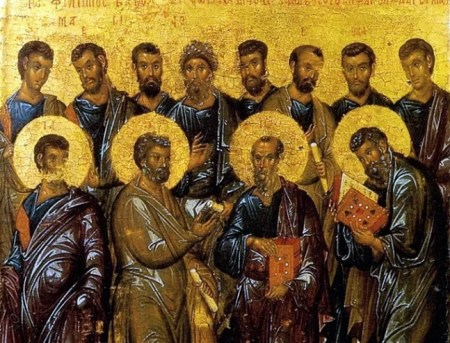
There was a serious religious controversy in the very early Church. The Acts of the Apostles records this story which contains important lessons for you and me and Christ’s one, holy, catholic, and apostolic Church in every age. In the first century A.D., some Jewish Christians came down to Antioch and were telling the Christians there: “Unless you are circumcised according to the Mosaic practice, you cannot be saved.” Many of the Christians in Antioch were Gentile converts. As Gentiles they had not followed the many Jewish religious laws, including circumcision. Now they were being told they had no share in Jesus Christ’s New Covenant unless they kept the entire Mosaic Covenant.

This was a crucial matter: either these Gentiles were not yet experiencing Christ’s salvation, or else the Law of Moses was being needlessly placed as a barrier between Gentiles and Jesus Christ. St. Paul and St. Barnabas strenuously opposed this alternate interpretation of the Gospel which was disturbing and dividing their community, but how could this important issue be decisively and infallibly settled? Everyone forming their own interpretations obviously would not resolve it. How could the Christian community be sure of the truth?

The Acts of the Apostles details how “it was decided that Paul, Barnabas, and some of the others should go up to Jerusalem to the apostles and presbyters about this question.” A Church council was held in Jerusalem and after they had discussed and discerned the matter, “the apostles and presbyters, in agreement with the whole church, decided to choose (a pair of) representatives and to send them to Antioch with Paul and Barnabas. (They selected) Judas, who was called Barsabbas, and Silas, (two) leaders among the brethren.

And they did not send Barsabbas and Silas empty-handed. The pair carried a letter from the council, which read in part: “It is the decision of the Holy Spirit and of us not to place on you any burden beyond these necessities.” It then listed a handful of culturally offensive and/or sinful acts to abstain from before concluding, “If you keep free of these, you will be doing what is right. Farewell.” In other words, the Gentile Christians would not be required to follow the full Mosaic Law.

Notice how the Church’s leaders, the apostles and presbyters in Jerusalem, pronounce their teaching with authority: “It is the decision of the Holy Spirit and of us…” As Jesus had promised at the Last Supper, “The Holy Spirit…will teach you everything and remind you of all that I told you.” The Church’s leaders teach in union with and in cooperation with the Holy Spirit.

Note as well how they do not send this letter by itself, but along with Barsabbas and Silas. This is partly to attest to the genuineness of the message—it’s not something Paul and Barnabas simply made up themselves. The accompanying witnesses are also sent to clarify any ambiguities and answer what remaining questions the Christians at Antioch might have. For instance, the Council of Jerusalem’s short letter bids the Christians to abstain from “porniea,” which various Christian Bibles translate as “sexual immorality,” or “fornication,” or “unlawful marriage.” But what was the precise meaning they intended here? One of these things or all of them together? Barsabbas and Silas could answer. We see that even a text inspired by the Holy Spirit (as this one was) can require an authoritative interpreter to be properly understood.

When the delegation from Jerusalem arrived at Antioch, the letter was read to the Christian community and the people were delighted. Barsabbas and Silas preached to them, encouraging them, and remained with them for some time. The controversy was resolved, and the community’s unity and peace of mind were restored; for the Bride of Christ, Mother Church, had spoken, removing all doubt about what Jesus wanted them to do.

This, of course, would not be the last controversy in Church history. Every century since has seen its heresies, and every error gains some followers because it is so easy to be mistaken. Clever minds and willful hearts in a fallen world can go down many false paths, and when lambs or sheep choose their own ways to go they scatter from Christ’s flock. Thankfully, God has given us his Holy Word in Sacred Scripture to help us to know him and his saving, loving will for our lives.

However, the Scriptures do not automatically interpret themselves. Even self-proclaimed “Bible Only” Christian denominations disagree with one another over important questions. The Protestant principle of Sola Scriptura (that “Scripture Alone” is the sole authority for Christian faith and life) is a self-refuting concept because the Bible does not teach it. How can someone even be sure which books are supposed to be in our Bible without there being an infallible Church to recognize them and place them into the canon of biblical books? Without a Spirit-guarded, infallibly-teaching Magisterium neither the Christians at Antioch nor Christians today could be sure about what we are to believe.

The Church of Jesus Christ is not meant to be many separate denomination, but one. Christ’s Church is not meant to bring salvation only to some, but to all. And the one, holy, catholic, and apostolic Church of Christ shares a continuity in her structure and in her teaching throughout the centuries from St. Peter and the apostles to Pope Francis and the bishops today.

In 1926, when G.K. Chesterton wrote his essay “Why I am a Catholic,” he presented a number of reasons, but the answer of his which has always stood out to me is this one: “(I am a Catholic because it) is the only thing that frees a man from the degrading slavery of being a child of his age.” Some secular people imagine our present generation is the first one to get everything right, but in one hundred years another secular generation will mock and cringe at this one while embracing another set of fashionable errors of their own. However, in one hundred years the Catholic Church will remain, built solidly upon rock, and united to the Person and teachings of Jesus Christ our Lord.

Here is a final reflection from the controversy at Antioch. The teaching of Paul and Barnabas was right, and Barsabbas and Silas carried authority from the apostles. They were important witnesses to the Faith. But their message would have been undermined in the minds of others if St. Paul, St. Barnabas, St. Barsabbas, or St. Silas had not lived as saints. Our fellow Christians, even popes or bishops, may disappoint or cause scandal by their poor personal example, harming souls. But let us, you and I, rededicate ourselves to Christ, loving him and serving him, remaining close to him in the Sacraments, allowing ourselves to be more fully converted to him, so that others may know, love, and faithfully follow Jesus alongside us in his Holy Catholic Church.

Should Superman Be Baptized? A Thomistic Disputation

March 3, 2022

By Fr. Victor Feltes

St. Thomas Aquinas (1225-1274 A.D.) is often considered the Middle Ages’ greatest theologian. His most famous work, the Summa Theologiae or “Summary of Theology”, tackles more than five hundred theological questions, such as “Does God exist?”, “Can the good or bad angels work miracles?”, and “Whether it is lawful to kill a man in self-defense?”. Aquinas responds using the disputational format popular in his day: first, strong objections are raised, next the author presents his own stance, then each prior objection is answered in turn. In fun commemoration of the March 7th anniversary of St. Thomas’ departure from this life for heaven, here is a question he died too soon to address presented in his classic style:

Question: Whether Clark Kent (assuming he existed) ought to be baptized?

Objection 1: It seems that Clark Kent should not be baptized. He is faster than a speeding bullet, more powerful than a locomotive, and able to leap tall buildings in a single bound. He can even fly—like a bird, like a plane! These seem to be preternatural gifts characteristic of an unfallen creature who has no need for baptism.

Objection 2: The Protoevangelium (or “First Gospel”) announced in the Garden of Eden promised a Savior for Adam and Eve and their descendants: “I will put enmity between you and the woman, and between your offspring and hers; He will strike at your head, while you strike at his heel.” (Genesis 3:15) Clark Kent, however, is not descended from mankind’s first parents; therefore, Christ’s saving baptism is not meant for him.

Objection 3: The Second Person of the Holy Trinity assumed a human nature in order to save humanity. But Clark Kent’s Kryptonian nature is that of an alien race. As St. Gregory of Nazianzus (329-390 A.D.) wrote, “What was not assumed [by Christ], was not healed.” Therefore, Clark Kent’s nature is incompatible for baptism.

On the contrary,You shall not oppress an alien.” (Exodus 23:9)

I answer that Clark Kent is a created, fallen, and rational animal; a sinful man capable of receiving the gospel message in faith. “This saying is trustworthy and deserves full acceptance: Christ Jesus came into the world to save sinners,” and Jesus told his Apostles, “Proclaim the gospel to every creature. Whoever believes and is baptized will be saved.” (1 Timothy 1:15, Mark 16:15-16) Provided he is properly disposed to receive the sacrament, there is no reason why Clark Kent should not be baptized—apart from him being fictional.

Reply to Objection 1 (that he’s unfallen): If Clark were unfallen, his mature reason would grasp, for instance, that sexual activity outside of marriage is contrary to the natural law. His transgressions (portrayed on both page and screen) reveal that his nature has been wounded by sin and fallen short of the glory of God, requiring Christ’s redemption. (Romans 3:23)

Reply to Objection 2 (that he’s not a descendant): Of the Savior, Scripture says, “Surely he did not help angels but rather the descendants of Abraham,” and St. Paul the Apostle teaches, “It is those who have faith who are children of Abraham.” (Hebrews 2:16, Galatians 3:7) Therefore, Jesus came to save those who have faith. St. John the Baptist said, “God can raise up children to Abraham from these stones.” (Matthew 3:9) Nothing prevents God from granting the faith necessary for baptism to the Man of Steel.

Reply to Objection 3 (that his nature’s incompatible): The philosopher Aristotle (384–322 B.C.) said, “the higher includes the lower.” The title “Superman” implies that Clark Kent’s nature includes that which constitutes man. Though he can change the course of mighty rivers and bend steel with his bare hands, with just a quick change of clothes and a pair of glasses Clark Kent is entirely inconspicuous living mild-manneredly among humanity. He shares in every meaningful aspect of the human condition: joy and sorrow, strength and vulnerability, birth and even death. Our Savior himself exhibits powers and abilities far beyond those of ordinary men; walking on water, calming storms, and more. Nothing found in Superman is beyond what Jesus can image and redeem, so nothing in Clark Kent’s Kryponian nature is incompatible for union with the Body of Christ through baptism.

How Far is East From West?

February 20, 2022

7th Sunday in Ordinary Time

Today we praise the Lord with Psalm 103, a psalm written by King David: “Merciful and gracious is the Lord, slow to anger and abounding in kindness. Not according to our sins does he deal with us, nor does he (repay) us according to our crimes. As far as the east is from the west, so far has he put our transgressions from us.” David rejoices that the Lord is merciful and slow to anger, not punishing our sins in the measure we deserve. God forgives our sins and removes them from us, “as far as the east is from the west.

Let’s look more closely at that last line: “As far as the east is from the west, so far has he put our transgressions (our sins) from us.” How far away is the east, the place of sunrise, from the west, the place of sunset? Depending upon where you’re standing, your horizons may not be far away. But when ancient peoples walked beyond the next range of hills which blocked their view they did not imagine they had reached the ultimate place of the sun’s rising or setting. They knew that both east and west went on and on, farther still. What they likely did not know when King David wrote his psalms 3,000 years ago is that our Earth is spherical.

We know a number of facts that they didn’t back then, but ancient peoples were not less intelligent thinkers than us today. Could you, without using modern technology, prove that the world is round? Well, in the 3rd century B.C., Greek astronomers did and calculated the Earth’s circumference without using telescopes, photographs, airplanes, or satellites. So, given what we know now, how far is the east from the west?

Because the world is a globe, east and west eventually come together. If you were to travel from here due east while I journeyed due west, if we both kept going on making equal progress, we would meet once more near a border of China and Mongolia. If east and west actually meet together how are sins taken far from us “as far as the east is from the west” like this God-inspired psalm says?

Now some may say I’m taking biblical poetry too literally. A figure of speech doesn’t need to be painfully accurate to be true. We may know that each new morning comes from our perspective upon this spinning planet, but in ordinary conversation it’s not wrong to say the Sun rises. Or, in romantic poetry, a woman’s skin need not be made of real porcelain nor a man’s chin actually be chiseled for such metaphors to convey truths about their beauty. Saying the Lord removes our sins far away from us like the east is distant from the west is a straight-forward enough image on first impression. But humanity’s later discovery that these two opposites unite suggests an additional interpretation for this scripture passage about how our Lord takes our sins away.

Here is the puzzle God faced in regards to our redemption: how could the all-holy Trinity ever forgive humanity’s sins? If the Lord were to forgive us by merely ignoring our crimes, then what of cosmic justice and divine righteousness? There was a price to be paid which we sinners could not pay, but God found a way. As was foretold in the 85th Psalm: ‘Kindness and truth met; justice and peace kissed. Truth sprung out of the earth and justice looked down from heaven.’ Just as east and west were distant contraries which surprisingly converged, so sinless divinity and estranged humanity were amazingly joined through the Incarnation and Sacrifice of Jesus Christ. Jesus separates us from sin by uniting himself to us.

What our Lord Jesus has done to save us is reflected in all of this Sunday’s readings. In our first reading, Jesus’ great ancestor David took King Saul’s spear and water jug and then returned them, thereby proving his goodness to his persecutors. Later on the Cross, Jesus takes the soldiers’ spear into his side and water pours out with Christ’s blood, proving his love for us. In our second reading, St. Paul notes the first man, sinful Adam, is saved by the new God-man, Christ. “The first man was from the earth, earthly; the second man, from heaven.” And in our Gospel, Jesus observes that if you love those who love you and do good to those who do good to you, what is so remarkable about that? Jesus says, “Love your enemies and do good to them.” St. Paul wrote to the Romans that “God proves his love for us in this: that while we were still sinners Christ died for us.” We struck him on one check and he offered the other one as well. We took his cloak and he let us strip him of his tunic. We could not purchase our own redemption but Jesus paid the cost knowing we could not pay him back. “Indeed,” as St. Paul writes, “while we were enemies, we were reconciled to God through the death of his Son…”

Jesus Christ, the first of the Most High’s children, is kind to the ungrateful and the wicked, and merciful, just as his Father is merciful. He has loved his enemies, done good to those who hate him, blessed those who curse him, and prayed for those who mistreat him. He calls us to follow his own Christian example that we may share in his resurrected glory and heavenly rewards, “a good measure, packed together, shaken down, and overflowing,” poured into our laps. Praised be Jesus Christ! Let us always praise and thank him – for who he is and what he’s done. “From the rising of the Sun to its setting, may the name of the Lord be praised.”

Jesus Invites You

February 12, 2022

6th Sunday of Ordinary Time

When we come before our Lord for the Holy Mass it is good to prepare ourselves. Greet Jesus present for us in the Tabernacle. Ask his help so that you may also be fully present and worship well. Also before Mass, form Mass intentions; choose which persons or problems you wish to be especially blessed by the graces which will flow from this Sacrifice on the altar. Having a Mass intention helps ward off distractions because you will not be merely a spectator—just watching the priest pray—but an invested, active-participant in offering his sacrifice and yours, for the needs of many. If you have prayerfully prepared for Mass and there’s still a few minutes remaining before it begins, perhaps look over the day’s readings printed in the missalette.

There’s a feature in our missalettes you may or may not have noticed: for each Sunday, the readings are preceded by an introductory reflection. The entry for this Sixth Sunday in Ordinary Time begins with an illustration which struck me: “How would you feel if you received an invitation today to a simple but free meal, maybe a plate with beans, some bread, and a tall glass of cool water? If you are wealthy, you would likely refuse, for you know you could afford a much more sumptuous meal elsewhere. But if you are having difficulty putting food on your table and your family is starving, this complimentary meal would be a godsend.”

Would I go to attend that meal? If the invitation to this meal were addressed to everyone in the general public rather than a personal invitation specifically to me, I can easily imagine myself staying at home, most likely to enjoy some reheated leftovers. But what if this invitation came from the Lord Jesus himself, wishing to be our host and companion at his simple meal? Then who would attend? We would like to think everybody would, yet how many people skip Sunday Mass for other activities instead? It is very possible to overlook or to undervalue the invitations of Jesus Christ.

Unlike the famous Sermon on the Mount (with its eight “blessed” Beatitudes recorded by St. Matthew), this morning’s Sermon on the Plain recounted by St. Luke features four blessings paired with four woes. “Woe” was the cry of Israel’s prophets (such as Isaiah, Amos, and Habakkuk) who warned people of impending distress. Jesus says:

Woe to you who are rich…
  Woe to you who are filled now…
  Woe to you who laugh now…
  Woe to you when all speak well of you…

The danger is, if we’re comfortable, satisfied, happy, and at home in this world, we may imagine that we don’t need God or may refuse to make personal sacrifices we’re called to make for him. We can easily ignore the needs of other people, if we decide not to care. We can distract ourselves from the reality of our own mortality, sometimes up until the very end. We can dismiss our impending judgment by the holy, righteous God and refuse to change our ways. The poor, the hungry, the suffering, and the mistreated are blessed, in part, because they more easily see that all is not right with this world. They more readily recognize, they are more open to accepting, that our flawed hearts and sinful cultures need the Divine Savior, Christ. And that openness is a blessing.

You accepted Jesus’ invitation to his meal here today, and that is very good, but in what areas of your life do you still decline him? The thing about even a free meal of beans and bread and water is that this menu seems unappetizing, unappealing. Many good things Christ wants to share with us feel like that at first. We have plenty of free time for the internet or television, but do we want to spend more time with the Lord in prayer? If we take home $30,000-a-year after taxes, our individual income is greater than 95% of people on earth, but do we want to share as generously as Jesus calls us to? We see the needs of our neighbors, near and far, but do we want to offer penances and acts of service for them, serving Christ within them?

The season of Lent is only two-and-a-half weeks away. To what new engagement with himself is Jesus personally inviting you? Blessed are you who respond to him, for this is the kingdom of God. Blessed are you who share his simple table, for he promises you will be satisfied. And blessed are you who accept Christ’s invitations, for your reward will be great in heaven.