Archive for the ‘Culture’ Category

How we Know the Magi Arrived Later (and What That Means for Us)

January 2, 2022

Feast of the Epiphany

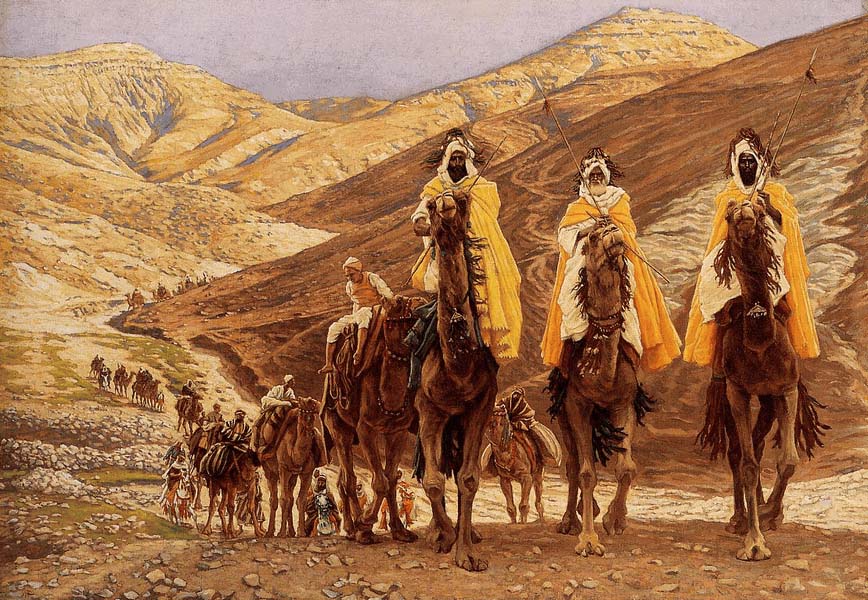
Did you notice that our three wise men statues arrived in our manger scene only on this Sunday of the Epiphany? That’s because the Magi were not in Bethlehem on Christmas Day. In many movies and imaginations, the visit of the shepherds and the arrival of the Magi get smushed together as events of the same night. St. Luke’s Gospel recalls Jesus being wrapped and laid in a feedbox and speaks about the shepherds, but St. Matthew’s Gospel tells us the Magis’ tale with several signs that the Magi came quite a bit later.

For starters, the Magi arrive in Jerusalem after their long journey from the east expecting that the new king has already been born. “Where is the newborn king of the Jews?” they ask. “We saw his star at its rising and have come to do him homage.” Once Herod had “ascertained from them the time of the star’s appearance” and had learned from the Jewish chief priests and scribes where the Christ was to be born, the wicked king sent the Magi to Bethlehem.

St. Matthew says “on entering the house they saw the child with Mary his mother.” There’s no mention of a cave or stable; it appears that the Holy Family has moved into better lodgings since Jesus’ birth. The Magi “prostrated themselves and did him homage. Then they opened their treasures and offered him gifts of gold, frankincense, and myrrh.” This happy encounter occurs at least forty days after Christmas. We know this because of a detail from the Gospel of Luke.

According to the Law of the Old Covenant, a Jewish woman who had given birth was required to wait a certain number of days and then provide sacrifices at the temple. For a baby boy, the mother had to wait at least forty days, then she was to bring the priest two animals for sacrifice; namely, a one-year-old lamb and either a turtledove or a pigeon. However, if she could not afford the lamb, God’s Law allowed her to just offer either two turtledoves or two pigeons instead.

St. Luke indicates that for Jesus’ Presentation at the Temple, after the completion of those forty days, Mary and Joseph were poor enough to take that second option, offering “a pair of turtledoves or two young pigeons in accordance with the dictate in the law of the Lord.” If the Magi had already visited, the Holy Family would have had some gold for buying a lamb. But Mary and Joseph did not have that gift because the Magi had not yet come. In fact, what King Herod goes on to do suggests it could have been more than a year later before the Magi arrived.

When Herod realizes the Magi have evaded him (for they were warned in a dream not to return to Herod) the paranoid and ruthless king does a horrifically evil thing. He orders that all the baby boys in Bethlehem – not just newborns but all those two years old and younger – be killed. This suggests King Herod thought the baby which the Magi sought could already be up to one or two years old.

The Magi arrive at our manger scene today on Epiphany Sunday because the Gospels show they celebrated the birth of Jesus Christ together with his Holy Family a time after Christmas Day. It’s interesting to learn about the Gospels and the life and times of Jesus, but collecting bits of biblical or historical trivia is not the point. What significance does the Magis’ later arrival have for our lives as Christians? One thing it means for Christ’s Church is that Christmas is not just a one day event but a whole season to celebrate.

What happens in our world on December 26th or 27th? Lots of people take down their decorations and throw out their Christmas trees. The Christmas songs played since before Thanksgiving disappear from the radio. Mentions of Christmas vanish from mass media because the opportunity to sell things to people has passed. Our secular culture uses Advent as its Christmas season, filling it with stressful hustling and hassles like Joseph and Mary experienced preceding Jesus’ birth. That birth is allowed one day of restful, spiritual, joyful peace and then the event is over. But for Catholics and Christians of times past, Christmas Eve is not the beginning of the end of Christmas, but the start of the Christmas Season. We are in that season now, decked in the liturgical color of white through the third Sunday after December 25th, the Feast of the Baptism of the Lord, which is next Sunday.

Beware of taking too many cues from the world of Herod, whose interests in Christmas are not pure. Let us learn instead from the Magi about celebrating this season. They come after Christmas day but are still “overjoyed” to celebrate his birth. They come to him, honor him, savor their time with him. They rest with him at Bethlehem. It appears the Magi did not come and leave in just one day, but were able to be warned in a dream not to return to Herod because they chose to rest with Christ and his Holy Family.

Living differently for Christ bears unexpected blessings and benefits. For instance, my good friend Katie told me yesterday that she gets a Christmas tree and puts it up on Christmas Eve. Doing it this way not only helps keep the whole season special but she gets a tree each year for free. (By that point, Christmas tree sellers are just happy to have her take one away.) Imagine no longer having to fit everything that is Christmas into the month of December. Like the Magi, you can plan trips and gatherings for after Christmas Day.

There’s still one week of Christmas left this year. Make a plan to keep it special. Play and sing your Christmas songs. Keep on feasting. Create some fun. And think of how next year you and yours can celebrate throughout the entire Christmas season. Like the Magi before you, let how you celebrate Christmas be guided by heavenly light.

Keeping the Faith During Trying Times

December 25, 2021

Feast of The Holy Family
By Deacon Dick Kostner

“Mary, did you know that your baby boy is Lord of all creation?  Mary, did you know that your baby boy would one day rule the nations?  Did you know that your baby boy is Heaven’s perfect Lamb?  That sleeping child you’re holding is the great “I Am“?

The answer to the lyrics just quoted from the popular Christmas Song “Mary did you know?” is “No! Not everything,” according to Pope John Paul II. She did not know everything at once and it is displayed in our gospel proclaimed in today’s Liturgy.

The morning I began to prepare for this homily I saw some very disturbing statistics from an article in The Wall Street Journal. Americans who pray daily was 58% in 2007, this dropped to 45% in 2021; Americans who identified themselves as Christians was 78% in 2007, in 2021 this dropped to 63%. This downward trend began long before COVID but increased during the pandemic. At our own parish we have experienced a substantial decline in attendance at Sunday Mass, especially family attendance. Other parishes have had similar declines.

So what’s going on? Our gospel displays to us the problem but it also gives us the answer to the problem. The problem is rooted in both mental and physical sufferings that are a part of the human experience. Sacred Scripture lays it out very well. Humans get sick, go blind, struggle with raising children, have disagreements with spouses and family, and yes the big one, death and when we pray for help we expect results not tomorrow but right now. All of these were experienced by Jesus the big question is: “Why?” The answer is a mystery we are incapable of understanding, but God did gift us with how we can get through these sufferings and anxieties when he sent His Son to experience these struggles and to supply us with the cure, and that is faith that the Father loves us, His Holy Family, and has a plan for us to follow and find happiness even while suffering, through His Holy Spirit and His Holy Family. The problem is our world has become secularized. Secularization is the process of removing religious and moral influence from our society. The significance of God and the Holy Family in our world is looked down upon and is been reduced.

Lets reflect on our Gospel this Feast of the Holy Family, and “Mary did you know?”. Humans are wired by our creator to care for and protect children we are blessed with. Mary was no exception and when her and Joseph realized Jesus was missing and days had passed panic hit them. They backtracked and found Jesus in the temple listening to the elders and conversing with them. They were upset and asked why Jesus had not told them where he was going. His reply was that he thought they would know that he was going to His fathers house. And then we are told that Mary and Joseph “did not understand what he said to them.” Thus we are given the answer to some of the songs questions of her that she did not know. But then we are told that Mary “kept all these things in her heart.” and thus she reflected upon her son’s words and she came to understand that Jesus had assumed she knew his vocation, to learn and be involved with public ministry. Jesus also realized they did not know this and felt sorry for not telling them his plans to visit his Fathers house, for we are told that “Jesus advanced in wisdom and age and favor before God and man and was there after obedient to them.”

Jesus made a mistake for causing anxieties to his Mother and his step father and corrected his behavior and honored his human parents. This is the guide line for human families becoming members of the Holy Family. They care for and correct mistakes they make within their Holy Family relationships and its members.

Being human will carry with it sufferings. There will be mistakes that we will make as members of the Holy Family that will cause not only us but other members of God’s family to suffer. We are called to reflect upon our mistakes and make corrections to assure those we have caused to suffer that this will not happen again. We are called by God to place other members of the family of Jesus ahead of ourselves when we realize that others need our help and support as Jesus, Mary and Joseph have taught us, by reflecting on our actions and praying to the Father for wisdom and direction in helping our brothers and sisters overcome their sufferings and anxieties of life.

Like Mary, there are many questions in life we don’t know answers to. It is faith that allows us to trust that the Father knows our fears and anxieties and will answer us through His Holy Family when the time is right, for as told to us by God we are to look to His Holy Family and the Word for help and guidance and as far as fear, He tells us: “Be still and know that I AM!

“What Should We Do?”

December 12, 2021

3rd Sunday of Advent

Despite the complications of the heavy storm, the family still decided to come. They came to St. Paul’s Friday evening to have their children baptized: a nearly three-year-old boy and a six-year-old girl. Afterwards, I asked the daughter what it was like to get baptized. She answered, “It felt like Jesus was in my heart.” Truly and beautifully, that’s what baptism does. Through simple water and simple words, new Christians are born with Christ living within them.

Large crowds came to St. John the Baptist to be baptized by him in the Jordan River as they confessed their sins. Now this was neither sacramental baptism nor sacramental confession but a preparation for what was next. John the Baptist preached that he was sent by God to prepare his people for the coming of the Messiah. Regular folks, and tax collectors, and soldiers all asked this forerunner of the Christ: “What should we do? Teacher, Rabbi, what should we do?” And what really strikes me about John the Baptist’s answers is what John the Baptist doesn’t say.

He does not say, “Give all your food and clothing away.” He says to the crowds, “Whoever has two cloaks should share with the person who has none. And whoever has food should do likewise.” He does not say to servants of King Herod and Caesar, “Abandon your posts and revolt against your rulers.” He says to the tax collectors, “Stop collecting more than what is prescribed,” and to the soldiers, “Do not practice extortion, do not falsely accuse anyone, and be satisfied with your wages.” The plan of God is to change the world by transforming individuals within the world.

John does not send people on a complicated, epic quest. They can begin doing what they need to do to prepare for Christ’s coming immediately where they’re at. John instructs them and us to do simple things: share with the needy as you are able, stop stealing, stop lying, and stop coveting what others have. These acts belong to basic justice: treating other people at least as well as you ought to be treated yourself.

Can Jesus Christ call us from this to more advanced discipleship? To sacrifice for the Kingdom of God? To suffer for the sake of righteousness? To embrace poverty, or celibacy, or radical obedience? To take solemn vows like the retired religious whose special collection is this weekend? Certainly! The Old Covenant teaches lessons for walking in justice while Christ’s New Covenant goes further, as with the Beatitudes. However, we must walk with the Lord before we can run with the Lord.

Do you grumble, discontent with what you have? Do you deceive, not always speaking what is true? Do you take what is not yours to take, or keep what is not yours to keep? Do you fail to share what is your surplus with others in need? Then you know what you should do this Advent to prepare for the Christmas coming of Christ. Convert more space in your heart for Jesus that he may fully live in you and you may fully live in him.

Why the Catholic Church is Always so Behind the Times

November 20, 2021

Solemnity of Christ the King

A teenager recently asked me, “Why does the Catholic Church have ideas so behind the times?” It was a written question submitted alongside other students’ “Questions for Father.” The question reflected the young person’s doubts and I’m glad that it was asked, because after some reflection and with the help of grace I gave what I believe was an inspired answer.

I began with a review of some late modern history. In 1789, the leaders of the French Revolution took power in France. They rejected faith and wished to entirely replace Catholicism with their own invented “Cult of Reason.” They redefined the number of days in a week from seven to ten to deconsecrate Sunday – the Lord’s Day. They killed or exiled Catholic clergy and converted churches into “Temples of Reason.” They confiscated the convents and monasteries and expelled or martyred the monks and nuns, ending charitable ministries all across France. In their Reign of Terror they executed thousands and then turned on one another. Their revolution ended after ten years with a military coup which gave France a dictator who would crown himself their emperor: Napoleon Bonaparte.

In the early 1930’s, when Hitler rose to power in Germany, he was opposed by Catholics there. In fact, a map of the regional vote shares that the Nazi Party received across Germany looks like the photographic negative of the percentages of Catholic populations in place to place. The dark places of one map were the light places on the other. The Catholic Church proclaims universal human dignity, the preciousness of every human person, but the anti-Catholic Nazis believed in racial supremacy. They claimed the modern science of eugenics proved Germans to be the master race and showed Jews, Slavs, the disabled, and others to be lesser human beings. The Nazis arrested, deported, and murdered millions in concentration camps (including Catholic clergy, religious, and activists) and started a world war which killed millions more. Hitler’s “thousand year Reich” died with him after twelve terrible years.

The 1917 Russian Revolution and the Chinese Revolution of 1949 were violent, atheistic, communist movements. They heralded divisive class warfare as the path to utopia, denouncing and persecuting religion as the “opiate of the Masses.” The governments of the Soviet Union and Communist China, thoroughly corrupt with unchecked power, trampling human rights and freedom, are responsible for tens of millions of deaths over the past one hundred years.

I concluded my answer to that anonymous student’s question by asking the class to consider: if we had lived in France, or Germany, or Russia, or China during those times of social change would we have gone along with the spirits of the age? What would have prevented us from being swept up by and falling for their seductive errors? Our best protection against them, what would have preserved us, would be our firm conviction in our Catholic Christian Faith. The teachings of the Catholic Church will always seem to be “behind the times” because the world is always finding new ways of going gravely wrong. But timeless truth never changes. As the Letter to the Hebrews says, “Jesus Christ is the same yesterday, today, and forever.” Christ is the King “who is and who was and who is to come,” and our allegiance to him is our salvation.

For the feast of Passover, the 1st century Roman Governor of Judea, Pontius Pilate, was accustomed to release for the Jews one of his prisoners. So when the crowds assembled on Good Friday, Pilate asked them, “Which one do you want me to release to you, Jesus Barabbas or Jesus called Christ?” Barabbas was a notorious prisoner imprisoned for a rebellion which had taken place in Jerusalem and for murder. The name Barabbas means “son of the father.” So the crowd had a choice: which savior, which son of the father, which king did they prefer? Many Jews expected the Christ, their Messiah, to be a military leader who would forcefully drive out the Romans and rule an earthly kingdom like David’s or Solomon’s. Most of the crowd chose Barabbas over and against the Lord.

Pilate asked Jesus, “Are you the King of the Jews? …[So] you are a king?” Jesus’ responses to him mean, ‘Yes, but not like you imagine. If my kingdom were like the other kingdoms you know, my followers would be fighting an armed revolt right now.’ Christ’s Kingdom is in our world but not of this world. Jesus called and sent his twelve apostles to proclaim the Kingdom of God and upon the “Rock” of Peter he built his Church to teach and heal, sanctify and save. The Church continues her work with Christ to this day. She is the seed and the beginning of his kingdom. She is “the reign of Christ already present in mystery.

It can be easy to get discouraged by the evils and errors of today. As faith declines within our culture, challenging times are ahead for our Church and her mission. But there always remains reason for hope. Even amid the great evils of Good Friday, Jesus was still advancing his saving mission. Always remember: if Jesus could achieve his saving work on that most wicked day then he can surely accomplish his saving work in our day as well.

Jesus on our Life’s Course — Funeral Homily for Helen Kellen, 97

November 19, 2021

Helen has been close to St. Paul’s Parish her whole life. She was born in our community, educated in our school, married in our church, and became a daily Mass-goer who lived across the street from here for many years. Today, St. Paul’s Parish is honored to offer our most powerful prayer, the Holy Mass, for the perfection of Helen’s soul and for the peace of all of you who love her. Her family has told me a number of things about her life. Certainly not the most important detail, but one which stood out to me, was Helen’s intense desire to win the family golf tournament. Her parents, Frank and Mary Seibel, began an annual family reunion which still gathers here in Bloomer. For more than 30 years, a part of these festivities has been a golf scramble at the local 18 holes. More than a dozen teams of four compete to have their names immortalized on the coveted family trophy.

If you’re not familiar with what a golf scramble tournament is like, everyone on a team tees off, then they choose the best hit ball among them. Each player on the team takes their next shot from that new spot, and so on and so on, hopefully getting closer to that flag on the green until they can sink a ball into the cup. The teams do this for every hole and whichever team has the fewest best swings at the end of the day, wins. The great thing about playing on a golf scramble team is even if you’re not that good your teammates can carry you, and you can occasionally positively contribute as well. Maybe it was growing up around eight siblings, but for whatever reason Helen was fiercely competitive and she very much wanted to get her name on that two-foot, family tournament trophy.

Here’s a theological question for reflection: did Jesus Christ ever golf? History’s earliest reference to the sport only dates back to 1457. That’s when King James II of Scotland banned the popular pastime in his realm, preferring his subjects practice archery instead to be better prepared for times of war. So Jesus of Nazareth, living more than a millennium before, almost certainly never played the links growing up in the Holy Land. But what if Jesus were to play golf now, how good a golfer would he be?

I suspect, if he were to play golf today, Jesus might be the greatest golfer of all time. He possesses an advantage no professional golfer has ever had: his human nature is raised to glory. Jesus’ soul wields perfect control over his glorified body so he could hit each swing exactly as he wished. Par 5? The risen Christ could get it on the green in one. When Jesus resurrects the holy dead on the Last Day “the victor will inherit these gifts” as well, as the Book of Revelation says. But what if Jesus would have played golf during his lifetime before his Passion, death, and Resurrection? How good would he have been then?

In those days, though he was divine, Jesus emptied himself, limiting his almighty power in accord with the Father’s will and their shared plan to save humanity. He had the ability to work miracles but he usually did not use them. When he was tired, he took naps. When he hungered, he ate meals. And when he suffered, he wept. So Jesus knows what it’s like to be one of us. He knows how we struggle. Even the best pro-golfers in this world usually miss their shots.

Being a Christian is like having Jesus Christ on your golf scramble team. The fearsome foursome opposing us is darkness, sin, condemnation, and death, and they would always beat us if Jesus were not on our side. When we miss our shots due to our weakness or our own chosen faults, Jesus can carry us. And sometimes our efforts actually do positively contribute to the mission we share, which is the salvation of the world. Jesus and his friends are the best companions for us to walk with along life’s course. And if we remain on his team without wandering off, or return to his team before reaching the clubhouse, Jesus Christ will lead us to victory with himself.

Eventually, Helen and her teammates did finally win the family reunion golf tournament and her name shares in the minor glory of being immortalized on the family trophy. But for Helen and ourselves, let us pray that our names may attain the surpassing glory of being written in God’s Book of Life forever.

Preparing for that Final Trip Back Home

November 13, 2021

33rd Sunday in Ordinary Time
By Deacon Dick Kostner

As we wind down on Cycle B our readings talk about the end of time. Our Gospel tells us that only the Father knows the exact date and time of this event but there will be warnings sent to help us prepare for the end. We know it will happen eventually but not the exact time. The point is we must prepare for the end of our earthly life.

Last month I left you with the mission to seek out wise mentors to keep you on the correct road to eternal life. I used one example I had received from one of my mentors who was preparing for his departure from this life, his name was Gabby Hassemer. I will use him again to steer us into planning for our own departure from this world. A couple of years before Gabby died he was given warnings that the end was coming. His feet and legs could not take much walking anymore, and his lungs were failing because of age. He continued to deer hunt with us but we kept an eye on him and we appointed him to stand close to our warming shack and keep the fire burning.

Deer hunting is just around the corner so I will share with you a true Gabby Hunting story. I remember one day while we were on the road to go hunting he blurted out that he was planning for his departure. Then he said: “ If I should go down while hunting promise me that you guys won’t stop hunting for the day. Just throw me in the box of your pickup until you are done for the day and then deliver me back home. I don’t want to ruin every ones day of hunting.” I started to laugh at his remark until I saw on his face that he was serious. I got rid of the smile and told him I would share his instructions with the other hunters. Gabby was planning his departure. Getting his bags packed so to speak.

As we get older we receive signs from above for us to start making travel plans. Age creeps up on us and then one day we realize that our bodies are breaking down and a red flag should go up that we need to start planning so as to have an easy transition to the next life. Let’s look also at our master mentor, Jesus. Look what he did before his death. He sat down with his friends, shared a meal and then gifted them and us with the gift of himself when he instituted the Sacraments which allow us to receive support and comfort from him as we prepare for our departure on the trip to eternity.

Several years ago our Parish was gifted to hear from a speaker from Lacrosse who talked to us about Stewardship. He told the story of how one evening he and his family went out for supper only to return to a yard full of firetrucks and people trying to put out a fire that destroyed his home and all contents including the family dog. He said it made him think about what is important in ones life which he concluded was God, family, and friends. If you think about it this is very true. Material objects we get to use during our lives and then they go to someone else to use and ultimately to help build the kingdom of God. As I reflected upon his observation I went on to conclude that God, family and friends are really talking about one entity and that is Members of the Holy Family of God. The Speaker went on to say that we need to include in our list of beneficiaries of our estate not only our blood or adopted children but also the people we have been celebrating with us and supporting us during our lifetime. We need to include those Holy Family Members who have supported us and been with us through all the struggles of life including illness and death, and who have been with us celebrating our Sunday Masses, marriages, birthday’s, and anniversaries.

It was because of two of our parishioners who died this year, that St. Paul’s is now debt free. It is because of gifts from parishioners that our Church is kept up. It is because of the wisdom and gifts of parishioners that we have a Pavilion which has been generating enough income so that our Parish Budget can stay in the Black. This folks is the Stewardship our visiting speaker was talking about.
What are ways this can happen. During your lives gifts can be given in kind or money to the Holy Family. In kind I would suggest treasures that have appreciated in value can be gifted and then sold by the Church. The result is that gross return equals net return because if you sell the asset 20%to 40% gets surrendered to pay the taxes, while if the Church sells the asset no taxes need be paid because its a charity, plus you get to deduct a charitable contribution equal to its present selling price not your cost. I did this with a collectors gun I owned. The Church acquired title and sold it and kept the proceeds with no expenses or taxes due. I received a personal deduction resulting in a savings of $9,000.00 as a reduction on my taxes by virtue of my gift.

Most of you who are 70 or older and have qualified retirement plans know that the tax laws require you to take a minimum withdrawal each year based on your life expectancy. Many don’t need the money to live on but are still required to take some out and pay taxes on it. What many do not know is that you can make your Parish contribution directly to the Parish if you are at least 70.5 years of age and not pay taxes on that contribution. The transfer must go directly from where you have the retirement account to the Church. I do this quarterly and am allowed to not pay taxes on that contribution. There is a limit of $100,000. per year that can be done but most don’t and won’t exceed that limitation. If you do this you need to let your tax person know as the 1099 that is sent to you and given to your tax person does not disclose it went directly to the Church or charity so it can be adjusted and bingo no tax due on that direct transfer. As to death transfers be sure that you give the Church assets from retirement accounts because they too will escape being taxed as the Church is exempt from paying taxes. It you give those accounts to your children they must pay tax on them.

There are many ways to make death transfers which you can discuss in detail with your lawyer or tax planner. Don’t kick the can down the road. Do as Gabby did and make financial and other plans for when you make that final trip back home. Bottom line is that you will be remembered as a quality member of the Holy Family who left the items they could not take with them to God, family and friends to use and benefit from.

Widows’ Gifts

November 6, 2021

32nd Sunday in Ordinary Time

In today’s gospel, Jesus says, “Beware of the scribes… They devour the houses of widows and, as a pretext, recite lengthy prayers. They will receive a very severe condemnation.” Jesus denounced those scribes for their greedy hypocrisy. In recent decades, some televangelists and megachurches’ prosperity preachers have told believers ‘give your money to our ministry and God will bless you back with even more,‘ and then used the meager wealth of many widows to purchase mansions or private jets. This of course, gives scandal, leading many to think faith is just a grift and alienating people from Christ. Is it wrong for preachers to be paid? St. Paul defends the right of ministers to receive compensation, “for scripture says, ‘The laborer deserves his wages,’” but our holy work is not meant to be about getting rich.

The presence of unworthy motives among some Christian ministers is nothing new. St. Paul writes to the church at Corinth, “We are not like so many others who trade on the word of God for profit.” Such men were a problem in Paul’s day, too. So it might seem that poor widows should never be asked to give and that poor widows should never donate. That answer would be simple, yet God’s truth is not that simple.

In today’s first reading, the Prophet Elijah meets the widow of Zarephath during a time of great drought. He asks her for a cup of water and a bit of bread. She replies, “There is only a handful of flour in my jar and a little oil in my jug. Just now I was collecting a couple of sticks, to go in and prepare something for myself and my son; when we have eaten it, we shall die.” (She is preparing their last meal.) But Elijah says, “Do not be afraid. Go and do as you propose. But first make me a little cake and bring it to me. Then you can prepare something for yourself and your son. For the Lord, the God of Israel, says, ‘The jar of flour shall not go empty, nor the jug of oil run dry, until the day when the Lord sends rain upon the earth.’” She left and did as Elijah had said. And the poor widow, her fatherless child, and God’s prophet were all able to eat for a year. The jar of flour did not go empty, and the jug of oil did not run dry, as the Lord had foretold through Elijah. As today’s psalm tells, “The Lord keeps faith forever… The fatherless and the widow he sustains.

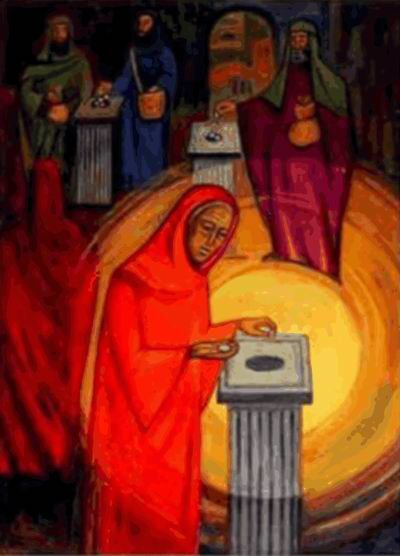
And in our gospel today, when Jesus sees a poor widow putting into the Temple treasury two small coins, which is all she has and her whole livelihood, what does he do? He does not try to stop her. He does not criticize her for being foolish. He calls his disciples to himself, he points her out to them, and he glorifies her trust in God in having given more than all the others. Her deed is still remembered to this day. Would it have been better if she had not given her gift?

I do not have a one-size-fits-all answer for how much poor widows should give. The Catechism teaches that the Church’s precept, “’You shall help to provide for the needs of the Church,’ means that the faithful are obliged to assist with the material needs of the Church, each according to his own ability,” so there’s recognition that some people have greater or lesser ability than others to materially assist the Church’s mission in this world. But if even poor widows are sometimes called to give, to trust in the Lord and give him the chance to prove himself their faithful provider, how much more so are the rest of us called to be generous?

We live in the wealthiest country in all of human history, and yet most of us only give a tiny fraction of our income to church and charity to support the good works they do. What accounts for this? Some of it is from the love of money and some of it is from fear. The Book of Ecclesiastes says, “He who loves money is never satisfied by money, and he who loves wealth is never satisfied by income.” Some are slaves to their greed, and some are shackled to their anxiety.

As an early teen, I felt reluctance at giving any money away for anything. I thought, “Who knows what my future holds? What if I need that money later? Every dollar I give away now is another dollar I’m exposed to future, unseen danger.” My mindset wasn’t informed by the Gospel, but when I finally read the Gospels myself I encountered Jesus’ teaching there. He says: “Do not worry and say, ‘What are we to eat?’ or ‘What are we to drink?’ or ‘What are we to wear?’ All these things the pagans seek. Your heavenly Father knows that you need them all. But seek first the Kingdom of God and his righteousness, and all these things will be given you besides. … Give and gifts will be given to you; a good measure, packed together, shaken down, and overflowing, will be poured into your lap.” The Lord was calling me beyond my comfort zone and into a deeper relationship with him.

I remember standing in St. Paul, Minnesota’s awe-inspiring cathedral. It was my first time there and I saw near the south exit a donation box labeled “For The Poor.” The largest bill in my wallet was a ten or a twenty, and I both wanted and very much did not want to give it, yet I knew what I should do. Once I had done it, I walked out smiling. It was a small donation, but even then I knew it was a big moment, and it changed the rest of my life.

I recall the story of one married couple. They used to pay their bills and then give to God if there was something left —and sometime there was nothing left. But God put it on their hearts to tithe consistently, so they began setting aside their gift to him first before paying their bills. And when they approached their giving in this way they discovered there was providentially always enough for both God and the bills.

God commands, “You shall not put the Lord, your God, to the test,” yet in his Old Testament Book of Malachi he says to test him in this: “Bring the whole tithe into the storehouse, that there may be food in my house. Put me to the test, says the Lord of hosts, and see if I do not open the floodgates of heaven for you, and pour down upon you blessing without measure!

And so, without embarrassment, I ask you to be generous in giving, not only so that our church may put your gifts to good use, but for the sake of deepening your personal relationship with our good and faithful God.

Repairing Shoes & Souls — Funeral Homily for Gerald “Casey” Franz, 92

October 4, 2021

Sixty-eight years ago, Gerald married Wanda here in St. Paul’s Catholic Church. On Sundays, they brought their children here to see Jesus and worship. In their later years, Gerald and his wife became daily Mass-goers. Even when confined to home, he would watch Mass on TV, and during his days at Dove Nursing Home he was delighted to attend its celebration. Today, we gather here once more to offer our greatest prayer to God, the Holy Mass, for Gerald’s soul and for the good of all who love him. Gerald’s past occupations are not nearly as important as his faith, family, or friends, but Gerald’s all-time favorite job stands out for being rather rare.

Alongside Wanda, and then up until the end of last year, Gerald worked as one of our modern world’s last cobblers; not an apple, peach, or cherry cobbler, but a cobbler who works with shoes. Shoes are our lowest article of clothing, walking upon the earth. We see them everywhere we go; covering our lowly, vulnerable, and sometimes embarrassing feet. Some people say they “love shoes” but how much are we really willing to sacrifice for them? In this era of cheap mass production and consumerism, when a pair of shoes is somehow flawed or broken people typically toss them in the trash. But working out of his home shop, Gerald’s affordable rates and friendly face kept customers coming to his door.

I’m told that Gerald’s sharp and witty mind seemed to know every person’s face and name in Bloomer and Tilden; along with the names of their parents and siblings, whom they married and where they lived. Gerald would fix what was broken, patch what was torn, and through orthopedics enable people to walk. What might be considered worthless garbage to some, he restored. In this, Gerald bears a likeness to another.

Today, there are more people upon the surface of the earth than ever before. We human beings are lowly, vulnerable, and sometimes embarrassing. And when we are flawed or broken, this utilitarian world would often discard us. Some people say they “love humanity” but how much are they really willing to sacrifice for others? In our modern, consumeristic age some doubt whether God and his Church are needed anymore. But Christ and our Catholic faith are not antiquated professions, we need them now as much as ever.

Jesus Christ knows your name. He knows your face and your story. Our loving Lord knows absolutely everything about you. He who enabled the crippled to walk would fix what is broken in you and patch what was torn about you. The sacrifice of the Mass you are about to behold is Jesus’ sign of love for you. The Eucharist which Gerald has so loved is Jesus’ gift of love to you. I am confident that Gerald will be grateful for your prayers today, but I believe that the greatest wish of this cobbler of shoes is that you would always walk with the healer of souls.

Marriage is for Life

October 3, 2021

27th Sunday in Ordinary Time


In “the beginning of creation, God made them male and female. For this reason a man shall leave his father and mother and be joined to his wife, and the two shall become one flesh.” They are no longer two but one flesh. “Therefore,” Jesus says, “what God has joined together, no human being must separate.” Jesus teaches, “Whoever divorces his wife and marries another commits adultery against her; and if she divorces her husband and marries another, she commits adultery.

Now Christ’s Church does believe and teach that there can be situations where it is prudent and right for a person to physically or legally separate from their spouse. Perhaps there’s physical or emotional abuse in the marriage; destructive, unchecked addictions; or obstinate infidelity. And after the marriage falls apart the Church can investigate whether something essential to that marriage being a binding, sacramental bond before God was missing from the start.

It is possible for Catholic brides and grooms to fail to marry sacramentally in many ways. For instance, the couple might get invalidly married outside the Church; inside a courtroom, on a beach, or in a barn. The bride might feel forced to marry such that her consent is not free. The groom might lack the psychological or physical capacity for marriage. Or one of them might say the vows without not really meaning them. There are many ways a marriage can be sacramentally invalid and non-binding. And where the Church finds sufficient proof for this she will grant an annulment, permitting the man or woman to remarry. So as I said before, being divorced is not necessarily a sin; it does not automatically bar you from receiving Communion. However, to abandon one’s spouse without cause, or to remarry when you are not free to remarry, are sins that require repentance.

What God has joined together, no human being must separate.” Jesus said this in response to a question about divorce, but what other things of human sexuality has God joined from the beginning which no human being should separate? God joined sexual relations to the covenant of marriage. He joined love-making to the possibility of life-making. And he joined one’s biological sex to one’s identity. God created them male and female, one man and one woman, not identical sexes—but physically and spiritually complimentary mates, and made God them man and wife in a covenant for life.

God’s first commandment in the Garden was “be fruitful and multiply,” and today we hear Jesus tell us “Let the children come to me.” His wish is to bring “many children to glory,” as our second reading says. God’s Word in the Bible celebrates having many children as a blessing, not a curse. Today’s psalm proclaims this blessing

Your wife shall be like a fruitful vine
  in the recesses of your home;
  your children like olive plants around your table…
  May you see your children’s children.

Indeed, being surrounded by the love of many offspring is among the greatest blessings for the aged. But human beings separating sexuality from an openness to life distorts God’s plan and the society around us.

Contraception is not something new. It existed in ancient times. Genesis relates how a man named Onan repeatedly “wasted his seed on the ground” during intercourse to avoid conceiving children. “What he did greatly offended the Lord, and the Lord took his life…” Egyptian scrolls dating to 1850 B.C. describe other methods and the pagans practiced contraceptive techniques in the Roman Empire in the days of Christ and the Early Church. The Church Fathers, such as St. Clement of Alexandria, St. Augustine, and St. John Chrysostom condemned acts of contraception or sterilization. Even the first Protestants denounced contraception, too. Martin Luther the founder of Lutheranism, John Calvin the founder of Calvinism, and John Wesley the co-founder of Methodism all wrote against it.

All Christian groups were agreed on this less than a century ago. That is until the Anglicans in 1930 became the first Protestants to officially approve artificial contraception use for hard cases. (Thirteen years before, in 1917, the same group had declared contraception “demoralizing to character and hostile to national welfare.”) As is the way of such errors, the exception became the norm and the Protestant denominations changed their teachings. By 1961, the National Council of Churches could pronounce that “most of the Protestant churches hold contraception… to be morally right when the motives are right.” The Catholic Church, however, stood firm and stood alone against the spirit of the age.

At the end of 1930 and again in 1968, the popes wrote encyclical letters reaffirming the constant teaching of Christ’s Church about the nature, purpose, and goodness of marriage and the marital act; and repeating the consistent and ancient rejection of all directly-willed acts of contraception, sterilization, and abortion. In 1968, St. Pope Paul VI predicted in his encyclical Humanae Vitae that the widespread use of contraception would broadly lower morality, increase marital infidelity, lessen respect towards women, be coercively imposed by governments, and promote the self-harming belief that we have unlimited dominion over our bodies and human life in general.

According to its advocates, contraception was supposed to strengthen marriages, prevent unplanned pregnancies, improve women’s happiness, and reduce abortions. After decades of cheap and widespread contraceptive use, half of all pregnancies are unplanned, half of all marriages end in divorce, women report lower and lower levels of happiness throughout the decades since the 1970’s, and about one-in-five U.S. pregnancies end in abortion, with more than 60 million killed since Roe vs. Wade in 1973. When persons and societies decouple and oppose human sexuality to its life-creating purpose, many harmful errors follow. You can trace the path of one error leading to the next. We are now to the point that many people cannot even define what a woman or a man is.

I would be remiss here if I did not mention that the Church teaches that there can be holy reasons and virtuous means to avoid conceiving more children. Natural Family Planning (also known as NFP) uses signs from a woman’s body to identify the days in her cycle when she can conceive. Equipped with this knowledge, for serious reasons a couple may virtuously abstain from the marital embrace to avoid a pregnancy, while respecting God’s design and the dual meaning of the marital act.

Couples who practice NFP report growing in communication, self-control, and intimacy. They are more open to discerning and embracing God’s plan for their families and are statistically less likely to divorce. Not only is NFP completely natural, the information it tracks about a woman’s body commonly leads to the diagnosis, treatment, and cure of health disorders, from infertility to life-threatening illnesses. Unlike common chemical contraceptives, NFP does not cause increased risks for breast, liver, or cervical cancer; nausea, vomiting, stomach problems, or diarrhea; depression, mood swings, or lowered libido; and it does not cause spontaneous abortions (by preventing implantation of newly conceived children into the uterine wall).

Realize that NFP is not the Rhythm Method. The old Rhythm Method simply counted how many days had passed since the woman’s last cycle and was a moral but rather ineffective approach. Faithfully-followed NFP techniques have a 99% effectiveness rate, comparable to illicit methods of artificial contraception. If you would like to learn more about NFP, visit the Diocese of La Crosse’s website and search for “NFP”. There you can investigate NFP techniques, their science and their benefits, and register for on-line courses.

Whether or not you are married, whether or not you are past the age for children, I hope that you will recognize that in the chaotic, constantly-changing, errant stream of human history, is our stable rock for truth is Christ’s Church. The Bride of Christ, our mother the Church, calls us to follow her teachings from Christ as faithful, trusting, loyal sons and daughters. Jesus says, “Amen, I say to you, whoever does not accept the kingdom of God like a child will not enter it.” Do not miss out on blessedness, in this life or the next.

Does Jesus Have an Arc?

September 19, 2021

25th Sunday in Ordinary Time

Katniss Everdeen (Jennifer Lawrence) in The Hunger Games (2014)

When I was growing up, my dad read a lot of science fiction novels and he once made an observation that I’ve remembered ever since. He noted how science fiction stories always feature some futuristic thing (like cloning, time-machines, or space travel) but if a sci-fi story only talked about the technology, it would be boring. “Every good story,” he said, “is a story about people.” It’s true. All great stories, be they found in literature, television, or film, are stories about people – interesting characters living through events.

What do Katniss Everdeen, Sir Thomas More, and Paddington Bear have in common? They are all film characters with the same kind of character arc. A character arc refers to the inner journey of a character throughout the course of a story. A character may go here or there, and do this or that, but their character arc is their transformation as a person. There are three main types of character arc: Positive, Negative, and Flat.

Positive arc characters change for the better. They originally believe lies about themselves and the world, things like “I’ll never find true love,” or “I can’t be a warrior.” But by the end, they’ve found the truth, embraced it, and triumphed. Most of the stories you’ve seen or heard are stories like this. Negative arc characters, on the other hand, change for the worse. They come to accept lies and wickedness. Villains’ origin stories are like this. Michael Corleone from The Godfather or Walter White in Breaking Bad are famous examples of characters with negative arcs. Katniss Everdeen, Thomas More, and Paddington, however, are characters of a third type; characters who do not change.

Flat arc characters possess the truth and live it out from the start of their stories to the end. These characters also experience struggles like the others, but rather than being transformed themselves they transform the people and world around them. In The Hunger Games, Katniss Everdeen, from beginning to end, knows that the tyrannical government is evil and is willing to sacrifice herself for others (as for her little sister, Prim). In A Man for All Seasons, 1966’s Best Picture winning film about a real-life Catholic saint, Sir Thomas More is a man of virtue who endures persecution for refusing to swear a false oath against his conscience and God’s law. And throughout the Paddington movies, young Paddington remains consistently earnest, honest, polite, and friendly while enhancing the lives of the people he meets.

When we consider the Gospels and the Book of Acts as stories (indeed, true stories and the greatest ever told) what kind of arcs do we find? What kind of arc does Jesus Christ have, and what sort of characters are his apostles? Though Jesus is born as a baby and grows into adulthood, though he ministers and is put to death as a suffering servant and returns as triumphant Lord, Christ’s inner self remains the same. The Person of Jesus Christ is divine, the eternal Son of God, a flat arc character who remains the same “yesterday, today, and forever.” He knows the wickedness of the world and sacrifices himself for others. He only speaks the truth and makes no compromise with evil, despite its persecutions. And his love converts the hearts of others, healing and saving the world around him. Jesus is the model, the pattern, the archetype, of every true hero.

What is the character arc of his apostles? The Gospels do not hide their flaws. We catch them arguing among themselves about who is the greatest. They still believe the world’s lies about who and what’s important, which produces the disorders St. James describes: jealousy, envy, and selfish ambition, greed, fighting, and slavery to passions, with every foul practice. But by the Book of Acts, the apostles’ positive arc has led each of them (except Judas Iscariot) to see that the greatest of all is not the ruler over peoples but the one who cares for even little ones. Jesus’ apostles have become new men, loving servants of all in the likeness of their Lord.

We human beings love stories. That’s part of why Jesus so often taught in parables. But why do we love stories so much? And why do we root for the underdogs, such as Rocky Balboa, Forrest Gump, or Joan of Arc? We love them because we are in a story ourselves, God’s great underdog story, in which you and I are characters. Our lives are important subplots to Christ’s overarching saga. We are co-authoring with Jesus our own character arcs within it.

Will you rise higher and higher in a positive arc, finding the truth in Christ’s Church, embracing the truth and living it out? Will you eventually become like Jesus and his greatest saints, who hold to the truth in a flat arc, blessing and transforming all around them? Or, following lies into darkness, will a negative arc lead you to final tragedy and disaster? If you are on this downward path, realize that a vast audience in heaven looks on, longing for a plot-twist which you can accomplish with Christ. But do not delay, for you do not know how many more pages of the book or minutes in the movie remain before your life’s eternal epilogue. This Sunday’s gospel antiphon acclaims: “God has called us through the Gospel to possess the glory of our Lord Jesus Christ.” Let us whole-heartedly play our part in Jesus Christ’s heroic saga, that we may also share in his story’s glorious happy ending.

Jesus Christ Joined Our Team — Funeral Homily for Russell “Russ” Dachel, 73

August 12, 2021

There are many humorous stories about Russ. He loved to leave you with a smile, a smile on your face and a smile on his. So today, I would like to share with you the funniest story I’ve heard about him, and I believe Russ will be amused at its retelling. It happened over forty years ago. Some of the finer details are uncertain, but an eyewitness who was there confirms that the broad strokes of this story are true.

Once, in the second half of the 1970’s, Russ was officiating at a junior high school basketball game; Eau Claire Memorial versus Eau Claire North. The young men on both sides were giving it their all, and so was Russ. His friend Jim, a former coach who was at the game, tells me that Russ was a good official. Russ had refereed games before, and would go on to ref games after, but this game won him some local fame.

In one telling, Memorial had the ball and dribbled it down court. On this possession, Russ the Ref was the back official, standing nearest to the empty backcourt. Suddenly, a North player stole the ball and made a fast break for the unguarded basket. As the young man went in for what he, both teams, and all the spectators in the bleachers expected to be a routine lay-up, they witnessed something rarely—if ever—seen since James Naismith invented basketball in 1891.

Recall that Russ loves sports. He’s intensely competitive, he hates to lose, and always gives one hundred percent. On this occasion, it seems that Russ got so wrapped-up into the action that he forgot what he was supposed to be doing. As that young man drove to the basket, Russ’ instincts kicked in. Despite not being tall, his feet leaped from the floor to an impressive height, and with his up-raised hand, Russell the Muscle blocked the shot. His friend Jim recalls it was “The Defensive Play of the Game.” Everybody laughed and Russ wanted to disappear, but “change of possession” was signaled and the game went on. A referee becoming a player in the game is against the rules in that setting, but Jesus Christ does something similar to this in our most important story.

Our fallen human race was up against sin and death, the devil and his demons, and we were sure to be beaten. In our wounded condition we could never win on our own. But the Son of God did not wish to merely be our judge, which would guarantee our total defeat. Jesus Christ entered the game on our side, divinity joined humanity. He gave his all, one hundred percent, as someone who hates to lose. And if we die with him who died for us, we shall also live with him. And if we persevere in the struggle before us we shall also reign with him.

Because of the importance of his Catholic Faith, Russ was dedicated to Holy Mass here each Sunday, sitting in his pew near the confessional. He said, “I have to go to church. I feel better when I do.” He felt that way because Jesus Christ is here. As you pray today for Russ’ soul, if you’ve been away from Jesus Christ, I ask you to resolve to get back on his bench and to strive on his side in the contest of life with all your heart, that you may share in his great victory.

Beyond “Mercenary Love”

July 31, 2021

18th Sunday in Ordinary Time

Alongside other security personnel, the Holy Father and the Vatican City State are protected by one hundred and thirty-five men who have been called “the world’s smallest army.” Pilgrims and tourists to St. Peter’s Basilica may see them on duty wearing uniforms inspired by the Renaissance era – in garments comprised of yellow, blue, and red stripes and helmets topped with colored ostrich feathers. Yet these soldiers are not merely there for ceremonial decoration. Each of them takes a solemn vow to, if necessary, lay down their lives in defense of the pope. All of them are Roman Catholics, citizens of Switzerland, and have completed basic training with the Swiss Armed Forces. They are known as the Swiss Guard and have served the Holy Father semi-continuously for more than 500 years. But why Swiss guards, rather than Italian, Spanish, or French?

Before answering that, here is another small mystery of history. During the Revolutionary War, on the night of December 25th, 1776, General George Washington led his men in boats across the icy Delaware River to attack 1,500 enemy troops garrisoned in Trenton, New Jersey the next day. This daring tactic found their opponents unprepared. Our Continental Army suffered only two dead and five wounded in the mission but captured about nine hundred German soldiers. Yes that’s right, Germans. What were Germans doing in America during the Revolutionary War?

The reason why German soldiers fought for Great Britain in 1776 and why the pope began having Swiss guards in 1506 is that these troops were mercenaries, third-party soldiers-for-hire. In an era of conflict between Italian factions and his Papal States, the pope hired soldiers from friendly Switzerland five hundred miles away. It’s been the tradition to have Swiss guards ever since. And when the Revolutionary War broke out, the Holy Roman Emperor, Frederick II, saw an opportunity. He leased his German soldiers (nicknamed Hessians) to the British Empire to fight for them overseas.

Those serving in Swiss Guard today are remarkable and devout young men. And even if the pope were unable to continue paying their salaries I would not be surprised if almost all of them would faithfully complete their terms of service. The classic, mercenary soldier-for-hire, however, does not serve because he loves the king, country, or people he sides with, he does not risk his life because he believes in some just and noble purpose. The mercenary’s motivation is the money he is paid or promised. Deny him that payment and his loyalty and services will disappear with him. Similarly, the saints throughout the centuries have observed that many Christians have a “mercenary love” for God. That is, they love the Lord when times are easy, so as long as he “pays” them with many graces, consolations, and good things. But when those sensible blessings dry up, their loyal service and devotion disappear. Though God’s love does not depart from them, but they abandon him.

The Hebrews in the desert had witnessed God’s care for them. They saw the mighty deeds he wrought in the Exodus. But when they became hungry, the whole Israelite community grumbled. “Would that we had died at the Lord’s hand in the land of Egypt, as we sat by our fleshpots and ate our fill of bread! But you had to lead us into this desert to make the whole community die of famine!” God knew they needed food, he fully intended to meet their need, but he wanted them to trust in him and rely on him as a good Father. The Lord Jesus likewise desires a closer personal relationship with each one of us.

In today’s gospel, Jesus calls out the crowds at Capernaum on their mercenary motives. They love the gifts, but not yet the Giver. “Amen, amen,” he says to them, “you are looking for me not because you saw signs but because you ate the loaves and were filled. …Believe in [me,] the one [the Father] sent.” Jesus calls them higher, to a devoted love for himself, “Do not work for food that perishes but for the food that endures for eternal life, which the Son of Man will give you. … I am the bread of life.” When we look at ourselves, what is the quality of our love for God?

St. Basil the Great wrote in the fourth century: “If we turn away from evil out of fear of punishment, we are in the position of slaves. If we pursue the enticement of wages, …we resemble mercenaries. Finally, if we obey for the sake of the good itself and out of love for him who commands… we are in the position of [devoted] children.” The Doctor of the Church, St. Bernard Clairvaux observed in the twelfth century: “Whosoever praises God for his essential goodness, and not merely because of the benefits he has bestowed, does really love God for God’s sake, and not selfishly.” So how can we develop a more perfect love for God, and how can we be more faithful when our next dry time of trial comes?

One way to a purer, more personal love for God is to realize that when you come to the sacraments, Jesus Christ meets you there. The Eucharistic Host you receive is him. It is he who forgives your sins through the priest in Confession. And when you receive the Anointing of the Sick, Jesus is uniting your suffering to his and his strength to your weakness. So do not avoid encountering him and do not meet him on autopilot. Recognize whom you are approaching, appreciate the Gift and appreciate the Giver, and your relationship with Jesus will grow.

This personal relationship with the Lord is also cultivated through daily prayer. Memorized prayers can be very good. Our Fathers, Hail Marys, litanies, and chaplets are great. But they can also become routine and impersonal, like chores. Regularly speak to our heavenly friends in your own words as well. When you boil it down, there are basically four things we can say whenever we pray: “I’m sorry, please, I love you, and thank you.” That is, there are prayers of Sorrow, Asking, Loving, and Thanking. (That’s S-A-L-T or SALT.) Many people spend their prayer times focused on the first two: Sorrow and Asking: “I’m sorry, Lord, please forgive me. Please Lord, grant this good thing for me and for them.” Jesus wants to pray for such things, but be mindful that your prayers are properly seasoned with expressions of Loving and Thanking as well. “I love you, Lord, and I praise you. You are holy and worthy and good. I thank you for your blessings all around me.” Focus more on rejoicing in who he is and what he’s done, not just on the things you want, and your love for him will deepen.

And when you find yourself in your next dry desert, tried and hungering like the Hebrews, or fighting on your next battlefield, serving without appearing payment, do not spurn or abandon the Lord. Go to him with your needs, recognizing how much you need him. Realize that even when the pleasant, warm fuzzies of consolation are withdrawn for a time, the Lord’s love for you remains and he offers you his sufficient grace to keep going in his will. And be patient knowing, that sooner or later, felt consolations and peace will return. With a more personal, more pure, and more perfect love for God, you can persevere as far more than a slave or mercenary, but as a devoted child of the Father and a true friend of Christ, as you are meant to be.

Reflecting Christ — Funeral Homily for Edward “Ed” Boehm, 96

July 23, 2021

Edward BoehmHe is known and loved by many. A man others are drawn to because they feel welcome and loved around him. He is wise and witty, joyful and just, honest and unpretentious; a strong, steady, peaceful presence. A great storyteller and a great listener. A hardworking craftsman who both builds and repairs. He’s faithful and devout, hating no one, a lover of God’s word and a believer in the Resurrection. He is the reason that we are all gathered here today. The man I speak of is Jesus Christ.
One of the things I love most about “The Chosen,” an excellent mini-series (now through its second season) about Christ and his disciples, is its wonderful depiction of Jesus. What sort of person’s three-year public ministry could so transform the world ever after? What kind of person would people leave everything behind to follow? Someone engaging and winsome, who can see into your soul and still loves you. “The Chosen” is currently free to watch online, and I urge you see it because it is truly well done, but you can always read the books that the series is based on instead and encounter Jesus Christ in the four Gospels.

Regardless, it is essential that each of us get to know and love him. As Pope Emeritus Benedict XVI once observed, “Being Christian is not the result of an ethical choice or a lofty idea, but the encounter with an event, a person, which gives life a new horizon and a decisive direction.” As Jesus says in St. John’s Gospel today, this is the will of God the Father: that everyone who sees God the Son and believes in him may have eternal life, and be raised up on the last day.

Even though my opening description lists praiseworthy traits of Jesus Christ also found in Edward Boehm, those who know and love him and report such things about him acknowledge that Ed was not perfect. (This, by the way, is why the Church offers prayers for the dead, to help those who die as friends of God be sanctified through and through, to be completely healed and purged of any obvious or hidden flaw, since Revelation teaches us nothing impure can enter the heavenly Jerusalem, the holy city, where God’s unveiled glory dwells.) Ed was not perfect, but where did his Christ-like traits come from? Our world is not perfect, but where does its beauty come from? These things come from Jesus Christ, through whom all things were made, through whom all good things come.

We are finite creatures who desire the infinite. This longing for ever greater and unending goodness, beauty, truth, life, happiness, and love is to be fulfilled in God who, though we are dust, has placed these longings within us from the beginning. Though many do not realize it, our ultimate longing is for communion with God himself. There is a God-shaped hole in every human heart. And we meet the divine in human form in the person of Jesus Christ. Realize that the goodness you love in Edward Boehm reflects something of God’s goodness. Jesus Christ is the one on whom rests all our joyful hope, for Ed and for ourselves. He is the Alpha and the Omega, the beginning and the end.

The Master Chef — Funeral Homily for John Kenneavy, 74

July 22, 2021

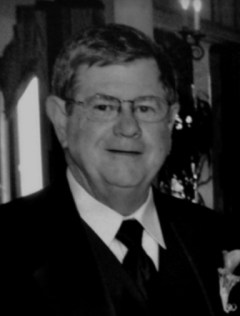
John KenneavySt. John the Baptist Parish is honored welcome you and to offer our greatest prayer, the Holy Mass, for John’s soul and the consolation of all who know and love him. No short funeral homily can capture the fullness of a person. If I were to preach to you for an hour about his life, afterwards I bet that each of you here could add another unique story. This morning, I’m going to reflect upon just a single aspect of John’s life, one that all of you who are his family and friends are already familiar with: his being a chef.
John opened and operated the Kenneavy’s Kitchen restaurant for seventeen years, preparing homestyle dishes, fresh bakery items, and his famous pizza. After selling that restaurant in 1993, he cheffed at several other Door County restaurants. He went on to be one of the first cooks hired to run the kitchen at a brand new, area nursing facility. And, in his own retirement, he helped to helped cook and serve a weekly lunch for his Florida residential community. In addition to his customers and neighbors, how many countless times did he use his culinary talents to feed his family and friends? Consider how much nourishment and delight John provided for literally thousands through his culinary gifts in life. And John delighted in doing it.

So what is the joy in cooking? Everyone likes to eat good food – chefs included – but the joy from cooking is more than merely eating. There is delight in creating a dish and delight in sharing it. The chef offers up a gift of self to create a great meal and offers this meal to others. A chef’s feast is offered for peoples’ nourishment and joy, that they may have life and have it more abundantly. And a great feast brings people together, connecting the chef with his friends, family, or guests.

At the Last Supper and at the Holy Mass, Jesus gathers his friends for a feast. The Good Shepherd spreads a table before them in the house of the Lord. Christ prepares a meal for his family, makes a gift of himself for us, and offers us this gift. Jesus says: “I am the living bread that came down from heaven; whoever eats this bread will live forever; and the bread that I will give is my Flesh for the life of the world. Whoever eats my Flesh and drinks my Blood has eternal life, and I will raise him on the last day.” This is not mere metaphor, for Jesus insists, “my Flesh is true food, and my Blood is true drink,” and so his Church has always professed and believed. This meal brings us into communion with the Chef who prepares it: “Whoever eats my Flesh and drinks my Blood remains in me and I in him. Just as the living Father sent me and I have life because of the Father, so also the one who feeds on me will have life because of me.” Whoever eats this bread will live forever with the Lord on the holy mountain that the Prophet Isaiah describes, where death will be no more and those who are saved will rejoice in their salvation.

When St. Augustine’s mother, St. Monica, was dying she famously told her son, “Bury my body wherever you will…. Only one thing I ask of you, that you remember me at the altar of the Lord wherever you may be.” St. Monica knew the Holy Mass is our greatest prayer because this feast connects to the Lord and one another, that we might have life and have it more abundantly. Today, let us pray for the peace of John’s soul and receive Christ’s consolation for ourselves. Jesus Christ the Master Chef has prepared his feast for us, and “blessed are those called to the Supper of the Lamb.”

Lessons From The Gulag Archipelago

July 3, 2021

14th Sunday in Ordinary Time

Aleksandr Solzhenitsyn was a captain in the Red Army of the Soviet Union serving bravely on the front lines against the Germans in 1945. Three months before World War II’s end in Europe, his brigade commander summoned him to headquarters and asked for his pistol. When Solzhenitsyn handed it over two counterintelligence officers suddenly crossed the room. They ripped off the insignia from his uniform and shouted: “You are under arrest!” “Me? What for?” The pair gave him no answer. But as Solzhenitsyn was being hauled to the exit, the brigade commander firmly addressed him: “Solzhenitsyn. Come back here.” With a sharp turn he broke loose and stepped back to his superior.

Solzhenitsyn had never known his commanding officer very well. This colonel had never condescended to run-of-the-mill conversations with him, but now his ever-stern face displayed thoughtfulness. “You have…” the colonel asked weightily, “a friend on the First Ukrainian Front?” Solzhenitsyn understood instantly: he was being arrested for criticizing Joseph Stalin in private letters to a school friend. Over the decades, many millions would suffer in the soviet prison camps (known as gulags) for offenses as small as this or less.

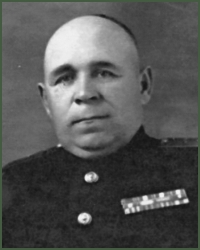
Travkin Zakhar Grigorevich

The counterintelligence officers objected. They shouted at the colonel for his revelation to the prisoner: “It’s forbidden! You have no right!” The colonel could get himself arrested, too. As Solzhenitsyn recalls in his own words, his colonel, “Zakhar Georgiyevich Travkin could have stopped right there! But no! Continuing his attempt to expunge his part in this and to stand erect before his own conscience, he rose from behind his desk — he had never stood up in my presence in my former life — and reached across the quarantine line that separated us and gave me his hand, although he would never have reached out his hand to me had I remained a free man. And pressing my hand… showing that warmth that may appear in an habitually severe face, he said fearlessly and precisely: ‘I wish you happiness. Captain!’ Not only was I no longer a captain, but I had been exposed as an enemy of the people… And he had wished [me] happiness…” Despite the danger to himself, the colonel did what little he could to bless and console a persecuted man – and Aleksandr Solzhenitsyn never forgot this.

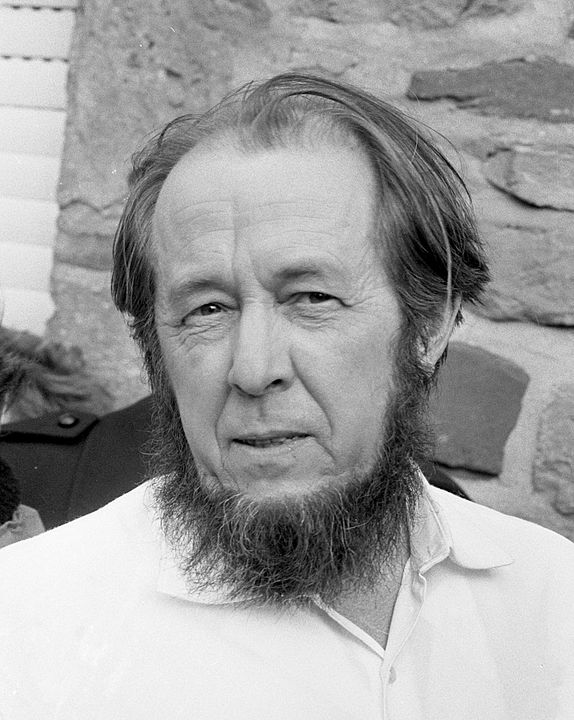
Aleksandr Solzhenitsyn in 1974Solzhenitsyn would go on to survive almost eight years inside prisons and forced labor camps. After his release, he became a world famous author, winning the Nobel Prize for Literature in 1970. But the publication of his most important work, The Gulag Archipelago in 1973, outraged the soviet authorities. They stripped him of his citizenship and expelled him from the USSR – they rejected him in his native place. Two Christmases ago, St. John the Baptist’s Altar Rosary Society gifted to me a subscription to Audible. A week and a half ago, I activated it and this non-fiction book, The Gulag Archipelago, is the first thing I’m listening to. It draws on interviews, documents, diaries, and Solzhenitsyn’s own experiences as a prisoner to detail the history and the horrors of soviet gulags from 1918 to 1956.

The dictator Joseph Stalin suspected and feared he had enemies everywhere, so he would hand down orders for entire groups to be arrested (“Arrest all the generals in the Red Army”) and he ordered large numbers of political arrests to be made (“Arrest 200 people in this city for political crimes by month’s end”). To fill their quotas, the police would arrest innocent people, employ terrible tortures to extract confessions, and then ship these condemned persons off to camps, often to die there from a bullet or from the inhuman conditions.

Getting confessions was very important for the corrupt and cynical interrogators. Caring nothing whether the accused were actually criminal conspirators, they inflicted intense physical and psychological sufferings to make them admit guilt and implicate others. These police were not afraid to lie, and any court trials there were were just for show. In that case, instead of breaking their victims, why didn’t the interrogators just forge signatures onto confessions? I suspect this was due to demonic influence. Demons delight to see the wicked do evil, but they are pleased still more by seeing the good fall, to see them sin by betraying the truth and betraying those they love. Solzhenitsyn urges us to have mercy on those who people fell: “Brother mine! Do not condemn those who, finding themselves in such a situation, turned out to be weak and confessed to more than they should have. … Do not be the first to cast a stone at them.

Vera Korneyeva as a young womanSome prisoners did not lie or betray anyone, but even took the opportunity to proclaim the truth. Solzhenitsyn tells the story of one Vera Korneyeva who was arrested with all seventeen members of a Christian group. Her interrogator had left her alone in a large office of the police building where half a dozen employees were sitting. A conversation started and Vera launched into a sermon. In freedom, she had been no more than a lathe operator, a stable girl, and a housewife. But the typists, stenographers, and file clerks of the secret police listened, sometimes asking her questions. People came in from other offices and the room filled up. She spoke mostly about religious faith and religious believers, and asked why anyone would need to persecute Christians.

Believers don’t need to be watched,” she said, “they do not steal, and they do not shirk [their duties]. Do you think you can build a just society on a foundation of self-serving and envious people? Everything in the country is falling apart. Why do you spit in the hearts of your best? … Why arrest [religious] people?” At that point, her interrogator reentered and started to rudely interrupt her. But everyone shouted at him: “Oh, shut up! Keep quiet! Go ahead, woman, talk.” Solzhenitsyn notes they were forbidden to call her comrade or citizen, but they referred to Vera with the honorable title Christ used: “woman,” and she continued in the presence of her interrogator. So there in an office of the police headquarters they listened to Vera Korneyeva — and why did the words of an insignificant prisoner touch them so? Like Ezekiel, a prophet had been among them.

Soviet prisons and gulags were hellish places, but like Mount Calvary, the Lord was present even there. Nikolai Aleksandrovich Kozyrev, whose brilliant career in astronomy was interrupted by his arrest, sustained himself in prison by doing theoretical work in his mind. His line of mental exploration, however, was blocked by forgotten figures. He could not build any further — he needed the data to develop his theory, but how could he obtain this from his solitary-confinement cell? The scientist prayed: “Please, God! I have done everything I could. Please help me! Please help me continue!” His eyes were fixed on the Lord, pleading for his mercy.

At that time, he was entitled to receive one book every ten days. Half an hour after his prayer, they came to exchange his book. As usual, without asking anything at all, they pushed a book at him. It was entitled A Course in Astrophysics! What was a book like this doing in a prison library? Kozyrev threw himself into it and began memorizing everything he needed and everything he might need later on. After two days, the prison chief made a surprise inspection of his cell and immediately noticed the book. “But you are an astronomer?” “Yes,” he answered. “Take this book away from him!” Yet its providential arrival had opened the way for the scientist’s further work, helping his mind and spirit survive his ten years of detention. Following his release, Dr. Kozyrev would go on to be the discoverer, through telescopic observations, of tectonic activity on the Moon. In other words, he discovered that there is hot magma inside of the Moon. Like Jesus Christ, the Moon is not long-dead (as many have thought) but is dynamically alive today.

Nikolai Aleksandrovich Kozyrev in 1958

Solzhenitsyn observed in 1983, “There always is this fallacious belief [around the world about great atrocities]: ‘It would not be the same here; here such things are impossible.’ Alas, all the evil of the twentieth century is possible everywhere on earth.” Will this church one day be torched by arsonists, as Catholic churches are now being burned down in Canada? Could we one day be fired, beaten, or arrested, be separated from our families, be deprived of our material possessions, or die because of our faith? Jesus Christ was perfect and sinless, “and they took offense at him.” He was hated, denounced, tortured, and murdered. If they persecuted him, why wouldn’t the world persecute us? I do not know how severe the persecution of Christians will become in our lifetimes, but I see no reason not to prepare our souls for this eventuality.

If we are to be like Jesus, even up to the point of dying like Christ rather than denying him (and indeed we are each called to be willing to do this) then we must begin practicing with the little things. Jesus says, “Whoever is trustworthy in very small matters is also trustworthy in great ones; and whoever who is dishonest in very small matters is also dishonest in great ones.” So we must never lie. Make no false professions or false confessions. As Jesus teaches us, “Let your ‘Yes’ mean ‘Yes,’ and your ‘No’ mean ‘No.’ Anything more is from the evil one.”

In addition to never telling falsehoods, we are called to speak the truth, like the woman Vera in the heart of the police organization. Are you afraid of what other people will think? Realize that they are concerned about what you think, too. If you are open, the Holy Spirit will give you opportunities to share the truth with others. Like Colonel Travkin with his accused Captain Solzhenitsyn, we must also be courageous enough to remain loyal to our peers when others would denounce and abandon them. And we must pray and rely on God, like Dr. Kozyrev (who was seemingly, but not truly) alone in his prison cell. Remember that Christ’s grace is sufficient for you, and his power is made perfect in weakness.

Practice these four things: never lie, share the truth, be loyal, and rely on Christ. Even if, in God’s Providence, you never come to suffer like Christ’s martyrs, by practicing these things you will become more like our Lord Jesus Christ.