There have been 266 papal reigns, from Pope St. Peter to Pope Francis, and 44 U.S. presidential tenures, from President Washington to President Obama. Take this quiz to see how well you know your popes from your presidents.
Archive for the ‘Politics’ Category
Popes or Presidents Quiz
September 19, 2013Tempting Christ — 1st Sunday of Lent—Year C
March 3, 2013Today’s Gospel from Luke is preceded by Jesus’ baptism in the Jordan. There, Jesus is revealed to be the Anointed One awaited by God’s people. The Anointed One is called the Messiah in Hebrew and the Christ in Greek. It was foretold that the “Anointed One” would have God as his Father in a unique and intimate way. This “Anointed One” was prophesied to come and be the savior, the champion, and the liberator of God’s people.
“Filled with the Holy Spirit, Jesus returned from the Jordan and was led by the Spirit into the desert for forty days…” Here, before the start of the public ministry of Jesus, in the silence and solitude of this desert retreat, the thoughts and prayers of Jesus were probably about his mission ahead. At this time the devil comes to tempt him. The devil wants to influence the kind of Christ that Jesus will be in hopes of derailing his mission from the start.
The devil says, “If you are the Son of God, command this stone to become bread.” And Jesus answers, “One does not live on bread alone.” What would be the evil in Jesus making this food? If he uses his power to meet his own needs, then the devil will ask “How can you refuse the needs of other people?” The devil wants Jesus to become an economic savior, a materialistic Messiah.
Jesus has compassion for our human condition–he knows it from his own first-hand experience. Jesus commands us to show his love to others by caring for their bodily needs. And when we do this it is Jesus acting through us. But if Jesus’ first mission had become to satisfy all material human needs, then Jesus would have been a Christ of bread alone, and we cannot live forever on bread alone. Making all of us wealthy wouldn’t be enough to make us holy, and so Jesus refuses the first temptation.
Then the devil shows Jesus all the kingdoms of the world and says, “I shall give to you all the power and glory…. All this will be yours, if you worship me.” And Jesus answers, “You shall worship the Lord, your God, and him alone shall you serve.” The devil offers Jesus an alternative to a life of obedience to his Father and in service to all. Jesus can become the world’s dictator whose own will must be done, if he would simply worship the devil.
This is the devil’s promise, but the devil is a liar. Making a deal with him gains nothing but loss, yet even if Jesus knew the devil would keep his word Jesus would have none of this. Jesus does not come to control us, but to invite us. He does not want to dominate us, but to persuade us to love. God seeks our loving response, and a response in love cannot be forced, so Jesus rejects the second temptation.
Then the devil takes Jesus to a high place and says, “If you are the Son of God, throw yourself down, for God will command his angels to guard you, and with their hands they will support you….” And Jesus answers, “You shall not put the Lord, your God, to the test.”
Here the devil argues that Jesus should expect to be protected from suffering and be preserved from death. But Jesus was sent and came to die and rise for us. Without these things how would we have been saved? Jesus trusted the Father’s will, even in suffering and death, and so Jesus refuses the third temptation.
God often works in ways that we wouldn’t imagine or choose for ourselves. We would wish that everything in life would be easy and painless. We wish our temptations and sorrows did not afflict us. But a doctor’s cure is given according to the disease he finds. After the Fall of mankind, God intends to save us through the difficulties and struggles of this life.
Our growth in holiness can be slow and our sufferings may be difficult. However, we should never despair. Our struggle has rewards and our suffering has purpose. We know this because of Jesus, who endured temptations just like us and for us.

El evangelio de hoy es precedido por el bautismo de Jesús en el Jordán. Allí, Jesús se revela como el Ungido esperado por el pueblo de Dios. El ungido es llamado el Mesías en hebreo y Cristo en griego. Fue predicho que “el ungido” sería tener a Dios como su Padre de una manera única e íntima. Este “Ungido” fue profetizado ser el salvador, el campeón, y el libertador del pueblo de Dios.
“Llenos del Espíritu Santo, Jesús volvió del Jordán y fue llevado por el Espíritu al desierto por cuarenta días…” Aquí antes del inicio del ministerio público de Jesús, en el silencio y la soledad de este retiro desierto, los pensamientos y las oraciones de Jesús fueron probablemente sobre su misión por delante. Entonces, el diablo viene a tentarle. El diablo quiere influir en el tipo de Cristo que Jesús va a ser, con la esperanza de desbaratar su misión desde el principio.
El diablo dice: “Si eres Hijo de Dios, di a esta piedra que se convierta en pan”. Y Jesús responde: “El hombre no vive solamente de pan”. ¿Cuál sería el mal en la fabricación de este alimento? Si Jesús usa su poder para satisfacer sus propias necesidades, entonces el diablo le preguntará “¿Cómo puedes negar las necesidades de otras personas?” El diablo quiere Jesús para convertirse en un salvador económico, un Mesías materialista.
Jesús tiene compasión por la condición humana y él lo sabe por su propia experiencia. Jesús nos manda a mostrar su amor a los demás por el cuidado de sus necesidades corporales. Y cuando hacemos esto, Jesús está actuando a través de nosotros. Pero si la primera misión de Jesús había sido la de satisfacer todas las necesidades materiales humanas, entonces Jesús habría sido un Cristo de pan solamente, y no podemos vivir para siempre en el pan solo. Haciendo todos nosotros ricos no sería suficiente para hacernos santos, y así Jesús rechaza la primera tentación.
Entonces el diablo muestra a Jesús todos los reinos del mundo y le dice: “Yo te daré todo el poder y la gloria …. Todo esto será tuyo, si me adoras. “Y Jesús responde:” Adorarás al Señor, tu Dios, ya él solo servirás “. El diablo ofrece a Jesús una alternativa a una vida de obediencia a su Padre y servicio de todos. Jesús puede convertirse en dictador del mundo, cuya propia voluntad se debe hacer.
Esta es la promesa del diablo, pero el diablo es un mentiroso. Haciendo un trato con él no gana nada sino pérdida, sin embargo, incluso si Jesús sabía que el diablo cumpliría su palabra de Jesús no quiso saber nada de esto. Jesús no viene a controlarnos, sino para invitarnos. Él no quiere que nos dominen, sino para persuadir al amor. Dios busca nuestra respuesta de amor y una respuesta en el amor no puede ser forzado, y así Jesús rechaza la tentación segundo.
Entonces el diablo lleva a Jesús a un lugar alto y le dice: “Si eres Hijo de Dios, arrójate desde aquí, porque Dios mandará a sus ángeles para que te guarden, y con sus manos te apoyan….” Y Jesús responde, “No tentarás al Señor, tu Dios.”
Aquí el diablo argumenta que Jesús debe esperar a ser protegido de el sufrimiento y ser preservado de la muerte. Pero Jesús fue enviado y vino a morir y resucitar por nosotros. Sin estas cosas, ¿cómo hemos sido salvados? Jesús confió la voluntad del Padre, incluso en el sufrimiento y la muerte, y así Jesús se niega la tercera tentación.
A menudo Dios obra de maneras que no nos imaginamos o elegir por nosotros mismos. Nos gustaría que todo en la vida iba a ser fácil y sin dolor. Queremos nuestras tentaciones y sufrimientos no nos afligen. Pero la curación de un médico se administra de acuerdo a la enfermedad que encuentra. Después de la caída del hombre, Dios quiere salvarnos a través de las dificultades y las luchas de esta vida.
Nuestro crecimiento en la santidad puede ser lento y nuestro sufrimiento puede ser difícil. Sin embargo, nunca debe desesperarse. Nuestra lucha tiene recompensas y nuestro sufrimiento tiene un propósito. Lo sabemos gracias a Jesús, que sufrió tentaciones como nosotros y por nosotros.
St. Benedict & The Pharoah — Monday, 15th Week in Ordinary Time—Year I
July 11, 2011Today we recall two lawgiving rulers, one Egyptian and one Italian, one who was wicked and one who is good. This morning we hear of Pharaoh, who oppressed the Israelites, and we celebrate St. Benedict, who is called the founder of Western monasticism.
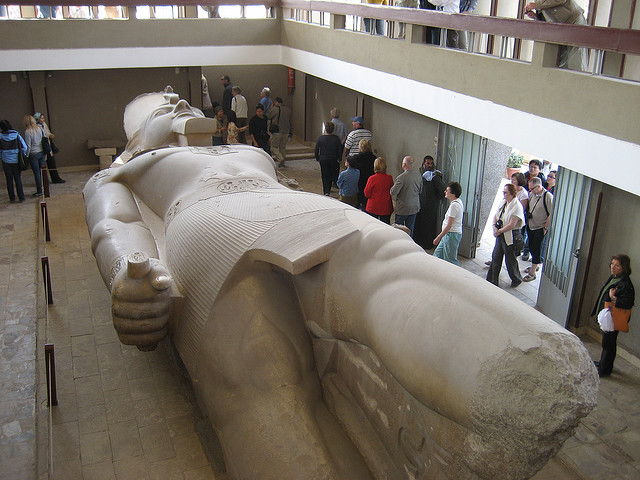 When Pharaoh saw the growing demographics of the children of Israel, he saw them as a threat and devised a new social strategy. Pharaoh had the Israelites enslaved and ordered that their male babies be sacrificed to Hapy, the fertility god of the River Nile. This would then force Israeli young women to take Egyptian husbands. In this way, if everything went according to plan, after a few generations of cultural assimilation, the children of Israel would be effectively no more.
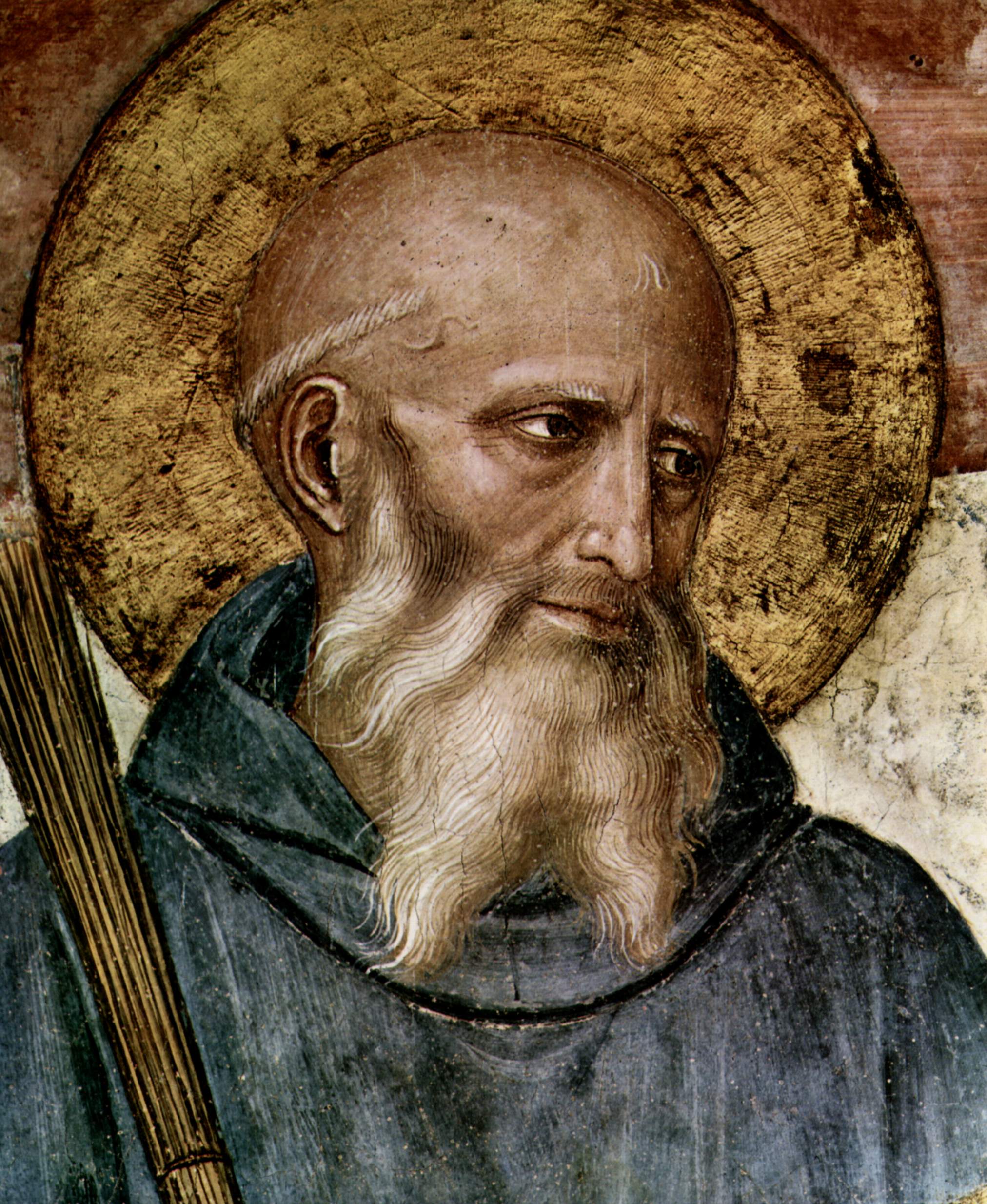 St. Benedict, for his part, also established new laws over those he governed. His “Rule of St. Benedict” has directed the spirituality and administration of Benedictine monastic life for more than fifteen hundred years. Both Benedict and Pharaoh were shrewd men, clever and astute about practical matters like human behavior, but Pharaoh’s strategy was evil and failed while St. Benedict’s was good and still endures. Both men had intelligence, but only one had wisdom.
Pharaoh and St. Benedict demonstrate that intelligence is not the same thing as wisdom, that being clever is not the same thing as being good. Just because we know how to do something doesn’t mean we should. We see this in science, which teaches us how to do certain things, but which (of itself) cannot tell us whether we should. Governments can pass new laws, but that does not mean that all laws are just or serve the common good. Intelligence without wisdom is almost a curse. The devil is a brilliant creature, but he is without wisdom.
Where do we find wisdom? We find it in Jesus Christ, who presents Himself as the definitive prophet and righteous man, who presents His life as our pattern to follow. Whoever receives Him receives wisdom, and will receive wisdom’s reward.
Independence Day Homily
July 4, 2011
What is the most important and the most famous sentence ever coined in the English language? I believe it was a declarative sentence, of thirty-five words, published two hundred and thirty-five years ago today.
“We hold these truths to be self-evident, that all men are created equal, that they are endowed by their Creator with certain unalienable Rights, that among these are Life, Liberty and the pursuit of Happiness.”
Like a passage of Sacred Scripture, this sentence from the Declaration of Independence was more profound, and would effect more providential good, than its human authors ever imagined.
In their original context, these words from the Declaration of Independence were written to justify the American colonies’ separation from the English crown. At that time, many people believed in the divine right of kings, that a monarch had been invested by God with supreme authority to rule. There was precedent for this in the Old Testament, where God chose Saul, David, Solomon, and others to rule His people as anointed kings. In declaring that “all men are created equal,” the Founding Fathers were rejecting the idea that some men are born royal while others are born common. They further asserted that God Himself endows every man with certain rights, and that any government which deprives men of these rights may be justly replaced by its people. In this way, the signers justified the American Revolution.
How much did the Founding Father reflect on how their words about the equality of all men applied to men of color, such as those enduring intergenerational slavery? How much did they consider what these God-given rights required for the female segment of mankind? I would say that these words, like a passage of Sacred Scripture, carried truths more profound than their human authors knew.
These were providential words, for they have been, and continue to be, instrumental in the work of advancing and defending the rights and dignity of all people, from conception to natural death, in our country and around the world. Wherever our nation has failed to embody these words, we look back with shame; but wherever we have honored human dignity, these represent our proudest moments. Martin Luther King Jr. called these words our nation’s creed, and like him we have a dream that one day this nation will rise up and live out the true meaning of its creed: “We hold these truths to be self-evident, that all men are created equal, that they are endowed by their Creator with certain unalienable Rights….”
This Fourth of July, let us thank God for this great gift to our country. Let us praise God for endowing each one of us with dignity and rights which every person and every government must respect. And in the future, let us remember and remind our neighbors, that if our country allows government and men to become our gods, human dignity and human rights will be swiftly brushed aside. Like the Psalmist, may our country always say to the Lord, “My refuge and my fortress,my God, in whom I trust.”
The Significance of Standing — Tuesday, 3rd Week of Easter
May 10, 2011 There’s a curious detail about Stephen’s vision of Heaven in our first reading today:
“Stephen, filled with the Holy Spirit, looked up intently to heaven and saw the glory of God and Jesus standing at the right hand of God, and Stephen said, ‘Behold, I see the heavens opened and the Son of Man standing at the right hand of God.’”
Stephen looks up to Heaven and sees Jesus standing at the Father’s right hand, but both the Apostles’ Creed and Nicene Creed (which we say each Sunday) describe Jesus as “seated at the right hand of the Father.” What are we to make of this?
In the ancient world, to be seated at someone’s right hand gave you the place of higher honor. At a meal, this favored seat granted a special closeness to the host. In a kingdom, the one seated at the right hand of the throne would share in the king’s authority and rule. Of course, describing Jesus as “seated at the right hand of the Father” is only an image (God the Father is unlimited, pure spirit and doesn’t have a right hand.) But this phrase from our creeds does describe a reality: that Jesus is now in the intimate presence of God the Father, sharing supremely in His glory and rule. In his vision, Stephen beholds Jesus in the place of honor, at the Father’s “right hand,” but Stephen sees Jesus standing. So why is Jesus standing?
Did you know that whenever the President of the United States enters a room, everybody stands up? It doesn’t matter if it is a room full of Democrats or Republicans, members of the press, or ordinary citizens, everyone stands up for the President. The same goes for a judge in his courtroom: “All rise, the Honorable Judge So-and-so presiding.” And a gentleman knows that he ought to stand up whenever he greets a lady. Why do they stand? Because it is a sign of respect. If you think about it, whenever we’re offering prayers in the Mass, provided we’re not kneeling, we’re standing up to pray. We stand to pray as a sign of respect to God.
Sometimes, people stand as a sign of respect not so much for the individual but for the greatness of the office they possess. Even a U.S. President’s most hostile critics in Congress, political opponents who couldn’t say one good thing about him, will stand up when he arrives to give his State of the Union address out of respect for the office he holds. It wasn’t for this reason that Jesus stood. No one on earth could have demanded Jesus’ respect by holding an office higher than his.
Jesus stood up because he wanted to show Stephen a sign of His respect. Jesus stood up because he was proud of Stephen. I think that we forget that Jesus is a real human being, with human feelings and emotions about the human events he sees. At the same time, He is also God; and therefore, He sees us all.
When you’re alone, and overcome temptation to do what you know is good, Jesus sees you and He’s proud of you. When you give an anonymous contribution or do a secret kindness, Jesus sees it and He’s proud of you. When you are opposed like Stephen, by people who hate you, or that just don’t understand you, when all the while you’re trying act with love, you do not stand alone. Remember that when you do what’s hard for Jesus, He sees it, and He sees you and He’s proud of you for it.
The Death of Bin Laden — May 3 — Sts. Philip and James
May 3, 2011 Osama Bin Laden has caused the deaths of countless people worldwide, he has spread hatred and division among peoples, and he has exploited religion for these purposes. He has done evil things, and now he is dead. How should we take this news? On Sunday night, some people celebrated in the streets of New York City and Washington, DC. Many people said with unrestrained delight that not a man, but a vermin, or a thing of pure evil, had been exterminated. But what is God’s opinion? What are His feelings on these events? God speaks to us in his words from Ezekiel 33:11: “Answer them: As I live, says the Lord God, I swear I take no pleasure in the death of the wicked man, but rather in the wicked man’s conversion, that he may live.” If God does not rejoice in the death of the wicked, then neither should we.
Our U.S. Special Forces’ successful mission in Abbottabad, Pakistan rightly pleases us in many ways, like in how this achievement may prevent future terrorist attacks or the fact that al-Qaeda is now deprived of their most charismatic leader, but a Christian should not rejoice in the death of a sinner. It should be noted here, that Jesus the Prince of Peace loves peace, but He is not a pacifist. (A pacifist is someone who condemns the use of force in all situations.) Recall that Jesus did not drive out the money-changers and animal-sellers from the temple solely by endlessly asking them nicely. “He made a whip out of cords and drove them all out of the temple area…” Force, even deadly force, is sometimes just and necessary, as I believe it was in Abbattabad this Sunday. And yet, even in wartime, we must not hate those who hate us, nor rejoice in the death of wrongdoers, not even when it’s Osama Bin Laden. The death of a sinner is a tragedy to the heart of Jesus, whose Divine Mercy and Love we celebrated on that same Sunday.
Perhaps someone might hear this and ask, “What difference does it make whether or not I hate Bin Laden or other people I’ve never met? Or what difference does it make whether or not I hate some of the people I actually know?” This is why it matters. You heard Jesus say to Thomas, “I am the way and the truth and the life. No one comes to the Father except through me.” No one comes to the Father, except through Him. Jesus is the way. He is our way to Heaven not just by our saying that He’s our Lord and Savior. Jesus is the way because He is the way we must become. No one comes to the Father in Heaven except they who conform themselves to the person of Jesus Christ. Therefore, if you die hating anyone in your heart, when you come to the gates of Heaven, whether the persons you hate are inside or not, you will not enter in; either you will be prevented from entering until your heart is cleaned to be like Christ’s, or you will never enter in, because you will have decided that you do not want Heaven’s ways, Heaven’s truths, or Heaven’s life.
You’re unlikely to hear the message of this homily said anywhere on TV. Imagine how the world would react if someone went on FOX News or CNN and suggested we shouldn’t hate Bin Laden. If you’ve heard anything like this homily since Sunday’s events, it was probably here at Columbus, through one of your teachers. What makes them different from the world is that they have been formed by the Gospel and a Catholic Christian worldview. Our Catholic Faith is the only thing that frees from the slavery of merely being a child of one’s time. It allows us to see the world more through Jesus’ eyes and to conform our hearts to His. This is important, because if you and I want to enter into Heaven someday, we must be converted into Him.
Tuesday is Election Day
October 31, 2010 November 2nd is an important election day across the country, so fulfill your Catholic duty by voting and help decide who we will be praying for over at Pray For Politicians in the year ahead!
Catholic Medical Ethics—30th Sunday in Ordinary Time—Year C
October 27, 2010In today’s second reading we hear from St. Paul, a prisoner in Rome on account of Christ and the Gospel. Paul senses that the end of his life on earth is near. He writes:
“I am already being poured out like a libation,
and the time of my departure is at hand.”
The emperor will soon order Paul to be executed by beheading, sending him to Christ’s eternal reward. Yet this is not to the emperor’s glory, for the blood of St. Paul’s murder will be on his hands.
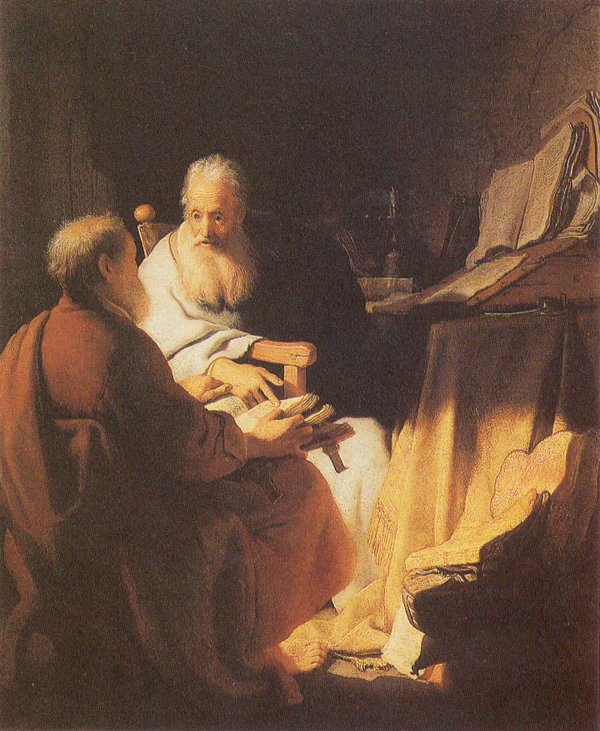 By God’s grace, Paul was not left all alone in this difficult, final season of his life. Elsewhere in this chapter from 2nd Timothy, he writes, “Luke is the only one with me.” (This is St. Luke the evangelist, whose Gospel we are reading this liturgical year.) In another letter, Paul calls Luke his “beloved physician.”
Now what if Luke, seeing Paul’s burdens and what trials awaited him, were to procure some hemlock with which to end his friend’s life? Would Paul be pleased with him? Would he not rather be angry that Luke would presume to thwart God’s purposes for him on earth?
The Lord, the author of our lives, is the one to decide when someone’s life story is complete. God has joined our souls to our bodies and what God has joined together, no human being must separate; for it is always and everywhere wrong to intentionally kill the innocent. God sent Luke to Paul not to kill him, but to strengthen, console and support him in this last season of his life.
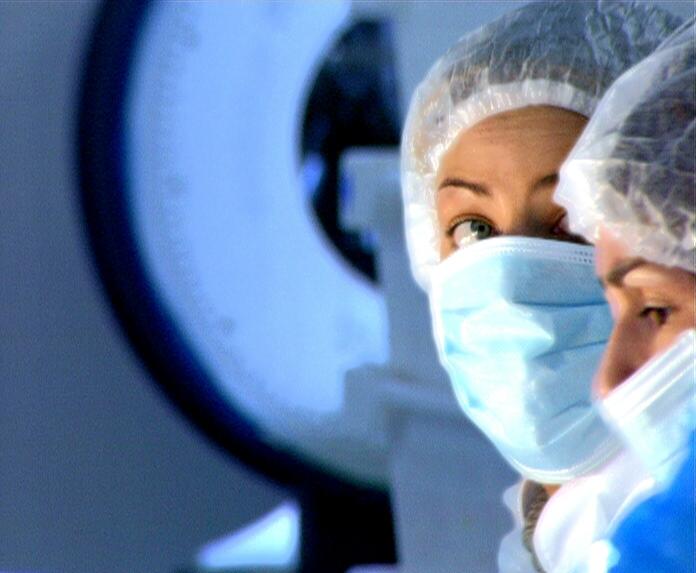 Healthcare and end of life issues touch all our lives, and people of good will have many questions in this area. Like, “What is wrong with euthanasia or assisted suicide?” “What does Christ’s Church teach about living wills, ventilators, feeding tubes, and palliative care?” And, “What kind medical care is morally required, and what sorts of care are optional?”
The Church calls care and treatments which are morally required “ordinary care.” Treatments which are optional called “extraordinary care.” Each of us has an obligation to respect our lives and bodies as precious gifts from God. This means that we must always receive, and provide to others, “ordinary care.” However, circumstances can arise where various treatments become “extraordinary” and may be omitted. Treatments which involve great pain, or extreme cost, or little likelihood of doing much good can be deemed extraordinary care. Burden, cost, and futility can make a treatment morally optional.
Yet, every treatment must be put into context. Sometimes the same procedure, which is ordinary in some cases, will be extraordinary in others. Sometimes a ventilator can be an extraordinary treatment, making it acceptable for people to refuse or discontinue its use. However, imagine if an otherwise healthy person should come to the hospital with a routinely curable lung condition which requires surgery and the short-term use of a ventilator. In this case, the ventilator—which can be costly and burdensome—is not extraordinary because its benefits far outweigh its burdens.
This is a danger with living wills and advance directives. Making medical decisions about treatments, in the abstract, in advance, and out of context, can easily lead to wrong decisions. Consider the use of feeding tubes. A person can check a box on a living will that says they never want one, but feeding tubes are quite often ordinary care; however, in some cases, they become extraordinary care.
Sometimes, in the process of dying, a person may no longer be able to digest food. In such an instance, use of a feeding tube would be futile, painful, extraordinary, and rightly omitted. But if someone is not dying, to deprive them of food or water is like preventing a diabetic from taking their insulin. That is not allowing nature to take its course—it is homicide. Pope John Paul II taught that ‘a sick person in a vegetative state, awaiting recovery or a natural end to their life, still has the right to basic health care (such as nutrition, hydration, cleanliness, warmth, and the like), and to the prevention of complications related to his or her confinement to bed. … Causing someone’s death by starvation or dehydration, if done knowingly and willingly, is truly euthanasia by omission.’
We condemn euthanasia and assisted suicide because they are about killing the person rather than killing the disease, and we can never intentionally kill the innocent. It is wrong to kill the sick, but it is good to alleviate their pain and discomfort while they live. This kind of treatment, aimed at increasing a person’s comfort, is called palliative care and it is a great good. The work of Hospice and others is to provide palliative care in the final stages of life.

Would it be wrong to overdose a person with morphine to end their life? Yes, for it is wrong to intentionally kill the innocent. But what about a case where treating someone’s pain with pain-killers (in the normal doses) might have the unintended side-effect of shortening their remaining days? Would it be wrong to request or administer such a treatment? No because the aim is not to kill the sick person, but to relieve their pains. Sometimes, people with cancer choose to forgo chemotherapy and its burdens even though treatment might help them live longer than they would without it. Are these people choosing death? No, they are choosing a different way to live. The burdens of chemotherapy can make it an extraordinary treatment, and we are free to forego extraordinary treatments, even if it may shorten our lives.
The three principles I have tried to present today are these: first, that it is always and everywhere wrong to intentionally kill the innocent. Second, that we must receive, and provide to others, ordinary care. And third, that treatment which entails great pain, or extreme cost, or little likelihood of doing much good can be deemed extraordinary care, and is morally optional.
 I hope you now have a clearer understanding of some points of Catholic medical ethics, but these can be complicated issues. If you are facing difficult treatment decisions, for yourself or someone you love, seek out counsel of those who know the Church’s teachings on this subject. Holy Mother Church’s wisdom on healthcare issues is the natural and logical extension of her dedication to human dignity. As Roman Catholics in a culture of death, we must we stand for the dignity of every human life, from conception to natural death, and we need to vote for it, too.
- An article on “ordinary” and “extraordinary” care.
Pray for Politicians
September 19, 2010Do you recall St. Paul’s words from this Sunday’s second reading?
First of all, I ask that supplications, prayers, petitions, and thanksgivings be offered for everyone, for kings and for all in authority, that we may lead a quiet and tranquil life in all devotion and dignity. This is good and pleasing to God our savior, who wills everyone to be saved and to come to knowledge of the truth. (1st Timothy 2:1-4)
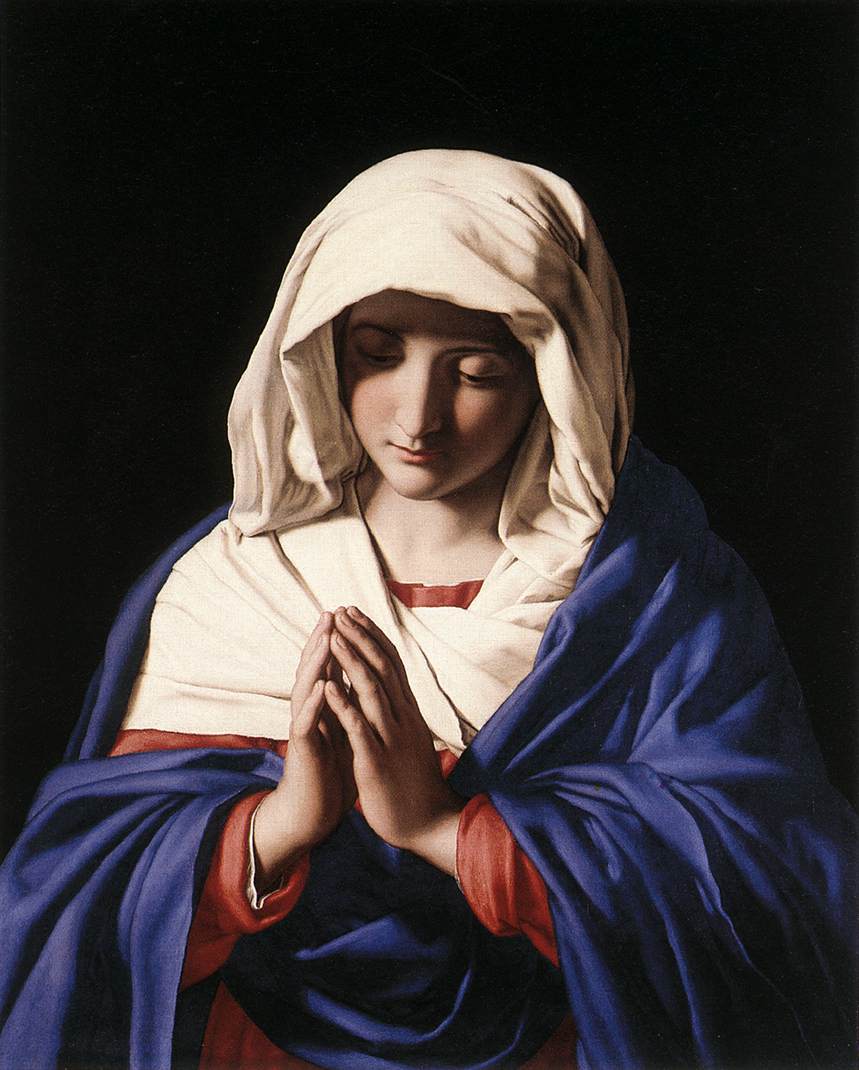 With faith in prayer’s power to turn hearts and do good, and recognizing the Catholic duty to act for the transformation of culture, I invite you to join in a new spiritual effort, to earnestly pray for our political leaders.
My new blog, Pray for Politicians, will highlight a different federal elected official each day. Pray for them and leave a note of your spiritual offering in the comments. (If you prefer, you can click the subscribe button to receive the daily posts by email.)
I invite and encourage you to be a part of this effort.
Pray for Politicians Blog
http://prayforpoliticians.wordpress.com
Pray for Peace — 24th Sunday in Ordinary Time—Year C
September 12, 2010 I have a friend… let’s call her Kelly. Kelly works for a private company that does high-tech, scientific analysis for its clients. Most of this work is connected to criminal cases, examining and testing physical evidence on behalf of the prosecution or defense, but sometimes they also do sensitive work for the federal government, work about which Kelly shares no details. Kelly also wants to enter into religious life and become a nun. It’s a vocation she has considered for many years, and her job has only intensified her certainty of that calling.
You see, her work has shown her that if people want to do great evil in our world they would not seem to lack the opportunity. The technology and resources are out there; all that is needed is the malevolent will to use them. Kelly sees that our world is not preserved from self-annihilation by law enforcement, militaries, or government agencies alone. Just as important as these is the work of the spiritual battle which is invisibly waged amongst angels and demons and souls and whose primary battlefield is humanities’ hearts and minds. All of the peacekeepers and diplomats in the world cannot achieve peace, unless peace first wins its victory within the human soul. This peace is won through prayer.
 In July of 1917, the Blessed Virgin Mary appeared to three shepherd children near a Portuguese town called Fatima. While the First World War was still raging, Mary told them, “The war is going to end. But if people do not stop offending God, another, even worse one will begin in the reign of Pius XI.” (At that time, the pope was Benedict XV.) “To prevent it,” Mary said, “I shall come to ask for the consecration of Russia to my Immaculate Heart and the Communion of reparation on the first Saturdays. If people attend to my requests, Russia will be converted and the world will have peace. If not, she will scatter her errors throughout the world, provoking wars and persecutions of the Church. The good will be martyred, the Holy Father will have much to suffer, and various nations will be destroyed.” Russia at that time was a war-devastated nation, poor and militarily weak. It was unclear what sort of “errors” they could spread. Four months later, the Communists came to power in the November Revolution. Mary’s call for prayer and conversion was not heeded and the worse war Mary which spoke of did come to pass; this was the Second World War.
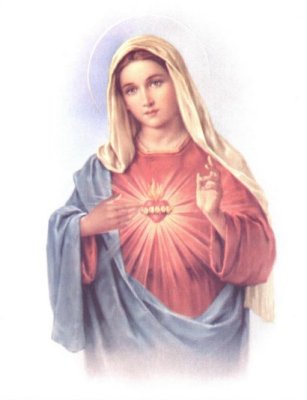 Mary told the children, “In the end, my Immaculate Heart will triumph. The Holy Father will consecrate Russia to me; it will be converted, and a certain period of peace will be granted to the world.” I think many people here of a certain generation will remember having prayed for the conversion of Russia, and it came to pass. The Cold War ended not with the explosions of a thousand suns, nor with a thousand years of darkness, but peacefully with a new dawn of freedom. It was a miracle which no one saw coming, but a miracle for the whole world to see.
Despite the present conflicts around the world, we seem to be now living in that “certain period of peace” of which Mary spoke, but for how long will it last? That depends, in part, on us. We must offer prayers of intercession for the world, even for our present enemies, for there to be lasting peace.
In our first reading, did God really want to annihilate His people for their sins before Moses interceded for them? God said to Moses “Let me alone… that my wrath may blaze up against them to consume them.” But what was really holding the Lord back from punishing them instantly? Nothing really. In saying, “Let me alone,” the Lord prompts and gives Moses the opportunity to be their intercessor. In this, Moses prefigures Christ, who intercedes to save all sinners. God calls us to pray for sinners, too.
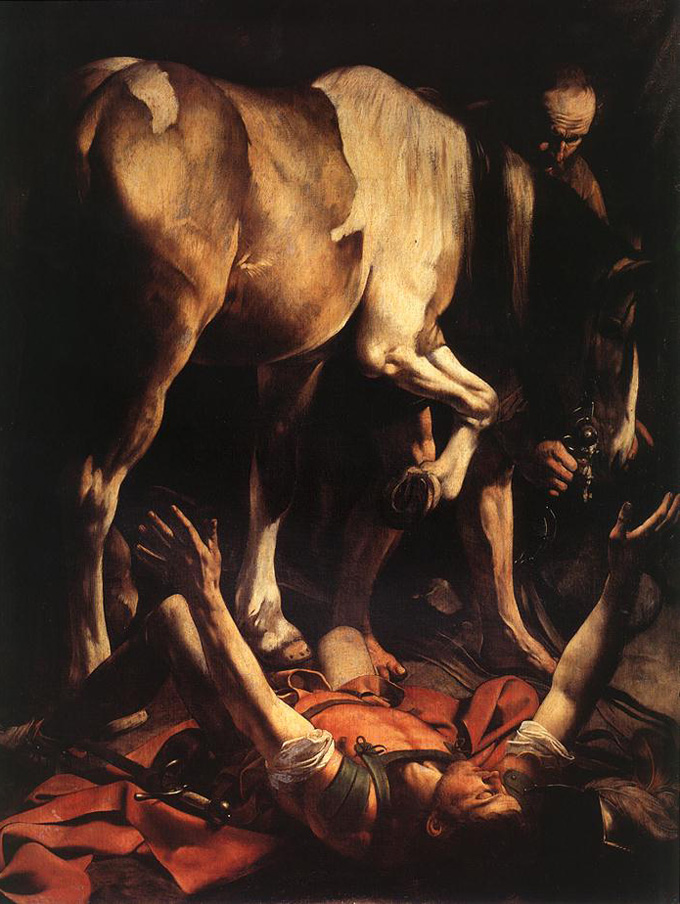
In the second reading St. Paul tells us, “This saying is trustworthy and deserves full acceptance: Christ Jesus came into the world to save sinners. Of these I am the foremost.” He says, “I was once a blasphemer and a persecutor and arrogant, but I have been mercifully treated…” Paul was shown mercy, saw the light and converted to Christ. This happened in part because the Church was praying for him. He was one of the most feared and notorious persecutors of the early Christians. He was their enemy, but the Church had not forgotten Jesus’ words, “Love your enemies and pray for those who persecute you.”
The early Church’s prayers converted one of their greatest enemies. Moses’ intercession preserved the welfare of his nation. And the prayers of Mary and her children converted a misled people, and saved the world from destruction. The power of prayer has not diminished with time. It can still win our enemies for Christ, safeguard and bless our nation, and convert distant and misled peoples. The Lord calls us to pray for our enemies, for our nation and for our world, because as much as anything else, lasting peace depends on our prayers.
[See the image I had to resist using to illustrate this post.]
Be Catholic Americans — 23rd Sunday in Ordinary Time—Year C
September 5, 2010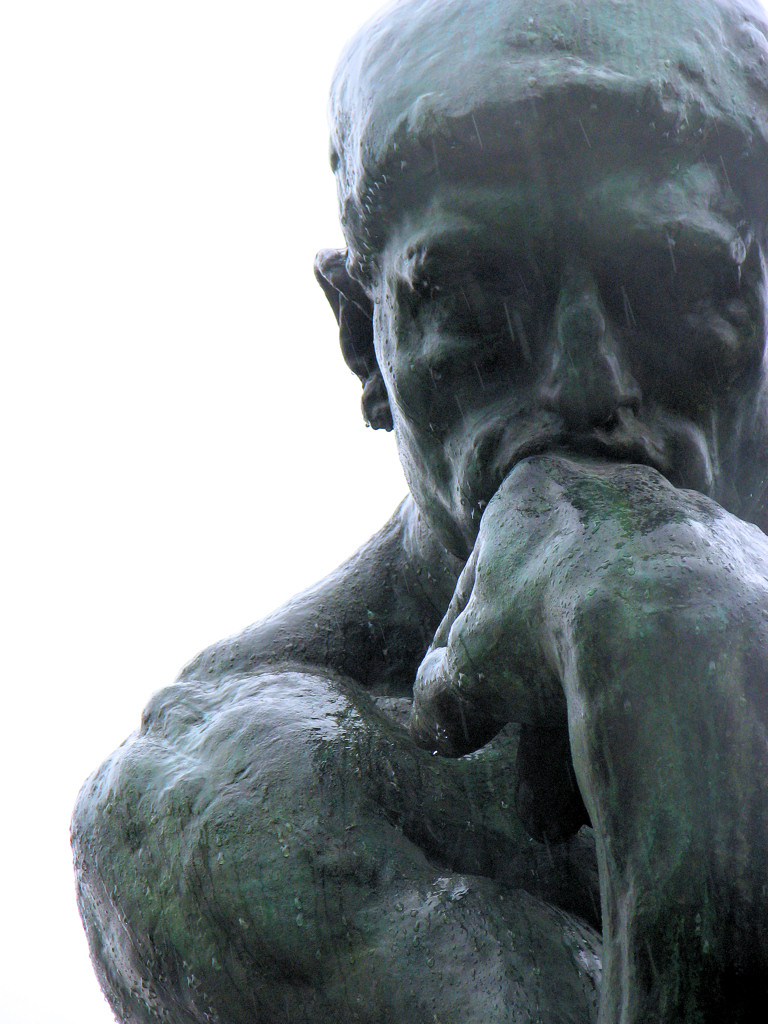 I would like to begin by posing you a little riddle. Let’s see if you can get it:
What human possession do people always carry with them? Another clue: while we tend to hold on to these things dearly, we are also willing to share them with others, sometimes without them even asking. And the final clue: these things are something that we can always make more of, even out of thin air, if we want to.
The human possession I’m thinking of… is our own opinions. We always carry them with us. We tend to hold them dearly and share them with others, and we can form them out of nothing. Human opinions are abundant, but wisdom is scarce.
As our first reading reminds us, ‘rarely do human beings guess the things on earth; and what is within our intellectual grasp we only find with difficulty.’ The Book of Wisdom observes, ‘Who has ever known God’s counsel except when God has given the wisdom and sent His Holy Spirit from on high? Only in this way, with the help of God, are the paths of those on earth made straight.’
 Whenever I stand here before you, I pray that I may never preach to you what is merely my own opinion. If I do that, I will do you no great or lasting good, and Jesus Christ will not be pleased with my efforts. The words that I speak must be His teachings, which come to us through the Scriptures and His Church, by the working of the Holy Spirit. Any personal views that I may have must be conformed to Jesus’ true perspective of things.
I feel this especially as a preacher, but the same goes for each of us here who claims to be Jesus’ student, or disciple. As Jesus says in the Gospel, ‘Anyone who would not renounce all of his or her possessions (including one’s own opinions) cannot be His disciple.’ We must conform our views to Jesus’ teaching; for human opinions are abundant, but wisdom (which comes from Christ) is scarce.
It’s important for us to live according to Christ’s view in all times, but I mention it this time of year because we are entering an important season for our country—election season. The Wisconsin primaries are the Tuesday after next, September 14th, and the general election nationwide is November 2nd , the first Tuesday in November.
 There are more than sixty-eight million registered Roman Catholics in the United States. These elections will see them break into three different groups: some who will not vote, some who will vote as American Catholics, and some who will vote as Catholic Americans.
Some will choose to stay home from the polls, squandering the right to vote that other Americans died to give them and ignoring Christ’s call to be the salt of the earth, the light of the world, the transformers of culture. And some will vote as American Catholics, based upon mere opinions molded by the prevailing, secular culture.
But some will vote as Catholic Americans, as I urge you to do, with a worldview formed by Christ and His Spirit-led Church. As Catholic Christians, our first citizenship is in Heaven, but we are also called to be a leaven of goodness on earth. Be Catholic Americans, for our country’s sake.
 As we see it over and again in the Scriptures, when a people turns away from God and His path of life their nation declines and falls. We have no guarantee that these United States will endure for a hundred, fifty, or even twenty-five more years, but we have it on Christ’s authority that His Church, history’s oldest institution, shall not perish from the earth. But if we love America and wish it to endure for generations to come, we need to live, speak, and vote as Catholic Christians.
If we conform ourselves to Christ’s teaching, and promote a republic and a culture of life, we can save this nation from becoming an abandoned, unfinished tower. As Catholic Americans, we can transform our country in Christ, and God will surely bless America.
Signs of the Times — Thursday, 18th Week in Ordinary Time—Year II
August 5, 2010The Chicago Archbishop, Cardinal Francis George, [reportedly] recently remarked, “I expect to die in my bed. I expect my successor to die in prison and his successor to die a martyr’s death.” An overly-dark prediction? Perhaps. But there are threatening signs for the Catholic Church’s future in America.
 Yesterday a federal judge overturned Proposition 8, California’s Marriage Protection Act. He ruled same-sex marriage to be a constitutional right. About two years from now, the issue will reach the Supreme Court, where most anticipate a 5-4 decision to go one way or the other. A poor decision, enshrining a national right to gay marriage, could drive Catholic organizations out of many charitable efforts, such as adoption services.
This year in Wisconsin, the legislature came close to removing the statute of limitation for all child sexual abuse cases. This would have allowed civil suits, no matter how old, to be brought against alleged perpetrators and their employers. (Government institutions, like public schools, were exempted.)
What’s wrong with a law like this? Consider the difficulty of gathering facts, witnesses, and accurate testimony for events twenty, thirty, or even forty years ago. This is why statute of limitation laws exist. How does one question a dead priest or a dead bishop to assess their response to an allegation or their knowledge of an incident? Merely responding to a handful of these new-old cases in litigation would cost Wisconsin dioceses immensely. The legislation died this year in committee, but its supporters intend to reintroduce it next year.
The President’s recent health insurance overhaul will intertwine the federal government into medicine more than ever before. What will this mean down the line for the work of Catholic hospitals? That remains to be seen.
So what shall do? We will pray. As St. John Vianney told us yesterday, ‘God commands us to pray, but He forbids us to worry.’ We shall continue to love, for love is what changes hearts. We should vote, because we live in a democracy where the government is made in the image of those who vote.
And finally, we shall be faithful, no matter what. Even if, God forbid, churches are confiscated and sold off… even if Catholic charities and hospitals have to close their doors… even if priests and bishops go to jail for things they say or things they are unwilling to do… we will be faithful and unafraid. For Jesus promises us, “the gates of the netherworld shall not prevail against the Church.”
We shall not deny Jesus Christ, nor His teachings, before the world. We, the Church, will be faithful to Christ and His teachings. We shall be His people, and He shall be our God.
The Old New Pattern — Thursday After Epiphany
January 8, 2010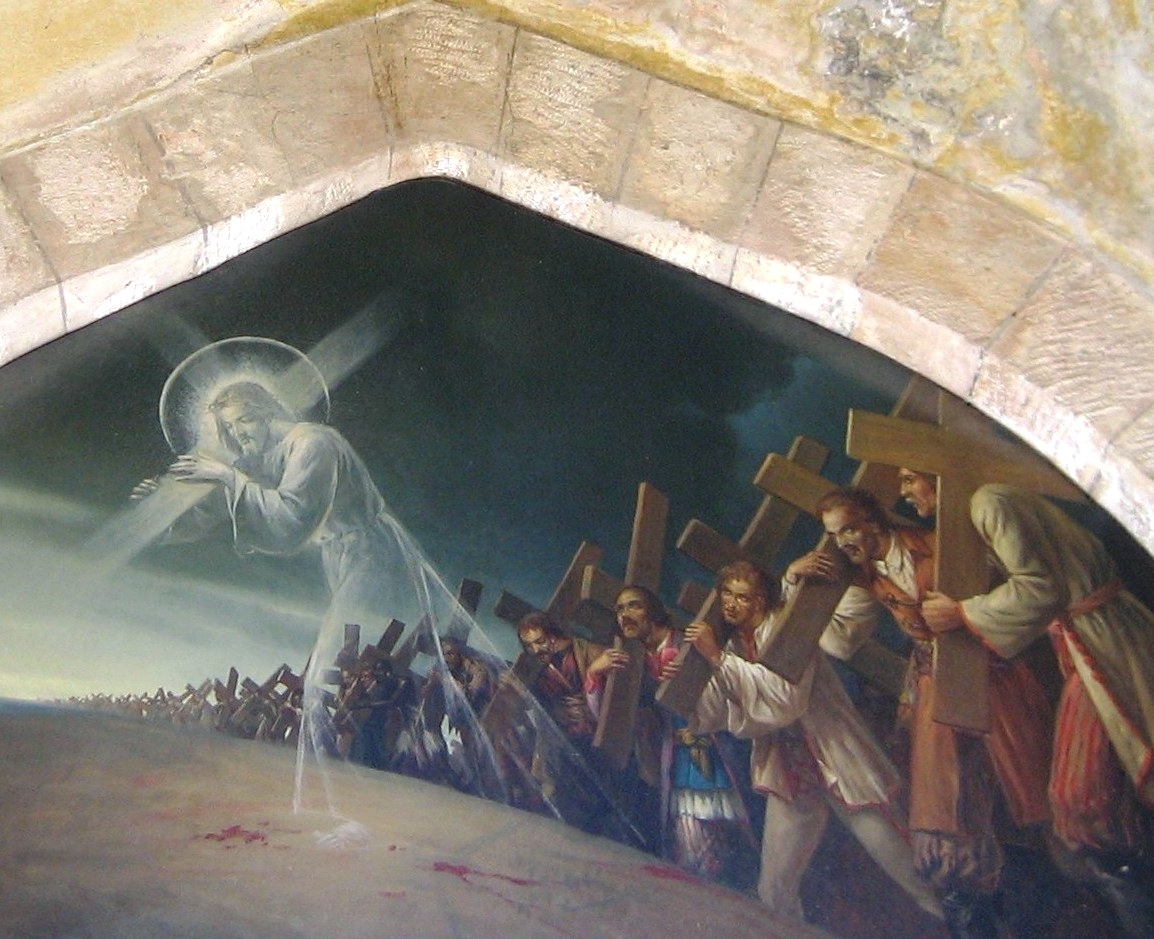 In his first letter to his brothers and sisters in Christ, St. John says that the commandment he writes to them is not new, and yet new. (1 John 2) The commandment he is referring had been given to them years before, by Jesus Christ at His Last Supper. He told His disciples, “I give you a new commandment: love one another. As I have loved you, so you also should love one another.” (John 13:34) Love sums up the moral law, and we know how to love from Christ.
Once when Jesus’ opponents were trying to trip Him up they asked Him what was the greatest commandment. He answered, “You shall love the Lord, your God, with all your heart, with all your soul, and with all your mind. This is the greatest and the first commandment.” Then He added, “The second (commandment) is like it: You shall love your neighbor as yourself. The whole law and the prophets depend on these two commandments.” (Matt 22) Or, as St. Paul would later put it, “Love is the fulfillment of the law.” (Rom 13:10) Love sums up the moral law, and we know how to love through Christ.
It is intuitive for people to understand that we should do good and avoid evil, that we should love good and hate what is evil. Yet that does not mean that everyone agrees as to how we should live this out. Often we see the truths which Christians present in love angrily dismissed by the world as hate. (Frequently the throwing of this charge allows people to dismiss opposing viewpoints without ever giving them serious thought.) Even those in a post-Christian secular culture will agree that somehow “love is the answer,” but how exactly are we to love one another?
Jesus shows us how to love. He says, “As I have loved you, so you also should love one another.” We can learn from His example especially here, as we witness His Passion, death, resurrection, and ascension in the Mass, but we can also learn from the entire life He lived.

 Sometimes it can be hard understand example, or difficult to relate Jesus’ life to the particulars of our own. To help us He gives us the example of His saints, through whom He has continued to live His one, salvific way of life through thousands of different human expressions. The Spirit of the Lord was upon Jesus; He was anointed to bring glad tidings to the poor, to proclaim liberty to captives, to restore sight to the blind, to free the oppressed, and to proclaim a year acceptable to the Lord. Today this Scripture passage is still being fulfilled by Him through the lives of His saints.
“The love of God is this, that we keep his commandments.” So let us learn what love is through the example of Jesus and His saints, for love sums up the law, and we know how to love through Christ.
2nd Sunday of Advent—Year C
December 10, 2009
In the first year of the presidency of Barack Obama,
when Jim Doyle was governor of Wisconsin,
and Kohl and Feingold were its senators,
and Obey was the seventh district congressman,
and Favre was the quarterback in Minnesota,
when Benedict was pontiff and Jerome was bishop,
the word of God came here,
to Christ the King parish in Spencer:
“Prepare the way of the Lord,
make straight his paths.
Every valley shall be filled
and every mountain and hill shall be made low.
The winding roads shall be made straight,
and the rough ways made smooth,
and all flesh shall see the salvation of God.”
It isn’t a new word… It was the message of John the Baptist, and Isaiah wrote it long before that. Yet the word of God is not old in the sense that it has passed some kind of expiration date. When the Holy Spirit inspired the writing of these words, their human author who put the pen to parchment did not know the great audience and the impact they were to have. But the Holy Spirit saw us here and had these words written to us and for as well. These words were not meant only for Old Testament peoples, or for the time when Christ walked on the earth. These words are proclaimed to us, and meant for us, here today. Remember this every time you encounter the Scriptures, here at church or in your private prayer.
So what is God’s word saying to us today? In the Gospel, did you notice that of all the rulers and governors and leaders at that time, the word of God did not come to any one of them? “The word of God came to John the son of Zechariah in the desert.” The lesson is that God prefers to lead souls to salvation by working through common people. People who think that they have no power.
What politicians do is important, since good laws can help people and bad laws can hurt them, but what saves souls rarely comes through them. And though our Holy Father and our bishop strive to do important work for Christ, there is only so much they can do. The way of the Lord is prepared by the daily efforts of ordinary Christians, who sometimes have children and sometimes work jobs. Your family, friends, and co-workers probably don’t read papal encyclicals, but they always witness your words and example. And so, Jesus depends upon you to prepare His way for others, to make winding and rough roads straight and smooth, and so that all people see the salvation of God.
This is the Christian’s calling and important mission, yet we cannot share what we do not have. If were are going to prepare the way of the Lord and make straight his paths for others we must first fill the valleys and level the mountains for Christ within ourselves. To this end, I urge you to make the most of two gifts God gives us: the sacrament of confession and daily prayer. There is simply nothing that more quickly and effectively strengthens the average Catholic’s moral and spiritual life than frequent and regular confession. And daily prayer is indispensible for growing in relationship with Christ and for living a wonderful life.
 Each year, many of our homes are visited a familiar and beloved character whom we associate with Christmas… I speak George Bailey from the movie “It’s a Wonderful Life.” This film, despite its flawed angelology, teaches the truth about how much difference one person can make for others. George Bailey’s an ordinary man who lives an extraordinary life without even realizing himself. By the end of the film, we see the impact for good that his life has had and we see George surrounded by his family and his many friends who all love and admire him.
Why does George Bailey live such a wonderful life? Sure, he’s a nice guy, but he’s more than a nice guy. Time and again, he sacrifices what he wants to do what’s loving and best for the people God has placed in his life. I hope we can all see a little bit of George Bailey in ourselves. Because we can see a great deal of Christ in George Bailey.
This Advent season, let us prepare the way of the Lord within us, so that through us, all people may see the salvation of God. This is the calling, the mission, and the privilege of the Christian. In this or any age, it’s a wonderful life.
 Parishable Items