Archive for the ‘God the Father’ Category

Father’s Day Homily

June 19, 2010

“See what love the Father has bestowed on us that we may be called the children of God. Yet so we are.” (1 John 3:1) As St. Paul says in the second reading, “Through faith [and baptism] you are all children of God in Christ Jesus.” (Galatians 3:26-27) God is our Father who lives and reigns in Heaven. What is the fatherhood of God the Father like? What can we say about His fatherhood. I offer these insights:
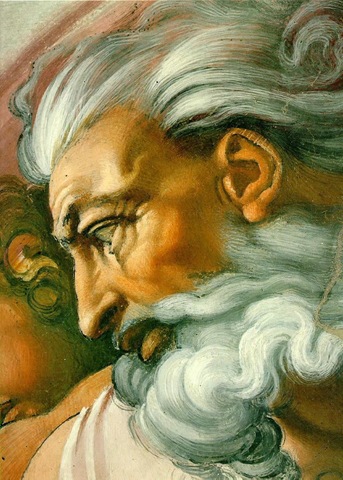
The Father’s love begets life.
We see this in His Son, who is eternally begotten from the Father. And begetting is not a merely an action which the Father had done and then walked away from. The Son is eternally begotten from the Father in love.  And, as the Prologue of John’s Gospel says, “All things came to be through [this Son], and …. what came to be through him was life…” The Father’s love begets life.
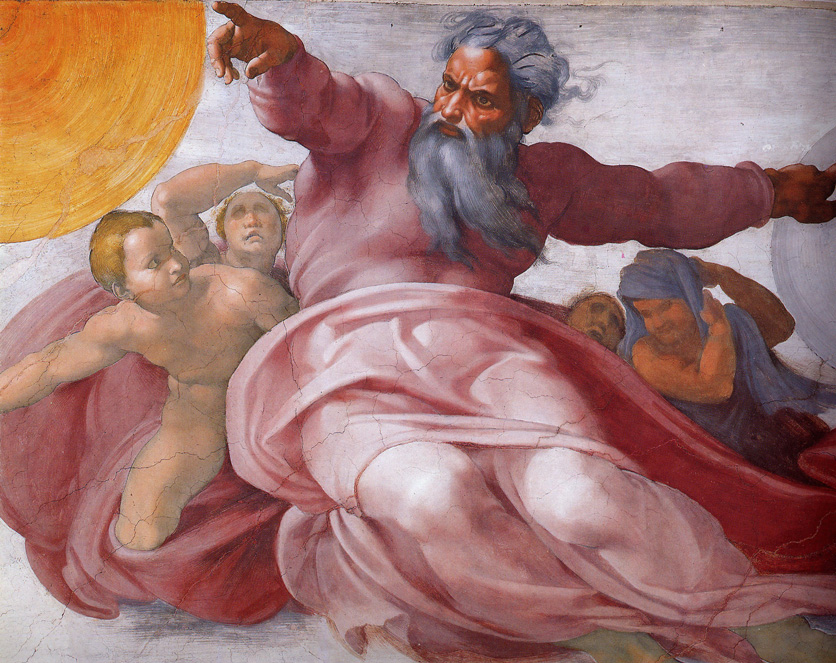
The Father labors in love.
God the Father labors to fashion and sustain creation; heaven and earth and every creature, seen and unseen. He makes them in love and preserves them in love. As the prophet in the book of Wisdom observes, “[Lord,] you love all things that are and loathe nothing that you have made; for what you hated, you would not have fashioned. And how could a thing remain, unless you willed it; or be preserved, had it not been called forth by you? But you spare all things, because they are yours, O LORD and lover of souls, for your imperishable spirit is in all things!” (Wisdom 11:24-12:1)  The Father labors in love.
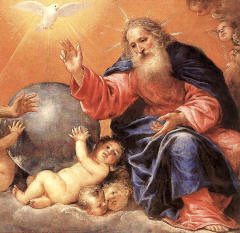
The Father guides His family.
The world became dark though sin, so the Father enlightened it. The people became lost without Him, so the Father guided them. The Father enlightens and guides His children by speaking His word to them. Jesus Christ is the Father’s word. The Father guides His family.

The Father is easily pleased by those who are His own, yet He calls them ever higher.
At Jesus’ baptism, the Father spoke from the heavens, “You are my beloved Son; with you I am well pleased.” Yet, as today’s gospel recalls, the Father also called His beloved Son to take up the cross. Four days before His Passion, Jesus said, “I am troubled now. Yet what should I say? ‘Father, save me from this hour’? But it was for this purpose that I came to this hour. Father, glorify your name.” Then a voice came from heaven, “I have glorified it and will glorify it again.” (John 12:27-28) On the cross, Jesus was not just lifted up, but exalted. The Father is easily pleased by those who are His own, yet He calls them ever higher.

The Father is just like the Son.
Some people find it difficult to relate to the Father, but the Father is just like His Son. At the Last Supper, Philip said to Jesus, “Master, show us the Father, and that will be enough for us.” Jesus said to him, “Have I been with you for so long a time and you still do not know me, Philip? Whoever has seen me has seen the Father. How can you say, ‘Show us the Father’?  Do you not believe that I am in the Father and the Father is in me? The words that I speak to you I do not speak on my own. The Father who dwells in me is doing his works.” (John 14:8-10)  The Father is just like the Son.

The Father transcends human fatherhood, but He is the origin and standard of all fatherhood.
God transcends the human distinction between the sexes. The Father is neither man nor woman: He is God. Although the Father is the origin of all fatherhood, He transcends human fatherhood. No one is father as God is Father. Yet, we who are earthly fathers, who have natural or spiritual families and children of our own, must take our Father in Heaven as our standard and model. Each of the insights I have given for God the Father have application for our fatherhood.

Your fatherhood should beget life.
Now the begetting of life is not merely biological, if it were then priests would not be fathers. There are some biological fathers who beget life and leave. These men fall very far short being true fathers. True fathers give life and nurture that life forever, like God the Father who begets His Son eternally. If you are a mother or father, even if even if your children should die, even if you should die, you are a mother or father forever.

Your natural fatherhood should be fruitful. More than just biologically, but biologically, too. What would you think of a priest who was both capable and called to work to beget more spiritual children by sharing the gospel, but who refused to do so for self-centered reasons. What if he were to say, “I’m happy with the number of parishioners I have already.” Your fatherhood should beget life.

Your fatherhood should be a labor in love.
Always remember whom you are working for and work for love of them. Beware of an ambitious careerism, which is all about you. What would you think of a priest whose primary ambition was to become a cardinal, instead of those entrusted to him. 

At home or at the workplace, labor in love for your family. And take time to rest and enjoy them. Even God the Father rested after His labors to enjoy how “very good” it was.

Your fatherhood should guide your family.
You are called to be a leader, guide, and teacher for your family. Your wife will not begrudge your lead if you love her and lead her as Jesus loves and leads the Church. Remember, Jesus died for His family and bride.

As parents, you are the primary educators of your children. Sometimes we think of education as only what happens at school. But the most important lessons in life are not taught in the schools, but in the home. The home is the domestic Church and the school of love.

In your fatherhood, let your children know your pleasure in them and always call them ever higher, to all they can be.
Always show them your pleasure, that with them you are well-pleased. But like God, love them too much to let us remain as we are.  Grow them to their full potential.

In your fatherhood, take the Father in heaven as your standard and model.
If you’re ever unsure of how to image the Father, look at His son, for Jesus is the perfect image of the Father. The Father is just like the Son.

May God bless all our Fathers, living or dead, and may help we who are fathers to be better ones.
An Incomplete Lord’s Prayer — Thursday, 11th Week in Ordinary Time—Year II

June 18, 2010

Sometime in the past, I realized that I didn’t pray the Lord’s Prayer right.  It’s not that I was actually changing the words Jesus taught us to say, but I realized my focus was not fully what Jesus had in mind. My subjective, firsthand experience of praying the prayer went something like this: 

God, who art in heaven…
     [<Here I get distracted for several seconds>]
…give me this day my daily bread,
and forgive me my trespasses,
as I forgive those who trespass against me,
and lead me not into temptation,
but deliver me from evil.

Did you notice anything different?

First, Jesus taught us to pray to “Our Father” because we are not praying to anonymous force, but a person, a divine person who is imaged in a special way by natural and spiritual fathers on earth. Earthly fatherhood is a diminished image of Him. Biological fatherhood teaches us about our heavenly Father’s transcendence, while devoted fathers teach us about His love. (“The respective ‘perfections’ of [both] man and woman reflect something of the infinite perfection of God,” as the Catechism teaches, but “Our Father” is significant.)

Second, the prayer’s early petitions, “hallowed be thy name. Thy kingdom come. Thy will be done on earth as it is in heaven,” are every bit as important as the later petitions ‘about us.’ God is justly entitled to glory, His kingdom and reign.  Remember that all these are essential and conducive to our own greatest happiness.

Third, the Lord’s Prayer is not meant to be prayed just for yourself or myself, but for all of our Father’s family, for the whole Church, for even the whole world. The Our Father is not only a petitionary prayer, but an intercessory prayer.

So when we prayer the Our Father, the perfect prayer which Jesus taught us, let us pray it in its completeness, with a presence of mind and fullness of heart.

A Mystery Revealed — Trinity Sunday

June 2, 2010

You may recall my mention of one of my favorite professors at seminary, Dr.  Perry Cahall. And I remember him telling us one day in class, “If, someday when you’re a priest, I hear that you got into the pulpit on Trinity Sunday and tell the people, ‘You know, the Trinity is a mystery, and so there’s really nothing we can know or say about it…’ I will hunt you down like the dogs you are.” This is my first homily on Trinity Sunday, and I’m going to make sure I give Dr. Cahall no reason to come after me.

The Trinity is a mystery, but that doesn’t men we know nothing or can say nothing about this central mystery of our Faith. In Catholic theology, a “mystery” is not something which is unknowable to us, it is just something which our human reason could not have discovered on its own.

Imagine if you came upon a sophisticated and well-written mystery novel. It’s so good that you can’t put it down. But as you get towards the end, you discover that the last couple chapters of the book are missing. You noticed some clues as the story unfolded, but without those last pages you can’t figure out the identity of the one “who did it.” You might try to find the ending in another copy of the book, but what if no other copies existed and no one had ever read the ending before? Your only hope would be to speak with the author. The author could tell you the rest of the story. The author could unveil the mystery for you and reveal the identity of the one “who did it.” Like that in sophisticated mystery novel, our God has placed clues throughout creation and His Old Testament interactions with His People. Yet, it was not until the coming of Jesus that the “who done it” was plainly revealed: God, the Author of the universe, is Father, Son and Holy Spirit.

Today I would like to talk about some common questions people have about the Trinity. For instance, how is God both one and three, and then what difference does the Trinity make?

Some people have trouble with the concept of the Trinity because they think it is the claim that “one equals three” in God. However, this is not what we believe about the Trinity. The number one does not equal the number three, not in God or anywhere else, and not even the omnipotent power of God can make a logical contradiction true.

We believe one God, comprised of three divine persons: the Father, the Son, and the Holy Spirit. God is one What, as three Who’s. There is one divine nature, but three divine knowers, three divine willers, and three divine actors. We do not believe in three anonymous forces, but three loving persons. There is no God apart from or beyond these three persons.

Now the Father is not Jesus Christ. Jesus is not the Holy Spirit. And the Spirit is not our Father. They are distinct persons. Yet, at the same time, each possesses the fullness of the divinity: perfect goodness, infinite beauty, perfect knowledge, infinite power, perfect mercy, and infinite love. We do not worship three gods, but three eternal persons who comprise one God.

The belief in the oneness of God was firmly instilled into the Jewish people. This conviction helped to keep Israel from falling into the worship of false gods and experiencing all of the evils that brings. For instance, Israel’s Canaanite neighbors were idolaters, who worshiped mere objects as gods that could make them happy. They practiced child sacrifice, killing their own children in hopes of receiving greater blessings in this life from the gods. And they had temple prostitution, in which promiscuous sexuality was as hailed as sacred.

Notice how our society has become more and more like those pagans as it has drifted from belief in the one true God. Our worship of objects which we think can make us happy is called materialism, or consumerism. Our human sacrifice, done in hopes of greater blessings in this life, is called abortion. And some have raised up sexual promiscuity as the way of greatest freedom and happiness.

The Jews were spared all of these evils so long as they clung to their conviction that “All gods are not the same, and we are to worship only one.” The God of Abraham, Isaac, and Jacob. Even to this day, observant Jews pray a prayer twice daily called the “Shema Yisrael,” from a passage in Deuteronomy:

“Hear, O Israel! The LORD is our God, the LORD is one!  Therefore, you shall love the LORD, your God, with all your heart, and with all your soul, and with all your strength.”

Jews remain Jews today because they do not believe that Jesus is the promised messiah, or the Christ, the one for whom they have been waiting. Sometimes they criticize Christians saying we are not really monotheists, but polytheists, who believe in three gods: “The LORD is our God, the LORD is one!”

Yet, revealingly, the word that God inspired in this Old Testament passage (“The Lord is one”) is not one of the words in Hebrew which always means numerical and solitary oneness (such as “yachid” or “bad”.)  Instead, the Holy Spirit selected a word which usually means a unified oneness: “echad.” This word (“echad”) is the same word used in Genesis, where God says of man and woman, “the two shall become one flesh.” In their union, the persons are as one being. And recall, God had said, “Let us make man in our image , after our likeness. …[And] God created man in his image; in the divine image he created him; male and female he created them.” When husband and wife become a unified one, as one couple, in time, they are in the image and likeness of the Father, Son, and Spirit, who have are a unified one, as one God, eternally.

So what difference does the reality of the Trinity make for our lives? The Trinity shows us that God is not a solitary individual, isolated and alone. God is a loving communion of persons. This is the reality we come from, and this is the reality we are called to, in this life and the next.

In our post-modern age, some people talk about “the meaning of life” as if it were some kind of joke, or an unsolvable mystery beyond our capacity to discover or know. But we Christians believe we know the meaning of life, for it has been revealed to us. The meaning of life is the loving communion of persons. The loving communion of persons is what gives our lives meaning and it will be our primary delight forever in Heaven. Love is the reality we come from, and the reality we are called to.

‘Hear, O Church of God! The LORD is our God, the LORD is a unified one!  Therefore, you shall love the LORD, your God, with all your heart, and with all your soul, and with all your strength.’ Love the Lord your God, who is Father, Son, and Spirit, and become like the God you love.

Relating to God Personally — Pentecost Sunday

May 23, 2010

In the Old Testament, the truth that God is a unity of three persons, that God is triune, that God is a Trinity, was only obscurely presented. The knowledge that God consists Father, Son, and Holy Spirit, only became clear to us through Jesus Christ. Our one true God has always been three persons: the Father, the Son, and the Holy Spirit.

Now the Father is not Jesus Christ. Jesus is not the Holy Spirit. And the Spirit is not our Father. They are distinct persons. Yet, at the same time, each possesses the fullness of divinity: perfect goodness, perfect beauty, perfect knowledge, and perfect power, perfect mercy, and perfect love. We do not worship three gods, but three eternal persons who comprise one God. There is no God apart from these divine persons.

Sometimes we say we are “praying to God,” and that is well and good. But when we are “praying to God” we should not imagine that we are speaking to some fourth person, to some divine abstraction above or beyond the three. If you don’t know which divine person you have been praying to at such times, you have been praying to the Father, through the Son, in the Holy Spirit. (Notice how the prayers in the Mass are always addressed to particular divine persons; usually the Father, but sometimes the Son.)

If you have been a Christian who has always directed your prayers some abstract Christian divinity, who is neither Father, Son, nor Spirit, I trust that your prayers have still been heard within the Trinity. And if you have never related to the Holy Spirit as a real person who knows and wills and loves, but only as some abstract force, I am confident that He has blessed you with His gifts and produced His fruits in you even without your asking. But Christianity is all about loving communion with  persons. Not forces, not abstractions, but persons: persons human, angelic, and divine.

Do you have a personal relationship with each of the persons of the Trinity; with Jesus Christ, with our heavenly Father, and with the Holy Spirit? If not, then it’s important that you begin to cultivate these relationships in prayer, for we are called to love God, and only persons can be truly loved.

On this Pentecost Sunday, we recall the gift of the person of the Holy Spirit to the Church. The Holy Spirit does not begrudge it when we ask Him for good things, for ourselves and for others; no, He is pleased when we ask and pleased to give. Gift is who the Holy Spirit is. But today and henceforth let us always speak to Him and the other divine persons in a personal way with a great personal love.

The Our Father — Tuesday, 1st Week of Lent

February 23, 2010

When the apostles asked Jesus how they should pray, Jesus taught them what is called the perfect prayer, the “Our Father.” It is a concise prayer, with just seven petitions (a perfect number for the Scriptures,) yet there is great depth beneath its simplicity.  This morning I show you three insights into this prayer which I hope will come to your mind from time to time as you pray this prayer for the rest of your lives.

First, Jesus teaches us that we are to pray to “Our Father.”  This is a far more wonderful thing than we realize.  To see its greatness, just imagine if the prayer were different. We do not pray, “Our tyrant, who art our ruler, before thee we grovel.” Nor, “Our master, we art thy slaves, for thee we must toil.” And we do not say, “Unknowable one, whom none can name, unapproachable be thy being.” We pray, “Our Father who art in heaven,” hallowed be His name.  We have the privilege to call God our Father on account of our faith in His Son, Jesus Christ. Jesus is God’s Son by His nature, (God from God, light from light,) but we are made God’s children by adoption through Christ. One way to see why this is such a big deal is to imagine if God were everyone’s heavenly Father, except for you. Whatever applies to a good father’s relationship with his natural children, also goes (with limited exceptions) for the perfect Father’s relationship towards us, His spiritual children. Keep in mind how privileged we are when you pray to “Our Father.”

The second insight this prayer yields is the proper attitude we should have towards prayer. Perhaps you’ve heard some people say, “Well, if you like to pray that’s fine—I mean, if that helps you to motivate yourself that’s great,” as if the only power of prayer was to change one’s personal attitude. This is something said by people who don’t pray, and if we thought as they did then we wouldn’t pray either, for who would bother to ask someone else to receive what is already in one’s own hands (i.e., the choice of one’s own attitude.) A second motivation among people who do not pray is more faithful, but also misguided. These say, “I can’t change God’s mind, so why should I bother to pray? Whatever He wills will be, whether I pray to Him or not.”

The first three petitions of the “Our Father” are worded carefully. They do not say, “Our Father, who art in heaven, make your name holy among us, make your kingdom come upon us, and make your will be done among us.” This would put everything on God. Nor do the opening lines read, “Our Father, who art in heaven, we will glorify your name, we will make your kingdom come, and we will make your will be done, on earth as it is in heaven.” This would put everything in our own hands.

The prayer which Jesus gives us does not put everything on God, or put everything on us. Jesus presents the middle and true way of faith. We are not called to an independent activism, nor to a vacant passivity, but to an active receptivity in relationship with God. Like the Virgin Mary, we are to stand before our Father, with a spirit of active receptivity, and pray, “Behold, I am yours, may your will be done, in and through me, and on earth as it is in heaven.”

There are some things which are simply beyond my human ability.  For instance, I can no more forgive my own sins than I can pull up on my belt loops and hold myself up in midair. However, that does not mean I can do nothing to help my situation. I can first forgive others as I wish to be forgiven. I can pray, go to confession, and tell God that I’m sorry. God calls us to do our part and to cooperate in His work.

Maybe this explains why Jesus could not work great miracles where people were lacking faith. It was not that such things were beyond God’s omnipotent power, it is that God insists upon doing His works in relationship with us, rather than entirely apart from us. (This is His purpose in establishing the Church—to do His saving work with and through us.) Like St. Augustine said, ‘The God who created us without us, will not save us without us.’

The third and final insight into the Lord’s Prayer regards the meaning of the petition for “our daily bread.” We say, “Give us this day our daily bread.” We can pray for this “bread” in three senses; literal, spiritual, and Eucharistic.

First, there is the literal sense, praying that God would provide for our material needs in life; such as housing, clothing, and food. We take these things for granted—your daily bread already waits for you in the cafeteria or in your kitchen at home—but there are many people around the world, who are much less well-off than we are, who pray these words from their hearts every day. Occasionally we should call these brothers and sisters of ours to mind and pray these words as intercession on their behalf before our Father.

Second, there is the spiritual sense, asking for the graces and helps that money can’t buy; such as peace and virtue, faith, hope, and love. Without these things, even a rich man remains impoverished, for man is not meant to live on material bread alone.

Third and finally, there is the Eucharistic sense, which asks for the bread from this altar which is God’s Son. Whenever we receive Jesus in the Eucharist He remains with us and in us until we receive Him again (unless we should disinvite and evict Him by committing grave sin.) In this way, Jesus persists as our “Daily Bread.”

So when you pray the “Our Father” realize your privilege in being His child through Jesus Christ. Consider that the coming of the Kingdom is a joint effort of God with man, in which our prayers play an important part. And pray for all your daily bread; literal, spiritual, and Eucharistic. May you remember these insights for all of your life and may the words of Christ’s perfect prayer make you a fruitful child of our Father.