Archive for the ‘Holy Spirit’ Category

The Glorious Mysteries, Meditations with the Saints

October 27, 2010

The 1st Glorious Mystery:
The Resurrection of Jesus from the Dead

St. John Bosco, an Italian priest, founded a famous school for boys in the mid-1800’s and is the patron saint of students. He is known to have worked many miracles, but one from 1849 stands out. Returning from a journey, he learned that Charles, a 15 year old student, had died. He went immediately to the teenager’s home where the family informed him that Charles had been dead for over 10 hours. The body was laid out in the living room, already dressed for burial.

Fr. Bosco asked everyone to leave except the mother and the aunt. After some time in silent prayer, he cried out: “Charles, rise!” Charles emitted a long sigh, stirred, opened his eyes, stared at his mother and asked, “Why did you dress me like this?” Then, realizing Fr. Bosco was present, he told him how he had cried out for him and how he had been waiting for him. He exclaimed, “Father, I should be in hell!” He told of how a few weeks before he had fallen into serious sin. Then he said he had a “dream” of being on the edge of a huge fiery furnace, and as he was about to be thrown into the flames, a beautiful lady appeared and prevented it. She said, “There is still hope for you, Charles. You have not yet been judged.” Then he heard the voice of Fr. Bosco calling him back.

Charles asked Fr. Bosco to hear his confession. After his confession, the mourners filled the room again, and Fr. Bosco said, “Charles, now that the gates of heaven lie wide open for you, would you rather go there or stay here with us?” A profound silence filled the room. Charles, with tears in his eyes said, “I’d rather go to heaven.” Then he leaned back on the pillows, closed his eyes and breathed his last.

Unless Jesus’ Second Coming happens first, each of us here will die, and rise. As we meditate on Jesus’ resurrection, let us consider how ready we are to meet Him.
The 2nd Glorious Mystery:
The Ascension of Jesus into Heaven.

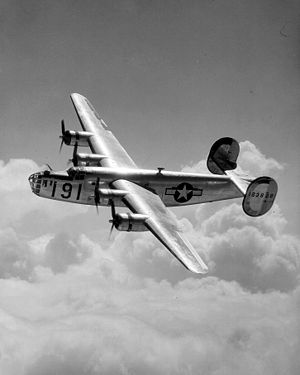
St. Padre Pio is another Italian priest from not so long ago who also worked remarkable miracles. During WWII, Allied planes flew bombing raids over Italy. Almost all of the centers of the region were subjected to repeated bombardment, but no bombs ravaged the town of San Giovanni Rotondo. Every time the aviators approached that place, they saw a monk flying in the air who prevented them from dropping their bombs. Understandably, reports of this flying friar did not amuse the superior offices.

Bernardo Rosini, a general of the Italian Air Force, recounts this story: “One day, an American commander wanted to lead a squadron of bombers himself to destroy the German arms depository of war material that was located at San Giovanni Rotondo. The commander related that as he approached the target, he and his pilots saw rising in the sky the figure of a friar with his hands held outward. The bombs released of their own accord, falling in the woods, and the planes completely reversed course without any intervention by the pilots.”  

Someone told the commanding general that in a convent at this town, there lived a saintly man. At war’s end, the general wanted to go meet this person. “He was accompanied by several pilots… He went to the convent of the Capuchins. As soon as he crossed the threshold of the sacristy, he found himself in front of several friars, among whom he immediately recognized the one who had ‘stopped’ his planes. Padre Pio went forward to meet him, and putting his hand on his shoulder, he said, `So, you’re the one who wanted to get rid of us all!’”

As we meditate on the Ascension of Jesus, to the right hand of the Father in Heaven, let us pray that He would establish justice and peace, in this country and the whole world, in our time.

The 3rd Glorious Mystery:
The Descent of the Holy Spirit at Pentecost

We usually don’t associate India with Christianity, but that nation has over 24 million Christians.  That’s about as many people as live in Texas, our second largest state. If you were to ask them how the faith reached their land they would point to St. Thomas the Apostle.

What led St. Thomas, who at first refused to even believe in the Good News, to travel over 2,500 miles to bring them the Gospel? It was not merely seeing the risen Christ. Jesus knew His disciples would need more to strengthen them then merely their memories of Him. St. Thomas journeyed because the Lord had sent the Holy Spirit at Pentecost, to fill them with gifts, like wisdom, courage, and zeal.

If we are in the state of grace, God the Holy Spirit dwells in us too, and He wants to empower us with His gifts. As we meditate on the descent of the Holy Spirit at Pentecost, let us pray for whatever spiritual gift that we need the most.

The 4th Glorious Mystery:
The Assumption of the Virgin Mary.

No Church, in the East or the West, claims to contain the body of St. Mary. This is because “the Immaculate Mother of God, the ever Virgin Mary, having completed the course of her earthly life, was assumed body and soul into heavenly glory.” This is because Jesus would not suffer Mary, His sinless, faithful beloved, to undergo corruption.

Death is a consequence of human sin, and without human intervention, as in embalming or mummification, our dead bodies will ordinarily experience its corruption. But, sometimes, the Lord preserves the dead bodies of his saints, to give a sign of their holiness, and to show that death is not all that awaits us.

Among the numerous saints whose incorrupt bodies you can still see today are:  St. John Bosco, St. John Vianney, St. Catherine Laboure (the visionary of the Miraculous Medal), St. Bernadette Soubirous (the visionary of Lourdes), and St. Maria Goretti.

As we meditate on the Assumption of the Virgin Mary, let us pray for purity in our lives.

The 5th Glorious Mystery:
The Coronation of Mary as the Queen of Heaven and Earth

Once, when St. Maximillian Kolbe was a boy, his behavior began trying his mother’s patience. She said in exasperation, “Maximillian, what will become of you?” As St. Maximillian writes, “Later, that night, I asked the Mother of God what was to become of me. Then she came to me holding two crowns, one white, the other red. She asked me if I was willing to accept either of these crowns. The white one meant that I should persevere in purity, and the red that I should become a martyr. I said that I would accept them both.” St. Maximillian would receive both crowns, as a holy Franciscan brother, and as a victim of the Nazis at Auschwitz, were he took the place of another innocent man who was condemned to die.

Jesus crowns his holy ones. He wills that those who share in His sacrifice should also share in His glory. As we meditate on the Coronation of Mary, let us pray to accept whatever crowns of burden and glory the Lord wants to give to us.
A Mystery Revealed — Trinity Sunday

June 2, 2010

You may recall my mention of one of my favorite professors at seminary, Dr.  Perry Cahall. And I remember him telling us one day in class, “If, someday when you’re a priest, I hear that you got into the pulpit on Trinity Sunday and tell the people, ‘You know, the Trinity is a mystery, and so there’s really nothing we can know or say about it…’ I will hunt you down like the dogs you are.” This is my first homily on Trinity Sunday, and I’m going to make sure I give Dr. Cahall no reason to come after me.

The Trinity is a mystery, but that doesn’t men we know nothing or can say nothing about this central mystery of our Faith. In Catholic theology, a “mystery” is not something which is unknowable to us, it is just something which our human reason could not have discovered on its own.

Imagine if you came upon a sophisticated and well-written mystery novel. It’s so good that you can’t put it down. But as you get towards the end, you discover that the last couple chapters of the book are missing. You noticed some clues as the story unfolded, but without those last pages you can’t figure out the identity of the one “who did it.” You might try to find the ending in another copy of the book, but what if no other copies existed and no one had ever read the ending before? Your only hope would be to speak with the author. The author could tell you the rest of the story. The author could unveil the mystery for you and reveal the identity of the one “who did it.” Like that in sophisticated mystery novel, our God has placed clues throughout creation and His Old Testament interactions with His People. Yet, it was not until the coming of Jesus that the “who done it” was plainly revealed: God, the Author of the universe, is Father, Son and Holy Spirit.

Today I would like to talk about some common questions people have about the Trinity. For instance, how is God both one and three, and then what difference does the Trinity make?

Some people have trouble with the concept of the Trinity because they think it is the claim that “one equals three” in God. However, this is not what we believe about the Trinity. The number one does not equal the number three, not in God or anywhere else, and not even the omnipotent power of God can make a logical contradiction true.

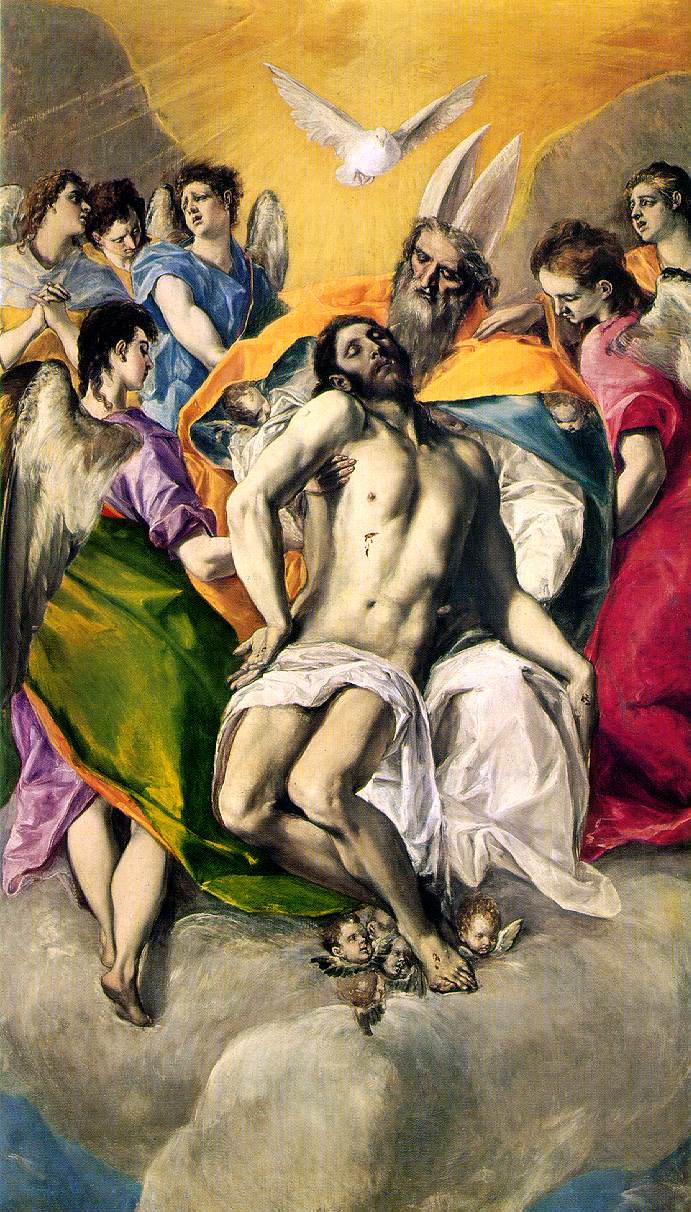
We believe one God, comprised of three divine persons: the Father, the Son, and the Holy Spirit. God is one What, as three Who’s. There is one divine nature, but three divine knowers, three divine willers, and three divine actors. We do not believe in three anonymous forces, but three loving persons. There is no God apart from or beyond these three persons.

Now the Father is not Jesus Christ. Jesus is not the Holy Spirit. And the Spirit is not our Father. They are distinct persons. Yet, at the same time, each possesses the fullness of the divinity: perfect goodness, infinite beauty, perfect knowledge, infinite power, perfect mercy, and infinite love. We do not worship three gods, but three eternal persons who comprise one God.

The belief in the oneness of God was firmly instilled into the Jewish people. This conviction helped to keep Israel from falling into the worship of false gods and experiencing all of the evils that brings. For instance, Israel’s Canaanite neighbors were idolaters, who worshiped mere objects as gods that could make them happy. They practiced child sacrifice, killing their own children in hopes of receiving greater blessings in this life from the gods. And they had temple prostitution, in which promiscuous sexuality was as hailed as sacred.

Notice how our society has become more and more like those pagans as it has drifted from belief in the one true God. Our worship of objects which we think can make us happy is called materialism, or consumerism. Our human sacrifice, done in hopes of greater blessings in this life, is called abortion. And some have raised up sexual promiscuity as the way of greatest freedom and happiness.

The Jews were spared all of these evils so long as they clung to their conviction that “All gods are not the same, and we are to worship only one.” The God of Abraham, Isaac, and Jacob. Even to this day, observant Jews pray a prayer twice daily called the “Shema Yisrael,” from a passage in Deuteronomy:

“Hear, O Israel! The LORD is our God, the LORD is one!  Therefore, you shall love the LORD, your God, with all your heart, and with all your soul, and with all your strength.”

Jews remain Jews today because they do not believe that Jesus is the promised messiah, or the Christ, the one for whom they have been waiting. Sometimes they criticize Christians saying we are not really monotheists, but polytheists, who believe in three gods: “The LORD is our God, the LORD is one!”

Yet, revealingly, the word that God inspired in this Old Testament passage (“The Lord is one”) is not one of the words in Hebrew which always means numerical and solitary oneness (such as “yachid” or “bad”.)  Instead, the Holy Spirit selected a word which usually means a unified oneness: “echad.” This word (“echad”) is the same word used in Genesis, where God says of man and woman, “the two shall become one flesh.” In their union, the persons are as one being. And recall, God had said, “Let us make man in our image , after our likeness. …[And] God created man in his image; in the divine image he created him; male and female he created them.” When husband and wife become a unified one, as one couple, in time, they are in the image and likeness of the Father, Son, and Spirit, who have are a unified one, as one God, eternally.

So what difference does the reality of the Trinity make for our lives? The Trinity shows us that God is not a solitary individual, isolated and alone. God is a loving communion of persons. This is the reality we come from, and this is the reality we are called to, in this life and the next.

In our post-modern age, some people talk about “the meaning of life” as if it were some kind of joke, or an unsolvable mystery beyond our capacity to discover or know. But we Christians believe we know the meaning of life, for it has been revealed to us. The meaning of life is the loving communion of persons. The loving communion of persons is what gives our lives meaning and it will be our primary delight forever in Heaven. Love is the reality we come from, and the reality we are called to.

‘Hear, O Church of God! The LORD is our God, the LORD is a unified one!  Therefore, you shall love the LORD, your God, with all your heart, and with all your soul, and with all your strength.’ Love the Lord your God, who is Father, Son, and Spirit, and become like the God you love.

Relating to God Personally — Pentecost Sunday

May 23, 2010

In the Old Testament, the truth that God is a unity of three persons, that God is triune, that God is a Trinity, was only obscurely presented. The knowledge that God consists Father, Son, and Holy Spirit, only became clear to us through Jesus Christ. Our one true God has always been three persons: the Father, the Son, and the Holy Spirit.

Now the Father is not Jesus Christ. Jesus is not the Holy Spirit. And the Spirit is not our Father. They are distinct persons. Yet, at the same time, each possesses the fullness of divinity: perfect goodness, perfect beauty, perfect knowledge, and perfect power, perfect mercy, and perfect love. We do not worship three gods, but three eternal persons who comprise one God. There is no God apart from these divine persons.

Sometimes we say we are “praying to God,” and that is well and good. But when we are “praying to God” we should not imagine that we are speaking to some fourth person, to some divine abstraction above or beyond the three. If you don’t know which divine person you have been praying to at such times, you have been praying to the Father, through the Son, in the Holy Spirit. (Notice how the prayers in the Mass are always addressed to particular divine persons; usually the Father, but sometimes the Son.)

If you have been a Christian who has always directed your prayers some abstract Christian divinity, who is neither Father, Son, nor Spirit, I trust that your prayers have still been heard within the Trinity. And if you have never related to the Holy Spirit as a real person who knows and wills and loves, but only as some abstract force, I am confident that He has blessed you with His gifts and produced His fruits in you even without your asking. But Christianity is all about loving communion with  persons. Not forces, not abstractions, but persons: persons human, angelic, and divine.

Do you have a personal relationship with each of the persons of the Trinity; with Jesus Christ, with our heavenly Father, and with the Holy Spirit? If not, then it’s important that you begin to cultivate these relationships in prayer, for we are called to love God, and only persons can be truly loved.

On this Pentecost Sunday, we recall the gift of the person of the Holy Spirit to the Church. The Holy Spirit does not begrudge it when we ask Him for good things, for ourselves and for others; no, He is pleased when we ask and pleased to give. Gift is who the Holy Spirit is. But today and henceforth let us always speak to Him and the other divine persons in a personal way with a great personal love.