Archive for the ‘Homily’ Category

The Embarrassments of the Magi

January 3, 2026

Feast of the Epiphany
By Fr. Victor Feltes

How often do you feel awkward or embarrassed? I think the Magi felt that way repeatedly in today’s Gospel story.

Who were the Magi? Ancient civilizations east of Israel (such as the Persians and Babylonians) bestowed upon their men of learning the title “Magus.” The Magi we commemorate this day (traditionally identified as Saints Caspar, Melchior, and Balthasar) apparently studied the heavens—a useful skill for tracking the rainy seasons and deciding when to plant and harvest. The visionary Jewish Prophet Daniel, six centuries before Christ, had served as a wise man in Babylon. Perhaps he left behind instructions about the star to watch for as the signal of the Messiah’s birth.

Some speculate the Star of Bethlehem was a comet, others say it was a supernova, but given the clues in the text and in history the best explanation suggests it was a planet seen in some unique position relative to the other lights of heaven. This is plausible because the ancients regarded the planets as ‘wandering stars’ moving across the fixed constellations. The word “planet” comes from the Greek word for “wanderer.” But whatever sign the Magi beheld, it convinced them a new heir to the Jewish throne was born. So they packed valuable gifts and traveled far from their homeland to honor this newborn king.

St. Matthew records, “When Jesus was born in Bethlehem of Judea, in the days of King Herod, behold, Magi from the east arrived in Jerusalem, saying, ‘Where is the newborn king of the Jews? We saw his star at its rising and have come to do him homage.’” But there was no newborn king be found there; at least, no baby in Herod’s household descended from King David, as the Jewish scripture prophesies required for the Christ. This surprised the Magi and perhaps they doubted themselves. “Did we misread the stars? Was the wisdom we were following merely a myth? Did we come all this way for nothing?” But then there was a new ray of hope.

Herod called the Magi secretly and ascertained from them the time of the star’s appearance. He sent them to Bethlehem and said, ‘Go and search diligently for the child. When you have found him, bring me word, that I too may go and do him homage.’” After their audience with the king, they set out on the short journey from Jerusalem to Bethlehem. “And behold, the star that they had seen at its rising preceded them…” This was a sign reconfirming their mission, and “they were overjoyed at seeing the star…” The star somehow “came and stopped over the place where the child was. …And on entering the house they saw the child with Mary his mother. They prostrated themselves and did him homage. Then they opened their treasures and offered him gifts of gold, frankincense, and myrrh.

This house in Bethlehem was far humbler than Herod’s great palace. And if even the Magi were not embarrassed to lay face down upon that lowly floor, it must have felt awkward for the Magi to present the luxury gifts they had brought to this needy family. Rather than incense or gum resin, the Holy Family could have gotten more use from blankets, baby clothes, or a goat. But this seeming mistake was providential. The Magi’s gift of gold would come in handy later when the Holy Family was hiding away in Egypt. And besides that gold for a King, the other gifts of the Magi were prophetically symbolic: frankincense, used in temple worship, for a High Priest and Deity; and myrrh, used in Jewish embalming, for a Savior born to die and rise.

And [then the Magi,] having been warned in a dream not to return to Herod, …departed for their country by another way.” Did the Magi share this dream with the Holy Family before departing? If not, how did St. Matthew ever learn of this detail? Regardless, if the Magi recognized a warning of danger in this dream, they may have felt mortified again that their visit to Bethlehem may have placed a target on the Holy Family’s backs. The Magi’s mission had announced in Jerusalem the birth of Christ, but it also led to the flight of the Holy Family to Egypt and Herod’s massacre of the innocents. Yet even Herod’s freely-chosen evil was foreseen by God, who received the souls of his Holy Innocents as martyrs for Christ and fulfilled what was foretold through the Prophet Hosea: “Out of Egypt I called my Son.”

We do not know what this new year ahead holds for us. And like the Magi, sometimes our honest efforts will produce experiences of awkwardness and embarrassment, problems and seeming failures. But even if we don’t always know what we are doing, the Lord knows what he is doing. So strive to please and serve him, and never give up on your life journey’s mission. For just as he did with the Magi, the Lord will incorporate all of our faithful efforts into his great providential story.

How Did St. Luke Know?

January 1, 2026

Solemnity of Mary, Mother of God
By Fr. Victor Feltes

At the Annunciation, when the Archangel Gabriel greeted Mary using an exalted title, saying “Hail, highly favored one! The Lord is with you,” Luke records that the Virgin Mary “was greatly troubled at what was said and pondered what sort of greeting this might be.” Nine months later, after the visit of the shepherds at Christmas, today’s Gospel reading says “Mary kept all these things, reflecting on them in her heart.” And then twelve years after that, when the boy Jesus was found in the temple and he said, “Why were you looking for me? Did you not know that I must be in my Father’s house?” Mary did not understand what Jesus said to them, but Luke records “his mother kept all these things in her heart.” Mary pondered, reflected on, and all kept these things in her heart. That raises a question: how did St. Luke know these facts to include them in his Gospel?

Did Luke have mystical visions? Did God infuse him with hidden knowledge? That is not how St. Luke describes how he wrote his Gospel. He writes: “Since many have undertaken to compile a narrative of the events that have been fulfilled among us, just as those who were eyewitnesses from the beginning and ministers of the word have handed them down to us, I too have decided, after investigating everything accurately anew, to write it down in an orderly sequence for you, most excellent Theophilus, so that you may realize the certainty of the teachings you have received.” So St. Luke investigated, he did research for his Gospel, and probably interviewed first century eyewitnesses to the events he records. How would folks naturally come to know what Mary pondered, reflected upon, and kept within her heart? By her telling people. That is why some call the early chapters of Luke’s Gospel “The Memoirs of Mary.”

When people pick up praying the Holy Rosary for the first time, their focus tends to be on saying the right words and tracking the beads. But as they get more experienced and comfortable, their focus can shift toward each of the mysteries, and contemplate their deeper meanings and implications. Is it any surprise that the Holy Spirit would providentially promote into history’s most popular Marian devotion the pondering, reflecting upon, and holding in our hearts the events of salvation history? The Holy Rosary is a transforming contemplation with Mary upon the great things God has done.

Besides praying more Rosaries this year, I suggest more contemplation at the end of each day. Ask the Holy Spirit to show you the victories and failures from the day, to give thank and praise and ask pardon and new strength. Such daily self-examinations (or examens) are recommended by saints for spiritual growth. And as one year ends and a new year begins, I suggest devoting some time to pondering like Mary. Reflect upon the past year and consider the year ahead, holding in your heart all the good things which are yours in Christ.

Holy Family Lessons

December 28, 2025

Feast of the Holy Family
By Fr. Victor Feltes

Modern popes (including St. Paul VI, St. John Paul the Great, and Benedict XVI) have reflected upon and recommend the Holy Family of Joseph, Mary, and Jesus as a model, an example, for all Christian families to contemplate and learn from. This morning I wish to share some insights for children and parents, husbands and wives, drawn from the Holy Family. First, a reflection on Jesus in relationship to his parents.

The Archangel Gabriel told Mary at the Annunciation, “Behold, you will conceive in your womb and bear a son, and you shall name him Jesus.” Then, when an angel of the Lord appeared to Joseph in a dream he said, “[Mary, your wife,] will bear a son and you are to name him Jesus…” And St. Luke records that indeed, “when eight days were completed for his circumcision, he was named Jesus…” So Jesus was named by both Joseph and Mary, though his name originated with God. Adam was given authority in the Garden of Eden, reflected by him authoring the names of his wife Eve and all the animals. Jesus’ mother and foster-father were likewise given authority over him, and Luke writes that Jesus “was obedient to them.”

We just heard Sirach’s words that “God sets a father in honor over his children; [and] a mother’s authority he confirms over her sons,” and we heard St. Paul urging “Children, obey your parents in everything, for this is pleasing to the Lord.” St. Paul notes elsewhere that amongst the Ten Commandments, “Honor your father and mother” is the first commandment with a promise—“so that it may go well with you and that you may enjoy long life on the earth.” And Sirach observes that those who revere and honor their parents receive many earthly and heavenly blessings.

The Catechism of the Catholic Church teaches that “as they grow up, children should continue to respect their parents. They should anticipate their wishes, willingly seek their advice, and accept their just admonitions.” It says, “obedience toward parents ceases with the emancipation of the children; [but] not so respect, which is always owed to them.” And “as much as they can, [children] must give [parents] material and moral support in old age and in times of illness, loneliness, or distress.” Jesus supported his parents in the Holy Family. St. Joseph is the patron saint of a happy death because Jesus and Mary would have comforted and cared for him on his deathbed. And one of Jesus’ final deeds before he died on the Cross ensured that his widowed mother would be cared for.

This Sunday’s Gospel reading offers husbands and wives another valuable reflection from the Holy Family. After the Annunciation, the Gospels record no more angelic messages being given to the Blessed Virgin Mary. Her husband, Joseph, however receives multiple messages through dreams. First, the angel of the Lord tells Joseph not to fear receiving Mary his wife into his home. Then, as Herod is poised to hunt down the Christ Child, the angel tells Joseph to take Jesus and Mary to Egypt. Once Herod dies, the angel directs Joseph to take them back to the land of Israel. Finally, once Joseph has led his Holy Family back to Israel, he is warned in a dream not to live in the region of Bethlehem (Judea) and decides instead to resettle back up north in Nazareth.

Those messages from heaven came to the leader of the Holy Family, and Mary had to trust and entrust herself to Joseph. Joseph was called to servant-leadership, loving his wife and their child self-sacrificially, even as Christ loves the Church. Mary, in turn, was called to be subordinate to her husband, like a priest to his bishop. Of course, I am not obliged to obey my bishop in things that are immoral or irrational, but otherwise the Lord wills me to be obedient to him as my leader. I can voice my personal preferences to him and I ought to raise my concerns with him, but the ultimate decision and responsibility falls to him. Likewise, St. Paul writes, “Wives, be subordinate to your husbands, as is proper in the Lord.” And elsewhere St. Paul teaches in the Spirit, “As the Church is subordinate to Christ, so wives should be subordinate to their husbands in everything.”

Children and parents, husbands and wives, may all of us learn from the Holy Family as our example. And may their prayers beside the throne of God the Father gain us abundant graces to be great and fruitful saints in their likeness.

A Manger Sign

December 25, 2025

Christmas Day
Fr. Victor Feltes

The shepherds were in the countryside keeping night watch over their flocks when an angel of the Lord appeared to them and the glory of the Lord shone around them. The angel proclaimed “good news of great joy”: a baby born that day in Bethlehem, a Savior who is Christ and Lord. And the angel gave the shepherds a confirming sign: “You will find an infant wrapped in swaddling clothes and lying in a manger.” Seeing a newborn baby swaddled (that is, snugly wrapped up in cloth) would not have been an unusual sight back then. As the Old Testament author of the book called The Wisdom of Solomon writes: “In swaddling clothes and with constant care I was nurtured. For no king has any different origin or birth; one is the entry into life for all…” A much stranger sight for the shepherds on Christmas would be to see a baby in a manger.

Now when I was a kid, I thought the manger in any “manger scene” was the Holy Family’s barn or shelter, but that’s mistaken. A manger is not a building but a feedbox for dry feeds, like grain, for animals to eat. On Christmas, one such manger served as a makeshift cradle. Once the herald angels had departed, the shepherds excitedly said to each other: “Let us go, then, to Bethlehem to see this thing that has taken place!” They went in haste into Bethlehem and found the Holy Family, with the newborn King lying in the manger.

The angel had told the shepherds “this will be a sign for you.” Seeing the child in the manger confirmed that they had found the Christ, but this Savior in the manger is a sign for us in another sense. The name of the city of Christ’s birth, Bethlehem, means “House of Bread” in Hebrew. Finding our Lord inside a box for eating grain within the House of Bread is a sign for us foreshadowing the Holy Eucharist. Jesus would go on to teach us, “I am the living bread that came down from heaven; whoever eats this bread will live forever; and the bread that I will give is my flesh for the life of the world.”

God’s Son became man for a closer unity with humanity; “the Word became flesh and dwelt among us.” The shepherds in the countryside and the Magi in a distant land were called to draw nearer to Christ at his dwelling place in Bethlehem. But Jesus offers and calls us to an even closer union with him, within this church, his dwelling place. Jesus declares, “Amen, amen, I say to you, unless you eat the flesh of the Son of Man and drink his blood, you do not have life within you. … Whoever eats my flesh and drinks my blood remains in me and I in him. Just as the living Father sent me and I have life because of the Father, so also the one who feeds on me will have life because of me.” When Jesus teaches us to pray for daily bread he wants us to eat more than only once or twice a year. As normal food sustains our natural lives, so we need “the Bread from heaven” to sustain our spiritual lives, to remain in Christ and he in us.

Behold, as a messenger of the Lord, I proclaim to you good news of great joy: Jesus Christ, who is Savior and Lord, has come down from heaven. Born long ago in Bethlehem, he remains really present for us here today. Please allow the miracle of Christmas to produce enduring fruit in you. Return here to Christ’s dwelling place each Sunday and holy day, to adore him and receive him in his Holy Eucharist. Through his Incarnation, Jesus chose to become one of us; but through his Holy Eucharist, he wishes to remain one with you.


Born to Die & Rise — Funeral Homily for Matthew “Matt” Jaworski, 63

December 23, 2025

By Fr. Victor Feltes

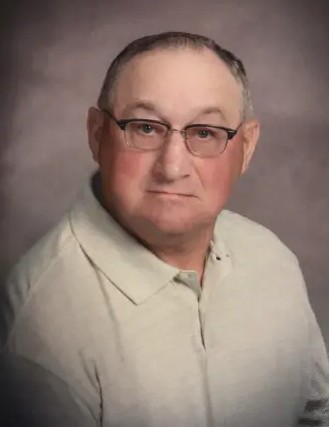
In one sense, no date on the calendar is a good time for a funeral. Any day for a loved one’s funeral rites will feel off, discordant. But today, on this eve of Christmas Eve, it feels like an especially strange time to have Matt’s funeral. We will soon be marking the glorious birth of Baby Jesus — how God becomes man and lives among us. We rightly celebrate that as one of the most joyous feasts of the year. But the life and joy of Christmas seems to be stark contrast with the loss and sadness of today. And yet it may be said that Jesus Christ “was born to die.” If Jesus Christ, the God-Man, had lived without ever becoming our redeeming sacrifice, we would still remain hostages to Satan, sin, death, and suffering forever. Instead, God the Father “did not spare his own Son but handed him over for us all.

The signs of Christ’s salvific mission were there from the beginning. The very name “Jesus” (or “Yeshua”) means “God Saves.” He was born in the hometown of David the shepherd-king, at Bethlehem, from where lambs to be sacrificed at the temple came. Jesus would go on to be sacrificed as our Good Shepherd-King, at Jerusalem, as the Lamb of God who takes away the sins of the world. On Christmas night, his Mother Mary wrapped his body in cloth and laid him down inside a borrowed cave. Years later on Good Friday, she would wrap his body in cloth again and lay his body down inside another borrowed cave. Jesus’ Christmas birth and Easter resurrection, these sources for our hope, did not come without difficult trials.

The first Christmas was not easy but the Holy Family was always in God’s care. Imagine being poor, being far from home, and having your first child in a place for animals. Yet Mary and Joseph carried faith and peace within them, from the words and miracles from heaven recorded in salvation history and experienced in their own lives. Jesus Christ’s young and unexpected death stunned those who knew and loved him; however, even that awful day was foreseen in heaven’s providence. God’s Beloved One was remembered and soon would rise again. Blessed were those who mourned for him and prayed for him, for they were soon comforted. Matt’s unexpected passing saddens and a day like this is always painful. But we carry faith and hope from God, for Matt—for whom we pray—and for every one of us. Though God’s beloved one must pass through Good Friday, Christmas leads us to Easter joy.

Jesus & The Wingless Angels

December 22, 2025

4th Sunday of Advent
By Fr. Victor Feltes

Today, Jesus reminds us that our earthly experience is limited to a specific time. We all think that our time here on earth is unlimited, but it is not. We are given a certain time to accept or reject our requested vocation in life: to love God and neighbor. Let me share with you Deacon Dick’s call and views on a vocation of love and service.

When I was about six or seven years old, my dad and I went to Reetz’s Grocery Store to buy some meat. At that time, the grocery part was run by Lorraine Reetz and her sister Jean Reetz. Jean was not a very smiley person, but she was in charge of checking out the customers. One day, Dad was buying meat at the meat counter, and I heard a yell from the checkout counter. Jean was checking out someone, and when she overfilled the bag, it broke, with all the groceries falling on the ground. I saw that and ran over to Jean to help her repackage the bag that had broken. I saw her give me the biggest smile ever. From that day on, she always put me—who she called “Dickie”—in the front of the line to check out whenever I went to their store. Jean never forgot that event for years to come. She was to me a wingless angel.

Today we find that Mary is confronted by an angel to be the mother of God. We also find Joseph, who finds a person he is in love with and engaged to, is pregnant. Mary had an angel ask for her help. Joseph had another angel tell him she did not betray him. Who do we look to for truth in what God desires of our life? The answer is Jesus and the Body of Christ, His Church. Both Mary and Joseph had faith to believe the unbelievable. Who do we have? The answer is the Holy Spirit and the Body of Christ—service people, who I call the “Wingless Angels.”

When I was contemplating becoming a deacon, I did not want to become seen as a “holy roller.” The Dick I had grown up with could not handle that. I told God I would give it a try, but I felt He should give this job to someone more qualified than myself. Well, God gave me mentors. He gave me a wife, a son, and a daughter-in-law who give themselves in service to me and to others. He gave me parents who always put others in front of their own desires. He gave me friends and relatives who always looked out for others, even if it meant sacrificing their time so others could have some good time. He gave me my priest friends who showed me that just because you are holy doesn’t mean there is something not right with you—men who loved their vocation in life and serving God and His children. All were and are “wingless angels.”

When I was considering whether I should go through the program to become a deacon, I sat one Saturday at a bar with my best friend. I told him I was thinking about becoming a deacon and wanted his input on whether I should go on. He looked at me and said, “Go for it!” Another angel without wings. Finally, I looked at the parishioners of St. Paul’s and St. John’s—people who shared much of their life in service to their Church and to the community at large. Although many times they looked tired, they always had a smile on their face when serving God’s children. People who are and were truly “Wingless Angels.” I will close with an email I recently sent to my only granddaughter who began dating. I told her to choose her friends closely and to look to people who look to helping others more than they look to themselves. She answered me with a smiley face with tears on it. Barb asked me what that meant, and I said, “I think she got it!” Another angel without wings? I hope so!

Through the birth of Jesus—a “skin-on Person of God”—He gave us a great gift for Christmas: the angels without wings, people with “skin on,” to help direct our lives and be happy serving others. Food for thought before you celebrate Christmas? Without Mary and Joseph saying “Yes,” there might be no Jesus, no Church, and no Body of Christ. There might be no angels without wings! Jesus invites all children of God to join Him at Mass, and He will provide them with a meal of Himself—food that Fr. Tom called “angel food,” energy food that will put a smile on your face as you serve His children. Finally, Jesus told me to tell you, “Wingless Angel folks,” thanks for saying “Yes” and loving others as He loves us, and that He is preparing a room for you. And for those of you who are being called to become “Wingless Angels,” and who—like this deacon—questioned the wisdom of Jesus in calling you into the College of Saints, Jesus responds with a grin on His face and tells you: “Be still and know that I Am!”

You Can Ask Jesus Your Questions

December 13, 2025

3rd Sunday of Advent
By Fr. Victor Feltes

St. John the Baptist, despite his continued imprisonment, had heard about the works Jesus was doing and sent two of his disciples to ask him, “Are you the one who is to come, or should we look for another?” John was no pushover, not some reed swayed by the wind, but from this question we can gather that while John sat in Herod’s prison some doubt arose about whether Jesus was their long-awaited Messiah.

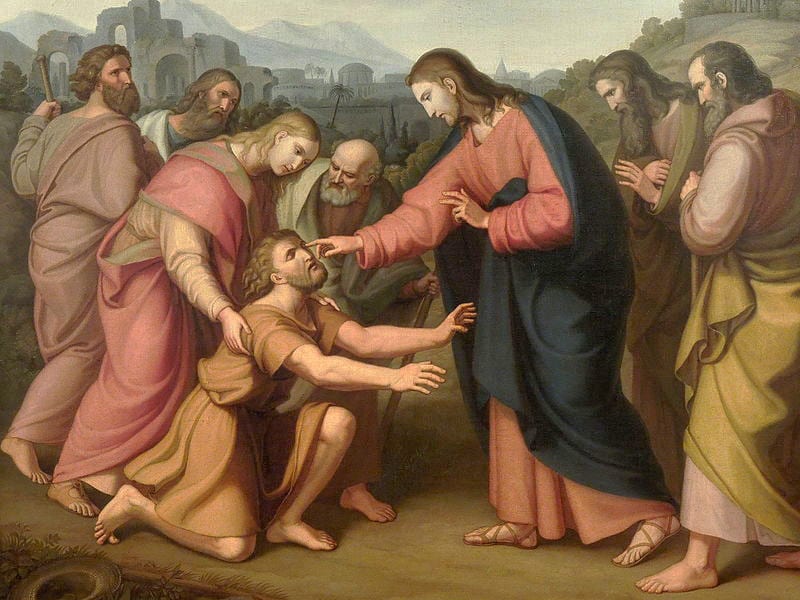
Notice how Jesus reacts to the question. He does not lose his temper or condemn them for asking. He gives them a helpful response: “Go and tell John what you hear and see: the blind regain their sight, the lame walk, lepers are cleansed, the deaf hear, the dead are raised, and the poor have the good news proclaimed to them. And blessed is the one who takes no offense at me.” In other words: “Report to John my mighty works for these show that I am the Messiah of whom Isaiah wrote (e.g., ‘Then will the eyes of the blind be opened, the ears of the deaf be cleared; then will the lame leap like a stag, then the tongue of the mute will sing.’) How I accomplish my purposes may appear strange, but remember that a person who takes no offense at me is blessed.” Jesus was patient with people who asked him questions in good faith.

Nicodemus did not want to be seen in public with Jesus. That’s why Nicodemus approached him at night. But Jesus still engaged with his questions. The Samaritan woman at the well may have first thought the man speaking to her was weird, but Jesus invited her probing questions. And the rich young man who asked Jesus about the way to eternal life wasn’t quite ready to fully commit to following Christ, but Jesus looked at him, loved him, and gave personalized responses. Despite their flaws, they asked Jesus questions in good faith and Jesus answered them. What Jesus does not like is questions asked in bad faith.

When the Pharisees would set traps for him, Jesus knew their ill intent, saying, “Why are you testing me, you hypocrites?” He knew they were just looking for ways to condemn and reject him. And when Jesus appeared before King Herod during his Passion, Herod questioned him at length because he had heard about him and hoped to see him perform some sign. But when Jesus gave him no replies, Herod treated him with contempt and mocked him and sent him away. Wicked Herod was merely curious about Jesus and uninterested in repenting of his sins. We should not test God like the Pharisees and Herod did. Jesus delights, however, in genuine seekers and is pleased to answer them.

Whoever asks, receives,” and “whoever seeks, finds,” though the answer might not be instantaneous. Job, while doing nothing wrong, questioned for some time before the Lord answered him. Sometimes our answer is already readily available through Christ’s Church, and we should listen to him through her. But sometimes God, who is supremely brilliant and creative, will answer us through different avenues (though without contradicting himself). Sometimes his answer will come during prayer, or maybe through something we providentially see or hear, or perhaps through a friend or a stranger.

What are your questions for the Lord? I encourage you to ask him and keep your eyes and ears and heart open. If you’re seeking the truth and not seeking excuses; if you’re looking to love and serve Jesus better, pay Christ the compliment of approaching him as the One who knows all things and loves you. Blessed is the one who does so.

From Eden to Nazareth

December 8, 2025

Solemnity of the Immaculate Conception
By Fr. Victor Feltes

In the story of Genesis, the Lord God declares to the serpent: “I will put enmity [that is, hostility] between you and the woman, and between your offspring and hers; he will strike at your head, while you strike at his heel.” There is more going on here than an account of humanity’s dislike for slithering, venomous snakes. That tempter at the Fall was not a mere snake. The Book of Revelation identifies “the ancient serpent” as “the Devil and Satan.” And the Church saw in that declaration of the Lord God in Genesis the first proclamation of the Gospel, the Protoevangelium, foretelling what God intended to do to accomplish our salvation through Jesus Christ. “I will put enmity between you and the woman, and between your offspring and hers…” (or literally in the Hebrew) “between your seed and her seed”. That’s curious, since folks typically speak of the seed a man rather than the seed of a woman. Who is this woman whom God decrees to be in a state of opposition to Satan, whose Son would suffer due to the Evil One until he crushed the Serpent’s head?

The angel Gabriel was sent from God to a virgin in the city of Nazareth named Mary. And coming to her, he said, “Hail, full of grace! The Lord is with you.” Gabriel hails Mary with a title, like people cried “Hail, King of the Jews” during Jesus’ Passion. But the angel is not speaking ironically like Jesus’ tormentors and the angel does not lie. What we translate into English as “full of grace” has a deeper meaning in the original Greek. Heaven’s messenger calls Mary “Kecharitomene,” a perfect passive participle of a word which means “to fill or endow with grace.” Because it is in the Greek perfect tense, it declares Mary was graced as a completed action in the past but with effects continuing to the present. Mary had already been prepared by God for that moment, to become the sinless, grace-filled mother of our Incarnate Lord.

So why did God do this? One reason is so that she could give to God a full and free “Yes.” Once the angel explained that she would give birth to the Messiah and that this child would be God’s Son conceived by the Holy Spirit, Mary said, “Behold, I am the handmaid of the Lord. May it be done to me according to your word.” The Catechism of the Catholic Church teaches that “in order for Mary to be able to give the free assent of her faith to the announcement of her vocation, it was necessary that she be wholly borne by God’s grace.” (CCC #490) Mary says “Yes” to God not due to coercive fears, nor from selfish motives, but freely and faithfully on behalf of all Creation and the Holy Church to be.

Another reason God created her pure and filled her with grace, was to make her a fitting mother — not only for her Son but all his Christian siblings, his brothers and sisters, including you and me. She is the New Eve who, by her faithful loving obedience, “became the mother of all the living.” Today we celebrate with Blessed Mary how the Almighty has done great things for her, through which we now have Jesus Christ our Lord and a heavenly mother who knows us and loves us and prays for us now.

Heralding the Best Path

December 7, 2025

2nd Sunday of Advent
By Fr. Victor Feltes

St. John the Baptist taught his hearers that the time had come for them to take action and change course. St. Matthew writes it was of John the Baptist the Prophet Isaiah spoke when he foretold of “a voice of one crying out in the desert,” saying, “Prepare the way of the Lord! Make straight in the wasteland a highway for our God! Every valley shall be filled in, every mountain and hill shall be made low; the rugged land shall be made a plain, the rough country, a broad valley. Then the glory of the Lord shall be revealed…” So what is this imagery about?

In ancient times, preceding a king’s journey somewhere, a messenger would be sent ahead to announce how people should get ready for the royal arrival. One practical task was to improve his road: removing rocks, filling potholes, and smoothing ruts. For the coming of the King of kings, Isaiah even envisions lowering mountains and raising valleys to form a straight and level highway. John the Baptist calls everyone to reevaluate our priorities to better prepare the way for encountering Christ.

An angel of the Lord had announced to the Baptist’s father, Zechariah, that John’s mission had an intergenerational component. John was to “turn the hearts of fathers toward children and the disobedient to the understanding of the righteous, to prepare a people fit for the Lord.” St. John, inspiring adults to seek the very best for children and to form them in godly ways, would “turn many of the children of Israel to the Lord their God.” Today, I wish to inspire you to do the same for children now through our St. Paul’s Catholic Grade School.

We have an excellent Catholic school. For our most recent reaccreditation, administrators from four other Catholic schools thoroughly evaluated us and told us: “You have a beautiful school.” “[It’s] welcoming, faith-filled, and charming!” “[It’s] filled with excellent educational instruction.” “[There are] high expectations.” “The students are so well-mannered.” “[And there are] great relationships between teachers and students.” And all of them agreed, “We wish we could work at your school.”

Our highly-qualified teachers can provide one-on-one attention in a wholesome environment more like a family than a factory. And we have great young people who positively influence each other. Our reinvigorating new principal, Mr. Brad Cody, has been struck by our students’ respectfulness and politeness, noting how in all his time here he has yet to hear any student swear. Our behavioral expectations, our academic expectations, and our moral expectations are not found in many other schools today. St. Paul’s devoted teachers and substitutes who have taught in both worlds can attest to the differences in our Catholic school.

God and Christ’s teachings are not excluded here. We have daily prayer, weekly Mass, Confession, and seasonal devotions. Our students get to know Catholic clergy beyond just at Sunday Mass, like when we eat our excellent school lunches with them at their tables. Our littlest ones enjoy the Catechesis of the Good Shepherd, which introduces Christianity to them in an engaging way on their level. And while people of all faiths are welcome at our school, the Catholic Faith is taught and lived.

Our 4K through 8th grade Catholic school prepares the way for the Lord without the rocks, ruts, and pitfalls found in other paths; a smooth and straight road for children to get to know Jesus Christ and walk forward with him together. So if you or your acquaintances have school-aged children, please work to get them enrolled here in 2026. Make a call, take a tour. School Choice makes tuition free at higher incomes than you would think. But even families who don’t qualify can receive grants and scholarships we offer, so do not imagine cost to be an obstacle. In addition to recruiting for our great school, I invite you to join our work in person. We could always use more playground supervisors, substitute teachers, or helpers in the library, office, or classrooms.

It’s not so much that our Catholic school has a mission, as our Catholic mission here in Bloomer has a school. Please help prepare the way for our Lord, make straight our children’s paths, by supporting our St. Paul’s Catholic School.

Two Stories of Conversion

November 29, 2025

1st Sunday of Advent
By Fr. Victor Feltes

At the beginning of this Advent, I would like to tell two stories of conversion. In the spring of 1521, while defending the city of Pamplona, Spain a 30-year-old soldier got his right leg fractured by a French cannonball. He would spend the next several months healing in his family’s castle. Convalescing in bed, day after day, he became extremely bored and asked for some adventure stories to read about knights and ladies. He liked those kinds of stories, but they didn’t have any of those in the house. His sister-in-law provided him a book about the life of Christ and another book of short stories about famous saints.

Sometimes he would read and reflect on what he read. Other times, he would daydream about worldly things. He would pause and consider, “What if I were to do what St. Francis or St. Dominic did?” And other times he would fantasize about being a heroic knight and wooing a certain royal lady in another land who was high above his station.

When he reflected on these worldly fantasies he felt intense pleasure; and whenever he stopped, sometimes hours later from weariness, he felt dry and depressed. Yet whenever he imagined living the rigorous sort of life the saints had lived, he not only experienced pleasure during such thoughts but felt great joy afterwards as well.

Eventually, he noticed this difference and realized how thoughts of one kind left him sad while the others filled him with joy. This was an important moment in his discernment, for he would go on to embrace God’s call to become a saint: St. Ignatius of Loyola.

Sin disappoints us, but goodness (though difficult) yields peace and satisfaction. We are attracted to our sins. Sins would not tempt us if there were no hope for pleasure, relief, or temporary gain from them. But after sinning, if our consciences are well-formed, we feel guilt and regret. What we have done or failed to do harms ourselves and others. And apart from the damages caused, sin squanders opportunities for better things. Yet God continues lovingly calling us back to repentance and conversion.

In the year 386, a 32-year-old man felt very drawn to Christianity but felt enslaved to his sins. It was as if the temptations he loved and despised were whispering, ‘Are you going to part with us? Do you really think you can live without these pleasures forever?’ But another voice had him imagine the smiling multitude of saints who had lived before him. That sweet voice seemed to say, ‘You can do what these men and women did, but none of them did it by themselves. The Lord God gave it to them. Why do you try to stand by your own strength, only to fall over and over again? Cast yourself on Christ and don’t be afraid. He won’t flinch and you won’t fall. Cast yourself on him without fear, for he will accept and heal you.’ Yet he was still torn; desiring chastity, but not yet.

His turning-point moment came sitting in a garden outside his house. With tears he asked, ‘Why do I keep delaying until tomorrow? Why not now? Why not end my uncleanness this very hour?’ Yet he still lacked the strength. Then he heard a child from the house next door, chanting over and over, “Pick it up and read it; pick it up and read it!” He opened the Bible beside him to a random page, finding Romans 13:13-14, part of today’s Second Reading:

Let us conduct ourselves properly as in the day, not in orgies and drunkenness, not in promiscuity and licentiousness, not in rivalry and jealousy. But put on the Lord Jesus Christ, and make no provision for the desires of the flesh.”

Upon reading those words, his heart was infused with a light of certainty and all the gloom of doubt vanished. By this God-given grace, the life of the man we now know as St. Augustine of Hippo began to change.

This Advent, I encourage you to heed Jesus’ warning to “stay awake” and “be prepared,” like the saints before us. Identify your vice and call upon Christ, come to Confession and change your habits, to begin anew in the saintly life he calls you to. Open your arms to receive this gift, his gift, for Christmas.

Our Crucified King

November 23, 2025

Solemnity of Christ the King
By Fr. Victor Feltes

Our English word “Excruciating” comes from the Latin words for “Cross” and “Torment.” The Romans did not invent crucifixion, the Persians and the Greeks practiced it first, but the Romans more widely used the method. It was an easy way to execute people very visibly, horrifically, and slowly as a warning example to others. Typically, when the Romans crucified someone, they would place a sign above the condemned person’s head to indicate why they were being killed. St. John’s Gospel records that Governor Pilate put a sign on Jesus’ Cross written in Hebrew, Latin, and Greek. You sometimes see the initials “INRI” atop crucifixes. This represents the Latin phrase “Iesus Nazarenus Rex Iudaeorum,” the charge against our Lord. That is, “Jesus the Nazorean, the King of the Jews.” He was killed because of who he was and who he is: Jesus the Christ and the King of the universe.

Of course, the people who killed him did not believe this. They thought he was deluded or a fraud. Hence, the triple call for him to save himself and prove them wrong. The Jewish rulers sneered and said, “Let him save himself if he is the chosen one, the Christ of God.” The Roman soldiers jeered and called out, “If you are King of the Jews, save yourself.” And one of the criminals reviled him by saying, “Are you not the Christ? Save yourself and us.” Could Jesus have saved himself from his crucifixion?

St. John’s Gospel quotes Jesus before his Passion saying, “No one takes (my life) from me, but I lay it down on my own. I have power to lay it down, and power to take it up again. This command I have received from my Father.” And St. Matthew quotes Jesus later declaring in the Garden of Gethsemane, “Do you think that I cannot call upon my Father and he will not provide me at this moment with more than twelve legions of angels? But then how would the Scriptures be fulfilled which say that it must come to pass in this way?” So Jesus possessed the power to escape the Cross, but that was not the will or plan of God, which the Eternal Son was party to from the beginning. Jesus assumes “our bone and our flesh” to achieve our reconciliation as a descendant of David, “making peace by the blood of his Cross.” Perhaps the Holy Trinity could have inspired less painful prophecies to achieve our redemption and forgiveness of our sins, but Christ’s crucifixion is what they chose. They chose this path to win our love.

Matthew and Mark’s Gospels suggests that the Penitent Thief (traditionally known as St. Dismas) had derided Jesus, too, at first. But seeing the extraordinary way Jesus acted, hearing the things he said, all while crucified, won over that man’s mind and heart. ‘This man has done nothing criminal and this is how he dies? He truly knows my suffering and this is how he lives. This is the Christ I want to be allied with.’ St. And Luke quotes him saying, “Jesus, remember me when you come into your Kingdom.”

That movement saved the man’s soul, and we enjoy the benefit of understanding Jesus Christ even better than him. St. Paul writes that God “proves his love for us in that while we were still sinners Christ died for us.” Be moved by this manifestation of God’s great love. Submit to Jesus Christ as your King so that he may be your Savior and one day we may all be with him in Paradise.

The River From The Temple

November 9, 2025

Feast of the Dedication of the Lateran Basilica
By Fr. Victor Feltes

This Sunday, the Church throughout the world celebrates the dedication of the Lateran Basilica in Rome, which turns 1,701 years old this year. While St. Peter’s Basilica in Vatican City is more famous, the Lateran Basilica is the pope’s cathedral, the cathedral of the Archdiocese of Rome. This is why the Lateran Basilica is called “the mother and head” of the hundreds of thousands of Catholic churches around the world. Even if we had to go forward without any of these beautiful buildings, we could still practice our Catholic Faith through celebrating the Sacraments and offering our lives and prayers to God. But for Jews during much of the Old Testament, only one building was their place for sacrificial worship and considered God’s holy dwelling place on earth. In today’s first reading, the Prophet Ezekiel is taken by an angel to that Jewish temple in Jerusalem.

Of this vision, Ezekiel writes: “I saw water flowing out from beneath the threshold of the temple toward the east, for the façade of the temple was toward the east; the water flowed down from the southern side of the temple, south of the altar.” Ezekiel records that trickling water flowing through the gates of the temple and out of the city into the east, somehow becoming a river. The angel declares, “This water flows… and empties into the sea, the salt waters [of the Dead Sea], which it makes fresh. Wherever the river flows, every sort of living creature that can multiply shall live, and there shall be abundant fish, for wherever this water comes the sea shall be made fresh. Along both banks of the river, fruit trees of every kind shall grow; their leaves shall not fade, nor their fruit fail. Every month they shall bear fresh fruit, for they shall be watered by the flow from the sanctuary. Their fruit shall serve for food, and their leaves for medicine.” Ezekiel’s mysterious vision of this miraculous river which purifies and renews, producing abundant life, is a prophesy which finds its fulfillment in Jesus Christ and his Church.

In today’s Gospel, when Jesus forcefully clears out the animal sellers and money-changers from the temple area, the Jews ask him, “What sign can you show us for doing this?” And Jesus answers, “Destroy this temple and in three days I will raise it up.” The Jews were incredulous at hearing this and said, “This temple has been under construction for forty-six years and you will raise it up in three days!?” But, as St. John the Gospel writer notes in the text, Jesus “was speaking about the temple of his Body.” After Jesus had risen from the dead, his disciples remembered that Christ had said this and understood its significance.

On Good Friday, when the soldiers saw that Jesus was already dead on the Cross, one of them “thrust his lance into his side, and immediately blood and water flowed out.” Today, physicians affirm that the traumas of Jesus’ Passion and death could cause red and clear fluids to build up in his chest around his heart, resulting in “blood and water” flowing out when the spear was withdrawn, just as St. John witnessed. Do we know into which side of Jesus’ body the spear entered — was it Jesus’ left side or his right side?

Recall how Ezekiel saw the water flowing out in his vision: “The façade of the temple was toward the east” and “the water flowed down from the southern side of the temple, south of the altar.” If Jesus on the Cross faces “east” like the front-face of the Jewish temple, then water coming down from the “south side of the temple (of his Body)” would be flowing from Christ’s right side. And 2,000-year-old forensic evidence may actually confirm this detail. The Shroud of Turin, which appears more likely than not to be an authentic image of Jesus’ body in the tomb, after accounting for the image’s mirror-reflective nature, shows a wound in Christ’s right side. St. Augustine and other Church Fathers recognize flowing from Christ’s side the water of baptism and the blood of the Eucharist. In the beginning, Adam was put into a deep sleep and God fashioned a bride for him from the rib of his side. Jesus Christ on the Cross, asleep in death, has his Bride the Church fashioned from his side through his Holy Sacraments. And when the nations are one day assembled before Christ the King, for the Final Judgment described in Matthew 25, it is the sheep gathered to his right side who will be saved.

Now that trickle from Christ’s side is become a mighty river of grace; purifying and renewing, generating abundant new life in whomever and wherever it flows. Faithful Christian people and places which grow close to that river and are fed by its waters shall endure and produce good growth, healing, and nourishment. We are blessed to enjoy this beautiful church, but wherever we worship our true temple and center of grace prepared for us by divine providence across millennia is our Lord and Savior, Jesus Christ. So with awe, reverence, gratitude, and love, let us turn to him and draw near to his Eucharistic sacrifice.

A Vision of the Saints in Heaven

November 1, 2025

Solemnity of All Saints
By Fr. Victor Feltes

On this All Saints’ Day, let us consider what we can look forward to living as saints in heaven one day. But first, how does one get to heaven?

At the moment of death, our immortal souls will separate from our mortal bodies and go immediately to our particular judgment. There we will be judged according to our faith and deeds in Christ, based upon our connection to Christ and our love of God and neighbor. Then our personal punishment or reward will begin: either immediate and everlasting damnation, or entrance into the everlasting blessedness of heaven —either immediately or after the purifying process of purgatory. One day, the dead will arise and the saints will experience a new heavens and new earth in their glorified resurrected bodies. But for now, the saints only experience heaven through their souls (with the Blessed Virgin Mary being a notable exception). When someday, by the grace of God, we are saints in heaven, here are some things we will enjoy.

One thing to look forward to is probably having a perfect memory. A colleague of the genius mathematician and physicist John von Neumann writes “one of his remarkable abilities was his power of absolute recall. …Von Neumann was able on once reading a book or article to quote it back verbatim; moreover, he could do it years later without hesitation. …. On one occasion I tested his ability by asking him to tell me how A Tale of Two Cities started. Whereupon, without any pause, he immediately began to recite the first chapter and continued until asked to stop after about ten or fifteen minutes.” If this is possible with a frail human brain, how much more knowledge could our unhindered souls retain?

Another perk of being a saint in heaven is great ease in doing whatever is best. When in the unveiled presence of God, “we shall see him as he is,” and discerning God’s will should be easy. And our perfected virtues will make it easy to do what is good and right, for we shall be “pure, as he is pure.”

Another extraordinary blessing in heaven is having innumerable friends. In St. John’s vision of heaven he beholds “a great multitude which no one could count from every nation, race, people, and tongue.” Every saint in heaven has become an incredible person perfected in Christ’s beatitudes and love. There will be no lack of time to get to know people and with your perfect memory you’ll never forget anyone’s name or stories.

Yet the greatest joy in heaven is the beatific vision of God. Sometimes people worry the restful reward of seeing God and worshipping him forever will be dull. Don’t worry, heaven will never be boring. Every good and beautiful thing in Creation which you have ever delighted in has its origin in God who is supremely good, beautiful, and delightful. You have yet to fully exhaust the joys to be experienced in just one culture in one country in one century of human history, so do not imagine you will exhaust the joys to be found in our infinite God.

These are things to look forward to someday in heaven, but on this All Saints’ Day I wish to remind you that the saints in heaven know us and love us now. Yesterday, an online friend shared with me a beautiful story about the intercession of the saints and he has given me permission to share his story with you.

In January of 2018, his father suffered a massive heart attack at home. In the Emergency Room, they were able to restart his heart, but there was almost 100% arterial blockage and likely serious brain damage from the lack of oxygen. Some of the best doctors in the world could do nothing more to help. So the next day, all the family gathered to share final moments as they withdrew the mechanical life support. My friend writes:

I remember sitting in the room, in the cardiology unit there, praying my brains out for a miracle, as he lay dying. Just focused on nothing else but praying, praying, praying. Eyes closed, focused on nothing else. Praying, praying, praying for some miracle. And then I suddenly wasn’t in the hospital room anymore.

I was sitting on a bench in what to me appeared to be a huge football stadium, or more like a Roman circus (those long chariot tracks), stretching further in each direction than I could see (even the opposite side was so far away I couldn’t see it). And every seat was filled with people, all dressed differently (though most of them were in robes, in the section I was in), and all praying in different languages.

Their prayers collectively seemed like a buzzing, or the sound of a waterfall, because they were individually indistinct—countless voices all praying at once. But it was clear that each one of them were praying, non-stop, for me, my dad, and for everybody in the world.

And it was in that instant that it was told to me that I could stop praying—(“Look, all these Saints have the whole ‘praying for your dad’ thing covered for the moment…”)—and use the few moments my dad had left with us to just be with him, hold his hand, tell him that I love him and say goodbye to him. So that’s what I did. And I’m very grateful to this day that I did.

Why was my friend’s vision of the saints set in a long racetrack stadium? I recognize in this a reference to the Letter to Hebrews, which says, “since we are surrounded by so great a cloud of witnesses, let us rid ourselves of every burden and sin that clings to us and persevere in running the race that lies before us while keeping our eyes fixed on Jesus, the leader and perfecter of faith.” So be sure to befriend the saints and call upon them, because they know you, and they love you, and they eagerly want you to join their number.

How The Pharisee Fell Short

October 26, 2025

30th Sunday in Ordinary Time
By Fr. Victor Feltes

When the Pharisee in Jesus’ parable went up to the temple, he stood and spoke this prayer to himself: “O God, I thank you that I am not like the rest of humanity — greedy, dishonest, adulterous — or even like this tax collector.” And yet, Jesus tells us that this Pharisee did not go home justified, or righteous in God’s sight. Why is that?

When the Pharisee said ‘I am not like the rest of humanity — I am not greedy, dishonest, or adulterous…’ was it true that he had conquered sin? Very likely not. Psalm 130 rhetorically asks, “If you, O Lord, should mark our iniquities, who could stand?” And the Gospels record Jesus criticizing the Pharisees repeatedly, saying things like “Oh you Pharisees! Although you cleanse the outside of the cup and the dish, inside you are filled with plunder and evil.” But assuming this Pharisee quietly spoke his prayer to himself in a way which no one else could hear, why would he lie? Maybe he believed everything he said.

When we compare ourselves to others, like this Pharisee compared himself to the tax collector, we can imagine the great faults of others make our own faults unimportant. But just because somebody else is ten billion dollars in debt doesn’t mean that I am solvent. My own debts still remain. Some people accuse and make much of others’ sins because they are projecting at others what they dislike in themselves. It is much easier to condemn the faults in others than to change the faults in me.

Another phenomenon common to people and cultures is to condemn a person or group for the problems of the day. Sometimes, these are merely scapegoats for shifting blame. At other times, particular persons really are at fault and should be corrected or stopped. But we should not imagine that we can banish, purge, and kill our way to earthly paradise. Even after the Great Flood in Genesis, sinners disembarked from Noah’s ark. As the Christian Russian dissident and winner of the 1970 Nobel Peace Prize winner, Aleksandr Solzhenitsyn, famously wrote: “If only it were all so simple! If only there were evil people somewhere insidiously committing evil deeds, and it were necessary only to separate them from the rest of us and destroy them. But the line dividing good and evil cuts through the heart of every human being. And who is willing to destroy a piece of his own heart?

The Pharisee’s heart was probably not so pure of sin as he thought. He needed Jesus Christ to cleanse and heal and change it. But imagine if it really were true that the Pharisee was unlike the rest of humanity; not greedy, not dishonest, and not adulterous. Why then did this Pharisee not go home justified before God? What more did he lack?

Our Gospel tells us Jesus addressed today’s parable “to those who were convinced of their own righteousness and despised everyone else.” The Pharisee looked down on that tax collector and despised him with contempt. Greed, dishonesty, and adultery are hateful things, but Jesus forbids us from hating anyone. Jesus says you will be hated, you will have enemies, but he commands you to “love your enemies, and pray for those who persecute you, that you may be children of your heavenly Father.” If there is ever people you may be hating, be sure to pray for them (since you cannot pray for someone — willing their good — and hate them at the same time). Otherwise, when you die and you see someone whom you hate on the other side of the pearly gates, you might refuse to enter into Heaven.

Without ever denying right and wrong, without ceasing to share the truth, we must remain humble as sinners living among sinners. ‘For whoever exalts himself amongst others will be humbled, and the one who humbles himself will be exalted.’ That’s some food for prayerful thought today as we stand to pray in this temple and go back to our homes in the world.

Strength For Your Mission

October 20, 2025

29th Sunday in Ordinary Time
By Deacon Dick Kostner

Our readings for this Sunday provide us with a way to restore our bodies when we are too tired to continue. Our first reading from the Book of Exodus has Moses engaged in a battle with an enemy of Israel. Moses tells his commander not to fear the enemy, for he will ensure success in the mission by holding his hands up to God and praying for help. The battle goes well until he becomes tired of holding his hands up, and when he lowers them, the enemy prevails. With the help of two men to hold his hands up, they are then successful. The lesson for us here is that when we become tired and unable to go on with a task, we need to look to and pray to God, who will provide us with friends to help give us the support we need to be successful.

In our second reading from the Letter of Paul to Timothy, we find that Timothy has grown tired of trying to teach others. Paul reminds him that God has given him the tools to be successful in his vocation and that all he has to do is request strength through prayer and have patience with others for God to help give him the strength to continue and be successful.

Finally, in our Gospel from Luke, Jesus teaches his disciples through a parable to pray always when they feel overwhelmed and weary, for it is through a higher power that they will be able to find relief and success in their vocation in life. Sometimes, it will seem like God has ignored your prayers, but through persistence, God will grant support to be successful in the mission assigned to them.

We have all received from God his “wish list” for living out our life in this world. The problem is that because of the gift of freewill, God only suggests to us what would make him happy with how we actually live our lives. It is up to us to either listen and respond to his wish list for us or to spend our short time here on earth as we want and desire to live it. I have found that in most cases, when God suggests that I do something, many times I feel he has asked the wrong person for that job. Fear steps in, and the guy with horns reinforces my fears and tells me that I am right and that God has made a mistake.

I can remember when I was in my last year of Deacon Formation, before I would be ordained, I asked my friend Fr. Frank Corradi if he would be my Sponsor and Director for that last year. He looked at me, and I saw a “deer in the headlights” look in his eyes. I could tell he was trying to come up with a reason why he couldn’t oblige me, but God stepped in, his eyes softened, and he agreed.

One of the first things he directed me to do was to spend time that summer with a parishioner of his who had been diagnosed with cancer and was dying. He told me that it would be good for me to experience what the last days of someone’s life are like. Now, you need to realize that I was always afraid of death and wanted to get it out of my mind. I had even drafted a will for myself that said I did not want my wife to have any funeral for me and that I wanted to be buried within twenty-four hours of death. My thoughts were that this would make it easier for Barb and my son. The quicker, the better for everyone. Well, now it was my turn to have “deer in the headlights” eyes for Fr. Frank. What goes around comes around. I gulped hard and said, “OK.”

I spent every Tuesday morning that summer getting to know “Bill” and his wife (not his real name). We would have coffee together, and I would do a Communion Service for him and his wife. We got to be good friends, and one day I received a call from his wife telling me that he had died. She asked if I would do the Wake service for him, which I did. It was that assignment that Fr. Frank gave me that changed my way of thinking about death. I learned that people of faith are seldom afraid of death and that funerals are necessary for people to say, “Goodbye and see you later.”

My advice to you folks is that when you are asked by God to do something for him, and you bear those “deer in the headlights” eyes, just gulp hard and say, “OK!” (P.S.: God usually will surprise you with a “thank you” gift.)