Archive for the ‘Christ the King Parish’ Category

Alive in Christ — Funeral for Lila O’Brien, 94

March 3, 2010

On behalf of Christ the King parish I wish to offer to you, Lila’s family and friends, the sympathies and prayers of this community. I also want to give special recognition, praise and thanks to Lila’s children, who provided her with around the clock companionship and care, allowing her the blessing of dying at her home with her loved ones.

In these last months, I had the privilege to visit Lila at home on two occasions. The first time I came, I anointed her with holy oil, to strengthen her for the share in Christ’s passion which laid before her. The second time some of her family and I gathered and pray with her the prayers of commendation for the dying.

When I ask people about Lila they tell me that she was friendly and feisty. That she was ever active and always on the go. That she was funny, a bit goofy, and unpredictable. They tell me that she was very independent, yet also very personable. Lila was a neat lady. Let us not forget that she remains a neat lady.

It is the habit in our culture to refer to people who have died using the past tense. For instance people say, “So and so was such a loving person,” and they say the person “would have really enjoyed being with us today.” Even if unintentionally, these words implies that the dead love no longer and that they are no longer aware of us.

Yet after death, a person who is loving in this life becomes still more loving. It seems quite likely that each of us will be aware of our own funerals, just as I believe that Lila is aware of our gathering today.

Though we fall into speaking of the departed in the past tense, we do not really believe that death is the end. Dying does not annihilate those we love. As Jesus said, ‘The God of Abraham, the God of Isaac, and the God of Jacob is not the God of the dead, but of the living, for to Him all are alive.’

Nor does dying make a person less fully themselves than what they were before. “Whether we live or die, we are the Lord’s.” And as Jesus said in the gospel, to the good thief crucified with Him, “Amen, I say to you, today you will be with me in Paradise.”

Lila has passed on, but if you would like to talk to her, just go ahead and pray. She will hear you and she will appreciate it. And be sure to pray for her too.

In her years on earth, Lila did not like to travel far from home and she didn’t take long trips, unless the promise of a casino jackpot awaited her. But now Lila is making the human soul’s furthest trip, the journey to full and heavenly presence of God. She has an incredible jackpot to motivate her, the promise of supreme and perfect happiness, however receiving this reward is not a matter of luck. It requires the purification of her soul and the help of our prayers, so offer this morning’s mass and your continued prayers to God for her.

Lila has died, but Lila is not dead. If the woman we remember has changed it is only to become more perfectly who she really is, in all her unrepeatable uniqueness. Lila was, and she remains, a friendly, funny and feisty lady.

Three Temptations — 1st Sunday in Lent—Year C

February 23, 2010

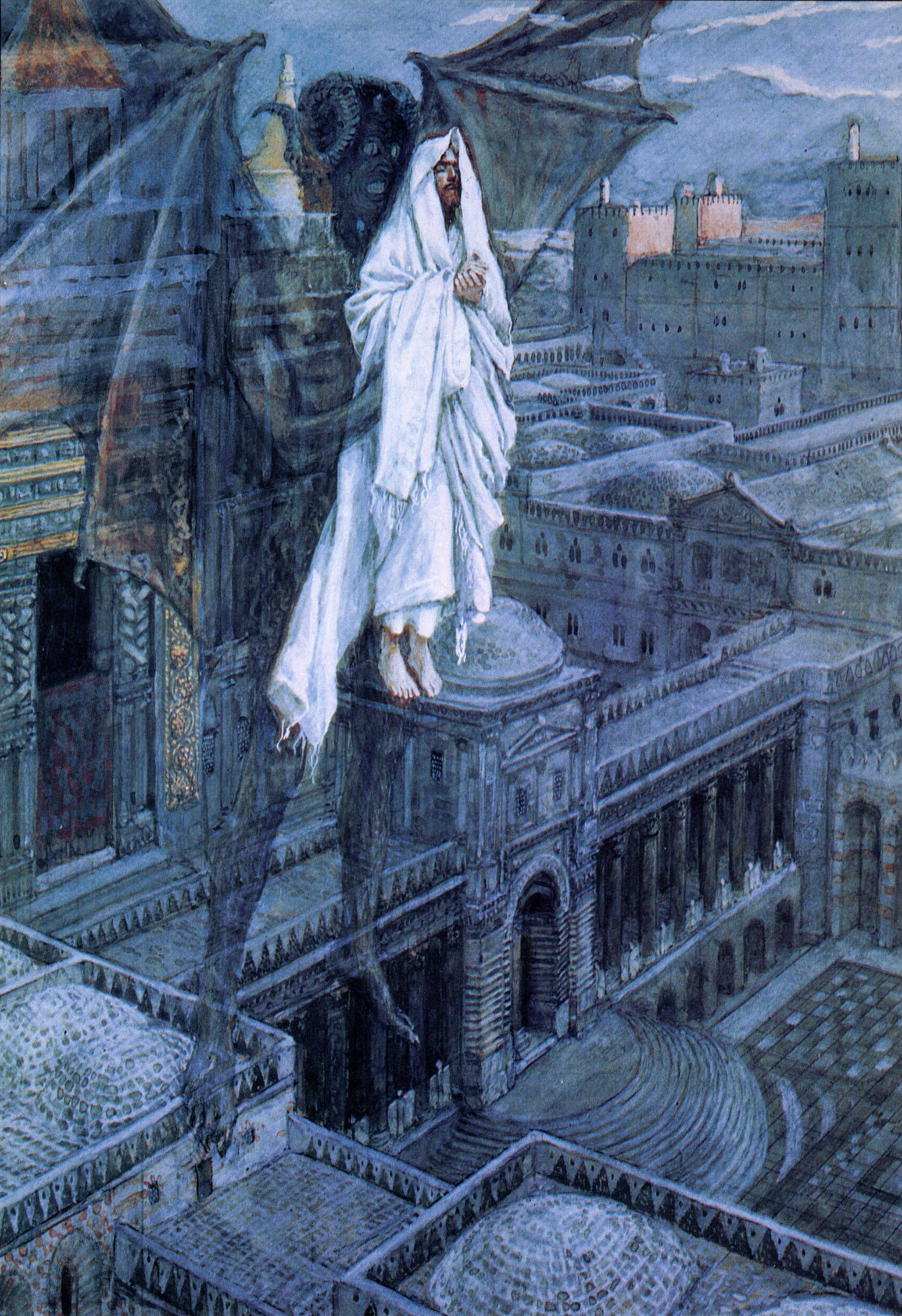
In today’s gospel Jesus is led into the desert by the Holy Spirit for forty days of prayer, penance, and preparation and there He is tempted by the devil.  We have been led to this season of Lent and we also find ourselves being tempted. This morning I would like to talk about how the devil’s three temptations present themselves to us and to let you know about an allowance in Lent that you will be happy to hear.

Most of us here have chosen to take on a penance during Lent.  You have probably resolved to abstain from something good, like cookies, candies, ice cream, TV or the internet, to grow in disciple and virtue, and to offer some sacrifice to God. The devil first said to Jesus, “command this stone to become bread,” and we will probably be tempted in a similar way; “Put down the rock of your penance for awhile and let it nourish you.” It is the way of demons to first entice and then condemn. The rationalization, “Go ahead, it’s just a little cookie,” will afterwards become the accusation, “You couldn’t even sacrifice one cookie for God.” Let us preserve in our Lenten penances, for the joy of having carried a cross for the Lord is far preferable to the discouragement of a moment’s compromise.

As a second temptation, the devil, in a vision, showed Jesus all the kingdoms of the world in a single instant and said, “I shall give to you all this power and glory; for it has been handed over to me, and I may give it to whomever I wish. All this will be yours, if you worship me.” Scripture calls Satan the Father of Lies, so we ought to be skeptical about whether he really had this authority over the nations, and even if he did we should disbelieve that he would give Jesus the world if He were to worship him. Instead, I suspect that the devil would have simply laughed and left Jesus with nothing for having fallen into sin.

We human beings are creatures of habit. The same sins which you have struggled with in the past are probably the same ones that challenge you today. When we are tempted by sins they promise us the world, great peace and satisfaction. Yet we can look back at our own experiences and see that these are lies. Our past sins show us that they only lead to disappointment and dissatisfaction. We should stop swallowing the bait. We should stop accepting the lie. This Lent is a perfect time for us to commit to crushing the habitual sins in our lives, for our sins will not make us happy, even if they promise us the world.

As a third temptation, the devil took Jesus up (in a vision or in the body we do not know) to the top of the temple in Jerusalem. He said to Him, “If you are the Son of God, throw yourself down from here, for it is written: He will command his angels concerning you, to guard you, and: With their hands they will support you, lest you dash your foot against a stone.” The temptation addressed to us sounds differently. “You are not the Son of God, you’re not even close to being saint! You should throw yourself down in shame for your sins and not dare to pray or present yourself to God!” On the contrary, as we heard in the second reading, “No one who believes in him will be put to shame.” Lent calls us to sorrow and conversion for our sins, not to shame and aversion from God.

We see the one-two combo of enticement and shame modeled in the case of Adam and Eve.  When they heard the sound of the Lord God moving about the garden they hid themselves among the trees, for they realized that they were naked before Him, and they were ashamed and afraid. Much later, in the case of Judas Iscariot, the devil led him to betray Jesus, one of the worst sins ever, and then after regretting it he was led to kill himself. If Judas had gone from the temple to Calvary, instead of to his tragic tree, Jesus would have forgiven him, because Jesus wanted to forgive him.

Jesus loves us. He doesn’t just love us because He’s God and He “has to” love everybody. Jesus loves us and He actually likes us for all the good things that we are and for all the good things He sees we can become. This is why He created us and died for us, because He loves us. So we should not be ashamed to come to Christ in the sacraments; in confession with our big sins, or at communion with our small ones. As Jesus told St. Faustina, the greater our sins the more entitled we are to his mercy. When it comes to God’s forgiveness, only we ourselves can get in His way.

Finally, I mentioned that there is an allowance during Lent which is a cause for consolation amidst our Lenten struggles. But first, did you know that there are more than forty days in Lent?  The season is longer than forty days because we don’t count the Sundays.  There are 40 days of penance, but every Sundays (from Saturday evening to Sunday night) we are released from our penances. At Sunday Mass the priest still wears the Lenten season’s purple, we might do less singing, and we don’t say the Gloria or say the “A”-word before the gospel, but we are freed from penances that day, for every Sunday is a “little Easter. ”

In the first reading, we heard how Moses commanded the Hebrews that once they came into the Promised Land they should come before God to present their first fruits and recount the story of how God had delivered them from slavery, brought them into the Promised Land, and filled them with blessings. Each Sunday we come before God and recall how His Son, Jesus Christ, delivered us from our slavery, brought us into His kingdom, and has filled us with His blessings, especially the gift of Himself in the Eucharist. Each Sunday gives us consolation, and this release from our penances encourages us to offer still more penance to God in the week ahead, for it is an easier thing abstain for just six days than to do it for forty in a row.

So in conclusion, be faithful to your penances, your faithfulness will have its reward. Commit to crushing your habitual sins, for sins cannot make us happy, even if they promise the world. Shame and fear are the devil’s traps, so whenever you sin, come to the Lord with trust and sorrow. And know that you are released from penances on Sundays in Lent.  May this gift be a cause for thanksgiving and joy and inspire us to make a still greater gift of ourselves to Christ in this Lenten season.

Approaching God — 5th Sunday in Ordinary Time—Year C

February 11, 2010

In today’s first reading the prophet Isaiah hears the angels praising God at the temple with words like those we proclaim at every Mass: “Holy, holy, holy is the LORD of hosts! All the earth is filled with his glory!”

What do these words mean?  First, the Jews did not have adverbs for “very,” “most,” or “infinitely” in Hebrew, so if they wanted to say something was very heavy they would call it “heavy, heavy.”  If they wanted to say something was most heavy or (if it were possible) infinitely heavy they would call it “heavy, heavy, heavy.”  So when Isaiah hears the angels call God “holy, holy, holy,” they are praising His perfection, transcendence, and goodness to the highest degree.

Why is God called “the LORD of hosts?” A host is an army, or a large group of persons. In this case, God’s army of angelic  persons is referred to. Our God is holy and wields unsurpassed power. The earth is filled with his glory.

Isaiah behold this sight and becomes very afraid. “Woe is me, I am doomed! For I am a man of unclean lips, living among a people of unclean lips; yet my eyes have seen the King, the Lord of hosts!” In the Old Testament people thought that no human being could look upon God and live.

Then an angel, one of the seraphim, fly down, takes an ember with tongs from the altar (for the Jews sacrificed animals as burnt-offerings at the temple) and touches Isaiah’s mouth. “See,” the angel says, “now that this has touched your lips, your wickedness is removed, your sin purged.” God asks whom He can send to be His prophet, and now Isaiah has the courage to say “Here I am, send me!”

Imagine if, at communion time, people would line up and come before the priest to have a red hot coal touched to their lips or tongue? Priest: “The holiness of God.” Communicant: “Amen… Ou!” I imagine the communion line would be much shorter.

This is the bread that we will be offering at this Mass to become the real body, blood, soul, and divinity of Jesus Christ. It’s flat because it unleavened, just like the bread at the Jewish Passover meal and as at Jesus’ Last Supper.  Leaven, or yeast, is bacteria which grows and makes our bread fluffy. The Jews were to keep leaven, which symbolized sin, out of their Passover bread.

Like all of the other sacraments, the Lord’s choice to use bread has symbolic meaning.  Take baptism, for example: water cleanses us and gives us life.  Similarly, bread gives us life and becomes one with us. No wonder Jesus chose it to be his symbol for the Eucharist. The very use of bread invites us to receive him.  The symbol of bread speaks, “Come, do not be afraid. I am here to be received by you and to become one with you.” We tend to forget what an unprecedented privilege this is.

In the Old Covenant, Jews could always pray to God, for ‘all the earth was filled with his glory,’ but they you wanted to go where the Lord was most present on earth they had to go to one place, the temple in Jerusalem.  And even when they got there they did not enter in where the Lord was most present, the Holy of Holies, where only the high priest would go, and only once a year at that. The faithful would worship in the courts outside the temple.  It would be like us coming to church today to stand and pray from the parking lot. Instead, we have the privilege to stand and worship the Lord here in His sanctuary, and not only do we see the Most Holy Lord with our own eyes, but we actually receive Him in the Most Holy Sacrament.

The wonder and the privilege and the awe of this new intimacy with God at the Eucharist could not have been lost upon the early Christians, who were converts from Judaism. Do we approach the Lord with a healthy fear of the Lord, which is called the beginning to wisdom? This fear is not terror, which would cause us to hide ourselves from the Lord. It is a reverence which honors the Giver who is the Gift.

We all sin from week to week, but if our sins are minor, or venial, then Jesus wants us to approach Him in the Eucharist. Receiving this sacrament with contrition forgives our venial sins. On the other hand, if we are aware of serious, or grave sins on our souls, then Jesus wants us to approach Him in another sacrament first, the sacrament of confession, or reconciliation.

In the second reading we heard St. Paul’s words to the church at Corinth, reminding them of what he ‘handed on to them as of first importance as he had also received it.’ Later in the letter he reminds them of something else in a similar way:

For I received from the Lord what I also handed on to you, that the Lord Jesus, on the night he was handed over, took bread, and, after he had given thanks, broke it and said, “This is my body that is for you. Do this in remembrance of me.” In the same way also the cup, after supper, saying, “This cup is the new covenant in my blood. Do this, as often as you drink it, in remembrance of me.” For as often as you eat this bread and drink the cup, you proclaim the death of the Lord until he comes. Therefore whoever eats the bread or drinks the cup of the Lord unworthily will have to answer for the body and blood of the Lord. A person should examine himself, and so eat the bread and drink the cup. For anyone who eats and drinks without discerning the body, eats and drinks judgment on himself. That is why many among you are ill and infirm, and a considerable number are dying. If we discerned ourselves, we would not be under judgment…”

Before we approach the Eucharist let us examine ourselves first, and if we have serious unconfessed sins, from even years ago, let us present ourselves for Jesus’ needed forgiveness in confession first. Ask yourself, do I care more about others’ opinions of me, or about the opinion of the Lord (who sees all things)?

Whenever we come to Christ in the Eucharist let us approach Him as the earliest Christians did, with wonder, awe, and holy fear. Let us have that reverence which honors the Giver who gives Himself as a Gift to us.

Jesus is Love — 4th Sunday in Ordinary Time—Year C

January 30, 2010

Today’s second reading from St. Paul is perhaps his most known and most loved. You’ve probably heard it at weddings—perhaps you remember hearing it at your own, but most people don’t realize that St. Paul wrote these words to a community in disunity.

The Christian church in Corinth, Greece was divided. Various factions insisted that they were right, that they had “wisdom,” even as they bitterly quarreled with each other. St. Paul acknowledged what the Corinthians possessed in gifts and knowledge, and they had both, but he shined light upon how incomplete they were. “Strive eagerly for the greatest spiritual gifts,” he says, “But I shall show you a still more excellent way.” And then he teaches them about love.

Love is easy when it’s warm and fuzzy, and no one needs a lesson on doing what comes naturally. But how are we to behave when personalities conflict and there are serious disagreements and old resentments within our families, at work, or in our parish? During these times of tension, let us think of Christ and embrace Him as our model for action.

Jesus is patient.  Jesus is kind. In a way, Jesus is jealous, He’s jealous for our souls, but Jesus never manipulates others. He is not pompous. He is not inflated. He is not rude. Jesus is humble. He does not seek His own interests. He is not quick-tempered. He does not brood over injuries, no matter how unjust. He does not rejoice over wrongdoing but rejoices with the truth. Jesus bears all things and endures all things. Look at how He responded in Nazareth when His own acquaintances, whom He had known almost all of His life, turned against Him:

“They were all filled with fury. They rose up, drove him out of the town, and led him to the brow of the hill on which their town had been built, to hurl him down headlong.  But Jesus passed through the midst of them and went away.”

Jesus knew exactly what they were up to as they led Him towards the plummeting edge of town, and He could have turned and walked out on them whenever He chose, so why did He give even them the time of day? Jesus was patient, he was humble, and He endured this trial in hopes that He might lead them from their wrong way and restore personal communion with them. When they were just about to throw Him down, Jesus walked away, for the time had not yet come for Him to lay down His life for love of them.

God assures us through St. Paul that “love never fails.” The love of Jesus Christ never fails, even if we can’t see how, even if His victory, as for the souls for the community of Nazareth, takes more than a single day to accomplish. “Love never fails,” so follow Christ in this most excellent way; at home, at work, and in our church, and the promise of this Scripture passage, that “love never fails,” will be fulfilled in us.

Carrying Water — 2nd Sunday in Ordinary Time—Year C

January 20, 2010

Today’s Gospel, the miracle at the wedding fest of Cana, is a scene rich in symbolism and has many preachable parts. For example, the water of Old Covenant law is changed into New Covenant wine. It is the seventh day in John’s Gospel, according to the narration, pointing to a new Creation and rest. And the New Adam and the New Eve are at a wedding feast together, foreshadowing the marriage of Christ and His Church. But this morning, I would like to bring your attention to an extraordinary part of this Gospel which we disregard as being ordinary. I’m referring to the six stone water jars and the servers who carried them.

“Now there were six stone water jars there for Jewish ceremonial washings, each holding twenty to thirty gallons. Jesus told them, ‘Fill the jars with water.’ So they filled them to the brim.”

You’ve carried a gallon of milk before.   Imagine carrying 25 gallons of milk. I doubt you could do it all at once. Not only would they be too bulky, they would be awfully heavy too. Maybe you could put them on a pole and carry them with a partner. Maybe that’s what the servers in the Gospel had to do, or maybe they were doing laps between the well of Cana and the stone jars at the party. In either case, they we’re hauling an awful lot of water and weight.

Now a gallon of water weighs a little more than eight pounds. If each jar in the Gospel was at least 40 pounds of stone and held 20 to 30 gallons, then we are talking about six filled jars weighing 200 to 300 pounds apiece. And we know they were completely filled, for Mary had told them, “Do whatever he tells you,” and Jesus had told them, “Fill the jars with water.” “So they filled them to the brim.”

The saying “To carry water for (someone)” means to do a menial or difficult task for others.  That’s what these servers were doing and they definitely felt the burden.  Did they have any idea, as they carried those 1,500 pounds of stone and water, that they were a part of something remarkable? Did they know that they were playing an intimate role in one of Jesus’ most memorable miracles? No, they had no idea, not until later, and this reflects a encouraging truth for us to hold onto this week. We often don’t realize the extraordinary impact of our ordinary sacrifices.

You may feel burdened in your life, like your just scrapping or limping along; at work, at school, or at home; with your peers, your friends, or your family. But you do more good than you know. Sometimes we catch glimpses of this, like when someone takes your hand and says, “Thank you sooo much,” or when someone shares with you that they have always looked up to you, or when a child grows to realize and thank you for everything you did for them. After this life, one of our joys in heaven will be seeing how our ordinary sacrifices have touched and changed the lives of thousands, even millions, of people.

Like the servers with their six stone jars, we disregard our efforts as ordinary and do not realize their extraordinary impact. Maybe you don’t see it now, but your ordinary sacrifices do more good than you know. Let us be encouraged by recalling this truth in our daily lives, for if you’re carrying water for Jesus, you’re going to have a part in His miracles. So, “do whatever He tells you,” no matter how ordinary it may seem.

Traveling to God — Epiphany of the Lord

January 3, 2010

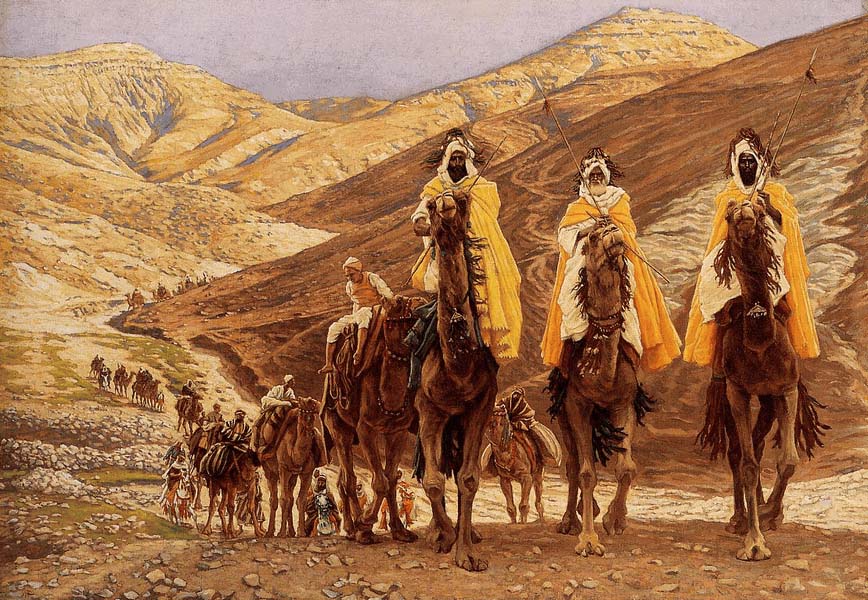
Today the nations come to Christ, to bring Him their gifts and to worship Him. We see it in the gospel, where great, wise ones called Magi travel afar to Bethlehem of Judea. And we see it in our world today, wherever those honored to be called Christians gather in Christ’s Church throughout the world. Every Sunday is a little Epiphany where, like the Magi, all the nations come to worship the One whom all the world ought not to be able to contain.

Our responsorial psalm prayed, “Lord, every nation on earth will adore you.” In another psalm, Psalm 87, the Lord foretells that every nation on earth would adore Him. The Lord says,

“Babylon and Egypt I will count among those who know me; Philistia, Tyre, Ethiopia, these will be her children and Zion shall be called ‘Mother’ for all shall be her children.”

Today there are Christians in all of these places: in Egypt and Iraq, in the Holy Land and Africa.  In fact Christians span entire continents about which the ancients never knew. There are Christians all nations who have entered the Lord’s house and found Jesus with Mary, who is the symbol of Mother Church. She is rightly called mother, for all nations are her children.

In many lands Christians suffer harsh persecution, as in China, where a red dragon like that of Revelation still seeks to destroy the Christ Child and the God-bearing mother. How fortunate we are to be able to safely gather here, to be free to practice our faith without fear, to come to Christ’s house easily and often, not in hiding or in secret, and without having to travel for months across desert expanses like the Magi.

Yet, in our ease, we can take our religion for granted. In our routine, we can be blind to how we are blessed. And in our closeness to Christ, we can overlook Him. So, from time to time, it is important for our faith to be renewed. One way we can do this is to imitate what the Magi did. At least once every year we should make a pilgrimage to Christ and stay to retreat some days with Him.

After spending precious time with Jesus in the heart of their pilgrimage the gospel says the Magi “departed for their country by another way.” Their physical journey changed (for they had been warned in a dream not to return to Herod,) but their spiritual way changed as well. The Magi were believers even before they came, but after adoring Jesus and giving their gifts, they went away spiritually richer. We too would be spiritually richer if we were to give Christ some gift of our time and treasure to pilgrimage and retreat with Him.

As busy as priests are, the Church requires all of them to go on several days of retreat each year, for she knows how important this is for spiritual renewal and intimacy with Christ. Imagine what difference a pilgrimage to a shrine and a quiet, prayerful weekend on retreat center would have for you.

You must love and care for your children, so show them by your own example the importance of seeking after Christ. Give your spouse the opportunity to spend two days alone with the Lord, or take the whole family along for a trip to a holy shrine. For instance, there is a new, magnificent shire to Our Lady of Guadalupe which everyone should make it a priority to see. If you are looking for destinations or ideas, I’m more than happy to help.

In this year of our Lord, 2010, 51 weekends remain. Let us act now to prepare even just one of those many weekends for a gift-bearing journey. Pilgrimages and retreats are a gift to Christ and a gift to ourselves. Let us follow the Magi and come, let us adore Him this year, with days of pilgrimage and retreat.

Luke’s Source — January 1 — Mary the Mother of God

January 1, 2010

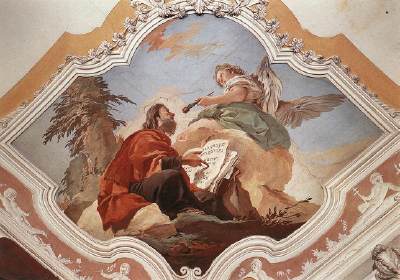
Have you ever wondered how it is that Luke the Gospel writer knows the stuff he’s telling us? For instance, he wasn’t present at the Annunciation to take down notes.  Only Mary and the Archangel Gabriel were there. And in today’s Gospel, after the shepherds visit, it says, “Mary kept all these things, reflecting on them in her heart.” Now how does Luke know what Mary was thinking? Who could know something like that besides Mary herself?

Now I suppose the Holy Spirit could have directly infused the knowledge of these things into him, but that’s probably not what has happened here. Luke probably learned of these details in the most natural and human way; by being told about them, first or second-hand, by people who knew. Luke begins his Gospel by saying that his narrative of events is composed from what “those who were eyewitnesses from the beginning and ministers of the word have handed … down to us.”

But there is only one person who could have been the original source for many of Luke’s details, and that is Mary herself. In fact, some call the beginning chapters of the Gospel of Luke “the Memoirs of Mary.” Perhaps Luke heard of these details from Mary’s very own lips and took them all to heart.  Then later, knowing these things by heart, committed them to writing.

And so we do know something today of what was going on inside of Mary in those early days, “Mary kept all these things, reflecting on them in her heart.” And some years later, upon finding Jesus in the temple, Luke reports that Mary and Joseph did not understand what their boy when said to them, but “his mother kept all these things in her heart.” In this there is a lesson for us to discover through Mary, a lesson that is particularly applicable for us this New Year’s [Eve/Day].

In her life, Mary knew some important aspects of God the Father’s plan, but there was always a great deal about which she did not know. She knew that her Son was messiah, savior, and Lord, but his future, and hers, remained largely a mystery. Perhaps Mary wondered, as we often wonder when faced with evils and obstacles, “How can this be, Lord?  How will your promises be fulfilled despite this?”  Yet through it all, Mary firmly trusted that the Lord was with her, and we should do the same.

What does the new year ahead hold for each of us? Like Mary, we do not know, yet Mary shows us that we do not have to know.  We do not have to fully know our future to be able to do great things for God and to be richly blessed by Him. We do not need to know our future for the Almighty to do great things for us.

In the year ahead, may the Lord bless you and keep you, as He did the Virgin Mary.

May the Lord let his face shine upon you, and be gracious to you, as He did for Mary through Jesus’ infant face.

And may the Lord look upon you kindly and give you peace, a peace like that which Mary always kept with her Son, Jesus the Christ.

4th Sunday of Advent—Year C

December 20, 2009

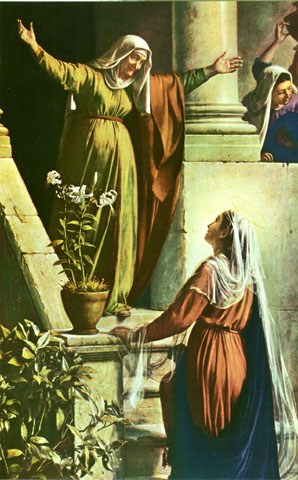
When Elizabeth heard Mary’s greeting, she cried out in a loud voice and said, “How does this happen to me, that the mother of my Lord should come to me?” Who am I that the Lord would come to me? Who are we that the Lord God would become one of us?

Lord, in the words of the psalm, when we see the heavens, the work of your hands, the moon and the stars which you arranged, what is mankind that you should keep us in mind, mortal man that you care for us? Yet you have made us little less than gods; with glory and honor you crowned us when, for us men and for our salvation, your Son came down from heaven, and by the power of the Holy Spirit He was born of the Virgin Mary and became man.

We tend to think of the idea of God becoming a human being as the most natural thing in the world, but the event of the divine and eternal Second Person of the Trinity taking on human flesh (what we call the Incarnation) is probably the most remarkable thing that has ever happened; even more remarkable than our creation or redemption. That is why we bow profoundly when we recall the wonder of the Incarnation in our profession of faith each Sunday. “For us men and for our salvation, He came down from heaven. By the power of the Holy Spirit, He was born of the Virgin Mary, and became man.”

Who are we that the Lord God would become one of us? Who am I that the Lord would come to me? Who we are and why Christ came to us can be summed up in this: we are sinful, limited, loved and good. This sums up human nature in four words. We are sinful, we are limited, we are loved by Him and we are good.

We need Christ as our savior because we are sinful. Even though we know what is right we freely and frequently choose what is wrong. Our sin hurts us, one another, and our relationship with God. He has come for us because we cannot save ourselves.

We are limited, finite creatures. We can forget this or deny this, but it only leads to our own frustration and failure. We are not God, and God doesn’t expect us to be—that’s His job. We must remember that we are limited, in need of His help and help from one another.

When are we are human beings most fully alive?  Not as isolated loaners, but in communion with others. Even the hermit in his desert hut needs spiritual communion with the Lord and His Church if he is to be a complete and happy person. Remember the Unabomber? He lived in a remote shack too, but without this essential communion with God and neighbor.

Though we are sinful and limited, we are also loved and good; for God has lovingly made us good, in own His image and likeness. When we prefer ourselves to God, denying our dependence on Him and scorning Him by our sins, this goodness may be wounded and obscured, but it is never abolished. Jesus Christ always sees this good in us, and He always loves us for it. He loves you for who you are now and for the person He knows that you can become with His help. You are sinful and limited, but never forget, that no matter what, you are loved by Him and good.

We are sinful, limited, loved and good. Knowing this makes us Christians the salt of the earth and shows us how to pray. In fact, the word “salt,” S-A-L-T, sums up the four varieties of Christian prayer: Sorrow, Asking, Loving, and Thanks

We pray in sorrow for our sins.
We pray in asking for our needs.
We pray in love for God loves us.
And we pray in thanks for all He gives us.

I am sinful, so I say “I’m sorry”
I am limited, so I say, “Please.”
I am loved, so I say, “I love you.”
And I am good, and richly blessed, so I say, “Thank you.” 

Who are we that the Lord God would become one of us? Who am I that the Lord would come to me? We are sinful, limited, loved and good. So let us prayerfully prepare for the imminent coming of the Lord, Jesus Christ, our God made flesh this Christmas, with sorrow, asking, love, and thanks.

2nd Sunday of Advent—Year C

December 10, 2009

In the first year of the presidency of Barack Obama,
when Jim Doyle was governor of Wisconsin,
and Kohl and Feingold were its senators,
and Obey was the seventh district congressman,
and Favre was the quarterback in Minnesota,
when Benedict was pontiff and Jerome was bishop,
the word of God came here,
to Christ the King parish in Spencer:

“Prepare the way of the Lord,
make straight his paths.
Every valley shall be filled
and every mountain and hill shall be made low.
The winding roads shall be made straight,
and the rough ways made smooth,
and all flesh shall see the salvation of God.”

It isn’t a new word… It was the message of John the Baptist, and Isaiah wrote it long before that. Yet the word of God is not old in the sense that it has passed some kind of expiration date. When the Holy Spirit inspired the writing of these words, their human author who put the pen to parchment did not know the great audience and the impact they were to have. But the Holy Spirit saw us here and had these words written to us and for as well. These words were not meant only for Old Testament peoples, or for the time when Christ walked on the earth. These words are proclaimed to us, and meant for us, here today. Remember this every time you encounter the Scriptures, here at church or in your private prayer.

So what is God’s word saying to us today? In the Gospel, did you notice that of all the rulers and governors and leaders at that time, the word of God did not come to any one of them? “The word of God came to John the son of Zechariah in the desert.” The lesson is that God prefers to lead souls to salvation by working through common people. People who think that they have no power.

What politicians do is important, since good laws can help people and bad laws can hurt them, but what saves souls rarely comes through them. And though our Holy Father and our bishop strive to do important work for Christ, there is only so much they can do. The way of the Lord is prepared by the daily efforts of ordinary Christians, who sometimes have children and sometimes work jobs. Your family, friends, and co-workers probably don’t read papal encyclicals, but they always witness your words and example. And so, Jesus depends upon you to prepare His way for others, to make winding and rough roads straight and smooth, and so that all people see the salvation of God.

This is the Christian’s calling and important mission, yet we cannot share what we do not have. If were are going to prepare the way of the Lord and make straight his paths for others we must first fill the valleys and level the mountains for Christ within ourselves. To this end, I urge you to make the most of two gifts God gives us: the sacrament of confession and daily prayer. There is simply nothing that more quickly and effectively strengthens the average Catholic’s moral and spiritual life than frequent and regular confession. And daily prayer is indispensible for growing in relationship with Christ and for living a wonderful life.

Each year, many of our homes are visited a familiar and beloved character whom we associate with Christmas… I speak George Bailey from the movie “It’s a Wonderful Life.” This film, despite its flawed angelology, teaches the truth about how much difference one person can make for others. George Bailey’s an ordinary man who lives an extraordinary life without even realizing himself. By the end of the film, we see the impact for good that his life has had and we see George surrounded by his family and his many friends who all love and admire him.

Why does George Bailey live such a wonderful life?  Sure, he’s a nice guy, but he’s more than a nice guy. Time and again, he sacrifices what he wants to do what’s loving and best for the people God has placed in his life. I hope we can all see a little bit of George Bailey in ourselves. Because we can see a great deal of Christ in George Bailey.

This Advent season, let us prepare the way of the Lord within us, so that through us, all people may see the salvation of God.  This is the calling, the mission, and the privilege of the Christian.  In this or any age, it’s a wonderful life.

1st Sunday of Advent—Year C

December 1, 2009

Each year, people search for the perfect Christmas gifts for the most important people in their lives. We rack our brains and brave the mobs so that we may give our spouses, children, parents and siblings something extra special. But, in all our years, have we ever given Jesus Christ a special gift for Christmas? I encourage you to join with me in putting Him on the top of your Christmas list this year. But what can you get the God-man who has everything? There’s one thing that He cannot receive from anyone else but you—that is the perfect gift of yourself.

How do you make a perfect gift of yourself? First ask yourself this… If this day, death should take you by surprise and you find yourself standing before the Son of Man, as you looked at yourself, what part of your soul would remain unfinished? What would you wish you had another month’s time to set right in your life?

Jesus said, “Beware that your hearts do not become drowsy from carousing and drunkenness and the anxieties of daily life…” Is your life mixed-up with addictions to lust, to intoxicants, or to other empty pleasures?  Are you oppressed the daily worries which come from a lack of trust in God? Or maybe it is something else which is not quite right in your life. Whatever it is, identify where your life needs conversion the most, resolve to begin taking the path of life, and choose to make a gift of yourself for Christ this Christmas.

If you want to make a gift of yourself for Christ this Christmas there is something else you must do. You must set time aside to pray each day. If you neglect this, you will not go far in your conversion or holiness. But, if you lift up your soul to the Lord each day, telling Him about your needs and gratitude, and opening yourself to receive His gifts, then this could be the greatest Christmas of your life. St. Alphonsus Liguori says this about the importance of prayer:

 “Whoever prays is certainly saved. He who does not is certainly damned. All the blessed (except infants) have been saved by prayer. All the damned have been lost through not praying. If they had prayed they would not have been lost. And this is, and will be their greatest torment in hell: to think how easily they might have been saved, just by asking God for His grace, but [for] that now it is too late – their time of prayer is gone.”

There are twenty-five days ‘til Christmas.  Make the most of this opportunity and give Jesus Christ the gift He’s asking for this year.

33rd Sunday in Ordinary Time—Year B

November 15, 2009

Should we ask challenging questions about our faith? Is asking tough questions about what we believe a sign of doubt and mistrust toward God? No, it shows just the opposite. Sincerely searching out for the answers to challenging questions is a sign of faith for it shows our confidence that there are good answers out there just waiting to be found.

If we Catholics decide to plug their ears and close-tight their eyes when challenging questions arise, our faith will never grow.  Our faith will never develop, in sophistication or strength, beyond what we knew when they were kids. We should ask tough questions about our faith because if we sincerely seek we will find, and our faith will be made all the stronger because of it.

Today’s readings raise two challenging questions. The first came up in the second reading, from the Letter to the Hebrews. It describes how the Old Testament priests once offered sacrifices, day-after-day, in an attempt to take away sins.  But Jesus Christ, our new high-priest, has offered a single sacrifice for the forgiveness of sins. This raises a challenging question: Why do we have the sacrifice of the Mass, Sunday after Sunday? Sometimes people ask us, “Why do you Catholics do that? We are you trying to sacrifice Jesus over and over again? Are you saying that Jesus’ one sacrifice wasn’t enough?” No, that’s not what we believe.

At the Mass, the one sacrifice of Jesus Christ is not repeated, it is presented again, in its full reality, for us.  If the Mass actually repeated Christ’s sacrifice, then Jesus would be dying over and over again.  No, rather the Mass re—presents His sacrifice.  The Mass really brings to us, the one passion, death, resurrection, and ascension into glory of our savior.

Jesus’ sacrifice was accomplished once, but it is applied many times. Jesus’ sacrifice was accomplished only once in history, two thousand years ago and half a world away, but the graces of that sacrifice have been applied many places and many times. How do these graces come from His cross to us today? They come to us through the sacraments which Jesus gave to His one bride, His Church, to wash her, to nourish her, to make her perfectly beautiful, and to make her one with Himself. Jesus’ sacrifice was accomplished once, but its graces are applied to us many times, most especially here in the Eucharist.

The second challenging question from today’s readings comes out of the Gospel.  Here’s the context for the scene we heard in the Gospel:

As Jesus was making his way out of the temple area one of his disciples said to him, “Look, teacher, what stones and what buildings!”  Jesus said to him, “Do you see these great buildings? There will not be one stone left upon another that will not be thrown down.” As he was sitting on the Mount of Olives opposite the temple area, Peter, James, John, and Andrew asked him privately, “Tell us, when will this happen, and what sign will there be when all these things are about to come to an end?”

Jesus then proceeds to prophesize about the fall of Jerusalem and the end of the world, when He says (as we heard,) “Amen, I say to you, this generation will not pass away until all these things have taken place.”

Well, the generation of the apostles is long gone and we’re still here, so the world hasn’t ended.  This raises the challenging question: are Jesus and the Gospel wrong? Jesus said, “Amen, I say to you, this generation will not pass away until all these things have taken place.”

Notice how the apostles asked two questions.  First, “when will this happen,” and “what sign will there be when all these things are about to come to an end?” The first question is a local one, about when the stones of the temple and Jerusalem will be thrown down.  The second is a cosmic one, about the end of the world. The apostles witnessed the first—the fall of Jerusalem—historically, but they experienced the second—mystically—in their own time.

Let me share you something written by present-day the Catholic author, Mark Shea.  (The internet is, by the way, a great place to discover good Catholic answers to tough Catholic questions.) Mr. Shea writes, “The prophecies of Jesus concerning the destruction of Jerusalem by the Romans in 70 AD and his prophecies concerning his coming at the end of time are almost seamlessly intermingled (something that has caused endless puzzlement for Bible students as well as guaranteeing job security for biblical scholars all over the world.) Why do the gospel writers mix these prophecies together? Because, in a very real sense, the gospel writers see them as referring to nearly the same thing. This does not mean the gospel writers fancy that the world came to an end in 70 AD with the sack of Jerusalem. Rather, it means that the ‘death’ Jerusalem suffered when the Temple was destroyed is an image of the death Jesus suffered in the temple of his body, and an image of the death the Body of Christ [the Church] will one day undergo in the final climactic battle between light and darkness before the return of Christ.”

I would add that when Jesus says in the Gospel that ‘this generation will not pass away until all these things have taken place’ He is not just speaking to the apostles Peter, John, James and Andrew for their time.  He is speaking to us and to every Christian generation.  From the fall of Jerusalem to the Second Coming, every Christian shares in the trials of the Church against the mystery of evil.

Again, from Mark Shea, “Disciples of Christ suffer and even die for Christ all over the world to this day. And, in our daily lives, all Christians experience various trials and tribulations ranging from illness to divorce to family difficulties to the inevitable death that we all must sooner or later endure. However, what some people are starting to forget is that what is true of Christ and of his individual followers is also true of the Church as a whole. Some people dream of a happy earthly destiny for the Church of Christ. They hope that, as the Church spreads out across the world, then perhaps little by little and bit by bit, every day in every way, the world will get better until the Kingdom of Heaven comes in the Great Rosy Dawn. Others, most notably in [the last] century, have tried to tinker together a man-made heavenly kingdom and have given it names like National Socialism, [Soviet] Communism, Maoism, Hedonism, Materialism, the Playboy Philosophy, the Triumph of Reason, etc. All these schemes share in the common hope of achieving the happiness of the resurrection without having to go to the trouble of dying. Several of the more energetic forms have, however, taken great trouble to kill on a massive scale. This “counterfeit messianism” is precisely what the Church warns us against. Indeed, the unbroken tradition of the Church holds precisely that [as the catechism says] “before Christ’s second coming the Church must pass through a final trial that will shake the faith of many believers. The persecution that accompanies her pilgrimage on earth will unveil the ‘mystery of iniquity’ in the form of a religious deception offering men an apparent solution to their problems at the price of apostasy from the truth. The supreme religious deception is that of the Antichrist, the pseudo-messianism by which man glorifies himself in place of God and of his Messiah come in the flesh” (CCC #675). The Church as a whole, like her members and like her Lord, will not get to take a shortcut. She too must pass through death to resurrection.”
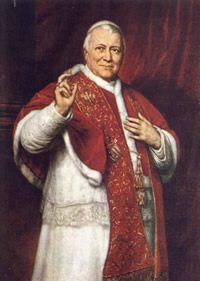
Again, I would add to this that the great deception and trial are not limited to the final generation of Christians, these confront every age, including our own. This is partly why Pope Pius XI established the feast of Christ the King in 1925, which you will celebrate in a special way next Sunday.  Christ is our king, and His is our Way.  We will not accept pretenders to the thrown, for only by Christ’s reign will we be saved.

He, the Lord, is our inheritance!
He will show us the path to life,
the fullness of joys in His presence,
the delights at His right hand forever,
now, here at the sacrifice of the Mass
and later, forever in heaven.
27th Sunday in Ordinary Time—Year B

October 4, 2009

At my old seminary in Ohio, where I was formed for the priesthood, there’s a great professor named Dr. Perry Cahall. Dr. Cahall taught us not only through his lectures but also by his personal example, as a husband, a father, and a good Catholic man. One of the courses taught us was early Church history, a class that covered the controversies and councils of that era about Jesus Christ and the Trinity. Now a person might easily overlook the importance of those councils, but Dr. Cahall presented us with a revealing thought experiment. He would have us imagine how things would be different if the heretics had won the day. For example, he would say, “Imagine a world in which Arius was right.” (Arius claimed in the 4th century that Jesus was neither God nor man, but rather the highest creature God had made.) What if the bishops at the council of Nicaea would have spurned the Holy Spirit, and the apostolic tradition, to make Arius’ theology the creed we say each Sunday? When you sit down to consider the consequences Arius’ belief would have for our morality, our worship, and our world, you realize that everything was at stake at Council of Nicaea. 

Important ideas have consequences. If some Christian belief does not influence your life, then you have either not accepted it, or you have not really grasped what it means. Dr. Cahall liked to say, “If you get into pulpit as a priest on Trinity Sunday and preach to your people that, ‘The Trinity is a mystery, so there’s really nothing we can say about it,’ I will hunt you down like the dogs you are. (We think he was kidding.) He said this because the Trinity and Incarnation are the two most central beliefs of our faith and they are full of implications for our lives. Important ideas have important consequences and our beliefs should shape our lives.

Dr. Cahall also taught our seminary course on marriage and family, and he had a meditation about marriage, family, and the Last Judgment that I hope to never forget and always remember. He would say, “At the Last Judgment, every person who has reached adulthood will stand before the Lord’s throne and Christ will ask them two things: First, ‘Were you faithful to your spouse?’ And second, ‘Show me your children.’” Now he said this to a room full of seminarians on their way to becoming celibate priests, but what he said is valid for everyone. We are all called to marriage, be it spiritual or natural. And we are all called to be mothers or fathers, either spiritually or naturally.

The Lord God said, “It is not good for the man to be alone. That is why a man… clings to his wife, and the two of them become one flesh.”

The fulfillment of our humanity is achieved, in Christ, through marriage and having children. Priests and religious who live chaste, celibate lives are no exception. That’s because celibacy is really about fruitful, spousal relationship, to one spouse, bearing many children. It is not without meaning that tradition calls nuns and consecrated virgins the “brides of Christ,” for they really are. All people are called to marriage; to fidelity in marriage, to permanence in marriage, and to fruitfulness in marriage. This is our Christian belief, but many people today have either not accepted it, or not really grasped what it means.

Consider the meaning of fruitfulness for marriage. The psalmist today considered having a large family to be a blessing (‘may your children be like olive plants around your table’) and Jesus said, “Let the children come to me and do not prevent them.” But many people today act as if having more than two children were a curse, and prevent more children from coming. Now there can be serious and legitimate reasons for naturally regulating and limiting births, but I fear that many people, when it comes down to it, are resisting Christ. Jesus said, “Whoever receives a child such as this in my name receives me.” So what does it mean if someone refuses to receive a child in His name?

Couples are afraid; they’re afraid that having four children will be twice as hard as having two.  But if you ask most Catholic couples with large families (with numbers of kids that were commonplace fifty years ago) they’ll say that the burden is less with each additional child, while the love and blessings within the family are multiplied. We should not be afraid to give ourselves fully to fruitfulness in marriage.

We are also called to permanence in marriage. Marriage in Christ is “until death do us part.” But in America today, one in every two marriages end in divorce. God says in the Old Testament, “I hate divorce,” and I suspect that the children of divorced parents share in His sentiment. Cases of abuse, serious addition, or unrepentant infidelity may require a couple’s separation, perhaps indefinitely, or may even require a divorce in the eyes of the state, but a consummated sacramental marriage can never be divorced in God’s eyes. As Jesus said:

“What God has joined together, no human being must separate. Whoever divorces his wife and marries another commits adultery against her; and if she divorces her husband and marries another, she commits adultery.”

That is why a divorced person cannot be remarried in the Church without a determination by the Church that something essential was lacking in the first marriage, from its very beginning, which prevented that marriage from being sacramental. So no one should say that annulments are “Catholic divorces.”  Annulments are judgments by the Church that a marriage was never sacramental. But in a valid, sacramental marriage, the mission of the husband and wife is to lead each other to heaven, no matter what, and to raise up children, natural or spiritual, for God.

If you want you children to feel safe and secure, tell them what my parents told me and my sisters when we were kids. Tell them, “Even, though Mom and Dad may argue sometimes, we want you to know that we will never, ever, get divorced.” Tell them this, and mean it.  They’ll really appreciate it. And I’m sure your spouse would like hearing you say it, too.

Most people would still agree that a married couple should be faithful to each other, exclusively.  But I would not be surprised if we began to see the open dismantling of this third pillar of marriage as well. The institution of marriage has been under assault for many years. It’s not that people have been out to destroy marriage per se; but steps to redefine what marriage means weaken marriage all the same.

Now a person might easily overlook the importance that traditional beliefs about marriage have for our society; but, like Arius’ heresy, when you sit down to consider the consequences of negating fruitfulness, permanence, and fidelity in marriage, then you realize that everything is at stake when it comes to marriage. You can’t remove or seriously weaken all the pillars from a house and expect the roof to remain hovering in the air. When we redefine marriage to mean what it is not, the house we live in comes crashing down upon us. That goes for one marriage or an entire society’s marriages.

So what are we to do? First, we must pray. Pray for your marriage. Pray together as a couple, because you need this. Pray together with your children, because they need this. And pray for our country, because it needs this. And then, empowered through your sacrament of marriage, which makes the love between Christ and His Church really present between the two of you, live out what Christian marriage really is as an example for all to see. Be fruitful, be faithful, be loving and joyful, as long as you both shall live.

25th Sunday in Ordinary Time—Year B

September 20, 2009

Somewhere, in an underground lair, a secret hideout, or a den of iniquity, we find a criminal mastermind, or a mad scientist, scheming a nefarious plot. “Mah-ha-ha-ha,” the villain manically laughs. “Once I unleash my evil plan, evil will conquer the world.”

This is the way of villains as we often find them in comic books. Comic book bad guys love doing evil for evil’s sake. But we should realize that this isn’t why people do bad things in our world. In the real world, nobody does evil for evils sake. Every single person acts to achieve some real or perceived good. Sinners simply go about the pursuit of happiness in wrong ways. Bad people are not bad because they’re trying to do bad things. Unrepentant sinners actually feel justified in what they do.

For instance, in Jesus’ day, influential people said, “That Jesus from Nazareth so obnoxious. Let’s have him condemned and see how he holds up then.  If he’s really holier-than-thou, a son of God, then God will come to his rescue—otherwise he gets what he deserves.” People still rationalize like this today. It’s easy to come up all sorts of reasons for doing bad things rather than what is right:

“Lying? What I said isn’t technically untrue. Besides, it’s only a little white lie.”

“Angry? Is it any wonder that I get so angry when I have to deal with stuff this.”

“Stealing? The way I see it, they make plenty of money, and I deserve more than what they pay me.”

Activities outside of marriage?  “What’s the big deal? It’s all consensual, and nobody’s getting hurt. Besides, we love each other.”

It’s not only “bad people” who say things like this. Each of us fall into embracing lies like these sometimes. But what is the antidote for rationalizing aside our sins? The cure for this is a prayer life with Jesus Christ.

When the apostles came face to face with Jesus inside the house, Jesus began to ask them, “What were you arguing about on the way?” But they remained silent, for they had been discussing among themselves on the way who was the greatest. Coming into Jesus’ presence, who is the embodiment of Truth, the reality of what they had been doing became clear for them. Their false illusions completely faded away, like the smoke from a blown out candle.

We should spend time in conversational prayer with Jesus Christ every day, allowing Him to form us, build us up, and console us. When you receive the encouragement, confidence, and consolation which Christ is eager to give you in prayer, when He acknowledges you as His own brother or sister, as His good friend, as a favored child of His Father, fears dissolve and you live in peace—a peace in which cleverly-devised excuses are no longer sought for and no longer necessary.

23rd Sunday in Ordinary Time—Year B

September 6, 2009

Remember what it was like before the dot-com bubble burst? Maybe you heard about tiny internet start-ups having total stock values in the billions and you just knew that that wouldn’t last. Remember the time before the recent housing bubble popped? I remember watching a show on TV called “Flip this House” in which a couple bought a building, put two weeks of work and a few thousand dollars into cleaning it up, and then quickly sold it for several tens of thousands of dollars more than what they bought it. I remember saying to myself then, “This just can’t go on. This isn’t sustainable.”

The thing about economic bubbles is that while you can often read the signs of the times and see that the bubble’s there, you’re never quite sure when it will pop.

For years now, our country has been riding on a similar bubble with the unsustainable spending and borrowing by the federal government. We’re not quite sure when it will finally pop, but you can see that the bubble’s there.  Most of us here will witness firsthand the consequences of its bursting.

The Congressional Budget Office is a non-partisan, independent government agency that provides economic data to Congress. And for years, regardless of whether the Democrats or Republicans were in power, the CBO has consistently reported the unfortunate facts and grim forecasts of our present course. This summer, the CBO published its “Long-Term Budget Outlook.” And they tell us, quote…

“Under current law, the federal budget is on an unsustainable path—meaning that federal debt will continue to grow much faster than the economy over the long run.

Although great uncertainty surrounds longterm fiscal projections, rising costs for health care and the aging of the U.S. population will cause federal spending to increase rapidly under any plausible scenario for current law. […]

Keeping deficits and debt from reaching levels that would cause substantial harm to the economy would require increasing revenues significantly…, decreasing projected spending sharply, or some combination of the two.”

Some or all of the following things will inevitably happen: an increased federal retirement age, decreased retirement benefits from Social Security, decreased health benefits from Medicare and/or Medicaid, increased federal taxes, or (and this seems the most likely) a dramatically increased national debt.

Now understand that an endlessly ballooning national debt is no solution.  It has economic consequences for us. What happens when foreign countries finally decide they are no longer interested in holding any more of our debt (in the form of low-interest yielding U.S. government bonds?) One result will be hyper-inflation, which will negatively impact anyone who uses U.S. Dollars. Unpleasant changes are coming. And they will have real consequences our lives. We will feel their effects.

Maybe hearing me speak about these grim realities feels as if I’ve just spit on your tongue.  It’s unpleasant and a bit repulsive. But my hope and prayer is that you will “be opened” by it, that you will be motivated to prepare yourself for what is coming, to begin living now as we should have already been living as Chrisitians all along.

In the past we have lived beyond our means, just like crowd, just like the government made in our own image. We spent more than we had and we often spent wastefully. But we are called to live differently, to live out Christian stewardship, Christian poverty, or simplicity of life in our own lives. Let’s not wait to hit economic rock bottom before we begin living as we ought to.

We are called to live simply and within our means, free from debt-slavery. We are called to be both frugal and generous, generous and frugal. If we are frugal without generosity, we’re simply being misers. If we are generous without frugality, we are being irresponsible. But if you are both frugal and generous won’t God, who (as the psalmist says) keeps faith forever, who secures justice for the oppressed, who gives food to the hungry, who supports the fatherless and the widow, won’t He provide you with what you need? On the other hand, if we are not frugal and generous, if we do not lovingly support our poor neighbors, those in our parish, throughout the diocese, and abroad, then how can we ask God to support us?

To quote St. James, “Act on this word.  If all you do is listen to it, you are deceiving yourselves.” “Fear not, be strong.” “Be not afraid,” but prepare yourself. Prepare for the days when our accounts will come due.  For a day coming soon in our country, and for the Last Day, when we shall all appear before God.

August 14 – Vigil of the Assumption of Mary

August 17, 2009

When I was younger, I used to wonder why Mary was such a big deal. It wasn’t that I was against her or anything. I prayed Hail Mary’s to her, and I wasn’t out to deny anything our Church said about her. I just didn’t understand why we, as Catholics, honored her so much.

Some people say that Mary is no big deal, that she’s just another Christian.  They might point to today’s Gospel as evidence, where a woman from the crowd calls out to Jesus, “Blessed is the womb that carried you, and the breasts at which you nursed.”  And Jesus replies, “Rather, blessed are those who hear the word of God and observe it.” “So you see,” they would say, “it’s nothing special to be the mother of Jesus.” But in this Gospel Jesus is not denying Mary’s greatness, He is rather affirming it.

If Mary had merely been the biological mother of Jesus, delivering Him, and nursing Him, she might have been just another Christian. But Mary is most blessed among the disciples of Christ, of which she is the first, because she heard the word of God and observed it. She heard the word of God from the angel Gabriel and answered,

“Behold, I am the handmaid of the Lord. Let it be done to me according to your word.”

The overwhelming evidence for Mary’s exceptional glory, and her unique loveliness, is to be found throughout the Bible. The two Testaments, the Old, together with the New, show us why Mary is worthy of our great admiration and deserving of our special affection.

In the first reading we heard of the ark, the ark of the covenant, which you may remember seeing in Indiana Jones and the Raiders of the Lost Ark.  The ark was a wooden box, plated with gold inside and out, with two gold statues of winged angels on its lid.  This box, the ark, was carried about using two long polls, since men would be struck down if they touched the holy ark. The ark bore the presence of the Lord, it was His throne amidst His people.

The Lord had told Moses, who constructed the ark, according to the Lord’s precise specifications, to have some interesting things placed inside of it.  First, the wooden staff of Aaron, which had miraculously grown shoots and blossoms. Second, the two stone tablets inscribed with the Ten Commandments which were written by God’s own hand. And third, an urn full of manna, the food which the Lord had given his people to eat during the Exodus.

That was the ark of the Old Testament.
Mary is the ark of the New Testament.

As the ark was a box of wood, plated with precious gold, inside and out, so Mary was a human being, surrounded and filled with divine grace. Like the dead wood of Aaron’s staff, which (naturally speaking) should not have borne life, the Virgin Mary miraculously blossomed life within her. Unlike the written word of God in stone, Mary carried within her the eternal Word of God in flesh. Mary borne within herself the true bread from heaven, Our Lord Jesus Christ.

In the first reading we heard how David led the ark of God’s presence into Jerusalem.  The ark’s coming to Jerusalem is also commemorated in the psalm we heard.  Jerusalem is sometimes poetically referred to as Zion, since Mt. Zion was the place of the temple in Jerusalem.

Just as the Lord’s presence came into Zion, the presence of the Lord came to dwell in Mary. Nine times out of ten, whatever Scripture says of Zion or Jerusalem, also goes for Mary. Mary is Jerusalem.  She is Zion.

“For the Lord has chosen Zion;”
says the Psalm
He prefers her for his dwelling.
Zion is my resting place forever;
In her will I dwell, for I prefer her.”

And, nine times out of ten, whatever can be said of Mary, also applies to Christ’s Church. Mary is the icon of the Church.

So, as you can see, Mary is a big deal. And none of us is more admirable, praiseworthy, and sweetly loveable than her.

‘Therefore her heart is glad and her soul rejoices,
her body, too, abides in confidence;
because God did not abandon her soul to the netherworld,
nor would He suffer His faithful one to undergo corruption.’

He assumed His beloved into heaven. Thanks be to God, who gave Mary this victory over death, through her Lord and ours, Jesus Christ.