Archive for the ‘Funeral Homilies’ Category

Reflecting Christ — Funeral Homily for Edward “Ed” Boehm, 96

July 23, 2021

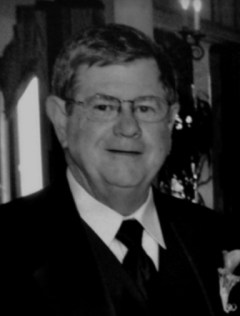
Edward BoehmHe is known and loved by many. A man others are drawn to because they feel welcome and loved around him. He is wise and witty, joyful and just, honest and unpretentious; a strong, steady, peaceful presence. A great storyteller and a great listener. A hardworking craftsman who both builds and repairs. He’s faithful and devout, hating no one, a lover of God’s word and a believer in the Resurrection. He is the reason that we are all gathered here today. The man I speak of is Jesus Christ.

One of the things I love most about “The Chosen,” an excellent mini-series (now through its second season) about Christ and his disciples, is its wonderful depiction of Jesus. What sort of person’s three-year public ministry could so transform the world ever after? What kind of person would people leave everything behind to follow? Someone engaging and winsome, who can see into your soul and still loves you. “The Chosen” is currently free to watch online, and I urge you see it because it is truly well done, but you can always read the books that the series is based on instead and encounter Jesus Christ in the four Gospels.

Regardless, it is essential that each of us get to know and love him. As Pope Emeritus Benedict XVI once observed, “Being Christian is not the result of an ethical choice or a lofty idea, but the encounter with an event, a person, which gives life a new horizon and a decisive direction.” As Jesus says in St. John’s Gospel today, this is the will of God the Father: that everyone who sees God the Son and believes in him may have eternal life, and be raised up on the last day.

Even though my opening description lists praiseworthy traits of Jesus Christ also found in Edward Boehm, those who know and love him and report such things about him acknowledge that Ed was not perfect. (This, by the way, is why the Church offers prayers for the dead, to help those who die as friends of God be sanctified through and through, to be completely healed and purged of any obvious or hidden flaw, since Revelation teaches us nothing impure can enter the heavenly Jerusalem, the holy city, where God’s unveiled glory dwells.) Ed was not perfect, but where did his Christ-like traits come from? Our world is not perfect, but where does its beauty come from? These things come from Jesus Christ, through whom all things were made, through whom all good things come.

We are finite creatures who desire the infinite. This longing for ever greater and unending goodness, beauty, truth, life, happiness, and love is to be fulfilled in God who, though we are dust, has placed these longings within us from the beginning. Though many do not realize it, our ultimate longing is for communion with God himself. There is a God-shaped hole in every human heart. And we meet the divine in human form in the person of Jesus Christ. Realize that the goodness you love in Edward Boehm reflects something of God’s goodness. Jesus Christ is the one on whom rests all our joyful hope, for Ed and for ourselves. He is the Alpha and the Omega, the beginning and the end.

The Master Chef — Funeral Homily for John Kenneavy, 74

July 22, 2021

John KenneavySt. John the Baptist Parish is honored welcome you and to offer our greatest prayer, the Holy Mass, for John’s soul and the consolation of all who know and love him. No short funeral homily can capture the fullness of a person. If I were to preach to you for an hour about his life, afterwards I bet that each of you here could add another unique story. This morning, I’m going to reflect upon just a single aspect of John’s life, one that all of you who are his family and friends are already familiar with: his being a chef.

John opened and operated the Kenneavy’s Kitchen restaurant for seventeen years, preparing homestyle dishes, fresh bakery items, and his famous pizza. After selling that restaurant in 1993, he cheffed at several other Door County restaurants. He went on to be one of the first cooks hired to run the kitchen at a brand new, area nursing facility. And, in his own retirement, he helped to helped cook and serve a weekly lunch for his Florida residential community. In addition to his customers and neighbors, how many countless times did he use his culinary talents to feed his family and friends? Consider how much nourishment and delight John provided for literally thousands through his culinary gifts in life. And John delighted in doing it.

So what is the joy in cooking? Everyone likes to eat good food – chefs included – but the joy from cooking is more than merely eating. There is delight in creating a dish and delight in sharing it. The chef offers up a gift of self to create a great meal and offers this meal to others. A chef’s feast is offered for peoples’ nourishment and joy, that they may have life and have it more abundantly. And a great feast brings people together, connecting the chef with his friends, family, or guests.

At the Last Supper and at the Holy Mass, Jesus gathers his friends for a feast. The Good Shepherd spreads a table before them in the house of the Lord. Christ prepares a meal for his family, makes a gift of himself for us, and offers us this gift. Jesus says: “I am the living bread that came down from heaven; whoever eats this bread will live forever; and the bread that I will give is my Flesh for the life of the world. Whoever eats my Flesh and drinks my Blood has eternal life, and I will raise him on the last day.” This is not mere metaphor, for Jesus insists, “my Flesh is true food, and my Blood is true drink,” and so his Church has always professed and believed. This meal brings us into communion with the Chef who prepares it: “Whoever eats my Flesh and drinks my Blood remains in me and I in him. Just as the living Father sent me and I have life because of the Father, so also the one who feeds on me will have life because of me.” Whoever eats this bread will live forever with the Lord on the holy mountain that the Prophet Isaiah describes, where death will be no more and those who are saved will rejoice in their salvation.

When St. Augustine’s mother, St. Monica, was dying she famously told her son, “Bury my body wherever you will…. Only one thing I ask of you, that you remember me at the altar of the Lord wherever you may be.” St. Monica knew the Holy Mass is our greatest prayer because this feast connects to the Lord and one another, that we might have life and have it more abundantly. Today, let us pray for the peace of John’s soul and receive Christ’s consolation for ourselves. Jesus Christ the Master Chef has prepared his feast for us, and “blessed are those called to the Supper of the Lamb.”

Hidden Wealth — Wake Service Homily for Leonard Stewart, 80

July 17, 2021

Leonard Eugene StewartToday St. Paul’s Parish is pleased to open our church and offer our prayers at this wake service for Len, whom you know and love so well. No brief homily can capture the fullness of someone’s life. But I believe that aspects of a Christian’s life will contain images of Christian mysteries. Jesus preached about the Kingdom of God using images like captured fish, sprouting seeds, precious pearls, and other things as illustrations. Similarly, a particular part I learned about Len’s life—though surely not the most important aspect of his life—especially strikes me as an icon of important Christian truths.

After Len and Carolyn moved to Eau Claire to build their home and raise their children there, Len began a coin game machine business. He bought gaming machines and would service them for customers on his route. Len reasoned, “People will always have quarters.” But eventually, in 2008, Len started a similar but greater line of work. Len began managing ATM (automatic teller) machines. He was still working around many of his previous customers. Not being showy, he continued dressing like them, unassumingly; with frayed hems, holes at his knees, and a ratty hat atop his head. But now, instead of lugging heavy heaps of quarters, Len might be transporting many thousands of dollars. He was adept at hiding this great wealth. Len’s family tells me, “He could carry $30,000 and you’d never know it.” He looked like everybody else so people didn’t notice that he carried a treasure with him. As I said, this strikes me as an icon of important Christian truths.

Men and women are born into this world with heaps of blessings, many tokens of God’s goodness. But the Christian experiences a greater, richer life. The Christian might keep the same company as others; their dress and appearance might be unremarkable; but they carry with them a hidden wealth. “See what love the Father has bestowed on us,” St. John exclaims, “that we may be called the children of God. Yet so we are! …Beloved, we are God’s children now.” The world might not notice the great treasure concealed in us, but this figures; they didn’t notice the greatness of Jesus the Son of God, either.

Though, as the psalm says, “man’s days are like those of grass; like a flower of the field he blooms; the wind sweeps over him and he is gone, and his place knows him no more,” Jesus reassures us in the face of death. He tells us, “Do not let your hearts be troubled. You have faith in God; have faith also in me.” Jesus has died and has gloriously risen, and he promises the same for us, his brothers and sisters, his friends. Jesus tells us, “In my Father’s house there are many dwelling places….I am going to prepare a place for you… and take you to myself, so that where I am you also may be.” So, though it is natural to feel sadness on such a day as this, with the sadness we possess a joyful expectation, for Len and for ourselves: Jesus will always have quarters for us.

Lovingly Received — Funeral Homily for Allen Pietz, 62

June 22, 2021

Allen is a dear acquaintance of mine. Unlike many of the persons I offer funerals for, I know him really well. But today I’m going to begin by telling you about another warm acquaintance of mine and the story he once told me. I went to seminary with a fellow who is now a diocesan priest in South Carolina named Fr. Andrew Trapp. Fr. Andrew looks a lot like the actor Tobey Maguire (who starred in the Spider-Man movie franchise) and Andrew also has a Peter-Parker-like friendly goodness. Fr. Andrew got a little famous back around 2010 when he beat the champion poker player Daniel Negreanu on a TV game show. He won $100,000 and donated his whole prize (after taxes) to his parish’s renovation project. Before he was ordained, Andrew spent a summer in Paris, France improving his French and helping out at a Catholic church.

There he met a former satanic worshipper who had repented, reconciled to God, and became a member of that parish. Andrew knew that Satanists were known to steal the Holy Eucharist, the Body of Christ, for use and abuse in their rituals. (I’ve heard elsewhere that Satanists are interested in stealing only the Catholic Church’s Communion Hosts to perform Black Masses and other sacrileges.) Andrew asked the man whether it was true that Satanists test their followers using these stolen Hosts, placing a Consecrated Host in a line-up of identical, unconsecrated wafers to see if the person could identify which one it is. The man responded that he had undergone this test and successfully passed it. Andrew asked him, “How did you know which host was the Lord?” And the man replied, “It was the one that I felt hatred towards.”

No brief funeral homily can tell the whole story of a person’s life, but sometimes a particular aspect of a Christian’s life can proclaim the most important things. Allen did not grow up Catholic. He started attending Mass at St. Paul’s in the front row with Sylvia. And it was here that he fell in love with the Holy Eucharist. Sylvia remembers Allen pointing to the altar and saying, “I want that Bread.” This desire was the main reason Allen became Catholic, got Confirmed, and received his First Holy Communion here in 2020, exactly a year and one week before his death. Allen was always eager to receive the Holy Eucharist on Sundays. And whenever he couldn’t come, he missed it profoundly. Sometimes he could barely walk and he still came to Mass. What fueled this intense longing and devotion in Allen? It was the love he felt for Jesus in the Eucharist.

It was Jesus, who said, “I am the living bread that came down from heaven; whoever eats this bread will live forever; and the bread that I will give is my Flesh for the life of the world.” When those in the crowd murmured at this, objecting, “How can this man give us his flesh to eat?” Jesus answered, “Amen, amen, I say to you… [M]y Flesh is true food, and my Blood is true drink. Whoever eats my Flesh and drinks my Blood remains in me and I in him.” Jesus says, “Whoever eats my Flesh and drinks my Blood has eternal life, and I will raise him on the last day.”

In truth, Allen’s great love for Jesus in the Eucharist was only a weak reflection of Jesus’ love for Allen. And what will separate friends of Jesus Christ from the love of Christ? Neither death nor life, neither present things nor future things, neither height nor depth, neither angels nor powers, nor any other created thing will be able to separate them from the love of God in Christ Jesus our Lord. It is right that we pray today for the perfection and glory of our friend Allen’s soul, but we do so with great peace and confidence that Allen, who was so eager to receive our Lord in the Eucharist, will himself be eagerly received by our loving Lord.

Allen Pietz after his 1st Communion

Allen Pietz on the day of his First Communion, June 7, 2020

Crafting Gifts — Barbara “Barb” Ertolacci, 81

June 22, 2021

Barbara N. ErtolacciWe extend to you, who mourn Barb’s passing most, our sympathy and condolences. We are honored and grateful to be able to offer today, here inside of Barb’s former parish church, our greatest prayer: the Holy Mass. May its graces help purify Barb’s soul of any imperfection, speed her soul to heaven, console all those who mourn her here below, and strengthen us on all our own lives’ journeys to God. No brief funeral homily can present the fullness of a Christian life, but holy aspects of a Christian’s life will reflect God’s goodness, beauty, and truth.

Earlier this week, Barbie and Jeff shared stories with me about Barbara (or Me-me). They told me of her smiles and laughter, of her generosity, about the Hi Way Café, and other things. One aspect of Barb’s life that stood out to me is her crafting hobby. Barb loved to make crafts; including crosses, coasters, wall decorations for every holiday, homemade cards. After moving into Cottonwood Manor in 2019, Barb made greeting cards and signs for residents; signs for doors to welcome new residents to their rooms and other signs to help residents find their way around. My personal favorite of these: a bathroom sign with the helpful message “4U2P”. Barb just freely did these crafts. It was her pleasure to create and give things as gifts. Her industry seems to have outpaced her recipients. I’m told she leaves behind six big boxes of creations, not for destruction but to be given away.

Our God is into crafts as well. He made this universe and our souls from scratch; not out of any need or obligation, but simply from a desire to create and give gifts as a blessing. Creation is an expression of God’s love. We are his craftsmanship. And even just the delightful, wonderful things we can see (be they animals, plants, landscapes, or galaxies) are far too numerous for us to behold in all of our lifetimes combined. His good gifts surround and overwhelm us. All things came to be from the Father through the Son, and the Father has given you, and Barb, and me as a gift to his Son.

Jesus says in our Gospel, “Everything that the Father gives me will come to me, and I will not reject anyone who comes to me… And this is the will of the one who sent me, that I should not lose anything of what he gave me, but that I should raise it on the last day.” In the view of the foolish, the dead seem to go forth to utter destruction. But those who trust in the Lord understand the truth, that with him is plenteous redemption. God has crafted us with loving care and he does not intend to discard us. One day, the dead will be raised incorruptible, and we shall be changed. That which is corruptible will be clothed with incorruptibility, and that which is mortal with be clothed with immortality. For “this is the will of the Father: that everyone who sees the Son and believes in him may have eternal life.” Barb is God’s beloved craftsmanship, a gift to you, a gift to this world, and a gift to the Son. And this is the will of the one who sent us Jesus Christ, that he should not lose anything of what the Father gave him, but that he should raise us on the last day.

A Blessed Reflection — Funeral Homily for Robert “Bob” Seibel, 91

June 22, 2021

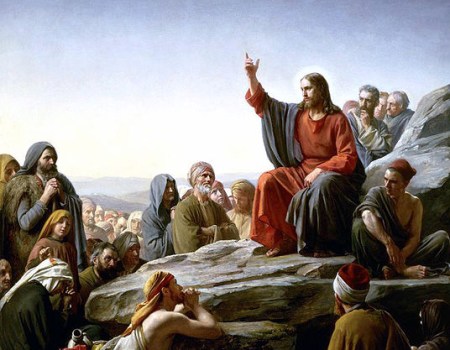
The Sermon on the Mount by Carl Bloch.

“When Jesus saw the crowds, he went up the mountain,
  and after he had sat down, his disciples came to him.”

Jesus climbs up the mountain. He is above and higher than them all. They all look up to him. He invites them to draw closer. And his disciples come closer to Jesus himself. He then begins to preach to them his Sermon on the Mount, beginning with the Beatitudes. Who is bless-ed? Who is blessed? Jesus gives us a description. The blessed one is poor in spirit, is meek and mourns, hungers and thirsts for righteousness, is merciful, pure of heart, a peacemaker, and yet persecuted for the sake of righteousness.

When we hear these Beatitudes we usually think of them as traits we Christians are called to embody, and that’s true. We are called, for instance, to rely on God to fill our humble spirits, to mourn the sin and evil present in this world, to pursue peace and all that is righteous. And the fruit of these attitudes to be is blessedness, holiness, true happiness. Our Christian lives should reflect these blessed traits, but these traits are reflected–first and best–in Jesus Christ himself. Jesus’ Beatitudes are autobiographical. He is above and higher than us all and we rightly look up to him. But Jesus wonderfully calls us higher, to draw nearer to him, for Christians to come closer to Christ. A faithful Christian’s life will come to reflect the person of Jesus Christ.

Robert F. SeibelBeatrice, Bob’s wife of sixty-six years, and his children have shared with me many stories about him. For instance, they told me of his precious Catholic faith in Jesus Christ. It was so important to Bob that he sacrificed for all eight of his children to be taught eight years each at St. Paul’s Catholic School. More recently, during the Covid pandemic and his infirmity, he would worship by watching the Holy Mass on TV, and delighted to have Jesus brought to his home in the Holy Eucharist. Through the years, at Bob’s supper table, where everyone had his or her own special spot, Bob would pray before meals, a devotion he always kept to the end of his life.

His family told me of Bob’s incredible work ethic, of his belief in everything being done right, and how he passed this on through his example. They recall how, amidst his hard labors, he might lay down on the floor for a ten-minute midday nap, rise again, and get back to work. Yet he always had time for his loved ones. Very approachable, Bob would talk to anyone about anything. After years of dairy farming, he moved on to gardening in retirement. From his full garden he generously shared, giving food to family and friends, the local food pantry, and whoever drove by. His gifted food went far and wide.

As I said, a faithful Christian’s life will reflect the person of Jesus Christ. In Jesus’ earthly life God came first. Christ seeks to teach us all about God his Father and our saving Faith. Jesus comes far down from heaven to our earthly home to be with us, through his Incarnation and his Church. The Lord gathers his family around his holy table at every Mass to pray to our Father and to feast together. He spreads the table before us, our cup overflows. And someday, if we heed his call, he will have a special spot for each of us around his table in heaven.

Jesus believes in the importance of righteousness, that right be done, and in passing this truth and example on to us. Jesus labored hard on earth, his body laid down briefly in the tomb, but then he rose again, renewed. He lives and still labors now. Yet Jesus always has time for us. He is very approachable, happy to converse with you about anything in prayer. And Jesus Christ, who made the world’s first garden for Adam and Eve and was mistaken for a gardener on Easter Sunday morning, desires to feed you and the whole world far and wide, by generously sharing himself in the gift of his Holy Eucharist.

What do you love and admire about Robert Seibel? Realize that everything which is loveable and admirable in him, is a reflection of these blessed traits’ source. A faithful Christian’s life reflects the person of Jesus Christ. Today, let us pray for Bob’s soul, that he be purified of any flaw, and renew our own faithful Christian devotion and love for Jesus Christ, so that one day we may all be called and gathered together again with God upon his holy mountain.

We Become Like Our Friends — Funeral Homily for Marcella “Marcy” Pecha, 97

May 13, 2021

Who does Jesus say is blessed? Jesus tells us in the Beatitudes. He says:

“Blessed are the poor in spirit…
those who mourn…
the meek…
those who hunger and thirst for righteousness…
the merciful…
the clean of heart…
the peacemakers…
those who are persecuted for the sake of righteousness.”

When you think about it, all these traits are present in Jesus Christ. Jesus is gentle, merciful, and pure. He cares about others and is moved by their sufferings. He’s the servant of God, of peace and righteousness, and for all this he endures trials. The Beatitudes describe Jesus Christ himself, but they also describe his friends as well, because Jesus’ friends come to resemble him.

Marcella (Marcy) PechaI know Marcy from celebrating Masses at Dove nursing home. I was blessed to give her the Last Rites (consisting of Holy Anointing, the Apostolic Pardon, and her final Holy Communion – which is called Viaticum) two days before she passed. Today, her own St. John the Baptist Parish is honored to offer our greatest prayer, the Holy Mass, for her soul. I found her to be a faithful and pleasant person, as did the staff and residents at Dove, who I am told cherished her as a sweet and motherly lady. Her family has told me a number of interesting stories about her and I would like to share some of these various stories with you.

Before coming to live in a series of nursing homes herself, she volunteered at nursing homes in Bloomer and Chippewa for some three decades. Being a social person, she loved being with the residents. She helped transport people to-and-fro in their wheel chairs. She danced with the residents – Marcy loved to dance. And she would sit with those with Alzheimer’s, chatting about old memories, so they would not feel alone.

Marcy had many memories to share. Being born in 1924, she grew up as a child of The Great Depression. And because of this, she had an understandable personality quirk: Marcy hated wasting food. Her children were always expected to finish their plates at meals, and wherever she went—sometimes to a fault—Marcy tried to save whatever food would otherwise go into the trash.

When Marcy was pregnant with each of her three children (Betty, John, and Barb) she appears to have taken on the spirit of the personalities each of them would have. While carrying Betty, Marcy’s natural timidity disappeared and she wasn’t afraid of anything. While carrying John, she always wanted to be outdoors. And while carrying Barb, she became especially empathic and tenderhearted.

Though not highly educated, Marcy also displayed a supernatural intuition. Once, her oldest adult daughter Betty was leaning over a car engine, attempting to change the oil while it was still running. Betty’s braided hair got caught, apparently pulled by a belt, violently injuring her scalp and requiring 125 stitches at the hospital. The next day, she called her mother, but before Betty could share her story Marcy asked, “What’s wrong with your head? What happened to your head?” When Betty told the story of her accident, Marcy said, “I knew it! I knew it!

Though Marcy could experience anxiety attacks she was not afraid to die. At times she would remark, even years ago, “Why won’t God take me? I what to go home.” (And by home, of course, she meant heaven.) On one occasion decades ago, Marcy nearly died and a defibrillator was used to get her heart back into rhythm. When they revived her, Marcy was very upset with the nurses saying that the previous moments on the cusp of the next life had been the most peaceful experience of her lifetime.

Pretty much all these things, I think, her special love and care for the elderly and infirm, her supernatural intuitions, her eagerness for heaven, were rooted in her deep Christian Faith in Jesus Christ. Marcy was frequently praying, attending Mass, or watching the Holy Sacrifice on television. On the Saturday evening of her death, Marcy’s family members offered to pray the Rosary with her and for her at her bedside, and they could see this gave her great consolation.

Does not Jesus have a special concern for the infirm and forgotten? Did he not volunteer to spend three decades physically dwelling among us? Jesus possesses a profound empathy and supernatural insight into others, with which he understands and loves us profoundly. Like Marcy with those precious food leftovers, Christ the Good Shepherd goes to seemingly unreasonable lengths in hopes that not one lost sheep would go to waste. And Jesus and Marcy were not unwilling to die, they trusted their Heavenly Father, were comforted by family, and were aided by the prayers of the Blessed Virgin Mary.

As I said before, the Beatitudes describe Jesus Christ himself, but also they describe his friends as well, because Jesus’ friends come to resemble him. If you love Marcy, and I do not doubt you do, then renew today your love for the One whom Marcy loves most. Jesus Christ, our Savior, Lord, and God, is the one who makes all his friends great and glorious by making them more and more like himself.

A Treasured & Entrusted Child — Funeral Homily for Adelaide Marie Borofka

April 26, 2021

The dominant culture in the days of Jesus’ public ministry oftentimes did not treasure children. A firstborn baby boy might have value to a Roman father, but a baby who was a girl, or malformed or disabled, or simply unwanted might be killed or abandoned in the woods, exposed to die. The early Christians, however, rejected infanticide and adopted foundlings, raising them as their own. This is reflected by a first century Christian text called The Didache (also known as “The Lord’s Teaching Through the Twelve Apostles to the Nations”) which commands: “You shall not procure an abortion, nor destroy a newborn child…” From where did the Christians get this countercultural concern for all children, born and unborn? From our Lord Jesus Christ, of course.

Adelaide Borofka feetThough children are small and weak, Jesus says, “See that you do not despise one of these little ones, for I say to you that their angels in heaven always look upon the face of my heavenly Father.” They have no wealth or worldly power, but Jesus says, “Unless you turn and become like children, you will not enter the kingdom of heaven.” Jesus, calling a child over and putting his arms around it, says, “Whoever humbles himself like this child is the greatest in the kingdom of heaven.” Jesus says that children are to be treasured and loved like himself: “Whoever receives one child such as this in my name receives me.” Jesus says, “Let the children come to me, and do not prevent them; for the kingdom of heaven belongs to such as these.” In just the same way as a good shepherd hates to lose even one of his many sheep, Jesus says, “it is not the will of your heavenly Father that one of these little ones be lost.” Indeed, ‘Jesus loves the little children, all the little children of the world.’

So even when a child dies without baptism, we can entrust them to God’s mercy with great hope, that the love of God which has brought us into being will transform the painful mysteries of the Cross into a reunion of Easter joy. In the midst of any tragedy, we always have a general Christian hope that God will bring good out of what is bad. But in regards to little Adelaide it appears that God has granted us a special, particular consolation. This is Veronica’s story, which she has given me permission to tell you, and which she wants me to share for your benefit.

On Easter Sunday, Veronica began to feel severe abdominal pain. She was admitted to Sacred Heart Hospital in Eau Claire with a blood pressure so high that she was in grave danger of suffering a stroke, even dying. Then, through an ultrasound, it was discovered that the child within her, the child she lovingly carried for seven months, no longer had a heartbeat. Around 2 AM on Monday, April 5th, while she was in great physical and emotional pain, her husband Zach and their gathered family members were praying a Rosary with her. Veronica was praying along with them, off-and-on, as she could manage. And in the midst of all this painful suffering, as she paused with her eyes closed, she saw something. Even though Veronica is certain that she was awake at that moment, she beheld something remarkable. Before I describe Veronica’s experience and what she saw, I will speak briefly about private revelation.

As Catholics we believe that Jesus is not dead, but risen and living. We believe that his saints in heaven are all alive with him. We believe that Jesus and his saints and angels know us, that they care about us, and that they continue to lovingly help us here on earth. We believe visions, messages, and miracles still happen in our day. And sometimes instances of these phenomena are judged by the Church’s authority to be “worthy of belief.” However, unlike public revelation (which consists of Sacred Scripture and the apostolic teachings in the Deposit of Faith), private revelation, even when officially recognized by the Church, is not binding to be believed by all the faithful. I am not personally qualified to make any official judgment for the Church about private revelations, but I tell you: if I did not personally believe that what Veronica saw was of a heavenly origin, I would not be about to share it with you.

Veronica, with her eyes closed during that Rosary in the hospital, saw a woman standing before her bed. There were pretty, puffy, white clouds behind the woman and to each side of her. And rays of sunlight from the left peaked through gaps in the clouds. The woman wore a dazzling, bright white gown. The fabric of her beautiful, full-length dress looked like satin. It had a modest scoop neckline and sleeves that went down to her wrists. The woman also wore a blue, cathedral-length veil of traditional lace, which extended down to the floor. She was dressed similarly to a statue of the Blessed Virgin Mary from Germany which Veronica’s grandfather had given her years before; a statue Veronica used to play with as a girl.

The woman had long, curly, dark hair, snow white skin, and beautiful blue eyes which gazed at Veronica. The expression on the woman’s face was very pleasant, calming and peaceful, concerned for Veronica and reassuring. Veronica says “she looked absolutely beautiful and gorgeous,” such that “no model could compare.” The woman’s lips moved as she slowly spoke with a very feminine, light and calming, beautiful voice, which echoed with some reverberation. And this is what she said: “Veronica, do not be afraid. I will take care of this child as I have taken care of my Son, Jesus. Do not worry and do not cry.

In this vision, Veronica held in her hands her swaddled baby, wrapped in the gray swaddling cloth she had bought for its birth. (Veronica did not yet know whether she had a girl or a boy, since Adelaide had not yet been delivered.) Hearing the Virgin Mary’s words gave Veronica great relief, for who could be better than the Blessed Mother to care for her lost child? Veronica raised up her arms in the vision, completely entrusting her child to Mary. Mysteriously, Mary remained where she stood but seemed to come closer. Veronica says, “I handed her my child and then she was gone.” The entire vision was very brief, perhaps just ten or fifteen seconds, about the length of one Hail Mary prayer.

Veronica was left with feelings of peace, calm, reassurance that everything was OK, and wonder that the Blessed Mother would make herself known to her. Veronica did not share her story right away—she was worried people might think she was crazy—but after this vision she began comforting those gathered around her bedside. When her mother began to cry, Veronica told her, “Don’t cry, you don’t have to cry.” As St. Paul told the Corinthians, “[God] encourages us in our every affliction, so that we may be able to encourage those who are in any affliction with the encouragement with which we ourselves are comforted by God.

Veronica is saddened, of course, still grieving and mourning, but not crushed or depressed like one might expect. She always had faith in God and Jesus Christ, but this experience has reinforced it, and she desires the same growth in Christian faith for you. “There’s beauty in the suffering,” she told me, adding, “I just want everyone to know what I know and to feel the peace that I feel with God and his love.” This is the Lord Jesus Christ’s wish for you, too. Clouds may limit our vision in this world, preventing us from seeing all that God is up to, but even in the hardest times rays of light still shine through. This light comes from the Lord Jesus who loves us, who treasures little Adelaide and who also treasures you.
The Meticulous Leveler — Funeral Homily for David Zwiefelhofer, Sr., 93

April 15, 2021

On behalf of St. John the Baptist Parish, I wish to express our sympathies to you at David’s passing. At 93 years old, he is among our parish’s longest, faithful members. Today, St. John’s is honored to offer our greatest prayer, the Holy Mass, to aid his eternal soul on his journey, and to aid your souls on the path ahead of you. If you are one of David’s siblings, children, nieces, nephews, grandchildren, or great grandchildren, you have known him your entire life. Perhaps it is hard for you to imagine life without him. I know I can’t tell you much more about David’s life than you already know well. And no funeral homily could capture the fullness of a person. But the facets of a faithful Christian’s life will the reflect mysteries of Christ.

One of the interesting things I learned about David is his being a skilled excavator. He had a reputation for being the best bulldozer operator around. Even in retirement, people called upon the Brahma Bull to bulldoze for their projects. David is a perfectionist, attentive to detail. He possessed the uncanny ability to know—without instruments—when a plowed surface was level. “That’s not level,” an onlooker might say. They couldn’t convince him, or course. And when the surface was measured, David would be proven right. I was also surprised to learn that his line of work once nearly killed him. While David was operating his machine through a deep trench, a dirt wall collapsed and sand flowed in around him from the side like water. His coworkers rushed in to keep the sand away from his head so he could breathe, and they dug him out, saving his life.

We can see some of Jesus Christ being reflected through David. Realize that Jesus is very meticulous, too. We are his handiwork, and he cares a great deal about his work. Jesus’ insistence on his teachings is not mere human stubbornness. Our Lord knows that he knows what he is talking about. Jesus is a skilled leveler, making our neighbors as important as ourselves, even declaring that any good or evil done to them will one day be judged as having been done to him. Jesus’ profession and work put his life on the line for us; he was buried but rose again from the earth. In life and death, we are called to follow Christ. We must follow him, that we may share in his victory.

In the words of the Old Testament prophet Isaiah, in accord with the New Testament proclamation of St. John the Baptist, our patron:

Every valley shall be filled
and every mountain and hill shall be made low.
The winding roads shall be made straight,
and the rough ways made smooth,
and all flesh shall see the salvation of God.

The ways of the just the Lord makes smooth, path of the just he makes level, if we would only hand him the keys, and allow him bulldoze and level in our lives whatever he must. Jesus’ current project in our world is great and beautiful: building “a new heaven and a new earth.” And he desires and invites you, his beloved, to be a part of it. By God’s grace, may David, you, and I inherit the Kingdom Christ has been preparing for his people from the foundation of the world.

Far & Near — Funeral Homily for Kay Diederich, 85

February 25, 2021

“Where can I go from your spirit?
From your presence, where can I flee?
If I climb the heavens, you are there;
if I descend into the netherworld, you are there.
If I take the wings of dawn
and dwell at the sea’s furthest edge,
Even there your hand would guide me,
your right hand hold me fast.”

The words of this psalm come to my mind when I consider Kay’s journeys. She is one of the most widely-travelled people I have ever encountered. She journeyed not only throughout these United States, but in Europe, Africa, and Asia; twice walking stretches of the Camino, joining a parish mission trip to Kenya, bike-touring Vietnam. It would not surprise me all that much if there’s a photograph somewhere of her standing next to a penguin. Fittingly, even in death she travels, from Lake Tahoe some 1,500 miles to here for this funeral and her burial in Wisconsin.

St. Paul’s Parish is pleased to host you all and to offer our greatest prayer, the Holy Mass, for Kay’s soul and your consolation; because the Church, wherever you may be, is your home. That’s something great about the Church. Even if your family were vacationing together in another U.S. state, even if Kay were exploring a distant country, this Church could be found there. A home even away from home.

Kay’s mortal remains have been brought here to Bloomer to be buried alongside the remains of her beloved Joe in the hometown of his youth. They will be buried together with family and other Christians who have passed on before us.

The story of Kay’s passing is a beautiful one. In addition to those at her bedside, of her children, their spouses and her grandchildren were able to accompany her through her final hours via the modern wonder of Zoom. Kay listened to their stories and words of love while fading off more and more. After two hours, while her loved ones were saying goodbye, Kay took her leave as well, passing then and there. The reality of our mortality is an ugly, broken thing, but Kay had a beautiful death.

In the gospel were heard, I am moved by St. Thomas’ reaction to the news that Jesus will be departing. Thomas loves Jesus and doesn’t want to be separated from him: “Master, we do not know where you are going; how can we know the way?!” Jesus encourages his companions, “Do not let your hearts be troubled.” He promises to lead his friends, to shepherd them, to the Father’s house to be reunited together again. “And behold, I am with you always, until the end of the age.

The death of loved ones is saddening because they are no longer physically present to us, but death does not disconnect the relationship of love; for neither death, nor life, nor any created thing will be able to separate us from God’s love in Jesus Christ our Lord. If human Zoom technology can connect people thousands of miles apart on earth, surely God is able to keep us spiritually connected, helping and consoling each other even beyond this life.

In her last dying days, St. Augustine’s mother, St. Monica, told her children: “Bury my body wherever you will…. Only one thing I ask of you, that you remember me at the altar of the Lord wherever you may be.” You who love Kay, pray for her and be faithful to Christ, but do not let your hearts be troubled. Whether you find yourself in Michigan, Nevada, or Wisconsin, even if you journey to African deserts or Antarctic tundras, on your life’s mountain tops and in your dark valleys, there is no place you can go where Kay and our Lord will not be with you. They shall hold you fast.

Living Christ’s Mysteries — Funeral Homily for Deacon Ed Feltes, 65

February 23, 2021

On the day Victor and Ramona brought their eighth son to be baptized, while his little head was still damp from holy water, Edward Joseph was draped with white linen. And the priest said (in Latin), “Receive this white garment, which mayest thou carry without stain before the judgment seat of our Lord Jesus Christ, that thou mayest have life everlasting.” Today, we bring Ed’s body before the Lord, draping him in white cloth once more. My uncle Ed told me that as a deacon he would always say yes to doing baptisms. It was, he said, “the introduction of a new life into the Church. By baptizing them you are basically installing them into a Catholic environment and hopefully they will grow in it and not back away from it.” Ed has been a Catholic Christian for more than sixty-five years, ever since he was baptized into Christ’s death and resurrection. And throughout his nearly twenty-four thousand days Jesus Christ accompanied him through life. The life of a Christian is found in Jesus Christ. And the mysteries of Christ’s life are reflected in, shared with, the faithful Christian. We see this throughout Ed’s life.

At his First Communion, young Edward approached and saw the Real Presence of his Lord held before his eyes: “The Body of Christ / Corpus Christi.” Ed received Jesus and Jesus received Ed into a more profound union, a more intimate relationship, between them. In receiving Christ’s Body, Ed was called to be the Body of Christ for this world. When Jesus tells us at the Last Supper, “Do this in memory of me,” he not only commands that we would receive him at the Holy Sacrifice of the Mass, but that we would imitate him in his self-gift: “This is my body, which will be given up for you. Do this in memory of me.” When Ed was sealed with the gift of the Holy Spirit at his Confirmation, he entered a more powerful relationship with that same Spirit of inspiration, grace, and power who led Jesus in his works on earth. The Holy Spirit’s gifts manifested through Ed not merely for himself, for his own salvation, but to serve the wider mission of Christ’s Church, that every person in this wayward world might be saved.

The main vehicle of Ed life’s work and witness would be through his first vocation: marriage. Ed and Jessica met during his studies at Notre Dame University and the year he graduated they entered a new covenant together. Almost forty years ago, they freely committed without reservation to give themselves to each other in marriage, to love and honor each other for as long as they both would live, and to accept children lovingly from God—raising them up according to the law of Christ and his Church. Recall that Jesus Christ called himself the Bridegroom and that in Sacred Scripture his Church is called his Bride. Every Christian is called to imitate Christ, and every Christian soul is spiritually his Bride. But just as the Holy Eucharist we celebrate is not merely a symbol or a memory but Jesus’ Real Presence among us so the Sacrament of Marriage makes present the mystical marriage of Jesus and his Church, within and between a husband and a wife. In beholding a holy, Christian marriage, in its loving, mutual, and lasting fidelity, we see a sign for us and for the world. That love is real, that love is foundational, that love is fruitful. That we were made in love, made to love, made for a holy communion of love, a family. We saw this in Ed and Jessica’s strong marriage which bore fruit, not least of all in their children: in their living son, Christopher, of whom they are so proud, and four other loved children who passed away very, very young; Francis, Steven, Elizabeth, and Meagan. Ed said he looked forward to meeting them and now has that opportunity.

In his marriage, together with Jessica, Ed discerned and pursued a call within his call, a second vocation. Relying on the help of the Lord God and our Savior Jesus Christ, Ed was chosen and ordained for the Order of the Diaconate. After the laying of the bishop’s hands and being dressed with stole and vestment, he was handed a Book of the Gospels with this admonition: “Believe what you read, teach what you believe, and practice what you teach.” Deacon Ed then ministered here at St. Catherine’s, celebrating in this sanctuary and serving throughout this parish. Teaching and preaching, even though he often found preaching difficult. Ed told me that he primarily sought to advance the Kingdom by sharing his life, showing how he lived. He said, “Always live your life such that people want the same that you do.” Looking back at the end of his quiet life, Ed had few regrets, but he did wonder if he was “maybe quiet too long.” Deacon Ed understood well that we need not enter into every pointless, unhelpful argument, but the Spirit does call and help us to speak the important words people need to hear alongside seeing our deeds.

In these last years, these final years, Ed reflected Christ and became configured to him in a new way, by joining him in suffering. Ed had at least six different strokes—twice nearly dying yet surviving—and endured strokes’ debilitating effects. Ed and Jessica described these past several years to me as an experience of continuous loses and grief, but also of continuous mercy and grace. Reportedly, the devastating impact of strokes often breaks up families, but this family grew closer through the trials. I think Ed also became bolder in Christ. While under hospice care at home he never stopped offering good things to his guests; blessings, prayers, holy water and blessed salt, to anyone who visited, wherever they might be in their faith walk.

When I last spoke with my uncle Ed I asked him what he was looking forward to. He simply said, “Heaven. I poured a lot of my life into experiencing, into living life on earth with a heavenly approach.” Asked as to what his near future held, he said, “It’s really up to God. I accept everything he has for me.” Ed and Jessica related to me that it was last March, almost a year ago, over a lunch at Panera Bread, that he told her, “I’m going to go to the Lord in six months to a year.” And he was right. Ed knew he was in God’s hands, being led and offered like an oblation for his glory and as a blessing for many. Knowing that this day was not in the far-distant future, I asked Ed about his wish for all of you on this day of his funeral. He answered, “Pray that they seek God more closely and live a more Christian life. I wish they would seek God for the answers and not just rely on themselves.” So if you have seen Jesus Christ in the life of Deacon Ed Feltes, please listen and heed his words.

And now, in conclusion, like Edward heard in his Last Rites:

I commend you, our dear brother, to almighty God and entrust you to your Creator. May you return to God who formed you from the dust of the earth. May holy Mary, the angels, and all the saints come to meet you as you go forth from this life.

May Christ who was crucified for you bring you freedom and peace. May Christ who died for you admit you into his garden of paradise. May Christ, the true Shepherd, acknowledge you as one of his flock.

May the Lord forgive all your sins and set you among those he has chosen. May you see your Redeemer face to face and enjoy the vision of God for ever.

The Holy Family — Funeral Homily for Cecilia Paulus, 95

December 26, 2020

By Deacon Dick Kostner

Today we gather not to be sad because we will no longer see one of St. Paul’s and St. Jude’s “elders”, one of St. Paul’s and St. Jude’s parish family members, but rather that we will have sent a very special person from our community to be personally present as our representative for Jesus’ birthday party tomorrow night. It is there that Cecilia will be present with all Holy Family members to celebrate God’s gift to all Children of our heavenly Father who created us to proclaim to the world His love for us shown through the birth of His son Jesus, our Savior and our mentor.

Having known both Cecilia and Toni for my whole life I can only imagine what that party will be like with all three “Lang girls” sharing their life stories with Jesus at one time. My mom and dad were good friends of the Erickson family. My mom golfed with Cecelia and my dad was on the Bank Board of Directors for many years with both Jim and Arndt. After Arndt died my dad retired from the Board and I replaced him as a Director for the Bank in 1977 and after Jim sold the Bank I was asked to stay on as a Director with the Ogrin Family and I still serve on that Board to this day. Cecilia stayed connected with that Bank for many years after Arndt’s death and would attend the Banks Annual meeting to be sure the new owners would continue to serve her “family” in the New Auburn area.

Our First Reading today from the Book of Wisdom identifies the importance of “Family” in God’s plan of Salvation for all of God’s children. It talks of God’s “elect” those born into the Holy Family of God through their Baptism. It proclaims that Cecilia is safe and sound for it says “The souls of the just are in the hand of God and no torment shall touch them.” It goes on to say:…because God tried them and found them worthy of himself, he proved them, and he took them to himself. In the time of their visitation they shall shine.” One thing is known for sure about the “Lang girls”, they are not bashful and they will want answers from God as to why there is need for so much suffering in this world, and why does it take so long sometimes for God to answer our calls for help.

Cecilia was a person of great faith and she cherished and loved not only her blood relatives and family but also her extended Parish Family and Friends. She acknowledged that she did not understand everything that God wanted of her but through Faith said yes to those challenges. She was one of St. Paul’s daily Mass people. She would join her “family” every day for Mass arriving early enough to participate in Mark leading her Parish family in praying the Rosary and then celebrating Eucharist with that family followed by going to Main Street after Mass for breakfast to get caught up on the lives of she loved. She was the community historian. She knew the blood lines of most everyone in the Bloomer Area. If someone wondered why so and so was at a person’s funeral or wedding, one only needed to call Cecelia to find out their family tree and relationship to that family.

And yes she could be stubborn. When I would be doing a Communion Service for Father some mornings I would always see her walking from her apartment to the Church. While I would always ask if she wanted a ride when the weather was bad she would say: “No thanks, I need the exercise.” I think this was her time to have some one on one talks with Jesus. I finally would not even bother to ask if she wanted a ride so I would just blow the horn at her. She would just give me a big smile and wave me bye. One day I asked her why she always had a big smile for me when I honked the horn at her and she gave me the answer. She said: “I may be in my eighties but the boys still honk their horns at me!” That was our Cecilia, loving and as honest as the day is long. We were all blessed to have known the Lang Girls in this life and all of us will await the day when we can join our Holy Family in person at a party with Jesus without any fears or struggles. Jesus instructed us of the two great Commandments Love of God and Love of neighbor. He also instructed us of who is Blessed by giving us the Beatitudes. Cecilia showed us how to fulfill those Commandments and how to be blessed. Cecilia will always be our community Holy Family Mentor. Remember her in your prayers and Mass celebrations, and ask for her prayers for us during these very trying times in our world.

Merry Christmas Cecilia and please continue to stay in touch with this faith family through our celebrations of the Mass.

Her Great Renovation — Funeral Homily for Linda Boehm, 69

December 21, 2020

I wish to offer you my sympathy and condolences at the passing of Linda, a beloved member of your family and of this parish family as well. It providentially happens that Linda’s funeral today will be the last St. John’s funeral for this year 2020 and our last funeral here before St. John’s renovation, beginning after Christmas. What awaits for this church in its renovation bears a poetic likeness to Linda.

This transition to a new phase of our parish life was expected. We’ve been preparing for this project for a long time. But the news of exactly when our Masses are ending and the hard work begins may have come as a surprise to some. Next week, these pews will be removed, this altar and this ambo will be withdrawn, and our tabernacle will be empty. Eventually these walls will be stripped, this carpet will be torn up, and apart from the workers this church will be vacated, vacant, and desolate. The sacramental life inside this church will cease. But even if the sacrament of Jesus Christ are no longer offered in this building the parish will still survive. St. John the Baptist Parish is more than this brick, plaster, and paint. And even if this building were ground to dust and had to be entirely rebuilt this parish would still be alive through it all.

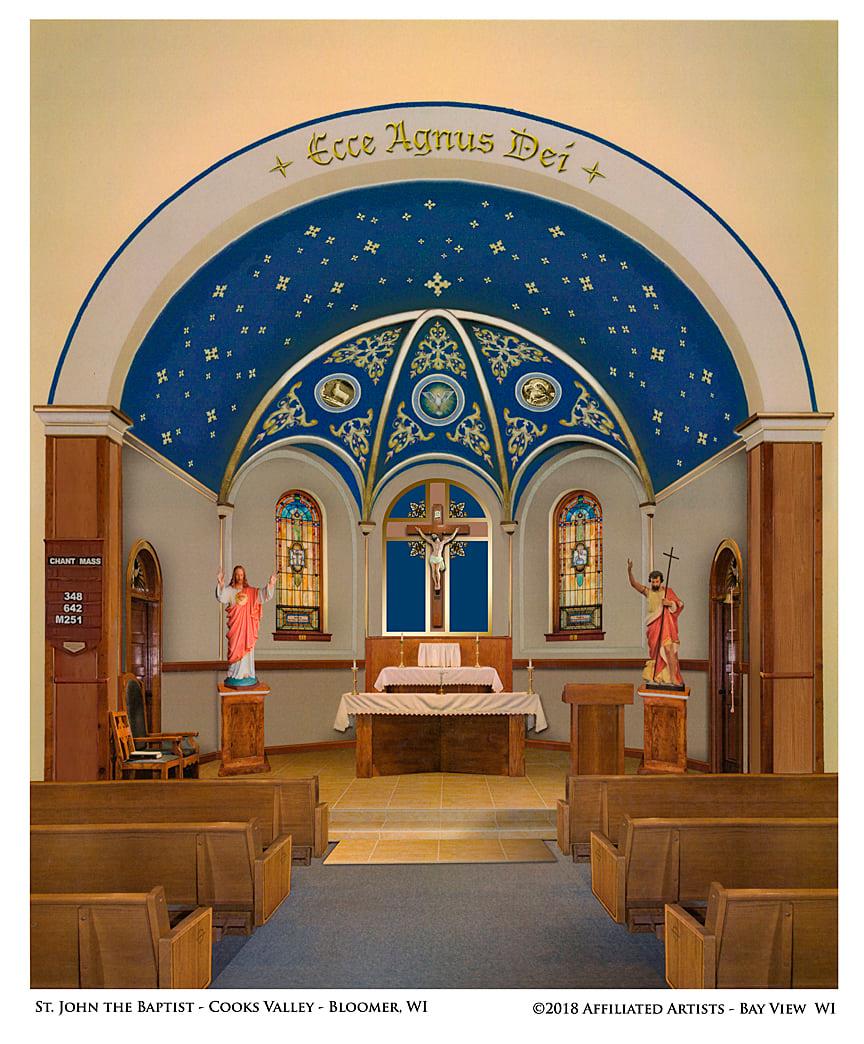
After Mass in our lobby you can see renderings of what this church will look like once the work is complete. Our church is not ugly now, though you can see her blemishes, but what she will become is more beautiful and glorious. And once she is completed she will play host to her many family members and friends and many new acquaintances, too, who come to see her for the first time. On that day, any sadness experienced during the time of separation will give way to great joy. This church will be resurrected for the worship of God and the holy peace and happiness of his people.

As I said, what awaits for St. John the Baptist Church bears a poetic resemblance to Linda. Though not entirely unexpected, and Linda was well prepared for it, her passing may still feel shocking; this separation, unsettling; Linda’s death, quite saddening. But there is more to Linda than this dust. Her soul lives on. Today we pray that any flaw in her may be removed so that with a perfect soul she may enter Heaven and go on to experience the Resurrection in a more beautiful and glorious renovated body. Someday in Heaven and on the Last Day, through Jesus Christ our Savior, may we all be happily reunited with Linda’s happily outgoing self to rejoice in the worship of God and the holy peace of his people. When you next see this church in her remade glory, may you be reminded of Linda and of these truths.

Wreaths of Flowers — Funeral Homily for Janice Bleskacek, 87

December 16, 2020

While Janice lived at her home she kept two notable items on the night table beside her bed, both reflective of her deep faith: a wooden cross and a particular book. At first glance this small, black book might be taken for a Bible, but its cover bore the title “The Catholic Girl’s Guide.” A hand-written inscription within indicates that this book was given to her as a gift way back in 1947 when she was fourteen years old. I suspect that Janice regularly turned to the latter parts of this book, with its compendium of Catholic prayers and devotions, but she would have been familiar with the earlier parts of the book as well. Its author, Fr. Francis Lasance, writes about nine virtues a young lady must cultivate, likening each one to a flower which form together “the Maiden’s Wreath.” (This book was written for girls but in a book written for boys these same essential virtues would have their places, perhaps within a holy young man’s toolbox.)

The nine flowers of the wreath include:

The Sunflower of Faith, which is turned upward towards the glorious Sun.
The Ivy of Hope, which clings and climbs despite adversity.
The Peony of Love of God, which lifts up its heart as an offering.
The Rose of Love of Our Neighbor, which is a kindly gift to others.
The Carnation of Obedience, which is how Christ incarnate came as a noble servant.
The Forget-me-not of Piety, which remembers and keeps the practice of religion.
The Violet of Humility, which thrives and blossoms most beautifully in the shade.
The Daffodil of Industry, which hastens to blossom as soon as possible.
And the Narcissus of Truthfulness, which holds truth as a golden treasure never to be betrayed.

In addition to this “Maiden’s Wreath,” the book’s author next speaks of a second crown, “The Wreath of Lilies,” comprised of The Lily of Purity, which is untarnished in its splendor. The lily has long symbolized the Blessed Virgin Mary, whose own femininity is fulfilled to its fullest, holy perfection.

Young Janice gathered and cultivated the nine flowers of her maiden’s wreath into her adulthood. She carried her virtues into her marriages, first with husband Kenneth and then, after being widowed at age thirty-eight, with her husband Gerald. And through these unions, Janice gathered and nurtured eight young ladies, eight flowers: Nancy, Susan, Cindy, Carla, Dawn, and Jacquelyn, Deb and Terri. The nine of these ladies together formed a beautiful wreath of love; along with family and friends; grandchildren, great-grandchildren and great-great-grandchildren as well. Today we pray for Janice’s soul so that in addition to her life’s virtues she may be crowned with the second wreath of purest glory; that purified from any fault or imperfection, she may rejoice before God with Jesus Christ and Blessed Mary and all the saints and angels. Like Jesus Christ says in our Gospel, Janice’s prayer shall be: ‘Father, those whom you gave me are your gift to me. I wish that where I am they also may be with me one day. I made known to them your name and I will make it known, that the love with which you loved me may be in them and we all may be together again forever.

Scripture says of this life,

“All flesh is like grass,
and all its glory like the flower of the field;
the grass withers, and the flower wilts;
but the word of the Lord remains forever.”

Every dear one’s death reminds us that we will not live this present life forever. But even though the flower fades and dies away we can beautifully blossom anew. If we have died with Christ, we believe that we shall also live with him. Just as Christ was raised from the dead by the glory of the Father, we too may live in newness of life. So let us renew our faith and renew our lives in the Lord, Good Shepherd, Jesus Christ, who desires to reunite his whole flock on his holy mountain, where sin and death will be no more, where every tear will be wiped away by God, and where we can hope to be together with Janice and Kenneth and Gerald and Carla forever.

He Rose Before Us — Funeral Homily for Roland “Rolle” Shadick, 85

December 7, 2020

Today St. Paul’s Parish offers our greatest prayer, the Holy Mass, for Rolle, one of our own. He is well-known and loved by you, and well-known and loved by our Lord. No brief funeral homily can present the fullness of a Christian life, but a Christian’s words and deeds, upon reflection, will reflect the person and life of Jesus Christ.

One of the things his children tell me is that Rolle worked really, really hard, first as a farmer, and then in other jobs, and helping others where he could well into his retirement. To support his wife and family, to do his good works, Rolle would wake up very, very early. He might wake up at 3 or 4 AM to milk the cows or bale some hay, or go out fishing on the lake and bring back his catch to feed his family for breakfast. Through the years, he would rouse his children from bed with a call: “Come to life, come to life!” A new day awaited them. Rolle was so busily active, he did so much, that his family would kid that he had undiagnosed ADHD. “Don’t look back,” he said, “always look ahead.” There is much for us to do in our days on earth.

Rolle knew we have just one life to live and that it is given us as a gift. So he gave faithful thanks to God the Giver, praying and praising Him at church and at home, and supporting the work of Christ’s Church for the salvation of souls. Rolle noted that he and his fellow farmers who did this were successful through God’s blessing. In his final years he reminded others, “It’s later than you think. It’s later than you think.” With this in mind, Rolle renewed his already strong commitment to connecting with his family — whom he apparently loved more than life itself. He did not catch any illness from the 65th wedding anniversary his family threw for him and Clara back in October, but Rolle said at that time, “You know what, if I die from Covid, this day was worth it.” After that joyful celebration were forty days until Rolle came to his final day, dying like our Savior on a Friday afternoon.

As I said before, a Christian’s words and deeds will reflect the person and life of Jesus Christ. Jesus has been hard at work in this world; tending his flock, laboring in his field, fishing for men’s souls. He died and rose before us. He calls out to rouse us from our sleep, “Come to life, come to life,” through conversion on this day and through resurrection on the Last Day. It is good to treasure our memories. It’s OK to mourn, to cry. But we must not, cannot, live in the past. “Don’t look back. Always look ahead,” because a great new day awaits, for you and me and Rolle, a family reunion in our Father’s house with Jesus Christ our risen Lord.