Archive for the ‘Our Lady of Peace Parish’ Category

The Sound of Heaven — Monday, 34th Week in Ordinary Time—Year II

November 22, 2010

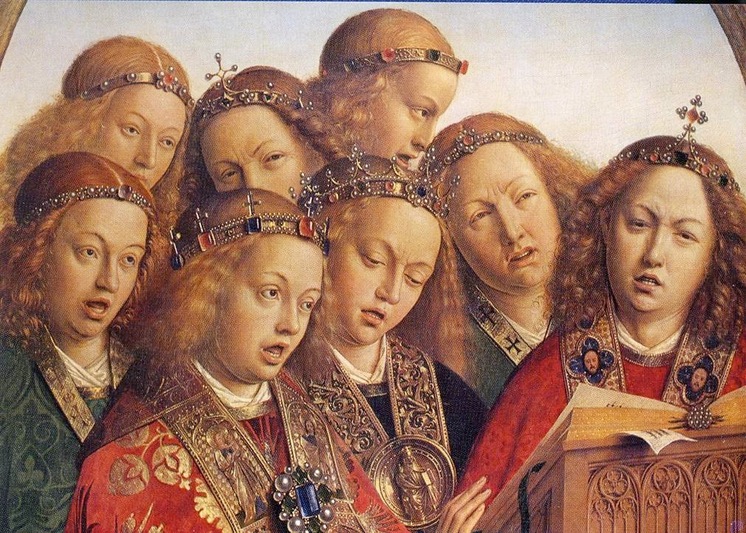
What do you think Heaven sounds like? In the first reading, St. John describes it for us. “I heard a sound from Heaven like the sound of rushing water or a loud peal of thunder. The sound I heard was like that of harpists playing their harps.”

The sound of Heaven that John describes is powerful and beautiful. It is like the onslaught of a tidal wave or a thunder burst, yet it has the harmony, clarity, proportion and perfection of supreme beauty. What John is hearing is the sound of worship in Heaven.

In the Gospel, we hear another sound, neither great nor gorgeous in itself: the quiet chinking of two small coins. Yet, this simple sound has echoed for two-thousand years and millions have been drawn to it. When Jesus Himself heard the sound of the faithful, poor widow’s generous gift, He was moved to speak words in praise. Despite its subtlety, it reminded Jesus of a sound He knew well; it reminded Him of the sound of Heaven.

In our own simple ways, with unending joy, let us echo on earth the song of the angels in Heaven as they praise God’s glory for ever.

Laodicean Christians — Tuesday, 33rd Week in Ordinary Time—Year II

November 16, 2010

The Christians of Laodicea lived in what is now southwestern Turkey. Today, their city is merely ruins, but in those days it was a modern, rich, commercial center of banking, industry, and entertainment. The Christians there were well-off and contented, but Jesus knew them and their city well and he was not content with them. In the Book of Revelation He rebukes them, “You say, ‘I am rich and affluent and have no need of anything,’ and yet do not realize that you are wretched, pitiable, poor, blind, and naked.”

A few decades before, in 60 AD, an earthquake ravaged their city and the Roman emperor offered to send them money to aid in their recovery, but within a year, the wealthy Laodiceans had finished rebuilding using only their own resources. To a people too rich and proud to accept a king’s aid, Jesus says, ‘I advise you to buy from me gold, (good works) refined by fire, so that you may be (truly) rich.’

Laodicea was home to the Marshfield Clinic of its day in the field of eye medicine. There they produced of an ointment for the eye which was used throughout the Roman empire. But Jesus urges the Chrisitians, ‘buy (true) ointment to smear on your eyes so that you may see (the truth).’

Laodicea was also known for its fine, soft, black cloth, made from the wool of the region’s excellent dark sheep. But Jesus sees the Christians’ immorality and warns, ‘put on white garments, so that your shameful nakedness may not be exposed.’

Laodicea had an aqueduct which carried water to the city from hot springs some five miles away, but by the time this water would get to them, it would be merely lukewarm; neither cold enough to cool in hot weather, nor hot enough to warm-up in cold weather. Jesus likens the Laodicean Christians to their water supply. “I know that you are neither cold nor hot. I wish you were either cold or hot. So, because you are lukewarm, neither hot nor cold, I will spit you out of my mouth.”

Jesus Christ, being divine, knows the Christians of Laodicea perfectly well. By their values, words, and actions, He sees them living not much different than any other Laodiceans. And because He loves them, he corrects them, and warns them that they need to repent and to start getting serious about living true, Christian lives.

Do we live in a Christian nation? Compared to the secularized countries of Europe, or to the Asian or African countries where Christianity is the minority religion, the United States is a very Christian nation. On the other hand, only about one in four Americans went to Church last weekend. [source] Only one in four Americans offered up an hour to God, to thank Him, worship Him, and to fulfill the commandment, “You shall keep holy the Lord’s day.” Of course, being a Christian is about more than just going to Church, but this gives us some indication of our society’s commitment to Christ.

To think of our country as a Christian nation at a 25% level, or to a 25% degree, is both discouraging and encouraging. It is discouraging that our devotion is not greater, but there is encouragement to be found in this: if our society’s half-hearted, or even quarter-hearted commitment to Christ and His Gospel can do as much good as we see now, imagine what things would be like if we were whole-heartedly His disciples.

As G.K. Chesterton said, “Christianity has not been tried and found wanting; it has been found difficult and not tried.” The Gospel is supposed to be radical. It’s supposed to change the world. If there is nothing very counter-cultural about your life as a Christian, then you are not yet living out the Gospel like Christ calls you to do. If you are living the same way as everyone else in our present-day Laodicea, then Jesus Christ’s wake-up call from the Book of Revelation through the centuries is addressed to you.

Jesus is looking for people who will go out on a limb for Him, people like Zacchaeus, people who will risk the mockery and judgment of others, people who would give half of their possessions to the poor if that is what Christ wills, people who will rise and open the door for Christ when they hear Him knocking. Jesus is looking for disciples who seek the riches of being a true and whole-hearted Christian. With a person like that, Jesus can change the world.

Go to church every weekend, pray every day, and do not merely learn about our faith but act on it in your life. Jesus Christ pleads to you, through me and your teachers who have witnessed their faith to you, please: go out on the limb for Him.

True Christian Soldiers — November 11 — St. Martin of Tours — Veterans Day

November 11, 2010

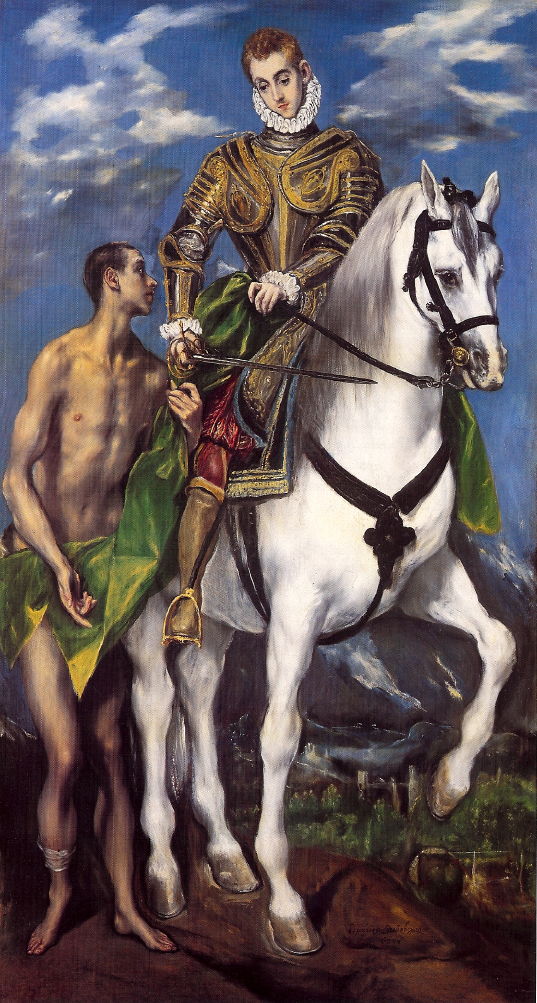
This morning I would like to tell you two stories. The first is the story of a cavalry officer who was sent to serve in France. He grew up in a military family and got enlisted when he was still only a teenager. Interestingly, his parents were not Christians, but this young man was studying in preparation to become a one himself. He was what we call a catechumen.

One cold winter day, at the gates of the French city of Amiens (A-mi-en), he encountered a shivering, half-naked beggar. This miserable sight disturbed the young soldier and he drew his sword from its scabbard. Because he had nothing else to give the poor man, the soldier took his own cloak, cut it in two pieces, and reaching down from his horse handed one half to the beggar. Giving away half of his cloak was no small gift, considering that the soldier himself needed to keep warm, too. In this act, he had loved his neighbor, the beggar, as himself.

That night, the soldier had a dream in which he saw Jesus Christ, surrounded by angels, and dressed in half a cloak. He heard a voice say to look at the garment and say whether he recognized it. He then heard Jesus say to the angels, “Martin, as yet only a catechumen, has covered me with his cloak.” Very soon after that dream, Martin, the 18-year-old Roman soldier, was baptized. He would go on to become a monk, a priest, and a bishop. Today we call him as St. Martin of Tours, and celebrate him as the patron saint of soldiers.

My second story comes from more recent times. A great and horrible war was raging, as it had for more than four years, killing every day. Many people could see no end in sight. But then, ninety-two years ago today, the wonderful order came announcing an end to all armed conflict at the 11th hour, of the 11th day, of the 11th month, of the year 1918. This was the end of the First World War and it came to pass on the ancient feast day of St. Martin of Tours, the 11th of November.

Do you think that St. Martin in Heaven may have prayed for his beloved France and for their enemies, too? Do you think that he interceded before God for peace on Earth? Of course he did, for he was a true Christian soldier. No true Christian soldier loves war, or even hates his enemy. He fights not because he hates who is in front of him, but because he so loves what is behind him. The Christian soldier trains for war because he loves peace.

Today we thank and honor our veterans for they have served to defend our nation and freedom-loving people around the world. Through the intercession of St. Martin of Tours, let us pray that our country, history’s most benevolent superpower, may be served by Christian soldiers like them for many peaceful generations to come.

The Author of Life — Tuesday, 27th Week in Ordinary Time—Year II

October 5, 2010

If you took our Catholic faith and boiled it down to its most central and fundamental truths what would you have? I think you would end up with these four foundations:

First, that God is three divine persons who are one in being, a union we call the Trinity. Second, that Jesus Christ is both God and Man, a reality we call the Incarnation. Third, that Jesus Christ, to save us from sin and death, suffered, died, resurrected and ascended, an event we call the Pascal Mystery, and from which Jesus empowers His Church’s sacraments. And fourth, that every, single, human being has inherent worth and surpassing value, a truth we call the dignity of the human person. It is this fourth fundamental truth of our Catholic Faith that I will focus upon today.

The psalmist says to God:

“Truly you have formed my inmost being;
you knit me in my mother’s womb.
I give you thanks that I am fearfully, wonderfully made”

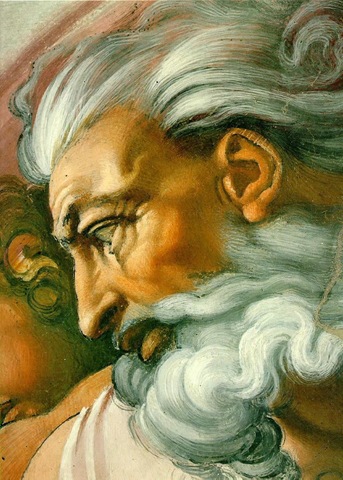
From the womb, God fashioned your inmost being, giving you an intellect to know, a freewill to act, and a desire for loving communion with others. Made in God’s own image and likeness, made for a purpose and made for love, every human life is precious from conception to natural death.

Sadly, laws sometimes disregard this dignity, and even Christians can forget it too. Martha looked down on her sister because she thought Mary was not being useful enough or productive enough. Martha only saw Mary as causing a burden to herself, yet Mary was exactly where the Lord willed her to be.

As Mrs. Eichstadt said before, God has a providential plan for each one of you. Like St. Paul, the Lord has set you apart from your mother’s womb for a great story which He has in mind. But anyone who would presume to cut short an innocent life would deprive God of a masterpiece.

Assisted suicide or euthanasia rips out the crucial final chapters. Suicide, murder, or neglect of our neighbor unto death, would end a story halfway. And abortion prevents the story from ever being told. Jesus is the author of our lives and He is to be the one who decides when our lives end. Maybe you will always remember the homily when Father tore up a book, but remember this too: every human life is precious and worth more than many, many books.

Job’s Desolation — Tuesday, 26th Week in Ordinary Time—Year II

September 28, 2010


The sadness of Job is like a heavy stone hanging from his neck.

In his pain, he seems to forget that he is surrounded by people who care about him very much. When Job’s friends learn of his misfortune they come to him. For days and nights they sit with Job, listening, not saying a word, yet saying a great deal by just being there. He is not alone.

In his despair, Job imagines that his life will never get better. Yet he cannot see the future. The Lord is going to bless Job and happiness will return to him.

In his darkness, Job wishes he were dead. He asks, “Why did I not perish at birth?” Yet death is not the way. When the Samaritans rejected Jesus, James and John asked to rain down fire, but Jesus rebuked them for it. As long as there is life, there is hope, for the Samaritans, and for us.

How wrong it is if we mistake death for the way of peace, for that is not Christ’s answer. How wrong it is if we imagine that we will never be happy again, for sun’s light shines beyond our horizon or behind the clouds, even if we cannot see it. And how wrong it is if we forget that people care about us, for each of us here is loved more than we know.

The Scandalous Cross — September 14 — Exultation of the Holy Cross

September 14, 2010

Jesus died on a cross. But what if Jesus had died differently? Then, instead of crosses, Christians might wear little nooses. Under different circumstances, we might be celebrating the Feast of the Holy Electric Chair, or the Exultation of the Lethal-Injection Syringe. These images unsettle us, but we are comfortable with the idea of Jesus’ cross. However, whenever we find ourselves complaining, we are feeling the scandal of the cross.

We will naturally dislike it when life is hard on us, but “do not forget the works of the Lord.” Jesus’ crucifixion, despite its pain, injustice, and seeming futility, was the means for His glory and for our salvation. With Christ we become invincible, because even our suffering profits us. So when unavoidable crosses come, patiently bear them and use them as a powerful offering to God.

The Child Mary — September 8 – Nativity of Mary

September 8, 2010

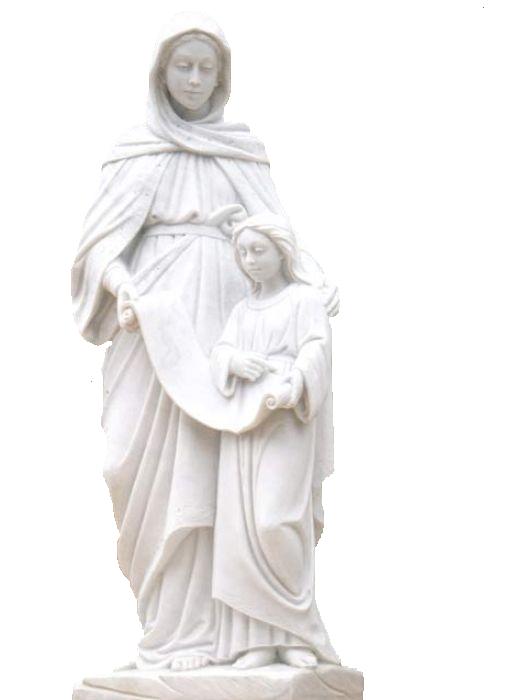
Nine months ago we celebrated Mary’s Immaculate Conception. Today we celebrate her birthday. By my estimation, Mary is now about two thousand, twenty-five years old, but if you saw her I’m sure she wouldn’t show her age. How old does Mary seem when you picture her in your mind? I’d bet that you think of her as fully-grown up; like your mom or your teachers. But today’s feast reminds us that she was once your age too.

Mary was little once too, and just because Mary lived a life without sin doesn’t mean that her childhood was a bed of roses. I think adults sometimes forget how hard and stressful things can be when you’re little, but Mary remembers everything perfectly well.

She remembers what it was like to be little like many of you. How she got scared when Nazareth’s big, neighborhood dogs would bark at her. How loud cracks of thunder frightened her at night and made her hide under the covers. She remembers how other girls made fun of her, for being different or weird, and she remembers how she cried. But even when she got sad or scared, Mary knew that she was loved and not alone. Not only did her parents love her, but she was convinced of God’s love, too, and understood that He was never far from her. This consoled Mary and reassured her that everything would be alright.

After our resurrection, when we get glorified bodies like Mary has now, we will have some new abilities. We will be able to go anywhere we want in an instant. And our glorified bodies should allow us to be more than one place at once. (It only makes sense that if saints on earth can bi-locate, then the  saints in Heaven should be able to as well.) And I also suspect that we will be able to change ourselves back and forth to whatever age we choose.

All this is to say that if at any moment you want Mary to be with you for consolation and support, you only need to ask her. Knowing her abundant love, I can’t imagine she would refuse. And when you think of her with you feel free to picture her at your age, even if you’re little. She understands you, loves you, and can relate to your situations more than you know. Like her Son, Mary is always with us, especially when we ask her be.

Preparing for Tests — Friday, 8th Week of Easter

May 31, 2010

Today were heard from the first encyclical of the first pope. Today’s first reading came from the First Letter of St. Peter. And what he said applies to you: “The end of all things is at hand.” Originally, St. Peter meant that Christians should always be ready for the end of their lives or the end of the world (whichever comes first.) But this morning I think we can hear the Holy Spirit speaking to us about the coming end of this school year.

At Columbus, the end of all things is at hand: that means finals week, with all of its due dates, studying, and exams. Don’t be surprised that this trial by fire is occurring among you, as if something strange were happening to you. Finals week happens every year. I know that finals time is a challenge and that it takes some hard work, but why should this trial overwhelm us or make us behave ugly towards each other? If we have Jesus Christ in our lives we should face difficulties differently than the world does. The beauty of a soul at peace in Christ, is seen through the person’s  graceful actions.

So how should we face our finals? First of all, have faith in God, and remain at peace, confident that no matter what, everything is going to be ok.  Second, be serious and sober-minded. You’ve worked for the whole semester. Now keep going just one more week to maintain or even improve those grades you’ve worked for all semester. And third, above all and through it all, let your love for one another be intense, be hospitable to one another without complaining, and as each of you has received gifts. Use them to help one another.

At this Mass, prepare yourself. Ask Jesus for constant peace, for steady focus, and for generous love throughout finals week so that you may perform at your best in every respect. It’s nice to get good grades in school, but that’s not the most important thing. The most important thing is to be prepared for the final exam which awaits us all.

God’s Favorite Instrument — Tuesday, 6th Week of Easter

May 11, 2010

What is God’s favorite musical instrument? Harps? Organs? Bongos? I believe it is the instrument He created Himself, the one which He loved so much that He gave one to each of us for free–the human voice.

God is pleased when we sing for Him. St. Augustine said, “The person who sings prays twice.” Some people say this is because singing adds melody to our words of prayer. But it could be that a person sings twice because singing enlists the heart to join in the prayer of the mind. Singing lifts up our hearts to the Lord.

In today’s first reading, the missionaries St. Paul and Silas get beaten and stripped. They are locked in prison with their ankles placed in stocks. Things are at their darkest and most difficult time, but the night finds them not only praying, but singing hymns. This lifts their spirits, shakes loose their bonds, and pours out grace on that place. Singing makes a difference.

Maybe you feel like coming to our weekly school Masses is like being led somewhere in shackles. But if you must be here either way, why not make the most of it? Singing at Mass (and I mean really singing) is liberating, and a gift to God. 

If God has blessed you with a beautiful voice, sing strongly, as if to say to God, “You gave me this gift, and I offer it back to you.” If He has not blessed you with a good voice, you should still sing boldly, as though to say, “You gave me this voice, and I’m going to let you have it.” Your voice is God’s favorite instrument. So at this Mass and at every Mass, let Him hear it.

3 What If’s — Tuesday, 5th Week of Easter

May 4, 2010

Before today’s Mass, I would like you to imagine three “what if” scenarios. How would you respond in the three situations I’m about to describe?

First:  Imagine, what if, at this morning’s school Mass, the great apostle St. Paul was going to preach to you? How interested are you in whatever he has to tell you?

A second scenario: What if there were a book out entitled, Actual Prayers of Jesus and Mary, and what if there was strong archeological evidence to support that these really were prayers which Jesus and Mary prayed frequently during their lives on earth? How interested are you in discovering these prayers? How powerful would it be for you to pray their prayers?

The third and final scenario: What if I were to tell you, calmly and with firm conviction, that I had received a message for you, a revelation, from Jesus Christ, which He wanted you to hear through me at this Mass? How interested and open are you to receiving such a message?

Of these three scenarios, which one would you most desire to be true?Now listen closely…. All three of these scenarios will be realized, will be true, at this Mass.

The first scenario will be realized: St. Paul will indeed preach to you–in this morning’s first reading. Perhaps St. Paul did not realize it when he first spoke these words, nor perhaps did the sacred author who wrote them down in the Book of Acts, but the Holy Spirit was inspiring, was guiding these words.

And the Holy Spirit did not only have the first-century Christians of Lystra, Iconium, and to Antioch in mind when He prompted these words. St. Paul’s inspired message is meant for us today just as much as they. So this morning, St. Paul will preach a message (though only one sentence long) which is truly intended for you.

As to the second scenario, where is this book containing Actual Prayers of Jesus and Mary? We read from it at almost every Mass, as we will today. This book is the Book of Psalms. In the day of Jesus and Mary, all devout Jews prayed these 150 psalms and they usually knew them by heart. Jesus and Mary prayed the Psalms too. These prayers were inspired by the Holy Spirit to be prayed by all God’s people, including us today, but one could say that the Psalms find their fullest voice through Jesus and Mary. In today’s responsorial psalm, we will join Jesus and Mary in one of their powerful prayers in praise of the Lord.

The third scenario will also be true at this Mass: I have indeed received a message from Jesus Christ which He wants you to hear through me this morning. You will hear His message addressed to you in the proclaimation of the Gospel. At the Last Supper, Jesus was not only speaking to the disciples seated around Him. With His divine sight, Jesus saw all of us here then, and He speaks intending His words for us this morning just as much as they. How much will you allow Jesus’ message to you to affect and change you?

We believe that, “When the Scriptures are read in the Church, God himself is speaking to his people and Christ, present in his own word, is proclaiming the Gospel.” At this and at every Mass, let us come to the Scriptures expecting much, so that we may find much, and receive in from them in abundance.

The Miraculous Pool — Tuesday, 4th Week of Easter

April 28, 2010

Once upon a time, in a certain forest clearing, there was a miraculous (and strange) pool of water. The pool’s waters’ were miraculous, having unique healing and life-giving properties, but something else made this pool strange. When travelers would come upon it, the pool would appear differently depending on how the person approached it.

For those who expected to find something remarkable, the pool was large and deep, and drinking its waters was powerful. But for those who came expecting little or nothing (and there were many such people,) the pool had the appearance of a small, cloudy puddle, and they would not drink from it.


Why did so many come expecting so little, and walk away unchanged? Maybe they had passed by that clearing a hundred times before; and, never expecting much, never had found very much. Maybe they dismissed the whole idea as superstition, as an old myth. Maybe they had never seen evidence that this pool was any better than any other because the people whose lives had been changed by its waters were too timid to give a strong witness to its power and reality.

Now we come to the point of this parable of mine. Encountering our Catholic Faith, the Mass, and the Scriptures is a lot like encountering this miraculous pool. When we expect much, we find much, and receive a great deal. And when we expect to get nothing from them, the usually meet our expectations.

I believe our Catholic Faith is a miraculous pool with the power to change everything. Walking in Christian faithfulness is hard for everyone at times, but I have seen too much, firsthand and from others’ experiences, ever to walk away from Christ and His Church. I have forsaken all other paths for my one life because I am convinced that our Faith, the Mass, and the Scriptures are true, and powerful, and good. Yet even I often need to remind myself not to settle, but to go more deeply and prayerfully into these dangerously familiar things. And when I do, I receive more. I think we all need to receive more. So, in the weeks ahead, I’m going to teach, through pre-Mass talks like this one, or through homilies during Mass, about ways to drink from the miraculous pool to our greater benefit.

For this morning’s Mass, I have four suggestions:

1.  Pray to the Holy Spirit for a more expectant and receptive heart.
2. Form a Mass intention to pray for during the Eucharistic prayer.
3. During the psalm, try to find the Virgin Mary or the Church in it.
4. Listen to Jesus speak to you in the Gospel for He will be speaking to you through His word.

 Let us approach this miraculous pool expectantly.

One Catholic Church — Tuesday, 3rd Week of Lent

March 9, 2010

In the first reading we hear the ardent prayer of an Old Testament Jew named Azariah who finds himself in a pretty hot spot. He fervently prays, “… O Lord, do not deliver us up forever, or make void your covenant. [Save us for] the sake of Abraham, your beloved… to whom you promised to multiply … offspring like the stars of heaven, or the sand on the shore of the sea.”

This was God’s covenant promise to Abraham, and God has indeed made Abraham’s spiritual offspring vast and numerous. Today, half of the people on earth claim Abraham as their father in faith—these are Christians, Muslims and Jews who all seek to worship the God of Abraham.

Yet Jesus prayed that all people would be one in Him, as one holy family of God—a diversity of persons sharing one perfect unity. To achieve this goal Jesus established one, holy, catholic, and apostolic Church, so that all may be one, as He and the Father are one. Our Church was established by Jesus, Himself, who said to Peter, our first pope, “You are rock, and upon this rock I will build My Church.”

Our Catholic family is made up of every race and reaches to every nation. To illustrate this, I would ask all high school students; freshmen, sophomores, juniors, and seniors, to stand up now. Imagine that these 146, or so, young men and women represent the world’s nearly 1.2 billion Catholics. Each one represents about eight million of our  Catholic brothers and sisters.

In the United States we have 68 million Catholics, but this is only 5.7% of all the Catholics in the world. I would now ask the male freshmen to remain standing and for everyone else to sit down. These guys represent the Catholics of the United States, plus the rest of North America and the Caribbean—just 9% of Catholics worldwide.

The freshmen can sit down and I would ask the male sophmores to stand up. This is Asia, Australia, and the Pacific Islands, totaling 11% of all Catholics.

You can sit and I’ll ask the senior males to stand. This is Africa’s Catholics, 12% of the Catholics in the world.

You can sit and we’ll have the male juniors and the female seniors rise. This is Europe, 27% of all Catholics.  (The pope is in there somewhere.)

You can sit and we’ll have our largest region of all, represented by the female juniors and the full sophomore class, please stand. This is Central and South America, where 39% of all Catholics live.

So, as you can see our Catholic family is far more diverse than you might have imagined. We are young and old, men and women, rich and poor, sinners and saints.

Our Catholic family not only spans the globe, it also spans the centuries. This is reflected in the ancient prayers we sing today, such as the Latin Sanctus and Agnus Dei, the Kyrie which is ancient Greek, and the Amen which is Hebrew.

Let me put this another way: Could I have one high school student please stand up. This one person represents about 13½ years, which is about how long you have had to explore and get to know about your faith. Now could all of the high schoolers please stand up. You represents all the years that the Church has been on earth, since 33 AD. Our Church has been around a lot longer than we have. You may be seated.

Roman Catholics make up the largest religious denomination in the United States.  However, it is said that the second largest denomination in our country would be former Catholics. Tragically, many Catholics leave the Church. Oftentimes, they experience one or two parishes and a couple of priests, in one region, of one country, over a handful of years, and they imagine that they have exhausted the riches of the 2,000 year-old worldwide Church and Faith of Jesus Christ. But in reality, you can explore the mysteries of Catholic beauty and truth for a lifetime and never exhaust them.

My message for you, with all passionate the urging of Jesus Christ, is this: always remain in the Church that Jesus Christ founded. Never walk away from the fullness of God’s family, but dwell in the household of God.

Sources:
Distribution of Catholic Population, by Region: 2000
USCCB: The Catholic Church in the United States At A Glance

The Our Father — Tuesday, 1st Week of Lent

February 23, 2010

When the apostles asked Jesus how they should pray, Jesus taught them what is called the perfect prayer, the “Our Father.” It is a concise prayer, with just seven petitions (a perfect number for the Scriptures,) yet there is great depth beneath its simplicity.  This morning I show you three insights into this prayer which I hope will come to your mind from time to time as you pray this prayer for the rest of your lives.
First, Jesus teaches us that we are to pray to “Our Father.”  This is a far more wonderful thing than we realize.  To see its greatness, just imagine if the prayer were different. We do not pray, “Our tyrant, who art our ruler, before thee we grovel.” Nor, “Our master, we art thy slaves, for thee we must toil.” And we do not say, “Unknowable one, whom none can name, unapproachable be thy being.” We pray, “Our Father who art in heaven,” hallowed be His name.  We have the privilege to call God our Father on account of our faith in His Son, Jesus Christ. Jesus is God’s Son by His nature, (God from God, light from light,) but we are made God’s children by adoption through Christ. One way to see why this is such a big deal is to imagine if God were everyone’s heavenly Father, except for you. Whatever applies to a good father’s relationship with his natural children, also goes (with limited exceptions) for the perfect Father’s relationship towards us, His spiritual children. Keep in mind how privileged we are when you pray to “Our Father.”

The second insight this prayer yields is the proper attitude we should have towards prayer. Perhaps you’ve heard some people say, “Well, if you like to pray that’s fine—I mean, if that helps you to motivate yourself that’s great,” as if the only power of prayer was to change one’s personal attitude. This is something said by people who don’t pray, and if we thought as they did then we wouldn’t pray either, for who would bother to ask someone else to receive what is already in one’s own hands (i.e., the choice of one’s own attitude.) A second motivation among people who do not pray is more faithful, but also misguided. These say, “I can’t change God’s mind, so why should I bother to pray? Whatever He wills will be, whether I pray to Him or not.”

The first three petitions of the “Our Father” are worded carefully. They do not say, “Our Father, who art in heaven, make your name holy among us, make your kingdom come upon us, and make your will be done among us.” This would put everything on God. Nor do the opening lines read, “Our Father, who art in heaven, we will glorify your name, we will make your kingdom come, and we will make your will be done, on earth as it is in heaven.” This would put everything in our own hands.

The prayer which Jesus gives us does not put everything on God, or put everything on us. Jesus presents the middle and true way of faith. We are not called to an independent activism, nor to a vacant passivity, but to an active receptivity in relationship with God. Like the Virgin Mary, we are to stand before our Father, with a spirit of active receptivity, and pray, “Behold, I am yours, may your will be done, in and through me, and on earth as it is in heaven.”

There are some things which are simply beyond my human ability.  For instance, I can no more forgive my own sins than I can pull up on my belt loops and hold myself up in midair. However, that does not mean I can do nothing to help my situation. I can first forgive others as I wish to be forgiven. I can pray, go to confession, and tell God that I’m sorry. God calls us to do our part and to cooperate in His work.

Maybe this explains why Jesus could not work great miracles where people were lacking faith. It was not that such things were beyond God’s omnipotent power, it is that God insists upon doing His works in relationship with us, rather than entirely apart from us. (This is His purpose in establishing the Church—to do His saving work with and through us.) Like St. Augustine said, ‘The God who created us without us, will not save us without us.’

The third and final insight into the Lord’s Prayer regards the meaning of the petition for “our daily bread.” We say, “Give us this day our daily bread.” We can pray for this “bread” in three senses; literal, spiritual, and Eucharistic.

First, there is the literal sense, praying that God would provide for our material needs in life; such as housing, clothing, and food. We take these things for granted—your daily bread already waits for you in the cafeteria or in your kitchen at home—but there are many people around the world, who are much less well-off than we are, who pray these words from their hearts every day. Occasionally we should call these brothers and sisters of ours to mind and pray these words as intercession on their behalf before our Father.

Second, there is the spiritual sense, asking for the graces and helps that money can’t buy; such as peace and virtue, faith, hope, and love. Without these things, even a rich man remains impoverished, for man is not meant to live on material bread alone.

Third and finally, there is the Eucharistic sense, which asks for the bread from this altar which is God’s Son. Whenever we receive Jesus in the Eucharist He remains with us and in us until we receive Him again (unless we should disinvite and evict Him by committing grave sin.) In this way, Jesus persists as our “Daily Bread.”

So when you pray the “Our Father” realize your privilege in being His child through Jesus Christ. Consider that the coming of the Kingdom is a joint effort of God with man, in which our prayers play an important part. And pray for all your daily bread; literal, spiritual, and Eucharistic. May you remember these insights for all of your life and may the words of Christ’s perfect prayer make you a fruitful child of our Father.
Unashamably Christian — Ash Wednesday at the School

February 17, 2010

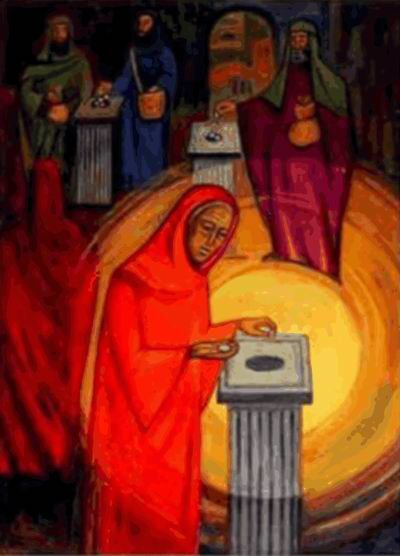
In today’s Gospel, Jesus warns us against giving so that others see us giving, against praying so that others see us praying, and against fasting so that others see us fasting. Yet, I don’t think that showy religiosity is where the danger lies for us.

In Jesus’ day, the popular culture proudly believed in God and respected religious piety. Hence, those people were tempted to publically flaunt their acts of prayer, fasting, and almsgiving and thereby gain the respect and praise of others. But today, in our secularized culture, the temptation is to do the opposite, and to do something far worse. We are tempted to deny our faith in Jesus Christ and His teachings before others because we’re afraid of what they might think of us.

The hypocrites who pray to be seen by others limit their rewards, but if we deny Christ lose our rewards entirely. I’ve touched on this topic twice before from this ambo, as recently as three weeks ago, but I feel that it is important for me to emphasize it, and that it’s important for you to hear it. For Jesus tells us:

“Whoever is ashamed of me and of my words, the Son of Man will be ashamed of when he comes in his glory and in the glory of the Father and of the holy angels.” “Everyone who acknowledges me before others I will acknowledge before my heavenly Father. But whoever denies me before others, I will deny before my heavenly Father.”

This Lent, let us begin to put God first; in our prayers, in our penances, and in our personal relationships.

Are you someone who will be so embarrassed by having an smudge of ash on your forehead that you’ll want to wash it off the first chance you get? Well then, you’re someone who needs to leave it there until it wipes away on its own.

Are you are someone who sees good deeds that call out to be done but pass them by because of the people who would see you doing it?  Then you need to bite the bullet and start doing those hard-good-deeds anyways.

Are you someone who will have more to say in gratitude to God after Mass this morning than is allowed by the eight seconds before your pew starts clearing-out? Well, then you need to stay in your pew to say what your heart wants to say as long as you need to say it (without, of course, being late to class.)

Now, these are not examples of performing righteous deeds so that others may see you.  This is doing the right thing even if others might happen to see you doing it.

If you’re self-conscious about other people seeing your devotion to the Lord (for instance at Mass) do not pray that you would be invisible to them; ask that they would invisible to you and continue as you would.

You are called to be the light of the world. People do not light a candle and then put a bucket over it; it is set on a lampstand, where it gives light for everyone. Just so, your light must shine before others, that they may see your good deeds and glorify your heavenly Father.

This Lent let us begin to love and serve the Lord in the world. This Lent, let’s begin to shine.

The Fool’s Blindness — Tuesday, 5th Week in Ordinary Time—Year II

February 9, 2010

Some priests like to begin their homilies with jokes. Today I’m going begin by telling you a few jokes—some very, very old jokes. In fact, they come from the oldest joke book in the world, a collection of 265 jokes from the 4th century A.D. entitled The Philogelos, or (in English) The Laugh-Addict.

One day an intellectual bumped into a friend and said to him, “I heard you were dead.” “Well,” said the friend, “As you can see, I am very much alive.” “Yes,” [replied the other,] “but the person who told me you were dead is much more reliable than you.”

[On another occasion,] A doctor stole the lamp of a man whom he was treating for inflammation of the eyes. A few days later, the doctor asked the patient how his eyes were. “It’s a funny thing, [Doctor,] ever since you treated them I haven’t been able to see my lamp.”

[And finally,] An intellectual was [once] on a sea voyage when a big storm blew up, causing his slaves to weep in terror. ‘Don’t cry,’ he consoled them, ‘I have freed you all in my will.’”

Now these three jokes have something in common, besides being very old. They all share the have comedic device: a foolish person who focuses on the wrong thing, like the patient who mistrusts his eyes more than his doctor. This is called majoring in the minors, or as Jesus would say, “straining the gnat and swallowing the camel.” In the Gospel today, Jesus really takes it to the scribes and Pharisees for doing this sort of thing: “You disregard God’s commandment but cling to human tradition. … This people honors me with their lips, but their hearts are far from me…”

So do we focus on small details of our faith and neglect what’s really important? For instance, next Wednesday is Ash Wednesday, the beginning of Lent, and during Lent we usually give up something we enjoy as a form of penance until the joyful celebration of Easter. Now keeping a Lenten penance is a good tradition, because penance helps us to shed old sins and to grow in our ability to do good and to be happy. But… if we give up pop, cookies, candy, or ice cream, while we neglect to go to Sunday Mass, we are keeping a human tradition while we neglect God’s command: keep holy the Lord’s day. Instead of doing neither this Lent, please do both.  Take a penance and go to Mass every weekend for the love of God.

Maybe your family doesn’t go to Mass on weekends, but that doesn’t mean that you can’t. If you love God enough to ask your parents’ permission to go by yourself or with a friend this Sunday, I doubt you will need to go alone a second time. For you will provide your parents with a needed reminder about God’s important in our lives, and I bet you that at least one of them, if not the whole family, will come with you every week after.

So let us keep first things first, and not be stupid, like the man who was swimming when it started to rain; and dove to the bottom, to keep from getting wet. This Lent, let us keep the Lord’s Day, every Lord’s Day, holy. The reason the Lord calls you out is to call you to Himself.