Archive for the ‘Homily’ Category

Lifted Up & Exalted

September 13, 2025

Feast of the Exultation of the Holy Cross
By Fr. Victor Feltes

During their long Exodus journey, the Hebrews once again began rebelling, despising God and his servant Moses. They even sinfully complained about the Manna bread God was providing for their survival in the desert saying, “We are disgusted with this wretched food!” So God sent venomous serpents—or perhaps he merely lifted his shield of protection around their camp—resulting in many getting snakebitten and dying. So the people repented and pleaded with Moses, who prayed to the Lord. The Lord then commanded Moses to fashion a bronze serpent and affix it to a pole so that whoever looked at it would live. Moses and the Hebrews did not realize this at the time, but that bronze serpent on a wooden pole was a symbol pointing ahead to Jesus Christ who would die for our sins on his wooden Cross so that we may live.

In today’s Gospel, Jesus says: “Just as Moses lifted up the serpent in the desert, so must the Son of Man be lifted up, so that everyone who believes in him may have eternal life.” Later in John’s Gospel, Jesus uses the same Greek verb to declare, “When I am lifted up from the earth, I will draw everyone to myself.” And the inspired author notes, “[Jesus] said this indicating the kind of death he would die.” But this same Greek word for “lifted up” or “exulted” appears again later to recount Jesus’ Ascension and heavenly enthronement. The Book of Acts says, “God exulted/lifted up [Jesus] to his right hand as leader and savior to grant repentance to Israel and forgiveness of sins.” “Jesus, exulted/lifted up to God’s right hand, received the promise of the Holy Spirit from the Father and poured it forth….” This is what I want to highlight: how the first lifting up of Jesus leads to the second; his exultation on the Cross leads to his exultation in heaven.

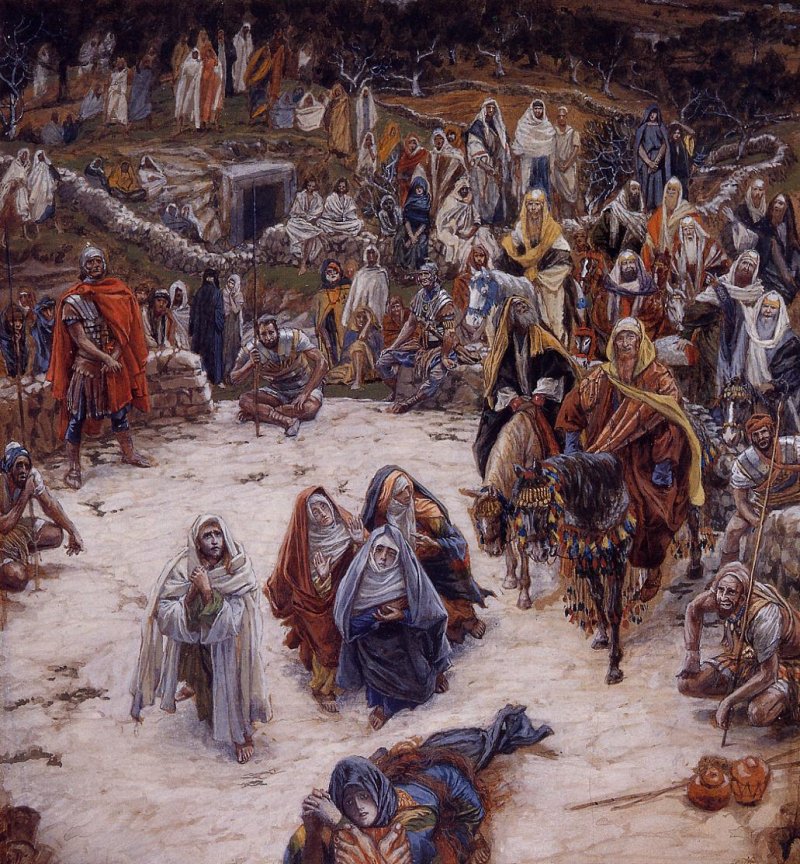
Christ Jesus, though he was in the form of God, endured our human suffering and death, even death on a cross. And because of this, God greatly exalted him, and bestowed on him a heavenly glory above any other glory. The early Christians fully believed in Jesus’ death by crucifixion, but they did not depict Jesus on the Cross in sacred art for several centuries. This was partly due to persecution but also because crucifixion still remained so scandalous, horrific, and shameful in their culture. This Sunday, we celebrate the Exultation of the Holy Cross and I want you to behold Christ crucified. Too many are turned away from him—the God who suffered, died, and rose for them—and we see where their dark paths lead. But the message I feel moved to preach to you who have kept your eyes on Jesus and walked with him for years is to understand that our crosses lead to glory.

Each of us is going to suffer in this world and—unless Jesus Christ comes back first—each of us will taste death. But just because you suffer greatly does not necessarily mean you are being punished for doing something wrong like the Hebrews in the desert were. And suffering does not mean that you are not loved by God. (Jesus Christ was perfectly good yet God’s Beloved Son was murdered.) And when you suffer, no matter how incomprehensible or unjust the pain, realize where you are: on your Cross with Jesus Christ. Whatever you endure with him advances his mission of salvation in this world and increases your heavenly glory, for it conforms you to himself. St. Peter wrote, “Beloved, do not be surprised that a trial by fire is occurring among you, as if something strange were happening to you. But rejoice to the extent that you share in the sufferings of Christ, so that when his glory is revealed you may also rejoice exultantly.” Whatever may happen, let nothing deprive you of your Christian peace or purpose and never forget the incredible love that our God has for you and everyone.

Unconditional Alliance

September 7, 2025

23rd Sunday of Ordinary Time
By Fr. Victor Feltes

At the Last Supper, when Jesus told his disciples “one of you will betray me,” all of them replied “Surely, it is not I, Lord,” except for Judas. Judas answered, “Surely it is not I, rabbi (or teacher).” Jesus Christ must be more than merely our teacher. He insists on being our supremely-loved Lord. He told the crowds following him: “If anyone comes to me without hating his father and mother, wife and children, brothers and sisters, and even his own life, he cannot be my disciple.” Does Jesus really want us to be hating our loved ones? It would be strange for him to command that we love our enemies yet hate our families. Parallel Gospel passages prove Jesus is actually forbidding us from preferring anyone or anything to him, even our loved ones or our own lives. He must be our number one.

The Lord is like the conquering king in today’s parable; the King of kings and Lord of lords who has a rightful claim on everything. He made everything, sustains everything, and without him nothing finds true fulfillment, for he is Goodness itself. He marches toward our petty kingdoms with vastly greater forces. Can anyone successfully oppose him? No, only to our own destruction. So while his hosts of angels for the Day of Judgment are still far away, we should seek his peace terms, welcoming his offered covenant. The Lord seeks our unconditional surrender. He says “anyone of you who does not renounce all his possessions cannot be my disciple.” We must place everything we have and everything we are at his disposal. But his goal is not to destroy us like enemies or to dominate us like slaves but to have us as his siblings and friends. He says, “I came so that they might have life and have it more abundantly.” Ask yourself and seriously consider, “What am I holding back from him, keeping me from greater faithful love and fruitfulness?

Entering into Christ’s covenant is only the beginning. A tower (like the one in Jesus’ parable) is not finished by merely laying the foundation. Towers in Old Testament times symbolized security. They allowed you to see your enemies approaching and then to hole up behind high, thick walls safe and secure in an easily defended position. However, a half-finished tower was of little use, except as an object of mockery as onlookers remarked: “This one began to build but did not have the resources to finish!” Some Christian disciples begin following Jesus, laying a foundation, but then abandon the project, like the people mentioned in John 6:66. They say, “This saying is hard; who can accept it” and no longer accompany him, going off to do their own thing. After many of Jesus’ disciples left him after the Bread of Life Discourse at Capernaum, he asked his apostles, “Do you also want to leave?” And Peter answered, “Master, to whom shall we go? You have the words of eternal life.”

We must build brick-by-brick, floor-by-floor, day-by-day, even amidst construction setbacks, until our tower of faithfulness is finished at the end of our lives. But we must not labor all by ourselves, like the builders of the Tower of Babel did, failing to reach heaven. Of ourselves, we do not have enough resources to reach completion. We must receive the Lord’s support. As Psalm 127 says, “Unless the Lord builds the house, in vain do the workmen labor.” Our prayer should be that from Psalm 90 today: “May the gracious care of the Lord our God be ours. Prosper the work of our hands for us! Prosper the work of our hands!” This is your part: let the Lord Jesus Christ be your true Lord, and do not be too proud to call upon our Savior’s constant help.

God Was With Them

August 30, 2025

22nd Sunday in Ordinary Time
By Fr. Victor Feltes

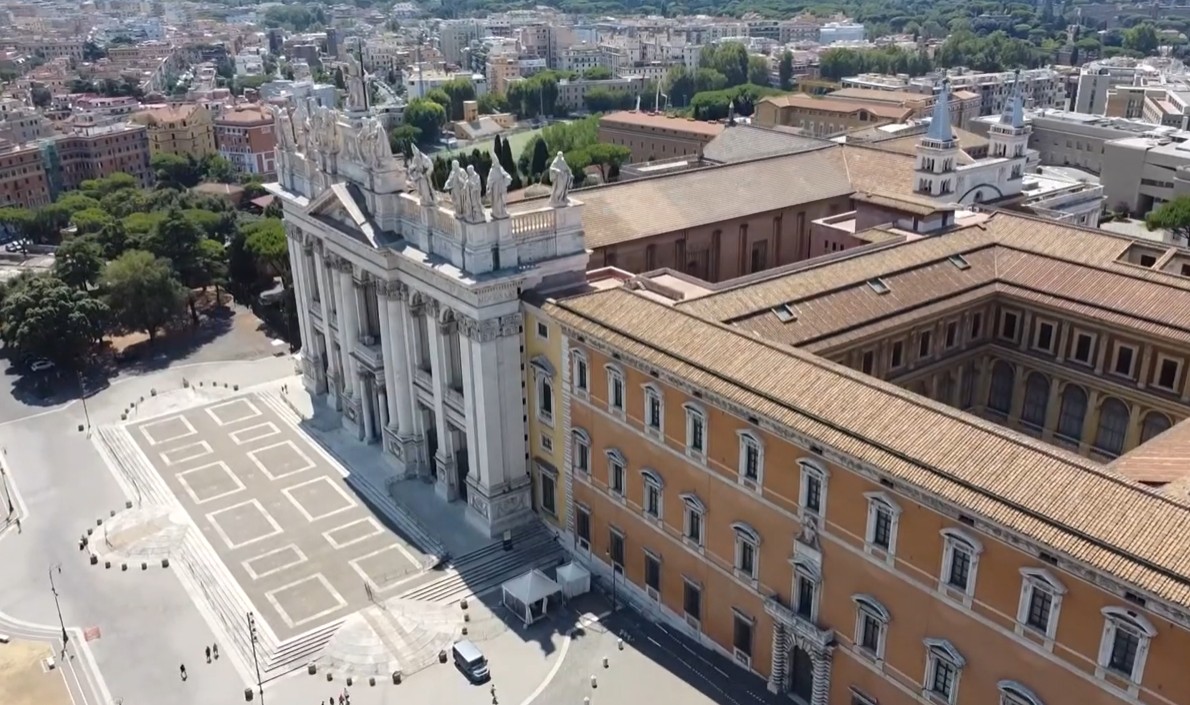
Wednesday’s awful attack at Annunciation Catholic School in Minneapolis is terrible and heart-aching. Such an evil occurring in our region of the country, to a place of Catholic faith and learning like our own, hits extra close to home. And whatever prudent proposals should follow, we are moved to pray fervently for these victims and everyone impacted. This week we witnessed some combination of mental illness, demonic influence, and chosen evil at work. If demons had no role in this atrocity, then their bad fruits are indiscernible in this world. St. Paul wrote to the Ephesians that our true adversaries are not flesh and blood—fixation on the hatred of other humans is a snare for the soul. Our struggle is with “the evil spirits in the heavens” who prowl about the world seeking the ruin of souls.

The tactics of demons are various but perhaps their foremost temptation is a repetition of history’s first temptation. The lie behind Satan’s suggestion to Adam and Eve that they eat from the forbidden tree to become like gods was: “You can’t trust God because he doesn’t really love you.” This is the point I wish to speak to, for this week I saw reactions to the attack on these innocents like this one online: “They were literally praying when they got shot. Praying doesn’t work.” The shooting at the Annunciation School Mass reportedly began during the Responsorial Psalm, which (if they were reading the same psalm we were at our parish that morning) included these lines: “Where can I go from your spirit? From your presence where can I flee? If I go up to the heavens, you are there; if I sink to the nether world, you are present there.” Does their suffering such evil mean that the Lord was not with them and for them at that church?

On Wednesday, my thoughts went to chapter two of the Book of Wisdom. You might not be familiar with its passages, since this Old Testament book is found in Catholic and Orthodox canons of Scripture but not included in most Protestant bibles. I encourage you to read the entire second chapter yourself, but I will excerpt from the text here. It begins by observing how the Wicked, “not thinking rightly, said among themselves: ‘Brief and troubled is our lifetime; there is no remedy for our dying, nor is anyone known to have come back from the underworld. For by mere chance were we born, and hereafter we shall be as though we had not been…”

The Book of Wisdom says the Wicked who think life is pointlessness and hopeless resolve to enjoy pleasures to the fullest and to exploit whomever they wish. They say, “Come, therefore, let us enjoy the good things that are here, and make use of creation with youthful zest. Let us oppress the righteous poor; let us neither spare the widow nor revere the aged for hair grown white with time. But let our strength be our norm of righteousness; for weakness proves itself useless.” Then from here the text goes on, at much more length than I am sharing, describing the Wicked’s hatred towards a holy person:

“‘Let us lie in wait for the righteous one, because he is annoying to us; he opposes our actions, reproaches us for transgressions of the law… He professes to have knowledge of God and styles himself a child of God. Let us see whether his words be true… For if the righteous one is the son of God, God will help him and deliver him from the hand of his foes. With violence and torture let us put him to the test… Let us condemn him to a shameful death; for according to his own words, God will take care of him.’ These were their thoughts, but they erred; for their wickedness blinded them, and they did not know the hidden counsels of God;  neither did they count on a recompense for holiness nor discern the innocent souls’ reward.”

This Old Testament prophecy clearly applies to Jesus, but not merely to him but his martyrs as well. I cannot tell you what specific goods will come from Almighty God permitting particular evils to occur but we know, in the words of St. Paul to the Romans, “God works all things together for the good of those who love him.” On Good Friday, the murder of the Messiah was incomprehensible to his disciples and friends, but just forty hours later, with the resurrection of Jesus, they began to better understand that mystery at the center of our Christian Faith. Like in today’s Gospel parable, Jesus went to the lowest place, but the Lord of Hosts saw and said to him “My friend, move up to a higher position,” and now he enjoys a most-honored seat in heaven and the esteem of all his companions around the Eucharistic table.

Our waiting to behold God’s full reversal of this world’s evils will likely last much longer than just three days, but we will endure in faith, hope, and love, praying and working and worshipping and journeying with Jesus Christ. We approach God’s Kingdom and we will press on to join the countless angels in festal gathering; and God the judge of all; and the spirits of the Just, the saints made perfect; and Jesus, the mediator of our new covenant; and the sprinkled blood that speaks more eloquently than that of history’s first martyr, Abel. God was with them and he will be with us too.

The Smallest Psalm

August 24, 2025

21st Sunday in Ordinary Time
By Fr. Victor Feltes

In the 1993 comedy drama “Groundhog Day,” Bill Murray plays a cynical Pittsburg weatherman assigned to cover the Groundhog Day festivities held in Punxsutawney, Pennsylvania. There he becomes trapped inside a mysterious time loop, reliving the same day over and over. At first he indulges in sensible pleasures, then he darkly despairs, but eventually he starts growing in wisdom and virtue until he becomes a man worthy of his good and beautiful TV producer, played by Andie MacDowell. Each day was the same, but over time they began to change him for the better. The same thing can be true with the formal prayers we say.

Though it is a very good thing for us to speak to our heavenly friends in our own words, offering traditional memorized or pre-written prayers is valuable as well. How do we know? Because God inspired and gave his to people an entire collection of such prayers known as The Book of Psalms. He knew these 150 prayers would be prayed over and over, in both the Old Covenant and the New Covenant, teaching us and transforming us in our relationship with him. And it is important that we strive to learn and grow, so that we may enter through the narrow gate of Jesus Christ and be saved. Daily prayer and weekly Mass are among the God-given disciplines which yield (in the words of the Letter to the Hebrews) “the peaceful fruit of righteousness to those who are trained by [them].

Now imagine if you were Almighty God and you wished to compose a tiny psalm for the human race. What would you write about? Whom would you feature and what themes would you highlight? In the responsorial psalm for today’s Holy Mass we see how God answered. Short prayers can be great prayers. Psalm 117 is just two verses, only four lines long, the shortest psalm in the Bible:

Praise the Lord, all you nations;
glorify him, all you peoples!
For steadfast is his kindness toward us,
and the fidelity of the Lord endures forever. Hallelujah!

In this psalm’s original context, God’s chosen people are calling out to the Gentiles, the nations beyond Israel, urging them to praise the Lord. The psalm begins and ends with appeals to praise the Lord for Hallelujah (or Alleluia) are Hebrew for “Praise the Lord!” Why should the God of Israel be praised, honored, celebrated, and loved? The psalm’s second half provides an answer: “For steadfast is his kindness toward us, and the fidelity of the Lord endures forever.” And God’s goodness, his real and steadfast love, endures for us in this age of the Church. As St. John writes in his first New Testament letter: “We have come to know and to believe in the love God has for us. … We love because he first loved us.”

And here’s a final lesson from this small psalm: Psalm 117 is evangelistic. It calls all everyone from everywhere to enter into full communion with God’s people and himself. Has anyone outside of your household become Catholic through your influence? It helps if we try. If we are called to produce a harvest “a hundred or sixty or thirtyfold,” then we could expect to have at least a handful of such people in our lifetime. Catholics sometimes feel intimidated at making invitations, thinking they lack the right words. But Psalm 117 show that the message can be simple: “You should to worship with us here, because Christ’s mercy and blessings in his Catholic Church have changed my life.” The Sunday morning classes for becoming Catholic called OCIA (formerly known as RCIA) are starting soon. Who could you invite to come along with you? Please help them enter Christ’s house through the narrow gate.

True Christianity Cleaves

August 16, 2025

20th Sunday in Ordinary Time
By Fr. Victor Feltes

Jesus asked his disciples, “Do you think that I have come to establish peace on the earth? No, I tell you, but rather division.” Why does he say this? Is he not the one whom Isaiah called the “Prince of Peace”? The Prophet Zechariah foretold: “Behold: your king is coming to you… humble and riding on a donkey… He shall banish the chariot from Ephraim, and the warhorse from Jerusalem; the warrior’s bow will be banished, and he will proclaim peace to the nations.” But this Kingdom of unending worldwide peace has not yet fully come and will not arrive until Christ’s Second Coming.

Jesus told his apostles, “Peace I leave with you; my peace I give to you,” but he added, “because you do not belong to the world… the world hates you. … In the world you will have tribulation. But take heart; I have overcome the world.” Jesus wished to dispel his followers’ presumptions about immediate peace on earth and warned them of future conflicts. He said, “You will hear of wars and reports of wars; see that you are not alarmed, for these things must happen, but it will not yet be the end.” Jesus also warned his disciples of future religious persecutions because not everyone, even amongst his own people, would accept him as the Christ. “From now on,” Jesus said, “a household of five will be divided, three against two and two against three.” “Brother will hand over brother to death, and the father his child; children will rise up against parents and have them put to death.” “You will be hated by all because of my name,” Jesus said, “but whoever endures to the end will be saved.

You have probably heard both ancient and modern stories about people who suffered and sacrificed a great deal in order to be a Christian or to join his Catholic Church. We are surrounded by great a cloud of such witnesses: like St. Paul the Apostle, St. Edmund Campion St. Kateri Tekakwitha, St. Elizabeth Ann Seton, St. John Henry Newman, and many other saints. When we hear of a household divided—three against two or two against three—on account of Christ, we might imagine a family at odds due to some accepting Jesus and his Church while others remain atheists, pagans, Muslims, Jews, or non-Catholic Christians. This sometimes happens, yet Jesus absolutely insists that we love him most of all and follow him no matter what. He says, “Whoever loves father or mother more than me is not worthy of me, and whoever loves son or daughter more than me is not worthy of me; and whoever does not take up his cross and follow after me is not worthy of me.” If you have been considering becoming a Catholic Christian, I urge you to take the next step and learn more this fall by enrolling in parish OCIA classes (formerly known as RCIA).

Though we typically imagine persecution coming from people outside our faith, resistance can come from our co-religionists as well. The Prophet Jeremiah and those who were persecuting him in today’s first reading were all Old Testament Jews professing to follow the same God and same faith. Yet those who mistreated Jeremiah were opposing God’s will. This can happen inside of a Catholic household as well. What if some family members understand the necessity of worshipping and thanking God every Sunday at Mass while others in the family are unwilling to prioritize him? What if one spouse wants to live in accord with God’s will about the marital embrace, virtue, love, and human life, but the other spouse wants to contracept? What if children want to explore possible priestly or religious vocations but their parents resist what may be God’s will saying, “We want grandchildren”? What if some family members treat our religion like merely “fire insurance,” hoping the Lord won’t mind us doing whatever we prefer, while other members are on fire for the Lord?

Jesus said, “I have come to set the earth on fire, and how I wish it were already blazing!” He wants us to be on fire for him, aflame with the Holy Spirit, shining light with a warm inner peace which this troubled world cannot take away. If that uniquely describes you in your household, pray for your family members, love them, and keep modeling and advocating for what is right and good. If that does not describe you, then pray for a more fervent heart and obey the voice of Christ challenging your conscience. Realize you cannot clear a six foot charism using only three foot hops.

Greet Him At His House

August 9, 2025

19th Sunday in Ordinary Time
By Fr. Victor Feltes

Today’s Gospel is first and foremost about the Second Coming of Christ and our judgment on the Last Day. Jesus Christ, who called himself the Son of Man, said that in the End Times “the sign of the Son of Man will appear in heaven, and all the tribes of the earth will mourn, and they will see the Son of Man coming upon the clouds of heaven with power and great glory.” The Book of Revelation agrees: “Behold, [Jesus Christ] is coming amid the clouds, and every eye will see him, even those who pierced him… ‘Behold, I am coming soon. I bring with me the recompense I will give to each according to his deeds.’” “But of [the timing of] that day and hour,” Jesus says, “no one knows, neither the angels of heaven, nor the Son, but the Father alone.” (The Son of God is divine and therefore knows everything, but in his humanity Jesus apparently did not know the date or was not supposed to reveal it.) Could Jesus Christ return during our lifetime? Of course. But even if Christ returns a thousand years from now we should still heed his warning to be prepared today, for we do not know the day and hour of our deaths when he will judge our souls and deeds.

Jesus’ parable about the returning master and his servants suggests another secondary interpretation. Consider the story’s details. The master has come from a wedding. He comes to his own house. He wants his servants to be there, ready to greet him. And in response he will “have the servants recline at table and proceed to wait on them.” And “should he come in the second or third watch” (when it is darkest and most inconvenient) and find them present, attentive, and well-prepared, those servants will be greatly blessed. So where is the Lord Jesus’ house to which he returns? Where does he want his servants to be present and pleased to see him? Where would he have his faithful servants rest, partake in a meal served by him, and receive his blessed rewards? This church is his house. We are his servants. And Jesus wants us to meet him here for a meal. Our Lord arrives here joyfully from a wedding. He wedded the Church to himself two thousand years ago. And the Holy Mass extends that mystery throughout time and space to here and now. Indeed, ‘blessed are those called to the wedding supper of the Lamb’ and who are here and ready to greet him.

Yet, for too many people, the precious time of Sunday Mass is an hour when they do not expect the Son of Man to come. Despite our many scheduled weekend Masses, they still do not attend. Others show up out of obligation or custom or habit, but fail to be attentive. Perhaps they do not yet believe—despite Scripture, ancient teaching, and centuries of miracles—that Jesus Christ is truly present in the Holy Eucharist. Or perhaps they do not yet realize that they are not mere spectators at Holy Mass but offering a sacrifice with the priest and the whole community, the eternal offering of the Son to the Father, through which everything united to Christ is raised up to heaven and grace and blessings are poured down to earth in return.

Be present and be vigilant. Distractions will come to anyone who is committed to regular Massgoing and daily prayer, but do not be discouraged by the times your thoughts accidentally wander. Every decision to turn your attention back to the Lord is another act of love and devotion. Sometimes those so-called distractions are actually things the Lord wants you to pray about or offer up to him. Ask the Holy Spirit and he will help you to pray as you ought, to gird your loins with reverence and light your lamps with faith and be like servants who are glad and blessed upon their master’s return from a wedding.

Life Eternal — Funeral Homily for Ronald “Ron” Woolever, 75

August 6, 2025

By Fr. Victor Feltes

We are courageous, and we would rather leave the body and go home to the Lord.” That is what St. Paul writes about himself and the Christians at Corinth in our second reading. But is this true for us today? Would we rather leave the body and go home to the Lord?

Imagine if you could have endless more years of this life on earth. Would you wish for that? Pondering such a wish you would be wise to reflect upon the burdens of bad health. The coming of such crosses in the later years of life makes many people more open to the next life. Ron endured poor health but he is freed from that burden now.

But suppose you could live an endless life on earth free from all illness and pain; the next thing you might consider is the prospect of outliving everybody you know now, as well as everyone you would ever know. Even with our well-founded hope for Heaven, where all friends of God will be reunited, the temporary separation between us and our dearly departed causes sadness in us who remain behind. It is okay to mourn at Ron’s passing, though we do ‘not grieve like those who have no hope,’ for we have hope in him who said “Do not let your hearts be troubled. You have faith in God; have faith also in me.”

But imagine if each person on earth were granted pain-free immortality; the next thing to consider is what life in that world would be like. After Adam and Eve sinned at the tree they were deprived of the fruit of another—the Tree of Life—lest they eat of it and live forever in their unhappy fallen state. Even if scientists were to develop a treatment to eradicate all pain and all death, moral sickness would remain untreated in many human souls. Endless life without Christian conversion would create a hell of moral evils on earth. Ron’s love for Jesus and our Catholic faith led to his deep devotion to the Holy Eucharist and St. Paul’s Parish. He hungered and thirsted for holiness, and our holy religion helped him to go deeper, change, and grow with God in his grace.

Now suppose if everyone on earth were forever freed from pain and death and sin, to live peacefully together on earth forever—what would life in that world be like? Ron delighted in many things in our world. Beyond family and friends, there were monster trucks and parade floats, old cars, new movies, and countless good things more. But after living in our world a few decades, which is far less time than millennia, we can think to ourselves, “These things are nice but is this really all there is?” Every heart contains a God-shaped hole which can only be fully satisfied by the infinite beauty, goodness, and love of the Holy Trinity. Understanding this changes how we see our lives in this world (which we must not cling to) and our future deaths (which we must not grasp at) until the Lord finally calls us home to be with him. Jesus tells his disciples, “I am going to prepare a place for you… [and] take you to myself, so that where I am you also may be.”

Therefore,” St. Paul writes, “we aspire to please him, whether we are at home or away. For we must all appear before the judgment seat of Christ, so that each may receive recompense, according to what he did in the body, whether good or evil.” Pray for Ron’s soul, that he may now enjoy the endless bliss of Heaven. And let Jesus Christ be the good and loving Lord of your life so that you may enter eternal life, for ‘no one comes to the Father except through him.’

Can One Man Save A City?

July 27, 2025

17th Sunday in Ordinary Time
By Fr. Victor Feltes

This morning, I believe I should preach to you about the City of Sodom and the City of God, about the importance of Christ and the importance of Confession. In today’s first reading, Abraham intercedes with the Lord concerning the possible destruction of Sodom. Abraham asks: ‘Will you sweep away the innocent with the guilty? Suppose there were fifty innocent people in the city; would you wipe out the place, rather than spare it for the sake of the fifty innocent people within it? What if there are five less than fifty innocent people? Will you destroy the whole city because of those five? What if only thirty are found there? What if there are no more than twenty? What if there are at least ten there?’ The Lord replies that if there are fifty, or forty-five, or thirty, or twenty, or even ten innocent people in the city of Sodom, for their sake “I will not destroy it.” But the city of Sodom was destroyed, and God does not lie, so we know that there was not ten innocent people in that city when it was destroyed. Abraham stopped at ten, but suppose if he had pressed on further? Imagine if Abraham had asked the Lord, ‘What if one innocent person is found there? Will you spare the city?’ Could one righteous man have saved the city?

In the fifth century A.D., St. Augustine wrote of two cities: the City of Man and the City of God. These cities exist side by side extending throughout the earth with every human person belonging to one city or the other. The City of Man embraces sin, with pride, ambition, greed, lust, hated and immorality reigning. But the City of God is led by the Lord, with Christian love and virtues lived in an alliance with Jesus Christ. To which city do we belong?

St. Paul told the Christians in Ephesus, “You are fellow citizens with the holy ones and members of the household of God.” This citizenship was bestowed to us through baptism, as St. Paul teaches in our second reading: “You were buried with [Christ] in baptism, in which you were also raised with him…. And even when you were dead in transgressions… he brought you to life along with him, having forgiven us all our transgressions….” In Jesus Christ, an innocent man is found among us at last. The Son of God became one of us so that on his account our city may be spared. Yet to benefit from his righteousness, we must continue living close to him.

Baptism forgave our past sins, but Jesus teaches us to seek that our new sins be forgiven. He told his disciples, “When you pray, say… Give us each day our daily bread and forgive us our sins…” Realize that all wrongdoing is sin but not all sin is mortal (or spiritually fatal) and know that forgiveness can require more than just a prayer. As St. John writes in his First Epistle: “If anyone sees his brother sinning, if the sin is not deadly, he should pray to God and he will give him life. This is only for those whose sin is not deadly. There is such a thing as deadly sin, about which I do not say that you should pray. All wrongdoing is sin, but there is sin that is not deadly.” If you have sinned, you should pray to God for mercy and grace. But if you have sinned gravely, you should also seek out Confession. This is a sacrament Jesus Christ has given us for the forgiveness of grave sins after baptism.

Your priests care deeply about this sacrament and we are at your service, at both announced times and upon request. Considering how many people are in our parishes, it concerns me that we are not busier with confessions than we are. You bathe every day. You probably take out garbage every week. The practice of monthly confession, even absent grave sins, is good spiritual hygiene for your soul and helps you live closer to Christ. If you wander away from the City of God into the City of Man, come to Confession for a rapid to return home. Please allow our Lord to show you his mercy.

Catholic Diversity In Unity

July 3, 2025

Solemnity of Saints Peter & Paul
By Fr. Victor Feltes

Today, I wish to speak to you about Saints Peter and Paul, vocations, the Catholic Church and the Churches in her, and two aspects of the Holy Mass. This homily will be a bit longer than usual, but each of its parts are interesting. Saints Peter and Paul shared many similarities but manifested in different ways:

🔸 Both were personally called by Christ to become apostles; Peter quite early during Jesus’ public ministry, but Paul rather late, after Jesus’ Ascension.

🔸 Both beheld Jesus in his transfigured glory; making his friend Peter feel ecstatic, but making his persecutor Paul go temporarily blind.

🔸 Both preached the Gospel; Peter primarily to the Jews, but Paul particularly to the Gentiles.

🔸 Both taught the Faith; Paul the Pharisee was highly-educated, but Peter the uneducated fisherman was not.

🔸 Both experienced weakness; Peter in conquering his passions, but Paul by enduring “a thorn in the flesh.”

🔸 Both were martyred by the Roman Empire in Rome; Peter was crucified upside-down, but Paul the Roman citizen was beheaded.

That Saints Peter and Paul whom we celebrate this Sunday shared one Faith, one Lord, and one calling, and yet manifested these differently in their faithful lives. We also see this in the Catholic Church today. Peter and Paul were called to be apostles. Today, some are called to be bishops, priests, or deacons. Others are called to be consecrated male or female religious. Many more are called to the vocation of holy marriage. Others live out their baptismal mission and call as single persons or consecrated virgins. Which of these ways is the greatest way to live a Christian life? The greatest, most glorious, most fruitful path for you is the one Christ has called or is calling you to. Your life may look differently than others’, even amongst people living out the same vocation, but you can still be living a faithful, fruitful Christian life.

We belong to Christ’s Catholic Church. The word “Catholic” comes from Greek, meaning “universal, worldwide, (or) all-inclusive.” The Catholic Church, established by God for all people and places in this present age, unites humanity in our diversity, but even within our unity we see legitimate variety. Did you know that the one Catholic Church contains 24 Churches with apostolic roots and varying liturgical traditions practiced in full communion with the pope? The largest of these Catholic Churches is the Roman Catholic Church, to which we belong along with more than 98% of the world’s 1.3 billion Catholics. About 18 million other Catholics are in Churches in full communion with Rome; the three largest being the Ukrainian Greek Catholic Church (mainly in Western Ukraine), the Syro-Malabar Catholic Church (mainly in India), and the Maronite Church (mainly in Lebanon). Our one Faith differently celebrated. (Other Churches called the Orthodox Churches have nearly 300 million members put together, with valid priests and bishops and all seven sacraments like us, yet they are not in communion with the pope. Pray for our reunion. The gap between us is less than any Protestant group.) There is even legitimate variation within the Holy Mass of our Roman Catholic Church. I wish to highlight two examples: one in how one receives the Eucharist and another in how the Eucharist is celebrated.

The early Church Fathers mention the Eucharist being placed upon communicants’ hands. Other Communion customs also existed but Communion in the hand was explicitly described. For instance, St. Cyril in Jerusalem and St. Theodore in Turkey instructed the faithful to lay one hand over the other to create a throne (for both saints declare one is about to receive a King) cupping one’s palm to receive “The Body of Christ” and answering “Amen.” St. John Chrysostom observes how a communicant’s hands “hold [the Eucharistic Sacrifice] but for a time.” He writes, “Oh! What a marvel! What love of God to man! He who sits on high with the Father is at that hour held in the hands of all…” And St. Basil the Great records “in the church, when the priest gives the portion, the recipient takes it with complete power over it, and so lifts it to his lips with his own hand.” These and the writings of other Church Fathers show that receiving Communion in the hand existed in the Early Church.

However, though Communion in the hand is allowed today, the many-centuries-long tradition of receiving Communion on one’s tongue is also permitted, either standing or kneeling. Some find receiving our Lord on the tongue strengthens their reverence and devotion; acknowledging the glory of their Great Guest, extending the red carpet of one’s tongue for him to enter under one’s roof through the doors of one’s lips, humbly receiving this priceless Gift of pure grace. After next summer’s church renovation, once there is more space in front of these steps to our sanctuary, I plan to place a kneeler in the center-front as an option, as you may have seen offered already at churches in Chippewa Falls. How you receive our Lord, standing or kneeling, on your hand or on your tongue, is for you to personally discern, since they each option is permitted for you by the present liturgical rules of the Church.

The next legitimate Mass option I would like to explain pertains to the celebrant leading the congregation. Since the Second Vatican Council, the most common way priests have celebrated Mass is versus populum, or “towards the people.” Yet the much-longer-practiced custom has been for the priest and the people to face (literally or symbolically) towards the east together, or “ad orientem.” Like the Jews used to pray towards the Holy Temple in Jerusalem, the writings of the Church Fathers show the early Christians prayed toward the east. St. Clement of Alexandria writes “prayers are made looking towards the sunrise in the east.” And Origen notes: “…Of all the quarters of the heavens, the east is the only direction we turn to when we pour out prayer…” Tertullian records that Christians facing east to pray caused some non-Christians to mistakenly believe we worshiped the sun. But the Christians praying toward the sunrise saw a symbol of Christ rising from the dead and of his promised return to earth in radiant glory one day. Throughout the centuries, even in churches which were not built to face east like our St. Paul’s Church, the priest and the people faced the same direction (or “liturgical east”) together. However, since the 1970’s the prevailing custom has been for the priest to face the congregation.

The Catholic Church approves both versus populum and ad orientem as valid options, and these two ways of celebrating the Mass emphasize different truths. Celebrating versus populum, toward the people, emphasizes the horizontal aspect, the communal meal. And the Holy Mass is indeed a meal, a memorial of the Last Supper, where Jesus Christ and his disciples gather at his table. Celebrating ad orientem, toward the east, emphasizes the vertical aspect, the sacrificial offering. And the Holy Mass is indeed a sacrifice, a memorial of the Cross, where Jesus Christ is offered up for us from his altar.

I experienced my first ad orientem Mass when I was still in seminary. The celebrant was a visiting alumnus and priest of our diocese, Fr. Derek Sakowski. I remember fearing that I would hate the Mass being said that way because I often dislike changes. (For instance, our seminary once changed the toaster in the dining hall and—even though I almost never used the old familiar toaster—I was annoyed when they had replaced it with a new one.) Fr. Sakowski said the same English prayers as at other Masses but watching him celebrate that Mass ad orientem, facing us when speaking to us and facing God when praying to God, I found it surprisingly beautiful and it made a lot of sense. When weekday Massgoers at St. John the Baptist Parish first experienced Mass ad orientem more than five years ago, the attendees reported positive experiences similar to mine.

I mention all this because I would like our weekday Massgoers to experience ad orientem in at least a few Masses this July and hear their feedback. After Vatican II, when Mass facing the people became the prevailing custom in the Church, pastors often introduced that liturgical change abruptly, without consultation, and without adequate explanation. It was jarring, and many lay people were bewildered and hurt. I do not wish to repeat such mistakes going in the opposite direction. Nothing will change without thorough consultation and consensus support. At the end of such a dialogue at St. John the Baptist’s Parish, one weekend Mass changed and the other stayed the same and today everyone seems happy or content with that. Our Faith, our calling, and our Lord are one, even as our faithful lives will manifest them differently. We are Catholic. So in essential things, unity. In non-essential things, liberty. And in all things, charity—that is, love.

Heavenly Feasts — Funeral Homily for Angeline “Angie” Rihn, 98

July 1, 2025

By Fr. Victor Feltes

One theme in Angie’s earthly life, from the stories her family shares about her, is meals: the meals she prepared and the meals she shared. The meals on the farm with Herman and their children always began with a prayer, thanking the Lord and asking for his blessings. And her spouse would always praise her cooking with compliments, like calling it “A meal fit for a king!” On the farm, with the animals they raised and the produce they grew and often canned, there was never a need to buy any food. For holidays such as Christmas and Thanksgiving, Angie would cook for days. Three rooms of their farmhouse a couple miles out of town would be filled with tables and chairs for guests. Angie would always have guests over for a meal. For example, her beloved grandkids could show up anytime to enjoy sharing a meal with her. As a leader in the parish Altar-Rosary Society, she headed the organizing of funeral luncheons. And with unfaltering faith, she never skipped our Lord’s feast of the Holy Mass.

Scripture often speaks of our God preparing feasts. The Prophet Isaiah foretells that the Lord God on his holy mountain will “provide a feast for all peoples of rich food and choice wines, of juicy, rich food and pure, choice wines.” King David pens the 23rd Psalm saying of the Lord, “You spread the table before me in the sight of my foes. You anoint my head with oil; my cup overflows.” Jesus declares to his apostles, “I confer a Kingdom on you, just as my Father has conferred one on me, that you may eat and drink at my table in my Kingdom….” And Jesus announces “many will come from the east and the west, and will recline with Abraham, Isaac, and Jacob at the banquet in the Kingdom of Heaven….” During the heavenly visions of the Book of Revelation, an angel tells St. John “Write this: Blessed are those who have been called to the wedding feast of the Lamb,” adding, “These words are true; they come from God.”

Are these prophesies about eating and drinking in the Kingdom of Heaven literally true? Jesus says in his Sermon on the Mount: “Blessed are they who hunger and thirst for righteousness, for they shall be satisfied,” but that is metaphorical language. And how could we eat foods or drink drinks after death separates our souls from our bodies? But we must remember that our well-founded Christian hope is not only for an eternal afterlife for our souls but also a physical resurrection of our bodies one day. Recall how St. Luke reports that the Resurrected Jesus in the Upper Room on Easter Sunday asked, “‘Have you anything here to eat?’ They gave him a piece of baked fish; he took it and ate it in front of them.” Why does Jesus eat with his resurrected body? It was not because of hunger, for his glorified body has no need of such nourishment. He ate as a demonstration for the apostles and us that he is not a ghost or mirage but truly risen again. But then why does Jesus eat again later, as recorded by St. John, when he had breakfast with seven disciples along the Sea of Galilee? Since the fact of his resurrection was already firmly established, it appears it simply pleased him to share a meal with them. So ‘feasting in God’s Kingdom’ appears to be more than merely a metaphor.

After the Resurrection of the dead, once our souls reunite with our bodies, many will come from east and west and recline with Abraham, Isaac, and Jacob for the Lord’s promised feast. A supper not of necessity but of joy, with delights not merely from fine food and drink but from sharing the fond table fellowship of God and his friends. Angie’s delight in preparing meals reflected our Lord’s delight in preparing meals for us: at every Mass and in the world to come. Angie rejoiced to have family and friends flock to her feast like our Lord longs for us to join him for his feast, too. So pray for Angie’s soul, that she may be perfectly purified, and let us live our lives faithfully so as to be well-prepared to one day take our places at the banquet in the Kingdom of God.

Feeding the Multitude

June 24, 2025

Solemnity of Corpus Christi
By Fr. Victor Feltes

All four Gospels recount the miracle of Jesus multiplying the loaves and the fishes. He receives five loaves and two fish and successfully feeds (in the words of St. Matthew) “about five thousand men, not counting women and children,” with twelve wicker baskets full of fragments leftover. Now this event cannot be reduced to a so-called “miracle of sharing.” That would be a deed less impressive than what Elijah the great miracle-working prophet did in 2nd Kings: feeding one hundred people with twenty barley loaves and having some leftover. Merely persuading people to share food for one meal would not cause a crowd to declare somebody “the prophet who is to come into the world” and make them want to carry him off to make him king, as St. John records. This miracle was a true miracle, and it foreshadows the Last Supper and the miracle of the Eucharist.

St. John mentions ‘the Passover, the feast of the Jews, was at hand.’ This Passover was at least one year before the Passover of Holy Week, yet John mentions it all the same. And then there is the way the Gospel writers describe what Jesus does with the food for the meal: “Taking the five loaves and the two fish, and looking up to heaven, he said the blessing…, broke them, and gave them to the disciples to set before the crowd.” These phrases should sound familiar. They closely resemble what Jesus does at the Last Supper and what his priests celebrate at every Holy Mass.

Without Jesus, the apostles felt powerless to provide for such a great number of people. But Jesus commanded his apostles to “have them sit down in groups of about fifty,” in more than one hundred clusters on the green grass. The flock obeys the apostles as they are obeying Christ, and Jesus proceeds to feed them all through his ministers. The miracle at every Mass is greater than the one Jesus performed with the loaves and fishes. There, he made the food he was offered far greater in quantity. Now, he transforms the food we give him into something far greater, not in number but kind.

At Mass, we are figuratively fed by the Inspired Word, by both the Old Testament and the New Testament, drawn like two fish from the stream of salvation history. And at Mass we behold the Incarnate Word, the Body and Blood of Christ, which suffered the five famous wounds of his Passion. But greatest of all, at Mass we can be invited to truly partake of the Eternal Word, the Son of God, Jesus Christ, receiving his living Body, Blood, Soul, and Divinity in the Eucharist. In the Gospel we heard “They all ate and were satisfied. And when the leftover fragments were picked up, they filled twelve wicker baskets.” So rejoice in these holy gifts as your precious treasure. Tell others about them and invite them to join us here, for Jesus Christ desires this great feast to nourish everyone.

Love & Eight — The Jacob Pake & Kayla Bowen Wedding

June 22, 2025

By Fr. Victor Feltes

We read in the Genesis Creation account that it was not good for mankind to live in solitude, so God made a suitable partner for the man. “That is why a man leaves his father and mother and clings to his wife, and the two become one body, one flesh.” Man and woman were made for each other. Psalm 128 notes how marriage, that first blessing from the original Garden, remains visible in the world even after the Fall: “Your wife like a fruitful vine in the heart of your house; your children like shoots of the olive around your table.” However, after the Fall, we are wounded by sin and drawn by temptation. Humanity commonly does not do as we should.

That is why St. Paul’s exhortation to the Corinthians reminds their divided and squabbling community what love is and what it is not. He lists eight things that love “is” or does alongside eight things love “is not.” Love is not jealous, not pompous, not inflated, not rude, not self-seeking, not quick-tempered, not brooding over injury, not rejoicing over wrongdoing. But love is patient, love is kind, it rejoices in the truth, bears all things, believes all things, hopes all things, endures all things, and love never fails. These groupings of eight are interesting because Jesus in his Sermon on the Mount lists eight beatitudes. (Some may count nine beatitudes, but the Greek indicates that the final “blessed” is an expansion on the eighth one.) These beatitudes describe Christian saints, but first and foremost they describe Christ himself.

So eight, eight, and eight — What does this have to do with how we are to love today? In Genesis, God begins creating on the first day of the week, which is Sunday. He works six days and then rests on the seventh day. That is why the Jewish Sabbath, their holy day of rest, was Saturday. Jesus Christ, who on Good Friday worked his perfect Sacrifice, whose lifeless body on Holy Saturday kept a day of perfect rest, rose again on Easter Sunday. Christians beginning in the 1st or 2nd century called that Sunday “the eighth day,” the eighth day of Creation on which Jesus Christ transforms humanity and our lives in this world. Now we have hope beyond this life, hope for blessed endless life with God. And the Passion, Death, and Resurrection of Jesus have opened access to grace, the help of God, enabling us to live and love like him.

How can we achieve and preserve true unity and harmony among us in our homes and community? This is not possible merely on our own. We must let God give us his grace which allows us to live and love like him. This is why daily prayer, weekly worship, and consistent devotion to the Lord must be top priorities for any Christian. Jacob and Kayla, draw near to him and remain with him, so that you both may live and love like him and be blessed together. Like the psalmist said, ‘Blessed are all who fear, who reverence, the Lord and walk in his ways. You will be blessed and prosper. May you see your children’s children. May the Lord bless you all the days of your life.’

A City on a Mountain — The Garrett Mikula & Annabelle Wittrock Wedding

June 7, 2025

By Fr. Victor Feltes

“You are the salt of the earth…
  You are the light of the world.
  A city set on a mountain cannot be hidden.”

This is a classic Gospel reading. It encourages all Christians to be salt on this earth and light in this world in ways which cannot go entirely unnoticed. Yet in all my years, despite this reading being a valid option for weddings, I cannot recall it ever being selected. This got my mind wondering: “How is Christian marriage like a city set on a mountain?” How does Sacred Scripture connect mountains, cities, and marriage? Let’s look at three episodes.

In the 6th century B.C., the Prophet Daniel interpreted King Nebuchadnezzar’s secret dream which featured a huge statue representing ancient empires. A stone hewn from a mountain by God struck the statue, shattering it to pieces. Daniel foretells that the stone which struck the statue would become a great mountain, fill the whole earth, and stand forever.

Earlier, in the 8th century B.C., the Lord had declared through the Prophet Isaiah that he was “creating new heavens and a new earth.” “Indeed, I am creating Jerusalem to be a joy and its people to be a delight; I will rejoice in Jerusalem and exult in my people. … None shall harm or destroy on all my holy mountain….”

Finally, in the Book of Revelation, St. John describes his vision: “I saw a new heaven and a new earth… I also saw the holy city, a New Jerusalem, coming down out of heaven from God, prepared as a bride adorned for her husband.” John hears a loud voice from God’s throne say, “Behold, God’s dwelling is with the human race. He will dwell with them and they will be his people and God himself will always be with them as their God.” Then John hears an angel say: “Come here. I will show you the bride, the wife of the Lamb.” Then the angel takes him in spirit to a great, high mountain and shows him the holy city Jerusalem coming down out of heaven from God.

So we see Sacred Scripture associating and connecting a holy mountain, a holy city (Jerusalem), and holy marriage. Now the Bible repeatedly calls God a Rock (“my Rock,” “our Rock,” an “eternal Rock”) and the city is identified as the Bride. God’s holy city appears to marry the earth upon the holy mountain.

In Ephesians 5, St. Paul gives instructions for husbands and wives: ‘Wives, follow your husbands. Husbands, sacrificially love your wives. The two shall become one flesh.’ And then St. Paul concludes, “This is a great mystery, but I speak in reference to Christ and the Church.” Bringing all of this together, I would suggest that the mountain and the city, Christ and the Church, you Garrett and Annabelle, are all (soon to be) joined in the same mystery. She, the city, relies on the mountain’s firm foundation, immovable core, quiet strength, loyal defense, strong support, provident resources, and enduring presence. And he, the mountain, delights in the city’s closeness, beauty, community, festivity, fruitfulness, joy, and laughter.

Garrett and Annabelle, your marriage is meant to share in this mystery. Behold, God’s dwelling is meant to be with the human race. So you must always allow Jesus Christ to be your Rock, the living Lord of your dwellings and daily lives. Only then will your marriage be salt for this earth and light to this world, a city set on a mountain which cannot be hidden.

Fly High — Funeral Homily for Elle Jo Kramschuster, 24

June 5, 2025

By Fr. Victor Feltes

Elle’s loved ones will remember many beautiful things about her. In her, seemingly contradictory personality traits are joined. Young but old-souled. A center of attention not looking for attention. Initially the quietest person in a room but who, once comfortable, becomes its biggest presence. Never an early-riser, except to see the sunrise. A world-traveler who loves being back home with family and friends the most. Elle took some twenty-two jet flights, mostly in the last five years, to places like Colorado, Texas, Dubai, or Sri Lanka. She would say, “Happiness is a flight away.” But her favorite thing was being home, having everyone together. For instance, at the annual family rendezvous in Hayward her favorite thing was waking up and everyone being there. Today, we are all gathered here to mourn Elle’s passing and pray for her soul.

Last week, Christ’s Church around the world celebrated the Ascension of Jesus into Heaven. Many places marked this event last Thursday, while others transferred the celebration to Sunday. It is a bittersweet feast day. After spending forty days with Jesus after his Easter Resurrection, his disciples watch him fly into the sky until a cloud takes him from their sight, symbolizing his entry into Heaven. Jesus tells his disciples it is better that he goes. They are given assurances that he will visibly return again someday. And Jesus promises them, “Behold, I am with you always, until the end of the age.” Yet this time of visible separation is still a sad thing.

Jesus understands this. He knows our human loves, joys, and sorrows, for he is not only truly God but truly man. As Pope Francis wrote, “The eternal Son of God, in his utter transcendence, chose to love each of us with a human heart.” Jesus possesses “genuine human emotions and feelings like ourselves, albeit fully transformed by his divine love. … Entering into the heart of Christ, we feel loved by a human heart filled with affections and emotions like our own.” As much as you love Elle, realize that our Good Lord Jesus Christ loves her even more.

“Do not let your hearts be troubled,” he says. ‘Have faith in God; have faith in me.’ Christ is our Good Shepherd. Sweet Elle’s passing from this world is not the end of her story, any more than Jesus’ bodily Ascension was the end of his. Though she has a beautiful soul, earnestly pray for Elle, that the Lord may purify whatever remains imperfect in her so that she may ascend to glory, too. One day, the friends of God will awaken to a new and endless day, rising again in joy at having all of us together. Elle, you are loved, both on earth and in Heaven, where God’s family gathers. Happiness is a flight away. Fly high, Elle.

A Christian Philosopher–Engineer — Funeral Homily for William “Bill” Hable, 87

June 5, 2025

By Fr. Aro (Arockiaraj Paristham)

There is a time for everything. A time to be born, and a time to die. A time to weep, and a time to laugh. A time to mourn, and a time to dance.” This is the time to celebrate the death of our beloved William, who is known as Bill. A man who lived a full life, pleasing God and people.

Dear brothers and sisters, we have gathered together today to say goodbye to our brother Bill, whose life has touched us all in profound ways. It is said that he was an engineer who rooted in science but he saw himself as a philosopher first. If you asked him what the time is, he would tell you how a clock worked. As we reflect on his journey, it is comforting to turn to the words of Jesus in the Sermon on the Mount, particularly the Beatitudes in the gospel. These words offer hope in times of sorrow, pointing us toward the deep truths of God’s love and the promise of eternal life. Jesus says, “Blessed are those who mourn, for they will be comforted.” (Matthew 5:4) In this moment of loss, we are mourning the passing of Bill, someone who meant so much to all of us especially the family members. Bill cherished spending time with his loved ones and instilled a strong sense of self-reliance in his family. Mourning is a natural response to love, when we lose someone dear, we feel the deep void their absence creates. But Jesus promises us comfort. He assures us that in our grief, God is close to us, offering His presence, His peace, and His comfort. As we mourn, we can hold on to the promise that God sees our tears and walks with us in our sorrow.

Jesus also says, “Blessed are the poor in spirit, for theirs is the Kingdom of Heaven.” (Matthew 5:3) This verse reminds us that humility and dependence on God bring us closer to His Kingdom. Bill in his lifetime was simple and humble person. He always admitted his mistakes. One of his favorite quotes was “show me a person who has not made a mistake and I’ll show you a person who has not done much.” Bill may have shown us what it means to be poor in spirit, whether through acts of kindness, quiet strength, or a deep faith in God. When we are humble, we recognize our need for God, and He promises to meet us with His grace. Today, we remember that Bill now rests in the presence of God, in the Kingdom of heaven, where there is no more pain or suffering.

Jesus also says, ‘Blessed are the pure in heart, for they will see God.’ (Matthew 5:8) Purity of heart is a quality of those who seek God with sincerity, love others selflessly, and live with integrity. As we reflect on Bill’s life, we may see the ways in which he lived with a pure heart, perhaps through his love for family. Bill was known for his quiet sensitivity and steadfast loyalty, always offering support to those around him. He was a loving husband to his wife, Judy, for many joyful years. Because of his pure heart and compassion for others, and unwavering faith, now, Bill has seen God face-to-face, and he dwells in the fullness of God’s glory.

Jesus says, “Blessed are the peacemakers, for they will be called children of God.” (Matthew 5:9) Peacemaking is more than the absence of conflict; it is the active pursuit of reconciliation, love, and unity. Bill was a problem solver and he wanted his children to be problem solvers like himself. If Bill was someone who brought people together, mended relationships, or simply offered a calming presence in times of difficulty, we honor that legacy today. In the Kingdom of God, they are now embraced as a beloved child of God, resting in perfect peace. Bill will be remembered for his unwavering love and dedication to family and friends.

Let us be grateful to God for him in our lives as family or relative or a friend. Let us try to follow one of the good values that we learned from our beloved Bill which touched our lives and carry it over. Let us continue our prayer for his soul rest in peace and for the family to have comfort and hope and faith.