Archive for the ‘Homily’ Category

On Having Christian Joy

January 22, 2022

3rd Sunday in Ordinary Time

A subtle theme threads throughout this Sunday’s readings: the theme of joy. When the Jews return to Jerusalem from the Babylonian Exile their leaders read the Old Covenant to them. And the crowd weeps as the scrolls are read because they realize they have not been keeping God’s laws. But Nehemiah the governor, Ezra the priest, and the many Levites say: “Do not be sad and do not weep—for today is holy to our Lord. Do not be saddened this day, for rejoicing in the Lord must be your strength!” They tell the assembly to celebrate, to feast on rich food and sweet drinks. God’s covenant is cause to be joyful, for the Lord is offering not only his teaching but also his friendship. As a passage we hear today from Psalm 19 says: “The precepts of the Lord are right, rejoicing the heart.” God’s words are true and reliable and proof that he cares about us. And that’s always reason for us to rejoice.

In today’s Gospel, Jesus comes to his hometown synagogue and is handed a scroll of Isaiah the prophet. The words Jesus reads to the people of Nazareth are “fulfilled in their hearing” because they describe the Christ and his mission: “The Spirit of the Lord is upon me, because he has anointed me to bring glad tidings to the poor.” Jesus Christ tells us an important part of his mission is to bring us joy. He does this together with the Holy Spirit. Ezra, Nehemiah, and the Levites instructed the Jewish people to feast, and that was a good thing to do, but Christian joy goes beyond passing pleasure. Like St. Paul teaches the Christians in Rome: “the Kingdom of God (is more than mere) eating and drinking, but righteousness and peace and joy in the Holy Spirit.

What is Christian joy and how can it be ours? First, realize that joy is a delight which is different from happiness. Happiness depends upon what happens: good things please us and bad things pain us, but joy endures despite changing happenstance. Unlike happiness – which is fickle – joy is grounded in unchanging things providing lasting hope. If our treasure is confined to this earth, thieves can steal it, moths can eat it, and decay can destroy it, plunging our hearts into despairing darkness. But if our great treasure is in heaven, a treasure that cannot be destroyed or stolen (namely, our Lord, his promises and rewards) then our hearts can persevere in hopeful light. “For where your treasure is, your heart will be there also.

Now I am not saying clinical depression is impossible for a Christian. We would not tell a diabetic to “just perk up and make more insulin.” Likewise, clinical depression is not merely a matter of the will, and someone burdened by it should pursue medical help. As the Book of Sirach teaches, “from God the doctor has wisdom.” Seeking out a doctor’s help is an ordinary means by which God heals. If visiting a doctor meant a Christian lacked faith in God’s healing power, then visiting your grocer would mean a lack of faith in God’s power to give daily bread. We should not refuse the good gifts God makes so easily available to us.

Possessing joy does not mean that Christians will never suffer. St. Paul teaches in today’s second reading that we Christians are one Body of Christ in one Holy Spirit, and “if one part suffers, all the parts suffer with it, (and) if one part is honored, all the parts share its joy.” Joy can be present at the same time as suffering. As St. Paul later wrote to the Corinthians, “I am overflowing with joy in all our affliction.” Jesus – even while suffering on his Cross – had joy, and we can also possess such joy.

How can this joy be ours? First recognize that joy comes from God, then pray asking for this gift, and then be open to living joyfully. God is the cause and reason for our Joy. St. Paul mentions to the Galatians that joy is a fruit of the Holy Spirit. And Jesus Christ, his promises and rewards, are our joyful treasure that cannot be taken away. Jesus says at the Last Supper: “Ask (in my name) and you will receive, so that your joy may be complete.” So be sure to pray and ask for joy. And be open to receiving this holy gift.

Who would refuse the gift of joy? Maybe someone who uses discontent as a comfortable cop-out. If I have no wealth, no one can ask me to share. If my cup is empty, no one can expect me to pour myself out. The joyful cup, however, will richly runneth over. Or perhaps the joy-resistant person has been wounded by past disappointments and hesitates to hope again. But consider: if you can’t trust God, who can you trust? Besides, without God you have nothing, so what do you have to lose from accepting joy?

Jesus says: “I have told you this so that my joy may be in you and your joy may be complete.” Today, may this scripture passage be fulfilled in your hearing.

The Mother of Jesus was There

January 16, 2022

2nd Sunday in Ordinary Time
By Fr. Chinnappan Peleabendran

My dear brothers and sisters in Christ Jesus, today we celebrate the second Sunday of ordinary time. After the Solemnities of Christmas, Epiphany, and Baptism of the Lord, we enter into an ordinary time. In the beginning of Ordinary Time, I invite you to think about Mother Mary’s role in the life of Jesus.

Every child’s vocation is the parents’ constant prayer, not only after the birth of a son or a daughter but as prophet Jeremiah says, “Before I formed you in the womb I knew you; before you were born I dedicated you.” I used to see my father attend Mass every day in my parish. As a family, we prayed the Rosary every evening. My mother used to say three Rosaries each day even though she was illiterate. One day, I asked her, “Do you know the Mysteries of the Rosary?” She replied to me, “No.” I asked her then, what are you saying? She said, “Just an Our Father and Hail Mary.” Her simple prayers helped me to become a priest.

Mothers are timeless teachers in the classroom of life and, alongside fathers, the most influential educators. Mothers teach us to believe in God. Mothers teach us the value of God’s word through their lives. Mothers are one of the first indications of God in our lives.

Moses was one of the major figures in the Old Testament. Although we are not told much about his mother, she played a very important role in his life. The Jews had been in Egypt for 400 years under the rule of the pharaohs. One pharaoh then ordered all male Hebrew babies to be killed. When Moses’ mother gave birth to a healthy son, instead of killing him she took a basket and coated the bottom with tar to make it waterproof. She put her baby in it and set him among the reeds on the bank of the Nile River.

Just imagine the sorrow and agony of that mother, how much she cried when she returned home. Her prayer was answered by God. Pharaoh’ daughter came to bathe in the river and one of her maidservants saw the basket and brought it to her. She adopted the baby as her own (Moses’ mother was even paid to nurse him) and he grew up in the palace. Years later, after many hardships, Moses was used by God as His chosen instrument to free the Hebrew people from slavery and lead them to the edge of the Promised Land. Moses’ mother showed great trust in God’s faithfulness. Her prayers helped Moses to grow in faith and trust and to liberate and lead their people from bondage to the Promised Land.

When we look at today’s Gospel, on the third day, a wedding took place at Cana in Galilee. Jesus’ mother was there Jesus and his disciples had also been invited to the wedding. When the wine was gone, Jesus’ mother said to him, “They have no more wine.” “Dear woman, why do you involve me?” Jesus replied. “My time has not yet come.” His mother said to the servants, “Do whatever he tells you.” Jesus is withdrawing Himself from her authority. Jesus knew what His mission was and whom it was that was leading and guiding Him. The miracle itself served to draw others to follow Jesus.

Mary had the gift of prayer or intercession. She knew that her Son would not refuse her anything good. So, she immediately interceded on behalf of her people. This was Jesus’ first miracle. When Mary and Joseph presented their newborn Son, Jesus, to the priest in the Temple, they consecrated Him to God. Mary acknowledged that God had a plan for her Son and agreed to do everything in her power to cooperate with God’s purpose for him. Likewise, you Christian parents consecrate your children to God in the Sacrament of Baptism and promise to do everything possible to help your children to do what God wants in their lives.

Herod tried to kill Jesus, so Mary and Joseph fled to Egypt to protect their Son. Christian mothers keep your children away from evil forces that could harm them. Mary and Joseph took their Son, Jesus, to the synagogue in Nazareth each week in observance of the Sabbath and took him to the Temple in Jerusalem each year for Passover. Mothers, follow Mary’s example by going to Mass each week and taking your children with you because it is so important to pray with others. When Jesus was crucified, Mary stood at the foot of the Cross and suffered with him. She never abandons her child, particularly when things are at their worst. This sort of enduring love is exemplary for Christian mothers. Children get into trouble; sometimes for the right reasons, sometimes not. Mothers, like Mary, stand with your children throughout life, especially when things go bad.

Yes, my dear parents, be with your children all the time like Mother Mary, so that your children will grow like Jesus: doing good work in society, being faithful to God, and being faithful to you.

Three Persons to Know

January 9, 2022

The Baptism of the Lord

We are born into a mysterious universe. We enter this world, which we did not design or create, experiencing instincts and desires we do not understand. In the beginning it is not even obvious that the milk we nurse on has a source outside of us. But soon we realize that mother is an other, something separate from ourselves. Through our senses — by touching, seeing, hearing, tasting, and smelling — we realize that material things exist outside of us. Yet it takes still more lived experience for us to realize that these objects tend to have permanence, that they don’t stop existing when we cease seeing them. Until then, Peek-a-boo is an amazing magic trick. We go on to grasp that people are more than things, that they have thoughts and feelings of their own. As babies we begin as egocentric creatures but we grow to learn that we are meant to be in relationship with others. Just as humans grow in our understanding of the world and other people, humans have grown in our understanding of God.

Since Adam and Eve, the overwhelming majority of people throughout history have been theists: believers in realities beyond the material and worshippers of deity to whom praise and thanks is owed. But among the many peoples of the world, the one, true God chose a particular man (Abraham) and a particular people (Israel) to become personally known by anew. God showed them that divinity is not to be found in many gods; some good, some bad, all imperfect, and feuding over power. The one, true God is complete and perfect in being, and goodness, and knowledge, and power. When asked for a name by Moses at the Burning Bush to identify which god he is, the Lord answers, “I Am Who Am.”

In the Book of Deuteronomy, God inspires Moses to proclaim to his people: “Hear, O Israel! The Lord is our God, the Lord is one. Therefore, you shall love the Lord, your God, with your whole heart, and with your whole being, and with your whole strength.” This teaching helped Israel resist the temptation to worship many false gods like the pagans, but this famous passage contains an interesting feature. When the text says “the Lord is one,” the word for “one” is not the Hebrew word for solitary oneness but the Hebrew word for unified oneness. God is unified in every perfection, so you should love God with the fullness of these three aspects of yourself: “with your whole heart, and with your whole being, and with your whole strength.” Looking back, we now can see that God was foreshadowing revelation still to come — a fuller understanding of God not previously known which would be revealed to us through Jesus Christ.

Jesus declares to Jews at the Temple, “Amen, amen, I say to you, before Abraham came to be, I Am.” Jesus is invoking the divine name in reference to himself. The Jews realize this and pick up stones to throw at him for speaking blasphemy, but Jesus hides from them and escapes that day. On another occasion, Jesus proclaims, “The Father and I are one,” and the scandalized Jews again pick up rocks to stone him. After his Resurrection, when Jesus appears to Doubting Thomas, Thomas says to him, “My Lord and my God!” Thomas worships Jesus as God and Jesus does not correct him. If we were limited to these scripture passages alone, we might conclude that Jesus and the Father are identical; that God is one eternal person who reveals himself by wearing different masks in time. (This mistaken belief that God is just one person who expresses himself in different modes is a heresy called Modalism.) Thankfully, Jesus does show us more.

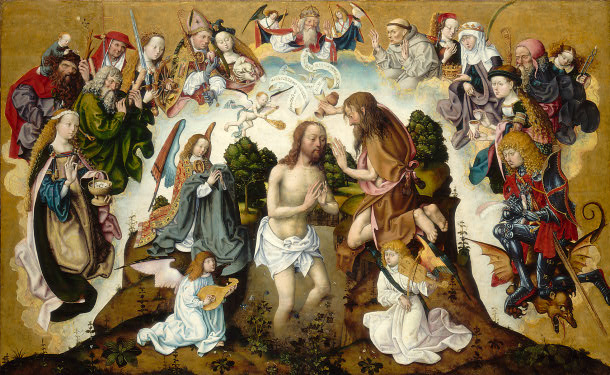
At the Jordan River with John the Baptist, “after all the people had been baptized and Jesus also had been baptized and was praying, heaven was opened and the Holy Spirit descended upon him in bodily form like a dove. And a voice came from heaven, ‘You are my beloved Son; with you I am well pleased.’” It is not the Holy Spirit Dove who says, “You are my beloved Son.” God the Father does not say, “I have been washed this day.” The Father in heaven declares to Jesus Christ on earth, “You are my beloved Son; with you I am well pleased.” At Jesus’ baptism, the Father, Son, and Holy Spirit are seen as three, distinct, divine persons who know and act and love. The reality of God is revealed to be more mysterious and interesting than we would have first imagined.

What is a personal application for this knowledge? When I was a kid, I used to pray to God as if God were a hybrid-person of all three divine Persons smeared together. But there is no God apart from the three Persons, there is no God in addition to the three Persons, and there is no God who is more than the three Persons. When you pray, consider: “Who am I praying to? The Father, the Son, or the Holy Spirit?” At Mass, the majority of the liturgical prayers are addressed to the Father and a few are said to the Son. Be intentional about to whom you are praying to help deepen your personal relationship with each.

As we grow spiritually we learn that we are meant to be in friendship with each person of the Trinity. You probably feel most familiar with Jesus, but what are God the Father and God the Holy Spirit like? Jesus tells us, “Whoever has seen me has seen the Father.” The Father is like his Son. All three divine persons possess the same divine nature: eternal, all-powerful, all-knowing, all-good, and all-loving. The Trinity eternally knows and loves one another, and it is their will for us to know and love each one of them personally and forever.

He is Baptized for Us

January 8, 2022

Baptism of the Lord
By Fr. Chinnappan Pelavendran

The Baptism of the Lord is a great event in the history of the Church because it is the first public manifestation of our Lord; the official revelation of Jesus as the Son of God to the world in the River Jordan by God the Father. John the Baptist was preaching and preparing in the wilderness and was baptizing all those who responded to his call of repentance. The purpose of his ministry of preaching and baptizing was to direct people towards Jesus who would baptize them with the Holy Spirit. Scripture tells us that Jesus came from Galilee to the River Jordan to be baptized by John the Baptist. Baptism is a call for the purification of sins, but Jesus is the Holy one of Trinity He does not need any purification. Though He is Son of God, He subjects himself to be baptized by another man to teach us the great virtue of humility.

The first reading taken from the Book of Isaiah tells us that the promised Messiah would be God’s chosen Servant in whom the divine soul would delight. The Messiah would have the Spirit of God upon Him bringing forth justice to all the nations, not just God’s chosen people. As the Servant of God, Jesus’ mission is modest and gentle in nature. He operates by His example and works. He brings a message of hope and consolation to all God’s people. Christ, the Anointed One of God is with us to bring us healing. Most importantly, He is here to restore our peace. Isaiah says in this way: “Console my people, console them…here is the Lord coming with power, his arm subduing all things to him, the prize of his victory is here with him…” This is exactly the ministry for which Christ was anointed and he empowered the human race for the entire salvation of God’s plan.

In the second reading, St. Paul invites us to recall our own Baptism — the gift of the Father, Son and the Spirit. He reminds us that the Lord has come to give us salvation and he gives us through the sacrament of baptism: “God saved us by the cleansing water of baptism and by renewing us with the Holy Spirit which he poured over us through Jesus Christ our Savior.” Through His own baptism, Christ sanctified and opened the fountain of baptism for us. He also initiated our redemptive process.

Today, the baptism of Jesus gives us our own identity. It reminds us who we are and to whom we are sent. By Baptism we become sons and daughters of God, brothers and sisters of Jesus, members of his Church, heirs of Heaven, and temples of the Holy Spirit. We are called to live as the children of God in thought, word and action. We are expected to lead a holy and transparent Christian life. The human body is the temple of the Holy Spirit and we belong to God who created us in his own image and likeness. Let us therefore grow and live in intimacy with God by personal and family prayers, by meditatively reading of the Word of God and fervently participating in the Holy Mass. Let us ask God to shower on us the divine graces to live out our baptismal life in a worthy manner. May the name of Jesus be glorified!

How we Know the Magi Arrived Later (and What That Means for Us)

January 2, 2022

Feast of the Epiphany

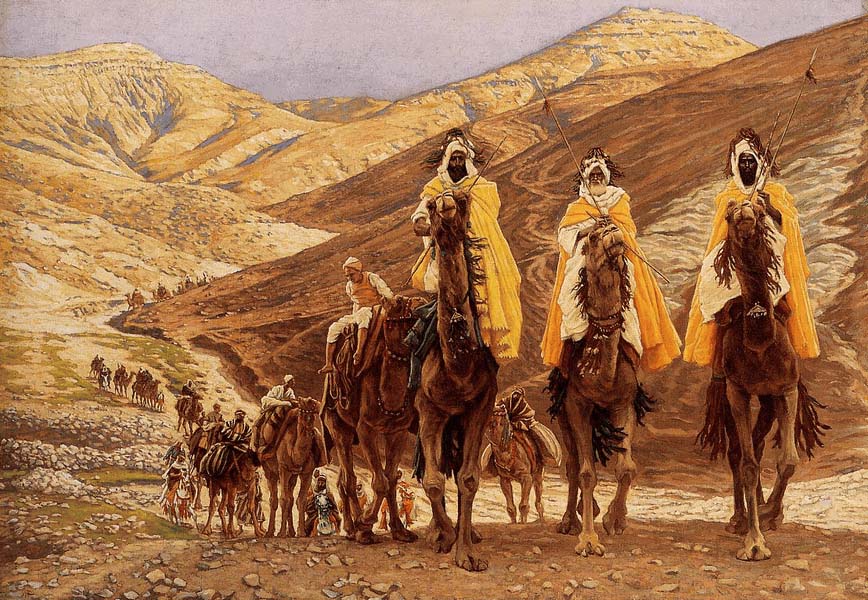
Did you notice that our three wise men statues arrived in our manger scene only on this Sunday of the Epiphany? That’s because the Magi were not in Bethlehem on Christmas Day. In many movies and imaginations, the visit of the shepherds and the arrival of the Magi get smushed together as events of the same night. St. Luke’s Gospel recalls Jesus being wrapped and laid in a feedbox and speaks about the shepherds, but St. Matthew’s Gospel tells us the Magis’ tale with several signs that the Magi came quite a bit later.

For starters, the Magi arrive in Jerusalem after their long journey from the east expecting that the new king has already been born. “Where is the newborn king of the Jews?” they ask. “We saw his star at its rising and have come to do him homage.” Once Herod had “ascertained from them the time of the star’s appearance” and had learned from the Jewish chief priests and scribes where the Christ was to be born, the wicked king sent the Magi to Bethlehem.

St. Matthew says “on entering the house they saw the child with Mary his mother.” There’s no mention of a cave or stable; it appears that the Holy Family has moved into better lodgings since Jesus’ birth. The Magi “prostrated themselves and did him homage. Then they opened their treasures and offered him gifts of gold, frankincense, and myrrh.” This happy encounter occurs at least forty days after Christmas. We know this because of a detail from the Gospel of Luke.

According to the Law of the Old Covenant, a Jewish woman who had given birth was required to wait a certain number of days and then provide sacrifices at the temple. For a baby boy, the mother had to wait at least forty days, then she was to bring the priest two animals for sacrifice; namely, a one-year-old lamb and either a turtledove or a pigeon. However, if she could not afford the lamb, God’s Law allowed her to just offer either two turtledoves or two pigeons instead.

St. Luke indicates that for Jesus’ Presentation at the Temple, after the completion of those forty days, Mary and Joseph were poor enough to take that second option, offering “a pair of turtledoves or two young pigeons in accordance with the dictate in the law of the Lord.” If the Magi had already visited, the Holy Family would have had some gold for buying a lamb. But Mary and Joseph did not have that gift because the Magi had not yet come. In fact, what King Herod goes on to do suggests it could have been more than a year later before the Magi arrived.

When Herod realizes the Magi have evaded him (for they were warned in a dream not to return to Herod) the paranoid and ruthless king does a horrifically evil thing. He orders that all the baby boys in Bethlehem – not just newborns but all those two years old and younger – be killed. This suggests King Herod thought the baby which the Magi sought could already be up to one or two years old.

The Magi arrive at our manger scene today on Epiphany Sunday because the Gospels show they celebrated the birth of Jesus Christ together with his Holy Family a time after Christmas Day. It’s interesting to learn about the Gospels and the life and times of Jesus, but collecting bits of biblical or historical trivia is not the point. What significance does the Magis’ later arrival have for our lives as Christians? One thing it means for Christ’s Church is that Christmas is not just a one day event but a whole season to celebrate.

What happens in our world on December 26th or 27th? Lots of people take down their decorations and throw out their Christmas trees. The Christmas songs played since before Thanksgiving disappear from the radio. Mentions of Christmas vanish from mass media because the opportunity to sell things to people has passed. Our secular culture uses Advent as its Christmas season, filling it with stressful hustling and hassles like Joseph and Mary experienced preceding Jesus’ birth. That birth is allowed one day of restful, spiritual, joyful peace and then the event is over. But for Catholics and Christians of times past, Christmas Eve is not the beginning of the end of Christmas, but the start of the Christmas Season. We are in that season now, decked in the liturgical color of white through the third Sunday after December 25th, the Feast of the Baptism of the Lord, which is next Sunday.

Beware of taking too many cues from the world of Herod, whose interests in Christmas are not pure. Let us learn instead from the Magi about celebrating this season. They come after Christmas day but are still “overjoyed” to celebrate his birth. They come to him, honor him, savor their time with him. They rest with him at Bethlehem. It appears the Magi did not come and leave in just one day, but were able to be warned in a dream not to return to Herod because they chose to rest with Christ and his Holy Family.

Living differently for Christ bears unexpected blessings and benefits. For instance, my good friend Katie told me yesterday that she gets a Christmas tree and puts it up on Christmas Eve. Doing it this way not only helps keep the whole season special but she gets a tree each year for free. (By that point, Christmas tree sellers are just happy to have her take one away.) Imagine no longer having to fit everything that is Christmas into the month of December. Like the Magi, you can plan trips and gatherings for after Christmas Day.

There’s still one week of Christmas left this year. Make a plan to keep it special. Play and sing your Christmas songs. Keep on feasting. Create some fun. And think of how next year you and yours can celebrate throughout the entire Christmas season. Like the Magi before you, let how you celebrate Christmas be guided by heavenly light.

Bringing Christ to Others — Funeral Homily for Loretta Logslett, 89

December 30, 2021

Loretta has been a faithful St. John the Baptist parishioner for very many years. Meeting our Lord Jesus Christ at his churches like this one was Loretta’s priority. Her son, Dean, says that she would leave a party early to attend a Sunday Mass, to contemplate and gaze upon Christ’s loveliness in his house and temple as today’s psalm says, before returning to the party after. In 1955, she married Julian here, her loving husband for 55 years. Today, Loretta shall be buried from here, and entrusted to her loving Lord forever.

Since 1977 she has worked at the Colfax Health and Rehabilitation Center as a nutrition cook. Her coworkers say that she provided them with generous food portions. But Loretta always knew that we do not live on bread alone. Residents in nursing homes often have limited mobility. Health and transportation problems prevent them from coming to church for Mass like they used to, and they miss it. They miss visiting that holy place of contact, they miss that sacred encounter, and they may feel separated from the Lord. But as St. Paul asks, what can ever separate us from Christ’s love? He who died for us, who was raised for us, and who sits at God’s right hand and intercedes for us, sends us help and consolation. Jesus sent Loretta to that nursing home not only to feed bodies but also to feed souls.

Loretta brought to its residents Jesus in the Holy Eucharist – the Sacrament of Christ’s Body and Blood – the food which gives eternal life. On days when a priest could come for monthly Mass there, Loretta helped set up the room for the celebration, she brought residents to the altar in their wheelchairs, and proclaimed the scripture readings. And throughout the week, she was a pleasant, joyful presence. She would visit residents in their rooms, genuinely befriend them, and pray the Rosary with them. Loretta’s coworker, Robert Johnson, reflected and shared that Loretta may have personally inspired among them some conversions to Christ and his Church. They were not able to make the trip to Jesus, so Jesus came to them in, with, and through Loretta.

These are things we would expect to see in someone very close to the Lord: a consuming desire to see him and be with him, a longing wish that others would know and love him too, a living reflection of his goodness and love in everything one does. Here today, we offer the greatest prayer of Christ’s Church, the Holy Mass, to aid Loretta on her journey to God and to comfort and strengthen us who remain here. On this day of hope and mourning, on this day of reflecting on the past and of looking forward to tomorrow let us ask our Lord Jesus Christ to increase our Christian devotion, to purify our love for him, to make us truly grateful for his gifts, to make us faithful, like Loretta.

Keeping the Faith During Trying Times

December 25, 2021

Feast of The Holy Family
By Deacon Dick Kostner

“Mary, did you know that your baby boy is Lord of all creation?  Mary, did you know that your baby boy would one day rule the nations?  Did you know that your baby boy is Heaven’s perfect Lamb?  That sleeping child you’re holding is the great “I Am“?

The answer to the lyrics just quoted from the popular Christmas Song “Mary did you know?” is “No! Not everything,” according to Pope John Paul II. She did not know everything at once and it is displayed in our gospel proclaimed in today’s Liturgy.

The morning I began to prepare for this homily I saw some very disturbing statistics from an article in The Wall Street Journal. Americans who pray daily was 58% in 2007, this dropped to 45% in 2021; Americans who identified themselves as Christians was 78% in 2007, in 2021 this dropped to 63%. This downward trend began long before COVID but increased during the pandemic. At our own parish we have experienced a substantial decline in attendance at Sunday Mass, especially family attendance. Other parishes have had similar declines.

So what’s going on? Our gospel displays to us the problem but it also gives us the answer to the problem. The problem is rooted in both mental and physical sufferings that are a part of the human experience. Sacred Scripture lays it out very well. Humans get sick, go blind, struggle with raising children, have disagreements with spouses and family, and yes the big one, death and when we pray for help we expect results not tomorrow but right now. All of these were experienced by Jesus the big question is: “Why?” The answer is a mystery we are incapable of understanding, but God did gift us with how we can get through these sufferings and anxieties when he sent His Son to experience these struggles and to supply us with the cure, and that is faith that the Father loves us, His Holy Family, and has a plan for us to follow and find happiness even while suffering, through His Holy Spirit and His Holy Family. The problem is our world has become secularized. Secularization is the process of removing religious and moral influence from our society. The significance of God and the Holy Family in our world is looked down upon and is been reduced.

Lets reflect on our Gospel this Feast of the Holy Family, and “Mary did you know?”. Humans are wired by our creator to care for and protect children we are blessed with. Mary was no exception and when her and Joseph realized Jesus was missing and days had passed panic hit them. They backtracked and found Jesus in the temple listening to the elders and conversing with them. They were upset and asked why Jesus had not told them where he was going. His reply was that he thought they would know that he was going to His fathers house. And then we are told that Mary and Joseph “did not understand what he said to them.” Thus we are given the answer to some of the songs questions of her that she did not know. But then we are told that Mary “kept all these things in her heart.” and thus she reflected upon her son’s words and she came to understand that Jesus had assumed she knew his vocation, to learn and be involved with public ministry. Jesus also realized they did not know this and felt sorry for not telling them his plans to visit his Fathers house, for we are told that “Jesus advanced in wisdom and age and favor before God and man and was there after obedient to them.”

Jesus made a mistake for causing anxieties to his Mother and his step father and corrected his behavior and honored his human parents. This is the guide line for human families becoming members of the Holy Family. They care for and correct mistakes they make within their Holy Family relationships and its members.

Being human will carry with it sufferings. There will be mistakes that we will make as members of the Holy Family that will cause not only us but other members of God’s family to suffer. We are called to reflect upon our mistakes and make corrections to assure those we have caused to suffer that this will not happen again. We are called by God to place other members of the family of Jesus ahead of ourselves when we realize that others need our help and support as Jesus, Mary and Joseph have taught us, by reflecting on our actions and praying to the Father for wisdom and direction in helping our brothers and sisters overcome their sufferings and anxieties of life.

Like Mary, there are many questions in life we don’t know answers to. It is faith that allows us to trust that the Father knows our fears and anxieties and will answer us through His Holy Family when the time is right, for as told to us by God we are to look to His Holy Family and the Word for help and guidance and as far as fear, He tells us: “Be still and know that I AM!

Learning from the Angels

December 24, 2021

Christmas, the Nativity of the Lord

It can be an alarming experience to encounter an angel. Their presence is typically veiled to us but once revealed to our human perception angels radiate such mightiness, holiness, and otherworldliness, that often the first thing they say upon appearing is: “Do not be afraid.” So it was on the first Christmas night in the fields outside the little town of Bethlehem where the shepherds kept watch over their flock.

A heavenly angel appeared to them, the Lord’s glory shone around them, and the shepherds were utterly terrified. But the herald angel said, “Do not be afraid… I proclaim to you good news of great joy that will be for all the people. …Today in the city of David a savior has been born for you who is Christ and Lord.” The angel then gave them a sign to look for, to know that they had found the newborn king: “You will find an infant wrapped in swaddling clothes and lying in a manger.” Suddenly, a whole multitude of angels appeared, praising God and saying: “Glory to God in the highest and on earth peace to those on whom his favor rests!” When the angels departed the shepherds were seemingly alone once more in the dark and quiet field.

Like the gospel two weeks ago about St. John the Baptist’s preaching, what strikes me about the angels’ proclamation is what the shepherds are not told to do. The Holy Family was very poor, but the shepherds are not told to bring them coins. The cave-stable in which Jesus laid was probably dirty like a barn, but the shepherds are not told to bring him a broom or clean blankets. Jesus’ parents had had a long day, but the shepherds are not told to bring them a meal. Any of these things would have been good gifts, but none of them were the most important thing. The angels invited the shepherds to bring themselves to Jesus; to approach him, see him, know him, love him, honor him; to come and encounter him, to come and adore him. This is the greatest gift.

Jesus Christ had only just been born on earth but the angels had already met the eternal Son of God in heaven. Through him all things were made, including the angels. The angels knew him from the start of their existence and in highest heaven they adored him constantly beholding his unveiled glory. In this, the angels seem to have an advantage compared to us. We see God’s creations, but they see the Craftsman. We see his effects, but they see the Source. We see his works which reflect his glory, but they see his glory directly. At Jesus’ birth, we see the Godhead veiled in flesh, lying in the manger. At his Holy Mass, we see Jesus Christ in the Eucharist, veiled in the appearances of bread and wine. Every good and beautiful thing you have ever enjoyed has its existence from him who is the most real, the most delightful, the greatest and best of all. And yet, for us human beings, God is easy to overlook.

If an angel had not visited the shepherds they would not have realized that they were within walking distance of their Savior, Messiah, and Lord. But once the angels had proclaimed the message and went away from them to heaven, the shepherds turned and said to one another, “Let us go, then, to Bethlehem to see this thing that has taken place, which the Lord has made known to us!” The shepherds left in haste, but imagine if… they had chosen not to go. The shepherds could have chosen not to go into Bethlehem. Nobody was forcing them to visit the Holy Family. They could have ignored Jesus and stayed away from him. Many people do.

The angels, in their beginning, once faced a choice like this themselves: would they love and adore and serve the Lord or would they disregard him, rejecting him and his reign? Would they love him or not? Would they worship God or themselves? The spirits who chose well are called the angels. The spirits who chose badly are called the demons. Ever since that decisive decision, the angels have loved and worshipped the Lord and been rightly ordered and thriving in his will, while the demons who refused to love and worship him have been disordered and depraved through and through.

Worship and love are linked. We worship what we love most, and that impacts our relationships to other things for good or ill. Imagine a child on Christmas morning who excitedly unwraps a new and coveted toy which, for a while, they love more than anything on earth. Will they remember to thank Mom and Dad who gifted it, or be too distracted to show gratitude? Will they be willing to share the toy with their brothers and sisters, or resent and fight against anyone who wants it? Will they draw closer to their family, or isolate to be alone with their most precious possession? Will they be delighted by that toy forever, or feel disappointment when it does not provide happiness unending? As adults, our coveted toys, our disordered loves, take different forms but lead to similar results. To love God as our greatest good and worship him with thanksgiving, praise, and openness to grace, are essential for us to love him and people and things like we should.

For the first Christmas, the angels’ gift to Jesus Christ was worship: “Glory to God in the highest!” And the angels’ gift to the human race was an invitation for us to do the same. As God’s messenger to you this sacred day, I invite and urge you to return to this church soon to faithfully encounter and adore your Savior, Christ, and Lord.

Squandered Gifts?

December 19, 2021

4th Sunday of Advent
By Deacon Matthew Bowe

This past week was finals week at the seminary. Many of my seminary brothers were busily writing papers and completing oral and written exams. Hours were spent with noses in the books and eyes staring at the screen. Stress and frantic work were abundant. I suffered.

Before you have any pity for me, I should confess the whole truth. After my one class Friday morning, which was only fifty minutes, I was mostly done. I only had a ten-minute oral exam to complete for the Eucharist class. I was on break mode since Friday at ten A.M., yet we were not allowed to depart from the seminary until after our final class on Tuesday. Some of my brothers went to class on Monday and Tuesday. I did not. I have not stressed about schoolwork for over a week, and I had plenty of time to work on my thesis and play fun activities with my friends. How, then, did I suffer?

Well, two of my closest friends, with whom I wanted to spend time, had a ton of work yet to do. They are procrastinators, poor planners, and undisciplined and unmotivated toward academic matters. Having an abundance of work left at the end of the semester is a common occurrence for them. Anyway, I suffered because they did not have time for me. I wanted to give them some of my time to be with them and to partake in shared activities. I understood that they had work to do. However, they mentioned that they were going to work on things sooner, yet they never did. They said that we could not watch a television show together because of the work that they had to do, yet I saw them sleep in, take naps, play video games, and watch television at other times. I was hurt because I felt left out. The message from this story is that our actions and our inactions can affect others in profound ways unbeknownst to us. We can be oblivious and passive to the passing moments in our lives. We can hurt others and not know it.

Please do not be hard on my friends, for I forgive them. Please do not have pity on me, for it was good spiritual growth. I tell this story to set up the message of my homily. In our humanness, we let many gifts and graces pass by in our lives. In our relationship with God, we are like my friends. I am like my friends to others and to God. How often do we squander the gifts that God gives us by casting them aside like pearls before swine? We look at God’s gifts and say, “Thanks, but no.” Then, we do our own thing not realizing that God had just given us the very thing that was necessary. It could have been an invitation to prayer, the grace that we needed to endure a hardship, a kind word to speak to another, or other good things. Why do we forsake heavenly things for the passing things of this world?

Yet, squandering gifts is not even my message, but it serves as a foil, as a contrast, for my main message. I want to talk about someone who never squandered one of God’s gifts. Glory to God that Mary, our Blessed Virgin Mother, never squandered a gift from God. In her immaculate and virginal heart, which magnifies the glory of the Lord, Mary perfectly received the angel Gabriel’s message. Her response and disposition were receptive – “Behold, the handmaid of the Lord, may it be done according to thy word.” Then, she received the Word Himself in her spotless womb. This gift of the Son was not for Mary alone, but the Savior came to redeem all nations back to God. Thanks be to God for Mary’s fiat, her “yes,” for the world gained the Savior of all Mankind.

Besides Mary’s disposition to receiving God and her freedom and openness to say yes to God’s will, Mary also exemplifies the love owed to a neighbor. She went into the hill country, around a ninety-mile journey from Nazareth, to rejoice with her cousin Elizabeth, who was once barren. Mary recognized that she had a duty to care for her cousin as her cousin progressed through her pregnancy. From this humble act of charity, another divine purpose would be served. Mary went to Elizabeth, and Jesus went to John. Jesus went to anoint John so that John would be ready to be the forerunner-prophet for the Christ. Whereas Mary and Elizabeth exchange greetings in a human way, Jesus and John exchange greetings in a spiritual way. Elizabeth heard the greeting first, but John experienced the grace from within Mary’s womb, leapt in Elizabeth’s womb, and filled Elizabeth with the Spirit. This prompts Elizabeth to praise Mary, who is “blessed among women” and is the “mother of my Lord.” Mary is first praised by an angel, and now she is praised by a woman. Even today, Mary is praised by the hosts of angels and by all the faithful in heaven and on earth.

Now, my brothers and sisters in Christ, we must continue to wait to hear more of the story. We must wait a little long to hear how the prophecy of Micah is fulfilled, when the “one who is to be ruler in Israel” comes forth. Mary will give birth to the One who shall stand firm and shepherd his flock, who will shepherd us. The King of Peace will come. Until that time, let us heed the words from the Letter to the Hebrews. The Lord wants us, and He wants the offering of our hearts. Jesus obeyed the Father’s will and offered His body once for all. Christmas does not stand apart from the Passion and Resurrection. Christmas points to Easter. The Son of God came to die for our sins. The old saying goes “from the wood of the manger to the wood of the Cross.” We hear in the opening prayer that we may “by His Passion and Cross be brought to the glory of His Resurrection.” But the Death is still awhile away, so let us prepare for His Birth.

There is one week left until Christmas. Let us intensify our spiritual sacrifices and penances to clear room in our hearts to receive the newborn King. Let us renew our vigilant waiting for the birth of our blessed Lord. Mary is very pregnant now; she is about to pop, as they say. We have seen mothers who are in their final days of pregnancy before the delivery. There is excitement in the eager and anxious anticipation of the newborn babe. St. John the Baptist announced the presence of Jesus by leaping in the womb of Elizabeth. Let us prepare our hearts to leap with joy with the presence of the newborn King on Christmas Day.

Christmas, Unlike We Envisioned It — Funeral Homily for Dr. S. Ann Hartlage-Feltes, 79

December 16, 2021

Ann and Larry realized something was gravely wrong during their recent vacation abroad. She was experiencing persistent and unexplained fatigue and shortness of breath. Just some forty days later, the cancer present and growing within her ended her earthly life. It’s stunning, it’s shocking, that a woman we know as being so energetically alive could pass away from us so quickly. As a good and faithful spouse to Larry after James’ passing, as a loving, caring mother to David, Kristin, and Ken, as a devoted, attentive grandma to her grandkids, as a dedicated psychologist to the clients and couples she served, as someone known and loved by us, her death creates a painful absence. How strange, how jarring, how incongruous it is, to be having her funeral now – so very close to Christmas. At a time for togetherness, we’re separated. In a season celebrating heavenly peace, we’re unsettled here on earth. Christmas joy, veiled by dismay. This is not how we imagine Christmas to be. And yet… the first Christmas was troubled too.

About fifteen months before the first Christmas, when Zachariah exited the temple sanctuary after having encountered an angel, he made excited, mute gestures to the people. Some concluded that he had seen vision but Zachariah was unable to speak or hear for many months. His wife, Elizabeth, may have worried whether her beloved suffered a stroke. Would he ever speak again? Then Elizabeth herself began to be unwell. She felt nauseous every day and noticed her abdomen expanding. Could she “who was called barren” somehow be pregnant, or was something gravely wrong?

Nine months before the first Christmas, the Blessed Virgin Mary gave her “Yes” to God’s plan at the Annunciation in Nazareth. An angel told Mary she would become the mother of the Messiah, but many details about her future remained hidden from her. Would her husband. Joseph, believe her when she told him? Would he become angry or afraid and decide to leave her? Joseph came very close to erroring and divorcing Mary, either because he judged her unworthy of him or because, believing her, he thought himself unworthy of her. After a torturous time of doubt and uncertainty, an angel visited Joseph in a dream and got him back on the right track.

Joseph resolved to be the very best protector and provider to Mary and her Holy Child that he could be. So imagine his great frustration that first Christmas night, consider his distress at being unable to find a proper place for Mary’s labor and Jesus’ birth; only an unclean cave with a feed trough for a crib. The first Christmas and the events leading up to it were not easy for the people who lived them. Their times were troubled, with hardships and fears. But in the end, now looking back, the accomplishment of God’s loving plan for them was more beautiful than any of them would have imagined.

See what God did for these saints of his who suffered: St. Elizabeth was not sick and dying but with child, carrying the forerunner of the Christ. St. Zachariah would regain his voice and rejoice in their firstborn son, St. John the Baptist. St. Mary would never be abandoned, but was lovingly cared for through it all. And St. Joseph succeeded in his mission to be the best father on earth. Jesus Christ’s birth in a stable was not an accident, not a divine oversight, but according to God’s plan. Their stories are a sign for us, a lesson for our lives. The Scriptures repeatedly tell us to hope in God and the good things to come.

The author of today’s first reading laments, “My soul is deprived of peace, I have forgotten what happiness is,” yet the prophet does not despair. “The favors of the Lord are not exhausted, his mercies are not spent. … Good is the Lord to one who waits for him, to the soul that seeks him. It is good to hope in silence for the saving help of the Lord.” St. John tells us in our second reading: “The way we came to know love was that [Jesus] laid down his life for us.” Our Lord faced dying so bravely because he knew not even death would end God the Father’s blessings toward him.

Today we gather in this famous and beautiful cathedral to offer the Church’s greatest prayer, the Holy Mass, for Ann’s soul and our consolation. She and Larry have been parishioners here at Holy Name for years, attending Sunday Mass and sometimes weekday Masses, too. From this altar, Ann received her Lord, his Body and Blood, his Soul and Divinity, his living and entire Self, in the Holy Eucharist. Jesus says in our Gospel, “My Flesh is true food and my Blood is true drink… Whoever eats my Flesh and drinks my Blood has eternal life, and I will raise him on the last day.” Today, we remember and are consoled by Jesus’ promise to Ann and us: “Whoever eats this bread will live forever.

Because of Ann’s parting, this Christmas will not be as we envisioned. But we are consoled by the truth that even amid these trials God is accomplishing his loving plan for us, a plan which is more beautiful than we can now imagine.

“What Should We Do?”

December 12, 2021

3rd Sunday of Advent

Despite the complications of the heavy storm, the family still decided to come. They came to St. Paul’s Friday evening to have their children baptized: a nearly three-year-old boy and a six-year-old girl. Afterwards, I asked the daughter what it was like to get baptized. She answered, “It felt like Jesus was in my heart.” Truly and beautifully, that’s what baptism does. Through simple water and simple words, new Christians are born with Christ living within them.

Large crowds came to St. John the Baptist to be baptized by him in the Jordan River as they confessed their sins. Now this was neither sacramental baptism nor sacramental confession but a preparation for what was next. John the Baptist preached that he was sent by God to prepare his people for the coming of the Messiah. Regular folks, and tax collectors, and soldiers all asked this forerunner of the Christ: “What should we do? Teacher, Rabbi, what should we do?” And what really strikes me about John the Baptist’s answers is what John the Baptist doesn’t say.

He does not say, “Give all your food and clothing away.” He says to the crowds, “Whoever has two cloaks should share with the person who has none. And whoever has food should do likewise.” He does not say to servants of King Herod and Caesar, “Abandon your posts and revolt against your rulers.” He says to the tax collectors, “Stop collecting more than what is prescribed,” and to the soldiers, “Do not practice extortion, do not falsely accuse anyone, and be satisfied with your wages.” The plan of God is to change the world by transforming individuals within the world.

John does not send people on a complicated, epic quest. They can begin doing what they need to do to prepare for Christ’s coming immediately where they’re at. John instructs them and us to do simple things: share with the needy as you are able, stop stealing, stop lying, and stop coveting what others have. These acts belong to basic justice: treating other people at least as well as you ought to be treated yourself.

Can Jesus Christ call us from this to more advanced discipleship? To sacrifice for the Kingdom of God? To suffer for the sake of righteousness? To embrace poverty, or celibacy, or radical obedience? To take solemn vows like the retired religious whose special collection is this weekend? Certainly! The Old Covenant teaches lessons for walking in justice while Christ’s New Covenant goes further, as with the Beatitudes. However, we must walk with the Lord before we can run with the Lord.

Do you grumble, discontent with what you have? Do you deceive, not always speaking what is true? Do you take what is not yours to take, or keep what is not yours to keep? Do you fail to share what is your surplus with others in need? Then you know what you should do this Advent to prepare for the Christmas coming of Christ. Convert more space in your heart for Jesus that he may fully live in you and you may fully live in him.

Jesus Chose Them for Each Other, for Himself, & for Us

December 8, 2021

Solemnity of the Immaculate Conception

This December 8th unites two of our greatest saints: the Blessed Virgin Mary and St. Joseph. Today we celebrate both the Immaculate Conception and the conclusion to the Year of St. Joseph. Our Lady, under the title of “The Immaculate Conception,” is the patroness of our country. And Joseph, under the title of “St. Joseph the Workman.” is the primary patron of our diocese. Last year, our Bishop William Callahan proclaimed a year dedicated to St. Joseph beginning May 1st. Then, last December 8th, Pope Francis unexpectedly announced a Year of St. Joseph for the entire Church worldwide. As a result of this, our diocesan celebration of this Year of St. Joseph is the longest in the world: 19 months and 8 days in full. And this is very fitting, since our diocesan patron’s name, “Joseph,” means “he will increase.”

How beautiful it is that this date brings together Mary and Joseph! He, the noble head of the Holy Family; and she, the Immaculate Heart of their home He, her chaste guardian; and she, his loving spouse. Both are absolutely faithful and obedient, courageous and righteous. And both of them were chosen by God, chosen for each other, and chosen for Christ. Mary became Jesus’ loving mother and Joseph became Jesus’ nurturing foster-father. God chose them “before the foundation of the world, to be holy and without blemish before him.” Our Lord Jesus Christ chose them for himself and he also chose them for us.

Does Jesus get jealous at the Church celebrating Mary and Joseph? Does our Catholic devotion to Mary or Joseph detract from devotion we ought to have for Christ? In his recent book, “Consecration to St. Joseph,” Fr. Donald Calloway answers: “What brother would be offended if his younger siblings expressed love towards their mother and father? What man would be upset if another person wrote a song about his mother or placed roses at her feet? Likewise, what son would be disturbed if someone praised the virtues of his father? A person who honored a father would not receive condemnation from the father’s son. On the contrary, such a person would receive praise and tremendous favors from the son.” I would add that love in a family is not a zero-sum game, but that healthy love makes love grow larger. Devotion to Mary and Joseph does not make us love Jesus less, but helps us love him more.

Jesus has not diminished these parents who cared for him on earth. He has exalted and shared them with us. He has made his mother the mother of all Christians. Like the first Eve who “became the mother of all the living,” Mary is the spiritual mother to all those alive in Christ. He has made his foster-father Joseph, who successfully safeguarded the Holy Family through its trials, spiritual protector of the universal Church And ‘never was it known that anyone who fled to their protection, implored their help, or sought their intercession was left unaided.’ So be sure to befriend St. Mary and St. Joseph. Jesus loves them dearly and they aided him on earth. He wills that you would know them, and love them, and be helped by them through this life, too, by their powerful, loving care.

Preparing His Way Within

December 5, 2021

2nd Sunday of Advent
By Fr. Chinnappan Pelavendran

This season of Advent is a time of grace for us. It is a time of grace given to us to prepare our hearts, soul and mind so that we are ready to receive Christ at Christmas. Advent is a time of grace to remind us that Jesus is the reason for Christmas. Advent is the time of waiting as we prepare ourselves to welcome God who became man and who by example showed us how we should be able to live like him for others. We wait for someone we love and we long to meet that person.

In the first reading, Prophet Baruch reminds the people of Israel that they have to share the gift of joy with others by calling them to put on the garment of integrity. God is asking them not to be part of the sad story of corruption. In this reading, God is assuring that he will flatten any high mountains and fill any deep valleys in order to make the ground level. This is an invitation to change their external behavior and reconcile them with the Lord. In this prophetic song, God promised to bring back His people from exile in Babylon.

The Prophet says by giving the people hope and confidence, inviting them to stop mourning for the past and prepare to celebrate the future. They should replace the robes of mourning with garments fashioned from the justice and glory of God. The garment of our sorrow and afflictions is the death and suffering that has come upon the Israelites because of their disobedience. The word glory appears repeatedly in the reading. The prophecy states that God would bring His people back to Jerusalem. Through sin, humankind has experienced spiritual death and the absence of the Divine Presence of God. Jerusalem is known as a mother about to receive back her exiled children.

In the second reading, we have the apostle Paul stating that he prays with joy for the Philippians, his loyal partners in the work of evangelization. He was praying for them to be blameless and pure. He prayed that they may have the grace to discern between right and wrong, good and evil. We too, like the Philippians, must be known to be men and women of goodwill. We can be witnesses to the world and to one another by maintaining our Christian morals and values. Because God the Father will begin and complete his good work in them

Today’s Gospel reading presents us with the words of John the Baptist, “Prepare the way of the Lord, and make his paths straight. Every valley shall be filled and every mountain and hill shall be made low, and the crooked shall be made straight, and the rough ways made smooth: and all flesh shall see the salvation of God.” He calls out, “Prepare a way for the Lord!” John the Baptist comes “proclaiming a baptism of repentance for the forgiveness of sins.

There are three words which are closely linked – baptism, repentance, and forgiveness. Baptism is the call to be initiated in the life of Jesus and be cleansed from all sins. It is a symbolic action through which people expressed their reconciliation with God by hoping that their sins were totally washed away. ‘Repentance’ is the forgiveness of sins and is understood as meaning change of Heart, not just sorrow for past sins but a total and radical change of outlook in our relationship with God and other people. It calls for radical and genuine renewal and conversion of heart. Forgiveness means letting go, liberation from the chains of sin and evil. Forgiveness is seen as the dropping off of heavy baggage or burdens.

During this Advent let us prepare our hearts for Christ by turning away from sin and evil and giving ourselves completely to God so that when Christ comes, or when we are called from this life, we are ready and prepared. What better way of doing this than making a very good confession receiving the Sacrament of Reconciliation?

A Martyr Preaches: “Banish the Fear of Death”

November 27, 2021

1st Sunday of Advent

This Sunday’s celebration comes in a moment of two overlapping times. This is a Sunday in November, the month in which we particularly remember, celebrate, and pray for the dead. This Sunday is also the beginning of Advent, a season in which we prepare for the coming of Christ. Through Advent we prepare not only for Christmas, the first coming of Christ, but also for Jesus’ Second Coming one day. Here and now at this Sunday Mass, our past and our future, the living and the dead, this world and the next, meet together.

When we hear Jesus’ words in today’s gospel about the Last Days we may feel apprehensive. Jesus tells us “people will die of fright in anticipation of what is coming upon the world.” And even if you or I do not belong to that final generation, we may fear to contemplate the coming sure reality of our own earthly deaths. But across time and space, an ancient saint and martyr urges us: “Let us shut out the fear of death and meditate upon immortality.

This is what St. Cyprian preached in the mid-third century A.D. as the bishop of Carthage, a North African city on the Mediterranean coast. God wills us to be good stewards of his gift of life, not recklessly pursuing self-harm or death, and yet not dreading the approach of death with mortal terror either. Listen to these words of St. Cyprian of Carthage as if he stood here before you preaching to you today:

“Our obligation is to do God’s will, and not our own. We must remember this if the prayer that our Lord commanded us to say daily (that is, the “Our Father”) is to have any meaning on our lips. How unreasonable it is to pray that God’s will be done, and then not promptly obey it when he calls us from this world! Instead we struggle and resist like self-willed (servants) and are brought into the Lord’s presence with sorrow and lamentation, not freely consenting to our departure, but constrained by necessity. And yet we expect to be rewarded with heavenly honors by him to whom we come against our will! Why then do we pray for the Kingdom of Heaven to come if this earthly bondage pleases us? What is the point of praying so often for its early arrival if we would rather serve the devil here than reign with Christ?

The world hates Christians, so why give your love to it instead of following Christ, who loves you and has redeemed you? John is most urgent in his (first New Testament letter) when he tells us not to love the world by yielding to sensual desires. Never give your love to the world, he warns, or to anything in it. A man cannot love the Father and love the world at the same time. All that the world offers is the lust of the flesh, the lust of the eyes and earthly ambition. The world and its allurements will pass away, but the man who has done the will of God shall live forever. Our part, my dear brethren, is to be single-minded, firm in faith, and steadfast in courage, ready for God’s will, whatever it may be. Banish the fear of death and think of the eternal life that follows it. That will show people that we really live our faith.

We ought never to forget, beloved, that we have renounced the world. We are living here now as aliens and only for a time. When the day of our homecoming puts an end to our exile, frees us from the bonds of the world, and restores us to paradise and to a kingdom, we should welcome it. What man, stationed in a foreign land, would not want to return to his own country as soon as possible? Well, we look upon paradise as our country, and a great crowd of our loved ones awaits us there, a countless throng of parents, (brothers and sisters), and children longs for us to join them. Assured though they are of their own salvation, they are still concerned about ours. What joy both for them and for us to see one another and embrace! O the delight of that heavenly kingdom where there is no fear of death! O the supreme and endless bliss of everlasting life!

There is the glorious band of apostles, there the exultant assembly of prophets, there the innumerable host of martyrs, crowned for their glorious victory in combat and in death. There in triumph are the virgins who subdued their passions by the strength of (chastity). There the merciful are rewarded, those who fulfilled the demands of justice by providing for the poor. In obedience to the Lord’s command, they turned their earthly inheritance into heavenly treasure.”

And so brothers and sisters, these are St. Cyprian’s lessons for us today. Love and obey Christ over and against this sinful world. Do not fear Jesus’ Second Coming. The Bible concludes with the prayer, “Come, Lord Jesus,” because his return is Good News for his friends. And do not dread your last days, but look forward to going to paradise. Jesus Christ and his holy saints, who love us, cheer us, and intercede for us, await the day we’ll join them in the fullness of joy.

Why the Catholic Church is Always so Behind the Times

November 20, 2021

Solemnity of Christ the King

A teenager recently asked me, “Why does the Catholic Church have ideas so behind the times?” It was a written question submitted alongside other students’ “Questions for Father.” The question reflected the young person’s doubts and I’m glad that it was asked, because after some reflection and with the help of grace I gave what I believe was an inspired answer.

I began with a review of some late modern history. In 1789, the leaders of the French Revolution took power in France. They rejected faith and wished to entirely replace Catholicism with their own invented “Cult of Reason.” They redefined the number of days in a week from seven to ten to deconsecrate Sunday – the Lord’s Day. They killed or exiled Catholic clergy and converted churches into “Temples of Reason.” They confiscated the convents and monasteries and expelled or martyred the monks and nuns, ending charitable ministries all across France. In their Reign of Terror they executed thousands and then turned on one another. Their revolution ended after ten years with a military coup which gave France a dictator who would crown himself their emperor: Napoleon Bonaparte.

In the early 1930’s, when Hitler rose to power in Germany, he was opposed by Catholics there. In fact, a map of the regional vote shares that the Nazi Party received across Germany looks like the photographic negative of the percentages of Catholic populations in place to place. The dark places of one map were the light places on the other. The Catholic Church proclaims universal human dignity, the preciousness of every human person, but the anti-Catholic Nazis believed in racial supremacy. They claimed the modern science of eugenics proved Germans to be the master race and showed Jews, Slavs, the disabled, and others to be lesser human beings. The Nazis arrested, deported, and murdered millions in concentration camps (including Catholic clergy, religious, and activists) and started a world war which killed millions more. Hitler’s “thousand year Reich” died with him after twelve terrible years.

The 1917 Russian Revolution and the Chinese Revolution of 1949 were violent, atheistic, communist movements. They heralded divisive class warfare as the path to utopia, denouncing and persecuting religion as the “opiate of the Masses.” The governments of the Soviet Union and Communist China, thoroughly corrupt with unchecked power, trampling human rights and freedom, are responsible for tens of millions of deaths over the past one hundred years.

I concluded my answer to that anonymous student’s question by asking the class to consider: if we had lived in France, or Germany, or Russia, or China during those times of social change would we have gone along with the spirits of the age? What would have prevented us from being swept up by and falling for their seductive errors? Our best protection against them, what would have preserved us, would be our firm conviction in our Catholic Christian Faith. The teachings of the Catholic Church will always seem to be “behind the times” because the world is always finding new ways of going gravely wrong. But timeless truth never changes. As the Letter to the Hebrews says, “Jesus Christ is the same yesterday, today, and forever.” Christ is the King “who is and who was and who is to come,” and our allegiance to him is our salvation.

For the feast of Passover, the 1st century Roman Governor of Judea, Pontius Pilate, was accustomed to release for the Jews one of his prisoners. So when the crowds assembled on Good Friday, Pilate asked them, “Which one do you want me to release to you, Jesus Barabbas or Jesus called Christ?” Barabbas was a notorious prisoner imprisoned for a rebellion which had taken place in Jerusalem and for murder. The name Barabbas means “son of the father.” So the crowd had a choice: which savior, which son of the father, which king did they prefer? Many Jews expected the Christ, their Messiah, to be a military leader who would forcefully drive out the Romans and rule an earthly kingdom like David’s or Solomon’s. Most of the crowd chose Barabbas over and against the Lord.

Pilate asked Jesus, “Are you the King of the Jews? …[So] you are a king?” Jesus’ responses to him mean, ‘Yes, but not like you imagine. If my kingdom were like the other kingdoms you know, my followers would be fighting an armed revolt right now.’ Christ’s Kingdom is in our world but not of this world. Jesus called and sent his twelve apostles to proclaim the Kingdom of God and upon the “Rock” of Peter he built his Church to teach and heal, sanctify and save. The Church continues her work with Christ to this day. She is the seed and the beginning of his kingdom. She is “the reign of Christ already present in mystery.

It can be easy to get discouraged by the evils and errors of today. As faith declines within our culture, challenging times are ahead for our Church and her mission. But there always remains reason for hope. Even amid the great evils of Good Friday, Jesus was still advancing his saving mission. Always remember: if Jesus could achieve his saving work on that most wicked day then he can surely accomplish his saving work in our day as well.