Archive for the ‘Homily’ Category

The Unity of the Trinity

June 8, 2020

Trinity Sunday—Year A

My favorite professor at seminary was a young, married, Catholic layman named Dr. Perry Cahall. He taught us several courses but his Church History class stands out in my mind. I took away two big insights from Church History.

First, in every age, century after century, it seemed like the Catholic Church was circling the drain, about to go down the tubes for good. There were Roman persecutions, Gnostic and Arian Heresies, barbarian invasions, Islamic conquests, Protestant rebellions, atheist revolutions, fascist and communist totalitarianisms. And yet, the Church endures because God is with her. Remembering this has been a reassuring consolation for me in the past, in our present circumstances, and will be in the future.

The second major insight was how heresies clarify the Church’s teachings. When some sect or movement would arise teaching some new heresy this would prompt a Church Council to more clearly define what we believe as Christians. Error prompts the profession of truth. This was especially so in our profession of the Holy Trinity.

Dr. Cahall is a pretty mild guy, so one of his most memorable lectures stands out in my mind. He said, “Gentlemen, if some day you are ordained and on Trinity Sunday you get into the pulpit and say, ‘The Trinity is a mystery and there’s nothing we can really say about it,’ I’ll hunt you down like the dogs you are.” Why? Because as the Catechism says, “The mystery of the Most Holy Trinity is the central mystery of Christian faith and life. It is the mystery of God in himself. It is therefore the source of all the other mysteries of faith, the light that enlightens them. It is the most fundamental and essential teaching in the hierarchy of the truths of faith. The whole history of salvation is identical with the history of the way and the means by which the one true God, Father, Son and Holy Spirit, reveals himself to men and reconciles and unites with himself those who turn away from sin.” Well, I don’t want to be a dog, so I’m not going to just going to tell you “it’s a mystery.

So what are some of the things we can we say with certainty about the Most Holy Trinity? In the words of the Athanasian Creed, this is what the Catholic Faith teaches:

We worship one God in the Trinity and the Trinity in unity.
Neither confounding the Persons, nor dividing the substance.
For there is one person of the Father, another of the Son, another of the Holy Spirit.
But the Father and the Son and the Holy Spirit have one divinity, equal glory, and co-eternal majesty.
What the Father is, the Son is, and the Holy Spirit is.
The Father is uncreated, the Son is uncreated, and the Holy Spirit is uncreated.
The Father is boundless, the Son is boundless, and the Holy Spirit is boundless.
The Father is eternal, the Son is eternal, and the Holy Spirit is eternal.
Nevertheless, there are not three eternal beings, but one eternal being.
So there are not three uncreated beings, nor three boundless beings, but one uncreated being and one boundless being.
Likewise, the Father is omnipotent (that is, all-powerful), the Son is omnipotent, the Holy Spirit is omnipotent.
Yet there are not three omnipotent beings, but one omnipotent being.
Thus the Father is God, the Son is God, and the Holy Spirit is God.
However, there are not three gods, but one God.
The Father is Lord, the Son is Lord, and the Holy Spirit is Lord.
However, there are not three lords, but one Lord.
For as we are obliged by Christian truth to acknowledge every Person singly to be God and Lord, so too are we forbidden by the Catholic religion to say that there are three Gods or Lords.
The Father was not made, nor created, nor generated by anyone.
The Son is not made, nor created, but begotten by the Father alone.
The Holy Spirit is not made, nor created, nor generated, but proceeds from the Father and the Son.
There is, then, one Father, not three Fathers; one Son, not three sons; one Holy Spirit, not three holy spirits.
In this Trinity, there is nothing before or after, nothing greater or less. The entire three Persons are co-eternal and coequal with one another.
So that in all things… the Unity is to be worshiped in Trinity and the Trinity in Unity.

How does the Church come to know such things? We learned them through Jesus Christ. “God so loved the world that he gave his only Son, so that everyone who believes in him might not perish but might have eternal life.” Jesus teaches there is one God, and that the Father and he are one, and that whoever has seen Jesus himself has seen the Father. He accepts Doubting Thomas declaring him “My Lord and my God,” and yet relates to his Father God as another person. When Jesus prays aloud in the Garden of Gethsemane, “My Father, if it is possible, let this cup pass from me,” he is not talking to himself, he’s not pretending or putting on a show for the apostles. The Lord Jesus is the Father’s only-begotten Son and reveals the mystery of the Trinity to us.

God is not a solitary individual, but a loving communion of persons – less like a hermit and more like a family. God is three who know, three who love, three who will and act. The divine persons each work uniquely and together, yet the Father did not die on the Cross, the Holy Spirit did not become man, and the Son did not descend as a dove or tongues of fire. However, each divine person’s works are done in harmonious concert with the others’. We have one “Father from whom all things are, and one Lord Jesus Christ through whom all things are, and one Holy Spirit in whom all things are.” We are made in the image and likeness of God not merely because we posses existence, intellect, freewill, and lordship over creation, but because we live to our fullest in loving communion with others.

St. Paul writes to “brothers and sisters, rejoice. Mend your ways, encourage one another, agree with one another, live in peace, and the God of love and peace will be with you. Greet one another with a holy kiss.” I am pleased that we are beginning the (likely gradual) return to fully gathering at Sunday Mass. Though we can do good apart, it is best for us to be together. I am also praying for our larger society’s coming together as a community of communities. Strife, violence, and destruction are not the path to unity. If Almighty God had wanted to destroy us all he could have, but “God did not send his Son into the world to condemn the world, but that the world might be saved through him.” True unity will come in the likeness of the Trinity. This is the life of Heaven that holy community can begin to know on earth. All of us are called to share in the life of the Holy Trinity, here and now into forever.

Seeing the Light — Funeral for Allen Prince, 74

June 5, 2020

Allen grew up on a farm less than a mile down the road from St. John the Baptist Catholic Church, where he was a lifelong parishioner. Today his body will be buried in that earth to await the Resurrection, and we are now gathered here [at St. Paul’s Church] to pray for his soul. No brief funeral homily can capture the fullness of a Christian life, but Allen’s sons told me a number of interesting anecdotes about his life.

They spoke of his intense work ethic. A farmer for almost 20 years and a semi-truck driver for 30, Allen never retired. Even into his 70’s he was still working hard in his shed, particularly with his welder, joining pieces to one another. Reportedly, he could fix just about anything, repairing what was broken and building things new. Allen spent many hours a week driving trailer loads back and forth across the country. That gave him lots of opportunity to call up people on his cellphone and enjoy their conversation. He also had plenty of time to listen to his musical playlist. Good friends and good songs are great company on the road.

I have also heard that Allen may have once come back from the dead. When one of his lower internal organs burst he became septic, was hospitalized, and was put into a medically-induced coma. That’s when Allen had a surreal experience in which he believed he had died and saw something of a vision involving (according to one son’s recollection) him driving truck out West. Allen was so happy there that when he regained consciousness in the hospital again he was upset to be back because he so much liked where he had been. Though he did not hasten death (he was dreaming to live to be 120) I’m informed that for the rest of his life, as a result of this experience, Allen was no longer afraid of dying. He believed he would be going to a good place.

A homily cannot capture a complete Christian life, but aspects of a Christian’s life will reflect the life and person of Jesus Christ. Jesus came among us not as a pampered prince but as a hardworking laborer, a carpenter or craftsman. As a focused perfectionist, Jesus repairs what was broken and builds things new, welding heavenly things to things of earth, joining God and peoples together as one. Jesus wasn’t eager to suffer and die, but he did not fear what would come after his death. Jesus had seen and experienced that place of joyful peace before, and believed that he would be raised again.

Throughout the Gospels, we see Jesus almost always doing one of two things: either talking with other people or praying to his heavenly Father in solitude. We see him seeking close friendship with everyone while maintaining an intimate relationship with God. Jesus calls us and he wants us to check-in with him daily, using the relationship and intimacy-building communication device called prayer. He wants us to reach out to him every day on our long drive, our long-haul, to Heaven. Jesus’ Beatitudes (“blessed are the merciful, blessed are the meek, blessed are those who mourn…”) describe the Christian disciples as they become more and more like Christ himself. Wherever we are now, the Lord wants us to call him to be our traveling companion; through life, through death, and into life beyond.

Amongst Allen’s driving music playlist, one of his apparently favorite songs shows up seven times performed by different bands or artists, a song famously written and sung by Hank Williams, Sr.: “I Saw The Light.” The words of this song must have personally spoken to Allen:

I wandered so aimless life filed with sin
I wouldn’t let my dear savior in
Then Jesus came like a stranger in the night
Praise the Lord I saw the light

Just like a blind man I wandered along
Worries and fears I claimed for my own
Then like the blind man that God gave back his sight
Praise the Lord I saw the light

I was a fool to wander and stray
Straight is the gate and narrow’s the way
Now I have traded the wrong for the right
Praise the Lord I saw the light

I saw the light, I saw the light
No more darkness, no more night
Now I’m so happy no sorrow in sight
Praise the Lord I saw the light

Let us all turn toward Jesus Christ, the Light from Light, the light of the world, our world’s only hope, to pray that the song and longing of Allen’s heart may be everlastingly fulfilled for him and for us all.

Love Languages — Funeral for Audrey Stoik, 84

June 3, 2020

On behalf of St. Paul’s Catholic Church, I offer you my condolences on the passing of Audrey, one of our well-known and well-loved parishoners. During this challenging time, for you who know and love Audrey best and for everyone in our country, I am pleased and honored that we can offer this public funeral Mass for her soul and for yours’.

Have you ever heard of The Five Love Languages? They were first presented under that title in a 1992 book of the same name. The premise of the Five Love Languages is that we express and receive some forms of love more readily than other forms, and that different individuals tend to prefer differing love languages over others. What are these five general categories of love? They are: Gift Giving, Words of Affirmation, Quality Time, Affectionate Touch, & Acts of Service. What are your favorite love languages? Perhaps later you can try guessing the favorites of the people in your lives. The reason I mention all of this is because particular love languages came to my mind as I heard multiple stories about Audrey.

Her top two love languages seemed to be Gift Giving & Acts of Service. For example, when Audrey prepared meals for her family, she was loving them through both service and gifts. I’m told you never left her house without receiving something: cookies, brownies, muffins, potato dumplings, caramel popcorn, French dressing, or something else. If you asked something of her, whether it be making dozens of cookies for your wedding or making flip flops for the graduation class, she would get it done. The many afghan blankets she weaved and gifted continue to warm homes and families. Audery, even through trials, cared for nine children and her husband. In nine years, she and Frank had eight of their nine kids. She sacrificed for them all in many ways, for instance, driving a manual transmission milk truck through the countryside to the dairies to make some extra money for the family. One day, she delivered milk in the morning and delivered one of her children in the afternoon.

What is the source of such sacrificial love? What is the power empowering self-gifting love? That source and power why we are gathered here today for Audrey, rather than somewhere else. As St. Paul’s writes, “the love of God has been poured out into our hearts through the Holy Spirit who has been given to us. For Christ, while we were still helpless, died at the appointed time for the ungodly.” That is service and gift. And Jesus not only died for us, but rose from the dead before us, and calls each of us to follow him. Jesus declares, “I am the way and the truth and the life. No one comes to the Father except through me.” Whenever we come to God’s house, he wants us to come as his true family, true friends. This first requires our true conversion but Jesus desires we never have us leave his house without receiving a precious gift; the food of a meal and sacrifice which is his very Self. By the Holy Eucharist at Mass, Jesus loves us using all five love languages together:

Words:  “This is my body, given up for you.”
Time:  “Could you not [stay] one hour with me?”
Touch:  He places himself into our hands.
Service:  He offers himself up for us.
Gift:  He gives himself to us as a gift.

Jesus is the way and the truth and the life. When we approach God, in intimacy and likeness, we approach through him. So do not let your hearts be troubled. Audrey’s love reflects Christ’s love and our saving Lord has been its source.

Uniting All Peoples

May 30, 2020

Pentecost Sunday—Year A

Did you know that the Feast of Pentecost actually predates Christianity? This solemn Jewish feast (called Shavuot in Hebrew and Pentecost in Greek) was established by God to celebrate and give God thanks for Israel’s wheat harvest. On this day, seven weeks after Passover, the Jews were to bring the first fruits of their harvests and present these in a basket at the Lord’s Temple. This is why “there were devout Jews from every nation under heaven” present in Jerusalem when the Holy Spirit descended on Pentecost. The Christians, who had been praying the first nine-day novena for His coming, were transformed by the Holy Spirit’s power and began proclaiming Jesus Christ in the streets. At the sound of it, a large crowd of these visiting Jews gathered, astonished and confused, because each one heard them speaking in his own language. In amazement they asked:

“Are not all these people who are speaking Galileans? Then how does each of us hear them in his native language? We are Parthians, Medes, and Elamites, inhabitants of Mesopotamia, Judea and Cappadocia, Pontus and Asia, Phrygia and Pamphylia, Egypt and the districts of Libya near Cyrene, as well as travelers from Rome, both Jews and converts to Judaism, Cretans and Arabs, yet we hear them speaking in our own tongues of the mighty acts of God.”

At this, St. Peter (suddenly emboldened by the Holy Spirit) proclaims the Good News about Jesus being the Resurrected Messiah that is the Christian Gospel. He urges the crowd: “Repent and be baptized, every one of you, in the name of Jesus Christ for the forgiveness of your sins; and you will receive the gift of the Holy Spirit. … Save yourselves from this corrupt generation.” Those who accepted his message were baptized and about three thousand persons were added that day.

Today, the solemn Christian feast of Pentecost celebrates the blessed gift of the Holy Spirit upon the earth and the harvest of the first fruits; men and women gathered from the nations and presented to God’s Church. As Jews and converts to Judaism, they were of many races and languages, they were of many cultures and countries of origin, but they were all called to be one in Christ. In time, the Holy Spirit led the apostles to see that this call to salvation was immediately accessible to non-Jews, to Gentile people, as well. Every person is created by God, loved by God, and called to close relationship with God through Jesus and his Church. In the words of St. Paul, “Through faith you are all children of God in Christ Jesus. For all of you who were baptized into Christ have clothed yourselves with Christ. There is neither Jew nor Greek, there is neither slave nor free person, there is not male and female; for you are all one in Christ Jesus.

Individuals are unique, one from another, so each person must be taken as they come. While we have differing backgrounds and talents, different material resources and gifts of the Spirit with which to serve, each person has equal worth before God. Yet a society apart from God will never fully honor that dignity. The people of Babel sought to build a great city reaching up to heaven. While working together apart from God’s truth and grace, however, they could bring about great evils in this world. (History is littered with such cultures and subcultures; you can know them by their fruits.) At Pentecost, the Lord undoes Babel. The peoples of many languages are reunited, becoming citizens and co-builders of the City of God. From where comes peace and true unity on this earth? Let us be led by the Holy Spirit and one with Jesus Christ that all peoples may be united in the one Kingdom of God.

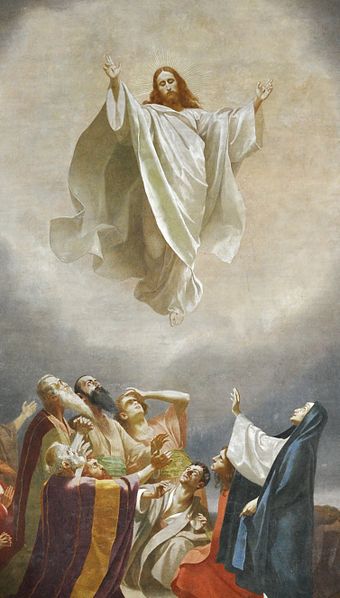
My Ascension

May 23, 2020

Ascension of the Lord—Year A
By Deacon Dick Kostner

Today we celebrate the Solemnity of the Ascension of the Lord. We also need to celebrate the the fact that Jesus remains with us for all eternity individually for all to rejoice by and through the Sacraments gifted to us by Jesus and the vocation directed to all who have received the Sacrament of Baptism by being called to be the body, hands, mind, heart, and feet of Jesus here on Earth by and through his marriage with us as members of the Church of Christ. Wow, what a privilege, but what a responsibility.

Our readings tell us that we have been chosen to respond to the call to be the Body of Christ here on earth as we continue our journey, our “Ascension” to Jesus who resides with the Father and the Holy Spirit. It is through the Sacraments that we receive a helper to guide us on our mission. The Paraclete joins to our body and spirit whenever we celebrate the gift of Sacraments given us by Jesus when he walked in body here on earth. Through the gift of Sacrament we become one in Spirit with God who helps guide us on missions he has requested of us.

As told us in our second reading from the Letter of St. Paul to the Ephesians: “May the eyes of your hearts be enlightened that you may know what is the hope that belongs to his call, what are the riches of glory in his inheritance among the holy ones, and what is the surpassing greatness of his power for us who believe…

How do we know that Jesus is still with us. Good question, but all we need to do is watch and listen for he will speak to us and help us discern the will and hopes he has for us. I will share with you a personal example of knowing God is still here with us. Everyone knows the struggle and fear that exists about re-opening with the virus still spreading. It has not been easy for your clergy to celebrate private Masses without you, the larger Body of Christ, being present. How do we as clergy know what to do or how to continue ministry during these trying times? The answer lies in prayer. Personal prayer to the one who promised to be with us always on our journey to the Father’s house. Prayer need not be formal or fancy for prayer is nothing more than talking with God about problems or challenges we are experiencing. It is through communication, it is through prayer, that relationships are formed.

Recently I have been asking God for direction on knowing what God would like me to do during these challenging times when we are asked to curb our direct contacts with others. I have also asked for some communication from Jesus as to my personal mission he desires me to embark upon. A couple of weeks ago just before celebrating Mass with Father Victor, he requested that I pick out a couple of names for our parish calendar raffle. I reached in, stirred the tickets, and grabbed two raffle tickets which were sitting next to each other. The first name I picked was Steve Turner. Steve was one of the people who joined St. Paul’s Catholic Church a year ago and had attended our Parish RCIA classes. I remarked to Father that Steve is one of those guys that has always been lucky; whether in love in finding his gifted spouse, or in fishing at the right spot. The second name I picked was, guess who? Deacon Dick. What a coincidence!

It was during the Mass that I realized the event that had just happened. I had received an answer to what God wished me to continue to do. He told me that I was important in helping others find their way to the Church of Christ and to the vocation of being the Body of Christ. And how has this affected Steve’s life? He is now an adult server in our parish and he and his wife help out with our RCIA program, with him heralding the fact that since his marriage to Elaine he has been in Church more than all of his previous years of his life. What a coincidence!

Guess what? Jesus is not up in the clouds, He is still with us through the Body of Christ and his Sacraments. Thank you Jesus for being our supernatural friend. Wishing to all of you as the Body of Christ, a blessed Ascension!

Joyful Gifts — The Reception of Lane Severson into Full Communion

May 17, 2020

6th Sunday of Easter—Year A

Today we have special cause for joy. This Sunday, Lane Severson formally joins the Catholic Church and will receive the Sacraments of Confirmation and First Holy Communion. His story bears a likeness to today’s first reading from the Book of Acts, in which the people of Samaria heard the preaching of the Gospel:

“Philip went down to the city of Samaria and proclaimed the Christ to them. … Once they began to believe Philip as he preached the good news about the kingdom of God and the name of Jesus Christ, men and women alike were baptized.”

Lane became a Christian thirteen years ago when, professing faith in our Lord and Savior Jesus Christ, he was baptized in a Washington State pond. This was God’s greatest gift to him since the day of his birth. Today, he comes to Jesus Christ’s Church because, as it was for the people of Samaria, God has additional great gifts he delights to give him and calls him to receive.

“[W]hen the apostles in Jerusalem heard that Samaria had accepted the word of God, they sent them Peter and John, who went down and prayed for them, that they might receive the Holy Spirit, for it had not yet fallen upon any of them; they had only been baptized in the name of the Lord Jesus. Then they laid hands on them and they received the Holy Spirit.”

Those Samaritans had each been baptized, but there was still more for them to receive, still more for each to experience. God does not merely seek to cleanse us of former sins and fill us with new grace — as wonderful as that is — the Most Holy Trinity desires personal and profound relationship with each of us, desires that we would become intimately united to each Divine Person. God calls us to be more deeply united to the Spirit through Confirmation, to be more deeply united to the Son through the Eucharist, and to be led to the Father and the eternal life of Heaven beginning in his Church here on earth.

The Sacrament of Confirmation is a special outpouring of the Holy Spirit as once granted to the apostles on the day of Pentecost. It increases the gifts and fruits of the Holy Spirit within us. It roots us more deeply as prayerful children of God, moving us to cry out, “Abba! Father!” And it provides the Spirit’s strength to spread and defend the faith by word and deed as true witnesses of Christ; to confess the name of Christ boldly, unashamed of the Cross; to “always be ready,” as St. Peter says in our second reading, “to give an explanation to anyone who asks you for a reason for your hope.

The Holy Eucharist is also an incredible gift of God. This sacrament is a partaking in the same holy meal and offering Jesus gave his apostles at the Last Supper. It increases and deepens our union with Christ. As Jesus says, “Whoever eats my flesh and drinks my blood remains in me and I in him. Just as the living Father sent me and I have life because of the Father, so also the one who feeds on me will have life because of me.” The Holy Eucharist separates us from sin, wiping away venial sins when we receive the Lord worthily and strengthening us against future temptation. And it unites us as one with each other in the Mystical Body of Christ, his Church. As St. Paul writes, “The cup of blessing which we bless, is it not a participation in the blood of Christ? The bread which we break, is it not a participation in the body of Christ? Because there is one bread, we who are many are one body, for we all partake of the one bread.

We are all excited for Lane joining the Catholic Church and receiving her great God-given gifts this day. And we Catholics who have already received these precious sacraments will profit to remember their powerful effects which, in the state of grace, endure within each of us. In Samaria, at the preaching of the Gospel and the mighty signs of God, “There was great joy in that city.” We, like they, have cause for joy today. So in the words of today’s psalm:

“Shout joyfully to God, all the earth,
sing praise to the glory of his name;
proclaim his glorious praise.
Say to God, ‘How tremendous are your deeds!’”


New Catholic Lane Severson & Carol Kaszubowski, his Confirmation Sponsor, on May 17, 2020.

Jesus is Family — Mother’s Day Homily

May 9, 2020

5th Sunday of Easter—Year A
By Deacon Dick Kostner

Today we celebrate the Fifth Sunday of Easter and a very special day for mothers. Our Gospel has Jesus telling his disciples that he will be leaving them to go to the Father’s House and that he will be preparing a place for them at his Father’s house. Thomas quizzes Jesus as to where exactly is the Father’s house. He wants Jesus to give him a map of where Jesus is going. He wants more information about the Father and where the Father resides. Jesus responds to their inquiry by telling them that He is “the way”, by telling them they can see the Father by and through him; by and through following Jesus and his teachings to love God and neighbor, Jesus is being a parent to his followers. The Church is the bride of Jesus and thus we are his family. He is the road map that we can refer to at any time we choose so that we will stay on the right path to the Father’s house and to Jesus who resides with the Father and the Holy Spirit. As Scripture tells us, “The Lord is my shepherd there is nothing I shall want.”

Parents’ primary responsibility is to their children and to provide not only food and housing to their children but also to be there to help their children stay on the right path which will lead them to happiness and peace during their lifetime here on earth. Christian parents know that this can only happen if their children form a relationship with Jesus who is “the way” to not only happiness in this life but also eternal happiness when we are called to join Jesus at the Father’s home.

I was blessed with having good parents who instilled within us children the need to form a relationship with the Father, Son, and Holy Spirit. During challenging times we were taught to pray for help from above, to not try and do it alone. I can remember that during my schooling years and challenges to obtain and find a vocation in life, my mom would pray to Mary and light a vigil light weekly for me to find and accomplish the goals necessary for me to have a good life. Going to Mass on Sundays and giving thanks to God was never optional – it was just something our family needed to do to say “thanks” and share Eucharist with our faith family friends.

Jesus was telling his disciples and he is telling us that we need to share with our community and friends the road map to get to the Father’s house. That road map is Jesus. Jesus and the Holy Spirit was God’s parental gift to us kids to help us find the way which will lead us ultimately to the Father’s house. Let us all fulfill and be good moms and dads to all; for this is our heavenly Father;s wish, that we partner with him in providing guidance and a map so that all may find happiness and eternal life with Jesus, Mary, and all the saints who reside at the Father’s house.

Wishing a special blessing upon all the moms, both living and deceased, who have helped us kids find the road to happiness and peace in God’s kingdom through Jesus and His paternal guidance.

How They All Went Wrong

May 3, 2020

4th Sunday of Easter—Year A

Why did Satan rebel against God?
Why did Judas betray Jesus?
Why did Peter deny the Lord three times?
The underlying answer is important for our present lives.

Why did the Devil rebel? Though mysterious, it seems that this angel proudly desired a greater “glory” than was found in God’s hierarchy. To be God without God. This was his suggestion in tempting our first parents; “you will be like gods”. Satan, being the most powerful of the demons, rules a fallen kingdom apart from goodness, truth, and God.

Why did Judas Iscariot betray Jesus? It might have been for the money; thirty pieces of silver was about five weeks of wages and St. John the Apostle reports that Judas “was a thief and held the [apostles’] moneybag and used to steal the contributions.” Yet St. Matthew writes that when Judas saw Jesus condemned he deeply regretted what he had done and returned the money to the chief priests and elders saying, “I have sinned in betraying innocent blood.” Perhaps Judas never intended the Lord to die but had hoped that Jesus, with his back against the wall, would finally wield his mighty, miraculous powers to claim David’s earthly kingdom (and hand Judas himself a privileged place within it.) Yet Judas’ dishonest and disloyal scheming left him with nothing.

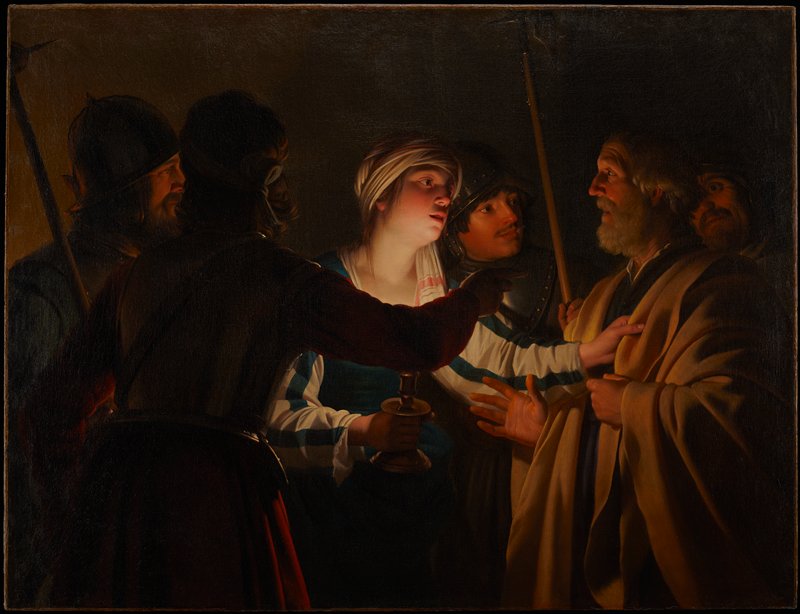
Why did Simon Peter deny the Lord three times during the Passion? St. John’s Gospel suggests he lied about having any connection to Jesus first to gain entry into the courtyard of the high priest, then to keep from being tossed out, and finally to avoid being physically assaulted by a relative of the man whose ear he had severed with a sword earlier that evening in the garden. St. Luke tells us that Peter, when he then heard a rooster crow, “went out and began to weep bitterly” over what he had done.

Satan, Judas, and Peter chose sin because they thought wrongdoing was the way to good things they would not otherwise have. But this is not Jesus’ way. In our second reading St. Peter writes of the Lord, “He committed no sin, and no deceit was found in his mouth.” He was “leaving you an example that you should follow in his footsteps.” In our Gospel, Jesus declares:

Amen, amen, I say to you, whoever does not enter a sheepfold through the gate but climbs over elsewhere is a thief and a robber. But whoever enters through the gate is the shepherd of the sheep. The gatekeeper opens it for him, and the sheep hear his voice, as the shepherd calls his own sheep by name and leads them out. When he has driven out all his own, he walks ahead of them, and the sheep follow him, because they recognize his voice. But they will not follow a stranger; they will run away from him, because they do not recognize the voice of strangers. … Amen, amen, I say to you, I am the gate for the sheep.

Jesus is our gate. He is “the way, the truth, and the life.” Always come and go through this narrow gate, for many prefer to bypass it like thieves and robbers. “How narrow the gate and constricted the road that leads to life. And those who find it are few.” Jesus’ sheep know his voice and are called to uncompromisingly follow it. Before Pontius Pilate, Jesus said, “Everyone who belongs to the truth listens to my voice.”

The words of a Jewish proverb pray to God:

Two things I ask of you,
do not deny them to me before I die:
Put falsehood and lying far from me,
give me neither poverty nor riches;
provide me only with the food I need;
Lest, being full, I deny you,
saying, “Who is the Lord?”
Or, being in want, I steal,
and profane the name of my God.

In our present season of trial, the complacency of riches has withdrawn but other temptations draw near. This is a time of testing. Will I tell lies? Will I steal? Will I sin to possess or enjoy good things I might not otherwise have? Do not give in, do not compromise, do not capitulate to evil. This is Christ’s will for you. Remember and be resolved: “The Lord is my shepherd; there is nothing I shall want.”

But what if you do go on to fall, or what if you have already sinned? What then should you do? Due to their nature, the demons will never adjust their wills towards repentance. Judas deeply regretted what he had done but he despaired of forgiveness and forfeited his life. St. Peter however returned, repented, and renewed his devotion to his Savior. (“Simon, son of John, do you love me?” He said to him, “Yes, Lord, you know that I love you.”) St. John assures us about Christ, “If we acknowledge our sins, he is faithful and just and will forgive our sins and cleanse us from every wrongdoing.”

The commandments of Christ flow from his own divine nature — total truth, pure goodness, perfect love — and these must not be spurned. Yet realize that the essence of Christianity is not rules or laws but a personal relationship: “If you love me, you will keep my commandments. … I will not reject anyone who comes to me.” Follow the Good Shepherd faithfully and goodness and kindness will follow all the days of your life and you shall dwell in the house of the Lord forever.

The Face of a Friend

April 25, 2020

3rd Sunday of Easter—Year A
By Deacon Dick Kostner

Our world tells us that death is the end of life. Jesus has parabled us into a new direction. Death is but the birth of a new and perfected life. I believe that our readings this Third Sunday of Easter tell us two important lessons to be learned. The first is that we are living at this moment in trying times, and that is anxiety, fear and confusion not only causes us to be disoriented but it also distracts us from seeing the cure for our affliction. The second lesson is that Jesus has, through our baptism, commissioned us to be the body of Christ in this very confused world. We no longer bear the face we were born with, but rather we are no longer recognized by our face but rather we are recognized by our heart and our actions.

We learn through our scripture readings that because of earthly death and the anxiety that follows we all will be confused and disoriented. This anxiety blinds us to the reality of the Easter Proclamation: “The light of Christ!” The disciples who knew Jesus well were so filled with the emotion of death that they failed to recognize their friend as they walked the road to Emmaus. This friend of theirs who could walk on water and still storms died and was buried. The fact that Jesus had taught them that death was not the end and that he would rise, blew right over the top of their heads because of their fear of death.

Isn’t it a “coincidence” that our whole world is experiencing, firsthand, the fear of death and the confusion that developed during this Holy Season? The same confusion that disciples of Jesus felt two thousand years ago is still with us on this Third Sunday of Easter. Like the disciples in our readings we are so filled with anxiety that we fail to recognize Jesus walking with us on that road to Emmaus. We fail to see his face in the nurses and doctors who treat us, and the clerks and people who serve us. We fail to hear his voice and feel his presence in the waive we see from our family and friends we no longer can touch. We fail to hear his wisdom and words proclaimed by His ordained ministers every day through cyberspace.

Jesus has many faces and I believe his disciples were unable to recognize him because Jesus wants to be recognized not by his facial features or color of skin but rather by and through his actions and words. It was not until he preached to his disciples and broke bread with them making them a part of him, that their eyes moved from his face to his heart and they could see their friend as the risen Christ.

We are commissioned to be the body of Christ. It is through our behavior driven by the heart not the brain that the face of Jesus will be recognized as we walk the road to Emmaus with Jesus at our side. May the peace of the risen Lord and the grace he gifts us with, be always with you!

Divinely Merciful

April 18, 2020

Divine Mercy Sunday

The Cenacle, the Upper Room in Jerusalem,
site of the Last Supper and Pentecost

Imagine an event as it did not happen…

On Easter evening, when the disciples were gathered behind locked doors in the Upper Room, Jesus came and appeared in their midst and said to them, “I condemn you. Each of you. All of you abandoned me.” And when he had said this, he showed the wounds in his hands and feet and side and said, “I suffered these because of your sins.”

If Jesus would have declared such things to his apostles his charges would not have been untrue. But this is thankfully not what Jesus did. Instead, he came and stood in their midst and said to them, “Peace be with you,” a phrase he says three times in this Sunday’s gospel. Christ’s Passion, death, and Resurrection are not for our condemnation. Jesus comes in mercy for his apostles and for us. “Blessed be the God and Father of our Lord Jesus Christ,” St. Peter writes, “who in his great mercy gave us a new birth to a living hope through the resurrection of Jesus Christ from the dead.”

After assuring them of his friendship and the reality of his Resurrection, the next most important item on Jesus’ Easter list is to entrust his Church with his mission of mercy: “As the Father has sent me, so I send you.” And when he had said this, he breathed on them and said to them, “Receive the Holy Spirit. Whose sins you forgive are forgiven them, and whose sins you retain are retained.”

In this season of pandemic, public Masses are suspended; first Communions, Confirmations, and weddings are being postponed; but the Sacrament of Reconciliation continues to be offered. Did you get to Confession this Lent? Jesus has peace to give you in this great sacrament. So, where and when you can, make it a top item on your list to experience his Divine Mercy there.

The Questions & Answers of Easter Vigil

April 11, 2020

Easter Vigil

Tonight’s Easter Vigil Mass features many readings and accompanying psalms. The Church says the celebrant may chose to skip some of these readings, but tonight we are doing them all; seven from the Old Testament and two from the New, a journey from Genesis to the Gospel. But how does one preach about nine readings in one homily? As I pondered that question, I wondered, “What questions are asked in the readings themselves?

In the beginning in Genesis, when God created the heavens and the earth, there are no questions, only God’s declaring word. Thus the heavens and the earth and all their array were completed. God looked at everything he had made and they were very good. From the beginning, God knows his plan.

By the time of our next reading from Genesis, sin has entered our history. Humanity’s rejection of God, reflected in every sin, not only leads to death but creates injustices which must be rectified, hearts which must be converted, relationships which must be reconciled, and evils which must be undone, through sacrifice. “Father!” Isaac says, “Here are the fire and the wood, but where is the sheep for the holocaust?” “Son,” Abraham answers, “God himself will provide the sheep for the holocaust.

Isaac was spared but would God always provide? Generations later, Moses and the Hebrews are alarmed on the shores of the Red Sea when Pharaoh’s army threatens them. The Lord says to Moses, “Why are you crying out to me? Tell the Israelites to go forward. And you, lift up your staff and, with hand outstretched over the sea, split the sea in two, that the Israelites may pass through it on dry land.” God delivers his people, destroys their enemy, and leads them to his Promised Land.

How great is God’s love for his people? Isaiah proclaims that the Lord loves and desires Israel as a man does his bride: “The One who has become your husband is your Maker; his name is the Lord of hosts.” Yet Israel would often stray from him. Elsewhere Isaiah asks her, “Why spend your money for what is not bread, your wages for what fails to satisfy?” Later the Prophet Baruch asks, “How is it, Israel, that you are in the land of your foes, grown old in a foreign land, defiled with the dead, accounted with those destined for the netherworld? You have forsaken the fountain of wisdom!” Baruch asks “who has found the place of wisdom, who has entered into her treasuries? The One who knows all things knows her; he has probed her by his knowledge—the One who established the earth….

Through the Prophet Ezekiel, the Lord promises to bring his people to their true home, to wisdom, to holiness, to communion with himself: “I will take you away from among the nations, gather you from all the foreign lands, and bring you back to your own land. I will sprinkle clean water upon you to cleanse you from all your impurities, and from all your idols I will cleanse you. I will give you a new heart and place a new spirit within you, taking from your bodies your stony hearts and giving you natural hearts. I will put my spirit within you and make you live by my statutes, careful to observe my decrees. You shall live in the land I gave your fathers; you shall be my people, and I will be your God.”

How is all this to come about? Through Jesus Christ. St. Paul asks the Romans, “Are you unaware that we who were baptized into Christ Jesus were baptized into his death? We were indeed buried with him through baptism into death, so that, just as Christ was raised from the dead by the glory of the Father, we too might live in newness of life.

When Jesus Christ was so shockingly, so horrifically, so unjustly murdered, his heartbroken disciples were full of questions. Is there no reward for the just man? Is there no victory for righteousness? Is evil more powerful than goodness? Is God indifferent to our suffering? Does he not care? Is there no deliverance from sin? Do we have any reason to hope? God answers with Christ’s empty tomb.

Do not be afraid,” the angel says. “I know that you are seeking Jesus the crucified. He is not here, for he has been raised just as he said.” The women, fearful yet overjoyed, run to share this good news when they encounter Jesus on the way. They approach, embrace his feet, and do him homage. Then Jesus says to them, “Do not be afraid. Go tell my brothers to go to Galilee, and there they will see me.”

This was God’s plan from the beginning. That sin would be conquered through self-offering. That all would trust in God’s providence and love the perfect Bridegroom. Why spend yourself on what does not satisfy? Why live any longer away from the Lord in foolishness? You have access to a new and transforming Holy Spirit through your baptism, a baptism which has its power from the death and resurrection of Jesus. Jesus is God’s answer to our greatest questions. How will you respond to him? Answer with your faith and love.

Fasting from the Eucharist

April 10, 2020

Good Friday

St. Pope John Paul II and Joseph Cardinal Ratzinger, Lent of 1995

The Latin Rite of the Catholic Church, to which we and 98.6% of the world’s Catholics belong, has just one day each year when no Masses are to be celebrated. That day is today, Good Friday. After a reading of Christ’s Passion from the Gospel of John and reverencing his holy Cross, the Good Friday liturgy contains a Communion service in which presanctified (previously consecrated) Hosts are distributed and consumed. However, in the early Church, there was no reception of Holy Communion by the faithful on Good Fridays at all. This fact was once noted by Joseph Cardinal Ratzinger. Cardinal Ratzinger, this highly-esteemed theologian, would go on to be elected pope and take the more familiar name Benedict XVI. In his 1986 book “Behold the Pierced One,” he reflected upon the spiritual benefits that could be found by Catholics in full communion with the Church abstaining for a time from receiving our Lord in the Holy Eucharist. Obviously, these interesting passages are relevant to us now during this Long Lent of 2020.

Cardinal Ratzinger wrote:

“When [St.] Augustine felt his death approaching, he ‘excommunicated’ himself and took upon himself ecclesiastical penitence. In his last days, he set himself alongside, in solidarity, with the public sinners who seek forgiveness and grace through the pain of not receiving the Communion. He wanted to meet his Lord in humility of those who hunger and thirst for righteousness, for Him, the righteous and gracious One. Against the background of his sermons and writings, which describe the mystery of the Church as a communion with the Body of Christ and as the Body of Christ, on the basis of the Eucharist, in a really marvelous way, this gesture is quite shocking. It seems to me more profound and fitting, the more often I ponder it. Do we not often take things too lightly today when we receive the most Holy Sacrament? Could such a spiritual fasting not sometimes be useful, or even necessary, to renew and establish more deeply our relation to the Body of Christ?

In the early Church there was a most expressive exercise of this kind: probably since the time of the apostles, Eucharistic fasting on Good Friday was part of the Church’s spirituality of Communion. Not receiving Communion on one of the most holy days of the Church’s year, which was celebrated with no Mass and without any Communion of the faithful, was a particularly profound way of sharing in the Passion of the Lord: the sorrowing of the bride from whom the bridegroom has been taken away (see Mark 2:20). I think that a Eucharistic fast of this kind, if it were deliberate and experienced as a deprivation, could even today be properly significant, on certain occasions that would have to be carefully considered—such as days of penitence (and why not, for instance, on Good Friday once more?) […]

Such fasting — which could not be allowed to become arbitrary, of course, but would have to be consonant with the spiritual guidance of the Church — could help people toward a deepening of their personal relation to the Lord in the Sacrament; it could be an act of solidarity with all those who have a yearning for the Sacrament but cannot receive it. […] I would not of course wish to suggest by this a return to some kind of Jansenism: in biological life, as in spiritual life, fasting presumes that eating is the normal thing to do. Yet from time to time we need a cure for falling into mere habit and its dullness. Sometimes we need to be hungry—need bodily and spiritual hunger—so as once more to comprehend the Lord’s gifts and to understand the suffering of our brethren who are hungry. Spiritual hunger, like bodily hunger, can be a vehicle of love.”

During this dangerous Coronavirus pandemic, faithful shepherds charged by Christ to care for the fullness of persons entrusted to them have prescribed sad but necessary measures which have restricted access to Holy Communion. In doing this, our Church leaders follow in the prudential footsteps of past prelates who likewise suspended public Masses during times of deadly contagion, from the medieval plagues to the modern Spanish Flu. Although public liturgies with Communion have ceased it is important to remember that the Holy Mass continues to be offered by priests in our Catholic churches. The graces of Jesus’ sacrifice pour forth from these altars into Christians souls around the world. Do not doubt that our Lord will provide sufficient grace for all that you are called to do in this season of our lives. As the Lord once told St. Paul when the saint prayerfully begged for a certain trial to be taken away, “My grace is sufficient for you, for power is made perfect in weakness.”

When we cannot physically receive Jesus in the Eucharist we can still unite ourselves to him through a prayer for Spiritual Communion. Pope St. John Paul the Great wrote that the practice of Spiritual Communion “has happily been established in the Church for centuries and recommended by saints who were masters of the spiritual life. St. Teresa of Jesus wrote: ‘When you do not receive Communion and you do not attend Mass, you can make a Spiritual Communion, which is a most beneficial practice; by it the love of God will be greatly impressed on you.’” Once, in a 14th century vision, Jesus showed St. Catherine of Siena two chalices, one gold and one silver. He said her Sacramental Communions were preserved in the gold chalice and her Spiritual Communions in the silver one. When our sacramental reception of our Lord proves impossible, Jesus desires our Spiritual Communion. Until the day we are all safely reunited around his altar, I urge you to make acts of Spiritual Communion, such as this famous prayer of St. Alphonsus Liguori:

My Jesus,
I believe that You are present in the Most Holy Sacrament.
I love You above all things, and I desire to receive You into my soul.
Since I cannot at this moment receive You sacramentally,
come at least spiritually into my heart.
I embrace You as if You were already there
and unite myself wholly to You.
Never permit me to be separated from You.
Amen.

Just one month ago, when pews were full for the 2nd Sunday of Lent, we heard the Gospel story of the Transfiguration. On Mount Tabor, Jesus’ face shone like the sun and his clothes became white as light. Ecstatic, Simon Peter said in reply, “Lord, it is good that we are here! If you wish, I will make three tents here, one for you, one for Moses, and one for Elijah.” Peter wanted to never leave that euphoric time and place, but it was necessary that Jesus lead him down from that mountain top into the dark valley; from the Mount of Transfiguration to the Hill of Crucifixion.

It is a true sacrifice to fast from the Eucharist this Good Friday amidst this Long Lent. But our Christian sacrifice is not without purpose nor without hope. Like Jesus’ Passion, it is a sacrifice offered for the love of others. This is his Body given up to save many; we do this in memory of him. And like Jesus within his Passion, we can be confident that this arduous trial shall pass away and our suffering and obedience will soon yield great rewards, particularly a deepened love for our Eucharistic Lord. Being followers of the transfigured Christ takes us to Calvary, but the Passion is what leads us to his Resurrection. And the more we share in the likeness of Christ, the more we will share in his glory.

Christ Ordained

April 9, 2020

Holy Thursday


What the Old Testament foreshadowed, the New Testament reveals. What the Old Covenant prefigured, God’s New Covenant fulfills. What our Lord prepared in ancient times, he now bestows to his Church. The Holy Scriptures point to the gifts of God we particularly celebrate on this evening: the Holy Priesthood and the Holy Eucharist.

In the Book of Exodus, the Lord declares to Moses: “This is the rite you shall perform in consecrating [Aaron and his sons] as my priests. … Aaron and his sons you shall…bring to the entrance of the tent of meeting and there wash them with water.” On Holy Thursday, “[Jesus] rose from supper and took off his outer garments. He took a towel and tied it around his waist. Then he poured water into a basin and began to wash the disciples’ feet and dry them with the towel around his waist.

Peter said to the Lord, “You will never wash my feet.” But Jesus answered him, “Unless I wash you, you will have no inheritance with me.” The Book of Deuteronomy taught, “The levitical priests, the whole tribe of Levi, shall have no [landed] portion or [territorial] inheritance with Israel…. [T]he Lord set apart the tribe of Levi,” Deuteronomy says, “to carry the Ark of the Covenant of the Lord, to stand before the Lord to minister to him, and to bless in his name…. For this reason, Levi has no portion or inheritance with his relatives; the Lord himself is his inheritance….

When Jesus told Peter, “Unless I wash you, you will have no inheritance with me,” Simon Peter replied, “Master, then [wash] not only my feet, but my hands and head as well.” As part of the priestly ordination ritual in the Book of Exodus, the Lord commanded Moses: “[Sacrifice an unblemished male sheep and] some of its blood you shall take and put on the tip of Aaron’s right ear and on the tips of his sons’ right ears and on the thumbs of their right hands and the great toes of their right feet. Splash the rest of the blood on all the sides of the altar.” Jesus says Peter does not need to be washed all over, head and hand and foot, because whoever has bathed is clean. (This is likely a reference to his baptism.) But at the Last Supper, the Body of God’s perfect, unblemished Lamb is broken and his Blood is poured for the apostles.

As St. Paul wrote to the Corinthians: “[T]he Lord Jesus, on the night he was handed over, took bread, and, after he had given thanks, broke it and said, ‘This is my body that is for you. Do this in remembrance of me.’ In the same way also the cup, after supper, saying, ‘This cup is the new covenant in my blood.’” On Holy Thursday, the apostles receive the Blood of the Lamb and then, on Good Friday, this Blood marks the sides of the Lamb’s Altar, the vertical and horizontal beams of the Cross.

In Egypt before the Exodus, when the Lord instituted the Passover sacrifice, he commanded his people: “[E]very one of your families must procure for itself a lamb… The lamb must be a year-old male and without blemish…. It shall be slaughtered during the evening twilight. They shall take some of its blood and apply it to the two doorposts and the lintel of every house in which they partake of the lamb. That same night they shall eat its roasted flesh…. This day shall be a memorial feast for you, which all your generations shall celebrate… as a perpetual institution.” At the first Eucharist, Jesus commands his apostles, “Do this in remembrance of me,” thereby ordaining them as his priests of his New Covenant.

The apostles had been washed with water, sanctified by blood, bestowed an inheritance in the Lord, and entrusted with the mission of offering the unblemished Lamb. As the Catholic Church has always believed and taught, this memorial sacrifice, this Eucharist, re-presents, truly makes present, the sacrifice of the Cross, and applies its saving fruits among us. On Holy Thursday, Jesus gave his New Covenant Church the intertwined gifts of the Holy Eucharist and the Holy Priesthood.

The trial of this Long Lent of 2020 has made Catholics more appreciative of God’s precious gifts. This evening, we are blessed by the presence of the three seminarians from our local parishes assisting at Mass. We thank God for their vocations and urge them to press on. Eventually, this Long Lent of the Church will joyfully end and these young men will be (God willing) ordained to serve her, offering Christ’s sacrifice as loving servants for the good of us all. Pray for our seminarians, Eric, Matthew, and Isaac, that they may take up the cup of salvation; that they may offer the sacrifice of thanksgiving and call upon the name of the Lord; that they may fulfill ordination promises to the Lord in the presence of all his people. And with patient eagerness let us pray for the coming day when all of us, God’s priests and his people, can celebrate the Mass together again.

The Relevance of Holy Week

April 4, 2020

Palm Sunday
By Deacon Dick Kostner

Today we begin our Holy Week. As practicing Catholics we all know the story about Christ’s Passion, Death, and Resurrection. As good Catholics we all believe that Jesus was sent upon this earth to save us, to make us one with Him through baptism and to make of us his disciples. We believe all of these facts. We also realize that these events happened over 2000 years ago. The question of challenge for us today, for us this week, is to reflect upon what that means for us in the year 2020. If Jesus is but a person of history the question of this big event leaves us with a big “so what”. So what, that this event took place, so what if we all believe this event took place if it is but a piece of history with no relevance for us here today, at St. Paul’s and St. John’s in the year 2020?

This same question was posed to me by Fr. Dan Crosby at a retreat I attended at St. Anthony’s some years ago. It is a question all of us must answer for ourselves. We need to reflect upon Jesus and whether the happiness of Palm Sunday, the Passion of Christ, the Resurrection, has relevance for us this year. If no relevance can be found we can still believe in these historical facts but it leaves us with a void, a “so what” in our lives.

Ponder this: When we celebrate our marriages and anniversaries, our birthdays, and baptisms are we not experiencing the joy of Jesus as he rode into Jerusalem seeing everyone joyful and honorous of His presence? Or how about when our Church gathers to celebrate Christmas through our school children. Are we not proud of this celebration as Jesus was proud of those who honored him on Palm Sunday? When we fail that exam, loose our job, or are refused admission to the school we so want to attend, or maybe hit with serious illness, with its pain and suffering within our lives and within our families, are we not experiencing the Passion of Christ? Look at how the Coronavirus has tuned our lives upside down, restricted our work, our lives and freedoms and yes our faith. Don’t we all cry out, “Lord take this cup from me?” When death occurs do we not experience the evil that exists within this world? Don’t we feel a loss, an aloneness from this experience? Is this not the experience of the Cross of our Brother, our Teacher, our Redeemer that took place so many years ago? After we surrender our will to that of the Father’s do we not come to fulfillment, to peace, to the beginning of new life; “a resurrection” as displayed to our Parish when we witness our Parish family members making their transition from this life to a move to the Father’s House? We no longer have death to fear, pain and suffering to fear, because of the Resurrection, because of Easter Sunday.

Part of life is the experience of ups and downs. The “ups” build us up to help us deal with the lows of life. It makes us glad to be alive. The “lows” temper us, they make us realize we are finite in body they make us dependent upon support from God and from others who comprise the body of Christ. One of my very special friends who is experiencing a “Good Friday” event in her life now, shared with me the fact that her event has allowed her and her family to experience the gift and importance of “community”, the importance of having the “Body of Christ” support her and walk with her and her family while she experiences, first hand, the Passion of Christ. The Passion, Death, and Resurrection is not history, it lives with us daily, it allows us to overcome evil, and yes even the fear of death. It allows us to celebrate the joy of Easter throughout all our lives. Let us thank God for the gift of this Holy Week of relevance in our lives.

An Identity and a Mission

April 1, 2020

2nd Sunday in Ordinary Time—Year A


When St. John the Baptist sees Jesus coming toward him he declares, “Behold, the Lamb of God, who takes away the sin of the world!” Why did John say that? How is Jesus like a lamb? Under the Old Covenant, animal sacrifices were offered for sins. The symbolism was that the living animal, often an unblemished male sheep, was dying in place of the sinner who offered it. This prefigured what was to come. Jesus Christ, like a flawless, obedient sheep, hears and follows his master’s voice, He does the Father’s will, and takes our place in the sacrifice which actually forgives sins. This is why Jesus is rightly called the Lamb of God who takes away the sins of the world.

John the Baptist goes on to say, “He is the one of whom I said, ‘A man is coming after me who ranks ahead of me because he existed before me.’” Indeed, Jesus, as the Second Person of the Most Holy Trinity, existed before the universe itself. Through Him all things were made, and the things that came to be pointed to and culminated in Him. For this reason, it is not so much that Jesus resembles the lambs of Old Covenant sacrifices, but rather that God establishes the ritual of lamb sacrifice for sins in order to point to Jesus and his ultimate sacrifice.

The story of the life of Jesus appears in the New Testament, but the Holy Spirit has spoken through the prophets about Him throughout the Old Testament. For example, our first reading from the Book of Isaiah written several centuries before Christ, is one of hundreds of passages which speak of Him. But before we return to that passage again, let’s review a little historical background.

We read in the Book of Genesis that Jacob was Abraham’s grandson. Jacob was renamed “Israel” by God and fathered twelve sons. From these twelve sons the “twelve tribes of Israel” descended. This is why the names “Jacob” and “Israel” are usually interchangeable, and may refer to one person or to many. In Isaiah, the prophet writes, “The Lord said to me: You are my servant, Israel, through whom I show my glory. Now the Lord has spoken who formed me as his servant from the womb…” To whom is God speaking in these lines? Who is the servant whom God formed from their beginning; the prophet himself, God’s faithful people, or Jesus Christ? There is truth in each of these interpretations, but this reading’s relevance to Jesus particularly shines forth. The prophesy continues:

It is too little, the Lord says, for you to be my servant, to raise up the tribes of Jacob, and restore the survivors of Israel; I will make you a light to the nations, that my salvation may reach to the ends of the earth.”

Jesus is the one who brings light and salvation not only for the physical descendants of Abraham, Isaac, and Jacob, but for all the nations on earth, to non-Jewish Gentiles like you and me through His one, holy, catholic, and apostolic Church. Another foreshadowing of Christ is seen in today’s psalm, written by King David one thousand years before Christ. Hear these words as if spoken from Jesus’ lips:

[Mere] sacrifice or offering you wished not, but ears open to obedience you gave me. [More of the former] burnt-offerings or sin-offerings you sought not; then said I, “Behold I come.”

In the written scroll it is prescribed [that is, it is foretold in the Scriptures.] For me to do your will, O my God, is my delight, and your law is within my heart!

I announced your justice in the vast assembly; I did not restrain my lips, as you, O Lord, know. I have waited, waited for the Lord, and he stooped toward me and heard my cry. And he put a new song into my mouth, a hymn to our God.

I fully suspect the 40th Psalm had an original, personal meaning for King David when he authored it, and these words have been prayed by God’s faithful people in a personal way ever since, but these words especially apply to the person and mission of Christ. After preaching God’s word to vast assemblies, obedience to his mission led Jesus to His Passion. After crying out for His Father to save Him, and waiting, waiting three days in the tomb, Jesus’ resurrection has put a new song in his mouth, a new hymn of praise to the Father in which we all have a part.

As I mentioned in my homily last week, by baptism you are baptized into Christ. And by remaining connected to Jesus Christ through his sacraments, He remains in you. The prophecies of Scripture refer not only to the human authors, like Isaiah or David, and they refer not only to Jesus, these passages’ fullest fulfillment, but also to us, His Bride and His Body, the Church in her members, the New Israel which comes to us through the twelve Apostles of Jesus. Hear those words of the Lord from Isaiah again:

You are my servant, Israel, through whom I show my glory. Now the Lord has spoken… that Jacob may be brought back to him and Israel gathered to him.”

Israel had been scattered, whole tribes of Jacob were lost due to sin and its consequences, but God Ever-Faithful used Israel, perfected in his Son, to gather his people Israel back to Himself. He says to us:

You are my servant, O Church of God, through whom I show my glory. Now the Lord has spoken… that the People of God may be brought back to him and the Church gathered to him.

God has purpose for your life. A purpose found in Christ. A mission to be faithful and fruitful in Christ. Jesus is still working to save souls today and he desires to work though each of us in His Body, the Church.