Archive for the ‘Homily’ Category

The Desert Problem—Thursday, 16th Week in Ordinary Time—Year I

July 21, 2011

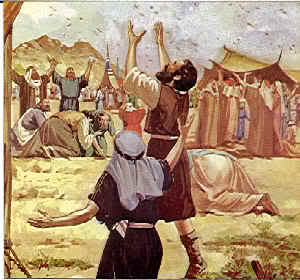
This morning I would like to talk with you about something I call “the Desert Problem.” We see it with the children of Israel during the Exodus. They had seen the ten plagues that were afflicted on their Egyptian oppressors. They had seen the Red Sea split before them. They heard God speak so powerfully and intensely with Moses at the mountain that they trembled. They accepted God’s covenant. They saw, they heard, but then they forgot. The Israelites seem to always be sinning in the desert and we can feel annoyance at them. However, we should not judge them harshly, for their story is our own. We also struggle with the desert problem.

We come to dry and difficult places in our own lives, too. When we face difficulties we too often forget what we have seen and heard and give in to depression, despair, and sin. The solution to the desert problem is the refreshing water of memory. When you are in a desert you need water, but you don’t need to dig a new well every time you need refreshment; you can go back to an old and reliable well. Before you come to your next desert, think of times in the past when you knew God was close, perhaps an intense consolation experienced in prayer, or a providential miracle you’ve witnessed in life. And when you enter your next desert (or if you find yourself in one now) recall these memories to mind and be refreshed in faith. ‘Blessed are your eyes, because they have seen, and your ears, because they have heard,’ but to remain faithful to God in the desert you must remember the great things of God you have seen and heard.

Bread of Angels — Wednesday, 16th Week in Ordinary Time—Year I

July 21, 2011

Here at St. John’s, on the wall behind me, there is painted an angel holding a banner which says, “Ecce Panis Angelorum.” This is a Latin phrase. “Ecce” means “behold,” “panis” means “the bread,” and “angelorum” translates to “of the angels.” And thus the phrase goes, “Ecce Panis Angelorum; Behold the bread of angels.” This idea comes from Psalm 78, the psalm we heard today, which says of the Manna and the Israelites in the desert, “Man ate the bread of angels, food he sent them in abundance.” 

Why was the Manna in the desert was called the bread of angels? Extra-Biblical Jewish tradition suggested that the Manna bread actually nourished the angels. The Manna also came down from Heaven for the benefit of men and came through the mediation of angels. Of course, the Manna prefigures the Eucharist, which nourishes us through the deserts of this life toward the Promised Land. The Eucharist is really Jesus Christ who came down from Heaven for mankind. The angels are indeed nourished by this bread, Jesus Christ, for their lives are sustained thorough Him. We also receive the New Testament Manna with the help of the angels. As we say in Eucharistic Prayer I: “Almighty God, we pray that your angel may take this sacrifice to your altar in heaven. Then, as we receive from this altar the sacred body and blood of your Son, let us be filled with every grace and blessing.” It has been said that if angels could envy us, it would be for our reception of Jesus in the Eucharist.

The angels do more for us than we realize. We should remember to thank them; for getting us out of bed to come to Mass this morning, for assisting us here in our prayers, and for assisting us in our daily lives. Lovingly invite them, give them the permission, to do more in your lives. (They’re probably just waiting for you to ask.) Let us ask their intercession and at this Mass, together with the angels who surround us, let us delight in the bread of angels.

Testimony To The Real Presence — Corpus Christi—Year A

July 18, 2011

Jesus Christ is truly present Body and Blood, Soul and Divinity, in the Most Blessed Sacrament. This is called the Real Presence of Jesus Christ in the Eucharist. It is true that Jesus is present whenever the scriptures are read, or wherever two or three are gathered in his name, but the Holy Eucharist is His presence in the fullest sense, for this is Jesus Christ Himself. Some people accuse the Catholic Church of making up this idea during the Middle Ages or something, but Catholics have always believed in the Real Presence of Jesus Christ in Eucharist, unceasingly, in every age of the Church. For example, around 110 A.D., St. Ignatius of Antioch, a bishop and a prisoner in chains, wrote this on the way to his martyrdom in Rome:

“I have no taste for corruptible food nor for the pleasures of this life. I desire the bread of God, which is the flesh of Jesus Christ…; and for drink I desire his blood, which is love incorruptible”

Based upon rumors, the Romans despised and persecuted the early Christians and accused them of many things without understanding. The Christians were accused of atheism, because they refused to worship the pagan gods. The Christians were accused of incest, perhaps because others misunderstood the Christians’ love for each other as “brothers and sisters.” And, most interestingly, the Christians were falsely accused of cannibalistic feasts, of eating the flesh and blood of their offspring. Around 150 A.D., to help dispel rumors and to quell Roman hated, St. Justin Martyr wrote an open letter to the emperor explaining the actual beliefs of Christians. One of the things Justin touches upon is the Real Presence of Jesus Christ in the Eucharist. He writes:

“Not as common bread nor common drink do we receive [this Eucharist]; but since Jesus Christ our Savior was made incarnate by the word of God and had both flesh and blood for our salvation, so too, as we have been taught, the food which has been made into the Eucharist by the Eucharistic prayer set down by him, …is both the flesh and the blood of that incarnated Jesus”

Where did the early Christians get this idea? The Real Presence was taught them by the apostles and through the Holy Scriptures. For example, in today’s second reading, the Apostle St. Paul mentions the Real Presence to the Corinthian Christians as a given, as a settled matter. Paul says:  “The cup of blessing that we bless, is it not a participation in the blood of Christ? The bread that we break, is it not a participation in the body of Christ?” Is Paul only speaking symbolically? Well, a little later, He warns them, “…Whoever eats the bread or drinks the cup of the Lord unworthily will have to answer for the body and blood of the Lord.” Both the apostles and Scripture agree that Jesus Christ was the source of this belief. St. Paul writes the Corinthians:

“I received from the Lord what I also handed on to you, that the Lord Jesus, on the night he was handed over, took bread, and, after he had given thanks, broke it and said, ‘This is my body that is for you. Do this in remembrance of me.’”

The first three Gospels relate these words from the Last Supper as well, but the Gospel of John presents the subject differently. Jesus’ words of institution do not appear in John’s Gospel. (Perhaps St. John, writing His Gospel last, thought it wasn’t necessary to repeat them.) Yet John gives the words of Jesus where He emphatically teaches the truth of the Real Presence. In today’s gospel reading from the sixth chapter of John, Jesus tells followers that they will need to eat the bread which is His flesh six times. And the word used several times in this passage is not the normal Greek word for eating, but a more literal Greek verb, which means “to munch” or “to gnaw.” He says, “…My flesh is true food, and my blood is true drink.” John’s gospel tells us that “many of his disciples who were listening said, ‘This saying is hard; who can accept it?’” and, “as a result of this, many of his disciples … no longer accompanied him.” And Jesus let them go because they had heard Him right. As hard as it was to believe, they were called to eat His flesh and drink His blood. Curiously, there are Christian groups who take a very literal approach to everything in the Book of Genesis, yet who switch to a symbolic interpretation to what Jesus says six times in today’s Gospel.

Did you know that there have been Eucharistic miracles affirming the Real Presence of Jesus Christ in the Eucharist throughout the centuries? For instance, consecrated hosts forming drops of blood, hosts transforming into human heart muscle, or hosts which remain perfectly preserved after hundreds of years. In fact, this feast of Corpus Christ was established by Pope Urban IV after one such Eucharistic miracle in 1263. Some Christian groups have beliefs about communion which bear some resemblances to the Catholic belief in the Real Presence; but Eucharistic miracles are not heard of within Anglican, Episcopalian, and Lutheran communions.

Did you know that Satanic worshipers affirm the truth of the Real Presence? When they seek out hosts to abuse and misuse in profoundly depraved ways, it is the Holy Communion of the Catholic Church that they seek to steal for use in “Black Masses.” Andrew, a friend of mine from seminary, used to spend his summers at a parish in Paris, France. There he met a former satanic worshiper who had returned to the Lord and the Catholic Church. Andrew asked him whether it was true that Satanists could sense the difference between a consecrated and unconsecrated Host. His Parisian friend informed Andrew this was true, that he and others used to identify consecrated hosts out of a line up as something of a test. How did he know which one was consecrated? Andrew’s friend answered, “You could tell which one was the Lord because that was the one you felt hatred towards.” If Satanists can believe in the Real Presence of Jesus in the Eucharist, then why can’t every Catholic?

When I was a boy I had good teachers in the faith. When they taught us about the Real Presence I asked, “Do we really, really believe that?” I mean I could understand a symbolic understanding. Thinking of the Eucharist as a symbol like the American flag, which reminds us of our blessings and of sacrifices made for our freedom, that came easily to me. However, my catechists challenged me when they assured me, “We really do believe that the bread and wine really, really becomes Him.” I researched whether the whole Church taught this, and found that it did. I studied whether the Church had always taught this, and discovered they had through the ages. I explored whether Scripture supported the belief in the Real Presence, and indeed, it did. Yet there was still an important piece missing.

When I was a boy, I would look around at the faces of other people at Mass and, though looks can be deceiving, they didn’t look as if they were kneeling before God Almighty. But then our parish got a new pastor, Fr. Paul Gitter. When he celebrated the Mass you could tell that he believed that he was holding Jesus in his hands. Because I knew that he believed, I could too. For the sake of our families and our neighbors, it is important that we give witness to our belief in the Real Presence, too.

[From here, I encouraged everyone to attend Marshfield’s Corpus Christi procession, June 26, 2011 with our bishop. More than 200 people processed on that beautiful Sunday, from Sacred Heart to Our Lady of Peace, witnessing to their belief in Jesus Christ as truly present in the Holy Eucharist.]

Seek As To Find — Monday, 16th Week in Ordinary Time—Year I

July 18, 2011

When I was a kid, I was neither hot nor cold. I was a cradle-Catholic and wouldn’t renounce Christ, but I wasn’t much of a disciple of Christ either. I would have pseudo-philosophical religious conversations with friends, asking questions like, “How do we know that God is real? How do we know the Bible is really true? Couldn’t the Apostles have been hallucinating on Easter? Doesn’t science contradict religion?” And other objections of that type.

One day, when I was about 12-13 years old, I imagined myself  standing before the judgement seat of God after my death. He looked disappointed and annoyed like I had promised to meet Him somewhere and never showed up. He asked, “Why didn’t you live your life like I wanted you to live it?” (At the time I thought, “Whether this idea is coming by God or just from my own imagination, I have to honestly address this question. What would I say in this situation?”) “God,” I said, “I wasn’t even sure that you were really real. How could I commit my one life to you while I was still uncertain? Who would stand out on a cliff-ledge unless they knew that it could bear their weight?”  He promptly replied, “Well, did you ever really try to find out [if I was real?] I mean, did you even read my book?” When I heard this, I had two reactions. I laughed (because it was funny) and I said, “Oh crud,” (though I didn’t say “crud.”) God had called me out. If I had really been searching for the truth, I would’ve been searching differently. Instead of just asking questions I’d be looking for answers. After that, I began praying more, reading the Bible, and exploring my Catholicism more deeply. Because of this, I stand here today.

Jesus refused to give the Pharisees a sign because they weren’t really looking for the truth but excuses.  If you meet someone who doubts God and says they would believe in Him if He gave them a sign, perhaps ask them if they are really searching for the truth or just raising doubts about God in order to be free from the demands of the Gospel. Whoever truly seeks, finds. As a corrolary for our own lives, for we who believe in God, don’t expect the Lord to explicitly reveal His will for you, unless you are willing to accept His will.

Enduring Despite Scandal — 16th Sunday in Ordinary Time—Year A

July 17, 2011

I know of a man who was called and chosen to lead, to preach, and to be a minister on behalf of Christ. Good and powerful things were done through his ministry and he was respected by many Christians. However, despite outward appearances, this man was a sinner (a great sinner,) and when his sins became known he brought great scandal to the Church. It was revealed that he had repeated stolen from funds collected for the poor. It also became known that he had betrayed Christ, his people, and his vocation in a vastly more terrible way. So terribly, in fact, that Jesus said, “It would be better for that man if he had never been born.”  (Better for him if he had never lived life outside his mother’s womb.) This man, who preached the gospel, who worked mighty deeds, who drew crowds to Jesus Christ, was the Apostle Judas Iscariot.

Could you imagine being one of those Christians who had been evangelized by the Apostle Judas? What if he had preached the gospel and ministered in your hometown? Imagine how your faith might be shaken by his sins. How tragic it would be if any Christians had parted ways with Jesus Christ, the apostles and the Church because of the scandal of this one man.

Though the one, apostolic, and Catholic Church is holy, she does contain sinners. Jesus said that there would be weeds that grow alongside the wheat. It has always been this way, and so it shall be, until the separating harvest at the end of the age. There have been terrible sinners among the Church’s popes and priests, her lay men and women; children of the evil one. Yet, these sinners, should not make us forget about the Church’s many canonized and uncanonized saints, the children of the kingdom, through whom far greater good has been done.

Like the mustard seed Jesus described, His Catholic Church, which began as a speck in history, has grown into the largest of plants, a peaceful dwelling place which brings together all peoples. And like the yeast in the dough that Jesus spoke of, the works and teachings of His Catholic Church have raised up the whole world for the better. For instance, the Catholic Church is the largest charitable organization in the world and she has been the defender of universal human dignity through the centuries. The modern world accepts the concept of universal human rights as a given because the Catholic Church first championed human dignity by her teachings and deeds. Despite the sins of some of its members, let no one say that the Catholic Church has not been a source and a force for good in the world.

We see that Jesus foreknew what Judas was freely going to do. Jesus said, “Did I not choose you twelve? Yet is not one of you a devil?” “Amen, I say to you, one of you will betray me.” (He said this in reference to Judas.) Why did Jesus, who knew all the while what Judas would freely do, permit him to remain in their company? One could rightly say it was because the Father had ordained it so, or that it was necessary to fulfill Old Testament prophesies, or so that the Son of Man and Savior of mankind would experience the human suffering of betrayal by someone who knew Him well and should have loved Him. Perhaps there are one thousand true reasons for it in God’s providential plan, but I am convinced that one of these reasons is this: So that in the future, whenever one of Jesus’ own betrayed Christ’s Church, be they a member of the clergy or laity, it would not destroy our faith in Christ.      Ultimately, the only person our Catholic faith depends upon is Him, and Jesus will never let us down.

For those who have been alienated from the Faith because of scandals, let us pray whatever the offense, that no Judas shall keep them away from Jesus Christ and His Church.

Broadcasting Our Faith — Thursday, 15th Week in Ordinary Time—Year I

July 14, 2011

At Easter time, my sister, Laura, and I used to watch documentaries about Christianity on TV. On the one hand, it was cool to see Jesus Christ talked about on channels like CNN and the History Channel. On the other hand, they couldn’t seem to present on the Christian faith without giving at least equal airtime to doubt. Laura and I enjoyed mocking their seemingly unrelenting skepticism:

“Jesus of Nazareth died nailed to a cross… or did He?”
“Every Easter, Christians around the world celebrate their belief that Jesus rose from the dead… or do they?”
“We’ll be right back after these words from our sponsors… or will we?”

Last night, ABC’s Nightline had an episode about the Virgin Mary and various apparition sites.  As I expected, the show both pleased me and annoyed me. I was pleased they had almost seven minutes about the shrine of Our Lady of Champion, near Green Bay—the first Church-approved Marian apparition site in our country. This was great, because the better the shrine is known the more good it shall do. On the other hand, I was annoyed by the show in various ways; for starters, by the Nightline episode’s title: “Beyond Belief.”  I was also annoyed by some of the things they included people saying.

I know that being interviewed isn’t easy. Expressing yourself like you want to can be hard, and video editing can take your words out of context, but here are some things they had people saying.  The doctor of a boy who was found to be free of leukemia the day after they visited the Green Bay shrine, was asked whether it was a miracle. He said, “The medicine did its job.… No matter what, God can’t work in the care of this child unless he works through somebody.” The narrator then referred to this metaphysical assertion, regarding what God can and can’t do, as “science.”

Later, the opinions of two, so-called experts were given. The first had written a book entitled From Jesus to Christ. (The book title was itself a red flag because it implies that the real historical Jesus of Nazareth got mythologized into the Christ of faith by later Christians. The Jesus of history and the Christ of our faith are one in the same.) She said, “When I think of the historical Mary, I think, first of all, of a very tired mom. Jesus could have been her fourth or fifth child for all we know. There’s absolutely no data in the New Testament itself to even tell us that.” (Actually, the Gospels of Matthew and Luke describe Mary as a virgin and Jesus as her firstborn Son.) A second expert said, “I’m not really big on the virgin birth as being scientifically viable.” (I wonder if he considers Jesus’ Resurrection, or any other miracle, to be scientifically viable.)

Then the show’s host, who seemed to me more ill-informed than malicious, went on to say, “After her death, early Christians hungry for information on the mother of their Messiah, began filling in Mary’s biography, with more stories like this; that she too was Immaculately Conceived, that her body was assumed to heaven like her Son’s, but the truth is that there’s no evidence to support any of these traditions.” First, he conflates the miracle of Jesus’ virgin birth with Mary’s Immaculate Conception. That’s a common error. Second, it’s just not true that there’s no evidence of Mary’s Assumption. For instance, the mere fact that Christians claim to have bones from all of the Holy Apostles, while no one at anytime anywhere has claimed to have hers, points to something. That’s not an incontrovertible proof for Mary’s Assumption, but it is some evidence for what all Christians were convinced about from the earliest times. The fact that people keep seeing her in compelling apparitions is some evidence too.

On the whole, I thought the show was a net plus; it did more good than harm, but it goes to show that we can’t rely upon the secular media to proclaim the Gospel for us. A person whose only source is secular television is not likely to come to faith. We need to step up as individuals and give witness to others about who God is and what He has done for us. As the psalmist says:

“Give thanks to the LORD, invoke his name;
make known among the nations his deeds.
Recall the wondrous deeds that he has wrought,
his signs, and the judgments he has uttered.”

Moses hesitated to speak to others about God. He said, “When I go to the children of Israel… what am I to tell them?” The Lord said, ‘Tell them, ‘I am who am.’ You shall tell them that I-Am-Who-Am sent you to them.’ Likewise, the one true God is asking you to witness to Him before others. Ask the Holy Spirit for the grace and you will soon receive the opportunity to witness to Jesus Christ and the good things He has done.

Born Under the Law — Tuesday, 15th Week in Ordinary Time—Year I

July 12, 2011

The story of Moses prefigures the life and works of Jesus Christ. St. Paul tells the Galatian Christians, “[We,] when we were not of age, were enslaved to the elemental powers of the world. But when the fullness of time had come, God sent his Son, born of a woman, born under the law, to ransom those under the law, so that we might receive adoption.”

The elemental powers St. Paul speaks of are the devil and the demons who powerfully and harmfully influence the world. Pharaoh and his evil reign image Satan, the demons, and their works. The children of Israel strained under the law and it brought them death. But, when the fullness of time had come, God sent a child, born of a woman, born under that law. That child, who would image person and works of Jesus, was Moses.

As long as he remained a quiet, sleepy newborn, the mother of Moses could hide him, but after three months her son began to loudly and frequently cry. With a pain that pierced her to the heart, she laid her son in the waters of death, hoping against hope, that she would receive him back safe. And, like Mary the mother of Jesus, God miraculously brought her son came back to her alive and safe. For what purpose was Moses was born under the law?—to ransom those under the law, so that they might receive God’s adoption. The Hebrews were known as the children of Israel, but they were to become the people of God.

Moses was destined to lead them, but in his youth, he was still unready. (His actions towards the Egyptian taskmaster make this clear. The one who would lead the people into the Promised Land, the one who would prefigure the Christ, could not to have an undisciplined and violent character.) After decades in a hidden life of preparation, Moses confronted Pharaoh and brought out the Israelites, not by force of arms, but by God’s power.

Moses led them into a new covenant relationship with God, who declared to them, “I will be your God, and you will be my people.” Through Moses, the Israelites were made God’s people. Through Jesus Christ, we are made God’s children. Let us recognize, that as much as Jesus is greater Moses, so the gift of the New Covenant is greater than the Old. As amazing as mighty deeds and graces of God were in the age of Moses, remember that these are all greater in the age of Jesus Christ.

St. Benedict & The Pharoah — Monday, 15th Week in Ordinary Time—Year I

July 11, 2011

Today we recall two lawgiving rulers, one Egyptian and one Italian, one who was wicked and one who is good. This morning we hear of Pharaoh, who oppressed the Israelites, and we celebrate St. Benedict, who is called the founder of Western monasticism.

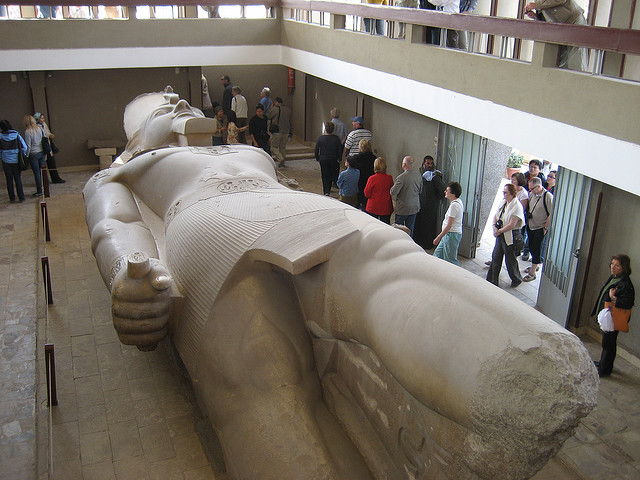
When Pharaoh saw the growing demographics of the children of Israel, he saw them as a threat and devised a new social strategy. Pharaoh had the Israelites enslaved and ordered that their male babies be sacrificed to Hapy, the fertility god of the River Nile. This would then force Israeli young women to take Egyptian husbands. In this way, if everything went according to plan, after a few generations of cultural assimilation, the children of Israel would be effectively no more.

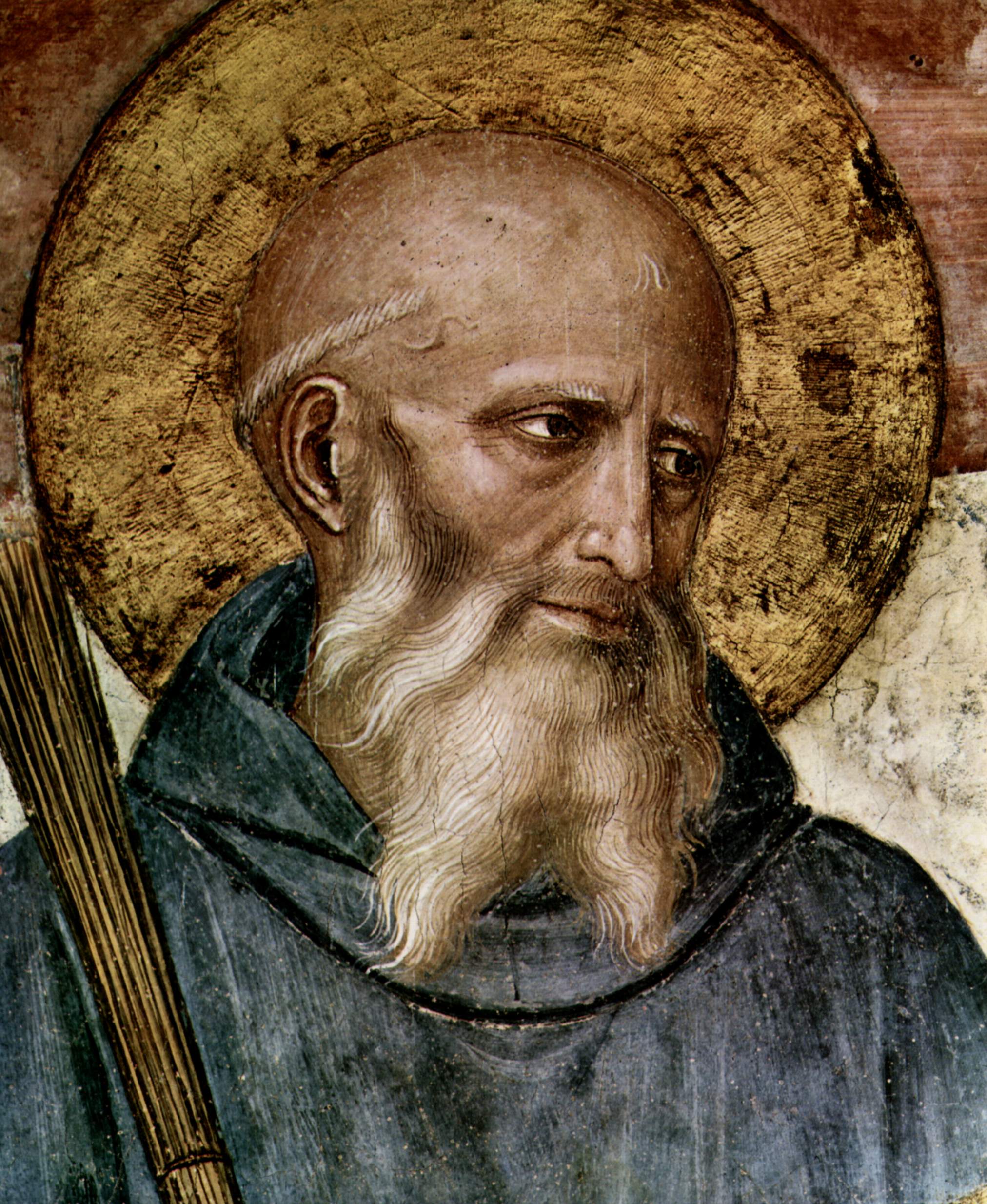
St. Benedict, for his part, also established new laws over those he governed. His “Rule of St. Benedict” has directed the spirituality and administration of Benedictine monastic life for more than fifteen hundred years. Both Benedict and Pharaoh were shrewd men, clever and astute about practical matters like human behavior, but Pharaoh’s strategy was evil and failed while St. Benedict’s was good and still endures. Both men had intelligence, but only one had wisdom.

Pharaoh and St. Benedict demonstrate that intelligence is not the same thing as wisdom, that being clever is not the same thing as being good. Just because we know how to do something doesn’t mean we should. We see this in science, which teaches us how to do certain things, but which (of itself) cannot tell us whether we should. Governments can pass new laws, but that does not mean that all laws are just or serve the common good. Intelligence without wisdom is almost a curse. The devil is a brilliant creature, but he is without wisdom.

Where do we find wisdom? We find it in Jesus Christ, who presents Himself as the definitive prophet and righteous man, who presents His life as our pattern to follow. Whoever receives Him receives wisdom, and will receive wisdom’s reward.

Teachings Hardly Heard — 15th Sunday in Ordinary Time—Year A

July 10, 2011

Like the rains that come down from heaven to water the earth, so we are called to live lives of self-gift, fruitfulness, and peace. Jesus comes down from heaven to give us life, to free us from futility and slavery to corruption. But sometimes when Jesus preaches, people hear without understanding and the evil one steals away the seed of truth He sows. For others, worldly fear and the attraction of riches prevent Jesus’ word from bearing fruit. But when His word lands on a person of openness and discernment, it bears a great fruitfulness for that person and others.

What are teachings that we as Catholics have tended to hear but not understand, to glace at but never really examine. What are the teachings of Jesus Christ’s Church which we hardly hear with our ears and toward which we are most tempted to close our eyes? These are the issues about which clergy are most hesitant to preach. Nevertheless, Jesus wills that we hear these things with our ears, understand them with our hearts, and be converted, that He may heal us. Please pray now, for the grace of the Holy Spirit, that your heart may receptive to His word.

One area about which we hardly hear with our ears is the harm in sensual or romantic fantasizes.

For men, this temptation tends to be toward indecent images. For women, it tends towards things like romance novels. With these things, a person looks at another, or imagines being with another, without ever touching them, but that does not make sensual or romantic fantasies o.k. or harmless. Recall how Jesus said, “Everyone who looks at a woman with lust has already committed adultery with her in his heart.”

What is the harm in these things? Real love is only found and shared in the real world. Sensual or romantic escapism leaves behind those we are called to love. Compared to these fantasies, no real man or woman, no wife or husband, can possibly measure up. These fantasies can be addictive and they change the way we look at and relate to others in daily life.

If books, magazines, or movies tempt you in this way, throw them out. If the internet is the gateway to fantasy, place near the monitor a picture of someone you love. Commit yourself to loving the real people in your life, for that is the only place where real love is found.

Another topic about which we hardly hear is the harm of contraception.

In the beginning, upon creating the first man and woman, “God blessed them, saying: ‘Be fertile and multiply.’”  To unite husband and wife in love, and to bless the world with new human life, God designed the one-flesh marital embrace. God created and wills this embrace for life as well as love. Contraception, however, separates life from love, to the harm of both.  This must not be done for as Jesus said, in the context of marriage, “What God has joined together, no human being must separate.”

Forms of contraception are not new, they’re actually quite ancient. And from the start, the Catholic Church has recognized the wrongness of intentionally contracepted acts. In fact, as late as 1930, all Protestant groups agreed with Catholics on this principle (before they began to splinter off.) If the constant teaching of the Church of Jesus Christ is not persuasive enough, consider the fallout of contraception.

A contracepting couple closes off their marriage, their embrace, to life. Therefore, if they unexpectedly conceive a child, the little one is not felt to be a gift from God but a mistake. Whenever the surprise blessing of a child is considered to be a curse, love for that child is wounded, and even the unspeakable becomes tempting.

Contraception also threatens the love of couples. Pope Paul VI foresaw this danger, as he wrote in Humanae Vitae, “It is also to be feared that the man who grows accustomed to contraceptive methods may forget the reverence due to a woman, and, disregarding her physical and psychological equilibrium, reduce her to being a mere instrument for the satisfaction of his own desires, and no longer as his partner whom he should surround with care and affection.” Contraception separates life and love to the harm of both.

What then does the Church ask couples to do; to have as many children as they physically possibly can? No—For serious physical, psychological, economic, or social reasons, a couple may limit their marital embraces to her cycle’s naturally infertile periods. This is called Natural Family Planning (or NFP) and its methods, when used as directed, are as effective as the pill. But unlike the pill, Natural Family Planning has no unhealthy side-effects, is not an abortifacient, and conforms with God’s will. Practicing NFP is fruitful within marriage, whether God blesses a couple with more children or not.

A third subject about which we do not hear is the harm of fornication, or partaking of the marital embrace without the covenant of marriage.

Body language speaks, and the message of the body in the marital embrace is one of total self-gift. It says, “I joyfully give myself to you, all of me, completely and forever.” Fornication, however, makes this language of the body a lie. Unless a relationship has been sealed, before God and the world, in the bond of marriage, either one of the couple can back out at any time, and the couple knows this. It’s always in the back of their minds. For this reason, these couples tend to repress anger and complaints, avoid facing problems in their relationship, and put off the hard questions about their future together.

The embrace of man and woman naturally forges strong emotional bonds between the couple. In marriage, that’s a good thing, but before a marriage this clouds judgment and can plaster over serious flaws, serious cracks, in a bad relationship, at least for awhile. And what if their embrace conceives a child they don’t think they’re ready for? The woman, to preserve the relationship, may be tempted or coerced toward an unspeakable choice she’ll always regret.

Cohabitating couples can slouch into marriage; sometimes the man doesn’t really choose marriage so much as finally give in to others’ expectations. Then, after their wedding, nothing really seems different from before, and psychologically, the assumptions of their dating relationship carry into the marriage. Once their wedding day (which wasn’t as special for them as it should have been) drifts further away into the past, and marital difficulties inevitably arise, the old idea, the old escape hatch of breaking up and moving out, naturally returns, increasing the risk of divorce.

Fornication and cohabitation expose a person to emotional and spiritual pains, decrease one’s chances of marrying the right person, and increase one’s chances of divorcing in the future. No matter where you are in your dating relationships, Jesus Christ calls you to pre-marital chastity, for true love is found in purity.

A final topic about which we hardly hear is the harmfulness in acting out according to one’s same-sex attractions.

As the Catechism of the Catholic Church notes, “The number of men and women who have deep-seated [tendencies of this kind] is not negligible. This inclination, which is objectively disordered, constitutes for most of them a trial. They must be accepted with respect, compassion, and sensitivity. Every sign of unjust discrimination in their regard should be avoided. These persons are called to fulfill God’s will in their lives and, if they are Christians, to unite to the sacrifice of the Lord’s Cross the difficulties they may encounter from their condition.”

It is important for all of us to remember that a temptation, whatever it is, by itself, is not sin. Unless we go out looking for temptation, we are not responsible for the temptations which our genetics, upbringing, or environment send our way. What important is how we respond to our temptations, whether we give in to them and fall, or if stand strong with God like His saints before us.

As a Christian, and a fellow sinner, it would be wrong for me to look down on anyone. God loves everyone like He loves me. But at the same time, it would not be loving for me as a follower of Jesus Christ to say that acting out on one’s same-sex attractions is o.k. or harmless. The Old and New Testaments and the constant teachings of Christ’s Church are clear.

People of the same sex may be friends, even the dearest of friends with each other, but they’re not meant to be lovers. Man and wife were made each other. Their masculine and feminine differences compliment and complete each other and husbands and wives, as mothers and fathers. This is seen physically, in their marital embrace and in the conception of new life; but also psychologically and spiritually as well, in faithful marriages that last a lifetime. Persons of the same sex do not have this complimentarity and to ignore truth this leads to suffering, for such relationships are unhealthy for one’s body or soul. The tragically higher rates of promiscuity, transmittable diseases and cancers, domestic violence, drug and alcohol abuse, depression, and attempted suicide, point to the brokenness of these lifestyles. (And one notes that these comparatively higher rates are found not only in our country, but also aboard, like in the Netherlands where such relationships are more common and much more socially accepted.) Jesus calls these brothers and sisters of His and ours to a different, better, happier way of life.

Regardless of our temptations, there is hope. Freedom from sin and joyful peace are possible for all of us, by the grace of Jesus Christ the support of one another. For example, Courage international is a Catholic organization which ministers to help those with same-sex attractions live chaste and happy lives. For more information about Courage groups in our area, or about how to enroll in Natural Family Planning classes see me after Mass or give me a call. If you are cohabitating and wish to return to chastity but you don’t know how you as a couple can practically achieve it, talk to me. God has solutions for those who seek His will. May the seeds of Jesus’ teachings find rich soil in your hearts and bear an abundant harvest for you and for others.

Instructions For Missionaries — Thursday, 14th Week in Ordinary Time—Year I

July 7, 2011

Today, Jesus teaches His Apostles how they are to behave as they proclaim the Gospel and do His works. Why does Jesus give them the instructions He does, and what do they mean for us?

Jesus said, “Do not take gold or silver or copper for your belts, no sack for the journey.”  He wants us to depend on God, so that we can learn that God is dependable. But if we depend on God for nothing, then how can our trust grow? The things in your life that you worry about are the places in your life where He wants you to depend on Him more.

Jesus said, “take no second tunic, nor sandals, nor walking stick.” He did not want the Apostles making long trips. They wouldn’t need gear for long-distance hikes, such as a second tunic to sleep in outside overnight. They were to witness in one small village after the next, so that, working separately for the same goal together, everyone in every place would be reached with the Gospel. Like the Apostles, your mission territory is not far away.

Jesus said, “Whatever town or village you enter, look for a worthy person in it, and stay there until you leave.” Of course a person has to stay somewhere until they leave, but a person who has been welcomed into one house could receive a tempting invitation to stay in the same town with someone “better.” We too must beware the temptation to alienate Christ’s “little ones” in order to ingratiate ourselves to others.

Jesus said, “As you enter a house, wish it peace. If the house is worthy, let your peace come upon it; if not, let your peace return to you.” Like the Apostles, we are sure to encounter people who would snub, ignore, insult, or be cold to us, but that should not rob us of our peace.

What Jesus said to the Apostles, He is saying to us as well. Let us do as He instructs us as we proclaim the Gospel and do His works.

Why Twelve Apostles? — Wednesday, 14th Week in Ordinary Time—Year I

July 6, 2011

Yesterday, Jesus said to His followers, “ask the master of the harvest to send out laborers for his harvest.” Today, He summons twelve disciples from the crowd to have a special role and authority among His people. Each is named an “apostle,” a title which is a Greek word, meaning “one who is sent.” Jesus shall send the apostles into the world to be the foundation stones of the Church. Why did Jesus choose twelve Apostles, rather than ten, twenty, or one hundred? I think that reasons are found in the history of God’s people and in the symbolic meaning of numbers.

Yesterday, Jacob wrestled with God and his name was changed Israel. This man, Israel, had twelve sons and through these sons, descended the twelve tribes, the people of Israel. By choosing twelve, Jesus establishes the people of God anew; He constitutes a new Israel. The number twelve is also three times four. Three is the Trinitarian number of God and four is the number of the created world; as in north, south, east and west, or the four corners of the earth. Twelve, the number which is three times four, denotes how the Triune God shall reach out to all nations to form a new people of God, a new family, a New Israel, the Church.

Our Church, its bishops, priests and deacons, like the sons of Israel and the twelve Apostles, frequently prove that they are human, yet our Church is more than just an organization and the ordained are more than just functionaries. Our clergy derive their special role and authority from Jesus Christ and the Apostles, and our Church is intended for all. They are our fathers and the Church is God’s family.

The Age of the Donkey — 14th Sunday in Ordinary Time—Year A

July 4, 2011


Jesus tells us in today’s gospel, “All things have been handed over to me by my Father.” But if that is so, why do so many things in the world seem so out of hand? We see that many things are sinful, broken, and not as they should be. Zechariah foretold that the true king would proclaim establish peace among the nations. Yet, this Fourth of July weekend sees our country fighting in at least two wars abroad. If we take our faith seriously, and think seriously about our faith, we’re led to ask, “Where is the reign of Jesus and where is His promised peace?”

In our first reading, we heard Zechariah prophesy that the true king, the Messiah, the Christ, would come to Jerusalem riding on a donkey. You will recall, of course, how Jesus fulfilled this passage when he rode into Jerusalem on Palm Sunday to the people’s shouts of joy. So what is the significance of His riding in on a donkey? The significance of the donkey is that it points to the meekness of Jesus’ reign.

In the ancient world, when a general sieged and took a fortified city, he would most often ride through its city gates by means of horse power. That conqueror would either be saddled upon one of these magnificently fast and powerful animals, or else he would ride in a chariot pulled by them. Then, upon entering, one would expect him to ruthlessly establish the new order of things. Oftentimes, to secure the conqueror’s rule, new laws would be proclaimed and severely enforced, prominent enemies would be put to death, and all local resistance would be crushed.

Jesus, however, comes into Jerusalem in a different way; not on a warhorse or in a chariot, but on a slow and humble donkey. This signifies that His reign shall be different. Apart from the relatively tame activism of scattering livestock and tipping tables at the temple, Jesus introduces his reign without any sign of force. In fact, the only person who would be murdered in the course of Jesus’ rise to power… would be Jesus Himself.

When Jesus stood accused before the high priest and the Sanhedrin, when He was in chains before Pilate and his troops, do you not think that He could have called upon His Father to provide Him in an instant with more than twelve legions of angels? Jesus could have backed Himself up with the power of more than 60,000 angelic warriors, but then He would not have died, and His kingdom would have been very different.

Let me speak for a minutes about the angels. God’s angels, in the first instant of their created existence, had a clear knowledge into God’s goodness and preeminence. In that moment, some of them decided that they would rather live as their own gods. As the Book of Revelation tells us, a war broke out in heaven; St. Michael the Archangel and his angels battled against Satan. Satan and its angels fought back, but they did not prevail and there was no longer any place for them in heaven. Satan was thrown down to earth, and his angels were thrown down with him, where they have tempted us to share in their rebellion ever since. Sometimes people ask if Satan and the demons could be someday be saved. However, angels and demons are creatures that do not change their minds. Unlike human beings, they do not change over time. We human beings are a different sort of creatures. We learn through experience and (hopefully) grow in maturity. If one of us chooses to rebel through grave sin, hope remains for us, as long as we live, that we will repent and turn again to God, to love Him and others as we ought. Even after Caiaphas and Pilate condemned Jesus and handed Him over to for execution, hope remained for their conversion and salvation.

What if Jesus had called in His angelic reinforcements, unveiling before them the Heavenly armies in their terrifying fierceness? What if Christ had tolerated no resistance to the advent of His reign, to the coming of His Kingdom, in 33 AD?        In that case, all of humanity would be confronted with a sudden and inescapable choice, a choice either for Christ or against Him; a moment of choosing like that experienced by the angels and demons.

Some human beings, when confronted with Christ in this way, would sinfully refuse to follow Him, and that refusal would be a rebellion. And here we come to the heart of the problem: How can Christ allow these rebels to remain on the earth, in hopes that they may repent, unless He is willing to show some tolerance and patience toward their sinful resistance for a time? Jesus could wipe away all sin from the face of the earth in an instant, but He would have to wipe out all of the earth’s unrepentant sinners in the process. A sudden judgment would bring a quick and clean end to sin, but less of mankind would be saved. The approach Jesus has taken with us is more merciful, but is also messier. God hopes that all shall turn to Him freely, and not by force, because love cannot be forced. Jesus Christ hopes and works for the conversion and salvation of all. As St. Peter writes, “The Lord’s patience is directed towards salvation.” And though it can be difficult for us to see God’s providential purposes and plans in our lives, “we know that,” as St. Paul says, “all things work for good for those who love God.”

Where is the peace that was promised to the world? Its total reign, the fullness of the kingdom of God, is yet to come. For now, the spirit of the world and the Spirit of life do battle. But we can experience peace in our souls, peace in our families, and peace in our communities, if we live by the Spirit of Christ.

In this age, Jesus comes to us on a donkey, but in the age to come He shall ride a warhorse. As the Book of Revelation says:

“I saw the heavens opened, and there was a white horse; its rider was called ‘Faithful and True.’ He judges and wages war in righteousness.… He wore a cloak that had been dipped in blood, and his name was called the Word of God. The armies of heaven followed him, mounted on white horses and wearing clean white linen. Out of his mouth came a sharp sword to strike the nations. He will rule them with an iron rod, and he himself will tread out in the wine press the wine of the fury and wrath of God the almighty. He has a name written on his cloak and on his thigh, ‘King of kings and Lord of lords.’”

In this age, Jesus rides the donkey, for this is the time of patient mercy. But on the Last Day, Jesus shall ride the white warhorse, for that is the time of decisive and definitive judgment. Let sinners take note; we shall not be permitted to keep sinning forever. And let those who mourn the brokenness, the sin, the suffering and death in the world take courage, for these things shall pass away. ‘See, your king shall come to you; a just savior is he. He shall proclaim peace to the nations. And His rule shall be to the ends of the earth.’

United Hearts — The Kristopher and KayLee Schnitzler Wedding

July 4, 2011

Kristopher and KayLee, when you chose this day, July 2nd, to be your wedding day you were probably not aware that you were choosing an extra special date. We unite your hearts today in holy matrimony amidst Sacred Heart of Jesus and the Immaculate Heart of Mary. Yesterday was the Solemnity of His Sacred Heart and today is the Memorial of her Immaculate Heart. We celebrate these two feasts so closely on the calendar, one after the other, because no two human hearts are so intimately united in a perfect love. I present them to you as role models for your love

Mary and Jesus were mother and Son. They were never married in the way we think of marriage, so how can they be role models for your marriage? In Jesus and Mary, we see the perfect man with the perfect woman, we see the New Adam together with the New Eve, we see the King and Queen of Heaven and Earth. Jesus is the Bridegroom and Mary is the flawless image of the Church, which is His Bride. By seeing how Jesus loves her and how Mary loves Him we can learn much about how men and women are to serve and love each other.

How does Jesus love Mary? For one thing, he listens to her. He is receptive to her wants and needs. It was true at the wedding feast of Cana, He worked a miracle to provide wine at her request, and it is still true now in heaven, where she continues to ask for good things for us. A good husband must be receptive to his wife’s wants and needs. On the other hand, in what manner do you think Mary asks things of Jesus? Mary does not nag Jesus, asking Him in plaintive tones. She doesn’t sit next to Jesus in Heaven and sigh, “I see you still haven’t taken care of the garbage down there.” Instead, I imagine she says to Him, “It would make me very happy if you would do this for me.” A good wife must allow pleasing her to be her husband’s joy, not his burden.

A good husband must die to himself in many ways for his family, and a good wife must support him through his sacrifices. Look how Jesus goes to the cross and offers Himself for the good of Mary and her children. He suffers for her and lays down his life for her. And how does Mary support Him? She is right there, at the foot of the cross, faithful and consoling. God gave Eve to Adam as a partner, to support him in the garden. Mary continues to be a helpmate to Jesus in His work of harvesting the vineyard of this world. A good husband lays down his life for his wife and a good wife must support him through his sacrifices.

From the cross, Jesus make Mary the mother of all Christians. He desired Mary to be the mother of many children, and now, Mary’s motherhood is perhaps her greatest joy. A good husband and wife must be open to children. This is the will of God for you and He will bless you with joy for saying “Yes” to Him.

The worship of God and following His will was at the center of the relationship between Jesus and Mary. Every Sabbath they came to join the worship at the synagogue (the Church of their day) and every day they said prayers and remained close to God. So too, God must be at the center of every good marriage. You must come to Mass every Sunday and pray every day. Good husbands and wives share the same mission in life, to assist each other and their children in getting to Heaven.

From earth to Heaven, Jesus led Mary through life with love, and Mary faithfully followed Him. A good husband must have the integrity not to phone it in, but to lead, and a good wife must have the courage to follow that lead. Kristopher and KayLee, May the hearts of Jesus and Mary reign in your homes. May you model their virtues on earth. And may you draw each other, and your children, to share their heavenly joy forever.

Independence Day Homily

July 4, 2011


What is the most important and the most famous sentence ever coined in the English language? I believe it was a declarative sentence, of thirty-five words, published two hundred and thirty-five years ago today.

“We hold these truths to be self-evident, that all men are created equal, that they are endowed by their Creator with certain unalienable Rights, that among these are Life, Liberty and the pursuit of Happiness.”

Like a passage of Sacred Scripture, this sentence from the Declaration of Independence was more profound, and would effect more providential good, than its human authors ever imagined.

In their original context, these words from the Declaration of Independence were written to justify the American colonies’ separation from the English crown. At that time, many people believed in the divine right of kings, that a monarch had been invested by God with supreme authority to rule. There was precedent for this in the Old Testament, where God chose Saul, David, Solomon, and others to rule His people as anointed kings. In declaring that “all men are created equal,” the Founding Fathers were rejecting the idea that some men are born royal while others are born common. They further asserted that God Himself endows every man with certain rights, and that any government which deprives men of these rights may be justly replaced by its people. In this way, the signers justified the American Revolution.

How much did the Founding Father reflect on how their words about the equality of all men applied to men of color, such as those enduring intergenerational slavery? How much did they consider what these God-given rights required for the female segment of mankind? I would say that these words, like a passage of Sacred Scripture, carried truths more profound than their human authors knew.

These were providential words, for they have been, and continue to be, instrumental in the work of advancing and defending the rights and dignity of all people, from conception to natural death, in our country and around the world. Wherever our nation has failed to embody these words, we look back with shame; but wherever we have honored human dignity, these represent our proudest moments. Martin Luther King Jr. called these words our nation’s creed, and like him we have a dream that one day this nation will rise up and live out the true meaning of its creed: “We hold these truths to be self-evident, that all men are created equal, that they are endowed by their Creator with certain unalienable Rights….”

This Fourth of July, let us thank God for this great gift to our country. Let us praise God for endowing each one of us with dignity and rights which every person and every government must respect. And in the future, let us remember and remind our neighbors, that if our country allows government and men to become our gods, human dignity and human rights will be swiftly brushed aside. Like the Psalmist, may our country always say to the Lord, “My refuge and my fortress,my God, in whom I trust.”

Our Lady of Good Help Pilgrimage Homily

June 14, 2011

In the Garden of Eden, there were many fruit-bearing trees but Genesis mentions two by name: the Tree of Life, and the Tree of the Knowledge of Good and Evil. By partaking of the Tree of Life, the human race could keep living forever, but the Lord warned that to eat from the other tree would mean our certain death.

On October 9th, 1859, the Blessed Virgin Mary appeared here, to 28 year-old Belgian emigrant, named Adele Brise, as she was walking 11 miles home from Sunday Mass. Interestingly, Our Lady chose to appear to Adele not in a church setting such as this, but between two trees: a Maple tree and a Hemlock tree.

You’re all familiar with the beauty and goodness of the Maple. In the fall, its leaves turn the most striking colors; and in the spring, its sap yields sweet syrup. But do you know what distinguishes the Hemlock tree? The poison that Socrates was condemned to drink came from this plant. Ingesting just six or eight fresh Hemlock leaves can kill a healthy adult. [Post-Script: The Hemlock Tree found in Wisconsin is not poisonous, but merely shares the name.] The Maple is a tree of life, while the Hemlock is a tree of death. Mary, the New Eve, stands between the two. [Post-Script: The Hemlock Trees native to Wisconsin are a non-poisonous but share the name.]

She tells Adele, “I am the Queen of Heaven, who prays for the conversion of sinners, and I wish you to do the same. You received Holy Communion this morning, and that is well. But you must do more. Make a general confession, and offer Communion for the conversion of sinners. If they do not convert and do penance, my Son will be obliged to punish them.”

Our Lady’s message by the trees recalls the counsel of Moses, who told the Israelites: “I have set before you life and death, the blessing and the curse. Choose life, then, that you and your descendants may live, by loving the Lord, your God, heeding his voice, and holding fast to him. For that will mean life for you, a long life for you to live on the land….”

Apparently, Our Lady’s warnings were not sufficiently heeded. In October of 1871, The Great Peshtigo Fire erupted. In terms of both size and loss of human life, The Great Peshtigo Fire remains the worst recorded forest fire in North American history. Between 1,200 and 2,400 lives ended in that firestorm which saw, according to an eyewitness, “large wooden houses torn from their foundations and caught up like straws by two opposing currents of air which raised them till they came in contact with the stream of fire.” This seems to be the punishment due to sin that Mary spoke of, but this does not mean that everyone who perished in that fire was condemned. We should remember that at harvest time, the good wheat and the bad weeds are pulled up together in a moment, but their future fates are not the same. Once uprooted from the earth, the good are gathered and kept in the barn, while the bad are thrown away forever.

The Peshtigo firestorm came and surrounded this shrine, where hundreds had come with their families and herds, to beseech the intercession of Mary before God. As many as fled to her were saved. The morning of October 9th, 1871, twelve years to the day after Our Lady’s appearance, saw them delivered.  This consecrated earth was an emerald-green island in an ocean of smoldering ashes as far as eyes could see.

After witnessing this miraculous deliverance, and seeing the lifelong dedication and fruitfulness in Adele Brise’s efforts, many began to believe that she had indeed seen and heard Our Lady. Just last year, the Church formally agreed, approving the apparitions and locutions given to Adele Brise in October of 1859 as worthy of belief by the Christian faithful. Some people will think that this official recognition closes the book on the story of Our Lady of Champion. Some will come here like tourists, excited see where Mary once appeared and go home contented. They won’t think to imagine that Mary’s message was not only meant for Adele in the past, but directed toward us today

In 1859, Mary prayed for and sought the conversion of sinners. Have we gotten less sinful since then? In 1859, Mary lamented how the young did not know the faith. How much better do we live it now? In 1859, Mary warned that if people did not convert and do penance, her Son will be obliged to punish them.” Do we need to convert and do penance? Would you be surprised if a great natural or man-made disaster befell us? How spiritually well prepared do you think people would be to face that?

I don’t think it is a coincidence that the message of Our Lady of Champion is arising to new prominence in our day. Today we heard talks about Our Lady’s Fatima apparitions, which date from 1917. At that time, Mary asked for Russia to be consecrated to her Immaculate Heart to bring about its conversion and a period of peace in the world. On March 25th, 1984, Blessed John Paul the Great consecrated Russia and the whole world to the Immaculate Heart of Mary. It was on the feast of the Annunciation. On Christmas, seven years later, the miracle arrived. On the evening of December 25th, 1991, Mikhail Gorbachev peacefully resigned as the President of the Soviet Union and from atop the Kremlin, the Soviet flag was lowered forever. This was not a coincidence. Politics, economics, and the threat of nuclear war did no bring the Soviet Union to a stunning and peaceful end; it was the work of Jesus and Mary.

What moved Blessed John Paul the Great to consecrate Russia, so many years later after the apparitions, precisely when he did? What moved Bishop David Ricken to approve this apparition, so many years later, as our country’s first Marian apparition site, here and now in our day? In both cases, I suspect that there is more behind these events than the personal whims of men. I suspect that both acts are orchestrated for their role in God’s plan.

I don’t think that Mary’s message was meant for Adele alone, such that their relevance passed away with her death. I think Mary is asking similar things from us. But what exactly? Mary’s message focused upon interceding for sinners and teaching the faith.

Mary the Queen of Heaven, prays for the conversion of sinners, and she wishes you to do the same. You receive Holy Communion, and that is well. But you must do more. First, regularly receive the sacrament of reconciliation, for the sinner whose conversion you are most responsible for is you. I suggest going once a month, for it is effective for growing in holiness.

Next, in this state of grace, offer holy Communions for the conversion of sinners. At every Mass, the priest has an intention for which he is offering the sacrifice. This is a person or group that he asks to be graced, or a problem or need he asks to be helped, by this offering of Jesus’ sacrifice. At every Mass that you attend, you can also offer an intention of your own. Offer some of your holy Communions for the conversion of sinners. And, like the children of Fatima, you can offer your daily sacrifices, burdens borne or pleasures foregone to help those far from God. In doing this, you follow Jesus, who suffered what He endured in order to save others.

Mary also told Adele: “Gather the children in this wild country and teach them what they should know for salvation.” Anyone who faith is immature is still a child in the faith. You can help teach them. Mary told Adele to ‘teach children their catechism, how to sign themselves with the sign of the Cross, and how to approach the sacraments.’ For children you will do one way, for adults, another, but you have something to offer them all; your children and relatives, your coworkers and acquaintances. As Mary said, “Go and fear nothing. I will help you.”

And finally, if and when a new firestorm afflicts our land, or when personal firestorms erupt in the lives of those we love, lead them to take refuge in Jesus through Mary. Confession and holiness of life, holy offerings and penances for sinners, teaching the faith to all, and leading them all to Jesus with Mary—this was Adele’s mission, and it is our mission too.