Archive for the ‘Homily’ Category

3 Mountains / 3 Montañas — 2nd Sunday in Lent—Year A

March 20, 2011
In the life of Jesus, he climbs three significant mountains; The mountain of the sermon on the mount, the mountain of Transfiguration (in today’s reading) and the mountain of the crucifixion. In the Christian life, we must also visit these three mountains. 
 
The three mountains are united. The wisdom of the sermon on the mount, on the first mountain, brings the pleasures and pains of the other mountains. The life of the Gospel brings the joys of the light and the suffering of the cross. Wisdom, glory and sacrifice; the three are a trio here on this earth. Our glories without sacrifice pass quickly. Our sacrifices without wisdom we regret quickly. And our wisdom will be without glory forever if we do not follow Christ in sacrifice. Which mountain should visit more this season of Lent?
 
Do you lack wisdom? Do you not know well that Jesus and his Church teaches? Go to the first mountain to learn, like the disciples at the Sermon on the Mount, with the Bible, or the Catechism or many popular resources available in audio or visual forms.
 
Do you need consolation? Do you not feel well that Jesus is your beloved friend? Go to the second mountain, to feel like Jesus and his disciples at the Transfiguration, through time in a quiet place with God.
 
Do you need perfection in your love? Do you not carry the cross well? Go to the last mountain to practice it, like Jesus at the crucifixion, through good works for others.
 
Jesus climbed the mountains of wisdom, glory and sacrifice. To be with him, we must climb these also.
 

En la vida de Jesús, él sube tres montañas notables. La montaña del sermón del monte, la montaña de la transfiguración (en la lectura de hoy) y la montaña de la crucifixión. En la vida cristiana, debemos visitar estas tres montañas también.

Las tres montañas están unidas. La sabiduría del sermón del monte, de la primera montaña, trae los placeres y dolores de las otras montañas. La vida del Evangelio trae las alegrías de la luz y los sufrimientos de la cruz.  Sabiduría, gloria y sacrificio; los tres son un trío unido en esta tierra.

Nuestras glorias sin sacrificio pasan rápidamente. Nuestros sacrificios sin sabiduría lamentamos rápidamente. Y nuestra sabiduría será sin gloria para siempre si no nos siga a Cristo en sacrificio. ¿Qué montaña deben visitar más esta temporada de Cuaresma?

¿Faltas de sabiduría? ¿No sabes bien lo que Jesús y su Iglesia enseñan? Vaya a la primera montaña para aprender como los discípulos al sermón del monte, con la Biblia, o el catecismo o muchos recursos populares disponibles en formularios visuales o de audio.

¿Necesitas consuelo? ¿No te sientes bien que Jesús es tu amigo amado? Vaya a la segunda montaña para sentirlo como Jesús y sus discípulos a la transfiguración, con tiempo con Dios en un lugar tranquilo.

¿Necesitas perfección en tu amor? ¿No llevas bien la cruz? Vaya a la última montaña para practicarlo como Jesús a la crucifixión, con buenas obras para otros.

Jesús subió las montañas de sabiduría, de gloria y de sacrificio. Para estar con él, debemos subir estas también.

The Passion of Lent — 1st Sunday in Lent—Year A

March 14, 2011


Today Satan approaches Jesus in the desert at the end of His forty days of prayer and fasting and attempts to divert Him from the Father’s plan.   The ancient serpent employs the same tactics he used on Eve in the garden, twisting God’s words and playing on human desires. So how much did Satan know about what Jesus intended to do in the years ahead? St. Matthew suggests the Devil knew something of this, because the three temptations Satan puts to Jesus foreshadow His future Passion.

First, Satan comes and says to Jesus, “If you are the Son of God, command that these stones become loaves of bread.” Is it a coincidence that at the Last Supper Jesus will command bread to transformation into His very Self? It is as if the Devil were saying, “Why not simply give everyone bread. Why give yourself into their hands?” Jesus answers, “Man does not live on bread alone, but on every word that comes forth from the mouth of God.”

Jesus knows that a lifetime supply of bread would not save us. To live forever the Bread of Life must nourish us. Jesus is the Bread of Life. We do not live by bread alone, with whatever this world can offer, but by the Word that comes forth from the mouth of God. The Word of God is Jesus Christ.

This first temptation and Jesus’ answer point to the importance of prayer and the Eucharist. Prayer lifts our minds above having worldly thoughts alone. The Eucharist empowers our hearts to live for God. Do you pray every day? Prayer must be a top priority in Lent. Do you frequently receive Jesus in the Eucharist? In Lent, try coming to weekday Masses. Those who do so find it so powerful and precious that they often wonder how they ever used to make it a full seven days without receiving Jesus in between.

For his next temptation, Satan takes Jesus to the very top of the temple in Jerusalem. About three years later, not far from that place, the hostile Sanhedrin will gather and put Jesus on trial, questioning Him, demanding to know, ‘Are you the Son of God?’ and they’re not going to like His answer. The Devil says, “If you are the Son of God, throw yourself down.  [God’s angels will protect you.]” It is as if the Devil were saying, “Since you are a child of God He will be with you to save you no matter what, so why not do your own will and decline to give difficult witness?” But Jesus answers, “You shall not put the Lord, your God, to the test.”

You and I are also children of God and He is always with us,  but this must not lead us to presumption. We need to seek His will and give witness in the world by our words and deeds. If we sin, God always offers forgiveness, but we must take Him up on the offer. God always welcomes sinners, but we must turn to Him. To keep sinning without any words or actions of repentance is to put God to the test.

This second temptation and Jesus’ response point to the importance of confession and conversion. This Lent, turn from sin, come to confession at least once, and put some serious thought into planning how you will “sin no more and to avoid the near occasions of sin.”

For the third temptation, the Devil takes Jesus up to a very high mountain and shows him all the kingdoms of the world in their magnificence. He says, “All these I shall give to you, if you will prostrate yourself and worship me.” Jesus plans to claim His universal kingdom by climbing another mountain by Himself, Mount Calvary, and by taking his throne on the cross. (This is why Jesus tells James and John that they do not know that they are asking when they request to sit ‘one at His right hand and one at His left when He enters His kingdom and glory.’) Here it is as if the Devil were saying, “If you simply give up you won’t have to sacrifice, you won’t have to suffer. Lay down your cross and lay down before me.” But Jesus rebukes the devil, (much like he will later rebuke St. Peter for saying, ‘God forbid such a thing should ever happen to you): “Get away, Satan! The Lord, your God, shall you worship and him alone shall you serve.”

This third temptation and Jesus’ answer point to the importance spiritual sacrifices and patiently bearing our burdens. We have taken on Lenten penances, let us not give them up; and when unforeseen trials come to us, let us trust that Jesus knows what He’s doing; for it is through crosses like these that God makes us holy.

Prayer and the Eucharist, confession and conversion, spiritual sacrifices and patiently bearing our burdens. Let these things be in your response as you are tested these forty days.

3 Myths / 3 Mitos — 9th Sunday in Ordinary Time—Year A

March 6, 2011

Many today assume three modern myths: One, that we get into Heaven based on whether our good works out-weigh our sins. Two, that as long as we claim Jesus Christ as our personal Lord and Savior we are assured Heaven. And three, that one Christian church is just as good as another. Let us consider these common myths one by one, and come to understand the truth about Christianity.

If you ask people whether they think they’ll go to Heaven, many say something like this, “I’m a pretty good person. I mean I’ve never robbed any banks or killed anybody. I’ve done good things, so yeah, I think I’ll go to Heaven.” In their minds, such people seem to envision the Last Judgment as a giant scale, with their good deeds on one side and their sins on the other.

The truth is, we cannot earn our own salvation. God is all good and deserving of all our love. When we do good we are just giving Him what He deserves. But when we sin, we disfigure ourselves and our relationship with God in ways that only He can repair. “…All have sinned and are deprived of the glory of God.” But thanks be to God, we “are justified freely by his grace through the redemption in Christ Jesus…. What occasion is there then for boasting?” asks St. Paul. “It is ruled out.” We do not save ourselves. We are saved only through Jesus Christ.

Many Christians like to ask, “Have you accepted Jesus Christ as your personal lord and savior?” Do not hesitate to answer “Yes,” for every time you receive Him worthily in the Eucharist you are accepting Him as your Savior and Lord. Evangelical Christians also like to ask, “Are you saved?” They say this because they think whoever professes faith in Christ is assured of their salvation. However, according to Jesus, “Not everyone who says to me, ‘Lord, Lord,’ will enter the kingdom of heaven, but only the one who does the will of my Father in heaven.”

Think of it this way: the demons recognize that Christ is Christ, but that does not save them. They are not saved because they do not love Him, and love is about more than just words. As Jesus told His Apostles, “If you love me, you will keep my commandments. … This is my commandment: love one another as I love you.” (Jn 14:15, 15:12)

Consider the New Testament words of St. James, “What good is it, my brothers, if someone says he has faith but does not have works? Can that faith save him? If a brother or sister has nothing to wear and has no food for the day, and one of you says to them, ‘Go in peace, keep warm, and eat well,’ but you do not give them the necessities of the body, what good is it? So also faith of itself, if it does not have works, is dead.” (James 2:14) As St. Paul observes, “If I have all faith so as to move mountains but do not have love, I am nothing.” Our salvation in Christ requires faith and love in action.

We know that more than a few Catholics have wandered away from the Church. Some have been drawn away, after being told the Catholic Church does not know the Bible. Others have simply left, thinking that one Christian church is just as good as another. Do not be misled by myths.

In truth, Jesus Christ has built only one house, one Church. And, being a wise man, he built the house on a rock, St. Peter, our first Pope. However, men have built other houses. These Christian denominations have many good characteristics from the one Church of Christ: like Scripture, prayer, the Apostles’ Creed, baptism, marriage, and Christian morals. However, in time, the rains fall, the floods come, and the winds blow and buffet their houses and they collapse ruined. Those houses separate from the truth and separate from within into new houses. Therefore, never abandon the beliefs and the sacraments of the Catholic Church. There is one true house of Jesus Christ. Do not be misled by myths.

Muchos hoy aceptan tres mitos modernos: Uno, que entramos en el cielo si nuestras buenas obras son más que de nuestros pecados. Dos, si nos declararía Jesucristo como nuestro Señor personal y Salvador estamos seguros de entrar en el cielo. Y tres, que una iglesia Cristiana es tan buena como la otra. Consideremos estos mitos populares uno por uno y comprender la verdad acerca del cristianismo.

Si se pregunta a las personas si piensan que van a ir al cielo, muchos dicen algo como esto, “Soy una persona buena bastante. Yo nunca he robado al banco ni matado a nadie. He hecho cosas buenas, entonces sí, creo que voy a ir al cielo.” Estas personas imaginan el juicio final para ser una escala gigante, con sus buenas acciones en un lado y sus pecados en el otro.

La verdad es que no podemos ganar nuestra propia salvación personal. Dios es el sumo bien y digno de ser amado sobre todas las cosas. Cuando hacemos bueno sólo damos lo que se merece Dios. Pero cuando pecamos, nos hacemos daño a nosotros mismos sino a nuestra relación con Dios in maneras que solo Dios puede reparar. “Como todos pecaron, todos están privados de la presencia salvadora de Dios; pero todos son justificados gratuitamente por su gracia, en virtud de la redención llevada a cabo por medio de Cristo Jesús… por medio de la fe.” “¿Dónde, pues, quede el orgullo del hombre ante Dios,” pregunta de San Paulo. “Queda eliminado!” Nosotros no ganamos nuestra salvación por nosotros mismos. Somos salvados sólo a través de Jesucristo.

A veces otros cristianos nos preguntan, “Has aceptado a Jesucristo como tu Señor personal y Salvador?” No duden en responder “Sí”, porque cada vez que le reciban dignamente en la Eucaristía  lo aceptan como su Salvador y Señor.  Nuestros amigos cristianos evangélicos también quieren preguntar, “¿Eres salvado?” Dicen porque piensan que la person que profesa la fe en Cristo se asegura su salvación. Sin embargo, según Jesús, “No todo el que me diga ‘Señor, Señor!’, entrará en el Reino de los cielos, sino el que cumpla la voluntad de mi Padre, que está en los cielos.”

Consideren esto: los demonios reconocen que Cristo es Cristo, pero no los salva. No se salva porque ellos no lo aman, y amor es más que decir palabras. Como Jesús les dijo a sus apóstoles, “Si ustedes me aman, obedecerán mis mandamientos. … Mi mandamiento es este: Que se amen unos a otros como yo los he amado a ustedes.”

Consideren las palabras del Nuevo Testamento de San Santiago, “Hermanos míos, ¿de qué le sirve a uno decir que tiene fe, si sus hechos no lo demuestran? ¿Podrá acaso salvarlo esa fe? Supongamos que a un hermano o a una hermana les falta la ropa y la comida necesarias para el día; si uno de ustedes les dice: ‘Que les vaya bien; abríguense y coman todo lo que quieran’, pero no les da lo que su cuerpo necesita, ¿de qué les sirve? Así pasa con la fe: por sí sola, es decir, si no se demuestra con hechos, es una cosa muerta.” Como San Pablo observa, “Si tengo la fe necesaria para mover montañas, pero no tengo amor, no soy nada.” Nuestra salvación en Cristo requiere fe y amor en acción.

Sabemos que más que unos católicos pocos han vagado de la Iglesia Católica. Algunos son atraídos, oyen falsamente que la Iglesia Católica no conoce la Biblia. Otros simplemente dejaron, piensan falsamente que una iglesia cristiana es tan buena como la otra. No se engañen por mitos.

En verdad, Jesucristo ha construido sólo una casa, una iglesia. Y, siendo un hombre sabio, construyó la casa sobre una roca, San Pedro, nuestro primer Papa. Pero, hombres han construido otras casas. Estas denominaciones cristianas tienen muchas características buenas de la única casa de Cristo: como escritura, oración, el credo de los apóstoles, bautismo, matrimonio, las morales cristianas. Pero, en tiempo, viene la lluvia, bajan las crecientes, se desatan los vientos, contra esas casas y las arras an.  Esas casas sparan de las verdad y sparan desde los interiors en las casas nuevas. Por lo tanto, nunca abandonen las creencias y los sacramentos de la Iglesia Católica. Es la única casa de Jesucristo. No se engañen por mitos.

The Giving Tree — Tuesday, 8th Week in Ordinary Time—Year I

March 1, 2011

Do you remember The Giving Tree, that very green childrens book by Shel Silverstein? It’s a story about a boy and the tree that loved him. When he is a boy, the tree gives him her leaves to play with and her apples to eat. However, when the boy becomes a young man he comes asking for money, so that he can buy things and have fun. Since money doesn’t grow on trees, she gives him her apples for him to sell. Time passes, and he comes back, this time asking for a house. The tree lets him cut off her branches so that he may build one. Later, much later, the boy returns again, but he is now a much older and sadder man.”I want a boat that will take me far away from here,” he says. “Can you give me a boat?” The tree offers her trunk and he takes it. He fashions a boat, and sails far away. After a long time, the boy returns, now a very tried and very old man. The tree is now just an old stump. He has taken everything, but she still gives. The story closes with these words: “‘Come, Boy, sit down. Sit down and rest.’ And the boy did. And the tree was happy.”

Now if The Giving Tree has always been one of your favorite books, that’s ok. If it has a special place in your heart, don’t let me or anybody take that from you. But, as for me, this book has always bothered the heck out of me. Even when I was a kid, the story filled me with indignation. Do you know what I’m taking about?

It’s the boy! The selfish, ungrateful boy, who never gives anything back. He receives everything the tree has to give and he never says, “Thank you.” He takes everything she has to give, uses all of it up on himself, and he never says, “I’m sorry.” This book would have been so much better if he just said “thank you” at the end. Does this kid’s behavior in the story of The Giving Tree bother you like it bothers me? If so, then you and I should make sure that we’re not doing the same in our own lives.

So who would be the “giving tree” we take for granted in our lives? Our moms and dads come first to mind. They’ve given us life, food, shelter, clothing, and love our entire lives. What have we given back to them? They probably don’t need your material support right now, but they would appreciate signs of your love. (It’s probably no coincidence that Shel Silverstein dedicated The Giving Tree to his own mom.) But there is another “Giving Tree” we can take for granted, who is even greater and more generous than our parents. I speak of God, and of Jesus Christ, “from whom all good things come.” What should we do for our parents and for God? We should honor them with our words. We should obey them in our actions. We should be grateful for everything and show it.

For God, we do this by way of sacrifices. (This Eucharist is a thanksgiving sacrifice. The name itself means thanksgiving in Greek.) Yet our sacrifice is not merely what happens here at church, but the offering of our whole lives. Those who make no sacrifices for God in their daily lives bring nothing to His altar. What do we have to offer Him today? What will we have to offer him tomorrow?

Jesus Christ is The Giving Tree. At this sacrifice, let us say to Him, “I’m sorry, for misusing your gifts.” Let us say, “Thank you, for your generosity to us.” And let us say, “I love you,” because that will make Him happy.

Be Not Afraid — 8th Sunday in Ordinary Time—Year A

February 28, 2011

This morning, I would like to recall events from the life of a great man. When he is eight years old his mother dies. When he is twelve years old, his older brother (a physician) also dies, having contracted scarlet fever from a patient. At nineteen years old, the Nazis invade his homeland and inflict much suffering on those he loves. With his father’s death, he becomes the last survivor of his immediate family, at only twenty years of age. After five years of war and occupation, the Nazis are driven out, but the Soviet communists replace them. They will later try to murder him, but they will (just barely) not succeed. At age seventy-three, he is diagnosed with an incurable disease that will slowly weaken him and kill him, and eleven difficult years later, he dies.

These are events from the life of a great man, a man the Church will declare “blessed” this May 1st. He is Karol Wojtyla, better known as Pope John Paul II. Throughout his papacy, over and over again, he repeated this message: “Do not be afraid.” He is well-known for saying this, but these words were not originally his. They come from another man, also a man of suffering—accustomed to infirmity, who knew both poverty and exile, one who experienced the deaths of loved ones, a man who was also targeted for death himself. This man is Jesus Christ, who first said, “Do not be afraid. Be not afraid.” In fact, in the Gospels, Jesus says this more than just about anything else.

I recall the trials of John Paul the Great and the sufferings of Jesus Christ lest anyone think their words come from naivety about life and the world, or that their Gospel is not grounded in reality. Jesus knows what he is talking about when teaches us, when He commands us, “Do not worry about your life, what you will eat or drink, or about your body, what you will wear. …Seek first the kingdom of God and his righteousness, and all these things will be given you besides. Do not worry about tomorrow; tomorrow will take care of itself. Sufficient for a day is its own evil.” Jesus never denies that evils exist in this world, but tells us that none of them should make us fear. This is why the Church asks God the Father at every Mass, “Deliver us Lord from every evil and grant us peace in our day, in your mercy keep us free from sin and protect us from all anxiety….” We really mean it when we pray this, that we may be free from all anxiety. Christians should care about many things, but not one of these things should make us anxious.

Of what should we be afraid? Poverty? Jesus lived it. Suffering? He experienced that, too. Sin? Jesus has conquered it, and He offers us restoration. Death? Jesus has defeated it, and He promises us resurrection. With Jesus Christ, we can have the peace that, in the end, everything will be ok. Yet, many people feel crushed by their worries, about matters large and small. How are we to overcome these anxieties and experience the peace Christ wants for our lives? We conquer anxiety with these two things: prayer, and confidence in God’s love for us.

As Saint Paul wrote the Philippians, “The Lord is near. Have no anxiety at all, but in everything, by prayer and petition, with thanksgiving, make your requests known to God. Then the peace of God that surpasses all understanding will guard your hearts and minds in Christ Jesus.” Jesus will never forsake us, and He will never forget us. Even if a mother should forget her infant, or be without tenderness for the child of her womb, Jesus will never forget you. So, “Do not be afraid.” The next time you feel worry, the fruit of fear, remove it from your mind and place it on an altar before the Lord. Make a sacrifice of it, a burnt-offering before God, and say, “Jesus, I trust in you. I’ll show up and do my part, but I’m relying on you to take care of this. I sacrifice my fears to you.” It is a high compliment to Him when we trust in Him to be our God, and opens us up to receive His peace.

Always be confident in Jesus Christ’s love for you. The next time you feel worry coming on, this is your cue to pray. Do not be afraid. With Jesus Christ, we can have the peace that everything will be ok.

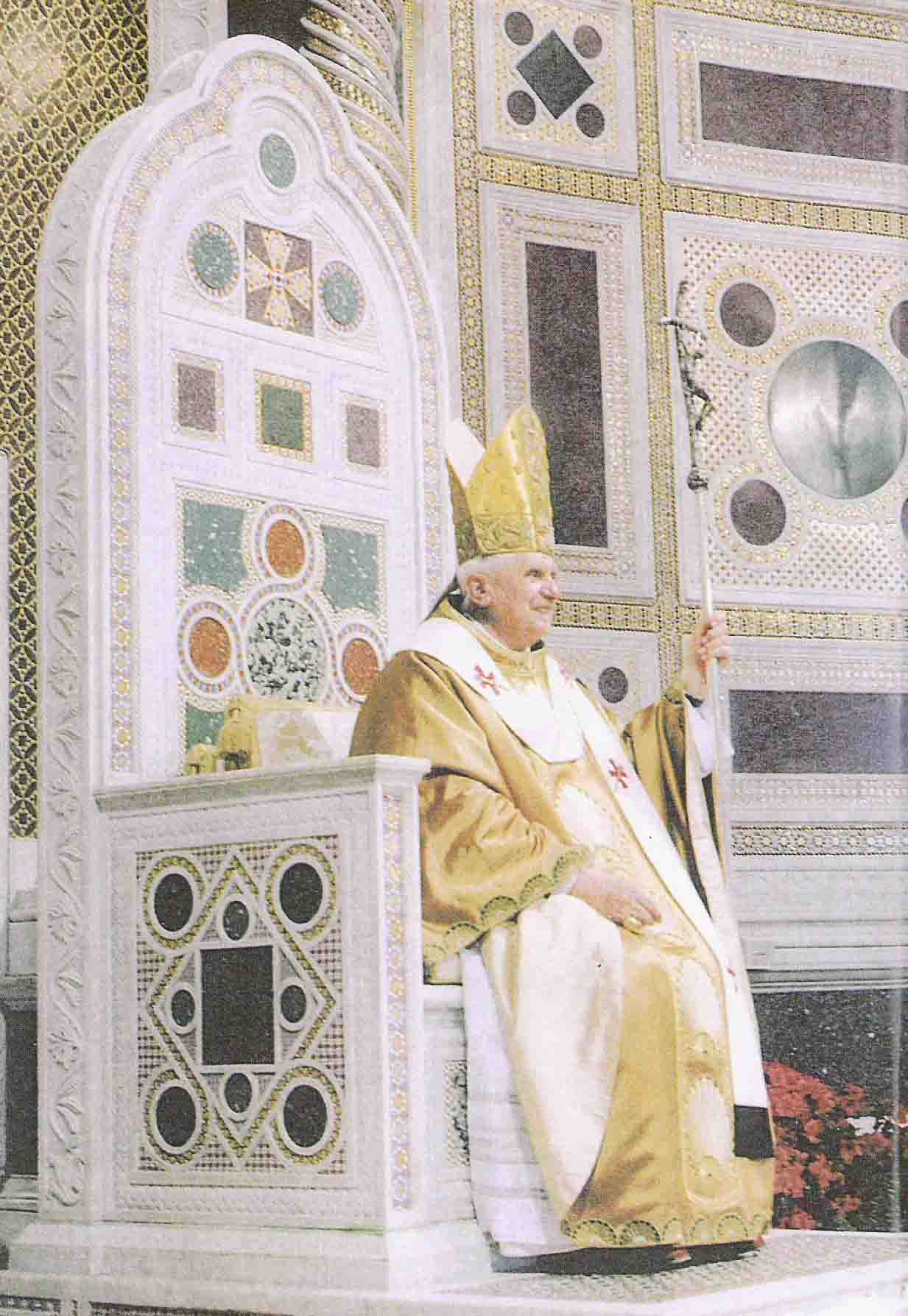
Peter Our Rock — February 22 — Chair of St. Peter

February 22, 2011

If you claim Jesus Christ as your Lord, then listen to His words. To those He sent to preach for Him, Jesus said this, “Whoever listens to you listens to me. Whoever rejects you rejects me.” (Luke 10:16) Today there are many people preaching many different things about what they think Jesus would have us believe and do. These varying opinions are well-intentioned and shared in good faith, by ministers from pulpits and in conversations between friends, but they cannot all be right. Unless it doesn’t matter what we believe or what we do, then this is a big problem. To whom should we listen? Is there anyone today for whom Jesus’ words are still true, “Whoever listens to you listens to me”?     Does anyone teach with authority, such that ‘whoever rejects their teaching rejects Christ?’ If not, we are lost; but if there is, where do we find this person?

On another occasion, Jesus spoke to the crowds and to his disciples, saying, “The scribes and the Pharisees have taken their seat on the chair of Moses. Therefore, do and observe all things whatsoever they tell you, but do not follow their example. For they preach but they do not practice.” (Matthew 23:1-3) Today teachers usually stand in front of their classes to teach them, but teachers in the ancient world would teach sitting down. Their chairs symbolized their authority, like the “chairman of the board” or the “chair of the English department.” Jesus spoke of the Chair of Moses, the position of the authoritative teaching for old Israel. For His new Church, Jesus establishes a new chair, the chair that we celebrate today, the chair of St. Peter and of his successors the Popes.

St. Peter, like every Pope after him, was only a man. He wasn’t perfect and he was weak in many ways. But Jesus has built His Church upon this rock. When the Pope, as the supreme pastor and teacher of all the faithful, proclaims by a definitive act a doctrine pertaining to faith or morals, he teaches it infallibly. For the good of the Church, the Pope is empowered by the Holy Spirit to teach the faith of Christ without error. Can popes sin? Yes, infallible does not mean impeccable, as various popes in history have shown, yet even these bad popes prove the faithfulness of God in preserving them from teaching errors. Of them Jesus would have said, “Do as they teach, but do not follow their example.”

Jesus knew that living the fullness of Christianity on earth required that He provide us with an infallible guide. Some Christians have held that the Bible alone is this guide, but the Scriptures do not interpret themselves, nor did the Bible books put themselves in the canon. Even the infallible Scriptures require an infallible Church, and an infallible Church requires an infallible voice.

Mark Twain is believed to have remarked, “When I was a boy of fourteen, my father was so ignorant I could hardly stand to have the old man around. But when I got to be twenty-one, I was astonished at how much the old man had learned in seven years.” Of course, it was not the father but the child who had changed, when he finally recognizing the wisdom of his father. Some people reject or ignore Catholic teachings as stupid, like those on the sacred dignity of all human life, or the teachings on human sexuality. Some people neglect the sacraments of the Church for years of their lives. Then, after gaining painful experience, they return with a new love and respect for our Holy Father’s wisdom, and the ways of our Mother, the Church. As wonderful as it is whenever people to come back to the Catholic faith, I would much prefer that you would know the greater joy and peace of remaining ever united to the rock of truth found only in our Church.

The Babel Project — Friday, 6th Week in Ordinary Time—Year I

February 18, 2011

Why did God break up the Babel project? What was wrong with lots of people working together toward this common goal? Perhaps the problem was that they were trying to “make a name for” themselves, that is, a new identity for themselves, different from their status as God’s human creatures. Building up to heaven, they were trying to become as gods without God. The tower of Babel was a temple for the worship of themselves. God broke up their endeavor because of the harm it would have caused to themselves and to the world.

That city, in itself, was no threat to God above.  The Lord had to “(come) down to see the city and the tower that they had built.” God was untouchable, invulnerable, and immortal. But this changed in history, with the Incarnation. The Son of God became touchable, vulnerable, and mortal. He did this not only to save us, but also so that our human nature could be transformed to something greater.

At Pentecost, the Holy Spirit came down from Heaven as tongues of fire. He rested upon them and they began to speak in languages that people of any nation could understand. They were temples of the Holy Spirit. They were a holy city, whose foundation is God.

As St. Augustine wrote, the City of Man and the City of God exist side by side in this world. The City of Man is imaged by Babel. The City of God is imaged by the Church. The City of Man is destined for destruction, but the City of God will endure forever.

Prayers Gradually Answered — Wednesday, 6th Week in Ordinary Time—Year I

February 16, 2011


Noah’s Ark was no cruise ship, and forty days and nights on stormy waters is no pleasure cruise. Imagine what it was like for Noah; shoveling food for the animals all morning, shoveling something else all afternoon; hearing the squawking of the animals all night, hearing the complaints of your family all day. Noah must have been praying hard for land. He sends out a raven and it doesn’t come back. He sends out a dove and it brings back with a twig. After sending out the dove again they finally make landfall. Noah’s prayer was fulfilled in a gradual way, just like Jesus healed the blind man of today’s gospel in stages.

Sometimes we get impatient and question when our prayers for ourselves and others are not answered immediately, but we should not lose hope.  But remember, slow, gradual progress doesn’t mean that God’s plan is not being fulfilled. And just because you’re not instantly healed doesn’t mean that your prayer for healing is not being answered.

Christ Or Foe? — Monday, 6th Week in Ordinary Time—Year I

February 15, 2011

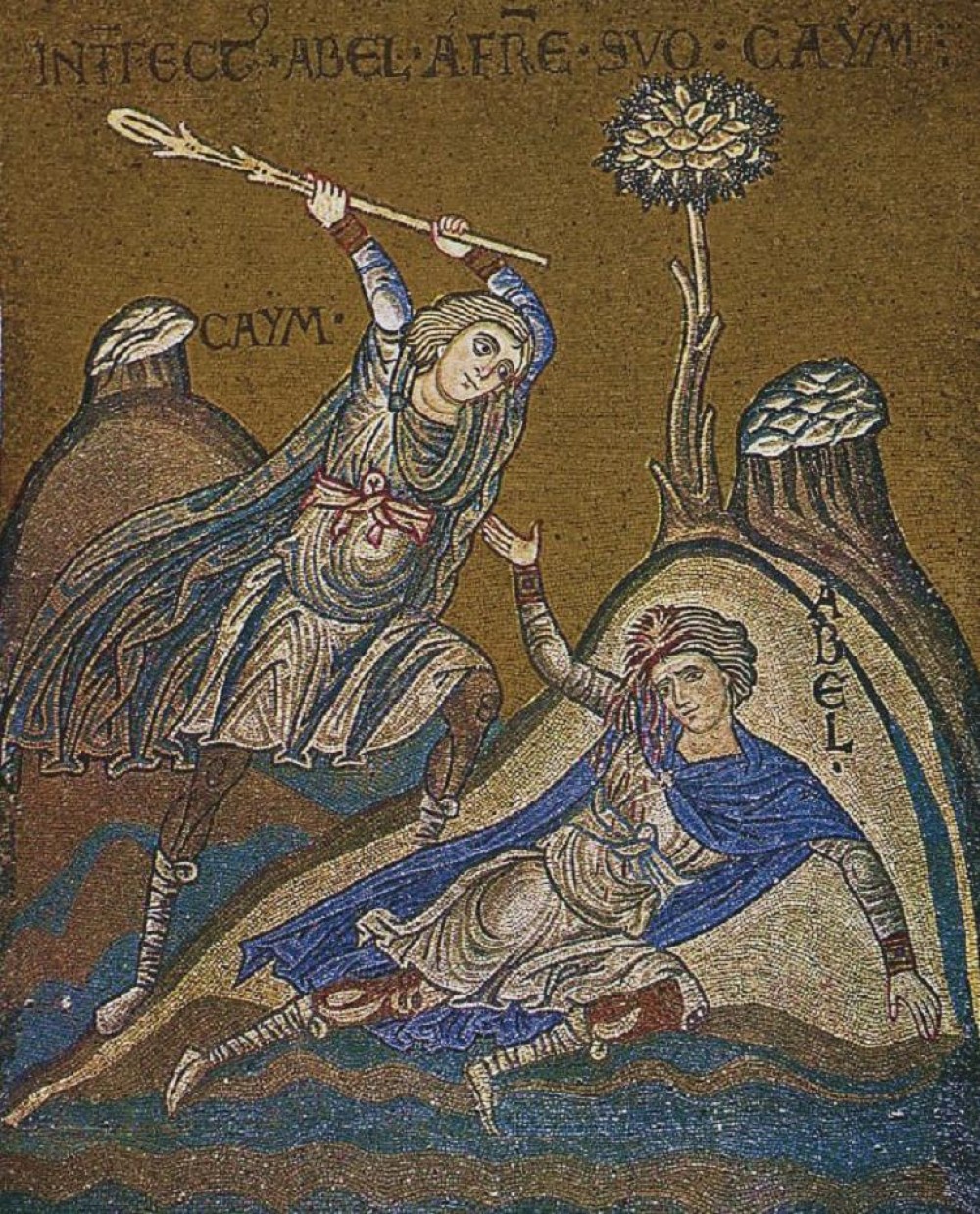
Today we recall two brothers who were icons of Christ. I speak of Cain and Abel. (At least, they both started off as images of Christ.)

When Eve conceived and bore Cain, she said, “I have produced a man with the help of the Lord.” We can imagine the New Eve, Mary, saying the same thing. Abel was a keeper of flocks, like Jesus the Good Shepherd. Cain was a tiller of the soil, like Jesus the Sower of the Seed and Reaper of the Harvest. Both Cain and Abel had priestly characters because both offered sacrifices to God.

Imagine how much better the world would have been if these two brothers had lived and worked together in harmony. They would have transformed the whole world, like the holy brothers Cyril and Methodius, the patron saints of Europe.  Instead, tragically, jealousy, resentment, temptation, and sin led Cain to murder his brother. By this spilling of innocent blood, Abel came to image the future Christ still further, while Cain became a likeness of the Christ’s future enemies; the chief priests, scribes, and Pharisees.

For you and I, in the end, it may all come down to this: are we Christ, or are we those who would destroy Him?

Christ’s Boat — Tuesday, 6th Week in Ordinary Time—Year I

February 15, 2011

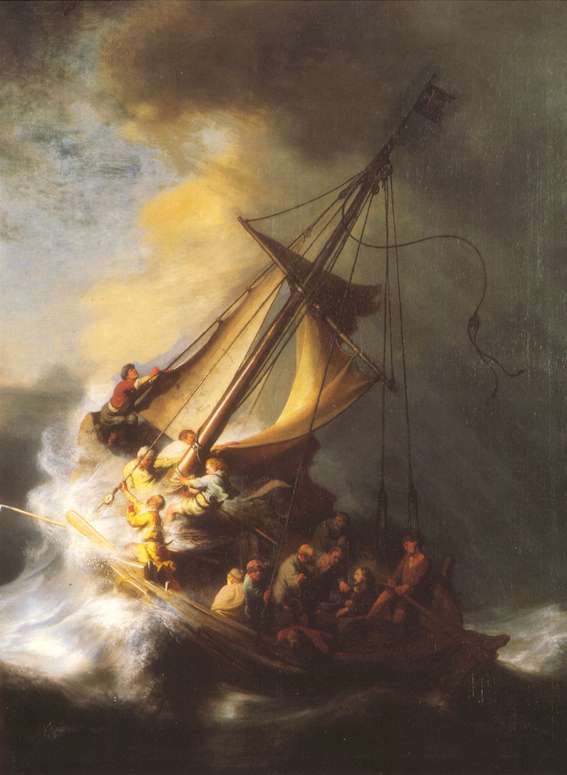
Perhaps you’ve noticed at Mass that most of our prayers are directed to God the Father. That is why you see me looking up so often. I’m looking up to our Father in Heaven as I speak to Him. From time to time, while I’m looking up, I can’t help but notice the ceiling. Take a look for yourself. It often reminds me of a boat’s wooden hull. That is really quite appropriate, because the Church is a boat and it is an important boat to be in.

The old ark was a boat built by Noah in which a few persons, eight in all, were saved through the waters of the flood. The new ark is our Church, the boat built by Christ, in which many are saved through the waters of baptism. Jesus’ boat has the cross for its mast and its sails are filled by the winds of the Holy Spirit. The Catholic Church, the bark of Peter, is the only vessel that navigates safely through the dangerous waters of this world.

As the Church Fathers frequently said, “Outside the Church there is no salvation.” But how should we understand this teaching? Restated positively it means this: that all salvation comes from Christ the Head through the Church, which is his Body. Basing Herself on Scripture and Tradition, Bride of Christ teaches that she, the Church, is necessary for salvation. As the Second Vatican Council repeated in modern times, Jesus “himself explicitly asserted the necessity of faith and Baptism, and thereby affirmed at the same time the necessity of the Church which men enter through Baptism as through a door. Hence they could not be saved who, knowing that the Catholic Church was founded as necessary by God through Christ, would refuse either to enter it or to remain in it.”

It must be noted that this teaching is not aimed at those who do not know Christ and his Church through no fault of their own. “Those who, through no fault of their own, do not know the Gospel of Christ or his Church, but who nevertheless seek God with a sincere heart, and, moved by grace, try in their actions to do His will as they know it through the dictates of their conscience – those too may achieve eternal salvation.”

“Although in ways known to Himself God can lead those who, through no fault of their own, are ignorant of the Gospel, to that faith without which it is impossible to please Him, the Church still has the obligation and also the sacred right to evangelize all men.” If we love all men, we will naturally desire to share the truth and blessings of the Church’s Gospel with everyone. Think of it this way: while it is theoretically possible for anyone to swim the English Channel, it is a far easier crossing if we take the ferry. In the same way, it is not a matter of indifference if people come into the Church or not. The journey is much safer and easier if you’re in the boat.

Remember not underestimate the importance of the Church. In the end, all those who will be saved will be saved through their relationship, known or unknown, with the one, holy, catholic and apostolic Church Jesus founded.

And do not underestimate the importance of the Mass. All the graces that flow into souls pours forth from the Catholic Church through this sacrifice we celebrate. The Mass takes the sacrifice of Calvary from then and there, through space and time, to here and now, and applies its power and effects to our world today. (What we’re doing here is a very important thing.)

And finally, do not underestimate the importance of remaining in the Church. May we never forsake it. We have to stay in the boat with Jesus Christ, because without Him, none of us can walk on water.

In Her Image — Funeral for Carol Beck, 87

February 15, 2011


I never got to know Carol in life, but what I have been told of her is very good; that she is a sweet, peaceful, good and devoted woman of God. And from what I am told, she is clearly a woman of quiet strength.

On December 7th, 1958, Carol’s husband Robert, the father of Steve and Kathy, after nine years of marriage, unexpectedly died of a heart attack. That infamous date, December 7th, happened to be Carol’s birthday. I’m told that when Carol got married she was perfectly happy with the thought of being taken care of for years to come, but when Robert died she was called to rise to the occasion and take charge. This widow raised her children to maturity, and Steve and Kathy indicate that she raised them rather well. Though he was not visibly present in an unveiled way, I bet that Robert was never far spiritually, helping her through the trials.

Carol was simple and meek and seemingly ordinary in the world, but at the same time she was a quite stunning in appearance, with dark hair and beautiful brown eyes. Though everything, she remained close to her Lord, Jesus Christ. She drew strength from daily prayer and the grace of the sacraments, and with her beautiful voice she sang praises to God. Now she has passed on, to go where her bridegroom has gone before her.

We should pray the purification of Carol’s soul, as we do for all the dead, but I have no fear for her future. Carol’s life on earth has been as an image, an icon, of  Christ’s Church on earth. The mystery of the Church was reflected through her life.

We call the Church a she, because she is the bride of Christ. As we hear in the Gospel, the day He died was the birthday of the Church. The Church is a mother, and with love and concern she raises her own children to maturity. Though her bridegroom is not visibly present in an unveiled way, He is always near her and helps her through every trial. She is stunningly beautiful, and yet she is simple, meek, and seemingly ordinary in this world. Though everything, she remains close to her Lord, Jesus Christ. She is strengthened through her daily prayers and the grace of the sacraments, and with one beautiful voice, she sings praises to God. And one day, she too will pass on from this world, to where her bridegroom has gone before her.

Please pray to God for Carol’s soul, but do not be afraid. I am confident that when all is said and done, Jesus shall present her in splendor to Himself, without spot or wrinkle or any such thing, that she may be holy and happy with Him forever. Those who live in the Church’s likeness are promised her reward.

Set To Heaven — 6th Sunday in Ordinary Time—Year A

February 13, 2011

This morning, consider this important question: Are you a thermometer or a thermostat? In this life, we can live like either thermometers or thermostats. A thermometer (as you know) accepts whatever temperature, hot or cold, that happens to surround it. A thermometer acts passively to the world’s influence. A thermostat, on the other hand, does not submit to the world around it. A thermostat is set to an ideal temperature and strives to attaint its goal.  As Christians, we should be as thermostats, and we should all be set on Heaven.

Do you think about Heaven much? Do you ever meditate on what it will be like? I think many of us get so drawn in by the here and now that we fail to give Heaven much thought. Yet, I think we would all be strengthened by meditating on it more; on what it promises and what it requires.

The next life is a mystery about which we can know a great deal. As Saint Paul says, “What God has prepared for those who love him, this God has revealed to us through the Spirit.” For example, we know that there will be no suffering or death in Heaven. The Book of Revelation says God ‘will wipe every tear from our eyes, and there shall be no more death or mourning, wailing or pain, for the old order (the way of this world) will have passed away.’

There shall also be no hatred in Heaven. No one with hatred in his or her heart will be able to enter. The Book of Wisdom teaches that God hates none of the persons he has made. He does not always like all the things that they do, but it is His love for each one that continues to hold them in being, and will hold them in existence forever. In order to see God in Heaven, we must become like Him. This is why Jesus forbids not only murder, but hatred in the heart as well. Consider how wonderful it will be to live in Heaven at peace with everyone.

After the resurrection, when our dead bodies are reconstructed from the dust, those who are just will be remade, stronger, handsomer, more incredibly beautiful, than they have ever looked before. Will their perfect bodies have any flaws? If glorified bodies do have “flaws,” they shall be as the wounds that remain in Jesus’ hands and side, beautiful and glorious forever. In this life, the beauty of one’s soul has little relationship to the beauty of one’s flesh; but in Heaven, the holiness of the saints shines out for all to see. 

In Heaven, in this midst of this overwhelming beauty, no one shall lust and none shall exploit another. Lust and exploitation go hand in hand. There is a good reason for the expression “to lust for power,” for lust is about manipulating another for one’s pleasure. Instead of lust, everyone in Heaven shall desire the true good of one another from their hearts.

In this life, temptations will come whether we want them or not, but remember that temptations in themselves are not sins—it is only when we say “yes” to temptation, when we choose to sin as temptations suggest, that we can be guilty of a sin such as lust. Until we can refuse temptation’s invitations, until all lust is driven from our hearts, we are not yet ready for Heaven. This is why Jesus teaches not only against adultery, but against lust in the heart as well. How wonderful it will be to full of love for all, purely, from our hearts, and to receive that same overflowing love in return.

Our lives on earth we are full of questions. But in Heaven, every question which has answer will be answered for us. As St. Paul told the Corinthians, “At present we see indistinctly, as in a [cloudy] mirror, but then face to face. At present I know partially; then I shall know fully, as I am fully known.” Heaven is a place of transparent truth. There, the barriers to communication disappear. In Heaven, we shall know others fully, and be fully known ourselves. No lies nor concealments are possible there, “for there is nothing hidden that will not become visible, and nothing secret that will not be known and come to light.” Until we are free of lies, until we are people whose ‘Yes’ means ‘Yes,’ and whose ‘No’ mean ‘No,’ we are not yet ready to live in Heaven.

If we die in God’s grace and friendship, we may still have some attachments to sin, and be unprepared for Heaven. But, thanks be to God, there is Purgatory, to clean us up and make us perfect, so that we may enter the Father’s house and join the feast of Heaven. Though there is Purgatory, we must always aim for Heaven. If you shoot a bow and arrow and aim carefully for the bull’s-eye, you will probably miss but still hit the target. If you shoot only aiming at the target in general, you will probably miss and hit the ground. So aim for Heaven, lest any of us miss entirely.

Jesus said to his disciples, “I tell you, unless your righteousness surpasses that of the scribes and Pharisees, you will not enter the kingdom of heaven. So let us not default to world’s standards. Do not be a thermometer. Set your thermostat to the perfection of Heaven. Meditate on it and strive for it, and you will experience the joys and blessings of Heaven beginning in this life.

Man and Wife — Thursday, 5th Week of Ordinary Time—Year I

February 10, 2011

God cast a deep sleep on the man and made for him the woman of his dreams. God fashioned her from his rib, perhaps because it was the bone closest to his heart. This reflects her dignity, for the man was made from mud while she was made from flesh. Woman is God’s final and ultimate creation.

The man beholds her with joy and names her, just as he had named every animal. This authorship is a sign of his authority, not to manipulate nor humiliate, but to lovingly lead and to care for what is entrusted to him. (The fact that “the man and his wife were both naked, yet they felt no shame,” reveals that they completely trusted and respected each other.) As Christ loves His Church, so husbands should love their wives.

Child of God Homily

February 9, 2011

 
Do you know who Bill Gates is? He started a computer software company called Microsoft and is one of the richest men in the world.  If Bill Gates were your dad do you think that he would be willing to buy you things you could never have otherwise? Imagine if President Obama were your uncle.  Do you think he would invite you to the White House sometime?  Do you think that you would have the opportunity to talk to him about your concerns and ideas for the world? Hold that in mind…

When I was younger, something about how we professed the Nicene Creed on Sundays struck me as strange: “For us men and for our salvation He came down from heaven. *Profound Bow* By the power of the Holy Spirit, He was born of the Virgin Mary, and became man. *Straighten* He was crucified under Pontius Pilate. He suffered, died, and was buried.” I wondered, “Why do we bow for Jesus being born? Heck, even I was even born. Why don’t we bow for His suffering instead?” 

We tend to think of God becoming man as a perfectly normal thing for God to do, we take it for granted, but it is actually the most surprising thing that has ever happened in history. The divine Son became one of us so that He could be our brother, and so that His Father could be ours. “See what love the Father has bestowed on us that we may be called the children of God. Yet so we are.”

Our heavenly Father is unimaginably rich, and He wants to provide for you and bless you. Our Father is all-powerful, and He is always open to hearing your prayers. Our Father in heaven has a house far greater than the White House, and He is preparing a place for you to stay. Remember this: you are a child of God the Father, and that’s a big deal.

Sodium Chloride Reaction — 5th Sunday in Ordinary Time—Year A

February 8, 2011

Let me tell you two stories about chemicals that produced quite a reaction in me. In summers when I was a kid, I liked to go to the Osseo city pool. They had there a brown door with red letters warning something to the effect of: “Danger, Deadly Chlorine Gas, Staff Only!” I needed no further persuading. Years later, my high school science teacher put a bucket in the snow, and in the bucket he put some water, and in the water he put in a chunk of pure sodium, using tongs. The water steamed and bubbled and exploded a couple of time. It was awesome, but also rather threatening.

What do you get if you put these two dangerous elements together? You get sodium chloride. I warn you that this compound is now found in our environment and in our homes. The oceans are full of it. It’s on our city streets. It’s even in the food we eat and feed to our children. Sodium chloride sounds rather threatening, but you know this benign compound by another name: Salt.

Like salt, Christianity is pervasive, it’s everywhere. Like salt, people can fear and oppose Christianity, thinking it’s harmful for people and bad for our world. But in truth, Christianity, like salt, is necessary for life. Christians, to the extent that they are truly Christians, are the salt of the earth.

The world’s irrational fear and opposition to our faith is nothing new. Listen to this anonymous letter written to a man named Diognetus that dates from the second century. Listen for how Christians resemble the salt of the world, ubiquitous, helpful and good, and feared and opposed:

“Christians are indistinguishable from other men either by nationality, language or customs. They do not inhabit separate cities of their own, or speak a strange dialect, or follow some outlandish way of life. … With regard to dress, food and manner of life in general, they follow the customs of whatever city they happen to be living in, whether it is Greek or foreign. And yet there is something extraordinary about their lives. They live in their own countries as though they were only passing through. They play their full role as citizens, but labor under all the disabilities of aliens. Any country can be their homeland, but for them their homeland, wherever it may be, is a foreign country. Like others, they marry and have children, but they do not expose them. They share their meals, but not their wives.  They live in the flesh, but they are not governed by the desires of the flesh.

They pass their days upon earth, but they are citizens of heaven. Obedient to the laws, they yet live on a level that transcends the law. Christians love all men, but all men persecute them. Condemned because they are not understood, they are put to death, but raised to life again. They live in poverty, but enrich many; they are totally destitute, but possess an abundance of everything. They suffer dishonor, but that is their glory. They are defamed, but vindicated. A blessing is their answer to abuse, deference their response to insult. For the good they do they receive the punishment of malefactors, but even then they, rejoice, as though receiving the gift of life. They are attacked by the Jews as aliens, they are persecuted by the Greeks, yet no one can explain the reason for this hatred.

Why does the world oppose devout Christianity, now as then? One reason is that the Christian dedicates himself exclusively to Jesus Christ, in a way that worldly people think is disproportionate and dangerous. They imagine the believing Christian behaves like sodium in water, hot with intolerance and hatred, violent in their reactions. In fact, a Christian’s total commitment to Jesus Christ is what leads Him to have mercy for all and extend love toward all. Who is more responsible for ‘sharing bread with the hungry, sheltering the oppressed and the homeless, and clothing the naked’ in history of the world than Christians in general and the Catholic Church in particular?

Another reason why the world hates Christianity is that worldly people think it lethal to the joys of life. Like inhaling chlorine gas, they fear that Christianity stands to afixiate their happiness. This too is nothing new. In Roman times Christians were charged with “hatred of humanity” for it was thought, “whoever loves man will love what man loves.” As the writer to Diognetus observed in the second century, “The world hates the Christians, not because they have done it any wrong, but because [Chritians] are opposed to its enjoyments.” It is still so today. It is as Jesus said: He calls us the light of the world, and elsewhere notes, “Everyone who does wicked things hates the light and does not come toward the light, so that his works might not be exposed.” We tell the world that some things that it loves are false roads to happiness, and it hates us for it.

So what are we to do? First, realize that the modern world’s hostility to Christianity is nothing new. Don’t wait for the world’s hostility to pass, it won’t. And don’t think your faith is a shameful thing, it’s not. Instead, do as Jesus teaches, “your light must shine before others, that they may see your good deeds and glorify your heavenly Father.” If you are a Christian, people who know you should see something different in you and ask, “What’s your secret.” And when they do you should say, “It’s because of my relationship to Jesus Christ and His Church.” Pray for this grace. Pray that you may be a witness to Christ in both your words and deeds. Then, as the psalmist said, you will be “a light in darkness” and you will help to save many souls in the world.