Archive for the ‘Homily’ Category

A Beautiful Death — Funeral Homily for Linda Dachel, 73

July 25, 2024

By Fr. Victor Feltes

The Book of Wisdom declares, “God did not make death… For God formed man to be imperishable; the image of his own nature he made him. But by the envy of the devil, death entered the world…” With an overflowing love, God created us for immortality with him. Satan, jealous of our glorious calling, misled us to misuse our freedom and suffer sin and death. Human death is unnatural. If it were natural for us it would feel normal to us; like eating, or sleeping, or bonding in pairs. Instead, we perceive death as unsettling, uncanny and dreadful. But, thanks be to God, Jesus Christ came to our aid with his divinity to achieve a remedy for us through mortality itself, so our downfall could become the means of our salvation. Jesus tells us to “be not afraid,” to pick up our cross and follow him, through our Passion to his Resurrection.

Linda faced her final trial when more than one doctor told her she had only six weeks to live. Her form of brain cancer was identified as the fasted growing kind. That was a year ago. She had fifteen radiation treatments in Eau Claire and one course of chemotherapy, yet every hospital visit brought more bad news. Each of us have our own personal strengths and weaknesses. Linda was married to Eugene for 50 years and he says she “never got angry, but worried about everything.” In years gone by she used to tell him, “When we retire, we’re not going to have money to buy bird food!” Yet Linda’s prognosis never bothered her. She wished to never go into to a nursing home, and providential opportunities and finances allowed her to have great care at home. God, who even feeds the sparrows, ensured she was provided for. She never lost weight and ate well until her final month. And amazingly, she never suffered. When people would ask, “Do you have any pain?” her response was always, “No.” Many people die suddenly, with no chance to say goodbye. Linda’s prolonged illness allowed her many friends and relatives to visit her and express their love, and for her to see and smile at them. She passed away on an early Sunday morning. Linda knew and trusted in Christ’s promises. She read the entire Bible twice and faithfully communed with Jesus in the Eucharist.

Death remains a sad and ugly thing, but Linda was blessed with a beautiful death. We pray for her soul, but the details of her passing point to the joyful fulfillment of her hopes and ours. She lived far longer than experts predicted and has embarked into life unending. She endured her illness without pain and in heaven there is no pain now. She faced her death without anxiety and in heaven there is perfect peace. She was lovingly cared for at her home and is going to the home of divine love. As her dear ones on earth said goodbye, the saints in heaven waited to greet her. And Linda’s Sunday morning passing is now joined to Our Lord’s Easter rising. So let us be “courageous,” as St. Paul writes, and let us all “aspire to please him, whether we are at home or away.”

Lessons for our Mission’s Journey

July 14, 2024

15th Sunday in Ordinary Time
By Fr. Victor Feltes

Jesus sent his apostles on a journey with a mission for the Kingdom of God. He sent them out two-by-two, to preach repentance, liberate souls, and cure the sick. Jesus ordered the apostles not to carry sacks, nor food, nor money, nor second tunics. He did, however, instruct them to wear sandals and take a walking stick. We as Christians are also on a journey through this world and tasked to do important work for Christ’s Kingdom. So what lessons can we learn today’s gospel reading? Like the apostles, we are not meant to go it alone. We are expected to rely on God and others. And we are to take along only what will help and leave behind whatever will hinder our holy mission’s journey.

Jesus sent his apostles in pairs in part so that they would have one another for support. They gave each other companionship, encouragement, accountability, and the support of prayer. Married spouses are to be such helpmates to each other, but even the unmarried should have spiritual friendships in their lives. Help each other along the way to both holiness and to heaven. Encourage each other, lovingly summoning each other to go further in faith. Pray together, regularly entrusting your prayer intentions to each other. Prioritize Christian partnership in your life. Jesus’ apostles were not expected to journey nor fruitfully labor alone, and neither are you.

Why did Jesus command the apostles to carry “no food, no sack, no money in their belts”? Without these provisions the apostles had to depend on God and the people they would meet. Jesus teaches not to be anxious about material things; about what we will wear, what we will eat, or what we will drink. It is good for us to work to meet these needs, however, our worry is worthless. On their mission, Jesus put his apostles in a place where they needed to trust in God’s providence. One of the great goods from the practice of tithing today, besides the help it provides for Christ’s Kingdom, is that it exercises and deepens our trust in the Lord, giving him the opportunity to prove himself provident towards us. Today’s psalm declares, “The Lord himself will give his benefits; our land shall yield its increase.” Ask him and peacefully trust him to provide, what you need for your body—and more importantly—what you need for your soul.

Why were the apostles forbidden to take along a second tunic? Because traveling without that outer garment, prevented them from sleeping in the chilly outdoors. They needed to find nightly lodging and having sandals and walking sticks help them find it quicker amongst those whom they were sent to serve. Consider what things are helping you and which are hindering you in the holy work of your Christian journey. St. Ignatius of Loyola calls this his “First Principle and Foundation” in his Spiritual Exercises. He writes:

“God created human beings to praise, reverence, and serve God, and by doing this, to save their souls. God created all other things on the face of the earth to help fulfill this purpose. From this it follows that we are to use the things of this world only to the extent that they help us to this end [or goal], and we ought to rid ourselves of the things of this world to the extent that they get in the way of this end [or goal].”

St. Ignatius of Loyola calls us to discernment and holy detachment, If Jesus Christ would urge us to discard our own hand or eye if they were leading to our destruction, how much more should we pick up or put down habits or possessions based upon how they impact our holy mission’s journey!

In conclusion, to review the lessons of today’s gospel reading: seek Christian support from others, peacefully trust and rely on God, and seriously discern what will help you to better do what our loving Lord is calling you to do.

How Would We Treat Jesus?

July 6, 2024

14th Sunday in Ordinary Time
By Fr. Victor Feltes

Jesus commanded the wind and waves of a storm and proved himself more powerful than nature. He told a twelve-year-old girl to arise and proved himself stronger than death. But when Jesus returned to his hometown he was not able to perform many mighty deeds. He did no mighty deeds in Nazareth “apart from curing a few sick people by laying his hands on them.” St. Matthew writes that Jesus “did not work many mighty deeds there because of their lack of faith.” They had listened to Jesus teach in their synagogue. He declared to them during his homily on a messianic passage in Isaiah, “Today this scripture passage is fulfilled in your hearing.” And “many who heard him were astonished,” yet this astonishment became outpaced by outrage.

‘Where did this guy get all this,’ they wondered. ‘Isn’t he just a carpenter? Don’t we know his mom and relatives, who all live around here?’ And “they took offense at him.” St. Luke records “they rose up, drove him out of the town, and led him to the brow of the hill on which their town had been built, to hurl him down headlong. But he passed through the midst of them and went away.” St. Mark tells us that Jesus “was amazed at their lack of faith.” Jesus’ neighbors at Nazareth had more personal knowledge of him in those early days than nearly anybody else on earth, yet they treated him very poorly. They were familiar with him and he was doing good things yet they treated him with contempt. If the boy Jesus had grown up here, if that young man had lived in our community or household, how would we have treated him? Well, how do we treat the people who live around us now?

In his great novel The Brothers Karamazov, Dostoevsky has one of his characters remark, “The more I love humanity in general the less I love man in particular. In my dreams, I often make plans for the service of humanity…. Yet I am incapable of living in the same room with anyone….” Dostoevsky observes it can be very easy to love “humanity,” because “humanity” is an abstract idea. Escapist daydreams are easy and pleasant, but the actual human beings around us require things of us. Not only at Mass and prayer with God but also in daily life with them, we must exercise our love and grow it, in good times, in bad times, and in ordinary times.

St. John writes in his first New Testament letter, “If anyone says, ‘I love God,’ but hates his brother, he is a liar; for whoever does not love a brother whom he has seen cannot love God whom he has not seen. This is the commandment we have from him: whoever loves God must also love his brother.” How do we treat our brothers and sisters, our neighbors and family members, at work, at home, at church? That’s our best clue for how we would treat Christ, for he tells us, “whatever you did [or did not do] for one of these least brothers of mine, you did [or did not do] for me.” So ask for Jesus’ powerful help, for his transforming grace which changes people and relationships, and remember him in how you treat others.

Prayers for Us in Heaven — Funeral Homily for Donna Mae Peterson, 88

June 26, 2024

By Fr. Victor Feltes

Jesus teaches that “there are many dwelling places” in his Father’s house. He says “I am going to prepare a place for you… [And] I will come back again and take you to myself, so that where I am you also may be.” The eternal dwelling place of our Father is heaven, and Jesus prepares a place for us and desires to take us there. But when can we arrive?

The Seventh-Day Adventists and Jehovah’s Witnesses believe in versions of “soul sleep” and think deceased Christian souls are not yet conscious in heaven; they both hold that experiencing heaven begins after the resurrection of the body. I have heard other Christians question whether we will still recognize or remember our loved ones in heaven. Some have wondered if we will be so overwhelmed experiencing God’s glory that we won’t think or care about anyone else. So are there saints in heaven now who are thinking about and caring about and praying about us?

In the Book of Revelation, St. John beholds visions of heaven where human souls are aware and active there even before Christ’s Second Coming, the General Resurrection, and the Last Judgment. In his sixth chapter, John recalls, “I saw underneath the altar the souls of those who had been slaughtered because of the witness they bore to the word of God. They cried out in a loud voice, ‘How long will it be, holy and true master, before you sit in judgment and avenge our blood on the inhabitants of the earth?’ Each of them was given a white robe and they were told to be patient a little while longer until the number was filled of their fellow servants and brothers who were going to be killed as they had been.” In the previous chapter, John saw people offering prayers in heaven: “Each of the elders held a harp and gold bowls filled with incense, which are the prayers of the holy ones.” So saints are now conscious and praying in heaven, but do they still remember and love those of us on earth?

How could a closer union with the All-Knowing One in heaven make us more ignorant? How could a closer relationship with the God who is Love make our love for all people colder? In one of Jesus’ parables, even a condemned rich man suffering in the netherworld remembered his five living brothers and prayed (or asked) for a messenger to be sent to warn them. The fact that miracles have followed from praying to saints in heaven asking for their intercession before God shows us that the holy dead continue to be aware of us, care about us, and pray for us.

Donna’s two sons, Tim and Ron, have shared a number of beautiful stories about her. They both mention her prayerful devotion and loving concern. Tim says the two core things in his parents’ lives were their devotion to Jesus and their dedication to family. Ron notes she was “always praying… always interested.” When Ron was experiencing hard times at chiropractic college far away in Iowa, his mom called every night to help him through it. Donna also spent hours on the phone with other relatives and friends, eventually becoming a texter and learning how to FaceTime on an iPod in order to stay in touch. She could always patiently listen and provide good counsel to help others with struggles but she would discern her advice with prayer and support those people with her prayers.

Pray for Donna’s soul, for “as gold in the furnace” God tries and purifies us in this world or in purgatory as needed, so “that we might no longer be in slavery to sin” and he may take us to himself in heaven as perfect offerings. But also remember that Donna does not forget you, she will continue to love you and continue to pray for you. Follow and cooperate with Jesus Christ, so her prayers for you shall not be in vain.

In His Boat Together

June 23, 2024

12th Sunday in Ordinary Time
By Fr. Victor Feltes

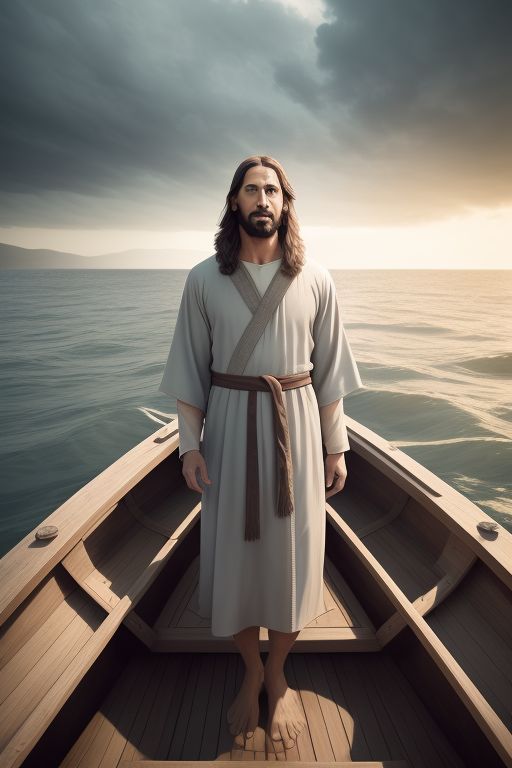
As evening drew on, Jesus said to his disciples, “Let us cross to the other side.” Leaving the crowd, they took Jesus with them in the boat just as he was. Other boats were with him. Now God knew about the coming storm, yet God permitted Jesus’ disciples to experience it. Looking at the sky, they may not have wanted to board that boat; later, they definitely wanted to be out of the storm. Yet God willed them to be there at that time, to gain insight, to grow in their awe of Christ, and to deepen their relationship with him.

A violent squall came up and waves were breaking over the boat, so that it was already filling up. Jesus was in the stern, asleep on a cushion. They woke him and said to him, “Teacher, do you not care that we are perishing?” He woke up, rebuked the wind, and said to the sea, “Quiet! Be still!” The wind ceased, and there was great calm. In response to the words of Christ, the winds and waves obey. “Let there be light… Your sins are forgiven… Be healed… This is my Body.” The words of the Lord create reality.

Then Jesus asked the disciples in the boat, “Why are you terrified? Do you not yet have faith?” They were filled with great awe and said to one another, “Who then is this whom even wind and sea obey?” They were awestruck at the miracle they had witnessed, and their reverence for Jesus grew. They had sailed together, and came to the other side of the sea together, and (thankfully) nobody had washed out or jumped out earlier.

This weekend, Fr. Chinnappan is celebrating his final Sunday Masses at St. Paul’s and enjoying their farewell parties, meanwhile, I have both of the Masses here at St. John’s. At a recent meeting of our Pastoral Council, they suggested I speak about a few topics regarding our beautiful Sunday worship to enhance it even more.

For instance, at the Presentation of the Gifts, the priest-celebrant says, “Pray, brothers and sisters,” or “Pray, brethren, that my sacrifice and yours may be acceptable to God, the almighty Father.” At that point, you may have noticed some variation in how St. John’s parishioners respond. Some people stand as soon as the priest begins to speak, while others wait for the completion of his call. According to the Roman Missal from which I say the Mass and the missalettes in your pews, it is when the priest has completed his call that the people are to rise and respond: “May the Lord accept the sacrifice at your hands for the praise and glory of his name, for our good and the good of all his holy Church.” This is not what occurs at many—perhaps even most—parishes, but if we wish to worship in the best and most faithful ways, I encourage you all to rise and respond at the end of my calling. In this way, the words of the priest acting in the person of Christ more clearly manifest their effect, like the winds and waves responded to the words of the Lord.

Another topic the Pastoral Council asked about was kneeling after the reception of Holy Communion. The habit here is to remain kneeling until the priest sits down, but they wondered what the rule was. (Reportedly, some people find it painful to kneel that long.) According to the General Instruction of the Roman Missal (or GIRM), which contains instructions for the celebration of Holy Mass, the faithful may sit or kneel after Communion. Without causing a disruption to others at Mass, you may thank and love the Eucharistic Lord within you using the posture which will help you adore him best.

A final reflection is about coming to Holy Mass and remaining to the end. Some people say they find Mass boring, yet Jesus is here and wants you with him in this boat. If you attend with faith and openness, you will gain insight, grow in awe of Christ who loves you, and deepen your relationship with him. Unless you have a gravely serious reason, never skip Sunday Mass nor leave before singing our final God-glorifying hymn. Skipping Mass is to miss the boat. Leaving early is to jump out on Jesus early.

And after Mass, if you were not able to fully reflect in the time of sacred silence after you received our Lord in Holy Communion, feel free to remain here with him longer. Be quiet. Be still. It’s a beautiful thing Jesus surely enjoys, for he calls us here to worship him, and gives us himself in the Eucharist so that we may be together as one.

Faith in God – The Cure for Fear

June 23, 2024

12th Sunday in Ordinary Time
By Deacon Dick Kostner

The Gospel story for this Sunday is one of my favorites for life carries and creates many fears. We have Jesus telling his disciples that he wishes to travel to the other side of the sea to preach to gentiles and instruct them on how they too can gain salvation and everlasting life through his teachings.

On their way across they encounter a tremendous storm with waves so high that they threat for their very life. Their friend however is taking a nap and they finally call out for him to wake up for they fear for their life. Jesus wakes up and orders the storm to end which it does and he gives to them the tool to end all fears that they will encounter during their lives and ministry. That tool is faith that he will always be with them even when fear threatens their very life.

The disciples knew that he had powers that were extraordinary but they never dreamed he had the ability to also control mother nature. A power that he would share with them if they but had faith in him. I, as well as many of you folks have witnessed the power of faith in people who have faith in God. I have witnessed people in our community that have lived out their life with a smile even though they had encountered illnesses that cannot be cured by our doctors and medical teams. We have experienced and been taught by priests of faith who had the ability to control the weather when parish events were threatened by storms that disappeared as Father Arthur was able to do. Or how he was able to erase our parish debt to the Diocese because of and through his talents and faith in God.

Fear is a tool of the devil and he uses it to try and destroy our faith and trust in the power of God. We cannot stop evil but God can. How in the world can we possibly get our Country to get along again? How in the world can we overcome those trying to destroy family within our society? How in the world can I ever live out my life with a smile when I have been told by my doctor that I am dying? How in the world can I love again when my wife or husband has left me because of divorce or death? How in the world can I continue to support my family after losing my job? How in the world can I afford to buy groceries and food for my family or pay my bills when costs of everything continue to rise? The list just continues to go on and on.

Jesus, in today’s gospel, tells his disciples, tells us, the answer to all of these human fears we encounter during our earthly lives. The answer is “we can’t!” but “God can!

The world cannot help us but faith in Gods promise that His Holy Spirit will always be able to hear our call for help. Oh He may not answer the way we have asked for, but only God knows what we really need for help with all of the answers to the world fears we will encounter. Fears real or imagined by us are fed to us by a Power who wishes to weaken our faith in God and destroy for us everlasting life that is gifted by God to His faithful.

Jesus gifted us with his Church. The body of Christ, to walk with us and support us in a world full of fears and dangers. He gifted us with his teachings, Holy Scripture and the Gospels to give us the wisdom to trust in God who will walk with us in a fearful world. He gifted us with the Sacraments to provide us with Spiritual food to strengthen our faith and make us fearless to combat the evils and dangers we will encounter in life. He also gives to many of us a spouse or friend to help us.

Fear is sometimes personal and not really prayer material. Let me lighten up a bit and display for you what I mean. One recent Friday evening Barb told me that our cuckoo clock was not showing the correct time. Inspection revealed that the hour hand was no longer working and was limp. I tried to make it work but to no avail. This clock was given as a gift to us many years ago from my son Chad and his wife Amanda. I am a time freak and I panicked for I use it to govern my life throughout the day and need it to tell me if my cat Charlie is ready for me to feed him at 5:00 am every day or if he is fooling. If I don’t hear five cuckoos, I know his clock is not working and I ignore him. In any case I panicked.

I know it is hard to find a clock repair place so I started to search the net. I found one in the Milwaukee who I emailed with my problem and asked for help. Then I found one in La Crosse and I wrote down the number planning to call them on Monday when they opened. I called on Monday and the person who could help me was gone until Tuesday morning. I put it in my calendar to call the next day. When I got home for lunch my beautiful bride told me she had the clock fixed. She had found a fix on You Tube. I had been too embarrassed to pray but God gave me a partner who knew I needed help. The next day I got an email from the Milwaukee clock guy telling me how to fix it which was exactly what Barb had learned and done. I sent the guy a thank you. I guess God sent me a second helper in case Barb failed.

Jesus tells us much through today’s Gospel. How should we handle our fears? The Answer is simple: Have faith in Jesus, asking him to take the wheel, then, take a nap.

Fruits at St. Paul’s Parish

June 16, 2024

11th Sunday in Ordinary Time
By Fr. Victor Feltes

Jesus says, “this is how it is with the Kingdom of God.” Seeds of the Kingdom are scattered on the earth. Day by day, we sleep and rise like farmers while God’s seeds sprout and grow. Though we each have a role in tending these plants in our local fields, exactly how they grow remains something of a mystery to us. Yet we can pause, look around, and see what heaven and earth have worked together to cultivate. Today, I would like to review some of the good fruits and fruits in progress which God has produced around us at St. Paul’s Catholic Parish.

In addition to our daily worship, our baptisms, confessions, weddings, and anointings, there are good things happening at St. Paul’s. Our entryway has been renovated, featuring a first-floor bathroom, with new exterior doors to be installed by the end of this summer. Our beautiful vestibule provides a new space for our community. It has already hosted one funeral visitation and will host Fr. Chinnappan’s farewell parties next weekend. It is sad to see Father go. He’s been a blessing and will be missed. But we are promised a new associate priest from India arriving hopefully this summer.

Our (4K through 8th grade) Catholic School has concluded another good year, and we are predicting higher enrollment this fall. An enhanced St. Paul’s school and parish website and other marketing efforts are making our great school better known. This summer, we’re renovating school bathrooms while refreshing other spaces and implementing a new English language curriculum which utilizes phonics. We have a full set of certified teachers lined up, including for our special courses like computers, phy-ed, health, and art. Our only unfilled spot remaining is for a one-fifth-time music teacher, so if you know someone excellent, please send them our way.

You have seen the gradual growth of our Sunday morning Children’s Liturgies. It’s a joy to see our little ones scamper off for their children’s gospel, homily, and prayers and come back proudly carrying their completed crafts. We are currently seeking lay volunteers to accompany them, so talk to me if you’re willing to support this important ministry. This summer, our young people are invited to Saints Basketball Camp every Monday and Wednesday evening (beginning this week), Saturday morning youth group at 9:30 AM every Saturday, and Vacation Bible School later this August.

With two priestly ordinations from our parish in recent years and a likely diaconate ordination to come, I would not be surprised to see more vocations emerging here. Pray for more vocations to priesthood, religious life, and holy marriage and encourage the young people in your life to pursue their true calling.

The volunteers at our St. Paul’s Thrift Sale, through the donations and purchases of so many, are on pace to achieve another record-breaking year. So drop off used treasures and pick up some new treasures on Thursdays or Fridays this summer. They also always welcome new volunteers.

Our 2023-24 Diocesan Annual Appeal campaign ends at the end of this month, and we are happily going to surpass our goal. Not only will any gift exceeding our goal fully return to the parish, but we also expect to receive school tuition grants this year like the $23,000 we received last year from our diocese (which is funded by the Annual Appeal).

Looking ahead, the second part of our St. Paul’s Church renovation is slated for the summer of 2026. As we continue fulfilling our Inspired by the Spirit campaign pledges, we will have all the necessary funds by then for wall repainting, floor reflooring, pew refinishing, and kneeler repadding; for security and streaming video cameras, new lighting, a new speaker system, and more. Your generosity towards this worthy effort is appreciated and will bring these plans to reality. Your donations to this project are likely a factor in another topic which I should mention.

Parish contributions come to St. Paul’s in various ways. Some people drop envelopes or cash into our collection baskets, others mail in checks to our parish office, some people have signed up to make no-fee, ACH automatic contributions from their bank accounts, and still others make donations directly from their IRAs. But as we now approach the end of this fiscal year, our parish Finance Council has noted that our year-to-date parish contributions are 10% under their year-to-date budget target. While fulfilling our renovation’s campaign’s pledges, it’s important that we maintain our regular parish giving as well.

So if you are regularly giving $10 on Sundays, please perhaps raise this up to 11 or more. If it’s $20, to 22; if $50, to 55; or $100, to 110, and so on. And if you do not tithe, I encourage you to start. It is a tangible way to exercise your trust in God, giving him an opportunity to prove himself faithful to you. And our Lord will not be outdone in generosity.

Jesus says the Kingdom of God “is like a mustard seed.” Even beginning as the “smallest of all the seeds on the earth,” the mustard seed is potent in flavor and powerful in potential. It springs up and becomes the largest of plants, putting forth large branches, and the birds of the sky dwell in its shade. Let us help grow the Kingdom of God among us so that our St. Paul’s Catholic Parish may be a still greater fruitful blessing and holy home for many more. And let us pray:

St. Paul our Patron,
please intercede with the Lord
for our parish and plans’ success,
for the glory of God
and salvation of souls. Amen.

The Kingdom of God Will Grow From Small to Large

June 15, 2024

11th Sunday in Ordinary Time
By Fr. Victor Feltes

Jesus compares the Kingdom of God to a seed, which is small, and simple but once it is planted in the ground, it will grow and become huge. We may not know how, but for sure, it will happen. More than two thousand years ago, Jesus started a small community of believers in Israel. When He was arrested, crucified, and died, His disciples were scattered and confused. However, when he rose again on the third day and appeared before them, they regrouped. On Pentecost Day, they were empowered by the Holy Spirit. From then on, that tiny community became a force that is present in all countries today.

Likewise, our spiritual growth as individuals mirrors that of the growth of a community of believers. Once the seed of the teachings of Jesus is planted in our hearts, the growth process is initiated and transformation starts. It happens little by little, in stages, and as long as we nourish it through prayers and service, we will put forth “branches” and bear fruit. There are no shortcuts to spiritual growth. Much like the growth of a plant, it will be an organic process. Along the way, there will be storms and other problems but the growth process will continue. Sometimes we ask why it seems that we are not growing at all. The key is patience and perseverance.

The parable also highlights the importance of small, humble beginnings. The seed is small and insignificant, yet it has the potential to grow into something big and beautiful. This reminds us that our small acts of faith, hope, and love can have a profound impact and bear fruit in ways we may not even imagine. Furthermore, the parable suggests that growth and transformation are gradual processes. The seed does not become a plant overnight, and the kingdom of God does not suddenly appear in our lives. Rather, it grows and develops over time, as we nurture it with our faith, hope, and love.

Just as a seed planted in the ground grows and flourishes without our full understanding of how, so too does the kingdom of God grow in our hearts and lives. We may not see it, but we can trust that it is working in us, transforming us, and bearing fruit.

Let us therefore focus on the here and now. So what can we do right at the moment? We can decide to be a tree for others to come and find shade and even make a nest. We can be a bird that sings a song of praise and thanksgiving. We can be the prophet to announce the good news of love and hope. May we be inspired by Jesus’ teaching to trust in the mysterious and wonderful ways of God’s kingdom, and may we bear fruit for the glory of God. May our small acts of faith, hope, and love be like seeds that grow into a harvest of righteousness and peace. May we be patient and hopeful; trusting in God has hidden working and timing.

We Prove our Discipleship through Obedience & Faith

June 9, 2024

10th Sunday in Ordinary Time
By Fr. Chinnappan Pelavendran

God speaks to us in many ways, particularly through the Word of God. This Word is very active in our lives and helps us to grow in our closeness to God. On this Tenth Sunday of Ordinary Time, the Church reminds us that as humans, we all have to struggle against evil. However, the good news is that we are illuminated through the assurance of victory. It is Christ, who helps us to obtain this victory in our daily and earthly struggle against evil.

The first reading is from the story of the fall of Adam and Eve. Which reminds us of something that we inherited from them. That is Adam’s nature due to Original Sin. Also, it reminds us of the consequences of disobedience. Rather than accepting their fault, they tried to justify themselves by blaming each other. Adam blamed “the woman you (God) gave me.” Of course, he did not blame the woman alone; he also indirectly blamed God who generously and kindly gave him a partner. On the other hand, Eve blamed “the serpent that tempted me.” As it is for some of us, it was hard for them to accept their fault. Neither of them said, I am sorry, I was wrong; it was my fault, or even, please forgive me. What helps is humbly accepting one’s fault and asking for forgiveness.

Today’s gospel narrates Jesus’ encounter with his people and family. They thought he was out of his mind. They accused him of being possessed when he was liberating the possessed. They were ready to restrain him with false charges. They wished to tame his miraculous works and powerful preaching. Despite all this, He remained focused. Every true disciple of Christ is His brother, sister, mother, and a member of his victorious family. He came to save all who were ready to do the will of God. Of course, Mary his Mother is the greatest model of this for all of us. Hence, Christ did not disrespect his faithful mother. Rather, he teaches an important lesson today. That, through faith and obedience to God’s will, we all have the opportunity to become members of his victorious and happy family.

Also, Christ reminds us that it is not status but action in response to God’s call that determines who belongs to his victorious family. To become part of the victorious family of Christ is a dynamic process. It flows from a personal encounter with Christ. It also flows from faithfulness and obedience to God’s will. Hence, if we are Disciples of Christ, we must prove it through our faith and obedience to God’s will.

For us, all of this is a call to follow the Lord, no matter what our families or other religious people think about us. We are challenged to do the works of God and to recognize that the fight between good and evil is still going on in our own time. Adam and Eve enjoyed the status and comfort of God’s divine presence, but they lost it through disobedience. Through them, we equally lost our membership in the victorious family. But through obedience to God’s will, our membership of the victorious family has been restored. We must also recognize that it is God who is at work and so we can trust that we are being remade in the image of God.

Are You Sinning Against The Holy Spirit?

June 9, 2024

10th Sunday in Ordinary Time
By Fr. Victor Feltes

Jesus says, “Whoever blasphemes against the Holy Spirit will never have forgiveness but is guilty of an everlasting sin.” This teaching makes some people mistakenly believe they are beyond forgiveness from somehow sinning against the Holy Spirit. What then is blasphemy against the Holy Spirit? It is good for us to know, lest we fall into despair.

Let’s look at the gospel context. Having heard of his miraculous healings, many people came to Jesus. The crowds were so great that Jesus and his disciples could not even eat, and Jesus soon needed to preach from a boat so as not to be crushed. Jesus was curing the sick and casting out demons, but the scribes who had come from Jerusalem said, “He is possessed by Beelzebul,” and “By the prince of demons he drives out demons!

Jesus dismantles their accusations as nonsense. “How can Satan drive out Satan,” he asks. “If I drive out demons by Beelzebul, by whom do your own people [your exorcists] drive them out?” Then, since they had said “he has an unclean spirit,” Jesus declares, “Amen, I say to you, all sins and all blasphemies that people utter will be forgiven them. But whoever blasphemes against the Holy Spirit will never have forgiveness, but is guilty of an everlasting sin.”

St. Athanasius observes that when the scribes and Pharisees credit “the works of God to the Devil… they have judged God to be the Devil, and the true God to have nothing more in His works than the evil spirits. … When the Savior manifested the works of the Father, raising the dead, giving sight to the blind, and other such deeds, they said that these were the works of Beelzebub. They might as well say,” Athanasius concludes, “that the world was created by Beelzebub.”

Blasphemy against the Holy Spirit is so deadly because it professes goodness and its Source to be evil. And if I declare Goodness “evil” how will I come to be reconciled to God? St. Thomas Aquinas wrote that “the sin against the Holy Ghost is said to be unpardonable by reason of its nature, in so far as it removes those things which are a means towards the pardon of sins.” A blasphemer against the Holy Spirit is blinding himself to the Light, yet St. Augustine encourages us “we should despair of no man, so long as Our Lord’s patience brings him back to repentance.”

It is spiritually deadly to denounce goodness as “evil.” Christians, however, profess faith in God as good and in Jesus Christ as our Savior. This makes a Christian unlikely to blaspheme the Holy Spirit. The dangerous error which we Christians are more likely to commit is in calling sinful evils “good.” Even while Christians claim Christ as Savior they sometimes deny his Lordship.

Jesus’ enemies did not want what he preached to be true. What he taught was challenging each of them to change. So they sought reasons to reject what he was teaching. Still today, we can rationalize sinfulness too, devising excuses to do what we want, refusing to repent, sometimes even reaching the point of celebrating shameful deeds as our pride. Willfully remaining in sin is a very serious thing so Jesus—who loves us—calls us to conversion.

In the gospels, we often see Jesus being gentle with sinners but hard on hypocrites. The Pharisees criticized him for being “a friend of sinners.” Jesus, in turn, denounced the Pharisees, saying, “You hypocrites! Isaiah was right when he prophesied about you: ‘These people honor me with their lips, but their hearts are far from me.’” So what is the difference between mere sinners and hypocrites?

Hypocrisy is more than just failing to live up to your professed morals, as all of us have done. The Greek word for “hypocrite” meant “actor” or “stage performer.” Hypocrites are farther off the narrow path than struggling sinners because hypocrites are only pretending to care about sin while ignoring the sins they have.

How can I distinguish whether I am a hypocrite versus a sinner striving to be faithful? One good sign is whether or not I am going to the Sacrament of Reconciliation. If I am complacent with my sins, if I have given up on spiritual growth, if I am refusing to convert for Christ, I won’t go to Confession. Adam hid after he sinned in the Garden of Eden. When the Lord called to him and asked “Where are you,” God was not ignorant of behind which trees the man was hiding. He calls out to us too, hoping we will come out to him.

What if you’re unaware of your sins? Then review a good, thorough examination of conscience to enlighten you. Are you well aware of your sins? Then come to Christ with a contrite heart to start a new beginning in the confessional. I hope that you will choose to meet our Lord Jesus there, for the only sinners he cannot forgive are those who refuse to repent.

We Become What We Eat

June 3, 2024

Solemnity of the Body and Blood of Christ – Corpus Christi
By Fr. Chinnappan Pelavendran

The Eucharist is the greatest sacrament of the Catholic Church. In the Eucharist, Christ is present for the assembly, in his words but above all, in the bread and wine transformed into his Body and Blood for his people. During his life on earth, Jesus expressed his love, especially for those who were rejected and unloved in society, he shared meals with them. For the Jew, shared meals were signs of acceptance and friendship. They invite only friends and important people, but not sinners and tax collectors. Jesus was challenging their tradition, eating with sinners, and making friends with those who had no friends. He was showing them respect and love, and drawing them into the family of God.

In the Old Testament, God worked great wonders for his people. He brought them together, led them through the desert, fed them with bread from heaven, freed them from slavery, and guided them through vast and dangerous lands. In the New Testament God brought us together through Jesus Christ. Jesus taught us how to walk in the light, and freed us from sin and its stain. Through Jesus Our Father feeds us, and the food we eat will give us life forever. He is the Father’s gift to us. Jesus told us that he and the Father are one, and if we see him, we see the Father.

When we celebrate the Eucharist, we are celebrating a meal to which all are invited and made to feel at home. God loves us so much that he wants to be with us and wants us to be with him. When we love someone, we want to be with him or her always. God desires to be with us in the most complete way possible. God became physically present in the person of Christ, the true God and true Man. The presence of God in the form of bread and wine is made available to us on the altar at Mass and preserved there for our nourishment and worship. Jesus gave us his Body and Blood so that he might live in us and become life for the world.

This is what happens in the Eucharist. God not only speaks his words to us. He enters into us. He takes possession of our hearts, minds, and bodies. He becomes one with us. He wants to make us one with him. Eating the Body of Christ and drinking his blood is the greatest moment of intimacy that can exist between God and us.

We become the body of Christ when we receive Christ in the Eucharist. From here, we start our mission, through our bodies, we carry Christ to others. It is our tongues which now speak the Good News to those longing to hear it. It is our feet now that Christ uses to walk the extra mile with people and seek out those who have gone astray in life and lost their way.

The Eucharist ends with a sending on Mission: “Go in Peace to love and serve the Lord.” We have to carry the Eucharist into the world. Just as the Lord has become our food, giving himself completely to us, so, too, we must give of ourselves for the sake of the world. We must become sources of nourishment for the world, as Christ has become a source of nourishment for us. Let us today approach the Eucharist with a more lively faith in the real presence of Jesus in the Eucharist and we shall experience therein God’s saving power and transforming love.

What did Jesus Sing at the Last Supper?

June 1, 2024

Solemnity of the Body and Blood of Christ – Corpus Christi
By Fr. Victor Feltes

The Last Supper was a Passover meal. Jesus says so when he instructs two of his disciples, “Go into the city and a man will meet you, carrying a jar of water. Follow him. Wherever he enters, say to the master of the house, ‘The Teacher says, “Where is my guest room where I may eat the Passover with my disciples?”’ Then he will show you a large upper room furnished and ready. Make the preparations for us there.

The disciples found the upper room following the sign of a water jar. At the start of Jesus’ public ministry in Cana there were six stone water jars. As his ministry comes to its climax, there is a seventh water jar. The number seven symbolizes “fullness” or “completeness” in the Bible, like the sum of seven days is the completion of one full week. At the wedding feast of Cana, Jesus changes water into wine. At the Last Supper, Jesus changes bread and wine into himself.

While they were eating, he took bread, said the blessing, broke it, gave it to them, and said, ‘Take it; this is my body.’ Then he took a cup, gave thanks, and gave it to them, [and] said to them, ‘This is my blood of the covenant, which will be shed for many….’ “Then,” St. Mark writes in his gospel, “after singing a hymn, they went out to the Mount of Olives.” St. Matthew recounts the same detail: “Then, after singing a hymn, they went out to the Mount of Olives.”

This presents a mystery: what hymn did they sing at the Last Supper? Would you be curious to know what lyrics Jesus was singing on the eve of his Passion? Since the Last Supper was a Passover meal, we have a well-founded answer to that a question. For thousands of years, the Jewish people have traditionally sung Psalms 113 through 118 at the ritual Seder meal for Passover. So Psalms 113 through 118 were very likely psalms which Jesus prayed at the Last Supper.

This Sunday’s responsorial psalm consists of passages from one of these, Psalm 116. Contemplate Jesus saying these words:

“How shall I make a return to the Lord
for all the good he has done for me?
The cup of salvation I will take up,
and I will call upon the name of the Lord.

Precious in the eyes of the Lord
is the death of his faithful ones.
I am your servant, the son of your handmaid;
you have loosed my bonds.

To you will I offer sacrifice of thanksgiving,
and I will call upon the name of the Lord.
My vows to the Lord I will pay
in the presence of all his people.”

Jesus is the Son of Mary, “the handmaid of the Lord.” He offers up the cup of salvation which contains the gift himself, a gift offered up to God the Father and offered up for us. The Jewish rabbis taught that all temple sacrifices would end with the coming of the Messiah or Christ except one: the thanksgiving sacrifice. In Greek, the word “Eucharist” means “thanksgiving.” Today across the nations, from the rising of the sun to its setting, the Holy Mass is Christ’s enduring thanksgiving sacrifice.

St. Luke notes how at the Last Supper, “when the hour came, [Jesus] took his place at table with the apostles and said to them, ‘I have eagerly desired to eat this Passover with you…’” Jesus spoke this to the apostles yet he speaks these words to us as well. The Last Supper, the Cross, the Holy Mass are all mystically joined as Christ’s one great sacrifice for all. Jesus Christ is really present, Body and Blood, Soul and Divinity, in his Holy Eucharist, and he eagerly desires to share this Passover feast with you.

The Most Holy Trinity

May 26, 2024

Solemnity of the Most Holy Trinity
By Fr. Chinnappan Pelavendran

Today we celebrate one of the greatest mysteries of our Christian faith, the Holy Trinity. This celebration reminds us that the Father, the Son, and the Holy Spirit are working together. No amount of philosophical debate or scientific research can fully explain it. We must see a mystery only with the “eyes of faith.” Celebrating this great feast, we ponder what it means for us that God is “Trinity.” in the Bible God reveals himself as a relational, loving, and compassionate God. He reveals himself to his people through his servant Moses, proclaiming his name and his essential qualities: “The Lord, the Lord, a merciful and gracious God, slow to anger and rich in kindness and fidelity.”

God is our Father, a loving and compassionate Father; he is the creator and giver of all life. All the good comes from him and through him. In him, through him, and with him all things exist. He is the one who cares, the one who waits for the Prodigal son to return and forgives completely and immediately. He is the father of truth, the Father of love, and compassion, and the Father of justice.

God communicates his love not in an abstract way, but in Jesus. His saving love is made most evident in the sacrificial Death of Jesus on the Cross. Jesus did not come into the world to condemn us but to save us. God the Son as a human being we can see, hear, and touch. Jesus Identified himself with the weak and the ordinary people. Though he is God, he emptied himself took human nature, and lived with us, so that he might open for us the way to true and unending life.

God created the plan of salvation, Jesus put the plan into action, and the Holy Spirit implements it in our daily lives. The Holy Spirit is the invisible force that allows us to accept Christ and what he did for us. The Holy Spirit allows us to walk with God along the straight and narrow path in our new relationship. The Holy Spirit reminds us of what Jesus did on earth. The Holy Spirit is infinite and indefinite. It can be everywhere and with everyone all of the time.

Since our baptism, we share in the love and relationship between the Father, Son, and Holy Spirit in a very special way. We were baptized in the name of the Father and of the Son, and the Holy Spirit. Through our baptism, God adopted us as his sons and daughters. Therefore, we are caught up in the love between the Father, the Son, and the Holy Spirit.

Let us respect others and ourselves because we are created in the image and likeness of God. Let us have the firm conviction that the Trinitarian God abides in us, that He is the Source of our hope, courage, and strength, and that He is our final destination. Let us practice the Trinitarian relationship of love and unity in the family relationships of father, mother, and children because by baptism we become children of God and members of God’s Trinitarian family.

Three Pillars

May 26, 2024

Solemnity of the Most Holy Trinity
By Fr. Victor Feltes

Sacred Scripture proclaims, “God created mankind in his image; in the image of God he created (us); male and female he created (us).” And our Catholic Faith teaches the divine image is present in every human person. The image of God also shines forth in the communion of human persons, communion in the likeness of the union of the Trinity’s Divine Persons among themselves. We are finite and sinful while God is infinite and perfect, yet we reflect his image and likeness in many ways: as individuals, as families, and as the Church of Jesus Christ.

Each one of us, made in God’s image, “possesses the dignity of a person, who is not just something, but someone.” Like God, we can know things, choose freely, and love. Like God, we can fashion things beyond ourselves, we can enter into relationship with others and reign over Creation. One psalmist in the Book of Psalms asks God: “What is man that you are mindful of him, and a son of man that you care for him? Yet you have made him little less than a god, crowned him with glory and honor. You have given him rule over the works of your hands, [and] put all things at his feet.” These words proclaim the glory of human persons, but also foretell the coming of Christ, who called himself “the Son of man.” Jesus Christ reveals to us that which was veiled yet always true before: God is not the solitary oneness of a single person but a unified oneness in three eternal Persons. This revelation of the Trinity opens our eyes to how the image of God is reflected among us not only individually but communally, such as in a family and as in the Church.

In the beginning, when God created the first human person, he saw that it was not good for the man to be in utter solitude. So, perhaps because it was the bone closest to his heart and core, God brought forth the woman from the man’s rib, ‘bone of his bone, flesh of his flesh.’ This is a reflection of God where, “God from God, Light from Light,” the Son is eternally begotten of the Father. God the Father lovingly gives all that he is to the Son and God the Son gives himself back as a total gift to the Father. And from this mutual self-gifting love, the Holy Spirit eternally proceeds. This is likewise reflected in marriage, where a husband and wife gift their whole selves to each other and a third distinct person can proceed.

Jesus Christ the Bridegroom founds the Church as his Bride, unites us in her and makes us fruitful, yet even though he makes us one he does not make us all the same. There are more than a billion Catholics spread across the earth. We have different strengths, cultures, and treasures, “different gifts according to the grace given to each of us.” No one of us mere creatures completely manifests the infinite goodness of God. But united together as his holy Church, our diversity of goods more fully reflects God’s glory.

God has created mankind in his image; in the image of God he has created us. So reverence each and every human person he has made, honor the holiness and fruitfulness of marriage, and celebrate the plethora of goodness present in the Church. For all of these are God’s creations, pillars of Christian civilization, and each one reflects the glory of our Triune God.

The Dying Seed Bears Fruit — Funeral Homily for Marianna Greenlee, 88

May 21, 2024

By Fr. Victor Feltes

Jesus told his disciples: “Unless a grain of wheat falls to the ground and dies, it remains just a grain of wheat; but if it dies, it produces much fruit.” In what sense does a scattered or planted seed die? The seed is burst open by the plant’s first sprout and roots. The nutrient-rich meat of the seed is consumed by the plant’s growth and its shell of the seed dries out and decays. The seed sprouts and grows; first the blade, then the ear, then the full grain in the ear, bearing much fruit. The seed becomes the plant, but that original seed dies, in a sense, by offering up all that it is and all that it has.

In one of his parables, Jesus remarks how a man who scatters seed on the earth “would sleep and rise night and day and the seed would sprout and grow, he knows not how.” Gradually, quietly, and mysteriously, the seed and plant interact with the soil and sun, the moisture and air to produce a fruitful yield. These parables are reflected in the life of Marianna.

88-year-old Marianna is one of the most impressive ladies I have ever celebrated a funeral Mass for. After graduating as a Regis High School valedictorian, she went to UW-Eau Claire to earn her bachelors in education. There she would meet Tom Greenlee, her husband of 57 years, with whom she raised their six children. She taught many kindergarten, elementary, and high school students through the years, but that’s not all. She and Tom worked together in extended-stay volunteer programs around the country, with the Christian Appalachian Project in Kentucky, with the Gullah Geechee Nation in South Carolina, and for Focus on the Family in Colorado. They served in the Diocese of La Crosse’s Prison Ministry program, volunteered at the Chippewa Valley Historical Museum, and hosted Catholic Cursillo retreat gatherings.

What is the dynamic which produces amazing fruits like these? This little story contains a big clue: In 1998, when Tom and Marianna were celebrating their fortieth wedding anniversary, they pranked their family at the party by announcing they would be seeking an annulment of their marriage so Marianna could join a nunnery and Tom could join a monastery. And their children were not sure at first whether they were joking! This goes to show seriously this couple kept our Catholic faith.

A plant’s fruitful yield grows gradually, quietly, and mysteriously, through interactions with heaven and earth. Just as the plant depends upon air and water, soil and light, to live and grow, so we need Jesus Christ and his grace, his sacraments and daily prayer, his love for us and a love for him, to grow and produce good fruits on earth. But everything starts with the dying of the seed.

Unless a grain of wheat falls to the ground and dies, it remains just a grain of wheat; but if it dies, it produces much fruit.” We die, in a sense, by offering up all that we are and all that we have to God, saying, “Not my will, but yours be done.” Jesus teaches, “Whoever loves his life (always doing what they prefer) will lose (their life), and whoever hates his life in this world (choosing God and goodness over ease) will preserve (their life) for eternal life.” Pray for Marianna and learn from her, so that your life may be truly fruitful too. Remember what Jesus teaches and promises: “Whoever serves me must follow me, and where I am, there also will my servant be. The Father will honor whoever serves me.”