Archive for the ‘St. John the Baptist Parish’ Category

The Age of the Donkey — 14th Sunday in Ordinary Time—Year A

July 4, 2011


Jesus tells us in today’s gospel, “All things have been handed over to me by my Father.” But if that is so, why do so many things in the world seem so out of hand? We see that many things are sinful, broken, and not as they should be. Zechariah foretold that the true king would proclaim establish peace among the nations. Yet, this Fourth of July weekend sees our country fighting in at least two wars abroad. If we take our faith seriously, and think seriously about our faith, we’re led to ask, “Where is the reign of Jesus and where is His promised peace?”

In our first reading, we heard Zechariah prophesy that the true king, the Messiah, the Christ, would come to Jerusalem riding on a donkey. You will recall, of course, how Jesus fulfilled this passage when he rode into Jerusalem on Palm Sunday to the people’s shouts of joy. So what is the significance of His riding in on a donkey? The significance of the donkey is that it points to the meekness of Jesus’ reign.

In the ancient world, when a general sieged and took a fortified city, he would most often ride through its city gates by means of horse power. That conqueror would either be saddled upon one of these magnificently fast and powerful animals, or else he would ride in a chariot pulled by them. Then, upon entering, one would expect him to ruthlessly establish the new order of things. Oftentimes, to secure the conqueror’s rule, new laws would be proclaimed and severely enforced, prominent enemies would be put to death, and all local resistance would be crushed.

Jesus, however, comes into Jerusalem in a different way; not on a warhorse or in a chariot, but on a slow and humble donkey. This signifies that His reign shall be different. Apart from the relatively tame activism of scattering livestock and tipping tables at the temple, Jesus introduces his reign without any sign of force. In fact, the only person who would be murdered in the course of Jesus’ rise to power… would be Jesus Himself.

When Jesus stood accused before the high priest and the Sanhedrin, when He was in chains before Pilate and his troops, do you not think that He could have called upon His Father to provide Him in an instant with more than twelve legions of angels? Jesus could have backed Himself up with the power of more than 60,000 angelic warriors, but then He would not have died, and His kingdom would have been very different.

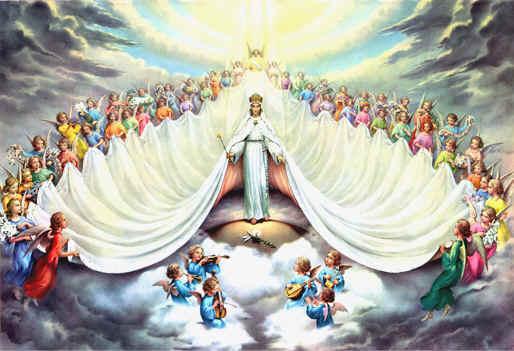
Let me speak for a minutes about the angels. God’s angels, in the first instant of their created existence, had a clear knowledge into God’s goodness and preeminence. In that moment, some of them decided that they would rather live as their own gods. As the Book of Revelation tells us, a war broke out in heaven; St. Michael the Archangel and his angels battled against Satan. Satan and its angels fought back, but they did not prevail and there was no longer any place for them in heaven. Satan was thrown down to earth, and his angels were thrown down with him, where they have tempted us to share in their rebellion ever since. Sometimes people ask if Satan and the demons could be someday be saved. However, angels and demons are creatures that do not change their minds. Unlike human beings, they do not change over time. We human beings are a different sort of creatures. We learn through experience and (hopefully) grow in maturity. If one of us chooses to rebel through grave sin, hope remains for us, as long as we live, that we will repent and turn again to God, to love Him and others as we ought. Even after Caiaphas and Pilate condemned Jesus and handed Him over to for execution, hope remained for their conversion and salvation.

What if Jesus had called in His angelic reinforcements, unveiling before them the Heavenly armies in their terrifying fierceness? What if Christ had tolerated no resistance to the advent of His reign, to the coming of His Kingdom, in 33 AD?        In that case, all of humanity would be confronted with a sudden and inescapable choice, a choice either for Christ or against Him; a moment of choosing like that experienced by the angels and demons.

Some human beings, when confronted with Christ in this way, would sinfully refuse to follow Him, and that refusal would be a rebellion. And here we come to the heart of the problem: How can Christ allow these rebels to remain on the earth, in hopes that they may repent, unless He is willing to show some tolerance and patience toward their sinful resistance for a time? Jesus could wipe away all sin from the face of the earth in an instant, but He would have to wipe out all of the earth’s unrepentant sinners in the process. A sudden judgment would bring a quick and clean end to sin, but less of mankind would be saved. The approach Jesus has taken with us is more merciful, but is also messier. God hopes that all shall turn to Him freely, and not by force, because love cannot be forced. Jesus Christ hopes and works for the conversion and salvation of all. As St. Peter writes, “The Lord’s patience is directed towards salvation.” And though it can be difficult for us to see God’s providential purposes and plans in our lives, “we know that,” as St. Paul says, “all things work for good for those who love God.”

Where is the peace that was promised to the world? Its total reign, the fullness of the kingdom of God, is yet to come. For now, the spirit of the world and the Spirit of life do battle. But we can experience peace in our souls, peace in our families, and peace in our communities, if we live by the Spirit of Christ.

In this age, Jesus comes to us on a donkey, but in the age to come He shall ride a warhorse. As the Book of Revelation says:

“I saw the heavens opened, and there was a white horse; its rider was called ‘Faithful and True.’ He judges and wages war in righteousness.… He wore a cloak that had been dipped in blood, and his name was called the Word of God. The armies of heaven followed him, mounted on white horses and wearing clean white linen. Out of his mouth came a sharp sword to strike the nations. He will rule them with an iron rod, and he himself will tread out in the wine press the wine of the fury and wrath of God the almighty. He has a name written on his cloak and on his thigh, ‘King of kings and Lord of lords.’”

In this age, Jesus rides the donkey, for this is the time of patient mercy. But on the Last Day, Jesus shall ride the white warhorse, for that is the time of decisive and definitive judgment. Let sinners take note; we shall not be permitted to keep sinning forever. And let those who mourn the brokenness, the sin, the suffering and death in the world take courage, for these things shall pass away. ‘See, your king shall come to you; a just savior is he. He shall proclaim peace to the nations. And His rule shall be to the ends of the earth.’

United Hearts — The Kristopher and KayLee Schnitzler Wedding

July 4, 2011

Kristopher and KayLee, when you chose this day, July 2nd, to be your wedding day you were probably not aware that you were choosing an extra special date. We unite your hearts today in holy matrimony amidst Sacred Heart of Jesus and the Immaculate Heart of Mary. Yesterday was the Solemnity of His Sacred Heart and today is the Memorial of her Immaculate Heart. We celebrate these two feasts so closely on the calendar, one after the other, because no two human hearts are so intimately united in a perfect love. I present them to you as role models for your love

Mary and Jesus were mother and Son. They were never married in the way we think of marriage, so how can they be role models for your marriage? In Jesus and Mary, we see the perfect man with the perfect woman, we see the New Adam together with the New Eve, we see the King and Queen of Heaven and Earth. Jesus is the Bridegroom and Mary is the flawless image of the Church, which is His Bride. By seeing how Jesus loves her and how Mary loves Him we can learn much about how men and women are to serve and love each other.

How does Jesus love Mary? For one thing, he listens to her. He is receptive to her wants and needs. It was true at the wedding feast of Cana, He worked a miracle to provide wine at her request, and it is still true now in heaven, where she continues to ask for good things for us. A good husband must be receptive to his wife’s wants and needs. On the other hand, in what manner do you think Mary asks things of Jesus? Mary does not nag Jesus, asking Him in plaintive tones. She doesn’t sit next to Jesus in Heaven and sigh, “I see you still haven’t taken care of the garbage down there.” Instead, I imagine she says to Him, “It would make me very happy if you would do this for me.” A good wife must allow pleasing her to be her husband’s joy, not his burden.

A good husband must die to himself in many ways for his family, and a good wife must support him through his sacrifices. Look how Jesus goes to the cross and offers Himself for the good of Mary and her children. He suffers for her and lays down his life for her. And how does Mary support Him? She is right there, at the foot of the cross, faithful and consoling. God gave Eve to Adam as a partner, to support him in the garden. Mary continues to be a helpmate to Jesus in His work of harvesting the vineyard of this world. A good husband lays down his life for his wife and a good wife must support him through his sacrifices.

From the cross, Jesus make Mary the mother of all Christians. He desired Mary to be the mother of many children, and now, Mary’s motherhood is perhaps her greatest joy. A good husband and wife must be open to children. This is the will of God for you and He will bless you with joy for saying “Yes” to Him.

The worship of God and following His will was at the center of the relationship between Jesus and Mary. Every Sabbath they came to join the worship at the synagogue (the Church of their day) and every day they said prayers and remained close to God. So too, God must be at the center of every good marriage. You must come to Mass every Sunday and pray every day. Good husbands and wives share the same mission in life, to assist each other and their children in getting to Heaven.

From earth to Heaven, Jesus led Mary through life with love, and Mary faithfully followed Him. A good husband must have the integrity not to phone it in, but to lead, and a good wife must have the courage to follow that lead. Kristopher and KayLee, May the hearts of Jesus and Mary reign in your homes. May you model their virtues on earth. And may you draw each other, and your children, to share their heavenly joy forever.

Independence Day Homily

July 4, 2011


What is the most important and the most famous sentence ever coined in the English language? I believe it was a declarative sentence, of thirty-five words, published two hundred and thirty-five years ago today.

“We hold these truths to be self-evident, that all men are created equal, that they are endowed by their Creator with certain unalienable Rights, that among these are Life, Liberty and the pursuit of Happiness.”

Like a passage of Sacred Scripture, this sentence from the Declaration of Independence was more profound, and would effect more providential good, than its human authors ever imagined.

In their original context, these words from the Declaration of Independence were written to justify the American colonies’ separation from the English crown. At that time, many people believed in the divine right of kings, that a monarch had been invested by God with supreme authority to rule. There was precedent for this in the Old Testament, where God chose Saul, David, Solomon, and others to rule His people as anointed kings. In declaring that “all men are created equal,” the Founding Fathers were rejecting the idea that some men are born royal while others are born common. They further asserted that God Himself endows every man with certain rights, and that any government which deprives men of these rights may be justly replaced by its people. In this way, the signers justified the American Revolution.

How much did the Founding Father reflect on how their words about the equality of all men applied to men of color, such as those enduring intergenerational slavery? How much did they consider what these God-given rights required for the female segment of mankind? I would say that these words, like a passage of Sacred Scripture, carried truths more profound than their human authors knew.

These were providential words, for they have been, and continue to be, instrumental in the work of advancing and defending the rights and dignity of all people, from conception to natural death, in our country and around the world. Wherever our nation has failed to embody these words, we look back with shame; but wherever we have honored human dignity, these represent our proudest moments. Martin Luther King Jr. called these words our nation’s creed, and like him we have a dream that one day this nation will rise up and live out the true meaning of its creed: “We hold these truths to be self-evident, that all men are created equal, that they are endowed by their Creator with certain unalienable Rights….”

This Fourth of July, let us thank God for this great gift to our country. Let us praise God for endowing each one of us with dignity and rights which every person and every government must respect. And in the future, let us remember and remind our neighbors, that if our country allows government and men to become our gods, human dignity and human rights will be swiftly brushed aside. Like the Psalmist, may our country always say to the Lord, “My refuge and my fortress,my God, in whom I trust.”

The Way, Truth, & Life — 5th Sunday in Easter—Year A

May 22, 2011

Jesus said, “I am the way and the truth and the life. No one comes to the Father except through me.”

The Mass is an encounter with Jesus Christ, leading us to God the Father. Like Jesus Himself, the Mass contains the Way, the Truth, and the Life of Jesus. First, we journey on the Way to Jesus, then we come to the Truth of Jesus, finally we join in the Life of Jesus.

The Mass begins with the sign of the cross, for God is the beginning and end of everything. Next, we confess our unworthiness to approach the Lord, asking mercy for our sins, so that we may dare to take this journey to God. The, from the Holy Scriptures, we hear of God’s words and deeds among the Old Testament peoples and within the New Testament Church. In this, we learn of the providential way that God has prepared throughout time for us to encounter Jesus Christ today. Just as the journey on this Way through history leads to Jesus Christ, so the liturgy of the Word leads to the Gospel. Certainly, Jesus Christ the Word of God is present throughout the entire Word of God which is Sacred Scripture, but for the reading of the Gospel, we all stand up for Him and sing “Alleluia,” “Praise the Lord,” because we have come to Jesus Christ and He is more fully present among us in the proclamation of the Gospel.

The Gospel reading proclaims Jesus, who is the Truth. The homily that follows proclaims that the Truth matters for us here and now and demands our personal response. To this call, we answer with the Creed, proclaiming our faith in who God is and what He has done for us. In the Creed, we proclaim our acceptance of Jesus, the Truth. In the prayers of the faithful, we petition the Lord for our needs and concerns, saying in so many words, “Lord, let your kingdom come, on earth as it is in Heaven! Let us share you life! Give us your life!” At Mass, the Way leads to the Truth, and from the Truth we long for God’s Life. At Mass, the Liturgy of the Word leads to the Liturgy of the Eucharist.

The presentation of the gifts is not merely about moving around cash and bread and water and wine. The presentation of the gifts is about the presentation of everything that we have, and everything that we are, to God. We lift up our hearts to be one with our sacrifice. Amidst praises to the Father, the one life-giving sacrifice of the Last Supper, of the cross, and of Heaven becomes present here to us. We join in offering this sacrifice through Jesus, with Jesus, and in Jesus, in union with the Holy Spirit, to God the Father in Heaven.

Through this offered sacrifice, we join in God’s Life. We pray “Our Father,” because uniting with the paschal mystery, the great Easter deeds of Jesus, gives us life as the Father’s sons and daughters. Then we share with one another the sign of peace, the loving peace that is possessed by God’s holy ones. Finally, at the climax, we partake of Jesus Christ, Life Himself, most truly present in the Holy Eucharist.

Sometimes people say, “I just don’t get anything out of going to Mass. Father, I know that you say all this important and wonderful stuff is going on, but I don’t see it and I don’t feel it. The Mass is boring for me.” I understand. When I was a boy, I made a point of going to the bathroom (sometimes twice) during every Mass, just to break up the monotony. When I would see the priest cleaning the dishes at the altar—that was a good sign, because it meant that the Mass was almost done. I didn’t really know what was happening at Mass, so I really didn’t believe in what was happening at Mass. But as I grew older I began to learn what was happening, and as I grew in faith I began to believe in what was happening, and my experience of the Mass was transformed.

People who say that the Mass is boring resemble St. Phillip in something he said to Jesus at the first Eucharist, the Last Supper: “Master, (we don’t see or feel the presence of God the Father,) show us the Father, and that will be enough for us.” And Jesus said to him, “Have I been with you for so long a time and you still do not know me, Philip? Whoever has seen me has seen the Father. (Whoever has been to Mass has encountered my mysteries.) How can you say, ‘Show us the Father’? (How can you say, ‘The Mass is boring?’)” The awesome mystical realities of the Mass are true, and real, and present and active at every Mass we attend, whether we see them, or feel them, or believe in them, or not.

Jesus Christ and the Holy Mass contain the Way, the Truth, and the Life, and we shall receive from them according to our faith. Let us pray, that at this Mass and every Mass, we may be as fully present to Jesus Christ and His mysteries as they are to us at every Mass.

The Emmaus Travelers — 3rd Sunday in Easter—Year A

May 7, 2011

Let’s start off with a riddle… Once, a father and his son were driving along in the country together when they got into a terrible car crash. They were both seriously injured and ambulances rushed them to two different hospitals. But when the boy was brought into the Emergency Room, the surgeon on duty saw him and declared, “I can’t operate on him. He’s my son.” How can this be…? The trick of the riddle is that we tend to assume that surgeons will be male. The answer is that the surgeon is the boy’s mother.

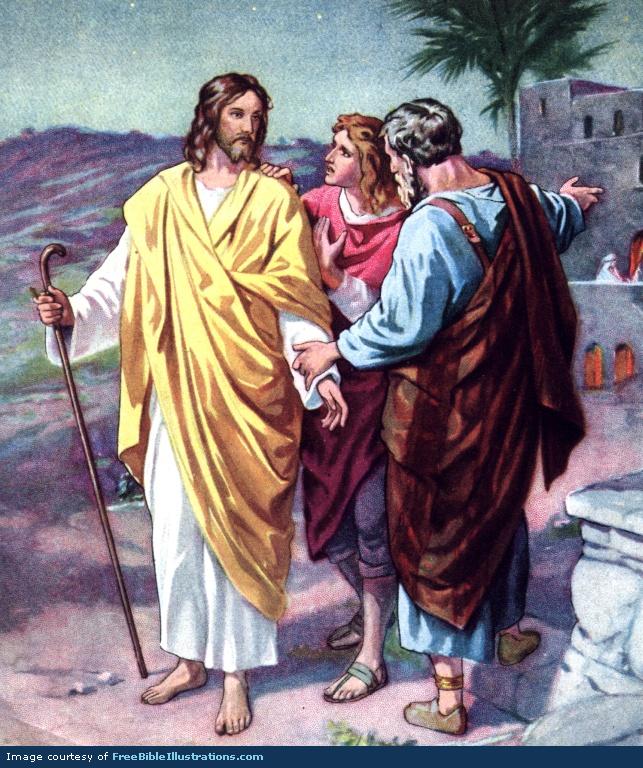
There is a similar trick of the mind at work when we hear the story of the two travelers on the road to Emmaus; we always assume that they were two men. It’s not wonder, since virtually every painting of the encounter on the road to Emmaus will show Jesus with two men. For example, look at the relief on the front of our altar. Many people assume that this is a depiction of the Last Supper (but that there are only two apostles shown because we had to crop it down to size.) Actually, this scene is from after His Passion—you can see crosses on the hill in the distance and there are wound marks in Jesus’ hands. What we have here is to two men at the house in Emmaus, shocked to recognize Jesus in the breaking of the bread.

The artistic depictions always show two men [the picture on the right being the only possible exception I could find], however the original Greek does not call them “two men,” or even “two disciples.” It only says there were “two of them” and that one of them was a man named Cleopas. As to the name and gender of the other traveler, the gospel text is silent. Perhaps the second person’s identity is left as a mystery so as to invite any of us to imagine ourselves in their place in this story. This may be the extent of what we can know for certain, but there is an interesting clue from another Gospel that suggests more detail.

In Gospel of John, it says that “standing by the cross of Jesus were his mother and his mother’s sister, Mary the wife of Clopas….” (John 19:25) So we have a Clopas and Cleopas both associated with Jesus. Perhaps these similar names are merely a coincidence, but perhaps Clopas and Cleopas are variations of the same person’s name. If Clopas and Cleopas are one in the same person, then the other traveler on the road was probably his wife, Mary. This Mary was most likely either Jesus’ aunt and the sister of St. Joseph, or one of the cousins of the Blessed Virgin Mary. What we do know for certain is that this Mary stood with Jesus’ mother at the foot of the cross.

Admittedly, it is speculation to say the other traveler was Cleopas’ wife, but if it was, then this Resurrection episode has a much greater poetry. In the Garden of Eden, a husband and wife ate from a tree. “Then the eyes of both of them were opened, and they realized that they were naked.” They felt ashamed and afraid. But in the house at Emmaus, a husband and wife ate the Eucharist, the fruit of the tree of the cross. “With that their eyes were opened and they recognized Him.” They felt joyful and unafraid. In Eden, God moved about the garden with the man and the woman. After the resurrection, Jesus walks with us, both men and women, along our road.

But whether that second traveler on the road was a woman or not, it would be a remain mistake to think that only men were important in the early Church. That would be at least as mistaken as thinking that every surgeon is a male. Jesus Christ chose some men to be the Church’s leaders, and much is said about them in the Scriptures, but He chose to spread the good news about Himself through the witness of women as well.

Though we sing of the “Faith of Our Fathers,” the faith of our mothers has been just as important, if not more, through time. Today,  it is oftentimes mom who takes the forefront in fostering faith in the family, in leading her children to Christ and His Church; through bedtime prayers and Bible stories, by bringing them to Mass and to CCD, in seeing to it that they receive the graces of the sacraments. If you feel like you’re alone in witnessing to the faith in your family, I commend you, and Jesus is proud of you.

There is another trick of the mind when it comes to celebrating Mother’s Day. On Mother’s Day we remember our mothers, who gave us birth and nurtured us, who raised us and put up with us, but we tend to forget about the greatest gift, the gift of our faith. At the Easter vigil the Exultet asks: “What good would life have been to us, had Christ not come as our redeemer?” Indeed, what good would life be to us if after our births we had not also been brought to Christ through the witness of holy women. Who were these holy women in your life? At this Mother’s Day Mass, let us remember and pray not only for our mothers in the natural order, but for each of our spiritual mothers as well.

The Greatest Vacation — Funeral for Angela Ernst, 88

April 2, 2011

In the summer of 1923, when Angie was just eight months old, the Ernst family embarked for a new life in America. Little Angie traveled simply, but probably quite comfortably, in a basket, a memento that she kept among her possessions for the rest of her life. I think we can easily romanticize what it was like to immigrate to this country back then. We do not think about how intimidating, how daunting, how unnerving it was for people to leave behind what was well-known to come and live in a whole new world. I’m told that Mr. and Mrs. Ernst were not initially thrilled about life on these shores, but eventually they warmed-up to it, embraced this land and its people, and it became home for them.

I’m told that Angie was full of life and fun and love towards her family and friends for all these past eighty-eight years that she lived here in Marshfield. Yet, a wanderlust, a desire for travel, to see new places and meet new people, was always a part of her, whether it was with her brother Joseph, or later with her sister Rose. Angie traveled east to Europe multiple times and visited family in the old country. She traveled out west and backpacked in the mountains. She traveled further west still and enjoyed the beaches of Hawaii. She traveled north to Canada and south to Mexico, and wherever she went she sought out the Lord in His houses, His beautiful churches. Angie lived her life close to Jesus Christ and His Church with a great love for others that is reflected in your love for her. Therefore, I am confident that Angie is now enjoying the greatest adventure of all her travels. Every interesting, beautiful, and friendly place we can travel to on earth reflects something of Heaven, yet none of them compare. The journey to Heaven is the greatest of all vacations.

We all have a natural aversion to death, and that’s a healthy thing. But sometimes this aversion can be too great of an anxiety.  Even with our Christian faith, the idea of dying and leaving behind what is well-known to go and live in a whole new world can feel intimidating, daunting, and unnerving. Yet there is no cause for us to fear or grieve like people who see no hope. Instead let us remember this, if you and I live in Christ, dying shall be the greatest adventure of our lives. Do no be afraid to be comforted by the truth. It’s a wonderful thing to visit the shrine of Our Lady of Guadalupe in Mexico, as Angie did several times. But how much better must it be to travel to an encounter with Our Lady of Guadalupe herself. It’s fun to visit Jesus in His many earthly houses as Angie liked to do. But how much better must it be to visit Jesus in the Father’s house. I trust that Angie is now fine, “just fine,” as she would say, but just in case her journeying to Heaven continues let us help her with our prayers, especially at this Mass for her.

The Passion of Lent — 1st Sunday in Lent—Year A

March 14, 2011


Today Satan approaches Jesus in the desert at the end of His forty days of prayer and fasting and attempts to divert Him from the Father’s plan.   The ancient serpent employs the same tactics he used on Eve in the garden, twisting God’s words and playing on human desires. So how much did Satan know about what Jesus intended to do in the years ahead? St. Matthew suggests the Devil knew something of this, because the three temptations Satan puts to Jesus foreshadow His future Passion.

First, Satan comes and says to Jesus, “If you are the Son of God, command that these stones become loaves of bread.” Is it a coincidence that at the Last Supper Jesus will command bread to transformation into His very Self? It is as if the Devil were saying, “Why not simply give everyone bread. Why give yourself into their hands?” Jesus answers, “Man does not live on bread alone, but on every word that comes forth from the mouth of God.”

Jesus knows that a lifetime supply of bread would not save us. To live forever the Bread of Life must nourish us. Jesus is the Bread of Life. We do not live by bread alone, with whatever this world can offer, but by the Word that comes forth from the mouth of God. The Word of God is Jesus Christ.

This first temptation and Jesus’ answer point to the importance of prayer and the Eucharist. Prayer lifts our minds above having worldly thoughts alone. The Eucharist empowers our hearts to live for God. Do you pray every day? Prayer must be a top priority in Lent. Do you frequently receive Jesus in the Eucharist? In Lent, try coming to weekday Masses. Those who do so find it so powerful and precious that they often wonder how they ever used to make it a full seven days without receiving Jesus in between.

For his next temptation, Satan takes Jesus to the very top of the temple in Jerusalem. About three years later, not far from that place, the hostile Sanhedrin will gather and put Jesus on trial, questioning Him, demanding to know, ‘Are you the Son of God?’ and they’re not going to like His answer. The Devil says, “If you are the Son of God, throw yourself down.  [God’s angels will protect you.]” It is as if the Devil were saying, “Since you are a child of God He will be with you to save you no matter what, so why not do your own will and decline to give difficult witness?” But Jesus answers, “You shall not put the Lord, your God, to the test.”

You and I are also children of God and He is always with us,  but this must not lead us to presumption. We need to seek His will and give witness in the world by our words and deeds. If we sin, God always offers forgiveness, but we must take Him up on the offer. God always welcomes sinners, but we must turn to Him. To keep sinning without any words or actions of repentance is to put God to the test.

This second temptation and Jesus’ response point to the importance of confession and conversion. This Lent, turn from sin, come to confession at least once, and put some serious thought into planning how you will “sin no more and to avoid the near occasions of sin.”

For the third temptation, the Devil takes Jesus up to a very high mountain and shows him all the kingdoms of the world in their magnificence. He says, “All these I shall give to you, if you will prostrate yourself and worship me.” Jesus plans to claim His universal kingdom by climbing another mountain by Himself, Mount Calvary, and by taking his throne on the cross. (This is why Jesus tells James and John that they do not know that they are asking when they request to sit ‘one at His right hand and one at His left when He enters His kingdom and glory.’) Here it is as if the Devil were saying, “If you simply give up you won’t have to sacrifice, you won’t have to suffer. Lay down your cross and lay down before me.” But Jesus rebukes the devil, (much like he will later rebuke St. Peter for saying, ‘God forbid such a thing should ever happen to you): “Get away, Satan! The Lord, your God, shall you worship and him alone shall you serve.”

This third temptation and Jesus’ answer point to the importance spiritual sacrifices and patiently bearing our burdens. We have taken on Lenten penances, let us not give them up; and when unforeseen trials come to us, let us trust that Jesus knows what He’s doing; for it is through crosses like these that God makes us holy.

Prayer and the Eucharist, confession and conversion, spiritual sacrifices and patiently bearing our burdens. Let these things be in your response as you are tested these forty days.

Be Not Afraid — 8th Sunday in Ordinary Time—Year A

February 28, 2011

This morning, I would like to recall events from the life of a great man. When he is eight years old his mother dies. When he is twelve years old, his older brother (a physician) also dies, having contracted scarlet fever from a patient. At nineteen years old, the Nazis invade his homeland and inflict much suffering on those he loves. With his father’s death, he becomes the last survivor of his immediate family, at only twenty years of age. After five years of war and occupation, the Nazis are driven out, but the Soviet communists replace them. They will later try to murder him, but they will (just barely) not succeed. At age seventy-three, he is diagnosed with an incurable disease that will slowly weaken him and kill him, and eleven difficult years later, he dies.

These are events from the life of a great man, a man the Church will declare “blessed” this May 1st. He is Karol Wojtyla, better known as Pope John Paul II. Throughout his papacy, over and over again, he repeated this message: “Do not be afraid.” He is well-known for saying this, but these words were not originally his. They come from another man, also a man of suffering—accustomed to infirmity, who knew both poverty and exile, one who experienced the deaths of loved ones, a man who was also targeted for death himself. This man is Jesus Christ, who first said, “Do not be afraid. Be not afraid.” In fact, in the Gospels, Jesus says this more than just about anything else.

I recall the trials of John Paul the Great and the sufferings of Jesus Christ lest anyone think their words come from naivety about life and the world, or that their Gospel is not grounded in reality. Jesus knows what he is talking about when teaches us, when He commands us, “Do not worry about your life, what you will eat or drink, or about your body, what you will wear. …Seek first the kingdom of God and his righteousness, and all these things will be given you besides. Do not worry about tomorrow; tomorrow will take care of itself. Sufficient for a day is its own evil.” Jesus never denies that evils exist in this world, but tells us that none of them should make us fear. This is why the Church asks God the Father at every Mass, “Deliver us Lord from every evil and grant us peace in our day, in your mercy keep us free from sin and protect us from all anxiety….” We really mean it when we pray this, that we may be free from all anxiety. Christians should care about many things, but not one of these things should make us anxious.

Of what should we be afraid? Poverty? Jesus lived it. Suffering? He experienced that, too. Sin? Jesus has conquered it, and He offers us restoration. Death? Jesus has defeated it, and He promises us resurrection. With Jesus Christ, we can have the peace that, in the end, everything will be ok. Yet, many people feel crushed by their worries, about matters large and small. How are we to overcome these anxieties and experience the peace Christ wants for our lives? We conquer anxiety with these two things: prayer, and confidence in God’s love for us.

As Saint Paul wrote the Philippians, “The Lord is near. Have no anxiety at all, but in everything, by prayer and petition, with thanksgiving, make your requests known to God. Then the peace of God that surpasses all understanding will guard your hearts and minds in Christ Jesus.” Jesus will never forsake us, and He will never forget us. Even if a mother should forget her infant, or be without tenderness for the child of her womb, Jesus will never forget you. So, “Do not be afraid.” The next time you feel worry, the fruit of fear, remove it from your mind and place it on an altar before the Lord. Make a sacrifice of it, a burnt-offering before God, and say, “Jesus, I trust in you. I’ll show up and do my part, but I’m relying on you to take care of this. I sacrifice my fears to you.” It is a high compliment to Him when we trust in Him to be our God, and opens us up to receive His peace.

Always be confident in Jesus Christ’s love for you. The next time you feel worry coming on, this is your cue to pray. Do not be afraid. With Jesus Christ, we can have the peace that everything will be ok.

The Babel Project — Friday, 6th Week in Ordinary Time—Year I

February 18, 2011

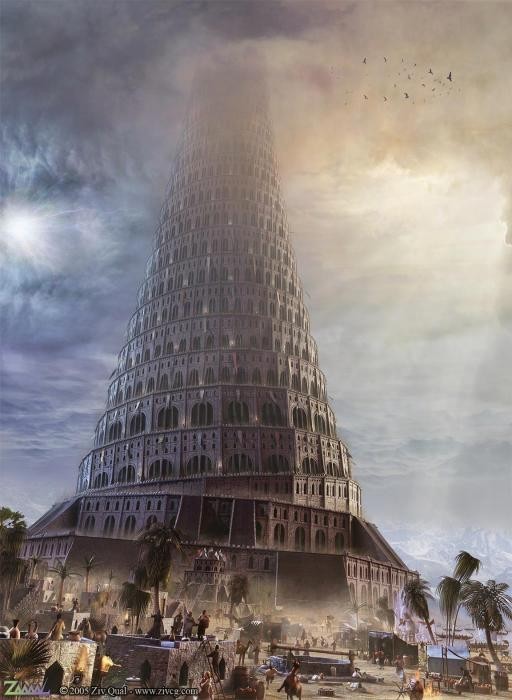
Why did God break up the Babel project? What was wrong with lots of people working together toward this common goal? Perhaps the problem was that they were trying to “make a name for” themselves, that is, a new identity for themselves, different from their status as God’s human creatures. Building up to heaven, they were trying to become as gods without God. The tower of Babel was a temple for the worship of themselves. God broke up their endeavor because of the harm it would have caused to themselves and to the world.

That city, in itself, was no threat to God above.  The Lord had to “(come) down to see the city and the tower that they had built.” God was untouchable, invulnerable, and immortal. But this changed in history, with the Incarnation. The Son of God became touchable, vulnerable, and mortal. He did this not only to save us, but also so that our human nature could be transformed to something greater.

At Pentecost, the Holy Spirit came down from Heaven as tongues of fire. He rested upon them and they began to speak in languages that people of any nation could understand. They were temples of the Holy Spirit. They were a holy city, whose foundation is God.

As St. Augustine wrote, the City of Man and the City of God exist side by side in this world. The City of Man is imaged by Babel. The City of God is imaged by the Church. The City of Man is destined for destruction, but the City of God will endure forever.

Prayers Gradually Answered — Wednesday, 6th Week in Ordinary Time—Year I

February 16, 2011


Noah’s Ark was no cruise ship, and forty days and nights on stormy waters is no pleasure cruise. Imagine what it was like for Noah; shoveling food for the animals all morning, shoveling something else all afternoon; hearing the squawking of the animals all night, hearing the complaints of your family all day. Noah must have been praying hard for land. He sends out a raven and it doesn’t come back. He sends out a dove and it brings back with a twig. After sending out the dove again they finally make landfall. Noah’s prayer was fulfilled in a gradual way, just like Jesus healed the blind man of today’s gospel in stages.

Sometimes we get impatient and question when our prayers for ourselves and others are not answered immediately, but we should not lose hope.  But remember, slow, gradual progress doesn’t mean that God’s plan is not being fulfilled. And just because you’re not instantly healed doesn’t mean that your prayer for healing is not being answered.

Christ Or Foe? — Monday, 6th Week in Ordinary Time—Year I

February 15, 2011

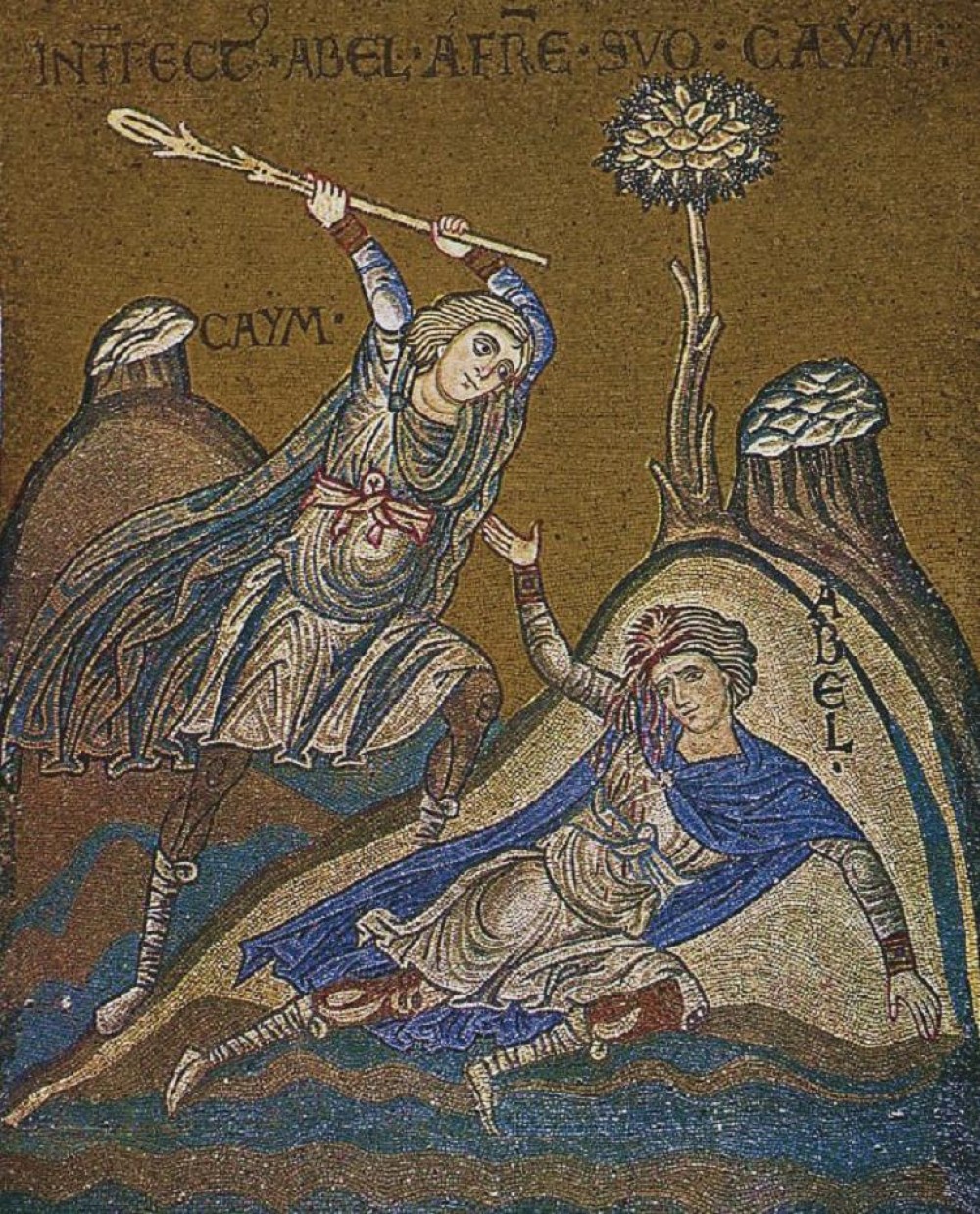
Today we recall two brothers who were icons of Christ. I speak of Cain and Abel. (At least, they both started off as images of Christ.)

When Eve conceived and bore Cain, she said, “I have produced a man with the help of the Lord.” We can imagine the New Eve, Mary, saying the same thing. Abel was a keeper of flocks, like Jesus the Good Shepherd. Cain was a tiller of the soil, like Jesus the Sower of the Seed and Reaper of the Harvest. Both Cain and Abel had priestly characters because both offered sacrifices to God.

Imagine how much better the world would have been if these two brothers had lived and worked together in harmony. They would have transformed the whole world, like the holy brothers Cyril and Methodius, the patron saints of Europe.  Instead, tragically, jealousy, resentment, temptation, and sin led Cain to murder his brother. By this spilling of innocent blood, Abel came to image the future Christ still further, while Cain became a likeness of the Christ’s future enemies; the chief priests, scribes, and Pharisees.

For you and I, in the end, it may all come down to this: are we Christ, or are we those who would destroy Him?

In Her Image — Funeral for Carol Beck, 87

February 15, 2011


I never got to know Carol in life, but what I have been told of her is very good; that she is a sweet, peaceful, good and devoted woman of God. And from what I am told, she is clearly a woman of quiet strength.

On December 7th, 1958, Carol’s husband Robert, the father of Steve and Kathy, after nine years of marriage, unexpectedly died of a heart attack. That infamous date, December 7th, happened to be Carol’s birthday. I’m told that when Carol got married she was perfectly happy with the thought of being taken care of for years to come, but when Robert died she was called to rise to the occasion and take charge. This widow raised her children to maturity, and Steve and Kathy indicate that she raised them rather well. Though he was not visibly present in an unveiled way, I bet that Robert was never far spiritually, helping her through the trials.

Carol was simple and meek and seemingly ordinary in the world, but at the same time she was a quite stunning in appearance, with dark hair and beautiful brown eyes. Though everything, she remained close to her Lord, Jesus Christ. She drew strength from daily prayer and the grace of the sacraments, and with her beautiful voice she sang praises to God. Now she has passed on, to go where her bridegroom has gone before her.

We should pray the purification of Carol’s soul, as we do for all the dead, but I have no fear for her future. Carol’s life on earth has been as an image, an icon, of  Christ’s Church on earth. The mystery of the Church was reflected through her life.

We call the Church a she, because she is the bride of Christ. As we hear in the Gospel, the day He died was the birthday of the Church. The Church is a mother, and with love and concern she raises her own children to maturity. Though her bridegroom is not visibly present in an unveiled way, He is always near her and helps her through every trial. She is stunningly beautiful, and yet she is simple, meek, and seemingly ordinary in this world. Though everything, she remains close to her Lord, Jesus Christ. She is strengthened through her daily prayers and the grace of the sacraments, and with one beautiful voice, she sings praises to God. And one day, she too will pass on from this world, to where her bridegroom has gone before her.

Please pray to God for Carol’s soul, but do not be afraid. I am confident that when all is said and done, Jesus shall present her in splendor to Himself, without spot or wrinkle or any such thing, that she may be holy and happy with Him forever. Those who live in the Church’s likeness are promised her reward.

Set To Heaven — 6th Sunday in Ordinary Time—Year A

February 13, 2011

This morning, consider this important question: Are you a thermometer or a thermostat? In this life, we can live like either thermometers or thermostats. A thermometer (as you know) accepts whatever temperature, hot or cold, that happens to surround it. A thermometer acts passively to the world’s influence. A thermostat, on the other hand, does not submit to the world around it. A thermostat is set to an ideal temperature and strives to attaint its goal.  As Christians, we should be as thermostats, and we should all be set on Heaven.

Do you think about Heaven much? Do you ever meditate on what it will be like? I think many of us get so drawn in by the here and now that we fail to give Heaven much thought. Yet, I think we would all be strengthened by meditating on it more; on what it promises and what it requires.

The next life is a mystery about which we can know a great deal. As Saint Paul says, “What God has prepared for those who love him, this God has revealed to us through the Spirit.” For example, we know that there will be no suffering or death in Heaven. The Book of Revelation says God ‘will wipe every tear from our eyes, and there shall be no more death or mourning, wailing or pain, for the old order (the way of this world) will have passed away.’

There shall also be no hatred in Heaven. No one with hatred in his or her heart will be able to enter. The Book of Wisdom teaches that God hates none of the persons he has made. He does not always like all the things that they do, but it is His love for each one that continues to hold them in being, and will hold them in existence forever. In order to see God in Heaven, we must become like Him. This is why Jesus forbids not only murder, but hatred in the heart as well. Consider how wonderful it will be to live in Heaven at peace with everyone.

After the resurrection, when our dead bodies are reconstructed from the dust, those who are just will be remade, stronger, handsomer, more incredibly beautiful, than they have ever looked before. Will their perfect bodies have any flaws? If glorified bodies do have “flaws,” they shall be as the wounds that remain in Jesus’ hands and side, beautiful and glorious forever. In this life, the beauty of one’s soul has little relationship to the beauty of one’s flesh; but in Heaven, the holiness of the saints shines out for all to see. 

In Heaven, in this midst of this overwhelming beauty, no one shall lust and none shall exploit another. Lust and exploitation go hand in hand. There is a good reason for the expression “to lust for power,” for lust is about manipulating another for one’s pleasure. Instead of lust, everyone in Heaven shall desire the true good of one another from their hearts.

In this life, temptations will come whether we want them or not, but remember that temptations in themselves are not sins—it is only when we say “yes” to temptation, when we choose to sin as temptations suggest, that we can be guilty of a sin such as lust. Until we can refuse temptation’s invitations, until all lust is driven from our hearts, we are not yet ready for Heaven. This is why Jesus teaches not only against adultery, but against lust in the heart as well. How wonderful it will be to full of love for all, purely, from our hearts, and to receive that same overflowing love in return.

Our lives on earth we are full of questions. But in Heaven, every question which has answer will be answered for us. As St. Paul told the Corinthians, “At present we see indistinctly, as in a [cloudy] mirror, but then face to face. At present I know partially; then I shall know fully, as I am fully known.” Heaven is a place of transparent truth. There, the barriers to communication disappear. In Heaven, we shall know others fully, and be fully known ourselves. No lies nor concealments are possible there, “for there is nothing hidden that will not become visible, and nothing secret that will not be known and come to light.” Until we are free of lies, until we are people whose ‘Yes’ means ‘Yes,’ and whose ‘No’ mean ‘No,’ we are not yet ready to live in Heaven.

If we die in God’s grace and friendship, we may still have some attachments to sin, and be unprepared for Heaven. But, thanks be to God, there is Purgatory, to clean us up and make us perfect, so that we may enter the Father’s house and join the feast of Heaven. Though there is Purgatory, we must always aim for Heaven. If you shoot a bow and arrow and aim carefully for the bull’s-eye, you will probably miss but still hit the target. If you shoot only aiming at the target in general, you will probably miss and hit the ground. So aim for Heaven, lest any of us miss entirely.

Jesus said to his disciples, “I tell you, unless your righteousness surpasses that of the scribes and Pharisees, you will not enter the kingdom of heaven. So let us not default to world’s standards. Do not be a thermometer. Set your thermostat to the perfection of Heaven. Meditate on it and strive for it, and you will experience the joys and blessings of Heaven beginning in this life.

Man and Wife — Thursday, 5th Week of Ordinary Time—Year I

February 10, 2011

God cast a deep sleep on the man and made for him the woman of his dreams. God fashioned her from his rib, perhaps because it was the bone closest to his heart. This reflects her dignity, for the man was made from mud while she was made from flesh. Woman is God’s final and ultimate creation.

The man beholds her with joy and names her, just as he had named every animal. This authorship is a sign of his authority, not to manipulate nor humiliate, but to lovingly lead and to care for what is entrusted to him. (The fact that “the man and his wife were both naked, yet they felt no shame,” reveals that they completely trusted and respected each other.) As Christ loves His Church, so husbands should love their wives.

Child of God Homily

February 9, 2011

 
Do you know who Bill Gates is? He started a computer software company called Microsoft and is one of the richest men in the world.  If Bill Gates were your dad do you think that he would be willing to buy you things you could never have otherwise? Imagine if President Obama were your uncle.  Do you think he would invite you to the White House sometime?  Do you think that you would have the opportunity to talk to him about your concerns and ideas for the world? Hold that in mind…

When I was younger, something about how we professed the Nicene Creed on Sundays struck me as strange: “For us men and for our salvation He came down from heaven. *Profound Bow* By the power of the Holy Spirit, He was born of the Virgin Mary, and became man. *Straighten* He was crucified under Pontius Pilate. He suffered, died, and was buried.” I wondered, “Why do we bow for Jesus being born? Heck, even I was even born. Why don’t we bow for His suffering instead?” 

We tend to think of God becoming man as a perfectly normal thing for God to do, we take it for granted, but it is actually the most surprising thing that has ever happened in history. The divine Son became one of us so that He could be our brother, and so that His Father could be ours. “See what love the Father has bestowed on us that we may be called the children of God. Yet so we are.”

Our heavenly Father is unimaginably rich, and He wants to provide for you and bless you. Our Father is all-powerful, and He is always open to hearing your prayers. Our Father in heaven has a house far greater than the White House, and He is preparing a place for you to stay. Remember this: you are a child of God the Father, and that’s a big deal.