Archive for the ‘Sunday Homilies’ Category

“Take My Yoke Upon You & Learn From Me”

July 9, 2023

14th Sunday in Ordinary Time
By Fr. Chinnappan Pelavendran

When we are tested with trials and overburdened with pain and suffering, we ask, “God, Why me?” and we fail to count the innumerable blessing that we received. Arthur Robert Ashe was an American professional tennis player. He is considered the best African – American male tennis player of all time. He won three Grand Slam titles. Ashe was the first black player selected to the unites States David Cup team and the only black man ever to win the singles title at Wimbledon, the U.S. Open, and the Australian Open. At the end of his life, Ashe was dying of AIDS, which he got due to infected blood received during heart surgery in 1983. From the world over, he received letters from his fans. One of them asked, ‘Why does God have to select you for such a bad disease?’ To this Arthur Ashe replied, “The world over fifty million children start learning tennis, five million of them learn to play tennis, 50,000 come to the circuit, 5,000 reach the grand slam, fifty reach the Wimbledon, four to semi–finals, two to finals. When I was the one holding the cup, I never asked God why me. And today in pain, I should not be asking, ‘God, Why Me?’

All of us have problems in life. Big or small, these problems burden us and make us sad, tired, and distressed. When these problems go unsolved for a long time, we feel disappointed and become depressed. One of the most comforting words of Jesus in the gospel is, “Take my yoke… and you will find rest.” Anyone who feels tired, disappointed, abandoned, or depressed can easily be uplifted by the comforting promise of Jesus that He will give rest.

Here is the Good News. To all those who are alone and in need of someone to talk to, those who have no one to ask for help, and those who feel lost, lonely, and hopeless, worry no more. There is someone to turn to, someone who can listen to our endless complaints, a shoulder to cry on. He is Jesus who says, “Come to me, all you who labor and are burdened, and I will give you rest. Take my yoke upon you and learn from me, for I am meek and humble of heart, and you will find rest for yourself. For my yoke is easy, and my burden light.

Today’s readings give the same message in a more powerful way. In the first reading, the Prophet Zechariah consoles the Jews living in Palestine under Greek rule, promising them a meek Messianic King of peace riding on a donkey, who will give them rest and liberty. The Responsorial Psalm praises and thanks a kind and compassionate God who raises up those who are bowed down. In the second reading, St. Paul tells the Christian community in Rome about two yokes, namely, the flesh and the Spirit. He challenges them to reject the heavy yoke of flesh and to accept the light of the yoke of the Holy Spirit. In the gospel, Jesus offers rest to those “who labor and are burdened.”

We need to unload our burdens before the Lord. That may be our worries, anxieties, problems in the family, suffering, health, security, and a thousand other things. Give everything to Jesus. Our Lord will transform our lives. Try to count on your blessing, not your worries.


Great Rewards From Small Deeds

July 2, 2023

13th Sunday in Ordinary Time
By Fr. Victor Feltes

The Old Testament Prophet Elisha was the immediate successor to the Prophet Elijah, ministering as a traveling prophet and wonderworker in the 800’s BC. One day, he came to a town of northern Israel called Shunem in which lived a “woman of influence.” Other Bible translations of this same text describe her as “prominent, influential, and wealthy”—“a great lady.” Curiously, she along with her husband go unnamed in the text. Perhaps, as with “the beloved disciple” in the Gospel of John, this is intended by providence to encourage us to envision ourselves in her place.

This great lady urges the prophet to dine with her. He accepts, and thereafter, whenever passing through that town, he would visit to eat there. So she says to her husband, “I know that Elisha is a holy man of God. Since he visits us often, let’s arrange a little room on the roof and furnish it for him with a bed, table, chair, and lamp, so that when he comes to us he can stay there.” Her husband apparently agreed, because sometime later Elisha lodges in that new room overnight. They may have been simple accommodations but Elisha really appreciated them.

While staying there, Elisha asks his servant to call the woman. Once she stands before him Elisha asks his servant to say to her (apparently in her own language): “You have troubled yourself greatly for us; what can we do for you? Can we say a good word for you to the king or to the commander of the army?’” She replies, “I am living among my own people.” By this response, she is expressing that she lives contently and secure, far removed from the royal court and its concerns. Her needs are satisfied. She has not shown Elisha hospitality to win favors from him. She receives him because he is a prophet. She receives him because he is a righteous man. She serves him because she knows he is a holy man of God.

Later Elisha asks, “Can something be done for her?” His servant, with great confidence in the prophet, replies, “Yes! She has no son, and her husband is getting on in years.” So Elisha has her called again and once she stands at the door, Elisha promises, “This time next year, you will be fondling a baby son.” She replies, “My lord, you are a man of God; do not deceive your servant.” Yet, the woman would conceive, and by that time the following year she had joyfully given birth to a son as promised. From God, she receives the prophet’s great reward.

Jesus says, “Whoever receives a prophet because he is a prophet will receive a prophet’s reward, and whoever receives a righteous man because he is a righteous man will receive a righteous man’s reward.” And what of goodness shown toward those of lesser stature? “Whoever gives but a cup of cold water to one of these little ones to drink because the little one is my disciple—amen, I say to you, he will surely not lose his reward.”

Sometimes, Catholics look at our great saints and imagine we must do extraordinary things to be holy and greatly blessed. Thinking that such great deeds are beyond them, they despair of ever becoming saints themselves. In the late 1800’s, young St. Therese of Lisieux felt that way too, but then she found her “Little Way” to holiness. Her little way to great holiness was to do many little things for the right reason, with the right heart, that is, with great love.

In her highly recommended autobiography “Story of a Soul”, she writes:

Miss no single opportunity of making some small sacrifice, here by a smiling look, there by a kindly word; always doing the smallest right and doing it all for love.” “You know well enough that our Lord does not look so much at the greatness of our actions, nor even at their difficulty, but at the love with which we do them.” “Without love, deeds, even the most brilliant, count as nothing.” “To pick up a pin for love can convert a soul.

Like the great lady of Shunem and St. Therese of Lisieux, realize and remember that doing many little things for the right reason, with the right heart, out of love, will surely not lose its reward.

The New Manna

June 11, 2023

Solemnity of Corpus Christi
By Fr. Victor Feltes

In the Old Testament, God freed his people with the Prophet Moses. The Hebrews in Egypt were slaves to Pharaoh since birth, but God’s mighty works through Moses liberated them. Though he had led them through the waters of the Red Sea their journey was not yet completed. They were still in the arid desert and God wished to lead them into his Promised Land, “a land of milk and honey” he had promised to their ancestors. God had already blessed his people, yet he wished to give them his even fuller blessings there.

How were the Hebrew people sustained for forty years in the desolate Sinai desert? What did they eat to survive? Every day, God made fine flakes appear on the ground around their camp. These flakes were “white, and tasted like wafers made with honey.” Upon seeing them the people asked, “What is this?” (in Hebrew, “Manna?”) Moses told them, “It is the bread which the Lord has given you to eat.” Without that manna they would have starved to death. God’s people ate this bread until they entered the Promised Land.

Here we see things and events of the Old Testament foreshadowing events and things of the New. In the New Testament, God liberates his people with Christ Jesus his Son. We all were slaves to sin, Satan, and hopeless death, but God’s mighty works through Jesus Christ freed us. He has led us through the waters of baptism; however, our journey is not yet completed. We possess renewed life in this fallen world but God wishes to lead us into his Promised Land of Heaven. God has already blessed us, yet he wishes to give us his even fuller blessings there.

So how are we to endure as we walk through the present desert of this world? Every day, in churches like this one, God offers us the Bread that has come down from Heaven. Jesus says, “I am the living bread that came down from heaven; whoever eats this bread will live forever; and the bread that I will give is my flesh for the life of the world.” He gives us himself in the Eucharist. People see the Blessed Sacrament and wonder, “What is this?” It is the New Manna; the Body and Blood, Soul and Divinity of Jesus Christ.

In addition to Sacred Scripture, the Early Church Fathers attest to this. These theologians living in the first centuries of the Church teach and document what the earliest Christians believed about Jesus Christ’s Real Presence in the Eucharist. For instance, shortly after 100 AD, St. Ignatius of Antioch said, “The Eucharist is the Flesh of our Savior Jesus Christ.” Around 150 AD, St. Justin Martyr taught, “The Eucharist… is both the Flesh and the Blood of that incarnated Jesus.” St. Augustine of Hippo wrote in the early 400’s that, “Christ was carried in his own hands when, referring to his own body, he said, ‘This is my body.’ For he carried that body in his hands.” And there are many other examples of such teaching from that era.

This is what Christ’s one, holy, catholic, and apostolic Church has always believed and taught, and God has affirmed its truth here and there by Eucharistic miracles throughout the centuries. In the Old Testament, God’s people ate the manna until they entered the Promised Land. Had they not regularly eaten of it, they would have died from starvation. This reflects how important faithfully receiving and promoting the Holy Eucharist must be for you and me.

Never neglect Sunday Mass. To skip Mass from Saturday evening through Sunday night (without a grave reason for doing so) is to prioritize something else above of Jesus, spurning the Lord who commands us to keep his day holy. Let Jesus Christ be first in your life through faithfully worshipping and receiving him at Mass. And opportunities to worship and receive our Lord at Mass are not limited to the weekends.

If your schedule permits, I welcome and invite you to try weekday Mass, celebrated at St. Paul’s on Monday through Friday at 7:15 AM and mornings at St. John’s on Mondays, Thursdays, and First Fridays. Weekday Mass is only a half-hour long, it features a homily, and is among the best devotions for drawing closer to Jesus.

Are any of your friends or relatives interested in our Catholic Faith? Invite them to come with you to Mass or bring them to that other great way to encounter our Eucharistic Lord: Eucharistic Adoration.

What greater treasure do we have than Jesus, truly present in the Eucharist? Let us treasure him as we ought and introduce this treasure to others. Strengthened by his food, our Lord would bring us all together into his Promised Land of Heaven.

God is a Loving Communion of Persons

June 4, 2023

Trinity Sunday
By Fr. Victor Feltes

A Muslim man once accused me of what he called an “unforgivable sin.” My supposed offense was espousing a core truth of our faith, the foundation of all reality: Trinitarianism — that God is one being in three persons. (That man’s charge struck me as a rather poor conversion strategy. I mean, if proclaiming the Trinity were really an unforgivable sin, why would I bother converting to Islam?) I was dialoguing on that occasion with generally friendly and thoughtful Muslims, Jews, and Unitarians in a website’s comments section, responding to something a man who believes in God but rejects the Trinity had posted. This is what he wrote:

The Jews had no idea of the Trinity. Their faith was centred in the Shema: a unitary monotheistic confession. Jesus clearly affirmed that very same unitary monotheism in Mark 12:29″ where Jesus says, “Hear, O Israel! The LORD our God, the LORD is one!” This fellow concluded by chiding, “How is it that Christians today have abandoned their rabbi on this point?

Both that online poster and Jesus Christ referenced the Shema, which faithful Jews would recite every morning and evening. “Shema” is the Hebrew word meaning “hear” or “listen,” and the Shema prayer quotes Deuteronomy 6:4: “Hear, O Israel: The Lord our God, the Lord is one.” Does this oneness proclaimed by God’s Word refute our Trinitarian Christian Faith? Should we reject our belief in the Trinity because Jews in the Old Testament did not profess it? No, and here’s why.

This famous scripture verse declaring, “the Lord is one,” uses the Hebrew word “echad” for “one.” Now echad can mean singularity, solitary oneness, but this same word sometimes points to a unified oneness. For instance, when Genesis recounts the creation of the two sexes it says, “For this reason a man will leave his father and mother and be united to his wife, and the two shall become one (echad) flesh.” Later in Genesis, in the story of the Tower of Babel, God laments, “If now, while they are one (echad) people and all have the same language, they have started to do this, nothing they presume to do will be out of their reach.” God, by selecting the word “echad” to proclaim “the Lord is one,” inspired a passage with providential flexibility. Echad allows for the unified oneness of the Persons of the Trinity without requiring that interpretation from the Jewish generations who came before Christ.

In the Bible, we see God gradually leading humanity along from darkness to light, from error to truth. For example, from unchecked blood vendettas, to “an eye for an eye” taught in the Mosaic Laws, to the Gospel teaching of loving our enemies. Or from polygamy, to monogamy, to sacramental marriage. Or in this case, from polytheism (belief in many gods), to monotheism (belief in one God), to Trinitarianism (our belief in one God in three divine Persons).

We see God’s progressive revelation occurring at the Burning Bush, where Moses must ask God to clarify for him, “If I go to the Israelites and say to them, ‘The God of your ancestors has sent me to you,’ and they ask me, ‘What is his name?’ what do I tell them?” The Lord replies, “I AM (the God) WHO AM.” That the Lord was not just another god among many pagan gods — that the Lord is, in fact, the only God — was a revelation God’s people were taught and accepted over time.

So who reveals to us that God is a Trinity; that the one divine being is three distinct Persons? This is revealed to us through Jesus Christ himself. Jesus claims authority to forgive sins, declares himself Lord of the Sabbath, demands an absolute and total commitment to himself, and presents himself as the one way of salvation. He accepts peoples’ worship, which would be idolatrous if he were not divine. And Jesus says “the Father and I are one” and “whoever has seen me has seen the Father,” yet he speaks to God his Father as another Person.

You and I are single-person beings, so we would naturally assume a personal God would be a singular-person like us. But through Jesus Christ we discover that God as a solitary one would be less perfect, less complete, less great than our God is. Our triune God, Father, Son, and Holy Spirit, is a loving communion of Persons. God the Father entirely gifts himself to his Son. God the Son entirely gifts himself back to his Father. And God the Holy Spirit proceeds from this eternal, self-gifting exchange. Indeed, as St. John writes, “God is love,” and we are made in and called to the image and likeness of God.

What does this teach us for our lives? The Holy Trinity teaches us our personal perfection will not come in isolation. God the Son calls us to be God’s children with himself, while God the Holy Spirit calls us to be animated with himself, while God the Father calls us to offer all things to himself, so that he — the source of all good things — may give us all good things in return. Loving personal relationships are the meaning of life. Our lives come from a loving communion of persons, and we are called to a loving communion of persons, the Trinity and their Church. We will only become Christian saints through self-gifting and receiving in the oneness of a holy, loving communion of persons.

The Holy Spirit Outpoured

May 28, 2023

Vigil of Pentecost
By Fr. Victor Feltes

All plants and animals depend upon water to live. Water comes down to us freely from the sky. Though its appearance may vary (as rain, or hail, or snow, or dew) once it rests upon the earth it produces many different effects throughout creation. Water, while ever remaining itself, adapts to the need of every creature that receives it, growing apples on an apple tree, creating sweet sap in a maple tree, or generating many-kernelled cobs on a cornstalk. In this way, water is similar to the Holy Spirit. The Holy Spirit descends as a free gift from heaven. He comes in different appearances (as fire, as a dove, as wind, or invisibly) while always remaining his same divine self. He is the Lord, the giver of life, and in each person who receives him through Christ he produces fruits through gifts which he imparts as he pleases.

On the last and greatest day of a Jewish feast, Jesus stood up and exclaimed, “Let anyone who thirsts come to me and drink. As Scripture says, rivers of living water will flow from within him who believes in me!” John’s Gospel tells us “he said this in reference to the Spirit that those who came to believe in him were to receive,” adding, “There was, of course, no Spirit yet, because Jesus had not yet been glorified.” How are we to understand this verse which says, ‘There was no Spirit yet’?

Is it teaching that the Holy Spirit did not yet exist? No, the third Person of the Trinity is co-eternal with the Father and the Son. There was never a time when he was not.

Is the passage saying the Holy Spirit was not yet present and active in the world? No, Luke’s Gospel describes several actions of the Holy Spirit on earth long before Easter or Pentecost. He overshadowed Mary at Jesus’ conception and inspired Elizabeth at the Visitation. He enlightened Simeon and Anna to recognize the Christ Child at the Presentation in the Temple, and our Nicene Creed proclaims that he has spoken through the Old Testament prophets.

Is Pentecost of note because that is when the apostles received the Holy Spirit for the first time? No, for John’s Gospel records how Jesus appeared in the Upper Room on Easter Sunday evening and breathed on them saying, “Receive the holy Spirit. Whose sins you forgive are forgiven them, and whose sins you retain are retained.” Seeing as how they had already received the Holy Spirit on Easter, what is special and new about the descent of the Holy Spirit fifty days later on Pentecost such that previous eras can be likened to there be “no Spirit yet“?

We remember and celebrate Pentecost because it is a broader and more manifest outpouring of the Holy Spirit than ever before. The Acts of the Apostles recounts how “there was a group of about 120 persons in the one place,” and “when the time for Pentecost was fulfilled, they were all in one place together. … Then there appeared to them tongues as of fire, which parted and came to rest on each one of them.

He does not descend and rest upon a few of them, but on all of them, and the power he manifests through them is not subtle nor secret. They fearlessly go into the streets proclaiming Jesus Christ in languages they do not even know. The Holy Spirit would no longer to be an occasional, temporary visitor for a special select few, but the enduring animating Spirit of the Body of Christ, the Church in the world.

Surely, the Holy Spirit would like to do more among us, but we must be open to receiving more from him. How can we receive more of his gifts and inspirations? First, we should desire them, and ask for them, and praise and thank him for all the graces we have already received. Next, we should resolve to be open to him, choose to be available for him, and decide to be generous with him, trusting that God is good and wills our greatest good. Finally, we should practice daily prayer, pursue silence and peace in this noisy and anxious world, and be attentive to the subtle movements in our minds and hearts which are the Holy Spirit’s quiet words and gentle nudges. If we ask, are open, and then listen to him, we will receive more of the Holy Spirit’s good gifts and inspirations.

Just as from the heavens the rain and snow come down and do not return there till they have watered the earth, making it fertile and fruitful, giving seed to the one who sows and bread to the one who eats,” as the Prophet Isaiah wrote, so the Holy Spirit would come to us like water from heaven anew, more powerfully fruitful throughout our world today.

Ascension: a Bittersweet Christian Mystery

May 21, 2023

Feast of the Ascension
By Fr. Victor Feltes

The bodily Ascension of Jesus into heaven feels like a bittersweet Christian mystery. Before ascending, Jesus said, “I am going to the one who sent me… But because I told you this, grief has filled your hearts. But I tell you the truth, it is better for you that I go. For if I do not go, the Advocate will not come to you. But if I go, I will send him to you.” Though Christ is no longer openly, visibly walking the earth today, he assures us, “Behold, I am with you always, until the end of the age.” At this time of year, during the Easter season, when celebrating Jesus going up and the Holy Spirit coming down, with so many young people graduating from one life into another, and I am reminded of the most difficult homily I ever preached.

I have heard it said that when a young person goes off to college or off into the world their experience is very different than their family’s. For the one who goes, the change begins an adventure. They learn and experience new, amazing things. They meet great people and make new friends, while still loving and caring about their family. They are happy and excited to be starting a new life, while their loved ones left behind understandably take this transition much harder.

For a daughter who goes off, her life becomes more full, but her family at home feels a new emptiness. She’s not in her room. She’s not in her seat at the table. Her voice and laughter are not heard like before. Of course, her family can still speak to her long-distance, and she’s still well-aware of what’s going on at home, but her departure creates a separation, and that’s difficult. Loving families could even wish their loves ones would never ever leave. But imagine how much those loved ones would miss out on if they never journeyed forth?

Bridget Achenbach, 1995-2015

I first shared these reflections in 2015, at the funeral of a nineteen-year-old, first-year college student I knew named Bridget. Eight years ago, following the Sunday Mass of Pentecost, Bridget was driving to a friend’s graduation party. Her car hydroplaned on an old, country highway and she died in a violent crash.

Some people today, when faced with this world’s temptations, despite their Christian upbringing choose to leave our Lord and go their own way. Bridget, with her beauty, smarts, and popularity was free to choose that too, but instead she grew from good to better. During her freshman year at the University of Wisconsin in La Crosse, through the campus’s Catholic Newman Center, she participated in Bible studies, attended a five-day Catholic youth conference in Tennessee, and pilgrimaged to the March for Life.

On the bus ride of that last trip she shared with friends how Jesus was transforming her life and said she felt closer to him than ever before. At times during that final year when she was home from college, I would not only see Bridget receive Our Lord in the Eucharist at Sunday Mass but sometimes at weekday morning Masses as well before she would leave for her job as a pool lifeguard. The Lord was calling her to be closer to him, just as Jesus calls us all.

At her funeral eight years ago, I noted that Jesus never does evil. He is goodness and love incarnate, “in him there is no darkness at all.” But we also know the Lord refrained from intervening even with some subtle miracle to prevent Bridget’s car accident and death. Why would God allow such a charismatic young woman to die on Pentecost?

Consider how the Blessed Virgin Mary was an invaluable presence among the first Christians. Yet, once she had completed the course of her earthly life and was taken up into Heaven, Mary could assist more powerfully than before. Now, in glory, Mary can hear and intercede on behalf of many, many millions of people while loving each of us uniquely. Like Mary, the spiritual mother of all Christians, I believe Bridget was ready to graduate from this life to the next.

A final exam awaits you. You do not know its exact day or its hour, but it awaits us all. Are you ready for it? None of us know if we will still be here next year. Jesus hopes that with his help you will graduate to where he has gone before us. In Christian maturity, St. Paul writes that “we would rather leave the body and go home to the Lord.” This present world is not our true home. May the bitterness and scandal of death and parting not cause you to overlook the sweetness of heaven. And may you always choose to follow Jesus closely in this life so that you may one day follow him above.

God Is With His People

May 13, 2023

6th Sunday of Easter
By Fr. Chinnappan Pelavendran

We are approaching the end of the Easter season. Next Sunday, we will celebrate the Ascension of the Lord into heaven. At today’s point in Easter time, Jesus is about to leave the world and return to His Father, as he promises to send the Holy Spirit to his disciples. He tells them that he will not leave them orphaned but his Spirit will be with the church and his people till the end of time.

Today’s first reading from the Acts of the Apostles was a historical event in the church. Deacon Philip was on a mission to Samaritans, who were non-Jewish. While he was preaching to them, they accepted Jesus as their promised Messiah and received the Holy Spirit in their lives through the laying of the hands of Peter and John. The laying of hands is used in the church even today at baptism, confirmation, and ordination.

Today’s Gospel is once again in the context of the Last Supper. Jesus is preparing His disciples for his coming suffering and death but also for his resurrection and Ascension. Jesus promises them that even after his ascension he will remain with them in a very different way from now. He tells them clearly that he is the way, truth, and life. Jesus promises His Holy Spirit, the “Advocate”. The Advocate will come upon the Apostles and continue the work of Jesus.

Advocate” means an intercessor, defender, and witness for the accused, best friend, comforter in distress, counselor, and Helper. The Advocate is always by our side to instruct and correct us when we make mistakes. The Advocate encourages and motivates us when we fall down, and fights for our rights when judges are unfair.

God is with us neither judging us nor rejecting us but patiently waiting and calling us to change. God is with us in our suffering. When sickness and death surround us, God is with us affirming us and calling us to patience and to courage. There is a beautiful line in today’s second reading. It says, “Always be prepared to give your defense to anyone who wants an explanation of the hope that is within you.” Always be ready to explain why we are people of hope. We are people of hope because God is with us. God is with us now and always. God is with us forever. We are not alone. In good times and in bad, God’s presence will always be with us. No matter how hard life is, He will stay with us and will never leave us. God, the Holy Spirit, is always our Advocate.

Pay special attention to the Holy Spirit who is present in your thoughts, words, and deeds. Give thanks for all the gifts you have received. Ask the Holy Spirit to take over your life, and allow Him to fill you with His gifts of love, joy, peace, patience, kindness, generosity, faithfulness, gentleness, and self–control.

Proclaim What Christ Has Done For You

May 13, 2023

6th Sunday of Easter
By Fr. Victor Feltes

In today’s first reading from the Acts of the Apostles, we heard how Philip went to Samaria and proclaimed Christ to them. “With one accord, the crowds paid attention to what was said by Philip when they heard it and saw the signs he was doing.” Who was doing these signs? The natural sense of this scripture passage refers to Philip, whom the crowds saw and heard and believed. But in a supernatural sense it was the Christ being proclaimed to them who was performing these signs through and with Philip. In our gospel, Jesus tells us, “I am in my Father and you are in me and I in you.” Jesus would have others behold and hear of his great works in you and me.

The psalmist in today’s psalm says, “Hear now… while I declare what he (the Lord) has done for me. Blessed be God who refused me not my prayer or his kindness!” It is good to declare and share what God has done for you. St. Peter teaches all Christians in today’s second reading to “always be ready to give an explanation to anyone who asks you for a reason for your hope.” What are your life’s best God stories? What is the Lord doing with and for you recently? I have two personal examples to share, one old and one current.

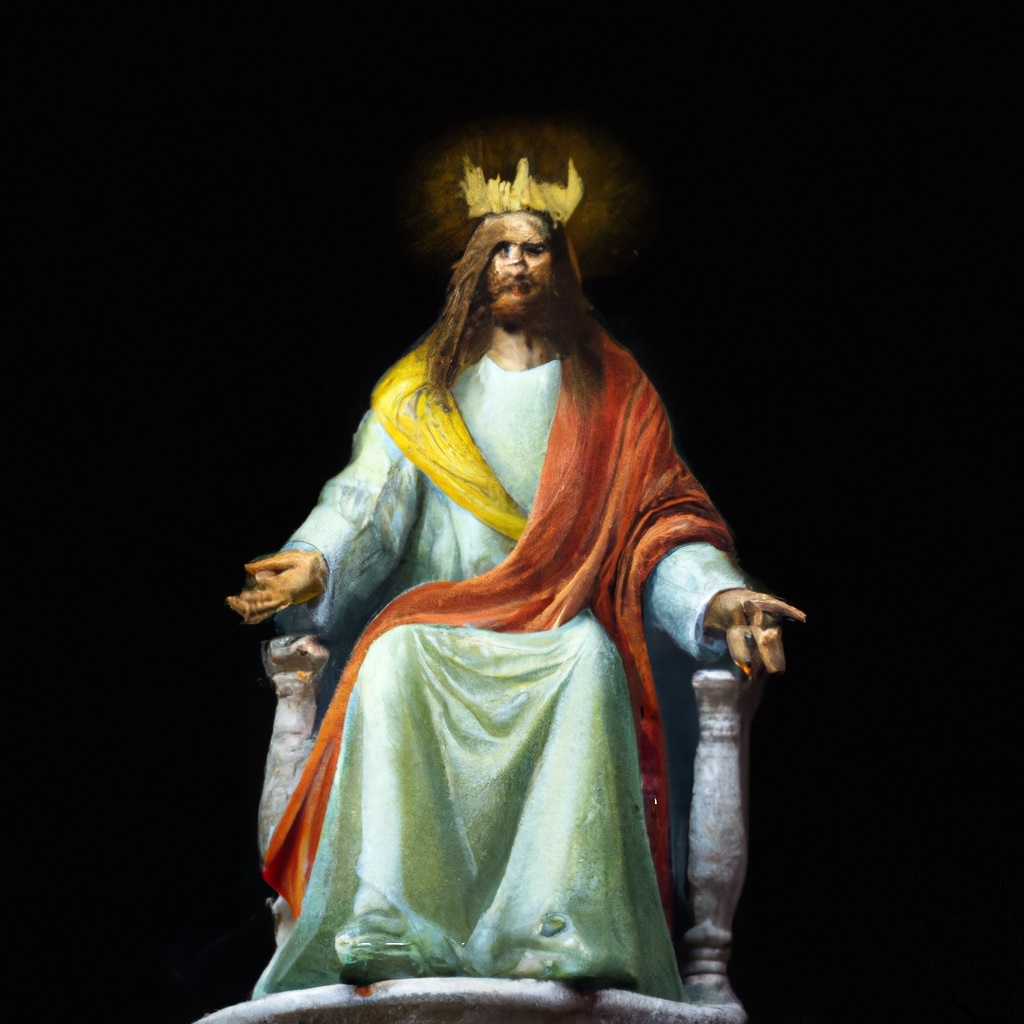
When I was about thirteen years old, I remember being in the living room of my house thinking about life and death, when nature called. While heading to the bathroom on the other side of the house, I got stopped in my tracks at the architectural crossroads of our home. It would be a crossroads moment of my life. In my imagination, I stood before Jesus’ judgement seat. He sat upon a white throne atop a white stone cube and the background behind him was all blackness. Jesus did not look at me angrily, but he seemed frustrated and disappointed. And he asked me, “Why didn’t you live your life like I wanted you to live it?

I did not know whether these ideas were coming from God or my own imagination, but either way I knew that I would not be a man of integrity if I just kicked this question down the road for the rest of my life. While still needing to use the bathroom, I felt a sense of urgency to face this valid question. I stood there thinking, ‘How would I answer this question in my own defense?’ I replied, ‘Well Lord, I wasn’t even sure that you were really, really real. How could you expect me to dedicate my life to you while being so uncertain? I wouldn’t stand out on an extending cliff-ledge if I wasn’t sure that it could hold up my weight. And what if I were commit my entire life to you and die and you’re not real — what would I have?

Once I had presented my best case, Jesus immediately replied, “Did you ever really try to find out (if I was real)? Did you even read my book?” That last line made me laugh a bit even as it convicted me. I realized that if I were really looking for the truth I would be searching for answers more seriously than I was. After that I started reading the Bible and praying every night and began earnestly learning more about our Catholic Faith.

When I eventually read the Book of Revelation at the end of the Bible, I found there a description of the Last Judgment. St. John wrote: “I saw a large white throne and the one who was sitting on it. The earth and the sky fled from his presence and there was no place for them. I saw the dead, the great and the lowly, standing before the throne, and scrolls were opened. Then another scroll was opened, the Book of Life. The dead were judged according to their deeds, by what was written in the scrolls.” A large white throne shrouded in darkness while the dead stand before him to be judged according to their deeds matches what I saw in my vision – a vision that has led to me standing here to tell you this story today.

And our Lord is still actively doing things among us today. Currently, according to our latest figures, St. Paul’s has well-surpassed $500,000 in pledges for our capital campaign, and things throughout this renovation effort have been going so providentially that I have a peaceful confidence that the Lord is helping us succeed.

What great things has the Lord done in your life? How has he been working with you recently? He is in you and you are in him. Know your stories and have the minimal courage to share with others what the Lord has done for you. Praying for the conversion of souls is important, but bearing witness to them is important too. Sharing your stories, sharing the reasons for your Christian hope, will be more effective than nagging or silence. Do not hide what God has done for you under bushel baskets. Instead, share your highlights with others.

Jesus: Our Way, Truth, & Life

May 7, 2023

5th Sunday of Easter
By Fr. Chinnappan Pelavendran

Time and again we experience fears, worries, and anxieties. Since our faith is weak and we focus on our problems instead of God, the Holy Bible, many, many times, advises us not to worry. When God created man and woman, living forever was perfect and beautiful. Man was meant to have a family without the fear of sickness and disease. We know the story of how man disobeys God and sin comes to be. In that very moment, Man went another way, to go to another place rather than to God. Everything was turned upside down.

Now we face death, we face pain, we face loss, and we have to struggle every day to make a living and keep our lives going. We all, like sheep, have gone astray, each of us has turned to our own way, to walk away from God, but I have good news today. For those of you ready to come back to the Lord, there is a way. God has made a way for restoration, He has made a way for renewal, and His name is Jesus. Jesus is the way, the life, and the truth.

Our Lord Jesus is ready to open up our minds to receive the way, life, and truth. He is ready to bring us into a new life as the new creations that he has intended for each of us. How do we come back to the life that God has intended for each of us? The answer is found in today’s Gospel. Jesus was speaking to His disciples about a place He was going to prepare for them, where we are going to dwell with Jesus forever and live with God.

Jesus is the way because he is the only begotten Son of God. He is the safest and surest Way to God because he came from God and he can lead us to his heavenly Father. While he was still on earth, Jesus spoke much about his Father. He talked about his union with the Father, the goodness and compassion of the Father. He gathered the people, and he even ate with sinners with the aim to bring them back to the Father. Jesus’ sure Way to God is the narrow way of the cross. It is the least–traveled way to humble, loving, self–giving, and committed service to others, through which we can reach the Father.

Jesus is the truth. The words of Jesus are true, and this truth sets us free. Jesus is the truth because he is the only one who reveals to us the whole truth about God. He teaches us that God is a loving, merciful, providing, and forgiving Father.

Jesus is the life because he has Eternal life in himself. He is the one who gives us his life–giving Holy Spirit. In the Creed, we profess that we believe in life everlasting. This belief has its connection to our faith in Jesus who is life. If we chose life, then we need to remain in Jesus.

Jesus as the way, the truth, and the life has something to do with our day-to-day life. Just as Jesus is the way, we may also be the way or instrument for others to go to God. At the same time, we should also be bearers of truth and promoters of life.

God’s Glorious Temples

May 7, 2023

5th Sunday of Easter
By Fr. Victor Feltes

For the Jewish people, the temple in Israel was the one place where they could offer Old Covenant sacrifices to God. Jerusalem’s temple was at the center of their relationship with God. So it was very disturbing to Jesus’ hearers when he declared in its temple courts, “All that you see here—the days will come when there will not be left a stone upon another stone that will not be thrown down.” Jesus was proven right about forty years later when the Romans conquered Jerusalem and destroyed that temple in 70 AD.

On another occasion, Jesus said, “Destroy this temple and in three days I will raise it up.” Some Jews objected, “This temple has been under construction for forty-six years, and you will raise it up in three days?” But St. John’s Gospel tells us Jesus “was speaking about the temple of his body.” In the New Covenant, Jesus Christ himself supersedes that temple in Israel at the center of our relationship with God.

Here in this holy church building we encounter Jesus and his one sacrifice. In this church, this New Covenant temple, we draw near to the Body of Christ, in his tabernacle, upon his altar, in his Most Blessed Sacrament. And as if that were not enough, in this church through baptism and the Holy Eucharist we become the body of Christ.

After his Ascension, when Christ appeared to an early enemy of his Church on the road to Damascus, he said, “Saul, Saul, why are you persecuting me?” Saul asked, “Who are you, sir?” And the voice from heaven replied, “I am Jesus the Nazorean whom you are persecuting.” This Saul became better known after his conversion as St. Paul and his story affirms that Christ’s Church is more than just buildings but his holy people, and that Jesus is now mystically one with us.

In today’s second reading, we hear St. Peter—the Catholic Church’s first pope—tell us, “let yourselves be (like living stones) built into a spiritual house (that is, a temple) to offer spiritual sacrifices acceptable to God through Jesus Christ.” We are called to be holy, called to be more like Jesus, called to offer spiritual sacrifices to God not only at Mass but throughout our lives.

What good is a having beautiful church building if our souls do not become more beautiful too? Jesus says possessing pleasing outward appearances without internal conversion and holiness is like being a whitewashed tomb, beautiful on the outside yet full of dead bones and uncleanliness within. So having a very beautiful church building is not enough. Jesus Christ must be our way, our truth, and our life, for no one comes to the Father except through him. Yet, it is most fitting and right our churches should be supremely beautiful, reflecting the beauty of our faith and the beautiful glory of God, so that others may be transformed by encounters with Jesus Christ like St. Paul our patron was.

Jesus is Our Good Shepherd

April 29, 2023

4th Sunday of Easter
By Fr. Chinnappan Pelavendran

Today we honor Jesus as the Good Shepherd. Jesus calls himself the Good Shepherd and promises to take care of the sheep entrusted to his care. We have the popular images of Jesus the Good Shepherd carrying a sheep over his shoulders, or we have a smiling Jesus sitting under a tree, with a little lamb on his lap. These images of Jesus teach us about his tenderness and his compassion. A shepherd is more than that. A shepherd walks before the sheep, seeking out a safe path, taking them to the pastures, to water, and to shelter. The sheep follow him because they recognize his voice and they trust him.

In the first reading today, St. Peter reminds his Jewish people that they have crucified their true Shepherd. They need to receive forgiveness for their sin by receiving baptism in the name of Jesus and acknowledge the risen Jesus as their Lord and Savior. In the second reading, St. Peter invites the suffering Christians to follow the example of their Good Shepherd, the suffering servant. Suffering and death help us to become more fully the children of God.

Today’s gospel says how much love Jesus has for His flock. He says: “I am the good Shepherd.” What does this mean? First of all, He is not working for pay but provides for his sheep’s needs, leading them out to pasture. He keeps them safe and healthy, he does not want them to be lost or get hurt. The good Shepherd knows each member of His flock. The Good Shepherd protects them to the point of risking his life for them, and He did. Our Good Shepherd shows the true way to the Father. He gives and leads us to, the fullness of life. He saves us from sin and death. He opens for us the gate of heaven and offers us a life of fellowship with His Father.

In this parable, Jesus compares Himself to the Shepherd and the Gate. The image of the Good Shepherd represents His ownership. The image of the Gate represents His leadership. Jesus is the gate, the only way in and out. He is the one Mediator between God and mankind: to reach heaven, all must go through Him. Jesus gives the assurance that whoever enters through him will be safe and well-cared for.

We are invited to be a shepherd to those who are entrusted to our love and care. Pastors, parents, teachers, doctors, nurses, government officials, and caregivers. We become good shepherds by loving those entrusted to us, praying for them, spending our time and blessings for their welfare, and guarding them against physical and spiritual dangers.

As we celebrate good shepherd Sunday, let us pray to the Lord that we may be His good sheep, listening attentively to His voice, and following His example of self–giving love. Let us also pray for all our shepherds, especially our religious and political leaders: may they follow the example of Jesus who was willing to serve and lay down His life for his sheep.

The Risen Lord with the Most Beautiful Smile

April 23, 2023

3rd Sunday of Easter
By Fr. Chinnappan Pelavendran

A small boy was walking home after Sunday school. He was thinking about the lesson. When you give something to another person, you are really giving it to Jesus, and you will find the risen Jesus in everyone you meet. As he was walking, he noticed an old woman sitting on the roadside. She looked lonely and hungry. He sat down beside her and gave her chocolate. She accepted it with a beautiful smile. Then they sat together in silence, just smiling at each other. Finally, the small boy gave the woman a big hug and went home with a smile on his face. His mother saw a big smile on his face and asked, what made you so happy today? He said, I shared my chocolate with Jesus. Then, he added, you know, she has the most beautiful smile in the world. Meanwhile, the old woman returned to her home where she lived with her sister, and said to her you know, today I ate chocolate with Jesus. Today’s Gospel tells us that we will meet and experience the risen Jesus in unexpected places and persons.

In the Old Testament lot of people encountered God in an unexpected way. Abraham entertained three Angels when he was unaware. Jacob laid his head on a stone while he slept and saw a stairway to Heaven. While Moses was taking care of the sheep, he heard the voice of the Lord coming from the burning bush. Prophet Isaiah says, “In the year that King Uzziah died, I saw the Lord seated on a high and lofty temple, Seraphim singing Holy, Holy, Holy is the Lord of Hosts, the whole earth is full of His Glory,” before his own cleansing and consecration as a Prophet of the Lord. (Isaiah 6:1–6) Saul of Tarsus met Jesus on the road to Damascus, and Jesus got Saul’s attention by knocking him to the ground and making him blind.

Our readings today have one common and encouraging theme. No matter what happens in our lives, the risen Jesus is always with us. God is near to those who seek Him. The Emmaus incident is the story of a God who will not abandon us when we are disappointed.

God’s self–disclosure to the two disciples on the road to Emmaus was unexpected, but radically different from others. While they were walking with Jesus on the road to Emmaus, their eyes were closed from recognizing Him. When Jesus was at the table with them, He took the bread, blessed it, broke it, and gave the bread to them. At that moment, the eyes of the disciples were open and they recognized Jesus just before He vanished from their sight. Jesus will come to us in an unfamiliar way to support and strengthen us, when we least expect our risen Lord.

The Easter and the Emmaus journey tells us that God never forces Himself on us. He joins us in a walk in the garden, enjoying the beautiful scenery, visiting with a friend, sadness of death, or reading a letter from someone we love. God speaks to us in the voices of those who are hurt and sorrowful, in the faces of the poor and the needy.

We need to find Jesus in the Breaking of the Bread, as the Emmaus disciples understood. When we approach the altar to receive the Sacrament, we see and receive Christ Himself. The Eucharist is the true body and blood of Christ; it feeds us and fulfills our spiritual needs. When you receive the body of Christ let us recognize the risen Lord who is smiling at you.

Meet our Risen Lord at Mass with Opened Eyes and Burning Hearts

April 22, 2023

3rd Sunday of Easter
By Fr. Victor Feltes

On Easter Sunday afternoon, two of Jesus’ disciples were walking seven miles to Emmaus. Everyone journeys down the road of life. They have heard stories of Jesus’ Resurrection yet feel uncertain, pondering it, discussing it, and debating it. This is how they first meet the Risen Lord, with eyes not yet recognizing him as he walks with us. Jesus initiates the encounter. One whose name means “Glory to the Father” (whose life is meant to give glory to the Father) has questions about Jesus, the Nazarene called Christ. Cleopas and another disciple discover on their journey the very best person to answer the questions on their hearts. This meeting on the road to Emmaus parallels, beat-for-beat, how Jesus meets us in the Holy Mass.

Upon greeting and gathering his disciples near himself, Jesus begins a presentation of God’s Word. Starting with the Old Testament, he proclaims and explains how the Scriptures refer to him. Jesus preaches a homily pointing to himself. They hear, listen, and believe. These Christians would now profess as their creed, “I believe in Jesus Christ… For our sake he was crucified under Pontius Pilate; he suffered, died, and was buried, and on the third day he rose again in fulfillment of the Scriptures.” Next, they repeatedly petition the Lord: ‘Stay with us, for it is nearly evening and the day is almost over. We pray, Lord, that you will grace us amid the darkness of this world.’ And the Lord grants their requests.

Before, his disciples’ spirits had been heavy and downcast. But now that the Lord is with them, with a new spirit they lift up burning hearts to the Lord our God, rightly giving him thanks. Then at table, having presented to Jesus the customary bread and wine, he takes the bread, says the blessing, breaks it, and gives it to them. With that their eyes are opened and they recognize his real presence, made known to them in the breaking of bread. In conclusion, they go at once and with rapid steps walk seven miles more to share their Good News about Jesus Christ with others.

Every Sunday since those early days, Christ’s Church has celebrated the Breaking of Bread, the Holy Eucharist, the Mass, in fulfillment of his instruction to “Do this in memory of me.” As the Catechism of the Catholic Church notes, we have testimony from the second century showing that the basic outlines of early Eucharistic celebrations match the Holy Mass today. Around the year 155 A.D., St. Justin Martyr composed an open letter to the pagan Roman emperor to explain Christians’ beliefs and worship. St. Justin wrote:

On the day we call the day of the sun (that is, Sunday), all who dwell in the city or country gather in the same place. The memoirs of the apostles and the writings of the prophets are read… When the reader has finished, he who presides over those gathered admonishes and challenges them to imitate these beautiful things. Then we all rise together and offer prayers for ourselves…and for all others… Then someone brings bread and a cup of water and wine mixed together to him who presides over the brethren. He takes them and offers praise and glory to the Father of the universe, through the name of the Son and of the Holy Spirit and for a considerable time he gives thanks that we have been judged worthy of these gifts. When he has concluded the prayers and thanksgivings, all present give voice to an acclamation by saying: ‘Amen!’ [Then] those whom we call deacons give to those present the ‘eucharisted’ bread, wine and water and take them to those who are absent.

And St. Justin Martyr adds:

This food we call the Eucharist, of which no one is allowed to partake except one who believes that the things we teach are true, and has received the washing for forgiveness of sins and for rebirth (that is, baptism), and who lives as Christ handed down to us (that is, the Christian moral life). For we do not receive these things as common bread or common drink… [W]e have been taught that the food consecrated… is the flesh and blood of that incarnate Jesus.

Like the disciples on the road to Emmaus and St. Justin Martyr, we today are invited to encounter Jesus Christ at Holy Mass. Let us always recognize him, rejoice in him, and receive him with eyes opened with faith and hearts burning with love.

His Resurrection has Changed Everything

April 16, 2023

Divine Mercy Sunday
By Fr. Chinnappan Pelavendran

The resurrection of Jesus was a new experience for the disciples, even though Jesus had often explained to them about His resurrection. The apostles must have been afraid beginning on Holy Thursday, because their friend and the messiah was dead. They all abandoned Him. His own disciple betrayed Him. The crowd which welcomed Jesus with palms turned against Him and called for the release of Barabbas. The apostles, now afraid of the crowd, stayed in their homes for their own protection.

The harmony among the first Christians that we see in our first reading is the fruit of Jesus’ resurrection. The new community, gathered around the resurrection, was no longer afraid. In the second reading, St. Peter reminds us that we have been transformed through the resurrection of Jesus. His resurrection gave us a new birth and hope. Through our baptism, we share in Jesus’ resurrection. St. Peter reminds us that we have “an inheritance that is imperishable, undefiled, and unfading.” The resurrection of Jesus has changed everything. Nothing will ever again be the same.

Look at how Thomas changed. Before he met the risen Jesus he was depressed, absent from the group of apostles, and disbelieving. At first, he said: “Unless I see the mark of the nails in his hands and put my finger into the nail marks and put my hand into his side, I will not believe.” (John 20:25) After seeing the Risen Jesus, he proclaimed: “My Lord and My God.” (John 20:28) What a difference after seeing Jesus: from fear to Joy, seclusion to the mission, absence to presence, disbelief to faith, and a mere existence to new life. His life was completely changed after seeing Jesus.

Jesus presented Himself to His disciples during their time of fear and confusion. He restored their peace. He commissioned them as ministers of the sacraments. The sacrament of reconciliation is the sacrament of mercy.

As we celebrate today Divine Mercy Sunday, we are reminded that God extended His mercy to us by allowing His son to pay the ransom for our sins. Christ accomplished this through His paschal mystery.

We must also extend this mercy to others. We are called to be apostles of mercy. As we spread the good news of Christ’s resurrection, we must thank God the Father of our Lord Jesus Christ because His Mercy and generosity endure forever.

We, too, are the witnesses of the Risen Lord. We shall certainly encounter people who will doubt our faith. This must not discourage us; we must remain focused on our mission. So, as the true disciple of Christ, let us continue to announce the good news to the whole world that Jesus Christ, our Lord has truly risen from the dead.

Today, Jesus invites us to see Him and touch Him. He invites us to encounter his wounded and glorified body. In that encounter with Jesus, he will help us to have faith in Him. One day, despite our wounds and weaknesses, our bodies will be glorified like Him.

From Fear to Peace: Celebrating Divine Mercy

April 15, 2023

Divine Mercy Sunday
By Fr. Victor Feltes

During the Exodus, before descending in fire and smoke upon a trembling Mount Sinai, God gave instructions to prepare the Hebrews for this encounter. The Lord said to Moses:

“Go to the people and have them sanctify themselves today and tomorrow. Have them wash their garments and be ready for the third day; for on the third day the Lord will come down on Mount Sinai in the sight of all the people. Set limits for the people all around, saying: ‘Take care not to go up the mountain, or even to touch its edge. All who touch the mountain must be put to death. No hand shall touch them, but they must be stoned to death or killed with arrows. Whether human being or beast, they must not be allowed to live.’ Only when the ram’s horn sounds may they go up on the mountain.”

Then Moses came down from the mountain to the people and had them sanctify themselves, and they washed their garments. He said to the people, “Be ready for the third day.

On the third day, as all the people witnessed the thunder and lightning, the blast of the ram’s horn and the mountain smoking, they became afraid and trembled. So they took up a position farther away and said to Moses, “You speak to us, and we will listen; but do not let God speak to us, or we shall die!” Moses answered the people, “Do not be afraid, for God has come only to test you and put the fear of him upon you so you do not sin.” So the people remained at a distance, while Moses approached the dark cloud where God was.

A pair of themes throughout the Old Testament are the holy otherness of God and the deadly sinfulness of man. Our Fall made it dangerous to approach God carelessly. And even Moses was mysteriously told, “You cannot see my face, for no one can see me and live.” Compare and contrast that with this Sunday’s Gospel.

On the third day, despite the doors being locked where the disciple were, the Risen Jesus came and stood in their midst and said to them, “Peace be with you.” When he had said this, he showed them his hands and his side. And he said again, “Peace be with you.” A week later when Thomas was there, Jesus appeared again and said, “Peace be with you.” He then invited Thomas, “Put your finger here and see my hands, and bring your hand and put it into my side, and do not be unbelieving, but believe.”

In former times, seeing the Lord or merely touching the mountain or ark of his holy presence could mean death. But disciples in the New Testament are invited to see his face and touch his wounds. In the New Covenant, we are called to receive Jesus Christ alive in the Eucharist. Today we celebrate Divine Mercy, mercy reflected in how — even after our sins led him to his Cross — Jesus returns and repeatedly wishes us “Peace.” In forgetting our past, we fail to appreciate what the Lord has done for us. And too few rejoice in his Divine Mercy because so many do not realize their need for it.

On Easter Sunday evening, Jesus breathed on his apostles saying, “Receive the Holy Spirit. Whose sins you forgive are forgiven them, and whose sins you retain are retained.” Why would Jesus give them this power to forgive sins if he did not intend them to use it? Why would he give his Church such a Sacrament if we did not need it? Jesus wishes you a peace beyond your fear. He desires to forgive your sins and personally give himself to you in the Eucharist. Will you trust him enough to regularly encounter his healing Divine Mercy in the confessional so that you may receive him all the more reverently, fittingly, lovingly and joyfully at his altar?