Archive for the ‘Sunday Homilies’ Category

Why the Third Day?

April 8, 2023

Easter Sunday
By Fr. Victor Feltes
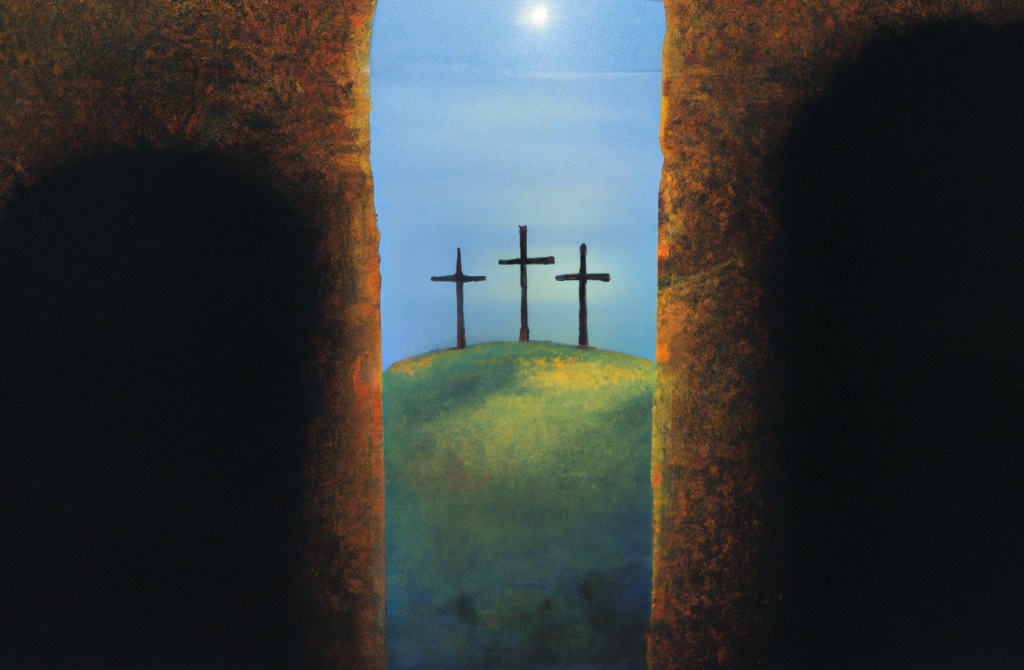
Why did Jesus rise from the dead on Easter? Christ’s resurrection was foretold, for instance in the 16th Psalm: “You will not abandon my soul to the netherworld, nor will you suffer your faithful one to undergo corruption.” Furthermore, Jesus rose again because without the Resurrection our Redemption would be incomplete. As St. Paul told the Romans, “[Our Lord] was handed over for our transgressions, and was raised for our justification.” In the words of the Church’s Catechism: “The Paschal mystery has two aspects: by his death, Christ liberates us from sin; by his Resurrection, he opens for us the way to a new life.” Jesus Christ came to redeem and save not only our souls but also our bodies and the rest of creation as well. Easter changes everything. Instead of living in a secular world where nothing really matters because cold death claims all, we now can live forever with God in Christ’s Kingdom.

Jesus rose again on Easter, but why did he resurrect on the third day in particular? Why not choose the first or second day, or the fourth or fortieth day to rise again? I see several reasons why God chose the third day to be Easter.

First of all, this number of days helps to confirm Jesus’ death. If Jesus had resurrected right away, immediately after being taken down from the Cross or sealed in the tomb, some would wonder if he had ever really died. Absent a miracle, no one could survive flagellation, crucifixion, and two nights alone in a cave without medical aid. The three days establish that Jesus was definitely dead.

Another reason for the three days was to fulfill the Scriptures. Post-resurrection, Jesus said, “Thus it is written that the Messiah would suffer and rise from the dead on the third day.” Many Old Testament passages foreshadowed this. For instance, Jesus and St. Paul both liken resurrection to plants sprouting, and it was on the third day of creation that God said, “Let the earth bring forth… every kind of plant.” It was “on the third day” that Abraham obediently offered Isaac in sacrifice, reasoning that God would keep all of his promises by raising his only son from the dead. But Heaven halted Abraham’s hand and he received back his beloved son alive on the third day. Jesus told the scribes and Pharisees, “Just as Jonah was in the belly of the whale three days… so will the Son of Man be in the heart of the earth.” Jesus also said, “Destroy this temple, and I will raise it again in three days.” (He said this in reference to the temple of his body.) The Book of Ezra records that the second Jewish Temple was completed on the third day of the month. And there are other Old Testament stories and signs one could cite as well. Jesus rose again on the third day in fulfillment of the Scriptures.

A third reason for the third day is what Jesus was doing on the second day. While his body was in the tomb observing a perfect Sabbath rest, his soul descended to the abode of those who had died before Christ. St. Peter writes in his First Epistle how Jesus “went and made proclamation to the imprisoned spirits;” that “the gospel was preached even to the dead.” Christ declared on earth, “Amen, amen, I say to you, the hour is coming and is now here when the dead will hear the voice of the Son of God, and those who hear will live.” Jesus used these three days to open heaven’s gates for all the just who had died before him.

Another reason for the third day is to signify a New Creation. “The third day,” Easter, was a Sunday. In Genesis, God’s work of Creation began on this first day of the week. Likewise, Easter Sunday and the Resurrection mark the beginning of a New Creation with Christ.

Though there may be millions of more reasons in the mind of God, a final, important reason I see for why Jesus rose on the third day is to give his Church a saving lesson in faithful endurance. The apostles had witnessed Jesus work many miracles. For example, they saw him use five loaves and two fish to feed five thousand men. Then, the following day, they heard him speak about the Real Presence. “My flesh is true food and my blood is true drink,” he said, and “unless you eat the flesh of the Son of Man and drink his blood, you do not have life within you.” However, people would not accept this teaching and in his Gospel St. John records, “as a result of this, many of his disciples returned to their former way of life and no longer accompanied him.” Then Jesus asked his apostles, “Do you also want to leave?” Simon Peter answered, “Lord, to whom shall we go? You have the words of eternal life. We have come to believe and are convinced that you are the Holy One of God.”

They believed in Jesus. His teachings were challenging, but they stayed with him. How shocking then was it for them to witness the torture and death of their Messiah, the Christ. Throughout Holy Saturday, they were full of doubts and fears, yet the disciples remained together in the Upper Room in which they had eaten the first Eucharist. Those apostles might have discreetly fled for home and missed out on Easter entirely, if they had not religiously respected the Sabbath which kept them from traveling far from the gathered Church. Therefore, when Jesus appeared on the third day, none of them had strayed too far away. Except for Judas and Thomas, all of them were there on Sunday to encounter their Risen Lord. They saw Jesus, and touched him, and he opened their minds to understand the Scriptures and the deeper meaning of their past and present and future. Then their doubts and fears and desires to be elsewhere, which had felt so very strong before, were now emptied of power, replaced with joy and peace. However, they never forgot what they experienced on that Holy Saturday leading to Easter Sunday, and they present to us a saving lesson for our faithful endurance.

Jesus Christ works miracles. He teaches beautiful, challenging things. And today, he is risen from the dead. The betrayals of Judases and doubts of Thomases do not change the reality of these things. Called here by God, you have gathered in this Upper Room for Easter. You have drawn near to Christ’s Holy Eucharist and his Church. Whatever doubts or fears (or even desires to be elsewhere) you might feel, I pray you will hereafter never stray nor remain far away. To whom else would you go? Only Jesus Christ has the words of eternal life. Remain here for him with his Church so that you may encounter and know the Risen Lord and us more deeply. As I said before, Easter changes everything. Instead of living in a secular world where nothing really matters because cold death claims all, we can now rejoice that we can live forever with God in Christ’s Kingdom.
We are Worthy to be Saved in God’s Merciful Eyes

April 1, 2023

Palm Sunday (Year A)
By Fr. Chinnappan Pelavendran

The readings today remind us of the passion, crucifixion, and death of our Lord Jesus Christ, the Messiah, and the savior of the world. It reminds us of God’s love for us. Yet, our sinfulness makes us unworthy of that perfect love. So He sent His only begotten Son to redeem us by His passion, crucifixion, and death.

We have just said we are unworthy of God’s love because we have sinned, again and again, against Him, our loving Father. So why can’t He just leave us alone? This is the paradox of love. You and I are WORTHY TO BE SAVED in God’s merciful eyes!

So He sent His only Son Jesus to suffer and die so that we may be saved through Him. Yet, as we read and re-read the gospel passage on the passion, crucifixion, and death of Jesus, we see the same pattern of the response of the people then and the people now. Many people then denied, rejected, and brutally opposed the offer of salvation. Many people do the same things now. Let us pray and pray harder for the conversion of the people who continue to crucify Jesus, now by their frequent rejection of the Son of God.

Jesus has suffered and died but it was not the end. The last verse in the gospel reading today tells us that they “secured the tomb by fixing a seal to the stone and assigning a guard.” Jesus rose from the dead on the third day. This is the source of our hope. This is the reason why we keep on reading and reflecting on the passion, crucifixion, and death of our Lord. The forces of darkness may have sealed a tomb but the victory of the Light has been seen in the Resurrection.

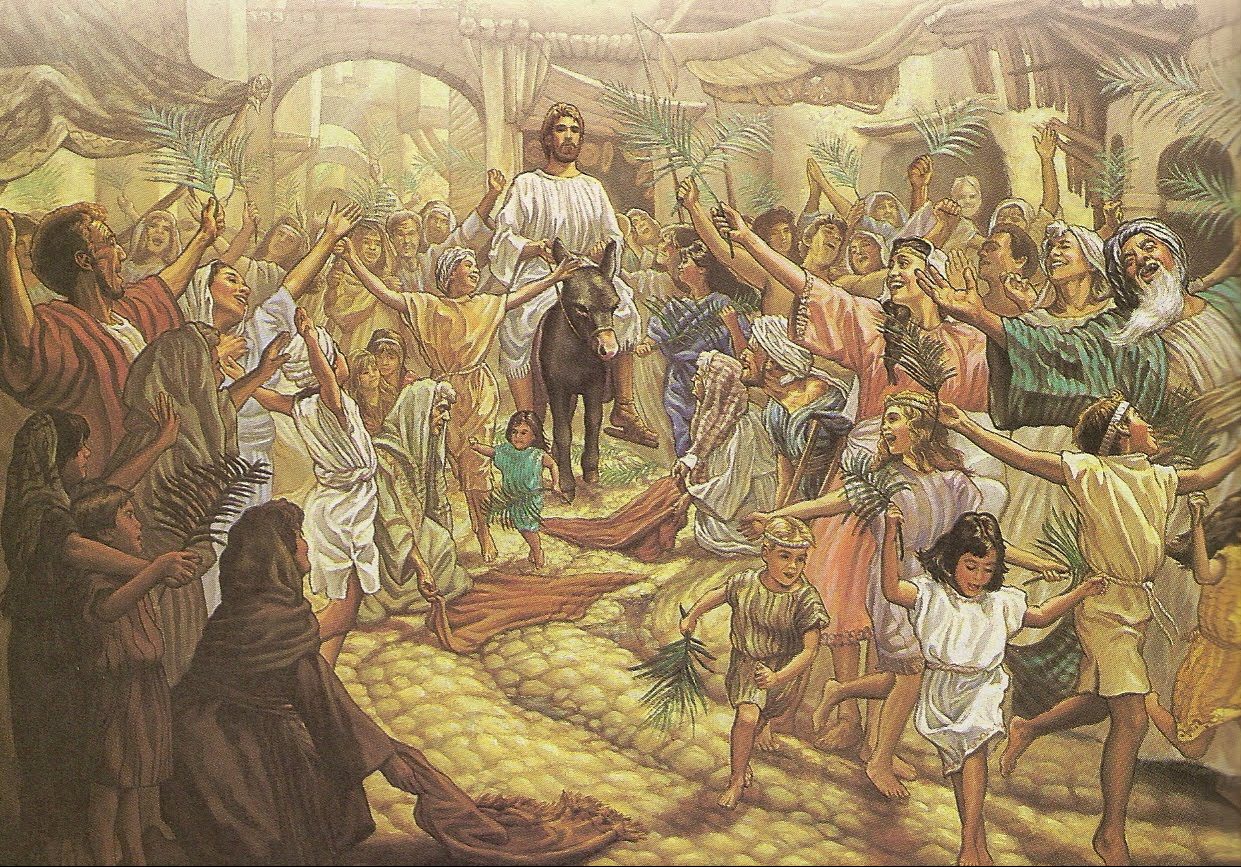
On the first day of the “Holy Week,” we commemorate the triumphant entry of Jesus into Jerusalem. The people removed their cloaks, waved palms, and sang hosannas while Jesus, riding on a donkey, passed by. Removing our clothes is a symbolic act of surrender to the Lord. It is a way of becoming open, confessing our sins, and accepting His offer of salvation. No more, disguise. No more resistance. On the other hand, the palm has been a traditional symbol of victory and rejoicing. (Leviticus 23:40) Thus by laying palms on the path of Jesus, the people acknowledged that in Jesus, there is victory. The donkey is an animal of peace. By riding on a donkey, Jesus showed that He is the prince of peace.

Let us pray that as we come in the name of the Lord, He may shower us with His blessings. May we continue to journey with Jesus, allowing Him to fill our hearts with hope, love, and peace so that we can become an instrument of hope and love to others and peace to all the earth.

Let us weep over our sins and remember that God will always forgive us. We need to welcome Jesus into our hearts in a special way during Holy Week. We can be like the prodigal son and God like his father. We need to love and ask God to strengthen our weaknesses. With God in our hearts, we can do anything.

8 Great Reflections on the Passion

April 1, 2023

Palm Sunday (Year A)
By Fr. Victor Feltes

Today’s Gospel is long, but this reading is rich. So here, briefly, are eight great reflections on the Passion.

  • At the Last Supper, Jesus told his apostles, “One of you will betray me.” They each replied, “Surely it is not I, Lord?” except for Judas Iscariot, who said, “Surely it is not I, Rabbi?” (Rabbi means teacher.) There is a big difference between Jesus just being a teacher and being your Lord.
  • In the Garden of Gethsemane, Jesus lovingly willed to save us but his humanity understandably dreaded the tortures his self-sacrifice could entail. He prayed: “My Father, if it is possible, let this cup pass from me; yet, not as I will, but as you will.” In this, Jesus shows us that we are allowed to pray for any good thing, even for ourselves, if we remain open to God’s will.
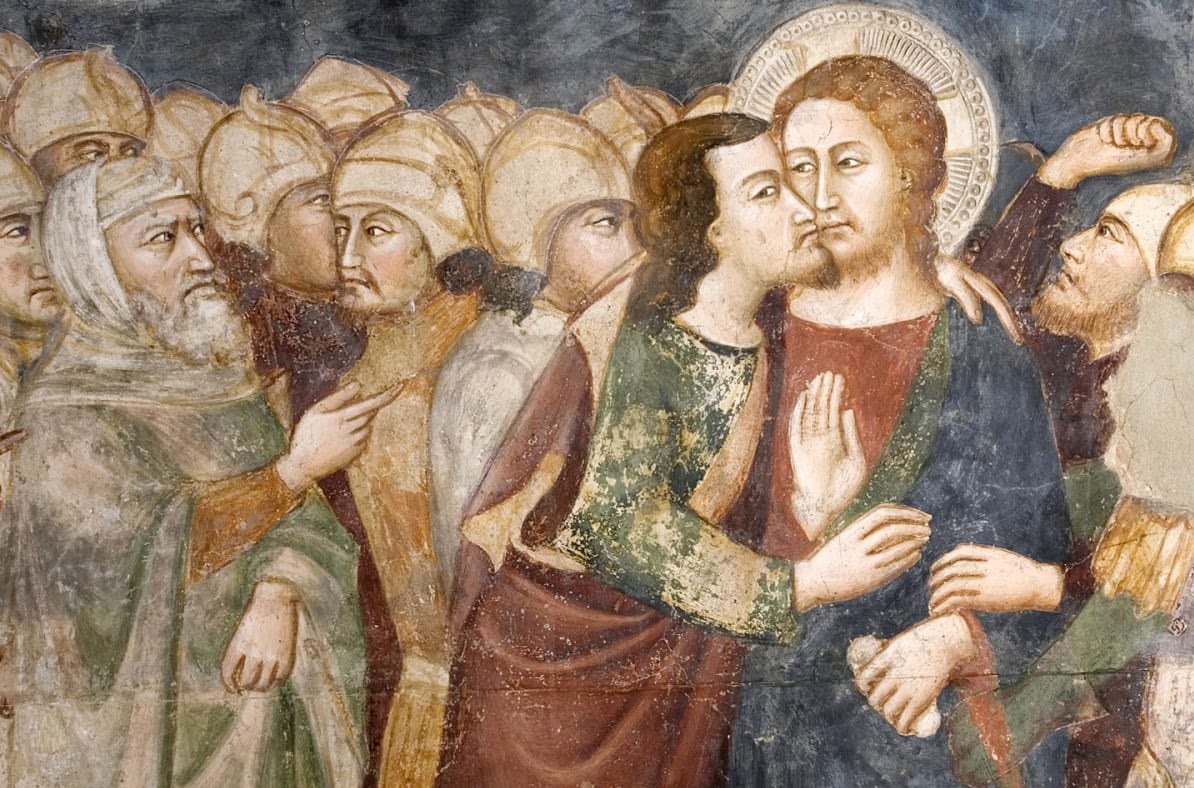
  • When Judas arrived in the Garden, he approached Jesus and kissed him saying, “Hail, Rabbi!” Jesus replied, “Friend, do what you have come for.” Jesus did not say this sarcastically; Jesus would die for Judas. Our Lord remains a friend towards us even if we betray him.
  • When the guards and soldiers laid hands on Jesus to arrest him, Peter struck the high priest’s servant, cutting off his ear with a sword. But Jesus commanded his disciple to sheathe the sword. Christian violence cuts off the ears of our enemies’ servants making them unable to hear the Gospel.
  • At his religious trial before the Sanhedrin, Jesus responded with silence, until the high priest said, “I order you to tell us under oath before the living God whether you are the Christ, the Son of God.” Then Jesus affirmed it was so. Even when the high priest’s judgment was erring, Jesus obeyed his legitimate religious authority.
  • In his trial before Pilate, the governor hoped to let Jesus go: “Which one do you want me to release to you, Barabbas, or Jesus called Christ?” The name “Barabbas” means “the son of the father.” Barabbas was a murderous rebel, a political revolutionary. Like the crowd that day, every generation is tempted to choose a different savior than Christ.
  • On his Cross, Jesus cried out, “My God, my God, why have you forsaken me?” This is the beginning of the 22nd Psalm. That psalm says, “They have pierced my hands and my feet; I can count all my bones.” Not only did this psalm prophesy Christ’s sufferings but also his resurrection, saying, “I will live for the Lord; my descendants will serve you.”
  • Finally, when Jesus died, “the veil of the sanctuary (inside the temple, which separated the place of God’s presence from the rest) was torn in two from top to bottom.” This veil was torn from the top as an act of God. Formerly, only the Jewish priests could even enter the building. Now, today, we as Christians are invited to approach and adore and receive our Lord in his temple.

Lessons for the Raising of Lazarus

March 25, 2023

5th Sunday of Lent
By Fr. Chinnappan Pelavendran

Eternal life begins now for those in a relationship with Jesus. Jesus is telling us that eternal life begins now for those who believe in Him. He tells us, “I am the resurrection and the life; whoever believes in me, even if he dies, will live, and everyone who lives and believes in me will never die.” (John 11:25–26)

The first reading today is from the book of Ezekiel, which tells us of God’s promise to put his Spirit within the people so they may live. Before this promise, the prophet Ezekiel, led by the Spirit, was taken into the plain where his mission was revealed to him. The passage is a prediction of the renewed life of the people of Israel after their exile from Jerusalem. The people seemed dead, their temple was destroyed, their land wasted, and their leaders gone. Ezekiel was told that through his gift of prophesying, God’s chosen people that had been exiled in Babylon for some time would receive a new Spirit that would give them new hope. They would be led to a new life in the land of Israel. God promises to put a new spirit in His people, which is a promise to give new life to them.

In the second reading of today, St. Paul continues talking about the resurrection. The life of the flesh is dominated by our human way of thinking, which has no future, it is the way to death. People who are living according to the Spirit have a life of grace. They have God as their center and are spiritually alive. Their faith gives them a future and a new life path. Therefore, St. Paul says that those who live according to the flesh set their minds on things of the flesh, but those who live according to the spirit set their minds on the things of the spirit.

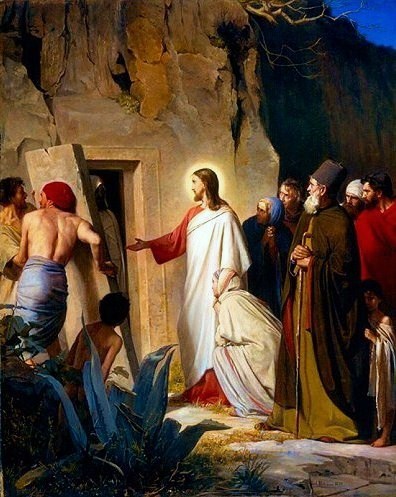
Today’s gospel reading gives us two messages. First, it tells us that our living faith in Jesus will raise all our bodies in the final resurrection. Secondly, with the approach of Easter Sunday, we are called symbolically to resurrect ourselves from sin to grace by partaking in the sacrament of reconciliation. In raising Lazarus, Jesus showed His authority as the Son and showed His divine power. By raising him on the fourth day, Jesus proved that He is master over life and death, and he is able to bring all the dead back to life, the holy Patriarchs, the Jews, and even the righteous Gentiles from centuries before. To be raised from the dead means to be in a living, loving relationship with Jesus, who teaches us that resurrection and life are a call to be united with Him

There are a few lessons we can learn from today’s gospel. First, this miracle is an expression of love. Second, our faith is very important in any miracle God does for us. The third lesson is that everything is possible with Christ through the power of the Holy Spirit. Finally, Jesus is willing to help us no matter what it will cost Him. It does not matter how long we have been spiritually dead or away from Him. If we hear and obey His voice, He will restore life to our weak and mortal bodies through the power of the Holy Spirit. This is because Jesus has authority over life and death.

Why Did Jesus Delay?

March 25, 2023

5th Sunday of Lent
By Fr. Victor Feltes

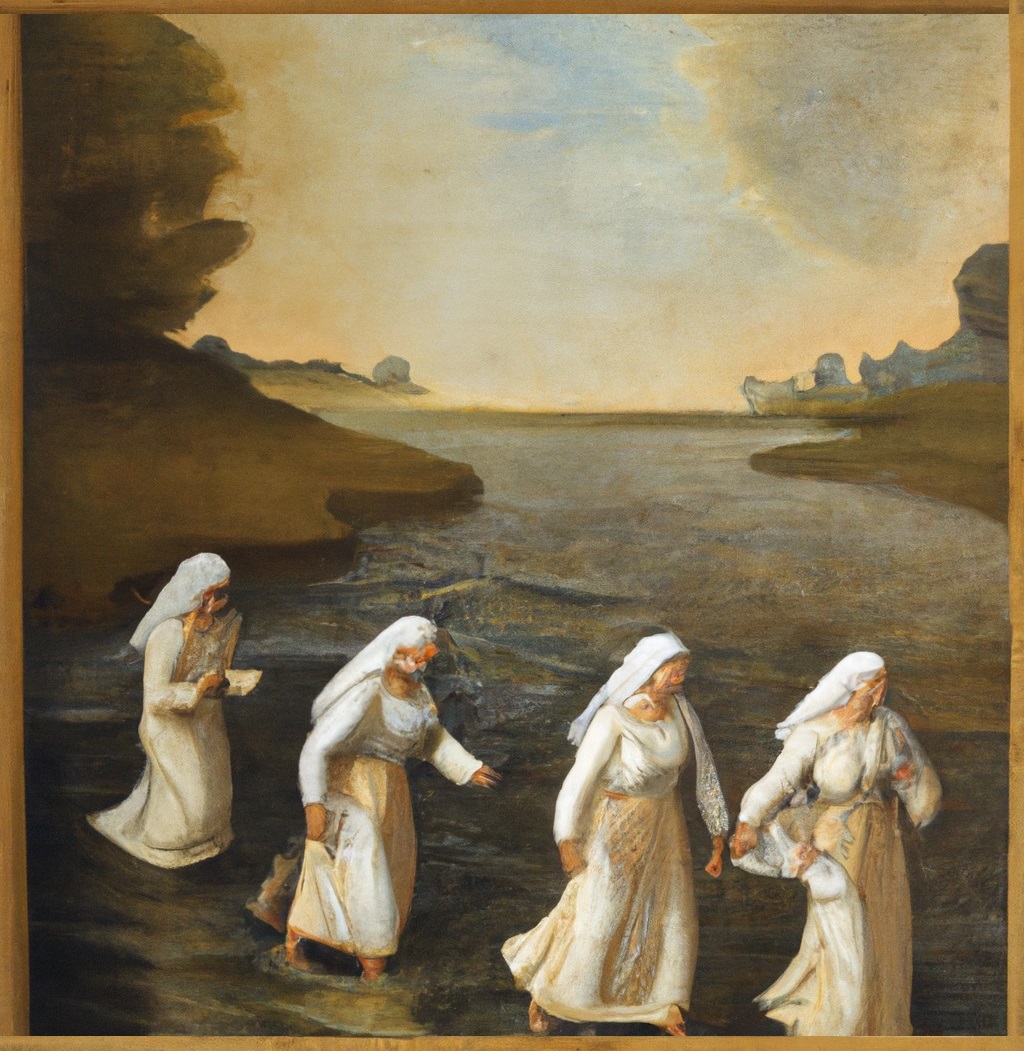
In 1582, St. Teresa of Ávila was journeying across Spain to establish new Carmelite convents. The rivers that season were so high that in some places the entire road was covered and obscured by water. It was clearly too dangerous to continue through those waters aboard the carriage, so Teresa and her companions advanced cautiously on foot, with Teresa leading the way. At one point, she lost her footing and fell down into the muddy water. Upon securing herself against the flowing current she exclaimed, “Oh, my Lord, when will you cease from scattering obstacles in our path?” Jesus replied to the mystical nun, “Do not complain, Daughter, for it is ever thus that I treat my friends.” And Teresa famously and dryly replied, “Ah, Lord, it is also on that account that you have so few!

In today’s Gospel, Martha and Mary send word to Jesus about their ailing brother, Lazarus: “Master, the one you love is ill.” “Now,” St. John records in his Gospel, “Jesus loved Martha and her sister and Lazarus. So when he heard that he was ill, he remained for two days in the place where he was.” Is not this a surprising twist? Because Jesus loved Lazarus and his sisters he delayed departing for their village for two additional days. And by the time Jesus arrives in Bethany with his disciples, Lazarus has been four days dead in the tomb.

Martha and Mary each say to Jesus what they had likely already lamented to each other: “Lord, if you had been here, my brother would not have died!” You can imagine their unspoken, anguished question: ‘You’ve healed others, you’ve helped strangers, so why didn’t you come to help us, your dear friends, when we needed you?’ When Jesus saw Mary weeping and those with her weeping, he became perturbed and deeply troubled, and Jesus wept. So the Judeans remarked, “See how he loved him.” But some of them said, “Could not the one who opened the eyes of the blind man have done something so that this man would not have died?” And Jesus, perturbed again, went to Lazarus’ tomb to resurrect him.

Jesus had told his disciples days before, “Our friend Lazarus is asleep, but I am going to awaken him.” And when they mistook him as saying Lazarus was merely napping, Jesus clarified, “Lazarus has died.” So Jesus came to Bethany fully-intending to raise Lazarus from the dead. But what troubled Jesus and why did Jesus weep? Was he mourning for Lazarus? Imagine if you learned one of your friends had died this morning but you were also certain that you friend would be alive and well again just fifteen minutes from now. How much would you mourn? As much as Jesus was crying for Lazarus, I believe Jesus wept more so for Mary and Martha and those in the crowd. He weeps for them and for all humanity in all of history who mourn and struggle with fear, doubt, and pain because of the scandal of suffering and death in our world.

We naturally desire to live easy lives; to be untouched by hardship or losses. But Jesus desires far greater things for us than mere ease. Before they left for Bethany, Jesus told his disciples, “This illness is not to end in death, but is for the glory of God, that the Son of God may be glorified through it.” These events were divinely permitted and intended for the greater glory of Lazarus and his sisters, too. Imagine if Lazarus had never gotten sick and died and been raised by Jesus — would we even know his name today? Instead, his story with Christ, his life because of Christ, has blessed the world, including us. Martha and Mary, through enduring this trial, were also blessed. Imagine the intensity of their faith in Christ and their courage in facing death after this experience. Jesus made these sisters a blessing for every generation to come.

Because Jesus loved Lazarus, Martha, and Mary, and St. Teresa of Ávila, he allowed all of them to experience trials. It is ever thus that he treats his friends. So be open to walking, to accepting, to trusting, Christ’s providential path for your life. Even if this journey may be harder than we would choose for ourselves, his path leads to better blessings and greater glory with Christ.

God Calls Unlikely People

March 19, 2023

4th Sunday of Lent
By Fr. Chinnappan Pelavendran

Today is the fourth Sunday of Lent, also known as Laetare Sunday, which means “rejoice.” The Church is joyful in anticipation of the Resurrection of our Lord. Today’s readings remind us that it is God who gives us proper vision in the body as well as in the soul. We need to be constantly on guard against spiritual blindness. God has a plan for each of us. He can call any of us to the vocation He has chosen for us. Being a priest, nun, or religious are not the only vocations. God has called some to married life or to be single. Prayer is very important to us in discerning our vocation.

When God called Moses, he was tending the sheep of his father–in–law, Jethro. God called him from the burning bush, but Moses had many excuses. If I say to the sons of Israel, the God of your father sent me, and they ask me what is His name? what shall I say to them? God said to Moses, “I am Who am.” I don’t think they will listen to me, I am not eloquent, I am afraid, I don’t want to go alone. God told him to take his brother Aaron with him and God would also be with him. Because God was with him, Moses was able to fulfill God’s request. He went to Pharaoh and led the Israelites out of Egypt. They were in the desert for forty years, and God provided everything they needed. Moses was able, with God’s help, to deliver His people to the land flowing with milk and honey.

In the New Testament, we have the call of Matthew. When Jesus called him, Matthew was a tax collector. Tax collectors were not upstanding citizens, they worked for the Romans, they kept some of the tax money for themselves, and they went after people to get the tax money from them. They did whatever it took to get the money. When Jesus said, “Follow me,” He followed Jesus leaving his work, money, and everything behind. He was completely changed. He became one of the Apostles and wrote the Gospel of Matthew in the Bible. He is the one who wrote the genealogy of Jesus.

In the first reading today, God sent the Prophet Samuel to the house of Jesse to anoint a king for Israel. Jesse had seven sons with him and presented each one to the Prophet Samuel. Samuel thought each one would be acceptable, but God said No. Jesse had one other son, David, who was tending the sheep. They sent for him and the Lord said, “Arise, anoint him, for this is he.” (1 Samuel 15:12) God chose the most unlikely candidate, the shepherd boy to be king of Israel. God told Samuel, Not as man sees does God see, because man sees the appearance, but the Lord looks into the heart.

Our Gospel today tells us about the healing of the blind man. After receiving his sight, he believed in Jesus and followed Him. Let us not be blind to Jesus, we need to believe and follow him as this man did. We are all called by God to be faithful to our vocation, whatever it is in life. Moses, Matthew, and David were faithful to God. As a religious, married, or single we also need to be faithful to God.

Those of you who are parents, bring your children to God. You presented them to God for baptism, don’t stop there. Pray with them. Bring them to church, and teach them to love God as you love them. Be a good example to them. Let them see you praying on your knees at home and in church. Teach them to be faithful to God by your example. God is calling us today to follow Him.

5 Deep Wells of Encounter with Christ

March 12, 2023

3rd Sunday of Lent
By Fr. Victor Feltes

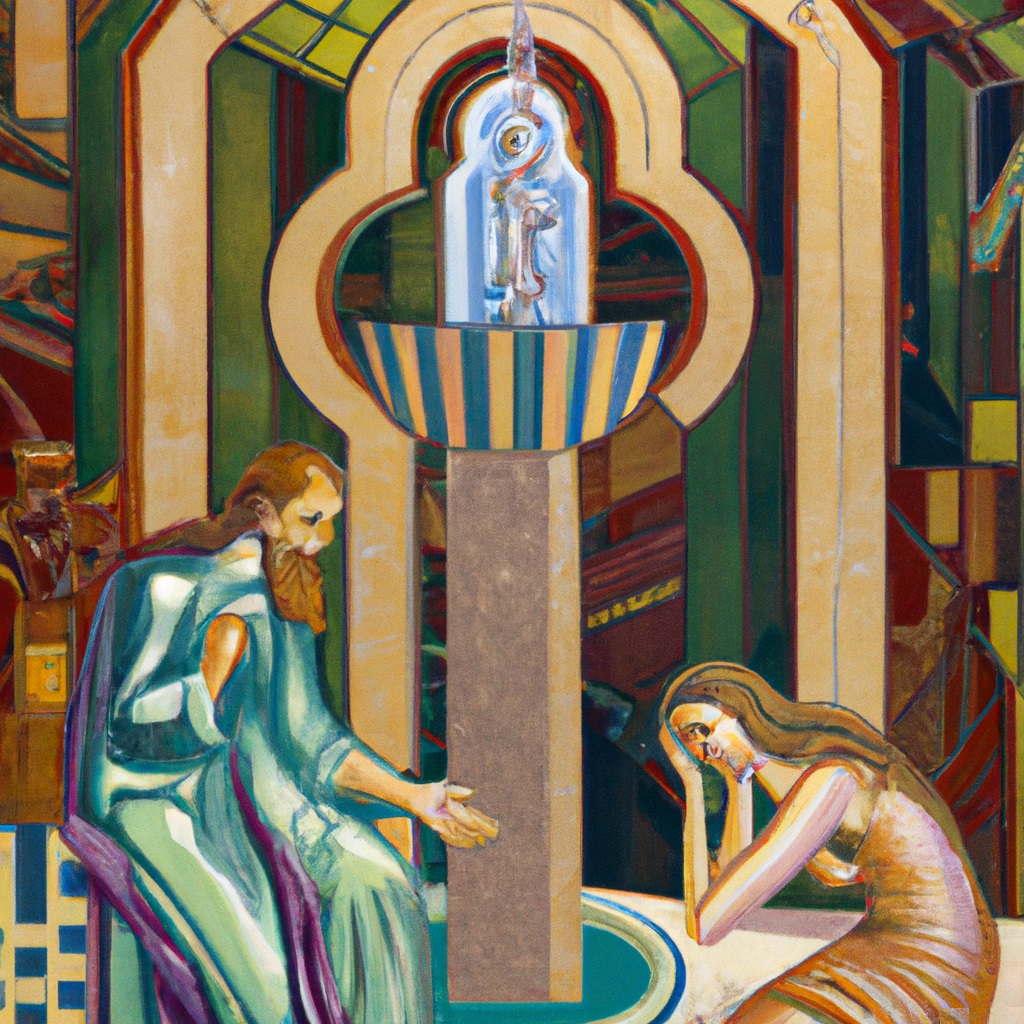
Jesus Christ desires every person to know him better. Today we watch him draw a Samaritan woman into a deeper relationship with himself. He meets her at a well outside of her town in the middle of the day. People in that era typically fetched water in the cooler morning or evening, but she comes to draw water around noon apparently to avoid her neighbors. When she comes to the well, Jesus initiates an encounter: “Give me a drink.”

She replies, “How can you, a Jew, ask me, a Samaritan woman, for a drink?” Jesus is stranger to her and she is wary of him as a presumed enemy, for Jews and Samaritans often felt mutual hostility. How many people today keep God at a distance like a stranger, fearing he does not really love them or truly will their good?

When Jesus suggests he could give the woman “living water,” she skeptically replies, “Sir, you do not even have a bucket and the cistern is deep; where then can you get this living water? Are you greater than our father Jacob, who gave us this cistern and drank from it himself with his children and his flocks?” She seems to wonder, ‘Is this man a fool, incredibly arrogant, or delusional?’ Indeed, in light of other claims Jesus makes about his own authority and himself he is either a liar, or a lunatic, or our Lord.

Many today relegate Jesus to merely being “a wise teacher” or “a good man” while simultaneously denying he is Lord. However, if Jesus is not Lord, then he was neither good nor wise in claiming to be the Christ and to demand our full devotion. To be consistent we must be for him or against him, either hot or cold. We cannot safely cover our bets by going just halfway. As Jesus warns in the Book of Revelation, “because you are lukewarm, neither hot nor cold, I will spit you out of my mouth.”

When Jesus describes to her the water he will give, which shall satisfy all thirst and well up to eternal life she says, “Sir, give me this water, so that I may not be thirsty or have to keep coming here to draw water.” Though not yet convinced, the woman is intrigued by Jesus’ words and manner. Many people today, though only vaguely familiar with Jesus, are interested in his person.

Then, even though this is their very first meeting, Jesus gently alludes to the moral irregularities of her life. The Lord is not out to shame us, but our hidden sins do matter and he calls us to conversion. The amazed woman replies, “Sir, I can see that you are a prophet,” and understandably redirects the conversation to a less personal topic.

Now convinced Jesus is a man of God, she believes and seeks and finds. She says, “I know that the Messiah is coming, the one called the Christ; when he comes, he will tell us everything.” Jesus answers, “I am he, the one speaking with you.”

Full of joyful faith, the woman runs off to town leaving her water jar behind. She shares good news with her neighbors saying, “Come see a man who told me everything I have done! Could he possibly be the Christ?” From this, many of the Samaritans in that town began to believe in Jesus because of her personal witness to him.

The woman at the well began by regarding Jesus as a stranger, a presumed enemy, a crazy or arrogant fool, but she goes on to recognize him as an intriguing figure, then a holy man, a prophet, the Messiah, and the Savior of the world. Today, you and I are further blessed with the knowledge that Jesus Christ is God. However, Jesus not only desires that we know things about him, he wants us to believe in him. How do we move from the one to the other?

The Risen Jesus, though ascended into heaven, is alive and active in our world and in your life already. He would draw you into a deeper relationship with himself through personal encounters like he had with the woman at the well. I suggest to you five deep wells of personal encounter with Christ: Scripture, prayer, Sacraments, the stories of others, and your lived experiences.

  • Encounter Jesus Christ, the eternal Word of God, through Sacred Scripture, the inspired word of God. St. Jerome said ‘ignorance of Scripture is ignorance of Christ.’ So meet him in the Scriptures, especially the four Gospels.
  • Encounter Jesus in daily prayer. Jesus says in the Book of Revelation, “Behold, I stand at the door and knock. If anyone hears my voice and opens the door, I will enter his house and dine with him, and he with me.” He knocks on the door of our soul, and daily prayer opens our door to meet him.
  • Encounter Jesus in his Sacraments. In the Eucharist, Confession, Marriage, Anointing of the Sick, in every Sacrament, Jesus meets us in a personal, mystical, and grace-giving way.
  • Encounter Jesus in the stories of others; the stories of the saints whose lives are reflections of Christ and those told by other Christians who have personally experienced Jesus’ goodness and power. Meet Jesus through stories like those townspeople came to meet Jesus through the Samaritan woman’s report.
  • And encounter Jesus in your own lived experiences. The Lord who guides the galaxies likewise attends to the small things as well. Jesus would meet us in many moments of our days using our experiences of work or leisure, of nature or other people, to share revelatory signs of himself.

So encounter Jesus Christ in Scripture, prayer, Sacraments, in others’ stories, and your own experiences, that the living Lord may lead you into a deeper relationship with himself.

In conclusion, I wish to speak on a different but related topic. One year ago last week, St. Paul’s Church Renovation Subcommittee began exploring options to renew and beautify St. Paul’s Church — our first, major, interior renovation in three decades. This spring, enjoying the consensus support of our parish councils, we are excited to unveil our renovation plan and a capital campaign to fund it. Stay tuned for comprehensive details to be shared through talks and materials in the next few months. Until then, I ask for your patience and your prayers for the success of this effort for the greater glory of God and the salvation of souls through many people encountering him here in a renewed and beautified church.

All Need Water for Life

March 11, 2023

3rd Sunday of Lent
By Fr. Chinnappan Pelavendran

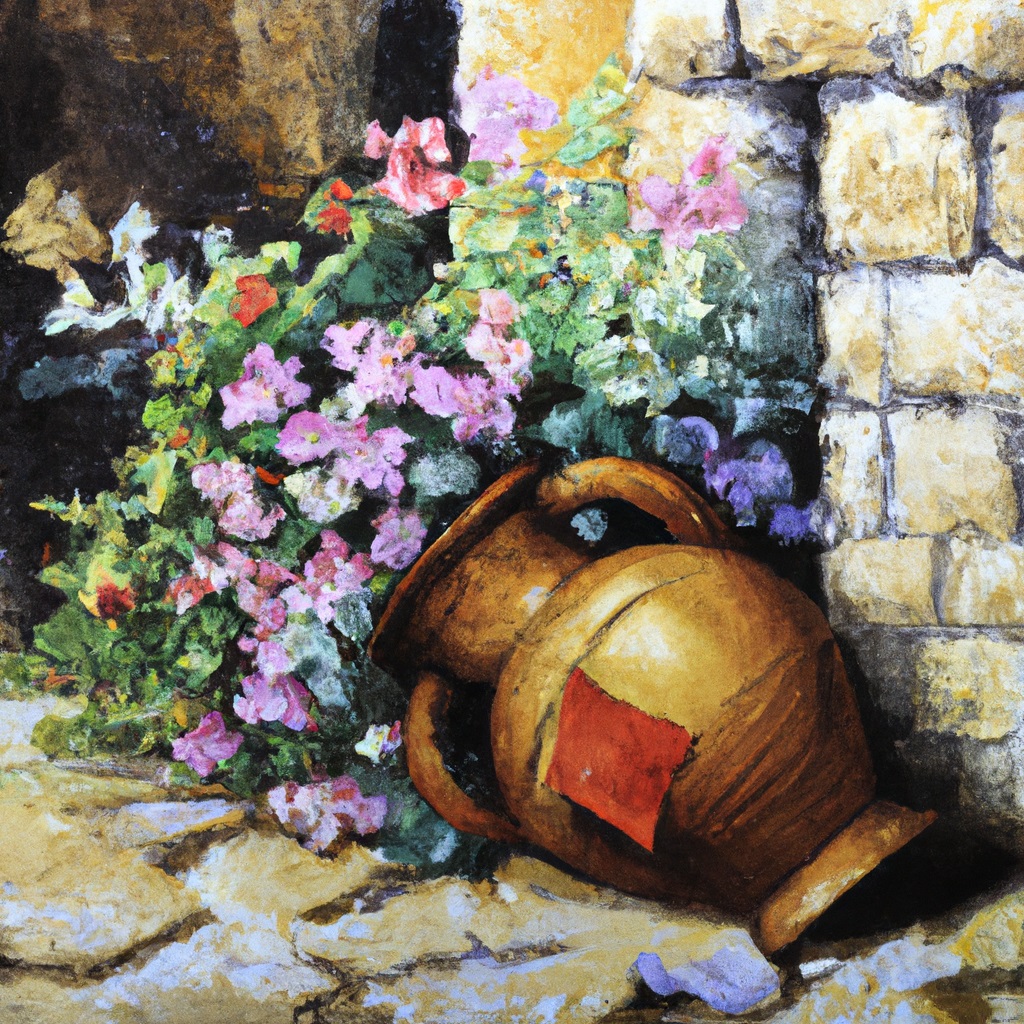
Many years ago, when kings still lived in palaces and castles, they had servants who would bring water to the palace every day. They would bring the water in earthen pots. One of the servants had two pots; one was cracked but the other was not cracked. The other servants told him to throw away the cracked pot, He said, “No. Where the cracked pot leaks, there are beautiful flowers growing for the king’s pleasure.” Everything needs water to have life.

On this Third Sunday of Lent, the Church invites us to accept the love of God. God gives us the gift of the Holy Spirit. In the Gospel today, Jesus meets the Samaritan woman at the well and gives her the living water. She and the other people of this place are able to recognize Jesus as the Messiah, the Savior of the world.

In our first reading, God enabled Moses to provide water for the Israelites who were thirsting. This was life-giving water. Without it, they would have died. Water is as important to life as air, without either, there is no life. St. Paul tells us in our second reading that Jesus poured the living water, the gift of the Holy Spirit into our hearts. We need the Holy Spirit to sustain us spiritually, just as we need water to sustain us physically. The Jews thought that they only needed to keep God’s law, but St. Paul told them they also needed the Holy Spirit to nourish them. According to St. Paul, redemption is a gift from God manifested in Jesus’ death on the cross. Through the Holy Spirit, we have received the gift of Faith.

The Samaritan woman understood that Jesus was the Messiah when He told her about the living water. He speaks about the living water, which gives eternal life. The living water represents divine grace, which is God’s life within the soul. The woman craves this type of water because she wants to have eternal life. She now realizes what it means to take freely of the water of life, which is the spiritual refreshment that comes into her soul after her confession with Jesus.

She is impressed that Jesus knew all of her sins, and she had the opportunity to have her sins forgiven. She believes that He is truly the Messiah. She is sorry for all of her sins and goes to tell her family and friends about Jesus. Large numbers of people came to hear Jesus. Jesus was honest with the woman about what was right morally and wrong in her life. The gift of truth helped to set her free. It is important to remember that Jesus wants to share the Good News of the Gospel with everyone, including us.

We need to allow Jesus into our personal lives. We need to be open to accepting others, as Jesus did. Let us turn to Jesus with all of our hopes and dreams. His love is always non-judgmental, and unconditional. Let us rest, assured that Jesus accepts us warmly, and helps us to see that he will give us strength, In Him, we have the power we need to overcome any problems.

Encounter Him & Return

March 4, 2023

2nd Sunday of Lent
Fr. Victor Feltes

What a grace for Peter, James, and John to see the Transfiguration of Jesus. Can you imagine? It was like a preview of the glory we all hope to share in heaven. Jesus shared other special times with Peter, James, and John. Earlier in the gospel, we read that Jesus only allowed Peter, James, and John to be with Him in the house of a synagogue official whose daughter he raised from the dead. These three apostles were also with Jesus in the Garden of Gethsemane.

Before the Transfiguration, Jesus told His disciples that He must suffer greatly, be rejected by the elders, the chief priest, and the scribes, be killed, and be raised from the dead in three days. They did not want to believe Him because they thought they could protect Him. Jesus responded, “Get behind me, Satan! You are thinking not as God does but as human beings.” The disciples had to learn that Jesus was not an earthly king, as they were expecting. They needed the special graces from Jesus so they could continue to follow Him and believe in Him. During the Transfiguration, God the Father said, “Listen to Him.” He revealed His glory to the disciples in order to strengthen them for the passion and death of Jesus Christ.

Let us review the events of Jesus’ Passion and Death, Peter denied Jesus three times. James, like the rest of the disciples, ran away. John was the only one who continued to follow Jesus during His Passion and Death on the Cross. He stayed with the women who followed Jesus. After the Resurrection and Pentecost, Peter, James, and John became great witnesses to Jesus. Peter became the first pope and was later martyred. James was killed by King Herod for witnessing Jesus. John wrote the fourth gospel in the bible, the Gospel of St. John.

How many times in your life have you let Jesus down or disappointed Him? We do this many times because we meet Jesus every day in our lives. The most intimate way we meet Jesus is when we receive Him in the Eucharist. It is the time when we are the closest to Jesus. We meet Jesus in the readings from the Bible as they touch our hearts. The Bible is not just about reading the life of Jesus, it is also about listening to His words. He is speaking to us about our lives. We meet Jesus in a very special way in all the sacraments.

Baptism makes us sons and daughters of God and heirs of heaven. Confirmation makes us the temples of the Holy Spirit. By the Sacrament of Reconciliation, God brings us, sinners, back to the path of holiness. By receiving the Sacrament of the Anointing of the Sick in Faith, we are spiritually, and, if God wills it, physically, healed but most importantly our sins are forgiven. The Sacrament of Marriage unites a man and a woman together for life according to His laws. In the Eucharist, we receive Christ’s Soul and Divinity into our body. With Holy Orders, a man becomes a Priest, an altar of Christ, and by the Power of the Holy Spirit, offers the Sacrifice of the Mass and serves as a shepherd of Jesus’ sheep.

We can share experiences like those of Peter, James, and John when we spend some extra time with Jesus in prayer during Lent. Maybe, we may want to fast for one day, taking only water, thus releasing spiritual energy, which in turn, can lift our thoughts to a higher level.

Our Mountaintops & Valleys

March 4, 2023

2nd Sunday of Lent
By Fr. Victor Feltes

Jesus went up a mountain to preach his Sermon on the Mount. Later, after feeding more than five thousand people using five loaves and two fish, he withdrew up a mountain alone for prayerful solitude. Today, Jesus leads Peter, James, and John up a high mountain by themselves to witness his Transfiguration. So why mountains? What is it about mountain heights which make them the preferred setting for so many biblical events?

Three themes occur to me: First, mountains remove people from the ordinary. They are remote places removed from everyday life. Second, mountains offer a greater perspective. A mountaintop can allow someone to see for many miles. And third, mountains elevate us. Mountaintops are not only literally higher but symbolically closer to heaven as well. Jesus takes Peter, James, and John to the top of Mount Tabor to give them an extraordinary experience, to give them a deeper vision into himself, and to give them strength for their trials ahead.

The Mass prefaces celebrating Jesus’ Transfiguration say:

“After he had told the disciples of his coming Death, on the holy mountain he manifested to them his glory, to show, even by the testimony of the law and the prophets, that the Passion leads to the glory of the Resurrection.”

“He revealed his glory in the presence of chosen witnesses… that the scandal of the Cross might be removed from the hearts of his disciples.”

The disciples had not imagined that the Jewish Messiah, God’s Holy Anointed One, would be gruesomely murdered. The Transfiguration helped prepare them to understand that Christ’s suffering was a part of God’s salvific plan. They also came to realize that Jesus’ teaching, “If anyone would come after me, let him deny himself and take up his cross and follow me,” would involve sufferings of their own. The apostles’ memories of beholding Christ’s miracles and glory and their ongoing relationship with their Risen and Ascended Lord strengthened them through their trials.

You and I will face trials as well. As St. Paul tells Timothy in today’s second reading: “Beloved: Bear your share of hardship for the Gospel with the strength that comes from God.” What have been the spiritual mountaintop experiences of consolation in your life? Remembering these moments gives us spiritual strength in hard times, and Jesus Christ walks alongside us through all our dark valleys.

Yesterday, I encountered the story of a man about my age named Mike. Not long ago, Mike was diagnosed with a cancer so advanced that he had back operation which removed one of his vertebrae. Mike is married and has two sons around middle school age. Though previously a somewhat lukewarm Christian, he began “searching for the understanding of the LOVE of Jesus.” Here is the amazing thing: Mike writes, “This last several months, with a few nudges from God, I have been overwhelmed with Jesus’ love. It’s been so powerful that the pain and uncertainty of the cancer have taken a back seat to it.” If he continues to carry this cross with Christ, no matter what happens, Mike is going to be OK.

Our spiritual mountaintop moments are extraordinary experiences that give us a greater perspective and draw us closer to God. But also remember the great consolation that Jesus Christ, our good and loving Lord, remains with us in our dark valleys as well.

Lent with Jesus in the Desert

February 26, 2023

1st Sunday in Lent
By Fr. Chinnappan Pelavendran

Welcome to the season of Lent. Lent is a time to repent, a time to be reconciled, a time to say I am sorry, and a time to make our lives right with God. This is a time for us to remember what Christ went through for us. Christ came to live with us, to love us, and to serve us. Christ came to die for us because of everything we do wrong. Our forty days of Lent are a reminder of Jesus’ forty days spent in the desert before His public ministry. It is also a reminder of the life, passion, and death of Jesus Christ.

The first reading today describes the original temptation by the devil. Satan told them they would be like gods. He made them believe that they did not have to depend on God. We don’t like it when our freedom is limited and to be dependent on anyone. We don’t want to be responsible for the consequences of our choices.

In the second reading, St. Paul compares the old Adam with the new Adam, who is Jesus Christ. Adam did not resist temptation. He believed in the lie that the devil said that he could be like God. Jesus Christ came to save us from ourselves. Jesus did not give in to the temptations of the devil. The first Adam brought disobedience, sin, and death. The new Adam brought obedience, righteousness, and eternal life.

The temptations that Jesus faced in the desert are temptations found in our everyday lives. God has blessed some people with material resources, some with spiritual powers, some with political, and others with social powers. Use the powers and resources that God has given you for the greater honor and glory of God. Use this Lent to overcome the temptations that could harm you or others. Jesus performed miracles of healing and cast out devils to help people. Christ never used His gifts for Himself, only for others.

Jesus serves as a model for us in overcoming temptations by strengthening himself through prayer, fasting, penance, almsgiving, and speaking the word of God. By resisting temptations, we become more powerful soldiers for Christ. God does not allow us to be tempted beyond our power! During this Lent, let us try to be more prayerful, come to daily mass, receive the Sacrament of Penance, try reading some of the Bible, Pray the Rosary, and maybe bring a friend to church. By doing this, we will be able to overcome some of our sins.

Little changes in our lives can help us grow in holiness. The more time we spend with God, the closer we will be to God. Living the gospel of God’s love, mercy, and forgiveness will make us better Christians. Lent is the time for the desert experience. We can set aside a place and time to be alone each day with God. We need time to distance ourselves from the many daily noises in our lives. We need time to hear God’s word and rediscover who we are before God. We need time, to say yes to God and no to Satan.

Behold the Tree of Life

February 26, 2023

1st Sunday of Lent
By Fr. Victor Feltes

God grew many lovely, fruit-bearing trees in the Garden of Eden, but only two trees are mentioned by name. In the middle of the Garden the Lord God placed the Tree of Life and the Tree of the Knowledge of Good and Evil. Tempted by the Devil, Eve ate from the forbidden tree and “gave some to her husband—who was with her—and he ate it.” If only Adam had been willing to confront the dragon-serpent and protect his bride, perhaps even to lay down his life for her! But the first man did not do this and the whole human family fell. (Let men called to lead and protect their families take note.)

Then our Triune God said: “Behold! The man has become like one of us, knowing good and evil! What if he now also reaches out his hand to take fruit from the Tree of Life, and eats of it and lives forever?” For this reason, God banished our first parents from the Garden. This was not from divine jealousy, but from divine concern for us. Imagine everlasting human lives lived in unending sinfulness; that would be a hell on earth. “Through one man, sin entered the world, and through sin, death, and thus death came to all men…” But God promised Adam and Eve a redeemer who would crush the serpent’s head and save us from sin and death.

In today’s Gospel, that Savior undergoes the Devil’s temptations not in a paradise but in a desert. The ancient tempter approaches Jesus and says, “If you are the Son of God, command that these stones become loaves of bread… If you are the Son of God, throw yourself down (from this temple rooftop)… All (the kingdoms of the world in their magnificence) I shall give to you, if you will prostrate yourself and worship me.” Jesus refuses each of these diabolical suggestions.

If the Christ conjures bread for himself when hungry, then how can he refuse to fill every hungry mouth? But what good would our filled stomachs be if we are never delivered from sin and death? And if the Christ demands that God his Father protect him from every harm, then how could he ever offer his life’s blood as our saving sacrifice? And if the Christ submits to our enemy’s rule over this world, then how could we ever be free? Jesus Christ understands his messianic mission and where it will lead him. It will lead him to the Cross.

Jesus calls himself the Bridegroom, and St. Paul calls him the second and final Adam. Unlike the first Adam, Jesus Christ the New Adam willingly and courageously lays down his life in battle with the Devil to save us, the Church, his Bride.

“[T]hrough one transgression
condemnation came upon all,
so, through one righteous act,
acquittal and life came to all.

[T]hrough the disobedience of the one man
the many were made sinners,
so, through the obedience of the one,
the many will be made righteous.”

One beautiful Mass preface for Sundays in Ordinary Time praises God with these words: “[W]e know it belongs to your boundless glory, that you came to the aid of mortal beings with your divinity and even fashioned for us a remedy out of mortality itself, that the cause of our downfall might become the means of our salvation…

St. Paul’s tells the Galatians, “Christ ransomed us from the curse… by becoming a curse for us — for it is written, ‘Cursed be everyone who hangs on a tree…’” In the tree that is his Holy Cross, we now see the Tree of the Knowledge of Good and Evil and the Tree of Life combined.

During this Lent, contemplate the crucifix. Meditate upon the crucifix to know goodness, to behold God’s love for us. And gaze upon the crucifix to know evil, to see our sins at work. And ever-faithfully eat the fruit from this Tree of Life, which is Jesus Christ himself given us at Holy Mass. As Jesus taught in the synagogue at Capernaum, “Whoever eats my flesh and drinks my blood has eternal life… For my flesh is true food, and my blood is true drink. …Whoever eats this bread will live forever.” God once said in the Garden: ‘You shall not eat of the Tree or even touch it, lest you die.’ But now Jesus invites us, provided we are well-prepared: “Take this, all of you, and eat of it, for this is my Body… given up for you.”

Forgiving Like The Lord

February 19, 2023

7th Sunday in Ordinary Time
By Fr. Chinnappan Pelavendran

The call to holiness began in the Old Testament. God invites us to be holy as Jesus was holy. Holiness can be identified with the closeness of God. He wants us to be merciful, kind, and loving. He tells us that His law must lead us to a life where we discover God in all people, not just our friends. It is easy to love those who love us but Jesus asks us to do much more. As we are about to begin Lent, we are invited to forgive our enemies. Jesus is a shining example of love and forgiveness.

Jesus himself is a model in forgiving those who have hurt us. We see this in Jesus’ life. When Jesus and the apostles were in Gethsemane, soldiers came to arrest Him. Peter cut off the ear of one of the soldiers. Jesus told Peter to put his sword away, and He touched the ear and healed it. Jesus forgave and physically healed the one who came to arrest Him. This is not the only healing incident that takes place during Jesus’ Passion; Pilate and Herod had been enemies but become friends on the day of Jesus’ trial.

During His trial before the high priest, one of the officers slapped Jesus. Jesus calmly asked what he had said wrong. When Jesus was being crucified, he prayed for those who were nailing Him to the cross. Even then, Jesus was able to forgive them.

After Jesus’ resurrection, when Peter and the others were fishing, Jesus appeared on the shore of the sea of Galilee cooking fish. After they ate, three times Jesus asked Peter if He loved Him. Each time Peter said yes and each time Jesus asked him to look after His flock. Peter had denied Jesus three times at the high priest’s house, but Jesus forgave him. But Jesus loved Peter and later made him the head of the church. This was the beginning of the Catholic Church, as we know it today. Peter was the first Pope of the Catholic Church. The foundation of Catholic Church was established through the love and forgiveness of Jesus Christ.

Everyone knows that forgiving is not easy. Forgiveness is freedom. Jesus gives his new law of love, grace, forgiveness, reconciliation, and no retaliation. Jesus never took revenge, even when it cost him His life.

To be Holy as God is Holy is to love the offender. We must turn the other cheek, freely giving, and walking the extra mile. Jesus tells us that what makes Christians different is the grace with which they treat others, offering them loving kindness and mercy as god does for us. We are commanded to love our enemies as Jesus Loves us, with agape’ love, not because our enemies deserve our love, but because Jesus loves them so much. He died for them as He did for us.

We not only need to love our neighbors but also forgive whole-heartedly those who have hurt us. We need to pray for the spiritual and physical welfare of all people, not just our neighbors. Today’s readings challenge us to become holy as our God is holy by loving forgiving and blessing all others. As we are about to start our Lenten journey, let us remember the love and forgiveness of Jesus Christ.

Loving & Devout, Inside & Out

February 11, 2023

6th Sunday in Ordinary Time
By Fr. Victor Feltes

Something Christians may not realize is that the Pharisees and scribes were admired in Israel. Many Jews looked up to them for their religiosity and learning in a culture which celebrated their shared religion. But Jesus criticized the scribes and Pharisees for caring more about outward appearances than the heart of true devotion. “All their works are performed to be seen,” Jesus said, “They preach but they do not practice. Woe to you, scribes and Pharisees, you hypocrites. Although you cleanse the outside of the cup and the dish, inside you are filled with plunder and evil.” That is why Jesus told his own disciples: “Unless your righteousness surpasses that of the scribes and Pharisees, you will not enter the Kingdom of Heaven.” Jesus wills us to be holy both outside and in.

He cites the ancient commandments: “You have heard that it was said… ‘Thou shall not kill,’ ‘Thou shall not commit adultery,’ ‘Thou shall not take the name of the Lord your God in vain.’’ But then, Jesus commands more. We may never have sworn a false oath, but do we secretly conceive lies? Jesus declares, “Let your ‘Yes’ mean ‘Yes,’ and your ‘No’ mean ‘No.’ Anything more is from the evil one.” We may never have had an affair, but do we entertain lust after others in our minds? Jesus declares, “Everyone who looks at a woman with lust has already committed adultery with her in his heart.” And we may never have murdered anyone, but do we hold contempt for others in our hearts? Jesus declares, “Whoever is angry with his brother will be liable to judgment.” Even the Ten Commandments themselves called for interior holiness. Acts of adultery or theft (forbidden by the 6th and 7th commandments) are usually preceded by coveting, by desiring what is not ours (which is against the 9th and 10th commandments).

Consider this: in Heaven, no one will be allowed to hate anyone, or to exploit anyone, or to lie to anyone. That is something beautiful for us to look forward to, but it is also a call to thorough conversion. Our secret sins matter and our hearts must be made pure. Jesus says that from within, from our “hearts, come evil thoughts, unchastity, theft, murder, adultery, greed, malice, deceit, licentiousness, envy, blasphemy, arrogance, [and] folly.” He teaches that “a good person produces good from the treasury of a good heart, and an evil person produces evil from the treasury of an evil heart.” What is going on in our hearts is very important. So when temptation comes, let us as St. Paul said, “take every thought captive in obedience to Christ.”

The season of Lent is near. It begins on Ash Wednesday, the week after next. Catholics often take on external sacrifices and penances during Lent, and that is a good thing. But I suggest that for this Lent you would aim to conquer a habitual sin or secret vice with Christ. Which fault should be your focus? If you do not know that already, the Seven Deadly Sins may suggest it to you; they are pride, greed, lust, envy, gluttony, anger, are sloth. You may respond to each of these Deadly Sins by embracing the corresponding Lively Virtue.

For pride, there is humility.
For greed, generosity.
For lust, chastity.
For envy, gratitude.
For gluttony, temperance.
For anger, patience.
And for sloth, diligence.

Forming a personal resolution is key. Rather than just passively hoping things change, actively renounce what is evil in your life. Your will must be engaged. However, your weak human nature needs God’s strengthening grace. And God, respecting your freedom, waits for your consenting “Yes.”

Connect more to Jesus Christ this year. Encounter him in his sacraments. Beyond Sunday Mass, there is thirty-minute weekday Mass. When I began attending weekday Mass in college it drew me closer to Jesus and improved my life. Beyond celebrating the Sacrament of Reconciliation only once or twice a year, gain new graces with forgiveness through more frequent Confession. This gives us accountability and a truer perspective on ourselves. I do not believe that even monthly confession is too frequent for someone serious about growing in holiness. And beyond praying at church on Sundays, or before meals, or during times of urgent need, commit to times of daily personal prayer. For instance, gift or consecrate your day to Jesus in the morning. Ask him, your angel, and your favorite saints to aid you throughout the day. And do an Examination of Conscience in the evening asking the Holy Spirit to show you both your victories and defeats.

In conclusion, do not let the perfect be the enemy of the good. Do not read all these ideas and think, “I can’t do all of that,” and wind up doing nothing. Between now and Easter, commit to good steps to conquer a habitual sin or a secret vice with Christ. Jesus wills to help you be more loving and devout, inside and out.

Be Holy Salt, Holy Light

February 5, 2023

5th Sunday of Ordinary Time
By Fr. Chinnappan Pelavendran

St. Mother Teresa was born in Yugoslavia to Albanian parents. When she was young, she felt a calling to become a nun. One day, as a religious sister, she passed through India on a train and saw many poor people in the streets and gutters. She realized a call within a call. She later returned to India because she wanted to help the people.

She started a new order, the Missionaries of Charity. They worked with the sick and the poorest of the poor on the streets of India. She prayed, “Oh God, if I cannot help these people in their poverty and their suffering, let me at least die with them, close to them so that I can show them your love.” The Missionaries of Charity are now worldwide with many brothers and sisters, homes for children, the sick, destitute, and dying. She was the salt of the earth and the light of the world to many of the poor people in India and around the whole world.

In our first reading, the Lord God through His prophet Isaiah gives us examples of how we are to allow the light of God to shine through us. “Share your bread with the hungry, sheltering the oppressed and the homeless: clothing the naked when you see them, not turning your back on your own. Then light shall rise for you in the darkness, and the gloom shall become for you like midday.” (Isaiah 58:7,10) In the Old Testament, God had been telling His chosen people that he would send a light into the world to save His people and the gentiles.

St. Paul, in the second reading, tells us that our proclamation of faith will carry the Spirit and His power when we rely on the power and wisdom of God. God made St. Paul a light in this world for the gentiles. When St. Paul was teaching the Corinthians about the self–sacrifice of the crucified Jesus, and the suffering our savior endured, his message transformed the lives of the pagans. St. Paul’s experience teaches us that when we start doing good to others, even if it causes us suffering and death, we will become the salt of the earth and the light of the world.

In today’s Gospel, Jesus outlines the role of Christians in this world–to be the salt of the earth and light of the world. As a symbol of purity, salt was a common ingredient in sacrifices offered to God by Jews and pagans. In the ancient world, salt was a preservative, used to prevent the spoilage of foods. Salt also flavors food when used as a seasoning and preservative. Light is something that is meant to be seen. A light or a lamp is a guide to clear the way. A traffic light also serves as a warning. Light from the sun gives us warmth and heat.

We need to be the salt of the earth. What does this mean? Salt is the symbol of purity, Christians must be an example of purity in speech, conduct, and in thought. Salt is a cleansing and healing agent, the Christian must have a cleansing influence on life and society, defeating corruption, fighting against injustice, and making it easier for others to avoid sin. We need to preserve the religious faith, Christian values, and world principles that Jesus has given us.

We need to be the light of the world. What does this mean? Christians are to receive the light of Christ and radiate it to everyone as love, Mercy, forgiveness, and respect for all. Our duty is to show and illuminate the love of Christ.