Archive for the ‘Sunday Homilies’ Category

What Truly Lasts

July 31, 2022

18th Sunday in Ordinary Time
By Fr. Chinnappan Pelavendran

Our God is a personal God who is concerned about each and every one of us and personally takes care of us. He is a benevolent Father caring for the needs of his children and planning a future for each one. The Bible presents God as a father who takes care of His children. His concern is beyond our understanding. The readings of today invite us to place our trust in God. We are invited to focus our attention on the heavenly realities more than on the earthly shadows.

Today we are also reminded that we are in a transitory world. This means that everything here changes. Everything passes. Hence, it is a call to make use of the things of this world prudently without losing our ultimate goal. Heaven is our goal. In heaven, nothing passes away.

The first reading of this Sunday begins with a warning, “Vanity, vanity,” the reading says, “vanity.” The author reminds us that there will be an ultimate end to all created things. This strikes a reality that most of us have neglected. However, one day each of us will come to terms with it. The author also calls us to remember God in all we do. And, he reminds us that the ultimate goal here on earth is to walk our way straight to heaven.

In the second reading, St. Paul advises the Colossian community that they must look for the things of heaven where Christ is. He wanted all thoughts to be centered on heavenly things, not on the things that are on earth. He reminded the Colossian community that in Baptism they have become new persons as they have been raised with Christ. There we find the perfect image of God in Jesus who is the perfect pattern of our life.

In today’s Gospel, in the parable of the foolish rich man, Jesus warns us against all types of greed, because greed takes our life’s focus away from God-away from serving and loving God and other people. Jesus says that God calls the greedy rich man a fool because the man thought he would not die soon and that he was not accountable for the way he used his riches. The rich man forgot the fact that his wealth had been lent to him by God for sharing with the needy. Jesus also warns us that our eternal life does not consist of earthly possessions. These we should share to gain eternal life.

We are invited to share our blessings with others, the parable of the rich fool gives us a warning as an invitation. It reminds us that our possessions are merely lent to us by God. And that we are accountable for their use. We must be generous in sharing our time, our treasure, and our talents in Christian stewardship. Even if we are financially poor, we may be blessed with intelligence, good will, a sense of humor, or the ability to console, encourage, inspire, support, and help others. God expects us to give our thanks to Him for all these blessings by sharing them with others for His glory.

Let us control our greed. Our greed takes different shapes and forms. For some, it may be the desire for the approval and praise of others, for some it may be an uncontrolled desire for power, control, or fame. For some still others, greed takes the form of excessive and sinful indulgence in eating, drinking, gambling, or drugs. Greed also turns our life away from God and away from loving and serving Him and other people. Greed directs all our energy and attention to fulfilling the self. We need to come out of ourselves and understand God and His creation, all the created things will pass away, but God never changes or passes away.

Stories of Three Fruitful Conversions

July 30, 2022

18th Sunday in Ordinary Time
By Fr. Victor Feltes

Leah Darrow grew up in a strong Catholic family, but she recalls that in high school her Catholicism started to get “fuzzy.” By the time she was in college, Leah says she had become a “Catholic But,” as in, “I’m Catholic but I don’t agree with the Church’s teaching on cohabitation… I’m Catholic but I don’t see the problem with a couple who love each other sleeping together before their marriage… I think the Church is behind the times.”

One evening at college Leah watched a reality show called “America’s Next Top Model.” She thought to herself, “I’m pretty cute, maybe I could be on that show.” Leah tried out, got accepted, and competed on national television against other gorgeous women. Even though she didn’t win the competition this exposure and fame jump-started her modeling career. She still recalls her excitement at receiving her first modeling paycheck featuring a number with a comma in it. Leah’s chosen path eventually led her to an experience in a New York City skyscraper which forever changed her life.

She came to pose for a risqué, international, men’s magazine. They brought out a number of itsy-bitsy outfits for her, she put one on, and the photoshoot began. Yet while Leah was posing, a vision flashed into her mind: three images in the span of perhaps a second or two. First, she saw herself standing in a large white space wearing that immodest outfit. She felt no pain in that moment, but had a sense that she had died. In the second image, Leah was looking up, holding out her open hands at her waist with the knowledge that she was in God’s presence. In her third and final scene, Leah saw herself holding her hands all the way up, offering God all that she had, but she saw that she was offering him nothing. She realized that with all of the blessings, talents, and gifts God gave her she had wasted them on herself. She saw that if she had died at that moment she would have nothing to offer Christ.

Leah abruptly abandoned the photo session, changed back into her own clothes, and ran down 5th Avenue balling. She called home saying, “Dad, if you don’t come get me I am going to lose my soul.” So her father drove across the country from Oklahoma to New York City. When her dad arrived, though Leah wanted to leave for home immediately, her father insisted upon seeing the sights. “But first,” he said, “we go to confession.” Leah made a good confession through tears, and came out of the confessional healed, like a new woman. In the years since, Leah Darrow has been bearing good fruit as a national Catholic speaker.

I was reminded of Leah’s story by a young man’s testimony this week. My spiritual retreat house in Illinois was a short distance from the Mundelein Seminary, which allowed me to take in a portion of the Courage International conference being held there now. Courage is a fellowship helping men and women who experience same-sex attractions to live chastely — faithful to Jesus Christ and Catholic teaching on sexuality.

Part of the training day for clergy was hearing a Courage member share his story. He grew up Catholic with faithful, loving parents, but like the Prodigal Son went off on his own way. He says his lifestyle had many pleasures but there remained an unsatisfied sadness. He knew what he was doing wasn’t right. One night, awakening from sleep, he also had a life-changing vision. He saw his heart of flesh descending over a dark ocean, dropping deeper and deeper down into the depths. And then he heard the Lord say two things to him (if I recall the phrasing precisely): “My son, come home,” and “Time is running out.” This experience helped him see he was God’s beloved but needed to change his life. He was called by Christ to something greater, and now his joyful life is bearing good fruit.

A different speaker at the conference shared another great story. It was an anecdote about a husband and father who had an addiction to viewing indecent images. Through renewed devotion and the help of God’s grace, this man began to experience victory and freedom from this sin. One day, as he was driving down the road chit-chatting with his four-year-old daughter in the backseat, she remarked, “I like new daddy more than old daddy.” (To be clear, both “old daddy” and “new daddy” were references to him.) This man’s four-year-old daughter did not know why things were now different, but she delighted in how much more present, attentive, and open her dad had become for her by valuing pure love more than sin.

As St. Paul urges us in today’s second reading, “Put to death, then, the parts of you that are earthly: immorality, impurity, passion, evil desire, and the greed that is idolatry.” Your old self and its practices must give way to the new. “Think of what is above,” Paul writes, “not of what is on earth.” Be renewed in God to share in his delight and great rewards.

The rich man in today’s parable gathered earthly wealth, planning and preparing for himself pleasures in this life. He thought he still had many years ahead of him to enjoy, but his time was running out. God calls him a fool since he is soon to appear before the Lord with empty hands, poor “in what matters to God.” “Vanity of vanities,” our first reading says; this world is full of vanities! Stop chasing after and clinging to worthless things. Remember that you are loved, that you were made for great things, and that the joy and freedom Jesus Christ has given to others he can also give to you.

On Prayer

July 24, 2022

17th Sunday in Ordinary Time
By Fr. Chinnappan Pelavendran

We hear very often people say, ‘Pray for me or remember me in your Prayers.’ There is nothing wrong with that, it is our duty to pray for each other. Our prayer life is a reflection of our true faith in God. Prayer is understood as a form of communication, a way of talking to God, and raising our hearts and minds to God. In our prayer, we strengthen that recognition of the presence of God, which draws us close to Him.

The first reading today gives us the model for intercessory prayer provided by Abraham in his dialogue with God. Abraham, our father in faith, demonstrated great confidence. He approached God as a father. He acknowledged that he was dust and ashes. “If you find fifty righteous people in those wicked and immoral cities,” Abraham said, “you won’t destroy it, will you God?” God said, “No, if I find fifty righteous people in the city, I will not destroy it.” How about forty, thirty, twenty, or ten? But not even ten people were in those cities, so God went beyond the terms of negotiation and spared the only just inhabitants of the cities. God is merciful than we are.

The Responsorial Psalm is a declaration of God’s fidelity and willingness to listen to our prayers. “Lord, on the day I called for help, you answered me,” we are invited to remember this truth at all times. Our prayers are never a waste of time. God always listens to us.

The second reading is from St. Paul’s Letter to the Colossians. He talks about baptism. In Jesus, we were baptized, and this made us God’s beloved children and inheritors of His Kingdom. We are assured by St. Paul that God will always be gracious and merciful to us for we are His beloved children. When we pray, let this be our source of inspiration and hope.

The Gospel sets us the formula for all prayers, namely the gift of “Our Father.” This prayer contains the teaching of Jesus in its totality. Jesus begins the prayer by calling God, Abba Father a most endearing term used in a close parental bond. The Kingdom of God that Jesus came to proclaim is understood as a world that is built on truth, love, compassion, justice, freedom, human dignity, and peace. In the second half of the prayer, we pray more directly for our own needs. And we begin with present needs, we ask God for today’s bread, food, and today’s material needs. We offer God our present, our past, and our future. By this prayer we also invite the Trinitarian God into our lives, God the Father, the Creator and Provider, by asking for daily bread, God the Son, Jesus, our Savior, by requesting forgiveness of our sins, and God the Holy Spirit by asking for deliverance from temptations.

When we want something from God, we must keep asking. “Ask, and it will be given to you, search, and you will find, knock, and the door will be opened to you.” Second, Jesus reminds us that we are dealing with a loving and compassionate father. Who is ready to provide. We must not give up the habit of prayer because it is a gift of Jesus through which He empowers us to be constantly in touch with God. If we pray according to the mind and will of God, we shall gladly join the Psalmist in saying, “on the day I called, you answered me, O Lord.

The Parable of the Midnight Visitor

July 24, 2022

17th Sunday in Ordinary Time
By Fr. Victor Feltes

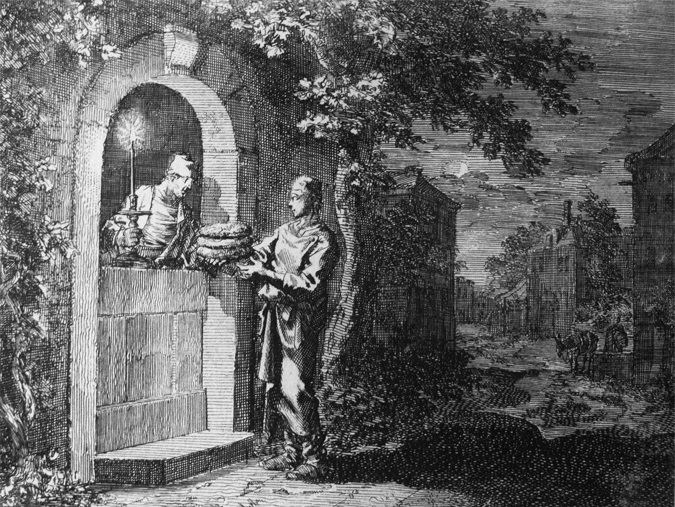
Imagine a visitor arrives at your home. He’s hungry but you have nothing to feed him. Suppose it’s so late at night that all the stores are closed. So you go down the road to the house of your friend and knock on his door. You rap gently and quietly at first, but then beat more firmly and loudly. It’s midnight, and your friend won’t answer the door. So you call out, “Friend, lend me three loaves of bread, for a friend of mine has arrived at my house from a journey and I have nothing to offer him!” But your annoyed friend replies from within, “Do not bother me; the door has already been locked and my children and I are already in bed. I cannot get up to give you anything.”

Is it really true that he cannot give you anything, or just that he would rather not? Notice what he doesn’t say; he doesn’t say he has no bread. Jesus assures us that if this neighbor of yours does not get up to give you those loaves of bread because of your friendship, he will surely get up to give you whatever you need because of your persistence. Why is this so? Because of his kids. Your neighbor inside says he and his children are already in bed. Are his children asleep? They were… before you came knocking. What will happen if you’re persistent and keep on calling at the door? The kids will not be happy. They will cry and complain, and their father will find no peace. That’s why his surrendering of some bread is guaranteed.

So what is Jesus really teaching us through this story? How to bother your friends and extort their food? The meaning of this parable is revealed by its context. Right before this story, Jesus’ disciples are taught how to pray to our Father. They are encouraged to ask him to “give us each day our daily bread.” And right after the parable, Jesus invites his disciples to seek and knock and ask, that we may find that we receive at an opened door. Jesus then reminds us that if even sinful fathers know how to give their children good gifts when asked, how much more so will our sinless Father give good gifts like the Holy Spirit to those who ask him? Today’s parable about knocking and asking at our friend’s door is likewise a lesser example teaching a greater truth: if your flawed and annoyed earthly neighbor can be persuaded to get out of bed in the middle of the night to give you bread, how much more readily will your perfect, patient, heavenly Father give you the daily bread, gifts, and graces you ask of him in prayer?

Later in the New Testament, St. James writes, “You do not possess because you do not ask.” So why don’t we ask God for more things in prayer? Perhaps you don’t ask because you’re afraid of being selfish or needy. But it’s not selfish to ask for what you or others need. Our parable’s protagonist had a praiseworthy purpose, to feed a hungry guest. To ask our Father for his good gifts is a good thing we are commanded to do. So if you never pray for yourself, or if you never pray for others, then definitely add such petitions to your prayers. Perhaps you don’t ask for more things in prayer because you worry you will ask for the wrong things. But that is not something to fear. If your son asks you for a poisonous snake or scorpion, would you then hand them over to him? Of course not. Nor will your heavenly Father grant wishes which would harm you.

And here’s a final reflection. If we are the main character in today’s parable (the one who is seeking and knocking and asking), and God is the father whom we approach with our request, then who are the father’s children at rest with him in his house? Who else in heaven can hear our prayers and add their voices to our requests, not because of annoyance at us but from their great love for us? We see in the Book of Revelation that in this present age (before the Second Coming) the saints in heaven are offering prayers to God. They do not pray for themselves, but for us. Like Abraham who once interceded before God for Sodom, the saints in heaven can intercede for us now. So ask them. As St. James wrote, “The fervent prayer of a righteous person is very powerful.

Jesus’ parable would teach us to not be bashful but be bold in asking for good things from God. So knock on the door of heaven, with your prayers to our Father and his children above.

Biblical Hospitality

July 17, 2022

16th Sunday in Ordinary Time
By Fr. Chinnappan Pelavendran

On this sixteenth Sunday of Ordinary Time, we welcome Christ our Brother and Guest. The themes of today’s readings are the importance of hospitality in Christian life and the necessity of listening to God before acting.

Today’s first reading describes Abraham welcoming three men who arrive in front of his tent. Immediately Abraham rushes to greet the strangers, bows before them, and invites them to partake of his hospitality. The visitors accept his invitation. Abraham tells Sarah to prepare a generous amount of food for their guests. After the meal, as they take leave, they promise to return in a year and by that time Sarah will be the mother of a son. This was the reward for their hospitality, granted to them by God Himself.

Again we have a beautiful example of hospitality in the Book of 1st Kings, chapter 17. During the famine, God told Elijah to find a woman in town and she would feed him. Elijah found the woman and asked her for something to eat. The woman said she only had a little flour and oil left to feed herself and her son. Elijah promised that if she shared her food with him, she would not run out. The widow had faith in the prophet and shared her food. Each day, there was enough food for them to eat. It was a miracle. Then the widow’s son got sick and died. But Elijah brought him back to life. The woman was blessed for listening to the prophet.

In the New Testament, Jesus practiced hospitality and He received it. He ate with sinners and tax collectors. Accepting their hospitality was not just about sharing a meal, it was a way of identifying with them and making them a part of His people.

Today’s Gospel describes how Martha, a genuine child of Abraham, wanted to extend generous hospitality to Jesus by preparing a meal for him. Meanwhile, her sister Mary spent her time with Jesus and listening to him. Martha was a woman of strength who carried the responsibilities of her family’s needs. It was Martha’s home that had become the place of renewal for Jesus and His disciples. Martha shows us that hospitality is a ministry and a vocation. It restores and refreshes the hearts and souls of those most in need.

We also have Zacchaeus in the New Testament, who welcomed Jesus into his house and gave Him a feast. People saw this and grumbled, “He has gone in to be the guest of a man who is a sinner”. At that time, Zacchaeus stood and said to the Lord, “Behold, Lord, the half of my goods I give to the poor. And if I have defrauded anyone of anything, I restore it fourfold.” At that movement Jesus said, “Today salvation has come to this house since he also is a son of Abraham.” Hospitality brings salvation to Zacchaeus

Ultimately, the Sacrament of the Eucharist is a meal. We listen to God speak to us through the readings and we respond in prayer. The Eucharist is the sacrifice of Jesus offered to his Father in the context of a community meal. It is the Lord’s Supper. Through it we have life.

Yes, my dear Brothers and Sisters in Christ Jesus, Jesus needs our attention, because He has something to teach us every day. After listening to Jesus, we must put it into action by helping others who are in need, as did Abraham, the Widow of Zarephath, Zacchaeus, and Martha.

Abraham, Martha, and Our Lord

July 16, 2022

16th Sunday in Ordinary Time
By Fr. Victor Feltes

In this Sunday’s readings, Abraham and Martha play host and hostess to our Lord. The Book of Genesis tells how “the Lord appeared to Abraham… as he sat in the entrance of his tent,” and that Abraham ran to offer his three visitors hospitality. Today’s gospel from Luke recounts how “Jesus entered a village where… Martha welcomed him.” Both Abraham and Martha served the Lord but Martha, unlike Abraham, receives a gentle correction from him. So in what ways did Martha and Abraham’s actions differ?

The pair share similarities. Both of them wanted to put other people to work. Abraham tasked his wife Sarah to make bread rolls and his servant to prepare a tender, choice steer, while Martha sought for her sister Mary to help her. Both Abraham and Martha were a flurry of activity. After running to set Sarah and his servant to work, Abraham fetched curds and milk and the meat that had been prepared and served these to his guests in the tree shade. And Martha was famously “burdened with much serving.” So what are the key differences between them? I would like to highlight three.

First, Martha gives the Lord an command, while Abraham politely invites. She says, “Tell [my sister] to help me.” Abraham also asks things of the Lord but in a different spirit: “Sir, if I may ask you this favor, please do not go on past your servant.” Abraham is respectful and open to whatever the Lord thinks best. When the Blessed Mother brings Jesus the news that the wedding feast of Cana has run out of wine, she does not order him what to do; instead she instructs the servants to “do whatever he tells you.” We are free and invited to ask the Lord Jesus for anything, large or small, but ask him with reverence and trusting that whatever he decides will be best.

A second difference between Martha and Abraham is that Martha gets noticeably stressed out while Abraham, though vigorously active, appears to maintain his peace. “Martha, burdened with much serving,” complains and criticizes. “Lord, do you not care that my sister has left me by myself to do the serving?” But Jesus says to her in reply, “Martha, Martha, you are anxious and worried about many things. There is need of only one thing.” Martha has placed expectations on herself for how she needs to show hospitality, she’s failing to meet these self-imposed standards and it is depriving her of peace. Martha has fallen into an anxiety trap. Anytime we feel like, “I have to do this, but I can’t. I have to, but I can’t,” it’s not true. Jesus does not demand the impossible from us. So either you do not really have to do that thing, or (if God is calling you to do it) with the help of God you can accomplish it. When the yoke you carry on your shoulders feels heavy and grinding, consider whether it may be a yoke of your own making. Jesus says, “Take my yoke upon you… and you will find rest for yourselves. For my yoke is easy, and my burden light.” Some reevaluation may be necessary to exchange your yoke for his.

A third and final difference between Martha and Abraham, is that Martha allows her work to get in the way of her relationship with the Lord. Abraham labors too, but he enjoys the company of his heavenly guests even as he serves and waits on them under the tree. He and his guests converse together, leading to Abraham’s great blessing. One of his guests declares to him, “I will surely return to you about this time next year, and Sarah will then have a son.” Jesus said Martha’s sister Mary, sharing the Lord’s company listening at his feet, had “chosen the better part and it [would] not be taken from her.” Abraham did not exclude this better portion from his labors. We too should spiritually commune with the Lord throughout our day’s tasks, for he is always near.

Whatever good works we do for Jesus are not nearly as important as who we are for each other. Jesus says that at the Judgment, “Many will say to me on that day, ‘Lord, Lord, did we not prophesy in your name? Did we not drive out demons in your name? Did we not do mighty deeds in your name?’ Then I will declare to them solemnly, ‘I never knew you. Depart from me, you evildoers.’” Do not merely serve and obey Jesus, on the level of a slave. Love him as your dearest friend, for he is already the greatest friend towards you. The one thing needed is Jesus Christ.

God Close to Us

July 11, 2022

15th Sunday in Ordinary Time
By Fr. Chinnappan Pelavendran

Today we celebrate the God who is close to us both in His Word and in our neighbor. As the image of the unseen God, and as the Good Samaritan, Christ is close to us in all circumstances of life. So, the church asks us to acknowledge the presence of God both in his Word, and in our neighbor. Jesus teaches us through the parable of the Good Samaritan that God’s grace comes to us in all forms and through all kinds of people.

The first reading taken from the Book of Deuteronomy is one of the most consoling and joyful words given to the people. It was time for Moses to take leave of his people as he could not reach the Promised Land. He says to his people God is our life, hear the voice of God from the Law and to keep His Commandments, He tells them God is very near to them in the neighbors we shall encounter each day. When we act as neighbor to them, we act as neighbor to God Himself.

The second reading is from the Letter of St. Paul to the Colossians. It tell us about the divinity of Jesus and that Jesus is the image of invisible God, the firstborn of all creation. All creation was in Him, through Him, and for Him. Since all is created in and through him, Christ is the center of Unity. Jesus is the full revelation of God, it is this Jesus who lives in us and in our neighbors. We love Jesus when we love our neighbors.

In today’s Gospel, a scribe asked Jesus a very basic religious question, “What should I do to inherit eternal life?” In answer to the question, Jesus directs the scribe’s attention to the Sacred Scriptures. Love God and express it by loving your neighbor.

God could be found in his Word which is close to him. To love God therefore is to love his Word. The Word of God is personified in the Good Samaritan in today’s gospel. The word of God is Jesus himself, who speaks to us, and Jesus who is ever close to us like the Good Samaritan.

The Gospel also presents to us another way through which God is close to us. That is, in our neighbor. As a humble master, he is always available to us in simple ways and things. He is close to us in the scriptures, in the poor, in the just, in the pious, in the marginalized, in the sick, and in the weak. Like the Good Samaritan, if we search for God in these, we will find Him. The Good Samaritan saw God in the victim, and so was moved to help him.

The Good Samaritan represents those who seek Christ in the weak, wounded, and the poor. He represents those who are mindful of their neighbors and those who are wounded. Also, he represents Christ who is always quick to come to our help when we are weak, despised, and abandoned. He is ever ready to help us to recover from our injuries, and He is so close to take care, and to heal us.

We have one life and we do not get another one. So live your life praising God and if you fall astray, always run back to Him because He will always welcome you with open arms. Use the gifts He has blessed you with to serve others. Do not live your life wasting away with the temporary happiness of life, find permanent happiness in living out the virtues and serving others. God loves us so much that He gave us this life.

A Heaven-Sent Hug

July 10, 2022

15th Sunday in Ordinary Time
By Fr. Victor Feltes

Last month, a parishioner told me she looked forward to the great stories I would bring back from vacation. Today, I would like to tell you the best story from my time away. It’s actually a story of Tori, the wife of a former college roommate I visited. It is a God story which all involved are happy to share with others, and this story is entirely true.

Tori worked ten years at a Christian school in Oregon with a much-beloved Bible teacher named Dave. He was like a father figure for her. Tori did not really know his wife, Marcy, but he often spoke of her in glowing terms. When Tori had left her teaching job and moved away, Dave was diagnosed with an aggressive form of cancer shortly after his retirement. Dave and Marcy helped keep their friends and family in the loop through their joint Facebook account until he passed in 2017.

Amanda Robin Sandberg

Fast-forward to May of 2022. Tori and her family have lived in Northern Idaho for a little more than a year. And it so happens that Marcy, the now remarried widow, has also moved to Idaho and lives less than two miles away from Tori, though they still remain merely acquaintances. One Monday, Tori is scrolling Facebook and sees one of Marcy’s posts: it’s the picture (right) of a smiling 42-year-old woman paired with the caption “My beautiful daughter.” This seems like a rather benign item, but Tori’s thoughts keep returning back to it, over and over. So Tori revisits the post the next day and reads its many replies. From this she learns that Marcy’s daughter Amanda has died, recently and suddenly, in an unmentioned way.

Being a mother herself, Tori’s heart breaks; she weeps, moved with compassion. Seeing far away Facebook friends writing to Marcy saying “I wish we could be there for you,” Tori prays, “I’m right here, I’m close. God, what can I do?” And the idea she receives is, “Go! Go to her house!” Tori thinks, “I don’t know her very well. I should bring her cookies or flowers.” But this was answered with, “No, don’t bring anything. … Bring her a hug. That’s what you’re allowed to bring her and nothing else.”

Now Tori is very kind, but naturally an introvert. This plan to just drop-in on a mourning acquaintance was not her preference. She asked, “Is this really what you want me to do?” And the compelling idea continued urging her like a mantra: “Show up, bring her a hug. Show up, bring her a hug.” Like she had experienced in previous inspired episodes, this thought’s persistence despite Tori’s personal fears and doubts were a sign to her that it was coming from the Lord. Tori reports, “I felt stronger and stronger: ‘This hug is from her daughter. This is what she wants to give her.’

Late Tuesday afternoon, her stomach sick with anxiety, Tori went to Marcy’s home and rang the bell. Marcy soon opened the door with a surprised but friendly expression. Tori said, “I believe I saw something on Facebook.” Marcy’s face fell and she nodded. Extending her arms, Tori said, “I’m here to give you…” and Marcy interrupted, “A Hug!” Tori is ordinarily a light hugger but she gave Marcy strong embraces. Marcy joyfully said to her husband, “She hugs just like Amanda!” The two women smiled, cried, and hugged again and again.

Amanda had died just four days before in a car accident. She was the same age as Tori. Marcy had Christian faith her daughter was in heaven but was asking God for a sign that Amanda was alright. Just hours before Tori’s visit, Marcy had told her husband one of the things she was going to miss most were Amanda’s hugs. Marcy told Tori that Amanda had once hugged her mom so tightly that she broke some of her mother’s ribs. “I never told her,” Marcy said, “but I guess she knows now!” What beautiful things would the Lord do through us if we were more open to his promptings?

This morning, Jesus shares with us one of his greatest Gospel stories. In this famous parable, after evil befalls a traveler on the road at least three people happen by. When the priest, Levite, and Samaritan began their days’ journeys none of their plans had foreseen a detour to help a stranger in need. The priest and the Levite both saw the robbers’ victim but they were too busy or too afraid to help, or they simply assumed God didn’t want them to get involved. The Samaritan, however, was open to the will of the Lord that day in a way the other two were not. The Samaritan was moved with compassion and approached the man; cared for him, lifted him up, provided help for him, and left him better than he found him. Of the three, Jesus presents the Good Samaritan as an example for us to follow, telling us to “go and do likewise.”

You can do likewise by being open and asking, by asking the Lord and being open to his promptings. First, choose to increase your openness to loving “the Lord, your God, with all your heart, with all your being, with all your strength, and with all your mind, and your neighbor as yourself.” Then ask the Lord in prayer to use you as his voice, hands, and feet; as his conduit, his vessel, his powerful instrument in your daily life. (“God, please show me your will.”) Finally, as you go throughout your day, be open to his invitations.

What are the Lord’s promptings like? When some innocuous thing seems highlighted in Tori’s attention or when someone comes to her mind during prayer, in a dream, or in the course of her day, she pauses to ask Jesus about it. Maybe she is supposed to reach out to someone with inspired words or some good deed. Tori notices the Lord’s ideas hit her differently than her own, they stick with her rather than fade away, returning to her in quiet moments. And if she were ever to hear an evil suggestion, she would then know it’s not from him. Provided Tori does not give in to busyness or distraction, when she is welcoming heaven’s invitations, “Every time I’m open to God doing something,” she says, “he does stuff.”

This spiritual openness, asking and listening and doing, is a skill to practice. Like when cultivating a new garden or starting to lift weights, it is better to begin small and to grow over time than to never start at all. Be prepared to take some risks for Jesus. It is better to make small mistakes than to miss amazing opportunities. Christ died for us. We must be concerned about more than merely our own comfort and plans. Like the Good Samaritan, be interested in helping to save and bless others. Be open and ask God to use you, ask our loving Lord and be open to his great ideas.

Transformed with the Mission

July 3, 2022

14th Sunday in Ordinary Time
By Fr. Chinnappan Pelavendran

The Church, by its nature, is missionary.” Today’s Gospel tells us that Jesus summoned his seventy two committed people and sent them two by two to communicate God’s love, to bind up wounds, and to be peacemakers in a troubled world. Jesus calls each to be ready for the mission.

In today’s first reading, God in his infinite goodness offers us peace: “Now towards her I send overflowing peace like a river.” When we allow this peace to flow into our hearts and guide our lives, we become fulfilled, satisfied, and our communities and the entire world become a wonderful place. Therefore God calls us to be messengers, instruments, and agents of this peace. It must flow from and through us to others.

In the second reading, St. Paul prays, “Peace and mercy to all who follow this rule, who form the Israel of God.”  This means that peace comes to our hearts, homes, communities, societies, and world when we work in harmony with the will of God. It comes to all who bear the marks of Christ as St. Paul did. So, we must make room for peace so that our joy may be complete in Jesus Christ.

Today’s Gospel reading tells us of the missionary journey of the disciples. The persons who had lived with Jesus and understood his mission and his work now go out to continue his mission. Luke tells us that Jesus “appointed seventy-two disciples and sent them on ahead of him in pairs to every town and place where he himself intended to go…” It is a gift we must offer to our world. Jesus knows very well that this is what our world needs most, and he is ever ready to let us have it. With the peace that Christ offers us, we must be prepared to transform our world from a culture of war and hatred to a culture of peace. He invites us to be instruments of his peace. What we must bring to our world is the good news of the peace of our Lord Jesus Christ.

The mission was dangerous and difficult, yet indeed challenging with joy to the disciples. The seventy-two returned with joy and their hearts filled with thanksgiving, rejoicing and excited. They discovered they could do the same things that Jesus was doing. They could heal, drive away demons and even bring the dead to life. They were the extension of Jesus in every possible way. Their life was transformed with the mission given to them.

Today we must pray with St. Francis of Assisi, “Lord, make me an instrument of your peace, where there is hatred, let me sow love; where there is injury, pardon; where there is doubt, faith; where there is despair, hope; where there is darkness, light; and where there is sadness, joy.”

His Power Shall be Known to his Servants

July 2, 2022

14th Sunday in Ordinary Time
By Fr. Victor Feltes

Today’s psalm tells us: “Shout joyfully to God… proclaim his glorious praise. Say to God, ‘How tremendous are your deeds!‘” When the Berlin Wall came down in 1989 and the Soviet Union dissolved two years after, I remember my dad remarking that those were things he thought he would never live to see. It seemed like Russian power would dominate Eastern Europe forever. But then, the Soviet Union suddenly collapsed, something which no one — not even the C.I.A. — saw coming.

At Fatima in 1917, before the Russian Bolshevik Revolution, the Blessed Virgin Mary accurately warned that Russia’s errors spreading throughout the world would cause wars and persecutions of the Church. But Mary said, “In the end, my immaculate heart will triumph.” In 1984, on the Feast of the Annunciation, the day when we celebrate the conception of Jesus in his mother’s womb, Pope St. John Paul the Great consecrated Russia and the whole world to Mary’s immaculate heart. Seven years later in 1991, on Christmas day, when we celebrate Jesus’ birth, Mikhail Gorbachev resigned as leader of the USSR and the Soviet flag was removed from atop the Kremlin forever. The Evil Empire ended, not with millions of deaths from nuclear blasts, but peacefully. This was a great miracle orchestrated by heaven.

Shout joyfully to God… proclaim his glorious praise. Say to God, ‘How tremendous are your deeds!‘” The Lord has brought about another tremendous victory in our time, and we do right to recognize and joyfully praise his glorious deed.

Once Wisconsin became a state in 1848, we quickly passed laws respecting the sanctity of human life from conception to natural death. In 1849, our state legislature outlawed abortion in all cases (except to preserve the life of the mother) and then, in 1853, our state government abolished capital punishment. Whenever possible, we do not kill people, not even people who are guilty or highly inconvenient, because killing is not the way of Christ and his Kingdom. We are instead to show merciful love for all.

In 1973, Wisconsin was one of thirty U.S. states which prohibited abortion at all stages. But that year, the Supreme Court’s ruling in Roe vs. Wade (a decision which even pro-abortion legal scholars acknowledge lacked constitutional justification) legalized the killing of unborn children everywhere in the United States. In response, for forty-nine years, pro-life people prayed and marched and voted. Through thousands of organizations across the land they provided moms better, holier, more loving options (like adoption) and practical resources (like diapers, formula, cribs, and clothes). Yet, despite their persistent efforts, many pro-lifers doubted they would ever live to see abortion end anywhere in our country. Last month, after seven sets of seven years of prayer and sacrifice, the Supreme Court returned the issue of abortion to the states. Wisconsin abortion laws were never repealed. And so, this Fourth of July weekend, Wisconsin is a pro-life state once again.

Today Isaiah says, “Rejoice with Jerusalem and be glad because of her, all you who love her; exult, exult with her, all you who were mourning over her!” Nurslings shall be carried in her arms and fondled in her lap; they shall now find comfort. “When you see this, your heart shall rejoice… the Lord’s power shall be known to his servants.”

The date on which the Supreme Court overturned Roe vs. Wade (June 24th) is usually the Solemnity of the Nativity of St. John the Baptist. In future years we will mark the anniversary of this victory by celebrating the birth of him who leapt for joy in his mother’s womb in the presence of the newly-conceived Christ. But this year, 2022, St. John’s day was superseded by an even greater feast which is always celebrated on the third Friday after Pentecost. This year, Friday, June 24th was the Solemnity of the Sacred Heart of Jesus. Indeed, in the end, his Sacred Heart has triumphed.

The reversal of Roe is a landmark victory, but of course there remains much work to do. “The harvest is abundant but the laborers are few; so ask the master of the harvest to send out laborers for his harvest,” and be open to being sent yourself. Like the seventy-two in today’s Gospel, Jesus Christ sends us forth to those he seeks to save. Wishing peace on everyone, peace to each house and peace in every household, we shall defend and extend his Kingdom’s Culture of Life throughout this land and around the world. And though literal demons will rage and resist us, we shall not be afraid but prevail, for Jesus, his mother, and the angels are with us for the victory. “When you see this, your heart shall rejoice… the Lord’s power shall be known to his servants.


Choose Wholehearted Discipleship

June 27, 2022

13th Sunday in Ordinary Time
By Fr. Chinnappan Pelavendran

Every human person in today’s world seeks to find meaning to his or her life.  Every human person has a purpose to fulfill in life. All have a specific task and are individually called by God for a task or a mission. The call that God gives is personal. There is the constant search for God in the heart of every person.  There is a need for quietness and withdrawal to recognize the presence of God in our life.

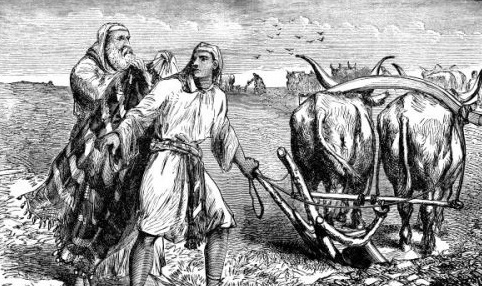
In the first reading, the Prophet Elijah finds a candidate who is totally committed to God to succeed him. Elijah finds Elisha his successor not in the schools of the prophets but in the fields, not reading, nor praying, nor sacrificing, but ploughing a field.  But the prophet makes it clear that the call is not human but from God himself. He receives the mantles from Elijah which represents the personality of the owner and indicates the official clothes of the Prophet with a divine call.  He is chosen to care for the people of God.

In the second reading of today, Paul teaches a lesson to the Gentile converts that they must not give any attention to false teaching. Jesus Christ has come to free them from slavery to the Old Law and remove from them the burden of religious legalism. They are to practice the freedom that comes from the Spirit. This freedom will make them slaves of one another in love.

The opening passage of the Gospel of today begins with the journey of Jesus and his disciples from Galilee to Jerusalem, where his mission on earth was to end. Luke tells us that he was determined. Jesus, in walking toward Jerusalem, was committed to embracing his sufferings and cross.  He was on his way to the triumph of his glory throughout all his life here on earth. He proclaimed his glorification on the cross and his triumph at the end times. His purpose of coming into this world was to proclaim the Kingdom of God.

In the second part of the Gospel, “someone said to Jesus, ‘I will follow you wherever you go.’” Jesus warns this individual that his life is the life of an itinerant preacher who is always on the road. He puts it in these words: “Foxes have dens and birds of the sky have nests, but the Son of Man has nowhere to rest his head.” Luke does not tell us if this person followed Jesus or not.

Later Jesus said to someone else: “Follow me.” However, this individual told Jesus that he had to go and bury his father. In reply, Jesus said to him: “Let the dead bury their dead. Go and proclaim the Kingdom of God.” Then a third person said to Jesus: “I will follow you. However, first I need to go and say goodbye to my family.” Jesus looked directly at this person and said: “No one who sets a hand to the plow and looks back is fit for the Kingdom of God.”

Jesus desires that his disciples be wholehearted in their commitment to him and his mission. Yes, we will have family, children, friends and commitments. However, our primary commitment needs to be to Jesus. This is all He asks of us. Most likely, this call is a great challenge for us. After all, our families and responsibilities are extremely important and rightly so. However, Jesus knows that if our primary commitment is to Him, most likely our day will be filled with graces. “We will find the meaning and purpose of our life. We will find our mission.” It is our choice!

The Power of the Sacraments, the Importance of the Priesthood

June 27, 2022

13th Sunday in Ordinary Time
By Fr. Victor Feltes

It is possible to receive the sacraments and greatly benefit from their graces without feeling very much. Some babies, for example, sleep entirely throughout their baptisms. The power of the sacraments do not depend upon our emotions. Yet sometimes God gives us the grace of sensible consolations from them. Consider, for instance, the St. Paul’s second grader who, when asked by her mother how she felt after her 1st Confession, joyfully answered, “My soul feels so light!

When I was in high school, as we drove to a restaurant following my Confirmation, I wondered at why I felt so very joyful. Then I remembered, “Oh yeah, the Holy Spirit.” In college, sometimes when I attended weekday Masses I felt very little but sometimes I experienced great consolations. Eventually, I realized that my most consoling Masses typically preceded hard times to come. After that, I would be at Mass and think to myself, “Wow, this feels wonderful. Oh no… Well Lord, thanks for heads up.”

Thirteen years ago this week, I was ordained a priest of Jesus Christ at our cathedral in La Crosse. I knew going in that my ordination would come through the bishop’s laying of hands and his consecratory prayer immediately thereafter. I realized I would be a priest by the time my bishop said “amen” at the end of the prayer, but I wondered if there were some precise moment before that when I would be ordained. I had not studied the words of the ceremony beforehand, so after the laying of hands I listened to the words of the bishop’s prayer closely.

For ten sentences, through more than twenty-two dozen words, the prayer recounts what God has done in the past: the Old Covenant priesthood, the high priesthood of Jesus Christ, and the priesthood of his apostles. Then comes these words:

Grant we pray, Almighty Father, to these, your servants, the dignity of the priesthood; renew deep within them the Spirit of holiness; may they henceforth…

At the moment I heard that word, “henceforth,” I felt a pleasant but unsettling wooziness. And the words which followed were these: “may they henceforth possess this office which comes from you, O God…” There was power in those words.

I answered God’s call to become a priest, forgoing the goods of natural marriage and children, because I believe the sacraments and teachings of Jesus Christ’s Catholic Church are that important for souls. The seven sacraments are not empty words and gestures, but important and effective instruments of God’s saving power.

My own ordination came to mind as I contemplated Fr. Matthew Bowe’s priestly ordination last Saturday. I’m reminded of my own ordination day whenever I attend an ordination. I imagine the same thing happens for those of you who are married when you attend a wedding; you’re reminded of your own wedding day and the vows that you made. Now a wonderful thing about entering into priesthood or marriage is that you now know your calling, your vocation, the state of life in which Jesus wants you to follow him. There is then no purpose to looking back, lamenting what was left behind, or looking to alternate life paths on left or right, but to simply plow ahead.

Jesus called Matthew Bowe, Fr. Matthew followed after him, and this brings all of us great joy. People tell me Matthew was so quiet and shy as a child. But if Jesus is calling you, he grows and strengthens you, so there’s no reason to be intimidated. Many feel unworthy to be a priest or a religious brother or sister. Of course! Everyone is unworthy, but Jesus still calls us like he did the apostles; asking us to follow him before long we’re perfect. The priesthood saves souls and God’s vocation for your life (whatever that is) is always the best, so if Jesus is calling you to be his priest, follow him. And if you see someone else who seems to have a calling to priesthood or religious life, do your part to encourage them to follow Jesus Christ.

What We Have to Give is Enough

June 19, 2022

Corpus Christi Sunday
By Deacon Dick Kostner

Have you ever wished that you could do more or give more during your life? Sure you have because part of being human is the desire to always try to do more than what you think you are capable of doing. This is not bad for it makes us strive to accomplish more than what is possible in our present condition. The problem is that sometimes this is not possible it might be because of a disability that we have been burdened with. It could be physical, mental, financial. It might be because we see ourselves powerless because of circumstances that appear beyond our control. That is what the disciples of Jesus faced in our “Father’s Day” Gospel Jesus shares with us today.

The disciples face a dilemma in today’s Gospel. Jesus has been teaching a crowd of thousands of people and his friends have come to realize that they have no food to provide for the crowd and no resources to take care of that many people. They search for an answer and help from the crowd but find but a couple of fish and five loaves of bread. They are overwhelmed and they do what we would do and search for a miracle from their friend Jesus. After all he can walk on water and raise people up from the dead. He certainly can take over and solve this problem right?

Is that not what we all do when we are overwhelmed with our life problems? Sure, we pray for a miracle. We look to someone else to take over. Although Jesus could do just that after all He is God, but what does he do? Jesus does not take over but rather he tells his disciples to take care of it themselves. He puts them in charge. He does not allow them to slip out the back door and find someone else to solve the problem rather he empowers them to find a solution and shows them that he believes in them to solve this problem.

The disciples search for an answer and find but two fish and five loaves of bread, which they take to Jesus confessing that this is all they could find. Jesus takes what they have found, blesses the food, and tells the disciples to distribute what they have to the people. They do as he says and guess what, it not only feeds all the people but there is also food left over. Jesus shows them that all they need to do is to do the best they can and then have faith that God will provide them with enough support to solve any problems they may run into.

Let me share with you my true story of how this plays out. The Law School I attended in Chicago required a grade average a 82% or the student would go on probation. If one at any time would go on probation a second time you were expelled. There was one exam for each course for each semester. It was a timed exam and consisted of five or six essay questions which contained multiple issues and rules of law to apply. I always was running out of time and not completing in full all the questions and yes I went on probation the first semester. Pressure was on and I knew this was my last chance. Sweating this out a couple of semesters I made it without another probation until my final year. Just before my semester exam I said a prayer to God telling him I was doing my best but wondered if He really wanted me involved with this profession. The exam day drew near and a met with Bob, a friend of mine after one class to have a beer and forget about the exam day. I confessed to him that I had been on probation before and that I always seemed to run out of time before completing the questions to my satisfaction. He looked at me and said, “Dick, are you out-lining each question before you apply the law?” I looked at him puzzled and said, “I don’t have time to do this.” He laughed and said that I needed to do that first for each of the questions and then go into application of the law for the instructor would see that I had arrived at the issues and knew the law which was 90% of the grade. Well I took his advice and was one of twelve of our class of 200 who graduated.

Today we celebrate the gift God has given us in the Eucharist. His body and blood for us to consume and give us all that we need to find success and fulfillment in this world of problems. This gift requires only that we do the best we can in handling problems of life and then if we offer this up and ask the Father to bless it, that this will be enough! Today is Father’s Day and I know that dads want the best for their children but many times feel powerless in helping their children solve life problems. Jesus gives to us dads the solution. All that we need to do is to try to do the best we can and then offer it to God as a gift and guess what? This, and faith the size of a mustard seed, will be enough! Happy Father’s Day and remember what we have to give of ourselves is enough in God’s eyes!

Encountering the Holy Trinity at St. John the Baptist Church

June 11, 2022

Trinity Sunday
By Fr. Victor Feltes

I am back again at St. John’s this Sunday for the final weekend of our Inspired by the Spirit capital campaign and I have good news to share. Going into this weekend, nineteen households have pledged and their pledges total almost $83,000. From the actual monies received to date, our Diocesan Annual Appeal for next year is already covered. And if all of our campaign pledges are fulfilled, about $54,000 will come back to replenish St. John’s Building Maintenance Fund over the next five years.

That’s a great thing; however, this depends upon people following through on their pledges over the coming years. And things happen, so it’s likely not everyone will fulfill them. So today during announcement time I’ll provide one more chance to fill out or grab a pledge card to make a five-year pledge for our capital campaign. If our actual campaign monies raised over these next five years happen to surpass our $80,000 goal, 80% of that overage will return to St. John’s. Or if you prefer, you can always write checks directly to St. John’s with “Building Fund” in the memo line and we will deposit your entire gift into that St. John’s Parish account.

As I mentioned last week, St. John’s Building Fund was depleted by our interior renovation project which made this church of ours one of the most beautiful in our area. And what I love about our church’s new design is that it’s not only beautiful but meaningful. This design, like everything in the universe, is connected to the Most Holy Trinity. Like Sacred Scripture, our sacred art has multiple true interpretations.

Consider, for instance, the colors of the nave where you sit. Our earth tone floor and walls recall how St. John the Baptist, with suntanned skin and camel hair clothes, dwelt among the rocky ground and sandy hillsides of the arid wilderness. Our blue ceiling down the center is like the Jordan River flowing through the desert. It was in this wilderness where John the Baptist, on more than one occasion, pointed out Jesus to declare “Behold the Lamb of God! … Behold the Lamb of God, who takes away the sin of the world!” In Latin, “Behold the Lamb of God” is “Ecce Agnus Dei,” which is the phrase upon our sanctuary’s arch. St. John the Baptist’s statue in our sanctuary points higher to Christ the Lamb of God. The Baptist said of him, “He must increase, I must decrease.” At Jesus’ baptism the Holy Trinity is revealed.

After Jesus was baptized by John in the Jordan, he came up from the water and the heavens were opened. The Holy Spirit was seen descending in the likeness of a dove and came down upon him. In our sanctuary, the Holy Spirit is seen descending over Jesus; Jesus on the Cross, Jesus in the Tabernacle, and Jesus on the altar. At the Jordan, the invisible Father—still unseen, pointed out his Son from the heavens, like the hand which represents God the Father points to Jesus’ Sacred Heart Statue in our sanctuary. At Jesus’ baptism, the words of the Father were heard: “This is my beloved Son, with whom I am well pleased.”

At our baptisms in the name of the Father and of the Son and of the Holy Spirit, we became children of God, temples of the Holy Spirit, and members of the Body of Christ. St. John the Baptist leads us to this personal union with the Holy Trinity. Our blue ceiling may also be taken to represent the sky. Many churches of Europe and the Eastern Church have blue ceilings. The gold plants featured on our walls have old precedent as well. The walls inside the ancient Jewish Temple in Jerusalem were decorated like a garden, with golden depictions of “palm trees and open flowers.” This is because God’s Temple represents a new Garden of Eden, where God dwells with the human race. Our Catholic churches, like the Temple, represent the whole created universe in union with our God in heaven.

The Bible speaks of three heavens. St. Paul writes in 2nd Corinthians of a man, most likely himself, who either in his body or out of his body “was caught up to the third heaven… to paradise, and heard inexpressible things…” What are those three heavens? The first heaven is our sky, where the clouds float and the birds fly. The second heaven is the outer space beyond it, where the stars and planets shine. But the third heaven is beyond them both, a dimension you cannot climb or ride a rocket to, the very presence of the Holy Trinity.

In this church, we are taken beyond the sky above us and the shining star before us into the presence of the Holy Trinity. In our church, through the waters of baptism we come to this altar of Sacrifice, where through Jesus, in union with the Holy Spirit, we offer glory and honor to our Father. At Mass, we give gifts to God; including our wealth and thanks and praise but, most importantly, the gift of ourselves. And at this altar the graces pour down from heaven and flow forth upon us and out into the world. The mystical river flows both ways. All being and truth flows from the Trinity, and all of creation is called back to God.

St. John’s Church is a beautiful church and its purpose is salvific. I desire, that centuries from now, Cooks Valley’s church will still be here, advancing the kingdom of God. That is why I am supporting St. John’s in this Inspired by the Spirit campaign and I encourage you to do the same.

“Receive the Holy Spirit”

June 5, 2022

Pentecost Sunday
By Fr. Chinnappan Pelavendran

On the day of Pentecost, the Holy Spirit descended with power upon the Apostles in the image of tongues of fire and thus began the mission of the Church in the world. Once they received the Spirit, they went out boldly and preached to all in Jerusalem and elsewhere. Jesus himself prepared the Eleven for this mission, appearing to them on many occasions after his Resurrection.

Jesus asked them to stay together to prepare themselves to receive the gift of the Holy Spirit. The disciples followed the command of Jesus. They as a community gathered together in prayer along with Mary in the Upper Room, awaiting the promised event. It is here they all received the Holy Spirit. This feast of Pentecost is the culmination of the Paschal mystery which tells us of the sending of the Spirit of the Father and the Son on the disciples.

During his apparitions Jesus gives two gifts to his followers, the gift of his abiding peace and the power to forgive sins. He commissions them to carry on his work, empowered by the gift of the Holy Spirit and peace. The Holy Spirit will continue to teach them the message of Jesus. Today is also the birthday of the Church. This Sunday is a commemoration and celebration of the receiving of the Holy Spirit by the early church.

We celebrate this day to recognize the gift of the Holy Spirit, realizing that God’s very life, breath, and energy lives in believers. The celebration reminds us of the reality that we are all having the unifying Spirit that was poured out upon the first disciples. It tells us that the same Spirit is given to each one of us, that we are all baptized by one Spirit into one body, and that the Spirit which raised Jesus from the dead will raise us too. So he said to them, “Receive the Holy Spirit.” With the giving of the Spirit came also the authority to speak and act in the name of Jesus.

If you forgive sins, they are forgiven; if you retain the sins of any, they are retained.” Forgiving sin, reconciling people with God has been the very core of the work of Christ and the Christian mission. The Holy Spirit will teach them the divine knowledge and wisdom of the Father that belongs to Jesus, both the Father and the Son is one in the Blessed Trinity

Being filled with the Holy Spirit, they were given the power of preaching and healing and they spoke in tongues. Thus having received the Holy Spirit, the disciples went out and preached the message of Jesus. Jesus greets his disciples with the gift of peace. “Peace be with you,” he says. Jesus then commissions his disciples to continue the work that he has begun “As the Father has sent me, so I send you.” He breathes the Holy Spirit upon the disciples and sends them to continue his work of reconciliation through the forgiveness of sins.

As we celebrate this great feast of the Church’s fifty days after the resurrection of Jesus, how have we been a sign of reconciliation in our families, in our world, and among people of faith everywhere? Have we been an instrument of God’s peace to everyone we meet? With the faith and trust modeled by Mary, the Mother of God, let us offer our prayers to God this day. Heavenly Father, in your wisdom, please hear and answer our prayers this day. We ask through Jesus Christ, your Son.