Archive for the ‘Sunday Homilies’ Category

Who is the Fig Tree? Three Interpretations

March 19, 2022

3rd Sunday of Lent
By Fr. Victor Feltes
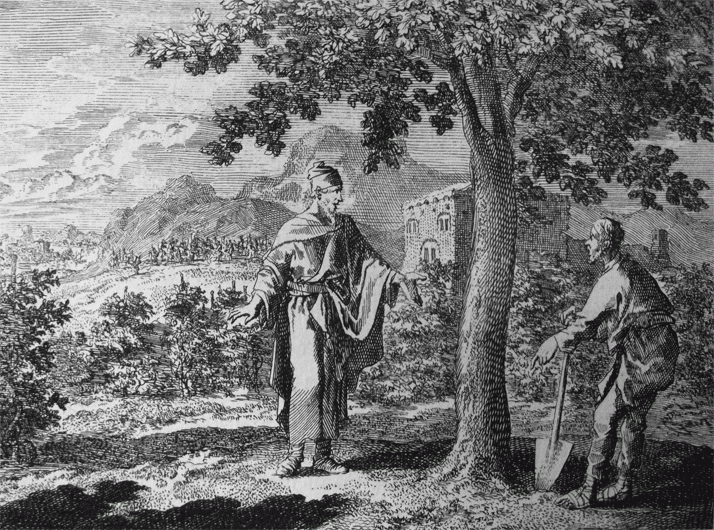
“There once was a person who had a fig tree planted in his vineyard, and when he came in search of fruit on it but found none, he said to the gardener, ‘For three years now I have come in search of fruit on this fig tree but have found none. So cut it down. Why should it exhaust the soil?’ He said to him in reply, ‘Sir, leave it for this year also, and I shall dig around around it and fertilize it; it may bear fruit in the future. If not you can cut it down.’”

The fig tree in Jesus’ parable was fruitless for three years and in danger of being chopped down. Who does this fig tree represent? The prophets Jeremiah and Hosea likened Old Covenant Israel to a fig tree, and the early Church Fathers commonly identified the barrenness of the parable’s fig tree with Israel’s refusal to accept their Messiah. Israel experienced three years of Christ’s public ministry and had still another season of opportunity to become fruitful by embracing Christ’s Church thereafter. But Jerusalem, its Temple, and all its towers were cut down, put to the sword and destroyed by the Romans in 70 A.D.. Parables, however, can have more than one valid and inspired interpretation. Beyond symbolizing an era of history now passed, what meaning does the barren fig tree hold for us today?

In today’s second reading, St. Paul warns the Christians at Corinth against presumption. The Hebrews during the Exodus all shared in a baptism with Moses when they passed through the Red Sea. In the desert, they all ate bread from heaven and drank a miraculously-given drink on their journey. “Yet God was not pleased with most of them, for they were struck down in the desert.” St. Paul says “these things happened as examples for us… as a warning to us,” lest we who are baptized into Christ and regularly consuming his Holy Eucharist think we do not need to reject all grave sins. Do not grumble or rebel like the Hebrews in the desert. Stop following your desires for evil things, or you will perish as they did. Instead, repent and follow our good and loving Lord. He will help and guide you to his Promised Land.

A fig tree may be lush with leaves, giving off a splendid appearance, and yet be barren within. A Christian may appear complete to others, and yet have a sickly soul. To help the barren fig tree, the gardener in our parable pleads to dig around it and add fertilizer. This describes root pruning and the application of manure. Root pruning as a method to make fig trees more fruitful is still recommended today. One article suggests this technique: at the end of winter before new growth begins, go about two feet away from the tree trunk and plunge a spade or shovel down, severing the roots. Skip over one shovel’s-width to the side and then repeat this pattern in a circle once around the tree. Cutting off some of its roots spurs the fig tree to divert its energies from growing foliage to creating fruit. The manure, for its part, provides nutrients (especially nitrogen) which plants require and benefit from. So, if you are a barren fig tree, Jesus the Gardener wishes to radically sever your connections to vices and distractions, in order to productively redirect your energies. He wants to introduce you to stuff which you may now find repellant (including regular confession and daily prayer) but which you need and will benefit from. You do not know how many seasons you have left. Jesus offers you this opportunity to change and become fruitful. Please let Christ the Gardener work with you.

But what if you already follow Christ closely and are aware of no grave sins? What if you have mature self-knowledge, a well-formed conscience, and cannot detect any mortal sins in yourself? Then praise God for that, and consider how our Lord wishes to glorify you through still greater fruitfulness. In the Old Testament Book of Leviticus, God commanded his people not to eat from any tree they planted in Israel throughout its first three growing years. In the fourth year, all of the tree’s fruit was to be dedicated to God as an offering of praise to the Lord. Only in the fifth year, and any years after that, could they eat its fruit. (Leviticus 19:23-25) So how would God dedicate your fruit as an offering to himself and grant you a greater enjoyment of his blessings ever after? A third interpretation of today’s parable suggests how.

Jesus’ parable begins: “A man had a fig tree planted in his vineyard…” (Our New American Bible translates that line’s last word as “orchard” but the Greek word St. Luke uses means “vineyard.”) A vineyard is for growing grapevines. This raises a question I found answered online: why would someone plant a fig tree in a vineyard? A “consulting viticulturist” from New Zealand who has worked fifty years in the vineyard and wine industry says some vineyards plant fig trees because “in some regions figs ripen at about the same time as grapes – birds seem to prefer pecking figs [and] so leave the grapes alone (more-or-less).” Another online commenter, a “cook for over sixty years,” adds that “some vineyards have a problem with small birds who peck at the grapes looking for the seeds and causing the grapes to rot. One solution is to plant fig trees around the vineyard. The birds prefer the figs because they have more seeds and the seeds are more accessible, they then leave the grapes alone.”

The reason a fig tree is planted by a vineyard is to offer up its fruits as a sacrifice for the good of the vineyard, to the delight of the vineyard owner. Who or what is this vineyard in the parable? Jesus teaches, “I am the true vine, and my Father is the vine grower,” and tells his Church, “I am the vine, you are the branches.” (In another parable, The Parable of the Wicked Tenants, Jesus identifies a vineyard as “the Kingdom of God.”) So the fig tree is called to self-sacrifice for the good of God’s vineyard, which is the Church, the Body of Christ, the Kingdom of God. But what does this look like?

In the midst of the French Revolution, a community of Carmelite nuns in Compiègne felt moved to make an offering themselves to God as a sacrifice for their troubled nation and the Catholic Church in France. Almost two years later, after the state had closed and seized all the convents and outlawed the wearing of habits, the sisters were found, arrested, and condemned to death. On July 17th, 1794, sixteen chanting nuns ascended the scaffold one-by-one and were guillotined before a silenced crowd. Ten days after the Blessed Martyrs of Compiègne’s sacrifice the evil “Reign of Terror” ended.

More recently, Fr. John Hollowell, a diocesan priest about my age of the Archdiocese of Indianapolis, was diagnosed in February of 2020 as having a brain tumor. Though grave news, Fr. John saw in his illness an answer to his own prayer. He wrote on his blog at the time, “When the scandals of 2018 broke out, most of you know that they [] affected me deeply, as they have most of the Church. I prayed in 2018 that if there was some suffering I could undertake on behalf of all the victims, some cross I could carry, I would welcome that. I feel like this is that cross, and I embrace it willingly.” Following surgery and treatment, he continues serving today as a pastor in Indiana.

Now it’s natural to hesitate at making such a self-offering. Who wants to suffer – to have our roots cut or be surrounded by dung? Even Jesus prayed before his own self-sacrifice, “My Father, if it is possible, let this cup pass from me; yet, not as I will, but as you will.” Yet Jesus loved his Father and loved us, trusting that whatever his Father willed would be best for us all. The hour had come for the Son of Man to be glorified. Was not this most-difficult thing the greatest thing that Jesus did? Jesus tells us, “Whoever serves me must follow me, and where I am, there also will my servant be. The Father will honor whoever serves me.”

In its first years, a fig tree grows only for itself. A fig tree typically begins bearing fruit when it is three to five years old. So after three years of barrenness, it remains unknown whether the fourth year will witness the tree producing pleasing fruits. Jesus now offers you an opportunity to be fruitful and be glorified like himself. Please love and trust him enough to offer him your fruitful sacrifice.


Our God of Second Chances

March 19, 2022

3rd Sunday of Lent
By Fr. Chinnappan Pelavendran 

On this third Sunday of Lent, the Church provides us with another moment of grace to straighten us on our journey. Today, we celebrate the Lord who frees us from our slavery to sin, if only we listen to His warning to repent. Repentance is, feeling sorry for the sin we committed and a firm resolve not to deliberately commit it again. Sincere repentance provokes God’s compassion, mercy, and love.

The first reading taken from the Book of Exodus, tells us about the deep concern of God towards his people suffering in Egypt. He sees the hardships experienced by his chosen people and observes their misery. God had heard their cries of misery and takes initiative to liberate them from the Egyptian masters. God shows His mercy to His chosen people by giving them Moses as their leader and liberator. The God of Abraham, Isaac, and Jacob reveals Himself to Moses from the burning bush and assures Moses of His Divine presence with His people and of His awareness of their sufferings in Egypt. He declares His intention to choose Moses as the leader who will rescue His enslaved people. Then God reveals to Moses His name as Yahweh (“I AM Who AM”) and renews the promise He made to the patriarchs to give them a “land flowing with milk and honey.

In the second reading, St. Paul warns us that our merciful God is also a disciplining God. Paul reminds the Christians of Corinth that they must learn from the sad experience of the Israelites who were punished for their sins by a merciful but just God. The merciful and gracious God is also just and demanding.

In today’s Gospel, Jesus informs us that those who do not repent will perish. On the other hand, Jesus tells us a parable about the patience of God. As the fig tree is given one last chance to produce fruit before it is cut down, so Jesus is giving His people one final opportunity to bear good fruits as evidence of its repentance. Through this parable, we are reminded of the patience of a God who is willing to give sinners a chance to reform their lives and to seek reconciliation. Just as the farmer tended the barren fig tree with special care, so God affords sinners whatever graces they need to leave their sinful ways behind and return to God’s love and embrace.

Divine grace is expressed as justice with compassion and judgment with mercy. However, we cannot draw strength and sustenance from God without producing fruit. Our fruit should consist of repentance, confession, and firm commitment to change our lives. Let us produce good fruit when we can, Let us repent while we have the chance. Let us turn to Christ, acknowledge our faults and failings, and receive from his mercy, forgiveness, and the promise of eternal life. There is no better way to take these words of Jesus to heart than to go to sacramental confession. There is no better time to go to confession than during Lent. Repentance helps us in life and in death. It helps us to live as forgiven people and helps us to face death without fear.

Our merciful Father always gives us a second chance. The prodigal sons returning to the father was welcomed as a son, not treated as a slave. The repentant Peter was made the head of the Church. The persecutor Saul was made Paul, the apostle to the Gentiles. During Lent, we, too, are given another chance to repent and return to our Heavenly Father’s love.

A Time for Transformation

March 13, 2022

2nd Sunday of Lent
By Fr. Chinnappan Pelavendran

As we now enter the Second Week of Lent, our task is to continue to examine our hearts and change ourselves to be worthy of the Lord’s glorious paschal mystery. As human beings, we do not like change and we resist any change as much as we can. However, change is a part of our life, and we cannot just depend on our past glory and achievements. We know that we are pilgrims on a journey to a more permanent dwelling place, a place of total union with our God of Truth and Love. The readings for today invite us to reflect on the paradox of our Christian faith that we belong here but at the same time, we do not belong here. It is in this world that we are to find a home with God in the world to come.

Today’s first reading describes Abraham’s journey of faith. He had been asked to leave his homeland and to go and live in a strange place if he did so, he was promised a great future for his family and descendants. Without any further guarantees, Abram sets out. His readiness to put his trust in God’s word was rewarded by becoming our father in faith. At this time Abraham had no children and expresses his desire to the Lord. God had assured him of a great dynasty as numerous as the stars of heaven. He shows it to Abraham through a covenant. From this experience, Abraham knew his trust in God was justified.

In the second reading taken from the Letter of St. Paul to the Philippians, we heard St. Paul tell the new Christians that our citizenship is in Heaven, that is, the goal and destination of our lives are to be one with God. St. Paul explains to them the Lord Jesus Christ and how the Lord will transfigure our wretched bodies into copies of His glorious body. He will do that by the same power with which he can subdue the whole universe. At the same time, we do not belong to this world because Christ died for us so that we may be made righteous through Him. Through His death on the Cross as the sacrificial Lamb, we inherit the salvation that awaits all those who persevere in their living faith. Jesus will come to save us and will transform our lowly bodies to be like his own glorious body.

In today’s Gospel, we see the blessing for Peter and James and John to witness Jesus transfigured. They got a preview of the glory of Jesus risen from the dead. It was also a preview of the glory we all hope to share in heaven. This was a very special grace for Peter and James and John. Through the Mystery of his Transfiguration in the presence of Moses and Elijah, Jesus wanted to show his apostles, ahead of time, the glory of his Resurrection. Having had this experience they would keep these words to undergo the trial of the Cross and the Passion of their Master. We, too, can receive within us the risen Jesus to carry our daily cross. Jesus was accompanied by Moses and Elijah; two pillars of the Old Testament, representing the Law and the Prophets.

The Transfiguration mystery of Jesus defies all explanations. It is an encounter with the divine that is briefly experienced in the context of prayer. The Transfiguration of Jesus that the disciples witnessed was not simply something they were to see and experience only to the Lord Jesus to him alone. It was also an invitation for them to undergo a transformation of their own. By listening to Jesus, listening to all that he invites us to be and to do, It means especially listening to those words of Jesus; It means having total trust in walking in His Way; it means a total trust that only His Way brings us into full union with God, the source of all Truth, Love, Happiness, and Peace.

His Glorious Light Overcomes the Darkness

March 13, 2022

2nd Sunday of Lent
Fr. Victor Feltes

Once upon a time, little Billy’s grade school teacher was teaching her class about outer space. She said, “In 1969, the American astronaut Neil Armstrong became the first person to walk on the Moon.” Little Billy raised his hand and asked, “Teacher, has anyone ever walked on the Sun?” “Oh, no,” she said, “the Sun is far too hot for that.” But Billy replied with confidence, “I know how I can be the first.” Curious and bemused, she asked him how. “Easy. I’ll go at night!

The Sun, of course, does not turn off at night like a lamp on a switch. The Sun still blazes and shines with incredible heat and light even when the Earth obscures it from our sight. And even on the darkest, stormiest day the Sun remains in the heavens above us even though clouds prevent us from perceiving it clearly.

In this Sunday’s first reading from Genesis, Abram (before God changed his name to Abraham) seems discouraged. He’s lamenting to the Lord: “Look, you have given me no offspring.” Though God has promised him descendants, he and his wife have become very old without having any children together. The Lord God guides him outside and says, “Look up at the sky and count the stars, if you can. Just so, shall your descendants be.” We can easily picture this as a nighttime scene: Abram exits his dwelling and sees a billion stars in the Milky Way. Indeed, more than that number of people today recognize him as our spiritual ancestor, “our Father in Faith.” But this episode strikes as even more profound if, instead of during nighttime, it happened during the day.

‘Look up at the blue sky and count the stars, if you can. Just so, shall your descendants be. You know the stars are up there, Abram. You know they don’t stop being real each morning, it’s just that you can’t see them. Your many descendants will exist, though you cannot see them now, though you do not yet know how. I assure, you my promises to you will be kept.’ And “Abram put his faith in the Lord, who credited it to him as an act of righteousness.

Then God reaffirms his promises to Abram in a strange and mysterious way. The Lord directs him to sacrifice five animals. Abram slays them and lays them out, and then.. nothing happens. Birds of prey, scavengers, swoop down upon the carcasses to pick them over. Yet Abram does not give up; he patiently remains there. As the sun is about to set, a deep, terrifying darkness envelops Abram. And when the sun has set and it is dark, Abram sees a flaming torch and a smoking fire pot appear and pass between the sacrifices. This is a sign from God against any discouragement, doubt, and fear; it is the Lord’s light overcoming the darkness.

Christ’s Church pairs this reading from Genesis today with Jesus’ Transfiguration. After telling the disciples of his coming death, Jesus manifests to them his glory; a divine glory which is always present but which they cannot always see. This event seems to take place in the dark of night since Peter, John, and James were overcome by sleep while Jesus prayed. But upon becoming fully awake, their eyes are opened: they see Jesus’ face shining like the sun and his clothing now dazzling white, as he speaks with Moses and Elijah. These two, great prophets after their trials share in Christ’s radiant glory and speak of the exodus he will accomplish in Jerusalem (that is, they speak of his approaching paschal sacrifice which will set God’s people free).

In his Transfiguration, Jesus reveals his glory to the disciples to strengthen them for the scandal of the Cross. He wants to prepare them to accept, even by the testimony of the law and the prophets, that the Passion leads to the glory of the Resurrection. Christ’s glory shines forth from a body like our own, to show that we, his Church, the body of Christ, can likewise share his glory.

The stories of little Billy, Father Abraham, and Christ’s Transfiguration teach important truths believers will be blessed to remember and hold on to. Even more so than the Sun or stars, our good God endures unchanging. Though this world obscures the light of heaven, heaven’s light remains undimmed. Birds of prey may swoop down and impiously scavenge as enemies of Christ, but we are not forgotten. The innocent one may suffer like Christ, but he is not abandoned. Our times may be dark and frightening, but we need not be afraid: God’s promises will be kept. This is our faith: that despite doubt, discouragement, and distress, the glory of our Lord will overcome the darkness.

Trusting & Relying on God

March 6, 2022

1st Sunday of Lent
By Fr. Chinnappan Pelavendran

Trusting God is simply a belief in His Love and His Goodness. He has the power to help you, and He wants to help you. Christians are called believers, but many times we are more like unbelieving believers. We trust our friends, the bank, the stock market, or the government more than we trust God and His Word. Lot of people go to church, hear what they should do and then go home and try to do it on their own. They usually end up desperately telling God how hard they’re trying to do what they need to do, and they’re leaving Him out! God wants us to put Him first in our lives. He wants us to put our confidence and trust in Him, all the time, in everything.

In the first reading, the Prophet Jeremiah explains the benefits of placing one’s trust in God rather than himself. Then he compares the wicked to a barren bush in a desert and the just to a well-watered tree growing near a running stream.  In essence, this “beatitude” teaches us that if we choose God as our hope, our security, and our happiness we will be blessed, truly happy. On the other hand, if we choose human standards for our guidance, self-sufficiency and the meeting of our own needs and desires as our happiness, we will find ourselves living in increasing misery and confusion, in other words, in woe. Jeremiah tells us that the only source of lasting happiness is trust in God and hope in His promises.

Today’s second reading, St. Paul writes that trusting hope in the Resurrection of Jesus is the basis of our Faith, through Jesus’ death and Resurrection, believers are now welcomed into a new relationship with God as His sons and daughters, and with each other as dear brothers and sisters who have Jesus as our Elder Brother and Redeemer. This means that all the blessings of the Beatitudes are now available to us, provided we choose to follow Him.

In our Gospel today, Jesus did not say that poverty, or hunger, or sadness, or hatred is a blessing but these conditions of need and dependence make us rely on God. When we rely on God humans in relationship with God our creator. So the poverty, hunger, sadness, hatred, or whatever the cross can be an instrument to draw us closer to God. Whatever cross we have in our lives is there for a purpose, to bring us closer God. In that sense, our cross is also our blessing.

We have a long way to go to make it a reality. It is not God who is to be blamed; rather it is for all of us to hang our heads in shame. Jesus expects us to perform the same acts of goodness that he did for the poor, the alienated, the sick, the deprived, and the oppressed. Our trust should be in the Crucified and Risen Christ, the Savior and hope of the world. May we trust in God, not in human power, to lead us all into His kingdom and to keep us on His path.

Timeless Temptation Tactics & Traps

March 6, 2022

1st Sunday of Lent
By Fr. Victor Feltes

The Book of Revelation identifies “the ancient serpent” who “deceived the whole world” as the one called the Devil and Satan. In the Garden and the desert, his tactics against human beings were similar.

For instance, Satan points out a desirable, material good and encourages grasping for it against God’s will. In the Garden, the serpent told Eve to eat fruit from the Tree of the Knowledge of Good and Evil, and she saw the tree was “good for food, pleasing to the eyes, and desirable for gaining wisdom.” But God had commanded, “You shall not eat it or even touch it, lest you die.” Jesus in the desert had eaten nothing for forty days and he was hungry, so the Devil encouraged him to break his fast by conjuring a stone into bread. This was apparently against God the Father’s will, for Jesus responded, “One does not live by bread alone, (but by every word that comes forth from the mouth of God.)

Another thing Satan does is promise power and happiness separate from God. The serpent told Eve in the Garden, “God knows well that when you eat of it your eyes will be opened and you will be like gods, who know good and evil.” And the Devil told Jesus in the desert, “I shall give to you all this power and glory; for it has been handed over to me, and I may give it to whomever I wish. All this will be yours, if you worship me.”

And a third tactic Satan tries is to say that sinful decisions will have no painful consequences. The serpent said to Eve before her Fall: “You surely will not die!” And the Devil told Jesus atop the temple, “throw yourself down from here, for it is written: ‘He will command his angels concerning you, to guard you,’ and: ‘With their hands they will support you, lest you dash your foot against a stone.’

Our Father knows how to give good gifts to his children. He wills to glorify us through and with and in himself. And he commands us not to sin because he knows it’s bad for us. The Devil, however, urges us to grasp after forbidden things, promises power and happiness apart from God, and lies to us that our sins will cause no harm or pain. Satan tries the same tricks on us today as he did in ancient times.

What if the Devil and all his demons were to suddenly cease existing? Would all our sinning end and disappear tomorrow? Sadly, no. Ever since the Fall, we human beings experience concupiscence; we feel unwieldy passions and misdirected desires. So, even absent demonic temptations, some sinning would still occur on earth. When we sin, how much is due to our wounded human brokenness and how much is instigated by demonic activity? Whatever the mix or mixture of the two, regardless of whether a particular temptation is coming from inside us or outside us — from inner wounds or external enemies, Jesus’ temptations in the desert reflect the ways we are tempted.

For example, in today’s gospel when does Jesus’ first temptation come? When Jesus is very hungry from extreme fasting. Temptation often attacks us in our weakness. Alcoholics Anonymous has an acronym called “HALT.” They observe that someone is more likely to fall off the wagon of sobriety when they are “Hungry, Angry, Lonely, or Tired.” I’ve noted this in the confessional as well. For instance, when parents confess to having lost patience with their children I commonly ask them if they’re tired. The answer is almost always “yes.” Now this doesn’t mean we should never make loving sacrifices which might leave us hungry or fatigued, but it does mean that we need to be aware of our vulnerability at such times and be extra careful in our actions.

Do you find that the sins you bring to the Sacrament of Confession are often much the same? This is common and can discourage some people, but thank goodness it’s not something totally different each time (gossip one day and arson the next)! As creatures of habit, the times and places and ways in which we will be tempted should not be total mysteries to us. Be conscious that you are most likely to be tempted again when and where and how you were before. Realizing this, make any necessary changes in your life, and live with your eyes wide open on the lookout for your known stumbling blocks.

In his second temptation today, Jesus is shown “all the kingdoms of the world in a single instant,” to tempt him toward idolatry. This seems to describe a vision, perhaps within Jesus’ imaginative faculty – a very real experience perceived within his mind. Our temptations often play upon our imaginations. Jesus responds to this temptation abruptly: “It is written: ‘You shall worship the Lord, your God, and him alone shall you serve.” Like a snowball beginning to roll at the top of a mountain, Jesus shows us that it is best to resist temptation early and firmly, before the snowball becomes an avalanche which brings disaster. Though we should not give our imaginations free rein to present us sinful shortcuts falsely-promising happiness, examining our daydreams can be revelatory. Consider: “I could fantasize about absolutely anything, so why am I fantasizing about this?” What is the good desire behind it which God wishes to ultimately fulfill for you somehow? Allow me to share a story about what I mean.

I once met a seminarian who felt strongly called to be a Roman Catholic priest but also felt drawn to marriage. Obviously, these two vocations were incompatible and this tension greatly vexed him. When he shared this internal conflict with his spiritual director, that priest asked him, “Could it be that what you are longing for isn’t actually marriage, or sex, but intimacy?” The young man then realized that he had simply always associated and identified deep intimacy – knowing and being known, loving and being loved – with marriage. He came to realize God was calling him to greater intimacy with himself. Through seriously examining his desire he discerned the deeper, holy desire behind it. Notice, too, how this seminarian gained a helpful perspective by sharing what he was experiencing with a wise and spiritual person. If he hadn’t, he might have made a grave mistake and missed out on his life’s calling.

In the gospel’s third and final temptation, we witness the Devil challenge Jesus’ identity and attempt to confuse him: “If you are the Son of God, [observe this is the third time the tempter says this phrase] throw yourself down from here.” The Devil then quotes two passages from Scripture to argue that Jesus should do something which would be wrong. When someone is going from good to better, our demonic foes often seek to confuse and confound us. Where the demons cannot make us wicked, they will seek to discourage and impede us.

For example, for a couple weeks in college, I continued going to Mass but refrained from receiving the Holy Eucharist. I worried that I lacked sufficient faith to receive our Lord worthily. But then I was enlightened in prayer with an (in retrospect) obvious insight: people who don’t believe in God don’t worry about whether they believe enough in God – that’s something believers do. My anxiety was relieved and my regular Communion was restored when the misleading illusion was dissolved.

When I started learning more about our Catholic Faith as a teenager, I would come across some seeming contradiction in the Bible or a Church teaching I didn’t understand and become greatly troubled, for if the Bible or the Church were wrong about this then how could they be trusted? But then I would learn how the bible passages were not actually in conflict, or that there were actually good reasons for the Catholic teaching. I experienced this cycle enough times that I learned to handle it with confident, trusting patience. I reflected, “There are good answers to my questions, but I don’t have to find them immediately, right this second. It’s going to be fine.” Don’t fall for the temptations to doubt and self-doubt which would rob you of your peace.

Challenges to our identity are another common temptation trap. The Devil says, “If you are the Son of God, throw yourself down from here,” implying, “If you don’t jump, then you don’t believe your Father’s word can be trusted, or you don’t really believe that you are his Son.” The Devil is attacking Christ’s identity and Jesus’ relationship with his Father. Temptation tells us, “You’re a fake, you’re a phony, you’re a hypocrite, you’re a failure, you’re an embarrassment, you’re worthless, you’re shameful, you’re rejected, you’re unlovable, you’re unloved.” Don’t fall for that garbage. Instead, ask our Father, Jesus, and the Holy Spirit to show you who you are to them and live in that beautiful truth.

To be forewarned is to be forearmed. Through knowing these timeless temptation tactics and traps, may you prevail in the spiritual battles ahead of you this Lent.

Every Tree is Known by its Fruit

February 27, 2022

8th Sunday in Ordinary Time
By Fr. Chinnappan Pelavendran

The quality of a tree is known by the quality of the fruits borne by the tree. This literally means that the tree should not be judged by its appearance but by the fruit which is generated by it. The proverb also can be stated…

As is the king so are his subjects.
As is the mother so is the daughter.

St. Monica was born in a Christian family, she married a pagan man. Her marriage was blessed with three children. The oldest and most famous was Augustine. Her husband was not a model husband yet Monica prayed ceaselessly for his conversion. After much prayer her husband accepted baptism but he died within a year. Her son Augustine was a constant concern. Augustine followed the example of his father. He refused to accept baptism for many years, Monica prayed, fasted and cried silently for Augustine’s conversion, God was listening. He heard and finally answered these prayers of this faithful mother. Augustine left his sinful ways, accepted baptism from St. Ambrose of Milan. After his baptism he became good Christian and eventually bishop of Hippo. He was one of the greatest minds of the early Christian church, a theologian whose ideas forever influenced the Catholic Church. St. Monica died shortly after at the age of 55, secure in the knowledge that her son had responded God’s call. Her work on earth was finished. She was a good tree that produced good fruit.

If we want to judge a person we have to judge them not by their speech but by their actions in times of adversity. There is a story in the bible in which two women with a small baby came to King Solomon and said that this baby was their child. King Solomon could not determine who the real mother was so he said that he would cut the child into two giving them each one half. The real mother opposed it and said that she does not want to kill the child because the real mother truly loved the child. So even if King Solomon cannot choose the real mother he made use of the true inner quality of a mother to resolve the problem. So if we want to judge a person, we should do it from their actions.

In today’s gospel, Jesus also teaches us that the quality of our heart determines the quality of our words and actions. He says, “A good person, out of the store of goodness in his heart produces good, while an evil person, out of a store of evil produces evil; for from the fullness of the heart the mouth speaks.” As Christians, if we live according to the good news, our actions and words would be guided by it. Consequently, it will affect others positively. On the contrary, if we fill our hearts with evil, our words and actions would be filled with nothingness. Are our words uplifting or tearing down others? Jesus describes the heart as one that either produces fruit that is good or fruit that is evil. What kind of fruit is growing in the tree of our heart? Bearing good fruit of love for one another is needed more now than ever before in this world. Evil and hatred sits at the forefront of the world, but God is calling us Christians to be “good fruit trees” that bears good fruit that can only be identified by our character from the words we speak. If we are bearing good fruit, the results will be productivity for the kingdom of God in word and deed. Jesus observes that good trees bear good fruit. When we produce abundant good fruit, then God is glorified. We understands that we have been created by God for fruitfulness.

On Fraternal Correction

February 27, 2022

8th Sunday in Ordinary Time
Fr. Victor Feltes

Back in your school days, did you ever have a teacher whom you really liked teaching you a subject you would not have otherwise cared about? The winsome way your teacher presented the material, and your personal respect and affection for her or him, motivated you to learn. Even back then, you recognized that your best teachers were not there to control or manipulate you, to make you obey just so they could collect a paycheck. You knew they wanted to give to you a good gift: knowledge, for the improvement of your life. You behaved better in their classrooms and gave your best effort in their classes because you knew they cared about you and willed your good. This common experience of excellent teachers helping students absorb lessons they would have otherwise rejected contains lessons for how we ought to fraternally correct one another.

But are Christians supposed to correct the sins of others? You may recall last week’s reading from St. Luke’s Gospel where Jesus said: “Stop judging and you will not be judged.” From this one might conclude we should never correct anybody; for how could we ever correct anyone without judging something they did as wrong? (Among some people today, “Don’t judge” is the only fragment of the Gospels they ever quote.) Yet, Jesus declares in a later chapter of this very same Gospel of Luke: “If your brother sins, rebuke him…” What is going going on here?

The judgement of human souls properly belongs to God, who alone peers into hearts and minds with perfect clarity, justice, and mercy. Yet Christians are called to help others see their errors and change their ways when the actions they are doing are wrong. This is part of being our “brother’s keeper,” to have care and concern for another’s soul. As St. James writes in New Testament letter: “My brothers, if anyone among you should stray from the truth and someone bring him back, he should know that whoever brings back a sinner from the error of his way will save his soul from death and will cover a multitude of sins.” Even Jesus’ parable today states that the purpose of removing the beam from your eye is so “you will see clearly to remove the splinter in your brother’s eye.” That’s an image of fraternal correction; helping remove a harmful impediment so another may see more clearly and live more fully.

If you required eye surgery, in what manner would you want the procedure performed on you? I would want someone to do mine calmly, skillfully, as painlessly as possible while accomplishing what must be done, and in a sterile environment. Likewise, when you correct someone, do it calmly and if possible in a private place in order to minimize their embarrassment. Approach the encounter with prayer so that you may cooperate with God’s grace and choose words which are as firm as is necessary and as gentle as possible. Your critique may be hard for the other person to swallow so perhaps serve it to them inside of a “Compliment Sandwich.” First, express something true and admirable about them, then share your correction, and close with another personal praise or by affirming your friendship. It is much easier to accept correction from a friend who sees the good in you, than from a stranger who does not. Or, in lieu of a face-to-face interaction, sometimes a thoughtfully-written, signed letter can be a good approach. In any case, if we are going to correct another about something we need to be walking-the-walk ourselves, lest we undermine our own words by our poor example.

Jesus’ parable today highlights a common human problem: we more readily see faults in others than see them in ourselves. We note the splinter in our neighbor’s eye but do not perceive the wooden beam in our own. There are multiple psychological reasons for this, so we must act against our bias towards self-blindness to see ourselves truly, in order that we may grow. A passage from the Book of Proverbs teaches that if you correct a fool he will hate you, but if you correct a wise man he will love you for it. So when someone corrects you, receive the message gracefully. Even if they are only half-right, take that half to heart. And if they are totally off base, let their criticism roll off your back without holding a grudge.

Remember that the person over whom you have the greatest control, and whom you have the greatest responsibility to convert, is yourself. In your prayers this Lent, which begins this Wednesday, ask the Holy Spirit to reveal your true self to you. Seeing yourself through the loving eyes of our Lord is likely to both challenge and console to you in surprising ways. Jesus says, “No disciple is superior to the teacher; but when fully trained, every disciple will be like his teacher.” Let Jesus Christ, the greatest teacher, instruct you. He cares about you, has important knowledge to share, and desires your glory to be like his own.

Mercy Like Christ’s

February 20, 2022

7th Sunday in Ordinary Time
By Fr. Chinnappan Pelavendran

The mystery of Christian life is loving our enemies and praying for our persecutors. Forgiveness, prayer, and love for those who seek to destroy us is the path Jesus has laid out for us. The challenge of the Christian life is asking the Lord for grace to bless our enemies and to love them.

Today I like to give you the example of St. Maria Goretti, who was born in 1890 in Italy. Her father began to work for a landlord south of Rome and made a deal with another family who would share the same house with them. Unfortunately, Maria’s father died of malaria. Alessandro began to cause trouble for Maria. Her big mistake was that she did not tell her mother because she did not want to cause trouble. One day he wanted to take her to the bedroom, but she refused shouting, “No! It is a sin! God does not want it.

He stabbed her fourteen times. In addition to this horrible pain, she underwent twenty hours of surgery without anesthesia. During that time she forgave Alessandro and prayed for him. On the following day, she died. Alessandro was sentenced to thirty years of hard labor. While he was in prison, Maria appeared to him in his cell. She smiled and was surrounded by lilies symbols of purity. That was the turning point in Alessandro’s life.

His first deed after release from prison was to visit Maria’s mother and ask her pardon. He accompanied her to Christmas Mass in the parish church where he spoke before the congregation, acknowledging his sin and asking forgiveness from God and the community. In June 1950, Pope Pius XII canonized Maria Goretti declaring her to be a saint and martyr before a huge crowd. Her mother was there with her four children.

There are other well-known examples of forgiveness in the Scriptures. The patriarch Joseph in the latter part of the book of Genesis (Gen 37-50) was also the subject of jealousy. His brothers sold him into slavery and he ended up down in Egypt but rose to second in command to Pharaoh. During the famine, he forgave his brothers when they came looking for food. They had been merciless to Joseph but he was merciful to them. He invited the entire family down to Egypt as guests of Pharaoh.

The first reading tells us that David was merciful to King Saul. King Saul tried to kill David twice, and twice David could have killed King Saul but did not. David spared the life of King Saul twice; once in the cave where David cut off the corner of his cloak instead of killing him (1st Sam 24); and once when David took away his spear and jar of water when he was asleep instead of killing him (1st Sam 26). David was very merciful to King Saul.

Jesus gives his disciples a challenge. He tells them: “Love your enemies, do good to those who hate you, bless those who curse you.” Jesus challenges us at the deepest level of our being. Each one of us has been wounded, betrayed or rejected at differing times in our lives. Jesus shows us the perfect example of how to love our enemies through His Crucifixion You can reflect on Jesus’ life and character, he demonstrated how much he loved those who were against him. Remember when he was on the cross, he said: “Father, forgive them, for they do not know what they are doing.” This can only flow from a heart that has been transformed by the love of God and the power of the Holy Spirit.

Jesus continually invites us not only to free the individual who wounded us but also to free ourselves from the pain, anger, and hurt that binds us. Jesus is patient and yet persistent. He continually invites us and calls us to forgive. Thus today we can take one small step in this direction.

How Far is East From West?

February 20, 2022

7th Sunday in Ordinary Time

Today we praise the Lord with Psalm 103, a psalm written by King David: “Merciful and gracious is the Lord, slow to anger and abounding in kindness. Not according to our sins does he deal with us, nor does he (repay) us according to our crimes. As far as the east is from the west, so far has he put our transgressions from us.” David rejoices that the Lord is merciful and slow to anger, not punishing our sins in the measure we deserve. God forgives our sins and removes them from us, “as far as the east is from the west.

Let’s look more closely at that last line: “As far as the east is from the west, so far has he put our transgressions (our sins) from us.” How far away is the east, the place of sunrise, from the west, the place of sunset? Depending upon where you’re standing, your horizons may not be far away. But when ancient peoples walked beyond the next range of hills which blocked their view they did not imagine they had reached the ultimate place of the sun’s rising or setting. They knew that both east and west went on and on, farther still. What they likely did not know when King David wrote his psalms 3,000 years ago is that our Earth is spherical.

We know a number of facts that they didn’t back then, but ancient peoples were not less intelligent thinkers than us today. Could you, without using modern technology, prove that the world is round? Well, in the 3rd century B.C., Greek astronomers did and calculated the Earth’s circumference without using telescopes, photographs, airplanes, or satellites. So, given what we know now, how far is the east from the west?

Because the world is a globe, east and west eventually come together. If you were to travel from here due east while I journeyed due west, if we both kept going on making equal progress, we would meet once more near a border of China and Mongolia. If east and west actually meet together how are sins taken far from us “as far as the east is from the west” like this God-inspired psalm says?

Now some may say I’m taking biblical poetry too literally. A figure of speech doesn’t need to be painfully accurate to be true. We may know that each new morning comes from our perspective upon this spinning planet, but in ordinary conversation it’s not wrong to say the Sun rises. Or, in romantic poetry, a woman’s skin need not be made of real porcelain nor a man’s chin actually be chiseled for such metaphors to convey truths about their beauty. Saying the Lord removes our sins far away from us like the east is distant from the west is a straight-forward enough image on first impression. But humanity’s later discovery that these two opposites unite suggests an additional interpretation for this scripture passage about how our Lord takes our sins away.

Here is the puzzle God faced in regards to our redemption: how could the all-holy Trinity ever forgive humanity’s sins? If the Lord were to forgive us by merely ignoring our crimes, then what of cosmic justice and divine righteousness? There was a price to be paid which we sinners could not pay, but God found a way. As was foretold in the 85th Psalm: ‘Kindness and truth met; justice and peace kissed. Truth sprung out of the earth and justice looked down from heaven.’ Just as east and west were distant contraries which surprisingly converged, so sinless divinity and estranged humanity were amazingly joined through the Incarnation and Sacrifice of Jesus Christ. Jesus separates us from sin by uniting himself to us.

What our Lord Jesus has done to save us is reflected in all of this Sunday’s readings. In our first reading, Jesus’ great ancestor David took King Saul’s spear and water jug and then returned them, thereby proving his goodness to his persecutors. Later on the Cross, Jesus takes the soldiers’ spear into his side and water pours out with Christ’s blood, proving his love for us. In our second reading, St. Paul notes the first man, sinful Adam, is saved by the new God-man, Christ. “The first man was from the earth, earthly; the second man, from heaven.” And in our Gospel, Jesus observes that if you love those who love you and do good to those who do good to you, what is so remarkable about that? Jesus says, “Love your enemies and do good to them.” St. Paul wrote to the Romans that “God proves his love for us in this: that while we were still sinners Christ died for us.” We struck him on one check and he offered the other one as well. We took his cloak and he let us strip him of his tunic. We could not purchase our own redemption but Jesus paid the cost knowing we could not pay him back. “Indeed,” as St. Paul writes, “while we were enemies, we were reconciled to God through the death of his Son…”

Jesus Christ, the first of the Most High’s children, is kind to the ungrateful and the wicked, and merciful, just as his Father is merciful. He has loved his enemies, done good to those who hate him, blessed those who curse him, and prayed for those who mistreat him. He calls us to follow his own Christian example that we may share in his resurrected glory and heavenly rewards, “a good measure, packed together, shaken down, and overflowing,” poured into our laps. Praised be Jesus Christ! Let us always praise and thank him – for who he is and what he’s done. “From the rising of the Sun to its setting, may the name of the Lord be praised.”

Trusting God

February 12, 2022

6th Sunday in Ordinary Time
By Fr. Chinnappan Pelavendran

Trusting God is simply a belief in His Love and His Goodness. He has the power to help you, and He wants to help you. Christians are called believers, but many times, we are more like unbelieving believers. We trust our friends, the bank, the stock market, or the government more than we trust God and His Word. Lot of people go to church, hear what they should do and then go home and try to do it on their own. They usually end up desperately telling God how hard they’re trying to do what they need to do, and they’re leaving Him out! God wants us to put Him first in our lives. He wants us to put our confidence and trust in Him, all the time, in everything.

In the first reading, the Prophet Jeremiah explains the benefits of placing one’s trust in God rather than himself. Then he compares the wicked to a barren bush in a desert and the just to a well-watered tree growing near a running stream. In essence, this “beatitude” teaches us that if we choose God as our hope, our security, and our happiness, we will be blessed, truly happy. On the other hand, if we choose human standards for our guidance, self-sufficiency and the meeting of our own needs and desires as our happiness, we will find ourselves living in increasing misery and confusion, that is, in woe. Jeremiah tells us that the only source of lasting happiness is trust in God and hope in His promises.

In today’s second reading, St. Paul writes that trusting hope in the Resurrection of Jesus is the basis of our Faith. Through Jesus’ death and Resurrection, believers are now welcomed into a new relationship with God as His sons and daughters, and with each other as dear brothers and sisters who have Jesus as our Elder Brother and Redeemer. This means that all the blessings of the Beatitudes are now available to us, provided we choose to follow them.

In our Gospel today, Jesus did not say that poverty, or hunger, or sadness, or hatred is a blessing but these conditions of need and dependence make us rely on God. When we rely on God humans in relationship with God our creator. So the poverty, hunger, sadness, hatred, or whatever the cross can be an instrument to draw us closer to God. Whatever cross we have in our lives is there for a purpose, to bring us closer God. In that sense, our cross is also our blessing.

We have a long way to go to make it a reality. It is not God who is to be blamed; rather it is for all of us to hang our heads in shame. Jesus expects us to perform the same acts of goodness that he did for the poor, the alienated, the sick, the deprived, and the oppressed. Our trust should be in the Crucified and Risen Christ, the Savior and hope of the world. May we trust in God, not in human power, to lead us all into His kingdom and to keep us on His path.

Jesus Invites You

February 12, 2022

6th Sunday of Ordinary Time

When we come before our Lord for the Holy Mass it is good to prepare ourselves. Greet Jesus present for us in the Tabernacle. Ask his help so that you may also be fully present and worship well. Also before Mass, form Mass intentions; choose which persons or problems you wish to be especially blessed by the graces which will flow from this Sacrifice on the altar. Having a Mass intention helps ward off distractions because you will not be merely a spectator—just watching the priest pray—but an invested, active-participant in offering his sacrifice and yours, for the needs of many. If you have prayerfully prepared for Mass and there’s still a few minutes remaining before it begins, perhaps look over the day’s readings printed in the missalette.

There’s a feature in our missalettes you may or may not have noticed: for each Sunday, the readings are preceded by an introductory reflection. The entry for this Sixth Sunday in Ordinary Time begins with an illustration which struck me: “How would you feel if you received an invitation today to a simple but free meal, maybe a plate with beans, some bread, and a tall glass of cool water? If you are wealthy, you would likely refuse, for you know you could afford a much more sumptuous meal elsewhere. But if you are having difficulty putting food on your table and your family is starving, this complimentary meal would be a godsend.”

Would I go to attend that meal? If the invitation to this meal were addressed to everyone in the general public rather than a personal invitation specifically to me, I can easily imagine myself staying at home, most likely to enjoy some reheated leftovers. But what if this invitation came from the Lord Jesus himself, wishing to be our host and companion at his simple meal? Then who would attend? We would like to think everybody would, yet how many people skip Sunday Mass for other activities instead? It is very possible to overlook or to undervalue the invitations of Jesus Christ.

Unlike the famous Sermon on the Mount (with its eight “blessed” Beatitudes recorded by St. Matthew), this morning’s Sermon on the Plain recounted by St. Luke features four blessings paired with four woes. “Woe” was the cry of Israel’s prophets (such as Isaiah, Amos, and Habakkuk) who warned people of impending distress. Jesus says:

Woe to you who are rich…
  Woe to you who are filled now…
  Woe to you who laugh now…
  Woe to you when all speak well of you…

The danger is, if we’re comfortable, satisfied, happy, and at home in this world, we may imagine that we don’t need God or may refuse to make personal sacrifices we’re called to make for him. We can easily ignore the needs of other people, if we decide not to care. We can distract ourselves from the reality of our own mortality, sometimes up until the very end. We can dismiss our impending judgment by the holy, righteous God and refuse to change our ways. The poor, the hungry, the suffering, and the mistreated are blessed, in part, because they more easily see that all is not right with this world. They more readily recognize, they are more open to accepting, that our flawed hearts and sinful cultures need the Divine Savior, Christ. And that openness is a blessing.

You accepted Jesus’ invitation to his meal here today, and that is very good, but in what areas of your life do you still decline him? The thing about even a free meal of beans and bread and water is that this menu seems unappetizing, unappealing. Many good things Christ wants to share with us feel like that at first. We have plenty of free time for the internet or television, but do we want to spend more time with the Lord in prayer? If we take home $30,000-a-year after taxes, our individual income is greater than 95% of people on earth, but do we want to share as generously as Jesus calls us to? We see the needs of our neighbors, near and far, but do we want to offer penances and acts of service for them, serving Christ within them?

The season of Lent is only two-and-a-half weeks away. To what new engagement with himself is Jesus personally inviting you? Blessed are you who respond to him, for this is the kingdom of God. Blessed are you who share his simple table, for he promises you will be satisfied. And blessed are you who accept Christ’s invitations, for your reward will be great in heaven.

“Here I Am. Send Me!”

February 6, 2022

5th Sunday in Ordinary Time
By Fr. Chinnappan Pelavendran

Our human existence is a gift of God to us. God constantly comes into our lives and invites us to partake in his life. Through faith in Christ, human beings are oriented toward God. God reveals himself to us continuously through persons, words, and situations. He comes to us in various ways and we must recognize him. He invites each person individually with a mission. Holy Scripture tells us about the call of Abraham, Moses, Samuel, and others who had to fulfill the mission of God. God calls each one to fulfill a purpose. Thus the entire Church is said to be in a state of vocation and of mission. Therefore, each members the Church, has their own vocation and mission. Every one of us is called to play our individual role in building up the life of the Church.

Some 2,000 years ago, when Jesus first founded his Church, He called some of the people at that time to be apostles, he called others to be prophets, he called others to be evangelists, others were called to be pastors and teachers, but despite their different ministries what united all of them was that they were all entrusted with the same mission and the same type of service in building up the Body of Christ.

Today’s readings also teach us that God has His own plan for selecting people to be His disciples, ministers and prophets. The readings challenge us to examine our own personal change of life and commitment to our discipleship. The background of today’s first reading the kings of Israel and Judah focused on political schemes to ensure their nations’ safety, instead of relying faithfully on the Lord God to sustain them. This was the situation in which Isaiah received God’s mission to speak God’s word to the kings and people of Judah and Israel.

Yahweh permitted Isaiah to experience His magnificence in a vision in the Temple of Jerusalem. Experiencing the glory of God, Isaiah at once confessed his unworthiness, calling out, “Woe is me, For I am a man of unclean lips, living among a people of unclean lips.” In the presence of God’s holiness, Isaiah became painfully aware of his own sinful human nature. However, when cleansed by God, he was ready for His ministry: “Here I am. Send me!” God gave him the courage to speak His word, interpret His will, and call His people and their leaders to repent and return to God’s ways.

In today’s second readings Corinthian Christians questioned Paul’s authority and disputed the doctrine of the resurrection of the dead. Paul silenced them by presenting the evidence for the Resurrection of Jesus. Then he recounted the story of how he had been chosen to be an apostle to the Gentiles by the Risen Lord who appeared to him on his trip to Damascus. But Paul confessed his unworthiness to be an apostle because of his former persecution of Christians and gave the full credit to God for his call to the ministry: “By the grace of God I am what I am.”

In today’s Gospel reading, Jesus is speaking to a crowd when he gets into a boat near the shore, sits down, and continues teaching. When he finishes, he tells Simon to lower his nets again for a catch. Simon, frustrated from a day of catching nothing but, trusting Jesus, agrees to once again lower his nets. He pulls out an extremely bountiful catch. At this, Simon Peter sees Jesus for what he is and says, “Depart from me, Lord, for I am a sinful man.” But Jesus does not depart from him. He replies, “Do not be afraid; from now on you will be catching men,” and Simon Peter, James, and John leave their lives behind to follow Jesus.  All of them were weak. All of them made mistakes. But what was most important, all of them had sincere hearts and overcame their weaknesses by placing their complete trust in the Lord.

At times we feel like Isaiah, Paul or Peter. We feel so unworthy of our call that we can hardly do anything for the sake of the Gospel. However, we should realize that it is God who cleanses us of our sins and makes us worthy to be his messengers. Therefore, we are not to be afraid. Rather, we should be docile to the spirit of Jesus Christ. He makes us available, worthy, and capable for his mission. If we are ready to say like Isaiah: “Here I am, Lord send me.” Christ is also ready to make us “fishers of men.”

Divine Callings & Accompanying Feasts

February 5, 2022

5th Sunday in Ordinary Time

The fishermen brothers, Simon and Andrew, along with their partners James and John, the sons of Zebedee, had their best ever day of fishing ever, and then decided to quit their jobs. After Jesus’ instruction to go deeper with him, their catch of fish was so great that their two boats were filled to the point of nearly sinking. How much fish are we talking about?

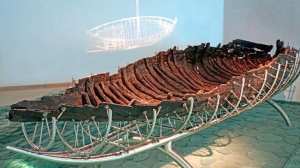
In 1986, during a severe drought in Israel, a remarkably well-preserved, 2,000-year-old, 27-foot-long fishing boat was discovered at the Sea of Galilee and rescued from the mud. There’s no proof this boat now on display at a museum in Israel belonged to any of the apostles, but because its wood has been carbon dated to the 1st century A.D. it is dubbed “The Jesus Boat.” If the boats in today’s gospel were like that example, then accounting for the weight of the men and fishing gear, the boats could hold an estimated 31,000 pounds of fish apiece. Even if the average fish they caught that day weighed, say, six pounds, this would be a catch of over 10,000 fish. (Notice the gospels do not say the fishermen cast their nets just once; they record that both boats were filled despite their nets tearing from wear.) Simon, Andrew, James, and John were stunned, but Jesus said, “Do not be afraid; from now on you will be catching men.” Upon returning to shore, they immediately left their boats to follow him. That day changed the lives of these future apostles. But no one ever asks, “What happened to all the fish?

Jesus calling the fishermen and that huge catch of fish reminds me of Elijah the Prophet calling the future prophet Elisha to follow him. Elijah finds Elisha plowing in a field behind twelve yoke of oxen. Upon being chosen, Elisha asks, “Please, let me kiss my father and mother goodbye and I will follow you.” Elijah pretty much replies, ‘Go ahead, I’m not stopping you.‘ So Elisha leaves, slaughters his oxen and boils their flesh using his plowing equipment for fuel. Then he gives the meat away to his relatives and neighbors and departs to follow Elijah.

If Simon, Andrew, James, and John “immediately” left their boats to follow Jesus (as Matthew’s Gospel says) then what did Mr. Zebedee and the hired men who were left behind do with 60,000 pounds of fish? The city of Capernaum reportedly had a population of about 1,500 back then and the nearby town of Chorazim, perhaps 500 to 1,000. So some of the fish could be sold at market. Some of the fish could be processed and preserved for later through drying and/or salting. But I imagine many of the fish were simply given away or sold for next to nothing. Like Elisha with his neighbors, Jesus calling of the fishermen brought a feast to their community. Answering your calling, embracing your God-given vocation, brings blessings for yourself and others.

For most Christians, God’s calling, their personal vocation, is to marriage. The bride and groom at the wedding feast of Cana were embracing their holy vocations and God abundantly blesses them. Jesus is invited to their wedding and he transforms the contents of six stone jars, roughly 150 gallons of water, into about 1,250 pounds worth of excellent wine, more than enough for their feast. The choice of the fishermen to become “fishers of men,” Elisha’s choice to become a prophet, and the Cana couple’s choice to become man and wife, each in answer to their callings, were marked by overwhelming feasts. These are signs to us about how doing God’s will by embracing our vocations brings joyful blessings for ourselves which overflow for others.

Preaching about vocations typically highlights priesthood and religious life because they are so important, but the vocation of marriage is also extremely important for the sanctification of those called to it and others. You are called to be a saint. If you are married, you are called to help your spouse, and any children you may have, to become saints as well. Your marriage, your family, is meant to sanctify one another and sanctify this world. So pray every single day. Pray for each other in your household. Pray as a couple and pray as a family. Help each other to be holy. Share conversations, books and films, and sacrificial acts with this goal in mind. Speak of your faith and what we believe, enjoy Catholic media which forms and inspires, offer penances and enable each other’s growth in holiness. I would love for all spouses to ask each other: “How can I help you be a saint?” Help each other to be holy and see what blessings flow.

Even if your children have educators elsewhere, you are their foremost teachers. Make your home a school for holiness. And bring your household, as God demands, to his house every weekend for Mass. Jesus calls us to follow and feast with him each week, and all-day Sunday is meant for joy. Make every Sunday’s rest and activities more enjoyable than any weekday, more special than any Saturday. Jesus wants to give you himself, along with a one-day vacation, a fun, full-day to enjoy each week.

Jesus says, “Let the children come to me.” Teach your children about vocations, facilitate their healthy discernment of Christ’s call, and never be an obstacle to God. A parent who resists their child pursuing a priestly or religious vocation by saying, “but I want grandchildren,” risks placing their own wishes ahead of God’s will. Imagine how much blessing might have been lost if James and John’s father or Elisha’s folks had tried convincing their sons not to go. Imagine if Elisha, James, or John had decided not to answer their callings.

Jesus says, “Do not be afraid.” No one will find a greater, fuller life than embracing their God-given vocation. A surgeon may save a thousand lives throughout a long career, and that is a wonderful thing, but all of those patients will eventually go on to die. The life’s work of a priest or religious sister or brother can save a thousand souls, bestowing eternal life in heaven. Saints and families of saints, are what our world needs and what we are all called to be. I challenge you to recognize and embrace your own God-given vocation. Answer Christ’s call, to follow him or to go deeper, and then behold his feast of blessings.

God Chooses People Like You

January 29, 2022

4th Sunday of Ordinary Time
By Fr. Chinnappan Pelavendran

“Isn’t this the son of a carpenter?” —Luke 4:22

God chooses and uses ordinary people to do extraordinary things. He doesn’t need our ability, but rather our availability. He uses ordinary people who have nothing of their own to offer except their faithfulness and willingness to say “Yes” to God. One important point to note is that God does not call anyone by accident. Instead, He carefully considered before calling us. He knew each one of us personally. He also knows what he wants us to do for him. He calls us by our own names, with a plan in His mind.

We see this in the First Reading, which speaks of the calling of Jeremiah to be a prophet who will communicate God’s Word to his people. It was a calling that went back to the time before he was born. “Before I formed you in the womb I knew you, before you were born I dedicated you, a prophet to the nations I appointed you.” All of us have actually been called in this way. But our reaction is often similar to Jeremiah’s: “‘Ah, Lord God!’ ‘I know not how to speak; I am too young.’” But the Lord responded, “Say not, ‘I am too young’. To whomever I send you, you shall go; whatever I command you, you shall speak…” Then the Lord extended his hand and touched his mouth, saying: “See, I place my words in your mouth.” An ordinary youth called by God to do His Mission.

Look at the Apostle Paul. Whose feast day we celebrated on January 25th. St. Paul was one of the most educated men of his day and yet God brought him down in Acts 9. God opened his eyes to the beauty and glory of Jesus. Once Paul knew Jesus, all of his education, gifts, and talents were directed towards the Gospel. The Lord uses those humbled by a vision of His greatness and glory to testify to the proud and religious. The Lord humbled the Apostle Paul and used him mightily to plant churches, preach the Gospel, write more than a dozen New Testament letters, and so much more. God used educated people for His glory but often humbled them because of their pride so they will rely on Him.

Peter was a fisherman by trade, along with his brother Andrew. He grew into a gifted preacher and bold leader. Jesus told Peter that he would deny Him three times, but Peter didn’t believe Him. Imagine Peter, the leader of the Apostles and a member of the inner circle of the Son of God, denied him three times. Peter felt devastation, shame, and guilt. He may have thought “I’m such a failure that God could never use me again,” but that isn’t true. God uses our failures, hardships and trials for His glory. He turns what was meant for bad to testify to His grace. You say that you are a failure and yet God says because of the finished work of Christ you are victorious. The Apostle Peter went on to be mightily used by God because He was broken. You may be broken right now but in due season God will build you up and use you for His glory. Don’t run from Him, run to Jesus. God uses ordinary people for His glory.

Jesus is a good manual worker from a small village. He is just another person in the town. But the rumors being spread about his actions in Capernaum and the words he has just spoken seem to indicate a special connection with God. On the one hand, his origins are well-known, but on the other hand his origin is completely unknown. Who is Jesus really? The ordinary carpenter, Jesus, is the Son of God who has become man in order to redeem us from our sins.

How could God use you? Look at your situation and your surroundings. Perhaps God has placed you in your school, your job, your family, or your neighborhood to do something special for the Lord Jesus Christ. God is calling you right now; all you have to do is say, “Yes, Lord!” Will you make yourself available to Him? Remember, God uses ordinary people to do extraordinary things for His glory!