Archive for the ‘Sunday Homilies’ Category

God’s Holy Family of Saints

December 30, 2023

Feast of the Holy Family
By Deacon Dick Kostner

Today we celebrate the Holy Family the mentor of “Patience.” I like many Americans suffer from the illness I call “Patienitus” an illness that attacks those who demand results in conquering life struggles and challenges not tomorrow but rather right now- before any suffering can occur. Oh I know the rules of nature that God is not governed by “time” as we know it and you will hear me say “…remember God does not wear a watch like we wear” because God has no beginning nor end. But I also know that God has no limitations so God can speed things up or slow things down, if he so desires.

Today’s Gospel tells us the story about the Presentation of Jesus at the Temple as was required by the Law of Moses and two old people of faith Simeon and Anna who believed in the coming of Jesus and were awaiting his arrival to meet him before they died. They knew God is not governed by time but they also knew that their age was getting up there and I am sure they worried that they would die before they could meet Jesus and the Holy Family. They were beginning to show symptoms of coming down with “Patienitus.” But their faith held strong and they were finally blessed with meeting the Holy Family. Simeon and Anna knew the vaccination for not getting “Patienitus” was faith in God. God did not speed up their prayers to meet Jesus rather God just extended their life span so that they could witness their prayers being answered.

We live in troubled times. As a Parish family we continue to meet and offer our prayers to God together as a family asking for help for ourselves and help and direction for the welfare of our children and friends. But we sometimes wonder if God is really listening to our prayer petitions. The world needs divine help now not sometime in the future. We need Jesus to come to us now before we loose are freedoms, and before we just give up and that’s when we are most likely to become a disciple of the evil one who is working very hard to destroy our faith that God will always be there for us.

You have heard the saying, “Only death and taxes are certain.” Well I learned a new certainty at my Deacon Education session a few weeks ago. The priest speaker said it is a certainty that as followers of Christ we must experience suffering before we are able to be admitted into heaven. He also said that we all expect that maybe we can get a pass but that cannot happen. Even Jesus prayed that the cup of suffering might pass, but then he ended his prayer with saying “but not my will but the will of the Father be done.” We need to remember to include that phrase in all our prayers for relief from suffering. No one, not even Jesus or Mary escaped the certainty and need for suffering as a requirement to enter into the Kingdom of God.

This is when we need to ask for help from the saints like Simeon and Anna who were growing old waiting to see in person, the Redeemer of the world, who would bring light to the darkness we experience during our journey to join Jesus and the Saints in the land of light. Mary and Joseph did not know what their experience would be like raising the Son of Light before their trip to the Temple with Jesus. But, God gifted them with the presence of two special people who shared with them a look into the future by sharing communications they had received from God on what life would be like raising the Son of God in a very troubled world.

The gift that God gave the Holy Family is also given to us as a member of the Holy Family, and that is the gift of faith. Faith that God has us covered even though things may seem hopeless, and time is running out for us to see in person our friend and redeemer, Jesus. Remember that Jesus has many faces and many bodies in people we call Saints who are members of the Holy Family who are living with and praying with us, and for us, every day.

No Jesus does not have a watch to keep track of time, but he does give us members of His Church to guide and support us here and now who will reveal to us our future life as Simeon and Anna did for Jesus and Mary. Let us remember today to give thanks to God for allowing us to become a member of the Holy Family and join them in prayer and thanksgiving celebrating our faith that Jesus is present with us for support and waiting for a hug from his brothers and sisters of faith.

From Creation to this Cradle

December 24, 2023

Christmas, the Nativity of the Lord
By Fr. Victor Feltes

Before all time’s beginning,
before creation’s making,
was our Lord, who is living.

Omnipotent, all-knowing,
unlimited, all-loving,
the self-existent Being.

This eternal deity
was not solely unity,
but divine community.

Father and Son, self-giving,
Spirit from both, proceeding,
Trinity, ever-living.

Though God could not be more great,
goodness loves to propagate,
so he opted to create.

The Lord said, “Let there be light,”
earth” and “sky” and “day” and “night,”
man” and “woman” in his sight
and in each did he delight.

Blessing us was his concern,
gifting gifts we did not earn,
minds to know and hearts to yearn
so we’d love him in return.

Like all things, he made us good,
yet, as God, he understood
human beings sadly would
freely choose to sin;
distaining the divine,
disturbing our domain.

Dissolution, desolation.
Division and dismay.
Despair and death.

Behold how in our world and lives,
sins stab and slice and scar like knives.
But our Lord lowers his lifeline,
a long thread throughout our timeline.

After the Flood and Babel’s tower,
God’s plan was launched with Abraham.
Summoned by the Higher-Power,
he journeyed to the Holy Land.

God vowed to him to give that earth,
to bless all peoples through his name,
and cause his barren wife to birth
a boy who would extend his fame.

Isaac was that wondrous son,
received back as from the dead.
His sacrifice was left undone;
as God supplied a ram instead.

(Note in Abraham’s descendants,
the Messianic lineage,
persons presenting precedents
repeated on the Gospel page.)

Next, from Isaac, Jacob came,
and suffered much from sinful deeds.
To “Israel” God changed his name,
and through twelve sons a kingdom seeds.

This tribe then west to Egypt fled
and grew up becoming many,
until from slavery God led
to “the land of milk and honey.”

For this nation, God appointed
from Bethlehem to kingly throne,
shepherd David, God’s anointed,
one with a heart after his own.

He was betrayed, mistreated,
but overcame each enemy.
God pledged there’d always be seated
a true son of his dynasty.

King Solomon, the peaceful one,
built with wisdom beyond compare
God’s temple in Jerusalem
for everyone from everywhere.

Isaiah’s prophesies foretold
and his consoling words record
how every nation would behold
salvation from our bridegroom Lord.

Then Babylon’s empire came
and took the Jews captive by sword.
But God removed his people’s shame
when to their homeland he restored.

These ups and downs had set the stage
for one night prepped thousands of years.
Between the old and current age,
the Son of God on earth appears.

It’s simple for our little ones,
the way in which our Savior comes.

A stable full of yellow hay?
Kids see a perfect place to stay.

Tiny Jesus is in his box,
asleep beside the sheep and ox.

His mom and dad on Christmas day,
as still as statues, kneel and pray.

That manger scene lit by a star
draws friends to Christ from near and far.

Our children lack experience
but maintain pure, sweet innocence.

They see with awe and gentle joy
our God become a baby boy.

Now that you and I are older,
we recognize complexity;
what Christ’s parents had to shoulder,
the burdens of humanity.

Joseph and Mary were displeased
when turned away from that hotel
and then unpleasant odors breathed
while giving birth where livestock dwell.

Stress-filled was that nativity,
mixed with their joys, feelings of dread,
as they combatted poverty
and unseen forces wished them dead.

The way of Christianity
is not promised to be easy,
but life with Christ, our deity,
has mercy, grace, and great beauty.

Our little ones are right in this,
though much in our world is amiss,
it’s right and wise to reminisce
on Christmas Day and feel great bliss.

Now to conclude, let us review:
God’s great goodness is real and true,
an ancient love that’s ever new
and through Christ’s birth comes into view.

So come to Mass — yes, please do!
His family’s less when lacking you.

The Divine Master Plan

December 23, 2023

4th Sunday of Advent
Fr. Chinnappan Pelavendran

On this last Sunday before Christmas, the Liturgical readings speak about the preparations that God made for His Son to be born among us, and one of us. We wait for his coming into the world and into our lives. During this advent, we have been thinking of Mary bearing Jesus in her womb. We remember Jesus growing silently and invisibly in Mary’s womb.

The first reading from the second Samuel, speaks of King David, the peace and comfort he had found in Jerusalem, and how he wanted to build a temple for the Ark of God. The Lord spoke to Nathan the prophet and told him that David did not need to be in charge of everything, but was reminded that God himself had been with him every step of the way to peace. God himself will take care of his house, like everything else that David had succeeded in doing. We too, are not in charge of our successes, we should let the Lord lead us and prepare us for the work in his house.

In the Second reading, St. Paul reminds us that each one of us is the temple of God. Through his teaching, God makes known to us His mysteries. God spiritually prepares the minds of the believers who hear the proclamation of Jesus. It is Jesus who revealed God’s mystery that was kept secret for centuries and which has now been revealed to His people.

In the Gospel, Mother Mary is described as “full of grace,” filled with God’s favor and graciousness, something which she has in no way earned. God prepared her to be a worthy dwelling place for His Son. At the same time, Mary exercises her right to freedom of choice. A request was made of her and she freely responded with a wholehearted “Yes!” “I am the handmaid of the Lord, let what you have said be done to me.” Mother Mary’s “Yes” changed the world. Her obedience to God’s call changed the lives of all of us.

Obedience is not popular in today’s world. When people want to be independent, obedience is understood wrongly: the word obedience is associated with weakness. True obedience requires courage because it can involve going against social expectations. When Mary said yes and desired that God’s will be fulfilled in her, a great event took place in history. The Son of God took human nature in the womb of the Blessed Virgin. The Angel had told her that it would be the savior of the world. He would be the King but the nature of kingship was not clear to her. However, she understood one thing clearly: the person whom she would carry in her womb would change the world.

With courage and generosity, we need to say “yes” to God. True obedience comes from the choice we make to follow God’s will. We need the courage to be obedient because sometimes it can go against social expectations. True obedience also aims at putting oneself in the service of God.

We need to learn God’s plan for our lives. The Good News in today’s Scripture message is not only that God is making provision for the salvation of His people, but also that He has a plan for each person. In many cases, our work for God seems rather ordinary, but each ordinary task that we carry out fits into God’s plan in a way that we cannot yet understand. God desires not only the skill of our hands and talents but also the love of our hearts. The Babe in the Manger reminds us of what God has done and is still doing for us. What are we doing for Him in return? Let us show our gratitude to God by living as true followers of Christ.

Do Whatever He Tells You

December 18, 2023

3rd Sunday of Advent
Dcn. Dick Kostner

Today we celebrate “Rejoice” Sunday Take notice of the pink candle on our Advent wreath. We are getting close to celebrating the birthday of Jesus the “Light” of the world. We celebrate this birthday by decorating a tree with bright lights overshadowing the darkness we experience in the world we live in. For this Deacon, the fact that I was called to preach on this Sunday, displays the fact that God does have a sense of humor for he knows how much I like to be vested in bright pink. Usually this happens only twice a year but this year I will be gifted with this color for four Masses instead of only two.

As people faith we are very much aware of how dark it is living in this world. How can we be joyful always as St. Paul calls us to do in our Second Reading? How can we be joyful when our loved ones are dying or seriously ill? Or joyful about the cost of living, or being laid off or fired from our job? Or joyful that crime is at an all time high with people not caring about the rights or feelings of others? Or, to put it bluntly, what is joyful about this world going to hell in a basket?

The answer is easy. Nothing! That’s the point of our readings this Sunday. There is nothing great about what our readings refer to as “darkness.” Darkness is a part of the world that we live in. No I am not saying that there is no good in this world and that God does not love this world. It was through the love of our Creator that we were gifted with the birth of a new King and a new world or Kingdom where “darkness” cannot exist. A world gifted with a light so bright that evil darkness cannot sneak in. One of the revelations I received while studying to get my masters degree in Pastoral Studies was that we do not have to wait for death to occur to witness and partake in the Kingdom of God for it shows its presence within our present world.

We are surrounded with darkness in this world, that is why Jesus made the statement that his Kingdom was not of this world. The new Kingdom, the new world of Jesus is a place of love and respect. It is a place where sin and darkness cannot exist. And guess what? All of us have been given an invitation to become a citizen of this new Kingdom by its King. All of us have been given the mission of being a light shinning in the darkness of a world heading for the dark city scripture calls “Gehenna”.

How do we get to shine bright and experience the new Kingdom of God? Well, we can’t shine if we are dirty so we need to get cleaned up. Jesus gives us the necessary soap and water to accomplish this task. He gives us Sacraments to not only clean us up but also also provide us with the battery power to make our light shine bright. Jesus also gives us the help and support of his faith family to help us not only get clean but to stay clean so that our light will maintain its brightness.

We only have a short time to get ready for the Christmas Party of light. We are called to be the lights of Christ which will decorate the tree of everlasting life and let the Kingdom shine through. We have in our Parish many mentors of light both living and deceased that will help us be a bright light so pray for their help. Are we ready? We might think we are not ready but that’s OK. Jesus himself maybe felt he was not ready for public ministry when his mother asked him to perform his first miracle of changing water into wine to celebrate the Sacrament of Marriage for a young couple. But his mother knew better and he gave in to her wishes. It is here that Mary gives us the key to the Kingdom of God when she proclaims to the servants and to us “Do whatever he (Jesus) tells you.” St. Paul and St. Peter likewise also maybe felt they were not the right people to take on being the light of Christ, but they gave it a try, and look how bright the Kingdom of God got from their acceptance of the challenge to help light up the world.

It’s our time now to make a decision on whether we will join other parish family members this Christmas, on becoming one of the lights on the Christmas tree to present to Jesus on his birthday, of the tree of life in the Kingdom of God. It is a matter of life and death on how we will proceed as a follower of Jesus. The bottom line folks is for us to listen to the words of Mary, and “Do whatever he tells you.”

One of my most blessed gifts of ordination is when on a dark and scary night of darkness I, as a Deacon of Christ, am able to provide to my people of Bloomer at the Easter Vigil, the light of salvation, by proclaiming for all the parish to see “THE LIGHT OF CHRIST!

Silence in the Sacred Liturgy

December 18, 2023

3rd Sunday of Advent
Fr. Chinnappan Pelavendran

According to the “General Instruction of the Roman Missal,” which are guidelines on the celebration of the Holy Mass, it is recommended that silence be observed on five different occasions during Mass. Those moments are:

  • In the beginning and at the penitential rite
  • At the start of certain prayers when the priest says, “Let us pray”
  • After each of the Scripture readings
  • After the homily
  • After all have received Communion

Thirty seconds of silence would be an appropriate time for each of the above. Let us look at each of those times we are invited to be silent during the Mass.
First, we called to be silent before mass begins. We need some time to recollect ourselves to enter into prayer. The church encourages us to come to the church at least five to ten minutes before mass and sit in the presence of the Lord in silence, offering the family, near and dear ones in the hands of the Lord. During this time, the silence must be practiced in the church, in the sacristy, and the vesting room, so that all may dispose themselves to carry out the sacred celebration devoutly and fittingly. If we cultivate silence, we will hear the voice of the Lord.

The next place of silence is during the Penitential Rite. We all are invited to take a movement of silence to call to mind our sins. That is, we acknowledge our unworthiness to be in God’s holy presence. We prepare ourselves to take part in the Holy Eucharist before praying together to the Confiteor or the “Lord, have mercy.”

The words “Let us Pray” are followed by a period of silence. This prayer is commonly called the “Collect.” The priest “collects” the thoughts, intentions, petitions, and prayers of every one of us, who have been collected from our homes for this celebration of Mass. This moment of silence helps us to focus our worship on Christ. The priest is a mediator between God and man and brings all our petitions to God.

We are directed to have a brief movement of silence after readings. This allows all of us to ponder on the Word spoken so that the Word of God can seep into our being.

Once again, we are invited to be silent after the Homily, which is the time when a priest or deacon explains the readings and teaches us how to live in the light of the gospel. The readings and the homily contain advice, an exhortation, or an admonishment; we can ask the Lord how it applies to our lives. The period of silence is a time when the Lord can make alive and active the word of God in our hearts. We need only to ask him for this: “Speak Lord, your servant is listening.”

After Communion is another opportunity to be silent. It is a time to offer our prayers of Thanksgiving to the Lord for having fed us with his very self in the holy Eucharist. We can ask the Lord to fill us with his love, to help us love our brothers and sisters, to help us see the world as he does. We can give him thanks for the great blessings he has given us.

Finally, even after the Mass, we are invited to be silent inside the church out of respect for those of us who would like to pray after mass. Those of us who would like to talk with our friends and family members may kindly move the gathering area and spend our time there.

Specific periods of silence are recommended by the Catholic Church to encourage us to have internal and external silence for all the participants at Mass. It can be a challenge to be silent, internally and externally. Indeed, silence at mass is an active, not a passive disposition. Achieving this silence is worth the effort because it helps us to be fully attentive to the Holy Spirit.

Repentance & Humility

December 10, 2023

2nd Sunday of Advent
By Fr. Chinnappan Pelavendran

The season of Advent is a time of grace for us. It is a time of grace given to us to prepare our hearts so that we are ready to receive Christ at Christmas. Advent is a time of grace to remind us that Jesus is the reason for Christmas. We have just heard the beginning of the Gospel of Mark, which reminded us of the prophecy of Isaiah fulfilled in John the Baptist. “Behold I am sending my messenger ahead of you; he will prepare your way. The voice of one crying out in the desert. Prepare the way of the Lord make straight his paths.” (Mark 1:2-3)

The call to prepare the way for the coming of the Lord is urgent and strong. The voice of the prophets calls out to us today; make straight in the wasteland a highway for our God. We tend to avoid the message and the urgency of the prophets. For thousands of years, people have been saying that the Lord will come, but it has not happened. Why should I bother about his coming? St. Peter tells us why in our second reading today. What looks to us like “delay” is divine patience; He “delays” only because he sees our need for repentance. For Him, a thousand years are like one day. Whether He comes in one day or a thousand years, the prophetic message remains the same.

John the Baptist gives us two essential elements of our Advent preparation: repentance and humility. When he appears in the desert, his main message is the proclamation of “a baptism of repentance for the forgiveness of sins”. This shows us that sin is the main obstacle to a proper welcoming of the Lord. We cannot, on our own, do anything about the problem of sin, but when we repent, we deliberately turn away from sin and express our sorrow. This opens the way for the Lord to restore us. The great sacrament of repentance is Confession. In the season of Advent, we should prepare the way by making a thorough, thoughtful, prayerful examination of conscience and then make a worthy Confession.

Humility is the other lesson we learn from John the Baptist. A powerful preacher and forceful witness, he is at the same time an extraordinarily humble man, well aware that he was not worthy even to stoop before the Messiah and loosen the thongs of his sandals. We are even less worthy than John the Baptist and are called to humble ourselves before the Lord. When we do, we welcome the voice of the prophets who call us to repentance, and we open our hearts to the Lord’s power to heal us and care for us. When we acknowledge our dependence on God and dedicate time to be alone with him in prayer, He can speak to our hearts and change them from rough and rugged to smooth and open. As we continue to prepare for the Christmas festivities, let us prepare space in our hearts for the birth of our Savior by taking time in prayer and by repenting of our sins.

Since we are blessed with this Advent time of mercy, we should want to receive as much grace as we can from God. The Lord has no limits on what He can grant to us; it is we who put limits on what he wants to give us. The Lord is waiting to receive you in the Sacrament of Reconciliation, to take you in his arms and hold you close to his heart.

Christmas will lack its full meaning if we do not prepare in our hearts a way for the Lord. It is in our hearts that we need to make a straight highway for God. It is the valleys of sin in our hearts that are to be filled with God’s mercy and healing, and the mountains and hills of pride in our hearts that are to become low.

A Little Time Remains

December 10, 2023

2nd Sunday of Advent
By Fr. Victor Feltes

Unlike the Gospels of Matthew and Luke, Mark’s Gospel does not start with stories of Christ’s Nativity. This gospel begins with the ministry of St. John the Baptist. John’s mission was to “prepare the way of the Lord (and) make straight his paths.” In ancient times, before a king or emperor would journey to a region, his heralds or messengers would be sent out ahead of him to announce how people were to prepare for his coming. One practical part of these preparations was to improve and repair the roads; filling in the potholes and smoothing the ruts, clearing branches and removing rocks. Isaiah the Prophet speaks of a herald crying out in the wilderness:

“Prepare the way of the Lord! Make straight in the wasteland a highway for our God! Every valley shall be filled in, every mountain and hill shall be made low; the rugged land shall be made a plain, the rough country, a broad valley. Then the glory of the Lord shall be revealed, and all people shall see it together…”

Of course, this readying of the way for the Lord is not done with shovels and wheelbarrows on country roads. St. John the Baptist, the “voice of one crying out in the desert,” preaches conversion and washes people with a baptism of repentance as they confess and renounce their sins. The way of the Lord we must prepare passes through ourselves.

This Advent is a season to prepare for the God, but time is running short. Christmas is coming. Because December 25th falls on a Monday, this year’s Advent is the shortest-possible length of days. The good news is that now is not too late. An unfaithful life can still be reformed. A sacramental Confession can still be arranged. Delayed good deeds can still be done. A life of daily prayer can begin today. There is still some time remaining for you; before Christmas, before Christ’s Second Coming, and before the end of your earthly life.

This world and its people are broken and we can see many sins and evils. Imagine how much better our world would be if everyone sincerely turned to Jesus. Wouldn’t that be wonderful? I doubt that everyone will do so, but the ongoing conversions of you and me to Christ can bless our families, friends, and neighbors, joyfully transforming the world around us for the better.

And here is some more good news… Even if not everyone turns to Christ, just as this Christmas, December 25th, is coming no matter what we do, the Second Coming of Jesus Christ cannot be stopped. St. Peter writes of how our Lord’s patience, his wish that none should parish but all come to repentance, has permitted the world to continue to our day. God does not tire of waiting; since for him “a thousand years is like one day.” “But the day of the Lord will come like a thief… and the earth and everything done on it will be found out.

We are encouraged to do our part to prepare a highway for God, lowering mountains and hills, smoothing rough lands and valleys, within ourselves and in our society. But Scriptures declare how at his coming “the mountains melt like wax before the Lord, before the Lord of all the earth.” (Psalm 97:5) “The eternal mountains are shattered, the age-old hills bow low, along his ancient ways.” (Habakkuk 3:6) “The mountains melt under him… like wax before the fire, like water poured down a slope.” (Micah 1:4) “The earth melts when he lifts his voice.” (Psalm 46:6)

Our returning Lord will not allow the sins of the world to go on forever. When his Kingdom fully comes, God’s will shall be fully done, on earth as it is in Heaven. So when you witness the many evils caused by misused human freedom, do not grieve as those who have no hope. (1 Thessalonians 4:13) Mourn as the blessed, whom Jesus promises will be consoled. (Matthew 5:4) “According to his promise, we await new heavens and a new earth in which righteousness dwells. Therefore, beloved, since you await these things, be eager to be found without spot or blemish before him, (and always be) at peace.”

Watching & Waiting

December 3, 2023

1st Sunday of Advent
By Fr. Chinnappan Pelavendran

The season of Advent always calls us to a sense of hope, that God loves us, has sent his Son to redeem us, and that no one is excluded from God’s loving care and protection. That is the heart of our belief in God: He knows us by name, cares for us, and never abandons us. That does not negate the fact of our free will, the ability to choose what is right and good, to heed God’s voice and God’s grace in our lives. We are always free to choose the good, since God never forces us, but always lovingly invites us.

The first reading from the book of the Prophet Isaiah, and the second reading from the First Letter of St. Paul to the Corinthian Church, give us examples of looking forward in hope for the Lord’s coming. The people confessed their guilt and admitted that God was indeed right to punish them. They understand that they have given Yahweh their God plenty of reason to stay away. They feel that they are sinful, unclean, and full of guilt. And yet, for those who are awake and waiting in faith, the second coming is a joyful event.

In the gospel, Jesus encourages us to be prepared, to stay awake. If we fall asleep and forget the need to wait in hope, then we risk that the Lord comes at a time we do not expect. In that case, we would not be ready to welcome him and celebrate with him. (cf. Mt 15:1-13) The Lord uses the example of a man who leaves his servants in charge while he travels abroad. He warns the gatekeeper to stay on the watch because he does not know the day and hour of his master’s return. Jesus specifically mentions all four watches of the night. The Lord of the house may come in the evening, at midnight, at dawn (“cockcrow”), or in the morning.

Jesus is going to come in glory to judge all people and take the righteous to their reward. The first Sunday of Advent invites us to be ready to receive the Lord who is going to come. This is the time of waiting and we await the one who is certain to come to us. We must be ever alert and ready so that the coming of the Son does not find us unprepared. Advent is a season for us to renew our hope because of the coming of Christ. As we reflect upon the period of waiting for the first coming of Jesus at Bethlehem, and as we begin to prepare for his coming at Christmas, we also await his final coming into our lives.

In addition, the Readings remind us that while Heaven and Earth shall pass away, the Word of the Lord shall not pass away. Every promise that He has made shall be fulfilled. Thus, Jesus gives us the warning: The Christian who listens to the words of Jesus lives in permanent expectation of his coming and will welcome him as the long-awaited Master arrives from his journey. To be on watch is to be aware each day, through prayer and reflection, that the ‘today’ of salvation is here and now.

We should live in the living presence of Jesus every day waiting for his Second Coming. We can experience Christ’s living presence in the Holy Eucharist, in the Holy Bible, in our worshiping community in our parish, in our family, in our souls, and everyone around us. The early Christians experienced it, and that is why the mutual greeting among Christians was “Maran Atha” which means “Come, Lord Jesus.” This greeting acknowledged Jesus present in each of them and about to return. May God bless you and keep you ever-prepared for Christ’s second coming.

The Three Comings of Christ

December 3, 2023

1st Sunday of Advent
By Fr. Victor Feltes

During this Advent season, we are called to contemplate three distinct comings of Christ. The first is his coming in the past, twenty centuries ago at the first Christmas. Answering the Prophet Isaiah’s plea, our Lord rent the heavens and came down for the sake of his servants by assuming a human nature. Through the Incarnation, God wrought an awesome deed we could not have hoped for, something unheard of from of old. The Shepherd of Israel came down to save us. By his birth, the Lord let us see his face that we may be saved.

The second coming of Jesus Christ which we contemplate in Advent is literally called his Second Coming. Like a master leaving to travel abroad, our Lord has promised his servants he will return some unknown future day and hour. He will return in unveiled glory as both our King and Judge, so we must strive to be firm to the end, irreproachable for the day of our Lord Jesus Christ.

In the upcoming weeks, when you hear St. John the Baptist preach about ‘making straight the way for the Lord,’ realize that these words are addressed to you. Now is the time to go to Confession and cast your sins away. You do not know when the Lord is coming. So be watchful and alert, lest our Lord come suddenly — on the Last Day of this world or the last day of your life — and find you unprepared.

So what is the third coming of Jesus Christ we should contemplate this Advent? The first is his coming in the past, the second is his coming in the future, and the third is his coming now. He comes to us now most marvelously in the Holy Eucharist, but he also comes to us during our ordinary days.

The master in Jesus’ parable “leaves home and places his servants in charge, each with his own work, and orders the gatekeeper to be on the watch.” Each of us has work to do during this Advent season; some tasks which come as part of our regular duties and others which are particular to this time of year. Whatever your state in life, you will likely be busy this month. May you be occupied with the good work our Lord entrusts to you, rather than distracted and burdened by ill-chosen pursuits of your own. But amidst your daily tasks, whatever they may be, be watchful for our Lord.

Jesus concludes today’s parable declaring, “What I say to you, I say to all: ‘Watch!’” Each of us is called to be on watch for him. And Jesus tells us on another occasion, “Behold, I am with you always, until the end of the age.” So vigilantly keep watch for the Lord. The past has gone and the future is not yet here. The only time you can ever encounter our Lord is the present moment. So as you go throughout this Advent, contemplate his presence with you from moment to moment.

Be attentive to him in times of dedicated personal prayer, even if starting with just five or ten minutes a day. And converse with him, commune with him, throughout the tasks of your daily life. Jesus came to us first at Christmas. He will come again in glory on the Last Day. And he comes to us at any moment we watch for him.

Jesus Is The King

November 26, 2023

Solemnity of Christ the King
By Fr. Chinnappan Pelavendran

Today we celebrate the Feast of Christ the King. When I say “the King” to you, I am sure several images and concepts will immediately come to your mind, among them: a throne, white robes, kingship, servants, and feasts. judgment, glory, and dominion. The King we are going to reflect on today is something different from other kings. “His Kingdom will be a Kingdom of truth and life, a Kingdom of holiness and grace, and a Kingdom of justice, love, and peace.

The first reading today comes from the book of the Prophet Ezekiel and shows us God as a Shepherd. God himself will come personally to tend his sheep because the entrusted shepherds have not been found worthy of their charge. God will take care of the sick and weak sheep but will separate and punish those who have made themselves strong at the expense of the weak. This is the work of our king, something different from other kings. “I will seek the lost. I will bring back the strayed. I will bind up the injured. I will strengthen the weak.

The kingship of Jesus is different from that of other kings. During His life on earth, Jesus was born in the royal Davidic family. In the annunciation narrative, we have the angel Gabriel bringing the good news to Mary in Nazareth, saying, “He will be great and will be called Son of the Most High. The Lord God will give him the throne of his ancestor David. His Kingdom will never end.” When the Magi came to Jerusalem, they asked, “Where is he who is born King of the Jews?

Jesus preached the Kingdom of God and told the disciples to seek first the Kingdom of God and his righteousness. It means we must give first place in our lives to God. It means we must come under the rule of His kingship. We must confess that Jesus is the Lord and King. Yet, He called his disciples friends, not servants and bestowed on them a share in his priesthood and kingship. Though he died, unlike other kings, he died willingly to save his people, and his death was not a result of loss but of a glorious victory planned by his Father.

During his passion, he manifested that he was the King and died on the cross with the title that he was the King of the Jews. He was left alone to be mocked, insulted, beaten, humiliated, and finally to die a criminal’s death. His own disciples left him and ran away when he needed them the most. It was one of the thieves who was crucified with Him who recognized him as a king, and asked for a place in his Kingdom. Jesus promised him that place. The Lord’s death also shows that He is the king who came to serve all, even His enemies. He said: “Father, forgive them for they know not what they do.” His life, teachings, and death spell out a Kingdom of justice. At the same time, we know that when our King judges the world, his just judgment is balanced with radical love, mercy, peace, and forgiveness.

As the followers of Jesus, we need to surrender our lives to Christ’s rule because He is our King. We must do his will by sharing His forgiving love with others around us. This is what asked his disciples to do. And so, this feast is an invitation to all those who have power or authority in the government, in public office, in educational institutions, and in the family, to reflect. Are we using the authority we have been given by Jesus in the way He used His authority? Are we using our God–given authority to serve others with love and compassion as Jesus did? As parents, are we using our God–given authority to train our children in Christian values?

Give Others The Royal Treatment

November 25, 2023

Solemnity of Christ the King
By Fr. Victor Feltes

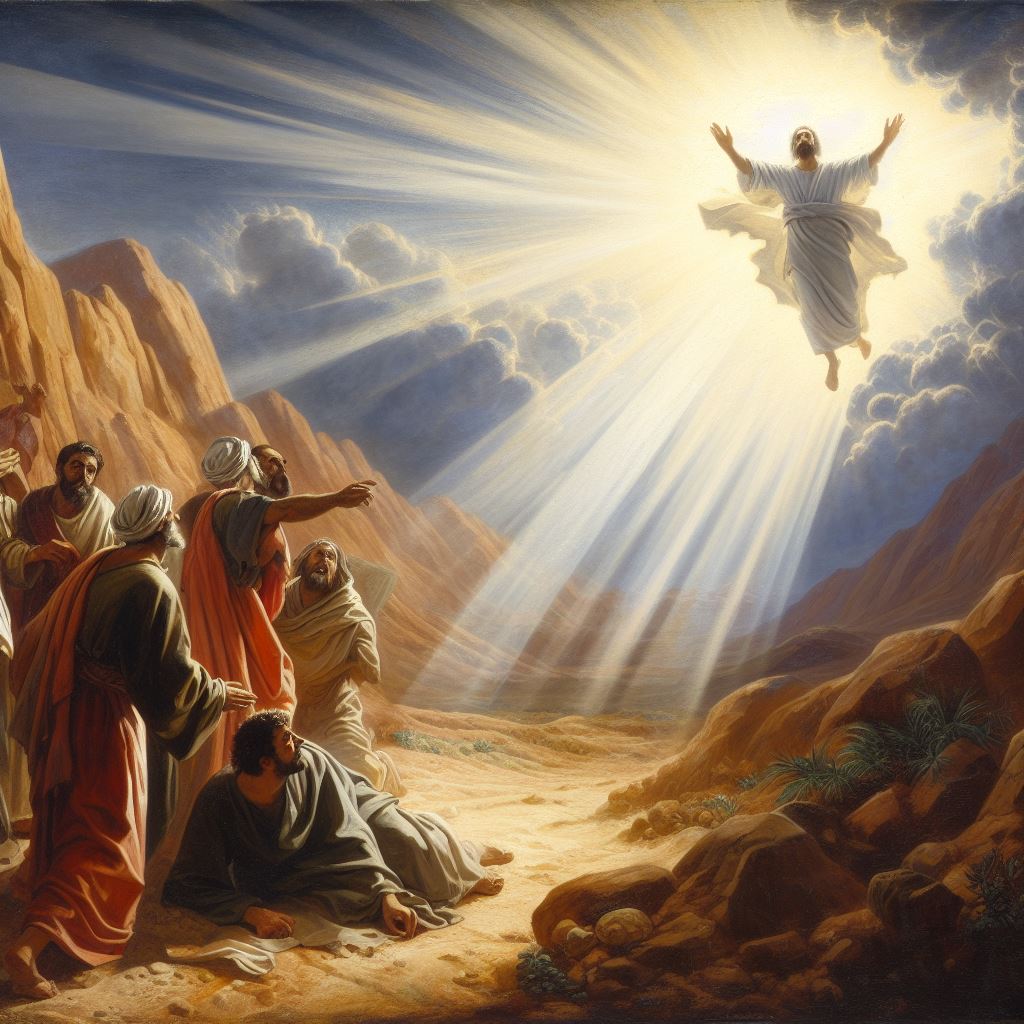
After having supported the murder of St. Stephen the Martyr, Saul of Tarsus was trying to destroy the early Church. He entered house after house, dragging out Christian men and women and handing them over for imprisonment. Still breathing murderous threats against the disciples of the Lord, Saul went to the high priest and obtained official authorization to arrest any Christians he might find in Damascus and bring them back to Jerusalem in chains. But on his way to Damascus, this future saint saw the light.

Light from the sky suddenly flashed around him. He fell to the ground and heard a voice ask him, “Saul, Saul, why are you persecuting me?” “Who are you, sir,” Saul replied. “I am Jesus, whom you are persecuting.” Notice how Jesus did not ask “why are you persecuting my people” or “why are you persecuting my Church,” though both of these descriptions would have been accurate. Jesus asks, “Why are you persecuting me? … I am…whom you are persecuting.”

Imagine if you and I are standing side-by-side in a buffet line and I willfully knock your hand out of the way as we both reach for the delicious deviled eggs. Will your feelings of offense be any less if I reply, “Oh, I didn’t hit you—I merely slapped away your hand”? No, every part of your body is one with you. If I mistreat one of your members, I am mistreating you.

St. Paul and the Holy Spirit teach us in the New Testament: “You are now Christ’s body, and individually parts of it… He is the head of the body, the Church, … [and] we, though many, are one body in Christ.” Jesus himself teaches, “Whoever eats my flesh and drinks my blood remains in me and I in him.” This is why he will declare at the Last Judgment “what you did not do for one of these least ones, you did not do for me” and “whatever you did for one of the least brothers of mine, you did for me.” Our mystical union with Jesus Christ is more intimate than we realize and this has important implications.

The 1st Letter of St. John tells us, “If anyone says, ‘I love God,’ but hates his brother, he is a liar; for whoever does not love a brother whom he has seen cannot love God whom he has not seen. This is the commandment we have from him: whoever loves God must also love his brother.” Now man does not live by bread alone, but we are called to practice Corporal (that is, bodily or material) Works of Mercy. St. James writes, “If a brother or sister has nothing to wear and has no food for the day, and one of you says to them, ‘Go in peace, keep warm, and eat well,’ but you do not give them the necessities of the body, what good is that?” Jesus is hungry and thirsty, ill-clothed and a stranger, sick and imprisoned in his brothers and sisters, and our love for him is reflected in our care for them.

Yet do not fall for the demons’ trap; their persistent accusations which sound like: “You could be doing more; you should always be doing more!” They seek to rob you of your peace and lead you to ultimately give up the good things you are doing because of discouragement. God our Maker knows that our time, talents, and treasure are finite; resources spent on one holy effort cannot be spent on another. Nevertheless, it is important for us to be self-reflective and truly generous with ourselves and what we have.

When you see others or interact with people, try to remember the One whom you mystically encounter. Give them the royal treatment. Notice how both the saved and the damned will someday ask our King, ‘When did we see you hungry or thirsty or a stranger or naked or ill or in prison?’ He will reply, ‘Indeed, whatever you did for one of the least of mine, you did for me.’ It is a truer reality than we realize and all too easily forgotten, yet valuable for us to remember always.

Invest Yourself in Heaven’s Reward

November 19, 2023

33rd Sunday in Ordinary Time
By Fr. Victor Feltes

As Jesus traveled from place to place he preached parables to different people. He told stories, for instance, featuring fields, fish, and flocks to teach farmers, fishermen, and shepherds about the Kingdom of God. It makes sense that Jesus would tell the same stories more than once, for different crowds to hear them for the first time and for his apostles to hear them repeatedly. But the gospels suggest Jesus sometimes changed his parables’ details to highlight different truths. What Jesus says in his Sermon on the Plain is similar but not identical to his Sermon on the Mount. As the Church journeys through our three-year cycle of Sunday readings we hear some parables retold by more than one gospel. And each fall, as we near the end of the Church year, our readings reflect upon the Four Last Things. Today, we have another such parable, about death and judgment, Heaven and Hell, Jesus Christ and us.

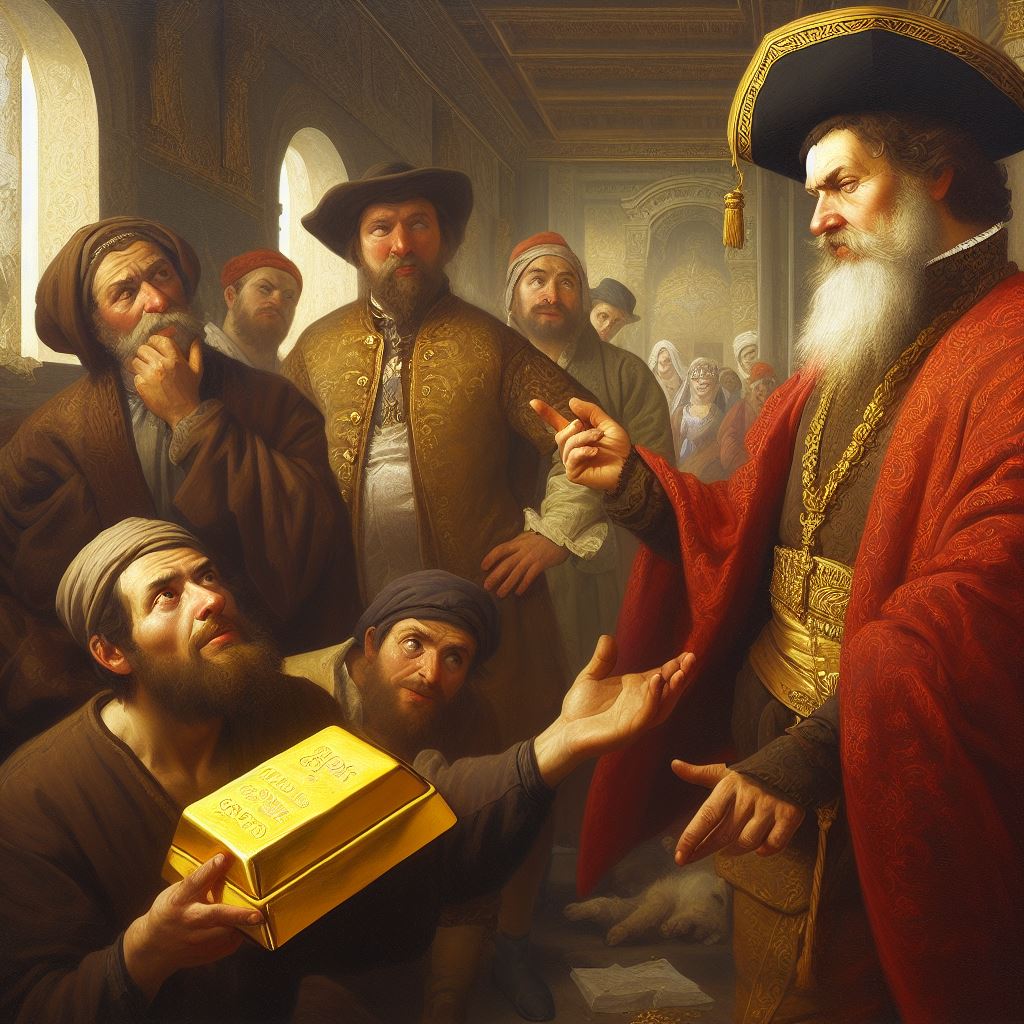
Christ is our Lord, our journeying master who shall return. We are his servants to whom he has entrusted our fortunes. And each of us one day will stand before him to give an account of our faithful or unfaithful service, with generous rewards or just punishments to follow. In Jesus’ telling through St. Matthew’s Gospel, the master entrusts weighty slabs of precious metal (called talents) in varying numbers to his servants, each according to their abilities. Upon his return, his faithful servants have doubled what they were given and receive the same words of praise: “Well done, my good and faithful servant! Since you were faithful in small matters, I will give you great responsibilities. Come, share your master’s joy!” One servant, however, who buried his talent and returned it ungrown, receives his master’s condemnation and is tossed into the darkness outside.

When Jesus retells his parable in St. Luke’s Gospel, the master is a nobleman who goes off to claim his kingdom, entrusting to ten servants one gold coin each. Upon his return, his faithful servants reveal their various positive returns on his investment. One has earned ten more gold coins and his king declares, “Well done, good servant! You have been faithful in this very small matter; take charge of ten cities.” Another servant has earned five more coins and the king decrees, “You, take charge of five cities.” One servant, however, hid his coin in a napkin and returned it unmultiplied. The king condemns that servant and orders all of his enemies who did not want him as their king to be slain.

The differences between these two parables highlight different truths about Heaven. In the first parable, the master speaks the same blessing to each faithful one: “Well done, good servant! … Come, share your master’s joy!” But in the other parable, the king gives his servant with ten additional coins ten cities and gives his servant with five additional coins five cities. So is Heaven’s reward the same for all the saints or can one’s reward be greater than another’s? One parable suggests their reward is the same, while the other suggests their rewards vary. On one hand, the reward of every saint is the same: they experience God’s unveiled glory forever in happy, loving communion with him and all who are in Christ. On the other hand, a great saint’s capacity for love and joy and glory may be greater than another’s.

Doctor of the Church St. Therese of Lisieux recounts in her great autobiography (“Story of a Soul”) how this idea once troubled her as a child: “One day, I expressed surprise that God does not give an equal amount of glory to all the elect in Heaven—I was afraid that they would not all be quite happy. [My older sister Pauline] sent me to fetch Papa’s big tumbler and put it beside my tiny thimble, then, filling both with water, she asked me which seemed the fuller. I replied that one was as full as the other—it was impossible to pour more water into either of them, for they could not hold it. In this way [she] made it clear to me that in Heaven the least of the Blessed does not envy the happiness of the greatest…

Notice how in both forms of Jesus’ parable all the faithful servants are entrusted with greater responsibilities. The saints in Heaven are likewise given higher roles as our intercessors now and in the family and household of God forever. Consider how many churches, religious communities, and cities around the world are dedicated to St. Paul. They are blessed to have him as a loving patron praying for them. And consider how the Blessed Virgin Mary shall always hold a privileged place in Heaven as the spiritual mother of every Christian.

St. Paul says, “Consider this: whoever sows sparingly will also reap sparingly, and whoever sows bountifully will also reap bountifully.” The generosity of our loving gifts to Christ, the additional sacrifices we make and good deeds we do, will surely not go unrewarded. Jesus tells us, “Give, and it will be given to you. Good measure, pressed down, shaken together, running over, will be put into your lap. For the measure with which you measure will be measured out to you.” Our individual hustle, cooperating with Christ’s grace, can win us greater glory, therefore “run so as to win!

We should not fear that we lack sufficient talents or gifts to produce good fruits for glory. In the first parable, every faithful servant was able to double his money and won his master’s praise. The issue with that unfruitful, condemned servant is that he never tried. His master calls him “wicked” and “lazy” because that servant did not make even the most minimal effort to grow his gift. “Should you not then have put my money in the bank so that I could have got it back with interest on my return?” That servant did not love his lord but rather resented his lordship over him. Which is easier: to digging a hole or visiting the bank? He did not want to be his master’s servant, he did not want him as his king, and so he finds himself condemned and cast out forever. But if we love our Lord we will produce fruit, just as “every good tree bears good fruit.” As Jesus declares, “Whoever remains in me and I in him will bear much fruit.”

What is something more that you will do with the talents and gifts our Lord has lent you? It could be something large or small, in private or with others. You could be a more-focused prayer warrior, or offer secret penances for the salvation of souls. You could start a Catholic book or movie club at your home, or organize a regular Bible study that discusses the upcoming Sunday readings. You could visit shut-ins as an extraordinary Eucharistic minister, or invite somebody new each week to come with you to Mass. There are many good things you could do and I urge you to consider and answer this call, for Jesus Christ will honor your faithful, loving efforts with glorious rewards.

Use Them Or Lose Them

November 18, 2023

33rd Sunday in Ordinary Time
By Fr. Chinnappan Pelavendran

This is the harvest season, the fall of the year. I have seen many farmers harvesting their crops. Just as the farmers hope to have good crops, so God expects a return on his investment in each of us. The problem is we do not know when our harvest day will come. Each person comes into the world with talents from God. We do not know how much God has given to us. There may be five talents, two talents, or one talent.

The main theme of the three readings today is an invitation to live in such a way that we develop and make the best use of the talents, skills, abilities, and gifts God has given us. So that, at the hour of our death, our Lord will say, “Well done, my good and faithful servant. Come and share the joy of your master.” (Matthew 25: 21)

In the first reading, we have a beautiful description of a ‘worthy wife.’ This praise-worthy woman dedicates herself to doing good, investing her talents for the benefit of all. A man with such a wife is greatly blessed; her value is far beyond pearls. He entrusts his heart to her. This woman represents each of us. She also represents the whole church, the bride of Christ, in joyful service of her groom, the Lord. Each of us brings honor to the Lord when we serve him freely, joyfully, and, generously.

The Parable of the Talents gives us several important lessons. First, it tells us God gives each person different gifts. The actual number and quality is not important, we are asked to make full use of what we have been given for the benefit of the community. When everyone does that, the community is enriched. Second, our work is never completed. We are asked to make full use of what we have. The servants in the parable were not told that they could sit back and rest. Rather, because of their trustworthiness, even greater responsibilities were given to them.

The man with one talent did not lose it. He did not do anything at all. If he had tried and failed, he would have met compassion and forgiveness. Every person has the responsibility to be active in the Kingdom of God. Finally, to the one who has, more will be given. For the one who has not used the talent, even what he has will be taken away. It seems rather unfair, like robbing the poor to pay the rich. However, Jesus is saying that those who share generously the gifts they have been given are likely to find themselves constantly enriched.

Let us focus our attention on the third servant. He does not do well. So what are his problems? He chose the least risky action available to him. This servant knew what was expected of him but failed out of fear. He tries to give all possible excuses to his master. Fear is a powerful force in some of our lives; those who have experienced a lot of criticism growing up can be slow to take a risk and may not develop. There is a saying that goes like this, “Praise the young and they will make progress. Criticize the young and they will be held back.” Unfair criticism can stop the growth of the person.

So let us help each other with words of encouragement. As St. Paul says, “Encourage one another and build each other up, as indeed you are doing.” There is much to learn from our mistakes of the past, but the Lord would not want us to bury ourselves and our talents in the ground. Now is not the time to hide our talents out of fear. Rather, it is a time to share them and to encourage each other to do the same. It is your choice now are you going to use them or lose them.

Sometimes Just Being There Is Enough

November 12, 2023

32nd Sunday in Ordinary Time
By Deacon Dick Kostner

Today’s Gospel message of the ten women who had the job of greeting the bridegroom (Jesus) teaches us that we might not be able to be perfect in the mission God has for us but that’s OK God only asks for us to say “yes” and be present as his representative when we are challenged with his call for service. Our gospel today has five women who, in their mind dropped the ball on not being properly prepared to great a bridegroom because they did not anticipate that he would be late and that they would not have enough oil for their candles to be lit when he arrived so they left the scene to get more oil. They underestimated the fact that their presence was what was the gift to the bridegroom not their lit candle.

Sometimes we overestimate the details of a mission God has for us because we want to be “perfect” in doing ministry for God and we forget about what is really important to God, and so we miss out on seeing God smile at us for doing his will even though we missed out on being “perfect” in carrying out a request by God. Two examples that made me realize these facts come to my mind when I was asked by God to help out as a member of the Body of Christ.  The first was when I did my first Communion Service as a lay minister at St. Paul’s. I was nervous and after I had completed that mission request, I realized that I had forgot to do the prayer petitions. This bothered me all day but after Mass one Sunday a parishioner came up to me and thanked me for “being there for them” in doing a Communion Service when Father was not able to celebrate a Mass.

The second example was when I had just recently been ordained a deacon. Father was out of town and I received a call at 1:30 AM from the hospital saying a family had requested the Last Rites for their son who was involved in an accident and was dying.  I told the nurse that I was not able to anoint but she persisted and asked if I could just come and say some prayers with the family? I gulped hard, put on some clothes, grabbed my prayer book and left for the hospital. I did not know what I could  or should say to the family as I was unprepared for this event, kind of like the women in today’s gospel.  When I got there everyone was around the sons hospital bed and crying. The injured man was in great pain and was fighting for his life. I opened my prayer book and began saying a “Litany of Prayers.” It was not long and everyone began to stop crying and the injured person relaxed and settled down.

It was like a faucet of suffering had been shut off for both the family and their son through the prayers that I had shared with them.  After the prayers, the family thanked me for “being there” for their son and for them. As I left I realized that I had not put on my Deacon Shirt and collar which would have been proper if I had only thought of it and I felt bad for dropping the ball. As I was driving home I remembered the last words the family spoke to me. “Thanks for being there for us.” I envisioned Jesus smiling at me and saying, “You done good, thanks for being there for me!

Recently, I had an opportunity to talk to an adult within our community who is in constant touch with and contact with our young people.  I told that person that I was concerned about the our world and how we don’t have any tolerance for a difference of opinion. This person told me that within our community he has seen a very positive response from young people to be patient with other young people who are not only opposed to their idea of what being Christian is all about, and who have also been tolerant with those who feel that they need to oppose with aggression those who are not in agreement with their beliefs. He told me that it was not only with Catholic children but also children of other faiths within our community who are tolerant with others who have opposing views. A child’s primary mentor is its parents and family. God speaks to us through our mind and the mouths of his people, who St. Paul refers to as “The Body of Christ”.

Folks, “the Body of Christ” is alive and working even in our troubled world, and although we may not be as prepared as we would like to be I believe that Jesus looks upon us with a smile and as Jesus said to me he says to our faith community: “Bloomer, people, you have done good, and a big thanks for being there representing my presence!

Why Five & Five? What Is Our Oil?

November 11, 2023

32nd Sunday in Ordinary Time
By Fr. Victor Feltes

Jesus tells us, “The Kingdom of Heaven will be like ten virgins who took their lamps and went out to meet the bridegroom.” In those days, the Jewish custom was for a man and woman to get betrothed. This marked the start of their marriage covenant, yet the husband and wife would live separately for the first year. In the meantime, the bridegroom would return to his father’s house and prepare a dwelling place for their life together. Once all was ready, he would joyfully return to bring her to himself. She would be expecting him, but would not know the hour, so she awaited his arrival with her bridesmaids. The bridegroom and his groomsmen would come and escort the bride and her bridesmaids to his father’s house for the consummation of their marriage and seven days of feasting.

This is the cultural context for what Jesus tells us at the Last Supper, as recorded in St. John’s Gospel: “In my Father’s house there are many dwelling places. If there were not, would I have told you that I am going to prepare a place for you? And if I go and prepare a place for you, I will come back again and take you to myself, so that where I am you also may be.” These Jewish marriage customs also provide the setting for today’s gospel parable about ten virgins awaiting the bridegroom.

Five of them were wise and five of them were foolish, with the foolish ones foregoing flasks of extra oil and, as a result, being shut out of the wedding feast. Jesus Christ called himself the Bridegroom and the Book of Revelation says his saints will enjoy “the wedding feast of the Lamb.” Before unpacking how we can avoid the foolish ones’ fate, consider this question: why five foolish ones and five wise?

Like other storytellers, our Lord theoretically could have crafted his parable’s details differently. Given ten female characters, instead of five foolish and five wise, Jesus could have told a tale about one foolish virgin and nine wise ones, or preached a parable about nine foolish virgins and one wise one, or shaped his story as one of the six other mixtures where some were foolish and some were wise. So why did he say five and five?

Jesus knew that if his parable had featured just one fool beside nine wise virgins, we might presumptuously assume this story’s warning does not apply to us. On the other hand, if Jesus’ parable had featured nine fools and only one wise virgin, we might despair of being among those who enter the feast. Instead, Jesus speaks of five and five so that we will take this parable seriously yet also have confidence that we can take prudent steps to follow the Bridegroom.

What do the five wise and five foolish virgins teach us? What sort of persons were they, and what oil do we require? For an answer, recall another parable of Jesus.

In the Parable of the Rich Man and Lazarus, after a life in which he callously neglected to care for poor Lazarus at his doorstep, a rich man suffers punishment in flames. He calls out to Abraham above: “I beg you, father, send [Lazarus] to my father’s house, for I have five brothers, so that he may warn them, lest they too come to this place of torment!” St. Jerome, the fourth-century Church Father and Doctor of the Church, saw symbolism in this rich man’s five brothers. Jerome sees them as the wicked man’s five bodily senses which were not ordered and dedicated to God. St. Jerome declares to that rich man:

[Y]ou have five brothers: sight, smell, taste, hearing, and touch. These are the brothers to whom formerly you were enslaved. Since they were the brothers you loved, you could not love your brother Lazarus. Naturally you could not love him as brother, because you loved them. Those brothers have no love for poverty. Your sight, your sense of smell, your taste, and your sense of touch were your brothers. These brothers of yours loved wealth and they had no eye for poverty. … They are the brothers who sent you into these torments.

God created and bestowed us our bodily senses, and they are good. Through them we sustain our lives, experience one another and this world, and delight in God’s good creations. The goodness of these material things reflect the goodness of their Maker. But it is easy for sinful humanity to become fixated on these delightful things resulting in the distracted neglect or sinful contempt of our Creator.

What is to keep our flame of faith from going out, plunging us into darkness, stopping us from following the Bridegroom? How can we properly order our five senses, and be like the wise virgins rather than the foolish, lest the Lord declare, “Amen, I say to you, I do not know you”? We need oil to keep our lamps faithfully burning and follow Christ in the light. But what is that oil?

In the Old Testament, priests, prophets, and kings were anointed with holy olive oil. Jesus was revealed to be the Christ, the Messiah – titles which mean “Anointed One.” At Jesus’ baptism, St. John the Baptist knew Jesus was the “Anointed One” when he saw the Holy Spirit descend upon him. And then at Nazareth, Jesus proclaimed, “The Spirit of the Lord is upon me, because he has anointed me…” So the Holy Spirit, who descended upon Jesus, our priest, prophet, and king, is like anointing oil. The Holy Spirit is the oil we need for our burning lamps. If we are wise we will invite and welcome this third divine Person to pour out upon us, fill us, and fuel us. He will keep our faith burning and direct our bodily senses so that we may wisely follow Christ our Bridegroom into joy.

Come Holy Spirit,
fill the hearts of your faithful
& kindle in them the fire of your love
.”