Archive for the ‘Jesus Christ’ Category

You Can Ask Jesus Your Questions

December 13, 2025

3rd Sunday of Advent
By Fr. Victor Feltes

St. John the Baptist, despite his continued imprisonment, had heard about the works Jesus was doing and sent two of his disciples to ask him, “Are you the one who is to come, or should we look for another?” John was no pushover, not some reed swayed by the wind, but from this question we can gather that while John sat in Herod’s prison some doubt arose about whether Jesus was their long-awaited Messiah.

Notice how Jesus reacts to the question. He does not lose his temper or condemn them for asking. He gives them a helpful response: “Go and tell John what you hear and see: the blind regain their sight, the lame walk, lepers are cleansed, the deaf hear, the dead are raised, and the poor have the good news proclaimed to them. And blessed is the one who takes no offense at me.” In other words: “Report to John my mighty works for these show that I am the Messiah of whom Isaiah wrote (e.g., ‘Then will the eyes of the blind be opened, the ears of the deaf be cleared; then will the lame leap like a stag, then the tongue of the mute will sing.’) How I accomplish my purposes may appear strange, but remember that a person who takes no offense at me is blessed.” Jesus was patient with people who asked him questions in good faith.

Nicodemus did not want to be seen in public with Jesus. That’s why Nicodemus approached him at night. But Jesus still engaged with his questions. The Samaritan woman at the well may have first thought the man speaking to her was weird, but Jesus invited her probing questions. And the rich young man who asked Jesus about the way to eternal life wasn’t quite ready to fully commit to following Christ, but Jesus looked at him, loved him, and gave personalized responses. Despite their flaws, they asked Jesus questions in good faith and Jesus answered them. What Jesus does not like is questions asked in bad faith.

When the Pharisees would set traps for him, Jesus knew their ill intent, saying, “Why are you testing me, you hypocrites?” He knew they were just looking for ways to condemn and reject him. And when Jesus appeared before King Herod during his Passion, Herod questioned him at length because he had heard about him and hoped to see him perform some sign. But when Jesus gave him no replies, Herod treated him with contempt and mocked him and sent him away. Wicked Herod was merely curious about Jesus and uninterested in repenting of his sins. We should not test God like the Pharisees and Herod did. Jesus delights, however, in genuine seekers and is pleased to answer them.

Whoever asks, receives,” and “whoever seeks, finds,” though the answer might not be instantaneous. Job, while doing nothing wrong, questioned for some time before the Lord answered him. Sometimes our answer is already readily available through Christ’s Church, and we should listen to him through her. But sometimes God, who is supremely brilliant and creative, will answer us through different avenues (though without contradicting himself). Sometimes his answer will come during prayer, or maybe through something we providentially see or hear, or perhaps through a friend or a stranger.

What are your questions for the Lord? I encourage you to ask him and keep your eyes and ears and heart open. If you’re seeking the truth and not seeking excuses; if you’re looking to love and serve Jesus better, pay Christ the compliment of approaching him as the One who knows all things and loves you. Blessed is the one who does so.

Our Crucified King

November 23, 2025

Solemnity of Christ the King
By Fr. Victor Feltes

Our English word “Excruciating” comes from the Latin words for “Cross” and “Torment.” The Romans did not invent crucifixion, the Persians and the Greeks practiced it first, but the Romans more widely used the method. It was an easy way to execute people very visibly, horrifically, and slowly as a warning example to others. Typically, when the Romans crucified someone, they would place a sign above the condemned person’s head to indicate why they were being killed. St. John’s Gospel records that Governor Pilate put a sign on Jesus’ Cross written in Hebrew, Latin, and Greek. You sometimes see the initials “INRI” atop crucifixes. This represents the Latin phrase “Iesus Nazarenus Rex Iudaeorum,” the charge against our Lord. That is, “Jesus the Nazorean, the King of the Jews.” He was killed because of who he was and who he is: Jesus the Christ and the King of the universe.

Of course, the people who killed him did not believe this. They thought he was deluded or a fraud. Hence, the triple call for him to save himself and prove them wrong. The Jewish rulers sneered and said, “Let him save himself if he is the chosen one, the Christ of God.” The Roman soldiers jeered and called out, “If you are King of the Jews, save yourself.” And one of the criminals reviled him by saying, “Are you not the Christ? Save yourself and us.” Could Jesus have saved himself from his crucifixion?

St. John’s Gospel quotes Jesus before his Passion saying, “No one takes (my life) from me, but I lay it down on my own. I have power to lay it down, and power to take it up again. This command I have received from my Father.” And St. Matthew quotes Jesus later declaring in the Garden of Gethsemane, “Do you think that I cannot call upon my Father and he will not provide me at this moment with more than twelve legions of angels? But then how would the Scriptures be fulfilled which say that it must come to pass in this way?” So Jesus possessed the power to escape the Cross, but that was not the will or plan of God, which the Eternal Son was party to from the beginning. Jesus assumes “our bone and our flesh” to achieve our reconciliation as a descendant of David, “making peace by the blood of his Cross.” Perhaps the Holy Trinity could have inspired less painful prophecies to achieve our redemption and forgiveness of our sins, but Christ’s crucifixion is what they chose. They chose this path to win our love.

Matthew and Mark’s Gospels suggests that the Penitent Thief (traditionally known as St. Dismas) had derided Jesus, too, at first. But seeing the extraordinary way Jesus acted, hearing the things he said, all while crucified, won over that man’s mind and heart. ‘This man has done nothing criminal and this is how he dies? He truly knows my suffering and this is how he lives. This is the Christ I want to be allied with.’ St. And Luke quotes him saying, “Jesus, remember me when you come into your Kingdom.”

That movement saved the man’s soul, and we enjoy the benefit of understanding Jesus Christ even better than him. St. Paul writes that God “proves his love for us in that while we were still sinners Christ died for us.” Be moved by this manifestation of God’s great love. Submit to Jesus Christ as your King so that he may be your Savior and one day we may all be with him in Paradise.

Imitate What They Contain — Funeral Homily for Mary Jo Meuli, 83

October 14, 2025

By Fr. Victor Feltes

Mary Jo lived with a special devotion to our spiritual mother, the Blessed Virgin Mary, and she looked forward to journeying beyond death to be with our Lord and Savior, Jesus Christ. Besides coming to Holy Mass and helping bring Christ in Holy Communion to others, Mary Jo prayed the Holy Rosary daily, sometimes several times a day, growing her in her Christian likeness to Jesus and Mary. When a person picks up the practice of the Rosary for the first time, much of one’s attention is focused on tracking the beads and remembering the prayers. But with more experience, the words and the beads can drift to the background, clearing a place for meditation on its Holy Mysteries.

These twenty mysteries of the Rosary help us reflect upon joyful, luminous, sorrowful, and glorious episodes from salvation history. Mary is a firsthand witness to about three-fourths of these events. So for instance, we can contemplate Jesus with Mary at the Nativity and hold the Baby Jesus in our arms. We can consider how much Jesus loves us to become incarnate as one like us, and be moved to love him in return. We can stand with Mary at the Crucifixion, at the foot of Jesus’ Cross, and share in her compassion for her Beloved Son. We can behold Jesus’ heroic virtues in his sufferings for us, refusing to spare himself, and resolve to do hard things for him in return.

Prayerfully meditating upon the Rosary helps us to become more like Jesus and Mary. The same is true with the Beatitudes. Who is poor in spirit, relying completely on God? Who mourns and meekly, non-violently, hungers and thirsts for what is right? Who is merciful and clean of heart? Who promotes peace, yet is persecuted for the sake of righteousness? Jesus and Mary and the saints are like this, and we are called to be like them. As St. Paul our patron says, “Be imitators of me, as I am of Christ” so that we may “conquer overwhelmingly through him who loved us.” And God will help us do so, if we give him our “Yes.”

In her final season of living with illness, Mary Jo told every new doctor she met: “I’m ready.” And thirteen years to the day after her husband Allan’s death, she passed on as well. Pray for Mary Jo’s soul, in case any impurity remains within her gold, so that as a perfect offering God may take her to himself. And learn from her example, for blessed are those who grow in the likeness of Jesus and Mary and the saints, ‘for their reward will be great in Heaven.’

Two Lessons from the Ten Lepers

October 12, 2025

28th Sunday in Ordinary Time
By Fr. Victor Feltes

I want to highlight two lessons from this Sunday’s Gospel which could greatly bless your life and soul. When ten lepers meet Jesus at the edge of a village, they keep a respectful distance from him. (Their skin disease made them religiously unclean and people feared them as being contagious.) The lepers shout out: “Jesus, Master! Have pity on us!” Jesus sees them and tells them, “Go show yourselves to the priests.” (The Old Covenant had a ritual for declaring lepers clean involving a physical inspection by a priest and a sacrifice.)

So the ten depart as they are commanded to by Christ and as they are going their skin diseases are cleansed. Notice how the lepers were not cleansed right away—they were not healed the moment Jesus spoke to them. They were going when they were healed, maybe miles away from Jesus when it happened. In this miracle, they were healed while walking in obedience.

Many blessings in our faith are only experienced once we step out in obedience. First we do what Jesus asks of us, in response to his grace which goes before and follows after us, and then we see its fruits in our lives. As you read this list of examples, which one or two are meant for you to add into your life?

• Daily prayer
• Consistent Sunday Mass-going
• Keeping Sunday rest
• Generous tithing
• Forgiving enemies
• Staying sober
• Volunteering
• Practicing chastity
• Being open to life
• Living more simply
• Regular confession
• Eucharistic adoration
• Going on a spiritual retreat or pilgrimage
• Entering a seminary, convent, or monastery
• Attending weekday Mass
• Praying the Rosary

Embracing one or two of these according to God’s will shall bless you and your loved ones. This Sunday’s Gospel story also suggests another valuable lesson.

One of those ten lepers happens to be a Samaritan, and once he realizes he has been healed, he goes back to Jesus. Glorifying God in a loud voice, he falls at Jesus’ feet and thanks him. Jesus says in reply, “Ten were cleansed, were they not? Where are the other nine? Has none but this foreigner returned to give thanks to God?” Then he tells the newly cured man, “Stand up and go; your faith has saved you.”

Jesus informs us that all ten lepers were cured. But consider this: eventually, each of those lepers died. Even if it was many years later from some cause of death other than a skin disease, every one of them died. Their healings were a great thing, but not the most important thing. The Samaritan’s healing produced in him great gratitude toward Jesus Christ and God the Father. He eventually lost the gift of good health, but his relationship with God could endure forever.

Some people only pray to God when they need something. But for Christ to fix our problems without us engaging in deeper relationship and gratitude towards him profits us little. Do not be one of those who are locked outside the door to whom the Master of the House will say, “I never knew you. Depart from me, you evildoers.” It is good for us to say, “Jesus, Master! Have pity on us,” like the ten lepers did. But let us always remember gratitude and relationship with the Giver of all good gifts.

Unconditional Alliance

September 7, 2025

23rd Sunday of Ordinary Time
By Fr. Victor Feltes

At the Last Supper, when Jesus told his disciples “one of you will betray me,” all of them replied “Surely, it is not I, Lord,” except for Judas. Judas answered, “Surely it is not I, rabbi (or teacher).” Jesus Christ must be more than merely our teacher. He insists on being our supremely-loved Lord. He told the crowds following him: “If anyone comes to me without hating his father and mother, wife and children, brothers and sisters, and even his own life, he cannot be my disciple.” Does Jesus really want us to be hating our loved ones? It would be strange for him to command that we love our enemies yet hate our families. Parallel Gospel passages prove Jesus is actually forbidding us from preferring anyone or anything to him, even our loved ones or our own lives. He must be our number one.

The Lord is like the conquering king in today’s parable; the King of kings and Lord of lords who has a rightful claim on everything. He made everything, sustains everything, and without him nothing finds true fulfillment, for he is Goodness itself. He marches toward our petty kingdoms with vastly greater forces. Can anyone successfully oppose him? No, only to our own destruction. So while his hosts of angels for the Day of Judgment are still far away, we should seek his peace terms, welcoming his offered covenant. The Lord seeks our unconditional surrender. He says “anyone of you who does not renounce all his possessions cannot be my disciple.” We must place everything we have and everything we are at his disposal. But his goal is not to destroy us like enemies or to dominate us like slaves but to have us as his siblings and friends. He says, “I came so that they might have life and have it more abundantly.” Ask yourself and seriously consider, “What am I holding back from him, keeping me from greater faithful love and fruitfulness?

Entering into Christ’s covenant is only the beginning. A tower (like the one in Jesus’ parable) is not finished by merely laying the foundation. Towers in Old Testament times symbolized security. They allowed you to see your enemies approaching and then to hole up behind high, thick walls safe and secure in an easily defended position. However, a half-finished tower was of little use, except as an object of mockery as onlookers remarked: “This one began to build but did not have the resources to finish!” Some Christian disciples begin following Jesus, laying a foundation, but then abandon the project, like the people mentioned in John 6:66. They say, “This saying is hard; who can accept it” and no longer accompany him, going off to do their own thing. After many of Jesus’ disciples left him after the Bread of Life Discourse at Capernaum, he asked his apostles, “Do you also want to leave?” And Peter answered, “Master, to whom shall we go? You have the words of eternal life.”

We must build brick-by-brick, floor-by-floor, day-by-day, even amidst construction setbacks, until our tower of faithfulness is finished at the end of our lives. But we must not labor all by ourselves, like the builders of the Tower of Babel did, failing to reach heaven. Of ourselves, we do not have enough resources to reach completion. We must receive the Lord’s support. As Psalm 127 says, “Unless the Lord builds the house, in vain do the workmen labor.” Our prayer should be that from Psalm 90 today: “May the gracious care of the Lord our God be ours. Prosper the work of our hands for us! Prosper the work of our hands!” This is your part: let the Lord Jesus Christ be your true Lord, and do not be too proud to call upon our Savior’s constant help.

Greet Him At His House

August 9, 2025

19th Sunday in Ordinary Time
By Fr. Victor Feltes

Today’s Gospel is first and foremost about the Second Coming of Christ and our judgment on the Last Day. Jesus Christ, who called himself the Son of Man, said that in the End Times “the sign of the Son of Man will appear in heaven, and all the tribes of the earth will mourn, and they will see the Son of Man coming upon the clouds of heaven with power and great glory.” The Book of Revelation agrees: “Behold, [Jesus Christ] is coming amid the clouds, and every eye will see him, even those who pierced him… ‘Behold, I am coming soon. I bring with me the recompense I will give to each according to his deeds.’” “But of [the timing of] that day and hour,” Jesus says, “no one knows, neither the angels of heaven, nor the Son, but the Father alone.” (The Son of God is divine and therefore knows everything, but in his humanity Jesus apparently did not know the date or was not supposed to reveal it.) Could Jesus Christ return during our lifetime? Of course. But even if Christ returns a thousand years from now we should still heed his warning to be prepared today, for we do not know the day and hour of our deaths when he will judge our souls and deeds.

Jesus’ parable about the returning master and his servants suggests another secondary interpretation. Consider the story’s details. The master has come from a wedding. He comes to his own house. He wants his servants to be there, ready to greet him. And in response he will “have the servants recline at table and proceed to wait on them.” And “should he come in the second or third watch” (when it is darkest and most inconvenient) and find them present, attentive, and well-prepared, those servants will be greatly blessed. So where is the Lord Jesus’ house to which he returns? Where does he want his servants to be present and pleased to see him? Where would he have his faithful servants rest, partake in a meal served by him, and receive his blessed rewards? This church is his house. We are his servants. And Jesus wants us to meet him here for a meal. Our Lord arrives here joyfully from a wedding. He wedded the Church to himself two thousand years ago. And the Holy Mass extends that mystery throughout time and space to here and now. Indeed, ‘blessed are those called to the wedding supper of the Lamb’ and who are here and ready to greet him.

Yet, for too many people, the precious time of Sunday Mass is an hour when they do not expect the Son of Man to come. Despite our many scheduled weekend Masses, they still do not attend. Others show up out of obligation or custom or habit, but fail to be attentive. Perhaps they do not yet believe—despite Scripture, ancient teaching, and centuries of miracles—that Jesus Christ is truly present in the Holy Eucharist. Or perhaps they do not yet realize that they are not mere spectators at Holy Mass but offering a sacrifice with the priest and the whole community, the eternal offering of the Son to the Father, through which everything united to Christ is raised up to heaven and grace and blessings are poured down to earth in return.

Be present and be vigilant. Distractions will come to anyone who is committed to regular Massgoing and daily prayer, but do not be discouraged by the times your thoughts accidentally wander. Every decision to turn your attention back to the Lord is another act of love and devotion. Sometimes those so-called distractions are actually things the Lord wants you to pray about or offer up to him. Ask the Holy Spirit and he will help you to pray as you ought, to gird your loins with reverence and light your lamps with faith and be like servants who are glad and blessed upon their master’s return from a wedding.

A Leader Like Us

May 31, 2025

Solemnity of the Ascension
By Fr. Victor Feltes

As a child in CCD class, I remember being told that a pope from the United States would never happen in our lifetimes. The common view was that having the earthly leader of the Catholic Church come from the world’s strongest superpower was something most cardinals would want to avoid. So it was quite surprising when the 69-year-old, Chicago-born Cardinal Robert Prevost was introduced to the world as Pope Leo XIV. But that concern about coming off as “America’s Pope” is probably why he only spoke Italian, Spanish, and Latin during his first public appearance.

If you’re like me, it’s surreal having so much in common with the pope. Like all of us here, he’s a Midwesterner. He speaks English without a foreign accent. He has consumed our movies, TV shows, and music and been active on social media. He has enjoyed American sports, like when he attended a White Sox World Series game. He has voted in our U.S. elections and attended the March for Life in Washington, D.C. He ministered in Peru for many years but we have something in common there too. Our diocese has supported Servant of God Fr. Joe Walijewski’s Casa Hogar orphanage in Lima for several decades. Like me, the new pope has a mathematics degree. My parents and relatives come from the Chicagoland area too. And we both picked the name “Leo XIV” — this new pope was literally named after my 12-year-old cat. He has a friendly smile and a sense of humor, he’s easygoing but takes Catholic teaching and worship seriously, he sings well, and writes out homilies to help him preach clearly. You probably have personal connections to our new pope yourself, like belonging to the same American Baby Boom generation.

Of course, the pontificate of Pope Leo XIV is still very young and its substantial fruits have yet to unfold. In the first week following his election, a reporter shook Pope Leo’s hand as he passed by and asked, “Holy Father… any message for the United States?” The pope smiled, lifted his hands, and replied, “Many! May God bless you all!” It’s exciting to have a pope who probably understands us, our country and our culture, both the good and the bad, better than any pope before him. So what does any of this have to do with the Solemnity of the Ascension we celebrate today? Much! And it relates to our June celebration of the Sacred Heart as well.

The Ascension marks the definitive entrance of Jesus Christ’s human nature into heaven. His humanity enters everlasting divine glory, symbolized by the cloud and sky. And from heaven, seated at God’s right hand, he constantly intercedes for us before the Father. Jesus Christ, being true God and true man, has a human intellect and will perfectly attuned to his divine intellect and will, knowing us and loving us all with a human heart. As Pope Francis wrote about the Sacred Heart last year, “The eternal Son of God, in his utter transcendence, chose to love each of us with a human heart.” Jesus possesses “genuine human emotions and feelings like ourselves, albeit fully transformed by his divine love. … Entering into the heart of Christ, we feel loved by a human heart filled with affections and emotions like our own.” Divine knowledge and love are eternal and we have had popes before. But the Ascension and Sacred Heart of Jesus are significant. Like a pope who intimately understands us, because he is one of us, we can rejoice that we now have a Lord in heaven, Jesus Christ, who knows us and loves us with a human heart like ours.

On Pope Leo’s First Homily

May 16, 2025

By Fr. Victor Feltes

In Pope Leo XIV’s first homily after his election he spoke on how people at the time of Jesus fall into two camps or attitudes about him. The wealthy and powerful consider Jesus “a completely insignificant person, at best someone with an unusual and striking way of speaking and acting. And so, once his presence becomes irksome because of his demands for honesty and his stern moral requirements, this ‘world’ will not hesitate to reject and eliminate him.”

The other group and attitude is “that of ordinary people. For them, the Nazarene is not a charlatan, but an upright man, one who has courage, who speaks well and says the right things, like other great prophets in the history of Israel. That is why they follow him, at least for as long as they can do so without too much risk or inconvenience. Yet to them he is only a man, and therefore, in times of danger, during his passion, they too abandon him and depart disappointed.”

What is striking about these two attitudes is their relevance today. They embody notions that we could easily find on the lips of many men and women in our own time, even if, while essentially identical, they are expressed in different language. Even today, there are many settings in which the Christian faith is considered absurd, meant for the weak and unintelligent. Settings where other securities are preferred, like technology, money, success, power, or pleasure. These are contexts where it is not easy to preach the Gospel and bear witness to its truth, where believers are mocked, opposed, despised or at best tolerated and pitied. Yet, precisely for this reason, they are the places where our missionary outreach is desperately needed. A lack of faith is often tragically accompanied by the loss of meaning in life, the neglect of mercy, appalling violations of human dignity, the crisis of the family and so many other wounds that afflict our society.”

Today, too, there are many settings in which Jesus, although appreciated as a man, is reduced to a kind of charismatic leader or uber-man. This is true not only among non-believers but also among many baptized Christians, who thus end up living, at this level, in a state of practical atheism. This is the world that has been entrusted to us, a world in which, as Pope Francis taught us so many times, we are called to bear witness to our joyful faith in Jesus the Savior. Therefore, it is essential that we too repeat, with Peter: ‘You are the Christ, the Son of the living God.’”

This homily was an excellent reflection for us but there is one more takeaway I wish to share with you. In its reporting, The New York Times’s headline read: “Leo XIV Vows to Lift Up ‘Ordinary People’ in first Mass as Pope. In Pope Leo XIV’s first homily on Friday, he put himself squarely on the side of ‘ordinary people,’ and against the rich and powerful…” Someone who only read that would think the new pope’s homily was about political class struggle, but having read his words yourself you can see what Leo really taught: that if we consider Jesus to be merely a man, we will either despise him or abandon him. “Therefore, it is essential that we too repeat, with Peter, ‘You are the Christ, the Son of the living God.’”

I have learned a lesson from watching the coverage of both Francis and Benedict’s pontificates which prompts me to offer this word of warning at the start of Leo’s pontificate: Do not trust the media to accurately report on what the pope teaches. Through ignorance, bias, or malice they will regularly have things wrong. It is good for us that a pope now speaks English as his first language, but expect the press to sometimes misleadingly excerpt even those remarks. So if and when you hear a strange report about the pope, do not let your heart be troubled. Learn from Leo directly and trust in the Lord.

Consolations In The Passion

April 12, 2025

Palm Sunday
By Fr. Victor Feltes

We rightly recall Christ’s sufferings during his Passion but have you ever meditated upon his consolations?

When Jesus went out to pray and await his betrayal at the Mount of Olives, his disciples followed him. Their flesh was weak but their spirits were willing, and in that dark hour he was glad not to be alone. Jesus also had constant recourse to his Father. Though not all of his prayers were immediately granted, he knew his Father always heard him.

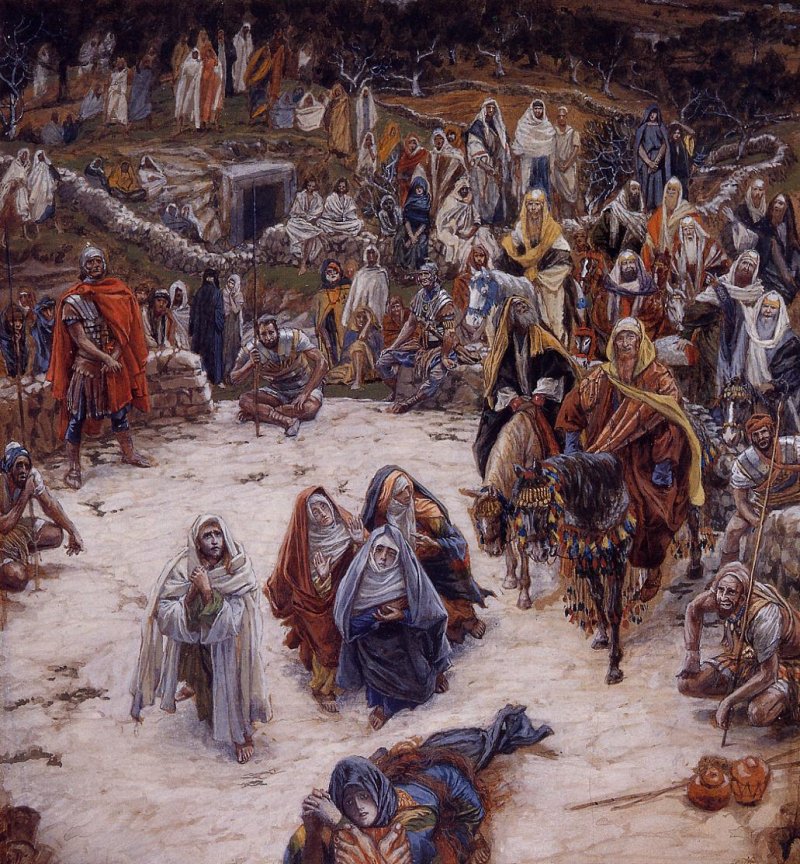
When Pilate condemned Jesus, they led him away but made Simon of Cyrene help carry his Cross. That was a welcome relief in his weakened condition. A large crowd followed Jesus, including many women who mourned and cried for him. Those women felt powerless, but their expressions of devotion strengthened him.

Once they had crucified Jesus, one of the condemned men mocked him but the other honored Christ, expressing saving faith in him. Jesus could behold his sacrifice already bearing fruit. Standing by his Cross were his mother and his beloved disciple, and “all his acquaintances stood at a distance, including the women who had followed him from Galilee” witnessing these events. And he saw them there for love of him, and it consoled him.

Therefore, if Jesus during his greatest suffering received some consolations, then in our trials we should not be ashamed to ask for help and comforts too. Jesus’ disciples were not perfect and they sometimes let him down, but the presence and support of his friends helped him to press on. So pray to God for consolation, invest in your personal relationships, and stay close to your Christian community. If you are going to pick up your cross daily and follow Christ in his sufferings you must also share in his consolations.

The Deaths of Lazarus

April 6, 2025

5th Sunday of Lent
By Fr. Victor Feltes
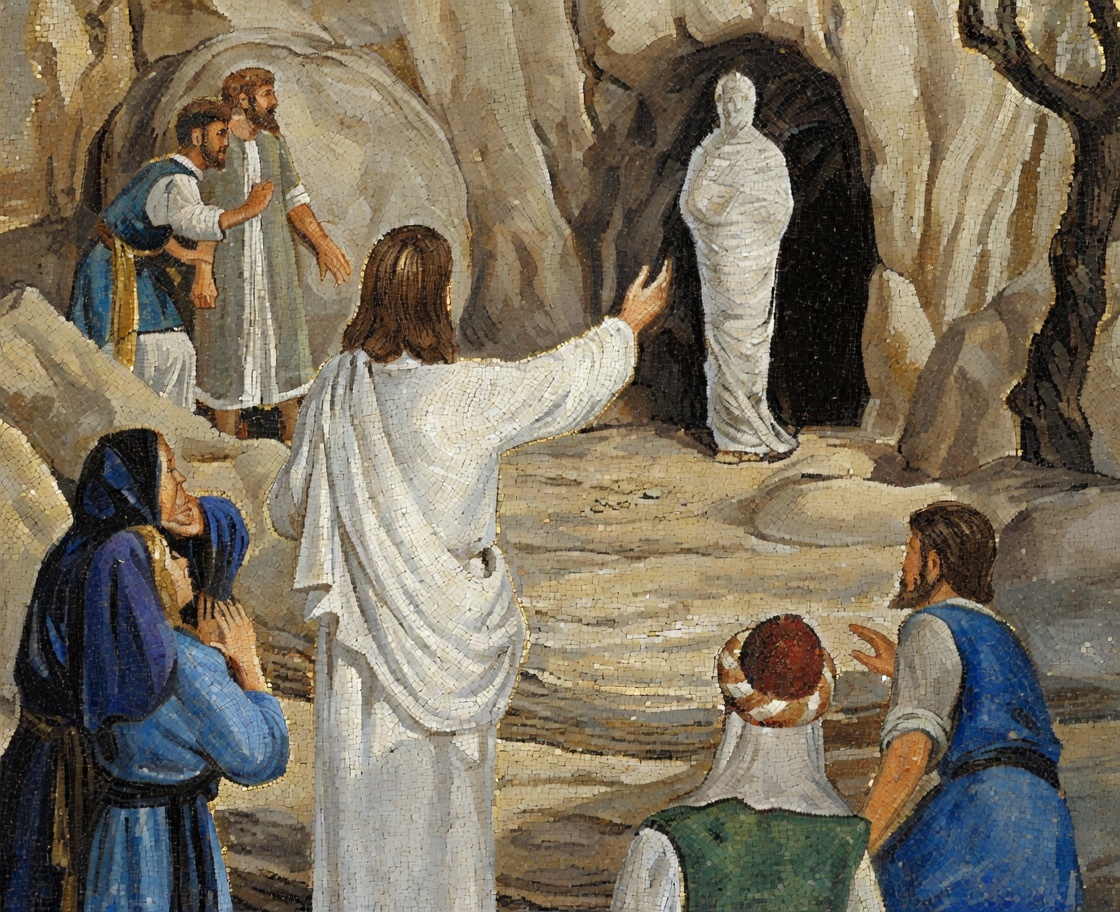
God does not do bad things, for “God is not subject to temptation to evil” and “what he hates he does not do.” However, God is all-knowing and all-powerful. There is nothing knowable that God does not know, and nothing good and doable that he cannot do. Therefore, when a bad thing happens, God has allowed that to happen. Yet we also “know that God causes all things to work together for the good of those who love him.” We see these truths reflected in today’s Gospel reading.

God clearly permitted Lazarus to fall ill. And when Jesus received the urgent message from Martha and Mary that their brother was sick, he remained in the place where he was and allowed Lazarus to die. “Now Jesus loved Martha and her sister and Lazarus.” So why did Jesus not come earlier, when he was told “the one you love is ill.” Or why did Jesus not heal his friend Lazarus’ sickness from a distance, like he cured the centurion’s servant or the royal official’s son? Jesus says the dying and rising of Lazarus was “for the glory of God, that the Son of God may be glorified through it,” and “that you may believe.”

Earlier in his public ministry, Jesus had raised Jairus’ daughter from the dead, having told mourners that the little girl was “asleep.” But that resurrection miracle was performed privately, shortly after death, and with strict orders to its witnesses that no one should know of it. By publicly raising Lazarus from the tomb in the presence of a crowd, Jesus manifests his power not only to heal the sick but to restore the dead to life.

Picture this: One moment, Lazarus was ailing and fading out of consciousness on his deathbed. The next thing he knows, he wakes up wrapped in bandages inside of a cave, and comes out toward the light at the sound of his friend Jesus’ call. His sisters would have filled him in on what he missed when he was dead.

The Gospels tell us Lazarus later attended a dinner with Jesus the day before Palm Sunday at the house of Simon the Leper. Martha served the meal while Mary took costly perfumed oil and poured it on Jesus’ head as he reclining at table. “A large crowd of the Jews found out that he was there and came, not only because of Jesus, but also to see Lazarus… And the chief priests plotted to kill Lazarus too, because many of the Jews were turning away and believing in Jesus because of him.” After Holy Week, the New Testament tells us no more of what happened to Lazarus. But we can imagine what it was like, years after Easter Sunday, when Lazarus died again.

Knowing that Jesus died and was risen, and having personally experienced death and resurrection himself, must have given Lazarus great peace even during his final passion. Consider Martha or Mary watching their brother die once more; having to burying him again. There would naturally still be sadness and ache in that parting, but I imagine the sisters would feel different this time: ‘We know he will rise in the Resurrection on the Last Day. Jesus Christ is the resurrection and the life who has come into the world, and whoever believes in him, even if they die, will live.’ Our brother Jesus died and has risen from the dead “for the glory of God” and “that you may believe.” Knowing and embracing this reality changes our life and how we face death. Do you believe this?

Last week, April 2nd, marked the twentieth anniversary of the passing of Pope St. John Paul the Great. And if you are like me, having witnessed how he lived and died, is inspiring. Pope John Paul’s famous motto was “Be not afraid!” In this, of course, he was quoting Christ who frequently said, “Be not afraid!” “Be not afraid,” Jesus tells us, “If you believe you will see the glory of God.”

The Living Water Jesus Gives

March 23, 2025

3rd Sunday of Lent
By Fr. Victor Feltes

Jesus tells the woman at the well, “Everyone who drinks this water will be thirsty again; but whoever drinks the water I shall give will never thirst; the water I shall give will become in him a spring of water welling up to eternal life.” What is this water he speaks of? The Samaritan woman, initially either humoring him, mocking him, or believing him, replies to Jesus, “Sir, give me this water, so that I may not be thirsty or have to keep coming here to draw water.” She seems to be imagining literal, physical water. The disciples likewise thought Jesus spoke of literal food when they returned from town and heard him say, “I have food to eat of which you do not know.” They asked one another, “Could someone have brought him something to eat?” But Jesus clarified, “My food is to do the will of the one who sent me and to finish his work.” So what is the “living water” Jesus wants to give?

Later in John’s Gospel, he gives us another clue. Jesus stands up in the temple area and exclaims, “Let anyone who thirsts come to me and drink. Whoever believes in me, as scripture says: ‘Rivers of living water will flow from within him.’” Jesus announces this during the last and greatest day of the Jewish Feast of Tabernacles, a celebration of God’s forty years of care for his people during the Exodus. And that context is significant. When the Hebrews entered the Sinai Desert, they were thirsty and cried out for water. So the Lord commanded Moses to strike a rock with his staff, miraculously causing water to flow for the people to drink and live. St. Paul the Apostle would later reflect that the Hebrews “all drank the same spiritual drink, for they drank from a spiritual rock that followed them, and the rock was the Christ.” Jesus Christ is our source of life. He pours out his living water so we may spiritually survive our pilgrimage through the desert of this world and happily enter the Promised Land of the life to come. Where do we find this living water with Jesus? Three places come to mind and the three are intertwined.

Christ’s water of life first comes to us in baptism. The Catechism of the Catholic Church teaches that “Holy Baptism is the basis of the whole Christian life, the gateway to life in the Spirit, and the door which gives access to the other sacraments. Through Baptism we are freed from sin and reborn as sons of God; we become members of Christ, are incorporated into the Church and made sharers in her mission….” This sacrament is called “‘the washing of regeneration and renewal by the Holy Spirit,’ for it signifies and actually brings about the birth of water and the Spirit without which no one can enter the Kingdom of God.” St. Paul teaches that we who were baptized into Jesus Christ were baptized into his death. He writes, “We were indeed buried with him through baptism into death, so that, just as Christ was raised from the dead by the glory of the Father, we too might live in newness of life.” Baptism connects us to Jesus’ Passion, Death, and Resurrection. We also encounter the water of Christ from the Cross.

On Good Friday, when the Roman soldiers “came to Jesus and saw that he was already dead, they did not break his legs, but one soldier thrust his spear into his side, and immediately blood and water flowed out.” Jesus nourishes us with himself in his Eucharist so that he remains in us and we remain in him as constant companions. Knowing of his sacrifice nourishes our souls as well when we consider how Jesus does these things for love of us; both dying for us once on the Cross and then giving us himself from this altar today. We encounter the living water of Christ in baptism and from the Cross, but John’s Gospel tells us of a third way.

When Jesus stood up in the temple area and exclaimed, “Let anyone who thirsts come to me and drink,” St. John’s Gospel notes Christ “said this in reference to the Spirit that those who came to believe in him were to receive,” adding “There was, of course, no Spirit yet, because Jesus had not yet been glorified.” To be clear, the Holy Spirit is an eternally existing divine Person and St. Luke’s Gospel shows us that the Holy Spirit was active in the world even before the birth of Christ, yet through Jesus’ victory every Christian is now made into a temple—an enduring dwelling place—for the Holy Spirit within them. Jesus said, “Whoever believes in me, as scripture says: ‘Rivers of living water will flow from within him.’” He said this in reference to the life-giving and refreshing Holy Spirit that those who came to believe in him were to receive.

Sharing in Christian Baptism, Confirmation, Holy Eucharist, and the Holy Spirit who guided Jesus, we drink of the living waters of Christ. A person who drinks natural water will be thirsty again, but Jesus says whoever drinks the water he gives will never thirst. With Jesus, on our pilgrimage through the deserts and trials of this world, our hearts can be refreshed and satisfied through the gift of God.

Passing the Marshmallow Test

March 9, 2025

1st Sunday of Lent
By Fr. Victor Feltes

A young child is brought into an empty room and seated at a table. On the table is a plate with a single yummy marshmallow. An adult explains that if the child waits fifteen minutes to eat the treat, one more yummy marshmallow will be given. Will the child eat one treat now or enjoy two treats later? Versions of this experiment are known as the Marshmallow Test. Studies of the Marshmallow Test have varied in their findings about how much this predicts a child’s future academic and social success. But in every test, a person faces a free choice: to either grasp at an easy thing, or to resist temptation and obtain something better. The temptations of Jesus in the desert were a high-stakes test which our Lord passed and we can learn from.

During Jesus’ public ministry, when “unclean spirits saw him,” St. Mark records they would fall down before Jesus and shout, “You are the Son of God!’” But St. Luke records how Jesus “rebuked them and would not allow them to speak, because they knew he was the Messiah.” The title “Son of God” was thought a reference to the Messiah, Christ, or Anointed One spoken of in the 2nd Psalm. During the Temptations in the Desert, the devil may or may not have known that Jesus is divine, but the devil’s questions show he at least strongly suspected that Jesus was the Christ, the prophesized King of the Jews: “If you are the Son of God, command this stone to become bread. … I shall give to you all this power and glory… All this will be yours, if you worship me. … If you are the Son of God, throw yourself down from (this roof ledge of the temple).” With each temptation, the devil was placing before Jesus an easy way to become a flawed Messiah.

Like the forty days of Moses atop Mount Sinai, Jesus ate nothing for forty days in the desert and he felt hungry. By suggesting that he tell stones to become bread (possibly against God’s command that he fast) the devil was enticing Jesus to be a materially-focused Messiah. Yet “man does not live on bread alone.” Giving everybody bread without saving their souls would doom the whole world to death. Instead, Jesus obeys his Father, and goes on to change bread into his Flesh for the life of the world. By suggesting that Jesus worship the wicked “Prince of this World” the devil was enticing him to grasp at worldly power like evil lords, kings, and emperors. Instead, Jesus establishes a Kingdom in this world not of this world and reigns now as our uncorrupted, holy, righteous King. By suggesting that Jesus jump off from the height maybe the devil sought to fool him into presumptuously ending his own life, or maybe he wanted Jesus to be a Messiah who would refuse to die so he could never be the Lamb of God whose sacrifice takes away the sins of the world. Instead, Jesus is obedient unto death, even death on a cross, winning for himself and for us a resurrection to glory. Each time, Jesus resists the temptation, refusing the easy evil way but obtaining something better for himself and others.

Our daily temptations may not be so dramatic as Jesus’ in the desert, but we frequently face similar tests. When you are tempted to sin, consider the cost and opportunities lost. If you choose to throw rocks through your windows, if might be fun in the moment but you will lose money and time repairing them. And that money you would have used for a nice meal or clothing or some other good thing will instead be spent on panes of glass. If you choose to sin, it will cost you; not only in the pains which follow but also in the goods things you fail to obtain. When the devil would lead you down the smooth and easy path, call out to the Lord and trust Jesus enough to take the path that Christ has shown you. We see the greater things Christ’s faithful obedience ultimately brought himself and others. Patiently endure in order to see the victories it leads to in this life and the next life, in this world and the world to come. Remember the Marshmallow Test and pass the test before you.

Loving Everyone, Our Enemies & Ourselves

February 23, 2025

7th Sunday in Ordinary Time
By Fr. Victor Feltes

Jesus never promised that we would not have enemies. Jesus says, “You will be hated by all nations because of my name. … No disciple is above his teacher, no slave above his master. … If they persecuted me, they will also persecute you. … Woe to you when all speak well of you,” for false prophets were treated in this way. But “blessed are you when they insult you and persecute you and utter every kind of evil against you falsely because of me. Rejoice and be glad, for your reward will be great in heaven.” Thus were true prophets and servants of God treated. The faithful will encounter enemies in this world, yet Christ commands us to love everyone.

He says to his disciples: “Love your enemies, do good to those who hate you, bless those who curse you, pray for those who mistreat you.” You will have enemies, but you must love them. Love sometimes has warm, fuzzy feelings, but not always. This is because love is choice, a choice to will the good of the other. You will not always like everyone, but you must always love everyone.

Jesus tells us, “To the person who strikes you on one cheek, offer the other one as well, and from the person who takes your cloak, do not withhold even your tunic.” Our love of enemies, however, does not mean we must permit grave harms to be done to ourselves or others. This is reflected in the examples Jesus cites. Losing one’s cloak and outer tunic would not leave someone naked, since people in those days also wore an inner tunic. And a slap on the cheek in those days—unlike a stab in the chest—wounds one’s dignity more than one’s long-term health.

We should oppose and resist grave evil, but we must not be undone by the sins and slights of life. Jesus wants us to be magnanimous, large-souled; merciful and forgiving others’ trespasses and debts, generous and giving to those who ask of us, patiently loving people and doing for them what we would have others do for us. Pray for those who mistreat you, bless those who curse you, and do good to those who hate you. Then you will be loving them like Jesus has loved us.

God proves his love for us in that while we were still sinners Christ died for us.” Be like God, who is generous and kind and merciful towards the ungrateful and the wicked. Then your reward will be great, packed together, shaken down, and overflowing, for you will be godlike, children of the Most High. St. Paul declares, “Just as we have borne the image of the earthly one, we shall also bear the image of the heavenly one.” Then, as St. John writes, “we shall be like [God], for we shall see him as he is.” “God is love,” and to become like God it is important that we love and forgive like him. We must also extend this love and forgiveness to ourselves.

A person who believes that God can love and forgive everyone but themselves is singling themselves out as somebody super-extra special. Remember that our Lord is much more concerned with your future than your past. To Christians who are too hard on themselves, I suggest this thought experiment: Imagine somebody just like you, with the same past, the same strengths and weaknesses, the same loves and desires. What would you think of that person? Could you be friends with that person? How would you treat that person? If kindly, then love yourself like your neighbor. If God loves you, you should also love yourself. If God has forgiven you, you should also forgive yourself. And since God loves everyone, you should love everyone too.

Doing The Lord’s Work — Funeral Homily for Sylvan Rothbauer, 87

January 6, 2025

By Fr. Victor Feltes

There is much more to life than work, but human work goes back to the beginning. Even before the Fall of Man, “the Lord God then took the man and settled him in the Garden of Eden, to cultivate and care for it.” Adam toiled tending plants and animals with Eve. Sylvan worked very hard farming his whole life alongside Leona.

He began with a herd on a dairy farm, but later purchased another farm in Tilden on which he grew crops and raised animals. His daughter tells me he taught his three children everything they know about farming. He gave them chores to do growing up, and “some of them were not so fun,” but they were helpful.

He and his wife of sixty-four years did everything together. They went to Mass here at St. John’s together, vacationed with the children to a cabin up north, and would gather the whole family together, especially for Christmas Eve. And when Leona eventually fell ill, Sylvan became her full-time caretaker, humbly cooking and cleaning and laundering for her for the first time.

St. Paul describes Jesus Christ as the New Adam, the “second” or “last Adam.” He writes that, “The first man was of the dust of the earth; the second man is of heaven. …. And just as we have borne the image of the earthly man, so shall we bear the image of the heavenly man.

Jesus the Good Shepherd began with one flock, but then purchased more fields and creatures through his blood, sweat, and tears. We are his people, the sheep of his flock, the children of the Father. He teaches us everything we must know to produce good fruit. The chores that he gives us are not always fun, but they support the work that he is doing and help us mature into saints like him. He humbly serves his beloved bride, feeding, cleansing, and clothing her, and he delights to be with her; on earth around this altar, in the joyful house above and away from here, together with his whole family.

The stories of our lives find their greatness in Jesus Christ’s story. Pray for Sylvan, so that his likeness to Christ may reach its full completion. And with faith in our Lord Jesus, do the holy work which will lead to your glory.

Life Lessons From A Holy Family

December 29, 2024

Feast of the Holy Family
By Fr. Victor Feltes

The Holy Family went up to Jerusalem each year for the feast of Passover. Once, when Jesus was twelve years old, as they were leaving the city at the end of the festival, the Boy Jesus stayed behind without his parents knowing it. Whole communities would pilgrimage to and from these feasts together, so Joseph and Mary had assumed Jesus was walking with others in the caravan during that first day journeying on the road back to Nazareth. But then, perhaps when it was time to share a meal or set up camp for the evening, his parents could not find him. They would have asked all of their relatives and neighbors about the last place they had seen the boy and realized that he had not been with them for hours. Joseph and Mary would soon return to Jerusalem and find Jesus alive and well on the third day. In this difficult episode for the Holy Family, there are lessons for us today.

Jesus had the best parents in all of human history. His adoptive father was a great saint and his mother was filled with grace. And yet, one time, they lost track of their only child for three days. This shows us that sometimes we can try our hardest and things will still go wrong (at least in our own eyes). We can always choose to put forth our best effort, but we cannot control every outcome. Remember: Just because something goes wrong, even painfully wrong, does not necessarily mean that we have sinned. The Blessed Mother was sinless and yet she lost her Son.

When we are little, our parents might seem perfect. As we grow up, we are disappointed to see their imperfections. But as we advance in wisdom and age becoming adults ourselves, we better understand human weakness and limitations. This does not erase people’s flaws and sometimes grave faults, but it can help us have more mercy for people, including forgiving our parents and ourselves.

After three days, Joseph and Mary found Jesus in the temple, “sitting in the midst of the teachers, listening to them and asking them questions.” Jesus shows us that we can learn things even from imperfect people. Jesus’ parents were astonished when they found him, and his mother said to him, “Son, why have you done this to us? Your father and I have been looking for you with great anxiety.” Like holy figures in the Old Testament before her, Mary questions the Lord about the things she does not understand.

Being twelve years old, Jesus was years beyond the age of reason. He must have known his parents would be concerned after he concealed his plans from them. But the Sinless One does not offer an apology. Instead, he asks them, “Why were you looking for me? Did you not know that I must be in my Father’s house?” It is a mystery why it was God’s will for Jesus to remain in Jerusalem. Even after his reply, his parents did not understand what he said to them. But he returned home with them to Nazareth and was obedient to them as he advanced in wisdom and age and favor before God and man. Blessed Mother Mary kept this episode in her memory, remembering its stressful beginning and joyful end, and pondering its meaning in her heart.

The things which happen in our lives, like the circumstances of our upbringing or the crises that come our way, will not always make sense to us. But we can learn and grow from all these things, and become more holy families because of them, for “God works all things for the good of those who love him.”