Archive for the ‘Jesus Christ’ Category

Christ Was Lifted Up

March 7, 2021

3rd Sunday of Lent

People would pilgrimage to the Temple in Jerusalem from across the known world to worship, often bringing money to purchase oxen, sheep, or doves for sacrifices to God. So vendors had set up shop in the Temple’s outermost court exchanging foreign currencies into Hebrew coins for a percentage fee and selling animals for a healthy profit. God, however, had designated that large, marble-paved court as the Court of the Gentiles where non-Jews (that is, the Gentiles) could come to worship him at his Temple. The Father willed his Temple to be “a house of prayer for all the nations,” but the moneychangers and animal sellers were making it a noisy, smelly “marketplace.” And by charging unlawful interest and demanding excessive prices even of the poor, they were also “making it a den of thieves.

A place intended to be free for holy worship and communion with God had become unclean, profaned by sin. So Jesus personally comes to Jerusalem at the time of Passover and does something dramatic. He zealously cleanses the Temple, conquering evil, achieving justice, restoring relationship between God and man, drawing people to himself, and indeed sacrificing himself; for when the chief priests and scribes heard of this incident they began seeking a way to put him to death. Their plotting would lead to the Pascal Mystery at the heart of The Apostles’ Creed:

He suffered under Pontius Pilate,
was crucified, died and was buried,
he descended into hell,
on the third day he rose again from the dead,
he ascended into heaven,
and is seated at the right hand of God the Father Almighty.

Why does Jesus Christ do these things? Because sin had caused the human race to fall far from God and paradise. Suffering, dying, and being barred from Heaven were our human lot. We had become slaves to sin and the Evil One, held hostage against our will. Our offenses against the All-Holy One required an incalculable repayment. And our separation from God had made us doubtful of his goodness and love for us. It was a slavery we could not escape, a debt of justice we could not repay, and a broken relationship we could not heal. But God had a plan to save us. He would aid humanity with his divinity by fashioning a remedy for us out of our weakness and suffering and mortality, that from fallout of our downfall would come the means to our salvation. By his Incarnation, the Son of God enters our sinful world as one of us and by his Pascal Mystery sets us free, cleansing us, for holy worship and communion with God. First, Jesus assumes our nature, and then he offers a perfect sacrifice.

As the Letter to the Hebrews says, since we “share in blood and Flesh, Jesus likewise shared in them, that through death he might destroy the one who has the power of death, that is, the Devil, and free those who through fear of death had been subject to slavery all their life.” Jesus said that he came “to give his life as a ransom for many.” And lest it be unclear, St. Paul proclaims that the Lord “gave himself as a ransom for all.” Christ’s death frees the slaves and ransoms the captives, and now saints and angels sing to Jesus, the Lamb of God, in Heaven: “Worthy are you… for you were slain and with your blood you purchased for God those from every tribe and tongue, people and nation.

To some, the idea of Almighty God dying on a cross seems impossible, unbecoming foolishness. Yet Christ crucified is the power and wisdom of God. “The foolishness of God is wiser than human wisdom, and the weakness of God is stronger than human strength.” This mysterious, hidden, wisdom, planned by God before the ages for our glory, was not understood by the devil and his demons; “for if they had known it, they would not have crucified the Lord of glory.” In sinning God, Adam had handed himself and his descendants into the devil’s clutches, but in crucifying Christ (the sinless New Adam) the serpent overplays his hand and loses big. St. Augustine uses the image of a mousetrap in which Jesus is the bait. The devil takes this bait in putting Jesus on the Cross, but by shedding Christ’s innocent blood the devil is forced to release his claims on those who are joined to Christ. The trap snapped down and crushed the serpent.

Jesus’ sacrifice was also able to pay the incredible debt of human sins before God. All sin is wrong, but consider which sin is worse: to lie to a stranger or to betray a friend; to slap your enemy or to slap your mother? The greater the generous goodness and love that a person has shown us, the greater is the offense of our trespasses against them. So how great a crime then are our sins against God, whose love created us and from whom all good things come? How very great a debt of justice must then be satisfied? Our sins caused a debt no sinner could repay. God had commanded his Old Covenant people to offer animal sacrifices for their sins, the idea being that the creature was dying in the place of the sinner whose sins had merited death. However, as the Letter to the Hebrews says, “it is impossible that the blood of bulls and goats take away sins. For this reason, when [Jesus] came into the world, he said: ‘Sacrifice and offering you did not desire, but a body you prepared for me; holocausts and sin offerings you took no delight in. Then I said, as is written of me in the scroll, “Behold, I come to do your will, O God.”’

Jesus Christ, God become man, perfectly fulfills the Law, keeping the commandments and doing his Father’s will. He lives for God without sin, honoring his Father and mother, proclaiming the Kingdom of God without idolatry or blasphemy, without murder or adultery, without thievery or lying or coveting, but with abundant love. And in his death, Christ obediently offers the perfect, acceptable sacrifice we were incapable of on our own; a divinely-perfected offering of humanity to God. By his Incarnation, Jesus has in a certain way united himself with every human person, inviting them to become one with him. Through his sacraments, we are more perfectly joined to Jesus to share in his life and enjoy the benefits of what he has accomplished. Christ is the Victor over sin and death, over the tomb and the underworld, over the world and the devil, and he invites us to partake in his victory.

In the beginning, though the Holy Trinity did not desire humanity to sin and fall, our freely-chosen rebellion did not come as a surprise. Before Creation, the eternal, all-knowing Trinity foreknew what it would cost to save us. And God still said Yes, “Let there be light.” Jesus Christ was freely delivered up crucifixion by lawless men according to the set plan and foreknowledge of God, as foreshadowed by the Old Testament Scriptures. But could God, if he had wished, before Creation or in the course of time, have ordained a manner for the Son’s saving sacrifice other than dying upon a Roman Cross? If so, if there were other unchosen options, then the Cross of Christ was chosen as a most effective and compelling sign for us. A less painful, less ignoble, less public, less striking death — if such a death could have saved us — would not speak to us so clearly as a powerful sign of God’s love for us as this. Jesus makes himself so vulnerable and so lowly so as to awaken a response of love in our hearts. He extends his arms on the Cross in hopes that the whole world will be drawn to his embrace. As Jesus said, “When I am lifted up from the earth, I will draw all people to myself.”

After Jesus died, the Apostles’ Creed says, “he descended into hell.” What are we to make of this? Death is the separation of one’s soul from one’s body. On Holy Saturday, while Jesus’ dead body laid in his sealed tomb keeping a perfect Sabbath rest, Jesus’ soul visited the souls of those in the realm of the dead. Our creed translates this abode of the dead (called “Sheol” in Hebrew or “Hades” in Greek) as “hell” because all souls there, whether righteous or unrighteous, were deprived of the vision of God. But this does not mean that the situations of the Just and Unjust there were identical. Jesus’ Parable of the Rich Man and Lazarus describes the afterlife before the gates of Heaven had opened, showing Lazarus comforted in the bosom of Father Abraham while the uncaring, anonymous rich man (whose name is not written in the Book of Life) suffers torment in the flames.

Jesus descends to hell as Savior, proclaiming the Good News to the souls imprisoned there. He does not descend into hell to deliver the damned, nor to destroy the hell of damnation, but to free the souls of the Just. Jesus had said, “Amen, amen, I say to you, the hour is coming and is now here when the dead will hear the voice of the Son of God, and those who hear will live.” By proclaiming the Gospel in the underworld and inviting souls to Heaven, Jesus extends his saving victory to all the faithful people who had preceded him in death.

On the third day he rose again from the dead,
he ascended into heaven,
and is seated at the right hand of God the Father Almighty.

I do not have the time to speak much about these lines this Sunday, but in closing, note what St. Paul beautifully observes about Christ in his Letter to the Philippians:

Though he was in the form of God, Jesus did not deem equality with God something to be grasped at. Rather, he emptied himself and took the form of a slave, Being born in the likeness of men, …it was thus that he humbled himself, obediently accepting even death, death on a cross!

Because of this, God highly exalted him and bestowed on him the name that is above every other name, so that at Jesus’ name every knee must bend in the heavens, on the earth, and under the earth, and every tongue proclaim to the glory of God the Father: Jesus Christ is Lord!

Jesus empties himself in his Incarnation, humbles himself in his holy obedience, submits himself to his Passion and death, descends to the depths of the underworld, lower and lower and then Jesus is raised up from there, higher and higher, to life and rewards, glory and honor and power, enthroned at the favored righthand of God the Father. St. Paul says to “have among yourselves the same attitude” as this in your Christian life, for as Jesus teaches, “Whoever exalts himself will be humbled; but whoever humbles himself will be exalted.

“I Believe in Jesus Christ”

February 27, 2021

2nd Sunday of Lent

In the words of The Apostles’ Creed:

I believe in Jesus Christ, his only Son, our Lord,
He was conceived by the power of the Holy Spirit
and born of the virgin Mary.
He suffered under Pontius Pilate,
was crucified, died, and was buried.

At the heart of our Christian Faith is a Person, the Person of Jesus of Nazareth. He is the Word become flesh, “the Father’s only Son, full of grace and truth.” Jesus comes to us as “the way, and the truth, and the life,” and Christian living consists in following him. As Pope Emeritus Benedict XVI has said, “Being Christian is not the result of an ethical choice or a lofty idea, but the encounter with an event, a person, which gives life a new horizon and a decisive direction.

I believe in Jesus Christ, his only Son, our Lord

Jesus’ name in Hebrew means: “God saves.” And this name, first announced by the archangel Gabriel, expresses his identity and mission. Through the incarnation, God made man “will save his people from their sins.” Jesus is the “name which is above every name” and “there is no other name under heaven given among men by which we must be saved.” He is called the Christ or the Messiah. These are Greek and Hebrew titles which mean “anointed one.” In Israel, those consecrated for a God-given mission were anointed in his name; kings, priests, and sometimes prophets had precious, shining olive oil poured upon them. Jesus Christ fulfills the messianic hope of Israel by coming anointed in the Holy Spirit as priest, prophet, and king, to inaugurate the Kingdom of God.

Jesus Christ the Son is eternally begotten of the Father. They are one God but two persons. This is why Jesus can say, “The Father and I are one,” and, “Whoever has seen me has seen the Father,” while he prays to, honors, and loves his Father as another Person. The Jews in holy reverence for God’s divine name Yahweh would substitute the word Adonai in Hebrew or Kyrios in Greek, both of which mean “Lord.” So when the early Christians professed “Jesus Christ is Lord” they were not merely announcing him as a king above Caesar but proclaiming him as God from God.

He was conceived by the power of the Holy Spirit
and born of the virgin Mary.

God becomes man not as a full-grown adult descending from the clouds; nor as an infant, delivered in a blanket by the Holy Spirit stork. Jesus Christ is conceived as a tiny embryo because that is how human life begins. Jesus Christ is not part God and part man, or some mixture of the two. He’s not half-and-half, or like 99.44% divine. The Son became truly man while remaining truly God; two natures united in one person, true God and true man. He is born among us, as one of us, to die for us as our saving sacrifice.

Roughly 3,800 years ago, God put Abraham to the test. “Take your son Isaac, your only one, whom you love, and go to the land of Moriah. There you shall offer him up as a holocaust [a sacrifice] on a height that I will point out to you.” Early the next morning Abraham saddled his donkey, took with him two of his servants and his son Isaac, and after cutting the wood for the burnt offering, set out for the place of which God had told him. On the third day, Abraham caught sight of the place from a distance. He said to his servants: “Stay here with the donkey, while the boy and I go on over there. We will worship and then come back to you.

We‘ will come back to you? Why lie to the servants? Why not just say, “Wait here”? You see, Abraham was in fact neither lying nor trying to deceive. As the Letter to the Hebrews teaches, God had promised him “through Isaac descendants shall bear your name,” so Abraham reasoned that God was able to raise even from the dead, and he received Isaac back as a symbol, a foreshadowing sign of things to come. God provides the sheep for the sacrifice upon Mount Moriah. There the city of Jerusalem would be established. There the Jewish Temple would be built, destroyed, and raised up again. And there Jesus Christ, the Lamb of God, would be sacrificed on the Cross. God the Father offers his own beloved Son in our place.

Born of the virgin Mary,
he suffered under Pontius Pilate,
was crucified, died, and was buried.

Holy Mary of Nazareth and Governor Pontius Pilate of Judea stand for the two types of people in this world in regards to Jesus: those who receive him, love him, and serve him like Mary, and those like Pilate who would prefer to ignore him but who will reject and destroy the Christ if he stands in the way of their desires. But Mary who bore him and Pilate who killed him are not merely types, symbols, or metaphors – they are real people who ground Jesus’ life in real history. Jesus’ public ministry, his Passion, death, and Resurrection were not “once upon a time,” but in the early 30’s AD. As the 2nd Letter of St. Peter testifies:

“We did not follow cleverly devised myths when we made known to you the power and coming of our Lord Jesus Christ, but we had been eyewitnesses of his majesty. For he received honor and glory from God the Father when that unique declaration came to him from the majestic glory, ‘This is my Son, my beloved, with whom I am well pleased.’ We ourselves heard this voice come from heaven while we were with him on the holy mountain.”

He speaks here of the Transfiguration, recounted in today’s gospel. Jesus, “after he had told the disciples of his coming death, on the holy mountain he manifested to them his glory, to show, even by the testimony of the law and the prophets, that the Passion leads to the glory of the Resurrection.” His disciples Peter, James, and John “were so terrified” at this experience, but then “Jesus came and touched them saying, ‘Rise, and do not be afraid.’

Brothers and sisters, we must take God seriously, but we need not be afraid. “Perfect love drives out fear.” The Word became flesh so that we might know God’s love. As Scripture says: “In this the love of God was made manifest among us, that God sent his only Son into the world, so that we might live through him.” – “God proves his love for us in that while we were still sinners Christ died for us.” – “God so loved the world that he gave his only Son, that whoever believes in him should not perish but have eternal life.”  – And “if God is for us, who can be against us?” If the Father has given us his Son, “how will he not also give us everything else along with him?” Jesus Christ, who died and was raised, sits at God’s right hand and intercedes for us.

So during this Lent, cultivate your personal relationship with Jesus, which is so very important. Yes, he is your Lord God and King, but you can personally relate to him in other true ways as well. He is your brother, for you share the same heavenly Father and blessed mother. He is your friend, for “no one has greater love than to lay down one’s life for one’s friends” and he has laid down his life for you. He is your teacher who said, “You call me ‘teacher’… and rightly so, for indeed I am.” He is your hero, champion, and star who by his excellence wins glory throughout the world. And he is your bridegroom, in whom his beloved bride and his best man rejoice. At the heart of our Christian Faith is a Person, Jesus Christ, the Word become flesh who died for you, and Christian life consists in knowing, and loving, and following him.

Living Christ’s Mysteries — Funeral Homily for Deacon Ed Feltes, 65

February 23, 2021

On the day Victor and Ramona brought their eighth son to be baptized, while his little head was still damp from holy water, Edward Joseph was draped with white linen. And the priest said (in Latin), “Receive this white garment, which mayest thou carry without stain before the judgment seat of our Lord Jesus Christ, that thou mayest have life everlasting.” Today, we bring Ed’s body before the Lord, draping him in white cloth once more. My uncle Ed told me that as a deacon he would always say yes to doing baptisms. It was, he said, “the introduction of a new life into the Church. By baptizing them you are basically installing them into a Catholic environment and hopefully they will grow in it and not back away from it.” Ed has been a Catholic Christian for more than sixty-five years, ever since he was baptized into Christ’s death and resurrection. And throughout his nearly twenty-four thousand days Jesus Christ accompanied him through life. The life of a Christian is found in Jesus Christ. And the mysteries of Christ’s life are reflected in, shared with, the faithful Christian. We see this throughout Ed’s life.

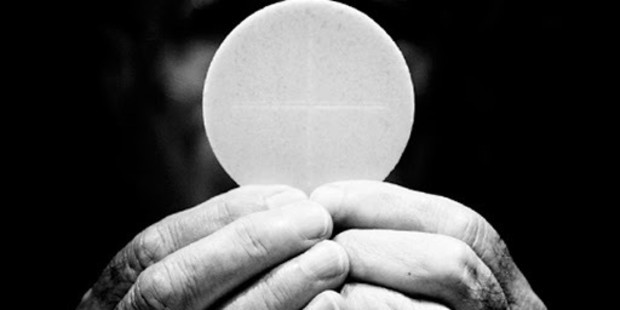
At his First Communion, young Edward approached and saw the Real Presence of his Lord held before his eyes: “The Body of Christ / Corpus Christi.” Ed received Jesus and Jesus received Ed into a more profound union, a more intimate relationship, between them. In receiving Christ’s Body, Ed was called to be the Body of Christ for this world. When Jesus tells us at the Last Supper, “Do this in memory of me,” he not only commands that we would receive him at the Holy Sacrifice of the Mass, but that we would imitate him in his self-gift: “This is my body, which will be given up for you. Do this in memory of me.” When Ed was sealed with the gift of the Holy Spirit at his Confirmation, he entered a more powerful relationship with that same Spirit of inspiration, grace, and power who led Jesus in his works on earth. The Holy Spirit’s gifts manifested through Ed not merely for himself, for his own salvation, but to serve the wider mission of Christ’s Church, that every person in this wayward world might be saved.

The main vehicle of Ed life’s work and witness would be through his first vocation: marriage. Ed and Jessica met during his studies at Notre Dame University and the year he graduated they entered a new covenant together. Almost forty years ago, they freely committed without reservation to give themselves to each other in marriage, to love and honor each other for as long as they both would live, and to accept children lovingly from God—raising them up according to the law of Christ and his Church. Recall that Jesus Christ called himself the Bridegroom and that in Sacred Scripture his Church is called his Bride. Every Christian is called to imitate Christ, and every Christian soul is spiritually his Bride. But just as the Holy Eucharist we celebrate is not merely a symbol or a memory but Jesus’ Real Presence among us so the Sacrament of Marriage makes present the mystical marriage of Jesus and his Church, within and between a husband and a wife. In beholding a holy, Christian marriage, in its loving, mutual, and lasting fidelity, we see a sign for us and for the world. That love is real, that love is foundational, that love is fruitful. That we were made in love, made to love, made for a holy communion of love, a family. We saw this in Ed and Jessica’s strong marriage which bore fruit, not least of all in their children: in their living son, Christopher, of whom they are so proud, and four other loved children who passed away very, very young; Francis, Steven, Elizabeth, and Meagan. Ed said he looked forward to meeting them and now has that opportunity.

In his marriage, together with Jessica, Ed discerned and pursued a call within his call, a second vocation. Relying on the help of the Lord God and our Savior Jesus Christ, Ed was chosen and ordained for the Order of the Diaconate. After the laying of the bishop’s hands and being dressed with stole and vestment, he was handed a Book of the Gospels with this admonition: “Believe what you read, teach what you believe, and practice what you teach.” Deacon Ed then ministered here at St. Catherine’s, celebrating in this sanctuary and serving throughout this parish. Teaching and preaching, even though he often found preaching difficult. Ed told me that he primarily sought to advance the Kingdom by sharing his life, showing how he lived. He said, “Always live your life such that people want the same that you do.” Looking back at the end of his quiet life, Ed had few regrets, but he did wonder if he was “maybe quiet too long.” Deacon Ed understood well that we need not enter into every pointless, unhelpful argument, but the Spirit does call and help us to speak the important words people need to hear alongside seeing our deeds.

In these last years, these final years, Ed reflected Christ and became configured to him in a new way, by joining him in suffering. Ed had at least six different strokes—twice nearly dying yet surviving—and endured strokes’ debilitating effects. Ed and Jessica described these past several years to me as an experience of continuous loses and grief, but also of continuous mercy and grace. Reportedly, the devastating impact of strokes often breaks up families, but this family grew closer through the trials. I think Ed also became bolder in Christ. While under hospice care at home he never stopped offering good things to his guests; blessings, prayers, holy water and blessed salt, to anyone who visited, wherever they might be in their faith walk.

When I last spoke with my uncle Ed I asked him what he was looking forward to. He simply said, “Heaven. I poured a lot of my life into experiencing, into living life on earth with a heavenly approach.” Asked as to what his near future held, he said, “It’s really up to God. I accept everything he has for me.” Ed and Jessica related to me that it was last March, almost a year ago, over a lunch at Panera Bread, that he told her, “I’m going to go to the Lord in six months to a year.” And he was right. Ed knew he was in God’s hands, being led and offered like an oblation for his glory and as a blessing for many. Knowing that this day was not in the far-distant future, I asked Ed about his wish for all of you on this day of his funeral. He answered, “Pray that they seek God more closely and live a more Christian life. I wish they would seek God for the answers and not just rely on themselves.” So if you have seen Jesus Christ in the life of Deacon Ed Feltes, please listen and heed his words.

And now, in conclusion, like Edward heard in his Last Rites:

I commend you, our dear brother, to almighty God and entrust you to your Creator. May you return to God who formed you from the dust of the earth. May holy Mary, the angels, and all the saints come to meet you as you go forth from this life.

May Christ who was crucified for you bring you freedom and peace. May Christ who died for you admit you into his garden of paradise. May Christ, the true Shepherd, acknowledge you as one of his flock.

May the Lord forgive all your sins and set you among those he has chosen. May you see your Redeemer face to face and enjoy the vision of God for ever.

Christ the Bridegroom and His Bride — The John and Megan Salm Wedding

February 13, 2021

When Jesus saw the crowds, he went up the mountain. He sat down and his disciples came to Him. Jesus began to teach them, and his first teachings in this Sermon on the Mount were the Beatitudes we just heard. Blessed are the poor in spirit, the mourners, the meek, the merciful, the pure of heart, the peacemakers, those who hunger and thirst for righteousness, those who are persecuted for the sake of righteousness. What do these things mean? How can we best understand them? Who best models these blessed paths for us to follow? Realize that Jesus’ Beatitudes are autobiographical. These Beatitudes describe Jesus himself.

Jesus is poor in spirit, relying upon his Father-God, and personally connecting with him every day through prayer. Jesus mourns because he loves and cares about us, our brokenness, our pains, our sorrows. Jesus is meek, not coming as a warrior on a warhorse imposing his will by force, but rather–for instance–entering Jerusalem humbly on a donkey, inviting the world and all people to freely accept his Kingdom and himself. Jesus is merciful, he forgives us because he loves us. Jesus is pure of heart, he loves with pure motives and true devotion. Jesus is the peacemaker whose peace is true peace. More than bread alone, Jesus hungers and thirsts for righteousness. And because of this, he is persecuted for the sake of righteousness, and blesses many through his self-sacrifice.

Jesus went up the mountain and his disciples came to him. There are many crowds in this world, but Jesus’ disciples, his Church, they come to him. And Jesus teaches us to imitate his own example. The saints give us excellent examples of how to be Christlike. As St. Paul tells the Corinthians, “Be imitators of me, as I am of Christ.” Get to know saints, those alive on earth and those alive in Heaven, and you’ll become holier, growing ever closer to the best version of yourself through their friendship. John and Megan, be saintly friends for each other to help each other, and your children, be saints. And meditate upon the relationship of Christ and his Church to guide you in your marriage.

Recall that Jesus calls himself the Bridegroom and his Church is called his Bride. Now every Christian is called to imitate Jesus Christ, and every Christian soul is spiritually his Bride. But just like the Holy Eucharist we celebrate today is not just a symbol or a memory of Jesus but his Real Presence among us, so the Christian Sacrament of Marriage you are about to enter makes present the mystical marriage of Jesus Christ and his Church between you and within you. John, love your wife, even as Christ loved the church, handing himself over for her, to bless and sanctify her. Megan, love and follow your husband, becoming fruitful and holier together with him.

Pray as a couple, with your kids, and individually on your own, stay close to the Lord’s Sacraments in his Church, relying on God to enrich your spirits, personally connecting with God every day. Have compassion for each other, mourning each others’ trials and consoling each other through them. Be meek toward each other, leading or following as is proper, but always inviting rather than imposing. Be merciful, forgiving each others’ faults in love. Be pure of heart, devoted to each other with pure motives. Be peacemakers, not merely content with an absence of conflict, but cultivating true harmony together. And be not content with just the pursuit of daily bread but hunger and thirst for righteousness, and be willing to suffer for righteousness, that your lives may be a blessing to many.

John and Megan, we are happy for you, we are excited for you, and we anticipate great things from the two of you together. May our Lord Jesus Christ, who has begun his good work in you, bring it to fulfillment.

The Church – The Body of Christ

February 13, 2021

6th Sunday in Ordinary Time – Valentine’s Day
By Deacon Dick Kostner

Thanks to Clint Berge who shared with me a YouTube talk, my thoughts this last month has moved to “What If’s?” The talk’s objective was to plant in our minds that maybe things won’t ever get back to “normal,” followed by “maybe that’s good!” I think God is trying to teach us the importance of thinking new for His Church. Coming up with new ideas to foster the Kingdom of God through our vocation to love and serve others which will gain us the keys to Heaven.

Our scripture readings this weekend come during the Church’s calendar of “Ordinary Time.” Remember Scripture is divinely-inspired, meaning God is the primary author. Our readings talk about suffering people who were experiencing the disease of leprosy over two thousand years ago. This disease literally ate up their skin and was highly contagious so that these people were ostracized from family and friends for their lifetime. It was thought that God was punishing them for either their sins or the sins of their family, so their only way out was if a priest certified that they had been made clean.

Sounds kind of familiar and “ordinary” doesn’t it? In our gospel, Jesus cures a person who begs him for help which he receives, which allows him to rejoin family and friends and continue on with his life after a priest certifies he has been made clean. So two thousand years later, here we are praying to God for relief from another disease which is dramatically changing the way we are used to. Bottom line is that God is constantly trying to have us focus and redirect our lives not to the present but rather to the future. God is trying to teach us that we are in boot camp with our lives here on earth to prepare us for our next life where the Body of Christ will come together without the crosses of life, as our reward for having lived through and learned from boot camp. Our scriptures tell us that history will always repeat itself here on earth. Where one disease is cured another will be born but we are to adjust and continue on with our training. Although boot camp is tough it also will gives us great pleasure and happiness when tasks are accomplished.

A few weeks ago, some friends of mine were sharing an experience that had occurred in their life. While shopping for groceries they noticed a man picking up and then returning food several time from the shelves. They asked him what was wrong and he confessed he only had so much money left and he was trying to decide what to buy. My friends offered to buy them for him but he refused. But they did not give up and they picked up the items he had looked at, paid for them and caught him on his way out with their gift of love. The man broke down but not without blessing them for their good deed. I never witnessed two happier people then those friends who knew that they were representing the Body of Christ in helping another get through a tough time. They were fulfilling their Christian vocation to love as Jesus has loved us. I ask you to ask yourself: “What if I did something like this when I spotted someone having a bad day? How would this make me feel knowing Jesus is smiling at me? How might this simple act of kindness change the world?

I will end with another revelation I received about the same time which I ask you to reflect upon. When we receive Holy Communion the minister begins by saying to the person receiving: “The Body of Christ.” I just realized that these words carry a two-fold meaning. First it is announcing that we are being fed divine food to give us strength for the tasks at hand. The second is that Jesus, through the minister of Communion, is directing and identifying us as being a part of His divine body for all the world to see in good times and in bad. When someone is being the body of Christ to us during a bad or good time remember to bless and thank them for being there for us and then go out and be the “Body of Christ” for another. The reward: happiness in this life and a key to Heaven to get us into the next. So get your boots on for Christ.

After I had just written this homily, I went to complete my morning prayers and one of them from the Book of Tobit said this:

Do to no one what you yourself dislike. Give to the hungry some of your bread, and to the naked some of your clothing. Seek counsel from every wise man. At all times bless the Lord God, and ask him to make all your paths straight and to grant success to all your endeavors and plans.” (Tobit 4:15a, 16a, 18a, 19)

I ask you, isn’t that a coincidence? Guess you know who helped me write this homily.

Have a happy and blessed Valentine’s Day and “What if” you gave to Jesus for this Valentine’s Day, a pledge saying you will be happy to put on the boots of Christ and carry out the wisdom words proclaimed above from God’s Book of Tobit? I am sure that would make His Day a very special day!

Meet the Holy Child

January 3, 2021

Feast of the Epiphany

In today’s Gospel, the Magi find the Holy Family now dwelling inside of a house in Bethlehem. This is not the same as Christmas night or Christmas day, but maybe weeks, or months, or even up to three years after. “On entering the house, they saw the child with Mary his mother. They prostrated themselves and did him homage.” Eastern cultures, especially Persians, would do homage by falling to their knees and touching their foreheads to the ground. Though this poor, tiny king’s only throne is his holy mother’s lap, these Magi love and honor him. He does not appear to them as a frightful overlord but as a little infant because his wish is not to be feared but loved. God the Father will have baby Jesus flee and hide from the wicked King Herod, but the Holy Child is happily revealed to these first foreigners from afar who seek him out as friends. The Magi were blessed to encounter Jesus as a little child, but they would not be the last to do so.

One day in the 16th century, St. Teresa of Avila was preparing to climb a stairway to the upper rooms of her Spanish convent when she was met at the stairs by a beautiful boy. He asked her “Who are you?” She replied, “I am Teresa of Jesus. And who are you?” The child responded, “I am Jesus of Teresa,” and vanished.

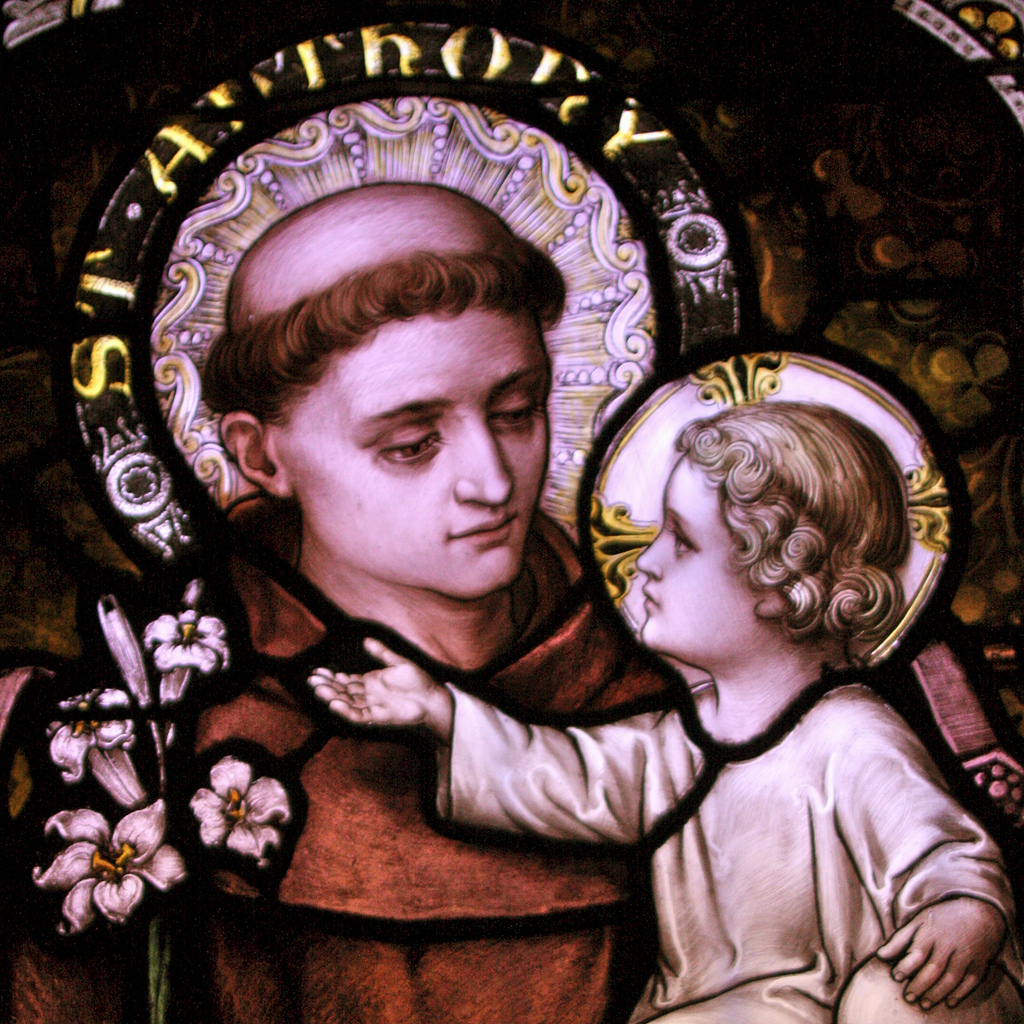
In the 13th century, while St. Anthony of Padua was traveling through France to preach against heresy, he was granted a quiet room for lodging. His host passed by the room one night and noticed an unusual light shining around the door. Peering inside, he saw Anthony kneeling and full of wonder, admiring a glorious child who hugged him. Seeing the boy’s supernatural beauty and hearing their conversation, the onlooker knew that this was Jesus visiting his saint. This encounter is why St. Anthony of Padua is depicted (as in our own stained-glass window of him) holding the Christ Child.

In the 1930’s, the Polish mystic St. Faustina Kowalska recorded in her diary, “I often see the Child Jesus during Holy Mass. He is extremely beautiful. He appears to be about one year old. Once, when I saw the same Child during Mass in our chapel, I was seized with a violent desire and an irresistible longing to approach the altar and take the Child Jesus. At that moment, the Child Jesus was standing by me on the side of my kneeler, and he leaned with his two little hands against my shoulder, gracious and joyful, his look deep and penetrating. But when the priest broke the Host, Jesus was once again on the altar, and was broken and consumed by the priest.

Even without miraculously beholding him, the great devotion of other saints toward the Christ Child is well-known. St. Francis of Assisi, having received permission from the pope, created the very first nativity scene in the year 1223; with hay and a manger along with a live ox and donkey in a cave. He then invited the Italian villagers to come and gaze upon it while he preached about “the Babe of Bethlehem” — Francis was too overcome by heartfelt emotion to say the name “Jesus.”

In the 12th century, Doctor of the Church St. Bernard of Clairvaux wrote this in a touching prayer:

“You have come to us as a small child…
Caress us with your tiny hands,
embrace us with your tiny arms
and pierce our hearts
with your soft, sweet cries.”

In the late 1800’s, the beloved St. Therese of Lisieux, also known as St. Therese of the Child Jesus and of the Holy Face, would pray this amidst her joys and trials:

“O Jesus, dear Holy Child, my only Treasure, I abandon myself to your every whim. I seek no other joy than that of calling forth your sweet smile. Grant me the graces and the virtues of your Holy Childhood, so that on the day of my birth into Heaven, the angels and saints may recognize your spouse, Therese of the Child Jesus.”

And for centuries, the Infant Child of Prague, a 19-inch statute of the Infant Jesus dressed in royal regalia, has been a beloved Czech devotion.

Despite all of these examples of mystical encounters and pious devotions with the Child Jesus, one might still wonder whether it is fitting to pray to a baby. Jesus does not even talk at that immature age, and he has since grown up beyond that phase of life. Yet even though he is a child, the Infant Jesus is still Almighty God who hears all of our prayers. If it would be wrong to pray across time to Our Savior in his manger, it would be wrong to now pray to Our Savior on his Cross as well. You and I were not born too late to adore the newborn King.

What benefits are there in praying to the Holy Infant? Jesus Christ is the same person yesterday, today, and forever, but some will find approaching the Baby Jesus less intimidating. His little form communicates his innocence, purity, gentleness, and tender affection; inviting us to share these virtues. In fact, Jesus tells us we must become as little children, like himself: “Amen, I say to you, unless you turn and become like children, you will not enter the Kingdom of Heaven. Whoever humbles himself like this child is the greatest in the Kingdom of Heaven.

During one Holy Hour, St. Faustina Kowalska was trying to meditate on Our Lord’s Passion, but her soul was filled with joy and she suddenly saw the Child Jesus. She writes, “His majesty penetrated me to such an extent that I said, ‘Jesus, you are so little, and yet I know that you are my Creator and Lord.’” And Jesus answered, “I am, and I keep company with you as a child to teach you humility and simplicity.

On another occasion, St. Faustina saw the Infant Jesus near her kneeler, once again appearing to be about one year old. She writes that, “He asked me to take him in my arms. When I did take him in my arms, he cuddled up close to my bosom and said, “It is good for me to be close to your heart… because I want to teach you spiritual childhood. I want you to be very little, because when you are little I carry you close to my Heart, just as you are holding me close to your heart right now.

So in conclusion, I encourage you to approach the Infant Jesus in your prayers; at this Mass, in this Christmas season, and throughout this year ahead. Picture and imagine him, speak and listen to him, and hold him close to your heart. The Holy Babe of Bethlehem has gifts of grace and consolation to offer you, and he awaits you with open arms.

God’s Divine Plan

December 26, 2020

Feast of the Holy Family
By Deacon Dick Kostner

Today I would like us to reflect on what the “Holy Family” really is. I want to begin by dissecting our definition of “family” and try to expand upon that definition to reveal the gift that God has given us. If I were to ask you to define “family” I believe most of us would say it’s a union of people consisting of a father, a mother and children. Now if I were to ask you to define what the “Holy Family” is, I believe most of us would say, “Well, that’s Joseph, Mary and Jesus.” But I think that if we reflect upon this a little bit we would realize there is something missing with our formula for “Holy Family”. How did all this begin? Well like everything its origins begin with the creator, with God. It was through a divine plan for the building of the kingdom, that God put together this relationship we call “family”.

Within the traditional family we have a “father”,  a head or lead person for this relationship. Let’s look at Joseph for some characteristics. Joseph was a humble person; a man who provided for his family; he was a listener to what God was saying to him, he was a listener to the concerns of the other family members. Joseph was trusting of what God had planned for him and his family even though he could not understand the details of the plan. Joseph was loving and cared deeply for Mary and for Jesus and was the primary teacher for his family for the laws of his Jewish faith. He was committed to obeying the laws of God and of his faith and in being the lead person to teach his family those laws.

Also within the traditional family there is a “mother”. a person committed to be the love glue of the family. Let’s look at Mary for some characteristics of this family member. Mary was a great listener. She had a tremendous faith that allowed her to trust in God; this faith allowed her much courage and she not only listened to God but was fearless in going out into uncharted waters. Mary was wise and loving and could read the will and needs of her family. She always put the welfare of her family first over her needs and desires.

Also within the traditional family there are children. Let’s look at Jesus to see what characteristics this family member has. Jesus was also a great listener. He listened to his parents and to his heavenly father. He was a student, a person thirsty to learn about his faith and his roots. Jesus was obedient to the will of his family and to the will of his heavenly father. Jesus was like the other family members, loving and caring about the welfare of his family and the welfare of others.

This relationship we call “family” was a creation of God with the purpose and design to help foster and grow the kingdom of God. So what is missing from our traditional definition of “Holy Family” is a very important member, that member being God, the Father, the creator of this entity. When God is so recognized we are no longer just a family we are now a “holy family” for we recognize that we were brought together through the divine plan of the Father!

Within our culture we see many attacks on the family. We find so called experts who are trying to re-define what a family is. We find a culture trying to re-define the roles of mother, father and children within a family, and even telling us that certain positions are not necessary to have a family. Whenever humans try to alter God’s divine plan there are going to be malfunctions and problems. If we remove for example certain parts of an automobile, we find that it does not run as good. Why, because we are altering what its creator intended. If certain key parts of a car are removed at some point it will no longer function or run. So it is with God’s creation of family. If we try and alter what the creator intended at some point it breaks down and will no longer function. Paul’s Letter to the Colossians today, tells it all, “Wives, be subordinate to your husbands, as is proper in the Lord. Husbands, love your wives, and avoid any bitterness toward them. Children obey your parents in everything, for this is pleasing to the Lord. Fathers, do not provoke your children, so they may not become discouraged.

As members of the Holy Family of God our spirits are joined so that we can receive the benefits of intimacy both in this life and in the next. That means death becomes non existent. Those of you who have experienced the loss of a loved one know what I am talking about. While body presence may be missing the spirit of Holy family members lives on and time is no longer relevant. Members of God’s Holy Family continue their presence with us even after death. During the Advent Season I pondered this point when I was feeling bad that our Churches could not be filled to capacity because of Covid limitations. But during Mass I realized that our Church’s are still filled to capacity not just on Christmas and Easter but at every Mass because our deceased Holy Family members are still here with us in Spirit filling our Churches with standing room only. You know I am a Student of the Spirit. I’m going to share a quote from a favorite website of mine, Spirit Daily. Jeannie Ewing is a Catholic spirituality writer who writes about the moving through grief, the value of redemptive suffering, and how to wait for God’s timing fruitfully. She says this about the mystery of the Holy Spirit:

When you’ve learned to attune yourself to the stirrings of the Holy Spirit, you will be aware of His presence in you at all times. Sometimes God chooses to sleep in us, and we don’t notice Him moving or working. Other times, we have a distant but keen awareness that God is accompanying us through a difficult decision or terrifying prognosis.

One day we come to a realization that all we do throughout our days are done in and with Him. Even when we do not consciously or formally make an offering to God, the union we share with Him is so obvious that we don’t need to speak but just be. In that being, we discover the place where we end and God begins is a very short thread.

We are told by our Church Leaders that it is believed that during Christmas that God releases the most family members from Purgatory and welcomes them into heaven. I believe that is because of our Prayers and Masses that are offered up for those Souls who have joined us to celebrate Eucharist. So to all of the deceased Holy Family spiritual members with us today we need to say “Merry Christmas” and thanks for joining our Holy Family celebrations.

Jesus Christ: The Word of God

December 24, 2020

Christmas Night

In the beginning was the Word,
and the Word was with God,
and the Word was God.

Have you ever wondered why Jesus Christ is the Word? How is Jesus Christ a Word; or, how are words like Jesus Christ? Spoken words have a speaker. Written words have an author. And the person these words come from is revealed through them. My words reveal what is hidden within me. The words I generate reveal my inner self to you. If I did not speak, you would not know my thoughts. If I were invisible to you as well, you could not see my presence or my activity; nor could you read any emotions from my face. I would remain a mystery to you.

If I were unheard, unseen, and unknown, you might look at the objects I have made to learn something more about me. A Renaissance artist’s masterpiece differs greatly from a child’s finger-painting; and if we were to place the two paintings side-by-side it would be easy for us to guess who made which. The creator is revealed through his creations. If I built a mountain you would know of my strength, but you might wonder if I am hard and unfeeling like rock. If I created an ocean you would know of my greatness, but you might wonder if you were of relatively small significance to me. If I fashioned a star you would know of my vast reach, but you might wonder if I am distant from you.

In times past, God spoke to our ancestors in partial and various ways; such as through his creation and through his Old Testament prophets. But in these last days, God speaks to us through a Son who reveals the Father’s knowledge, will, and love. God the Son is our Father’s Eternal Word.

And the Word became flesh
and made his dwelling among us,
and we saw his glory…

In what way does God choose to come to us? We knew he was strong, but he comes weak and vulnerable. We knew he was great, but he comes lowly and meek. We knew he was vast, but he comes as someone very small. He possesses all riches, but he comes to an unwealthy place and time. A stable is certainly not a palace, and the little town of Bethlehem is not the great city of Rome. In fact, our present modern world is far more rich and comfortable than those ancient times and places were. Yet the Son of God chose to be born there and then as a human baby.

Why does Jesus come to us in this way? Imagine yourself supremely happy in Heaven. Ask yourself: for what possible reason would you ever leave there? “For us men and for our salvation he came down from Heaven.” For love of you and me, he humbly descends to reveal for us what God is like, to win our love and save us.

The Virgin Mary wraps baby Jesus in swaddling clothes. His beaten, crucified body will later be wrapped in a linen burial shroud. Mary lays baby Jesus in a manger, a feedthrough for animals. He will go on to offer himself as food for us, the Bread of Life for the world. Delivered first in a cave, Jesus will go on to be delivered from a tomb. Jesus Christ descends down to the depths to bring us up with him to the heights.

In yet another surprise, the Son of God, our Prince of Peace, our God-Hero and Emmanuel, comes to us so quietly and subtly. Sometime after the first Christmas, when the Magi showed up in Jerusalem seeking “the newborn king of the Jews,” King Herod and his court are completely oblivious of what has occurred in Bethlehem just six miles down the road. If not for the angels, the shepherds in the fields would not have known. And if not for those shepherds sharing the message they were told by the angels, who else in Bethlehem would have known besides Joseph and Mary? Jesus Christ’s birth was heralded and celebrated by some, but dismissed and ignored by many.

Jesus did not force the world to pay him notice then, and it is similar today. Despite all that he has done for us, he allows himself to be ignored. The Word of God is among us, but we must decide to listen; not only on Christmas but throughout the whole year. “Behold, I proclaim to you good news of great joy… a Savior has been born for you who is Christ and Lord.” So heed this Word and rejoice in this Word, for he has revealed to you what God is like, to win your love and save you.

A New Light in the Darkness

December 19, 2020

4th Sunday of Advent

The largest planet in our Solar System is Jupiter. Named for the king of all the Roman gods (whose name means “Sky Father”), Jupiter is over three hundred times more massive than Earth. The second largest planet in our Solar System is Saturn, the planet God liked so much that he put a ring on it. Every twenty years, the orbits of Jupiter and Saturn align closely together in our sky. And, as you may have already heard, this Monday on the Winter Solstice these two planets will appear so close to each other that their light will be joined as one. The last time these planets appeared this close in our sky was almost eight centuries ago. That previous conjunction, in March of the year 1226 AD, may have been witnessed by St. Francis of Assisi seven months before he died; the saint who once wrote: “Glory to you, my Lord, for sister moon and the stars you have made in heaven clear, precious, and beautiful.

Why do we wonder at the planets and the stars? Because they sparkle as gifts of light in the darkness. Because they reflect the vastness of God’s intricate plans and mighty works across the universe. And because we know their sparkling light we see comes to us from the past, even from thousands of years ago. They are stars of wonder, stars of night.

Could the conjunction of these two planets be the sign, that Christmas Star, which the Magi saw as recorded in St. Matthew’s Gospel? Perhaps. The word “planet” comes from the Greek word for “wanderer” since the ancients deemed other planets to be wandering stars. And in the year 7 B.C., Jupiter and Saturn conjoined in three different months. Will we see this Monday what the Magi rejoiced to behold? Maybe, maybe not.

Monday, in the first hour after sunset, during the longest night of the year, when Jupiter and Saturn form a new star low in the southwestern sky, it’s quite possible—even probable—that our skies will be overcast. That would be disappointing, but even this would be a sign for us. Even if we cannot see it, this joining of Saturn with the much brighter Jupiter will still be there. By Christmas Day, this event will surely have occurred. So it is with our Faith.

Two thousand years ago, in accord with his vast and intricate plan, God our King and Father in Heaven, whose great glory far surpasses any creature on earth or throughout the universe, began a new and wondrous work. He approached his most gracious creature, a young woman named Mary, and proposed to her that together they give birth to a new star, “a light for revelation to the nations, and the glory of (his) people Israel.” The virgin agreed and the true light, Jesus Christ, entered the world. So whatever clouds or darkness may accompany this week at the end of this terribly trying year, we will still be witnesses to something supremely special. “The light shines in the darkness, and the darkness has not overcome it.

Wreaths of Flowers — Funeral Homily for Janice Bleskacek, 87

December 16, 2020

While Janice lived at her home she kept two notable items on the night table beside her bed, both reflective of her deep faith: a wooden cross and a particular book. At first glance this small, black book might be taken for a Bible, but its cover bore the title “The Catholic Girl’s Guide.” A hand-written inscription within indicates that this book was given to her as a gift way back in 1947 when she was fourteen years old. I suspect that Janice regularly turned to the latter parts of this book, with its compendium of Catholic prayers and devotions, but she would have been familiar with the earlier parts of the book as well. Its author, Fr. Francis Lasance, writes about nine virtues a young lady must cultivate, likening each one to a flower which form together “the Maiden’s Wreath.” (This book was written for girls but in a book written for boys these same essential virtues would have their places, perhaps within a holy young man’s toolbox.)

The nine flowers of the wreath include:

The Sunflower of Faith, which is turned upward towards the glorious Sun.
The Ivy of Hope, which clings and climbs despite adversity.
The Peony of Love of God, which lifts up its heart as an offering.
The Rose of Love of Our Neighbor, which is a kindly gift to others.
The Carnation of Obedience, which is how Christ incarnate came as a noble servant.
The Forget-me-not of Piety, which remembers and keeps the practice of religion.
The Violet of Humility, which thrives and blossoms most beautifully in the shade.
The Daffodil of Industry, which hastens to blossom as soon as possible.
And the Narcissus of Truthfulness, which holds truth as a golden treasure never to be betrayed.

In addition to this “Maiden’s Wreath,” the book’s author next speaks of a second crown, “The Wreath of Lilies,” comprised of The Lily of Purity, which is untarnished in its splendor. The lily has long symbolized the Blessed Virgin Mary, whose own femininity is fulfilled to its fullest, holy perfection.

Young Janice gathered and cultivated the nine flowers of her maiden’s wreath into her adulthood. She carried her virtues into her marriages, first with husband Kenneth and then, after being widowed at age thirty-eight, with her husband Gerald. And through these unions, Janice gathered and nurtured eight young ladies, eight flowers: Nancy, Susan, Cindy, Carla, Dawn, and Jacquelyn, Deb and Terri. The nine of these ladies together formed a beautiful wreath of love; along with family and friends; grandchildren, great-grandchildren and great-great-grandchildren as well. Today we pray for Janice’s soul so that in addition to her life’s virtues she may be crowned with the second wreath of purest glory; that purified from any fault or imperfection, she may rejoice before God with Jesus Christ and Blessed Mary and all the saints and angels. Like Jesus Christ says in our Gospel, Janice’s prayer shall be: ‘Father, those whom you gave me are your gift to me. I wish that where I am they also may be with me one day. I made known to them your name and I will make it known, that the love with which you loved me may be in them and we all may be together again forever.

Scripture says of this life,

“All flesh is like grass,
and all its glory like the flower of the field;
the grass withers, and the flower wilts;
but the word of the Lord remains forever.”

Every dear one’s death reminds us that we will not live this present life forever. But even though the flower fades and dies away we can beautifully blossom anew. If we have died with Christ, we believe that we shall also live with him. Just as Christ was raised from the dead by the glory of the Father, we too may live in newness of life. So let us renew our faith and renew our lives in the Lord, Good Shepherd, Jesus Christ, who desires to reunite his whole flock on his holy mountain, where sin and death will be no more, where every tear will be wiped away by God, and where we can hope to be together with Janice and Kenneth and Gerald and Carla forever.

Five Reflections on St. Joseph

December 11, 2020

By Fr. Victor Feltes

This week, on the Solemnity of the Immaculate Conception and the 150th anniversary of the proclamation of St. Joseph as patron of the Universal (that is, the entire) Church, Pope Francis declared this “The Year of St. Joseph” through December 8th, 2021. The Holy Father also published an apostolic letter about Jesus’ beloved foster-father entitled “Patris Corde” (or “With a Father’s Heart”). In it, Pope Francis writes about Christian devotion to this great saint and mentions how the phrase “Go to Joseph” has an Old Testament origin. These are five of my personal reflections on St. Joseph.

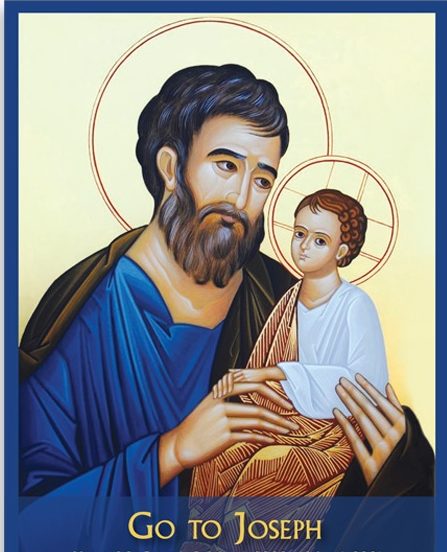
Go to Joseph

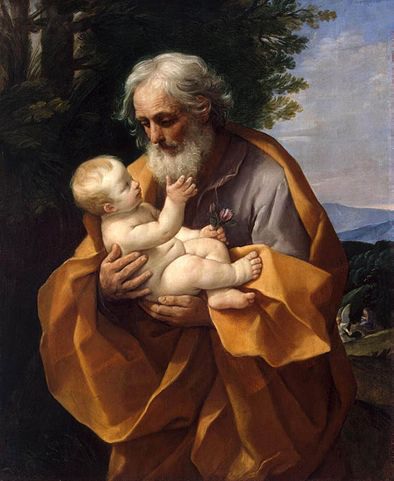
In the Book of Genesis, during a time of famine across the known world, the Egyptians begged their pharaoh for bread. He in turn replied, “Go to Joseph and do whatever he tells you.” Pharaoh was referring to Joseph the son of Jacob who had risen from a very lowly state to become the viceroy of the kingdom. Enlighted by divinely-inspired dreams, this Joseph’s leadership went on to feed and save the whole world from death, including his own family. According to the genealogy at the beginning of Matthew’s Gospel, the New Testament’s Joseph also had a father named Jacob. Though poor and obscure, St. Joseph’s heaven-sent dreams enabled him to guide and protect his Holy Family, leading to the world’s salvation through the Bread of Life, Jesus Christ. Today, as a powerful intercessor in the Kingdom of God, we are wise to “go to Joseph” for needed help.

His One Word

Within the Gospels, St. Joseph has no recorded words. There is no indication the foster-father of Jesus and spouse of the Virgin Mary was physically unable to speak or ever took a vow of silence; he is simply never quoted. Yet the Gospels suggest he said at least one specific word.

Matthew’s Gospel records how an angel (probably the Archangel Gabriel though perhaps another) told Joseph in a dream: “‘[Mary, your wife,] will bear a son and you are to name him Jesus…’ When Joseph awoke, he did as the angel of the Lord had commanded him and took his wife into his home. He had no relations with her until she bore a son, and he named him Jesus.” Just as John’s Gospel tells us “Jesus did many other signs in the presence of his disciples that are not written in this book,” so St. Joseph almost certainly said many unrecorded things. But the one word that Scripture most clearly suggests St. Joseph said is “Jesus.” The name of Jesus is the sum total proclamation of St. Joseph’s life. May it be so for us as well.

Image of the Father

The Letter to the Colossians says of Christ, “He is the image of the invisible God.” Something analogous was true of St. Joseph for Jesus in being the earthly image of his Father in Heaven. Joseph’s life has no recorded beginning or end in the Bible. We know that he was a carpenter craftsman – a creator of many things to be blessing for others. Perhaps he looked at everything he made and found it very good. Alongside Mary, Jesus was obedient to Joseph; he was Jesus’ boyhood teacher, deliverer, and role-model. Jesus lovingly called him, “Abba, father.” St. Joseph was a holy and loving image of God the Father for his Son. Though imperfect, may we likewise be images of God for each of our biological and spiritual children.

The Hour of his Death

When did St. Joseph die? Luke’s Gospel tells us that when 12-year-old Jesus was found at the Temple in Jerusalem he went down with his parents to Nazareth and was obedient to them. After that joyful reunion, St. Joseph makes no further personal appearances in the Gospels. Joseph had apparently passed away by the time of Christ’s Passion since Jesus on the Cross does not entrust his blessed mother’s care to her faithful husband but to a beloved disciple. Other episodes in the Gospels suggest that Joseph died before the start of Jesus’ public ministry.

How did St. Joseph die? If Joseph, the heir to the throne of David, had been murdered we would expect this prefigurement of Jesus’ own death to be described in the Gospels like the death of St. John the Baptist. Unless some sudden catastrophe befell him, an ailing Joseph would have reached his deathbed. And who would have been compassionately comforting him and powerfully praying for him at his bedside as he reached his hour of death? His having most likely died peacefully in the loving presence of Jesus and Mary is what makes St. Joseph the patron saint of a happy death.

The Terror of Demons

St. Joseph is called “the Terror of Demons” and his spouse “the Queen of Angels.” Yet the Virgin Mary at the Annunciation was greatly troubled and afraid at the Archangel Gabriel’s greeting, and when resettling his Holy Family from Egypt Joseph feared mere flesh and blood – avoiding Judea because Herod’s son ruled there. How can this man and woman now be leaders of awesome angels or banes of dangerous demons?

One key trait Joseph and Mary shared is obedience. The Book of Exodus displays Moses’ obedience by recording God’s instructions to him and then repeatedly presenting Moses doing “just as the Lord had commanded.” Whenever St. Joseph receives instructions from God (to take Mary into his home, to escape to Egypt, or to return to Israel) the text that follows has Joseph doing exactly as God commanded. Mary was also radically open to God’s will, as when she famously said, “Behold, I am the handmaid of the Lord. May it be done to me according to your word.” The demons, for their part, fell from Heaven’s glory because they refused to do God’s will.

Joseph and Mary were also among the first on earth to accept and love the (then still-unborn) baby Jesus. The demons, in contrast, were the first to reject the Son of God. We do not know the exact reasons for their primordial rebellion but some theorize the demons took offense at God’s plan that the Eternal Son would become an incarnate human being, crowning that creature with a greater glory than the angels. “By the envy of the devil, death entered the world,” says the Book of Wisdom.

Joseph and Mary’s obedience to God’s will and their love for Jesus on earth lead to them being gloriously empowered in Heaven. Jesus told his disciples, “you who have followed me will also sit on twelve thrones, judging the twelve tribes of Israel,” and St. Paul reminded the Corinthians “we will judge angels.” It seems that faithful human creatures who, by God’s grace, love and serve the Lord in the likeness of Christ himself are best suited to become powerful, humble, servant rulers in the Kingdom of Heaven.

St. Joseph, patron of the Universal Church, pray for us throughout this holy year!

He Rose Before Us — Funeral Homily for Roland “Rolle” Shadick, 85

December 7, 2020

Today St. Paul’s Parish offers our greatest prayer, the Holy Mass, for Rolle, one of our own. He is well-known and loved by you, and well-known and loved by our Lord. No brief funeral homily can present the fullness of a Christian life, but a Christian’s words and deeds, upon reflection, will reflect the person and life of Jesus Christ.

One of the things his children tell me is that Rolle worked really, really hard, first as a farmer, and then in other jobs, and helping others where he could well into his retirement. To support his wife and family, to do his good works, Rolle would wake up very, very early. He might wake up at 3 or 4 AM to milk the cows or bale some hay, or go out fishing on the lake and bring back his catch to feed his family for breakfast. Through the years, he would rouse his children from bed with a call: “Come to life, come to life!” A new day awaited them. Rolle was so busily active, he did so much, that his family would kid that he had undiagnosed ADHD. “Don’t look back,” he said, “always look ahead.” There is much for us to do in our days on earth.

Rolle knew we have just one life to live and that it is given us as a gift. So he gave faithful thanks to God the Giver, praying and praising Him at church and at home, and supporting the work of Christ’s Church for the salvation of souls. Rolle noted that he and his fellow farmers who did this were successful through God’s blessing. In his final years he reminded others, “It’s later than you think. It’s later than you think.” With this in mind, Rolle renewed his already strong commitment to connecting with his family — whom he apparently loved more than life itself. He did not catch any illness from the 65th wedding anniversary his family threw for him and Clara back in October, but Rolle said at that time, “You know what, if I die from Covid, this day was worth it.” After that joyful celebration were forty days until Rolle came to his final day, dying like our Savior on a Friday afternoon.

As I said before, a Christian’s words and deeds will reflect the person and life of Jesus Christ. Jesus has been hard at work in this world; tending his flock, laboring in his field, fishing for men’s souls. He died and rose before us. He calls out to rouse us from our sleep, “Come to life, come to life,” through conversion on this day and through resurrection on the Last Day. It is good to treasure our memories. It’s OK to mourn, to cry. But we must not, cannot, live in the past. “Don’t look back. Always look ahead,” because a great new day awaits, for you and me and Rolle, a family reunion in our Father’s house with Jesus Christ our risen Lord.

Revealers of God — Funeral Homily for Kevin Lenfant, 70

December 3, 2020

In the beginning, when God created the heavens and the earth,” God said: “Let there be light, and there was light.” By God’s Word all things were made and his divine attributes are reflected in this universe he’s created. In the inspired word of God, the Holy Scriptures, we read about how he reveals himself to humanity throughout salvation history, through powerful deeds, prophetic words, and poetic images that reveal what he is really like. But ultimately and greatest of all, God reveals himself to us through the Son. “In the beginning was the Word, and the Word was with God, and the Word was God.“In times past, God spoke in partial and various ways to our ancestors through the prophets; (but) in these last days, he (speaks) to us through a Son, …through whom he created the universe,” the Word of God. Jesus Christ, the Bible, and God’s creation make use of familiar things to help reveal God to us. There’s warriors battling, couples marrying, fathers fathering, shepherds shepherding, and plants producing new life. A faithful Christian’s life will reveal God too, as his mysteries are reflected in the features of our lives.

There is a great deal of war and conflict in the Scriptures. This should not be surprising, since this world is broken and often evil. Wickedness is at war with goodness, so good men are called upon to defend the defenseless, to shield the innocent from evil assault. No nation is without flaws, but we should love and defend the goodness of our own. In the Old Testament, armed conflicts abound, but in the New Testament the martial imagery is turned to focus upon the spiritual battle which is being fought around us and within us. St. Paul tells us, “put on the armor of God, that you may be able to resist on the evil day,” for our greatest struggle is not with flesh and blood but with spiritual evils in this world. Our calling is to Semper Fi, being “always faithful”, but we know how difficult this is, “for a righteous man may fall seven times.” So when a brother dies we pray for him, like the Maccabean army prayed for their fallen in today’s first reading from the Old Testament, that whatever flaws or attachments to sin remain in them may be purged away, that those who die as friends of God may experience his full and splendid rewards in Heaven.

Another very plentiful thing found in the Bible is shepherds. Among the Old Testament patriarchs there is Abraham, Jacob-Israel, and his twelve sons – shepherds all. Later, there’s the prophet Moses, King David, and Amos the prophet, each of whom tended flocks for some time before receiving a higher calling from God. The first to hear the happy news of Christmas night were shepherds. The bond between a shepherd and his flock can be a very close one. So close that David, in writing today’s psalm, the most famous of all the psalms, depicts God as his shepherd and David himself as his well-cared-for sheep. The sheep of a good shepherd are like his children to him. He is as a father to his flock. “The sheep hear his voice, as he calls his own sheep by name… and they recognize his voice.” He knows his own and they know him. The good shepherd devotes his life to his sheep and little lambs. He delights in his flock and his presence comforts them. Rita tells me that family came first for Kevin. She tells me how he loves his children and grandchildren, that he loved to watch them grow, and how extremely proud he is of them. Such is his fatherhood.

A third common theme we encounter is married love. The saints see an allegory in the romantic Old Testament book The Song of Songs: God’s pursuit and love of his people Israel. In the Gospels, Jesus Christ calls himself the Bridegroom, and New Testament passages call the relationship of Jesus Christ with his Church a marriage. As Book of Revelation declares, “The marriage of the Lamb has come and His bride has made herself ready. … Blessed are those who are invited to the marriage supper of the Lamb.” This leads us to a mystery: did God use our familiar and intimate knowledge of human marriage, the covenantal love of a man and woman, to describe the union of Christ and his Church because this was the best available image for him to borrow, or rather did he create and establish marriage from the beginning to reveal and foreshadow the fulfillment with him that was always meant to be?

Rita told me the delightful story of how she and Kevin met. It was another Normal day at Illinois State University where they were both college students. Rita was having a hard time in a political science class, while political science was Kevin’s major, so he came over and tutored her. Apparently Rita was very impressed by many things about him because once he had left she turned to her friend and said, “Don’t let me marry him.” But she did. And it’s a good thing she did. Why was Rita afraid? ‘Well,’ she thought, ‘I’m so young, we’re both in college, he’s planning to be in the Marines, and how would all that work?’ But thankfully these doubts did not prevail. Imagine how much would have been lost if they had! When our Lord Jesus Christ proposes to be a greater part of our lives, we can similarly balk, all sorts of doubts and fears arise, but I urge you, I plead with you, to say “Yes” to him all the same. In this life, opportunities for some relationships pass by without another chance for something more. But with God, no matter where we’ve been or what we’ve done, all long as we still live, we can start more devotedly following him today.

Jesus often preached to the crowds using familiar things. For example, Jesus spoke about fish around fishermen, of bread and salt to bakers and cooks, and of plants to farmers in the countryside. He says, “Learn from the way the wild flowers grow. They do not work or spin. But I tell you that not even Solomon in all his splendor was clothed like one of them. If God so clothes the grass of the field, which grows today and is thrown into the oven tomorrow, will he not much more provide for you, O you of little faith?” At one point Kevin and Rita owned three flower shops. Now there is just the one they started in Bloomer more than forty years ago. Rita tells me that Kevin, between the two of them, probably likes flowers more. The flowers they sold would sprout and grow, beautifully blossom, and then fade and wither. This is a sad reality, but we are consoled by the knowledge that there are more flowers for us to enjoy. Similarly, in this world we are born and grow, we blossom and die, but we are consoled by the knowledge in Christ that this is not our end.

In today’s Gospel Jesus says, “unless a grain of wheat falls to the ground and dies, it remains just a grain of wheat; but if it dies, it produces much fruit.” Jesus was not eager to suffer, he asked his Father in the Garden if it were possible that this cup of suffering might pass him, but he was not unwilling to die because he knew that would not be the end of good things for him. It’s O.K. to want to live, to fight against illness and death, for life is a great good. But it is also O.K. to die. “For if we live,” as St. Paul says, “we live for the Lord, and if we die, we die for the Lord; …whether we live or die, we are the Lord’s.” It’s O.K. to mourn. It’s O.K. to cry. But God’s Word reveals to us that we should not despair. Heed God’s word, in creation, on the Sacred Page, and in the person of our Savior, so that you and I and Kevin may all be happily reunited in God story one day.

Jesus or Barabbas?

November 23, 2020

The Solemnity of Our Lord Jesus Christ, King of the Universe

For the feast of Passover, the Governor Pontius Pilate observed a tradition of releasing to the crowds any one prisoner they wished. On Good Friday, in addition to holding Jesus of Nazareth, the Romans in Jerusalem had a notorious prisoner named Barabbas. When the crowd came forward and began to ask Pilate to do for them as he was accustomed the governor dryly asked, “Do you want me to release to you the king of the Jews?” The chief priests stirred up the crowd to have him release Barabbas for them instead.

Pilate asked, “Which of the two do you want me to release to you? Barabbas, or Jesus who is called Christ?” They answered, “Barabbas!” Pilate said to them in reply, “Then what do you want me to do with the man you call the king of the Jews?” They shouted again, “Crucify him!” Pilate said to them, “Why? What evil has he done?” But they only shouted the louder, “Crucify him!” So Pilate, wishing to satisfy the crowd lest they riot, released Barabbas to them and, after he had Jesus scourged, handed him over to be crucified.

This episode with Jesus and Barabbas is recounted each Palm Sunday and Good Friday when the Passion narratives are read at church. However, the Gospels’ Passion accounts are so lengthy and rich with themes to consider that the crowds’ choice between these two figures is rarely ever preached on. Today, I would like to show you the deeper significance in this rejection of Christ the King.

The first interesting detail is in the meaning of these two men’s names. “Jesus” was the name given through angelic messages to Mary and Joseph, a name chosen in Heaven for the Son of God on earth. “Jesus” or “Yeshuah” in Hebrew means “God saves.” The name Barabbas breaks down into the Aramaic words “Bar” and “Abba”; “Bar” means “the son of,” while “Abba” means “father.” And thus, the name Barabbas means “the son of the father.” So Pilate is proposing a question to the crowd more profound than they realize: “Which son of the father do you choose? Do you desire God’s salvation?

The New Testament tells us that Barabbas was a Jewish revolutionary who, along with other captured rebels, had committed murder in a rebellion against Roman rule. The Jews commonly hated the Romans and resented the occupation of their Promised Land by a foreign, Gentile power. Jews expected that the Christ, the Messiah, if he were to come in Jesus’ day, would drive out the Romans and their puppets using the force of arms. Then they imagined that this man, God’s Anointed One, would take his seat upon his ancestor King David’s throne, establishing a renewed Israeli kingdom of worldly glory, with international power, military strength, and overflowing wealth. So when Jesus came among them they failed to recognize him as the Christ.

Unlike Barabbas, Jesus did not promote hatred for the Romans but a love for enemies. Jesus did not raise an army nor a sword, but preached “blessed are the peacemakers.” On Palm Sunday, Jesus does not enter Jerusalem riding on a warhorse, but on a donkey, as the Old Testament prophet Zechariah had foretold: “Shout for joy, O daughter Jerusalem! See, your king shall come to you; a just savior is he, meek, and riding on a donkey.” But when presented with Jesus and Barabbas, the people rejected their true King and Savior, the Christ. St. Peter would go on to preach to the people of Jerusalem on Pentecost, “You denied the Holy and Righteous One and asked that a murderer be released to you.” The choice between Barabbas and Jesus is a choice between two sorts of saviors, two very different kinds of revolutionaries and kings; one whom the earth thinks would be most effective and the one whom Heaven has sent us. The Christ and an anti-Christ.

It was within Jesus’ power to have forcibly imposed his rule over the whole world. At Jesus’ arrest in the Garden of Gethsemane, Peter is ready to fight—he draws a sword and cuts off the ear of the high priest’s servant. But Jesus intervenes, “Put your sword back into its sheath, for all who take the sword will perish by the sword. Do you think that I cannot call upon my Father and he will not provide me at this moment with more than twelve legions of angels? But then how would the scriptures be fulfilled which say that it must come to pass in this way? Put your sword into its scabbard. Shall I not drink the cup that the Father gave me?” Jesus then heals to slave’s ear before he is led away by the guards.

Like a gentle lamb silently led to slaughter, Jesus endures his Passion and death. And who would have thought any more of him? But God raised him from the dead and he appeared to his disciples, who then courageously proclaimed to everyone that Jesus is the Christ. The Jews and Romans persecuted the early Christians. Though peaceful and innocent, Christians suffered indignities, imprisonments, and martyrdoms, yet the number of those saved by the Church continued to grow. Then, in 313 A.D. the Emperor Constantine legalized Christianity and ten years later gave it the most favored religious status throughout the Roman Empire. “Blessed are the meek, for they will inherit the land … Blessed are those who are persecuted for the sake of righteousness, for they will be satisfied.” Indeed, Jesus Christ and his Church succeeded where Barabbas failed: they conquered the Roman Empire not by destroying it but by converting it.

Today we celebrate Jesus Christ, the King of the Universe. Jesus the Almighty now reigns over us and over the whole world. But this knowledge, upon reflection, can raise troubling questions in our hearts. When we see the horrors of this world, grave evils throughout history and evil happening in our time, we may ask, “Lord, why aren’t you doing more?” Every year in our country, hundreds of thousands of unborn children are being legally murdered. Right now, millions of people in Asia are being held in concentration camps. How many billions of grave sins are being committed every day which cause innocents to suffer? Lord, why don’t you end this evil? Why don’t you force the world to bow down to your will?

We may wish Jesus and others to go violently into full Barabbas-mode against all the world’s evil, but this is not his way. Christ’s goal is the salvation of souls, as many souls as possible. Jesus the Good Shepherd shepherds the world subtly but in every place, speaking to the souls of both his friends and sinners, drawing them freely toward his salvation. But what about the grievous sufferings and injustices along the way? Jesus is not at all indifferent to these. Our loving shepherd is the best of shepherds because he has been a sheep like us, a lamb who was slain. He endured such sufferings and injustices personally as the lamb of God, and he still mystically suffers in and with the innocent. “Amen, I say to you, what you did [or did] not do for one of these least ones, you did [or did] not do for me.

The evil of this world is a heart-breaking scandal. But sin and death do not have the final word. The last word will belong to Jesus Christ. Trust in the crucified One, our suffering God who died and rose for us, the Shepherd of souls, the victorious Lamb, Christ our King. May his Kingdom come and his will be more fully done, on earth as it is in Heaven, in each and every soul.

The Spring After Fall & Winter — Funeral Homily for Raymond “Ray” Burgess, 84

November 20, 2020

The signs of the fall are all around us. The farmers’ fields are cut down to stubble. The weather is growing cold and frosty. Our days are getting shorter and shorter. A winter approaches, and soon all will be buried under snow. And on this fall day, we gather to pray for and bury Ray.

I hear the farmers report that their fields have produced a fruitful yield. They raised a bunker crop this year which will go forth to feed and help thousands of people. This is like the fruitfulness of Ray’s life, seven living-children, nineteen grandchildren, and seven great-grandchildren, who live on as a blessing to the world. But we know that after the time of harvest comes the sharp and penetrating cold.

Ray’s children tell me about his dedicated love for them and their children, how he has put family first and devoted his time to them. So tomorrow’s first day of the deer hunt will be lonelier without him, and Ray will be missed at the family Christmas this year. That is something to mourn. It is sad to be parted from one another in this way. Tears are natural and wholesome at times like this. Yet, we need not grieve like those who have no hope.

Imagine if our world somehow forgot about the cycle of the seasons. What if everyone misplaced the valuable knowledge that fall and winter lead to spring? How would people react to this end of the world around us? Covid-19 would quickly become a secondary news story, and grocery stores would sell out of lots more than toilet paper. We would look at all of the discolored fallen leaves, the skeletal trees, and the dwindling of the light each day with great alarm. People would hopelessly ask, “Everything is dying — what will we do — what will happen to us?” But of course, this is not the first fall or winter in our lives, and we have seen before what happens next, so we need not be afraid.

Today we gather here to pray for and bury a man who died two days short of his eighty-fifth year. But we gather in this place, within this church, because of a man who died almost two thousand years ago and who two days later rose again. This sad season of dying is not the end of the world. As winter is conquered by the spring, death is conquered by Christ. This fact of Jesus’ resurrection has changed this world and, if God’s will be done, it would transform our lives. Jesus Christ is the way, the only way, for our salvation, and so we entrust Ray’s soul into the Lord’s merciful hands, with love for Ray and hope that we all shall enjoy Ray’s company again in the coming springtime of this world.