Archive for the ‘Jesus Christ’ Category

The Lord’s Prayer — Funeral Homily for Jack Wolf, 87

February 9, 2024

By Fr. Victor Feltes

In Jack’s final months, I regularly encountered him in his room at Dove Nursing Home. I always found his wife, Mary, there at his side. Like our Blessed Mother Mary or St. Mary Magdalene at the Cross, she faithfully supported Jack through his Passion. He was grateful to receive Holy Anointing and Last Rites, grateful for the consolation of prayers and blessings, and most especially grateful for the precious gift of Jesus in the Holy Eucharist I brought him. Jack was peaceful, prayerful, and well-prepared to die, ready to commend his spirit to God.

His wife Mary tells me that on Jack’s final Friday before God took him to himself, they were praying the Rosary together. Jack was too weak by then to speak very much, but he would join in the first words of the Rosary’s greatest prayer: “Our Father… Our Father… Our Father.” The “Our Father” is known as “The Lord’s Prayer” because it is how our Lord Jesus Christ taught his disciples how to pray. Jesus’ prayer models what he wishes us to desire and to ask for.

One Friday afternoon outside Jerusalem, while darkness covered the whole land, Jesus hung dying on his Cross. Before breathing his last breath, Jesus cried out in a loud voice, “Father, into your hands I commend my spirit!” He prays to God his Father, who is now our Father too. Jesus desires that God’s name would be hallowed; that is, known as holy and loved by all.

Though Jesus is both King of the Jews and the King of Kings, he serves and dies to help the reign of God’s Kingdom come. As Jesus sees and suffers the consequences of our sins, he longs that his Father’s will would be done on earth as it is in heaven. Christ offers his Body on the Cross as he did at the Last Supper. He once declared, “the Bread that I will give is my Flesh for the life of the world.” He gives this Bread to his Church daily at every Holy Mass.

Jesus sacrifices himself to forgive us our trespasses hoping and insisting that we would likewise forgive those who trespass against us. Jesus wants us reconciled vertically to God and horizontally to each other, uniting heaven and earth and East and West in the likeness of the Cross. Jesus faces temptation to save us from temptation. He endures this world’s evil deliver us from evil. So you see, the Our Father prayer Jesus urges us to pray, reflects the great blessings the Lord wills for us.

St. Paul proclaims that “we who were baptized into Christ Jesus were baptized into his death.” And “if we have grown into union with him through a death like his, we shall also be united with him in the resurrection.” It is right that we should offer prayers for Jack’s soul, that he may be perfectly pure to stand before our holy God with all the saints and angels in heaven. Yet we have a great and calm confidence for Jack, that he who was united to Jesus and devoted to our Father will share in Christ’s resurrection to glory. Amen.

Growing In Christ’s Likeness

February 4, 2024

5th Sunday in Ordinary Time
By Fr. Victor Feltes

This Sunday’s readings feature Job, Paul, and the mother-in-law of Simon Peter. What do these three people have in common? Let’s consider each in turn.

In our first reading we hear from Job who, like Jesus Christ and Mother Mary, suffers greatly despite his innocence. “I have been assigned months of misery,” he says, and troubled nights have been allotted to me. My days [swiftly] come to an end without hope.” At one point, Job’s wife even tells him to “curse God and die!” Yet, despite his painful, honest questions, Job never disobeys. He never renounces the Lord.

Next we hear the Apostle Paul telling the Corinthians how and why he preaches the gospel. Paul insists that preachers have a right to payment for their work, just like others who do valuable labor. He asks, “What then is my recompense?” What is his repayment or reward? “That, when I preach, I offer the gospel free of charge so as not to make full use of my right in the gospel.” What is Paul saying? How is he repaid by not getting paid? Paul says he makes himself “a slave to all so as to win over as many as possible… All this I do for the sake of the gospel, so that I too may have a share in it.”

Lastly, we hear the story from Mark’s Gospel about Simon Peter’s sick mother-in-law. She lays in bed in Capernaum enduring a severe fever. Having just cast out a demon at the synagogue, when Jesus enters the nearby house of Simon Peter and Andrew along with James and John, they immediately tell him about her condition. Jesus approaches her, grasps her hand, and helps her up. The fever leaves her immediately and she waits on them. It seems she had been eager to serve, only her illness had prevented her. Something which Job, and Paul, and Simon Peter’s mother-in-law have in common (besides all appearing in today’s readings) is sharing a likeness to Jesus.

We see Jesus in our gospel driving out demons and curing the sick. If he had been charging fees for his healings, Jesus might have soon become the richest man in Capernaum. If he had announced that he was the Messiah and called men in the region to take up arms with him, Jesus could have soon been seated upon a Jerusalem throne. Instead, though everyone is looking for him, Jesus withdraws alone to a deserted place to pray. Jesus Christ was not called to be great in worldly wealth and power (in the pattern of Herod, or Pilate, or Caesar) but to be a suffering servant. He had not come to be served but to serve, giving his life as a ransom for many.

This is the path to Christ’s glory, which he calls others to share. So the innocent victim Job undergoes a “dark night” when his physical and spiritual consolations are stripped away. Would he still love God and goodness when no longer tasting their rewards? Through Job’s trials his love is purified to become more like Christ’s in his Passion. And St. Paul, like Jesus, does not labor for earthly riches but takes the form of a slave. He ministers for the love of souls and to share in heaven’s reward which this world cannot equal. And Simon Peter’s mother-in-law is eager to serve as she is able, agreeing with Jesus that it more blessed to give than to receive.

It’s too late in time for your name or mine to be written in the Bible, but if in the end our names appear in heaven’s Book of Life, our Christian lives will have shared some likeness to the life of Jesus Christ.

From Creation to this Cradle

December 24, 2023

Christmas, the Nativity of the Lord
By Fr. Victor Feltes

Before all time’s beginning,
before creation’s making,
was our Lord, who is living.

Omnipotent, all-knowing,
unlimited, all-loving,
the self-existent Being.

This eternal deity
was not solely unity,
but divine community.

Father and Son, self-giving,
Spirit from both, proceeding,
Trinity, ever-living.

Though God could not be more great,
goodness loves to propagate,
so he opted to create.

The Lord said, “Let there be light,”
earth” and “sky” and “day” and “night,”
man” and “woman” in his sight
and in each did he delight.

Blessing us was his concern,
gifting gifts we did not earn,
minds to know and hearts to yearn
so we’d love him in return.

Like all things, he made us good,
yet, as God, he understood
human beings sadly would
freely choose to sin;
distaining the divine,
disturbing our domain.

Dissolution, desolation.
Division and dismay.
Despair and death.

Behold how in our world and lives,
sins stab and slice and scar like knives.
But our Lord lowers his lifeline,
a long thread throughout our timeline.

After the Flood and Babel’s tower,
God’s plan was launched with Abraham.
Summoned by the Higher-Power,
he journeyed to the Holy Land.

God vowed to him to give that earth,
to bless all peoples through his name,
and cause his barren wife to birth
a boy who would extend his fame.

Isaac was that wondrous son,
received back as from the dead.
His sacrifice was left undone;
as God supplied a ram instead.

(Note in Abraham’s descendants,
the Messianic lineage,
persons presenting precedents
repeated on the Gospel page.)

Next, from Isaac, Jacob came,
and suffered much from sinful deeds.
To “Israel” God changed his name,
and through twelve sons a kingdom seeds.

This tribe then west to Egypt fled
and grew up becoming many,
until from slavery God led
to “the land of milk and honey.”

For this nation, God appointed
from Bethlehem to kingly throne,
shepherd David, God’s anointed,
one with a heart after his own.

He was betrayed, mistreated,
but overcame each enemy.
God pledged there’d always be seated
a true son of his dynasty.

King Solomon, the peaceful one,
built with wisdom beyond compare
God’s temple in Jerusalem
for everyone from everywhere.

Isaiah’s prophesies foretold
and his consoling words record
how every nation would behold
salvation from our bridegroom Lord.

Then Babylon’s empire came
and took the Jews captive by sword.
But God removed his people’s shame
when to their homeland he restored.

These ups and downs had set the stage
for one night prepped thousands of years.
Between the old and current age,
the Son of God on earth appears.

It’s simple for our little ones,
the way in which our Savior comes.

A stable full of yellow hay?
Kids see a perfect place to stay.

Tiny Jesus is in his box,
asleep beside the sheep and ox.

His mom and dad on Christmas day,
as still as statues, kneel and pray.

That manger scene lit by a star
draws friends to Christ from near and far.

Our children lack experience
but maintain pure, sweet innocence.

They see with awe and gentle joy
our God become a baby boy.

Now that you and I are older,
we recognize complexity;
what Christ’s parents had to shoulder,
the burdens of humanity.

Joseph and Mary were displeased
when turned away from that hotel
and then unpleasant odors breathed
while giving birth where livestock dwell.

Stress-filled was that nativity,
mixed with their joys, feelings of dread,
as they combatted poverty
and unseen forces wished them dead.

The way of Christianity
is not promised to be easy,
but life with Christ, our deity,
has mercy, grace, and great beauty.

Our little ones are right in this,
though much in our world is amiss,
it’s right and wise to reminisce
on Christmas Day and feel great bliss.

Now to conclude, let us review:
God’s great goodness is real and true,
an ancient love that’s ever new
and through Christ’s birth comes into view.

So come to Mass — yes, please do!
His family’s less when lacking you.

A Little Time Remains

December 10, 2023

2nd Sunday of Advent
By Fr. Victor Feltes

Unlike the Gospels of Matthew and Luke, Mark’s Gospel does not start with stories of Christ’s Nativity. This gospel begins with the ministry of St. John the Baptist. John’s mission was to “prepare the way of the Lord (and) make straight his paths.” In ancient times, before a king or emperor would journey to a region, his heralds or messengers would be sent out ahead of him to announce how people were to prepare for his coming. One practical part of these preparations was to improve and repair the roads; filling in the potholes and smoothing the ruts, clearing branches and removing rocks. Isaiah the Prophet speaks of a herald crying out in the wilderness:

“Prepare the way of the Lord! Make straight in the wasteland a highway for our God! Every valley shall be filled in, every mountain and hill shall be made low; the rugged land shall be made a plain, the rough country, a broad valley. Then the glory of the Lord shall be revealed, and all people shall see it together…”

Of course, this readying of the way for the Lord is not done with shovels and wheelbarrows on country roads. St. John the Baptist, the “voice of one crying out in the desert,” preaches conversion and washes people with a baptism of repentance as they confess and renounce their sins. The way of the Lord we must prepare passes through ourselves.

This Advent is a season to prepare for the God, but time is running short. Christmas is coming. Because December 25th falls on a Monday, this year’s Advent is the shortest-possible length of days. The good news is that now is not too late. An unfaithful life can still be reformed. A sacramental Confession can still be arranged. Delayed good deeds can still be done. A life of daily prayer can begin today. There is still some time remaining for you; before Christmas, before Christ’s Second Coming, and before the end of your earthly life.

This world and its people are broken and we can see many sins and evils. Imagine how much better our world would be if everyone sincerely turned to Jesus. Wouldn’t that be wonderful? I doubt that everyone will do so, but the ongoing conversions of you and me to Christ can bless our families, friends, and neighbors, joyfully transforming the world around us for the better.

And here is some more good news… Even if not everyone turns to Christ, just as this Christmas, December 25th, is coming no matter what we do, the Second Coming of Jesus Christ cannot be stopped. St. Peter writes of how our Lord’s patience, his wish that none should parish but all come to repentance, has permitted the world to continue to our day. God does not tire of waiting; since for him “a thousand years is like one day.” “But the day of the Lord will come like a thief… and the earth and everything done on it will be found out.

We are encouraged to do our part to prepare a highway for God, lowering mountains and hills, smoothing rough lands and valleys, within ourselves and in our society. But Scriptures declare how at his coming “the mountains melt like wax before the Lord, before the Lord of all the earth.” (Psalm 97:5) “The eternal mountains are shattered, the age-old hills bow low, along his ancient ways.” (Habakkuk 3:6) “The mountains melt under him… like wax before the fire, like water poured down a slope.” (Micah 1:4) “The earth melts when he lifts his voice.” (Psalm 46:6)

Our returning Lord will not allow the sins of the world to go on forever. When his Kingdom fully comes, God’s will shall be fully done, on earth as it is in Heaven. So when you witness the many evils caused by misused human freedom, do not grieve as those who have no hope. (1 Thessalonians 4:13) Mourn as the blessed, whom Jesus promises will be consoled. (Matthew 5:4) “According to his promise, we await new heavens and a new earth in which righteousness dwells. Therefore, beloved, since you await these things, be eager to be found without spot or blemish before him, (and always be) at peace.”

The Three Comings of Christ

December 3, 2023

1st Sunday of Advent
By Fr. Victor Feltes

During this Advent season, we are called to contemplate three distinct comings of Christ. The first is his coming in the past, twenty centuries ago at the first Christmas. Answering the Prophet Isaiah’s plea, our Lord rent the heavens and came down for the sake of his servants by assuming a human nature. Through the Incarnation, God wrought an awesome deed we could not have hoped for, something unheard of from of old. The Shepherd of Israel came down to save us. By his birth, the Lord let us see his face that we may be saved.

The second coming of Jesus Christ which we contemplate in Advent is literally called his Second Coming. Like a master leaving to travel abroad, our Lord has promised his servants he will return some unknown future day and hour. He will return in unveiled glory as both our King and Judge, so we must strive to be firm to the end, irreproachable for the day of our Lord Jesus Christ.

In the upcoming weeks, when you hear St. John the Baptist preach about ‘making straight the way for the Lord,’ realize that these words are addressed to you. Now is the time to go to Confession and cast your sins away. You do not know when the Lord is coming. So be watchful and alert, lest our Lord come suddenly — on the Last Day of this world or the last day of your life — and find you unprepared.

So what is the third coming of Jesus Christ we should contemplate this Advent? The first is his coming in the past, the second is his coming in the future, and the third is his coming now. He comes to us now most marvelously in the Holy Eucharist, but he also comes to us during our ordinary days.

The master in Jesus’ parable “leaves home and places his servants in charge, each with his own work, and orders the gatekeeper to be on the watch.” Each of us has work to do during this Advent season; some tasks which come as part of our regular duties and others which are particular to this time of year. Whatever your state in life, you will likely be busy this month. May you be occupied with the good work our Lord entrusts to you, rather than distracted and burdened by ill-chosen pursuits of your own. But amidst your daily tasks, whatever they may be, be watchful for our Lord.

Jesus concludes today’s parable declaring, “What I say to you, I say to all: ‘Watch!’” Each of us is called to be on watch for him. And Jesus tells us on another occasion, “Behold, I am with you always, until the end of the age.” So vigilantly keep watch for the Lord. The past has gone and the future is not yet here. The only time you can ever encounter our Lord is the present moment. So as you go throughout this Advent, contemplate his presence with you from moment to moment.

Be attentive to him in times of dedicated personal prayer, even if starting with just five or ten minutes a day. And converse with him, commune with him, throughout the tasks of your daily life. Jesus came to us first at Christmas. He will come again in glory on the Last Day. And he comes to us at any moment we watch for him.

Jesus Is The King

November 26, 2023

Solemnity of Christ the King
By Fr. Chinnappan Pelavendran

Today we celebrate the Feast of Christ the King. When I say “the King” to you, I am sure several images and concepts will immediately come to your mind, among them: a throne, white robes, kingship, servants, and feasts. judgment, glory, and dominion. The King we are going to reflect on today is something different from other kings. “His Kingdom will be a Kingdom of truth and life, a Kingdom of holiness and grace, and a Kingdom of justice, love, and peace.

The first reading today comes from the book of the Prophet Ezekiel and shows us God as a Shepherd. God himself will come personally to tend his sheep because the entrusted shepherds have not been found worthy of their charge. God will take care of the sick and weak sheep but will separate and punish those who have made themselves strong at the expense of the weak. This is the work of our king, something different from other kings. “I will seek the lost. I will bring back the strayed. I will bind up the injured. I will strengthen the weak.

The kingship of Jesus is different from that of other kings. During His life on earth, Jesus was born in the royal Davidic family. In the annunciation narrative, we have the angel Gabriel bringing the good news to Mary in Nazareth, saying, “He will be great and will be called Son of the Most High. The Lord God will give him the throne of his ancestor David. His Kingdom will never end.” When the Magi came to Jerusalem, they asked, “Where is he who is born King of the Jews?

Jesus preached the Kingdom of God and told the disciples to seek first the Kingdom of God and his righteousness. It means we must give first place in our lives to God. It means we must come under the rule of His kingship. We must confess that Jesus is the Lord and King. Yet, He called his disciples friends, not servants and bestowed on them a share in his priesthood and kingship. Though he died, unlike other kings, he died willingly to save his people, and his death was not a result of loss but of a glorious victory planned by his Father.

During his passion, he manifested that he was the King and died on the cross with the title that he was the King of the Jews. He was left alone to be mocked, insulted, beaten, humiliated, and finally to die a criminal’s death. His own disciples left him and ran away when he needed them the most. It was one of the thieves who was crucified with Him who recognized him as a king, and asked for a place in his Kingdom. Jesus promised him that place. The Lord’s death also shows that He is the king who came to serve all, even His enemies. He said: “Father, forgive them for they know not what they do.” His life, teachings, and death spell out a Kingdom of justice. At the same time, we know that when our King judges the world, his just judgment is balanced with radical love, mercy, peace, and forgiveness.

As the followers of Jesus, we need to surrender our lives to Christ’s rule because He is our King. We must do his will by sharing His forgiving love with others around us. This is what asked his disciples to do. And so, this feast is an invitation to all those who have power or authority in the government, in public office, in educational institutions, and in the family, to reflect. Are we using the authority we have been given by Jesus in the way He used His authority? Are we using our God–given authority to serve others with love and compassion as Jesus did? As parents, are we using our God–given authority to train our children in Christian values?

Give Others The Royal Treatment

November 25, 2023

Solemnity of Christ the King
By Fr. Victor Feltes

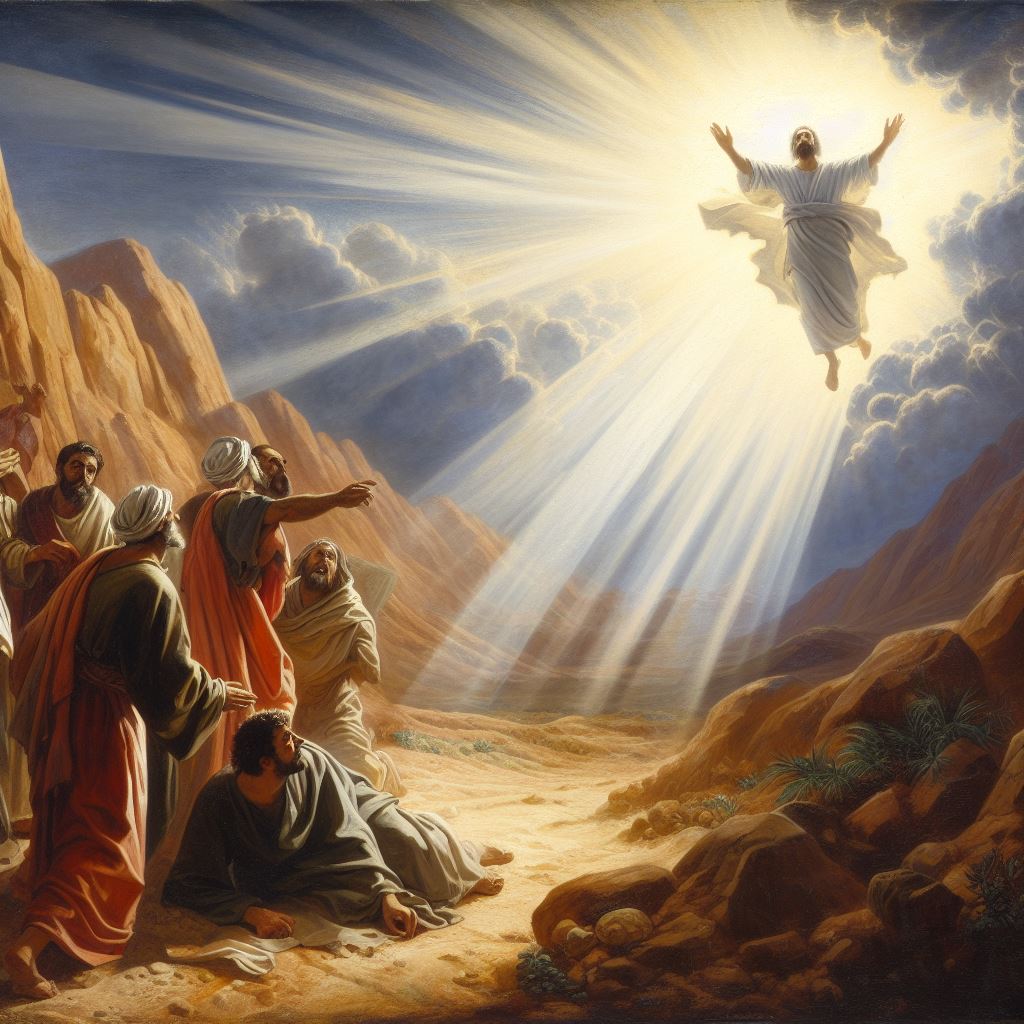
After having supported the murder of St. Stephen the Martyr, Saul of Tarsus was trying to destroy the early Church. He entered house after house, dragging out Christian men and women and handing them over for imprisonment. Still breathing murderous threats against the disciples of the Lord, Saul went to the high priest and obtained official authorization to arrest any Christians he might find in Damascus and bring them back to Jerusalem in chains. But on his way to Damascus, this future saint saw the light.

Light from the sky suddenly flashed around him. He fell to the ground and heard a voice ask him, “Saul, Saul, why are you persecuting me?” “Who are you, sir,” Saul replied. “I am Jesus, whom you are persecuting.” Notice how Jesus did not ask “why are you persecuting my people” or “why are you persecuting my Church,” though both of these descriptions would have been accurate. Jesus asks, “Why are you persecuting me? … I am…whom you are persecuting.”

Imagine if you and I are standing side-by-side in a buffet line and I willfully knock your hand out of the way as we both reach for the delicious deviled eggs. Will your feelings of offense be any less if I reply, “Oh, I didn’t hit you—I merely slapped away your hand”? No, every part of your body is one with you. If I mistreat one of your members, I am mistreating you.

St. Paul and the Holy Spirit teach us in the New Testament: “You are now Christ’s body, and individually parts of it… He is the head of the body, the Church, … [and] we, though many, are one body in Christ.” Jesus himself teaches, “Whoever eats my flesh and drinks my blood remains in me and I in him.” This is why he will declare at the Last Judgment “what you did not do for one of these least ones, you did not do for me” and “whatever you did for one of the least brothers of mine, you did for me.” Our mystical union with Jesus Christ is more intimate than we realize and this has important implications.

The 1st Letter of St. John tells us, “If anyone says, ‘I love God,’ but hates his brother, he is a liar; for whoever does not love a brother whom he has seen cannot love God whom he has not seen. This is the commandment we have from him: whoever loves God must also love his brother.” Now man does not live by bread alone, but we are called to practice Corporal (that is, bodily or material) Works of Mercy. St. James writes, “If a brother or sister has nothing to wear and has no food for the day, and one of you says to them, ‘Go in peace, keep warm, and eat well,’ but you do not give them the necessities of the body, what good is that?” Jesus is hungry and thirsty, ill-clothed and a stranger, sick and imprisoned in his brothers and sisters, and our love for him is reflected in our care for them.

Yet do not fall for the demons’ trap; their persistent accusations which sound like: “You could be doing more; you should always be doing more!” They seek to rob you of your peace and lead you to ultimately give up the good things you are doing because of discouragement. God our Maker knows that our time, talents, and treasure are finite; resources spent on one holy effort cannot be spent on another. Nevertheless, it is important for us to be self-reflective and truly generous with ourselves and what we have.

When you see others or interact with people, try to remember the One whom you mystically encounter. Give them the royal treatment. Notice how both the saved and the damned will someday ask our King, ‘When did we see you hungry or thirsty or a stranger or naked or ill or in prison?’ He will reply, ‘Indeed, whatever you did for one of the least of mine, you did for me.’ It is a truer reality than we realize and all too easily forgotten, yet valuable for us to remember always.

Our Greatest Moral Act

October 29, 2023

30th Sunday in Ordinary Time
Fr. Victor Feltes

Prior to his passing in 2011, the British author and journalist Christopher Hitchens was famously an atheist. In a June 2007 speech he said, “…I have a wager that I put to the religious… And you may be interested to know that I’ve tried it with everyone from the guy who founded Bush’s faith-based initiative… to various Baptist pastors, a Buddhist nun, a rabbi, a Charismatic Catholic, various pastors on radio and television, all up-and-down the country, no-not yet an answer from them. It’s simple: you have to name or cite a moral action performed or a moral statement made by a believer that could not have been made by an atheist. That’s all you have to do, and it cannot be done.” What moral thing can a Christian do that an atheist cannot?

Pastor Mike Winger is an Evangelical Christian in California who was watching footage of Christopher Hitchens and heard him pose this question in a debate, as he often would. Pastor Mike paused the video, sat and thought, “How would I answer that? …What is a moral thing a Christian could do that an atheist can’t do?” “And then,” he says, “it hit me—the most important moral thing that anybody can do: loving God. Like it doesn’t occur to the atheist, or even many Christians that were debating Christopher Hitchens, that loving God—the most important moral imperative of the universe—is something an atheist cannot do. So the atheist is deprived of the highest moral imperative that a Christian or a human is made for. That’s a big deal.

Indeed, Jesus cites this as the greatest commandment: “You shall love the Lord, your God, with all your heart, with all your soul, and with all your mind.” God is worthy and deserving of such love. He is our Creator, the source of our life and of every good thing we enjoy. And he not only deserves our gratitude but is worthy of our praise, for God is not merely good but the very essence of Goodness and Love. This divine love and goodness for us is best revealed to us through Jesus Christ.

The modern world neglects the love and worship of God. Many disregard the greatest commandment yet attempt to keep the second, which is, “You shall love your neighbor as yourself.” But what is authentic love and the genuine good? Many lust and call it love. Many steal and call it justice. Many murder and call it mercy. Not all loves are love, and without God love and goodness are harder to know and fulfill.

Many assume that God is unnecessary, that we can get on fine without him. Yet, in the words of the Vatican II document Gaudium et Spes on the Church in the modern world, “Without the Creator, the creature vanishes.” This is true in two ways. First it is literally true, because without God, whose essence is Existence (or Being), none of us creatures could continue existing. It is also true in another sense, since without our Good Creator who loves us, the objective value and importance of the human race vanishes.

The atheist scientist Carl Sagan once observed, “We’re made of star stuff.” Indeed, natural science indicates that the carbon atoms and all the other heavy elements inside our bodies were formed long ago inside of stars. It might at first feel inspiring to hear we are made from “stardust,” but Carl Sagan also said “there are maybe 100 billion galaxies and 10 billion trillion stars.” Does the material universe care when a trillion stars fizzle out? Natural science forecast the eventual, permanent death of every star. Apart from ourselves as a part of the universe, does the universe care what we do or what happens to us? Even if we are stardust, we are still dust which returns to dust through death. However, nature is not all there is.

Our supernatural God—who is above all, before all, behind and beyond all—loves and treasures each of us. Good and evil are not merely opinions from human preference, but objectively grounded eternally in him. And God would have us live with him forever, through the death and resurrection of Jesus Christ.

Much of the modern world enjoys the fruits of Christianity without acknowledging its Tree. But how is this sustainable? What becomes of human dignity if we are insignificant cosmic accidents? What becomes of human rights if nothing is really right or wrong? What becomes of human meaning and purpose if nothing survives death? Christianity’s blessed fruits, our dignity, rights, meaning and purpose, come from Christianity’s Holy Tree. This Tree is Christ and his Holy Cross.

Jesus Christ and his Cross are not mere myths but revealed in actual history. They bridge heaven and earth, east and west — uniting humanity with God and human beings with each other. They teach and enable us to love God with all our heart, soul, and mind, and to truly love our neighbors and ourselves. In Jesus Christ we have real hope and love which does not pass away. So let us worship God, for this is our highest calling, our greatest moral act, the source and the summit of our Christian life.

“You Spread A Table Before Me” — Funeral Homily for Donetta Geissler, 83

October 24, 2023

By Fr. Victor Feltes

The words of our most famous psalm say, “The Lord is my shepherd; I shall not want… He guides me in right paths…. Even though I walk in the dark valley, I fear no evil; for you are at my side.” Around her thirty-third year of life, the age at which Jesus’ Passion began, Donetta began fifty years of physical trial. The nerve disease known as Multiple Sclerosis sapped her energy with fatigue, reduced her coordination, making it difficult to write, and weakened her limbs, making it very hard to walk. Bearing a chronic, incurable disease throughout one’s life might be compared to carrying a cross through a dark valley. It would be normal and natural for such a person to feel low, discouraged, hopeless. Yet, Donetta’s children tell me she was not discouraged, but courageous.

She “talked about the things she could do and not the things she couldn’t.” She was ‘incredibly positive, never self-pitying, and enthusiastic for life.’ What was the source of her supernatural strength? What was the origin of her outpouring love and joy? The 23rd Psalm tells us: “You spread a table before me… My cup overflows.” Her physical limitations meant she could not come to Holy Mass often, but each year around Halloween she would begin asking her kids, “Are you taking me to Church for Christmas?” She would come with her family to Christmas Eve Mass, sitting in the first row pew. Donetta loved receiving our Lord in his Holy Eucharist. And when she could not come to him, Jesus would come to her.

At weekday Masses celebrated at the Atrium (new Meadowbrook) nursing home, or from lay ministers coming to her various residences, she received Communion throughout her final four decades. She would watch the Holy Mass on TV, say her Rosary multiple times a day, and pray her daily devotional books with dedication. She found her great consolation in God and with God, like the psalmist who said “goodness and kindness follow me all the days of my life.” She desires the same for you.

As St. Paul reminds us, “We must all appear [one day] before the judgment seat of Christ.” Donetta reportedly neither longed for death nor feared it. She said, “If the Lord wants me, it’s time to go… When the good Lord takes me I’m ready.” She looked forward to seeing her mother and father and other deceased loved ones again, and anticipated the joy being with Jesus and our Father with the Holy Spirit forever. She confidently hoped in God’s word: “I shall dwell in the house of the Lord for years to come.

Pray for Donetta’s soul, that any remaining impurity or imperfection in her soul may be cleansed. As the Book of Wisdom tells us, like gold in the furnace, God purifies us. Only as flawless sacrificial offerings will he take us to himself. As Jesus says, “Blessed are the clean of heart, for they will see God.” St. Augustine of Hippo’s holy mother, St. Monica, whose loving prayers so aided him in his conversion had a final request for her children. She told them, “Bury my body wherever you will…. Only one thing I ask of you, that you remember me at the altar of the Lord wherever you may be.” Donetta would have you remember her at God’s altar, so that you each may be led into true blessedness by Jesus Christ the Good Shepherd.

Union With The Other — The Derek Seibel & Jocelyn Zwiefelhofer Wedding

October 14, 2023

By Fr. Victor Feltes

From the beginning of creation, God has made us male and female. Male and female are a foundational difference in our human nature. Though equal in dignity, the two sexes are not the same. We do not think about it much, but it is curious that God created us with this inherent division among us. He did not have to do this. God could have created us differently. Yet this distinction, this separation between us, is what makes marriage possible.

Does marriage divide us? Does marriage separate people? What do I mean? Well, like Jesus says, the man and woman leave father and mother for each other. There is a leaving of a previous family to form a new one. And because of marriage, both bride and groom forsake all others. In saying “yes” to one other person the newlywed is saying “no” to hundreds of millions of others. Marriage is an exclusive and binding relationship that separates a man and woman from having the same relationship with all others. A blinkered person could look at men and women and only see opposition. One could deconstruct marriage and denounce it as discriminatory and divisive. But these strange perspectives would not see the fullness of reality, the beauty of what God is doing.

Derek and Jocelyn, I doubt you feel today like you are abandoning your families. Rather, you are becoming parts of each other’s families even as you form a distinct new family of your own. And I very much doubt that you, Derek and Jocelyn, are thinking today about how getting married cuts off your dating options. Instead, you are experiencing joy in becoming more perfectly one with your beloved.

As a man and a woman, God made you for each other. And the unity you can experience together is described by Jesus as two becoming one such that you “are no longer two but one flesh [one body].” Marriage unites human beings and the human family. And here is the greater wonder: all men and women are made for union with God, who is supremely Other. And holy marriage offers both an image and foretaste of the loving harmony with God in Heaven.

In receiving this Sacrament of Marriage your union becomes more than natural. By cooperating with grace you become a living icon of the marriage of Jesus Christ the Bridegroom with the Church his Bride. You can tap into the love they express and give to each other, loving beyond your human strength. “Therefore,” Jesus says, “what God has joined together, no human being must separate.” Derek and Jocelyn, and every married person here: do not disregard or fail to realize what is possible in your sacramental bond. Invite God to perfect your love, for each other, for himself, and for all.

God Expects Fruits From Us

October 8, 2023

27th Sunday in Ordinary Time
Fr. Chinnappan Pelavendran

The last three weeks, our gospels have been about vineyards. Two weeks ago, we had the Parable of the Laborers in the Marketplace. The Good Employer called people to work in his vineyard throughout the day. Last week, we had the parable of the two sons who were called to work in their father’s vineyard, one said ‘No’ but went. The other said, ‘Sure’ but did not go. This week we have another vineyard story, the story of the evil tenant farmers who tried to steal the vineyard from their Master, even putting his messengers to death and finally putting his son to death.

Naturally, Jesus taught His disciples and the people about God’s mercy, compassion, love, and forgiveness. However, in today’s readings, we see something different: rejection and destruction. God loves his people. There is no doubt about it. At the same time, God expects fruits from his people.

The kingdom of God is often referred to with images from everyday life. Today’s readings use the image of the vineyard and wine to understand God’s relationship with his people. The vineyard is a familiar symbol of Israel, God’s chosen people. The Lord had done so many good things for Israel: He worked on the land, planted a vineyard, put walls around it, built a watchtower, and did other good things. He did all this in expectation of a fruitful harvest. The result was the opposite; the land produced bad fruits and wild grapes. The chosen people of Israel were brought out of slavery by the Lord to a land flowing with milk and honey. God did everything for His people and rightly expected them to produce fruits of righteousness and to be witnesses to unbelievers. But they gave him fruits of sin, iniquity, corruption, immorality, wickedness, and rebellion. Therefore, God took away his protection and let his vineyard be trampled by other nations. This prophecy was fulfilled when the Assyrians and the Babylonians conquered Israel.

Jesus uses the same image in today’s Gospel. The landowner represents God. The tenants represent the religious leaders who were given the responsibility to take care of God’s people and help them bear good fruit. See the great opportunities the vineyard owner offered to the tenants, and how they wasted the opportunities and expressed ingratitude. God does not simply punish his people immediately but patiently and mercifully waits. The servants suffered at the hands of religious leaders, and his own people killed Jesus. One might think that the death of Jesus would lead to man’s destruction. Instead, it has led to our redemption. The rejected stone becomes the cornerstone.

God has abundantly blessed this world with many gifts, especially natural and human resources. It would be wonderful if we all used God-given natural resources and our human talents as prudent and faithful stewards. While we are working, we should not forget the greed and selfishness of the tenants, which turned against the owner of the vineyard. We need to remember always that God is the absolute owner of this world and everything in it. We are only His tenants and, at the end of our lives, we are expected to give an account of our stewardship to Him.

As we are in the month of the Rosary, may today’s Gospel lesson help us make a firm resolution to reject pride and greed. As we pray the Rosary, may we imbibe the values of humility and love, and be constantly assured of the Blessed Mother’s protection and assistance as we journey toward our eternal home.

Three Parables About God’s Vineyard

October 8, 2023

27th Sunday in Ordinary Time
Fr. Victor Feltes

For a third Sunday in a row, we hear Jesus telling a parable featuring a vineyard. First, there was the parable about the generous vineyard owner who hired more and more laborers throughout the day and paid them all the same amount. Then, there was the tale of a father who asked his two sons to go and work in his vineyard. Today, Jesus refashions the Prophet Isaiah’s allegory (which we heard in our first reading) into a story about a vineyard owner’s wicked tenants. In these parables, Jesus tells us what “the Kingdom of Heaven” is like.

His stories prefigure how the Gentiles would join the Jews as the people of God’s Kingdom. For example, like vineyard workers called late-in-the-workday, God calls the Gentiles long after he called the Jews, yet both are offered the same wage of salvation. The wayward, Gentile, pagan peoples were like the son in the parable who at first denies his father but later changes his mind and faithfully serves him. And the religious leaders of the Jews were like those wicked tenants who betrayed the vineyard owner, mistreated his messengers, and ultimately murdered his son. Because of this, those leaders’ roles of leadership were taken away and given to others in Christ’s Church to produce more fruit for God.

Gospel parables are profound, inspired stories which contain more than one true meaning. Jesus’ vineyard parables not only describe what the Kingdom of God is like for groups of peoples but for individual persons as well. For instance, Jesus’ Parable of the Generous Landowner teaches us that it is not too late for a sinner to repent, answer God’s call and serve him now, while it is still day. His Parable of the Two Sons teaches us that doing the right thing is better than merely saying the right thing. Faithful obedience to our Father God means actually following through. And today’s Parable of the Wicked Tenants teaches us that even those who labor or have authority in God’s vineyard must act justly towards God and his servants. Blessed are those who respond to the Lord, profiting of the precious opportunity he has made possible for us.

Jesus’ parables foreshadow peoples entering God’s Kingdom from all lands. Today, we can see this realized in his Church. Look at us, Americans in Wisconsin, with a pastor of German ancestry ministering alongside a priest from India, and all of us worshipping the God of Israel together. Jesus Christ, the stone rejected by the builders, has become the cornerstone of a new Temple made of living stones, people from every land. By the Lord has this been done and it is wonderful in our eyes.

The Prophet Isaiah once proclaimed a song of his friend concerning his vineyard: “A vineyard on a fertile hillside. He spaded it, cleared it of stones, and planted the choicest vines (to make it fruitful); within it he built a watchtower (to protect it), and hewed out a wine press (to delight in its fruits).” Isaiah’s friend was the Lord God, whose vineyard was Old Israel, which contained the cherished plant of his people. Jesus Christ’s Church, his Bride, is the New Israel; not defined by soil or blood but open to all people. God protects her, makes her fruitful, and delights in her. He delights in us and makes us one. This is Jesus Christ’s desire for every person in our world. May the whole world come to know Christ in his Church and know the peace of God.

The Obedience of the Third Son

October 3, 2023

26th Sunday in Ordinary Time
By Fr. Chinnappan Pelavendran

A friend of mine was a social worker for twenty long years. All of a sudden, he became a funeral director. I wanted to know why he changed his mind by leaving a good job and becoming a funeral director. He said he spent ten years trying to change John, but he is still an alcoholic. He spent three years trying to solve Charles and Susan’s marriage problems, but they ended up getting a divorce. Later, he tried to turn one of his friends from drugs, but he is still an addict. Now, at the funeral home, when he straightens them out, they stay straight!

We feel happy when someone obeys us, but at the same time, we do not want to obey anybody. Often we forget obedience is a virtue. The parable of Jesus this Sunday is about the two sons and their obedience. The first son said “No,” but later he changed his mind; he did the father’s will. The second son said “Yes,” but later he did nothing. The meaning of this parable is clear; the Jewish leaders were people who said they would obey God but then did not. The tax collectors, sinners, and prostitutes said “No” to God, but after listening to the teaching of Jesus, changed their lives. This is what the prophet Ezekiel pointed out in the first reading, “But if the wicked turn from the wickedness they did and do what is right and just, they shall save their lives, since they turned away from all the sins they committed, they shall live, they shall not die.” (Ezekiel 18:27–28)

After listening to this parable you may have a question; which of them should we follow? I cannot say that one is better than the other, the two sons caused pain and sorrow to their father. The one caused pain at the beginning and the other one at the end. Neither of the two sons brings joy to the father. The answer comes from today’s second reading from St. Paul’s letter to the Philippians, we follow neither the first son nor the second son. Rather, we follow the third son, the one who said “Yes” and obeyed His heavenly Father even unto death. He is Jesus Christ.

Jesus is our model for obedience to the Father’s will. Jesus obeyed His Father completely, emptying himself, taking the form of a slave, by accepting death on the cross. Because of this obedience of Jesus, God the Father exalted Jesus above every name, at the name of Jesus the knees of heaven and earth will bend, and every tongue will confess Jesus is the Lord. Jesus our Lord and Master achieved victory by humbling himself to His Father.

Today we all must examine ourselves, and evaluate how faithful we are to the promises we made. When we were baptized, the priest asked us in the name of Christ, “Do you renounce Satan? And all his works? And all his empty show? Do you believe in God the Father almighty, Creator of heaven and earth? Do you believe in Jesus Christ, his only Son, our Lord, who was born of the Virgin Mary, suffered death, and was buried, rose again from the dead, and is seated at the right hand of the Father? Do you believe in the Holy Spirit, the holy Catholic Church, the communion of saints, the forgiveness of sins, and the resurrection of the body? And life everlasting?” For all these, we said, “I do!

As a priest, I have to examine myself and see how faithful I am to the Lord, and to the promises I made to Him during my ordination. Those who are married, how faithful are you to your spouse and to the Lord, and to the promises you made to them in the presence of God? Let us listen to the voice of God in every moment of our life, and obey it.

The Parable of Two Sons, Jesus Christ & Us

September 30, 2023

26th Sunday in Ordinary Time
By Fr. Victor Feltes

The father in Jesus’ parable has two sons. He tells the first, “Son, go out and work in the vineyard today.” That son refuses but later changes his mind and goes. The father comes to the other son and gives the same command. That son replies, “Yes, sir,” but does not go. When Jesus asks the chief priests and elders which son did the father’s will, they answer, “The first.” Were those Jewish leaders correct? Yes and no.

Yes, it is true that it is better to do the right thing than to merely say the right thing. Nevertheless, it is a father’s will that all his children would do both, obeying in word and deed. In Jesus’ parable, neither son did the father’s will perfectly. Jesus Christ, on the other hand, is perfectly faithful to our Father. “However many are the promises of God,” the Letter to the Hebrews tells us, “their ‘Yes’ is in him.

Jesus enters our world saying, “Behold, I come to do your will, O God.” Though he was in the form of God, he emptied himself and humbly took the form of a servant, assuming our human nature to his Divine Person. He was perfectly obedient to the point of death, even a death by crucifixion. Through Jesus’ obedient, faithful, loving response to his Father’s will, God has exulted him highest among us. We too have said yes to God’s will and given him our word, but we have not been obedient to that same degree.

Many here have vowed before God, ‘I, take you, to be my spouse. I promise to be true to you in good times and in bad, in sickness and in health. I will love you and honor you all the days of my life.’ I pledged a similar self-gift on my deaconate and priestly ordination days. And any Catholics who are not in either of these sacramental vocations promise and pledge a gift of themselves when receiving Jesus in the Eucharist. At the turn of the fifth century, St. Augustine noted that when you approach to receive the Holy Eucharist at Mass “you hear the words, ‘The body of Christ’ and you reply ‘Amen’. Be then a member of Christ’s body, so that your ‘Amen’ may accord with the truth… Be then what you see, and receive what you are.” Our Heavenly Father has called to do works of love in our various states of life and we have said, “Yes, sir,” but we have not always done it. Yet there is encouragement for us in today’s gospel.

Jesus notes how tax collectors and prostitutes had not done the will of God preceding the preaching St. John the Baptist. They had disobeyed God’s commands but, through believing, changed their ways and were now entering the Kingdom. Through believing in Christ we also can change. We cannot do it alone, but we were never expected to. Consistently invite Jesus Christ to live his perfect obedience, his intense love, his holy life in you. Then, becoming more like him, you will share more greatly in his exulted glory.

Transformer of the Earth — Funeral Homily for Richard Zwiefelhofer, 92

September 19, 2023

By Fr. Victor Feltes

Richie’s family has told me a number of stories about him as a hardworking transformer of the earth. He would take places as they were naturally and improve them. He served in the U.S. Army in wartime Korea (1951-52) building roads, “engineering the land.” He made it home safely, married Margie, and labored on his farmstead. He worked hard on that farm, meticulously picking rocks day and night as if they were weeds in his fields, improving the soil. You have passed his verdant pastures on your way out of town beside Kwik Trip, where he gave his beef cattle peaceful rest. He could harvest his fields to yield four hay crops each summer for feeding his hungry herd. He did not raise dairy cows but he had a side-job hauling milk, and also gravel, dirt, corn, and or grain. His work aided in the shaping of this earth and in the sharing its blessings. Despite his short stature, he possessed great strength. He reportedly could carry a milk can in each hand, weighing one hundred pounds apiece. And his strength endured. Even into his nineties, he would shovel manure out of the pens.

He loved that farm and loved having fun. He loves his family and loves our God. Every weekend, he brought his family members to our Lord in the Eucharist. And when Riche could no longer attend himself, he watched the Holy Mass on TV. Though he was in and out of consciousness during his final weeks, when I visited Richie and gave him the Last Rites he thanked me for these precious gifts. And I am told that as the hour of his death drew near, he was heard praying the Hail Mary.

Richie worked hard to bless his family and help lead them to the Lord. Jesus Christ, meanwhile, always labors to bring us closer to himself and bless us. He engineers creation to build us a road so that his allies can conquer overwhelmingly in fighting the good fight and reach heaven triumphant. He meticulously picks out the useless rocks—the sins in our souls, to make us more fruitful. He would make us maximally fruitful; four, or thirty, or sixty, or one hundred fold. He utilizes us to help nourish his herd, shape this earth, share its blessings, and in verdant pastures give us repose.

Looking at Jesus during his public ministry, some people thought him to be a mere man. But his words and deeds reveal the divine strength he possesses, strong enough to bear the Cross for our sins and overturn death for our salvation. And Jesus Christ has not giving up laboring on this earth. He would shovel out the muck of sin from our lives if only we would welcome him and allow him to do so.

God loves us. He loves us powerfully. The Book of Wisdom says the Lord would purify and perfect us like gold in a furnace. And Jesus tells us in John’s Gospel that we would be wise to let him. Christ notes a lesson from the fields: “Unless a grain of wheat falls to the ground and dies, it remains just a grain of wheat; but if it dies, it produces much fruit… for eternal life. … The Father will honor whoever serves me.

The gospel reminds us that Jesus felt natural human distress as he faced his approaching Passion and death: “I am troubled now,” Jesus said, “Yet what should I say? ‘Father, save me from this hour’? But it was for this purpose that I came to this hour.” Today, we may feel natural sadness at Richie’s passing, and that’s a beautiful thing, as it reflects our love. Yet what shall we say? It was for this purpose—a holy passage from this life into new life—for which Jesus and Riche worked hard together for so long.

Our Lord is the great hardworking transformer of the earth, who takes us as we are naturally and labors to improve us. Let any goodness you see in Riche reflect for you its source and perfection in Christ. And let Jesus work with you to bring you to holy perfection.