Archive for the ‘Last Things’ Category

A Vision of the Saints in Heaven

November 1, 2025

Solemnity of All Saints
By Fr. Victor Feltes
On this All Saints’ Day, let us consider what we can look forward to living as saints in heaven one day. But first, how does one get to heaven?

At the moment of death, our immortal souls will separate from our mortal bodies and go immediately to our particular judgment. There we will be judged according to our faith and deeds in Christ, based upon our connection to Christ and our love of God and neighbor. Then our personal punishment or reward will begin: either immediate and everlasting damnation, or entrance into the everlasting blessedness of heaven —either immediately or after the purifying process of purgatory. One day, the dead will arise and the saints will experience a new heavens and new earth in their glorified resurrected bodies. But for now, the saints only experience heaven through their souls (with the Blessed Virgin Mary being a notable exception). When someday, by the grace of God, we are saints in heaven, here are some things we will enjoy.

One thing to look forward to is probably having a perfect memory. A colleague of the genius mathematician and physicist John von Neumann writes “one of his remarkable abilities was his power of absolute recall. …Von Neumann was able on once reading a book or article to quote it back verbatim; moreover, he could do it years later without hesitation. …. On one occasion I tested his ability by asking him to tell me how A Tale of Two Cities started. Whereupon, without any pause, he immediately began to recite the first chapter and continued until asked to stop after about ten or fifteen minutes.” If this is possible with a frail human brain, how much more knowledge could our unhindered souls retain?

Another perk of being a saint in heaven is great ease in doing whatever is best. When in the unveiled presence of God, “we shall see him as he is,” and discerning God’s will should be easy. And our perfected virtues will make it easy to do what is good and right, for we shall be “pure, as he is pure.”

Another extraordinary blessing in heaven is having innumerable friends. In St. John’s vision of heaven he beholds “a great multitude which no one could count from every nation, race, people, and tongue.” Every saint in heaven has become an incredible person perfected in Christ’s beatitudes and love. There will be no lack of time to get to know people and with your perfect memory you’ll never forget anyone’s name or stories.

Yet the greatest joy in heaven is the beatific vision of God. Sometimes people worry the restful reward of seeing God and worshipping him forever will be dull. Don’t worry, heaven will never be boring. Every good and beautiful thing in Creation which you have ever delighted in has its origin in God who is supremely good, beautiful, and delightful. You have yet to fully exhaust the joys to be experienced in just one culture in one country in one century of human history, so do not imagine you will exhaust the joys to be found in our infinite God.

These are things to look forward to someday in heaven, but on this All Saints’ Day I wish to remind you that the saints in heaven know us and love us now. Yesterday, an online friend shared with me a beautiful story about the intercession of the saints and he has given me permission to share his story with you.

In January of 2018, his father suffered a massive heart attack at home. In the Emergency Room, they were able to restart his heart, but there was almost 100% arterial blockage and likely serious brain damage from the lack of oxygen. Some of the best doctors in the world could do nothing more to help. So the next day, all the family gathered to share final moments as they withdrew the mechanical life support. My friend writes:

I remember sitting in the room, in the cardiology unit there, praying my brains out for a miracle, as he lay dying. Just focused on nothing else but praying, praying, praying. Eyes closed, focused on nothing else. Praying, praying, praying for some miracle. And then I suddenly wasn’t in the hospital room anymore.

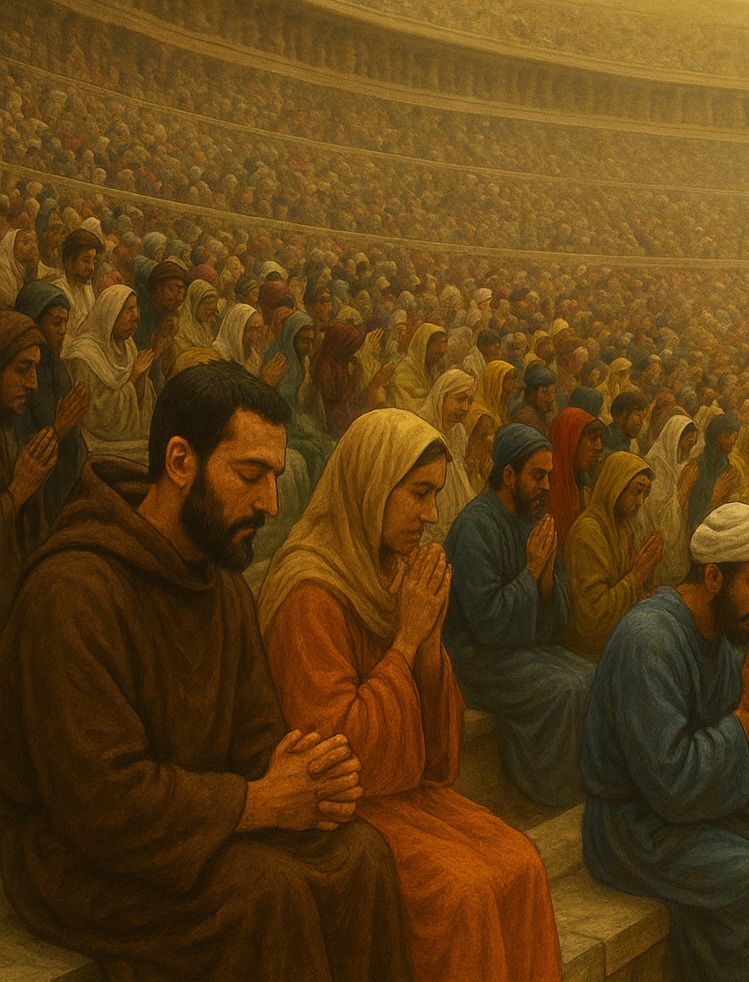
I was sitting on a bench in what to me appeared to be a huge football stadium, or more like a Roman circus (those long chariot tracks), stretching further in each direction than I could see (even the opposite side was so far away I couldn’t see it). And every seat was filled with people, all dressed differently (though most of them were in robes, in the section I was in), and all praying in different languages.

Their prayers collectively seemed like a buzzing, or the sound of a waterfall, because they were individually indistinct—countless voices all praying at once. But it was clear that each one of them were praying, non-stop, for me, my dad, and for everybody in the world.

And it was in that instant that it was told to me that I could stop praying—(“Look, all these Saints have the whole ‘praying for your dad’ thing covered for the moment…”)—and use the few moments my dad had left with us to just be with him, hold his hand, tell him that I love him and say goodbye to him. So that’s what I did. And I’m very grateful to this day that I did.

Why was my friend’s vision of the saints set in a long racetrack stadium? I recognize in this a reference to the Letter to Hebrews, which says, “since we are surrounded by so great a cloud of witnesses, let us rid ourselves of every burden and sin that clings to us and persevere in running the race that lies before us while keeping our eyes fixed on Jesus, the leader and perfecter of faith.” So be sure to befriend the saints and call upon them, because they know you, and they love you, and they eagerly want you to join their number.

The Last Things

September 27, 2025

26th Sunday in Ordinary Time
By Fr. Victor Feltes

Last week, the season of fall officially began. Soon we will see the leaves fade and fall and many living things will enter a long, deep sleep. Imagine how much we would despair seeing the skeletons of trees in the wintertime if we did not remember the new life to come in spring. Like our falling asleep at night and reawakening in the morning, the changing of the seasons foreshadow our dying and rising again in Christ.

Last week, there was also an online rumor that all Christians would be taken up into heaven last Tuesday. Though, once again, no one really knew the day nor the hour. We Catholics do not believe in “The Rapture”— that true Christians will one day vanish from the earth while unbelievers are “left behind” for years. This idea was only imagined for the first time in 1830, which is discrediting in itself. We faithfully await Christ’s return to call forth the living and the dead, but his coming will be visible to all. “For,” Jesus says, “just as lightning flashes and lights up the sky from one side to the other, so will the Son of Man be in his day.”

In this Sunday’s Gospel, we hear Jesus’ story about a rich man and a poor man. The poor man is named Lazarus but the rich man goes unnamed. “When the poor man died, he was carried away by angels to the bosom of Abraham. The rich man also died and was buried, and from the netherworld, where he was in torment, he raised his eyes and saw Abraham far off and Lazarus at his side.” St. Augustine suggests that God “kept quiet about the rich man’s name because he did not find it written in heaven.” St. Jerome reproaches the rich man saying: “You have five brothers: sight, smell, taste, hearing, and touch…. Since they were the brothers you loved, you could not love your brother Lazarus…. These brothers of yours loved wealth and they had no eye for poverty.”

Unless Jesus Christ returns during our lifetimes, each of us will experience death before facing an eternal judgment. But some people completely avoid thinking about their own deaths. They are like to my late aunt who wouldn’t go in for annual health checkups because she feared what the doctor might tell her. Yet by contemplating “The Last Things” (Death, Judgment, Heaven, and Hell) we can become more confident and well prepared for what is to come.

Though God fashioned us for everlasting life, we experience death as a result of human sin. However, because of Jesus’ Passion and sacrificial death, we can unite our sufferings to his to advance his mission of salvation in this world and increase our glory in Christ. Our bodies will undergo natural decay, eventually returning to the dust from which they were made, but our souls are everlasting. At the moment of death, our immortal souls separate from our mortal bodies. Our earthly remains remain on earth to await our Resurrection, but our souls go immediately to our particular judgment.

Then we will be judged according to our faith and deeds in Christ. Remember that what will matter in the end is our connection to Christ and our love of God and love of neighbor. Then our personal reward or punishment will begin: an entrance into the unending blessedness of heaven—either immediately or through the purifying process of purgatory, or else immediate and everlasting damnation. These are the weightiest matters in the world, but I do not want you to ever feel burdened or discouraged.

Do you recall how in The Lord of the Rings the dark lord Sauron created a ring into which he poured his cruelty, malice, and will to dominate all life? This ring would slowly corrupt its bearer and resize itself to fit its wearer’s finger. Whenever Frodo wore it, Sauron would see and hear him immediately and send his ghostly servants after him. Gandalf warned Frodo to remember “the Ring is trying to get back to its master. It wants to be found.”

Now consider our Good Lord of Light. He poured his mercy, kindness, and grace into you at baptism to give you abundant life and bring you into the glorious freedom of the children of God. God’s gifts adapt to their recipients; from the simplest small children to fully-grown-up geniuses, and they sanctify us over time. With the Christian identify you bear you can call on our Lord at any time, and he will see and hear you and send his angels for you. Jesus Christ is striving to bring you to our Father. So if you ever wander off, remember that they want you to be found.

Be faithful to daily prayer and the sacraments, especially Confession and Holy Mass. Live your one and only life with and for our Lord Jesus Christ. And always be well prepared to journey from this world, eager for your reward and the many joys which await us in the next season to come.

Greet Him At His House

August 9, 2025

19th Sunday in Ordinary Time
By Fr. Victor Feltes

Today’s Gospel is first and foremost about the Second Coming of Christ and our judgment on the Last Day. Jesus Christ, who called himself the Son of Man, said that in the End Times “the sign of the Son of Man will appear in heaven, and all the tribes of the earth will mourn, and they will see the Son of Man coming upon the clouds of heaven with power and great glory.” The Book of Revelation agrees: “Behold, [Jesus Christ] is coming amid the clouds, and every eye will see him, even those who pierced him… ‘Behold, I am coming soon. I bring with me the recompense I will give to each according to his deeds.’” “But of [the timing of] that day and hour,” Jesus says, “no one knows, neither the angels of heaven, nor the Son, but the Father alone.” (The Son of God is divine and therefore knows everything, but in his humanity Jesus apparently did not know the date or was not supposed to reveal it.) Could Jesus Christ return during our lifetime? Of course. But even if Christ returns a thousand years from now we should still heed his warning to be prepared today, for we do not know the day and hour of our deaths when he will judge our souls and deeds.

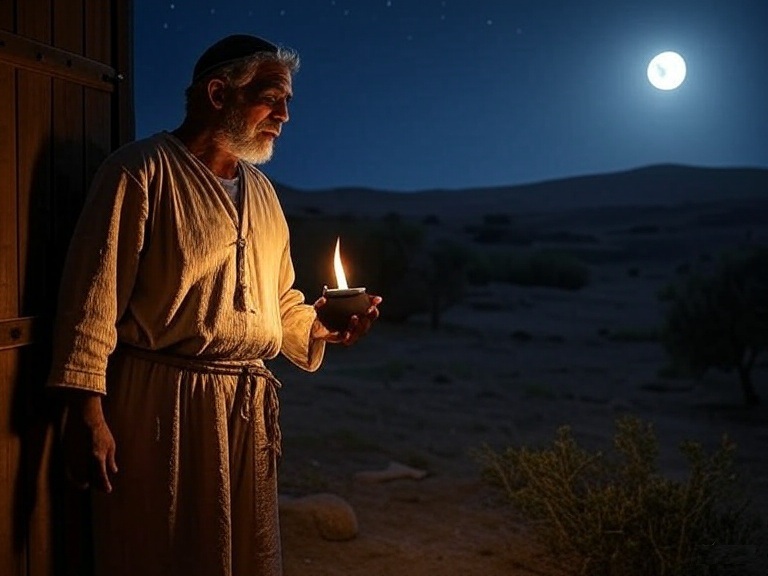
Jesus’ parable about the returning master and his servants suggests another secondary interpretation. Consider the story’s details. The master has come from a wedding. He comes to his own house. He wants his servants to be there, ready to greet him. And in response he will “have the servants recline at table and proceed to wait on them.” And “should he come in the second or third watch” (when it is darkest and most inconvenient) and find them present, attentive, and well-prepared, those servants will be greatly blessed. So where is the Lord Jesus’ house to which he returns? Where does he want his servants to be present and pleased to see him? Where would he have his faithful servants rest, partake in a meal served by him, and receive his blessed rewards? This church is his house. We are his servants. And Jesus wants us to meet him here for a meal. Our Lord arrives here joyfully from a wedding. He wedded the Church to himself two thousand years ago. And the Holy Mass extends that mystery throughout time and space to here and now. Indeed, ‘blessed are those called to the wedding supper of the Lamb’ and who are here and ready to greet him.

Yet, for too many people, the precious time of Sunday Mass is an hour when they do not expect the Son of Man to come. Despite our many scheduled weekend Masses, they still do not attend. Others show up out of obligation or custom or habit, but fail to be attentive. Perhaps they do not yet believe—despite Scripture, ancient teaching, and centuries of miracles—that Jesus Christ is truly present in the Holy Eucharist. Or perhaps they do not yet realize that they are not mere spectators at Holy Mass but offering a sacrifice with the priest and the whole community, the eternal offering of the Son to the Father, through which everything united to Christ is raised up to heaven and grace and blessings are poured down to earth in return.

Be present and be vigilant. Distractions will come to anyone who is committed to regular Massgoing and daily prayer, but do not be discouraged by the times your thoughts accidentally wander. Every decision to turn your attention back to the Lord is another act of love and devotion. Sometimes those so-called distractions are actually things the Lord wants you to pray about or offer up to him. Ask the Holy Spirit and he will help you to pray as you ought, to gird your loins with reverence and light your lamps with faith and be like servants who are glad and blessed upon their master’s return from a wedding.

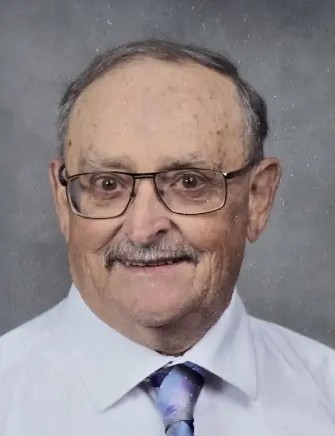
Life Eternal — Funeral Homily for Ronald “Ron” Woolever, 75

August 6, 2025

By Fr. Victor Feltes

We are courageous, and we would rather leave the body and go home to the Lord.” That is what St. Paul writes about himself and the Christians at Corinth in our second reading. But is this true for us today? Would we rather leave the body and go home to the Lord?

Imagine if you could have endless more years of this life on earth. Would you wish for that? Pondering such a wish you would be wise to reflect upon the burdens of bad health. The coming of such crosses in the later years of life makes many people more open to the next life. Ron endured poor health but he is freed from that burden now.

But suppose you could live an endless life on earth free from all illness and pain; the next thing you might consider is the prospect of outliving everybody you know now, as well as everyone you would ever know. Even with our well-founded hope for Heaven, where all friends of God will be reunited, the temporary separation between us and our dearly departed causes sadness in us who remain behind. It is okay to mourn at Ron’s passing, though we do ‘not grieve like those who have no hope,’ for we have hope in him who said “Do not let your hearts be troubled. You have faith in God; have faith also in me.”

But imagine if each person on earth were granted pain-free immortality; the next thing to consider is what life in that world would be like. After Adam and Eve sinned at the tree they were deprived of the fruit of another—the Tree of Life—lest they eat of it and live forever in their unhappy fallen state. Even if scientists were to develop a treatment to eradicate all pain and all death, moral sickness would remain untreated in many human souls. Endless life without Christian conversion would create a hell of moral evils on earth. Ron’s love for Jesus and our Catholic faith led to his deep devotion to the Holy Eucharist and St. Paul’s Parish. He hungered and thirsted for holiness, and our holy religion helped him to go deeper, change, and grow with God in his grace.

Now suppose if everyone on earth were forever freed from pain and death and sin, to live peacefully together on earth forever—what would life in that world be like? Ron delighted in many things in our world. Beyond family and friends, there were monster trucks and parade floats, old cars, new movies, and countless good things more. But after living in our world a few decades, which is far less time than millennia, we can think to ourselves, “These things are nice but is this really all there is?” Every heart contains a God-shaped hole which can only be fully satisfied by the infinite beauty, goodness, and love of the Holy Trinity. Understanding this changes how we see our lives in this world (which we must not cling to) and our future deaths (which we must not grasp at) until the Lord finally calls us home to be with him. Jesus tells his disciples, “I am going to prepare a place for you… [and] take you to myself, so that where I am you also may be.”

Therefore,” St. Paul writes, “we aspire to please him, whether we are at home or away. For we must all appear before the judgment seat of Christ, so that each may receive recompense, according to what he did in the body, whether good or evil.” Pray for Ron’s soul, that he may now enjoy the endless bliss of Heaven. And let Jesus Christ be the good and loving Lord of your life so that you may enter eternal life, for ‘no one comes to the Father except through him.’

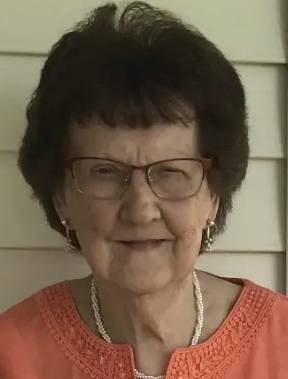
Heavenly Feasts — Funeral Homily for Angeline “Angie” Rihn, 98

July 1, 2025

By Fr. Victor Feltes

One theme in Angie’s earthly life, from the stories her family shares about her, is meals: the meals she prepared and the meals she shared. The meals on the farm with Herman and their children always began with a prayer, thanking the Lord and asking for his blessings. And her spouse would always praise her cooking with compliments, like calling it “A meal fit for a king!” On the farm, with the animals they raised and the produce they grew and often canned, there was never a need to buy any food. For holidays such as Christmas and Thanksgiving, Angie would cook for days. Three rooms of their farmhouse a couple miles out of town would be filled with tables and chairs for guests. Angie would always have guests over for a meal. For example, her beloved grandkids could show up anytime to enjoy sharing a meal with her. As a leader in the parish Altar-Rosary Society, she headed the organizing of funeral luncheons. And with unfaltering faith, she never skipped our Lord’s feast of the Holy Mass.

Scripture often speaks of our God preparing feasts. The Prophet Isaiah foretells that the Lord God on his holy mountain will “provide a feast for all peoples of rich food and choice wines, of juicy, rich food and pure, choice wines.” King David pens the 23rd Psalm saying of the Lord, “You spread the table before me in the sight of my foes. You anoint my head with oil; my cup overflows.” Jesus declares to his apostles, “I confer a Kingdom on you, just as my Father has conferred one on me, that you may eat and drink at my table in my Kingdom….” And Jesus announces “many will come from the east and the west, and will recline with Abraham, Isaac, and Jacob at the banquet in the Kingdom of Heaven….” During the heavenly visions of the Book of Revelation, an angel tells St. John “Write this: Blessed are those who have been called to the wedding feast of the Lamb,” adding, “These words are true; they come from God.”

Are these prophesies about eating and drinking in the Kingdom of Heaven literally true? Jesus says in his Sermon on the Mount: “Blessed are they who hunger and thirst for righteousness, for they shall be satisfied,” but that is metaphorical language. And how could we eat foods or drink drinks after death separates our souls from our bodies? But we must remember that our well-founded Christian hope is not only for an eternal afterlife for our souls but also a physical resurrection of our bodies one day. Recall how St. Luke reports that the Resurrected Jesus in the Upper Room on Easter Sunday asked, “‘Have you anything here to eat?’ They gave him a piece of baked fish; he took it and ate it in front of them.” Why does Jesus eat with his resurrected body? It was not because of hunger, for his glorified body has no need of such nourishment. He ate as a demonstration for the apostles and us that he is not a ghost or mirage but truly risen again. But then why does Jesus eat again later, as recorded by St. John, when he had breakfast with seven disciples along the Sea of Galilee? Since the fact of his resurrection was already firmly established, it appears it simply pleased him to share a meal with them. So ‘feasting in God’s Kingdom’ appears to be more than merely a metaphor.

After the Resurrection of the dead, once our souls reunite with our bodies, many will come from east and west and recline with Abraham, Isaac, and Jacob for the Lord’s promised feast. A supper not of necessity but of joy, with delights not merely from fine food and drink but from sharing the fond table fellowship of God and his friends. Angie’s delight in preparing meals reflected our Lord’s delight in preparing meals for us: at every Mass and in the world to come. Angie rejoiced to have family and friends flock to her feast like our Lord longs for us to join him for his feast, too. So pray for Angie’s soul, that she may be perfectly purified, and let us live our lives faithfully so as to be well-prepared to one day take our places at the banquet in the Kingdom of God.

The Deaths of Lazarus

April 6, 2025

5th Sunday of Lent
By Fr. Victor Feltes

God does not do bad things, for “God is not subject to temptation to evil” and “what he hates he does not do.” However, God is all-knowing and all-powerful. There is nothing knowable that God does not know, and nothing good and doable that he cannot do. Therefore, when a bad thing happens, God has allowed that to happen. Yet we also “know that God causes all things to work together for the good of those who love him.” We see these truths reflected in today’s Gospel reading.

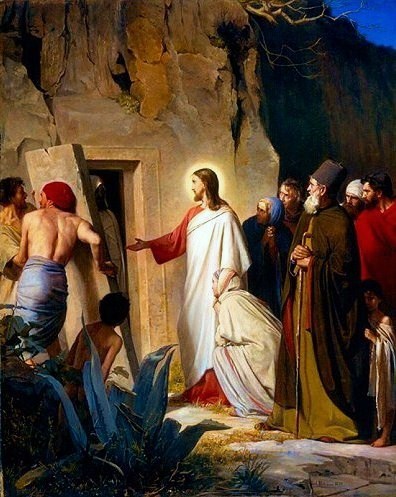
God clearly permitted Lazarus to fall ill. And when Jesus received the urgent message from Martha and Mary that their brother was sick, he remained in the place where he was and allowed Lazarus to die. “Now Jesus loved Martha and her sister and Lazarus.” So why did Jesus not come earlier, when he was told “the one you love is ill.” Or why did Jesus not heal his friend Lazarus’ sickness from a distance, like he cured the centurion’s servant or the royal official’s son? Jesus says the dying and rising of Lazarus was “for the glory of God, that the Son of God may be glorified through it,” and “that you may believe.”

Earlier in his public ministry, Jesus had raised Jairus’ daughter from the dead, having told mourners that the little girl was “asleep.” But that resurrection miracle was performed privately, shortly after death, and with strict orders to its witnesses that no one should know of it. By publicly raising Lazarus from the tomb in the presence of a crowd, Jesus manifests his power not only to heal the sick but to restore the dead to life.

Picture this: One moment, Lazarus was ailing and fading out of consciousness on his deathbed. The next thing he knows, he wakes up wrapped in bandages inside of a cave, and comes out toward the light at the sound of his friend Jesus’ call. His sisters would have filled him in on what he missed when he was dead.

The Gospels tell us Lazarus later attended a dinner with Jesus the day before Palm Sunday at the house of Simon the Leper. Martha served the meal while Mary took costly perfumed oil and poured it on Jesus’ head as he reclining at table. “A large crowd of the Jews found out that he was there and came, not only because of Jesus, but also to see Lazarus… And the chief priests plotted to kill Lazarus too, because many of the Jews were turning away and believing in Jesus because of him.” After Holy Week, the New Testament tells us no more of what happened to Lazarus. But we can imagine what it was like, years after Easter Sunday, when Lazarus died again.

Knowing that Jesus died and was risen, and having personally experienced death and resurrection himself, must have given Lazarus great peace even during his final passion. Consider Martha or Mary watching their brother die once more; having to burying him again. There would naturally still be sadness and ache in that parting, but I imagine the sisters would feel different this time: ‘We know he will rise in the Resurrection on the Last Day. Jesus Christ is the resurrection and the life who has come into the world, and whoever believes in him, even if they die, will live.’ Our brother Jesus died and has risen from the dead “for the glory of God” and “that you may believe.” Knowing and embracing this reality changes our life and how we face death. Do you believe this?

Last week, April 2nd, marked the twentieth anniversary of the passing of Pope St. John Paul the Great. And if you are like me, having witnessed how he lived and died, is inspiring. Pope John Paul’s famous motto was “Be not afraid!” In this, of course, he was quoting Christ who frequently said, “Be not afraid!” “Be not afraid,” Jesus tells us, “If you believe you will see the glory of God.”

A Happy Death — Wake Homily for Lois Petska, 75

February 17, 2025

By Deacon Dick Kostner

I recently posted on Facebook an article from Dr. Pamela Prince Pyle, “a board-certified doctor of internal medicine, chair of the board of Africa New Life Ministries in Rwanda, Museum of the Bible Woman of Legacy, speaker, and author of the book Anticipating Heaven: Spiritual Comfort and Practical Wisdom for Life’s Final Chapters, which released on January 7th, 2025. She indicated that her vocation centered around comforting people who were on their death bed. She tells the story about an elderly lady who she visited with as she lay on her death bed barely able to speak and how she was questioned by this lady on the condition of her health. She broke down telling her that her death was near. The lady grabbed her hand, smiled and said, ‘Don’t worry I am going to have a happy death, please talk to and prepare my family for it.’ It caught her by surprise because she had never heard anyone refer to death as a ‘Happy event.’ She said the lady had been preparing for and looking forward to seeing Jesus and all of her deceased family and friends again. Upon reflection the doctor came to the conclusion that happiness and death are not in opposition with each other to people who are grounded in their faith.

Tonight, we are celebrating the life of a gal who was full of faith in God and family and left us suddenly without warning. Barb and I grew up with and were friends with this special person and I believe her quick exit from this life could be interpreted as God bestowing upon Lois the gift of a quick entry to God’s world. A place where she can celebrate her faith with her family and friends who also were people of great faith. People who always had their eyes focused on heaven and their Creator knowing that death was but the key to the door of heaven for those who called Jesus their brother while living out their vocation of love of God and neighbor while here on earth.

Barb and I were close friends with Fr. Hugh and many a nights he would swing by and enjoy a drink with us and just talk. I remember one night when he said he was ready to “move on.” He had told us that he was dying and that he was tired of living so long and having to be the one to bury all of his friends and family. It was time to join his friends and family and leave behind earthly pain and suffering.

Our Gospel this evening tells his disciples and us to not spend all of our efforts accomplishing only earthly treasures. If we want the reward of heaven it requires us to live out our lives in love of God and neighbor. A few years ago the deacons had a young priest tell us to be prepared. When we are young we don’t think about death. We feel bullet proof. He said you talk yourself into putting off things of heaven thinking just maybe you will be the first to get a pass from experiencing death. That ain’t going to happen! As Jesus tells us tonight, “You also must be prepared, for at an hour you do not expect, the Son of Man will come.”

I think this was what Lois would have said if she had known she was being called home. And like the dying lady told Dr. Pyle, I believe she is telling us: “Don’t worry, I have had a happy death, please, prepare my family and friends for it.

The Gift of Anointing

January 4, 2025

Feast of the Epiphany
By Fr. Victor Feltes

With Father Aro away in India for his annual vacation and spiritual retreat until February 12th I plan to celebrate all of our Masses for several weeks to come. This gives me a rare opportunity to preach with an ongoing theme. So over the next month and a half I will preach about the seven sensible signs instituted by Christ to give us his grace. These effective rituals entrusted to his Catholic Church through which we receive divine life are called the Sacraments. It is important for us to learn about these holy gifts of God so that we may benefit from them to the fullest. This Sunday, we begin with the final sacrament that many Catholics receive.

The Magi, upon entering the house of the Holy Family in Bethlehem, “saw the child with Mary his mother. They prostrated themselves and did him homage. Then they opened their treasures and offered him gifts of gold, frankincense, and myrrh.” These gifts pointed ahead to Christ’s Passion. Gold, for Christ is King. Frankincense, for he would offer God a pleasing sacrifice of himself. And myrrh, for his body would be anointed with this substance for his burial. The Holy Family was being hunted by King Herod, but God provided these gifts for his holy ones so they could escape the dangers of death and be saved. (That gold and those tradable goods were assets for the Holy Family in Egypt.) Through the Sacrament of the Anointing of the Sick, God provides for his holy ones as they face the threat of death. You are more precious to God than gold. Your sufferings can be united to Christ’s and offered up to heaven as a redemptive sacrifice. And the anointing of your body can better prepare you for either your recovery or your passing.

St. Mark records in his Gospel how the apostles “anointed with oil many who were sick and cured them.” And St. James instructs the 1st century Church in the New Testament letter which bears his name: “Are there any who are sick among you? Let them send for the priests of the Church, and let the priests pray over them, anointing them with oil in the name of the Lord.” James writes that “the prayer of faith will save the sick persons, and the Lord will raise them up. And if they have committed any sins, their sins will be forgiven them.” Whenever you begin to be in danger of death from illness, or from the frailty of old age, or because of an upcoming major surgery, the time for Holy Anointing has certainly already arrived. Call your priest, because he is unlikely to learn of your need unless you tell him. The hospital will not automatically contact us and only a priest can anoint you.

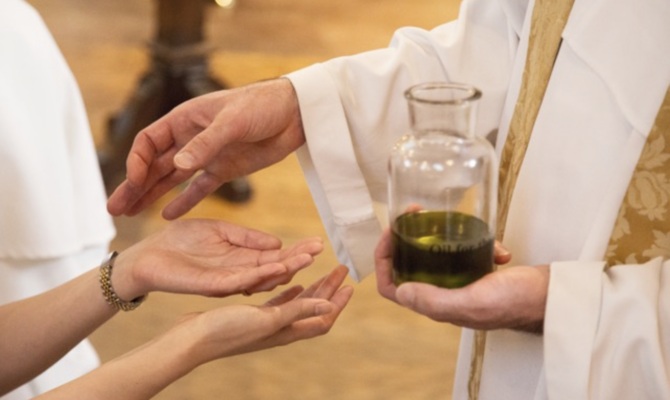
The priest will come and pray for you, silently laying his hands on your head. Then he will take some blessed oil and apply it in the shape of a cross on your forehead, saying “Through this holy anointing may the Lord in his love and mercy help you with the grace of the Holy Spirit.” Then he will anoint the palms of your hands in the same way, saying “May the Lord who frees you from sin save you and raise you up.” You can receive this anointing again either if your condition greatly worsens or if you recover and become seriously ill again later. When a priest believes it is likely to be the last time you’ll be anointed he will also give The Apostolic Pardon, Viaticum (or Holy Communion), The Litany of the Saints, and the Final Commendation as additional “Last Rites.

This sacrament gives strength, courage, and peace. It forgives your sins, if you were unable to obtain it through the Sacrament of Confession. And it unites you to Christ’s Passion to participate in his saving work, helping you offer redemptive sufferings like St. Paul describes to the Colossians: “I rejoice in my sufferings for your sake, and in my flesh I am filling up what is lacking in the afflictions of Christ on behalf of his body, which is the Church.” Sometimes this sacrament helps restore you to health, otherwise it prepares your soul to pass over to the next life.

Do not refuse or put off this sacrament. God is not an enemy like King Herod whom you should flee and hide from. Do not deprive yourself or loved ones by waiting too long to request holy anointing. Like gold given to an important person, like frankincense for offering holy sacrifice to God, or like myrrh to prepare us for the end of life, the Anointing of the Sick is a precious holy gift.

Our Advent Traditions

November 30, 2024

1st Sunday of Advent
By Fr. Victor Feltes

Jesus Christ’s Church has “Big T” Traditions and “small t” traditions. The first kind (“Big T” Traditions) are Sacred Traditions which come to us directly from Jesus and his Apostles. They belong to the unchanging Deposit of Faith entrusted once-for-all to Christ’s Church. The second sort (“small t” traditions) are the Church’s customs. For instance, how we celebrate the Advent season along with our Advent wreath are among those “small t” traditions.

The Bible details the historical events of Christmas and Easter, but it is interesting to note that the New Testament never explicitly teaches we must commemorate Christmas or Easter on specific days each year. And that is OK. Jesus Christ’s Church was never meant to be a strictly “Bible alone” Church; she existed even before the New Testament was compiled. The Holy Spirit dwells in her, preserving her from denying the Deposit of Faith and guiding her ways (as the Book of Acts says) as it ‘seems good to the Holy Spirit and to us.’ Let’s consider the customs and traditions of this new Advent season and its Advent wreath.

Over the next month, our predominant liturgical color is purple or violet. Old, black, Roman vestments used to gradually fade towards purple because of the inferior dyes they used. And so, over time, purple became a customary penitential color for the Church. Though less intensely than in Lent, we spiritually discipline ourselves during Advent preparing for the coming of Christ – both at Christmas and at his return in glory. It is fitting what we prepare for our King’s arrival with purple cloth, for purple in the ancient world was the most expensive color to dye, it was the color of cloths worn by kings. This season, we are preparing for the coming of the King of Kings.

We mark this season’s Sundays with our Advent wreath: four candles amidst a circle of evergreen branches. These evergreen branches, still green during the dead of winter, symbolize eternal life. The circle symbolizes recurrence and eternity. And though we celebrate Advent and Christmas each year, these four candles remind us we look forward to definite end, a final fulfillment – not only December 25th, but the Last Day.

This world will not just be the same unsatisfying stuff forever. Christmas, Jesus’ birth at the center of history, changes our hopes. We light an additional candle each Sunday because Christ is coming. As the winter world darkens around us, we add these lights. They shine in the darkness and the darkness does not overcome them. We light these candles because we know the true Light which enlightens all men, the Word become flesh, has come and is coming into the world.

Beware,” Jesus says in our Gospel reading, “that your hearts do not become drowsy from carousing and drunkenness and the anxieties of daily life, and that day catch you by surprise.” Advent is our time for preparation for the coming of Christ. As St. Paul writes to the Thessalonians, “May the Lord make you increase and abound in love for one another and for all… so as to strengthen your hearts, to be blameless in holiness before our God and Father at the coming of our Lord Jesus.”

Jesus Christ Is King

November 24, 2024

Solemnity of Christ the King
By Fr. Victor Feltes

Today’s psalm says: “The Lord is King, in splendor robed… Your throne stands firm from of old… Your decrees are worthy of trust indeed…” The Old Testament prophets agreed. Isaiah said “the Lord is our King, it is he who will save us.” Jeremiah said our God “is the living God, the eternal King.” And Zephaniah said “the King of Israel, the Lord, is in your midst.” At the center of human history, when Jesus Christ is born among us, he comes as King as well.

Behold, magi from the east arrived in Jerusalem, saying, ‘Where is the newborn king of the Jews?’” And when Jesus rode into Jerusalem, the crowd cried out, “Hosanna! Blessed is he who comes in the name of the Lord, even the king of Israel!” Pontius Pilate unknowing proclaimed this truth when he had a sign placed above Christ’s head on the Cross: “This is Jesus the Nazorean, the King of the Jews.” This Sunday, we celebrate that our Lord Jesus Christ is King of the universe now.

After his Resurrection, when Jesus appeared to his apostles on a mountain in Galilee, he told them, “All power in heaven and on earth has been given to me” and he gave his Church our Great Commission to spread his Kingdom, reassuring us, “Behold, I am with you always, until the end of the age.” This raises a challenging question for us: why is Jesus not visibly doing more now? All power in heaven and on earth has been given to him, so why is he not making more things happen?

His disciples wondered about this, too. Before the Risen Jesus ascended into Heaven, they asked him, “Lord, are you at this time going to restore the Kingdom to Israel?” He answered, “It is not for you to know the times or seasons that the Father has established by his own authority. But you will receive power when the Holy Spirit comes upon you, and you will be my witnesses in Jerusalem, throughout Judea and Samaria, and to the ends of the earth.” The Kingdom of God is among us, and Jesus calls us to work with him to spread it and deepen it, everywhere in everyone.

But why doesn’t Jesus just force everything to be better? As God, he is omnipotent. He has the power to do all possible things. But one thing he cannot do is to force someone’s free “No” into a free “Yes.” When Jesus returns in unveiled glory, coming upon the clouds and flanked by his angels in full-force, humanity’s time for decision will be over. That day will bring the Last Judgment and sin will no longer be given any quarter. After that, there will be only God’s Kingdom and the outer darkness. Now is the time for freely choosing.

Do we desire God’s Kingdom? Around 1000 B.C., the elders of Israel came to the Prophet Samuel asking, “Appoint a king over us to rule us like other nations.” Samuel was displeased they said, “Give us a king to rule us,” but he brought the matter to the Lord in prayer. And the Lord replied: “Listen to whatever the people say. You are not the one they are rejecting. They are rejecting me as their king.” And during Christ’s Passion, Pilate asked the crowd, “Shall I crucify your king?” The chief priests answered for the mob, “We have no king but Caesar.” They were rejecting the Lord as their King. When we pray “thy Kingdom come, thy will be done, on earth as it is in Heaven,” do we really mean what we are saying?

When Pilate asked Jesus if he was a king, Jesus answered, “You say I am a king. For this I was born and for this I came into the world, to testify to the truth. Everyone who belongs to the truth listens to my voice.” Pilate then responds with a line which today’s Gospel reading cuts off. Pilate dismissively replies, “What is truth,” and then turns his back on Truth himself, and walks away. If you desire Jesus as your Savior, you must let him be your Lord.

Advent begins next Sunday—our annual season of preparation for the coming of the Lord. Here are three wise steps for a better Advent. First, his decrees are worthy of trust. Which of his words will you neglect no more but specifically begin putting into practice? Make yourself a short list. Second, make an Advent Confession, for a fresh beginning, a new infusion of grace. And third, pray every day, for you cannot thrive without him. The saints worked wonders in this world by following Christ and doing his will. So can you. The Lord is in your midst. He is the living God, our eternal King. And if we will let him, it is he who will save us.

Do Not Fear The Ending

November 16, 2024

33rd Sunday in Ordinary Time
By Fr. Victor Feltes

The Prophet Daniel says of the end of days, “It shall be a time unsurpassed in distress…” And Jesus foretells, “In those days after that tribulation the sun will be darkened, and the moon will not give its light, and the stars will be falling from the sky, and the powers in the heavens will be shaken.” Many Christians today regard the end times with aversion and dread. Many fear Jesus Christ as judge, as if he were coming to destroy us. And yet, at the conclusion of the Book of Revelation, in response to the One who declares, “Yes, I am coming soon,” God’s people cry out in answer, “Amen! Come, Lord Jesus!

The early Christians saw the arrival of God’s Kingdom for us—either when we die or at Christ’s Second Coming—as Good News. St. Paul the Apostle wrote, “For me, life is Christ and death is gain!” “Jesus Christ is the same yesterday, today, and forever,” and he tells us over and over, “Do not be afraid.” There will be trials before the end, in our own individual lifetimes and in the earthly pilgrimage of the Church, but what comes after this will be much, much better.

Out of fear of escapism, we fail to reflect upon Heaven enough. Great hope comes from having something great you’re looking forward to. Imagine Heaven, where sin will be no more; no shame or temptation; no guilt or condemnation; no ugliness, decay, or corruption; no sickness or suffering; no fear or tears; no pain or death; no more crime or injustice; no more separation from God and his saints. And remember not only what evils are absent in Heaven, but also what supreme goods are found there. In Heaven, there is peace and blessings; praise and rewards; knowledge and wonders; perfection and joys; beauty, delights, and unending love; reunion with loved ones; fellowship with the saints; and complete union with God.

The Prophet Daniel foretold about the Day of Resurrection: “At that time, [God’s] people shall escape, everyone who is found written in the book. Many of those who sleep in the dust of the earth shall awake; some to everlasting life, others to reproach and everlasting disgrace.” Sometimes Christians worry whether or not they are in that Book of Life. I do believe more of us need to be praying, going to Confession, and attending Holy Mass, but I like to reassure people by asking them this: First, what is your greatest desire? Next, what do you think is the greatest desire of a saint? If your answers are similar, then you have the desires of a saint—and that’s a very good sign.

Imagine another person just like you in every way; the same past, all the same strengths and weaknesses as you. What would you think of that person? Could you be friends with them? Do not treat yourself worse than you treat others, but love yourself like your neighbor. Be not afraid and remember that the Lord is preparing you for Heaven because God loves you.

The Widow’s Gift Was Love

November 9, 2024

32nd Sunday in Ordinary Time
By Fr. Victor Feltes

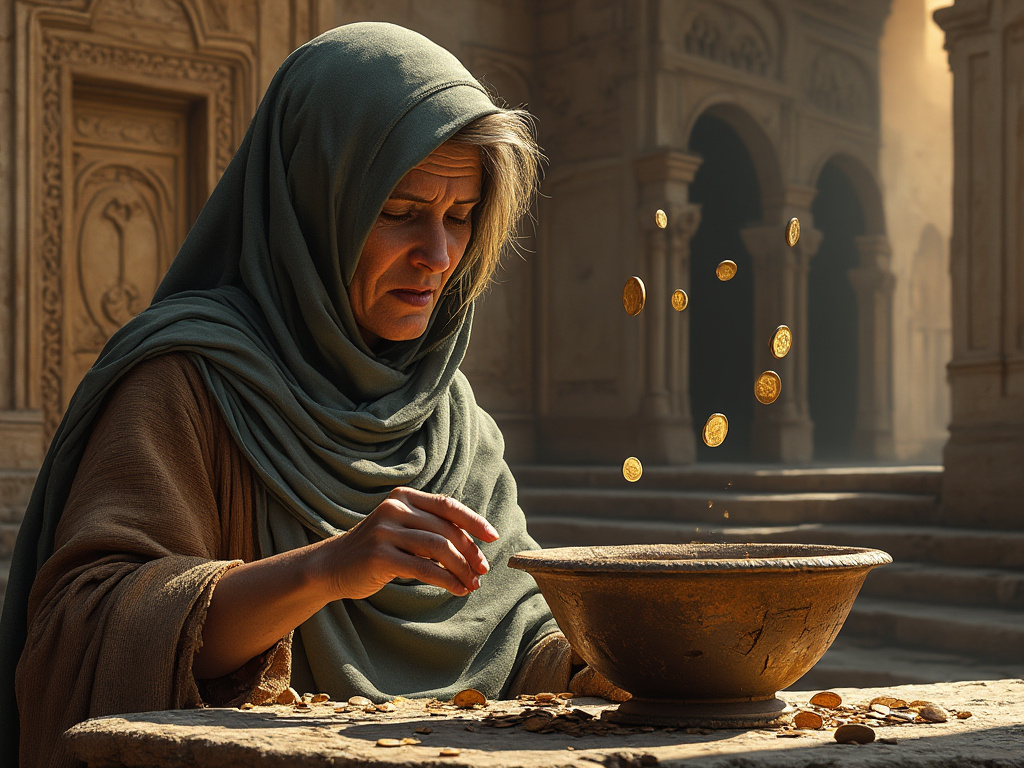
Jesus sat down opposite the temple treasury and watched how people gave money at God’s house. There were thirteen donation trumpets attached to sturdy chests into which people were dropping their contributions. Many rich people were donating large sums, causing loud commotions. But one poor widow’s two small coins went in quietly; a little click-click. Why did Jesus highlight her gift above everyone else’s that day?

Our Father in heaven is rich. He created the universe out of nothing. All things belong to him. Being the Almighty, he does not strictly need anything from us. In the 50th Psalm, God tells his people that he does not rebuke them for their animal sacrifices—he had commanded them to make them—but he notes “every animal of the forest is mine, beasts by the thousands on my mountains. I know every bird in the heights; whatever moves in the wild is mine. Were I hungry, I would not tell you, for mine is the world and all that fills it.” And yet, God insists upon our sacrifices for him.

God places us in a material world in which what we do matters. Whether and how we work and pray, learn and teach, plant and harvest, build and repair, save and donate, visit and invite, feed and clothe and care and love, these things really matter—for good or evil—for ourselves and others. It is true Almighty God could do everything all by himself, entrusting us with no mission and zero responsibility. But then, how would we ever mature and grow as glorious saints? Instead, God chooses to work through us, and with us, and in us. Our holy gifts and sacrifices, inspired and empowered by grace, advance God’s Kingdom while transforming us in Christ. Though, strictly speaking, God has no need of our gifts or praises, he insists upon them for our own good.

When Jesus saw that poor widow give God’s house just two coins worth only a few cents, he called his disciples to himself and said, “Amen, I say to you, this poor widow put in more than all the other contributors to the treasury; for they have all contributed from their surplus wealth, but she, from her poverty, has contributed all she had, her whole livelihood.”

Jesus condemns those who “devour the houses of widows,” but he celebrates this woman’s evident trusting, love for God. Jesus says to beware the scribes who love the robes, the titles, the honored seats at synagogues and feasts, who recite lengthy prayers in order to be seen by men. “They will receive a very severe condemnation,” Jesus says, because their focus is not on love of God and neighbor. That poor, loving widow, however, receives the praise of God. “The last shall be first, and the first shall be last.

As I preached in a homily three weeks ago, hierarchies are normal and natural, though some are better than others. The secular world has hierarchies according to power, wealth, or status. Christ establishes a hierarchy for his Church on earth according to sacramental holy orders. But amongst the Church in heaven, a hierarchy exists according to love. In heaven, God reigns supreme and God is love pouring out for all. There is no money to be had there, the sacraments are no longer needed, and there is perfect, perpetual peace. Greatness above is according to one’s capacity to give and receive love. So whoever wishes to be great in God’s Kingdom must imitate the faithful, self-gifting love Jesus highlights in that widow and which we see modeled for us by Jesus Christ himself.

How you love and what you do matters. In the words of St. Paul, “Let us not become weary in doing good, for at the proper time we will reap a harvest if we do not give up.” “Whatever you do, do it with all your heart as for the Lord … knowing that you will receive an inheritance from the Lord as a reward.” For when Christ comes “he will bring to light what is hidden in darkness and will manifest the motives of our hearts, and then everyone will receive praise from God.”

The Last Shall Be First

October 19, 2024

29th Sunday in Ordinary Time
By Fr. Victor Feltes

In today’s Gospel, James and John shoot their shot to move higher up in Christ’s Kingdom. They say, “Teacher, we want you to do for us whatever we ask of you. … Grant that in your glory we may sit, one at your right and the other at your left.” Jesus replies, “You do not know what you are asking.” The two brothers jump at the chance to drink from Jesus’ cup and be baptized in his baptism because they don’t realize these things mean sharing in Christ’s suffering. Jesus assures them, ‘You will drink of my cup and experience my baptism, but to sit at my right and my left is for those for whom it has been prepared.’ Where were the places at Christ’s sides at his glorious royal enthronement? St. Mark’s Gospel tells us: “With him they crucified two revolutionaries, one on his right and one on his left. … [And] the inscription of the charge against him read, ‘The King of the Jews.’”

James and John did not realize what they were asking. They sought places closer to Jesus in order to live earthly lives in a palace on Easy Street. They imagined reigning over a kingdom with Christ where they would be served like the rulers of the nations who made their dominance over other people felt. But Jesus gathered his disciples and said, “It shall not be so among you. Rather, whoever wishes to be great among you will be your servant; whoever wishes to be first among you will be the slave of all. For the Son of Man did not come to be served but to serve and to give his life as a ransom for many.”

Hierarchies are normal and natural, though some are better than others. The secular world has hierarchies according to power, wealth, or status. Christ establishes a hierarchy for his Church on earth according to sacramental holy orders. But amongst the Church in heaven, a hierarchy exists according to love. In heaven, God reigns supreme and God is love—pouring out for all. There is no money to be had, the sacraments are no longer needed, and there is perfect, perpetual peace. Greatness above is according to one’s capacity to give and receive love. So whoever wishes to be great in God’s Kingdom must practice the self-gifting, servant love modeled for us by Jesus Christ.

We can expect to see many surprises after this life. Reality will look very differently in the light of eternity. Some things which we once thought were valuable—even necessary—will be seen as nothing. And things once rejected as useless will be recognized for their true value—especially in people. Many unknown people will become recognized as great, while many rich, powerful, and popular people will be humbled. “Thus,” Jesus says, “the last shall be first, and the first shall be last.” So let us begin living life with more of that eternal vision now: by seeing with the eyes of Christ, by thinking with the mind of Christ, and by loving with the heart of Christ.

Just Two Doors Down — Funeral Homily for Robert “Bob” Nosal, 76

October 8, 2024

By Fr. Victor Feltes

You may know him as fun “Cousin Bob.” Or maybe you worked with “Big City Bob.” Or perhaps you heard him play guitar as one of “The Noblemen.” But if you know Bob, then you should know how important his family is to him. For instance, Christmas was Bob’s favorite holiday because everyone got to celebrate it together. And his family can testify to Bob’s faithful religious devotion. Bob grew up Catholic and raised his children Catholic, emphasizing the importance of our Faith in practice. He was adamant about attending Jesus Christ’s Holy Mass. Even when his family would go out camping, finding a local parish and Sunday Mass time was a priority. He and Mary Kay would frequently pray St. Mary’s Rosary together whenever they drove somewhere. Bob believed our family and friends are not limited solely to this world. We also have close and holy ones in heaven who know us and love us profoundly.

Last March, on the Wednesday of Holy Week, on the day before the beginning of our annual remembrance of our Lord’s Passion, Bob suffered his first stroke. In the following months, Bob was in and out of the hospital, and when he was hospitalized Mary Kay would faithfully visit and stay with him throughout the day. The visiting hours at Bloomer Hospital were from eight in the morning to six in the evening, so eventually it would come time for her to leave. Bob didn’t like being stuck there alone in the hospital overnight. Who would? He wished that he could go home, or else that Mary Kay could stay there with him. ‘It’s easier for you,’ he said. “You get to sleep in your own bed.” The Nosal house is situated very close to the hospital, so to encourage him, Mary Kay would reply that she would not be far. She would be “just two doors down.” And she would see him again in the morning.

You and I do not like being separated from our loved ones by death. Who would? We wish that we could go home with them, or else that they could stay here with us. But those who die as friends of Christ are not far from us. They still know and love us, and we can always talk to them. Yet it’s easier for them, for they happily go to their rest. Perhaps they dwell in purgatory where their souls are being purified to inevitably enter God’s all-holy presence. Or else, having been completely personally prepared by Christ, they already dwell in our Father’s house. Bob is now either behind the door of purgatory, where our prayers and offerings to God can aid his holy growth, or else he has passed through the door of heaven, where he now enjoys perfect peace and joy. But either way, be comforted remembering that Bob is no more than “just two doors down,” and we will see him again soon.

Prayers for Us in Heaven — Funeral Homily for Donna Mae Peterson, 88

June 26, 2024

By Fr. Victor Feltes

Jesus teaches that “there are many dwelling places” in his Father’s house. He says “I am going to prepare a place for you… [And] I will come back again and take you to myself, so that where I am you also may be.” The eternal dwelling place of our Father is heaven, and Jesus prepares a place for us and desires to take us there. But when can we arrive?

The Seventh-Day Adventists and Jehovah’s Witnesses believe in versions of “soul sleep” and think deceased Christian souls are not yet conscious in heaven; they both hold that experiencing heaven begins after the resurrection of the body. I have heard other Christians question whether we will still recognize or remember our loved ones in heaven. Some have wondered if we will be so overwhelmed experiencing God’s glory that we won’t think or care about anyone else. So are there saints in heaven now who are thinking about and caring about and praying about us?

In the Book of Revelation, St. John beholds visions of heaven where human souls are aware and active there even before Christ’s Second Coming, the General Resurrection, and the Last Judgment. In his sixth chapter, John recalls, “I saw underneath the altar the souls of those who had been slaughtered because of the witness they bore to the word of God. They cried out in a loud voice, ‘How long will it be, holy and true master, before you sit in judgment and avenge our blood on the inhabitants of the earth?’ Each of them was given a white robe and they were told to be patient a little while longer until the number was filled of their fellow servants and brothers who were going to be killed as they had been.” In the previous chapter, John saw people offering prayers in heaven: “Each of the elders held a harp and gold bowls filled with incense, which are the prayers of the holy ones.” So saints are now conscious and praying in heaven, but do they still remember and love those of us on earth?

How could a closer union with the All-Knowing One in heaven make us more ignorant? How could a closer relationship with the God who is Love make our love for all people colder? In one of Jesus’ parables, even a condemned rich man suffering in the netherworld remembered his five living brothers and prayed (or asked) for a messenger to be sent to warn them. The fact that miracles have followed from praying to saints in heaven asking for their intercession before God shows us that the holy dead continue to be aware of us, care about us, and pray for us.

Donna’s two sons, Tim and Ron, have shared a number of beautiful stories about her. They both mention her prayerful devotion and loving concern. Tim says the two core things in his parents’ lives were their devotion to Jesus and their dedication to family. Ron notes she was “always praying… always interested.” When Ron was experiencing hard times at chiropractic college far away in Iowa, his mom called every night to help him through it. Donna also spent hours on the phone with other relatives and friends, eventually becoming a texter and learning how to FaceTime on an iPod in order to stay in touch. She could always patiently listen and provide good counsel to help others with struggles but she would discern her advice with prayer and support those people with her prayers.

Pray for Donna’s soul, for “as gold in the furnace” God tries and purifies us in this world or in purgatory as needed, so “that we might no longer be in slavery to sin” and he may take us to himself in heaven as perfect offerings. But also remember that Donna does not forget you, she will continue to love you and continue to pray for you. Follow and cooperate with Jesus Christ, so her prayers for you shall not be in vain.