Archive for the ‘Last Judgment’ Category

Jesus Christ Is King

November 24, 2024

Solemnity of Christ the King
By Fr. Victor Feltes

Today’s psalm says: “The Lord is King, in splendor robed… Your throne stands firm from of old… Your decrees are worthy of trust indeed…” The Old Testament prophets agreed. Isaiah said “the Lord is our King, it is he who will save us.” Jeremiah said our God “is the living God, the eternal King.” And Zephaniah said “the King of Israel, the Lord, is in your midst.” At the center of human history, when Jesus Christ is born among us, he comes as King as well.

Behold, magi from the east arrived in Jerusalem, saying, ‘Where is the newborn king of the Jews?’” And when Jesus rode into Jerusalem, the crowd cried out, “Hosanna! Blessed is he who comes in the name of the Lord, even the king of Israel!” Pontius Pilate unknowing proclaimed this truth when he had a sign placed above Christ’s head on the Cross: “This is Jesus the Nazorean, the King of the Jews.” This Sunday, we celebrate that our Lord Jesus Christ is King of the universe now.

After his Resurrection, when Jesus appeared to his apostles on a mountain in Galilee, he told them, “All power in heaven and on earth has been given to me” and he gave his Church our Great Commission to spread his Kingdom, reassuring us, “Behold, I am with you always, until the end of the age.” This raises a challenging question for us: why is Jesus not visibly doing more now? All power in heaven and on earth has been given to him, so why is he not making more things happen?

His disciples wondered about this, too. Before the Risen Jesus ascended into Heaven, they asked him, “Lord, are you at this time going to restore the Kingdom to Israel?” He answered, “It is not for you to know the times or seasons that the Father has established by his own authority. But you will receive power when the Holy Spirit comes upon you, and you will be my witnesses in Jerusalem, throughout Judea and Samaria, and to the ends of the earth.” The Kingdom of God is among us, and Jesus calls us to work with him to spread it and deepen it, everywhere in everyone.

But why doesn’t Jesus just force everything to be better? As God, he is omnipotent. He has the power to do all possible things. But one thing he cannot do is to force someone’s free “No” into a free “Yes.” When Jesus returns in unveiled glory, coming upon the clouds and flanked by his angels in full-force, humanity’s time for decision will be over. That day will bring the Last Judgment and sin will no longer be given any quarter. After that, there will be only God’s Kingdom and the outer darkness. Now is the time for freely choosing.

Do we desire God’s Kingdom? Around 1000 B.C., the elders of Israel came to the Prophet Samuel asking, “Appoint a king over us to rule us like other nations.” Samuel was displeased they said, “Give us a king to rule us,” but he brought the matter to the Lord in prayer. And the Lord replied: “Listen to whatever the people say. You are not the one they are rejecting. They are rejecting me as their king.” And during Christ’s Passion, Pilate asked the crowd, “Shall I crucify your king?” The chief priests answered for the mob, “We have no king but Caesar.” They were rejecting the Lord as their King. When we pray “thy Kingdom come, thy will be done, on earth as it is in Heaven,” do we really mean what we are saying?

When Pilate asked Jesus if he was a king, Jesus answered, “You say I am a king. For this I was born and for this I came into the world, to testify to the truth. Everyone who belongs to the truth listens to my voice.” Pilate then responds with a line which today’s Gospel reading cuts off. Pilate dismissively replies, “What is truth,” and then turns his back on Truth himself, and walks away. If you desire Jesus as your Savior, you must let him be your Lord.

Advent begins next Sunday—our annual season of preparation for the coming of the Lord. Here are three wise steps for a better Advent. First, his decrees are worthy of trust. Which of his words will you neglect no more but specifically begin putting into practice? Make yourself a short list. Second, make an Advent Confession, for a fresh beginning, a new infusion of grace. And third, pray every day, for you cannot thrive without him. The saints worked wonders in this world by following Christ and doing his will. So can you. The Lord is in your midst. He is the living God, our eternal King. And if we will let him, it is he who will save us.

A Little Time Remains

December 10, 2023

2nd Sunday of Advent
By Fr. Victor Feltes

Unlike the Gospels of Matthew and Luke, Mark’s Gospel does not start with stories of Christ’s Nativity. This gospel begins with the ministry of St. John the Baptist. John’s mission was to “prepare the way of the Lord (and) make straight his paths.” In ancient times, before a king or emperor would journey to a region, his heralds or messengers would be sent out ahead of him to announce how people were to prepare for his coming. One practical part of these preparations was to improve and repair the roads; filling in the potholes and smoothing the ruts, clearing branches and removing rocks. Isaiah the Prophet speaks of a herald crying out in the wilderness:

“Prepare the way of the Lord! Make straight in the wasteland a highway for our God! Every valley shall be filled in, every mountain and hill shall be made low; the rugged land shall be made a plain, the rough country, a broad valley. Then the glory of the Lord shall be revealed, and all people shall see it together…”

Of course, this readying of the way for the Lord is not done with shovels and wheelbarrows on country roads. St. John the Baptist, the “voice of one crying out in the desert,” preaches conversion and washes people with a baptism of repentance as they confess and renounce their sins. The way of the Lord we must prepare passes through ourselves.

This Advent is a season to prepare for the God, but time is running short. Christmas is coming. Because December 25th falls on a Monday, this year’s Advent is the shortest-possible length of days. The good news is that now is not too late. An unfaithful life can still be reformed. A sacramental Confession can still be arranged. Delayed good deeds can still be done. A life of daily prayer can begin today. There is still some time remaining for you; before Christmas, before Christ’s Second Coming, and before the end of your earthly life.

This world and its people are broken and we can see many sins and evils. Imagine how much better our world would be if everyone sincerely turned to Jesus. Wouldn’t that be wonderful? I doubt that everyone will do so, but the ongoing conversions of you and me to Christ can bless our families, friends, and neighbors, joyfully transforming the world around us for the better.

And here is some more good news… Even if not everyone turns to Christ, just as this Christmas, December 25th, is coming no matter what we do, the Second Coming of Jesus Christ cannot be stopped. St. Peter writes of how our Lord’s patience, his wish that none should parish but all come to repentance, has permitted the world to continue to our day. God does not tire of waiting; since for him “a thousand years is like one day.” “But the day of the Lord will come like a thief… and the earth and everything done on it will be found out.

We are encouraged to do our part to prepare a highway for God, lowering mountains and hills, smoothing rough lands and valleys, within ourselves and in our society. But Scriptures declare how at his coming “the mountains melt like wax before the Lord, before the Lord of all the earth.” (Psalm 97:5) “The eternal mountains are shattered, the age-old hills bow low, along his ancient ways.” (Habakkuk 3:6) “The mountains melt under him… like wax before the fire, like water poured down a slope.” (Micah 1:4) “The earth melts when he lifts his voice.” (Psalm 46:6)

Our returning Lord will not allow the sins of the world to go on forever. When his Kingdom fully comes, God’s will shall be fully done, on earth as it is in Heaven. So when you witness the many evils caused by misused human freedom, do not grieve as those who have no hope. (1 Thessalonians 4:13) Mourn as the blessed, whom Jesus promises will be consoled. (Matthew 5:4) “According to his promise, we await new heavens and a new earth in which righteousness dwells. Therefore, beloved, since you await these things, be eager to be found without spot or blemish before him, (and always be) at peace.”

The Three Comings of Christ

December 3, 2023

1st Sunday of Advent
By Fr. Victor Feltes

During this Advent season, we are called to contemplate three distinct comings of Christ. The first is his coming in the past, twenty centuries ago at the first Christmas. Answering the Prophet Isaiah’s plea, our Lord rent the heavens and came down for the sake of his servants by assuming a human nature. Through the Incarnation, God wrought an awesome deed we could not have hoped for, something unheard of from of old. The Shepherd of Israel came down to save us. By his birth, the Lord let us see his face that we may be saved.

The second coming of Jesus Christ which we contemplate in Advent is literally called his Second Coming. Like a master leaving to travel abroad, our Lord has promised his servants he will return some unknown future day and hour. He will return in unveiled glory as both our King and Judge, so we must strive to be firm to the end, irreproachable for the day of our Lord Jesus Christ.

In the upcoming weeks, when you hear St. John the Baptist preach about ‘making straight the way for the Lord,’ realize that these words are addressed to you. Now is the time to go to Confession and cast your sins away. You do not know when the Lord is coming. So be watchful and alert, lest our Lord come suddenly — on the Last Day of this world or the last day of your life — and find you unprepared.

So what is the third coming of Jesus Christ we should contemplate this Advent? The first is his coming in the past, the second is his coming in the future, and the third is his coming now. He comes to us now most marvelously in the Holy Eucharist, but he also comes to us during our ordinary days.

The master in Jesus’ parable “leaves home and places his servants in charge, each with his own work, and orders the gatekeeper to be on the watch.” Each of us has work to do during this Advent season; some tasks which come as part of our regular duties and others which are particular to this time of year. Whatever your state in life, you will likely be busy this month. May you be occupied with the good work our Lord entrusts to you, rather than distracted and burdened by ill-chosen pursuits of your own. But amidst your daily tasks, whatever they may be, be watchful for our Lord.

Jesus concludes today’s parable declaring, “What I say to you, I say to all: ‘Watch!’” Each of us is called to be on watch for him. And Jesus tells us on another occasion, “Behold, I am with you always, until the end of the age.” So vigilantly keep watch for the Lord. The past has gone and the future is not yet here. The only time you can ever encounter our Lord is the present moment. So as you go throughout this Advent, contemplate his presence with you from moment to moment.

Be attentive to him in times of dedicated personal prayer, even if starting with just five or ten minutes a day. And converse with him, commune with him, throughout the tasks of your daily life. Jesus came to us first at Christmas. He will come again in glory on the Last Day. And he comes to us at any moment we watch for him.

Give Others The Royal Treatment

November 25, 2023

Solemnity of Christ the King
By Fr. Victor Feltes

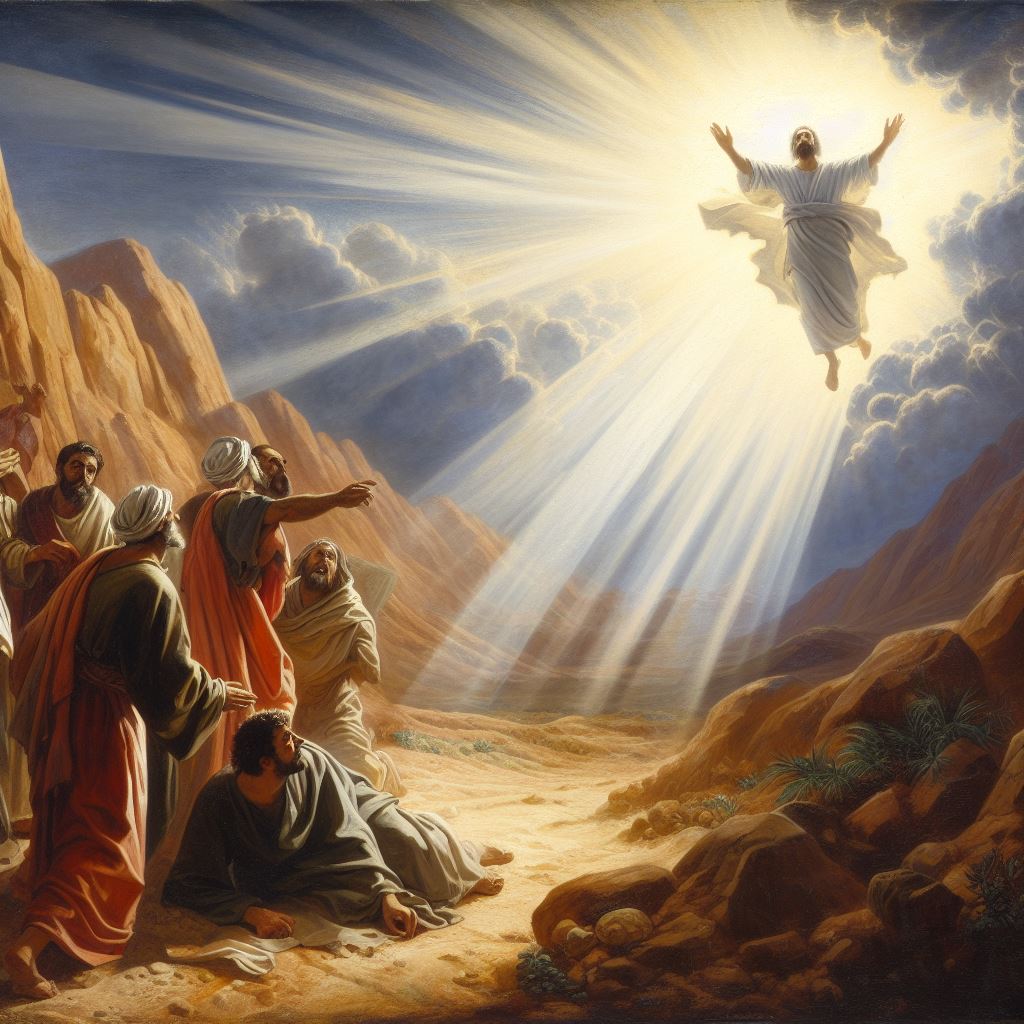
After having supported the murder of St. Stephen the Martyr, Saul of Tarsus was trying to destroy the early Church. He entered house after house, dragging out Christian men and women and handing them over for imprisonment. Still breathing murderous threats against the disciples of the Lord, Saul went to the high priest and obtained official authorization to arrest any Christians he might find in Damascus and bring them back to Jerusalem in chains. But on his way to Damascus, this future saint saw the light.

Light from the sky suddenly flashed around him. He fell to the ground and heard a voice ask him, “Saul, Saul, why are you persecuting me?” “Who are you, sir,” Saul replied. “I am Jesus, whom you are persecuting.” Notice how Jesus did not ask “why are you persecuting my people” or “why are you persecuting my Church,” though both of these descriptions would have been accurate. Jesus asks, “Why are you persecuting me? … I am…whom you are persecuting.”

Imagine if you and I are standing side-by-side in a buffet line and I willfully knock your hand out of the way as we both reach for the delicious deviled eggs. Will your feelings of offense be any less if I reply, “Oh, I didn’t hit you—I merely slapped away your hand”? No, every part of your body is one with you. If I mistreat one of your members, I am mistreating you.

St. Paul and the Holy Spirit teach us in the New Testament: “You are now Christ’s body, and individually parts of it… He is the head of the body, the Church, … [and] we, though many, are one body in Christ.” Jesus himself teaches, “Whoever eats my flesh and drinks my blood remains in me and I in him.” This is why he will declare at the Last Judgment “what you did not do for one of these least ones, you did not do for me” and “whatever you did for one of the least brothers of mine, you did for me.” Our mystical union with Jesus Christ is more intimate than we realize and this has important implications.

The 1st Letter of St. John tells us, “If anyone says, ‘I love God,’ but hates his brother, he is a liar; for whoever does not love a brother whom he has seen cannot love God whom he has not seen. This is the commandment we have from him: whoever loves God must also love his brother.” Now man does not live by bread alone, but we are called to practice Corporal (that is, bodily or material) Works of Mercy. St. James writes, “If a brother or sister has nothing to wear and has no food for the day, and one of you says to them, ‘Go in peace, keep warm, and eat well,’ but you do not give them the necessities of the body, what good is that?” Jesus is hungry and thirsty, ill-clothed and a stranger, sick and imprisoned in his brothers and sisters, and our love for him is reflected in our care for them.

Yet do not fall for the demons’ trap; their persistent accusations which sound like: “You could be doing more; you should always be doing more!” They seek to rob you of your peace and lead you to ultimately give up the good things you are doing because of discouragement. God our Maker knows that our time, talents, and treasure are finite; resources spent on one holy effort cannot be spent on another. Nevertheless, it is important for us to be self-reflective and truly generous with ourselves and what we have.

When you see others or interact with people, try to remember the One whom you mystically encounter. Give them the royal treatment. Notice how both the saved and the damned will someday ask our King, ‘When did we see you hungry or thirsty or a stranger or naked or ill or in prison?’ He will reply, ‘Indeed, whatever you did for one of the least of mine, you did for me.’ It is a truer reality than we realize and all too easily forgotten, yet valuable for us to remember always.

Invest Yourself in Heaven’s Reward

November 19, 2023

33rd Sunday in Ordinary Time
By Fr. Victor Feltes

As Jesus traveled from place to place he preached parables to different people. He told stories, for instance, featuring fields, fish, and flocks to teach farmers, fishermen, and shepherds about the Kingdom of God. It makes sense that Jesus would tell the same stories more than once, for different crowds to hear them for the first time and for his apostles to hear them repeatedly. But the gospels suggest Jesus sometimes changed his parables’ details to highlight different truths. What Jesus says in his Sermon on the Plain is similar but not identical to his Sermon on the Mount. As the Church journeys through our three-year cycle of Sunday readings we hear some parables retold by more than one gospel. And each fall, as we near the end of the Church year, our readings reflect upon the Four Last Things. Today, we have another such parable, about death and judgment, Heaven and Hell, Jesus Christ and us.

Christ is our Lord, our journeying master who shall return. We are his servants to whom he has entrusted our fortunes. And each of us one day will stand before him to give an account of our faithful or unfaithful service, with generous rewards or just punishments to follow. In Jesus’ telling through St. Matthew’s Gospel, the master entrusts weighty slabs of precious metal (called talents) in varying numbers to his servants, each according to their abilities. Upon his return, his faithful servants have doubled what they were given and receive the same words of praise: “Well done, my good and faithful servant! Since you were faithful in small matters, I will give you great responsibilities. Come, share your master’s joy!” One servant, however, who buried his talent and returned it ungrown, receives his master’s condemnation and is tossed into the darkness outside.

When Jesus retells his parable in St. Luke’s Gospel, the master is a nobleman who goes off to claim his kingdom, entrusting to ten servants one gold coin each. Upon his return, his faithful servants reveal their various positive returns on his investment. One has earned ten more gold coins and his king declares, “Well done, good servant! You have been faithful in this very small matter; take charge of ten cities.” Another servant has earned five more coins and the king decrees, “You, take charge of five cities.” One servant, however, hid his coin in a napkin and returned it unmultiplied. The king condemns that servant and orders all of his enemies who did not want him as their king to be slain.

The differences between these two parables highlight different truths about Heaven. In the first parable, the master speaks the same blessing to each faithful one: “Well done, good servant! … Come, share your master’s joy!” But in the other parable, the king gives his servant with ten additional coins ten cities and gives his servant with five additional coins five cities. So is Heaven’s reward the same for all the saints or can one’s reward be greater than another’s? One parable suggests their reward is the same, while the other suggests their rewards vary. On one hand, the reward of every saint is the same: they experience God’s unveiled glory forever in happy, loving communion with him and all who are in Christ. On the other hand, a great saint’s capacity for love and joy and glory may be greater than another’s.

Doctor of the Church St. Therese of Lisieux recounts in her great autobiography (“Story of a Soul”) how this idea once troubled her as a child: “One day, I expressed surprise that God does not give an equal amount of glory to all the elect in Heaven—I was afraid that they would not all be quite happy. [My older sister Pauline] sent me to fetch Papa’s big tumbler and put it beside my tiny thimble, then, filling both with water, she asked me which seemed the fuller. I replied that one was as full as the other—it was impossible to pour more water into either of them, for they could not hold it. In this way [she] made it clear to me that in Heaven the least of the Blessed does not envy the happiness of the greatest…

Notice how in both forms of Jesus’ parable all the faithful servants are entrusted with greater responsibilities. The saints in Heaven are likewise given higher roles as our intercessors now and in the family and household of God forever. Consider how many churches, religious communities, and cities around the world are dedicated to St. Paul. They are blessed to have him as a loving patron praying for them. And consider how the Blessed Virgin Mary shall always hold a privileged place in Heaven as the spiritual mother of every Christian.

St. Paul says, “Consider this: whoever sows sparingly will also reap sparingly, and whoever sows bountifully will also reap bountifully.” The generosity of our loving gifts to Christ, the additional sacrifices we make and good deeds we do, will surely not go unrewarded. Jesus tells us, “Give, and it will be given to you. Good measure, pressed down, shaken together, running over, will be put into your lap. For the measure with which you measure will be measured out to you.” Our individual hustle, cooperating with Christ’s grace, can win us greater glory, therefore “run so as to win!

We should not fear that we lack sufficient talents or gifts to produce good fruits for glory. In the first parable, every faithful servant was able to double his money and won his master’s praise. The issue with that unfruitful, condemned servant is that he never tried. His master calls him “wicked” and “lazy” because that servant did not make even the most minimal effort to grow his gift. “Should you not then have put my money in the bank so that I could have got it back with interest on my return?” That servant did not love his lord but rather resented his lordship over him. Which is easier: to digging a hole or visiting the bank? He did not want to be his master’s servant, he did not want him as his king, and so he finds himself condemned and cast out forever. But if we love our Lord we will produce fruit, just as “every good tree bears good fruit.” As Jesus declares, “Whoever remains in me and I in him will bear much fruit.”

What is something more that you will do with the talents and gifts our Lord has lent you? It could be something large or small, in private or with others. You could be a more-focused prayer warrior, or offer secret penances for the salvation of souls. You could start a Catholic book or movie club at your home, or organize a regular Bible study that discusses the upcoming Sunday readings. You could visit shut-ins as an extraordinary Eucharistic minister, or invite somebody new each week to come with you to Mass. There are many good things you could do and I urge you to consider and answer this call, for Jesus Christ will honor your faithful, loving efforts with glorious rewards.

Proclaim What Christ Has Done For You

May 13, 2023

6th Sunday of Easter
By Fr. Victor Feltes

In today’s first reading from the Acts of the Apostles, we heard how Philip went to Samaria and proclaimed Christ to them. “With one accord, the crowds paid attention to what was said by Philip when they heard it and saw the signs he was doing.” Who was doing these signs? The natural sense of this scripture passage refers to Philip, whom the crowds saw and heard and believed. But in a supernatural sense it was the Christ being proclaimed to them who was performing these signs through and with Philip. In our gospel, Jesus tells us, “I am in my Father and you are in me and I in you.” Jesus would have others behold and hear of his great works in you and me.

The psalmist in today’s psalm says, “Hear now… while I declare what he (the Lord) has done for me. Blessed be God who refused me not my prayer or his kindness!” It is good to declare and share what God has done for you. St. Peter teaches all Christians in today’s second reading to “always be ready to give an explanation to anyone who asks you for a reason for your hope.” What are your life’s best God stories? What is the Lord doing with and for you recently? I have two personal examples to share, one old and one current.

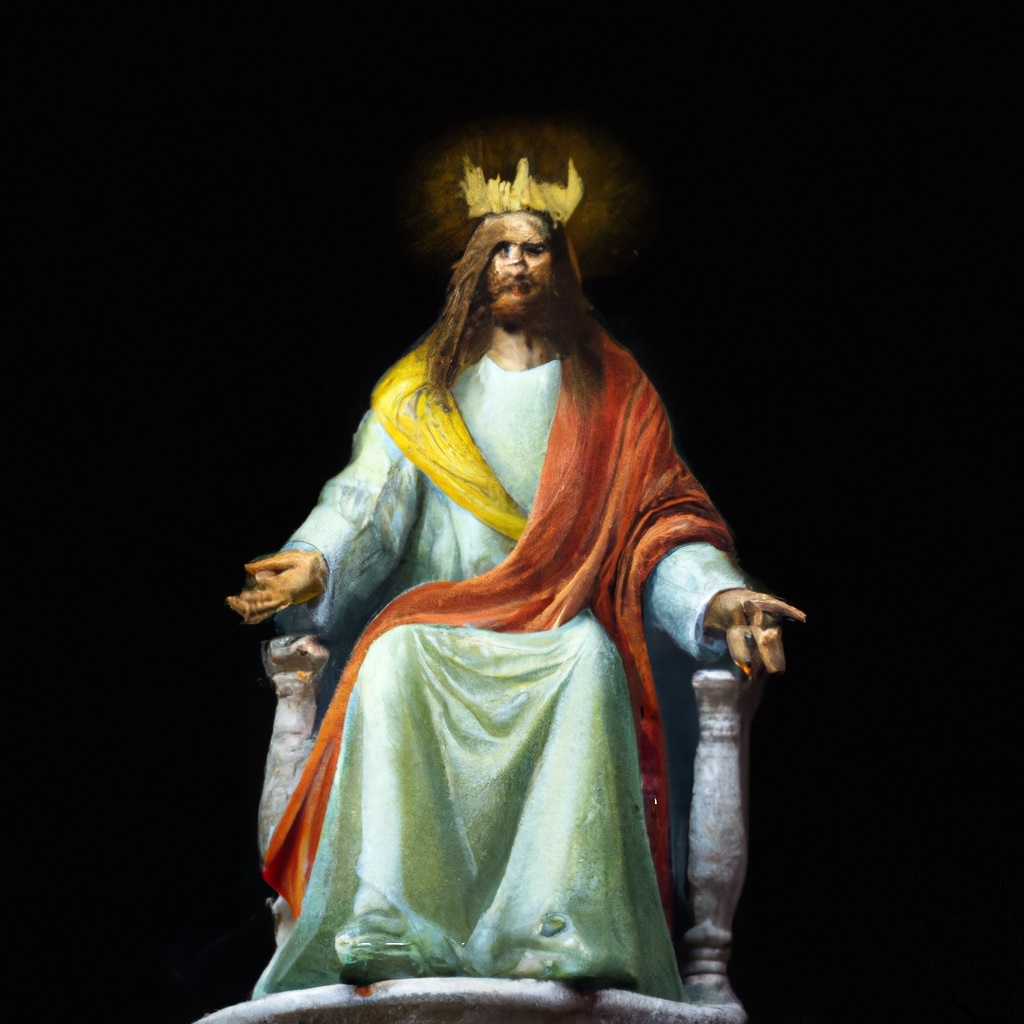
When I was about thirteen years old, I remember being in the living room of my house thinking about life and death, when nature called. While heading to the bathroom on the other side of the house, I got stopped in my tracks at the architectural crossroads of our home. It would be a crossroads moment of my life. In my imagination, I stood before Jesus’ judgement seat. He sat upon a white throne atop a white stone cube and the background behind him was all blackness. Jesus did not look at me angrily, but he seemed frustrated and disappointed. And he asked me, “Why didn’t you live your life like I wanted you to live it?

I did not know whether these ideas were coming from God or my own imagination, but either way I knew that I would not be a man of integrity if I just kicked this question down the road for the rest of my life. While still needing to use the bathroom, I felt a sense of urgency to face this valid question. I stood there thinking, ‘How would I answer this question in my own defense?’ I replied, ‘Well Lord, I wasn’t even sure that you were really, really real. How could you expect me to dedicate my life to you while being so uncertain? I wouldn’t stand out on an extending cliff-ledge if I wasn’t sure that it could hold up my weight. And what if I were commit my entire life to you and die and you’re not real — what would I have?

Once I had presented my best case, Jesus immediately replied, “Did you ever really try to find out (if I was real)? Did you even read my book?” That last line made me laugh a bit even as it convicted me. I realized that if I were really looking for the truth I would be searching for answers more seriously than I was. After that I started reading the Bible and praying every night and began earnestly learning more about our Catholic Faith.

When I eventually read the Book of Revelation at the end of the Bible, I found there a description of the Last Judgment. St. John wrote: “I saw a large white throne and the one who was sitting on it. The earth and the sky fled from his presence and there was no place for them. I saw the dead, the great and the lowly, standing before the throne, and scrolls were opened. Then another scroll was opened, the Book of Life. The dead were judged according to their deeds, by what was written in the scrolls.” A large white throne shrouded in darkness while the dead stand before him to be judged according to their deeds matches what I saw in my vision – a vision that has led to me standing here to tell you this story today.

And our Lord is still actively doing things among us today. Currently, according to our latest figures, St. Paul’s has well-surpassed $500,000 in pledges for our capital campaign, and things throughout this renovation effort have been going so providentially that I have a peaceful confidence that the Lord is helping us succeed.

What great things has the Lord done in your life? How has he been working with you recently? He is in you and you are in him. Know your stories and have the minimal courage to share with others what the Lord has done for you. Praying for the conversion of souls is important, but bearing witness to them is important too. Sharing your stories, sharing the reasons for your Christian hope, will be more effective than nagging or silence. Do not hide what God has done for you under bushel baskets. Instead, share your highlights with others.

Zephaniah & the Beatitudes Call to Conversion

January 29, 2023

4th Sunday of Ordinary Time
By Fr. Victor Feltes

Jesus’ Beatitudes are words of consolation and hope but they are also a call to conversion. Our first reading today comes from the Old Testament prophet Zephaniah who proclaimed God’s words in the land of Judah. Zephaniah denounced his people’s unfaithfulness, warning them:

“Near is the great day of the Lord,
near and very swiftly coming…
A day of wrath is that day,
a day of distress and anguish,
a day of ruin and desolation…
A day of trumpet blasts and battle cries
against fortified cities,
against lofty battlements…
Because they have sinned against the Lord.”

Less than one lifetime after Zephaniah preached, Jerusalem was conquered by the Babylonians and Judah’s earthly kingdom fell.

Zephaniah denounced those rich in material things, who hungered for feasts and comforts, who thirsted for wines and pleasures, who fashionably clothed themselves in unrighteousness. These proud rich would not be satisfied. Zephaniah said, “They will build houses, but not dwell in them. They will plant vineyards, but not drink their wine…. Their wealth shall be given to plunder and their houses to devastation…. Neither their silver nor their gold will be able to save them.

However, Zephaniah’s strongest condemnations denounced the idolatry among his people. Some worshipped idols in pagan temples, while some bowed down on roofs to worship stars, and some bowed down to the one true Lord God but would swear oaths by other gods. Zephaniah notes some said in their hearts, “The Lord will not do good, nor will he do harm.” They lacked faith, and hope, and love for him in their divided hearts. But with unclean hearts, they would not see God.

Today we hear Zephaniah say, “Seek the Lord, all you humble of the earth… seek justice, seek humility; perhaps you may be sheltered on the day of the Lord’s anger.” Then Zephaniah announces that the Lord “will leave as a remnant in your midst a people humble and lowly, who shall take refuge in the name of the Lord: the remnant of Israel. …They shall pasture and couch their flocks with none to disturb them.”

In fulfillment of God’s word, in response to a Jewish revolt, the Babylonians conquered Jerusalem in 587 B.C. They tore down the city’s walls, systematically burned its palaces and houses, and destroyed the Jewish temple. Those Jews who had made war were either killed or deported far away to Babylon, along with everyone else their conquerors saw as a threat. Yet “they left in the land of Judah some of the poor who had nothing and at the same time gave them vineyards and farms.” Blessed were the meek, for they inherited the land.

Yet even before Judah was conquered and thousands of Jews were carried off to Babylonian exile, God promised them a future return to Jerusalem. The Lord foretells through the Prophet Zephaniah: “At that time I will bring you home, and at that time I will gather you.” Blessed would be those people who remembered to mourn the loss of God’s temple and holy city, for they would be consoled. Less than one lifetime after their departure, once that Babylonian empire had been conquered by a Persian empire, the Jews were allowed to return home.

The words of Jesus and Zephaniah and the stories of their people should give us pause today, for “near is the great day of the Lord” always. How are we using our great riches? Which desires do we feed? Do we mourn the evils that we see in the world? Unless we hunger and thirst for righteousness, we will never be satisfied. We might not worship golden idols or swear by pagan gods, but idolatry still exists today. If our priorities (as reflected by our finances, Sunday sports or vacations, worldly desires or addictions, or any other things) usurp our Lord from his rightful throne in our hearts, then our hearts are not yet so pure as he wills them to be.

Seek the Lord… seek justice, seek humility… do no wrong and speak no lies.” Practice mercy and pursue peace. Christ offers you his strengthening grace. Blessed are they who heed what Jesus tells us gains his Kingdom.

Share the Gospel

January 15, 2023

2nd Sunday in Ordinary Time
Fr. Victor Feltes

The message of the Gospel is simple:

1. We are created by an all-good and loving God.
2. But sin separates us from him.
3. So God has sent his Son to be our Savior.
4. Therefore, believe & repent, that he may save you.

St. John the Baptist proclaimed this Good News to sinners. John preached that God’s judgement is at hand (indeed, each of us only lives once, and after this life comes the judgment). And as John warned, “Every tree which does not bear good fruit is cut down and thrown into the fire. … [So] flee from the wrath to come.” After our harvest time, the “chaff” will “burn with unquenchable fire,” he said, but the Savior will safely “gather his wheat into his barn.” The reason why John came baptizing with water was so that this Savior might be made known. Christ is the one of whom John said, “A man is coming after me who ranks ahead of me because he existed before me.” After baptizing Jesus, John proclaimed him the sacrificial “Lamb of God, who takes away the sin of the world,” saying, “Now I have seen and testified that he is the Son of God.” Repent and believe in Jesus Christ, so that his sacrifice may save you.

Who will be saved? How many professed atheists, or Hindus, or Muslims, or Jews, or Protestants, or Orthodox, or Catholics will go to Heaven? Thankfully, perfect, final, Divine Judgement is not my job. My mission and your mission is the Great Commission. After his Resurrection, Jesus said, “Go… and make disciples of all nations, baptizing them in the name of the Father, and of the Son, and of the Holy Spirit, teaching them to observe ALL that I have commanded you.”

Baptism and the other sacraments are the ordinary (that is, normal) means through which Christ offers the grace necessary for salvation. Jesus established his Catholic Church as both the ordinary minister of these seven sacraments and as the one, reliable guardian of Christ’s teachings on faith and morals in a hostile, sinful world through the centuries. Our Lord Jesus Christ and his one, holy, catholic, and apostolic Church are the ordinary means of salvation for the world. Your non-practicing or non-Catholic relatives, friends, and neighbors are called to more with Christ. Like St. John the Baptist, your witness can help others receive this gift.

Your non-Catholic or non-practicing family, friends, and close acquaintances know you, like you, and respect you. They rarely (if ever) see or hear me, but they frequently encounter you. So here are three ways you can draw them closer to Christ and his Church: by sharing your prayers, by sharing your stories, and by sharing your invitations.

Share your Prayers
It is important to pray for the conversion of others, but you can easily pray with them, too. Whenever someone asks you for your prayers, or even when someone entrusts their burdens to you, offer to pray with them then and there. The words of your prayer don’t need to be eloquent, just sincere. People are usually quite receptive to this and very grateful for it.

Share your Stories
Today’s Gospel reading is simply St. John the Baptist sharing the story of what he had experienced with the Lord. And through this testimony, more came to know and follow Jesus. What has the Lord done for you, how have you encountered him, what are your miracles and spirit stories? Don’t hide these highlight experiences of your life under bushel baskets; be humble enough to share them with others for their good.

Share your Invitations
Invite them to accompany you to Holy Mass, Eucharistic Adoration, or our community events. Invite them to share in the life of the Gospel. Even if they decline, you will have planted a seed that may bear fruit someday. You and they were made for the fullness of God in Jesus Christ, and our hearts are restless until they rest in him.

In conclusion, here is your homework for this week: share a prayer, or a story, or an invitation with someone it could help – you may well save a soul.

Are you Friends with Jesus?

August 21, 2022

21st Sunday in Ordinary Time
By Fr. Victor Feltes

How many friends do you have on earth? When was the last time you counted them? It’s not the same as the number of Facebook friends you have. Each of us have many acquaintances, but fewer friendly acquaintances, and still fewer true friends. What is it that makes you and your friends friends? Are you friends with Jesus and how can you tell?

Luke’s Gospel relates a parable which foreshadows that not all will die as friends of Christ. The Lord Jesus is the master of the house and he plainly warns us that after he has arisen and locked the door, many will stand outside knocking and saying, “Lord, open the door for us… We ate and drank in your company and you taught in our streets.” But he will answer, “I do not know where you are from. Depart from me, all you evildoers!” In the parallel passage to this which appears in Matthew’s Gospel, Jesus cautions us, “Not everyone who says to me, ‘Lord, Lord,’ will enter the kingdom of heaven… I will declare to them solemnly, ‘I never knew you.’” Seeing many figures from the Old Covenant and from around the world saved, reclining at table, and feasting in the kingdom of God, those kept outside will be angry and grieved, wailing and grinding their teeth, at having squandered their chance to enter.

But doesn’t Jesus say elsewhere: “Knock and the door will be opened to you. For everyone who asks, receives; and the one who seeks, finds; and to the one who knocks, the door will be opened”? That is true for us during this lifetime, but at the moment of death one’s eternal fate is sealed. As the Catechism of the Catholic Church teaches: “Death puts an end to human life as the time open to either accepting or rejecting the divine grace manifested in Christ.” (CCC #1021) We must come to Jesus. Jesus says, “I am the gate…. No one comes to the Father except through me… Whoever believes and is baptized will be saved; whoever does not believe will be condemned.” Now is the time to approach him and befriend him for our salvation. We know that he loves us, but are we friends with Jesus?

When I was growing up, I thought about how many friends I had. I wondered, “Who counts as a friend?” I came up with a test: my close friends were those who could invite me to their house for supper with their family, or whom I could have over to eat with mine, without it being strange. With most of my grade school peers such invites would have felt weird, but with my handful of friends it felt fine. Eating with other people has been a sign of fellowship since ancient times. This is partly why Jesus calls us to Mass, to this meal together with him and the family of God. What greater dinner invitation could we receive than this?

Yet, simply eating with our Lord does not guarantee our closeness. During his public ministry, Pharisees invited Jesus to dine with them while regarding him with suspicion, and recall what those locked outside in the parable say to our Lord: “We ate and drank in your company and you taught in our streets.” Merely being present for these activities does not automatically yield a close friendship with Christ. At every Mass, Jesus’ Word is taught and his Body and Blood are consumed, but friendship with Christ is about more than just coming to church. So how can we be closer to him?

I recognized my boyhood friends in those whom I would visit for meals and whom I would likewise welcome to dine with me. Jesus invites us to visit him in the Eucharist but desires that we in turn would invite him to our homes. In the Book of Revelation, Jesus says, “Behold, I stand at the door and knock. If anyone hears my voice and opens the door, I will enter his house and dine with him, and he with me.” How can we invite Jesus inside? How do we receive him into the places where we live?

Jesus knocks upon the door of our souls and hearts and minds each day, and through daily prayer we let him in. Open the door to him by prioritizing your relationship with habits of devotion. Be a gracious host to your great guest and make him feel at completely home, listening to his voice and fulfilling all his requests. Seek to serve the Kingdom of Christ and embody his righteousness as a saint like him. Reject your sins and love like him, for Jesus says, “You are my friends if you do what I command you.” Jesus knows we’ll mess up sometimes, but Christ’s true friends will strive to be his close friends.

In the Boss’s Shoes

August 7, 2022

19th Sunday in Ordinary Time
By Fr. Victor Feltes

Once upon a time, you had an idea, an idea to bless the entire world by starting a new business from scratch. You fully invested yourself into the project – your time and talent and treasure – to make this enterprise successful, and it was very successful. After leading your business for many years without a single vacation, you announced you would be taking some time away. You reassured your employees the company would continue and that you would be back, perhaps in a few weeks or maybe several months.

You gave careful instructions to all of your managers for what they were to do in your absence, and then you left on a journey which was out of this world. You celebrated a beautiful, destination wedding which you had long-looked forward to and enjoyed many other things. Then one Friday afternoon around 3:00 PM, you returned to your workplace, your creation.

Driving into the parking lot, you’re surprised by how few cars there are. Your confusion turns into shock when you discover the building’s front doors are locked, despite it being business hours. Fishing out your keys from your pocket you unlock the door and walk into an empty lobby. First, you go to your office and find your dear secretary, Mary, at her desk.

Thank God you’re here,” she says and she begins to tear up. “After you left, everything became horrible. Despite what you told them, people started doing their own thing. When I tried to correct them, they wouldn’t listen and were cruel.” “Where are they now?” you ask. “Most of the salaried employees have simply stopped showing up, and the rest are skipping work today to make it another ‘long weekend.’” “Mary, I thank you for your faithfulness. I’m sorry this happened to you, and I will make it up to you.

As you walk throughout the building you notice many empty beer bottles and pizza boxes laying around. The cubicles and warehouse are nearly deserted, except for Jennifer helping customers over the phone at her computer and Michael moving shipping crates on his forklift. Then you find several of the junior employees goofing-off in the break room. They become very quiet when you enter.

Why aren’t you working?” “Because… no one has told us what to do.” “Fine! Start by clearing these tables and picking up the floor. Clean these workspaces and take out the trash. Then report back to me.

Returning to your office, you immediately dictate two memos: the first, firing all of your current managers for cause, and a second memo giving large raises and promotions to Mary, Jennifer, and Michael, appointing them as the new leaders of their departments. I trust this tale sounds familiar; it is similar to Jesus’ parables but dressed in modern clothes.

In today’s Gospel, Jesus urges us to be prepared “like servants who await their master’s return from a wedding, ready to open immediately when he comes and knocks.” Blessed will such servants be upon his arrival, especially if he finds them vigilant in nighttime’s “second or third watch,” that is, during this world’s darkest hours. Their joyfully returning lord and master will be so grateful for their proven faithfulness. “Amen, I say to you, he will gird himself, have them recline at table, and proceed to wait on them,” just like Jesus washes his disciples’ feet, dries their feet with a towel wrapped around his waist, and gives them his Eucharist at the Last Supper. Our Lord and Master, who shall come knocking on an unknown future day – either on the day we die or on the Last Day – is Jesus Christ himself.

As for those who say “the master is delayed in coming” or imagine he is never coming back, who mistreat other people (the menservants and the maidservants) and serve their own selfish desires (eating and drinking and getting drunk), our Lord will come at an unknown hour and punish them severely, condemning them to where the unfaithful go.

In the beginning, God had an idea, an idea to bless our entire world, creating this universe from scratch. Jesus Christ, through whom all things were made, has fully invested himself into his enterprise’s success. Yet Jesus has given us all freewill. Though never far, Christ leaves us free to choose to be his good co-workers or to do our own wicked thing. Today I hope that, having imagined yourself in the Boss’s shoes, you may better personally feel and appreciate how much our Lord treasures your faithfulness and how eager he is to reward it.

The Cup Jesus Drank

October 17, 2021

29th Sunday in Ordinary Time

James and John, the sons of Zebedee, approach Jesus asking for a favor: “Grant that in your glory we may sit one at your right and the other at your left.” Jesus says to them, “You do not know what you are asking. Can you drink the cup that I drink…?” They respond, “We can!” Jesus answers them, “The cup that I drink, you will drink… but to sit at my right or at my left is not mine to give but is for those for whom it has been prepared.

Jesus told James and John, “You do not know what you are asking,” but how well do we understand what Jesus is saying here? What was the cup that Jesus would drink? How would Jesus be enthroned in glory? And who got those places at his right and his left? The answers are found in the gospel accounts of the Passion.

Jesus, the night before he died, prayed in the Garden of Gethsemane: “My Father, if it is possible, let this cup pass from me; yet, not as I will, but as you will.” And again, “My Father, if it is not possible that this cup pass without my drinking it, your will be done!” Earlier that same evening, at the Last Supper, Jesus told his disciples, “from this time on I shall not drink of the fruit of the vine until the kingdom of God comes. … Amen, I say to you, I shall not drink again the fruit of the vine until the day when I drink it new in the kingdom of God.” So when is the next time we see Jesus drink “the fruit of the vine”? All four gospels record that Jesus was given wine on his Cross. In his suffering, Jesus said, “I thirst.” Someone soaked a sponge in a vessel filled with sour wine and put it up to his mouth. Once Jesus had taken the wine, he said, “It is finished,” and then he died.

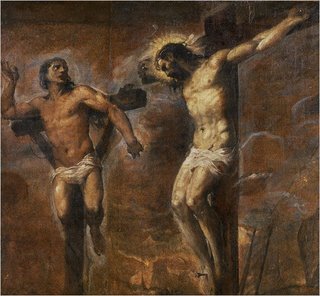
Alongside the cross of Jesus a pair of guilty criminals were also crucified; one on his right and the other on his left. Both of them had mocked Jesus at first, but then one of them repented. Acknowledging Christ’s innocence and lordship, he asked: “Jesus, remember me when you come into your kingdom.” And Jesus replied to him, “Amen, I say to you, today you will be with me in Paradise.

So what is the cup which Jesus drank? His cup is a cup of suffering. When and where was Jesus first enthroned in the kingdom of God? He is enthroned in glory upon his Cross. And who received the places at his right and left? Those places close to Jesus went first to two crucified criminals. Indeed, James and John in today’s gospel did not know what they were asking. Yet these apostles would go on to be glorified through their own shares in Christ’s sufferings: including martyrdom for St. James and exile for St. John “the Beloved Disciple.”

Many people struggle to reconcile the reality of suffering with the power and love of God. Some Christians even mistakenly preach a “Prosperity Gospel,” saying that if you believe in God and love him, he will bless you so that bad things never happen to you. But this view is incomplete. There are true blessings which flow from following Jesus Christ and his Gospel, but the worldview of the “Prosperity Gospel” sets believers up for a fall. When painful hardship or tragedy eventually come, those Christians will either blame themselves for not having had enough faith or blame God for seeming to fail them. This latter group wonders, “If God is not dependable, why should I keep faith in him?” And then, feeling wounded, confused, and abandoned, they abandon God.

We do not completely understand the mystery of evils in our world; why a devastating earthquake happens to some particular city, why a particular healthy adult gets cancer, or why a particular young person perishes in a car wreck. We do know that God’s thoughts are higher than our thoughts, that his plans see farther than our sight. And we know that God, who is the highest good, would not permit evils to exist unless his omnipotence and goodness were such as to bring good even out of evil. In Jesus Christ we see that God intimately knows and deeply cares about all the things we suffer. So what is the Lord up to?

It’s no coincidence that all four gospels mention how Jesus is crucified between two criminals, one on his right and the other on his left, with one who repents and one who appears not to repent. All of humanity is similarly suffering as a result of our original or personal sin. We too begin as guilty rebels condemned. But on the Cross, Jesus Christ the Son of God, though divine and innocent, joins us in our suffering.

The Letter to the Hebrews observes that in him “we do not have a high priest who is unable to sympathize with our weaknesses, but one who has similarly been tested in every way…” This divine plan for Christ to be a suffering servant was foretold through the Prophet Isaiah centuries before: “If he gives his life as an offering for sin… the will of the Lord shall be accomplished through him. …Through his suffering, my servant shall justify many, and their guilt he shall bear.

This Good Shepherd intimately understands the sufferings of the flock. He comes down from his high mountain into our dark valley and calls us to himself. We can respond to him with faith, acknowledging his goodness and lordship as sheep on his right. Or we can remain as faithless goats on his left, unrepentant for our sins and rejecting Christ forever. Realize that Jesus Christ desires not merely to forgive our sins, but that you and I would become children of God the Father just like himself.

Why do evils and sufferings continue to afflict those who follow Christ? As I said before, we do not know the answer to every painful question. (I believe we will understand God’s plan and purposes far better in heaven when he ‘wipes away every tear from our eyes.’) But we do know that Jesus Christ wants us to share in his own greatness and glory.

In today’s gospel, Jesus tries to help his disciples see that the path to true greatness and glory are not what they imagine. “Those who are recognized as rulers over the Gentiles,” Jesus notes, “lord it over them, and their great ones make their authority over them felt. But it shall not be so among you. Rather, whoever wishes to be great among you will be your servant; whoever wishes to be first among you will be the slave of all. For the Son of Man did not come to be served but to serve and to give his life as a ransom for many.

In our loving service and in our faithful suffering, we become more like Jesus. With Jesus, our sacrifices and sufferings are redemptive, helping to make us saints while helping to save the world. This is the precious, challenging, saving cup our Lord offers us. But can we drink it? With the grace and love of Jesus Christ strengthening us, we can!

Geraldine, Genghis, & John — Funeral Homily for Geraldine Halfman, 82

September 24, 2021

I would like to reflect with you today upon three people who have passed away. You have heard of all three, but you have only met one of them. Their names are Geraldine, Genghis, and John.

John lived a century ago. He made his fortune in American oil. Adjusting for inflation, he is considered the richest person in modern history and the wealthiest American of all time. He died at age 97, taking none of his money with him to the grave, leaving all his wealth behind.

Genghis lived eight centuries ago. He led conquering armies on horseback throughout Central Asia and reigned over one of the largest empires in history. He fathered so many children in his lifetime that an estimated 8% of all people living in that region of the world today are direct descendants of his. After many years of killing others, Genghis died himself, lost his throne, and left behind his empire to others.

Geraldine (or Gerry) was born in 1939. She conquered no lands. She never accumulated vast riches. She raised no biological children of her own. Her life’s most significant work may have been caring for her eldest sister. Gerry’s sister, Mary, became sick as a teenager from M.S. (multiple sclerosis) and needed ongoing care until her death at the age 70. Gerry spent decades living with and helping Mary; bathing her, dressing her, feeding her, and giving her worthwhile activities to engage with and enjoy. The world would encourage Geraldine to go off and live her own life but Gerry loved her sister as herself, as Jesus Christ and her Catholic Faith taught her to do. Geraldine died on her eighty-second birthday.

Geraldine, Genghis, and John are three very different people, who lived very different lives, but they share these things in common: all three lived, all three died, the souls of all three will have been judged, and all three of them will rise again. “For we shall all stand before the judgment seat of God,” and “each of us shall give an accounting of himself to God,” and all the dead shall rise again on the Last Day.

What will be important at our Last Judgment? What will matter on the Last Day? Jesus tells us:

“Blessed are the poor in spirit,
for theirs is the Kingdom of heaven.
Blessed are the meek,
for they will inherit the land.
Blessed are the merciful,
for they will be shown mercy.
Blessed are the clean of heart,
for they will see God.
Blessed are the peacemakers,
for they will be called children of God.”

Remember that Jesus Christ is the measure of what matters. And in the end, every knee shall bend before him, either in resentful submission, as with the condemned, or in faithful love, as his holy ones.

Pray for Geraldine’s soul. Like gold in a furnace, she might still require the healing fire of God to purify her sin-wounded person into perfect flawlessness, so that God may take her to the fully-unveiled presence of his all-holy self. But do not fear for her, for in the words of the Book of Wisdom: “Those who trust in him shall understand truth, [including the truth about what is most important,] and the faithful shall abide with him in love. Grace and mercy are with his holy ones, and his care is with his elect.”

At the Father’s Right Hand

March 13, 2021

4th Sunday of Lent

Jesus tells Nicodemus, “Just as Moses lifted up the serpent in the desert, so must the Son of Man be lifted up, so that everyone who believes in him may have eternal life.” First, Jesus is raised up on the Cross. Next, he is raised up from the tomb. And finally, he is raised up to heaven. As this week’s section of The Apostles’ Creed proclaims:

He ascended into heaven,
and is seated at the right hand of God the Father Almighty
from there He will come to judge the living and the dead.

Jesus’ body was glorified at the moment of his Resurrection on Easter. Then he visited his disciples in his body over more than a month, appearing and vanishing, conversing and teaching, eating and drinking, and showing painless wounds in his hands, side, and feet. (Jesus keeps these wounds from his Passion as trophies of his victory.) And then, on the fortieth day, Jesus led his Apostles and disciples a short ways east out of Jerusalem, past the Garden of Gethsemane where he had agonized, and up the Mount of Olives which looks down over the Holy City. He raised his hands and blessed them, and as he blessed them he parted from them and was taken up to heaven. He was lifted up as they looked on and a cloud took him from their sight. They did him homage and returned to Jerusalem rejoicing. Of course, one cannot fly an airplane or ride a rocket to enter God’s presence (unless the flight ends very badly). Heaven is not a place here or there, but another dimension of reality, distinct from us but not far distant. Jesus ascends in his disciples’ sight to manifest the invisible, his entry into heaven in fulfillment of what King David had foretold about the Christ, one thousand years before, in the 110th Psalm:

The Lord [God] says to my Lord [the Christ]:
“Sit at my right hand until I put your enemies under your feet. Yours is princely power from the day of your birth. In holy splendor, before the daystar, like the dew, I have begotten you.” The Lord [God] has sworn an oath he will not change: “You are a priest forever…” At your right hand is [Christ] the Lord, who will crush kings on the day of his great wrath, who judges nations…

From ancient times the right hand has been considered the favored spot, the seat of honor for your right-hand man. Being at the right hand means closeness, allowing for intimacy and confidence. You and I have a great friend in high places who “always lives to make intercession” for “those who draw near to God through him.” Jesus, the high priest of the new and eternal Covenant, has “entered, not into a sanctuary made by human hands… but into heaven itself, now to appear in the presence of God on our behalf.” Jesus Christ is not only humanity’s priest and advocate in Heaven, before ‘his Father and our Father, his God and our God,‘ he also sits enthroned as our king. As the Prophet Daniel once foresaw concerning Christ in a vision:

“To him was given dominion and glory and kingdom, that all peoples, nations, and languages should serve him; his dominion is an everlasting dominion which shall not pass away, and his kingdom one that shall not be destroyed.”

Jesus Christ is King, the Lord of the cosmos and of history, who dwells in his Church where his Kingdom is now present in mystery. The Catholic Church is the seed and beginning of the Kingdom come on earth as it is in heaven. We now await Christ’s Second Coming in fully-unveiled glory, such that he can no longer be dismissed or ignored by anyone. Jesus will return as ruler of all and come to judge the living and the dead. “‘As I live, says the Lord, every knee shall bend before me, and every tongue shall give praise to God.’ … Then each of us shall give an account of himself to God.” The conduct of each person and the secrets of every heart will be brought to light before his throne. Then the wicked “will go away into eternal punishment, but the righteous into eternal life.”

It is very important that we take God and personal conversion seriously. Our first reading chronicles how God’s people had “added infidelity to infidelity, practicing all the abominations of the nations.” The Lord had sent them his messengers, early and often, for he had compassion on his people, “but they mocked the messengers of God, despised his warnings, and scoffed at his prophets.” God’s anger became so inflamed that he permitted them to be conquered by the Babylonian Empire six hundred years before Christ. Those who escaped the sword were carried off into Babylon captivity to be unhappily subjugated there. As today’s psalm recalls, “by the streams of Babylon we sat and wept.” Many never knew true freedom and peace for the rest of their days. But eventually, the Babylonians were conquered by the Persians, and the Lord inspired King Cyrus of Persia to issue a proclamation throughout his empire encouraging the Jews to return to Jerusalem, rebuild the Temple, and worship God there. Notice how the king made this possible but didn’t force anyone to go. They were free to choose; to either return home or stay far away. Wickedness has grave consequences, in this life and hereafter, yet we do not earn our salvation by doing good deeds. As St. Paul tells us, “by grace you have been saved — [God] raised us up with [Jesus] and seated us with him in the heavens… By grace you have been saved through faith, and this is not from you; it is the gift of God; it is not from works, so no one may boast.” Salvation comes from accepting God’s invitation to come home to him.

On the Last Day, Jesus will come again as our Judge, yet “God did not send his Son into the world to condemn the world, but that the world might be saved through him.” “For God so loved the world that he gave his only Son, so that everyone who believes in him might not perish but might have eternal life.” In Christ “the light came into the world, but people preferred darkness to light, because their works were evil. For everyone who does wicked things hates the light and does not come toward the light, so that his works might not be exposed. But whoever lives the truth comes to the light, so that his works may be clearly seen as done in God.” A very powerful way to shed the darkness of sin and come into the light is through Jesus’ Sacrament of Reconciliation.

Here is another divine invitation to freedom and peace: I will be hearing Confessions in St. Paul’s Main Sacristy this Thursday, from 8 AM to 6 PM, at the start of every hour until all are heard. If those times won’t work let me know and we’ll set up something else. Maybe it’s been a long time since your last Confession? Maybe you’re nervous? You don’t need to be. I’ll help you through it. Know that when you come out you will feel absolutely wonderful. And Jesus Christ, seated at the right hand of our Father above, will look upon you and smile.

The Fire of God

December 6, 2020


2nd Sunday of Advent

Eighteen years ago, when I applied to become a seminarian for our diocese, one part of the process was taking the MMPI, the Minnesota Multiphasic Personality Inventory Test — 567 True-False questions that help to detect psychological disorders. Of all of those written questions this one is for me the most memorable: “True or False: I am fascinated by fire.” How would you answer that question on a psych exam? I recall thinking at the time, “Yes, yes I am fascinated by fire, but I don’t want them to think I’m a pyromaniac. And I’m not a pyromaniac so maybe I should answer ‘False.’” But then I considered that wouldn’t be honest, so I reluctantly filled in the bubble for “True.” In the end, the diocesan psychologist did not diagnose me as crazy, so they sent me to seminary, eventually ordained me, and here I am today. But upon later reflection, I think this question is something of a trick.

Why do people pay more to have a fireplace in their home when a central heating system is sufficient to keep everyone comfortable? When people sit around a campfire, what does everybody look at for hours into the night? I strongly suspect this question (are you fascinated by fire) isn’t looking for pyromania so much as it is checking to see whether people will lie, because everyone is fascinated by fire. Fire is beautiful, it’s mesmerizing, dynamic and powerful; it’s well-known to us and yet surprising, an incredible blessing yet dangerous to the unwary.

The Sacred Scriptures often speak about fire. In today’s in gospel, we hear the preaching of St. John the Baptist. In the parallel passages of Matthew and Luke, St. John similarly cries out:

I am baptizing you with water… but the one who is coming after me is mightier than I… He will baptize you with the Holy Spirit and fire. His winnowing fan is in his hand. He will clear his threshing floor and gather his wheat into his barn, but the chaff he will burn with unquenchable fire.

Fire is also mentioned in today’s second reading. The Second Letter of St. Peter tells us:

The day of the Lord will come like a thief,
and then the heavens will pass away with a mighty roar
and the elements will be dissolved by fire…
the heavens will be dissolved in flames
and the elements melted by fire.”

The coming and presence of the Lord is associated with fire in the Old Testament as well. God first spoke to Moses through a burning bush. And during the Exodus the Lord went before his people, leading them in a pillar of cloud and fire. The appearance of God’s glory was like a devouring fire atop Mt. Sinai. The mountain was wrapped in smoke because the Lord had descended upon it in fire. Smoke rose up from it into the sky and the whole mountain greatly trembled. The Lord commanded Moses to warn the people not to approach, not to climb up the mountain, lest they be struck down in their unholiness. Listen to this vision of God the Prophet Daniel had in a dream one night:

As I looked, thrones were placed, and the Ancient of Days took his seat; his clothing was white as snow, and the hair of his head like pure wool; his throne was fiery flames; its wheels were burning fire. A stream of fire issued and came out from before him; a thousand thousands served him, and ten thousand times ten thousand stood before him; the court sat in judgment, and the books were opened.

Is the fire of God of which John the Baptist, Peter, Moses, and Daniel speak something for us to fear? Scripture says the punishment of God’s judgment is fire, but it also speaks of fire as God’s means of purifying his own. In regards to judgment, the Prophet Isaiah writes, “the Lord will come in fire, and his chariots like the whirlwind, to render his anger in fury, and his rebuke with flames of fire.” At the Last Judgment, Jesus Christ the King will turn to the goats on his left and say “Depart from me, you accursed, into the eternal fire prepared for the devil and his angels.” And the Book of Revelation says anyone whose name is not found written in the book of life will be thrown into a lake of fire: “[A]s for the cowardly, the faithless, the detestable, as for murderers, the sexually immoral, sorcerers, idolaters, & all liars, their portion will be in the lake that burns with fire and sulfur, which is the second death.” This is a fire to dread and to earnestly avoid.

Yet God’s prophets also speak of God’s purifying fire which perfects his people. Psalm 66 says “you, O God, have tested us; you have tried us as silver is tried;” and a verse from the Book of Proverbs says, “The crucible is for silver, and the furnace is for gold, and the Lord tests hearts.” Ancient gold and silversmiths would melt their precious metals with fire to separate out and burn away any impurities which they contained. Likewise, through the Prophet Zechariah, God says, “[I will put my people] into the fire, and refine them as one refines silver, and test them as gold is tested. They will call upon my name, and I will answer them. I will say, ‘They are my people’; and they will say, ‘The Lord is my God.’” This is why Jesus exclaims, “I have come to set the earth on fire, and how I wish it were already blazing!

Jesus would separate and burn away in us everything impure, false, and worthless. This purification can happen for God’s faithful friends in this life on earth or afterwards in Purgatory. St. Peter writes to the Church in his First Letter, “Now for a little while you may have to suffer through various trials, so that the genuineness of your faith, more precious than gold that is perishable even though tested by fire, may prove to be for praise, glory, and honor at the revelation of Jesus Christ.” And St. Paul tells the Corinthians, “If anyone builds on the foundation with gold, silver, precious stones, wood, hay, straw — each one’s work will become manifest, for the Day [of the Lord] will disclose it, because it will be revealed by fire, and the fire will test what sort of work each one has done.” Is this a fire we should fear and dread? No, as illustrated by this story from the Book of Daniel:

In the days of the Babylonian Empire, King Nebuchadnezzar had three servants named Shadrach, Meshach, and Abednego. When the king set up a tall, golden statue and commanded that all bow down and worship it, these three faithful Jewish men refused. Enraged, the king commanded that they be bound with rope and cast into a white-hot furnace. Once this had been done, the king looked inside the furnace. He became startled and rose in haste, asking his counselors, “Did we not cast three men bound into the fire?” “Certainly, O king,” they answered. “But, I see four men unbound and unhurt, walking in the fire, and the fourth looks like a son of God.” Then Nebuchadnezzar came to the opening of the furnace and called: “Shadrach, Meshach, and Abednego, servants of the Most High God, come out,” and the trio came out of the fire.

The fire had had no power over their bodies; not a hair of their heads had been singed, nor were their garments altered; there was not even a smell of fire about them. Yet notice, all of the ropes which had bound them were burned away and gone. Recall that the burning bush at Mt. Sinai was not destroyed by God’s fire. And when the Holy Spirit came down as tongues of fire at Pentecost, the disciples touched by the Holy Flame were not tormented by pain but rather filled with rejoicing. The process of conversion may entail some pains because change is often hard, whether on earth or in Purgatory, but I urge you not to fear it. God’s purifying fire would take away what binds you, it will not destroy what is good in you, and its fruit will be joy.

The Book of Wisdom tells us:

Chastised a little, [the souls of the just] shall be greatly blessed, because God tried them and found them worthy of himself.
As gold in the furnace, he proved them, and as sacrificial offerings he took them to himself.
In the time of their visitation they shall shine, and shall dart about as sparks through stubble;”
They shall judge nations and rule over peoples, and the Lord shall be their King forever.

So just souls become as sparks of fire and rule over the nations. They will rule like God their King and they will share in God’s fire. The New and Old Testaments agree, as the Books of Hebrews and Deuteronomy say, that “our God is a consuming fire.” The Lord your God is a consuming fire – beautiful, dynamic and powerful; well-known to us and yet surprising, an incredible blessing yet dangerous to the unwary. There is no approaching God without encountering his fire. Perhaps the delights of the saints and pains of damned have the same source – the unveiled presence of God. In this life, many people dismiss God while others long to see Him. But beyond the veil of this life the Holy One can no longer be ignored. Either we will eagerly run toward him or desperately desire to flee. The same Holy Fire is loved or despised according to our openness to love and honor and serve like him.

The call of Prophets Isaiah and John the Baptist to prepare the way of the Lord is addressed to us this Advent. In the wasteland of your imperfect soul prepare a straight and smooth highway for our God. Repent and confess your sins for forgiveness. When St. John the Baptist appeared in the desert, people from the whole Judean countryside and the city of Jerusalem were going out to him and being baptized by him in the Jordan River as they acknowledged their sins aloud. They would devote an entire day to walk or ride an animal out to where John was baptizing; wait in a single, very long line; and then confess their sinfulness in front of everybody in the mere hope of being forgiven by God. Jesus Christ makes it so much easier for us in the Sacrament of Confession. His minsters are not just one, but many, and his churches are not far away. We get to confess our sins privately in the quiet of the confessional, and with every good confession our forgiveness is assured.

St. Peter tells us “the day of the Lord will come like a thief,” that is, by surprise; we know not when. “(Then) the elements will be dissolved by fire, and the earth and everything done on it will be found out.” Since this is the case, St. Peter asks, “what sort of persons ought you to be?” Conduct yourselves in holiness and devotion. Do not delay your repentance and conversion. Jesus says, “If your hand or your foot causes you to sin, cut it off and throw it away. It is better for you to enter life crippled or lame than with two hands or two feet to be thrown into the eternal fire.” If this would be the case with precious limbs, how much more surely should we now cast off our worthless sins?

To give you that opportunity, for the forgiveness of your sins and a new infusion of God’s graces, I will be hearing confessions all day this Wednesday, December 9th at St. Paul’s. This Wednesday, from 10 AM to 8 PM, at the top of every hour, I will come to St. Paul’s main sacristy to hear the confessions of all penitents, either face-to-face or anonymously, masked and socially-distanced until all are heard. I sincerely hope you will come, and bring your family too, for the purifying fire of God is far sweeter than his fire which will punish unrepentance.


What Happens When You Die — 32nd Sunday of Ordinary Time—Year C

November 9, 2019

Our days are growing shorter and shorter. In the fall, it’s impossible not to notice the dark night encroaching. The trees are being drained of the color of life, their foliage is falling dead to the ground, turning the trees into bare skeletons. The farmer’s field has yielded its harvest; the once-living crops have been cut down. This changing of nature chills us in our flesh. During this season of dying, we are reminded in the world and in the Church, of our own mortality. This is a topic personally relevant to us all. Unless Jesus comes back first, each of us is going to die. What happens next is what I’ll preach about today.

Human nature is a unity of body and soul. At death, our body and soul will separate. Our mortal remains, our dead bodies, will decay according to natural processes. Sometimes God works a miracle, causing a saint’s corpse to remain incorruptible in part or in whole, but ordinarily our dead bodies return to the dust from which we were made. Our immortal souls, however, will not go into the grave with our bodies; at death; the who that is you behind your senses, your soul, will appear for the judgment of your Creator. As the Letter to the Hebrews says, “it is appointed that human beings die once, and after this the judgment.”

In the words of the Catechism of the Catholic Church: “Death puts an end to human life as the time open to either accepting or rejecting the divine grace manifested in Christ… each will be rewarded immediately after death in accordance with his works and faith. … Each man receives his eternal retribution in his immortal soul at the very moment of his death, in a particular judgment that refers his life to Christ: either entrance into the blessedness of Heaven—through a purification or immediately,—or immediate and everlasting damnation.”

Those who die in God’s grace and friendship and are perfectly purified live for ever with Christ. This perfect life with the Most Holy Trinity – this communion of life and love with the Trinity, with the Virgin Mary, the angels and all the blessed – is called ‘Heaven.’ Heaven is the ultimate end and fulfillment of the deepest human longings, the state of supreme, definitive happiness. … [Jesus] makes partners in his heavenly glorification those who have believed in him and remained faithful to his will.

But what if we die spurning his friendship? We cannot be united with God unless we freely choose to love him. But we cannot love God if we sin gravely against him, against our neighbor or against ourselves. To die in mortal sin without repenting and accepting God’s merciful love means remaining separated from him for ever by our own free choice. This state of definitive self-exclusion from communion with God and the blessed is called “Hell.” Jesus speaks repeatedly of Hell in the Gospels, so we cannot dismiss its reality. The numerous rebel angels, the demons, experience Hell, and it seems that many human beings will experience it forever as well. It’s a terrible thing, but recall C.S. Lewis’ words: “The gates of Hell are locked from the inside. … There are only two kinds of people in the end: those who say to God, ‘Thy will be done,’ and those to whom God says, in the end, ‘Thy will be done.’ All that are in Hell, choose it. Without that self-choice there could be no Hell.

What if I die as a friend of God but I’m still not yet perfect? What if I sincerely love God and my neighbor but I still retain a fondness for my sins. The Book of Revelation says of God’s Heavenly city “nothing unclean will enter it,” so how can I be cleansed to enter in? The Catechism teaches: “All who die in God’s grace and friendship, but still imperfectly purified, are indeed assured of their eternal salvation; but after death they undergo purification, so as to achieve the holiness necessary to enter the joy of Heaven. The Church gives the name ‘Purgatory’ to this final purification of the elect, which is entirely different from the punishment of the damned.

On earth we know that personal conversion and change of lifestyle can be difficult. Private revelation suggests that the purifying process of Purgatory is both painful and joyful at the same time. It’s like a soldier returning victorious from a war overseas, traveling to his wife and family. His long trip home may be exhausting, but his great love for those who await him sweetens his journey and focuses his efforts to join them.

We should pray for one another on earth and we should pray for the dead as well. From her beginning, the Church has honored the memory of the dead and offered prayers for them, above all at Christ’s great sacrifice, the Mass, so that, thus purified, they may attain the beatific vision of God. The Church also commends us, especially in the month of November, to almsgiving, indulgences, and works of penance on behalf of the dead to help them on their way to the fully-unveiled presence of God. The saints in Heaven now behold the divine essence with an intuitive vision, without the mediation of any creature. The Blessed Virgin Mary, and possibly Elijah, Moses, and Enoch, already have their bodies there, but the reunited bodies and souls of all the dead, of both the just and the unjust, will rise again one day.

The resurrection of the dead, which in today’s Gospel the Sadducees denied and Jesus affirms, will precede the Last Judgment. This will be “the hour when all who are in the tombs will hear [the Son of man’s] voice and come forth, those who have done good, to the resurrection of life, and those who have done evil, to the resurrection of judgment.” Then Christ will come “in his glory, and all the angels with him… Before him will be gathered all the nations, and he will separate them one from another as a shepherd separates the sheep from the goats, and he will place the sheep at his right hand, but the goats at the left… And they will go away into eternal punishment, but the righteous into eternal life.” This Last Judgment will reveal even to its furthest consequences the good each of us has done or failed to do during our earthly life.

After this last and universal judgment, the universe itself will be renewed into what Scripture calls “a new Heavens and a new Earth.” Recall how Jesus’ resurrected body is the body that was pierced (for he still bears some wounds as trophies,) and it is the body that was buried (for the Easter tomb is empty,) but Jesus’ resurrected body is now gloriously transformed. The same body, but renewed Likewise, our resurrected bodies and this material universe will be renewed and transformed as well. Then the righteous will reign with Christ, glorified in body and soul, in a new heavens and new earth, forever.

From these reflections on the last things, I offer you these three takeaways. First: care for your soul. Be committed to prayer and the sacraments (particularly confession for the forgiveness of your sins.) Second: pray for the dead. They will appreciate it forever and pray for you too. Third and finally: remember that our time on earth is short. And forever is a very long time. You have just one life, so live and love heroically in Christ.