Archive for the ‘Marriage and Family’ Category

The Mother of Jesus was There

January 16, 2022

2nd Sunday in Ordinary Time
By Fr. Chinnappan Peleabendran

My dear brothers and sisters in Christ Jesus, today we celebrate the second Sunday of ordinary time. After the Solemnities of Christmas, Epiphany, and Baptism of the Lord, we enter into an ordinary time. In the beginning of Ordinary Time, I invite you to think about Mother Mary’s role in the life of Jesus.

Every child’s vocation is the parents’ constant prayer, not only after the birth of a son or a daughter but as prophet Jeremiah says, “Before I formed you in the womb I knew you; before you were born I dedicated you.” I used to see my father attend Mass every day in my parish. As a family, we prayed the Rosary every evening. My mother used to say three Rosaries each day even though she was illiterate. One day, I asked her, “Do you know the Mysteries of the Rosary?” She replied to me, “No.” I asked her then, what are you saying? She said, “Just an Our Father and Hail Mary.” Her simple prayers helped me to become a priest.

Mothers are timeless teachers in the classroom of life and, alongside fathers, the most influential educators. Mothers teach us to believe in God. Mothers teach us the value of God’s word through their lives. Mothers are one of the first indications of God in our lives.

Moses was one of the major figures in the Old Testament. Although we are not told much about his mother, she played a very important role in his life. The Jews had been in Egypt for 400 years under the rule of the pharaohs. One pharaoh then ordered all male Hebrew babies to be killed. When Moses’ mother gave birth to a healthy son, instead of killing him she took a basket and coated the bottom with tar to make it waterproof. She put her baby in it and set him among the reeds on the bank of the Nile River.

Just imagine the sorrow and agony of that mother, how much she cried when she returned home. Her prayer was answered by God. Pharaoh’ daughter came to bathe in the river and one of her maidservants saw the basket and brought it to her. She adopted the baby as her own (Moses’ mother was even paid to nurse him) and he grew up in the palace. Years later, after many hardships, Moses was used by God as His chosen instrument to free the Hebrew people from slavery and lead them to the edge of the Promised Land. Moses’ mother showed great trust in God’s faithfulness. Her prayers helped Moses to grow in faith and trust and to liberate and lead their people from bondage to the Promised Land.

When we look at today’s Gospel, on the third day, a wedding took place at Cana in Galilee. Jesus’ mother was there Jesus and his disciples had also been invited to the wedding. When the wine was gone, Jesus’ mother said to him, “They have no more wine.” “Dear woman, why do you involve me?” Jesus replied. “My time has not yet come.” His mother said to the servants, “Do whatever he tells you.” Jesus is withdrawing Himself from her authority. Jesus knew what His mission was and whom it was that was leading and guiding Him. The miracle itself served to draw others to follow Jesus.

Mary had the gift of prayer or intercession. She knew that her Son would not refuse her anything good. So, she immediately interceded on behalf of her people. This was Jesus’ first miracle. When Mary and Joseph presented their newborn Son, Jesus, to the priest in the Temple, they consecrated Him to God. Mary acknowledged that God had a plan for her Son and agreed to do everything in her power to cooperate with God’s purpose for him. Likewise, you Christian parents consecrate your children to God in the Sacrament of Baptism and promise to do everything possible to help your children to do what God wants in their lives.

Herod tried to kill Jesus, so Mary and Joseph fled to Egypt to protect their Son. Christian mothers keep your children away from evil forces that could harm them. Mary and Joseph took their Son, Jesus, to the synagogue in Nazareth each week in observance of the Sabbath and took him to the Temple in Jerusalem each year for Passover. Mothers, follow Mary’s example by going to Mass each week and taking your children with you because it is so important to pray with others. When Jesus was crucified, Mary stood at the foot of the Cross and suffered with him. She never abandons her child, particularly when things are at their worst. This sort of enduring love is exemplary for Christian mothers. Children get into trouble; sometimes for the right reasons, sometimes not. Mothers, like Mary, stand with your children throughout life, especially when things go bad.

Yes, my dear parents, be with your children all the time like Mother Mary, so that your children will grow like Jesus: doing good work in society, being faithful to God, and being faithful to you.

Jesus Chose Them for Each Other, for Himself, & for Us

December 8, 2021

Solemnity of the Immaculate Conception

This December 8th unites two of our greatest saints: the Blessed Virgin Mary and St. Joseph. Today we celebrate both the Immaculate Conception and the conclusion to the Year of St. Joseph. Our Lady, under the title of “The Immaculate Conception,” is the patroness of our country. And Joseph, under the title of “St. Joseph the Workman.” is the primary patron of our diocese. Last year, our Bishop William Callahan proclaimed a year dedicated to St. Joseph beginning May 1st. Then, last December 8th, Pope Francis unexpectedly announced a Year of St. Joseph for the entire Church worldwide. As a result of this, our diocesan celebration of this Year of St. Joseph is the longest in the world: 19 months and 8 days in full. And this is very fitting, since our diocesan patron’s name, “Joseph,” means “he will increase.”

How beautiful it is that this date brings together Mary and Joseph! He, the noble head of the Holy Family; and she, the Immaculate Heart of their home He, her chaste guardian; and she, his loving spouse. Both are absolutely faithful and obedient, courageous and righteous. And both of them were chosen by God, chosen for each other, and chosen for Christ. Mary became Jesus’ loving mother and Joseph became Jesus’ nurturing foster-father. God chose them “before the foundation of the world, to be holy and without blemish before him.” Our Lord Jesus Christ chose them for himself and he also chose them for us.

Does Jesus get jealous at the Church celebrating Mary and Joseph? Does our Catholic devotion to Mary or Joseph detract from devotion we ought to have for Christ? In his recent book, “Consecration to St. Joseph,” Fr. Donald Calloway answers: “What brother would be offended if his younger siblings expressed love towards their mother and father? What man would be upset if another person wrote a song about his mother or placed roses at her feet? Likewise, what son would be disturbed if someone praised the virtues of his father? A person who honored a father would not receive condemnation from the father’s son. On the contrary, such a person would receive praise and tremendous favors from the son.” I would add that love in a family is not a zero-sum game, but that healthy love makes love grow larger. Devotion to Mary and Joseph does not make us love Jesus less, but helps us love him more.

Jesus has not diminished these parents who cared for him on earth. He has exalted and shared them with us. He has made his mother the mother of all Christians. Like the first Eve who “became the mother of all the living,” Mary is the spiritual mother to all those alive in Christ. He has made his foster-father Joseph, who successfully safeguarded the Holy Family through its trials, spiritual protector of the universal Church And ‘never was it known that anyone who fled to their protection, implored their help, or sought their intercession was left unaided.’ So be sure to befriend St. Mary and St. Joseph. Jesus loves them dearly and they aided him on earth. He wills that you would know them, and love them, and be helped by them through this life, too, by their powerful, loving care.

Our Shared Roots — Funeral Homily for Maxine Zwiefelhofer, 90

November 12, 2021

In her first ninety years of life, Maxine has been a daughter, a sister, a wife and a mother; an aunt, a grandma, a great grandma, and a great-great grandma; a talented nurse, a good friend, and a devoted Catholic. Among her many traits and experiences, on this day of her funeral I would like to highlight one hobby of hers which has been a blessing to our community and a point of pride for her family.

Maxine has been a hobbyist in history. She wrote “The History of St. John the Baptist Catholic Church” in Cooks Valley, which detailed more than one hundred years of this parish from 1885 to 1995. Maxine spent many days researching genealogy at the Chippewa County Historical Society, and even traveled with family to Scandinavia and Denmark to explore their ancestral roots. She wrote books of family history, recounting the lineages of the Toppers, the Olsons, the Zwiefelhofers, and the Bleskaceks.

Here’s an interesting bit of trivia: the U.S. Census Bureau says there are more than 150,000 different last names in our country today, with some 5,000 last names in common use. Have you ever noticed, that with the whole forest of humanity to choose from, most people prefer to research those family trees which have branches which reach themselves? For instance, Topper was the family name of Maxine’s father, Ernest; Olson was the maiden name of her mother, Elizabeth; and Zwiefelhofer was the last name of her husband, David. Here’s another statistic: there are more than 20,000 Catholic churches in America. Of all the churches in all the towns in all the land, why did she write a history about this one?

You know the answer. Maxine explored the genealogies of those particular families and recounted the history of this particular parish because she belonged to them and they belonged to her. Our past provides us with our identity. If we were to lose all of our memories but could still think and walk and talk, we would wonder about who we are. Our family and community, our origins and past, inform us about who we are. As Christians we know our family, community, origins, and past are more than merely natural.

Who was Jesus describing in the gospel we just heard? Who is merciful and meek? Who are peacemakers, clean of heart? Who hungers and thirsts for righteousness and unjustly suffers for what is right? Who do these Beatitudes refer to? The Beatitudes describe the blessed saints, but first and foremost they describe Jesus Christ himself. You and I as Christians you are their siblings, brothers and sisters within the family, the community, the communion, of God’s Church. Our origin is that we were created by God in love. That is your origin. Our past is that Jesus Christ came and died and rose for us. That is your past. And rooted in this true identity, our future is full of hope.

St. Paul’s Letter to the Romans declares “that we who were baptized into Christ Jesus were baptized into his death,” and if “we have died with Christ… we shall also live with him.” As foretold through the Prophet Daniel, one day, “those who sleep in the dust of the earth shall awake,” some to everlasting disgrace and others to eternal life. Then “the wise shall shine brightly… and those who lead the many to justice shall be like the stars forever.

Let us pray today for Maxine’s soul and renew our true identity in Jesus Christ, so that she and we with him may be one holy family, one holy Church dwelling in the house of the Lord forever.

Marriage is for Life

October 3, 2021

27th Sunday in Ordinary Time


In “the beginning of creation, God made them male and female. For this reason a man shall leave his father and mother and be joined to his wife, and the two shall become one flesh.” They are no longer two but one flesh. “Therefore,” Jesus says, “what God has joined together, no human being must separate.” Jesus teaches, “Whoever divorces his wife and marries another commits adultery against her; and if she divorces her husband and marries another, she commits adultery.

Now Christ’s Church does believe and teach that there can be situations where it is prudent and right for a person to physically or legally separate from their spouse. Perhaps there’s physical or emotional abuse in the marriage; destructive, unchecked addictions; or obstinate infidelity. And after the marriage falls apart the Church can investigate whether something essential to that marriage being a binding, sacramental bond before God was missing from the start.

It is possible for Catholic brides and grooms to fail to marry sacramentally in many ways. For instance, the couple might get invalidly married outside the Church; inside a courtroom, on a beach, or in a barn. The bride might feel forced to marry such that her consent is not free. The groom might lack the psychological or physical capacity for marriage. Or one of them might say the vows without not really meaning them. There are many ways a marriage can be sacramentally invalid and non-binding. And where the Church finds sufficient proof for this she will grant an annulment, permitting the man or woman to remarry. So as I said before, being divorced is not necessarily a sin; it does not automatically bar you from receiving Communion. However, to abandon one’s spouse without cause, or to remarry when you are not free to remarry, are sins that require repentance.

What God has joined together, no human being must separate.” Jesus said this in response to a question about divorce, but what other things of human sexuality has God joined from the beginning which no human being should separate? God joined sexual relations to the covenant of marriage. He joined love-making to the possibility of life-making. And he joined one’s biological sex to one’s identity. God created them male and female, one man and one woman, not identical sexes—but physically and spiritually complimentary mates, and made God them man and wife in a covenant for life.

God’s first commandment in the Garden was “be fruitful and multiply,” and today we hear Jesus tell us “Let the children come to me.” His wish is to bring “many children to glory,” as our second reading says. God’s Word in the Bible celebrates having many children as a blessing, not a curse. Today’s psalm proclaims this blessing

Your wife shall be like a fruitful vine
  in the recesses of your home;
  your children like olive plants around your table…
  May you see your children’s children.

Indeed, being surrounded by the love of many offspring is among the greatest blessings for the aged. But human beings separating sexuality from an openness to life distorts God’s plan and the society around us.

Contraception is not something new. It existed in ancient times. Genesis relates how a man named Onan repeatedly “wasted his seed on the ground” during intercourse to avoid conceiving children. “What he did greatly offended the Lord, and the Lord took his life…” Egyptian scrolls dating to 1850 B.C. describe other methods and the pagans practiced contraceptive techniques in the Roman Empire in the days of Christ and the Early Church. The Church Fathers, such as St. Clement of Alexandria, St. Augustine, and St. John Chrysostom condemned acts of contraception or sterilization. Even the first Protestants denounced contraception, too. Martin Luther the founder of Lutheranism, John Calvin the founder of Calvinism, and John Wesley the co-founder of Methodism all wrote against it.

All Christian groups were agreed on this less than a century ago. That is until the Anglicans in 1930 became the first Protestants to officially approve artificial contraception use for hard cases. (Thirteen years before, in 1917, the same group had declared contraception “demoralizing to character and hostile to national welfare.”) As is the way of such errors, the exception became the norm and the Protestant denominations changed their teachings. By 1961, the National Council of Churches could pronounce that “most of the Protestant churches hold contraception… to be morally right when the motives are right.” The Catholic Church, however, stood firm and stood alone against the spirit of the age.

At the end of 1930 and again in 1968, the popes wrote encyclical letters reaffirming the constant teaching of Christ’s Church about the nature, purpose, and goodness of marriage and the marital act; and repeating the consistent and ancient rejection of all directly-willed acts of contraception, sterilization, and abortion. In 1968, St. Pope Paul VI predicted in his encyclical Humanae Vitae that the widespread use of contraception would broadly lower morality, increase marital infidelity, lessen respect towards women, be coercively imposed by governments, and promote the self-harming belief that we have unlimited dominion over our bodies and human life in general.

According to its advocates, contraception was supposed to strengthen marriages, prevent unplanned pregnancies, improve women’s happiness, and reduce abortions. After decades of cheap and widespread contraceptive use, half of all pregnancies are unplanned, half of all marriages end in divorce, women report lower and lower levels of happiness throughout the decades since the 1970’s, and about one-in-five U.S. pregnancies end in abortion, with more than 60 million killed since Roe vs. Wade in 1973. When persons and societies decouple and oppose human sexuality to its life-creating purpose, many harmful errors follow. You can trace the path of one error leading to the next. We are now to the point that many people cannot even define what a woman or a man is.

I would be remiss here if I did not mention that the Church teaches that there can be holy reasons and virtuous means to avoid conceiving more children. Natural Family Planning (also known as NFP) uses signs from a woman’s body to identify the days in her cycle when she can conceive. Equipped with this knowledge, for serious reasons a couple may virtuously abstain from the marital embrace to avoid a pregnancy, while respecting God’s design and the dual meaning of the marital act.

Couples who practice NFP report growing in communication, self-control, and intimacy. They are more open to discerning and embracing God’s plan for their families and are statistically less likely to divorce. Not only is NFP completely natural, the information it tracks about a woman’s body commonly leads to the diagnosis, treatment, and cure of health disorders, from infertility to life-threatening illnesses. Unlike common chemical contraceptives, NFP does not cause increased risks for breast, liver, or cervical cancer; nausea, vomiting, stomach problems, or diarrhea; depression, mood swings, or lowered libido; and it does not cause spontaneous abortions (by preventing implantation of newly conceived children into the uterine wall).

Realize that NFP is not the Rhythm Method. The old Rhythm Method simply counted how many days had passed since the woman’s last cycle and was a moral but rather ineffective approach. Faithfully-followed NFP techniques have a 99% effectiveness rate, comparable to illicit methods of artificial contraception. If you would like to learn more about NFP, visit the Diocese of La Crosse’s website and search for “NFP”. There you can investigate NFP techniques, their science and their benefits, and register for on-line courses.

Whether or not you are married, whether or not you are past the age for children, I hope that you will recognize that in the chaotic, constantly-changing, errant stream of human history, is our stable rock for truth is Christ’s Church. The Bride of Christ, our mother the Church, calls us to follow her teachings from Christ as faithful, trusting, loyal sons and daughters. Jesus says, “Amen, I say to you, whoever does not accept the kingdom of God like a child will not enter it.” Do not miss out on blessedness, in this life or the next.

A Labor of Love — Funeral Homily for Alice Karr, 91

August 31, 2021

No funeral homily can present the complete fullness of a Christian’s life. At best, I think a funeral homily can focus on aspects of a person’s life, and through this, help reveal the beautiful, saving mysteries of God. In the brief, less than 200-word obituary which Alice wrote for herself, she noted that she taught and was the principal of schools in Gary, Indiana; Milwaukee, Marshfield, and Eau Claire, Wisconsin; and in Littleton and Denver, Colorado. Today, I would like to reflect upon these years of Alice as an educator/administrator.

In 1984, she became principal of Good Shepherd Catholic School in Denver, Colorado. The school’s prospects at the time were very bleak, having a registered enrollment of just 34 students. But “during her first two years on the job, [she] put herself on a 78-hour week, organized a recruitment program, showed maintenance men how to clean bathrooms and mop floors, opened the first middle school in the Archdiocese, organized many elective classes, and involved parents in maintenance.” Her pastor at the time praised her “exceptional leadership and organizational abilities” and observed how her “relationship with faculty, students, and parents has been unusually successful; and all are supportive of her administration.” By her third year on the job, the total student enrollment was 280 and still growing. As one parent recalled, Alice “made a personal commitment to each child by providing the best possible educational environment … I remember the dire warnings we all received about the lack of future our school faced. Without [her] loving, dedicated, and wise guidance—not to mention the 12-hour days she puts in—we would be without our school. She is truly a remarkable person.” This story of Alice’s faithful fruitfulness was featured in a 1987 article of Today’s Catholic Teacher Magazine when they named her their November “principal of the month.”

This was not this first time Alice had made the press. She was also profiled in the summer of 1970, within the pages of The School Sisters of Notre Dame Magazine, in a piece entitled “Educator for the Special Child.” It describes her work at the Lorenz Institute, a private, non-sectarian, residential treatment center in Eau Claire for emotionally-disturbed children. When Alice accepted the invitation to become the principal at a facility such as this, the article recalls “she knew what she could expect—anything, at any time.” The author notes how “hours of duress, frustration, and Excedrin strain [would take] their toll” on Alice and her teaching staff, but Alice would buoy them with her seemingly constant smile, ready humor, and practical wisdom. One man interviewed said he saw Alice’s work with the staff as even more valuable than that with the children. She was a dynamo of productive energy back in those days, too. The staff affectionately dubbed her “the black and white tornado.” Why did Alice labor so incessantly? 12-hour days, six-and-a-half days a week, quite possibly until she had eventually burnt herself out. Why did she so dedicate herself to her work like this? The answer, the reason, is love.

At The Lorenz Institute, the magazine author records, the staff didn’t know what to make of Alice at first, but “evidence of [her] concern for the boys and girls unfolded day by day.” For example, “An upset boy expecting a scolding was taken off guard by the firm hand [she] laid on his shoulder, by the penetrating gaze of her steady eyes, and—once the lad’s defenses were lowered—a teasing word and/or serious directive reached its mark.” The article includes a photo of one corner of her office at that facility. The caption describes “a unique conference setting: a plain folding chair for her, a brightly decorated milk-can stool for the child. This arrangement puts the child higher than the adult, and, immeasurably, the child grows.” Alice believed love to be the very best behavior modifier. “It is not enough to teach children how to read and write,” she said, “we must show them how to live with each other.” Alice believed we must teach others to love through loving them, by loving them like God loves us.

Jesus has a great love for children. Once, calling a child over and putting his arms around it, he said, “Whoever humbles himself like this child is the greatest in the Kingdom of Heaven.” “Whoever receives one child such as this in my name receives me.” “See that you do not despise one of these little ones, for I say to you that their angels in heaven always look upon the face of my heavenly Father.” “It is not the will of your heavenly Father that one of these little ones be lost.” When children in the Gospels knew Jesus’ love towards them they were being shown God the Father’s love as well. And when children experienced Alice’s love for them they were being shown a partial reflection of God’s love for them.

Let the children come to me, and do not prevent them,” Jesus says, “for the Kingdom of Heaven belongs to such as these.” “Unless you turn and become like children, you will not enter the Kingdom of Heaven.” Brothers and sisters in Christ, realize that we are God’s children now. The Father has adopted us as his own sons and daughters because he loves us. Today we pray for Alice’s soul, as is right and just, for who among us is perfect? But if you have ever witnessed Alice’s love for you, then realize that you have seen a small reflection of God’s love for you.

Valuable Lessons for Life — The Craig & Debbie Zwiefelhofer Wedding

June 22, 2021

Ring Heart Shadow on Bible

Craig and Debbie, today you are here in this beautiful church to freely give yourselves to each other in marriage. Christ’s Church has discerned and affirms that you are both free to marry, and we gather together to celebrate this day with you. The excellent Scripture readings that you selected, and which we all just heard, contain valuable lessons for life. May their inspired insights bless your marriage and every household which takes them to heart.

In our first reading, on their wedding night, Tobiah arises from bed and says to his wife, “Sister, get up. Let’s pray…” Sarah gets up and they start to pray, praising and thanking God, and asking for his help and blessings. And they conclude, saying together, “Amen, amen.” There are couples who have shared a bed for decades who have never shared their prayers like this. They may go to church on Sunday or pray before meals—and that’s great—but sharing prayer as a couple like this is a greater intimacy. You do not need to be eloquent. You can even pray together silently. On a regular basis, offer two or three personal things for your spouse to pray about for you, and ask your spouse to share two or three things you can pray about to God for them. You can pray silently for each other for even just a minute or two and simply wrap up with an Our Father and Hail Mary.

A couple that prays together, and for each other, will be more perfectly one. A life of prayer is also a cure for our anxieties and fears. St. Paul reminds us in our second reading, “The Lord is near.” Therefore, he writes:

“Have no anxiety at all, but in everything,
  by prayer and petition, with thanksgiving,
  make your requests known to God.
  Then the peace of God
  that surpasses all understanding
  will guard your hearts and minds in Christ Jesus.”

The world and my problems may be bigger than me, but God is bigger than them both. Pray often and God’s peace, even without your fully understanding what he is doing, will secure and calm your hearts and minds. St. Paul then goes on to teach the Philippians and us another lesson:

“[B]rothers and sisters,
  whatever is true, whatever is honorable,
  whatever is just, whatever is pure,
  whatever is lovely, whatever is gracious,
  if there is any excellence
  and if there is anything worthy of praise,
  think about these things.”

If you ask someone, “How you doing?” and they say, “I can’t complain,” they don’t mean it literally. Everybody can complain. Things to complain about are all around us. Even good things can be complained about for not being better. Anybody can complain because complaining is easy. But to focus on what is lovely, excellent, and praiseworthy is a choice. Highlighting the good in your everyday life will nurture peace within you, peace between you, and peace around you. Finally, we come to Jesus’ words in our Gospel. Jesus tells his disciples:

“This is my commandment:
  love one another as I love you.
  No one has greater love than this,
  to lay down one’s life for one’s friends.”

Ahead of you are good times and trials, both joys and sufferings, Mount Tabors and Mount Calvarys. Choose to love through them all and your Good Fridays will lead to Easter Sundays. In conclusion, pray together, focus on what is good, and choose to love like Jesus loves you and you will be blessed.

Hearts Like His — The Nathan & Cassandra Hagenbrock Wedding

June 12, 2021

Solemnity of the Most Sacred Heart of Jesus

Sacred Heart of JesusNathan and Cassie’s wedding day lands upon this, the third Friday after the Feast of Pentecost, the eleventh day of June. God’s providence has arranged it that they be married on this special day – a feast day, the Solemnity of the Sacred Heart of Jesus, during a month especially dedicated to Jesus’ Sacred Heart. You can see depictions of the Sacred Heart inside this church. There is the statue of Jesus behind me, here in the sanctuary, and presently another statue in our devotional corner in the back. In artistic depictions, you may see Jesus’ Sacred Heart resting upon his chest, or maybe he holds it in his hand offering it to you, and sometimes his heart is depicted by all itself. In every depiction it is a human heart, crowned with thorns, pierced on the side, with flames and a cross emerging from the top. What is the meaning of these things? What do they reveal about Jesus? And what do they mean for Nathan and Cassie and us?
The heart is the organ within every human being which is most associated symbolically with emotion, devotion, and love. Since becoming man through his Incarnation two thousand years ago, the Eternal Son of God, Jesus Christ, has possessed a literal human heart in himself. And Jesus has personally experienced human feelings as well. But Jesus and his heart are not merely human, but divine. This reality is symbolized by the flames. As at the burning bush in Exodus, these flames do not consume his heart, but coexist with it and glorify it. Jesus feels and loves with a divine intensity, and this love leads him to sacrifice for love. This love gives rise to the Cross, upon which he suffered for us. This love occasions the crown of thorns, which he wore for us. And this love led to Jesus’ heart being pierced, the event we hear about in today’s Gospel. Jesus’ Sacred Heart is human and compassionate, divine and loving, long-suffering and glorious. And it is the will of Jesus, meek and humble of heart, to make our hearts like unto his, that you may endure suffering, be loving, and be made glorious.

You can see that this world is broken. Other people are broken. And you know, Nathan and Cassie, that though there is a great deal to like about you both, neither of you is yet perfect. Know that in your marriage, you will inevitably encounter suffering; sufferings caused by the world, sufferings caused by other people, and sometimes sufferings caused by each other. But when these thorns and small cuts come, do not let the fire of your love go out. Choose to keep loving, willing the good of each other. This is how Jesus loves us, and how he calls us to love.

This persistent decision to love is essential, but it is not enough. To love beyond human strength requires God’s strength; divine fire burning in your heart. You must love with Jesus’ love by connecting with him; praying daily, worshipping weekly, and communing with him constantly (spiritually or sacramentally) as you are able. Love each other by the love with which he loves you.

Choosing to love with the love of Christ in marriage is now your calling. This vocation together is to be for your joy, fruitfulness, and glory in the likeness of Christ. May Jesus Christ make your our hearts like unto his Sacred Heart, so that you may endure suffering, be loving, and be made glorious, like Jesus Christ himself.

Believe Like Children

June 5, 2021

Solemnity of Corpus Christi

Earlier this week was the last day of classes for another academic year at St. Paul’s Catholic School. This pandemic-impacted year posed challenges, but we prevailed. Our school met in-person throughout and gave our children a full education – focused on forming not only their minds but also their souls as well. This aspect is so important, it is the reason the Catholic Church has schools. A true education is not complete unless a person learns about God, about Jesus’ saving words and deeds, and how to live, both now and forever, as a Christian like him.

This is why I encourage any of you who have children attending public school to enroll them into Catholic school for this fall. Ask our school families about how excellent a school it is. They’ll tell you. Pray on this decision, ask the Lord where he wants your sheep to be. And realize that a great Catholic education for your children is much more possible than you might think.

My favorite part of being the pastor of a Catholic school is teaching and speaking with the children. Their openness to the things of God is beautiful. In their classroom or in church, you can teach these little ones holy truths and they joyfully believe them. This openness is part of why Jesus says, “Amen, I say to you, unless you turn and become like little children, you will not enter the Kingdom of Heaven,” and “Whoever humbles himself like this child is the greatest in the Kingdom of Heaven.”

Sometimes I’ll meet with a class of youngsters and their teacher in the church outside of the Mass. We remind the children how to use the Holy Water at the doors to bless themselves and to genuflect when they reach their pews. Then I love to teach them and ask them questions, questions like, “Where is Jesus here?

Sometimes kids point to the big crucifix on the wall and I tell them, “That’s only a statue of Jesus. Seeing it reminds us of Jesus and can help us pray to him, but that’s just a statue which looks like him. Where is Jesus really, truly present in this room?

The children then point to the golden box at the foot of the cross – the Tabernacle – inside of which, I explain, within a special container called a ciborium, is kept Sacred Hosts consecrated at previous Masses. At the priest’s words of consecration at Mass, these Hosts became Jesus Christ, his Body and Blood, Soul and Divinity, really and truly present, really and truly him.

In our Catholic churches, what is typically located front and center? Not the priest’s chair, not a donation box, not even the baptismal font, but Jesus’ Tabernacle and the altar. This is because Jesus Christ and his Holy Sacrifice are at the center of our Catholic Faith. At the Last Supper, Jesus said, This is my Body, and Do this in memory of me. And his Bride the Church has listened, believed him, and obeyed him, celebrating his Real Presence at the Holy Mass throughout the centuries to this day.

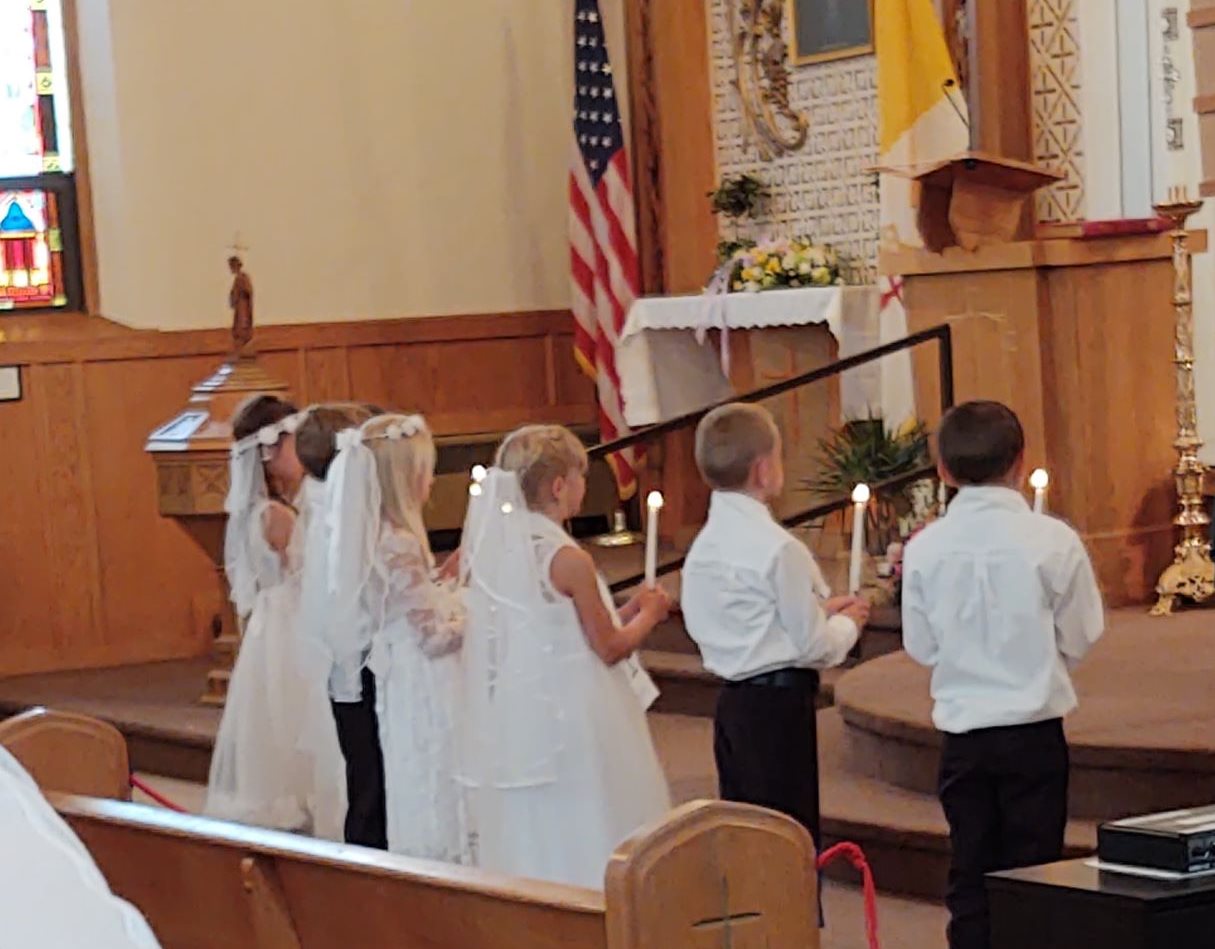
It has been humorously observed that for second graders preparing for and receiving their First Communion it can be harder for them to believe that the round, flat, unfluffy, Consecrated Host was ever bread to begin with than it is for them to believe it is Jesus. This is because they believe that Jesus can do, and does do, the things he says. On this feast of Corpus Christi, let’s humbly turn and become more like those children, who accept that their good and loving friend, our Lord Jesus Christ, is truly here before us.

“As the Father Loves Me, so I Also Love You”

May 8, 2021

6th Sunday of Easter

Who was the first person on earth to know you in your lifetime? Upon reflection, you realize it was your mother. Your mother knew you long before you knew her. And I would wager that she loved you as herself, even willing perhaps to lay down her life for you with the greatest love.

An unborn baby’s understanding of things, of its mother and of itself, is limited. But the mother surrounds the baby. She is responsible for and behind the child’s entire universe. The little one is totally dependent upon her, and experiences everything in the midst of mom. Though the sound is quiet and somewhat muffled with distracting noises, the listening little child can hear the mother’s voice and feel her pulse. Imagine an unborn baby doubting and asking, “Does Mom really exist? Is there really a mother at all?

It is right that we love our mothers, though we ought not to make them into idols. When Cornelius met St. Peter, the Roman centurion fell at his feet to do him homage, but Peter raised him back to his feet, saying, “Get up. I myself am also a human being.” Only one mother in human history has been perfect, but our parents present us with our first living image and icon of God.

The Holy TrinityAs much as a baby receives from his or her mother, the Son of God receives still more so from his Father. How does God the Father give life to his Son? The Son is eternally begotten of the Father; “God from God, Light from Light, true God from true God.” The Father gives his whole being to the Son, and his Son, so loved, receives everything with joy. In today’s Gospel, Jesus says, “As the Father loves me, so I also love you.” How does God love you and me like the Father loves the Son?

For starters, God loves us first. The Father and Son are coeternal, but the self-gifting of the Father is the source of the Son, who then loves the Father, self-gifting himself in return. Likewise, God loves us and gives himself to us first, before inviting us to do the same. “In this is love,” St. John writes in our second reading, “not that we have loved God, but that he loved us and sent his Son as expiation for our sins.” And St. Paul tells the Romans, “God proves his love for us in that while we were still sinners Christ died for us.

Another way we are loved like the Father loves the Son is in how we receive every good thing from God. Like an unborn child receives from its mother, and the eternal Son receives from the Father, you receive everything from God through Jesus Christ. St. Paul speaks of the importance of the Son to the Colossians: “In him everything in heaven and on earth was created, things visible and invisible… all things were created through him… He is before all things, and in him everything continues in being.” For us, Jesus Christ is the one through whom all good things come.

Now would it make any sense for an unborn child, who is cherished by its mother, to see his or her mommy as an enemy? Or could God the Father and God the Son ever be rivals? Of course not! And yet we are guarded against Jesus. We hesitate to share our time with him, we hesitate to give our money for him, we hesitate to forsake our habitual sins for him. So I challenge you, I dare you, to trust more in him who loves you.

When Jesus says, “Remain in my love. If you keep my commandments, you will remain in my love,” he is not threatening to stop loving us. No—we must keep Christ’s commandments, doing his loving will, to fully receive everything he wants to give us. Jesus, who is first loved by God, who receives everything from God, who does God’s will, who rejoices and remains in God, who loves God and self-gifts himself fruitfully in return to God, desires you and me to experience the same blessedness. “If you keep my commandments,” he says, “you will remain in my love just as I have kept my Father’s commandments and remain in his love. I have told you this so that my joy may be in you and your joy might be complete. … It was not you who chose me, but I who chose you and appointed you to go and bear fruit that will remain.”

This Sunday, let us love, honor, and pray for the mothers from whom we were born on earth; while we love, honor, and trust all the more the eternal Son through whom we are born again from above.

A Treasured & Entrusted Child — Funeral Homily for Adelaide Marie Borofka

April 26, 2021

The dominant culture in the days of Jesus’ public ministry oftentimes did not treasure children. A firstborn baby boy might have value to a Roman father, but a baby who was a girl, or malformed or disabled, or simply unwanted might be killed or abandoned in the woods, exposed to die. The early Christians, however, rejected infanticide and adopted foundlings, raising them as their own. This is reflected by a first century Christian text called The Didache (also known as “The Lord’s Teaching Through the Twelve Apostles to the Nations”) which commands: “You shall not procure an abortion, nor destroy a newborn child…” From where did the Christians get this countercultural concern for all children, born and unborn? From our Lord Jesus Christ, of course.

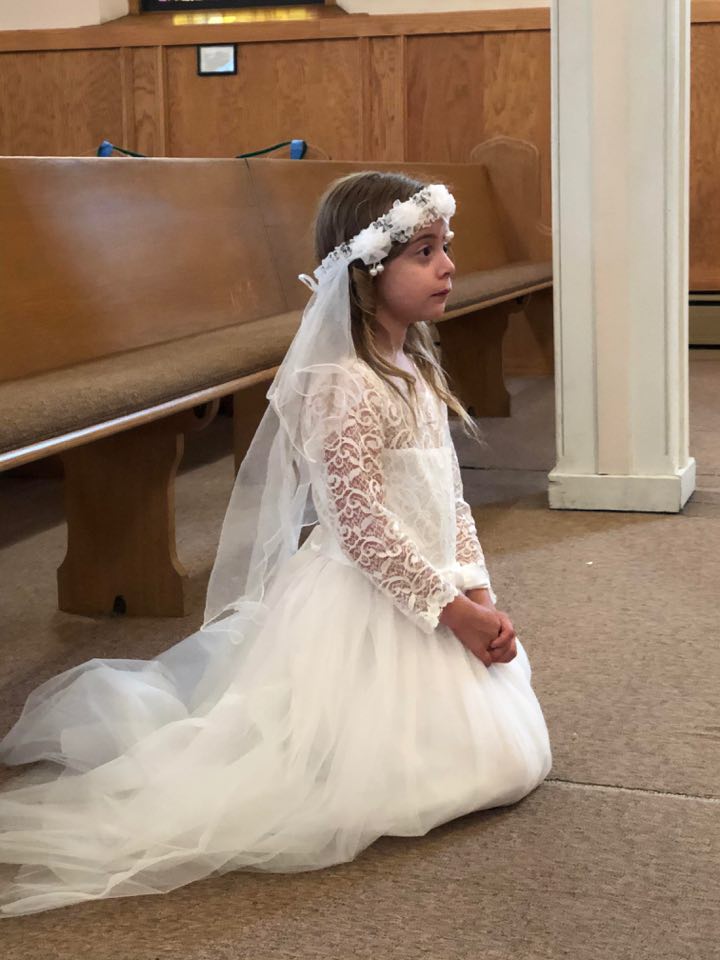
Adelaide Borofka feetThough children are small and weak, Jesus says, “See that you do not despise one of these little ones, for I say to you that their angels in heaven always look upon the face of my heavenly Father.” They have no wealth or worldly power, but Jesus says, “Unless you turn and become like children, you will not enter the kingdom of heaven.” Jesus, calling a child over and putting his arms around it, says, “Whoever humbles himself like this child is the greatest in the kingdom of heaven.” Jesus says that children are to be treasured and loved like himself: “Whoever receives one child such as this in my name receives me.” Jesus says, “Let the children come to me, and do not prevent them; for the kingdom of heaven belongs to such as these.” In just the same way as a good shepherd hates to lose even one of his many sheep, Jesus says, “it is not the will of your heavenly Father that one of these little ones be lost.” Indeed, ‘Jesus loves the little children, all the little children of the world.’
So even when a child dies without baptism, we can entrust them to God’s mercy with great hope, that the love of God which has brought us into being will transform the painful mysteries of the Cross into a reunion of Easter joy. In the midst of any tragedy, we always have a general Christian hope that God will bring good out of what is bad. But in regards to little Adelaide it appears that God has granted us a special, particular consolation. This is Veronica’s story, which she has given me permission to tell you, and which she wants me to share for your benefit.

On Easter Sunday, Veronica began to feel severe abdominal pain. She was admitted to Sacred Heart Hospital in Eau Claire with a blood pressure so high that she was in grave danger of suffering a stroke, even dying. Then, through an ultrasound, it was discovered that the child within her, the child she lovingly carried for seven months, no longer had a heartbeat. Around 2 AM on Monday, April 5th, while she was in great physical and emotional pain, her husband Zach and their gathered family members were praying a Rosary with her. Veronica was praying along with them, off-and-on, as she could manage. And in the midst of all this painful suffering, as she paused with her eyes closed, she saw something. Even though Veronica is certain that she was awake at that moment, she beheld something remarkable. Before I describe Veronica’s experience and what she saw, I will speak briefly about private revelation.

As Catholics we believe that Jesus is not dead, but risen and living. We believe that his saints in heaven are all alive with him. We believe that Jesus and his saints and angels know us, that they care about us, and that they continue to lovingly help us here on earth. We believe visions, messages, and miracles still happen in our day. And sometimes instances of these phenomena are judged by the Church’s authority to be “worthy of belief.” However, unlike public revelation (which consists of Sacred Scripture and the apostolic teachings in the Deposit of Faith) private revelation, even when officially recognized by the Church, is not binding to be believed by all the faithful. I am not personally qualified to make any official judgment for the Church about private revelations, but I tell you: if I did not personally believe that what Veronica saw was of a heavenly origin, I would not be about to share it with you.

Veronica, with her eyes closed during that Rosary in the hospital, saw a woman standing before her bed. There were pretty, puffy, white clouds behind the woman and to each side of her. And rays of sunlight from the left peaked through gaps in the clouds. The woman wore a dazzling, bright white gown. The fabric of her beautiful, full-length dress looked like satin. It had a modest scoop neckline and sleeves that went down to her wrists. The woman also wore a blue, cathedral-length veil of traditional lace, which extended down to the floor. She was dressed similarly to a statue of the Blessed Virgin Mary from Germany which Veronica’s grandfather had given her years before; a statue Veronica used to play with as a girl.

The woman had long, curly, dark hair, snow white skin, and beautiful blue eyes which gazed at Veronica. The expression on the woman’s face was very pleasant, calming and peaceful, concerned for Veronica and reassuring. Veronica says “she looked absolutely beautiful and gorgeous,” such that “no model could compare.” The woman’s lips moved as she slowly spoke with a very feminine, light and calming, beautiful voice, which echoed with some reverberation. And this is what she said: “Veronica, do not be afraid. I will take care of this child as I have taken care of my Son, Jesus. Do not worry and do not cry.

In this vision, Veronica held in her hands her swaddled baby, wrapped in the gray swaddling cloth she had bought for its birth. (Veronica did not yet know whether she had a girl or a boy, since Adelaide had not yet been delivered.) Hearing the Virgin Mary’s words gave Veronica great relief, for who could be better than the Blessed Mother to care for her lost child? Veronica raised up her arms in the vision, completely entrusting her child to Mary. Mysteriously, Mary remained where she stood but seemed to come closer. Veronica says, “I handed her my child and then she was gone.” The entire vision was very brief, perhaps just ten or fifteen seconds, about the length of one Hail Mary prayer.

Veronica was left with feelings of peace, calm, reassurance that everything was OK, and wonder that the Blessed Mother would make herself known to her. Veronica did not share her story right away—she was worried people might think she was crazy—but after this vision she began comforting those gathered around her bedside. When her mother began to cry, Veronica told her, “Don’t cry, you don’t have to cry.” As St. Paul told the Corinthians, “[God] encourages us in our every affliction, so that we may be able to encourage those who are in any affliction with the encouragement with which we ourselves are comforted by God.

Veronica is saddened, of course, still grieving and mourning, but not crushed or depressed like one might expect. She always had faith in God and Jesus Christ, but this experience has reinforced it, and she desires the same growth in Christian faith for you. “There’s beauty in the suffering,” she told me, adding, “I just want everyone to know what I know and to feel the peace that I feel with God and his love.” This is the Lord Jesus Christ’s wish for you, too. Clouds may limit our vision in this world, preventing us from seeing all that God is up to, but even in the hardest times rays of light still shine through. This light comes from the Lord Jesus who loves us, who treasures little Adelaide and who also treasures you.

The New Adam

April 2, 2021

Good Friday

Last evening, on Holy Thursday, I spoke of how Jesus calls and welcomes us to share his Eucharistic feast. Like at the first Passover in Egypt, the sacrifice of Jesus Christ the Lamb of God frees his people from slavery and death. And his Church continues to renew and rejoice in our great deliverance at this holy meal he gives us. Today, on Good Friday, Jesus resembles and surpasses Adam from the Garden of Eden.

Eve was God’s gift to Adam, and he was a gift to her. The Lord God had cast a deep sleep on the man and while he slept fashioned a woman, a bride, from his side. They began a marriage covenant, became one flesh, and were naked without shame on account of their innocence. Though Adam and Eve could have lived forever by eating from the Tree of Life, they still had some concept of what death was. Otherwise, God’s warning ‘you shall die if you eat of the Tree of the Knowledge of Good and Evil‘ would be meaningless to them. And also realize that the wicked tempter did not approach them crawling on his belly in the dirt — that humiliation followed as part of his punishment from God. The devil would have appeared to them as a more imposing predator.

God had placed the man in the Garden “to tend and keep it.” Adam was not only to cultivate paradise, but also to watch over, guard, and protect it, including Eve. However, when the tempter comes seeking to separate her from God forever, Adam does not intervene. At the Tree of the Knowledge of Good and Evil, the first Adam does not lay down his life, he does not fight to the death against “the dragon, the ancient serpent, which is the Devil or Satan,” endangering his bride. So instead, she “took some of its fruit and ate it; and she also gave some to her husband, who was with her, and he ate it.” They failed, and sinned and fell together, with painful consequences for us all.

Jesus Christ is our New Adam “who has similarly been tested in every way, yet without sin.” Though tried in the Garden of Gethsemane, he chose to fulfill God’s will, and “Christ became obedient to the point of death, even death on a cross.” Despite his sinless innocence, they stripped him naked and crucified him. The Cross is the New Tree of the Knowledge of Good and Evil, where we see both his goodness and our evil on full display.

Once he had died, they pierced Jesus’ side, and blood and water flowed out. The Bride of Christ is his Church, fashioned from his side as he slept the sleep of death, born from baptismal water and eucharistic Body and Blood. And note Jesus’ last words quoted by St. John: they may be translated as “It is finished,” or “It is consummated.” Christ the Bridegroom, the New Adam, dies for his Bride, the Church; laying down his life in his victorious battle against the Evil One in another garden, and rising again to eternal life from a garden tomb, exulting her along with himself.

It can be a challenge for guys to identify with being the Bride of Christ, just as ladies are challenged to connect with their baptismal call to be priest, prophet, and king in Christ. There is a spousal mystery here, and we must not mistake every feature of earthly marriage for the fullness of the mystical reality with Christ. But realize that Jesus feels an impassioned love for you, a desire to be with you and be one with you, in a close covenantal bond. This relationship involves work and sacrifice – our daily decision to love him – but Jesus’ love for you is constant, always faithful, in good times and in bad. He rejoices in you as bone of his bone and flesh of his flesh, and offers you his whole self, on the Cross, from this altar, and for ever.

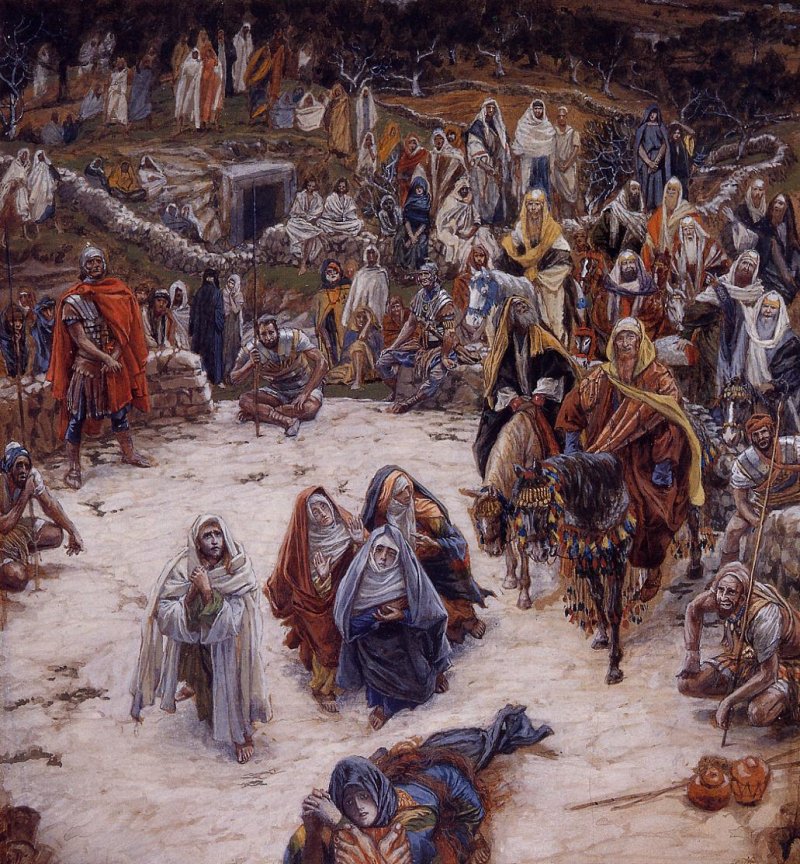
View From the Cross by Tissot

Living Christ’s Mysteries — Funeral Homily for Deacon Ed Feltes, 65

February 23, 2021

On the day Victor and Ramona brought their eighth son to be baptized, while his little head was still damp from holy water, Edward Joseph was draped with white linen. And the priest said (in Latin), “Receive this white garment, which mayest thou carry without stain before the judgment seat of our Lord Jesus Christ, that thou mayest have life everlasting.” Today, we bring Ed’s body before the Lord, draping him in white cloth once more. My uncle Ed told me that as a deacon he would always say yes to doing baptisms. It was, he said, “the introduction of a new life into the Church. By baptizing them you are basically installing them into a Catholic environment and hopefully they will grow in it and not back away from it.” Ed has been a Catholic Christian for more than sixty-five years, ever since he was baptized into Christ’s death and resurrection. And throughout his nearly twenty-four thousand days Jesus Christ accompanied him through life. The life of a Christian is found in Jesus Christ. And the mysteries of Christ’s life are reflected in, shared with, the faithful Christian. We see this throughout Ed’s life.

At his First Communion, young Edward approached and saw the Real Presence of his Lord held before his eyes: “The Body of Christ / Corpus Christi.” Ed received Jesus and Jesus received Ed into a more profound union, a more intimate relationship, between them. In receiving Christ’s Body, Ed was called to be the Body of Christ for this world. When Jesus tells us at the Last Supper, “Do this in memory of me,” he not only commands that we would receive him at the Holy Sacrifice of the Mass, but that we would imitate him in his self-gift: “This is my body, which will be given up for you. Do this in memory of me.” When Ed was sealed with the gift of the Holy Spirit at his Confirmation, he entered a more powerful relationship with that same Spirit of inspiration, grace, and power who led Jesus in his works on earth. The Holy Spirit’s gifts manifested through Ed not merely for himself, for his own salvation, but to serve the wider mission of Christ’s Church, that every person in this wayward world might be saved.

The main vehicle of Ed life’s work and witness would be through his first vocation: marriage. Ed and Jessica met during his studies at Notre Dame University and the year he graduated they entered a new covenant together. Almost forty years ago, they freely committed without reservation to give themselves to each other in marriage, to love and honor each other for as long as they both would live, and to accept children lovingly from God—raising them up according to the law of Christ and his Church. Recall that Jesus Christ called himself the Bridegroom and that in Sacred Scripture his Church is called his Bride. Every Christian is called to imitate Christ, and every Christian soul is spiritually his Bride. But just as the Holy Eucharist we celebrate is not merely a symbol or a memory but Jesus’ Real Presence among us so the Sacrament of Marriage makes present the mystical marriage of Jesus and his Church, within and between a husband and a wife. In beholding a holy, Christian marriage, in its loving, mutual, and lasting fidelity, we see a sign for us and for the world. That love is real, that love is foundational, that love is fruitful. That we were made in love, made to love, made for a holy communion of love, a family. We saw this in Ed and Jessica’s strong marriage which bore fruit, not least of all in their children: in their living son, Christopher, of whom they are so proud, and four other loved children who passed away very, very young; Francis, Steven, Elizabeth, and Meagan. Ed said he looked forward to meeting them and now has that opportunity.

In his marriage, together with Jessica, Ed discerned and pursued a call within his call, a second vocation. Relying on the help of the Lord God and our Savior Jesus Christ, Ed was chosen and ordained for the Order of the Diaconate. After the laying of the bishop’s hands and being dressed with stole and vestment, he was handed a Book of the Gospels with this admonition: “Believe what you read, teach what you believe, and practice what you teach.” Deacon Ed then ministered here at St. Catherine’s, celebrating in this sanctuary and serving throughout this parish. Teaching and preaching, even though he often found preaching difficult. Ed told me that he primarily sought to advance the Kingdom by sharing his life, showing how he lived. He said, “Always live your life such that people want the same that you do.” Looking back at the end of his quiet life, Ed had few regrets, but he did wonder if he was “maybe quiet too long.” Deacon Ed understood well that we need not enter into every pointless, unhelpful argument, but the Spirit does call and help us to speak the important words people need to hear alongside seeing our deeds.

In these last years, these final years, Ed reflected Christ and became configured to him in a new way, by joining him in suffering. Ed had at least six different strokes—twice nearly dying yet surviving—and endured strokes’ debilitating effects. Ed and Jessica described these past several years to me as an experience of continuous loses and grief, but also of continuous mercy and grace. Reportedly, the devastating impact of strokes often breaks up families, but this family grew closer through the trials. I think Ed also became bolder in Christ. While under hospice care at home he never stopped offering good things to his guests; blessings, prayers, holy water and blessed salt, to anyone who visited, wherever they might be in their faith walk.

When I last spoke with my uncle Ed I asked him what he was looking forward to. He simply said, “Heaven. I poured a lot of my life into experiencing, into living life on earth with a heavenly approach.” Asked as to what his near future held, he said, “It’s really up to God. I accept everything he has for me.” Ed and Jessica related to me that it was last March, almost a year ago, over a lunch at Panera Bread, that he told her, “I’m going to go to the Lord in six months to a year.” And he was right. Ed knew he was in God’s hands, being led and offered like an oblation for his glory and as a blessing for many. Knowing that this day was not in the far-distant future, I asked Ed about his wish for all of you on this day of his funeral. He answered, “Pray that they seek God more closely and live a more Christian life. I wish they would seek God for the answers and not just rely on themselves.” So if you have seen Jesus Christ in the life of Deacon Ed Feltes, please listen and heed his words.

And now, in conclusion, like Edward heard in his Last Rites:

I commend you, our dear brother, to almighty God and entrust you to your Creator. May you return to God who formed you from the dust of the earth. May holy Mary, the angels, and all the saints come to meet you as you go forth from this life.

May Christ who was crucified for you bring you freedom and peace. May Christ who died for you admit you into his garden of paradise. May Christ, the true Shepherd, acknowledge you as one of his flock.

May the Lord forgive all your sins and set you among those he has chosen. May you see your Redeemer face to face and enjoy the vision of God for ever.

“I Believe in God”

February 20, 2021

1st Sunday of Lent

“I believe in God,
  the Father almighty,
  creator of heaven and earth.
  I believe in Jesus Christ,
  his only Son, our Lord.”

Thus begins the Apostles’ Creed, the earliest known Christian creed. Like the later Nicene Creed, it opens with a statement: “I believe” which in Latin is “Credo,” and from this the Church’s authoritative summaries of our Christian Faith are called creeds. The Apostles’ Creed is so named because it is rightly considered a faithful profession of the Faith the apostles believed and preached. Since our return to public Masses, we have been proclaiming the Apostles’ Creed together on Sundays and solemnities. For this season of Lent, I am going to do something I have never tried before. Beginning this Sunday and continuing through the 5th Sunday of Lent, I will be preaching a homily series on the Apostles’ Creed. Week by week, we will unpack this, “the oldest Roman catechism,” and explore its meaning and implications for us. The Apostles Creed begins, as all things began, with God.

I believe in God. The whole creed speaks of God, and when it also speaks of man and of this world it does so in relation to God. Each passage in the creed tells us more about him, much like how God has progressively revealed himself to us, who he is and what he is like, more and more throughout salvation history. Who is God? God is the fullness of Being and of every perfection. God is without beginning and without end. God is Truth who cannot lie. The beginning of sin and of man’s fall was due to a lie of the tempter who sowed doubt concerning God’s word, faithfulness, and love. God is love. God’s very being is love. By sending his only Son and the Spirit of love in the fullness of time, God has revealed his innermost secret: God is an eternal exchange of love between Father, Son, and Holy Spirit. They call us to share in their personal communion of love now and forever, but the choice whether to respond is ours.

I believe in God, the Father almighty, creator of heaven and earth. God the Father is the Father of all. He is the origin of everything, of the Holy Trinity in eternity and of all Creation in history. The Father fashions the material universe and the spiritual realms distinct from and outside of himself, and by his gift he creates new life inside of them, including the angels and us. God the Father is transcendent authority, perfectly just, while providing good things and loving care for all his children.

The story of Noah’s Ark and the Great Flood from the Book of Genesis communicates important truths. God is our Creator with sovereignty over all he has made. He is holy and hates sin in his creatures. God’s Great Flood aims to wash away sin from the face of the earth and then begin anew through a new covenant with Noah. Yet the consequences of the Fall were neither cured nor cleansed; Noah and his household carried sin with them onto the ark and humanity’s waywardness continued after they disembarked.

This represents a cautionary tale for us against a common human error or misconception about how evil might be cancelled or conquered in this world. In 1945, the Russian writer Aleksandr Solzhenitsyn was sentenced to a Soviet forced labor camp for his criticism of communist tyranny. After his release he went on to write his most famous work, “The Gulag Archipelago.” In it, the Christian Solzhenitsyn shares this true insight:

“If only it were all so simple! If only there were evil people somewhere insidiously committing evil deeds, and it were necessary only to separate them from the rest of us and destroy them. But the line dividing good and evil cuts through the heart of every human being. And who is willing to destroy a piece of his own heart?”

We can and should work for change in this world, but advocacy for changing evils “out there” will prove ultimately futile without accompanying spiritual change within us. But how are we to accomplish this most difficult transformation inside our own hearts? Human history and our personal experience show we cannot achieve this on our own, so how shall we be saved?

I believe in Jesus Christ, his only Son, our Lord. On the cusp of his fruitful public ministry,

“The Spirit drove Jesus out into the desert,
  and he remained in the desert for forty days,
  tempted by Satan. He was among wild beasts…”

After the Fall of man, the garden paradise is replaced by a desert. The animals, formerly tame in the Garden of Eden, have become wild in our fractured world. Humanity now had a great debt with God it could not pay, a vast chasm between him and us we could not cross. The first Adam died unatoned, but a new Adam has come. The Eternal Son of God entered time and space and became human to reconcile God and man and establish a new covenant between us. Jesus comes to undo the Fall, dwelling in the desert among the wild beasts, to be tempted by the ancient serpent, the devil. Jesus comes to reclaim the crown that Adam had lost. Jesus Christ, God’s only Son, would be the Lord of all. He comes and proclaims:

“This is the time of fulfillment.
  The Kingdom of God is at hand.
  Repent, and believe in the gospel.”

During these forty desert days of Lent, Jesus invites you to approach him, asking his forgiveness in the Sacrament of Confession. He invites you dwell with him, spend time with him, encountering him through daily prayer and the Holy Eucharist. Jesus would accompany and strengthen you in your earnest battles against temptation, growing you in his virtues. And he would perfect your love, forming you in his likeness, preparing you for more fruitful works on earth and for the supreme, communal joy of Heaven. Now is the time for Confession, for prayer, for the Mass, growth in virtue, and growth in love.

The Holy Spirit would lead you out to Jesus during this desert retreat of Lent. And everything Jesus does for you, everything he does within you, is to lead you back to God our Father. I believe and proclaim that this is the Father’s will for you. Yet, despite all of almighty God’s infinite, omnipotent power, only you can freely choose whether to answer him with your “Yes.”

Christ the Bridegroom and His Bride — The John and Megan Salm Wedding

February 13, 2021

When Jesus saw the crowds, he went up the mountain. He sat down and his disciples came to Him. Jesus began to teach them, and his first teachings in this Sermon on the Mount were the Beatitudes we just heard. Blessed are the poor in spirit, the mourners, the meek, the merciful, the pure of heart, the peacemakers, those who hunger and thirst for righteousness, those who are persecuted for the sake of righteousness. What do these things mean? How can we best understand them? Who best models these blessed paths for us to follow? Realize that Jesus’ Beatitudes are autobiographical. These Beatitudes describe Jesus himself.

Jesus is poor in spirit, relying upon his Father-God, and personally connecting with him every day through prayer. Jesus mourns because he loves and cares about us, our brokenness, our pains, our sorrows. Jesus is meek, not coming as a warrior on a warhorse imposing his will by force, but rather–for instance–entering Jerusalem humbly on a donkey, inviting the world and all people to freely accept his Kingdom and himself. Jesus is merciful, he forgives us because he loves us. Jesus is pure of heart, he loves with pure motives and true devotion. Jesus is the peacemaker whose peace is true peace. More than bread alone, Jesus hungers and thirsts for righteousness. And because of this, he is persecuted for the sake of righteousness, and blesses many through his self-sacrifice.

Jesus went up the mountain and his disciples came to him. There are many crowds in this world, but Jesus’ disciples, his Church, they come to him. And Jesus teaches us to imitate his own example. The saints give us excellent examples of how to be Christlike. As St. Paul tells the Corinthians, “Be imitators of me, as I am of Christ.” Get to know saints, those alive on earth and those alive in Heaven, and you’ll become holier, growing ever closer to the best version of yourself through their friendship. John and Megan, be saintly friends for each other to help each other, and your children, be saints. And meditate upon the relationship of Christ and his Church to guide you in your marriage.

Recall that Jesus calls himself the Bridegroom and his Church is called his Bride. Now every Christian is called to imitate Jesus Christ, and every Christian soul is spiritually his Bride. But just like the Holy Eucharist we celebrate today is not just a symbol or a memory of Jesus but his Real Presence among us, so the Christian Sacrament of Marriage you are about to enter makes present the mystical marriage of Jesus Christ and his Church between you and within you. John, love your wife, even as Christ loved the church, handing himself over for her, to bless and sanctify her. Megan, love and follow your husband, becoming fruitful and holier together with him.

Pray as a couple, with your kids, and individually on your own, stay close to the Lord’s Sacraments in his Church, relying on God to enrich your spirits, personally connecting with God every day. Have compassion for each other, mourning each others’ trials and consoling each other through them. Be meek toward each other, leading or following as is proper, but always inviting rather than imposing. Be merciful, forgiving each others’ faults in love. Be pure of heart, devoted to each other with pure motives. Be peacemakers, not merely content with an absence of conflict, but cultivating true harmony together. And be not content with just the pursuit of daily bread but hunger and thirst for righteousness, and be willing to suffer for righteousness, that your lives may be a blessing to many.

John and Megan, we are happy for you, we are excited for you, and we anticipate great things from the two of you together. May our Lord Jesus Christ, who has begun his good work in you, bring it to fulfillment.

God’s Divine Plan

December 26, 2020

Feast of the Holy Family
By Deacon Dick Kostner

Today I would like us to reflect on what the “Holy Family” really is. I want to begin by dissecting our definition of “family” and try to expand upon that definition to reveal the gift that God has given us. If I were to ask you to define “family” I believe most of us would say it’s a union of people consisting of a father, a mother and children. Now if I were to ask you to define what the “Holy Family” is, I believe most of us would say, “Well, that’s Joseph, Mary and Jesus.” But I think that if we reflect upon this a little bit we would realize there is something missing with our formula for “Holy Family”. How did all this begin? Well like everything its origins begin with the creator, with God. It was through a divine plan for the building of the kingdom, that God put together this relationship we call “family”.

Within the traditional family we have a “father”,  a head or lead person for this relationship. Let’s look at Joseph for some characteristics. Joseph was a humble person; a man who provided for his family; he was a listener to what God was saying to him, he was a listener to the concerns of the other family members. Joseph was trusting of what God had planned for him and his family even though he could not understand the details of the plan. Joseph was loving and cared deeply for Mary and for Jesus and was the primary teacher for his family for the laws of his Jewish faith. He was committed to obeying the laws of God and of his faith and in being the lead person to teach his family those laws.

Also within the traditional family there is a “mother”. a person committed to be the love glue of the family. Let’s look at Mary for some characteristics of this family member. Mary was a great listener. She had a tremendous faith that allowed her to trust in God; this faith allowed her much courage and she not only listened to God but was fearless in going out into uncharted waters. Mary was wise and loving and could read the will and needs of her family. She always put the welfare of her family first over her needs and desires.

Also within the traditional family there are children. Let’s look at Jesus to see what characteristics this family member has. Jesus was also a great listener. He listened to his parents and to his heavenly father. He was a student, a person thirsty to learn about his faith and his roots. Jesus was obedient to the will of his family and to the will of his heavenly father. Jesus was like the other family members, loving and caring about the welfare of his family and the welfare of others.

This relationship we call “family” was a creation of God with the purpose and design to help foster and grow the kingdom of God. So what is missing from our traditional definition of “Holy Family” is a very important member, that member being God, the Father, the creator of this entity. When God is so recognized we are no longer just a family we are now a “holy family” for we recognize that we were brought together through the divine plan of the Father!

Within our culture we see many attacks on the family. We find so called experts who are trying to re-define what a family is. We find a culture trying to re-define the roles of mother, father and children within a family, and even telling us that certain positions are not necessary to have a family. Whenever humans try to alter God’s divine plan there are going to be malfunctions and problems. If we remove for example certain parts of an automobile, we find that it does not run as good. Why, because we are altering what its creator intended. If certain key parts of a car are removed at some point it will no longer function or run. So it is with God’s creation of family. If we try and alter what the creator intended at some point it breaks down and will no longer function. Paul’s Letter to the Colossians today, tells it all, “Wives, be subordinate to your husbands, as is proper in the Lord. Husbands, love your wives, and avoid any bitterness toward them. Children obey your parents in everything, for this is pleasing to the Lord. Fathers, do not provoke your children, so they may not become discouraged.

As members of the Holy Family of God our spirits are joined so that we can receive the benefits of intimacy both in this life and in the next. That means death becomes non existent. Those of you who have experienced the loss of a loved one know what I am talking about. While body presence may be missing the spirit of Holy family members lives on and time is no longer relevant. Members of God’s Holy Family continue their presence with us even after death. During the Advent Season I pondered this point when I was feeling bad that our Churches could not be filled to capacity because of Covid limitations. But during Mass I realized that our Church’s are still filled to capacity not just on Christmas and Easter but at every Mass because our deceased Holy Family members are still here with us in Spirit filling our Churches with standing room only. You know I am a Student of the Spirit. I’m going to share a quote from a favorite website of mine, Spirit Daily. Jeannie Ewing is a Catholic spirituality writer who writes about the moving through grief, the value of redemptive suffering, and how to wait for God’s timing fruitfully. She says this about the mystery of the Holy Spirit:

When you’ve learned to attune yourself to the stirrings of the Holy Spirit, you will be aware of His presence in you at all times. Sometimes God chooses to sleep in us, and we don’t notice Him moving or working. Other times, we have a distant but keen awareness that God is accompanying us through a difficult decision or terrifying prognosis.

One day we come to a realization that all we do throughout our days are done in and with Him. Even when we do not consciously or formally make an offering to God, the union we share with Him is so obvious that we don’t need to speak but just be. In that being, we discover the place where we end and God begins is a very short thread.

We are told by our Church Leaders that it is believed that during Christmas that God releases the most family members from Purgatory and welcomes them into heaven. I believe that is because of our Prayers and Masses that are offered up for those Souls who have joined us to celebrate Eucharist. So to all of the deceased Holy Family spiritual members with us today we need to say “Merry Christmas” and thanks for joining our Holy Family celebrations.