Archive for the ‘Marriage and Family’ Category

Wreaths of Flowers — Funeral Homily for Janice Bleskacek, 87

December 16, 2020

While Janice lived at her home she kept two notable items on the night table beside her bed, both reflective of her deep faith: a wooden cross and a particular book. At first glance this small, black book might be taken for a Bible, but its cover bore the title “The Catholic Girl’s Guide.” A hand-written inscription within indicates that this book was given to her as a gift way back in 1947 when she was fourteen years old. I suspect that Janice regularly turned to the latter parts of this book, with its compendium of Catholic prayers and devotions, but she would have been familiar with the earlier parts of the book as well. Its author, Fr. Francis Lasance, writes about nine virtues a young lady must cultivate, likening each one to a flower which form together “the Maiden’s Wreath.” (This book was written for girls but in a book written for boys these same essential virtues would have their places, perhaps within a holy young man’s toolbox.)

The nine flowers of the wreath include:

The Sunflower of Faith, which is turned upward towards the glorious Sun.
The Ivy of Hope, which clings and climbs despite adversity.
The Peony of Love of God, which lifts up its heart as an offering.
The Rose of Love of Our Neighbor, which is a kindly gift to others.
The Carnation of Obedience, which is how Christ incarnate came as a noble servant.
The Forget-me-not of Piety, which remembers and keeps the practice of religion.
The Violet of Humility, which thrives and blossoms most beautifully in the shade.
The Daffodil of Industry, which hastens to blossom as soon as possible.
And the Narcissus of Truthfulness, which holds truth as a golden treasure never to be betrayed.

In addition to this “Maiden’s Wreath,” the book’s author next speaks of a second crown, “The Wreath of Lilies,” comprised of The Lily of Purity, which is untarnished in its splendor. The lily has long symbolized the Blessed Virgin Mary, whose own femininity is fulfilled to its fullest, holy perfection.

Young Janice gathered and cultivated the nine flowers of her maiden’s wreath into her adulthood. She carried her virtues into her marriages, first with husband Kenneth and then, after being widowed at age thirty-eight, with her husband Gerald. And through these unions, Janice gathered and nurtured eight young ladies, eight flowers: Nancy, Susan, Cindy, Carla, Dawn, and Jacquelyn, Deb and Terri. The nine of these ladies together formed a beautiful wreath of love; along with family and friends; grandchildren, great-grandchildren and great-great-grandchildren as well. Today we pray for Janice’s soul so that in addition to her life’s virtues she may be crowned with the second wreath of purest glory; that purified from any fault or imperfection, she may rejoice before God with Jesus Christ and Blessed Mary and all the saints and angels. Like Jesus Christ says in our Gospel, Janice’s prayer shall be: ‘Father, those whom you gave me are your gift to me. I wish that where I am they also may be with me one day. I made known to them your name and I will make it known, that the love with which you loved me may be in them and we all may be together again forever.

Scripture says of this life,

“All flesh is like grass,
and all its glory like the flower of the field;
the grass withers, and the flower wilts;
but the word of the Lord remains forever.”

Every dear one’s death reminds us that we will not live this present life forever. But even though the flower fades and dies away we can beautifully blossom anew. If we have died with Christ, we believe that we shall also live with him. Just as Christ was raised from the dead by the glory of the Father, we too may live in newness of life. So let us renew our faith and renew our lives in the Lord, Good Shepherd, Jesus Christ, who desires to reunite his whole flock on his holy mountain, where sin and death will be no more, where every tear will be wiped away by God, and where we can hope to be together with Janice and Kenneth and Gerald and Carla forever.
Five Reflections on St. Joseph

December 11, 2020

By Fr. Victor Feltes

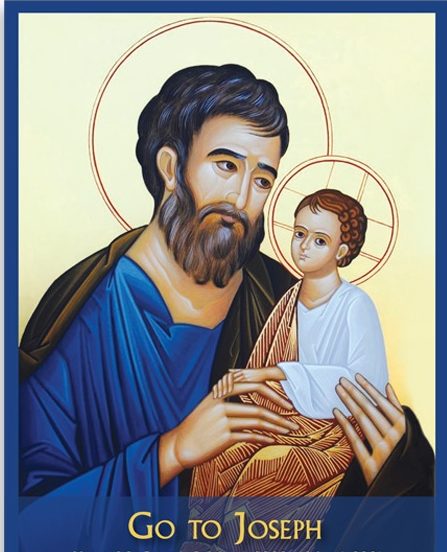
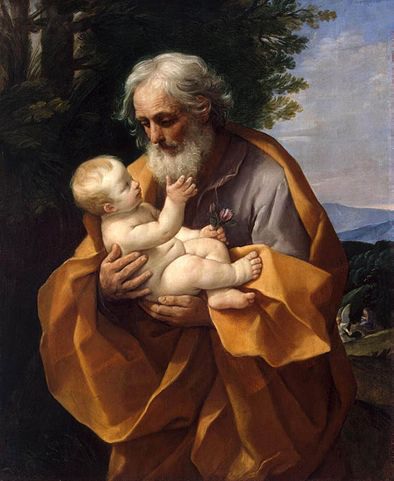
This week, on the Solemnity of the Immaculate Conception and the 150th anniversary of the proclamation of St. Joseph as patron of the Universal (that is, the entire) Church, Pope Francis declared this “The Year of St. Joseph” through December 8th, 2021. The Holy Father also published an apostolic letter about Jesus’ beloved foster-father entitled “Patris Corde” (or “With a Father’s Heart”). In it, Pope Francis writes about Christian devotion to this great saint and mentions how the phrase “Go to Joseph” has an Old Testament origin. These are five of my personal reflections on St. Joseph.

Go to Joseph

In the Book of Genesis, during a time of famine across the known world, the Egyptians begged their pharaoh for bread. He in turn replied, “Go to Joseph and do whatever he tells you.” Pharaoh was referring to Joseph the son of Jacob who had risen from a very lowly state to become the viceroy of the kingdom. Enlighted by divinely-inspired dreams, this Joseph’s leadership went on to feed and save the whole world from death, including his own family. According to the genealogy at the beginning of Matthew’s Gospel, the New Testament’s Joseph also had a father named Jacob. Though poor and obscure, St. Joseph’s heaven-sent dreams enabled him to guide and protect his Holy Family, leading to the world’s salvation through the Bread of Life, Jesus Christ. Today, as a powerful intercessor in the Kingdom of God, we are wise to “go to Joseph” for needed help.

His One Word

Within the Gospels, St. Joseph has no recorded words. There is no indication the foster-father of Jesus and spouse of the Virgin Mary was physically unable to speak or ever took a vow of silence; he is simply never quoted. Yet the Gospels suggest he said at least one specific word.

Matthew’s Gospel records how an angel (probably the Archangel Gabriel though perhaps another) told Joseph in a dream: “‘[Mary, your wife,] will bear a son and you are to name him Jesus…’ When Joseph awoke, he did as the angel of the Lord had commanded him and took his wife into his home. He had no relations with her until she bore a son, and he named him Jesus.” Just as John’s Gospel tells us “Jesus did many other signs in the presence of his disciples that are not written in this book,” so St. Joseph almost certainly said many unrecorded things. But the one word that Scripture most clearly suggests St. Joseph said is “Jesus.” The name of Jesus is the sum total proclamation of St. Joseph’s life. May it be so for us as well.

Image of the Father

The Letter to the Colossians says of Christ, “He is the image of the invisible God.” Something analogous was true of St. Joseph for Jesus in being the earthly image of his Father in Heaven. Joseph’s life has no recorded beginning or end in the Bible. We know that he was a carpenter craftsman – a creator of many things to be blessing for others. Perhaps he looked at everything he made and found it very good. Alongside Mary, Jesus was obedient to Joseph; he was Jesus’ boyhood teacher, deliverer, and role-model. Jesus lovingly called him, “Abba, father.” St. Joseph was a holy and loving image of God the Father for his Son. Though imperfect, may we likewise be images of God for each of our biological and spiritual children.

The Hour of his Death

When did St. Joseph die? Luke’s Gospel tells us that when 12-year-old Jesus was found at the Temple in Jerusalem he went down with his parents to Nazareth and was obedient to them. After that joyful reunion, St. Joseph makes no further personal appearances in the Gospels. Joseph had apparently passed away by the time of Christ’s Passion since Jesus on the Cross does not entrust his blessed mother’s care to her faithful husband but to a beloved disciple. Other episodes in the Gospels suggest that Joseph died before the start of Jesus’ public ministry.

How did St. Joseph die? If Joseph, the heir to the throne of David, had been murdered we would expect this prefigurement of Jesus’ own death to be described in the Gospels like the death of St. John the Baptist. Unless some sudden catastrophe befell him, an ailing Joseph would have reached his deathbed. And who would have been compassionately comforting him and powerfully praying for him at his bedside as he reached his hour of death? His having most likely died peacefully in the loving presence of Jesus and Mary is what makes St. Joseph the patron saint of a happy death.

The Terror of Demons

St. Joseph is called “the Terror of Demons” and his spouse “the Queen of Angels.” Yet the Virgin Mary at the Annunciation was greatly troubled and afraid at the Archangel Gabriel’s greeting, and when resettling his Holy Family from Egypt Joseph feared mere flesh and blood – avoiding Judea because Herod’s son ruled there. How can this man and woman now be leaders of awesome angels or banes of dangerous demons?

One key trait Joseph and Mary shared is obedience. The Book of Exodus displays Moses’ obedience by recording God’s instructions to him and then repeatedly presenting Moses doing “just as the Lord had commanded.” Whenever St. Joseph receives instructions from God (to take Mary into his home, to escape to Egypt, or to return to Israel) the text that follows has Joseph doing exactly as God commanded. Mary was also radically open to God’s will, as when she famously said, “Behold, I am the handmaid of the Lord. May it be done to me according to your word.” The demons, for their part, fell from Heaven’s glory because they refused to do God’s will.

Joseph and Mary were also among the first on earth to accept and love the (then still-unborn) baby Jesus. The demons, in contrast, were the first to reject the Son of God. We do not know the exact reasons for their primordial rebellion but some theorize the demons took offense at God’s plan that the Eternal Son would become an incarnate human being, crowning that creature with a greater glory than the angels. “By the envy of the devil, death entered the world,” says the Book of Wisdom.

Joseph and Mary’s obedience to God’s will and their love for Jesus on earth lead to them being gloriously empowered in Heaven. Jesus told his disciples, “you who have followed me will also sit on twelve thrones, judging the twelve tribes of Israel,” and St. Paul reminded the Corinthians “we will judge angels.” It seems that faithful human creatures who, by God’s grace, love and serve the Lord in the likeness of Christ himself are best suited to become powerful, humble, servant rulers in the Kingdom of Heaven.

St. Joseph, patron of the Universal Church, pray for us throughout this holy year!

Revealers of God — Funeral Homily for Kevin Lenfant, 70

December 3, 2020

In the beginning, when God created the heavens and the earth,” God said: “Let there be light, and there was light.” By God’s Word all things were made and his divine attributes are reflected in this universe he’s created. In the inspired word of God, the Holy Scriptures, we read about how he reveals himself to humanity throughout salvation history, through powerful deeds, prophetic words, and poetic images that reveal what he is really like. But ultimately and greatest of all, God reveals himself to us through the Son. “In the beginning was the Word, and the Word was with God, and the Word was God.“In times past, God spoke in partial and various ways to our ancestors through the prophets; (but) in these last days, he (speaks) to us through a Son, …through whom he created the universe,” the Word of God. Jesus Christ, the Bible, and God’s creation make use of familiar things to help reveal God to us. There’s warriors battling, couples marrying, fathers fathering, shepherds shepherding, and plants producing new life. A faithful Christian’s life will reveal God too, as his mysteries are reflected in the features of our lives.

There is a great deal of war and conflict in the Scriptures. This should not be surprising, since this world is broken and often evil. Wickedness is at war with goodness, so good men are called upon to defend the defenseless, to shield the innocent from evil assault. No nation is without flaws, but we should love and defend the goodness of our own. In the Old Testament, armed conflicts abound, but in the New Testament the martial imagery is turned to focus upon the spiritual battle which is being fought around us and within us. St. Paul tells us, “put on the armor of God, that you may be able to resist on the evil day,” for our greatest struggle is not with flesh and blood but with spiritual evils in this world. Our calling is to Semper Fi, being “always faithful”, but we know how difficult this is, “for a righteous man may fall seven times.” So when a brother dies we pray for him, like the Maccabean army prayed for their fallen in today’s first reading from the Old Testament, that whatever flaws or attachments to sin remain in them may be purged away, that those who die as friends of God may experience his full and splendid rewards in Heaven.

Another very plentiful thing found in the Bible is shepherds. Among the Old Testament patriarchs there is Abraham, Jacob-Israel, and his twelve sons – shepherds all. Later, there’s the prophet Moses, King David, and Amos the prophet, each of whom tended flocks for some time before receiving a higher calling from God. The first to hear the happy news of Christmas night were shepherds. The bond between a shepherd and his flock can be a very close one. So close that David, in writing today’s psalm, the most famous of all the psalms, depicts God as his shepherd and David himself as his well-cared-for sheep. The sheep of a good shepherd are like his children to him. He is as a father to his flock. “The sheep hear his voice, as he calls his own sheep by name… and they recognize his voice.” He knows his own and they know him. The good shepherd devotes his life to his sheep and little lambs. He delights in his flock and his presence comforts them. Rita tells me that family came first for Kevin. She tells me how he loves his children and grandchildren, that he loved to watch them grow, and how extremely proud he is of them. Such is his fatherhood.

A third common theme we encounter is married love. The saints see an allegory in the romantic Old Testament book The Song of Songs: God’s pursuit and love of his people Israel. In the Gospels, Jesus Christ calls himself the Bridegroom, and New Testament passages call the relationship of Jesus Christ with his Church a marriage. As Book of Revelation declares, “The marriage of the Lamb has come and His bride has made herself ready. … Blessed are those who are invited to the marriage supper of the Lamb.” This leads us to a mystery: did God use our familiar and intimate knowledge of human marriage, the covenantal love of a man and woman, to describe the union of Christ and his Church because this was the best available image for him to borrow, or rather did he create and establish marriage from the beginning to reveal and foreshadow the fulfillment with him that was always meant to be?

Rita told me the delightful story of how she and Kevin met. It was another Normal day at Illinois State University where they were both college students. Rita was having a hard time in a political science class, while political science was Kevin’s major, so he came over and tutored her. Apparently Rita was very impressed by many things about him because once he had left she turned to her friend and said, “Don’t let me marry him.” But she did. And it’s a good thing she did. Why was Rita afraid? ‘Well,’ she thought, ‘I’m so young, we’re both in college, he’s planning to be in the Marines, and how would all that work?’ But thankfully these doubts did not prevail. Imagine how much would have been lost if they had! When our Lord Jesus Christ proposes to be a greater part of our lives, we can similarly balk, all sorts of doubts and fears arise, but I urge you, I plead with you, to say “Yes” to him all the same. In this life, opportunities for some relationships pass by without another chance for something more. But with God, no matter where we’ve been or what we’ve done, all long as we still live, we can start more devotedly following him today.

Jesus often preached to the crowds using familiar things. For example, Jesus spoke about fish around fishermen, of bread and salt to bakers and cooks, and of plants to farmers in the countryside. He says, “Learn from the way the wild flowers grow. They do not work or spin. But I tell you that not even Solomon in all his splendor was clothed like one of them. If God so clothes the grass of the field, which grows today and is thrown into the oven tomorrow, will he not much more provide for you, O you of little faith?” At one point Kevin and Rita owned three flower shops. Now there is just the one they started in Bloomer more than forty years ago. Rita tells me that Kevin, between the two of them, probably likes flowers more. The flowers they sold would sprout and grow, beautifully blossom, and then fade and wither. This is a sad reality, but we are consoled by the knowledge that there are more flowers for us to enjoy. Similarly, in this world we are born and grow, we blossom and die, but we are consoled by the knowledge in Christ that this is not our end.

In today’s Gospel Jesus says, “unless a grain of wheat falls to the ground and dies, it remains just a grain of wheat; but if it dies, it produces much fruit.” Jesus was not eager to suffer, he asked his Father in the Garden if it were possible that this cup of suffering might pass him, but he was not unwilling to die because he knew that would not be the end of good things for him. It’s O.K. to want to live, to fight against illness and death, for life is a great good. But it is also O.K. to die. “For if we live,” as St. Paul says, “we live for the Lord, and if we die, we die for the Lord; …whether we live or die, we are the Lord’s.” It’s O.K. to mourn. It’s O.K. to cry. But God’s Word reveals to us that we should not despair. Heed God’s word, in creation, on the Sacred Page, and in the person of our Savior, so that you and I and Kevin may all be happily reunited in God story one day.

Prepared for His House — Funeral Homily for Cynthia “Cindy” Nazer, 64

November 3, 2020

Today, St. Paul’s Parish offers you our sympathies, our prayers, and the consolation of Jesus Christ. The parting that comes from death is naturally mournful. But it is our faith in Jesus Christ that allows us to mourn with hope. No funeral homily can capture the full mystery of a Christian life; all that Cindy has done, or all that Christ has done in her. But speaking with Steve, her husband, I learned a particularly interesting aspect of their life together I’d like to share with you.

Cindy always liked things made of wood, and one of her desires was to have a log-cabin home. So, in the 1980’s, Steve and Cindy began building one together midway between Bloomer and Chippewa Falls. They began with the garage. Steve says this was for practice. Better to make one’s mistakes on the garage than with the house. After that, they stored lots of lumber onsite there. The project also involved an barn in which their cut logs were dried for two years, purging them of unwanted water, to prevent them from later warping out of shape. Placing these heavy logs was an exacting process. Steve tells me that each log must be laid in place three times over to make sure they fit properly, along with shaving, trimming, and cutting of the logs all throughout the process. But once perfected in this way, these logs became the home where Cindy and Steve and their family lived together. It was her home through their marriage together until her final day on earth.

This building of a house to share in marriage has a connection to our Gospel today. In Jesus’ time and culture, when a Jewish groom married his bride, he would go off to build or prepare the space of their home. It would typically be an extension upon his own father’s house. And once this long and demanding project was complete, the husband would return to his bride and take her into their new home to share their lives together. This is why Jesus says to his disciples, and tells us, his bride the Church:

In my Father’s house there are many dwelling places. If there were not, would I have told you that I am going to prepare a place for you? And if I go and prepare a place for you, I will come back again and take you to myself, so that where I am you also may be.

Jesus is the bridegroom and we, the Church, are his bride. He says, “Do not let your hearts be troubled. You have faith in God; have faith also in me… Where I am going you know the way.” But this last remark causes St. Thomas alarm, “Master, we do not know where you are going; how can we know the way?” And Jesus answers, “I am the way and the truth and the life. No one comes to the Father except through me.” What does the way of Jesus look like? What does the life of Christ look like? This is the truth in Jesus Christ: for the faithful one, after much suffering, comes death, but this dying is not the end, it is not utter destruction, for this life is followed by new life and resurrection.

Therefore,” as St. Paul writes “we are not discouraged; rather, although our outer self is wasting away, our inner self is being renewed day by day. For this momentary light affliction is producing for us an eternal weight of glory beyond all comparison… For we know that if our earthly dwelling, a tent, should be destroyed, we have a building from God, a dwelling not made with hands, eternal in heaven.

Like those logs chosen, refined, and fitted for the log cabin, God uses the events of our lives, the good moments and the bad, to make us ready for his home. “Chastised a little,” the Book of Wisdom says, “they shall be greatly blessed, because God tried them and found them worthy of himself. As gold in the furnace, he proved them, and as sacrificial offerings he took them to himself.

The parting of a loved one may ache our hearts, but our sufferings are not without hope, or meaning, or purpose. Through Jesus, with Jesus, and in Jesus, the Savior of the world, the prayer of the psalmist can be beautifully fulfilled for Cindy, for others, and ourselves – which is the fulfillment of all our longings:

There is one thing I ask of the Lord;
only this do I seek:
To dwell in the house of the Lord
all the days of my life.
That I may gaze on the loveliness of the Lord
and contemplate his temple.

God’s Desire for an Intimate Relationship with Humanity

October 24, 2020

30th Sunday in Ordinary Time
By Deacon Dick Kostner

Today we learn of God’s desire for us to form an intimate relationship with him for all eternity. When questioned as to the greatest commandment contained in the Torah Jesus answers that it is for us to love God with all of our heart, soul, and mind. So the question for us to answer is how does this occur? Well the answer is simple it requires we build a relationship with God. When I think back on how this occurred for me when I met my wife it started with an attraction to this person who would ultimately become my wife. It was something about her looks and mannerisms that made me want to know more about her. So I guess it began with my mind. My mind kept telling me to take a closer look at this gal. So communication began which told me that this person thinks and acts as I do. I witnessed her relationship with her family and friends and it was complimentary to the relationship I had with my family. With time and interaction with her my mind moved from a head thing to a heart thing. The heart has an appetite that can only be satisfied by spending more time with a person. And I found out that I was happy and satisfied with myself mostly when I was with her.

Everything else of importance in my life began to take a back seat to my hearts desire to be with and learn more about this special person. I knew my heart was taking over my mind when even during deer hunting season I longed for and looked forward to seeing her even while on my deer stand and doing things that previously had been the number one priority in my life.

With spending more time with this person and understanding her better sometimes than she understood herself, the soul aspect of the relationship came into play. The two started to become one. Communication included and occurred between us that no longer required words. The minds of two people no longer were independent of each other but had joined to form a new entity. I was no longer thought of by others as “Dick Kostner” but rather Barb and Dick. Even when planning meals the minds of two began to think as one and the stomachs of two also began to hunger and feed as one. We loved each other with all of our heart, soul and mind, and thus became a new entity bigger and stronger than ever existed before we met each other. This love relationship grew with the birth of a child and a new family relationship with its joys and trials expanded through love.

This is the relationship that God desires with his human creations. This type of relationship requires complete freedom of choice and that is why we all have a God given right to choose who we will listen to and who we will associate with. When we choose God to be our best friend and advisor, we enter into a new existence and the ultimate spiritual level our Church scholars have named the “Unitive State of Spirituality” a divine state where we are one in spirit with the Father in the way that we love not only God but we love our neighbors as ourselves as did Jesus . We become to others a visible new entity that causes some people to fear us, while others look up to us for answers and opinions. I witnessed this first hand when I was ordained a Deacon. I moved from being viewed by the public as Dick Kostner or Attorney Kostner to Deacon Dick or Deacon Kostner which was a real rebirth for me not only in name but also in personal objectives and desires monitored by a family friend named Jesus.

It all begins with something within our mind that says “I want to get to know this person named ‘I Am‘ — better.” I want to become better friends with this Deity, my creator, who understands me better than I understand myself. This is God’s first and foremost commandment or desire for us. He desires that we join him in becoming one in Spirit with Him, and to display our love for him through our love for our neighbors whether they love us or even hate us. Jesus died for us he asks us to die to “self” for others so as to become one in Spirit with him for all eternity as a member and part of His Holy Family.

The Unity of the Trinity

June 8, 2020

Trinity Sunday—Year A

My favorite professor at seminary was a young, married, Catholic layman named Dr. Perry Cahall. He taught us several courses but his Church History class stands out in my mind. I took away two big insights from Church History.

First, in every age, century after century, it seemed like the Catholic Church was circling the drain, about to go down the tubes for good. There were Roman persecutions, Gnostic and Arian Heresies, barbarian invasions, Islamic conquests, Protestant rebellions, atheist revolutions, fascist and communist totalitarianisms. And yet, the Church endures because God is with her. Remembering this has been a reassuring consolation for me in the past, in our present circumstances, and will be in the future.

The second major insight was how heresies clarify the Church’s teachings. When some sect or movement would arise teaching some new heresy this would prompt a Church Council to more clearly define what we believe as Christians. Error prompts the profession of truth. This was especially so in our profession of the Holy Trinity.

Dr. Cahall is a pretty mild guy, so one of his most memorable lectures stands out in my mind. He said, “Gentlemen, if some day you are ordained and on Trinity Sunday you get into the pulpit and say, ‘The Trinity is a mystery and there’s nothing we can really say about it,’ I’ll hunt you down like the dogs you are.” Why? Because as the Catechism says, “The mystery of the Most Holy Trinity is the central mystery of Christian faith and life. It is the mystery of God in himself. It is therefore the source of all the other mysteries of faith, the light that enlightens them. It is the most fundamental and essential teaching in the hierarchy of the truths of faith. The whole history of salvation is identical with the history of the way and the means by which the one true God, Father, Son and Holy Spirit, reveals himself to men and reconciles and unites with himself those who turn away from sin.” Well, I don’t want to be a dog, so I’m not going to just going to tell you “it’s a mystery.

So what are some of the things we can we say with certainty about the Most Holy Trinity? In the words of the Athanasian Creed, this is what the Catholic Faith teaches:

We worship one God in the Trinity and the Trinity in unity.
Neither confounding the Persons, nor dividing the substance.
For there is one person of the Father, another of the Son, another of the Holy Spirit.
But the Father and the Son and the Holy Spirit have one divinity, equal glory, and co-eternal majesty.
What the Father is, the Son is, and the Holy Spirit is.
The Father is uncreated, the Son is uncreated, and the Holy Spirit is uncreated.
The Father is boundless, the Son is boundless, and the Holy Spirit is boundless.
The Father is eternal, the Son is eternal, and the Holy Spirit is eternal.
Nevertheless, there are not three eternal beings, but one eternal being.
So there are not three uncreated beings, nor three boundless beings, but one uncreated being and one boundless being.
Likewise, the Father is omnipotent (that is, all-powerful), the Son is omnipotent, the Holy Spirit is omnipotent.
Yet there are not three omnipotent beings, but one omnipotent being.
Thus the Father is God, the Son is God, and the Holy Spirit is God.
However, there are not three gods, but one God.
The Father is Lord, the Son is Lord, and the Holy Spirit is Lord.
However, there are not three lords, but one Lord.
For as we are obliged by Christian truth to acknowledge every Person singly to be God and Lord, so too are we forbidden by the Catholic religion to say that there are three Gods or Lords.
The Father was not made, nor created, nor generated by anyone.
The Son is not made, nor created, but begotten by the Father alone.
The Holy Spirit is not made, nor created, nor generated, but proceeds from the Father and the Son.
There is, then, one Father, not three Fathers; one Son, not three sons; one Holy Spirit, not three holy spirits.
In this Trinity, there is nothing before or after, nothing greater or less. The entire three Persons are co-eternal and coequal with one another.
So that in all things… the Unity is to be worshiped in Trinity and the Trinity in Unity.

How does the Church come to know such things? We learned them through Jesus Christ. “God so loved the world that he gave his only Son, so that everyone who believes in him might not perish but might have eternal life.” Jesus teaches there is one God, and that the Father and he are one, and that whoever has seen Jesus himself has seen the Father. He accepts Doubting Thomas declaring him “My Lord and my God,” and yet relates to his Father God as another person. When Jesus prays aloud in the Garden of Gethsemane, “My Father, if it is possible, let this cup pass from me,” he is not talking to himself, he’s not pretending or putting on a show for the apostles. The Lord Jesus is the Father’s only-begotten Son and reveals the mystery of the Trinity to us.

God is not a solitary individual, but a loving communion of persons – less like a hermit and more like a family. God is three who know, three who love, three who will and act. The divine persons each work uniquely and together, yet the Father did not die on the Cross, the Holy Spirit did not become man, and the Son did not descend as a dove or tongues of fire. However, each divine person’s works are done in harmonious concert with the others’. We have one “Father from whom all things are, and one Lord Jesus Christ through whom all things are, and one Holy Spirit in whom all things are.” We are made in the image and likeness of God not merely because we posses existence, intellect, freewill, and lordship over creation, but because we live to our fullest in loving communion with others.

St. Paul writes to “brothers and sisters, rejoice. Mend your ways, encourage one another, agree with one another, live in peace, and the God of love and peace will be with you. Greet one another with a holy kiss.” I am pleased that we are beginning the (likely gradual) return to fully gathering at Sunday Mass. Though we can do good apart, it is best for us to be together. I am also praying for our larger society’s coming together as a community of communities. Strife, violence, and destruction are not the path to unity. If Almighty God had wanted to destroy us all he could have, but “God did not send his Son into the world to condemn the world, but that the world might be saved through him.” True unity will come in the likeness of the Trinity. This is the life of Heaven that holy community can begin to know on earth. All of us are called to share in the life of the Holy Trinity, here and now into forever.

Jesus is Family — Mother’s Day Homily

May 9, 2020

5th Sunday of Easter—Year A
By Deacon Dick Kostner

Today we celebrate the Fifth Sunday of Easter and a very special day for mothers. Our Gospel has Jesus telling his disciples that he will be leaving them to go to the Father’s House and that he will be preparing a place for them at his Father’s house. Thomas quizzes Jesus as to where exactly is the Father’s house. He wants Jesus to give him a map of where Jesus is going. He wants more information about the Father and where the Father resides. Jesus responds to their inquiry by telling them that He is “the way”, by telling them they can see the Father by and through him; by and through following Jesus and his teachings to love God and neighbor, Jesus is being a parent to his followers. The Church is the bride of Jesus and thus we are his family. He is the road map that we can refer to at any time we choose so that we will stay on the right path to the Father’s house and to Jesus who resides with the Father and the Holy Spirit. As Scripture tells us, “The Lord is my shepherd there is nothing I shall want.”

Parents’ primary responsibility is to their children and to provide not only food and housing to their children but also to be there to help their children stay on the right path which will lead them to happiness and peace during their lifetime here on earth. Christian parents know that this can only happen if their children form a relationship with Jesus who is “the way” to not only happiness in this life but also eternal happiness when we are called to join Jesus at the Father’s home.

I was blessed with having good parents who instilled within us children the need to form a relationship with the Father, Son, and Holy Spirit. During challenging times we were taught to pray for help from above, to not try and do it alone. I can remember that during my schooling years and challenges to obtain and find a vocation in life, my mom would pray to Mary and light a vigil light weekly for me to find and accomplish the goals necessary for me to have a good life. Going to Mass on Sundays and giving thanks to God was never optional – it was just something our family needed to do to say “thanks” and share Eucharist with our faith family friends.

Jesus was telling his disciples and he is telling us that we need to share with our community and friends the road map to get to the Father’s house. That road map is Jesus. Jesus and the Holy Spirit was God’s parental gift to us kids to help us find the way which will lead us ultimately to the Father’s house. Let us all fulfill and be good moms and dads to all; for this is our heavenly Father;s wish, that we partner with him in providing guidance and a map so that all may find happiness and eternal life with Jesus, Mary, and all the saints who reside at the Father’s house.

Wishing a special blessing upon all the moms, both living and deceased, who have helped us kids find the road to happiness and peace in God’s kingdom through Jesus and His paternal guidance.

Naming Jesus — January 1 — Mary the Mother of God

January 7, 2020

“When eight days were completed for his circumcision, he was named Jesus, the name given him by the angel before he was conceived in the womb.”

Who named Jesus? In one sense, it was his parents; Mary his mother and Joseph his adoptive-father. Yet this name was not their own idea. At the Annunciation, the Archangel Gabriel told Mary: “you will conceive in your womb and bear a son, and you shall name him Jesus.” And later on, an angel of God, likely Gabriel but perhaps another, told Joseph in a dream: “[Mary, your wife,] will bear a son and you are to name him Jesus, because he will save his people from their sins.” So this name was communicated to Jesus’ parents, and both parents were instructed to name him so, but the idea of this name and the commands to bestow it did not originate with the angels.

The word “angel” comes from the Greek and Latin words for “messenger,” and the angel spirits are messengers of God. The Archangel Gabriel was sent from God to Nazareth to announce to Mary the plan and will of God. So who named Jesus? First and foremost, God. The Letter of St. Paul to the Philippians declares, “[God] bestowed on him the name that is above every name, that at the name of Jesus every knee should bend, of those in heaven and on earth and under the earth”.

And what does the name of Jesus mean? The name “Jesus” (or “Iēsous” in Greek) is “Yeshua” in Hebrew, which means “Yahweh helps,” or “God saves.” The name of Jesus, given him by his Heavenly Father, denotes the message and the mission of the Son, And this message and mission was given him by the Father. Jesus declares, “I did not speak on my own, but the Father who sent me commanded me what to say and speak,” and “I came down from heaven not to do my own will but the will of the one who sent me.” The Father names his Son, and the Son is obedient to his Father’s authority.

Naming someone or something is to author its name, and authorship denotes authority over that person or thing. In the story of Creation, God creates and names the Day and the Night; the Sky, the Earth, and the Sea. Then the Lord forms man from the ground and settles him in the garden, with a mission to cultivate, protect, and care for it. Then God forms the animals from the ground, bringing each to the man to see what he would call them; and whatever the man called each living creature was then its name. Since none of these would be a suitable partner for the man the Lord formed another from the man’s rib, perhaps the bone closest to the core of man’s being, God’s last and ultimate creature. When the Lord brought her to the man, he rejoiced: “This one shall be called ‘woman,’ for out of man this one has been taken,” and the man gave his wife the name “Eve.” God blessed them and said to them: “Be fertile and multiply; fill the earth and subdue it. Have dominion over the fish of the sea, the birds of the air, and all the living things that crawl on the earth.

The man has sovereignty and dominion over the creatures he named. Parents, likewise, have authority over their children. As we heard last Sunday from the Book of Sirach, on the Feast of the Holy Family, “God sets a father in honor over his children; [and] a mother’s authority he confirms over her sons.” Both Joseph and Mary name Jesus on this eighth day after his birth and they exercise authority over the Child-God. “[Jesus] went down with them and came to Nazareth, and was obedient to them.” All legitimate authority (in a family, a workplace, a government, or the Church) is to be exercised in accord with God’s will. And when authority is exercised in this way, we can expect the household, business, nation, or Church to thrive—provided that legitimate, godly authority is likewise obeyed in accord with God’s will. ‘Jesus went down with Joseph and Mary, and was obedient to them; and his mother kept all these things in her heart. And Jesus advanced in wisdom and age and favor before God and man.’

Who have you been entrusted with authority over? For whom has God given you a mission to cultivate, protect, and care for as their Christ-like servant-leader? Recognize your mission, and exercise your authority in accord with God’s will as a blessing for others. And realize that those with spiritual authority over others (as you may have in your household) can literally bless them. Usually when we say “God bless you,” (that is, when we say this to a peer) we are not really blessing them ourselves but desiring, hoping, wishing, praying that God might bless them. As the Letter to the Hebrews says, “Unquestionably, a lesser person is blessed by a greater.” When we have spiritual authority for someone we can personally speak blessings upon them.

Words can not only encourage, but they also seem to have metaphysical power. Our first reading recounts how Aaron and his sons as priests of Israel were given authority to bless God’s people. The Old Testament patriarchs blessed their children and we see their words fulfilled. God creates and Jesus works miracles through spoken words; God said “let there be light” and there was light. Jesus said to the paralytic your sins are forgiven; stand up, pick up your mat, and go home, and the man was healed inside and out. Your words of blessing, in accord with God’s authority, can have great power, too.

[After preaching this homily last night, a parishioner shared with me that she and her husband learned about blessing and claiming dominion your household from friends a decade ago. They notice a difference in their family in their years of marriage before and after. For example, when she begins to fell minor health issues coming on, she asks for her husband’s blessing, and reports that she can “feel the power of his prayers.”]

So husbands, bless your wives and children, mothers bless your children, and bless your grandchildren, too. And on this first day of the year, ask God our Father and Holy Mary, the Mother of God and our spiritual mother too, to bless you and yours in this new year ahead.

Your Special Day: August 24th — The Aaron & Ciera Logslett Wedding

August 24, 2019

Aaron and Ciera, this date, August 24th, August 24th 2019, is a date you will remember (or else you will be reminded of) every year for the rest of your lives together. Today marks the beginning of your marriage covenant. This will henceforth be your special day. But are you aware of the past history of this date? Momentous things have occurred on August 24th.

1,940 years ago today, on August 24th, 79 A.D., an Italian volcano, Mount Vesuvius, famously erupted, killing thousands of people in the Roman city of Pompeii a moment. That’s why you picked today for your wedding date, right?

On August 24th, 1814, 205 years ago today, during the War of 1812, the British army invaded Washington D.C. and set fire to the White House. The President and First Lady, James and Dolly Madison escaped, but they lost their home and many personal possessions. But, it’s not only unfortunate historical events that mark this day. Positive things have happened as well.

110 years ago today, In 1909, the first of some 2 million cubic yards of concrete began to pour to create the Panama Canal. This project, connecting two oceans through Central America, is one of our country’s greatest engineering feats.

And 70 years ago today, on August 24th, 1949, the North Atlantic Treaty Organization went into effect. The United States led Western nations in forming this mutual defense pact (called NATO) against the evil and hostile Soviet Union. Through this alliance, the U.S. and her allies would go on to win the Cold War.

Besides being interesting trivia, I mention these events from the past because they carry lessons for your future together.

This is a happy day, a day for great joy, but it is my duty to tell you, and my desire to help you, to enter the years ahead with open eyes. There will be enemies to your marriage. Hostile forces will attack your house that would burn it down. I speak of temptations and dangers from this broken world around us, your own weak flesh, and the very real devil. All of us must fight these battles. And there will be days in your marriage when unexpected disasters fall from the sky, crises and trials will erupt in your lives in ways you cannot now predict. I know this because the Cross comes to every person’s life.

But today, the two of you are entering into a new alliance, to stand and endure against these evils. It’s an alliance sealed with God and with each other; to be a good wife and mother like Sirach praises in our first reading, and a kind and merciful husband and father like our Psalm celebrates. Together, you can and will prevail. Today the cement of your marriage covenant will be poured and hardened. Today you have found your life’s calling, your vocation. Rather than taking a longer way around to this world to Heaven, your marriage is to be your straight path to holiness. Your marriage is to be your channel of God’s grace.

As St. Paul’s prayed for the Romans in our second reading, so we pray for you:

“May the God of endurance and encouragement
grant you to think in harmony with one another,
in keeping with Christ Jesus,
that with one accord you may with one voice
glorify the God and Father of our Lord Jesus Christ.”

Today, Jesus preaches his Gospel message to you

“As the Father loves me, so I also love you.
Remain in my love.
If you keep my commandments,
you will remain in my love…
I have told you this so that my joy may be in you
and your joy may be complete.
This is my commandment:
love one another as I love you.”

Aaron and Ciera, remember these things in the marriage you are about to enter so that you may be blessed in this life and forever. Now, let’s make history.

The Good Father

June 26, 2019

How do we know about the Most Holy Trinity? Humanity learned of the it late in history, but the Trinity existed before the universe began. In retrospect, Christians can read the Old Testament and see the truth of the one true God being one God in three Divine Persons hinted at, but this eternal reality was only clearly revealed to us through Jesus Christ.

Some people, past and present, have claimed that Jesus was not divine – that he was just a man, or an angel, or something else more exulted than us but less than God. But this is not what the Early Church believed. Prologue of St. John’s Gospel proclaims: “the Word was with God, and the Word was God… And the Word became flesh.” (That’s Jesus Christ.) And when St. Thomas sees Jesus resurrected and exclaims: “My Lord and my God!” Jesus does not correct him for idolatry, because Jesus is truly God.

Others, past and present, have held that the Father, Son, and Holy Spirit are just one person, God, who manifests himself in different modes, like an actor who puts on masks to play different parts. But in the Garden of Gethsemane, Jesus prays: “My Father, if it is possible, let this cup pass from me; yet, not as I will, but as you will.” If Jesus and the Father are the same person, then who is Jesus talking to? The Father and the Son are distinct persons who know and love each other.

Others people have said, simplifying the mystery, that the three persons of the Trinity are three Gods. But God had instilled Monotheism, the belief that there is only one God, deeply into his Jewish people: “Hear, O Israel! The Lord is our God, the Lord is one!” And the earliest Christians, all of them Jews, believed this as well. For example, in his New Testament letter, St. James writes, “You believe that God is one. You do well. Even the demons believe that and tremble.” The oneness of God is treated as a given, while at the same time the Church confessed that “Jesus Christ (the Son of God) is Lord.” Jesus said, “I and the Father are one,” and “whoever has seen me has seen the Father.”

This year, Holy Trinity Sunday lands upon Father’s Day weekend. God the Father is the origin and paragon of fatherhood. So let’s explore what Jesus reveals to us about God the Father and what fathers are called to be.

The Good Father has Authority, but is he not Unapproachable
In the Garden, Jesus prayed, “Abba, Father, all things are possible to you. Take this cup away from me, but not what I will but what you will.” Jesus submits to his “Abba, Father’s” plan. And his use of the word “Abba” is a big deal. As St. John Paul the Great observed, “An Israelite would not have used [“Abba” to address God] even in prayer. Only one who regarded himself as Son of God in the proper sense of the word could have spoken thus of him and to him as Father – Abba, or my Father, Daddy, Papa!” We are encouraged by Scripture and the Holy Spirit to be this familiar with the Father as well, calling God our “Abba” too.

The Good Father Listens
Outside the tomb of Lazarus, Jesus said, “Father, I thank you for hearing me. I know that you always hear me…” God always hears our words to him; be they words of Adoration, Contrition, Thanksgiving, or Supplication, or just our telling him about our day.

The Good Father Cares and Provides
Jesus said, “The Father loves the Son and has given everything over to him.” “Ask and it will be given to you; seek and you will find; knock and the door will be opened to you.” Though when we ask for something he may answer with a “not yet,” or by fulfilling our longing in a better way than we had thought of, the Father always cares, listens, and provides.

The Good Father Encourages
At Jesus’ baptism in the Jordan River, the Father declared from Heaven, “You are my beloved Son, in whom I am well pleased.” And on Mt. Tabor, at Jesus’ Transfiguration, the Father spoke from the cloud, “This is my beloved Son, listen to him.” Imagine how it must have felt for Jesus to hear his Father profess his love for him and pleasure in him. Our words are powerful for one another. Let us strive, with the Holy Spirit’s help, to make our compliments and praises outnumber our criticisms and complaints.

The Good Father Teaches through his Word and Example
Jesus said, “the word you hear is not mine but that of the Father who sent me.” “Amen, amen, I say to you, a son cannot do anything on his own, but only what he sees his father doing; for what he does, his son will also do.” The influence a father can have is reflected by a large, 1990’s Swiss study which found that the religious practice of a father is what most determines the future attendance of his children at church. It found that if a father is non-practicing and the mother is a regular churchgoer, only 2% of their children will go on to become regular worshipers while over 60% of such children will be lost completely to the church. However, if the father is a regular churchgoer while the mother is non-practicing, 44% of these children grow up to become regular churchgoers too – more than twenty-fold impact! Such is the importance and influence of a father’s example.

And finally, the Good Father Loves his Child’s Mother
At the Visitation, filled with the Holy Spirit, Elizabeth declared to Mary, “Most blessed are you among women,” and Mary rejoiced, “From this day all generations will call me blessed. The Almighty has done great things for me, and holy is his name.” It has been rightly said that the best way for a father to love his children is to dearly love their mother.

Some of us have had very good dad, while for some of us our fathers were very far from perfect. There is a cultural crisis with fatherhood today; we see its effects in our country’s schools and in our country’s prisons. Gentlemen, take our heavenly Father as your model. And if you’re ever unsure of how to resemble our Father, look at His son, for St. Paul calls him “the image of the invisible God.” May God bless all our fathers, living or passed on, and may God help all of us here who are fathers to become better ones.

Mary in History: A Mystical Marriage

March 9, 2019

March 9, 1368 – Siena, Italy

Catherine Benincasa was born the youngest of twenty-five children in Siena, Italy. She was so joyful as a child that they nicknamed her “Eu-phro-sy-ne,” from the Greek word for “merriment.” At age six, while walking home with her brother, she stopped in her tracks. When she did not respond to his calls, he walked back to her and shook her, as from a dream. She burst into tears, having beheld in the sky a vision of Jesus seated in glory with the Apostles Peter, Paul, and John. A year later, she made a secret vow to give her whole life to God.

In her teenage years, Catherine’s parents began pressuring her to enter marriage, but she voiced with her intention not to. When her parents persisted, she cut short her beautiful golden-brown hair. As punishment, they made her do menial work in the household and, knowing she craved prayerful solitude, never allowed her to be alone. She bore all this with patient sweetness, later writing that God showed her how to build within her soul a private chamber where no tribulation could enter.

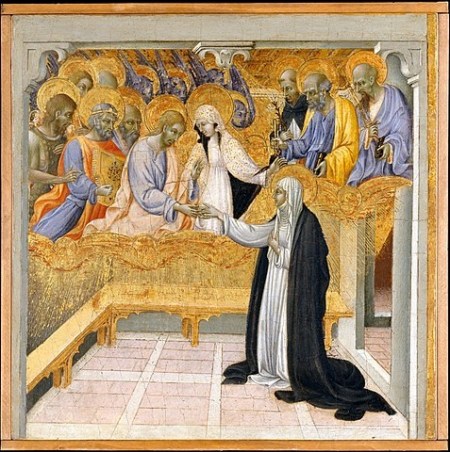
On Fat (or Shrove) Tuesday, while the people of Siena were celebrating carnival, the 21-year-old Catherine was praying in her room. A vision of Jesus appeared, with by Mary and the heavenly angels. Our Lady took Catherine’s hand and held it up to Christ, who placed a ring upon it and mystically married her to himself. Though invisible to others, this ring of St. Catherine of Siena was always visible to her.

Some misunderstand the meaning and purpose of celibacy in the Church. Jesus Christ, St. Paul, St. Catherine, and others have encouraged and lived this way of life not because human connection or natural marriage are bad, but because celibacy allows for a higher and broader intimacy. Every person is called to marriage, be it natural or spiritual; and everyone one is called to have children, be they biological or spiritual.

The Seventh Jar

January 22, 2019

Anyone who has done the chore of carrying milk gallons from the store to the car, and from the car into the house, knows they are not feather light. “Now there were six stone water jars (at Cana) for Jewish ceremonial washings, each holding 20 to 30 gallons.” Perhaps the servants did not have to lug those stone jars around, but they had to move the water from the local well or cistern to where the party was held. Have you ever considered how much those 120 to 180 gallons of water weighed? One gallon of water weights a little more than eight pounds. So six stone jars holding 20 to 30 gallons each is a weight of water somewhere between 1,000 and 1,500 pounds.

Mary said to the servers, “Do whatever he tells you.”
Jesus told them, ‘Fill the jars with water.’
So they filled them to the brim.”

It wasn’t easy work. At the time it did not seem that important or glorious. But those servants obediently and generously served Christ at that marriage, filling the jars to the very brim, and what they did will be remembered and celebrated forever.

In various times and places, different numbers can carry symbolic meanings. For example, if I asked you for a lucky number, you would probably say “seven.” And if I asked you for an unlucky number, you would probably quote me “thirteen.” The Jewish culture of the Bible has its own symbolic associations with numbers. For instance, for Jews the number six meant imperfection. (This is partly why, in the Book of Revelation, the number of the Beast is “666,” because great evil is profoundly imperfect.) And for Jews the number seven meant completeness. (In the beginning, when God had finished Creation, he rested on the seventh day because his work was complete.)

“Now there were six stone water jars there for Jewish ceremonial washings.” These six jars of water which Jesus turns into wine point to how his New Covenant fulfills and improves upon the imperfect Old Covenant. The water for the purification rites was good, but the wine for the wedding is best. Along with those six stone jars, John’s Gospel goes on to notice one more jar:

“[On the Cross,] aware that everything was now finished, in order that the scripture might be fulfilled, Jesus said, ‘I thirst.’ There was a jar filled with sour wine. So they put a sponge soaked in wine on a sprig of hyssop and put it up to his mouth. When Jesus had taken the wine, he said, ‘It is finished (fulfilled / complete / consummated)’ And bowing his head, he handed over the spirit.”

All four gospels mention this sour wine Jesus received on the Cross, fulfilling the Psalm which said, “for my thirst they gave me vinegar to drink.” Vinegar is made from wine which grows old and sour. This jar of sour vinegar wine at the Cross is the seventh jar which completes the six jars from Cana. The public ministry of Our Lord began with the joy of a wedding. And public ministry led him to sacrificing himself for his spouse, the Church. Every marriage should have its share of joy and sacrifice.

Marriages are often said to go through a “honeymoon” period. When the relationship is fresh and new, life feels like water changed into wine and joy flows easily. But as the relationship continues and grows older, the wine sometimes turns into vinegar. And then people ask themselves, “Did I make a mistake? Did I marry the wrong person? Did I choose the wrong vocation?” And many people give up too hastily. But these challenging times are a call to purifying love.

When someone says, “I love coffee” or “I love pizza,” they’re really saying “I love how these foods make me feel. I love what they do for me.” But this is not how we are called to love God and one another. We are to love others for their own sake. And in this the Cross of Christ is unavoidable. If mere personal happiness were the meaning of life, then suffering would be meaningless. That’s not what we believe. The Cross grows us into Christ. God does not want us to be endlessly miserable, but if we think the journey of our lives will always be on mountain tops, and never in dark valleys, then we will not journey well through the highs and lows and plains of life.

What if I’m saying to myself, “I have no wine.” What should I do? As Jesus’ Mother said to the servers, “Do whatever he tells you.” This means obedience to Jesus Christ. What if I think I lack the strength to do what Christ asks, or despair that things can really change? The Virgin Mary may not have known it at the time, but in saying “Do whatever he tells you” she was echoing this passage from Genesis:

“When the seven years of abundance enjoyed by the land of Egypt came to an end, the seven years of famine set in, just as Joseph had foretold. Although there was famine in all the other countries, food was available throughout the land of Egypt. When all the land of Egypt became hungry and the people cried to Pharaoh for food, Pharaoh said to all the Egyptians: ‘Go to Joseph and do whatever he tells you.’”

Joseph had been storing up surplus grain for seven years before and he proceeded to provide sufficient food for the entire Kingdom of Egypt and all the world who came to him and asked. When there is no wine where there ought to be (in your marriage, in your household, in your life) do your small part like the servants did at Cana, and invite, ask, and rely on Jesus to provide the rest.

The Christian life has highs and lows, but most of our days are lived in between, on the flat plains. Our lives matter greatly to God, so he has told us so and shown us so through Jesus Christ, but for the most part our lives feel ordinary. As our second reading from 1st Corinthians says, the Church of Christ has many members, with various gifts and roles for the Kingdom of God. Yet nobody feels they are particularly extraordinary because our lives are full of the ordinary.

Say you’re raising children, forming saints for Heaven, who produce piles of laundry and dirty dishes. So say you’re working outside of home, doing a regular job, which provides a service so beneficial and valuable that people pay you money to do it, money you then use to help others. Say you’re praying daily (as we’re called to do,) blessing others, near and far, the living and deceased, by your worship and intercessions before Almighty God, and repeatedly checking your watch. Even if you’re ordained priest, you can be celebrating the Holy Sacrifice of the Mass… fourteen times a week. So much of our lives filled with the ordinary that these ordinary things must matter much more than we might think.

Nothing is recorded in the gospels about most of the years of Jesus’ life. We hear about his early years and his later, few-year ministry, but not what happened in between. The span of time from the finding of twelve-year-old Jesus in the Temple to the start of his public ministry at about thirty years of age is called his “hidden years.” Jesus may not have worked any miracles in those years, but in Heaven we will see how he lived and worked and loved then in ordinary and yet far from insignificant ways.

A full Christian life is not easy work. At times what we do may not feel that important or glorious. But if we serve Jesus Christ, obediently and generously, then what we do here will be remembered and celebrated, by us and by all, with joy forever.

Things You Probably Don’t Know About Contraception & Natural Family Planning

August 31, 2018

We Just Passed a Historic Milestone
July 25, 2018 marked the 50th anniversary of Blessed Pope Paul VI’s encyclical Humanae Vitae (“Of Human Life”) on the moral and immoral regulation of human births. In that document, Pope Paul reaffirmed the Church’s teachings on marriage, the marital embrace, and the prohibition of artificial birth control.

Artificial Contraception Existed in Ancient Times
Egyptian scrolls dating to 1850 B.C. describe various barrier and sperm-killing methods. Pagans practiced contraception techniques in the Roman Empire at the time of Jesus Christ and the Early Church.

God Smote a Man in the Bible for Contracepting
Genesis 38 relates how a man named Onan repeatedly “wasted his seed on the ground” during intercourse to avoid conceiving children. “What he did greatly offended the Lord, and the Lord took his life…”

The Church Fathers Condemned Artificial Birth Control
For example, St. Clement of Alexandria, St. Augustine, St. John Chrysostom all condemned acts of contraception and/or sterilization.

Famous Protestants Also Denounced Contraception
Martin Luther the founder of Lutheranism, John Calvin the founder of Calvinism, and John Wesley the co-founder of Methodism all wrote against it.

All Christian Groups Agreed About This a Century Ago
In 1930, the Anglicans were the very first Protestant denomination to officially approve the use of artificial contraception methods for hard cases. (As recently as 1917, that the same group had declared contraception “demoralizing to character and hostile to national welfare.”)

Protestant Denominations Changed Their Teachings
By 1961, the National Council of Churches could pronounce that “Most of the Protestant churches hold contraception… to be morally right when the motives are right,” adding, “Protestant Christians are agreed in condemning abortion or any method which destroys human life, except when the health or life of the mother is at stake.”

The Catholic Church has Stood Firm
At the end of 1930 and again in 1968, popes issued encyclical letters reaffirming the constant teaching of Christ’s Church. Pope Pius XI’s Casti Connubii and Pope Paul VI’s Humanae Vitae taught truths about the nature, purpose, and goodness of marriage and the marital act. Both repeated our consistent and ancient rejection of all directly-willed acts of contraception, sterilization, and abortion.

Good Intentions are not Enough
As The Catechism of the Catholic Church teaches, “Legitimate intentions on the part of the spouses do not justify recourse to morally unacceptable means… for example, direct sterilization or contraception.” (#2399)

Humanae Vitae Foretold Great Harms
Paul VI predicted that the widespread use of contraception would broadly lower morality, increase marital infidelity, lessen respect towards women, be coercively imposed by governments, and promote the self-harming belief that we have unlimited dominion over our bodies and human life in general.

Contraception has Broken its Promises
According to its advocates, contraception was supposed to strengthen marriages, prevent unplanned pregnancies, reduce abortions, and increase women’s happiness. Today, even after decades of cheap and common contraceptive use, half of all pregnancies are unplanned and half of all marriages end in divorce, about one-in-five U.S. pregnancies are aborted (with more than 60 million killed since Roe vs. Wade in 1973), and women have reported lower and lower levels of happiness throughout the decades since the 1970’s.

The Lord is Pro-Family and Pro-Children
The first commandment in the Garden of Eden was “be fruitful and multiply,” and the the Bible always speaks of having many children and descendants as a blessing rather than a curse. Jesus presents marriage as a holy union of life and love saying “what God has joined together, no human being must separate” and adds “whoever receives one child such as this in my name receives me.”

NFP Regulates Births Both Virtuously and Effectively
Natural Family Planning (also known as NFP) uses signs from a woman’s body to identify the days in her cycle when she can conceive. Equipped with this knowledge, a couple may abstain from marital embrace to avoid a pregnancy or engage in order to achieve one.

There can be Holy Reasons not to Have More Babies
As Pope Paul VI wrote in his famous 1968 encyclical Humanae Vitae, “With regard to physical, economic, psychological, and social conditions, responsible parenthood is exercised by those who prudently and generously decide to have more children, and by those who, for serious reasons and with due respect to moral precepts, decide not to have additional children for either a certain or an indefinite period of time.”

NFP is not the Rhythm Method
The old Rhythm Method simply counted how many days had passed since the woman’s last cycle and was a moral but ineffective approach to avoiding conception. For comparison, faithfully-followed NFP techniques have a 99% effectiveness rate (meaning that up to one in one hundred woman will become pregnant in a year, a rate comparable to widespread methods of artificial contraception.)

NFP Causes None of Contraception’s Harms
Unlike chemical contraceptives, NFP never causes:
– Spontaneous abortions (by preventing implantation
of newly conceived embryos into the uterine wall)
– Increased risks of breast, liver, and cervical cancer
– Nausea, vomiting, stomach problems, or diarrhea
– Depression or mood swings
– Decreased libido
– Or other published side-effects

NFP Strengthens Married Life
Couples who practice Natural Family Planning grow in communication, self-control, and intimacy. They are more open to discerning and embracing God’s plan for their families and are statistically less likely to divorce. Not only is NFP completely natural, the information it tracks about a woman’s body commonly leads to the diagnosis, treatment, and cure of health disorders, from infertility to life-threatening illnesses.

You can Learn NFP From Home
Visit the Diocese of La Crosse’s website (at diolc.org) and search for “NFP”. There you can investigate more about various NFP techniques, its science and benefits, and register for on-line courses.

* * * * * * * * * * * * *

“In destroying the power of giving life through contraception a husband or wife is doing something to self. This turns the attention to self and so it destroys the gift of love in him or her. In loving, the husband and wife must turn the attention to each other as happens in natural family planning, and not to self, as happens in contraception. Once that living love is destroyed by contraception, abortion follows very easily.”  – St. Mother Teresa of Calcutta

“In the conjugal act, husband and wife are called to confirm in a responsible way the mutual gift of self which they have made to each other in the marriage covenant. The logic of the total gift of self to the other involves a potential openness to procreation: in this way the marriage is called to even greater fulfillment as a family. Certainly the mutual gift of husband and wife does not have the begetting of children as its only end, but is in itself a mutual communion of love and of life. The intimate truth of this gift must always be safeguarded. … The two dimensions of conjugal union, the unitive and the procreative, cannot be artificially separated without damaging the deepest truth of the conjugal act itself.”  —Pope St. John Paul II, Letter to Families, 1994

“Marriage must include openness to the gift of children. Generous openness to accept children from God as the gift to their love is the mark of the Christian couple. Respect the God-given cycle of life, for this respect is part of our respect for God himself, who created male and female, who created them in his own image, reflecting his own life-giving love in the patterns of their sexual being.”  —Pope St. John Paul II, 1979

Call No Man Father?

June 19, 2018

Was it unchristian for our country to celebrate Father’s Day last Sunday? That’s one implication of a common criticism raised against the Catholic Church. Sometimes Protestants chide us, “Jesus said, ‘Call no one on earth your father; you have but one Father in Heaven,’ so why do you Catholics call priests and popes ‘Father?’” Yet this charge could also be raised against St. Paul who writes in his Letter to the Romans of “our father Abraham” and “our father Isaac.” What’s more, St. Paul is moved by the Holy Spirit in his First Letter to the Corinthians to assert himself as their spiritual father: “Even if you should have countless guides to Christ, yet you do not have many fathers, for I became your father in Christ Jesus through the gospel.”

So what is Jesus saying in his teaching on titles (father, master, rabbi/teacher) in Matthew 23? Judging from the whole of the New Testament, our Lord’s concern is not with labels or hierarchy in themselves (for “he called his disciples to himself, and from them he chose Twelve, whom he also named Apostles.”) Jesus is warning us against the fallen, human attitudes that we can attach to positions and titles of authority and honor. Jesus says, “You have one teacher… you have but one Father in Heaven… you have but one master, the Messiah.” We must not allow anyone (be they a noted thinker, politician, celebrity, employer, or parent) to displace or compromise God’s primacy in our lives. Embracing a teaching or custom against our Faith is to worship an idol instead of God. And Jesus says “you are all brothers…. The greatest among you must be your servant.” So whenever we are called into a position of influence (be it as a parent, pastor, politician, or what have you) we must remain humble and glorify God while serving him and our neighbors.

The Venerable Servant of God Bishop Fulton Sheen once observed, “There are not a hundred people in America who hate the Catholic Church. There are millions of people who hate what they wrongly believe to be the Catholic Church — which is, of course, quite a different thing.” Our Faith has good answers to offer anyone who cares enough about the truth to simply look or listen. So do not fear religious conversations with your family, friends, or peers. You’ll both learn more along the way and you could very well help them into the fullness of Jesus’ Catholic Church.

Mary, the Mother of All Christians

April 26, 2018

Earlier this year, the Vatican announced that the Monday after Pentecost Sunday shall henceforth be celebrated as a new feast day: the Memorial of the “Blessed Virgin Mary, Mother of the Church.” Its worldwide inaugural celebration will be on May 21st this year. The Holy Catholic Church has defined four dogmas about Mary: that she is ever-virginal and the Mother of God, that she was immaculately conceived and assumed body and soul into Heaven. What Pope Francis has decreed is not on the level of defining a fifth Marian dogma, but he is highlighting a precious truth about Our Lady for us to treasure and valuable for us to share with our Protestant brothers and sisters.

Mary is both poetically and actively the Mother of the Church. St. Augustine says of her, “She is clearly the Mother of His members; that is, of ourselves, because she cooperated by her charity, so that faithful Christians, members of the Head, might be born in the Church.” And as Blessed Pope Paul VI professes in his Credo of the People of God: “we believe that the Blessed Mother of God, the New Eve, Mother of the Church, continues in Heaven her maternal role with regard to Christ’s members, cooperating with the birth and growth of divine life in the souls of the redeemed.” How many Christians are unaware that they have a spiritual Mother who loves them?

That Mary is the Mother of all Christians is evident from Scripture. At the Cross, “when Jesus saw his mother and the disciple there whom he loved, he said to his mother, ‘Woman, behold, your son.’ Then he said to the disciple, ‘Behold, your mother.’ And from that hour the disciple took her into his home.” This scene was not included in John’s Gospel to satisfy some idle curiosity about Mary’s living arrangements in her later years. Understanding this scene according to its spiritual significance, every Christian is ‘the disciple who Jesus loved.’ Every Christian is entrusted to Mary as her child and she is given to each one of them as their mother.

Further proof of this is found in the Book of Revelation. There we see a huge dragon (explicitly called “the Devil and Satan”) attempt to destroy “a male child, destined to rule all the nations with an iron rod,” along with his mother who wears “a crown of twelve stars.” This is Jesus the Messianic King and his Queen Mother, Mary. Note what happens after the “ancient serpent” fails to conquer this man and woman: “Then the dragon became angry with the woman and went off to wage war against the rest of her offspring, those who keep God’s commandments and bear witness to Jesus.” Who are Mary’s children? They are Christians — “those who keep God’s commandments and bear witness to Jesus.”

Christ’s Church is meant to be gathered around Mother Mary. Before his Ascension, Jesus told the first Christians to “stay in the city until you are clothed with power from on high.” And so, “when the time for Pentecost was fulfilled, they were all in one place together” beside Mary his Mother and the reconstituted Twelve Apostles in the room where the First Eucharist was celebrated. It was through Mary that the Holy Spirit had first begun to bring mankind into communion with Jesus Christ. So likewise (the Catechism of the Catholic Church observes) “she was present with the Twelve, who with one accord devoted themselves to prayer, at the dawn of the end time which the Spirit was to inaugurate on the morning of Pentecost with the manifestation of the Church.”

This is why the Monday after Pentecost is a very fitting day for us to celebrate Mary as Mother of the Church and why all Christians should come together as her spiritual children. Let Catholics be rejoice and Christians be reunited as one!

Mary, Mother of all Christians, pray for us!