Archive for the ‘Real Presence’ Category

The New Passover Lamb

April 1, 2021

Holy Thursday

The Lord gave specific instructions to Moses and Aaron for the feast of Passover—commandments containing secret significance only later to be revealed. Every Hebrew family had to procure a lamb, a year-old male without blemish, one apiece for each household. If a family was too small for a whole lamb they were to join the nearest household in obtaining one and feast in the same house together. The lamb could not to be eaten raw nor boiled in water, but had to be roasted, baked whole and entire, once some of its blood had been taken to be dabbed on the house’s doorposts and lintel. The whole community of Israel was to celebrate this feast and no one was to go outdoors until morning.

The first Passover was held for the salvation of God’s people, so that deadly judgment would pass over their households and they would no longer be slaves in Egypt. Once they were freed, they continued keeping the Feast of Passover, renewing and celebrating their great deliverance by God’s power. All of these were signs and symbols of things to come, of the still-greater things which came with Christ.

At the Last Supper, Jesus told to his apostles, “I have eagerly desired to eat this Passover with you.” The Gospels note the bread and wine on the table, in accord with the Jewish Passover tradition, but where is the lamb at the center of the meal?

The Lord Jesus, on the night he was handed over, took bread, and, after he had given thanks, broke it and said, “This is my body that is for you. Do this in remembrance of me.” In the same way also the cup, after supper, saying, “This cup is the new covenant in my blood. Do this, as often as you drink it, in remembrance of me.

Jesus asked the apostles that night, “Do you realize what I have done for you?” Jesus is the Passover Lamb of God: an innocent young man, unblemished by sin, whose blood is poured out upon the vertical and horizonal beams of the Cross, to free and save all within his house. Tonight we gather in one house, Christ’s Church, as a family, joining with other households together at Mass, to really receive in the form of baked bread Jesus’ whole self. As St. Augustine once preached to newly baptized Christians: “Recognize in the bread what hung on the cross, and in the cup what flowed from his side. [T]hose old sacrifices of the people of God…represented…this single one that was to come.”

Jesus’ sacrifice saves us from deadly judgment and slavery to sin, and at this meal we renew and rejoice in our great deliverance through him. By God’s grace, may we always have priests and the freedom to offer the Mass on earth, and the grace to never wander off from God’s house into the outer darkness until the first light of the new dawn breaks—when Jesus Christ returns in glory.

Jesus asks his apostles, “Do you realize what I have done for you?” Do you realize what Jesus has done for you? Know that he has eagerly desired to share this Passover with you.

Living Christ’s Mysteries — Funeral Homily for Deacon Ed Feltes, 65

February 23, 2021

On the day Victor and Ramona brought their eighth son to be baptized, while his little head was still damp from holy water, Edward Joseph was draped with white linen. And the priest said (in Latin), “Receive this white garment, which mayest thou carry without stain before the judgment seat of our Lord Jesus Christ, that thou mayest have life everlasting.” Today, we bring Ed’s body before the Lord, draping him in white cloth once more. My uncle Ed told me that as a deacon he would always say yes to doing baptisms. It was, he said, “the introduction of a new life into the Church. By baptizing them you are basically installing them into a Catholic environment and hopefully they will grow in it and not back away from it.” Ed has been a Catholic Christian for more than sixty-five years, ever since he was baptized into Christ’s death and resurrection. And throughout his nearly twenty-four thousand days Jesus Christ accompanied him through life. The life of a Christian is found in Jesus Christ. And the mysteries of Christ’s life are reflected in, shared with, the faithful Christian. We see this throughout Ed’s life.

At his First Communion, young Edward approached and saw the Real Presence of his Lord held before his eyes: “The Body of Christ / Corpus Christi.” Ed received Jesus and Jesus received Ed into a more profound union, a more intimate relationship, between them. In receiving Christ’s Body, Ed was called to be the Body of Christ for this world. When Jesus tells us at the Last Supper, “Do this in memory of me,” he not only commands that we would receive him at the Holy Sacrifice of the Mass, but that we would imitate him in his self-gift: “This is my body, which will be given up for you. Do this in memory of me.” When Ed was sealed with the gift of the Holy Spirit at his Confirmation, he entered a more powerful relationship with that same Spirit of inspiration, grace, and power who led Jesus in his works on earth. The Holy Spirit’s gifts manifested through Ed not merely for himself, for his own salvation, but to serve the wider mission of Christ’s Church, that every person in this wayward world might be saved.

The main vehicle of Ed life’s work and witness would be through his first vocation: marriage. Ed and Jessica met during his studies at Notre Dame University and the year he graduated they entered a new covenant together. Almost forty years ago, they freely committed without reservation to give themselves to each other in marriage, to love and honor each other for as long as they both would live, and to accept children lovingly from God—raising them up according to the law of Christ and his Church. Recall that Jesus Christ called himself the Bridegroom and that in Sacred Scripture his Church is called his Bride. Every Christian is called to imitate Christ, and every Christian soul is spiritually his Bride. But just as the Holy Eucharist we celebrate is not merely a symbol or a memory but Jesus’ Real Presence among us so the Sacrament of Marriage makes present the mystical marriage of Jesus and his Church, within and between a husband and a wife. In beholding a holy, Christian marriage, in its loving, mutual, and lasting fidelity, we see a sign for us and for the world. That love is real, that love is foundational, that love is fruitful. That we were made in love, made to love, made for a holy communion of love, a family. We saw this in Ed and Jessica’s strong marriage which bore fruit, not least of all in their children: in their living son, Christopher, of whom they are so proud, and four other loved children who passed away very, very young; Francis, Steven, Elizabeth, and Meagan. Ed said he looked forward to meeting them and now has that opportunity.

In his marriage, together with Jessica, Ed discerned and pursued a call within his call, a second vocation. Relying on the help of the Lord God and our Savior Jesus Christ, Ed was chosen and ordained for the Order of the Diaconate. After the laying of the bishop’s hands and being dressed with stole and vestment, he was handed a Book of the Gospels with this admonition: “Believe what you read, teach what you believe, and practice what you teach.” Deacon Ed then ministered here at St. Catherine’s, celebrating in this sanctuary and serving throughout this parish. Teaching and preaching, even though he often found preaching difficult. Ed told me that he primarily sought to advance the Kingdom by sharing his life, showing how he lived. He said, “Always live your life such that people want the same that you do.” Looking back at the end of his quiet life, Ed had few regrets, but he did wonder if he was “maybe quiet too long.” Deacon Ed understood well that we need not enter into every pointless, unhelpful argument, but the Spirit does call and help us to speak the important words people need to hear alongside seeing our deeds.

In these last years, these final years, Ed reflected Christ and became configured to him in a new way, by joining him in suffering. Ed had at least six different strokes—twice nearly dying yet surviving—and endured strokes’ debilitating effects. Ed and Jessica described these past several years to me as an experience of continuous loses and grief, but also of continuous mercy and grace. Reportedly, the devastating impact of strokes often breaks up families, but this family grew closer through the trials. I think Ed also became bolder in Christ. While under hospice care at home he never stopped offering good things to his guests; blessings, prayers, holy water and blessed salt, to anyone who visited, wherever they might be in their faith walk.

When I last spoke with my uncle Ed I asked him what he was looking forward to. He simply said, “Heaven. I poured a lot of my life into experiencing, into living life on earth with a heavenly approach.” Asked as to what his near future held, he said, “It’s really up to God. I accept everything he has for me.” Ed and Jessica related to me that it was last March, almost a year ago, over a lunch at Panera Bread, that he told her, “I’m going to go to the Lord in six months to a year.” And he was right. Ed knew he was in God’s hands, being led and offered like an oblation for his glory and as a blessing for many. Knowing that this day was not in the far-distant future, I asked Ed about his wish for all of you on this day of his funeral. He answered, “Pray that they seek God more closely and live a more Christian life. I wish they would seek God for the answers and not just rely on themselves.” So if you have seen Jesus Christ in the life of Deacon Ed Feltes, please listen and heed his words.

And now, in conclusion, like Edward heard in his Last Rites:

I commend you, our dear brother, to almighty God and entrust you to your Creator. May you return to God who formed you from the dust of the earth. May holy Mary, the angels, and all the saints come to meet you as you go forth from this life.

May Christ who was crucified for you bring you freedom and peace. May Christ who died for you admit you into his garden of paradise. May Christ, the true Shepherd, acknowledge you as one of his flock.

May the Lord forgive all your sins and set you among those he has chosen. May you see your Redeemer face to face and enjoy the vision of God for ever.
A Prophet’s Reward

June 27, 2020

13th Sunday in Ordinary Time

Jesus says, “Whoever receives a prophet because he is a prophet will receive a prophet’s reward.” So what is a prophet’s reward? Being a prophet in this world is a kind of a mixed bag.

On the positive side, a prophets’ words and deeds and their role in working miracles can give great blessings and yield joyful fruits for both the preacher and the people. For instance, the Shunammite woman in our first reading repeatedly received the prophet Elisha into her home and to her table, and he was pleased to be so warmly welcomed. First, she was graced by the holy man’s words and presence, then she was blessed through the miracle he announced: “This time next year you will be fondling a baby son.” She was overjoyed at the birth of a son, and Elisha surely shared that joy. Those who heed the word of God are blessed to see its fruits.

On the other hand, on the negative side of the ledger, the prophets and their words were not always welcomed and received. In fact, they were usually met with hostility. The Letter to the Hebrews recalls how some of the prophets “endured mockery, scourging, even chains and imprisonment. They were stoned, sawed in two, put to death at sword’s point; they went about in skins of sheep or goats, needy, afflicted, tormented.” Knowing this, is it worth it for a prophet to answer God’s call?

Well, consider what else belongs to the prophet’s reward: Consider the value of living a holy life with a clear conscience. There is a great peace in doing what is right that is unlike the spiritual disquiet of sin. Consider the value of a life doing good with holy purpose, helping to save others’ souls. A selfish life lacks deeper, greater meaning, and its emptiness is a terrible taste of what Hell is like forever. Consider the value of a life that will be remembered. Remembered by people on earth? Maybe, maybe not, beyond the people whose lives you bless— but certainly remembered by God, who will reward his faithful ones with the joy of Heaven, an everlasting reward beyond our imagining. And all along this way to Heaven, you will share in the personal, intimate, friendship of God.

Now Jesus says, “Whoever receives a prophet because he is a prophet will receive a prophet’s reward” and “whoever receives a righteous man because he is a righteous man will receive a righteous man’s reward.” But where can we today find a prophet and righteous man to share in his reward? Long ago, Moses said, “A prophet like me will the Lord, your God, raise up for you from among your own kinsmen; to him you shall listen in all that he may say to you. Everyone who does not listen to that prophet will be cut off from the people.” Remembering this, when the crowds saw Jesus perform the miracle of the multiplication the loaves they said, “This is truly the Prophet who is to come into the world.” On one occasion, Jesus stated that the men of Nineveh “repented at the preaching of (the Prophet) Jonah; and there is something greater than Jonah here.” Then, after Jesus’ Ascension, St. Stephen the first martyr preached that the prophets had “previously announced the coming of the Righteous One…” and St. Ananias announced to Saul, who had encountered the Lord Jesus on the road to Damascus, “The God of our fathers has appointed you to know His will and to see the Righteous One.” Thus, the one who receives Jesus Christ will receive a prophet’s and righteous man’s reward. “And whoever gives only a cup of cold water to one of these little ones to drink because the little one is a disciple —amen, I say to you, he will surely not lose his reward,” for Jesus says, “whatever you did for one of these least brothers of mine you did it for me.

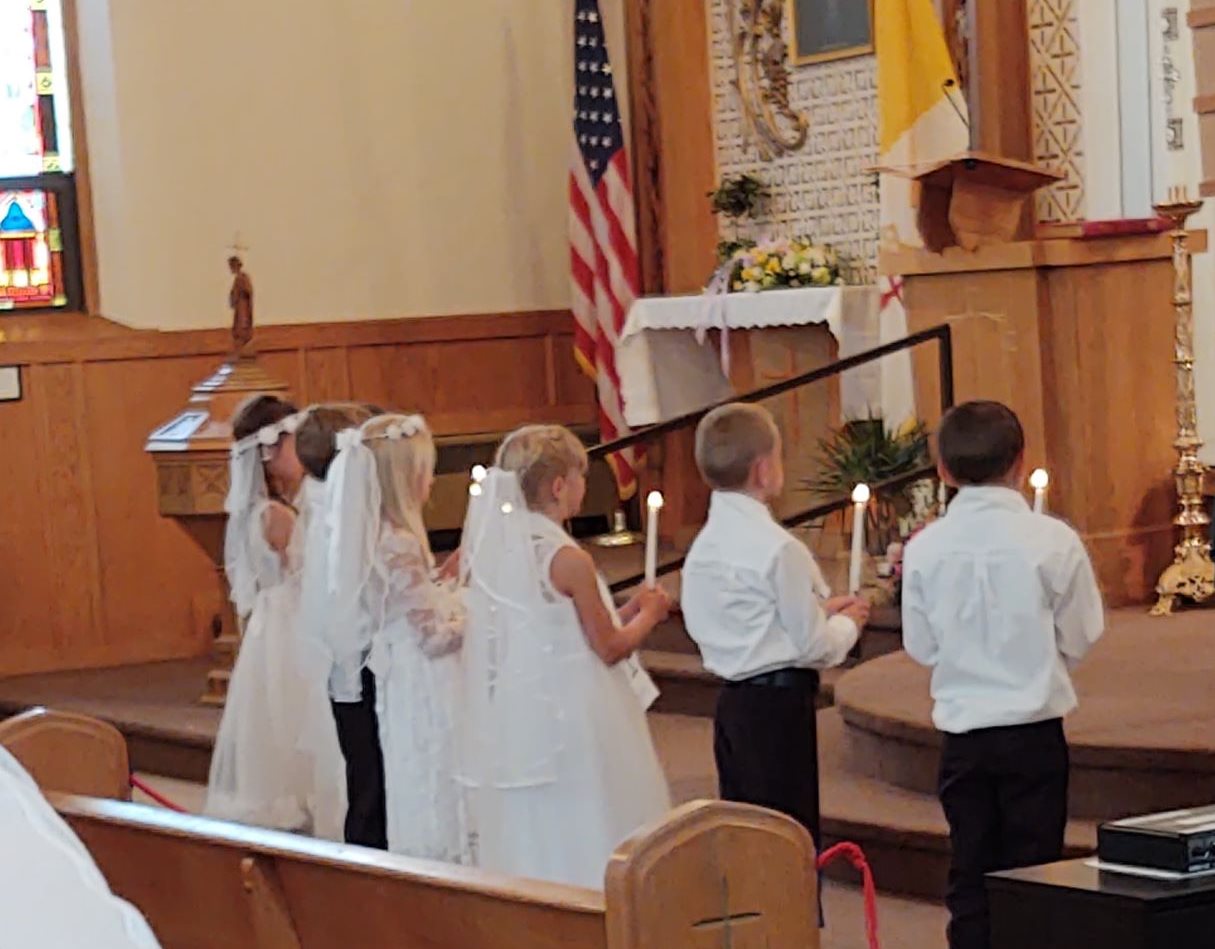
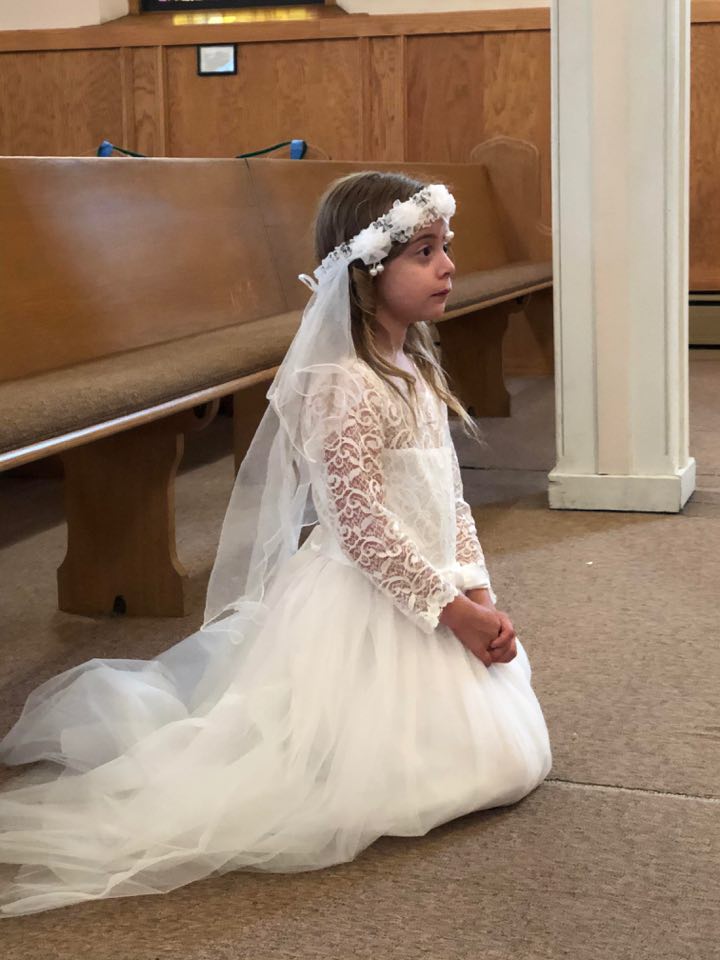
How can we receive the Lord? First of all, through the sacraments. Are you unaware that in baptism you were baptized into Christ? To quote St. Paul, “all of you who were baptized into Christ have clothed yourselves with Christ.” And your baptism has led you here today, to receive him anew in the supreme gift of the Holy Eucharist, the Most Blessed Sacrament. (For some of you, you are blessed to be about to receive Jesus in this way for the very first time, and we’re all very happy for you.) In this sacrament Jesus Christ comes to visit and dine with you with you: “Behold, I stand at the door and knock. If anyone hears my voice and opens the door, I will enter his house and dine with him, and he with me.” And if we have prepared a place for him and welcome him to dwell, Jesus stays and remains with us. The good Shunammite woman prepared room for Elisha in the highest place of her home, upon the cool rooftop, and furnished it for him with a bed, table, chair, and lamp, so that he could comfortably stay. She converted and reorganized her house for her holy guest. Jesus expects the same of us; the conversion and dedication of our lives, our souls, our homes; for Jesus wishes to dwell with us.

Receiving Jesus Christ in the Eucharist is not a one and done event. Even returning to encounter him here again at Mass every Sunday – as we are rightly commanded to do – is not all that he desires of us or for us. Jesus says, “Whoever does not take up his cross and follow after me is not worthy of me.” Following Jesus requires us to die to sin and offer loving sacrifices like himself. It’s often hard to live for Christ. Knowing this, is it worth it to answer his call?

Consider the value of living a holy life with a clear conscience, with the peace that come from doing what is right. Consider the value of a life doing good with holy purpose, helping to save others’ souls. Consider the value of a life that will be remembered by God and those whose lives you bless forever. And consider how Christ will reward you with Heaven, an unending joy beyond imagining, and share his personal, intimate, friendship with you all along your way there. Jesus says, “Whoever finds his life will lose it,” but “whoever loses his life for my sake will find it.” And whoever truly receives our Lord Jesus Christ will receive the Christ’s reward.

Jesus’ Longing for You

June 14, 2020

Corpus Christi Sunday—Year A

After the suspension in March, our parish went eleven weekends without the public celebration of Sunday Masses. Throughout Salvation History, the number forty symbolizes times of purification, preparation, and longing. For most people, being away meant about eighty days (forty twice over) without physically receiving our Eucharistic Lord. For many, their yearning for Jesus in the Eucharist has never been greater. Feast of Corpus Christi homily usually focus (quite fittingly) upon the Real Presence, the beautiful truth that Jesus Christ is truly present, body and blood, soul and divinity, alive in the Holy Eucharist. As St. Paul says in our second reading, “The cup of blessing that we bless, is it not a participation in the Blood of Christ? The bread that we break, is it not a participation in the Body of Christ?” You are probably well-informed about this already; that’s why you have been longing for Him in the Eucharist. Today I feel moved to speak about Jesus Christ’s Eucharistic longing for you.

Jesus Christ’s desire for us is foreshadowed in the Old Testament; for instance, in The Song of Songs. There the beloved says of her spouse: “My lover speaks and says to me, ‘Arise, my friend, my beautiful one, and come! Let me see your face, let me hear your voice, for your voice is sweet, and your face is lovely.’” Later this same man, prefiguring Christ, declares: “I have come to my garden, my sister, my bride; … I eat my honeycomb with my honey, I drink my wine with my milk. Eat, friends; [and] drink!

In the Book of Proverbs, God’s personified wisdom speaks: “Let whoever is naive turn in here; to any who lack sense I say, Come, eat of my food, and drink of the wine I have mixed! Forsake foolishness that you may live; advance in the way of understanding.” The foolishness we must forsake is our sins, for what is freely-chosen sin if not harmful foolishness? Jesus seeks to bring about sinners’ salvation, in part, through drawing them to his meal, to share his presence, his food and drink. Jesus once responded to criticisms of his ministry saying: “The Son of Man came eating and drinking, and they say, `Behold, a glutton and a drunkard, a friend of tax collectors and sinners!’ Yet wisdom is vindicated by her deeds.

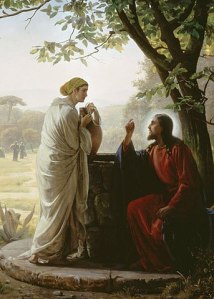
A Samaritan woman with many sins once asked Jesus, “How can you, a Jew, ask me, a Samaritan woman, for a drink?” He answered her, “If you knew the gift of God and who is saying to you, ‘Give me a drink,’ you would have asked him and he would have given you living water.” Later, on the last and greatest day of a Jewish feast, Jesus stood up in the temple area and exclaimed: “Let anyone who thirsts come to me and drink.” Before his miraculous multiplication of loaves of bread, Jesus called his disciples to himself and said, “I feel compassion for the people, because they have remained with me now three days and have nothing to eat; and I do not want to send them away hungry, for they might faint on the way.” Jesus wants to feed us (we who have remained with him) as well, to strengthen us on our way. The food and drink Jesus desires you and I to receive are not mere objects for bodily sustenance — it is his very self. “I am the living bread that came down from Heaven; whoever eats this bread will live forever… For my flesh is true food, and my blood is true drink. Whoever eats my flesh and drinks my blood remains in me and I in him.

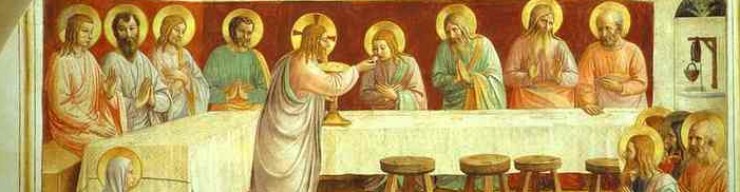
At the Last Supper, which was the first Mass, Jesus told his disciples, “I have earnestly desired to eat this Passover with you… Take this, all of you, and eat of it, for this is my body, which will be given up for you.” Jesus earnestly desires to share his feast, this Mass, to unite with us today. “Behold, I stand at the door and knock. If anyone hears my voice and opens the door, I will enter his house and dine with him and he with me.” Jesus is divine, but he’s also human. He dwells in Heaven, but he has human desires for you and me and our world. If you have yearned for Jesus in the Eucharist, if you have desired to receive him these past months, consider how much more Jesus Christ longs and desires for you.

Finding Jesus in our Isolation — 3rd Sunday of Lent—Year A

March 16, 2020

Today’s Gospel story contains a valuable lesson for us in our present situation.

Jesus, tired from his journey, sat down there
at [Jacob’s] well. It was about noon.
A woman of Samaria came to draw water.
Jesus said to her, “Give me a drink.”

There is a weird detail contained in these passages: the woman is going to the well to draw water at noon. It’s hot at noon in the Middle East, so Jesus and the woman are the only ones there. Why didn’t she come in the morning or the evening when the heavy job of hauling water would not have the added burden of the midday sun and heat? It’s because she didn’t want to be there when the other women would be around. Jesus reveals that the woman has no true husband and that she has had five different mates through the years. Jesus knows this supernaturally but her neighbors know something of these facts naturally, through local gossip. This woman has a reputation and if she were to go to that well at the same time as the other women they would make her feel unwelcome, through their words or their silence, with their eyes and their body language. They have quarantined themselves from her and she has socially distanced her heart from them.

In the middle of her day,
in the uncertainties of her life,
amid the stress of her tasks,
in her personal isolation,
she is surprised to encounter Jesus there.

He says to her:

“If you knew the gift of God and who is saying to you, ‘Give me a drink,’ you would have asked him and he would have given you living water. … Whoever drinks the water I shall give will never thirst; the water I shall give will become in him a spring of water welling up to eternal life.”

Jesus wins over the woman’s soul, she leaves her water jar behind and joyfully proclaims her great discovery. Meanwhile, the returned disciples urge Jesus, ‘Rabbi, Teacher, eat something!’ But he says to them, “I have food to eat of which you do not know. … My food is to do the will of the one who sent me and to finish his work.” Of course Jesus is hungry—physical realities are real—but he has nourishment in his soul, from his relationship with God his Father and his deepening relationship with those he has come to save, like this woman at the well.

Now in likening the woman at the well to one quarantined from others, I am not advising you to take unnecessary or imprudent risks amidst this current Coronavirus pandemic. In these months ahead, some of us will be called to acts of particular courage; nurses and doctors come first to mind. But we should not blithely, unnecessarily place ourselves in foreseeable natural dangers expecting God to perform miracles to protect us. Recall how Satan tempted, “If you are the Son of God, throw yourself down from here. For it is written: ‘He will command his angels concerning you’ and ‘with their hands they will support you, lest you dash your foot against a stone.” Jesus answers, “You shall not put the Lord, your God, to the test.” We must not act presumptuously.

The reason I mention the woman finding Jesus in her isolation is because, whatever our health may be, we need to encounter him there as well. Public Masses continue in our diocese, but it is very probable that these will be suspended in the future, just as Catholic Churches suspended public Masses a century ago during the Spanish Flu pandemic. I will personally be very surprised if we are having Mass here together two weeks from today. [Post-Script: On the evening of March 17th, Bishop William Callahan directed his priests to abide by Wisconsin’s statewide ban on all gatherings of more than 10 people announced earlier in the day. As a result, we are cancelling all remaining public Masses at my parishes.] Yet even in times when public Masses are readily available, most hours of our week and not spent inside of a church.

In the middle of your day,
in the uncertainties of your life,
amid the stress of your tasks,
in your personal isolation,
you can encounter Jesus there.

He is with you and within you, so you are never really alone.
Jesus says:

“Let anyone who thirsts come to me and drink.
Whoever believes in me, as scripture says:
‘Rivers of living water will flow from within him.’”

Wherever you are, find him there, and draw on his graces.

I seem to recall a story about St. Faustina Kowaska, the Polish nun and visionary most closely associated with the Divine Mercy devotion. When she was confined to her convent infirmary, suffering from the tuberculosis which would eventually take her life, she lamented that for one or more days in a row she had been unable to receive Holy Communion. In a vision, Jesus reassured her, saying, ‘Whenever you receive me in the Eucharist, I remain within you until you receive me again, unless you cast me out through mortal sin.’ Similarly, in the sixth chapter of John, Jesus famously declares:

“I am the bread of life; whoever comes to me will never hunger, and whoever believes in me will never thirst. … Whoever eats my flesh and drinks my blood remains in me and I in him.”

Christ’s Church encourages frequent, even daily, reception of Holy Communion as a helpful devotion toward holiness, but whether your next communion is one week or three months from now, know that Jesus is with you to provide his sufficient graces for your life. If public Masses are suspended in our diocese, realize that I and other Catholic priests, even if standing alone in our churches, will still be offering the Holy Mass daily for you and the whole world. And we will be bringing Confession, Holy Anointing, and Viaticum to the sick, as is our calling and duty, for as long as we are able. This Wuhan Coronavirus pandemic is rightfully concerning. (I urge you to read my bulletin article this weekend.) But whatever comes we need not fear, for “we know that all things work for good for those who love God,” and “whether we live or die, we are the Lord’s.” As Jesus would very often say, “Be not afraid.

Really Present — 19th Sunday of Ordinary Time—Year C

August 12, 2019

The Pew Research Center, which conducts surveys on religious belief in America, published a poll this week which asked self-identifying, Catholic adults this question:

Regardless of the official teaching of the Catholic Church, what do you personally believe about the bread and wine used for Communion? During Catholic Mass, the bread and wine…
  1. Actually become the body and blood of Jesus Christ, or
  2. Are symbols of the body and blood of Jesus Christ.

65% of respondents said that the bread and wine are symbols of the body and blood of Jesus while only 30% said the bread and wine actually become the body and blood of Jesus. This is discouraging, but I’m inclined to think that many people are misunderstanding the question.

As you know, when the priest says the words of Consecration at Mass (“This is my body… This is the chalice of my blood”) what we see with our eyes appears unchanged. What the priest holds still looks like bread. What the chalice holds still looks like wine. On well-documented occasions throughout the centuries, Eucharistic miracles have occurred in which Hosts have turned into visible human flesh and the chalice contents have become visible blood. I encourage you to read about and investigate these ancient and modern miracles for yourself. But outside these extraordinary cases, if you looked at the Eucharist under a microscope, or ran a chemical analyses before and after Consecration, the Eucharist would appear unchanged. Catholics who have made their First Communion know the Host doesn’t taste like meat and drinking from the chalice doesn’t taste like blood. So, strictly in this outward sense, when people say “The bread and wine do not actually become the body and blood of Jesus” they are correct. But after the priest’s words of consecration at Mass, are the gifts on the altar just symbols of Jesus’ body and blood? No! Something very real and wonderful occurs.

Now Jesus does give his Eucharistic meal intrinsic symbolic meanings. For example, breaking the bread which is his body and pouring out his blood for us are symbols of his Passion. Separating his body and blood is a symbol of his death. And sharing his meal with us symbolizes our intimate communion with him. Yet, the Eucharist is no a mere symbol, any more than baptism can be called just a washing with water. After the water and words of baptism, a newly baptized person appears unchanged (they have the same height, same weight, same hair and eye color as before) but they have been radically transformed within; the baptized person’s soul is cleansed, they have become a child of the Father, a temple of the Holy Spirit, a new person in Jesus Christ. Likewise, at the Consecration, though appearances remain unchanged, the gifts on the altar undergo a radical transformation; in fact, apart from outward appearances they can no longer truly be called bread and wine at all; for they become the body and blood, soul and divinity, of the living person Jesus Christ. In the Eucharist, Jesus’ real presence is really present, and it is no blasphemy to gaze upon the Host and say, “My Lord and my God!

Our belief in the Real Presence of Jesus in the Eucharist is not something the Church just invented. This teaching goes back to Jesus himself. St. John writes about the Real Presence in his Gospel, St. Paul writes about it to the Corinthians, and the Church Fathers write about it throughout the first centuries AD. God has confirmed this mystery with Eucharistic miracles, as I mentioned before (miracles which occur in no Protestant denomination.) The Real Presence of Jesus Christ in the Eucharist her been our Catholic Church’s teaching from her beginnings to this day.

I am somewhat encouraged that when other polls ask Catholics adults about their belief in the Real Presence in a different way, using different words than in the recent Pew poll, their responses are different as well. When given a choice between saying: “Jesus Christ is really present in the bread and wine of the Eucharist,” or “The bread and wine are symbols of Jesus, but Jesus is not really present,” about 60% of Catholics give the first and correct answer. However, we should be only somewhat encouraged by this. Four out of ten Catholics not believing in the Real Presence of Jesus is a tragic and terrible thing.

This week, I visited an old college roommate friend and his wife and children in Oregon. He is a very faithful Evangelical Christian; following Jesus is the most important thing in his life. But he and his family haven’t attended a church on Sundays for some time. It’s partly because he has two very young children, but he also confided over dinner that it’s because he has difficulty seeing the point of going just for a message and some songs. My friend studied in a Protestant seminary and could probably give a better sermon than most preachers. He plays guitar and has a great voice; why can’t he just sing and worship with his family at home? Discussing the recent Pew poll and my plans for this homily with him, he asked me — not to challenge me, but to better understand — “What difference does it make whether Catholics believe in the Real Presence or not? What is the harm in them receiving Communion without holding this belief?” I answered that, without the Real Presence, the Holy Mass becomes optional. And when we skip the Mass we miss out on the source and summit of the Christian life, the most intimate sacramental encounter we can have with Jesus on earth, the Holy Eucharist. And if we do go to Mass and receive Communion without believing it’s really Jesus, we do not receive the fullness of graces he wants to give us, and perhaps — by receiving him unworthily — we are offending him and doing ourselves actual harm.

In a chapter of Luke’s Gospel different from the one we heard today, Jesus asks, “Who among you would say to your servant who has just come in from plowing or tending sheep in the field, ‘Come here immediately and take your place at table’? Would he not rather say to him, ‘Prepare something for me to eat. Put on your apron and wait on me while I eat and drink. You may eat and drink when I am finished’?” This is the attitude of a very earthly master. Yet notice what the master does in one of today’s parables. Jesus tells us, “Gird your loins and light your lamps and be like servants who await their master’s return from a wedding, ready to open immediately when he comes and knocks. Blessed are those servants whom the master finds vigilant on his arrival. Amen, I say to you, [the master] will gird himself, have them recline at table, and proceed to wait on them.” This is a parable about the coming of our Lord. We are to be diligent, vigilant, and ready for his Second Coming, or for the unknown day and unknown hour of our death. But Jesus, our Lord and Master, wishes to come to us more than just once at the end of our lives. He would come to us at every Mass. Blessed are those servants whom our master finds vigilant on his arrival on Sundays and Holy Days of Obligation. They open the doors of their lips and hearts to him receive him. He has returned from the wedding of Heaven and earth and desires to feast with us. Amen, I say to you, he girds himself, gathers us at his table, and proceed to wait on us. And he does not serve us mere things, dead foods, but the greatest gift and nourishment conceivable, his very living self.

Jesus says, “That servant who knew his master’s will but did not make preparations nor act in accord with his will shall be beaten severely; and the servant who was ignorant of his master’s will but acted in a way deserving of a severe beating shall be beaten only lightly. Much will be required of the person entrusted with much, and still more will be demanded of the person entrusted with more.” What greater thing could be entrusted to us than Jesus in the Holy Eucharist? Let us not spurn but cherish this precious gift of Jesus Christ; let us nor hesitate but dare to share with others this good news of Jesus’ Real Presence here. “Blessed is that servant whom his master on arrival finds doing so.”

Mass Apparitions of Our Lord

June 26, 2019

So there’s Our Lady of Guadalupe, Our Lady of Lourdes, Our Lady of Knock, Our Lady of Fatima, and Our Lady of lots of places. Our Lady of the Rosary, Our Lady of the Miraculous Medal, Our Lady of Good Counsel, Our Lady of Good Help, Our Lady of Sorrows, Our Lady of Victory, Our Lady of Grace, Our Lady of Peace, and Our Lady of lots of other good things, too. When I was a kid, I didn’t realize that all these ladies were the same lady. But eventually I figured out that these were all titles of the Blessed Virgin Mary. With that confusion cleared up, I went on to wonder why there seems to be so many apparitions of Mother Mary throughout Church history and so few of her Son, Jesus Christ.

Sure, there are famous exceptions. In the 18th century, Jesus appeared to St. Margaret Mary Alacoque to invite devotion to his Sacred Heart. The month of June is now dedicated to the Sacred Heart of Jesus. And in the 20th century, St. Faustina Kowalska had visions of Jesus encouraging devotion to his Divine Mercy. As a result, the first Sunday after Easter is celebrated as Divine Mercy Sunday. But it’s usually Mary who we hear about appearing here or there around the world, encouraging people to repent, to listen to her Son’s words, and be saved.

So I wondered, “Why aren’t there more apparitions of Jesus in the world?” Eventually I figured out the reason: there’s an apparition of Jesus Christ at every Holy Mass. At every Mass, Jesus’ words are proclaimed. At every Mass, he works a miracle for us. At every Mass, his Real Presence come to us by the Eucharist. Compared to how frequently Jesus appears before us at Mass, Marian apparitions are the rarity.

In today’s Gospel, Jesus multiplies five loaves and two fish to feed more than five thousand people (and that’s just counting the men.) He has them sit in groups of about fifty, blesses and breaks the food, and hands it to his disciples to serve the people. They all eat and are satisfied, and the leftovers are more than Jesus had started with. The day after this amazing event (a miracle recounted by all four Gospels) St. John tells us that Jesus was in Capernaum, teaching in the synagogue about the Bread of Life:

I am the bread of life,” he said, “whoever eats this bread will live forever; and the bread that I will give is my flesh for the life of the world.” At this the Jews quarreled among themselves, saying, “How can this man give us his flesh to eat?” And Jesus replied, “Amen, amen, I say to you, unless you eat the flesh of the Son of Man and drink his blood, you do not have life within you. Whoever eats my flesh and drinks my blood has eternal life, and I will raise him on the last day. …My flesh is true food, and my blood is true drink. Whoever eats my flesh and drinks my blood remains in me and I in him. …The one who feeds on me will have life because of me. …Whoever eats this bread will live forever.

The crowds were perplexed by this teaching and St. John notes that after this many of Jesus disciples left and no longer followed him. But Jesus doesn’t chase them down saying, “Come back, you misunderstood, I was only using a figure of speech.” Instead, he turns to his apostles and asks, “Do you also want to leave?” St. Peter, not understanding but trusting, replies, “Master, to whom shall we go? You have the words of eternal life.” After the Last Supper, recounted by St. Paul in today’s second reading, the Early Church understood Jesus’ teaching. Multiplying five loaves into enough bread to feed thousands is a miracle, but Jesus’ far greater miracle is feeding the world with bread transformed into himself.

If someone asked you, “Are you an object? Are you a thing?” how would you answer? If someone asked me if I was an object, I’d say that I do have many qualities and traits of an object; I have size, and shape, and color, and weight. But an object or a thing can be bought or sold, used and discarded, held cheaply and treated cheaply. You and I are not merely objects or things, but persons; persons meant to be loved and to recognized as worthy of love. So much about our devotion is set right when we recognize that the Holy Eucharist is not merely an object but a person.

When we dress up for Sunday Mass, we dress up for him. When we sing as Mass, we’re singing for him. Unlike Judas, who took the morsel and left the Last Supper before it was over, we remain until the end of Mass because he is here. Sunday Mass in not merely an obligation, but an opportunity for encounter with him. And when we visit him (on Sundays, or at a weekday Mass, or just stopping by the church) he is please that we are here. In love, Jesus offers us a communion with himself through the Eucharist more intimate and profound than that shared by spouses. Our Eucharistic Lord wants us to behold him, recognize him, and rejoice to receive him. So, if a Christian ever asks you, “Have you personally received Jesus?” you can answer, “Yes, in my hand, on my tongue, into my body and blood, in my soul and in my heart, through the Most Holy Eucharist, which is his very self.

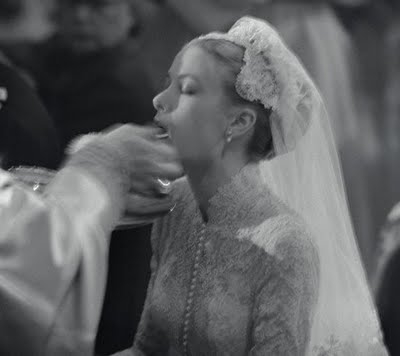
Princess Grace (née Kelly) of Monaco receives
the Holy Eucharist at her 1956 nuptial Mass


The Saints Speak of the Holy Eucharist

May 30, 2018

“If the Angels could envy, they would envy us for Holy Communion.”  —St. Pope Pius X

“Man should tremble, the world should vibrate, all Heaven should be deeply moved when the Son of God appears on the altar in the hands of the priest.”  —St. Francis of Assisi

“One single Mass gives more honor to God than all the penances of the Saints, the labors of the Apostles, the sufferings of the martyrs, and even the burning love of the Blessed Mother of God.”  —St. Alphonsus Liguori

“All the good works in the world are not equal to the Holy Sacrifice of the Mass because they are the works of men; but the Mass is the work of God. Martyrdom is nothing in comparison for it is but the sacrifice of man to God; but the Mass is the sacrifice of God for man.”  —St. John Vianney

“The Eucharist is the Sacrament of love; it signifies love, it produces love.”  —St. Thomas Aquinas

“The Eucharist is a never-ending sacrifice. It is the Sacrament of love, the supreme love, the act of love.”  —St. Katherine Drexel

“The Eucharist is that love which surpasses all loves in Heaven and on earth.”  —St. Bernard of Clairvaux

“The Eucharist is Divine Love made visible in the Sacred Host!”   —St. Teresa of Calcutta

“Do you realize that Jesus is there in the tabernacle expressly for you – for you alone? He burns with the desire to come into your heart.”   —St. Thérèse of Lisieux

“The Eucharist is a fire which inflames us.”  —St. John Damascene

“The Eucharist is the source and summit of the Christian life.”   —St. Pope John Paul II, quoting Vatican II

“The Eucharist is the supreme proof of the love of Jesus. After this, there is nothing more but Heaven itself.”  —St. Peter Julian Eymard

Visiting Our Eucharistic Lord

July 11, 2017

In every Catholic church around the world, Jesus sits within the tabernacle like a king upon his throne, waiting to receive anyone who would approach him with their praises, thanksgivings, and requests. Whether they stop inside for a just few minutes or spend a full “holy hour” in his presence, our Lord delights in the companionship of those who lovingly seek his audience.

St. Josemaria Escriva said, “When you approach the tabernacle, remember that He has been waiting for you for twenty centuries.” Escriva’s contemporary, St. Mother Teresa of Calcutta, remarked, “People ask me: ‘What will convert America and save the world?’ My answer is prayer. What we need is for every parish to come before Jesus in the Blessed Sacrament in holy hours of prayer.

In order to facilitate more of these beautiful and powerful encounters with Christ, St. Paul’s Church has begun keeping its church doors open until 7:00 PM daily. Come by to visit the Lord after work or school, or amidst your errands around town. (Please contact Father if you are willing to keylessly lock the church during the seven o’clock hour on particular evenings each week.)

St. Faustina Kowalska records Jesus telling her, “Behold, for you I have established a throne of mercy on earth — the tabernacle — and from this throne I desire to enter into your heart. I am not surrounded by a retinue of guards. You can come to me at any moment, at any time; I want to speak to you and I desire to grant you grace.” He waits for you. So come, let us adore him.

Aphantasia — A Corpus Christi Homily

June 5, 2016

Aphantasia (Greek for “without fantasy”) has been written about since 1880 but it has recently gained increased attention. To understand what I am talking about, picture a red triangle, a horse running, or the house where you grew up. With a moment’s attention you can see them in your mind. However, people with  Aphantasia are incapable of voluntarily forming images in their mind’s-eye.

Blake, a successful 30-year-old software engineer only recently learned he experienced the world differently from others. He relates a conversation similar to this with a Facebook friend:

—If I ask you to imagine a beach, how would you describe what happens in your mind?
    —Uhh, I imagine a beach. What?
—Like, the idea of a beach. Right?
    —Well, there are waves, sand. Umbrellas. It’s a relaxing picture. Are you okay?
— But it’s not actually a picture? There’s no visual component, right?
    —Yes, there is, in my mind. What are you talking about?
—Is it in color?
    —Yes…
—How often do your thoughts have a visual element?
    —A thousand times a day?
—Oh, my goodness…

An African BeachIf someone were to ask Blake to “imagine a beach,” he could ruminate on the concept of a beach: it has sand, waves, heat, sun. He could recognize a beach when he saw one, but even if he were standing on a beach he could not recreate or remember the image with his eyes closed.

Philip is a 42-year old photographer from Toronto. He is happily married, but he cannot conjure up his wife’s face (or any other image) in his mind’s eye. He was recently listening to a podcast presenter describing aphantasia. He says it came as a complete surprise, “I was like ‘what do you mean? People do that?’” He thought it was a joke so he checked with his four-year old daughter. “I asked her whether she could picture an apple in her mind, she said ‘yeah, it’s green’. I was shocked.

A 2009 survey of 2,500 people suggests that aphantasia is the experience of about 2% of people. So far, I have found it in two of my friends, including  a fellow priest. He tells me that when our spiritual director in seminary would tells us to prayerfully picture ourselves, say, at the table of the Last Supper he thought it was just a metaphor. He was surprised to learn that when people “counted sheep” to fall asleep that was more than just a figure of speech.

Disbelief is a common response when people on either side of this phenomena hear that other people do no experience the world like themselves. (“That’s impossible. You’re lying. You’re pulling my leg.”) However, unless we happen to carry around an MRI machine, we have to take our friend at his or her word in order to know the truth. And here we come to the connection with this Feast of Corpus Christi.

An extraordinary experience at the center of our Faith is founded upon a trust in our friend Jesus Christ’s testimony. At the Last Supper, Jesus does not say, “This is like my body,” or “This symbolizes or represents my body.” He says, “This is my body.” Around the year 150 AD, St. Justin Martyr described what early Christians everywhere believed about these words:

“The apostles, in the memoirs composed by them, which are called Gospels, have thus delivered unto us what was enjoined upon them; that Jesus took bread, and when He had given thanks, said, “Do this in remembrance of Me, this is My body;” and that, after the same manner, having taken the cup and given thanks, He said, “This is My blood” … “This food is called among us the Eucharist… For not as common bread and common drink do we receive these; but in like manner as Jesus Christ our Savior, having been made flesh by the Word of God, had both flesh and blood for our salvation, so likewise have we been taught that the food which is blessed by the prayer of His word, and from which our blood and flesh by transmutation are nourished, is the flesh and blood of that Jesus who was made flesh.”

Princess Grace (Kelly) Receives The Holy EucharistThe Church has always proclaimed and worshiped Jesus Christ as truly present, body, blood, soul, and divinity in the Eucharist. This belief has been confirmed for us throughout the centuries. The Holy Spirit, whom Jesus promised would lead us to all truth and remind us of all that he told us, has reaffirmed this teaching in Councils of the Church. Jesus has also allowed Eucharistic miracles to unveil this mystery we cannot normally perceive. For instance, at the Miracle of Lanciano in eighth century AD, a priest who was doubting Jesus’ Real Presence witnessed the bread become flesh and the wine become blood (which coagulated and broke into five globules in the chalice) as he said the words of consecration. In 1971, scientific analysis indicated that, as at similar miracles, the Host was human cardiac muscle. Who would go through such trouble when a fraudster’s more convenient use of pig’s flesh would have been undetectable? The truth is that Jesus gives us his heart in the Eucharist, along with his whole self. You can go to Lanciano, Italy and behold this Host today.
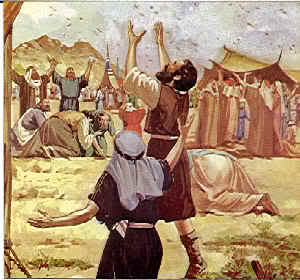
For many Christians, the Lord’s Supper is merely a symbolic commemoration, a ritual that remembers him. But if Jesus is everywhere, then he is nowhere. It then impossible to physically draw near to him any place on earth. Unless you are blessed with a vision of Jesus, you can never see him with your eyes or touch him in your flesh until after your death and resurrection. But with the Real Presence of Jesus in the Eucharist, “Behold, I am with you always…

If you have always enjoyed mental images, or if you have received the Real Presence of Jesus in Holy Communion since you were a child, then you may not appreciate the gift you have. If you experience aphantasia, or if you have never believed in the Real Presence of Jesus in the Eucharist, then you may not even know what you are missing. So for our non-Catholic family and friends, tell them about this treasure—Jesus wants them to receive him, too. And for ourselves, let us truly appreciate the incredible gift that we are blessed to receive.

Stained Glass Symbols — The Host & Chalice

February 8, 2014

Host and Chalice - Sacred Heart Catholic Church -  Wauzeka WIA Symbol of Christ’s Death

Jesus Christ is really and truly present in the Eucharist Host and chalice, yet the Host and chalice are symbolic as well. At the Last Supper, Jesus took bread, broke it, and said, “This is my body, which will be given up for you.” Then he took a chalice of wine and said, “This is the chalice of my blood… which will be poured out for you…” When a living creature’s blood is separated from its broken body, death naturally follows. Though Christ’s Body, Blood, Soul, and Divinity are fully present in every fragment of the Host and in every drop of the chalice, the symbolic separation of Jesus’ body and blood points to his sacrificial death.

Jesus Christ’s Holy Mass

April 25, 2013

“The celebration of Holy Mass is as valuable as the death of Jesus on the cross.” —St. Thomas Aquinas

“Man should tremble, the world should vibrate, all Heaven should be deeply moved when the Son of God appears on the altar in the hands of the priest.” —St. Francis of Assisi

“It would be easier for the world to survive without the sun than to do without Holy Mass.” —St. Padre Pio of Pietrelcina

“One single Mass gives more honor to God than all the penances of the Saints, the labors of the Apostles, the sufferings of the martyrs, and even the burning love of the Blessed Mother of God.” —St. Alphonsus Liguori

“All the good works in the world are not equal to the Holy Sacrifice of the Mass because they are the works of men; but the Mass is the work of God. Martyrdom is nothing in comparison for it is but the sacrifice of man to God; but the Mass is the sacrifice of God for man.” —St. John Vianney

 “If the Angels could envy, they would envy us for Holy Communion.” —St. Pope Pius X

 “Do you realize that Jesus is there in the tabernacle expressly for you–for you alone? He burns with the desire to come into your heart.” —St. Thérèse of Lisieux

Bread of Angels — Wednesday, 16th Week in Ordinary Time—Year I

July 21, 2011

Here at St. John’s, on the wall behind me, there is painted an angel holding a banner which says, “Ecce Panis Angelorum.” This is a Latin phrase. “Ecce” means “behold,” “panis” means “the bread,” and “angelorum” translates to “of the angels.” And thus the phrase goes, “Ecce Panis Angelorum; Behold the bread of angels.” This idea comes from Psalm 78, the psalm we heard today, which says of the Manna and the Israelites in the desert, “Man ate the bread of angels, food he sent them in abundance.” 

Why was the Manna in the desert was called the bread of angels? Extra-Biblical Jewish tradition suggested that the Manna bread actually nourished the angels. The Manna also came down from Heaven for the benefit of men and came through the mediation of angels. Of course, the Manna prefigures the Eucharist, which nourishes us through the deserts of this life toward the Promised Land. The Eucharist is really Jesus Christ who came down from Heaven for mankind. The angels are indeed nourished by this bread, Jesus Christ, for their lives are sustained thorough Him. We also receive the New Testament Manna with the help of the angels. As we say in Eucharistic Prayer I: “Almighty God, we pray that your angel may take this sacrifice to your altar in heaven. Then, as we receive from this altar the sacred body and blood of your Son, let us be filled with every grace and blessing.” It has been said that if angels could envy us, it would be for our reception of Jesus in the Eucharist.

The angels do more for us than we realize. We should remember to thank them; for getting us out of bed to come to Mass this morning, for assisting us here in our prayers, and for assisting us in our daily lives. Lovingly invite them, give them the permission, to do more in your lives. (They’re probably just waiting for you to ask.) Let us ask their intercession and at this Mass, together with the angels who surround us, let us delight in the bread of angels.

Testimony To The Real Presence — Corpus Christi—Year A

July 18, 2011

Jesus Christ is truly present Body and Blood, Soul and Divinity, in the Most Blessed Sacrament. This is called the Real Presence of Jesus Christ in the Eucharist. It is true that Jesus is present whenever the scriptures are read, or wherever two or three are gathered in his name, but the Holy Eucharist is His presence in the fullest sense, for this is Jesus Christ Himself. Some people accuse the Catholic Church of making up this idea during the Middle Ages or something, but Catholics have always believed in the Real Presence of Jesus Christ in Eucharist, unceasingly, in every age of the Church. For example, around 110 A.D., St. Ignatius of Antioch, a bishop and a prisoner in chains, wrote this on the way to his martyrdom in Rome:

“I have no taste for corruptible food nor for the pleasures of this life. I desire the bread of God, which is the flesh of Jesus Christ…; and for drink I desire his blood, which is love incorruptible”

Based upon rumors, the Romans despised and persecuted the early Christians and accused them of many things without understanding. The Christians were accused of atheism, because they refused to worship the pagan gods. The Christians were accused of incest, perhaps because others misunderstood the Christians’ love for each other as “brothers and sisters.” And, most interestingly, the Christians were falsely accused of cannibalistic feasts, of eating the flesh and blood of their offspring. Around 150 A.D., to help dispel rumors and to quell Roman hated, St. Justin Martyr wrote an open letter to the emperor explaining the actual beliefs of Christians. One of the things Justin touches upon is the Real Presence of Jesus Christ in the Eucharist. He writes:

“Not as common bread nor common drink do we receive [this Eucharist]; but since Jesus Christ our Savior was made incarnate by the word of God and had both flesh and blood for our salvation, so too, as we have been taught, the food which has been made into the Eucharist by the Eucharistic prayer set down by him, …is both the flesh and the blood of that incarnated Jesus”

Where did the early Christians get this idea? The Real Presence was taught them by the apostles and through the Holy Scriptures. For example, in today’s second reading, the Apostle St. Paul mentions the Real Presence to the Corinthian Christians as a given, as a settled matter. Paul says:  “The cup of blessing that we bless, is it not a participation in the blood of Christ? The bread that we break, is it not a participation in the body of Christ?” Is Paul only speaking symbolically? Well, a little later, He warns them, “…Whoever eats the bread or drinks the cup of the Lord unworthily will have to answer for the body and blood of the Lord.” Both the apostles and Scripture agree that Jesus Christ was the source of this belief. St. Paul writes the Corinthians:

“I received from the Lord what I also handed on to you, that the Lord Jesus, on the night he was handed over, took bread, and, after he had given thanks, broke it and said, ‘This is my body that is for you. Do this in remembrance of me.’”

The first three Gospels relate these words from the Last Supper as well, but the Gospel of John presents the subject differently. Jesus’ words of institution do not appear in John’s Gospel. (Perhaps St. John, writing His Gospel last, thought it wasn’t necessary to repeat them.) Yet John gives the words of Jesus where He emphatically teaches the truth of the Real Presence. In today’s gospel reading from the sixth chapter of John, Jesus tells followers that they will need to eat the bread which is His flesh six times. And the word used several times in this passage is not the normal Greek word for eating, but a more literal Greek verb, which means “to munch” or “to gnaw.” He says, “…My flesh is true food, and my blood is true drink.” John’s gospel tells us that “many of his disciples who were listening said, ‘This saying is hard; who can accept it?’” and, “as a result of this, many of his disciples … no longer accompanied him.” And Jesus let them go because they had heard Him right. As hard as it was to believe, they were called to eat His flesh and drink His blood. Curiously, there are Christian groups who take a very literal approach to everything in the Book of Genesis, yet who switch to a symbolic interpretation to what Jesus says six times in today’s Gospel.

Did you know that there have been Eucharistic miracles affirming the Real Presence of Jesus Christ in the Eucharist throughout the centuries? For instance, consecrated hosts forming drops of blood, hosts transforming into human heart muscle, or hosts which remain perfectly preserved after hundreds of years. In fact, this feast of Corpus Christ was established by Pope Urban IV after one such Eucharistic miracle in 1263. Some Christian groups have beliefs about communion which bear some resemblances to the Catholic belief in the Real Presence; but Eucharistic miracles are not heard of within Anglican, Episcopalian, and Lutheran communions.

Did you know that Satanic worshipers affirm the truth of the Real Presence? When they seek out hosts to abuse and misuse in profoundly depraved ways, it is the Holy Communion of the Catholic Church that they seek to steal for use in “Black Masses.” Andrew, a friend of mine from seminary, used to spend his summers at a parish in Paris, France. There he met a former satanic worshiper who had returned to the Lord and the Catholic Church. Andrew asked him whether it was true that Satanists could sense the difference between a consecrated and unconsecrated Host. His Parisian friend informed Andrew this was true, that he and others used to identify consecrated hosts out of a line up as something of a test. How did he know which one was consecrated? Andrew’s friend answered, “You could tell which one was the Lord because that was the one you felt hatred towards.” If Satanists can believe in the Real Presence of Jesus in the Eucharist, then why can’t every Catholic?

When I was a boy I had good teachers in the faith. When they taught us about the Real Presence I asked, “Do we really, really believe that?” I mean I could understand a symbolic understanding. Thinking of the Eucharist as a symbol like the American flag, which reminds us of our blessings and of sacrifices made for our freedom, that came easily to me. However, my catechists challenged me when they assured me, “We really do believe that the bread and wine really, really becomes Him.” I researched whether the whole Church taught this, and found that it did. I studied whether the Church had always taught this, and discovered they had through the ages. I explored whether Scripture supported the belief in the Real Presence, and indeed, it did. Yet there was still an important piece missing.

When I was a boy, I would look around at the faces of other people at Mass and, though looks can be deceiving, they didn’t look as if they were kneeling before God Almighty. But then our parish got a new pastor, Fr. Paul Gitter. When he celebrated the Mass you could tell that he believed that he was holding Jesus in his hands. Because I knew that he believed, I could too. For the sake of our families and our neighbors, it is important that we give witness to our belief in the Real Presence, too.

[From here, I encouraged everyone to attend Marshfield’s Corpus Christi procession, June 26, 2011 with our bishop. More than 200 people processed on that beautiful Sunday, from Sacred Heart to Our Lady of Peace, witnessing to their belief in Jesus Christ as truly present in the Holy Eucharist.]

The Way, Truth, & Life — 5th Sunday in Easter—Year A

May 22, 2011

Jesus said, “I am the way and the truth and the life. No one comes to the Father except through me.”

The Mass is an encounter with Jesus Christ, leading us to God the Father. Like Jesus Himself, the Mass contains the Way, the Truth, and the Life of Jesus. First, we journey on the Way to Jesus, then we come to the Truth of Jesus, finally we join in the Life of Jesus.

The Mass begins with the sign of the cross, for God is the beginning and end of everything. Next, we confess our unworthiness to approach the Lord, asking mercy for our sins, so that we may dare to take this journey to God. The, from the Holy Scriptures, we hear of God’s words and deeds among the Old Testament peoples and within the New Testament Church. In this, we learn of the providential way that God has prepared throughout time for us to encounter Jesus Christ today. Just as the journey on this Way through history leads to Jesus Christ, so the liturgy of the Word leads to the Gospel. Certainly, Jesus Christ the Word of God is present throughout the entire Word of God which is Sacred Scripture, but for the reading of the Gospel, we all stand up for Him and sing “Alleluia,” “Praise the Lord,” because we have come to Jesus Christ and He is more fully present among us in the proclamation of the Gospel.

The Gospel reading proclaims Jesus, who is the Truth. The homily that follows proclaims that the Truth matters for us here and now and demands our personal response. To this call, we answer with the Creed, proclaiming our faith in who God is and what He has done for us. In the Creed, we proclaim our acceptance of Jesus, the Truth. In the prayers of the faithful, we petition the Lord for our needs and concerns, saying in so many words, “Lord, let your kingdom come, on earth as it is in Heaven! Let us share you life! Give us your life!” At Mass, the Way leads to the Truth, and from the Truth we long for God’s Life. At Mass, the Liturgy of the Word leads to the Liturgy of the Eucharist.

The presentation of the gifts is not merely about moving around cash and bread and water and wine. The presentation of the gifts is about the presentation of everything that we have, and everything that we are, to God. We lift up our hearts to be one with our sacrifice. Amidst praises to the Father, the one life-giving sacrifice of the Last Supper, of the cross, and of Heaven becomes present here to us. We join in offering this sacrifice through Jesus, with Jesus, and in Jesus, in union with the Holy Spirit, to God the Father in Heaven.

Through this offered sacrifice, we join in God’s Life. We pray “Our Father,” because uniting with the paschal mystery, the great Easter deeds of Jesus, gives us life as the Father’s sons and daughters. Then we share with one another the sign of peace, the loving peace that is possessed by God’s holy ones. Finally, at the climax, we partake of Jesus Christ, Life Himself, most truly present in the Holy Eucharist.

Sometimes people say, “I just don’t get anything out of going to Mass. Father, I know that you say all this important and wonderful stuff is going on, but I don’t see it and I don’t feel it. The Mass is boring for me.” I understand. When I was a boy, I made a point of going to the bathroom (sometimes twice) during every Mass, just to break up the monotony. When I would see the priest cleaning the dishes at the altar—that was a good sign, because it meant that the Mass was almost done. I didn’t really know what was happening at Mass, so I really didn’t believe in what was happening at Mass. But as I grew older I began to learn what was happening, and as I grew in faith I began to believe in what was happening, and my experience of the Mass was transformed.

People who say that the Mass is boring resemble St. Phillip in something he said to Jesus at the first Eucharist, the Last Supper: “Master, (we don’t see or feel the presence of God the Father,) show us the Father, and that will be enough for us.” And Jesus said to him, “Have I been with you for so long a time and you still do not know me, Philip? Whoever has seen me has seen the Father. (Whoever has been to Mass has encountered my mysteries.) How can you say, ‘Show us the Father’? (How can you say, ‘The Mass is boring?’)” The awesome mystical realities of the Mass are true, and real, and present and active at every Mass we attend, whether we see them, or feel them, or believe in them, or not.

Jesus Christ and the Holy Mass contain the Way, the Truth, and the Life, and we shall receive from them according to our faith. Let us pray, that at this Mass and every Mass, we may be as fully present to Jesus Christ and His mysteries as they are to us at every Mass.