Archive for the ‘O.T. Figures’ Category

Great Rewards From Small Deeds

July 2, 2023

13th Sunday in Ordinary Time
By Fr. Victor Feltes

The Old Testament Prophet Elisha was the immediate successor to the Prophet Elijah, ministering as a traveling prophet and wonderworker in the 800’s BC. One day, he came to a town of northern Israel called Shunem in which lived a “woman of influence.” Other Bible translations of this same text describe her as “prominent, influential, and wealthy”—“a great lady.” Curiously, she along with her husband go unnamed in the text. Perhaps, as with “the beloved disciple” in the Gospel of John, this is intended by providence to encourage us to envision ourselves in her place.

This great lady urges the prophet to dine with her. He accepts, and thereafter, whenever passing through that town, he would visit to eat there. So she says to her husband, “I know that Elisha is a holy man of God. Since he visits us often, let’s arrange a little room on the roof and furnish it for him with a bed, table, chair, and lamp, so that when he comes to us he can stay there.” Her husband apparently agreed, because sometime later Elisha lodges in that new room overnight. They may have been simple accommodations but Elisha really appreciated them.

While staying there, Elisha asks his servant to call the woman. Once she stands before him Elisha asks his servant to say to her (apparently in her own language): “You have troubled yourself greatly for us; what can we do for you? Can we say a good word for you to the king or to the commander of the army?’” She replies, “I am living among my own people.” By this response, she is expressing that she lives contently and secure, far removed from the royal court and its concerns. Her needs are satisfied. She has not shown Elisha hospitality to win favors from him. She receives him because he is a prophet. She receives him because he is a righteous man. She serves him because she knows he is a holy man of God.

Later Elisha asks, “Can something be done for her?” His servant, with great confidence in the prophet, replies, “Yes! She has no son, and her husband is getting on in years.” So Elisha has her called again and once she stands at the door, Elisha promises, “This time next year, you will be fondling a baby son.” She replies, “My lord, you are a man of God; do not deceive your servant.” Yet, the woman would conceive, and by that time the following year she had joyfully given birth to a son as promised. From God, she receives the prophet’s great reward.

Jesus says, “Whoever receives a prophet because he is a prophet will receive a prophet’s reward, and whoever receives a righteous man because he is a righteous man will receive a righteous man’s reward.” And what of goodness shown toward those of lesser stature? “Whoever gives but a cup of cold water to one of these little ones to drink because the little one is my disciple—amen, I say to you, he will surely not lose his reward.”

Sometimes, Catholics look at our great saints and imagine we must do extraordinary things to be holy and greatly blessed. Thinking that such great deeds are beyond them, they despair of ever becoming saints themselves. In the late 1800’s, young St. Therese of Lisieux felt that way too, but then she found her “Little Way” to holiness. Her little way to great holiness was to do many little things for the right reason, with the right heart, that is, with great love.

In her highly recommended autobiography “Story of a Soul”, she writes:

Miss no single opportunity of making some small sacrifice, here by a smiling look, there by a kindly word; always doing the smallest right and doing it all for love.” “You know well enough that our Lord does not look so much at the greatness of our actions, nor even at their difficulty, but at the love with which we do them.” “Without love, deeds, even the most brilliant, count as nothing.” “To pick up a pin for love can convert a soul.

Like the great lady of Shunem and St. Therese of Lisieux, realize and remember that doing many little things for the right reason, with the right heart, out of love, will surely not lose its reward.

The New Manna

June 11, 2023

Solemnity of Corpus Christi
By Fr. Victor Feltes

In the Old Testament, God freed his people with the Prophet Moses. The Hebrews in Egypt were slaves to Pharaoh since birth, but God’s mighty works through Moses liberated them. Though he had led them through the waters of the Red Sea their journey was not yet completed. They were still in the arid desert and God wished to lead them into his Promised Land, “a land of milk and honey” he had promised to their ancestors. God had already blessed his people, yet he wished to give them his even fuller blessings there.

How were the Hebrew people sustained for forty years in the desolate Sinai desert? What did they eat to survive? Every day, God made fine flakes appear on the ground around their camp. These flakes were “white, and tasted like wafers made with honey.” Upon seeing them the people asked, “What is this?” (in Hebrew, “Manna?”) Moses told them, “It is the bread which the Lord has given you to eat.” Without that manna they would have starved to death. God’s people ate this bread until they entered the Promised Land.

Here we see things and events of the Old Testament foreshadowing events and things of the New. In the New Testament, God liberates his people with Christ Jesus his Son. We all were slaves to sin, Satan, and hopeless death, but God’s mighty works through Jesus Christ freed us. He has led us through the waters of baptism; however, our journey is not yet completed. We possess renewed life in this fallen world but God wishes to lead us into his Promised Land of Heaven. God has already blessed us, yet he wishes to give us his even fuller blessings there.

So how are we to endure as we walk through the present desert of this world? Every day, in churches like this one, God offers us the Bread that has come down from Heaven. Jesus says, “I am the living bread that came down from heaven; whoever eats this bread will live forever; and the bread that I will give is my flesh for the life of the world.” He gives us himself in the Eucharist. People see the Blessed Sacrament and wonder, “What is this?” It is the New Manna; the Body and Blood, Soul and Divinity of Jesus Christ.

In addition to Sacred Scripture, the Early Church Fathers attest to this. These theologians living in the first centuries of the Church teach and document what the earliest Christians believed about Jesus Christ’s Real Presence in the Eucharist. For instance, shortly after 100 AD, St. Ignatius of Antioch said, “The Eucharist is the Flesh of our Savior Jesus Christ.” Around 150 AD, St. Justin Martyr taught, “The Eucharist… is both the Flesh and the Blood of that incarnated Jesus.” St. Augustine of Hippo wrote in the early 400’s that, “Christ was carried in his own hands when, referring to his own body, he said, ‘This is my body.’ For he carried that body in his hands.” And there are many other examples of such teaching from that era.

This is what Christ’s one, holy, catholic, and apostolic Church has always believed and taught, and God has affirmed its truth here and there by Eucharistic miracles throughout the centuries. In the Old Testament, God’s people ate the manna until they entered the Promised Land. Had they not regularly eaten of it, they would have died from starvation. This reflects how important faithfully receiving and promoting the Holy Eucharist must be for you and me.

Never neglect Sunday Mass. To skip Mass from Saturday evening through Sunday night (without a grave reason for doing so) is to prioritize something else above of Jesus, spurning the Lord who commands us to keep his day holy. Let Jesus Christ be first in your life through faithfully worshipping and receiving him at Mass. And opportunities to worship and receive our Lord at Mass are not limited to the weekends.

If your schedule permits, I welcome and invite you to try weekday Mass, celebrated at St. Paul’s on Monday through Friday at 7:15 AM and mornings at St. John’s on Mondays, Thursdays, and First Fridays. Weekday Mass is only a half-hour long, it features a homily, and is among the best devotions for drawing closer to Jesus.

Are any of your friends or relatives interested in our Catholic Faith? Invite them to come with you to Mass or bring them to that other great way to encounter our Eucharistic Lord: Eucharistic Adoration.

What greater treasure do we have than Jesus, truly present in the Eucharist? Let us treasure him as we ought and introduce this treasure to others. Strengthened by his food, our Lord would bring us all together into his Promised Land of Heaven.

God is a Loving Communion of Persons

June 4, 2023

Trinity Sunday
By Fr. Victor Feltes

A Muslim man once accused me of what he called an “unforgivable sin.” My supposed offense was espousing a core truth of our faith, the foundation of all reality: Trinitarianism — that God is one being in three persons. (That man’s charge struck me as a rather poor conversion strategy. I mean, if proclaiming the Trinity were really an unforgivable sin, why would I bother converting to Islam?) I was dialoguing on that occasion with generally friendly and thoughtful Muslims, Jews, and Unitarians in a website’s comments section, responding to something a man who believes in God but rejects the Trinity had posted. This is what he wrote:

The Jews had no idea of the Trinity. Their faith was centred in the Shema: a unitary monotheistic confession. Jesus clearly affirmed that very same unitary monotheism in Mark 12:29″ where Jesus says, “Hear, O Israel! The LORD our God, the LORD is one!” This fellow concluded by chiding, “How is it that Christians today have abandoned their rabbi on this point?

Both that online poster and Jesus Christ referenced the Shema, which faithful Jews would recite every morning and evening. “Shema” is the Hebrew word meaning “hear” or “listen,” and the Shema prayer quotes Deuteronomy 6:4: “Hear, O Israel: The Lord our God, the Lord is one.” Does this oneness proclaimed by God’s Word refute our Trinitarian Christian Faith? Should we reject our belief in the Trinity because Jews in the Old Testament did not profess it? No, and here’s why.

This famous scripture verse declaring, “the Lord is one,” uses the Hebrew word “echad” for “one.” Now echad can mean singularity, solitary oneness, but this same word sometimes points to a unified oneness. For instance, when Genesis recounts the creation of the two sexes it says, “For this reason a man will leave his father and mother and be united to his wife, and the two shall become one (echad) flesh.” Later in Genesis, in the story of the Tower of Babel, God laments, “If now, while they are one (echad) people and all have the same language, they have started to do this, nothing they presume to do will be out of their reach.” God, by selecting the word “echad” to proclaim “the Lord is one,” inspired a passage with providential flexibility. Echad allows for the unified oneness of the Persons of the Trinity without requiring that interpretation from the Jewish generations who came before Christ.

In the Bible, we see God gradually leading humanity along from darkness to light, from error to truth. For example, from unchecked blood vendettas, to “an eye for an eye” taught in the Mosaic Laws, to the Gospel teaching of loving our enemies. Or from polygamy, to monogamy, to sacramental marriage. Or in this case, from polytheism (belief in many gods), to monotheism (belief in one God), to Trinitarianism (our belief in one God in three divine Persons).

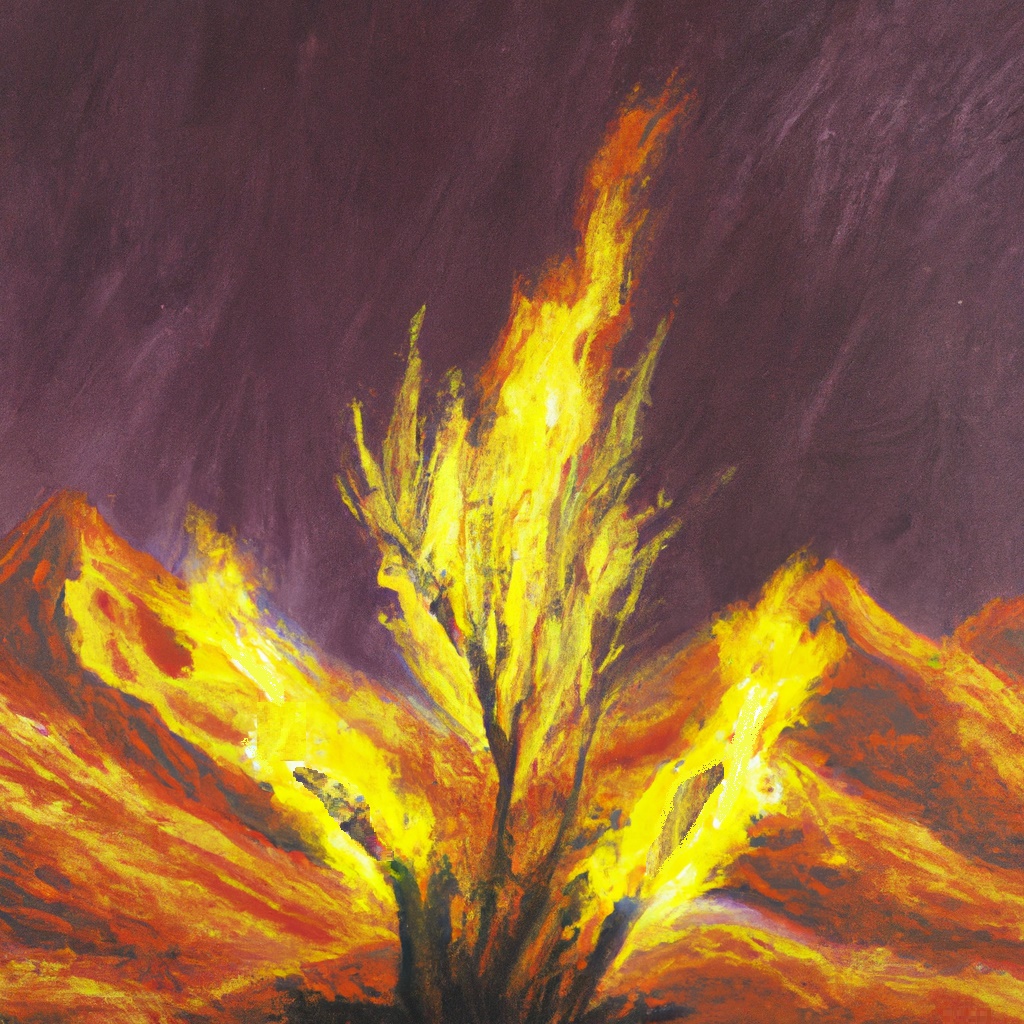
We see God’s progressive revelation occurring at the Burning Bush, where Moses must ask God to clarify for him, “If I go to the Israelites and say to them, ‘The God of your ancestors has sent me to you,’ and they ask me, ‘What is his name?’ what do I tell them?” The Lord replies, “I AM (the God) WHO AM.” That the Lord was not just another god among many pagan gods — that the Lord is, in fact, the only God — was a revelation God’s people were taught and accepted over time.

So who reveals to us that God is a Trinity; that the one divine being is three distinct Persons? This is revealed to us through Jesus Christ himself. Jesus claims authority to forgive sins, declares himself Lord of the Sabbath, demands an absolute and total commitment to himself, and presents himself as the one way of salvation. He accepts peoples’ worship, which would be idolatrous if he were not divine. And Jesus says “the Father and I are one” and “whoever has seen me has seen the Father,” yet he speaks to God his Father as another Person.

You and I are single-person beings, so we would naturally assume a personal God would be a singular-person like us. But through Jesus Christ we discover that God as a solitary one would be less perfect, less complete, less great than our God is. Our triune God, Father, Son, and Holy Spirit, is a loving communion of Persons. God the Father entirely gifts himself to his Son. God the Son entirely gifts himself back to his Father. And God the Holy Spirit proceeds from this eternal, self-gifting exchange. Indeed, as St. John writes, “God is love,” and we are made in and called to the image and likeness of God.

What does this teach us for our lives? The Holy Trinity teaches us our personal perfection will not come in isolation. God the Son calls us to be God’s children with himself, while God the Holy Spirit calls us to be animated with himself, while God the Father calls us to offer all things to himself, so that he — the source of all good things — may give us all good things in return. Loving personal relationships are the meaning of life. Our lives come from a loving communion of persons, and we are called to a loving communion of persons, the Trinity and their Church. We will only become Christian saints through self-gifting and receiving in the oneness of a holy, loving communion of persons.

From Fear to Peace: Celebrating Divine Mercy

April 15, 2023

Divine Mercy Sunday
By Fr. Victor Feltes

During the Exodus, before descending in fire and smoke upon a trembling Mount Sinai, God gave instructions to prepare the Hebrews for this encounter. The Lord said to Moses:

“Go to the people and have them sanctify themselves today and tomorrow. Have them wash their garments and be ready for the third day; for on the third day the Lord will come down on Mount Sinai in the sight of all the people. Set limits for the people all around, saying: ‘Take care not to go up the mountain, or even to touch its edge. All who touch the mountain must be put to death. No hand shall touch them, but they must be stoned to death or killed with arrows. Whether human being or beast, they must not be allowed to live.’ Only when the ram’s horn sounds may they go up on the mountain.”

Then Moses came down from the mountain to the people and had them sanctify themselves, and they washed their garments. He said to the people, “Be ready for the third day.

On the third day, as all the people witnessed the thunder and lightning, the blast of the ram’s horn and the mountain smoking, they became afraid and trembled. So they took up a position farther away and said to Moses, “You speak to us, and we will listen; but do not let God speak to us, or we shall die!” Moses answered the people, “Do not be afraid, for God has come only to test you and put the fear of him upon you so you do not sin.” So the people remained at a distance, while Moses approached the dark cloud where God was.

A pair of themes throughout the Old Testament are the holy otherness of God and the deadly sinfulness of man. Our Fall made it dangerous to approach God carelessly. And even Moses was mysteriously told, “You cannot see my face, for no one can see me and live.” Compare and contrast that with this Sunday’s Gospel.

On the third day, despite the doors being locked where the disciple were, the Risen Jesus came and stood in their midst and said to them, “Peace be with you.” When he had said this, he showed them his hands and his side. And he said again, “Peace be with you.” A week later when Thomas was there, Jesus appeared again and said, “Peace be with you.” He then invited Thomas, “Put your finger here and see my hands, and bring your hand and put it into my side, and do not be unbelieving, but believe.”

In former times, seeing the Lord or merely touching the mountain or ark of his holy presence could mean death. But disciples in the New Testament are invited to see his face and touch his wounds. In the New Covenant, we are called to receive Jesus Christ alive in the Eucharist. Today we celebrate Divine Mercy, mercy reflected in how — even after our sins led him to his Cross — Jesus returns and repeatedly wishes us “Peace.” In forgetting our past, we fail to appreciate what the Lord has done for us. And too few rejoice in his Divine Mercy because so many do not realize their need for it.

On Easter Sunday evening, Jesus breathed on his apostles saying, “Receive the Holy Spirit. Whose sins you forgive are forgiven them, and whose sins you retain are retained.” Why would Jesus give them this power to forgive sins if he did not intend them to use it? Why would he give his Church such a Sacrament if we did not need it? Jesus wishes you a peace beyond your fear. He desires to forgive your sins and personally give himself to you in the Eucharist. Will you trust him enough to regularly encounter his healing Divine Mercy in the confessional so that you may receive him all the more reverently, fittingly, lovingly and joyfully at his altar?

God Calls Unlikely People

March 19, 2023

4th Sunday of Lent
By Fr. Chinnappan Pelavendran

Today is the fourth Sunday of Lent, also known as Laetare Sunday, which means “rejoice.” The Church is joyful in anticipation of the Resurrection of our Lord. Today’s readings remind us that it is God who gives us proper vision in the body as well as in the soul. We need to be constantly on guard against spiritual blindness. God has a plan for each of us. He can call any of us to the vocation He has chosen for us. Being a priest, nun, or religious are not the only vocations. God has called some to married life or to be single. Prayer is very important to us in discerning our vocation.

When God called Moses, he was tending the sheep of his father–in–law, Jethro. God called him from the burning bush, but Moses had many excuses. If I say to the sons of Israel, the God of your father sent me, and they ask me what is His name? what shall I say to them? God said to Moses, “I am Who am.” I don’t think they will listen to me, I am not eloquent, I am afraid, I don’t want to go alone. God told him to take his brother Aaron with him and God would also be with him. Because God was with him, Moses was able to fulfill God’s request. He went to Pharaoh and led the Israelites out of Egypt. They were in the desert for forty years, and God provided everything they needed. Moses was able, with God’s help, to deliver His people to the land flowing with milk and honey.

In the New Testament, we have the call of Matthew. When Jesus called him, Matthew was a tax collector. Tax collectors were not upstanding citizens, they worked for the Romans, they kept some of the tax money for themselves, and they went after people to get the tax money from them. They did whatever it took to get the money. When Jesus said, “Follow me,” He followed Jesus leaving his work, money, and everything behind. He was completely changed. He became one of the Apostles and wrote the Gospel of Matthew in the Bible. He is the one who wrote the genealogy of Jesus.

In the first reading today, God sent the Prophet Samuel to the house of Jesse to anoint a king for Israel. Jesse had seven sons with him and presented each one to the Prophet Samuel. Samuel thought each one would be acceptable, but God said No. Jesse had one other son, David, who was tending the sheep. They sent for him and the Lord said, “Arise, anoint him, for this is he.” (1 Samuel 15:12) God chose the most unlikely candidate, the shepherd boy to be king of Israel. God told Samuel, Not as man sees does God see, because man sees the appearance, but the Lord looks into the heart.

Our Gospel today tells us about the healing of the blind man. After receiving his sight, he believed in Jesus and followed Him. Let us not be blind to Jesus, we need to believe and follow him as this man did. We are all called by God to be faithful to our vocation, whatever it is in life. Moses, Matthew, and David were faithful to God. As a religious, married, or single we also need to be faithful to God.

Those of you who are parents, bring your children to God. You presented them to God for baptism, don’t stop there. Pray with them. Bring them to church, and teach them to love God as you love them. Be a good example to them. Let them see you praying on your knees at home and in church. Teach them to be faithful to God by your example. God is calling us today to follow Him.

Behold the Tree of Life

February 26, 2023

1st Sunday of Lent
By Fr. Victor Feltes

God grew many lovely, fruit-bearing trees in the Garden of Eden, but only two trees are mentioned by name. In the middle of the Garden the Lord God placed the Tree of Life and the Tree of the Knowledge of Good and Evil. Tempted by the Devil, Eve ate from the forbidden tree and “gave some to her husband—who was with her—and he ate it.” If only Adam had been willing to confront the dragon-serpent and protect his bride, perhaps even to lay down his life for her! But the first man did not do this and the whole human family fell. (Let men called to lead and protect their families take note.)

Then our Triune God said: “Behold! The man has become like one of us, knowing good and evil! What if he now also reaches out his hand to take fruit from the Tree of Life, and eats of it and lives forever?” For this reason, God banished our first parents from the Garden. This was not from divine jealousy, but from divine concern for us. Imagine everlasting human lives lived in unending sinfulness; that would be a hell on earth. “Through one man, sin entered the world, and through sin, death, and thus death came to all men…” But God promised Adam and Eve a redeemer who would crush the serpent’s head and save us from sin and death.

In today’s Gospel, that Savior undergoes the Devil’s temptations not in a paradise but in a desert. The ancient tempter approaches Jesus and says, “If you are the Son of God, command that these stones become loaves of bread… If you are the Son of God, throw yourself down (from this temple rooftop)… All (the kingdoms of the world in their magnificence) I shall give to you, if you will prostrate yourself and worship me.” Jesus refuses each of these diabolical suggestions.

If the Christ conjures bread for himself when hungry, then how can he refuse to fill every hungry mouth? But what good would our filled stomachs be if we are never delivered from sin and death? And if the Christ demands that God his Father protect him from every harm, then how could he ever offer his life’s blood as our saving sacrifice? And if the Christ submits to our enemy’s rule over this world, then how could we ever be free? Jesus Christ understands his messianic mission and where it will lead him. It will lead him to the Cross.

Jesus calls himself the Bridegroom, and St. Paul calls him the second and final Adam. Unlike the first Adam, Jesus Christ the New Adam willingly and courageously lays down his life in battle with the Devil to save us, the Church, his Bride.

“[T]hrough one transgression
condemnation came upon all,
so, through one righteous act,
acquittal and life came to all.

[T]hrough the disobedience of the one man
the many were made sinners,
so, through the obedience of the one,
the many will be made righteous.”

One beautiful Mass preface for Sundays in Ordinary Time praises God with these words: “[W]e know it belongs to your boundless glory, that you came to the aid of mortal beings with your divinity and even fashioned for us a remedy out of mortality itself, that the cause of our downfall might become the means of our salvation…

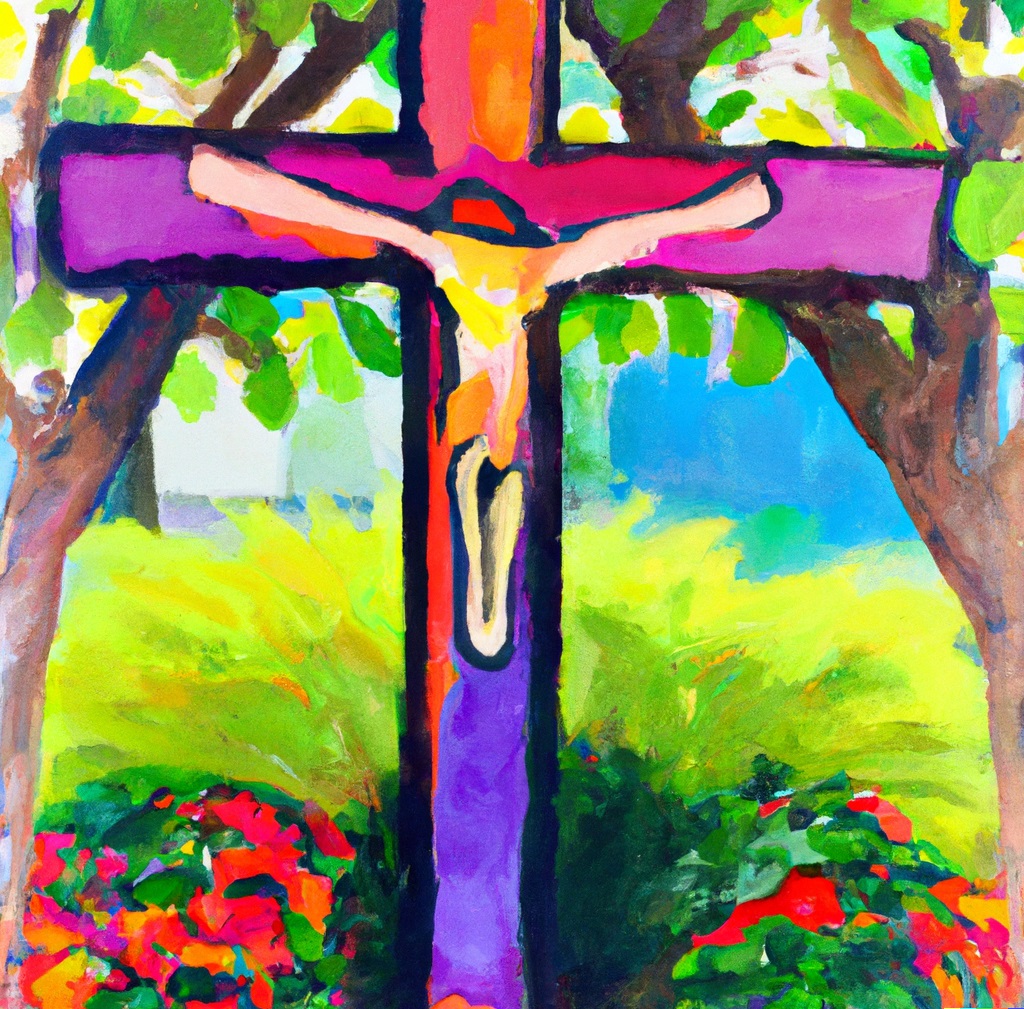
St. Paul’s tells the Galatians, “Christ ransomed us from the curse… by becoming a curse for us — for it is written, ‘Cursed be everyone who hangs on a tree…’” In the tree that is his Holy Cross, we now see the Tree of the Knowledge of Good and Evil and the Tree of Life combined.

During this Lent, contemplate the crucifix. Meditate upon the crucifix to know goodness, to behold God’s love for us. And gaze upon the crucifix to know evil, to see our sins at work. And ever-faithfully eat the fruit from this Tree of Life, which is Jesus Christ himself given us at Holy Mass. As Jesus taught in the synagogue at Capernaum, “Whoever eats my flesh and drinks my blood has eternal life… For my flesh is true food, and my blood is true drink. …Whoever eats this bread will live forever.” God once said in the Garden: ‘You shall not eat of the Tree or even touch it, lest you die.’ But now Jesus invites us, provided we are well-prepared: “Take this, all of you, and eat of it, for this is my Body… given up for you.”

Zephaniah & the Beatitudes Call to Conversion

January 29, 2023

4th Sunday of Ordinary Time
By Fr. Victor Feltes

Jesus’ Beatitudes are words of consolation and hope but they are also a call to conversion. Our first reading today comes from the Old Testament prophet Zephaniah who proclaimed God’s words in the land of Judah. Zephaniah denounced his people’s unfaithfulness, warning them:

“Near is the great day of the Lord,
near and very swiftly coming…
A day of wrath is that day,
a day of distress and anguish,
a day of ruin and desolation…
A day of trumpet blasts and battle cries
against fortified cities,
against lofty battlements…
Because they have sinned against the Lord.”

Less than one lifetime after Zephaniah preached, Jerusalem was conquered by the Babylonians and Judah’s earthly kingdom fell.

Zephaniah denounced those rich in material things, who hungered for feasts and comforts, who thirsted for wines and pleasures, who fashionably clothed themselves in unrighteousness. These proud rich would not be satisfied. Zephaniah said, “They will build houses, but not dwell in them. They will plant vineyards, but not drink their wine…. Their wealth shall be given to plunder and their houses to devastation…. Neither their silver nor their gold will be able to save them.

However, Zephaniah’s strongest condemnations denounced the idolatry among his people. Some worshipped idols in pagan temples, while some bowed down on roofs to worship stars, and some bowed down to the one true Lord God but would swear oaths by other gods. Zephaniah notes some said in their hearts, “The Lord will not do good, nor will he do harm.” They lacked faith, and hope, and love for him in their divided hearts. But with unclean hearts, they would not see God.

Today we hear Zephaniah say, “Seek the Lord, all you humble of the earth… seek justice, seek humility; perhaps you may be sheltered on the day of the Lord’s anger.” Then Zephaniah announces that the Lord “will leave as a remnant in your midst a people humble and lowly, who shall take refuge in the name of the Lord: the remnant of Israel. …They shall pasture and couch their flocks with none to disturb them.”

In fulfillment of God’s word, in response to a Jewish revolt, the Babylonians conquered Jerusalem in 587 B.C. They tore down the city’s walls, systematically burned its palaces and houses, and destroyed the Jewish temple. Those Jews who had made war were either killed or deported far away to Babylon, along with everyone else their conquerors saw as a threat. Yet “they left in the land of Judah some of the poor who had nothing and at the same time gave them vineyards and farms.” Blessed were the meek, for they inherited the land.

Yet even before Judah was conquered and thousands of Jews were carried off to Babylonian exile, God promised them a future return to Jerusalem. The Lord foretells through the Prophet Zephaniah: “At that time I will bring you home, and at that time I will gather you.” Blessed would be those people who remembered to mourn the loss of God’s temple and holy city, for they would be consoled. Less than one lifetime after their departure, once that Babylonian empire had been conquered by a Persian empire, the Jews were allowed to return home.

The words of Jesus and Zephaniah and the stories of their people should give us pause today, for “near is the great day of the Lord” always. How are we using our great riches? Which desires do we feed? Do we mourn the evils that we see in the world? Unless we hunger and thirst for righteousness, we will never be satisfied. We might not worship golden idols or swear by pagan gods, but idolatry still exists today. If our priorities (as reflected by our finances, Sunday sports or vacations, worldly desires or addictions, or any other things) usurp our Lord from his rightful throne in our hearts, then our hearts are not yet so pure as he wills them to be.

Seek the Lord… seek justice, seek humility… do no wrong and speak no lies.” Practice mercy and pursue peace. Christ offers you his strengthening grace. Blessed are they who heed what Jesus tells us gains his Kingdom.

The Openness, Obedience, & One Word of St. Joseph

December 18, 2022

4th Sunday of Advent
By Fr. Victor Feltes

Our Gospel this final Sunday of Advent centers on St. Joseph. It recounts how St. Joseph received the stunning revelation of Mary’s pregnancy. We can learn from the great saint’s response — from his openness, his obedience, and his one word.

Mary was already Joseph’s wife when she conceived her child. In their Jewish culture, a newlywed couple would live apart for the first year of marriage. Thereafter, the husband would bring his betrothed into his home to live with him. When Mary conceived a child (whom Joseph knew was not his) why did he decide to divorce her? Was Joseph heartbroken because he believed she had betrayed him? Or was Joseph frightened, because he believed her story of the Annunciation and thought himself unworthy of this holy woman and her holy child? Whatever the case, Joseph was a righteous man and unwilling to expose Mary to shame, so he intended to divorce her quietly.

Then an angel of the Lord appeared to him in a dream and said, “Joseph, son of David, do not be afraid to take Mary your wife into your home because it is through the Holy Spirit that this child has been conceived in her. She will bear a son and you are to name him Jesus, because he will save his people from their sins.” Once Joseph awoke, he did as the angel of the Lord had commanded him and took Mary into his home.

I used to fret very much about precisely discerning God’s will. “What if the Lord wants me to do a specific thing but I can’t figure it out?” During my college and seminary years, I thought I had a vocation to the priesthood but how could I be sure? I worried, “What if I get this discernment terribly, terribly wrong?” Then a holy friend gave me peace of mind by pointing to St. Joseph. When Joseph was about to make a terrible mistake by separating himself from Mary and Jesus, it only took one night’s dream to get him back on the right track because Joseph desired to do whatever God willed. God can easily redirect a willing heart.

People sometimes complain, “I wish God would just tell me what to do!” But unless we are open to doing God’s will, what good would his directions do us? Imitate St. Joseph in his openness. Like with the Blessed Virgin Mary, Joseph’s openness allowed God to do great things through him. So resolve your will and pray for the grace to always be open to God’s will like St. Joseph. Another St. Joseph trait of we can imitate and profit from is his simple obedience.

St. Matthew’s Gospel records, “When Joseph awoke, he did as the angel of the Lord had commanded him and took his wife into his home… and he named [the boy] Jesus.” On this occasion, like later when told to flee to Egypt or told to return to Israel, Joseph does point-by-point what God commands. Like Moses in the Old Testament, whenever God instructs Joseph to do (A) and (B) and (C), the author notes how Joseph then does (A) and (B) and (C).

Moses and Joseph’s duties were different from ours today. We will not construct an Ark of the Covenant, nor protect and provide for the Holy Family, but each of us has persons and tasks entrusted to us by God; people to care for and works to be done. You already know a great deal of what God has commanded you to do; your own (A) and (B) and (C) according to your state in life. You will not fulfill your missions perfectly—and that’s OK—but imitate St. Joseph in his simple obedience because your basic, God-given duties are more important than you realize.

A third and final feature of St. Joseph reflected in today’s Gospel is his single word. Did you ever hear that in all of Scripture there are no recorded quotes from St. Joseph? It’s true: Jesus has many, Mary has several, but Joseph has none. Now there is no evidence that St. Joseph lacked the ability to speak or ever took a vow of silence.  Joseph probably said many things that were simply not written down. Yet today’s Gospel contains the strongest evidence of his having said any one particular word. What was that word?

The angel in Joseph’s dream said of the unborn child: “You are to name him Jesus.” And when Joseph awoke, he did as the angel of the Lord had commanded him. Joseph named him Jesus. The name of Jesus was St. Joseph’s greatest and most important word. Ever after, the name of Jesus defined his life.

Learn from St. Joseph, the husband of Mary and foster-father of Jesus. Imitate his openness to doing God’s will whatever it may be. Benefit from practicing his obedience in your daily duties. “And whatever you do, in word or in deed, do everything in the name of the Lord Jesus,” like St. Joseph did.

Minutes from a Demonic Meeting

November 13, 2022

33rd Sunday in Ordinary Time
By Fr. Victor Feltes

Once upon a time, an unknown number of years ago, there was an important meeting of demons. Amidst hell’s fires and shadows, with putrid smoke hanging in the air, the demonic hierarchy plotted their next strategy for how to mislead humanity. Since the rebel angels cannot hurt God directly, they tempt and attack those he loves, hoping to corrupt and dominate us. When the Lord Jesus comes again to rule the earth with justice, the demons do not want us to experience his healing rays; they want us to burn and suffer like themselves.

As the demons met and brainstormed schemes, one of them suggested, “What if we try deceiving them that there’s no such thing as evil?” The chairman, after pouring out a stream of insults, said, “The humans will never believe that! Do you think that we can pit person against person, nation against nation, souls against our Enemy above, without them noticing the sadness, sufferings, envies, jealousies, impurities, rivalries, hatreds, resentments, injustices, murders, and cruelties which follow? Humans see proof of evil in nearly every headline! They are reminded something is wrong with their world whenever their alarm clocks ring, their toes get stubbed, or their weather is less than perfect! You’ll have to do better than that!

Then another demon dared to suggest, “What if we deceive them that there is no such thing as goodness?” The chairman spewed abuse at that one and said, “The humans will never believe that either! Our Enemy above has littered their world with too many beauties and blessings to count! They have this inherent desire for happiness that our Enemy has built into them! Everything they do is in pursuit of something they perceive as somehow good! Is anyone here not a useless fool?

Finally, one of the chairman’s most cunning underlings proposed another strategy, an idea which was immediately welcomed with cruel smiles by the malevolent assembly. This dangerous demon said, “Let us deceive the humans that there is no need to hurry.

In every generation, there has been Christians who believed that their generation would be the last. In his Second Letter to the Thessalonians, St. Paul admonishes some idlers, freeloaders, and busybodies living there who have quit their labors because they assumed the Lord was returning very soon. Personally, I do not expect the second coming of Christ to happen in the very near future since it remains legal to be a Christian throughout so many regions of the world. There are grave evils on this earth, including in our country, but the final attack of hell against Christ’s Church in the final days should be far worse than this. Yet whether or not Christ’s return is imminent, we must always ready to go to him. We do not know when he will return, nor do we know when any of us will die. But the certainty of our coming encounter with Christ should not make us afraid but motivate us to prepare.

Rather than being idlers and busybodies, neglecting our spiritual growth and enthralled by our distractions, let us get busy treating the most important things as the most important things. If you knew with certainty that you would die three months from today, how would you begin living differently? Would you pray more every day? Would you go to confession and Mass more often? Would you crush your lingering vices? Would you work harder to do good works? Would you forgive your enemies? Would you show more love toward God and the people around you? Thinking seriously about what you should you do differently knowing you are going to die is a good place to start in living more intentionally for Christ, with your eternal goal in mind. Do not believe the demonic deception that there is no need to hurry, for your last day is closer than it was yesterday, and it may be much closer than you think.

He is not God of the Dead, but of the Living

November 5, 2022

32nd Sunday in Ordinary Time
By Fr. Chinnappan Pelavendran

My first funeral as a priest was for a baby who was two weeks out of the womb. How does one talk to the family? They are a devout, Catholic family, but they asked, why is God allowing this? I listened to them and cried with them. I later responded to them by saying that when I ask why I look at a crucifix. Why did God allow His own son to die? Our salvation and redemption come from the cross. Through the death of that baby, God wants to say something to us; resurrection is what comes out of Christ’s death.

When God revealed Himself to Moses in preparation for bringing His people out of Egypt, He called Himself “the God of Abraham, the God of Isaac, and the God of Jacob.” (Exodus 3:6) When God told this to Moses, centuries had passed after these forefathers had died. However, God acknowledged their existence even after their death. Though the verse did not specify the resurrection of the dead, it implied their survival after death.

Today’s first reading describes a Jewish family, consisting of a mother and her seven sons, who refuse their king’s command to eat pork, forbidden as “unclean” by Jewish Law. Because of their obedient Faith in God, they endure suffering and accept martyrdom. During their torture, three of the brothers speak, and each of them finds strength in the belief that he will eventually be raised and rewarded by God.

The second reading encourages the Thessalonians, who were waiting for the second coming of Christ, to trust in the fidelity of God who would strengthen their hearts in every good work and word.

In today’s Gospel, Jesus is challenged by a group of Sadducees concerning the resurrection of the dead. Just before this, Jesus had been challenged by Pharisees and Scribes, whether to pay taxes to Caesar or not. Jesus had dealt effectively with them and reduced them to silence. Again they raised a question this time about the imaginary story of seven brothers marrying one woman, and their relationship with each other in the next life. Their question in the Gospel is certainly an insincere and impossible example, they want to ridicule a belief in the resurrection.

Hands Lifted up to Heaven

October 16, 2022

29th Sunday in Ordinary Time
By Fr. Victor Feltes

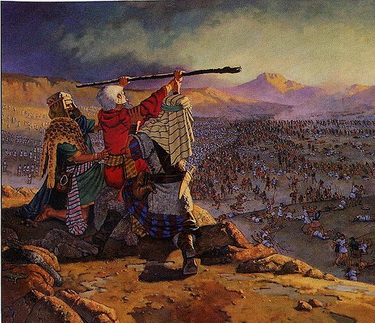
After God’s people, the descendants of Israel, crossed the Red Sea in the Exodus, an army of Amalekites came to battle them in the Sinai desert. So Moses instructed his servant Joshua: “Pick out certain men, and tomorrow go out and engage Amalek in battle. I will be standing on top of the hill with the staff of God in my hand.” The next day, while Joshua led Israel’s soldiers in fighting the foe on the battlefield, Moses stood upon an adjacent hill along with Aaron and Hur.

As long as Moses kept his hands raised up, Israel had the better of the fight, but when he let his hands rest, Amalek had the better of the fight.” Moses wielding this staff at God’s command triggered the plagues in Egypt, parted the Red Sea, and now brought Israel’s victory on the battlefield. But this raises a reasonable question: why would God condition his people’s success in combat upon an old man holding a piece of wood above his head? Moses lifting up this staff of God was a sign for God’s people which preserved them from a spiritual disaster.

God knew that if Israel had won apart from this sign they would have ascribed the victory to themselves. “We won this battle because we’re so smart, and strong, and brave! Maybe we don’t need God’s help after all.” Such pride in their success could be their downfall, in this life and the next. So instead, through the sign of an up-lifted staff, the Lord showed Israel, “I am the vine, you are the branches. Whoever remains [with] me and I [with] him will bear much fruit, because apart from me you can do nothing.”

Similarly today, our Lord desires us to pray without ceasing for the good things we want or need. Otherwise, if and when his blessings come, we shall attribute these things to mere luck, coincidence, or to our own personal abilities, with no growth in our relationship with God. He is the source from whom all good things come. By asking and then receiving, we come to see and know the Lord is near and cares for us. And in the end, that is the most valuable gift of all.

God not only wants us to know and to love him, he desires us to glorify us as well. God is all-powerful, omnipotent, he could do everything without us. But by God accomplishing his will through us, as he did with Moses, the Lord makes us more like himself and causes us to share in his glory.

Holding the staff of God in his hands throughout the day made Moses’ hands and arms grow tired. (If you cannot understand why, try holding an object above your head for just ten minutes sometime.) When Moses’ body grew tired, his friends came to his aide. “They put a rock in place for him to sit on. … Aaron and Hur supported his hands, one on one side and one on the other, [one on his right and the other on his left,] so that his hands remained steady till sunset.” With this help from his friends, Moses kept his arms raised-up and God’s people prevailed against their foe. All of this was a foreshadowing of greater things to come.

On Good Friday, when Jesus was condemned to death, he took the cross into his hands and carried it to the top of a hill. There his hands were nailed to the wood above his head. And Jesus was not there alone. All four Gospels note he was crucified between two others, “one on his right and the other on his left.”

Our Lord was mocked as he hung for hours upon the Cross: “Are you not the Messiah? … If you are the King of the Jews, save yourself!” But in the Garden of Gethsemane, Jesus had said, “Do you think that I cannot call upon my Father and he will not provide me at this moment with more than twelve legions of angels? But then how would the Scriptures be fulfilled…?” Christ had the power to come down from the Cross, but if he had done that—if Jesus had released his hands from the wood—if he had refused to die for us, how would we have been saved from our enemies, sin and death?

Love kept Jesus on his Cross: love for his friends gathered nearby. love for the criminals on his right and left, and love for you and me. Consider what a precious consolation it was for Jesus in his suffering to have his Mother Mary, John the Beloved, and Mary Magdalene there supporting him. “But,” Jesus asks, “when the Son of Man comes [again], will he find faith on earth?” Will Jesus return to a world where everyone imagines they can get along just fine without him?

Let us continue being God’s humble people, recognizing our dependence on him. Let us ask of him our wants and needs so that we can know and experience his blessings. Then we shall share his deeper friendship and share in his great works, increasing in his likeness and increasing in his glory. By relying on God and the holy friends and loved ones his providence places near to help us, we shall share in our Lord’s great victory.

The World’s Greatest Force

October 1, 2022

27th Sunday in Ordinary Time
By Fr. Chinnappan Pelavendran

On this Twenty-Seventh Sunday in Ordinary Time, we gather around God’s presence, praying for him to accept our thanksgiving, pardon our lack of faith, and increase our faith so that we may stand firm even when destruction and violence surrounds us. In the Garden of Gethsemane, Jesus our Lord prayed to the Father that, if it be possible, the chalice or cup of suffering be taken away from Him. What did the Father say? In the first reading from the Prophet Habakkuk, the lamentations seem to suggest the God who does not listen nor care about the cry of the poor person who calls upon Him. When God is silent, what could it mean? The silence of God is often the silence unto our own good the silence of God is a call to deep faith. The Gospel reading calls us to an authentic faith in God. We need the faith as little as a mustard seed to keep our heads high. The second reading encourages us to be courageous in our faith journey.

In the Bible, Abraham is mentioned several times for some of the great things he accomplished, God gave Abraham the promise that the Redeemer would come through his family. Abraham and wife Sarah were past child–bearing age when God gave them a child named Isaac. Even though God had promised that Abraham’s descendants would one day be a great nation, He asked Abraham to sacrifice his only son, Isaac (in Genesis 22). God told Abraham to take Isaac to a mountain to sacrifice him to the Lord. God never intended for Abraham to kill Isaac. This was merely a test to show to us the type of faith Abraham had. As we read the story of Abraham and Isaac we are reminded that God is faithful and that we can place our trust in Him

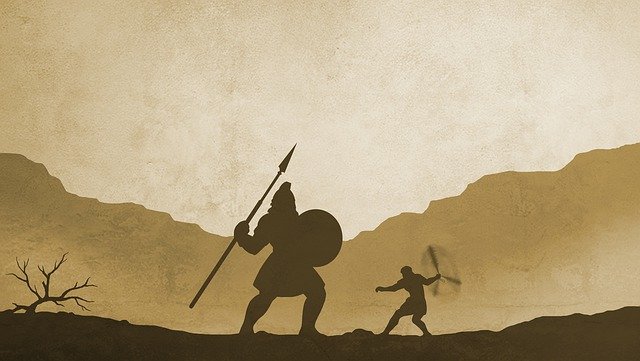
Again we have the wonderful example of David. We learn about a forty-day war between the Israelites and the Philistines, who were led by the giant Goliath. One day, Goliath challenged them to bring forth a soldier who could come up against him, but no one in the Israelite army was brave enough to challenge him. Hearing all Goliath’s bosting, hear came a little Shepherd boy David who told kind Saul that God had given him victory over all the animals who had threatened his sheep and he had faith in God that he would help him defeat this giant too. So going out to face the Philistines, Goliath saw this boy David who had nothing but a slingshot, and he laughed and mocked him. Then David replied to him saying, “Well, you come with your sword, spear, and all your armor but I come against you in the name of the Lord, God Almighty.” And with great strength, David drew his sling and sent it flying straight towards this giant’s forehead Goliath was defeated. David’s faith in God proved to be bigger than any giant.

According to William Barclay, “Faith is the greatest force in the world,” it moves us towards directions completely unknown and guides us towards belief in one God. Today’s Gospel tell us that all the followers of Jesus must have faith in Him, and we are to pray Christ to increase our faith. Faith is not for the good times only. Faith is that which sustains us in bad times. According to St. Augustine, “Faith is to believe what you do not see, the reward of this faith is to see what you believe.” It is not easy to live a righteous life when things are not going smoothly in your life, but do not forget that faith is patience. Trust that God will never leave you forsaken. Never give up on God.

Our Many Friends in Heaven

August 14, 2022

20th Sunday in Ordinary Time
By Fr. Victor Feltes

We are surrounded by a great cloud of witnesses. The New Testament Letter to the Hebrews celebrates the faith and actions of Old Testament heroes: beginning with Abel, Enoch, and Noah; Abraham and Sarah; Isaac, Jacob, and Joseph; Moses and Rahab; Israel’s judges Gideon, Barak, Samson, and Jephthah; David, Samuel, and all the prophets. Then comes the passages of today’s second reading:

Since we are surrounded by so great a cloud of witnesses, let us rid ourselves of every burden and sin that clings to us and persevere in running the race that lies before us while keeping our eyes fixed on Jesus, the leader and perfecter of faith.”

These witnesses surrounding us who can help us follow Jesus are not far away. As The Letter to the Hebrews tells us later in the same chapter:

You have approached Mount Zion and the city of the living God, the heavenly Jerusalem, and countless angels in festal gathering, and the assembly of the firstborn enrolled in heaven, and God the judge of all, and the spirits of the just made perfect, and Jesus, the mediator of a new covenant, and the sprinkled blood that speaks more eloquently than that of Abel.

St. Paul once wrote, “Be imitators of me, as I am of Christ.” But can the holy dead help us in more ways than merely being a good examples? Indeed. First we must understand that the holy dead are still alive.

The Sadducees who questioned Jesus about the resurrection of the dead did not believe in life after death and only accepted the first five books of the Old Testament. So using only those five books (known as the Torah), Jesus proves that the dead still live. Jesus asks them: “Have you not read in the Book of Moses, in the passage about the [burning] bush, how God told him, ‘I AM the God of Abraham, the God of Isaac, and the God of Jacob’? He is not God of the dead, but of the living, for to him all are alive.

But have the holy dead ever been of any help to the living? “Behold,” at Jesus’ Transfiguration on Mount Tabor, “two men were conversing with him, Moses and Elijah, who appeared in glory and spoke of his exodus that he was going to accomplish in Jerusalem.” Even before he opened the gates of heaven, they are aware of the nature of Jesus’ salvific mission and encourage him before he undergoes his Passion. By the will of God, Jesus was aided by the saints and they would help us too. The Book of Revelation shows saints in heaven now, before the end of the world. They express concern about events down here on earth and offer their prayers to God.

Offering prayers to the saints above goes back to the Early Church. The first centuries saw huge theological fights over things like deciding on which date to celebrate Easter or choosing the very best word in Greek to articulate a tenet about the Trinity, but the Early Church never blinked at prayers asking the intercession of the saints. If this practice had been some novel innovation alien to the Faith passed down by the apostles, it would have raised major upheaval. The presence of such prayers in the historical record and the simultaneous absence of major controversy tells us something.

Now when some non-Catholic Christians hear about us praying to saints, they assume this means we worship saints. We love and honor saints, but we worship God alone. The objectors misunderstand by equating all prayer with worship. The word “pray” is an old English word which means “to ask, or request.” This word is commonly seen in Shakespeare plays, as in “I pray thee, hold thy peace.” Praying to saints is asking them to ask God to help us.

At this point some critics counter, “Then why not simply go to Jesus? Why not just pray directly to him?” We can and we do, but I would ask these persons if they ever ask their family members or friends to pray for them and whether they consider this a good and worthwhile thing to do. Scripture indeed teaches us to “pray for one another,” noting that “the fervent prayer of a righteous person is very powerful.” If you’re going to ask anyone to pray for you, who better than a holy saint in Heaven?

In preparing for this homily, it occurred to me to look up the saint for today to use as an illustration of what we can learn from them and how they can help us. I typed into my search engine: “August 13 feast day” and information about St. Anthony of Padua popped up. This was both a outstanding and peculiar result; outstanding because he’s a great and fascinating saint, peculiar because his feast day is not August 13th but June 13th. I took this as a sign that acquaintance with St. Anthony is meant to be more widely shared today.
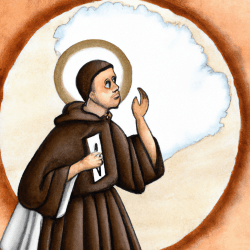
St. Anthony of Padua was born in Portugal in 1095. Though from a prominent family, he entered religious order at the age of fifteen. He sought to become a martyr by preaching Christ in Muslim lands, and eventually received his superiors’ permission to do so, but illness prevented his journey. He then tried to live quiet life of prayer and penance as a hermit, but God again had other plans for him. When asked to give a short sermon during a meal held for Dominicans and Franciscans following an ordination Mass, Anthony’s previously unknown brilliance shined through.

Anthony was reportedly “gifted with a prodigious memory, so that he retained all he read, and could have it ready at hand whenever needed.” St. Thomas Aquinas is also said to have had a memory like that, having written his book “The Golden Chain” (a collection of the Church Fathers’ commentary on each chapter of the Gospels) from memory. These anecdotes are plausible to me because I personally know a cardinal who could have met you once years before and at your next meeting would remember your face, your name, where you had met, and what you talked about. Though you and I lack this incredible gift, there is an encouragement for us in it. If natural human brains in this fallen world can sometimes possess this amazing ability, then our minds in glorified bodies will be capable of the same and more one day.

St. Anthony met and befriended St. Francis of Assisi, who sent him forth to be a traveling preacher. His preaching drew crowds so large that the churches could not hold all of the people. One of the things I love about saints’ stories is learning about how they handled difficulties, be they personal, interpersonal, or practical problems. For instance, how does one preach to a crowd of 30,000 gathered in an open field in the time before electricity? St. Anthony would stand and speak from a raised platform in the center, then brothers posted at increasing distances around him would repeat his message, phrase by phrase, to the crowd.

Like many other saints, we can read St. Anthony’s wisdom online for free. Some quotes from St. Anthony include: “Actions speak louder than words; let your words teach and your actions speak.” He said, “Earthly riches are like the reed. Its roots are sunk in the swamp, and its exterior is fair to behold; but inside it is hollow. If a man leans on such a reed, it will snap off and pierce his soul.” And, “Attribute to God every good that you have received. If you take credit for something that does not belong to you, you will be guilty of theft.”

St. Anthony was once a victim of theft. One of the monks ran away from his monastery and took with him one of Anthony’s books. In those days before the printing press, books could be very pricey and might be resold for fast cash. This particular book was dear to St. Anthony so he prayed it might return. His prayer was answered when the runaway brother had a change of heart, returned to the community, and repentantly gave back the book. This story is the reason why St. Anthony is the patron saint of lost items.

His intercession in finding lost items is powerful. I encourage small children be taught to say this delightful prayer while spinning: “Tony, Tony, come around, help what’s lost to soon be found.” (Of course, adults may choose different words and omit the action entirely if they prefer). This February, during the process of selling St. Jude’s Church, I realized that the key to the church I needed for a meeting in New Auburn that same hour was missing. I checked all over my rectory’s floors, tables, and countertops. It occurred to me I might have lost it amongst the dirty laundry, so I took my hamper down to the laundry room. Before searching my fresh, clean clothes I began checking my dirty clothes’ pockets. Then I thought, ‘I should pray for St. Anthony of Padua’s help.’ At the very moment I began to speak to him, my hand touched the key in a pants pocket. It was surreal and I felt very, very grateful.

Like the story I told at yesterday’s funeral, as Anthony lay dying (at the age of 35 from an illness) he had a vision of a heavenly visitor. One of the friars asked Anthony what he was staring at so intently. He replied, “I see my Lord!” Saints’ stories also contain weird and wonderful miracles, which show that there is more to reality than the world we see. When Anthony’s tomb was opened thirteen years after his passing, his body had naturally decayed to dusty bones, but his motionless tongue—which had proclaimed Jesus Christ so well—appeared healthy, moistened, and alive.

Are you called to be a European religious brother, priest, and Doctor of the Church like St. Anthony of Padua? Almost certainly not. Nor are you called to be an celibate Middle Eastern carpenter like Jesus Christ. But the saints show us powerful and beautiful reflections of Christ, different ways of being like our Lord, in every age and walk of life.

I hope that you will get closer to St. Anthony and the many friends we have in heaven. Ask God to introduce you, learn about them and befriend them. By the time you discover a new saint, he or she knows and loves you already, for the knowledge and love possessed by the saints in glory partakes of the wisdom and love of God.


Abraham, Martha, and Our Lord

July 16, 2022

16th Sunday in Ordinary Time
By Fr. Victor Feltes

In this Sunday’s readings, Abraham and Martha play host and hostess to our Lord. The Book of Genesis tells how “the Lord appeared to Abraham… as he sat in the entrance of his tent,” and that Abraham ran to offer his three visitors hospitality. Today’s gospel from Luke recounts how “Jesus entered a village where… Martha welcomed him.” Both Abraham and Martha served the Lord but Martha, unlike Abraham, receives a gentle correction from him. So in what ways did Martha and Abraham’s actions differ?

The pair share similarities. Both of them wanted to put other people to work. Abraham tasked his wife Sarah to make bread rolls and his servant to prepare a tender, choice steer, while Martha sought for her sister Mary to help her. Both Abraham and Martha were a flurry of activity. After running to set Sarah and his servant to work, Abraham fetched curds and milk and the meat that had been prepared and served these to his guests in the tree shade. And Martha was famously “burdened with much serving.” So what are the key differences between them? I would like to highlight three.

First, Martha gives the Lord an command, while Abraham politely invites. She says, “Tell [my sister] to help me.” Abraham also asks things of the Lord but in a different spirit: “Sir, if I may ask you this favor, please do not go on past your servant.” Abraham is respectful and open to whatever the Lord thinks best. When the Blessed Mother brings Jesus the news that the wedding feast of Cana has run out of wine, she does not order him what to do; instead she instructs the servants to “do whatever he tells you.” We are free and invited to ask the Lord Jesus for anything, large or small, but ask him with reverence and trusting that whatever he decides will be best.

A second difference between Martha and Abraham is that Martha gets noticeably stressed out while Abraham, though vigorously active, appears to maintain his peace. “Martha, burdened with much serving,” complains and criticizes. “Lord, do you not care that my sister has left me by myself to do the serving?” But Jesus says to her in reply, “Martha, Martha, you are anxious and worried about many things. There is need of only one thing.” Martha has placed expectations on herself for how she needs to show hospitality, she’s failing to meet these self-imposed standards and it is depriving her of peace. Martha has fallen into an anxiety trap. Anytime we feel like, “I have to do this, but I can’t. I have to, but I can’t,” it’s not true. Jesus does not demand the impossible from us. So either you do not really have to do that thing, or (if God is calling you to do it) with the help of God you can accomplish it. When the yoke you carry on your shoulders feels heavy and grinding, consider whether it may be a yoke of your own making. Jesus says, “Take my yoke upon you… and you will find rest for yourselves. For my yoke is easy, and my burden light.” Some reevaluation may be necessary to exchange your yoke for his.

A third and final difference between Martha and Abraham, is that Martha allows her work to get in the way of her relationship with the Lord. Abraham labors too, but he enjoys the company of his heavenly guests even as he serves and waits on them under the tree. He and his guests converse together, leading to Abraham’s great blessing. One of his guests declares to him, “I will surely return to you about this time next year, and Sarah will then have a son.” Jesus said Martha’s sister Mary, sharing the Lord’s company listening at his feet, had “chosen the better part and it [would] not be taken from her.” Abraham did not exclude this better portion from his labors. We too should spiritually commune with the Lord throughout our day’s tasks, for he is always near.

Whatever good works we do for Jesus are not nearly as important as who we are for each other. Jesus says that at the Judgment, “Many will say to me on that day, ‘Lord, Lord, did we not prophesy in your name? Did we not drive out demons in your name? Did we not do mighty deeds in your name?’ Then I will declare to them solemnly, ‘I never knew you. Depart from me, you evildoers.’” Do not merely serve and obey Jesus, on the level of a slave. Love him as your dearest friend, for he is already the greatest friend towards you. The one thing needed is Jesus Christ.

Encountering God, we Cannot Remain the Same

April 3, 2022

5th Sunday of Lent
By Fr. Chinnappan Pelavendran 

We are just one week away from the Holy Week and away from our celebration of God’s love shown in the passion, death, and resurrection of Jesus. For us, this season of Lent is a time of special grace in which we experience the presence of a God who cares and loves us. Our response is to transform ourselves and to live according to his will. Before him, we acknowledge our weakness and we know that he is the one who supports us and builds with us new relationships we ought to change our lives during Lent and come closer to him.

In today’s First Reading, we heard the prophetic Words of the Lord God speaking to the prophet Isaiah. Yahweh begins by identifying Himself. He says that it was He who created Israel. It was He who led the Exodus of His people under the leadership of Moses. It was He who divided the Red Sea and who destroyed the great army of the Pharaoh of Egypt. It was He who quenched the life out of the enemies of His people. God tells them to look ahead and not to look back into the past. The past always closes our minds and does not allow us to see things in the present moment as they are. The Lord promises to the people, “I am about to do a new thing for I am about to create new heavens and a new earth, and former things shall not be remembered or come to mind.”

In the second reading of today, St. Paul tells the church of Philippi to break away from its past. St. Paul presents his reflections on how much God loves him, He says I have accepted the loss of everything, and I look at everything so much as rubbish if only I can have Christ and be given a place in him. All I want is to know Christ and the power of his resurrection. In his search for perfection, he observed all the rules and norms as a Pharisee, but ultimately he found the meaning in Christ. He accepted the loss of all things that he might gain Christ.

The Gospel of today places before us an episode that emphasizes the need to examine ourselves and avoid passing any judgment on others. Generally, there is a tendency within us to find fault in others and to condemn them. As we approach the end of the Lenten season, we are reminded of the great opportunity to cooperate with God’s special graces. The Gospel presents to us a sharp contrast between the cruelty and wickedness of the scribes and Pharisees and the compassion of Jesus. The scribes and Pharisees had no regard for the woman caught in adultery and brought her to Jesus the master. They were only interested in using her to try to trap Jesus. Jesus places a bigger challenge before the accusers. He asks them to consider their actions and their shortcomings. He tells them to look into themselves before passing any judgment on others.

Jesus has forgiven the woman’s sin and expects her to live from now on in a life of grace and union with God by not sinning anymore. He gives her a chance to change her life completely. The Pharisees and the Scribes were proud and arrogant and preferred to judge. They had no idea how to love, how to forgive but only how to observe the Law externally. They did not love God’s people.

Once a person is touched by God and has received His divine command, he cannot remain the same person. That was the experience of Moses, Isaiah, Jeremiah, Peter, Paul, and several others who came into close contact with him and remained united to Him. In the Word of God today, we heard the divine message that God makes all things new. Jesus gives us a basic command that helps us to identify that we are on our way to reaching union with Him. We must persevere in our living faith. As Jesus said to the woman so he tells us Go your way, and from now on do not sin again.