Archive for the ‘O.T. Figures’ Category

Wisdom for the Discouraged

February 7, 2021

5th Sunday in Ordinary Time

In our first reading, we hear the deep discouragement of Job:

“Is not man’s life on earth a drudgery?
…I have been assigned months of misery…
…My days… they come to an end without hope.
…I shall not see happiness again.”

If you are familiar with Job’s story you know he says these words during a very dark time in his life. Though innocent, he is in the midst of an extended trial, with emotional suffering, physical pain, loss, and loneliness. His words, like all the words of Scripture, are offered for our benefit — thanks be to God. And indeed, the Book of Job has lessons to teach us in our hard times.

One thing we learn from Job is that we can be real and honest with God. By the end of the book, Job is shown that God’s vast creations, plans, and purposes are beyond Job’s comprehension, for “Great is our Lord and mighty in power; to his wisdom there is no limit,” yet the Lord does not condemn Job for his questioning. In fact, God has Job intercede on behalf of his friends who had argued Job’s sufferings must be on account of his own sins. God has Job pray for them that they may be forgiven their error. The number of plaintive psalms that God inspired and made sure were included in Sacred Scripture suggests that he wants us to bring our complaints to him. The very name of God’s people “Israel” means “He who wrestles with God,” and you cannot wrestle with someone without drawing close to them.

The Lord wants us to be honest with him because that is the real us and the kind of relating that will actually help us. If you wear a disguise in God’s presence, it won’t fool him and it won’t help you. In spiritually directing others and in studying myself, I have noticed that when we are avoiding times of prayer or finding our prayer times very dry, it is often because we are avoiding relating something to the Lord. There’s something we don’t want to look at or talk about with him. Imagine if you had a good doctor, indeed the very best doctor – would it be wise to find excuses to miss your appointments or lie to your physician about how you were feeling? Reveal your wounds and symptoms to the Divine Physician that you may be healed. As today’s psalm says, “He heals the brokenhearted and binds up their wounds.” Today’s gospel tells us, “Rising very early before dawn, [Jesus] left and went off to a deserted place, where he prayed.” If making time for daily personal prayer was a top priority for Jesus, how much more important must it be for us?

A second thing we learn from Job is that God is with us in our struggle and that the struggle is worth it. Though Job did not understand why he suffered, God was never far from him. God was proud of Job and praised him, “There is no one on earth like him, blameless and upright, fearing God and avoiding evil,” and through his trials and sufferings God made him greater still. Other Christians sometimes ask why we have crucifixes on our walls rather than a bare cross. “Christ is risen,” they remind us, “so why depict him as still suffering on the Cross?” In his post-Ascension appearance to one of the Church’s early persecutors, Jesus said, “Saul, Saul, why are you persecuting me?” When asked by Saul, “Who are you, sir?” the reply came, “I am Jesus, whom you are persecuting.” If you are a suffering member of Christ’s body then know that you do not suffer alone. This Saul is better known to us as St. Paul. When St. Ananias hesitated to visit him and heal his blindness, the Lord insisted, “Go, for this man is a chosen instrument of mine to carry my name before Gentiles, kings, and Israelites, and I will show him what he will have to suffer for my name.” St. Paul writes in today’s second reading that his life’s mission, the preaching of the gospel, was an obligation imposed upon him. He could either see this as a hard burden to grumble over, or as an opportunity to rejoice in, and thereby gain reward. St. Paul knew God’s purpose for his life and embraced it to great benefit.

Dr. Viktor Frankl was a Austrian-Jewish doctor who was deported to a Nazi concentration camp during the Second World War. After his liberation, Frankl wrote about what he observed and discovered about human nature during that terrible ordeal in his famous book “Man’s Search for Meaning.” Frankl says, “Life is never made unbearable by circumstances, but only by lack of meaning and purpose.” He says, “Nothing is [more] likely to help a person overcome or endure troubles than the consciousness of having a task [a purpose] in life.” So many people, believing that our existence in this universe is an accident and disbelieving that life has any objective purpose, grope through life striving to generate their own meaning and purpose. But you know you are not here by accident. “[The Lord] tells the number of the stars; he calls each by name.” Each one is in their place according to his purpose and so are you. Who made you? God made you. Why did God make you? He made you to know Him, love Him, and serve Him in this world, and to be happy with Him for ever in the next. But even Christians sometimes wonder, “Does what I’m doing really matter? Is my life important? Are my struggles really worth it?” They think to themselves, “If I wasn’t here, I’d be replaced by someone else.” Perhaps, but that’s not the right way to frame your thought. What if you disappeared from your home, your job, your community, and no one came to fill your void? Consider all the good things that would go undone. That is your contribution to our world and those around you. And God has eternal purposes for you that extend beyond this life and world.

A third and final thing we learn from Job is that things are not so hopeless as they may seem and there are better things to come. The way that we happen to feel in any particular moment does not necessarily reflect reality. One afternoon when I was a seminarian, I was in my dorm room and had homework to do, but I was fed up with it, I had no motivation, and decided to give up and to go to bed. When I woke up three hours later, the world was transformed, brighter. I was happier, eager to work, and even the view outside my window seemed better. Of course, it wasn’t the world that changed but me. I was exhausted and I didn’t know it and this was coloring my perceptions. You are an union of body and spirit. You need sleep, and food, and personal connection. Self-care is important, so love yourself as well as your neighbor. If someone is diabetic, we do not tell them to just buckle down and change their attitude. They need insulin to be healthy. Sometimes people suffer chemical imbalances in their brains, often hereditary in origin, which burden their experience of life. We live in an age of wonders with remarkable medicines and we should be unashamed to seek help. As the 38th chapter of Sirach teaches: “Make friends with the doctor, for he is essential to you; God has also established him in his profession. From God the doctor has wisdom… Through which the doctor eases pain, and the druggist prepares his medicines.” Sirach explains that a good doctor is one of God’s instruments in doing his work on earth.

The story of Job shows us things are not so hopeless as they may seem – there are better things to come. We heard Job’s lament, “I shall not see happiness again,” but he was mistaken. Job’s lot got better. Much better. God restored the prosperity of Job and even gave him twice as much as he had before. Then all of his brothers and sisters came to him, and all his former acquaintances, and they dined with him in his house. They consoled him and comforted him and gave him gifts. Job would see his children, his grandchildren, and even his great-grandchildren in fullness of years. Thus the Lord blessed the latter days of Job more than his former ones. But what if the remaining years of my life do not get better? What if each new year becomes harder than the last? What if I have a stroke, or a heart attack, or terminal cancer and I am dead in six months? How can better times still be waiting for me? Are you not promised Heaven where you will experience the restoration, fellowship, and consoling joys Job knew? Then, in the end, as St. Julian of Norwich said, “All shall be well, and all shall be well, and all manner of thing shall be well.

So remember that you can be completely real and honest with God, he invites this. Remember that the Lord is with you in your struggles and that these struggles are worth it. And remember that things are not so hopeless as they may seem, for with Jesus Christ there are surely better things to come.


When Demons Speak

January 31, 2021

4th Sunday in Ordinary Time

“The Devil Tempting a Young Woman” by André Jacques Victor Orsel, 1832.

Eve in the Garden of Eden, Jesus in the synagogue at Capernaum, and St. Paul on the roads of Greece each encountered demons speaking. The words of these rebellious, fallen angels are dangerous because they cleverly combine facts and falsehoods to mislead us toward sin and division. Jesus called the demonic warlord, Satan, the Devil, “a murderer from the beginning… a liar and the father of lies,” and the Book of Revelation identifies him as “the ancient serpent… who deceived the whole world.

Satan was the serpent who approached Eve and asked, “Did God really say, ‘You shall not eat from any of the trees in the garden’?” The woman answered the serpent: “We may eat of the fruit of the trees in the garden; it is only about the fruit of the tree in the middle of the garden that God said, ‘You shall not eat it or even touch it, or else you will die.’” But the serpent said to the woman: “You certainly will not die! God knows well that when you eat of it your eyes will be opened and you will be like gods who know good and evil.

The tree’s attractive fruit looked useful for nourishment and wisdom, so Eve took and ate it; and she gave some to her husband who was with her, and Adam ate it too. It’s true that they did not die in that instant and they did gain new insights into evil and its absence, but by this act of mistrust and disobedience toward God the grace and harmony of original holiness died within them. Adam and Eve were now separated from God, divided from each other, and doomed to suffer and someday die. The devil’s half-truths led them to this.

Another demon was inside of a man at the synagogue in Capernaum as Jesus taught there in today’s gospel. The unclean spirit cried out through the man in front of everyone, “What have you to do with us, Jesus of Nazareth? Have you come to destroy us? I know who you are – the Holy One of God!” It’s true that Jesus is indeed the “Holy One of God,” but what effect could hearing the demon’s other words have on the townspeople? “What have you to do with us… Have you come to destroy us?” The demon insinuates that Jesus is there to condemn and destroy, that all sinners should fear God’s Holy One and flee or fight the Christ who has come to save them. Jesus rebuked the demon, saying, “Quiet! Come out of him!” The unclean spirit could not resist Jesus’ command, and after a convulsion and a loud cry the man was freed. Demons are untrustworthy spokesmen to proclaim Christ and his gospel.

About twenty years later, while St. Paul was doing missionary work in Greece, he and his companions met a slave girl who had a demon. The demon would pronounce oracles through her, generating large profits for her owners. (Demons reportedly do not know the future, but using their very high intelligence and powers of observation they can make keen guesses.) The girl began to follow Paul and his companions, shouting: “These people are slaves of the Most High God, who proclaim to you a way of salvation!” She did this for many days and Paul became annoyed. He turned and said to the demon, “I command you in the name of Jesus Christ to come out of her.” And the demon left her at that moment.

So what was wrong with what the demon was saying through the girl? In addition to yelling the message at inappropriate times, it contained a subtle, fatal flaw which – if uncorrected – could undermine the saving work that Paul was doing: “These people are slaves of the Most High God, who proclaim to you a way of salvation.” If the Good News of Jesus Christ were merely a way of salvation, then you could take him or leave him, and opt instead to choose some other saving path. But as St. Peter preached, “There is no salvation through anyone else, nor is there any other name under heaven given to the human race by which we are to be saved.

As it was in the beginning and in the days of Jesus and his apostles, demons are still in our world today. Your baptism into Christ gives you great personal protection against them. You belong to Christ, so you should not be afraid, but I want you to be aware that the demons continue sowing seeds of sin and division in our time. Where are the demons active today? Where do we see the most harmful confusions and divisions? In so many teachings of our Catholic Faith the truth is a “both/and,” while the demonic errors and divisions of our time stem from false “either/or’s” and half-truths.

The demons either say that you need not change at all because you are loved by God, or that God will not love you until you become perfect. The truth is that you are loved by God as you are and called to repent and grow. The demons either tell you that God does not desire your happiness, or that you are entitled to avoid all suffering. The truth is God wills your greatest happiness and because of this he will lead you through trials. In this world, the demons encourage us to condemn one political party or politician and ignore the faults of the other, when the truth is both are flawed.

The demons don’t want you to see and promote full truths: that pregnant women need to be helped and unborn children must be protected; that immigrants should be welcomed and the rule of law should be respected; that all people are made for love, for intimacy with others, and sexual relations are meant only for holy matrimony; that there exists a God-given right to private property and a moral obligation to share with the needy; that we should live freely and use our freedom to honor God while safeguarding the good of others. Other examples are abundant around us.

Where there’s smoke there’s fire, and where truths are widely twisted and truncated demons have been at work with their old half-truth tricks. So do not conform to the demon-fueled factionalism of this world, but be transformed by the renewal of your mind in the teachings of Jesus Christ and his Holy Catholic Church, that you may know and do the complete will of God, what is good and pleasing and perfect.

Knowing God by Name

January 16, 2021

Second Sunday in Ordinary Time

Andrew found his brother Simon and told him, “We have found the Messiah! (We have found the Christ!)” Then he brought him to Jesus. Jesus looked at him and said, “You are Simon the son of John; you will be called Cephas” — which is translated Peter.

It is a very significant thing when God changes someone’s name. This only happened four times in Bible history. First, God renamed Abram, Abraham (meaning “the Father of Multitudes”) and renamed his wife Sarai, Sarah (or “Princess”). Later, God renamed their grandson Jacob, Israel (or “He who wrestles with God”). From him, God’s first adopted people would receive their name. And finally, Jesus changes Simon’s name. His name becomes Cephas in Aramaic, Petros in Greek, which both mean Rock” or “Stone.” Jesus says, “You are Peter, and upon this rock I will build my church, and the gates of Hell shall not prevail against it.

All four of these extremely important figures in salvation history received a name from God reflecting their true identity in his plan. Abraham would go on to have a multitude of descendants, many by blood and many more by faith, while St. Peter would go on to be a stable rock for Christ’s Church as her first pope. The names God chooses are revelatory, and this is true for God’s own names and titles as well.

When God revealed himself to Moses through the burning bush and commanded him to be a messenger to his people, Moses said to God, “if I go to the Israelites and say to them, ‘The God of your ancestors has sent me to you,’ and they ask me, ‘What is his name?’ what do I tell them?” In those days the early Israelites, surrounded as they were by polytheistic cultures, did not realize that there was only just one God. So if Moses were to come to the Israelites saying God had sent him, they might reply “which one?” When asked for his name, God replies to Moses: “I AM WHO AM. This is what you will tell the Israelites: I AM has sent me to you.” In Hebrew, these words “I AM” are pronounced “Yahweh,” which some have mispronounced as “Jehovah”.

What is revealed in this name, “I am who am”? Firstly, that God is personal. God is a Who, rather than a what. Secondly, unlike the false gods of the pagans, this God is real. Unlike those so-called gods, ‘I AM, so I have the power to save you.’ Thirdly, God is not merely another being that exists in the world, but the foundation of all existence. “I am who AM.” To exist is of God’s very essence. Fourth and finally, that God is mysterious. To say “I am who am” is something of a refusal to provide a name. ‘Who am I? I am who I am.‘ God’s perfect, infinite essence surpasses man’s imperfect and limited labels and concepts.

God spoke further to Moses in that encounter at the burning bush saying: “This is what you will say to the Israelites: The Lord, the God of your ancestors, the God of Abraham, the God of Isaac, and the God of Jacob, has sent me to you. This is my name forever; this is my title for all generations.” Here the Lord identifies himself in terms a communal relationship (‘I am the God of your ancestors’) and then by three individual relationships (‘I am the God of Abraham, the God of Isaac, and the God of Jacob’). This foreshadows what would be revealed to us through Jesus Christ; that God is an eternal Trinity, a communal relationship of divine three persons: God the Father, God the Son, and God the Holy Spirit.

God provides other true titles for himself in the Sacred Scriptures he inspired: He is Lord. He is Most-High. He is Almighty. I AM who heals. I AM who sanctifies. I AM who will provide. I AM who is there. Our banner, our shepherd, our righteousness, our peace. And ultimately, God reveals himself through his Incarnate Word, Jesus, whose name means: “Yahweh is salvation” or “Yahweh saves.”

What is the significance of sharing one’s name with another? To reveal your name to others allows them to know you better, it opens up a more personal relationship than one has with a stranger. Sharing your name permits others to honor your name or to defame it, and it allows them to call upon you.

In today’s first reading, the Lord repeatedly calls by name the young Samuel sleeping in the temple: “Samuel, Samuel!” When Samuel keeps running to his foster-father, the High Priest Eli, saying, “Here I am. You called me,” Eli realizes that the Lord is calling the boy. So Eli tells Samuel, “Go to sleep, and if you are called, reply, ‘Speak, Lord, for your servant is listening.’” When Samuel goes back to bed, the Lord comes and reveals his presence, calling out as before, and Samuel answers, “Speak, for your servant is listening.” This response led to a deeper relationship for Samuel with the Lord, and Samuel went on to become one of God’s great prophets.

God has revealed his name, his very self, to you. You know his name, you know him, and he calls you. The Lord declares through the Prophet Isaiah, “Fear not, for I have redeemed you; I have called you by name, you are mine.” Will you answer the Lord’s next calling for you; to prayer, to service, to sacrifice, to love? This week, when he calls you, even in the quiet of your conscience, answer him: “Speak, Lord, for your servant is listening. Here am I, Lord; I come to do your will.

Five Reflections on St. Joseph

December 11, 2020

By Fr. Victor Feltes

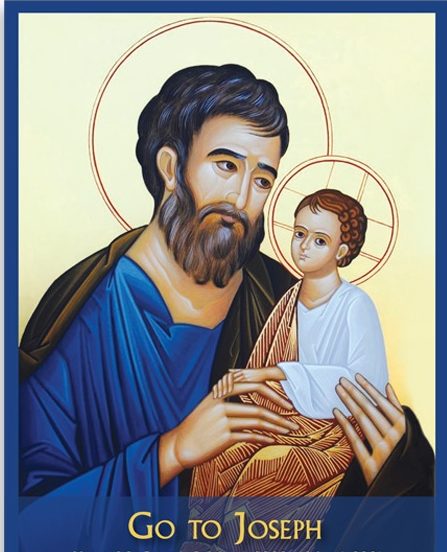
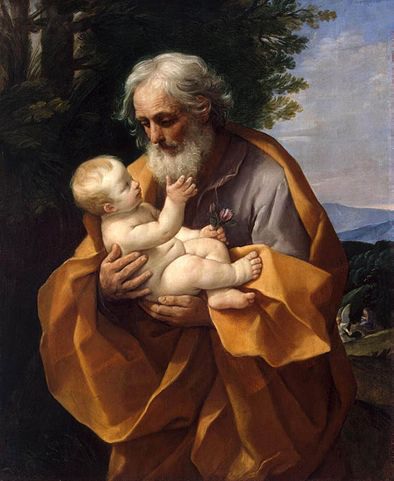
This week, on the Solemnity of the Immaculate Conception and the 150th anniversary of the proclamation of St. Joseph as patron of the Universal (that is, the entire) Church, Pope Francis declared this “The Year of St. Joseph” through December 8th, 2021. The Holy Father also published an apostolic letter about Jesus’ beloved foster-father entitled “Patris Corde” (or “With a Father’s Heart”). In it, Pope Francis writes about Christian devotion to this great saint and mentions how the phrase “Go to Joseph” has an Old Testament origin. These are five of my personal reflections on St. Joseph.

Go to Joseph

In the Book of Genesis, during a time of famine across the known world, the Egyptians begged their pharaoh for bread. He in turn replied, “Go to Joseph and do whatever he tells you.” Pharaoh was referring to Joseph the son of Jacob who had risen from a very lowly state to become the viceroy of the kingdom. Enlighted by divinely-inspired dreams, this Joseph’s leadership went on to feed and save the whole world from death, including his own family. According to the genealogy at the beginning of Matthew’s Gospel, the New Testament’s Joseph also had a father named Jacob. Though poor and obscure, St. Joseph’s heaven-sent dreams enabled him to guide and protect his Holy Family, leading to the world’s salvation through the Bread of Life, Jesus Christ. Today, as a powerful intercessor in the Kingdom of God, we are wise to “go to Joseph” for needed help.

His One Word

Within the Gospels, St. Joseph has no recorded words. There is no indication the foster-father of Jesus and spouse of the Virgin Mary was physically unable to speak or ever took a vow of silence; he is simply never quoted. Yet the Gospels suggest he said at least one specific word.

Matthew’s Gospel records how an angel (probably the Archangel Gabriel though perhaps another) told Joseph in a dream: “‘[Mary, your wife,] will bear a son and you are to name him Jesus…’ When Joseph awoke, he did as the angel of the Lord had commanded him and took his wife into his home. He had no relations with her until she bore a son, and he named him Jesus.” Just as John’s Gospel tells us “Jesus did many other signs in the presence of his disciples that are not written in this book,” so St. Joseph almost certainly said many unrecorded things. But the one word that Scripture most clearly suggests St. Joseph said is “Jesus.” The name of Jesus is the sum total proclamation of St. Joseph’s life. May it be so for us as well.

Image of the Father

The Letter to the Colossians says of Christ, “He is the image of the invisible God.” Something analogous was true of St. Joseph for Jesus in being the earthly image of his Father in Heaven. Joseph’s life has no recorded beginning or end in the Bible. We know that he was a carpenter craftsman – a creator of many things to be blessing for others. Perhaps he looked at everything he made and found it very good. Alongside Mary, Jesus was obedient to Joseph; he was Jesus’ boyhood teacher, deliverer, and role-model. Jesus lovingly called him, “Abba, father.” St. Joseph was a holy and loving image of God the Father for his Son. Though imperfect, may we likewise be images of God for each of our biological and spiritual children.

The Hour of his Death

When did St. Joseph die? Luke’s Gospel tells us that when 12-year-old Jesus was found at the Temple in Jerusalem he went down with his parents to Nazareth and was obedient to them. After that joyful reunion, St. Joseph makes no further personal appearances in the Gospels. Joseph had apparently passed away by the time of Christ’s Passion since Jesus on the Cross does not entrust his blessed mother’s care to her faithful husband but to a beloved disciple. Other episodes in the Gospels suggest that Joseph died before the start of Jesus’ public ministry.

How did St. Joseph die? If Joseph, the heir to the throne of David, had been murdered we would expect this prefigurement of Jesus’ own death to be described in the Gospels like the death of St. John the Baptist. Unless some sudden catastrophe befell him, an ailing Joseph would have reached his deathbed. And who would have been compassionately comforting him and powerfully praying for him at his bedside as he reached his hour of death? His having most likely died peacefully in the loving presence of Jesus and Mary is what makes St. Joseph the patron saint of a happy death.

The Terror of Demons

St. Joseph is called “the Terror of Demons” and his spouse “the Queen of Angels.” Yet the Virgin Mary at the Annunciation was greatly troubled and afraid at the Archangel Gabriel’s greeting, and when resettling his Holy Family from Egypt Joseph feared mere flesh and blood – avoiding Judea because Herod’s son ruled there. How can this man and woman now be leaders of awesome angels or banes of dangerous demons?

One key trait Joseph and Mary shared is obedience. The Book of Exodus displays Moses’ obedience by recording God’s instructions to him and then repeatedly presenting Moses doing “just as the Lord had commanded.” Whenever St. Joseph receives instructions from God (to take Mary into his home, to escape to Egypt, or to return to Israel) the text that follows has Joseph doing exactly as God commanded. Mary was also radically open to God’s will, as when she famously said, “Behold, I am the handmaid of the Lord. May it be done to me according to your word.” The demons, for their part, fell from Heaven’s glory because they refused to do God’s will.

Joseph and Mary were also among the first on earth to accept and love the (then still-unborn) baby Jesus. The demons, in contrast, were the first to reject the Son of God. We do not know the exact reasons for their primordial rebellion but some theorize the demons took offense at God’s plan that the Eternal Son would become an incarnate human being, crowning that creature with a greater glory than the angels. “By the envy of the devil, death entered the world,” says the Book of Wisdom.

Joseph and Mary’s obedience to God’s will and their love for Jesus on earth lead to them being gloriously empowered in Heaven. Jesus told his disciples, “you who have followed me will also sit on twelve thrones, judging the twelve tribes of Israel,” and St. Paul reminded the Corinthians “we will judge angels.” It seems that faithful human creatures who, by God’s grace, love and serve the Lord in the likeness of Christ himself are best suited to become powerful, humble, servant rulers in the Kingdom of Heaven.

St. Joseph, patron of the Universal Church, pray for us throughout this holy year!

The New Eve

December 8, 2020

Solemnity of the Immaculate Conception

Eve was the first woman. God created her like Adam, a finite but flawless and sinless creature, destined to become the biological mother of the entire human race. But then an angel, a fallen angel, Satan in the form of a snake, visited her to suggest that she should disobey God’s will. Eve said yes to sin, and then Adam joined her, and through them the whole human race fell.

Their grave sin caused Adam and Eve to lose paradise, but their futures were not without hope, for God spoke in their hearing a prophesy toward that wicked, deceiving serpent, the devil. God declared, “I will put enmity (that is, I will put hostility) between you and the woman, and between your offspring and hers; he will strike at your head, while you strike at his heel.” Who is this offspring, this descendant, this son, who strikes back at the devil? It’s Jesus Christ who defeats the devil by dying on the Cross. Adam sinned, causing us to die. But St. Paul calls Jesus the second Adam, the new Adam, who obeys God and does not sin so that we may live forever.

If Jesus is the new and second Adam, then who is the new and second Eve? Who is the woman whom the devil hates most; the mother whose offspring crushes the serpent’s head; a woman created by God as a flawless, sinless creature? This New Eve was visited by angel too, a holy archangel named Gabriel, to ask that she would accept God’s will. And the Blessed Virgin Mary answered, “Behold, I am the handmaid of the Lord. May it be done to me according to your word.” The New Eve’s obedience was later echoed by the New Adam. In the Garden of Gethsemane, in his garden of temptation the night before he died, Jesus said, “Father… not my will but yours be done.” Eve said yes to sin, Adam joined her, and through them the whole human race fell. Mary and Jesus say yes to God, and through them the whole human race is redeemed.

Imagine if you could design, could create, your own mother. Wouldn’t you make her the sweetest, kindest, most lovely, and most loving woman that you could? Well, Jesus is God and he did create his own mother for himself, and Jesus shares his mom with us as well. Eve became the biological mother of all the living, but Mary is the spiritual mother of all who live in Christ. Through her sinless soul, completely filled with God’s grace, Mary knows and loves each one of us as her own children. So today, we her children rejoice and celebrate with holy Mary, that God chose her to be our New Eve, the Immaculate Conception.

Revealers of God — Funeral Homily for Kevin Lenfant, 70

December 3, 2020

In the beginning, when God created the heavens and the earth,” God said: “Let there be light, and there was light.” By God’s Word all things were made and his divine attributes are reflected in this universe he’s created. In the inspired word of God, the Holy Scriptures, we read about how he reveals himself to humanity throughout salvation history, through powerful deeds, prophetic words, and poetic images that reveal what he is really like. But ultimately and greatest of all, God reveals himself to us through the Son. “In the beginning was the Word, and the Word was with God, and the Word was God.“In times past, God spoke in partial and various ways to our ancestors through the prophets; (but) in these last days, he (speaks) to us through a Son, …through whom he created the universe,” the Word of God. Jesus Christ, the Bible, and God’s creation make use of familiar things to help reveal God to us. There’s warriors battling, couples marrying, fathers fathering, shepherds shepherding, and plants producing new life. A faithful Christian’s life will reveal God too, as his mysteries are reflected in the features of our lives.

There is a great deal of war and conflict in the Scriptures. This should not be surprising, since this world is broken and often evil. Wickedness is at war with goodness, so good men are called upon to defend the defenseless, to shield the innocent from evil assault. No nation is without flaws, but we should love and defend the goodness of our own. In the Old Testament, armed conflicts abound, but in the New Testament the martial imagery is turned to focus upon the spiritual battle which is being fought around us and within us. St. Paul tells us, “put on the armor of God, that you may be able to resist on the evil day,” for our greatest struggle is not with flesh and blood but with spiritual evils in this world. Our calling is to Semper Fi, being “always faithful”, but we know how difficult this is, “for a righteous man may fall seven times.” So when a brother dies we pray for him, like the Maccabean army prayed for their fallen in today’s first reading from the Old Testament, that whatever flaws or attachments to sin remain in them may be purged away, that those who die as friends of God may experience his full and splendid rewards in Heaven.

Another very plentiful thing found in the Bible is shepherds. Among the Old Testament patriarchs there is Abraham, Jacob-Israel, and his twelve sons – shepherds all. Later, there’s the prophet Moses, King David, and Amos the prophet, each of whom tended flocks for some time before receiving a higher calling from God. The first to hear the happy news of Christmas night were shepherds. The bond between a shepherd and his flock can be a very close one. So close that David, in writing today’s psalm, the most famous of all the psalms, depicts God as his shepherd and David himself as his well-cared-for sheep. The sheep of a good shepherd are like his children to him. He is as a father to his flock. “The sheep hear his voice, as he calls his own sheep by name… and they recognize his voice.” He knows his own and they know him. The good shepherd devotes his life to his sheep and little lambs. He delights in his flock and his presence comforts them. Rita tells me that family came first for Kevin. She tells me how he loves his children and grandchildren, that he loved to watch them grow, and how extremely proud he is of them. Such is his fatherhood.

A third common theme we encounter is married love. The saints see an allegory in the romantic Old Testament book The Song of Songs: God’s pursuit and love of his people Israel. In the Gospels, Jesus Christ calls himself the Bridegroom, and New Testament passages call the relationship of Jesus Christ with his Church a marriage. As Book of Revelation declares, “The marriage of the Lamb has come and His bride has made herself ready. … Blessed are those who are invited to the marriage supper of the Lamb.” This leads us to a mystery: did God use our familiar and intimate knowledge of human marriage, the covenantal love of a man and woman, to describe the union of Christ and his Church because this was the best available image for him to borrow, or rather did he create and establish marriage from the beginning to reveal and foreshadow the fulfillment with him that was always meant to be?

Rita told me the delightful story of how she and Kevin met. It was another Normal day at Illinois State University where they were both college students. Rita was having a hard time in a political science class, while political science was Kevin’s major, so he came over and tutored her. Apparently Rita was very impressed by many things about him because once he had left she turned to her friend and said, “Don’t let me marry him.” But she did. And it’s a good thing she did. Why was Rita afraid? ‘Well,’ she thought, ‘I’m so young, we’re both in college, he’s planning to be in the Marines, and how would all that work?’ But thankfully these doubts did not prevail. Imagine how much would have been lost if they had! When our Lord Jesus Christ proposes to be a greater part of our lives, we can similarly balk, all sorts of doubts and fears arise, but I urge you, I plead with you, to say “Yes” to him all the same. In this life, opportunities for some relationships pass by without another chance for something more. But with God, no matter where we’ve been or what we’ve done, all long as we still live, we can start more devotedly following him today.

Jesus often preached to the crowds using familiar things. For example, Jesus spoke about fish around fishermen, of bread and salt to bakers and cooks, and of plants to farmers in the countryside. He says, “Learn from the way the wild flowers grow. They do not work or spin. But I tell you that not even Solomon in all his splendor was clothed like one of them. If God so clothes the grass of the field, which grows today and is thrown into the oven tomorrow, will he not much more provide for you, O you of little faith?” At one point Kevin and Rita owned three flower shops. Now there is just the one they started in Bloomer more than forty years ago. Rita tells me that Kevin, between the two of them, probably likes flowers more. The flowers they sold would sprout and grow, beautifully blossom, and then fade and wither. This is a sad reality, but we are consoled by the knowledge that there are more flowers for us to enjoy. Similarly, in this world we are born and grow, we blossom and die, but we are consoled by the knowledge in Christ that this is not our end.

In today’s Gospel Jesus says, “unless a grain of wheat falls to the ground and dies, it remains just a grain of wheat; but if it dies, it produces much fruit.” Jesus was not eager to suffer, he asked his Father in the Garden if it were possible that this cup of suffering might pass him, but he was not unwilling to die because he knew that would not be the end of good things for him. It’s O.K. to want to live, to fight against illness and death, for life is a great good. But it is also O.K. to die. “For if we live,” as St. Paul says, “we live for the Lord, and if we die, we die for the Lord; …whether we live or die, we are the Lord’s.” It’s O.K. to mourn. It’s O.K. to cry. But God’s Word reveals to us that we should not despair. Heed God’s word, in creation, on the Sacred Page, and in the person of our Savior, so that you and I and Kevin may all be happily reunited in God story one day.

Praying Like Jesus

August 9, 2020

19th Sunday in Ordinary Time

From the start to the finish of his public ministry, Jesus makes time for private, personal prayer. We see this throughout the gospels. In the first chapter of Mark’s Gospel, the morning after Jesus cured Simon Peter’s mother-in-law and others in the town of Capernaum, it says, “Rising very early before dawn, (Jesus) left and went off to a deserted place, where he prayed.” Then, before calling certain men from among his many followers to form his key inner circle, Luke’s Gospel notes: “(Jesus) departed to the mountain to pray, and he spent the night in prayer to God. When day came, he called his disciples to himself, and from them he chose Twelve, whom he also named apostles.” And Matthew’s Gospel records how, on the night before he died, “Jesus came with (eleven of those Apostles) to a place called Gethsemane, and he said to his apostles, “Sit here while I go over there and pray.” He took along Peter, James, and John, and began to feel sorrow and distress. Then he said to them, “My soul is sorrowful even to death. Remain here and keep watch with me.” He advanced a little and fell prostrate in prayer, saying, “My Father, if it is possible, let this cup pass from me; yet, not as I will, but as you will.” Today’s gospel begins with another example of Jesus’ commitment to private, personal prayer.

After Jesus had fed the crowds with the loaves and the fishes (which we heard about last Sunday) he made the apostles get into a boat and depart before him for the other side of the Sea of Galilee. Then Jesus went up on the mountain by himself to pray. When it was evening, he was there alone. Like the Prophet Elijah in our first reading, who retreated to a mountain to encounter God, Jesus seeks out a quiet and deserted place to pray. Though the wind, the earthquake, and the fire outside of Elijah’s cave all reflect something of God’s glory, chasing after these would be a distraction. God’s presence is revealed to Elijah as “a tiny whispering sound.” Do you put yourself in a place, do you give yourself enough time and space and silence, to encounter within you God’s tiny whispering sound through prayer? If it was very important for Jesus Christ the Son of God to devote focused time for prayer (and he did) how much moreso for you and me?

What was on Jesus’ mind and heart the night he prayed in today’s gospel? What did Jesus take to prayer? Recall that John the Baptist had recently been murdered. John’s disciples, after burying his body, went and told Jesus. When Jesus hears this news, he withdraws in a boat for a deserted place with the apostles where he finds thousands awaiting him. He heals them and teaches them and feeds them all. Then he dismisses the crowds, sends the apostles off ahead of him, and goes up the mountain to pray alone.

Was Jesus feeling sad that evening? Our Blessed Lord once said, “Blessed are they who mourn.” And he himself wept at the tomb of Lazarus. Jesus mourning at the death of John the Baptist, his friend, relative, and ally, is easy to imagine. Might Jesus have felt angry that night? Anger is the natural human reaction to a perceived injustice, and what happened to John was gravely wrong, a great injustice. Anger, like all human emotion, can be turned toward good or evil. For instance, zeal for his Father’s house moved Jesus to make a righteous mess of a marketplace that was hindering peoples’ worship and profaning the temple in Jerusalem. There are a number a divinely-inspired prayers among the Psalms which give voice to human sorrows, frustrations, and anxieties.

Did Jesus feel stress and strain about the steps of the path ahead of him? When people saw Jesus multiply those loaves and fishes, John’s Gospel tells us the crowd was going to carry him off to make him King of Israel, the Messiah of their dreams. But that would have derailed Christ’s redemptive mission as the Lamb of God, so Jesus did not permit his followers to do so. Jesus’ enemies, of course, presented obstacles as well. How was Jesus to reach and drink the cup at his mission’s end? In the Garden of Gethsemane, we see Jesus under great stress and strain even speak to his Father about the course of the Father’s plan. In prayer, Jesus could bring to God his Father, whatever he thought or felt.

Did Jesus pray for other people? In our second reading, St. Paul reveals a “great sorrow and constant anguish” in his heart. He swears by the Holy Spirit that he could wish himself “cut off from Christ,” could wish himself condemned to Hell, if that would somehow lead his people, the Jews, to Heaven. Do you think Paul prayed with that sorrow and anguish for others’ salvation? If Paul prays with such intense feeling, how much moreso does Jesus pray for the salvation of others from his Sacred Heart?

Jesus Christ is not only our Lord and Savior, he’s the best example for our Christian life. We must learn from him and imitate him. Here are three things Jesus does that we all should do likewise. First, Jesus makes time for private, personal prayer. Whether early morning or late at night, he created time for communing with the God who loves and leads him. Turn off the car radio, the TV, the devices, to make some silence to hear within you the “tiny whispering sound” of God. Second, Jesus prays with everything on his mind and heart. No thought or feeling need be hidden from the God who knows and loves you better than you do yourself. The Holy Trinity and our other heavenly friends want us to share these things, so that we may grow close together in their likeness and friendship. And third, Jesus prays for himself and others. Jesus says, “You shall love your neighbor as yourself.” Therefore, if you only pray for yourself, or only pray for other people, something is out of balance in your prayer. In conclusion, make time for personal private prayer. Pray about anything on your mind and heart. And pray for yourself and others. Make this sacrifice, give yourself this gift, of communing in prayer with the Lord who loves and leads you.

Finding Your Treasure Map

July 27, 2020

17th Sunday in Ordinary Time

“The Kingdom of Heaven is like a treasure buried in a field, which a person finds and hides again, and out of joy goes and sells all that he has and buys that field. Again, the Kingdom of Heaven is like a merchant searching for fine pearls. When he finds a pearl of great price, he goes and sells all that he has and buys it.”

Jesus gives us few details but I imagine his first story like this. A traveler is walking a dusty road he has gone down many times before, but today as he looks out at a field nearby he notices a sunlit glint coming from the dirt. Now curious, he investigates and discovers a broken wooden crate full of gold and silver coins, apparently uncovered by recent plowing and rain. (Reportedly, in the turbulent conditions of the Holy Land in that era, it was not unusual to safeguard valuables by burying them in the ground.) Shoving the coins back inside, the man reburies the treasure on the spot with handfuls of dirt and then joyfully goes off to sell all he has in order to buy the entire field with the treasure in it. But why doesn’t he simply carry the treasure away? Who would ever know? Because that would be stealing, and in the words of our psalm the commands of God are “more precious (to him) than thousands of gold and silver pieces.” True happiness is not to be gained through evil, and one cannot come to possess the riches of God’s Kingdom using wicked means.

In Jesus’ second story today, a pearl merchant comes across a high-priced pearl for sale. Its price, let’s say, is a hundred thousand dollars. Others may have beheld this beautiful jewel before, but this pearl merchant has a discerning, expert eye. He recognizes that this pearl’s worth is significantly more than its cost and shrewdly sells everything he owns to possess it. To onlookers, he seems crazy. “Selling everything you own just for one pearl?” But the man knows what he’s about and that he will profit from this transaction.

Obviously, these two parables are similar. In both stories, men find things of great value and sell everything that they have to possess them. In this, both the traveler and the merchant display courage; courage against others’ judgments, and courage against their own natural fears. Onlookers might tell them, “What are you doing? Are you nuts? You’re giving up everything just for that?” And because we all have an incredible ability to doubt ourselves, the traveler and merchant might wonder, “What if I’m mistaken and the thing I found is a worthless fake? Or what if sell all I own and return to find the thing has disappeared?” These men will only possess the treasure or the pearl (and the profit which come from them) if they do not give in to their own unfounded fears or the misplaced criticisms of others.

We can also learn from these two stories’ differences. The fact that Jesus gives us two parables instead of just one suggests he’s teaching through their unique details. For instance, both the traveler and the merchant find valuable things, but the pearl merchant knows and actively seeks out what he’s looking for in market after market, while the traveler stumbles upon his treasure. As Jesus says, both of these parable stories describe aspects of the Kingdom of Heaven. “The Kingdom of Heaven is like…” he says.

Humanity seeks after Jesus and his Kingdom; some knowingly, but many without knowing. Some seek him everywhere and rejoice to find him. Others love truth, beauty, and goodness, and are surprised to find these in Christ in his Church. His parables tell us that when we find Jesus, he expects of us a total commitment, an all-in investment; that we would love and serve him more than all else, and that we would love everyone and everything in light of him. We do this especially by embracing and living out our vocation.

The word “vocation” comes from the Latin word “vocare,” which means “to call.” Your vocation is your life’s calling from God. Your vocation is the means by which he intends for you to become holy and a great blessing. Some people find their vocation like the traveler on the road – stumbling upon it without having sought it. I think this is often true for marriages. A man and woman can be drawn to each other, fall in love, delight in each other, and decide to spend their lives together with or without much discerning God’s purpose for their lives. Yet, since “we know that all things work for good for those who love God, who are called according to his purpose,” as St. Paul says in our second reading, leading us to where he wants us even despite ourselves. If you are in the sacrament of marriage, your vocation is clear: your primary mission in life is to be the best spouse and parent you can be and to help lead your spouse and children to Heaven. There will be other works to do and people to bless through your life, but your treasure is not to be found in different fields or shops; your means to holiness is already in your midst and in your grasp.

On the other hand, some people are still searching for their vocation, like the merchant for his pearl. One does not become a priest, a religious sister or brother, or a holy celibate person in the world without a firm commitment to live one’s life for God. To others, such a choice may seem crazy: “You won’t be happy! You’re throwing your life away! We want grandchildren!” And within ourselves, it’s possible to feel cold feet and doubts toward any real commitment in this life. (“What if… what if… what if?”) But when God calls us to our vocations, we will only possess the treasure or the pearl and the profit which come from them if we do not give in to their own unfounded fears or the misplaced criticisms of others. To find and embrace your vocation requires prayerful discernment, courage, and desire for what’s truly valuable, for what ever endures.

In today’s first reading, the Lord appears to Solomon in a dream and tells him, “Ask something of me and I will give it to you.” Solomon the new, young king, feels overwhelmed by his high office, and says, “I am a mere youth, not knowing at all how to act. I serve you in the midst of the people whom you have chosen, a people so vast that it cannot be numbered or counted. Give your servant, therefore, an understanding heart to judge your people and to distinguish right from wrong.” Solomon’s request of wisdom for the benefit of the kingdom of God pleased the Lord, so God granted him great wisdom and all the gifts he had not asked for as well. Likewise, Jesus says, “Seek first the Kingdom of God and his righteousness, and all these things will be given you besides.

Pray to God for the wisdom to find your vocation and, having found it, to joyfully embrace it (like the traveler and the merchant) with the investment of everything you have. In this way, you will come to possess treasure and the pearl of great price – Jesus Christ and his Kingdom.

False Paths to Paradise

July 9, 2020

Early in the Book of Genesis we read about a great flood wiping out humanity (sparing only Noah, his three sons, and their wives) and then about people building a great city and high tower until God confounds their efforts. These two inspired tales hold important lessons for every society in history, including our’s today.

When God saw how wicked the human race was he decided to pour down judgment on the earth and start over. So he told Noah, the best of men, to build an ark for his family to survive. Once the floodwaters had receded, “God blessed Noah and his sons and said to them: Be fertile and multiply and fill the earth.” This was to be Eden anew. But when Noah drank wine to excess and became drunk he was somehow violated by his son while laying naked inside his tent. The flood was meant to cleanse the earth of sin, but sin stowed away upon the ark.

Then, after detailing Noah’s descendants, Genesis tells how people said, “Come, let us build ourselves a city and a tower with its top in the sky, and so make a name for ourselves!” The Lord said, “If now, while they are one people and all have the same language, they have started to do this, nothing they presume to do will be out of their reach.” God confused their language so that they stopped building the city and scattered across the earth. Why did God react this way? That city is called Babel because God made them babblers but also likely in reference to ancient Babylon, the enemies of God’s people who had high towers called zigguratts on which they worshiped false gods and offered human sacrifices. God thwarts Babel to limit the evils they can accomplish.

The tales of the Great Flood and the Tower of Babel reflect two ineffective strategies for eradicating evil: purging all the wicked and uniting everyone apart from God. Our world seeks scapegoats, persons and groups to blame for our problems. “If only it were all so simple,” writes Aleksandr Solzhenitsyn. “If only there were evil people somewhere insidiously committing evil deeds, and it were necessary only to separate them from the rest of us and destroy them. But the line dividing good and evil cuts through the heart of every human being. And who is willing to destroy a piece of his own heart?” Our world also clamors for greater unity in one leader or party, nation or race, economic system or secular ideology. We must not ignore politics, realizing that a movement detached from God and sufficiently empowered will lead people to physical and spiritual deaths.

God’s desire is to unite all peoples in Christ, undoing Babel with Pentecost. The Church, Christ in his members, is sent to save our world through conversion rather than destruction “for God did not send his Son into the world to condemn the world but that the world might be saved through him.” Sin and sinners must be opposed but not without the love which we ourselves have received as sinners reconciled to God. Take courage today by recalling the conversions of Saul and the Romans Empire, Christianity’s early enemies – by grace and virtue the Church can win over even her worst persecutors.

How They All Went Wrong

May 3, 2020

4th Sunday of Easter—Year A

Why did Satan rebel against God?
Why did Judas betray Jesus?
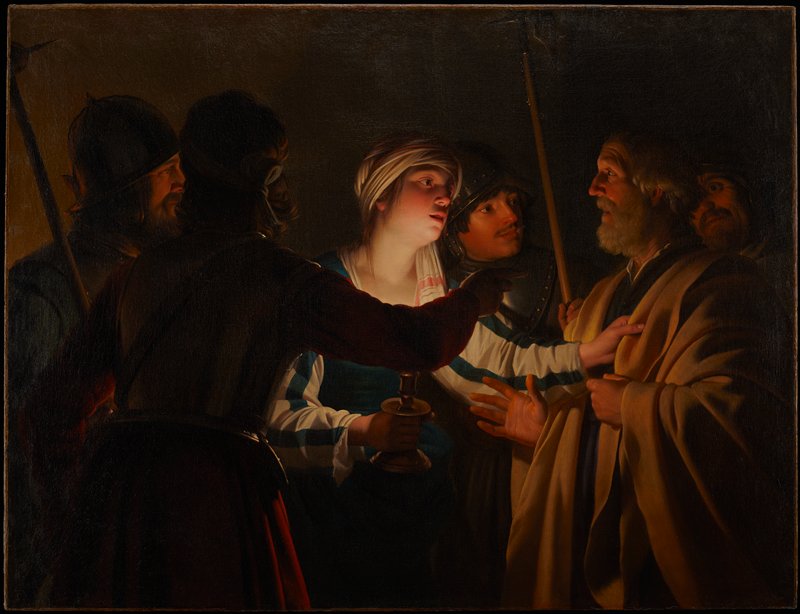
Why did Peter deny the Lord three times?
The underlying answer is important for our present lives.

Why did the Devil rebel? Though mysterious, it seems that this angel proudly desired a greater “glory” than was found in God’s hierarchy. To be God without God. This was his suggestion in tempting our first parents; “you will be like gods”. Satan, being the most powerful of the demons, rules a fallen kingdom apart from goodness, truth, and God.

Why did Judas Iscariot betray Jesus? It might have been for the money; thirty pieces of silver was about five weeks of wages and St. John the Apostle reports that Judas “was a thief and held the [apostles’] moneybag and used to steal the contributions.” Yet St. Matthew writes that when Judas saw Jesus condemned he deeply regretted what he had done and returned the money to the chief priests and elders saying, “I have sinned in betraying innocent blood.” Perhaps Judas never intended the Lord to die but had hoped that Jesus, with his back against the wall, would finally wield his mighty, miraculous powers to claim David’s earthly kingdom (and hand Judas himself a privileged place within it.) Yet Judas’ dishonest and disloyal scheming left him with nothing.

Why did Simon Peter deny the Lord three times during the Passion? St. John’s Gospel suggests he lied about having any connection to Jesus first to gain entry into the courtyard of the high priest, then to keep from being tossed out, and finally to avoid being physically assaulted by a relative of the man whose ear he had severed with a sword earlier that evening in the garden. St. Luke tells us that Peter, when he then heard a rooster crow, “went out and began to weep bitterly” over what he had done.

Satan, Judas, and Peter chose sin because they thought wrongdoing was the way to good things they would not otherwise have. But this is not Jesus’ way. In our second reading St. Peter writes of the Lord, “He committed no sin, and no deceit was found in his mouth.” He was “leaving you an example that you should follow in his footsteps.” In our Gospel, Jesus declares:

Amen, amen, I say to you, whoever does not enter a sheepfold through the gate but climbs over elsewhere is a thief and a robber. But whoever enters through the gate is the shepherd of the sheep. The gatekeeper opens it for him, and the sheep hear his voice, as the shepherd calls his own sheep by name and leads them out. When he has driven out all his own, he walks ahead of them, and the sheep follow him, because they recognize his voice. But they will not follow a stranger; they will run away from him, because they do not recognize the voice of strangers. … Amen, amen, I say to you, I am the gate for the sheep.

Jesus is our gate. He is “the way, the truth, and the life.” Always come and go through this narrow gate, for many prefer to bypass it like thieves and robbers. “How narrow the gate and constricted the road that leads to life. And those who find it are few.” Jesus’ sheep know his voice and are called to uncompromisingly follow it. Before Pontius Pilate, Jesus said, “Everyone who belongs to the truth listens to my voice.”

The words of a Jewish proverb pray to God:

Two things I ask of you,
do not deny them to me before I die:
Put falsehood and lying far from me,
give me neither poverty nor riches;
provide me only with the food I need;
Lest, being full, I deny you,
saying, “Who is the Lord?”
Or, being in want, I steal,
and profane the name of my God.

In our present season of trial, the complacency of riches has withdrawn but other temptations draw near. This is a time of testing. Will I tell lies? Will I steal? Will I sin to possess or enjoy good things I might not otherwise have? Do not give in, do not compromise, do not capitulate to evil. This is Christ’s will for you. Remember and be resolved: “The Lord is my shepherd; there is nothing I shall want.”

But what if you do go on to fall, or what if you have already sinned? What then should you do? Due to their nature, the demons will never adjust their wills towards repentance. Judas deeply regretted what he had done but he despaired of forgiveness and forfeited his life. St. Peter however returned, repented, and renewed his devotion to his Savior. (“Simon, son of John, do you love me?” He said to him, “Yes, Lord, you know that I love you.”) St. John assures us about Christ, “If we acknowledge our sins, he is faithful and just and will forgive our sins and cleanse us from every wrongdoing.”

The commandments of Christ flow from his own divine nature — total truth, pure goodness, perfect love — and these must not be spurned. Yet realize that the essence of Christianity is not rules or laws but a personal relationship: “If you love me, you will keep my commandments. … I will not reject anyone who comes to me.” Follow the Good Shepherd faithfully and goodness and kindness will follow all the days of your life and you shall dwell in the house of the Lord forever.

Christ Ordained

April 9, 2020

Holy Thursday


What the Old Testament foreshadowed, the New Testament reveals. What the Old Covenant prefigured, God’s New Covenant fulfills. What our Lord prepared in ancient times, he now bestows to his Church. The Holy Scriptures point to the gifts of God we particularly celebrate on this evening: the Holy Priesthood and the Holy Eucharist.

In the Book of Exodus, the Lord declares to Moses: “This is the rite you shall perform in consecrating [Aaron and his sons] as my priests. … Aaron and his sons you shall…bring to the entrance of the tent of meeting and there wash them with water.” On Holy Thursday, “[Jesus] rose from supper and took off his outer garments. He took a towel and tied it around his waist. Then he poured water into a basin and began to wash the disciples’ feet and dry them with the towel around his waist.

Peter said to the Lord, “You will never wash my feet.” But Jesus answered him, “Unless I wash you, you will have no inheritance with me.” The Book of Deuteronomy taught, “The levitical priests, the whole tribe of Levi, shall have no [landed] portion or [territorial] inheritance with Israel…. [T]he Lord set apart the tribe of Levi,” Deuteronomy says, “to carry the Ark of the Covenant of the Lord, to stand before the Lord to minister to him, and to bless in his name…. For this reason, Levi has no portion or inheritance with his relatives; the Lord himself is his inheritance….

When Jesus told Peter, “Unless I wash you, you will have no inheritance with me,” Simon Peter replied, “Master, then [wash] not only my feet, but my hands and head as well.” As part of the priestly ordination ritual in the Book of Exodus, the Lord commanded Moses: “[Sacrifice an unblemished male sheep and] some of its blood you shall take and put on the tip of Aaron’s right ear and on the tips of his sons’ right ears and on the thumbs of their right hands and the great toes of their right feet. Splash the rest of the blood on all the sides of the altar.” Jesus says Peter does not need to be washed all over, head and hand and foot, because whoever has bathed is clean. (This is likely a reference to his baptism.) But at the Last Supper, the Body of God’s perfect, unblemished Lamb is broken and his Blood is poured for the apostles.

As St. Paul wrote to the Corinthians: “[T]he Lord Jesus, on the night he was handed over, took bread, and, after he had given thanks, broke it and said, ‘This is my body that is for you. Do this in remembrance of me.’ In the same way also the cup, after supper, saying, ‘This cup is the new covenant in my blood.’” On Holy Thursday, the apostles receive the Blood of the Lamb and then, on Good Friday, this Blood marks the sides of the Lamb’s Altar, the vertical and horizontal beams of the Cross.

In Egypt before the Exodus, when the Lord instituted the Passover sacrifice, he commanded his people: “[E]very one of your families must procure for itself a lamb… The lamb must be a year-old male and without blemish…. It shall be slaughtered during the evening twilight. They shall take some of its blood and apply it to the two doorposts and the lintel of every house in which they partake of the lamb. That same night they shall eat its roasted flesh…. This day shall be a memorial feast for you, which all your generations shall celebrate… as a perpetual institution.” At the first Eucharist, Jesus commands his apostles, “Do this in remembrance of me,” thereby ordaining them as his priests of his New Covenant.

The apostles had been washed with water, sanctified by blood, bestowed an inheritance in the Lord, and entrusted with the mission of offering the unblemished Lamb. As the Catholic Church has always believed and taught, this memorial sacrifice, this Eucharist, re-presents, truly makes present, the sacrifice of the Cross, and applies its saving fruits among us. On Holy Thursday, Jesus gave his New Covenant Church the intertwined gifts of the Holy Eucharist and the Holy Priesthood.

The trial of this Long Lent of 2020 has made Catholics more appreciative of God’s precious gifts. This evening, we are blessed by the presence of the three seminarians from our local parishes assisting at Mass. We thank God for their vocations and urge them to press on. Eventually, this Long Lent of the Church will joyfully end and these young men will be (God willing) ordained to serve her, offering Christ’s sacrifice as loving servants for the good of us all. Pray for our seminarians, Eric, Matthew, and Isaac, that they may take up the cup of salvation; that they may offer the sacrifice of thanksgiving and call upon the name of the Lord; that they may fulfill ordination promises to the Lord in the presence of all his people. And with patient eagerness let us pray for the coming day when all of us, God’s priests and his people, can celebrate the Mass together again.

Screwtape on Pandemics

March 25, 2020

I was introduced to the Christian writing of C.S. Lewis years ago during a time of temptation. Alone at my uncle and aunt’s home, I prayed to God for some kind of diversion. “Lord, give me something (to change where I see things are headed).” The next moment, scanning the living room shelves, I saw a book cover with the image you see here. That paperback preserved me that evening and would go one to become one of my all-time favorite books: The Screwtape Letters.

In these letters, a senior demon named Screwtape instructs a junior demon, his “nephew” Wormwood, in the tactics of misleading humans. Screwtape describes how to draw the soul of one’s “patient” away from God (“the Enemy“) toward the devil (“Our Father Below“). The book is not only often seasoned with ironic, dry humor, but also contains great insights into human nature and spiritual realities.

At the time of Screwtape’s fifth letter to Wormwood, Britain had just recently entered the Second World War. However, as Lewis observes in his preface, “The history of the European War, except in so far as it happens now and then to impinge upon the spiritual condition of one human being, is obviously of no interest to Screwtape.” What the demon has to say about the influence of war in the greater battle for souls contains spiritual reflections that apply to our current time of pandemic as well.

Below is the text of that letter refashioned with pandemic being substituted for war.


My dear Wormwood,

It is a little bit disappointing to expect a detailed report on your work and to receive instead such a vague rhapsody as your last letter. You say you arc “delirious with joy” because [of this new pandemic.](1) I see very well what has happened to you. You are not delirious; you are only drunk. Reading between the lines in your very unbalanced account of the patient’s sleepless night, I can reconstruct your state of mind fairly accurately. For the first time in your career you have tasted that wine which is the reward of all our labours — the anguish and bewilderment of a human soul — and it has gone to your head. I can hardly blame you. I do not expect old heads on young shoulders. Did the patient respond to some of your terror-pictures of the future? Did you work in some good self-pitying glances at the happy past? — some fine thrills in the pit of his stomach, were there? You played your violin prettily did you? Well, well, it’s all very natural. But do remember. Wormwood, that duty comes before pleasure. If any present self-indulgence on your part leads to the ultimate loss of the prey, you will be left eternally thirsting for that draught of which you are now so much enjoying your first sip. If, on the other hand, by steady and cool-headed application here and now you can finally secure his soul, he will then be yours forever — a brim-full living chalice of despair and horror and astonishment which you can raise to your lips as often as you please. So do not allow any temporary excitement to distract you from the real business of undermining faith and preventing the formation of virtues. Give me without fail in your next letter a full account of the patient’s reactions to the war, so that we can consider whether you are likely to do more good by making him [a reactionary extremist of one kind or the other.](2) There are all sorts of possibilities. In the meantime, I must warn you not to hope too much from a [pandemic.](3)

Of course a [plague](3) is entertaining. The immediate fear and suffering of the humans is a legitimate and pleasing refreshment for our myriads of toiling workers. But what permanent good does it do us unless we make use of it for bringing souls to Our Father Below? When I see the temporal suffering of humans who finally escape us, I feel as if I had been allowed to taste the first course of a rich banquet and then denied the rest. It is worse than not to have tasted it at all. The Enemy; true to His barbarous methods of warfare, allows us to see the short misery of His favourites only to tantalise and torment us — to mock the incessant hunger which, during this present phase of the great conflict, His blockade is admittedly imposing. Let us therefore think rather how to use, than how to enjoy, this [worldwide pandemic.](4) For it has certain tendencies inherent in it which are, in themselves, by no means in our favour. We may hope for a good deal of cruelty and [greed.](5) But, if we are not careful, we shall see thousands turning in this tribulation to the Enemy, while tens of thousands who do not go so far as that will nevertheless have their attention diverted from themselves to values and causes which they believe to be higher than the self. I know that the Enemy disapproves many of these causes. But that is where He is so unfair. He often makes prizes of humans who have given their lives for causes He thinks bad on the monstrously sophistical ground that the humans thought them good and were following the best they knew. Consider too what undesirable deaths occur [in plagues.](6) Men [die](7) in places where they knew they might [die](8) and to which they go, if they are at all of the Enemy’s party, prepared. How much better for us if all humans died [of old age](9) in costly nursing homes amid doctors who lie, nurses who lie, friends who lie, as we have trained them, promising life to the dying, encouraging the belief that sickness excuses every indulgence, and even, if our workers know their job, withholding all suggestion of a priest lest it should betray to the sick man his true condition! And how disastrous for us is the continual remembrance of death which [pandemic](3) enforces. One of our best weapons, contented worldliness, is rendered useless. [During a plague](6) not even a human can believe that he is going to live forever.

I know that Scabtree and others have seen in [plagues](10) a great opportunity for attacks on faith, but I think that view was exaggerated. The Enemy’s human partisans have all been plainly told by Him that suffering is an essential part of what He calls Redemption; so that a faith which is destroyed by a war or a pestilence cannot really have been worth the trouble of destroying. I am speaking now of diffused suffering over a long period such as the [pandemic](3) will produce. Of course, at the precise moment of terror, bereavement, or physical pain, you may catch your man when his reason is temporarily suspended. But even then, if he applies to Enemy headquarters, I have found that the post is nearly always defended.

Your affectionate uncle
SCREWTAPE


Endnotes:

(1) – Originally, “the European humans have started another of their wars.”

(2) – “an extreme patriot or an ardent pacifist.”

(3) – “war”

(4) – “European war”

(5) – The original word here was “unchastity,” but the levels of that sin during this pandemic appear either decreased or the same as before. An intense and selfish attachment to material goods and wealth seems the more tempting vice at this time.

(6) – “in wartime”

(7) – “are killed”

(8) – “be killed”

(9) – These words are my insertion as a contrast to those dying in nursing homes from the Coronavirus.

(10) – “wars”


For more of The Screwtape Letters, I highly-recommend this excellent illustrated series on YouTube.

Prepared for this Time

March 18, 2020

Wednesday, 3rd Week of Lent

Moses spoke to the people and said:

“I teach you the statutes and decrees as the Lord, my God, has commanded me… Observe them carefully, for thus will you give evidence of your wisdom and intelligence to the nations, who will hear of all these statutes and say, ‘This great nation is truly a wise and intelligent people.’ … However, take care and be earnestly on your guard not to forget the things which your own eyes have seen, nor let them slip from your memory as long as you live, but teach them to your children and to your children’s children.”

We may not have expected circumstances to be as they are now, but these things come as no surprise to God from his vantage point outside of time. He permits such trials for the salvation of souls and for his saints to more greatly share in his likeness and glory. The Lord, in his providence, has been preparing you for this season.

In difficult times like these, virtue is tested, character is proven, and many souls will rise or fall. So take care and be earnestly on your guard. Do not to forget the things of faith your ears have heard and eyes have seen. Teach and practice what you have learned. For as Jesus said to his disciples, “whoever obeys and teaches these commandments will be called greatest in the Kingdom of Heaven.

Moses & the Rock — 2nd Sunday of Lent—Year A

March 8, 2020

You’re familiar with the story of Moses: his being saved from the waters of the Nile as a baby, his growing up in the household of Pharaoh, his flight as a fugitive after killing an Egyptian taskmaster, his years shepherding in the Sinai Desert until God called him from the Burning Bush, how God used Moses to free the Hebrews from Egyptian slavery with great plagues and awesome miracles, how God through Moses gave his people the Law of the Old Covenant. Moses shared an incredible intimacy with God.

In the Book of Numbers, God said:

“If there are prophets among you,
in visions I reveal myself to them,
in dreams I speak to them;
Not so with my servant Moses!
Throughout my house he is worthy of trust:
face to face I speak to him,
plainly and not in riddles.
The likeness of the Lord he beholds.”

The Book of Deuteronomy declares: “Since [that time] no prophet has arisen in Israel like Moses, whom the Lord knew face to face.” So one would imagine, one would think, that Moses saw God’s face. The Book of Exodus says: “The Lord used to speak to Moses face to face, as a person speaks to a friend.” However, following soon after in that same chapter from Exodus, Moses asks the Lord, “Please let me see your glory!” And the Lord answers: “I will make all my goodness pass before you, and I will proclaim my name, ‘Lord,’ before you … But you cannot see my face, for no one can see me and live. Here is a place near me where you shall station yourself on the rock. When my glory passes I will set you in the cleft of the rock and will cover you with my hand until I have passed by. Then I will remove my hand, so that you may see my back; but my face may not be seen.” So Moses met with God in intimate conversation as one friend speaks to another, in his holy presence, yet it is not clear that Moses, during his lifetime, ever beheld God’s face. Similarly, God gave Moses the mission of leading his people from Egypt to the Promised Land, the land promised to Abraham and his descendants, yet Moses during his lifetime never entered the Promised Land himself.

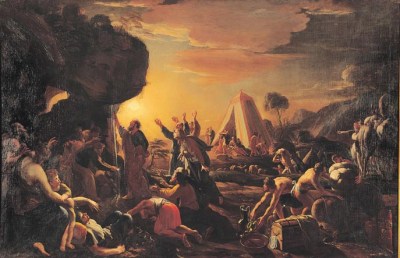
Why was that the case? Early in their desert wanderings, the Hebrews complained against Moses because of their lack of water. Moses cried out to the Lord, “What shall I do with this people? A little more and they will stone me!” And the Lord answered Moses: “Go on ahead of the people, and take along with you some of the elders of Israel, holding in your hand, as you go, the staff with which you struck the Nile. I will be standing there in front of you on the rock in Horeb. Strike the rock, and the water will flow from it for the people to drink.” Moses did this in the sight of the elders of Israel and the crisis was adverted.

However, on a later occasion, when the community again lacked water, they held an assembly against Moses and Aaron. The people quarreled with Moses, exclaiming, “Why have you brought us out of Egypt, only to bring us to this wretched place [to die]? It is not a place for grain nor figs nor vines nor pomegranates! And there is no water to drink!” The Lord said to Moses: “Take the staff and assemble the community, you and Aaron your brother, and in their presence command the rock to yield its waters. Thereby you will bring forth water from the rock for them, and supply the community and their livestock with water.

So Moses took the staff from its place before the Lord, as he was commanded. Then Moses and Aaron gathered the assembly in front of the rock, where he said to them, “Just listen, you rebels! Are we to produce water for you out of this rock?” Then, raising his hand, Moses struck the rock twice with his staff, and water came out in abundance, and the community and their livestock drank. But the Lord said to Moses and Aaron: “Because you did not have confidence in me, to acknowledge my holiness before the Israelites, therefore you shall not lead this assembly into the land I have given them.

Years later, at the edge of the Promised Land, the Lord told Moses: “Ascend this mountain [Mount Nebo] and view the land … which I am giving to the Israelites as a possession. Then you shall die on the mountain you are about to ascend, and shall be gathered to your people, [because] you broke faith with me among the Israelites at the waters of Meribath-kadesh in the wilderness of Zin: you did not manifest my holiness among the Israelites. You may indeed see the land from a distance, but you shall not enter that land which I am giving to the Israelites.” And there, Moses the servant of the Lord died as the Lord had foretold. Moses was one hundred and twenty years old when he died, yet his eyes were undimmed and his vigor unabated.

What was behind this punishment from God? Moses had been disobedient to the Lord, striking the rock twice instead of speaking to the rock as instructed; and this was more than just some desert rock—the rock carried spiritual, symbolic, prophetic significance. In his First Letter to the Corinthians, St. Paul saw the Church and her sacraments prefigured in the story of the Hebrews and the Exodus. St. Paul writes: “Our ancestors were all under the cloud and all passed through the sea, and all of them were baptized into Moses in the cloud and in the sea. All ate the same spiritual food, and all drank the same spiritual drink, for they drank from a spiritual rock that followed them, and the rock was the Christ.

So the rock in the desert symbolized Jesus Christ. The first time, God told Moses to strike the rock, and it poured forth from its side saving water for God’s people. But the second time, when God told Moses to speak to the rock, Moses disobeyed and struck it twice. Jesus Christ has already been struck, beaten, and suffered violence once, for you and me in his Passion. We are no longer to keep striking him, again and again, through our sinful disobedience. Rather than choosing sin, we are to speak to Christ, asking him to pour forth his saving gifts. Jesus says, “Let anyone who thirsts come to me and drink. … To the thirsty I will give a gift from the spring of life-giving water.

I fear that sometimes we might think, “I can keep on sinning, it’s no big deal, because if I keep on going to Confession and have my sins forgiven it’s like they never happened—they don’t really matter.” Yet every sin is a lost opportunity to do God’s will. Every sin refuses God’s “Plan A.” And sins, even after they are forgiven, can bear earthly consequences which remain for the rest of our lives. Moses sinned, and repented, and remained God’s friend, but he was refused entry into the earthly Holy Land to his own great disappointment. Even convicted murderers can be forgiven by God, but they still remain behind prison bars and their victims bodies remain buried underground. Let’s not be complacent about our sins, for every sin is a lost opportunity to follow God’s better plan and, even if forgiven, sins can have irreparable consequences in this world for the rest of our lives. But, thanks be to God, our Christian hopes are not for this lifetime alone. Moses died and was buried, but that is not the end of his story.

Jesus took Peter, James, and John his brother, and led them up a high mountain by themselves. And he was transfigured before them; his face shone like the sun and his clothes became white as light. And behold, Moses and Elijah appeared to them, conversing with him.” St. Luke’s telling of today’s Gospel story notes Moses and Elijah “appeared in glory and spoke of [Jesus’] exodus that he was going to accomplish in Jerusalem.

Sometimes people ask how the apostles knew it was Moses and Elijah. Most likely they either introduced themselves, or Jesus introduced them. Some people have the notion that the dead forget who they were, forget all their memories, and care nothing about the events on earth. But Moses can only introduce himself if he knows who he is. And if Jesus said, “This is the prophet Moses,” there’s no indication that Moses replied, “I am? Where am I? What is happening?” Moses and Elijah can converse with Jesus about the exodus he is going to accomplish in Jerusalem (that is, about his coming Passion, death, and resurrection) because they know who they are, remember their lives, and are concerned about events among the living.

At the Transfiguration, we see the not quite fully-satisfied aspects of Moses’ life reaching their fulfillment. Moses never entered the Promised Land in his lifetime, but here he stands in Israel upon Mount Tabor with Jesus. Moses seems to have never seen God’s face, but now he speaks face to face with Christ. Consider how privileged we are to stand in this holy place and have such intimacy with Jesus Christ in his Holy Eucharist. It is good that we are here.

God greatly desires that we not sin. And if we have sinned, the Lord desires that we promptly repent and sin no more. Now, this season of Lent is an excellent time for repentance—especially while we’re still healthy. This world is scarred by sins, some forgiven and many not; and these painful wounds grieve us and prevent our full satisfaction in life. Yet the full story of Moses shows that our hopes are not merely limited to this life. Our hope extends beyond death, and St. Paul says, “God works all things for the good of those who love him.” And in the end, as St. Julian of Norwich says, “all shall be well, and all shall be well, and all manner of thing shall be well.

Satan’s Old Tricks — 1st Sunday of Lent—Year A

March 3, 2020

After his baptism in the Jordan, but before the start of his public ministry, Jesus was led by the Holy Spirit into the desert to be tempted by the devil. Did Satan realize at that time that Jesus was God? He says, “If you are the son of God… If you are the son of God.” But if Satan knew, it’s strange that he would attempt the impossible: to try tempting the all-holy God into sinning and doing evil. Old Testament prophesies allude to the promised Messiah, the awaited Anointed One, as being “Son of God.” God says in the 2nd Psalm:

“I myself have installed my king
on Zion, my holy mountain….
You are my son;
today I have begotten you.”

And in Psalm 89, God says:

“He shall cry to me, ‘You are my father,
my God, the Rock of my salvation!’
I myself make him the firstborn,
Most High over the kings of the earth.”

Old Testament Jews had been told their Messiah would at least figuratively be the Son of God; so, whether or not Satan knew Jesus was divine, he at very least suspected that this man from Nazareth was the Christ.

Jesus evidently went on to tell his apostles of the devil’s temptations in the desert—for how else would anyone know to write about them in the Gospels? There may have been additional temptations, but three are retold in Matthew and Luke’s Gospels. Jesus is on the verge of beginning his public ministry. What kind of Messiah will he be? The devil’s three temptations seek to corrupt his mission from the start. Satan seeks to lead the Christ off track so as to derail the plan of God. He did this first in the lush Garden of Eden, and here he seeks to do it again in the desert.

If you are the Son of God,” Satan says, “command that these stones become loaves of bread.” Jesus was hungry, but if he does this miracle the next question may be, “So you feed yourself, do you? How now can you refuse to give bread to everyone?” Satan wants Jesus to be a materialistic Messiah who must focus on nourishing bodies to the neglect of their souls. Jesus calls his disciples to practice material charity; today the Catholic Church is the largest charitable organization in the world; teaching, healing, clothing, housing, feeding, but this is all of secondary importance to its spiritual work. For what would it profit us to have all of our material needs fulfilled if our spiritual needs went unaddressed and we ultimately died separated from God? How do these things personally apply to us? Well, did the recent stock market drops ruin your week? Or are you too afraid or possessive to share, to tithe, to give to good causes? Or are you too busy working to pray? Jesus answers, “One does not live on bread alone, but on every word that comes forth from the mouth of God.

Next we hear how the devil takes Jesus to the roof edge atop the temple in Jerusalem and challenges him: “If you are the Son of God, throw yourself down. For it is written: ‘He will command his angels concerning you’ and ‘with their hands they will support you, lest you dash your foot against a stone.’” Satan is quoting Psalm 91. This goes to show—and serves as a warning—that not every Bible quote teaches what some people claim it does. True Scripture interpretation must be in union with the mind of Christ, and one with the Body of Christ, that is his Church.

God does not want Jesus to jump off buildings, but the devil wants the Messiah to demand that God protect him from all harm or hardship. Satan wants Jesus to be a Christ who is unwilling to suffer, who will refuse to drink any bitter chalice. The devil knows doing God’s will in this broken world will necessarily entail some sufferings for his faithful ones. If Jesus is unwilling to sacrifice then God’s people will never be saved. Are you trying to force your plans upon God? Are you pleased to serve God only so long as you experience no pain? Are you demanding that your salvation come without embracing your cross? Jesus answers, “You shall not put the Lord, your God, to the test.

Lastly, we hear the devil takes him up to a very high mountain, and shows him all the kingdoms of the world in their magnificence, and says, “All these I shall give to you, if you will prostrate yourself and worship me.” Satan wants Jesus to be a compromised Messiah who will pursue good things by doing, by serving, evil. The tempter says, “It’s only a little thing, just lay down, just say the words, just take a small bite, everything will be so much easier and better if you do.” Or else the tempter lies in the opposite extreme direction, “You have no choice – it’s a sin but there’s no other way – this must be done!” What sins do you still commit in hopes that good will result? Where do you bow down and side with Satan against the will of God? Jesus answers, “The Lord, your God, shall you worship and him alone shall you serve.

By God’s providence, the temptations of Jesus in the desert foreshadow Christ’s Passion to come. Jesus is not a materialist Messiah, changing stones to loaves of bread. But, beginning at the Last Supper, he feeds the world by changing bread into himself “for the life of the world.” Jesus is not a Christ who refuses to sacrifice. At the Temple he endures trail and condemnation by the Sanhedrin and accepts the bitter chalice of his Passion according to his Father’s saving will. And Jesus is not a compromised Messiah, committing sins for false and illusory gains. Christ becomes the magnificent, sinless king of all nations, atop Mount Calvary enthroned upon the Cross.

In this season of Lent, in these forty days of penance, we are in the desert with Jesus, learning from him, and being strengthened by him, so that we can stand straight and strong and not fall for the temptations and traps of the enemy, the same tricks he used against of Adam and Eve, that he attempted with Jesus Christ, and that he still uses in our day. This Lent, instead of falling for Satan’s same old tricks, let us grow closer to Jesus Christ in relationship and resemblance, closer in his friendship and closer to his holy likeness.