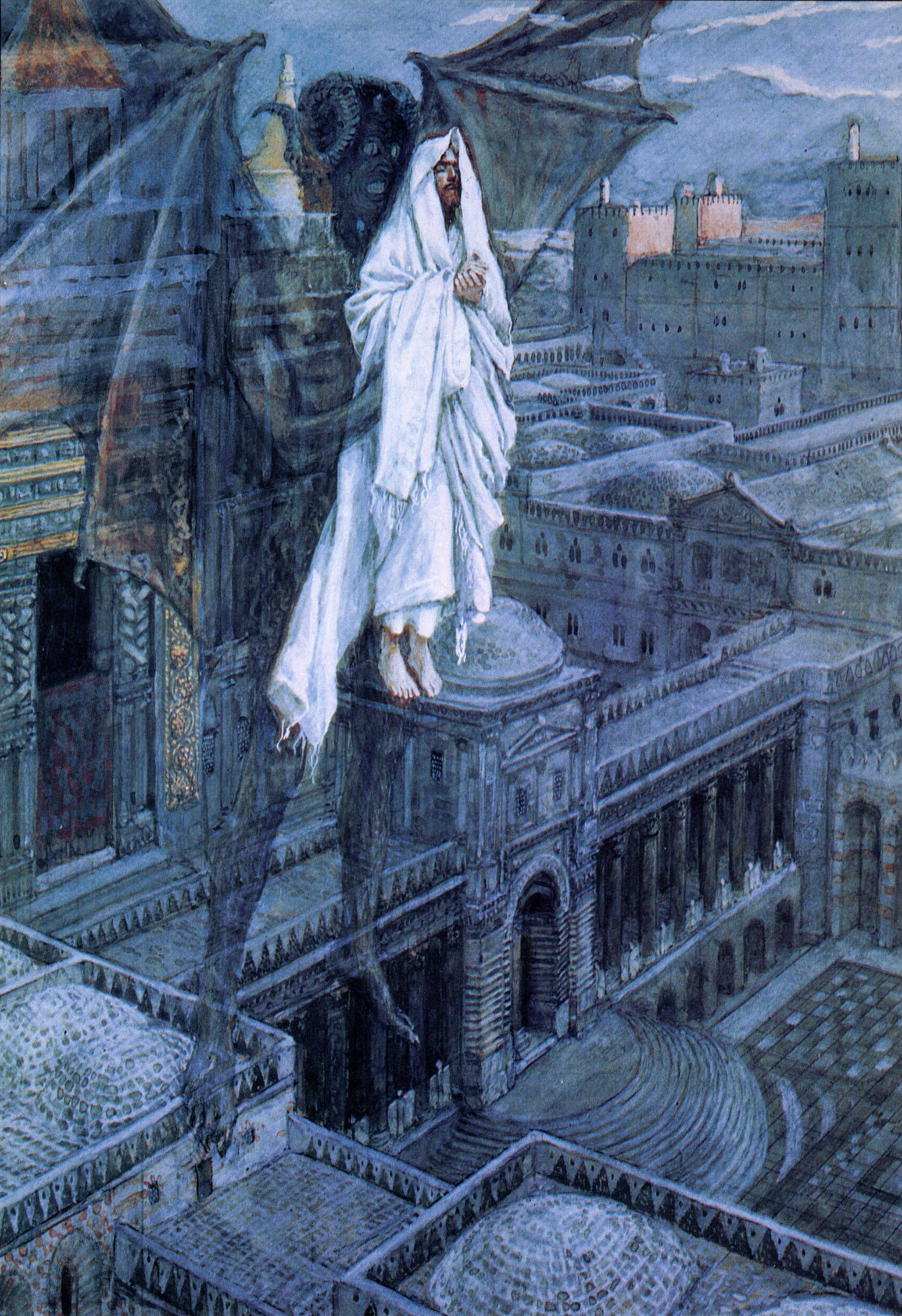
When John the Baptist sees Jesus coming toward him he declares, “Behold, the Lamb of God, who takes away the sin of the world!” Why does John say that? How is Jesus like a lamb? Under the Old Covenant, animal sacrifices were offered for the forgiveness of sins. The symbolism was that the animal, typically an unblemished lamb, was dying in place of the sinner who offered it. Jesus, like an obedient sheep that follows its master’s voice, does His Father’s will and takes our place in the sacrifice that truly forgives our sins. This is why Jesus is the Lamb of God who takes away the sins of the world.
John the Baptist goes on to say, “He is the one of whom I said, ‘A man is coming after me who ranks ahead of me because he existed before me.’” Indeed, Jesus existed before the universe itself. Through Him, all things were made, and all things that were made to point to Christ. For this reason, it is not so much that Jesus resembles the lambs of Old Covenant sacrifices. Instead, God established the ritual of sacrificing lambs for the forgiveness of sins in order to point to Christ.
Jesus is born in the age of the New Testament, but throughout the entire Old Testament the Holy Spirit has spoken through the prophets about Him. For example, our first reading from the book of Isaiah, written several centuries before Christ, is just one of hundreds and hundreds of passages pointing to Him. But, before we look at it again, a little background: Jacob was Abraham’s grandson. Jacob was renamed “Israel” by God and fathered twelve sons. From these twelve sons descended the twelve tribes of Israel. This is why the names “Jacob” and “Israel” can be interchangeable, and can refer to one person or many.
In Isaiah, the prophet writes, “The Lord said to me: You are my servant, Israel, through whom I show my glory.” To whom is God speaking here? Who is the servant whom God formed in the womb; the prophet himself, God’s faithful people, or Jesus Christ? There is truth to each of these interpretations, but Jesus shines especially through. Isaiah continues:
“It is too little, the Lord says, for you to be my servant, to raise up the tribes of Jacob, and restore the survivors of Israel; I will make you a light to the nations, that my salvation may reach to the ends of the earth.”
Jesus is the one who brings salvation and the resurrection not only to the descendants of Abraham, Isaac and Jacob, but for all the nations on earth, bringing His light to Gentiles like you and I. For another example, consider today’s psalm, written by King David 1,000 years before Christ. Hear these words again as coming from Jesus’ own lips:
Sacrifice or offering you wished not,
but ears open to obedience you gave me.
Holocausts or sin-offerings you sought not;
then said I, “Behold I come.”“In the written scroll it is prescribed for me,
to do your will, O my God, is my delight,
and your law is within my heart!”I announced your justice in the vast assembly;
I did not restrain my lips, as you, O Lord, know.I have waited, waited for the Lord,
and he stooped toward me and heard my cry.
And he put a new song into my mouth,
a hymn to our God.
I suspect that these words had a personal meaning to David when he composed them, and the fortieth psalm has been prayed in a personal way by God’s faithful people ever since, but these words apply especially to the person and life of Christ. After preaching God’s word before crowds of thousands in the time of His ministry and obediently coming to the cross at its end, after crying out for His Father to save Him and waiting three days in the tomb, the resurrection has put a new song in Jesus’ mouth, a new hymn of praise to our Father.
The point is this: the Old Testament is not a dead letter, or a merely historical book. The passages of the Old Testament meant something historically to the people who wrote them, but those men were not the only authors—the Holy Spirit was writing, too. The Spirit was writing for all generations of God’s faithful people, including you and I today. The Spirit was also revealing and prophetically pointing to the person and life of Jesus Christ.
St. Jerome said, “Ignorance of the Scriptures is ignorance of Christ.” So when you hear the Old Testament proclaimed at Mass, and read the Bible on your own, look for the meaning it had in its historical context, look for the spiritual meaning it has for us today, and look for Jesus, because you can find Him there, and get to know Him better.







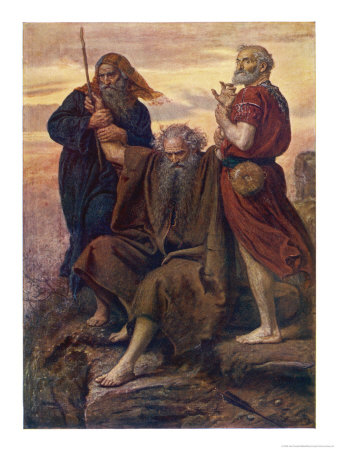


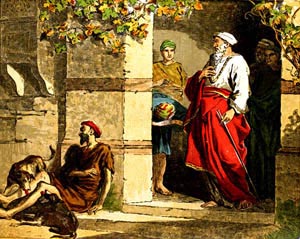
 Finally, the Lord said to Moses, “Stretch out your hand, over the sea, that the water may flow back upon the Egyptians, upon their chariots and their charioteers.” Moses stretched out his hand, and the Lord hurled their enemies into the sea.


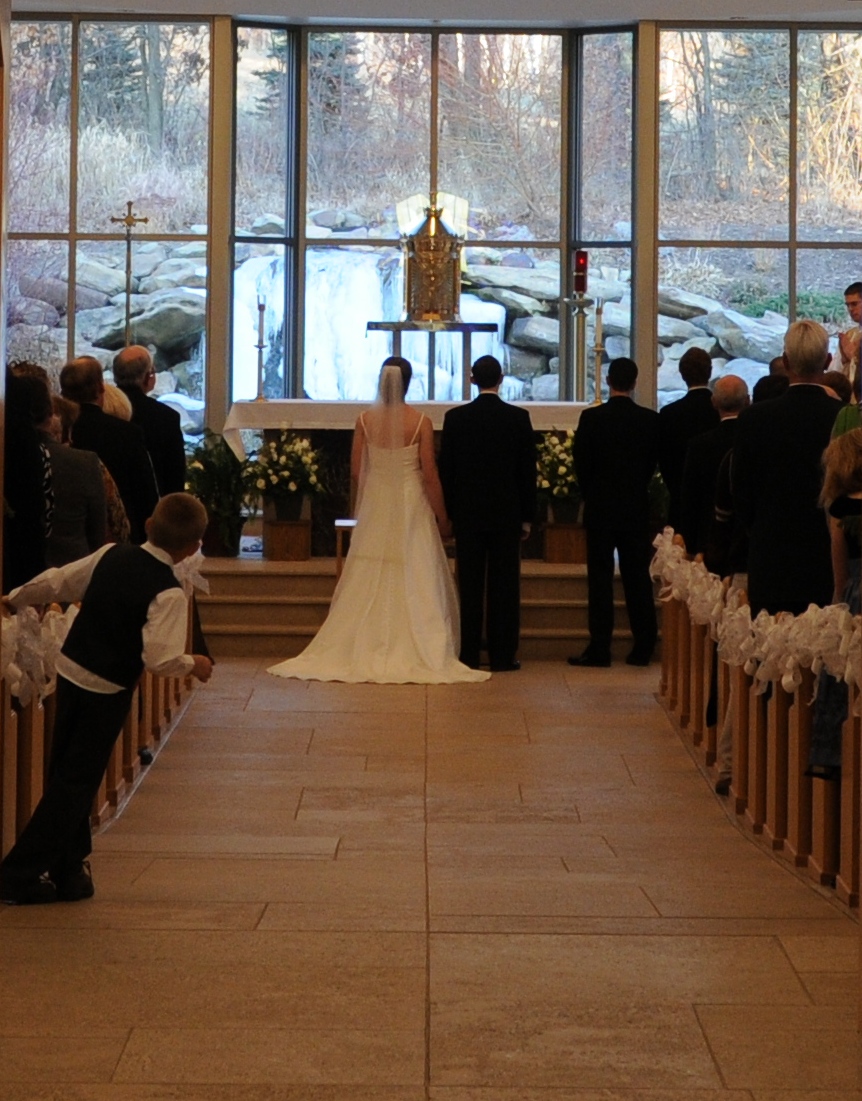
 Now Andrew’s first impression is not what makes this an extraordinary story. Did you notice what was the extra-ordinary part? Here it is: Here we have two college students, getting up, out of warm beds, on a cold day, to pray a rosary, at 7:30 in the morning! Now, you have to understand, in College Student Time, this is like getting up at 4:30 AM. Your typical college student doesn’t get up any earlier than he has to, but these two got up… to pray. For this and a thousand other reasons, I think you will all agree with me, that we have here two extra-ordinary people, from whom we good reason to expect an extraordinary marriage.
 Clearly, you two are salt and light already, for who goes on weekend retreats to know God better? Or who drives to Washington D.C. to march for life? Or who goes down to Louisiana to volunteer for Hurricane relief? Or who get up at 7:30 in the morning to pray the Rosary? So, please keep on being salt and light, and your marriage will be extraordinary.