Have you ever noticed how our Christian holidays get filled with stuff that distracts us from what we’re really celebrating? Take Christmas, for example. There’s nothing wrong with exchanging gifts and decorating with tress and lights, but there is good reason in that season that we need be reminded, to “Keep Christ in Christmas.” For many people, celebrating the birth of the Prince of Peace on earth is the most stressful time of the year. Or consider Easter: There’s nothing wrong with chocolate bunnies and hunting for Easter eggs, but the connection between egg-laying rabbits and Jesus’ resurrection is tenuous at best.
 However, this disconnection between Christian holy days and the cultural observance of holidays is the greatest when it comes to Halloween. There’s nothing wrong with kids playing dress-up and going door-to-door to ask for candy, (I have many happy memories of this myself,) but Halloween’s connection to its Christian holy day seems to have been forgotten. The name “Halloween” comes from “All Hallows Eve,” or the evening before All Saint’s Day. Something is “Hallowed” when it is sanctified or respected, as in, “Our Father, who art in Heaven, Hallowed be thy name.” All Saints Day celebrates the “hallowed” ones, the holy ones, the saints who are now in Heaven. Some of these saints are canonized, but most of them are not.
For every friend and relative we knew on earth who is now in Heaven, November 1st is their feast day in the Church. And for our holy dead who are still being purified and made perfect so that they may enter the fully-unveiled presence of our infinite God, there is November 2nd, the Feast of All Souls. In this fall season, when the natural world appears dying, our Church celebrates the holy dead, for we have hope in the new life.
Halloween, or “All Hallows Eve,” is to All Saints Day what Christmas Eve is to Christmas. As Christmas Eve reminds us of Christ’s coming, so Halloween should remind us of the victory of the saints, and of our own life’s calling: to become the best possible versions of ourselves, to become saints.
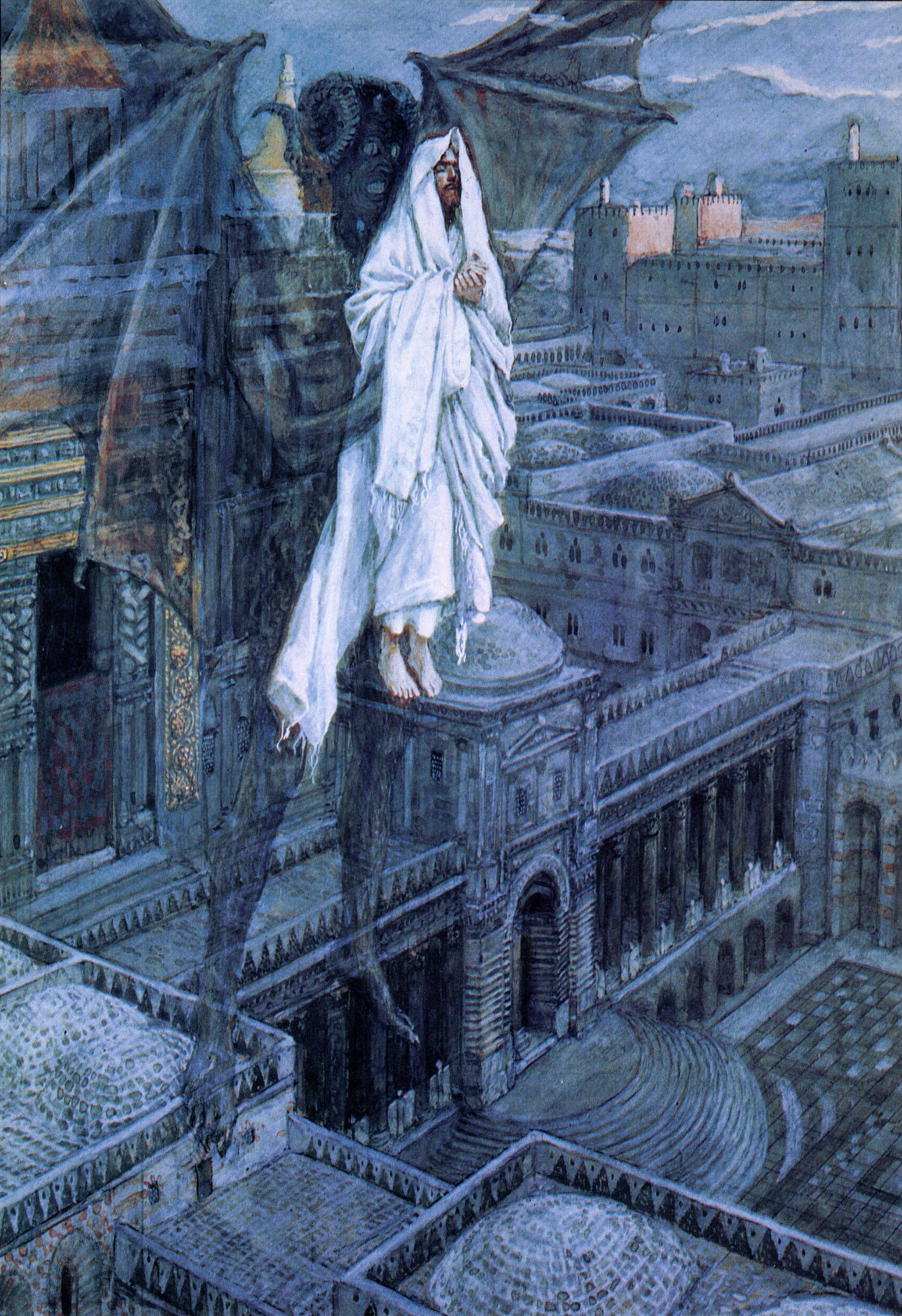
I think it is in no way an overreaction to observe that the secular observance of Halloween has overtones in dark, demonic things; the things of horror. Isn’t it suspicious that from a feast celebrating the saints in light, we have a secularized holiday focused on things of darkness? Instead of Christian hope in the resurrection of the dead, Halloween gives us images of zombies. Instead of the consolation that we are surrounded by the perfected souls of the saints, who love us and are full of concern to help us, Halloween gives us tales of ghosts and demons who want to harm and scare us. How does this sort of thing happen? I don’t think it is crazy to think that the Evil One wants to distract people from the true reason for this season; that the Devil would have us thinking about him, rather than the saints, that he wants us to be terrified, rather than full of hope.
Did you know that this Sunday, Satanic worshipers will come to Masses and Catholic Churches around the country trying to steal our Lord in the Eucharist? (Interestingly, they don’t go after the communions of Protestant denominations, but only the Catholic Eucharistic Hosts.) Their plan is to desecrate Jesus in a ritual they call a Black Mass. In doing this they are trying to rebel,  seeking a false freedom that cannot make them happy. They try to harm Jesus, but only hurt Him in as much as they sadden Him. These sad people, who strike out at Jesus, are really hurting themselves and the Jesus still loves them. We know that the Lord loves every person He has made, for as the first reading notes, if the Lord did not love His creations, they would not continue to exist. As we see in today’s gospel about Zacchaeus the sinful tax-collector, there is hope for them and all of us, for Jesus “has come to seek and to save what was lost,” and He calls every one of us to be happy and holy with Him.
This Halloween, let us pray for the misguided persons, who knowingly or unknowingly, will dabble in bad things tonight, that they may turn to Christ. Let also offer Jesus our consolation for how the feelings of His Sacred Heart will be wounded by their offenses against His love. And for ourselves, let us try celebrating Halloween in some different ways this year.
 Maybe everyone in your household already has their trick-or-treat costumes ready (but I know it can sometimes be a last minute decision.) If you’re still looking for costume ideas, how about dressing up as an awesome saint? Saint costumes can be easy and very creative. Dressing like this delights the saints (and it will probably score you more candy.)
Does your family have a patron saint? If not, then pick one this Halloween and entrust your family to them for the year ahead. Print off their picture from the internet and put it on the wall, learn about them as a family, and pray to them, asking that they pray for you. (I, for myself, am choosing St. John Vianney this year; the patron saint of priests and a good guy to know.) Great saints are waiting, just waiting, to grow in friendship with you.
This year, make it a point to celebrate the vigils and feasts of All Saints and All Souls. Our family and friends who are now in Heaven or on their way there expect us to be joyful on these feast days in their honor, and there is not better place for us on earth to draw near to them than here, around the altar of Jesus Christ.
Christ is the Light who shines through the darkness. This Halloween, let us claim the night for Jesus Christ and His saints.




 Parishable Items