Archive for the ‘Mustard Seed’ Category

The Seed of Faith & Bearing Fruit

October 4, 2025

27th Sunday in Ordinary Time
By Fr. Victor Feltes

Once upon a time, a pastor prayed to God, “Lord, please let me win the lottery.” This pastor was not a greedy person—he planned on giving almost all of the winnings away—he just really, really wanted to win the lottery. He prayed for weeks and weeks and when nothing happened he became frustrated with God, “Lord, why haven’t you let me win?” And he heard the voice of God reply, “You have to buy a ticket.” Having Christian faith is like having that ticket, it makes possible the blessings which follow.

Without faith, the complex beauty and order of this universe are dismissed as merely incredible coincidences. Without faith, supernatural miracles can be rationalized away. Without faith, a person will not seek after God for they do not believe he is real and good. As the Letter to the Hebrews says “without faith it is impossible to please God, because anyone who comes to him must believe that he exists and that he rewards those who earnestly seek him.

In today’s Gospel, the apostles ask of the Lord: “Increase our faith.” Jesus replies, “If you have faith the size of a mustard seed, you would say to this [deeply-rooted] tree, ‘Be uprooted and planted in the sea,’ and it would obey you.” When I was a boy and I read this verse I felt discouraged because “My faith is not even the size of a tiny seed!” But Jesus intends this teaching as an encouragement; he’s saying that even a little faith can achieve a lot!

Sometimes people in Confession confess to lacking trust in God. I point out that if a person trusted God perfectly they would be a perfect person, so it’s a common human problem. Trusting God has been our primordial human problem since the Garden of Eden. Yes, faithfulness can be challenging, but you do believe in God.

There was a time in college when I attended Mass without approaching for Communion because I feared that I did not have enough faith to receive the Lord in the Eucharist worthily. After weeks of this worry, it came to me in prayer that “people who don’t believe in God don’t spend time worrying about whether or not they believe in God—that’s something only believers do.” In retrospect, my worry was rather silly, since so much of how I was living my life would not make sense without faith in God. I bet the same is true for you who freely came to Mass today. Why else would you be here?

Realize that having faith is different than having feelings. You can have great faith both when your heart is joyful and when it’s torn with sorrow. Whatever one may be feeling, faith choses to respond faithfully in trusting love. Notice when the apostles ask the Lord to increase their faith how Jesus does not rebuke them for it. They are asking for a good thing. Like greater humility and greater love, increased faith is a gift God is always eager to give.

Although your faith could be strengthened, do not imagine that your faith is too feeble to do anything now. Scripture says faith can uproot trees and move mountains. Faith has worked miracles, changed unjust laws, and converted nations. Jesus wants you to know that even the tiny faith you have can work great good for you and those around you. So pray for more faith and resolve to act in faith more often. There are great jackpots to be won, but you have to buy a ticket.

Fruits at St. Paul’s Parish

June 16, 2024

11th Sunday in Ordinary Time
By Fr. Victor Feltes

Jesus says, “this is how it is with the Kingdom of God.” Seeds of the Kingdom are scattered on the earth. Day by day, we sleep and rise like farmers while God’s seeds sprout and grow. Though we each have a role in tending these plants in our local fields, exactly how they grow remains something of a mystery to us. Yet we can pause, look around, and see what heaven and earth have worked together to cultivate. Today, I would like to review some of the good fruits and fruits in progress which God has produced around us at St. Paul’s Catholic Parish.

In addition to our daily worship, our baptisms, confessions, weddings, and anointings, there are good things happening at St. Paul’s. Our entryway has been renovated, featuring a first-floor bathroom, with new exterior doors to be installed by the end of this summer. Our beautiful vestibule provides a new space for our community. It has already hosted one funeral visitation and will host Fr. Chinnappan’s farewell parties next weekend. It is sad to see Father go. He’s been a blessing and will be missed. But we are promised a new associate priest from India arriving hopefully this summer.

Our (4K through 8th grade) Catholic School has concluded another good year, and we are predicting higher enrollment this fall. An enhanced St. Paul’s school and parish website and other marketing efforts are making our great school better known. This summer, we’re renovating school bathrooms while refreshing other spaces and implementing a new English language curriculum which utilizes phonics. We have a full set of certified teachers lined up, including for our special courses like computers, phy-ed, health, and art. Our only unfilled spot remaining is for a one-fifth-time music teacher, so if you know someone excellent, please send them our way.

You have seen the gradual growth of our Sunday morning Children’s Liturgies. It’s a joy to see our little ones scamper off for their children’s gospel, homily, and prayers and come back proudly carrying their completed crafts. We are currently seeking lay volunteers to accompany them, so talk to me if you’re willing to support this important ministry. This summer, our young people are invited to Saints Basketball Camp every Monday and Wednesday evening (beginning this week), Saturday morning youth group at 9:30 AM every Saturday, and Vacation Bible School later this August.

With two priestly ordinations from our parish in recent years and a likely diaconate ordination to come, I would not be surprised to see more vocations emerging here. Pray for more vocations to priesthood, religious life, and holy marriage and encourage the young people in your life to pursue their true calling.

The volunteers at our St. Paul’s Thrift Sale, through the donations and purchases of so many, are on pace to achieve another record-breaking year. So drop off used treasures and pick up some new treasures on Thursdays or Fridays this summer. They also always welcome new volunteers.

Our 2023-24 Diocesan Annual Appeal campaign ends at the end of this month, and we are happily going to surpass our goal. Not only will any gift exceeding our goal fully return to the parish, but we also expect to receive school tuition grants this year like the $23,000 we received last year from our diocese (which is funded by the Annual Appeal).

Looking ahead, the second part of our St. Paul’s Church renovation is slated for the summer of 2026. As we continue fulfilling our Inspired by the Spirit campaign pledges, we will have all the necessary funds by then for wall repainting, floor reflooring, pew refinishing, and kneeler repadding; for security and streaming video cameras, new lighting, a new speaker system, and more. Your generosity towards this worthy effort is appreciated and will bring these plans to reality. Your donations to this project are likely a factor in another topic which I should mention.

Parish contributions come to St. Paul’s in various ways. Some people drop envelopes or cash into our collection baskets, others mail in checks to our parish office, some people have signed up to make no-fee, ACH automatic contributions from their bank accounts, and still others make donations directly from their IRAs. But as we now approach the end of this fiscal year, our parish Finance Council has noted that our year-to-date parish contributions are 10% under their year-to-date budget target. While fulfilling our renovation’s campaign’s pledges, it’s important that we maintain our regular parish giving as well.

So if you are regularly giving $10 on Sundays, please perhaps raise this up to 11 or more. If it’s $20, to 22; if $50, to 55; or $100, to 110, and so on. And if you do not tithe, I encourage you to start. It is a tangible way to exercise your trust in God, giving him an opportunity to prove himself faithful to you. And our Lord will not be outdone in generosity.

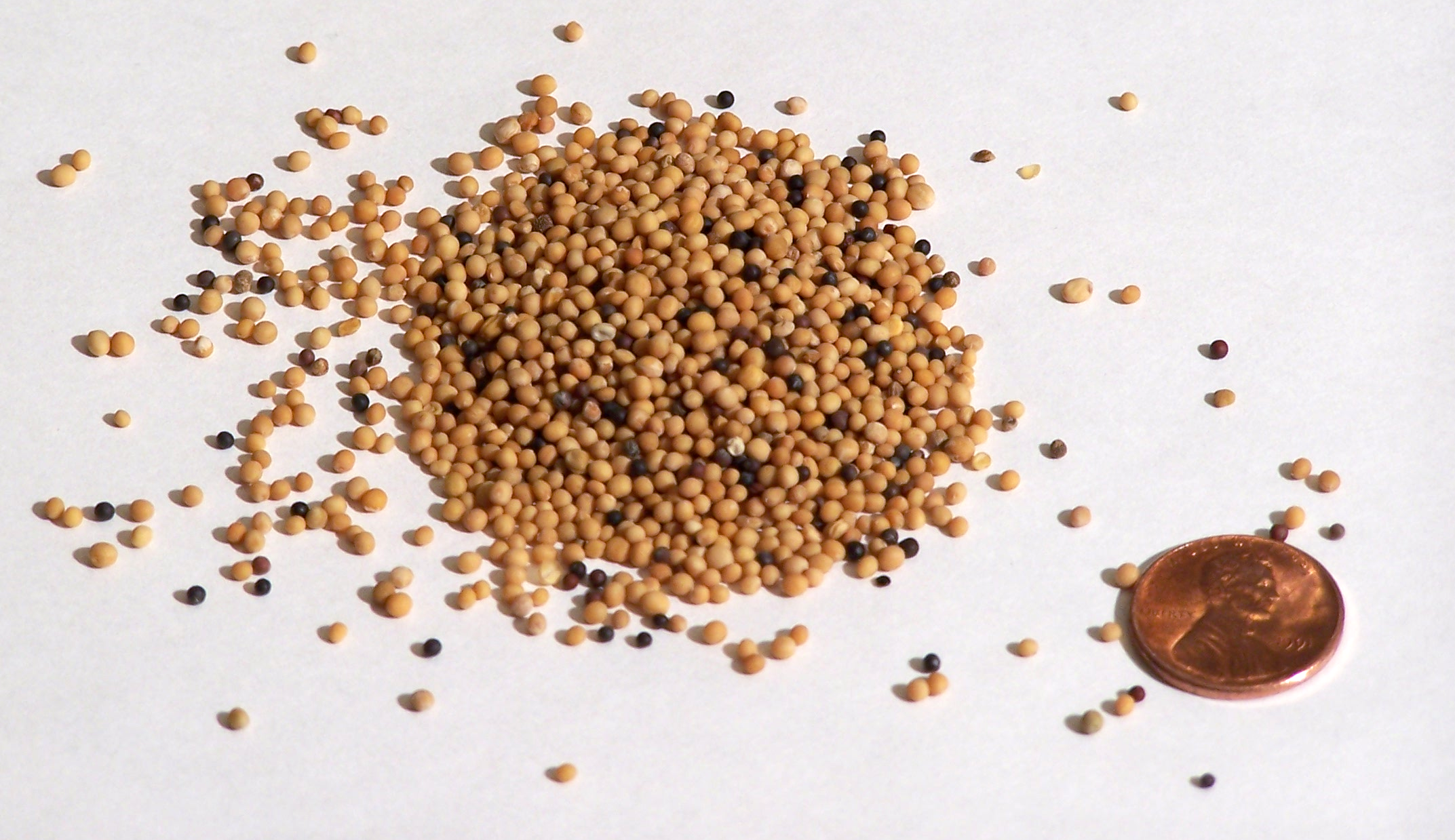
Jesus says the Kingdom of God “is like a mustard seed.” Even beginning as the “smallest of all the seeds on the earth,” the mustard seed is potent in flavor and powerful in potential. It springs up and becomes the largest of plants, putting forth large branches, and the birds of the sky dwell in its shade. Let us help grow the Kingdom of God among us so that our St. Paul’s Catholic Parish may be a still greater fruitful blessing and holy home for many more. And let us pray:

St. Paul our Patron,
please intercede with the Lord
for our parish and plans’ success,
for the glory of God
and salvation of souls. Amen.

The Kingdom of God Will Grow From Small to Large

June 15, 2024

11th Sunday in Ordinary Time
By Fr. Victor Feltes

Jesus compares the Kingdom of God to a seed, which is small, and simple but once it is planted in the ground, it will grow and become huge. We may not know how, but for sure, it will happen. More than two thousand years ago, Jesus started a small community of believers in Israel. When He was arrested, crucified, and died, His disciples were scattered and confused. However, when he rose again on the third day and appeared before them, they regrouped. On Pentecost Day, they were empowered by the Holy Spirit. From then on, that tiny community became a force that is present in all countries today.

Likewise, our spiritual growth as individuals mirrors that of the growth of a community of believers. Once the seed of the teachings of Jesus is planted in our hearts, the growth process is initiated and transformation starts. It happens little by little, in stages, and as long as we nourish it through prayers and service, we will put forth “branches” and bear fruit. There are no shortcuts to spiritual growth. Much like the growth of a plant, it will be an organic process. Along the way, there will be storms and other problems but the growth process will continue. Sometimes we ask why it seems that we are not growing at all. The key is patience and perseverance.

The parable also highlights the importance of small, humble beginnings. The seed is small and insignificant, yet it has the potential to grow into something big and beautiful. This reminds us that our small acts of faith, hope, and love can have a profound impact and bear fruit in ways we may not even imagine. Furthermore, the parable suggests that growth and transformation are gradual processes. The seed does not become a plant overnight, and the kingdom of God does not suddenly appear in our lives. Rather, it grows and develops over time, as we nurture it with our faith, hope, and love.

Just as a seed planted in the ground grows and flourishes without our full understanding of how, so too does the kingdom of God grow in our hearts and lives. We may not see it, but we can trust that it is working in us, transforming us, and bearing fruit.

Let us therefore focus on the here and now. So what can we do right at the moment? We can decide to be a tree for others to come and find shade and even make a nest. We can be a bird that sings a song of praise and thanksgiving. We can be the prophet to announce the good news of love and hope. May we be inspired by Jesus’ teaching to trust in the mysterious and wonderful ways of God’s kingdom, and may we bear fruit for the glory of God. May our small acts of faith, hope, and love be like seeds that grow into a harvest of righteousness and peace. May we be patient and hopeful; trusting in God has hidden working and timing.

Plant Using Your Tiny Seed of Faith

October 1, 2022

27th Sunday in Ordinary Time
By Fr. Victor Feltes

Today the apostles beg our Lord, “Increase our faith.” They feel apprehension at Jesus’ teachings. Christ asks extraordinary things of his disciples, and they fear their faith is insufficient. The Lord replies, “If you have faith the size of a mustard seed, you would say to this mulberry tree, ‘Be uprooted and planted in the sea,’ and it would obey you.” Realize that faith (like courage or love) is not necessarily a feeling. You can be courageous, even while feeling fear, by doing the right thing anyway. You can be loving, even while feeling strong dislike for your enemies, by willing their good anyway. And you can be faithful, even when you feel apprehensive like the apostles, by acting on your trust in God anyway.

Perhaps you feel nervous when you fly on an airplane, yet you buy your ticket and board the flight because you believe commercial jet is a very safe way to travel—and it is. If you were a business traveler, taking dozens of flights each year, your anxious feelings would calm and come to better resemble your sincere conviction about the safety of flying. Faith is like this, too. You may or may not have feelings of great faith, but when you choose to trust God and do the faithful thing you are acting in faith. Exercise your faith and your faith will strengthen, because you will see that God is faithful, and then your emotions touching on faith will naturally follow.

Jesus says, “If you have faith the size of a mustard seed,” you could miraculously transplant a tree with your command. When I was younger, the first time I read Jesus’ answer, I was discouraged by it—“I’ve never performed a miracle like that. How microscopic must my faith be!” But I had misunderstood him. Jesus’ reply is meant as an encouragement. Our Lord is saying, “Even if your faith is tiny, it is more than enough for you to fulfill my will.” What is God’s will for you? What does he want you to do? If you do not know this already ask him to reveal it to you. And “if today you hear his voice, harden not your hearts.”

On another occasion, Jesus said “the Kingdom of Heaven is like a mustard seed that a person took and sowed in a field. It is the smallest of all the seeds, yet when full-grown it is the largest of plants. It becomes a large bush, and the ‘birds of the sky come and dwell in its branches.’” So using your tiny seed of faith, plant in the field of your life as the Lord commands you. It may take awhile for the results to sprout but be patient. As the Lord said to Habakkuk, “The vision still has its time, presses on to fulfillment, and will not disappoint; if it delays, wait for it, it will surely come, it will not be late. The rash one has no integrity; but the just one, because of his faith, shall live.

Mustard bushes grow very large and the mustard it produces has a very potent taste. Given time, what you plant in faith will change the landscape and the flavor of our world. When you go on to see the incredible transforming results which faith allows you may become inflated and vulnerable to pride. People through whom God has accomplished great things may be tempted to think their serious sins are therefore no big deal, or may abandon serving the Lord before their days on earth are done. For this reason, Jesus follows his parable about faith and the mustard bush with another parable about a servant and his master.

Jesus asked his apostles, “Who among you would say to your servant who has just come in from plowing or tending sheep in the field, ‘Come here immediately and take your place at table’? Would he not rather say to him, ‘Prepare something for me to eat. Put on your apron and wait on me while I eat and drink. You may eat and drink when I am finished’? Is he grateful to that servant because he did what was commanded?” Jesus here is not describing how the world ought to be, but describing how their familiar, ancient world actually operated; where the stronger dominated the weaker. It is like when Jesus told them, “You know that the rulers of the Gentiles lord it over them, and their great ones make their authority over them felt. But it shall not be so among you. Rather, whoever wishes to be great among you shall be your servant.”

The apostles would not expect a slave’s master to be much grateful to his slave, and they would judge a slave to be most prudent in his position to remain humble and obey his master. “So should it be with you,” Jesus says, “When you have done all you have been commanded, say, ‘We are unprofitable servants; we have done what we were obliged to do.’” Indeed, apart from God we can do nothing, and keeping a humble servant’s attitude protects us from dangerous pride and presumption and helps us to fulfill what Christ commands. But the Master who is our Lord differs from other masters of the earth.

At the Last Supper, after he had washed his apostles’ feet, Jesus asked them, “Do you realize what I have done for you? You call me ‘teacher’ and ‘master,’ and rightly so, for indeed I am. If I, therefore, the master and teacher, have washed your feet, you ought to wash one another’s feet. I have given you a model to follow, so that as I have done for you, you should also do.” Although our Lord, being God, is rightfully entitled to all we have and are, he is grateful for our labors. If we do not let up our efforts, when our hard days on this earth are complete we can look forward to hearing him say: “Well done, my good and faithful servant… Come, share your master’s joy!

So while your faith may feel small, it is more than enough to do Christ’s will. If you do not know God’s will already, seek and ask to know it. Then plant your seed of faith in action and patiently watch it grow. And when you see the great things our Lord achieves through you do not let up your efforts slip, knowing that his reward for you is eternal joy in Heaven.

Receiving the Gift

June 13, 2021

11th Sunday in Ordinary Time
By Deacon Eric Mashak

Christmas PresentThis is awesome! This Gospel. What a gift God wants to give us: Salvation, Himself, Heaven. The parable of the mustard seed which becomes the massive tree is symbolic. The mustard seed is the grace and faith which God gives us in this life; often times it seems so small that we hardly notice it. The huge tree is the fruition of what God has started in us by His grace; God bringing us to Himself: Heaven.
This is an amazing gift. Probably, many of you are good at giving gifts. There is a certain pleasure in giving the perfect gift to someone at a special occasion; birthdays, Christmas, or at holidays. Some of you may know a certain type of gift giver whom we would call a ‘re-gifter.’ You know, that person who has everything that they want, and who doesn’t keep any gift they receive; instead they give it away to someone else. There was one such person, a ‘re-gifter,’ who happened to be a priest from Detroit, Michigan. He was not only a ‘re-gifter’ but even an ‘expert re-gifter’ because he would receive a gift and then keep it for a decade to avoid getting caught re-gifting. One Christmas he was given a small Christmas Ornament by a family in his parish. As usual he briefly looked it over, put it back in the box, and set the box on his shelf in the closet … and didn’t give the ornament another thought for over ten years!

Obviously, this is no way to receive a gift! … and the gift of faith and of Heaven, which God wants to give you, are infinitely more precious than any gift we know how to give. This is because God desires to give you Himself! It’s not like God wants to give you some random object. He wants to give you Himself—and that is what Heaven is: the Beatific Vision is unmediated vision of God. After all, between true lovers, only the gift of self will do. I don’t want more cars … more money … more vacations! The best thing that you can give to someone is yourself … and that is exactly what God desires to give you.

Two weeks ago we celebrated the Solemnity of the Most Holy Trinity. We learned of that beautiful exchange which happens between the Three Divine Persons, and we know that the Holy Trinity, which is God, is inexhaustible … we can’t get bored with God. He is a gift which surpasses everything we have ever known; He cannot be passed over briefly or forgotten.

And so that Christmas Ornament sat on that priests shelf in his closet for 10 years … 12 years … 15 years, until finally he moved to a different parish. It was at that moment that he thought he could ‘re-gift’ the ornament with no one being the wiser. He decided to give the ornament to some parishioners whom he did not know very well. A few days later they came to his office in tears to thank him … and the priest was very surprised at this … because, after all, wasn’t it only a small Christmas Ornament. The parishioners saw his confusion at their heartfelt thanks and explained to the priest. “Father, when we looked closely at the ornament and found the hidden latch on the back … and when we opened it and found the $500 dollars which you had hidden inside for us … we were very surprised! We didn’t know that you loved us so much!” The priest thought to himself, “Me neither!

Some gifts take time to appreciate! The gift of grace and of salvation, which God wants to give us, takes time to unpack. The gift which God makes of Himself to us is like the Christmas Ornament: You have to spend time with it. You can’t get it all in one go. How are we to receive such a gift? For St. Paul tells us in the second reading (to the Corinthians), “For we must all appear before the judgement seat of Christ … so that each might receive recompense … whether good or evil.” This gift is received through death and judgement—places we would not expect to look. This gift of salvation is found on the same path that Jesus walked. Our standard of success cannot be different from that of Christ: who suffered and died for us. From the Garden of Gethsemane to the Carrying of the Cross, to His Crucifixion and Death, all the way to His Glorious Resurrection. We receive salvation ONLY in our Crucified and Risen Lord. So please, this week, spend some time with the gift that God wants to give you … in the sacraments … or in your own homes with 10 minutes of good quality prayer each day — get to know your Lord! 10 minutes a day may seem small … like a mustard seed, but in the end it makes a huge difference … perhaps an eternal difference.

As we gather before this altar to receive Jesus Christ, in His Body and Blood, may we ask for the grace to come to know Him and to love Him … so intimately that we would place all of our trust and confidence in Him—in His power to save us—such that at our particular judgement (that great moment when we come face to face with love itself) we might hear the words, not only of our judge, but also of our friend: “Well done, my good and faithful servant, come, share in your master’s joy.”

Fear of Death — Friday, 3rd Week of Ordinary Time—Year I

January 28, 2011

God permits us to feel a natural aversion to death. This is healthy and for our good. (Imagine what the world would be like if everyone were completely indifferent as to whether they lived or died.) However, for faithful Christians, there is no reason to be terrorized by a fear of death.

If you remain close to the sacraments and rooted in daily prayer you have no reason to be afraid. Maybe you feel ill-prepared to die, but like the seed that grows without the farmer understanding how, God is preparing you for the unending life of Heaven in ways you don’t even perceive. Like the mustard seed, we may go into the ground as seemingly small and weak human beings, but we will rise with a greatness and power that even delights and blesses the angels of Heaven.

A natural aversion to death is healthy, but for Christians a fear of death is out of place. For, as the Letter to the Hebrews says, “We are not among those who draw back and perish, but among those who have faith and will possess life.”

Faith Enough — 27th Sunday in Ordinary Time—Year C

October 3, 2010

The apostles say to Jesus, “Increase our faith.” They have faith, but they feel like it’s not enough so they ask for more. Jesus replies, “If you have faith the size of a mustard seed, you would say to this mulberry tree, ‘Be uprooted and planted in the sea,’ and it would obey you.” In saying this, Jesus’ is not expressing disappointment in His disciples—He’s means to encourage them and us.

He wants us to understand that we have enough faith right now to be faithful in his service and to do incredible things. You have already enough faith to do what He asks you to do today. You need only to act upon it.

As we see with Habakkuk, we may need patience to see the fruits of our faithfulness. And as Paul reminds Timothy, we must put our faith into action. But the thing Jesus wants us to understand today is that we do not need to wait for more faith before we begin to be more faithful. We have already enough faith to do what He asks of us today.

If you had a perfect faith, what would you do? Try acting that way today, and you will find yourself living in faithfulness. Wouldn’t you like to see the difference that makes?

Jesus once called the mustard seed as the smallest of seeds. The mustard seed may be tiny, but its flavor is most powerful.  So it is with our faith.  The faith within us can be powerful despite its small size. A faith-filed Christian can transform the world. Think of Blessed Mother Teresa of Calcutta. Her faith helped and blessed so many people. Our faith can do great good too, but we do well to remember Mother Teresa words, “We are called upon not to be successful, but to be faithful.” Our job is to be faithful. If we do that, the Lord take care of the miracles. 

After teaching the apostles about the incredible power of their faith, Jesus reminds them of them of the importance of their being humble. We need to remember that the He is the master, and we are only His servants. Like the sorcerer’s apprentice, if we try to work great magic on our own we will only make a mess of things. Our efforts and projects must be from Him, with Him, and for Him if they are to do any lasting good.

We need not wait for God to increase our faith to begin to be more faithful. Christ has already given us enough faith to begin transforming our lives, our families, our communities, and our world. But our efforts must be those of humble servants of Christ our Lord, from whom all good things come.

The Kingdom is Like… — Monday, 17th Week in Ordinary Time—Year II

July 26, 2010

Jesus says the Kingdom of heaven is like a mustard seed sown in a field, or like some yeast worked into three measures of dough. These passages are usually taken to describe how the Church, or the Christian faith, despite small beginnings, has spread and transformed the entire world for the better. This is a valid interpretation, but the Kingdom of heaven is not only an external reality; it is internally and personally experienced. Since the Scriptures are written not only by human authors, but by the Holy Spirit as well, every passage contains more than one true interpretation. Jesus’ similies also describe faith in the life of individual Christians.

At the beginning of one’s discipleship, the seed of faith is small and vulnerable. Any challenge or trial, any passing bird, can potentially come along and consume it. This seed of faith must be guarded, watered, and given light. This means vigilence, education, and contact with Christ in prayer and the sacraments. In time, faith grows to the point that trials and challenges are no longer a grave threat, but calmly accepted.

The faith of the Christian is also like yeast which is not meant to be merely kept in a jar in on the shelf, segregated to Church or private life. It is meant to be mixed into the whole of life; at home, at work, and everywhere, so that the entire batch of life will be transformed and raised.

If your faith is young and fledging, or a confined and isolated part of your life, be encouraged by the hope these passages promise. The Kingdom of God is at hand for you.