Archive for the ‘Reflection’ Category

Holymon Go!

July 22, 2016

Can you catch sight of each of the following persons or things depicted in the interior of St. Wenceslaus Church?

  1. Our single depiction of St. John the Baptist.
  2. The two appearances of St. Joseph.
  3. The Holy Spirit twice in the form of a dove.
  4. The two depictions of the devil as a serpent.
  5. How many halos are surrounding holy heads?
  6. How many depictions of St. Mary are here?
  7. How many angels do we have?
  8. How many images of Jesus are in our church?

Holymon Go! Answers
(Highlight to reveal):

  1. Baptismal Font, St. Wenceslaus, Eastman, WIHis statue appears atop our Baptistery.
  2. His statue and in a stained-glass window.
  3. He has this likeness in two of our windows.
  4. Under Mary’s feet; in a window and a statue.
  5. Our stained-glass windows depict twenty-four halos.
  6. Ten. (5 in windows, 4 in stations, and 1 statue, not including her Immaculate Heart window.)
  7. Six. (4 tabernacle statues and 2 in windows.)
  8. Twenty-three. (14 stations, 5 windows, 2 statues, and 2 crucifixes, not including sanctuary images of his Sacred Heart or the Eucharist.)

“A Man Who Lives His Ideas”

July 22, 2016
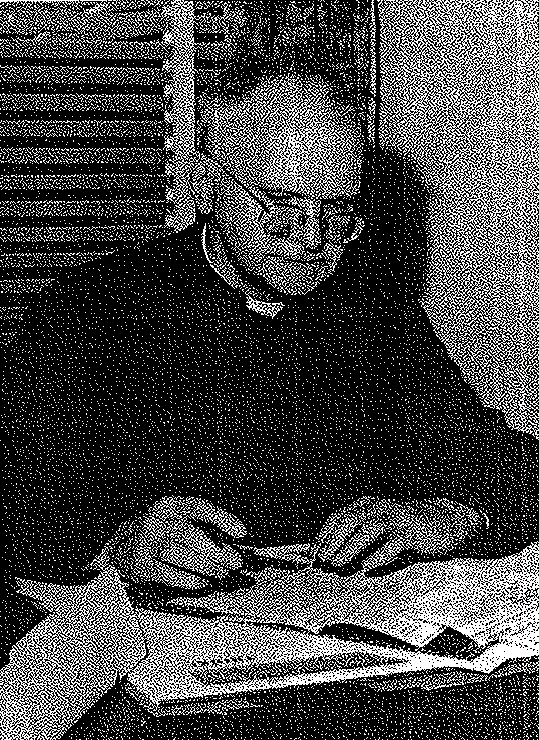
This profile of Msgr. Urban Baer was written by Fr. Ed Bertz for the La Crosse Diocese’s Catholic Times-Review sometime between 1963 and 1967.

Msgr. Urban BaerThough he had stood in the same sanctuary every Sunday for the past 15 years, it was different this time. He was speaking to his flock for the last time. “By golly, I want to thank all you wonderful people for your cooperation.” His legs felt weak. He clutched the pulpit tighter. Monsignor Urban Baer, pastor of St. Wenceslaus parish in Eastman, continued. “We have seen bad times and good times together. But God has been good to us.” The vigor of 15 years ago was gone — “My ‘ticker’ isn’t what it used to be” — but never had the congregation listened so closely. “You could hear a pin drop,” someone said. Even though the word had gone around that “Monsignor was going to retire,” no one wanted to accept that fact that the “priest who never said an unkind word to anyone” was going to leave them.

Early Life

He was born on December 8, 1903, in Marshfield, son of Peter and Mary Baer. He loved to romp and play with his five brothers and one sister but he felt God was calling him to the priesthood, and left St. John’s grade school for St. Lawrence Seminary in Mt. Calvary (Wis.) after the eighth grade. Seven years later, he entered Kenrick Seminary in St. Louis for his four-year theological studies and was ordained on June 9, 1929, by the famous Archbishop John Glennon (later a cardinal.) His first assignment was as assistant pastor at Holy Rosary parish, Darlington. One year later he became assistant at Sacred Heart parish in Eau Claire.

Lasting Effect

Then came an assignment that was to have a lasting effect on Father Baer’s ministry. He was named pastor of St. John the Baptist parish in Wuerzburg and its mission, St. Thomas in Milan, just as the stock market crash of 1929 was having its effect on the rural economy. It was the beginning of a rash of farm foreclosures. “Farmers just didn’t know where to turn.” Father Baer didn’t throw up his arms in despair. Remembering the words of Archbishop Ireland of St. Paul — “The priest’s place is also in the world if the world is to be won for Christ.” — he decided to do something. He studied the farm problem and sought advice from a priest who was doing something about rural economy “long before me.” Father Joseph Steinhauser was “dean of Catholic Rural life leaders,” Monsignor Baer says, adding that “I was only a young whippersnapper, cutting my eye teeth at that time.” A fast and true friendship grew between the two priests and still exists today

Farm Problems

But what can two priests do for such a complex problem with a multitude of causes? They did a lot. First of all, the farm foreclosures had to be stopped. Monsignor Baer promoted cooperatives and credit unions. Gradually the tide began to turn even though the two priests came under heavy fire because some thought their remedy too socialistic. Secondly, they preached and they wrote on the Christian principles involved in the farm movement. What Christian principles? “The land is man’s greatest material (that word is important) gift from God.” They reminded farmers of the responsibility of Christian stewardship of the soil and the Christian dignity of a farmer’s calling. These two things have tremendous ramifications. Finally, they promoted the family-size farm.

Monsignor believes that though farmers are leaving the land at an alarming rate and existing farms growing larger, the family-size farm is not a lost cause even today. “There will always be the family-size farm. Lord, save us if we don’t.” He expressed dismay at what he calls “factories in the field” — large farm corporations.

[The eight paragraphs omitted here may be read from the original article, posted in a frame in our parish hall along with other articles about Msgr. Baer.]

Then in August of 1950, [Father Baer] was appointed pastor at Eastman. Among the myriad achievements here was the construction of one of the first catechetical centers in the diocese. He was named a diocesan consulter in 1953. Pope Pius XII named him a domestic prelate [monsignor] in 1956.

He still thinks about that Sunday he said goodbye to his flock at Eastman. He’s only 12 miles away, now, living in a small house (1206 South 6th St.) in Prairie du Chien which sprawls along the Mississippi River just “down the hill” from Eastman. But the grey, balding man with “the world’s most affable disposition” hardly has time for daydreams or nostalgic reveries. He’s up early enough to celebrate Mass at 8 a.m. in a beautiful but tiny chapel. By special privilege of the bishop, he may sit down and rest at times during Mass, as the early sun floods through the east window. His day is an active one.

Besides talking to a steady stream of visitors and answering correspondence, he is gathering materials for still another book. “Good gravy, I’ve almost got all of the material for it already.” What’s the book going to be about? “The priest and his role in the community,” Monsignor answers in serious tone. “The priest must be active not only among his own parishioners but with the whole community. He must be concerned for the economic as well as the spiritual welfare of the people. He has to help lead the communities in all ways.” There’s no hollow ring to these thoughts coming from Msgr. Urban Baer, a man who lives his ideals!

Temptation Traps

July 16, 2016
The Devil Tempting a Young Woman by André Jacques Victor Orsel, 1832.

The Devil Tempting a Young Woman by André Jacques Victor Orsel, 1832.

We human beings are creatures of habit. For better or worse, we find it easier to think and act in the ways that we are accustomed to. Without self-awareness, it can feel natural to follow established modes of thinking into sinful action. However, once we examine and challenge these temptations we can recognize them as the distortions of truth and reality that they are. Then, with God’s ever-present grace, we can choose and act to reject them.

We experience temptations as the thoughts, feelings, and desires that, if not resisted, would lead us away from God’s will and our greatest human fulfillment. And from where do our temptations flow? They come, as the classic saying goes, from “the World, the Flesh, and the Devil.” The World, our culture and the people around us, can suggest sinful paths. Likewise our Flesh, our passions and psychological wounds, can give rise to temptation. Finally, the Devil, with the fallen angels allied with him, can prompt ideas and moods within us in order to lead us towards sin. If we are to resist temptations we must first detect them amidst our thoughts, feelings, and desires.

The distorted thinking of our temptations comes to us in many forms. Do you fall for any of these common temptation traps? Study these and enter your next battle prepared, forewarned and forearmed!


Overgeneralization reaches a general conclusion based upon a single incident or piece of evidence:

I just got dumped. I’ll never find love!

God didn’t grant my prayer. He doesn’t care.”

I never hire those people, one stole from me once.


All-or-Nothing Thinking has no tolerance or mercy for imperfection in ourselves or others:

I broke my Lenten penance, so I’ve given it up.”

I sinned, so my hours of resisting mean nothing.

I’ve never spoken to him since he was rude to me.”


Mental Filtering focuses on a situation’s negative details while dismissing all of the positive aspects:

Yes, Son, but what about this B- in Science?

When I look back on my day, all I see are sins.

They said they liked it, but what she said irks me.”


Labeling generalizes from a couple of traits or events to declare a universal negative judgment:

I need to lose some weight. I’m ugly.

I never do anything right; I’m worthless.

I’m taking more naps as I get older. I’m so lazy.”


Mind Reading presumes to know (without asking) how others feel or why they act as they do:

I know I promised, but the kids won’t mind.”

He’s late. He must not care about this team.”

Her eyes are closed. She’s not listening to me.”


Magnifying exaggerates the significance of problems or events:

I’ll never finish this paper by next week!

I did bad things in a dream. I’m so ashamed.

I prayed an hour, but I kept getting distracted!


Minimizing downplays serious concerns to insignificance:

A little peek at this website is no big deal.

This habit is a venial sin, so it’s OK if I do it.

Why are you complaining? My drinking is fine.”


Catastrophizing assumes the worst about the present and the future:

What if I lose my job, get sick, and die?

I’ll never conquer this sin—why even try?

He’s moody tonight. Is our marriage in trouble?


Personalization believes everything that happens is caused by, or is a reaction to, oneself:

I jinxed the team, I didn’t wear my hat.”

This happened because God is punishing me.”

I saw my two friends; why didn’t they invite me?”


False Shoulds condemn us for weaknesses or choices that are not actually sins:

I should always keep my family happy.”

I sinned by missing Mass when I had the flu.”

It still hurts, so I must not be forgiving them.”


Emotional Reasoning concludes that how we presently feel must be the true reflection of reality:

I feel so sad, I must be failing.”

This feels so good, how could it be wrong?”

I feel guilty; God must be unhappy with me.”


If this topic interests you, check out Cognitive Behavior Therapy and “cognitive distortions.” CBT is the most widely-used technique for the treatment of many psychological issues (such as depression and anxiety) and is proven to be often effective.

Scripture Passages for Judges

July 11, 2016

Today, Wisconsin Governor Scott Walker appointed my father, Charles V. Feltes, as the new Circuit Court Judge of Trempealeau County. Judge Feltes will be sworn in this August. If he wins election in April 2017, he will serve a six year term. Our family is very proud and I offer him these timeless passages from Sacred Scripture containing wisdom for judges:

Deuteronomy 1:17

In rendering judgment, do not consider who a person is; give ear to the lowly and to the great alike, fearing no one, for the judgment is God’s.

Leviticus 19:15

You shall not act dishonestly in rendering judgment. Show neither partiality to the weak nor deference to the mighty, but judge your neighbor justly.

Bas-Relief of Moses in the U.S. House of Representatives ChamberExodus 23:3

You shall not favor the poor in a lawsuit.

Exodus 23:6

You shall not pervert justice for the needy among you in a lawsuit.

Exodus 23:7

You shall keep away from anything dishonest.

Exodus 23:8

Never take a bribe, for a bribe blinds the clear-sighted and distorts the words of the just.

Exodus 23:2

You shall not follow the crowd in doing wrong… you shall not follow the crowd in perverting justice.

1st Kings 3:4-15

The king went to Gibeon to sacrifice there, because that was the great high place. Upon its altar Solomon sacrificed a thousand burnt offerings. In Gibeon the LORD appeared to Solomon in a dream at night. God said: Whatever you ask I shall give you. Solomon answered: “You have shown great kindness to your servant, David my father, because he walked before you with fidelity, justice, and an upright heart; and you have continued this great kindness toward him today, giving him a son to sit upon his throne. Now, LORD, my God, you have made me, your servant, king to succeed David my father; but I am a mere youth, not knowing at all how to act—I, your servant, among the people you have chosen, a people so vast that it cannot be numbered or counted. Give your servant, therefore, a listening heart to judge your people and to distinguish between good and evil. For who is able to give judgment for this vast people of yours?”

The Lord was pleased by Solomon’s request. So God said to him: “Because you asked for this—you did not ask for a long life for yourself, nor for riches, nor for the life of your enemies—but you asked for discernment to know what is right—I now do as you request. I give you a heart so wise and discerning that there has never been anyone like you until now, nor after you will there be anyone to equal you. In addition, I give you what you have not asked for: I give you such riches and glory that among kings there will be no one like you all your days. And if you walk in my ways, keeping my statutes and commandments, as David your father did, I will give you a long life.” Solomon awoke; it was a dream! He went to Jerusalem, stood before the ark of the covenant of the Lord, sacrificed burnt offerings and communion offerings, and gave a feast for all his servants.

Hollywood’s Pope: Little Faith on the Small Screen

June 29, 2016

This fall, HBO will begin airing an eight-episode miniseries imagining the first American to be elected pope. While this drama may or may not attract viewers, I predict “The Young Pope” will fail to truly capture the Catholic Faith and Church. I had similar doubts when Showtime floated a similar premise in 2013. (“The Vatican” was to star the actor who played Adolf Hitler in the movie “Downfall” but none of its episodes ever aired.) The creator and director of “The Young Pope,” Paolo Sorrentino, describes what his new series will be about:

Jude Law stars as “the complex and conflicted” Pope Pius XIII in “The Young Pope

The clear signs of God’s existence. The clear signs of God’s absence. How faith can be searched for and lost. The greatness of holiness, so great as to be unbearable when you are fighting temptations and when all you can do is to yield to them. The inner struggle between the huge responsibility of the Head of the Catholic Church and the miseries of the simple man that fate (or the Holy Spirit) chose as Pontiff. Finally, how to handle and manipulate power in a state whose dogma and moral imperative is the renunciation of power and selfless love towards one’s neighbor.”

Though some are more optimistic, I have low hopes for this series. The Catholic Church has beautiful stories to tell, but “The Young Pope’s” trailer and the quote above telegraph brooding agnosticism free of Christian joy. “The Young Pope’s” Pius XIII is reportedlya conflicted man who must find a way to balance his ultra-conservative views with his immense compassion for the sick and the poor.” In other words, Catholic teachings will be falsely pitted against Christian love. Which one do you imagine will prevail in our hero?

A Vatican TV drama could be made with either the cynicism of “House of Cards” or the hopeful idealism of “The West Wing.” Which set of plot-lines below (“A” or “B”) do you think we could expect to see these days in a major miniseries about the papacy?

The Dinner Guest

A:  The pope invites to dinner a priest-friend from seminary. At table, the priest asks the pope to lift the “impossible burden” of celibacy. The pope sympathizes but he explains (citing solely pragmatic reasons) that there is nothing he can do. By the meal’s end, the priest is asking to be released from the priesthood so that he might marry a former nun with whom he has fallen in love (and sin.) The pope, sadly subdued, grants his second request.

B:  The pope invites to dinner a Roman beggar who once served as a priest. At dessert, the pope asks him to hear his confession. “I cannot do that,” the man replies, “I have renounced the priesthood. My priestly faculties have been taken away from me. I am no longer a priest.” The pope answers, “Once a priest, always a priest…  As Bishop of Rome and head of the Catholic Church I can restore your priestly faculties to you…” The man’s priesthood is restored and he hears the pope’s confession. The priest is then assigned to the church where he had previously begged with a special responsibility for the poor who seek alms at the church door.

The Persecuted Refugees

A:  As the cause advances to beatify Pius XII (the pope who reigned during the Second World War) the current pope personally investigates his predecessor’s record in the Vatican’s Secret Archives. When the pope concludes that Pius XII should have done more to save persecuted Jews from the Nazis, he places the entire beatification project on (permanent) hold.

B:  The pope intervenes to help when a religious minority is threatened by an evil state. He facilitates the safe escape of thousands, even housing refugees within Rome’s convents and monasteries and at the Vatican itself. When peace returns, a world-famous agnostic scientist declares, “Only the Catholic Church protested against this onslaught on liberty. Up till then I had not been interested in the Church, but today I feel a great admiration for the Church, which alone has had the courage to struggle for spiritual truth and moral liberty.”

A Target of Controversy

A:  After the pope describes the theory of evolution as being “more than just a hypothesis,” right-wing Catholic extremists plot to kill him for teaching heresy. After the nearly-successful bomb plot is thwarted, the pope laments the need to ‘lead our Church out of the Dark Ages.’

B:  A Muslim gunman critically-wounds the pope as he greets crowds of pilgrims in St. Peter’s square. After the pope’s recovery from four gunshot wounds, he visits his would-be assassin in prison, enters his cell, and forgives him.

Which of these plot-lines could more believably appear on television? While the “A” stories above are my own works of fiction, each “B” story relates a true incident. The episode of the dinner guest who heard Pope John Paul II’s confession is told in an article by K. D’Encer entitled “The Priest, the Beggar and the Pope.” It was Pope Pius XII who hid and helped thousands of Jews during WWII, and the agnostic scientist who praised the Catholic Church for defending his people was Albert Einstein. St. John Paul II did call evolution “more than just a hypothesis” but no reactionary Catholic extremists tried to kill him for expressing this non-heretical view. In 1983, Pope John Paul visited Mehmet Ali Ağca, the man who had tried to kill him two years prior, and forgave him face-to-face.

This is not to say that a truly great drama about the papacy would or should ignore the realities of darkness, sin, and division. But secular treatments of the Catholic Church in this world trace her shadows without acknowledging her light. As the Latin adage says,  “No one gives what he does not have.” (Nemo dat quod non habet.) Lacking a well-formed faith, no screenwriter can be expected to do justice to Jesus’ Church in its complex but saving reality.

St. Irenaeus of Lyon on Sacred Tradition

June 28, 2016

From Against Heresies, written around 180 AD:

“It is within the power of all… in every Church, who may wish to see the Truth, to contemplate clearly the Tradition of the apostles manifested throughout the whole world; and we are in a position to reckon up those who were by the apostles instituted bishops in the Churches, and [to demonstrate] the succession of these men to our own times; those who neither taught nor knew of anything like what these [heretics] rave about. …

[It] is a matter of necessity that every Church should agree with this Church [the very great, the very ancient, and universally known Church founded and organized at Rome by the two most glorious apostles, Peter and Paul] on account of its preeminent authority…”

Almost Nobody Hates the Church

June 22, 2016
Bishop Fulton Sheen

Bishop Fulton Sheen (1895-1979) was dubbed “the first televangelist” by TIME magazine in 1952. His Emmy-winning TV show, Life is Worth Living, was watched by up to 30 million people weekly. His cause for sainthood is currently being advanced by his home diocese of Peoria, IL.


The Venerable Fulton J. Sheen made this observation in his 1938 foreword to Radio Replies, a Catholic apologetics book:

“There are not over a hundred people in the United States who hate the Catholic Church. There are millions, however, who hate what they wrongly believe to be the Catholic Church — which is, of course, quite a different thing. These millions can hardly be blamed for hating Catholics because Catholics ‘adore statues’; because they ‘put the Blessed Mother on the same level with God’; because they say ‘indulgence is a permission to commit sin’; because the Pope ‘is a Fascist’; because the ‘Church is the defender of Capitalism.’ If the Church taught or believed any one of these things it should be hated, but the fact is that the Church does not believe nor teach any one of them. It follows then that the hatred of the millions is directed against error and not against truth. As a matter of fact, if we Catholics believed all of the untruths and lies which were said against the Church, we probably would hate the Church a thousand times more than they do.

If I were not a Catholic, and were looking for the true Church in the world today, I would look for the one Church which did not get along well with the world; in other words, I would look for the Church which the world hates… Look for the Church that is hated by the world, as Christ was hated by the world. Look for the Church which is accused of being behind the times, as Our Lord was accused of being ignorant and never having learned. Look for the Church which men sneer at as socially inferior, as they sneered at Our Lord because He came from Nazareth. Look for the Church which is accused of having a devil, as Our Lord was accused of being possessed by Beelzebub, the Prince of Devils. Look for the Church which, in seasons of bigotry, men say must be destroyed in the name of God as men crucified Christ and thought they had done a service to God. Look for the Church which the world rejects because it claims it is infallible, as Pilate rejected Christ because He called Himself the Truth. Look for the Church which is rejected by the world as Our Lord was rejected by men…

If then, the hatred of the Church is founded on erroneous beliefs, it follows that basic need of the day is instruction. Love depends on knowledge for we cannot aspire nor desire the unknown.

Our great country is filled with what might be called marginal Christians, i.e., those who live on the fringe of religion and who are descendants of Christian living parents, but who now are Christians only in name. They retain a few of its ideals out of indolence and force of habit; they knew the glorious history of Christianity only through certain emasculated forms of it, which have married the spirit of the age and are now dying with it. Of Catholicism and its sacraments, its pardon, its grace, its certitude and its peace, they know nothing except a few inherited prejudices. And yet they are good people who want to do the right thing, but who have no definite philosophy concerning it. They educate their children without religion, and yet they resent the compromising morals of their children. They would be angry if you told them they were not Christian, and yet they do not believe that Christ is God. They resent being called pagans and yet they never take a practical cognizance of the existence of God. There is only one thing of which they are certain and that is that things are not right as they are. It is just that single certitude which makes them what might be called the great “potentials,” for they are ready to be pulled in either of two directions. Within a short time they must take sides; they must either gather with Christ or they must scatter; they must either be with Him or against Him; they must either be on the cross as other Christs, or under it as other executioners. Which way will these marginal Christians tend?… Only this much is certain. Being human and having hearts they want more than class struggle and economics; they want Life, they want Truth, and they want Love. In a word, they want Christ.

It is to these millions who believe wrong things about the Church and to these marginal Christians, that this little book is sent. It is not to prove that they are ‘wrong’; it is not to prove that we are ‘right’; it is merely to present the truth in order that the truth may conquer through the grace of God.”

Sacred Heart Milestones

June 19, 2016

The Year in Review: January 2015—June 2016

New Christians — Baptisms

Isabel Buck                 Peyton McCullick

New Tabernacles — First Communions

Trisha Gillitzer        Zoey Jelinek
Brooke Mitchell         Samantha Nagel
Savannah Swatek       Brett Wagner
Elizabeth Wright        Natalie Wright

Greater Temples — Confirmations

Jacob Bird             Erica Boylen
Isaac Byrne            Katie Friar
Tanner Gillitzer       Tyler Gillitzer
Siena Krachey          Adam Martin
Trent McCullick

Passings — Funerals

Virginia Fillbach         Marian Frey
Florence Olson           Virginia Romanek
Georgeine McCloskey

St. Wenceslaus Milestones

June 19, 2016

The Year in Review: May 2015—June 2016

New Christians — Baptisms

Brynlee Becwar         Addison Simmons
Hayden Stuckey        Andrew Steiner
Brennen Schramm    Maverick Hird
Bridget Kansier         RaeLi Cullen
Roawynn Cullen        Rhett Cullen
Charles Walz             Arie Molini
Oliver Polodna           Theodore Millin
Charlotte Millin          Kassie Hamilton
Macie Slama              Gwen Martin
Finnley Corlett

New Tabernacles — First Communions

2015:
Rita Achenbach          Tatiana Dodge
Tucker DuCharme     Owen Oppriecht
Thomas Sprosty         Sophia Walz

2016:
Kari Oppriecht          Lonnie Achenbach
Kassie Hamilton        Tegan DuCharme
Hunter Hagensick     Benjamin Kramer
Nicholas Liedtke          Emma Udelhoven
Claudia Walz              Elisia Wynos

Greater Temples — Confirmations

Kari Oppriecht            Lonnie Achenbach
Kassie Hamilton        Matthew Kramer
Stephen Ronnfeldt    Timothy Sprosty Jr.
Andrew Wall              Hannah Whiteaker
Brooke Wright           Isaiah Teynor

New Catholics — Full Communions

Kari Oppriecht            Lonnie Achenbach
Kassie Hamilton

Holy Unions — Marriages

Brandon & Jaymee Jerrett
Shawn & Audrie Schlee
Michael & Amanda Cullen

Passings — Funerals

Walter Pauer            Bridget Achenbach
Kristina Colson         Mae Sprosty
Charles Shinko         Dale Duha
Merrill McMillin        John F. Walz
Lola Mae Shinko       Bernard Boylen
Lawrence Pelock

The Catechism on Current Events

June 19, 2016

On June 12, 2016, a gunman murdered 49 persons at a gay nightclub in Orlando. Discussions of terrorism and new gun control laws have followed. Below are teachings from The Catechism of the Catholic Church:

On Murder & Terrorism (CCC 2268, 2297)

The fifth commandment forbids direct and intentional killing as gravely sinful. The murderer and those who cooperate voluntarily in murder commit a sin that cries out to heaven for vengeance.

Terrorism threatens, wounds, and kills indiscriminately; it is gravely against justice and charity.

On Persons with Same-Sex Attractions (CCC 2357-2359)

Homosexuality refers to relations between men or between women who experience an exclusive or predominant sexual attraction toward persons of the same sex. It has taken a great variety of forms through the centuries and in different cultures. Its psychological genesis remains largely unexplained. Basing itself on Sacred Scripture, which presents homosexual acts as acts of grave depravity, tradition has always declared that “homosexual acts are intrinsically disordered.” They are contrary to the natural law. They close the sexual act to the gift of life. They do not proceed from a genuine affective and sexual complementarity. Under no circumstances can they be approved.

The number of men and women who have deep-seated homosexual tendencies is not negligible. This inclination, which is objectively disordered, constitutes for most of them a trial. They must be accepted with respect, compassion, and sensitivity. Every sign of unjust discrimination in their regard should be avoided. These persons are called to fulfill God’s will in their lives and, if they are Christians, to unite to the sacrifice of the Lord’s Cross the difficulties they may encounter from their condition.

Homosexual persons are called to chastity. By the virtues of self-mastery that teach them inner freedom, at times by the support of disinterested friendship, by prayer and sacramental grace, they can and should gradually and resolutely approach Christian perfection.

On Government Authority (See CCC 1897-1927)

Every human community needs an authority to govern it. … Its role is to ensure as far as possible the Common Good of the society. The authority required by the moral order derives from God… (see Romans 13:1-2.) [Authority] must not behave in a despotic manner, but must act for the Common Good as a moral force based on freedom and a sense of responsibility. A human law has the character of law to the extent that it accords with right reason, and thus derives from the eternal law. … If rulers were to enact unjust laws or take measures contrary to the moral order, such arrangements would not be binding in conscience. In such a case, “authority breaks down completely and results in shameful abuse.” (Pope St. John XXIII) The Common Good consists of three essential elements: respect and promotion of the fundamental rights of the person; development of the spiritual & temporal goods of society; and the peace & security of society and its members.

On Legitimate Self-Defense (CCC 2263-2264)

The legitimate defense of persons and societies is not an exception to the prohibition against the murder of the innocent that constitutes intentional killing. “The act of self-defense can have a double effect: the preservation of one’s own life; and the killing of the aggressor. … The one is intended, the other is not.” (St. Thomas Aquinas)

Love toward oneself remains a fundamental principle of morality. Therefore it is legitimate to insist on respect for one’s own right to life. Someone who defends his life is not guilty of murder even if he is forced to deal his aggressor a lethal blow: “If a man in self-defense uses more than necessary violence, it will be unlawful: whereas if he repels force with moderation, his defense will be lawful. … Nor is it necessary for salvation that a man omit the act of moderate self-defense to avoid killing the other man, since one is bound to take more care of one’s own life than of another’s.” (St. Thomas Aquinas)

Rules for Spiritual Discernment

May 23, 2016

By St. Ignatius of Loyola (1491-1556)

Rules for becoming aware and understanding to some extent the different movements which are caused in the soul, the good, to receive them, and the bad to reject them…

First Rule. In persons who are going from mortal sin to mortal sin, the enemy is ordinarily accustomed to propose apparent pleasures to them, leading them to imagine sensual delights and pleasures in order to hold them more and make them grow in their vices and sins. In these persons the good spirit uses a contrary method, stinging and biting their consciences through their rational power of moral judgment.

Second Rule. In persons who are going on intensely purifying their sins and rising from good to better in the service of God our Lord, the method is contrary to that in the first rule. For then it is proper to the evil spirit to bite, sadden, and place obstacles, disquieting with false reasons, so that the person may not go forward. And it is proper to the good spirit to give courage and strength, consolations, tears, inspirations and quiet, easing and taking away all obstacles, so that the person may go forward in doing good.

Third Rule. The third is of spiritual consolation. I call it consolation when some interior movement is caused in the soul, through which the soul comes to be inflamed with love of its Creator and Lord, and, consequently when it can love no created thing on the face of the earth itself, but only in the Creator of them all. Likewise when it sheds tears that move to love of its Lord, whether out of sorrow for one’s sins or for the passion of Christ our Lord, or because of other things directly ordered to His service and praise. Finally, I call consolation every increase of hope, faith and charity, and all interior joy that calls and attracts to heavenly things and to the salvation of one’s soul, quieting it and giving it peace in its Creator and Lord.

Fourth Rule. The fourth is of spiritual desolation. I call desolation all the contrary of the third rule, such as darkness of soul, disturbance in it, movement to low and earthly things, disquiet from various agitations and temptations, moving to lack of confidence, without hope, without love, finding oneself totally slothful, tepid, sad and as if separated from one’s Creator and Lord. For just as consolation is contrary to desolation, in the same way the thoughts that come from consolation are contrary to the thoughts that come from desolation.

Fifth rule. The fifth is in time of desolation never make a change, but be firm and constant in the proposals and determination in which one was the day preceding such desolation, or in the determination in which one was in the preceding consolation. Because as in consolation the Good Spirit guides and counsels us more, so in desolation the bad spirit, with whose counsels we cannot find the way to a right decision.

Sixth rule. Although in desolation we should not change our first proposals, it is very advantageous to change ourselves intensely against the desolation itself, as by insisting more upon prayer, meditation, upon much examination, and upon extending ourselves in some suitable way of doing penance.

Seventh Rule. Let one who is in desolation consider how the Lord has left him in trial in his natural powers, so that he may resist the various agitations and temptations of the enemy; since he can resist with divine help, which always remains with him, though he does not clearly feel it; for the Lord has taken away from him His great fervor, abundant love and intense grace, leaving him, however sufficient grace for eternal salvation.

Eighth Rule. Let one who is in desolation work to be in patience, which is contrary to the vexations which come to him, and let him think that he will soon be consoled, diligently using the means against such desolation, as is said in the sixth rule.

Ninth Rule. There are three principal causes for which we find ourselves desolate. The first is because we are tepid, slothful or negligent in our spiritual exercises, and so through our faults spiritual consolation withdraws from us. The second, to try us and see how much we are and how much we extend ourselves in His service and praise without so much payment of consolation and increased graces. The third, to give us true recognition and understanding so that we may interiorly feel that it is not ours to attain or maintain increased devotion, intense love, tears or any spiritual consolation, but that all is the gift and grace of God our Lord, and so that we may not build a nest in something belonging to another, raising our mind in some pride or vainglory, attributing to ourselves the devotion or the other parts of the spiritual consolation.

Tenth Rule. Let the one who is in consolation think how he will conduct himself in the desolation which will come after, taking new strength for that time.

Eleventh Rule. Let one who is consoled seek to humble himself and lower himself as much as he can, thinking of how little he is capable in the time of desolation without such grace or consolation. On the contrary, let one who is in desolation think that he can do much with God’s sufficient grace to resist all his enemies, taking strength in his Creator and Lord.

Twelfth Rule. The enemy acts like [an unvirtuous] woman in being weak when faced with strength and strong when faced with weakness. For as it is proper to a woman, when she is fighting with some man, to lose heart and to flee when the man confronts her firmly, and, on the contrary, if the man begins to flee, losing heart, the anger vengeance and ferocity of the woman grow greatly and know no bounds. In the same way, it is proper to the enemy to weaken and lose heart, fleeing and ceasing his temptations when the person who is exercising himself in spiritual things confronts the temptations of the enemy firmly, doing what is diametrically opposed to them; and, on the contrary, if the person who is exercising himself begins to be afraid and lose heart in suffering the temptations, there is no beast so fierce on the face of the earth as the enemy of human nature in following out his damnable intention with such growing malice.

Thirteenth Rule. Likewise he conducts himself as a false lover in wishing to remain secret and not be revealed. For a dissolute man who, speaking with evil intention, makes dishonorable advances to a daughter of a good father or a wife of a good husband, wishes his words and persuasions to be secret, and the contrary displeases him very much, when the daughter reveals to her father, or the wife to her husband his false words and depraved intention, because he easily perceives that he will not be able to succeed with the undertaking begun. In the same way, when the enemy of human nature brings his wiles and persuasions to the just soul, he wishes and desires that they be received and kept in secret; but when one reveals them to one’s good confessor or to another spiritual person, who knows his deceits and malicious designs, it weighs on him very much, because he perceives that he will not be able to succeed with the malicious undertaking he has begun, since his manifest deceits have been revealed.

Fourteenth Rule. Likewise he conducts himself as a leader, intent upon conquering and robbing what he desires. For, just as a captain and leader of an army in the field, pitching his camp and exploring the fortifications and defenses of a stronghold, attacks it at the weakest point, in the same way the enemy of human nature, roving about, looks in turn at all our theological, cardinal and moral virtues; and where he finds us weakest and most in need for our eternal salvation, there he attacks us and attempts to take us.
The Old Covenant’s (Surprising) Last Seven Prophets

May 6, 2016

A prophet is someone enlightened by God to reveal his message. Each Sunday, we familiarly proclaim that the Holy Spirit has “spoken through the prophets,” but the identities of the seven last Old Covenant prophets (as seen in the Bible) may well surprise you.

#7 :  The Author of 2nd Maccabees

Malachi is the last book in the Old Testament, yet the Bible’s books do not always appear in chronological order. Our separated Protestant brethren would identify Malachi as the last prophetic book in the Old Testament, but the Church’s Bible includes seven books which they exclude. The last of these is 2nd Maccabees, written during the 1st century BC.

The author of 2nd Maccabees, who chronicles the Jews’ successful rebellion against their Greek persecutors, does not seem to know he writes by divine inspiration. In his closing remarks he adds, “If [this story] is well written and to the point, that is what I wanted; if it is poorly done and mediocre, that is the best I could do.” (15:38) However, neither does St. Paul appear to grasp that his letters to the churches would be revered on the level of Genesis, Joshua, or Daniel. This shows that God can use us in amazing ways, in perfect accord with his will, even if we fail to recognize it at the time.

#6 & #5 :  St. Zachariah & St. Elizabeth

The Visitation by BlocZachariah and his wife, Elizabeth, are old and childless. But the Archangel Gabriel appears to Zachariah in the Temple and says that they shall have a son. Although he knows that God has blessed with children elderly and barren couples of old, Zachariah disbelieves the message. In response, he is put on a forty-week silent retreat. Zachariah becomes mute and apparently deaf as well (since his neighbors and relatives will later resort to making gestures to ask him the name of his newborn son.) Though he cannot tell his pregnant wife of their unborn son’s great mission, Elizabeth receives insights from the Holy Spirit.

When she hears the greeting of her visiting relative, Elizabeth is “filled with the holy Spirit” and cries out in a loud voice, “Most blessed are you among women, and blessed is the fruit of your womb!” The Blessed Virgin’s belly has not yet begun to grow, but Elizabeth prophesies and confirms to Mary that she is indeed pregnant with a boy who is “the Lord.” (Luke 1)

The Holy Spirit also seems to reveal to Elizabeth the name of her child: “John,” a name unfamiliar to her family. At the naming ceremony, Zechariah regains his voice, confirms her word, and “filled with the holy Spirit, prophesie[s]” through the canticle which bears his name. This holy, prophetic couple would ready their son for the great mission prepared for him by God.

#4 :  The Blessed Virgin Mary

The Annunciation by Henry Ossawa Tanner, Philadelphia, 1898.The Archangel Gabriel declared unto Mary that she would conceive the Son of God by the Holy Spirit. But is Mary a prophetess? Unlike Elizabeth and Zachariah, Luke’s Gospel does not say Mary, “filled with the Holy Spirit, prophesied,” or “filled with the Holy Spirit, cried out in a loud voice.” However, as Fr. Raymond Brown observed, the Annunciation to Mary shares the biblical form of a prophetic calling (like those of Moses, Gideon, Isaiah, Jeremiah, and Ezekiel before her):

(1) An Encounter with God or His Angel
(2) An Introductory Word
(3) A Call or Commission
(4) Objection(s) to the Message
(5) Reassurance by God or His Angel
(6) A Sign is Given

In her later canticle, Blessed Mary speaks a prophesy which remains fulfilled in our midst: “Behold, from now on all generations will call me blessed.” Mary is a prophetess, filled with the Holy Spirit, who bears God’s Word.

Simeon Holding the Baby Jesus in the Temple as His Parents Look On#3 & #2 :  St. Simeon & St. Anna

When the baby Jesus’ parents brought him to the Temple for the first time, they were met by Simeon and Anna; she was “a prophetess” and  “[t]he holy Spirit was upon him.” Simeon “came in the Spirit into the temple,” took Jesus in his arms, and declared him “a light for revelation to the Gentiles, and glory for your people Israel.” Anna likewise came forward at that very time and “gave thanks to God and spoke about the child to all who were awaiting the redemption of Jerusalem.” (Luke 2)

Simeon may have been advanced in years, but “it had been revealed to him by the holy Spirit that he should not see death before he had seen the Messiah of the Lord.” Anna, for her part, was an eighty-four-year-old widow who “never left the temple, but worshiped night and day with fasting and prayer.” Anna and Simeon show us how the old can bless the young through sharing the word of the Lord they have personally come to know.

#1 :  St. John the Baptist

St. John the Baptist PreachingWe do not know exactly how many Old Covenant prophets God inspired after the author of 2nd Maccabees. (A case might be made for the Bethlehem shepherds and the Magi as well.)  But we do know that John the Baptist represents the last Old Covenant prophet, the forerunner to the New Covenant Christ. He is “more than a prophet,” Jesus says. “All the prophets and the law prophesied up to the time of John. … Amen, I say to you, among those born of women there has been none greater than John the Baptist; yet the least in the kingdom of heaven is greater than he.” (Matthew 11)

At baptism, each Christian is entrusted with a prophetic mission. As those enlightened with God’s ultimate revelation, we are to share this Word. As great as it is to proclaim Christ’s coming, to proclaim his triumph is still greater.

The Eight Beatitudes at the Movies

May 2, 2016

At the start of his Sermon on the Mount (in Matthew 5) Jesus lists qualities which describe the blessed in his Kingdom. These eight Beatitudes are models for living our lives. On the silver screen, the fictional characters in these eight classic films manifest the Beatitudes:

Phil Connors in Groundhog Day: Blessed are the poor in spirit, for theirs is the kingdom of heaven. The arrogant self-sufficiency of Bill Murray’s character must be humbled before he can turn the corner towards living the perfect life by loving truly.

+  +  +  +  +  +  +  +

Most characters in The Sixth Sense: Blessed are they who mourn, for they will be comforted. In this film, both the living and the dead suffer great losses, but they ultimately receive their peace.

+  +  +  +  +  +  +  +

George Bailey in It’s a Wonderful Life:Blessed are the meek, for they will inherit the land.” Jimmy Stewart’s character repeatedly sacrifices his big dreams (of college, of riches & fame, of an around-the-world honeymoon) to save the little Building & Loan of Bedford Falls. By the end of the story, George realizes that he is truly “the richest man in town.”

+  +  +  +  +  +  +  +

“Juror 8” in 12 Angry Men: “Blessed are those who hunger and thirst for righteousness: for they will be filled. The eighth juror (played by Henry Fonda) shows how a principled advocacy for the truth can change minds and bring about true justice.

+  +  +  +  +  +  +  +

Jean Valjean in Les Misérables: “Blessed are the merciful, for they will be shown mercy.” Having received mercy, the former criminal Jean Valjean practices mercy, and so is saved.

+  +  +  +  +  +  +  +

Forrest in Forrest Gump: “Blessed are the clean of heart, for they will see God.” Forrest is “not a smart man, but [he] knows what love is.” His simple virtue and true devotion toward his friends blesses their lives together.

+  +  +  +  +  +  +  +

Mary & Bert in Mary Poppins: “Blessed are the peacemakers, for they will be called children of God. Julie Andrews’ Mary (with assistance from Dick Van Dyke’s Bert) delights in serious play to help heal the Banks Family.

+  +  +  +  +  +  +  +

Terry Malloy & Fr. Barry in On the Waterfront:  “Blessed are they who hunger and thirst for righteousness, for they will be satisfied.”  The courageous actions of Marlon Brando and Karl Malden’s characters prevail against the mob and manifest that ‘Jesus Christ is here on this waterfront.’

+  +  +  +  +  +  +  +

Quiz: Scripture or Shakespeare?

April 29, 2016

William Shakespeare Portrait     This year marks the 400th anniversary of the death of William Shakespeare. Arguably, behind the King James Bible, no English literature has been as celebrated as Shakespeare’s works. But can you tell the two apart? Which of these passages are verses from the Bible and which are quotes drawn from Shakespeare’s plays? (Highlight to reveal the answers.)

  1. “Lord, what fools these mortals be!”
    ● Archangel Raphael in Tobit 5:23
    ● Puck in A Midsummer Night’s Dream ◄◄◄
  2. “For he to-day that sheds his blood with me shall be my brother; be he ne’er so vile, this day shall gentle his condition…”
    ● Judas Maccabeus in 1st Maccabees 4:19
    ● King Henry in King Henry V ◄◄◄
  3. “How sweet are thy words unto my taste! Yea, sweeter than honey to my mouth!”
    ● Psalm 119:103 ◄◄◄
    ● Juliet in Romeo and Juliet
  4. “Pride goeth before destruction, and an haughty spirit before a fall.”
    ● King Solomon in Proverbs 16:18 ◄◄◄
    ● Brutus in Julius Caesar
  5. “Train up a child in the way he should go: and when he is old, he will not depart from it.”
    ● King Solomon in Proverbs 22:6 ◄◄◄
    ● Lady Macbeth in Macbeth
  6. “Neither a borrower nor a lender be; for loan oft loses both itself and friend…”
    ● King Solomon in Ecclesiastes 6:13
    ● Lord Polonius in Hamlet ◄◄◄
  7. “…Well done, good and faithful servant; thou hast been faithful over a few things, I will make thee ruler over many things…”
    ● Jesus Christ in Matthew 25:23 ◄◄◄
    ● King Lear in King Lear
  8. “For what shall it profit a man, if he shall gain the whole world, and lose his own soul?”
    ● Jesus Christ in Mark 8:36 ◄◄◄
    ● Antonio in The Merchant of Venice
  9. “There are more things in heaven and earth, Horatio, than are dreamt of in your philosophy.”
    ● St. Stephen in Acts of the Apostles 6:16
    ● Prince Hamlet in Hamlet ◄◄◄
  10. “Charity suffereth long, and is kind; charity envieth not; charity vaunteth not itself, is not puffed up…”
    ● St. Paul in 1st Corinthians 13:4 ◄◄◄
    ● Beatrice in Much Ado About Nothing
  11. “Thy husband is thy lord, thy life, thy keeper, thy head, thy sovereign; one that cares for thee, and for thy maintenance commits his body…”
    ● St. Paul in Ephesians 5:34
    ● Katharina in The Taming of the Shrew ◄◄◄

So how did you do? Leave a comment and, as it is written somewhere“Do the part of an honest man in it.”

Islam Cross Examined

April 26, 2016

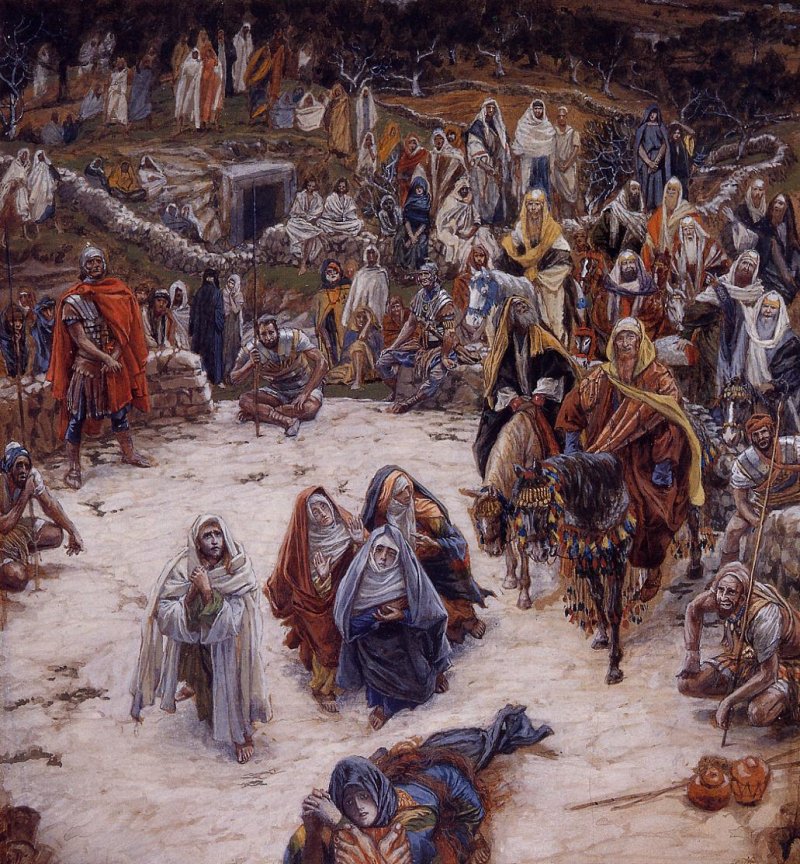
View From the Cross by TissotOnce, at a picnic in college, I learned from a Muslim professor about what Islam teaches regarding Jesus — that he is not the divine Son of God but a prophet of Allah. Of course, my own Christian beliefs differed but I sat patiently listening — until he told me something about ‘Jesus (peace be upon him)’ which left me manifestly incredulous. He said Jesus was never crucified; Allah only made it appear as if he suffered and died. Reportedly, most Muslims (like this professor) believe that Allah gave someone else Jesus’ physical appearance to die on the Cross instead.

The relevant portion of the Quran [4:157] says:

That they said (in boast), ‘We killed Christ Jesus the son of Mary, the Messenger of Allah’; but they killed him not, nor crucified him, but so it was made to appear to them, and those who differ therein are full of doubts, with no (certain) knowledge, but only conjecture to follow, for of a surety they killed him not…

I began asking the professor clarifying questions on this point to make sure that I understood and after a while he asked me why. I replied that if the eyewitnesses to the Crucifixion were not merely mistaken but actively deceived by Allah, then Allah is the author of a lie. God is Truth and “can neither deceive nor be deceived.” (CCC #156-157) So how could Islam’s doppelganger explanation for denying the Crucifixion of Jesus be true? (Similarly, creationists may argue that evolutionists are misinterpreting the ancient fossil record, but they may not say that God has planted false evidence to test our faith.) The now-ruffled Muslim professor retorted that Christianity’s belief in ‘the three gods of the Trinity’ did not make any sense, and we let our interfaith picnic dialogue end there.

But what if Allah can lie? If Allah acts against Truth then his omnipotence would be unlimited in every sense, transcending beyond both logic and goodness. But if Allah transcends good and evil, if God is not absolute goodness in a way that human beings can recognize, then what is our motive to worship him besides submission before his power? C.S. Lewis wrote in opposition to Calvinism’s doctrine of mankind’s “Total Depravity” with words which are just as applicable here:

[I]f God’s moral judgment differs from ours so that our ‘black’ may be His ‘white,’ we can mean nothing by calling Him good; for to say ‘God is good,’ while asserting that His goodness is wholly other than ours, is really only to say ‘God is we know not what.’ … If He is not (in our sense) ‘good’ we shall obey, if at all, only through fear – and should be equally ready to obey an omnipotent Fiend.”

In Plato’s Euthyphro, Socrates asks the title character, “Is the pious loved by the gods because it is pious, or is it pious because it is loved by the gods?” Or, put another way: “Is morality right simply because God declares it so, or does God acknowledge it as right because it is right independently of Himself?” Christianity answers that Euthyphro’s dilemma is a false choice. Goodness comes from God’s eternal nature; nothing could exist without Him. God’s word calls forth the good from Himself. He creates good things, sustains them, and sees that they are good. This is the good God we know; the true God “who does not lie” (Titus 1:2); the God who is supremely revealed by the death on the Cross of our Lord Jesus Christ for all people.