Archive for the ‘Reflection’ Category

Eliakim the Prime Minister Prefigures Peter

April 28, 2013

Eliakim, son of Hilkiah, was master of the palace, the prime minister in the Davidic kingdom. (Isa 22:15,20)
Simon Peter, son of Jonah, is always first in lists of Jesus’ Apostles—while Judas is listed last. (Matt 16:17, Matt 10:2, Mark 3:16. Luke 6:14, Acts 1:13)

Eliakim’s predecessor, Shebna, had hewn a tomb in a great rock which he hoped would be a lasting a resting place. (Isa 22:16)
Simon Peter is declared to be the “rock” (“Petros”) upon which Jesus will build his Church. (Matt 16:18)

Eliakim was clothed with a robe and girded with a sash. (Isa 22:21)
Peter stretches out his hands to be dressed by another. (John 21:18)

Eliakim was “a father to the inhabitants of Jerusalem and to the house of Judah.” (Isa 22:21)
Peter is the pope (“papa” or “Holy Father”) to the Church on earth.

Eliakim was given authority, “the key of the House of David.” (Isa 22:22)
Peter is given “the keys to the kingdom of heaven.” (Matt 16:19)

The Lord said of Eliakim, “What he opens, no one will shut, what he shuts, no one will open.” (Isa 22:22)
Jesus says to Peter, “Whatever you bind on earth shall be bound in heaven; and whatever you loose on earth shall be loosed in heaven.” (Matt 16:19)

Satan Prefigures Absalom

April 26, 2013

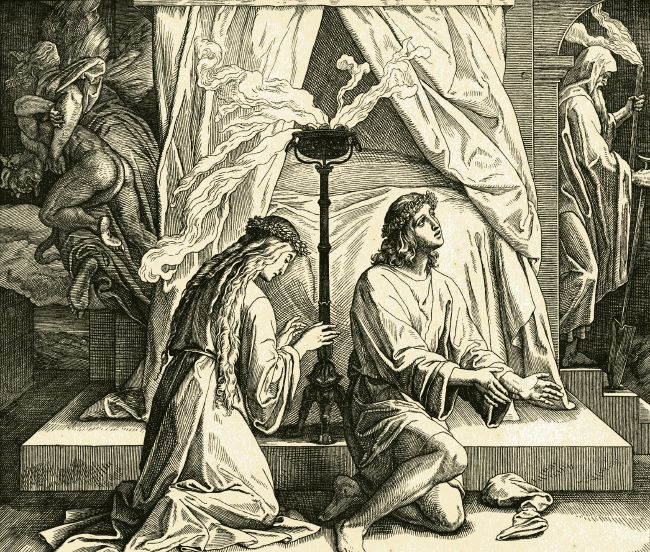
Satan was among the angels, called the “sons of God.” (Job 1:6)
Absalom is one of King David’s sons. (2 Sam 3:3)

Satan was called “the father of lies.” (John 8:44)
Absalom proves false to his name, which means “father of peace.”

Satan was “a murderer form the beginning.” (John 8:44)
The first Bible story about Absalom has him arranging his brother’s murder. (2 Sam 13:28)

Satan afflicts the world to gain attention and achieve his ends. (Job 2:7)
Absalom sets fire to a field to get the attention of Joab, who is ignoring his requests. (2 Sam 14:30)

Satan lied to tempt humanity away from loyalty to God. (Gen 3:4-5)
Absalom sits at the city gates hearing legal cases, flattering all that they are right, and lamenting that he is not in power to help; thereby stealing loyalties away from the king. (2 Sam 15:2-6)

Satan inspired the betrayal of Jesus at the Mount of Olives, where he felt sorrow and distress. (Luke 22:39)
Absalom’s betrayal leads David to flee by way of the Mount of Olives, where he cries aloud. (2 Sam 15:30)

Satan plotted against Jesus using Caiaphas, who said, “It is better for you that one man should die instead of the people, so that the whole nation may not perish.” (John 11:50)
Absalom’s advisor Ahithophel counsels, ‘Let me choose twelve thousand men and be off in pursuit of David tonight. When all the people with him flee, I shall strike down the king alone. It is the death of only one man you are seeking; then all the people will be at peace.’ (2 Sam 17:1-3)

Once Satan was finished using the betrayer, Judas went away and hanged himself. (Matt 27:5)
Once Absalom’s advisor sees his counsel is ignored, Ahithophel leaves and hangs himself. (2 Sam 17:23)

Satan, called “Lucifer,” was radiant like the morning star. (Isa 14:12)
“In all Israel there was not a man who could so be praised for his beauty as Absalom, who was without blemish from the sole of his foot to the crown of his head.” (2 Sam 14:25)

Satan was a proud creature. (1 Tim 3:6)
Absalom shaves his hair every year—because it grows too heavy—and has the clippings weighted. (2 Sam 14:26)

Satan’s pride led to his downfall. (Isa 14:14-15)
Absalom is killed after his hair gets tangled in the branches of a tree. (2 Sam 18:9)

Satan, despite his unrepentance, is still loved by God. (Wis 11:24-12:1)
Absalom, despite his wickedness, is inconsolably mourned by his father, David. (2 Sam 19:1)

Jesus Christ’s Holy Mass

April 25, 2013

“The celebration of Holy Mass is as valuable as the death of Jesus on the cross.” —St. Thomas Aquinas

“Man should tremble, the world should vibrate, all Heaven should be deeply moved when the Son of God appears on the altar in the hands of the priest.” —St. Francis of Assisi

“It would be easier for the world to survive without the sun than to do without Holy Mass.” —St. Padre Pio of Pietrelcina

“One single Mass gives more honor to God than all the penances of the Saints, the labors of the Apostles, the sufferings of the martyrs, and even the burning love of the Blessed Mother of God.” —St. Alphonsus Liguori

“All the good works in the world are not equal to the Holy Sacrifice of the Mass because they are the works of men; but the Mass is the work of God. Martyrdom is nothing in comparison for it is but the sacrifice of man to God; but the Mass is the sacrifice of God for man.” —St. John Vianney

 “If the Angels could envy, they would envy us for Holy Communion.” —St. Pope Pius X

 “Do you realize that Jesus is there in the tabernacle expressly for you–for you alone? He burns with the desire to come into your heart.” —St. Thérèse of Lisieux

Sampson Prefigures Jesus

April 24, 2013

Sampson’s mother was barren, but she conceived after the visit of an angel. (Judg 13:3)
Jesus’ mother is a virgin, but she conceives after the visit of Gabriel. (Luke 1:31)

Sampson revealed to Delilah the secret of his strength and she betrayed him for thousands of silver pieces. (Judg 16:5)
Jesus revealed to Judas his messianic secret and he betrayed him for thirty pieces of silver. (Matt 26:13)

Sampson was captured, blinded, and mocked. (Judg 16:21,25)
Jesus is arrested, blindfolded, and mocked, “Prophesy for us, Messiah: who is it that struck you?” (Matt 26:68)

Sampson extended his arms against the pillars to destroy the enemies of his people. (Judg 16:30)
Jesus extends his arms upon the cross to conquer the devil, sin, and death. (Heb 2:14)

Sampson the strong was made weak so that God’s people could be freed. (Judg 16:19,30)
Jesus the Christ is made to suffer so that God’s people can be saved. (Isa 53:11)

The Ark of the Covenant Prefigures Mary

April 23, 2013

The Ark of the Covenant bore the presence of God and three important things. (Heb 9:4)
Mary’s womb bears Jesus Christ, our Priest, Prophet and King.

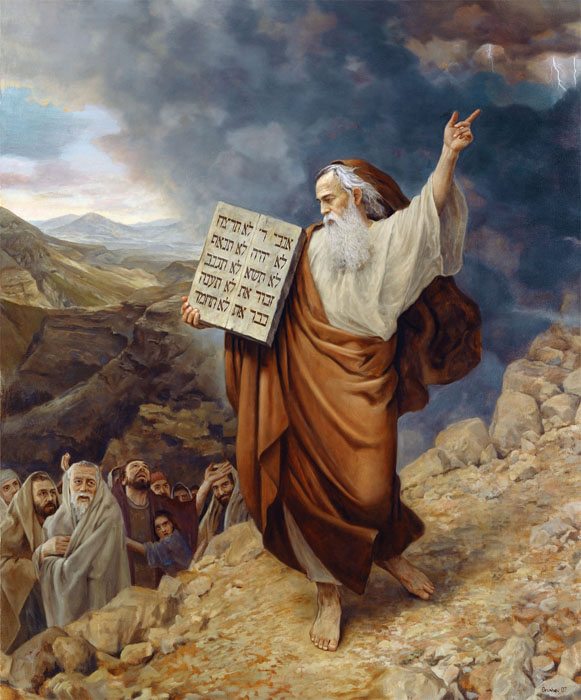
The Ark of the Covenant bore the Ten Commandments, the word of God in stone. (Deut 31:26)
Mary’s womb carries Jesus, the Word of God in flesh. (John 1:14)

The Ark of the Covenant bore the staff of Aaron which had miraculously blossomed. (Num 17:10)
Mary’s womb carries Jesus, a bud blossoming miraculously from the stump of Jesse. (Isa 11:1) 

The Ark of the Covenant bore a gold container of Manna from heaven. (Heb 9:4)
Mary’s womb carries Jesus, the Bread from heaven. (John 6:41) 

The Ark of the Covenant was made of wood overlaid with pure gold, inside and out. (Exo 25:10-11)
Mary is a human being made “full of grace.” (Luke 1:28) 

King David joyfully leaped and danced before the Ark of the Covenant. (2 Sam 6:14)
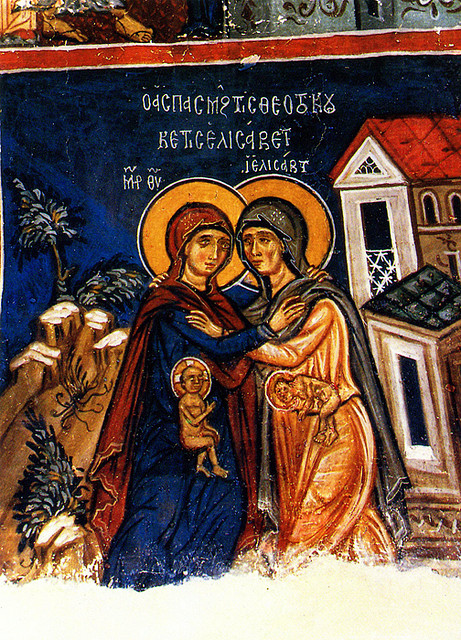
John the Baptist leaps in his mother’s womb at Mary’s arrival. (Luke 1:44) 

David said, “How can the ark of the Lord come to me?” (2 Sam 6:9)
Elizabeth says, “And how does this happen to me, that the mother of my Lord should come to me?” (Luke 1:43) 

The Ark of the Covenant remained in the house of Obed-edom outside Jerusalem for three months, and God blessed his whole house. (2 Sam 6:14)
Mary remains in the house of Zechariah in the hill country of Judea for three months. (Luke 1:56) 

No man was to touch the holy Ark of the Covenant, lest they die. (Num 4:15, 2 Sam 6:7)
Joseph holds a similar reverent regard towards Mary, his wife. (Matt 1:25) 

The Ark of the Covenant’s mercy-seat served as the throne for God’s presence on earth. (Exo 25:22)
“On entering the house (the Magi) saw the child with Mary his mother.” (Matt 2:11) 

In his vision, St. John saw the Ark of the Covenant revealed in heaven. (Rev 11:19)
The next thing he sees is a glorious woman pregnant with the Christ child. (Rev 12:1)

Eve Prefigures Mary

April 23, 2013

Tempted by a demon, Eve distrusted God, leading to our fall.
Greeted by an angel, Mary trusts God, leading to our salvation.

Eve was “the mother of all the living.” (Gen 3:20)
Mary’s offspring are “those who keep God’s commandments and bear witness to Jesus.” (Rev 12:17)

Because of her sin, Eve was covered with dirt. (Gen 3:19)
Because of her faith, Mary is clothed with the sun. (Rev 12:1)

Adam Prefigures Jesus

April 22, 2013

From the side of sleeping Adam, the woman Eve was fashioned.
From the blood and water flowing from his pierced side, Jesus’ Church is made.

Adam was tested in the Garden of Eden.
Jesus is tested in the Garden of Gethsemane.

Adam was naked without shame because of his innocence.
Jesus is stripped naked before dying his innocent death.

Adam may have failed to protect Eve and Eden because he feared the dragon-serpent’s violence.
Jesus is willing to suffer and die to save his Church and the world from the devil.

The Tree of the Knowledge of Good and Evil revealed right and wrong to humanity.
Jesus’ cross shows us the greatest acts of love and evil in all of human history.

“Are You Saved?”

May 13, 2011

Catholics take a modest approach to the question, “Are you saved?” We hope to be saved in Jesus Christ, and we can have some measure of confidence that we will be, but Catholics consider it presumptuous to say that our salvation is assured. The Catholic attitude is like that expressed by Paul:

“It does not concern me in the least that I be judged by you or any human tribunal; I do not even pass judgment on myself; I am not conscious of anything against me, but I do not thereby stand acquitted; the one who judges me is the Lord. Therefore, do not make any judgment before the appointed time, until the Lord comes, for he will bring to light what is hidden in darkness and will manifest the motives of our hearts, and then everyone will receive praise from God.” (1st Corinthians 4:3-5)

After seeing the light on the road to Damascus, if anyone could be certain of their salvation one would imagine it would be Paul. However, in 1st Corinthians 9, Paul doesn’t speak as if he had Heaven already in the bag. He says:

“All this (becoming all things for all people) I do for the sake of the gospel, so that I too may have a share in it. … I drive my body and train it, for fear that, after having preached to others, I myself should be disqualified.” (1 Cor 9:23, 27)

Immediately following this, Paul warns the Corinthians about the necessity of remaining faithful lest they be condemned like God’s people during the Exodus:

“They were all under the cloud (like the Holy Spirit) and all passed through the sea (like baptism) and all of them were baptized into Moses (who imaged Christ) in the cloud and in the sea. All ate the same spiritual food, and all drank the same spiritual drink (like the Eucharist)… Yet God was not pleased with most of them, for they were struck down in the desert. These things happened as examples for us, so that we might not desire evil things, as they did. … Therefore, whoever thinks he is standing secure should take care not to fall.” (1 Cor 10:1-6, 12)

In Matthew’s Gospel, Jesus warns us that if we are to be saved, we must not be among those who acknowledge Him as “Lord, Lord” but fail to do God’s will:

“Not everyone who says to me, ‘Lord, Lord,’ will enter the kingdom of heaven, but only the one who does the will of my Father in heaven. Many will say to me on that day, ‘Lord, Lord, did we not prophesy in your name? Did we not drive out demons in your name? Did we not do mighty deeds in your name?’ Then I will declare to them solemnly, ‘I never knew you. Depart from me, you evildoers.'” (Matthew 7:21-23)

Those condemned seemed surprised that they are refused entry into Heaven. This is why Catholics do not rest in a self-assurance of Heaven (that judgment belongs to the Lord.) Our part is to ceaselessly strive to cooperate with the saving grace of Jesus Christ as we “work out [our] salvation with fear and trembling” as God does His work in us. (Philippians 2:12)

Penance Service Rosary Meditations

April 20, 2011

The First Sorrowful Mystery: The Agony in the Garden

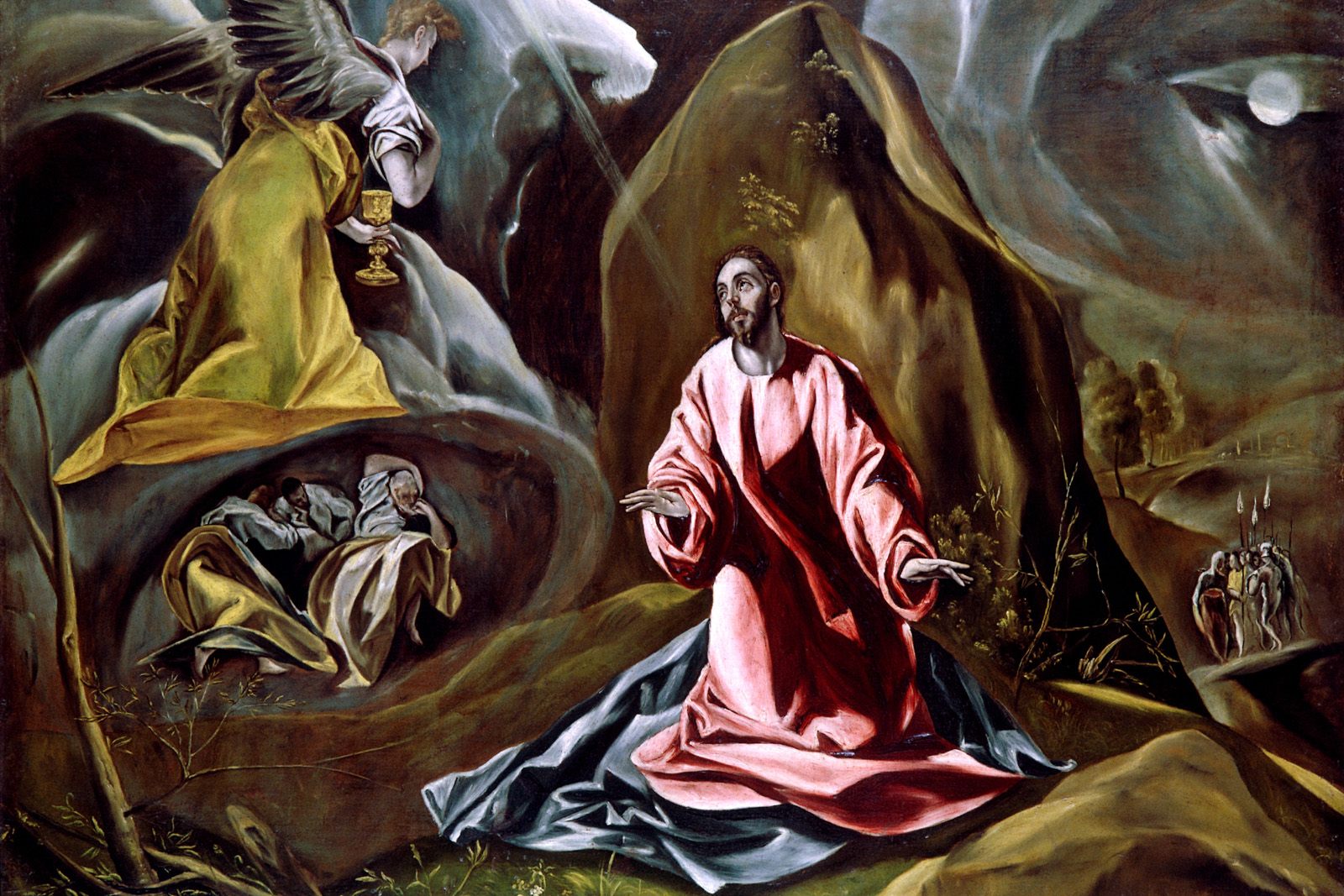
Jesus went out with his disciples across the Kidron Valley. There was a garden there and he and his disciples entered it. He took along Peter and Zebedee’s two sons, and began to experience sorrow and distress. Then he said to them, “My heart is nearly broken with sorrow. Remain here and stay awake with me.” He advanced a little and fell prostrate in prayer. “Father, if it is possible, let this cup pass me by. Yet not my will, but yours be done.” In his anguish he prayed with all the more intensity, and his sweat became like drops of blood falling to the ground. Then he rose from prayer and came to his disciples, only to find them sleeping. He said to Peter, “Simon, are you asleep? Could you not keep watch for one hour? ”

When Peter, James and John fell asleep that hour in the garden, they let Jesus down, but Jesus still loved them. When we sin, we also let Jesus down, but Jesus still loves us, too. Let us all make good confessions, and pray attentively, in this hour with Jesus.

The Second Sorrowful Mystery: The Scourging at the Pillar

When it was morning, those who had arrested Jesus bound him, led him away, and handed him over to Pilate, the governor. Now for Passover, the governor was accustomed to release to the crowd one prisoner whom they wished. At that time they had a notorious prisoner, a revolutionary, a robber and a murderer, called Jesus Barabbas. (The name Barabbas means “son of the father.) When they had assembled, Pilate said to the crowd, “Which one do you want me to release to you, Jesus Barabbas, or Jesus called Christ?” They answered, “Barabbas!” Then he released Barabbas to them, but after he had Jesus scourged, he handed him over to be crucified.

Whenever we sin, we choose a Barabbas instead of Christ. Jesus promises us that choosing Him will make us the most happy, but when we choose to do what’s wrong, we disbelieve Him, and choose someone or something else to make us happy. With our confession and these prayers, let us recommit ourselves to always choosing Jesus Christ, who suffered whips for love of us.

The Third Sorrowful Mystery: The Crowning with Thorns

Then the soldiers of the governor took Jesus inside of their fortress and gathered the whole army around him. They stripped off his clothes and threw a scarlet military cloak about him. Weaving a crown out of thorns, they placed it on his head, and put a reed in his right hand. And kneeling before him, they mocked him, saying, “Hail, King of the Jews!” They spat upon him and took the reed and kept striking him on the head. And when they had mocked him, they stripped him of the cloak, dressed him in his own clothes, and led him off to crucify him.

For as much as those soldiers mocked Jesus, let us now honor Jesus sincerely through this decade of the Rosary, with our hearts full of sorrow and thanks.

The Fourth Sorrowful Mystery: The Carrying of the Cross

They took Jesus, and carrying the cross himself he went out to what is called the Place of the Skull, in Hebrew, Golgotha. As they led him away, they laid hold of a man named Simon who was coming in from the country. They put a crossbeam on Simon’s shoulder for him to carry behind Jesus. A great crowd of people followed him, including women who beat their breasts and lamented over him.

During this decade of the Rosary, let us imagine ourselves helping Jesus to carry His cross. By being with Him and knowing how He felt, this will help us to love Him more. And who knows, perhaps our prayer will travel through space and time to help lighten, even just a little, the burden that He carried.

The Fifth Sorrowful Mystery: The Crucifixion

They brought Jesus to the place of Golgotha (which is translated Place of the Skull) and crucified Him there. At noon, darkness came over the whole land until three in the afternoon. And at three o’clock Jesus cried out in a loud voice, “My God, my God, why have you forsaken me?” Finally, Jesus cried out in a loud voice, “Father, into your hands I commend my spirit”; and when he had said this he breathed his last.

The forgiveness of our sins is so easy for us. When we go to confession and it is brief and painless. But let us always remember this: the forgiveness of our sins is so easy for us in the confessional because Jesus let the forgiveness of our sins be so hard on Him on the cross. Let us thank Him and honor Him for this great gift.
The Dons That Would Have Been

March 18, 2011

The first meeting of the Columbus Pro-Life Society produced this poster, which was hung and well-received in the school cafeteria today.

Tobiah Prefigures Jesus

March 3, 2011

In the Gospels of Matthew, Mark, and Luke, Jesus declares to his disciples at the Last Supper, ‘I shall not drink again the fruit of the vine until the day when I drink it new in the kingdom of God.’ (Mt 26:26, Mk 14:25, Lk 22:18) This is as Tobiah says to the father of Sarah—his rightful and would-be bride: “I will eat or drink nothing until you set aside what belongs to me.” (Tobit 7:11)

In Matthew, Mark, and John, almost the final thing Jesus does on His cross before He dies is to consume some wine from a sponge. (Mt 27:48, Mk 15:36, Jn 19:29) Jesus drinks because the kingdom has come and His marriage to His bride, the Church, is sealed. He loves us as Tobiah loved Sarah, not out of lust (to control and exploit) but “for a noble purpose” (out of love.)  Like Tobiah, Jesus is willing to face death to gain His beautiful bride.

Three Unexpectedly Expectant Mothers

December 22, 2010

Today’s readings feature three women who all wonderously conceived: Hannah, Mary, and Elizabeth.  There are many parallels between them. Together they teach us these lessons, among others:

  • With God, you can be more fruitful than you’d imagine.
  • You have great reason to rejoice today.
  • You keep forever what you give to God.

A Teenage Examination of Conscience

December 16, 2010

Jesus said, “You shall love the Lord, your God, with all your heart, with all your soul, and with all your mind. This is the greatest and the first commandment.”

Since my last confession…

  • Have I neglected daily prayer?
  • Have I stubbornly doubted God’s existence, goodness, or love?
  • Have I denied Jesus Christ or my Catholic Faith?
  • Have I dabbled in occult things, like spiritualism or magic?
  • Have I frivolously said, “I swear to God”?
  • Have I used holy names as if they were profanities?
  • Have I failed to keep Fridays as a day of penance?
  • Have I failed to keep Sundays as a day of rest?
  • Have I skipped Sunday Mass?
  • Have I been irreverent or inattentive at church or towards Jesus in the Eucharist?
  • Have I neglected to confess serious sins?
  • Have I favored my own comfort and entertainments over God’s will?
  • Have I refused to trust that God will take care of me?

God said, “Honor your father and mother that it may go well with you and that you may have a long life on earth.”

  • Have I disobeyed my parents?
  • Have I disrespected them to their faces or behind their backs?
  • Have I lied to them?
  • Have I manipulated them to get what I want?
  • Have I seldom shown them love or gratitude?
  • Have I neglected my duties at home?
  • Have I failed to put forth my best effort at school?
  • Have I lied to, disobeyed, or disrespected a teacher?
  • Have I cheated on tests, plagiarized papers, or copied answers?

Jesus said, “You shall love your neighbor as yourself.”

  • Have I quarreled with anyone?
  • Have I bullied, insulted, or mocked anyone?
  • Have I intentionally harmed anyone?
  • Have I wished for bad things to happen to anyone?
  • Have I embraced hated for anyone?
  • Have I had an abortion or encouraged anyone to get one?
  • Have I told gossip or unflattering stories about anyone?
  • Have I told any lies?
  • Have I betrayed any friends?
  • Have I broken any promises?
  • Have I wrongly revealed any secrets?
  • Have I been a poor friend?
  • Have I coveted, been envious or greedy of anyone’s possessions?
  • Have I stolen or vandalized what belongs to another?
  • Have I simply stood by while another did wrong?
  • Have I dressed, spoken, or behaved immodestly?
  • Have I been unchaste with anyone?
  • Have I been selfish or insincere in a relationship with anyone?
  • Have I manipulated anyone to get something I wanted?
  • Have I been impatient, jealous, unkind, or unmerciful toward anyone?

St. Paul wrote, “Do you not know that your body is a temple of the Holy Spirit… and that you are not your own?  For you have been purchased at a price. Therefore, glorify God in your body.”

  • Have I gotten intoxicated using alcohol or other drugs?
  • Have I used illegal-performance enhancing drugs?
  • Have I malnourished myself or ‘binged and purged’?
  • Have I intentionally harmed my own body?
  • Have I plotted or attempted suicide?
  • Have I lusted using movies, TV, the internet, romance novels, magazines, or music?
  • Have I engaged in unchaste acts of imagination or with myself?
  • Have I used media or entertainments in obsessive, self-isolating ways?

An Act of Contrition

Oh My God, I am sorry for my sins. In choosing to sin and failing to do good, I have sinned against you and your church. I firmly intend, with the help of your grace, to sin no more and to love as I ought.  Amen.

Everything Awaits Her Reply

November 20, 2010

From a homily ‘In Praise of the Virgin Mother’ by St. Bernard of Clairvaux:

You have heard, O Virgin, that you will conceive and bear a son; you have heard that it will not be by man but by the Holy Spirit. The angel awaits an answer; it is time for him to return to God who sent him. We too are waiting, O Lady, for your word of compassion; the sentence of condemnation weighs heavily upon us.

The price of our salvation is offered to you. We shall be set free at once if you consent. In the eternal Word of God we all came to be, and behold, we die. In your brief response we are to be remade in order to be recalled to life.

Tearful Adam with his sorrowing family begs this of you, O loving Virgin, in their exile from Paradise. Abraham begs it, David begs it. All the other holy patriarchs, your ancestors, ask it of you, as they dwell in the country of the shadow of death. This is what the whole earth waits for, prostrate at your feet. It is right in doing so, for on your word depends comfort for the wretched, ransom for the captive, freedom for the condemned, indeed, salvation for all the sons of Adam, the whole of your race.

Answer quickly, O Virgin. Reply in haste to the angel, or rather through the angel to the Lord. Answer with a word, receive the Word of God. Speak your own word, conceive the divine Word. Breathe a passing word, embrace the eternal Word.

Why do you delay, why are you afraid? Believe, give praise, and receive. Let humility be bold, let modesty be confident. This is no time for virginal simplicity to forget prudence. In this matter alone, O prudent Virgin, do not fear to be presumptuous. Though modest silence is pleasing, dutiful speech is now more necessary. Open your heart to faith, O blessed Virgin, your lips to praise, your womb to the Creator. See, the desired of all nations is at your door, knocking to enter. If he should pass by because of your delay, in sorrow you would begin to seek him afresh, the One whom your soul loves. Arise, hasten, open. Arise in faith, hasten in devotion, open in praise and thanksgiving. “Behold the handmaid of the Lord,” she says, “be it done to me according to your word.”

Unpacking the Ten Commandments

November 18, 2010

1) You shall have no strange gods before Me

  • We commit idolatry if we make anything our god besides God, such as pleasures, power, wealth, popularity, another person, or even ourselves.
  • God is entitled to our daily prayers of Adoration, Contrition, Thanksgiving & Supplication (ACTS), to our Sorrow, Asking, Loving & Thanking (SALT).

2) You shall not take the Lord’s Name in vain

  • If must not commit blasphemy, by either misusing the names of God or His saints, or by uttering disrespectful words, inwardly or outwardly, against God.
  • We must not take false oaths; in fact, Jesus advises us: “do not swear at all.” (Matthew 5:34)

3) Keep holy the Sabbath

  • We must go to Mass every Sunday (or Saturday evening) and day of obligation unless we have a serious reason, such as sickness, storms, or impossibility; or have obtained the permission of our pastor.
  • On Sundays, we must refrain from work or activities that prevent it from being a day for worship, joy, works of mercy, rest and relaxation. However, family needs or important social service can legitimately excuse one from the Sunday rest.

4) Honor your parents

  • We must always love and honor our mothers and fathers, not only when we are young, but also when they have grown old and have need of our care.

5) You shall not kill

  • We must never commit murder by intentionally killing innocent human life, as in abortion, embryonic stem-cell research, standard in-vitro fertilization practices, spontaneous abortion from “the pill” and other contraceptives, active or passive euthanasia, suicide, or targeting civilians in wartime.
  • Jesus shows us that we must not hate, but love others: “I say to you, whoever is angry with his brother will be liable to judgment.… Love your enemies.” (Matthew 5:22, 5:44)

6) You shall not commit adultery  &
9) You shall not covet your neighbor’s wife

  • The gift of genital sexuality is meant solely for one’s spouse in the context of marriage.
  • Jesus teaches that we must not view others as things to use for our sexual pleasure: “Everyone who looks at a woman with lust has already committed adultery with her in his heart.” (Matthew 5:28)
  • Pornography, masturbation, homosexual acts, fornication (sex before marriage), and contraception are contrary to chastity, the right ordering of our human sexuality.

7) You shall not steal  &
10) You shall not covet your neighbor’s goods

  • Not only must we refrain from unjustly taking what belongs to another, but from disordered desires to possess as well. As Jesus warns us: “Take care to guard against all greed.” (Luke 12:15)
  • Jesus teaches that we must care for the needy: “Amen, I say to you, what you did not do for one of these least ones, you did not do for me.” (Matthew 25:45)

8) You shall not bear false witness

  • We must not lie, by speaking or acting against the truth in order to lead someone into error, be it by perjury, slander, boasting, flattery, or the like. As Jesus says, “Let your ‘Yes’ mean ‘Yes,’ and your ‘No’ mean ‘No.’ Anything more is from the evil one.” (Matthew 5:37)