Archive for the ‘Reflection’ Category

The Battle of Lepanto

October 21, 2016

One of the most important sea battles in world history was fought on October 7th, 1571. From the East sailed a great superpower, the Muslim Ottoman Empire, intent on extending their territories across the Mediterranean. From the West responded an alliance of Christian states named the Holy League. These two great armadas, totaling at least 484 row-powered vessels and around 150,000 men, clashed off the southwestern coast of Greece.

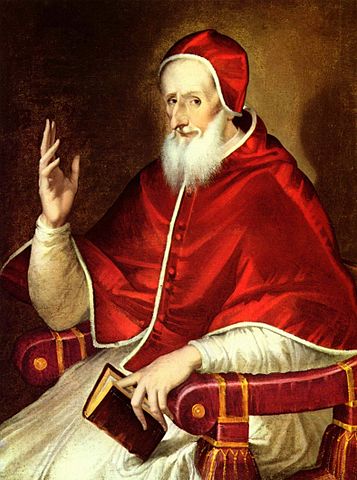
pope-st-pius-v-1504-1572The Holy League was called and assembled through the leadership of Pope St. Pius V, who clearly perceived the Turkish threat. Pope Pius  rallied not only material might but also spiritual strength to oppose the aggressors, ordering the Rome’s churches to remain open day and night for prayer and urging the faithful to ask the intercession of the Blessed Virgin Mary through the recitation of the Rosary.

In the afternoon of October 7th, Pope Pius was walking about his room, being briefed on various matters by his treasurer, Msgr. Busotti de Bibiana. The pope suddenly stopped in the middle of the room and, making a sign for Busotti to be silent, put out his head as one listening. He then threw open the window and leaned out, in the same silent and listening posture. On seeing the pope’s face suddenly transfigured, his tearful blue eyes turned up to heaven with an ineffable expression, and his raised,  joined, and trembling hands, Busotti’s hair stood on end as he realized that something supernatural was occurring. The pope thus remained for more than three minutes, and then said to Busotti with a joyful, radiant face, “This is not the time for business. Let us return thanks to God for victory over the Turks.” The pope withdrew stumbling into his chapel with beautiful lights coming from his forehead.

The treasurer hastened to report what had happened to the Vatican Cardinals and bishops, and these ordered that a record should be made at once, noting all the circumstances of time and place, and that it should be sealed and deposited at a notary’s office. (This account, affirmed by Busotti under oath, would be later presented as part of Pius V’s canonization process.) Weeks later, the news finally reached Rome by human means making known the victory at Lepanto. Though the numbers and winds had favored the Turks the morning of the conflict, first-hand witnesses write that the winds shifted to the Christians forces’ favor at the hour of battle.

St. Pope Pius V, recognizing and celebrating this providential deliverance, added a new feast day to the Roman Liturgical Calendar. October 7th was made the Feast of Our Lady of Victory. Pope Pius’ successor, Gregory XIII (after whom our Gregorian Calendar is named) would change the name of this day to the Feast of the Holy Rosary, as it is known and celebrated in the Church today.

the-1571-battle-of-lepanto

“The Rosary Is…”

October 21, 2016

    “My favorite prayer.” ~ Pope St. John Paul II

     “The Bible on a string.” ~ Fr. Ronan Murphy

     “A school for learning true Christian perfection.” ~ Pope St. John XXIII

     “A prayer both so humble and simple and theologically rich in Biblical content.” ~ Pope St. John Paul II

     “A treasure of graces.” ~ Pope Paul V

     “A priceless treasure inspired by God.” ~ St. Louis De Monfort

     “A powerful weapon.” ~ St. Josemaria Escriva

     “The weapon for these times.” ~ St. Padre Pio

     “The scourge [against] the devil.” ~ Pope Adrian VI

     “A powerful weapon to put the demons to flight and to keep oneself from sin.” ~ Pope Pius XI

     “The most excellent form of prayer and the most efficacious means of attaining eternal life.” ~ Pope St. Leo XIII

     “A magnificent and universal prayer for the needs of the Church, the nations and the entire world.” ~ Pope St. John XXIII

     “The most beautiful and the most rich in graces of all prayers; it is the prayer that touches most the Heart of the Mother of God.” ~ Pope St. Saint Pius X

    “Of the greatest value, not only according to the words of Our Lady of Fatima, but according to the effects of the Rosary one sees throughout history.” ~ Sister Lucia, one of the seers of Fatima

     “The book of the blind, where souls see and there enact the greatest drama of love the world has ever known; it is the book of the simple, which initiates them into mysteries and knowledge more satisfying than the education of other men; it is the book of the aged, whose eyes close upon the shadow of this world, and open on the substance of the next.” ~ Venerable Fulton Sheen

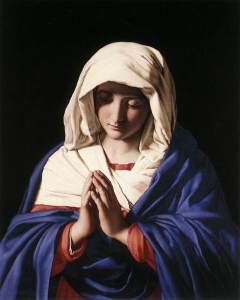
The Blessed Virgin Mary at Prayer

Catholics Who Moved Mountains

September 29, 2016

        Jesus said his apostles, “If you have faith the size of a mustard seed, you would say to this mulberry tree, ‘Be uprooted and planted in the sea,’ and it would obey you.” On another occasion, he told his disciples, “Amen, I say to you, if you have faith the size of a mustard seed, you will say to this mountain, ‘Move from here to there,’ and it will move. Nothing will be impossible for you.”

        Though I have yet to come across any historical accounts of saints transplanting foliage or excavating stones by faith-powered miracles, there are many historically-documented incidents of Catholics achieving the seemingly-impossible on earth through their faith.

St. John Paul II and the Soviet Union’s Fall

        Karol Wojtyła barely survived the Nazi’s occupation of Poland, but once that evil was defeated the Soviet Union replaced them. As parish priest and later as an archbishop, Wojtyła championed the Catholic Faith against the atheistic communists’ religious persecution. Upon his election as pope in 1978, John Paul II’s first papal journey abroad was to go back to his homeland.

        While there, he celebrated an outdoor Mass before millions, proclaiming Jesus’ words, “Be not afraid!” The crowd shouted in reply, “We want God! We want God! We want God!” Speaking in defense of human dignity, he encouraged all people to peacefully pursue true freedom. The threat posed by this Polish pope (armed merely with his words, example, and prayers) was so potent that the Soviets may have ordered his nearly successful assassination in 1981.

        On the 1984 Feast of the Annunciation, Pope John Paul consecrated Russia (along with the whole world) to the Immaculate Heart of Mary, just as she had requested in her appearances at Fatima, Portugal in 1917. On Christmas Day, seven years later, a miracle was realized. Mikhail Gorbachev peacefully resigned as the President of the Soviet Union and from atop the Kremlin, the Soviet flag was lowered forever. The ‘Evil Empire‘ ended not by a thousand Sun-bright nuclear blasts, but through the peaceful power of God and the faithfulness of his holy, humble servant.

St. Joan of Arc’s Liberation of France

 joan-of-arc-at-the-coronation-of-charles-vii       In the 15th century, France was delivered from English domination by history’s most-unlikely military commander; a teenage peasant girl. Joan had no military training, but she was compelled by visions and the voices of Sts. Michael, Catherine, and Margaret to lead the French forces, drive out the English, and see prince Charles VII crowned king at Reims. With divine help, she achieved all these feats before her martyrdom at the hand of the English at the age of nineteen. Mark Twain (though not generally a fan of historic Christianity) wrote of her:

Whatever thing men call great, look for it in Joan of Arc, and there you will find it. …It took six thousand years to produce her; her like will not be seen in the earth again in fifty thousand. …  She is easily and by far the most extraordinary person the human race has ever produced.

        St. Joan of Arc was indeed great, but her glory was but the mere reflection of God’s infinite splendor.

Fleming’s Discovery of Penicillin

        History has seen many great Catholic scientists, including Copernicus (Sun-centrism), Bacon (the scientific method), Descartes (modern geometry), Mendel (genetics), Pasteur (microbiology), and Lemaître (the Big Bang Theory) just to name a handful. But one Catholic scientist’s search for effective antibiotics in the early 20th century saved an estimated two hundred million lives. Through insights occasioned by providential occurrences, Alexander Fleming discovered penicillin. In this, he saw himself employed as an instrument by God:

I can only suppose that God wanted penicillin, and that this was his reason for creating Alexander Fleming.”

St. Patrick’s Conversion of Ireland

        In the 5th century, a 16-year-old boy was kidnapped from Britain and sold into slavery on a distant, pagan isle. There he experienced a spiritual awakening. He tells us:

I used to stay out in the forests and on the mountain and I would wake up before daylight to pray in the snow, in icy coldness, in rain, and I used to feel neither ill nor any slothfulness, because, as I now see, the Spirit was burning in me at that time. And it was there of course that one night in my sleep I heard a voice saying to me: ‘You do well to fast: soon you will depart for your home country.’ And again, a very short time later, there was a voice prophesying: ‘Behold, your ship is ready.’ And it was not close by, but, as it happened, two hundred miles away, where I had never been nor knew any person. And shortly thereafter I turned about and fled from the man with whom I had been for six years, and I came, by the power of God who directed my route to advantage (and I was afraid of nothing), until I reached that ship.”

        Lead on by this faith, he went on to become a priest, a bishop, and a missionary to the land of his former bondage. Today we think of Ireland as a very Catholic country, but it only became so through the courageous faith of St. Patrick.

Our Lord’s Redemption of the World

        In the 1st century, by his short three-year ministry in a backwater of the Roman Empire, this poor man from Nazareth transformed the world forever. Jesus Christ is the pattern for all fruitful disciples who have followed him since, achieving the impossible through faith and the power of God. One anonymous author describes Christ in these words:

Greatest man in history, named Jesus.
Had no servants, yet they called Him Master.
Had no degree, yet they called Him Teacher.
Had no medicines, yet they called Him Healer.
He had no army, yet kings feared Him.
He won no military battles, yet He conquered the world.
He committed no crime, yet they crucified Him.
He was buried in a tomb, yet He lives today.

Jesus on the Cross

The Little, Great Saint

September 21, 2016

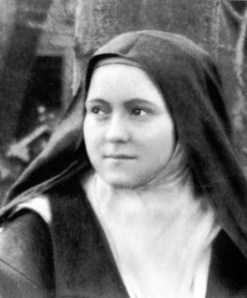
st-therese-of-lisieuxSt. Thérèse Martin  (1873–1897 AD) was born in France into a devout, Catholic family. All five daughters entered religious life and both parents (Louis & Zélie) went on to be canonized in 2015. Thérèse received special permission to join the Carmelite convent in her hometown of Lisieux at the young age of 15. She would live and pray and work there in obscurity until her death from tuberculosis at the age of 24.

After her passing, the publishing of her spiritual autobiography, “The Story of a Soul,” was phenomenally successful and there were widespread reports of prayers being answered through her intercession. St. Pope Pius X (1903-1914) privately described her as “the greatest saint of modern times” and she was canonized in 1925. Her feast day is October 1st.

Despite her greatness, Thérèse experienced everyday difficulties like our own. Amidst these she sought to do small things with great love; calling this her “Little Way” to holiness and Heaven. This is one episode St. Thérèse relates in her (highly-recommended) autobiography:

The practice of charity, as I have said, dear Mother [Mother Agnes, that is, her biological sister, Pauline, who was prioress at the time,] was not always so sweet for me, and to prove it to you I am going to recount certain little struggles which will certainly make you smile. For a long time at evening meditation, I was placed in front of a sister who had a strange habit and I think many lights [spiritual insights] because she rarely used a book during meditation. This is what I noticed: as soon as this sister arrived, she began making a strange little noise which resembled the noise one would make when rubbing two shells, one against the other. I was the only one to notice it because I had extremely sensitive hearing (too much so at times.) Mother, it would be impossible for me to tell you how much this little noise wearied me. I had a great desire to turn my head and stare at the culprit who was very certainly unaware of her ‘click.’ This would be the only way of enlightening her. However, in the bottom of my heart I felt it was much better to suffer this out of love for God and not to cause the sister any pain. I remained calm, therefore, and tried to unite myself to God and to forget the little noise. Everything was useless. I felt the perspiration inundate me, and I was obliged simply to make a prayer of doing it without annoyance and with peace and joy, at least in the interior of my soul. I tried to love the little noise which was so displeasing; instead of trying not to hear it (impossible), I paid close attention so as to hear it well, as though it were a delightful concert, and my prayer (which was not the Prayer of Quiet) was spent in offering this concert to Jesus.”

3 Interpretations of the Parable of the Dishonest Steward

September 17, 2016

Luke 16:1-13

The Parable of the Dishonest Steward, Biblia Ectypa, 1695.#1: The previously-dishonest steward is merely writing-off his own commissions. Likewise, we must forgive our debtors’ debts (or sins) so that we may be shown mercy. (Matthew 6:12) But why would his commissions be 20% for one debt and 50% on another? Perhaps the dishonest steward is actually covering his thievery’s tracks. Which brings us to…

#2: The steward is giving away what belongs to the rich man, his boss. Likewise, everything that we possess belongs to God, but we win favor though sharing these blessings with others. Both Mercy and Generosity win welcome into eternal dwellings, for Jesus says ‘whatever you do for the least of these you do it for me’ and ‘the measure with which you measure will be measured out to you.’

#3: What would have become of the dishonest steward without his decisive plan and action? Disaster. Likewise, we must be intentional about our own religious/spiritual growth. “The children of this world are more prudent in dealing with their own generation than are the children of light.” What excuse do we have? More importantly, what is our plan?

The Virgin Mary was a Martyr

September 15, 2016

 St.

The martyrdom of the Virgin is set forth both in the prophecy of Simeon and in the actual story of our Lord’s passion. The holy old man said of the infant Jesus: “He has been established as a sign which will be contradicted.” He went on to say to Mary: “And your own heart will be pierced by a sword.”

the-swoon-of-the-virginTruly, O blessed Mother, a sword has pierced your heart. For only by passing through your heart could the sword enter the flesh of your Son. Indeed, after your Jesus – who belongs to everyone, but is especially yours – gave up his life, the cruel spear, which was not withheld from his lifeless body, tore open his side. Clearly it did not touch his soul and could not harm him, but it did pierce your heart. For surely his soul was no longer there, but yours could not be torn away. Thus the violence of sorrow has cut through your heart, and we rightly call you more than martyr, since the effect of compassion in you has gone beyond the endurance of physical suffering.

Or were those words, “Woman, behold your Son,” not more than a word to you, truly piercing your heart, cutting through to the division between soul and spirit? What an exchange! John is given to you in place of Jesus, the servant in place of the Lord, the disciple in place of the master; the son of Zebedee replaces the Son of God, a mere man replaces God himself. How could these words not pierce your most loving heart, when the mere remembrance of them breaks ours, hearts of iron and stone though they are!

Do not be surprised, brothers, that Mary is said to be a martyr in spirit. Let him be surprised who does not remember the words of Paul, that one of the greatest crimes of the Gentiles was that they were without love. That was far from the heart of Mary; let it be far from her servants.

Perhaps someone will say: “Had she not known before that he would not die?” Undoubtedly. “Did she not expect him to rise again at once?” Surely. “And still she grieved over her crucified Son?” Intensely. Who are you and what is the source of your wisdom that you are more surprised at the compassion of Mary than at the passion of Mary’s Son? For if he could die in body, could she not die with him in spirit? He died in body through a love greater than anyone had known. She died in spirit through a love unlike any other since his.

“Who is Jesus to Me?”

September 7, 2016

By St. Mother Teresa, in 1983

Blessed Mother Teresa with a happy, armless baby, photo by Eddie Adams of AP

Jesus is the Word made Flesh.

Jesus is the Bread of Life.

Jesus is the Victim offered for our sins on the Cross.

Jesus is the Sacrifice offered at the Holy Mass for the sins of the world and mine.

Jesus is the Word – to be spoken.

Jesus is the Truth – to be told.

Jesus is the Way – to be walked.

Jesus is the Light – to be lit.

Jesus is the Life – to be lived.

Jesus is the Love – to be loved.

Jesus is the Joy – to be shared.

Jesus is the Sacrifice – to be offered.

Jesus is the Peace – to be given.

Jesus is the Bread of Life – to be eaten.

Jesus is the Hungry – to be fed.

Jesus is the Thirsty – to be satiated.

Jesus is the Naked – to be clothed.

Jesus is the Homeless – to be taken in.

Jesus is the Sick – to be healed.

Jesus is the Lonely – to be loved.

Jesus is the Unwanted – to be wanted.

Jesus is the Leper – to wash his wounds.

Jesus is the Beggar – to give him a smile.

Jesus is the Drunkard – to listen to him.

Jesus is the Retarded – to protect him.

Jesus is the Little One – to embrace him.

Jesus is the Blind – to lead him.

Jesus is the Dumb – to speak for him.

Jesus is the Crippled – to walk with him.

Jesus is the Drug Addict – to befriend him.

Jesus is the Prostitute – to remove from danger and befriend.

Jesus is the Prisoner – to be visited.

Jesus is the Old – to be served.

To me – Jesus is my God.
Jesus is my Spouse.
Jesus is my Life.
Jesus is my only Love.
Jesus is my All in All.
Jesus is my Everything.

Jesus, I love with my whole heart, with my whole being.

I have given Him all, even my sins, and He has espoused me to Himself in tenderness and love.

Now and for life I am the spouse of my Crucified Spouse.

Amen

Three Crosses Line Break

The fruit of Silence is Prayer.

The fruit of Prayer is Faith.

The fruit of Faith is Love.

The fruit of Love is Service.

The fruit of Service is Peace.

—St. Mother Teresa

God, in Trinity & History

August 24, 2016

This Monday, I dialogued with Muslims, Jews, and Unitarians in an online comments section. How’d it go? A Muslim man accused me of an “unforgivable sin” for espousing Trinitarianism. (I thought: “If that’s literally true, then that makes me less inclined to become Muslim. I mean, why bother?”) But the commenters were generally thoughtful and kind.

The blogger who hosts the website had written, “The Jews had no idea of the Trinity. Their faith was centred in the Shema: a unitary monotheistic confession.  Jesus clearly affirmed that very same unitary monotheism in Mark 12:29. [“Jesus replied, ‘The first (commandment in the law) is this: “Hear, O Israel! The Lord our God is Lord is one!”] How is it that Christians today have abandoned their rabbi on this point?” I felt moved to reply and what follows is based upon my responses.

A diagram of the ancient, orthodox, Christian conception of the Holy TrinityFaithful Jews recite the Shema prayer each morning and evening, quoting Deuteronomy 6:4: “Hear, O Israel: The LORD our God, the LORD is one.” Is the oneness professed in this passage of God’s word irreconcilable with Trinitarian belief?

In declaring that “the Lord is one,” the Hebrew passage employs the word “echad” for “one.” Echad is often used to mean singularity, but sometimes the same word denotes a unified entity. For instance, in the Garden, “For this reason a man will leave his father and mother and be united to his wife, and they will become one (echad) flesh.” And again, at the Tower of Babel, “If now, while they are one (echad) people and all have the same language, they have started to do this, nothing they presume to do will be out of their reach.”

God could have selected a different word to be inspired for this passage, but the one He chose allows a providential flexibility. Echad permits the unified oneness of the Persons of the Trinity without requiring this reading from the Jewish generations who came before Christ. So, contrary to the blogger’s claim, when Jesus quotes the Shema it is not clear that He is affirming the very same unitary monotheism assumed by his ancestors. Interestingly, the “oneness” of God taught in Deuteronomy 6:4 leads to the conclusion that we ought to love God with the unified oneness of three aspects of ourselves. The immediately following verse reads: “Therefore, you shall love the LORD, your God, with your whole heart, and with your whole being, and with your whole strength.”

A Unitarian (a Christian who asserts God’s unity and rejects the doctrine of the Trinity) found this last observation interesting and asked me to recommend a book that makes a great case for the Trinity. To him, I replied:

I would suggest approaching the Holy Trinity in the same way the first Christians came to this knowledge; through Jesus of Nazareth. Some dismiss the Christology of John’s Gospel as later theological development, but even the Gospels thought to be written earlier show Jesus doing and saying things only God could rightly do (e.g., forgiving sins, declaring himself lord of the Sabbath, demanding an absolute total commitment to himself, etc.) A book I recommend that explores this is Pope Benedict XVI’s 2007 “Jesus of Nazareth (Part 1)” In it, Benedict spends a good deal of time discussing Rabbi Jacob Neusner’s book, “A Rabbi Talks with Jesus.” The central issue that prevents that rabbi from believing in Jesus is the same scandal that led Jesus to his death: his revealing himself as God.
Trinity Symbol

To objections at Christians detecting in the Shema something which no Jews had previously held–indications of the Trinity–I answered:

In the course of the Jewish Scriptures, we can see God developing humanity along; from polytheism to monotheism, from polygamy to monogamy, from blood vengeance to “an eye for an eye.” That the LORD was not just one god among the many gods–but the only God, was a revelation His people learned over time. (For example, Moses must ask of God in Exodus 3:13: “If I go to the Israelites and say to them, ‘The God of your ancestors has sent me to you,’ and they ask me, ‘What is his name?’ what do I tell them?”) When Jesus comes He extends the revelation further; “Love your enemies,” “What God has joined let no man separate,” “The Father and I are one.” My point is this: To argue Christian beliefs cannot be true because they were not previously known among Jews is like saying there cannot be only one God because this was not clear to the Patriarchs; Abraham, Isaac, and Jacob/Israel.

One Muslim asked whether the Old Testament prophets who did not know about the Trinity would therefore be worshiping an incomplete God. I answered:

All analogies touching on the Trinity fall short, but imagine being introduced to a friendly and engaging man at a dinner-party. In the course of your conversation you learn that he is a doctor, married, and has three kids. Now these things were true about the man from the first moment you knew him but you came to know him more fully with time. Likewise, God has always been a Trinity of Persons; Father, Son, and Holy Spirit; acting, speaking, and revealing throughout history. Abraham and the prophets’ understanding of God were not as filled-out as in later generations, but they did indeed know and love and worship God. Of course, the parallel I’m trying to draw is not that God is one person wearing three different hats like that doctor-husband-father (which is the heresy of modalism.) I’m noting how Abraham and the prophets could enjoy true relationship with the Holy Trinity without yet knowing of that doctrine.

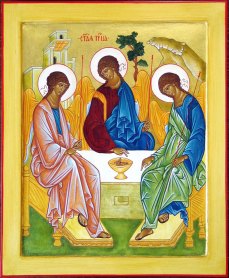
Trinity Icon based upon the original by Andrei Rublev, c. 1408-25

A modern icon based upon Andrei Rublev’s “The Trinity” (also called “The Hospitality of Abraham“) from the fifteenth century.

Consider the interesting episode of Abraham’s three visitors in Genesis 18: “The LORD appeared to Abraham by the oak of Mamre… Looking up, he saw three men standing near him.” Now two of this trio are later called angels (Genesis 19:1) but more precisely these are “messengers,” and the Son and the Holy Spirit do indeed serve the Father this way, revealing God the Father and his will among men. Did Abraham perceive in his guests what Christians suspect in retrospect, that this was a manifestation of the Holy Trinity? Maybe not, yet Abraham could still commune in God’s presence.

I think something that trips people up about Christianity is imagining God the Father as the sole Divine Person in the Old Testament, with the Son and the Holy Spirit only appearing later in the New. However, if the Trinity is true it has always been true, and the three Persons (possessing the same Divine Essence the prophets praised) have been active in the affairs of mankind throughout history. Christians reflect back on the Jewish Scriptures and see the Persons of the Trinity at work together. Our Nicene Creed professes that the Holy Spirit has “spoken through the prophets.” Look at the episodes where a “messenger” speaks in the divine first-person (e.g., Genesis 22:12, Judges 6:16 & 13:21-22) I would say Abraham and the prophets’ experiences of God were Trinitarian even if they did not fully grasp it then. I believe the same is true for all today.

Mary, the World’s First Love

August 19, 2016

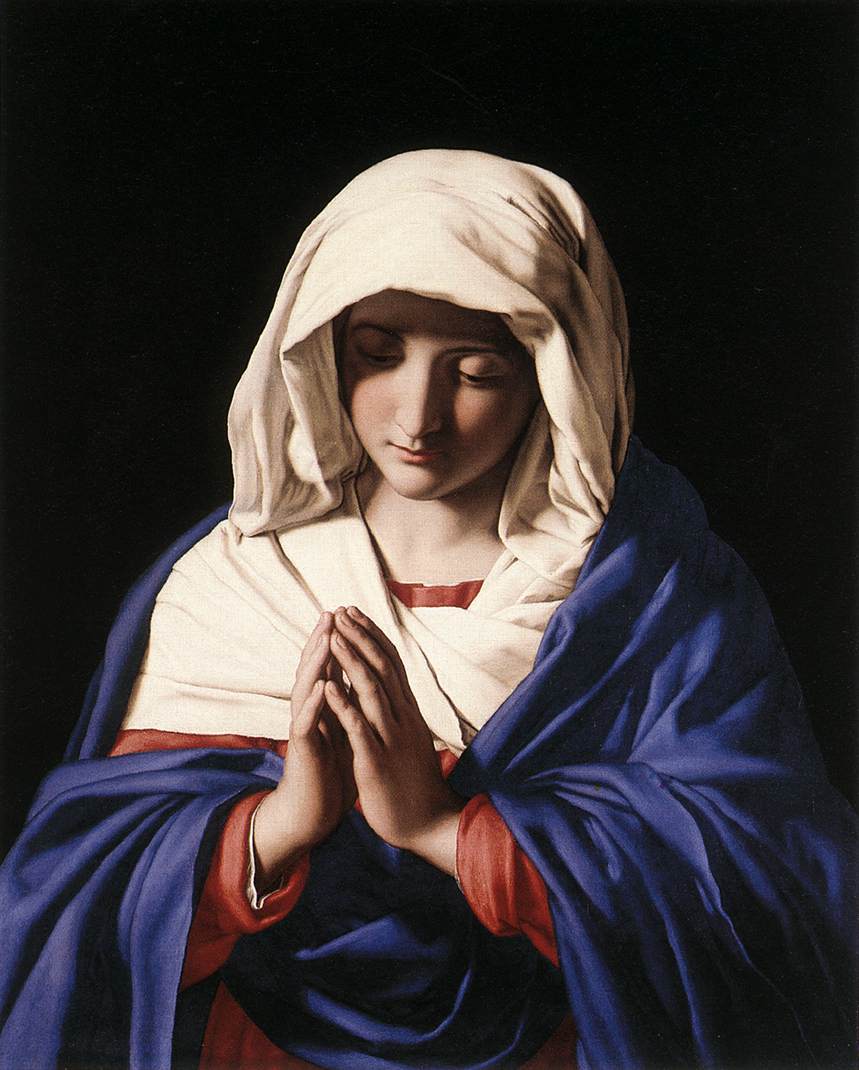
The Blessed Virgin Mary at Prayer    “When Whistler painted the picture of his mother, did he not have the image of her in his mind before he ever gathered his colors on his palette? If you could have preexisted your mother (not artistically, but really), would you not have made her the most perfect woman that ever lived—one so beautiful she would have been the sweet envy of all women, and one so gentle and so merciful that all other mothers would have sought to imitate her virtues? Why, then, should we think that God would do otherwise? When Whistler was complimented on the portrait of his mother, he said, “You know how it is; one tries to make one’s Mummy just as nice as he can.” When God became Man, He too, I believe, would make His Mother as nice as He could—and that would make her a perfect Mother.

She existed in the Divine Mind as an Eternal Thought before there were any mothers. She is the Mother of mothers — she is the world’s first love.”

—Venerable Fulton Sheen (1895–1979 A.D.)
in The World’s First Love: Mary, Mother of God

How Many Will Be Saved?

August 19, 2016

In this Sunday’s gospel, someone asks Jesus from the crowd, “Lord, will only a few people be saved?” Jesus replies, “Strive to enter through the narrow gate, for many, I tell you, will attempt to enter but will not be strong enough.” (Luke 13:24) Instead of quoting some particular figure, like one million or ten billion souls, Jesus says, “Strive to enter through the narrow gate…” We are left to wonder: in the end, will the number saved be numerous or few?

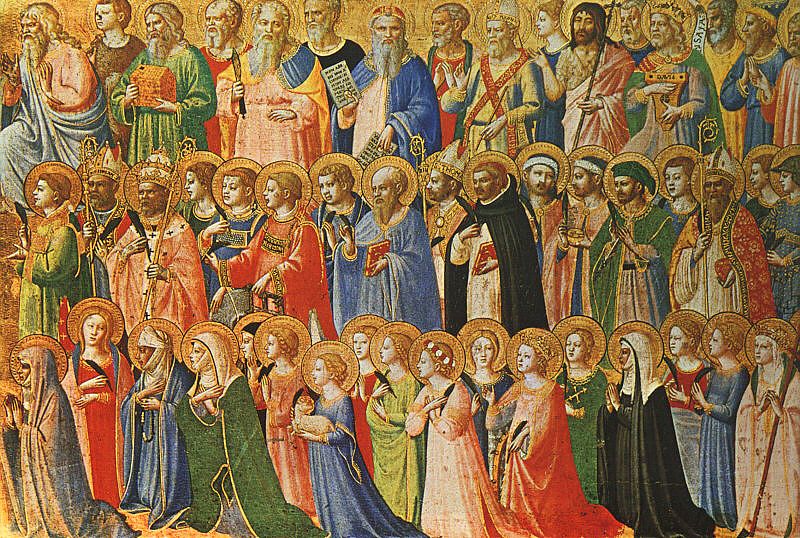
All-Saints by Fra Angelico, 1400's.In the Book of Revelation, St. John witnesses a vast number of saints worshiping God in heaven. He beholds “a vision of a great multitude, which no one could count, from every nation, race, people, and tongue.” (Revelation 7:9) Note that this ‘countless multitude’ is different and much larger than the “one hundred and forty-four thousand marked from every tribe of the Israelites” that St. John enumerates several verses before. Jesus came to save souls not only from the twelve tribes of Israel. As the Lord declares through the prophet in Sunday’s first reading, “I come to gather nations of every language; they shall come and see my glory.” (Isaiah 66:18) Based on this, we can confidently say that a great number will be saved.

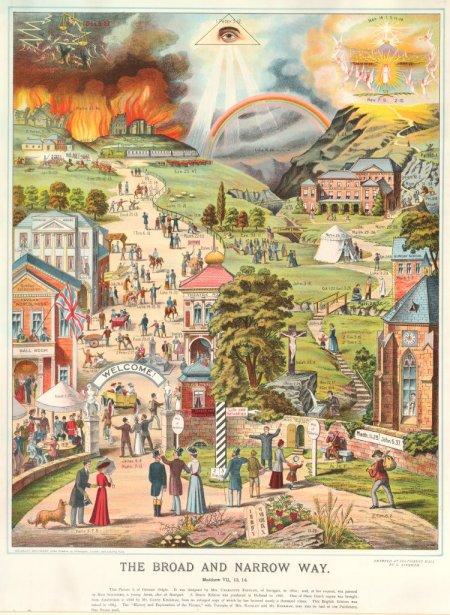
On the other hand, in our gospel’s parallel passage from St. Matthew, Jesus says, “Enter through the narrow gate; for the gate is wide and the road broad that leads to destruction, and those who enter through it are many. How narrow the gate and constricted the road that leads to life. And those who find it are few.” (Matthew 7:13-14) The ‘few’ who enter the narrow gate to life sounds smaller than the ‘many’ who do not. Based on this, it would seem that the number saved will be comparatively small.

However, “few” and “many” are relative terms which depend upon the context. For example, more than 18,000 Olympic medals have been awarded in the modern Summer and Winter Games and that is indeed many. But how many Olympic medalists have you personally ever met? Probably, at most, only a few. In a more tragic example, around 130,000 Americans die annually in accidents and that is awfully many. But at the same time, roughly 99.96% of Americans do not perish in accidents each year, making the 0.04% who do a relative few. The word “many” sometimes refers to a majority of people, but not always.

Jesus Christ suffered and died on the cross to redeem all mankind. Even if there were only one sinner on earth in all of human history, it seems that Jesus would have become man in order to offer himself for just him, or her, or you. Suppose that the number of human souls condemned on the last day turns out to be only a dozen. Knowing how much our Lord loves each and every person, will not those twelve feel like many in the heart of Jesus and those billions he saves seem too few? In any case, Jesus never reveals to us whether most human beings will be saved or lost. Either outcome is possible.

Why was Jesus not more clear about exactly how many people would be saved? Because he knew how such knowledge would be harmful for us. He knew that if we were told that most people would be saved in the end, it would lead us into dangerous presumption. If we were told that most people would be lost, he knew it would lead us into poisonous despair. Jesus “did not need anyone to testify about human nature. He himself understood it well.” (John 2:25)

Instead of providing us with some number or percentage, Jesus gives us some much more valuable and beneficial advice: “Strive to enter through the narrow gate (for whether you are saved or not depends, in part, upon you.)” God “wills everyone to be saved and to come to knowledge of the truth.” (1st Timothy 2:4) And to “as many as did accept him, [Jesus] gave power to become children of God.” (John 1:12) Let us strive to cooperate with God, let us accept the Lordship of Jesus Christ in our lives, so that we may be numbered among “the few” who are saved and enter into life.

The Braod and Narrow Way, 1883.

The Divided Household of Luke 12

August 12, 2016

In Luke 12:51-53, Jesus tells his disciples:

“Do you think that I have come to establish peace on the earth? No, I tell you, but rather division. From now on a household of five will be divided, three against two and two against three; a father will be divided against his son and a son against his father, a mother against her daughter and a daughter against her mother, a mother-in-law against her daughter-in-law and a daughter-in-law against her mother-in-law.”

What do the family dynamics within this divided household look like? For starters, exactly how many people are we talking about? St. Ambrose (337-397 AD) clarifies this point:

Though the connection would seem to be of six persons, father and son, mother and daughter, mother-in-law and daughter-in-law, yet are they five, for the mother and the mother-in-law may be taken as the same, since she who is the mother of the son, is the mother-in-law of his wife.”

Jesus describes these five persons as divided into two factions, “three against two and two against three.” We learn from his further details that the father opposes his son, while the mother opposes the other two females. Depending on whether this father and mother are allied or not, their household could be divided in two possible patterns.

Luke 12 Divided Households

Figure 1 shows the family split generationally, with the parents set against the children. In Figure 2, the fractures cut between the couples. (Jesus not mentioning marital strife suggests the first interpretation and this is the favored reading of St. Bede,1 yet the ambiguity of these passages may well be intentional.2) In any case, Jesus is the occasion for this household’s divisions. One side (either the blue or the orange) rejects him while the other acknowledges him as Lord. Sometimes one’s allegiance to Christ leads to interpersonal conflict, even within families.

This prompts St. Ambrose to ask:

“Are we to believe that [our Lord] has commanded discord within families? How is he our peace, who has made both one? How does he himself say, ‘My peace I give you, my peace I leave you,’ if he has come to separate fathers from sons and sons from fathers by the division of households? How is he cursed who dishonors his father and devout who forsakes him?”

St. Ambrose unknots the seeming paradox in this way:

“It is necessary that we should esteem the human less than the divine. If honor is to be paid to parents, how much more to your parents’ Creator, to whom you owe gratitude for your parents! … He does not say children should reject a father but that God is to be set before all. … You are not forbidden to love your parents, but you are forbidden to prefer them to God.”

People sometimes hesitate to commit to Christian lifestyle changes, pursue their God-given vocations, or enter Christ’s Catholic Church because they fear the reactions of family, friends, or others. But even if following Jesus Christ entails sacrifices, these persons should not be afraid to place God first. Notice how the Lord does not say “five will be divided, four against one and one against four.” When three unbelievers pit themselves against two faithful ones, the pair are blessed with each other’s support. Should your family disown you, the Lord will summon faithful friends to your side. Even if your friends should leave you, the Lord provides you with the household of believers in his Church. Even if your parish community should fail to welcome or support you, the Lord will not make you stand alone — for Jesus Christ is always at your side and will never abandon you.


Footnotes:

1. St. Bede (672-735 AD) assumes Figure 1 for his allegorical interpretation of the Divided Household:

“By three are signified those who have faith in the Trinity, by two the unbelievers who depart from the unity of the faith. But the father is the devil, whose children we were by following him, but when that heavenly fire came down, it separated us from one another, and showed us another Father who is in heaven. The mother is the Synagogue, the daughter is the Primitive Church, who had to bear the persecution of that same synagogue, from whom she derived her birth, and whom she did herself in the truth of the faith contradict. The mother-in-law is the Synagogue, the daughter-in-law the Gentile Church, for Christ the husband of the Church is the son of the Synagogue, according to the flesh. The Synagogue then was divided both against its daughter-in-law, and its daughter, persecuting believers of each people. But they also were divided against their mother-in-law and mother, because they wished to abolish the circumcision of the flesh.”


2. Perhaps our Lord (in preaching these words) and the Holy Spirit (in inspiring these Lucan passages) fully-intended this ambiguity. By providentially allowing for both readings (i.e., Figures 1 & 2) this teaching can reflect more varieties of interfamily conflict: spousal, sibling, in-law, parental and filial.


Perspective for Our Times

August 9, 2016

“It was the best of times, it was the worst of times, it was the age of wisdom, it was the age of foolishness, it was the epoch of belief, it was the epoch of incredulity, it was the season of Light, it was the season of Darkness, it was the spring of hope, it was the winter of despair, we had everything before us, we had nothing before us, we were all going direct to Heaven, we were all going direct the other way – in short, the period was so far like the present period, that some of its noisiest authorities insisted on its being received, for good or for evil, in the superlative degree of comparison only.”

So begins Charles Dickens’ A Tale of Two Cities. Our time is a mixture of good things and bad. In some ways we’re progressing, while in others we’re in decline. Some despair, but the trials of past generations were far worse than ours. As St. Augustine of Hippo (354-430 A.D.) observed:

“Is there any affliction now endured by mankind that was not endured by our fathers before us? What sufferings of ours even bears comparison with what we know of their sufferings? And yet you hear people complaining about this present day and age because things were so much better in former times. I wonder what would happen if they could be taken back to the days of their ancestors–would we not still hear them complaining?  You may think past ages were good, but it is only because you are not living in them.”

There has been no perfect “Golden Age” since Eden. We learn from the New Testament that even the first-century Christian communities had controversies within and persecutions from without. Yet pining for a romanticized past pairs with an opposite, pervasive error today: thinking that “old things” have nothing to teach or offer us. C.S. Lewis noted this modern disposition in 1955:

“…Chronological snobbery [is] the uncritical acceptance of the intellectual climate common to our own age and the assumption that whatever has gone out of date is on that account discredited. You must find why it went out of date. Was it ever refuted (and if so by whom, where, and how conclusively) or did it merely die away as fashions do? If the latter, this tells us nothing about its truth or falsehood. From seeing this, one passes to the realization that our own age is also ‘a period,’ and certainly has, like all periods, its own characteristic illusions. They are likeliest to lurk in those widespread assumptions which are so ingrained in the age that no one dares to attack or feels it necessary to defend them.”

The ignorant dismissal of the past leads to foolishness today. All advocate for change, but not all change is progress. For example, naively tearing down the wrong fences can permit evils to get in. G.K. Chesterton wrote in 1929:

“In the matter of reforming things, as distinct from deforming them, there is one plain and simple principle; a principle which will probably be called a paradox. There exists in such a case a certain institution or law; let us say, for the sake of simplicity, a fence or gate erected across a road. The more modern type of reformer goes gaily up to it and says, “I don’t see the use of this; let us clear it away.” To which the more intelligent type of reformer will do well to answer: “If you don’t see the use of it, I certainly won’t let you clear it away. Go away and think. Then, when you can come back and tell me that you do see the use of it, I may allow you to destroy it.”

We live in a time filled with serious problems and great blessings. We have grave reasons for concern, such as the present threats to religious liberty and the persistent Culture of Death, but we should not despair. Not only do we know Who wins in the end, but even today’s broken world has good things to offer. Computers are facilitating new technologies and improved communications. Healthcare advances are saving and enhancing lives. International economic development is helping billions rise from poverty. Imagine how these modern-day advances in communication, healthcare, economic wealth, and other fields could be utilized for the Kingdom of God. Jesus once asked his disciples:

“Do you understand all these things?” They answered, “Yes.” And he replied, “Then every scribe who has been instructed in the kingdom of heaven is like the head of a household who brings from his storeroom both the new and the old.” (Matthew 13:51-52)

To keep proper perspective today we must be neither naive nor despondent. We should be conscious of both the dangers and the opportunities around us. These present times will surely try us, but there has yet to be an era of the Church that has not tested the saints. Our generation is called to be faithful witnesses to Christ’s Church and Sacred Tradition. As Scripture says:

Anyone who is so ‘progressive’ as not to remain in the teaching of the Christ does not have God; [but] whoever remains in the teaching has the Father and the Son.”  (2nd John 1:9)

The world may refuse to heed us as it recklessly marches on but we can still benefit ourselves, for this life and the next, by holding on to  timeless truths. Our Church has persevered through controversies and persecutions from its beginning. It challenged the Roman culture while making use of the best things it had to offer to introduce and spread the Kingdom of God on earth. That Kingdom endures to our day. By keeping what is good and rejecting what is evil, let us remain ever-faithful to Jesus Christ in our times.

O Jerusalem by Greg Olsen

The Virgin Mary’s Wisconsin Apparition in 1859

August 4, 2016

This account is according to Sister Pauline LaPlant, to whom the visionary, Adele Brise, often told her story:

She [Adele] was going to the grist mill about four miles from here [Champion] with a sack of wheat on her head […]. As Adele came near the place, she saw a lady all in white standing between two trees, one a maple, the other a hemlock. Adele was frightened and stood still. The vision slowly disappeared, leaving a white cloud after it. Adele continued on her errand and returned home without seeing anything more. She told her parents what had happened, and they wondered what it could be — maybe a poor soul who needed prayers?

On the following Sunday, she had to pass here again on her way to Mass at Bay Settlement, about eleven miles from her home […]. This time, she was not alone, but was accompanied by her sister Isabel and a neighbor woman [Mrs. Vander Niessen]. When they came near the trees, the same lady in white was at the place where Adele had seen her before. Adele was again frightened and said, almost in a tone of reproach, “Oh, there is that lady again.”

adelebrise

The Visionary, Adele Brise, 1831-1896

Adele had not the courage to go on. The other two did not see anything, but they could tell by Adele’s look that she was afraid. They thought, too, that it might be a poor soul that needed prayers. They waited a few minutes, and Adele told them it was gone. It had disappeared as the first time, and all she could see was a little mist or white cloud. After Mass, Adele went to confession and told her confessor how she had been frightened at the sight of a lady in white. He [Father William Verhoef] bade her not to fear, and to speak to him of this outside of the confessional. Father Verhoef told her that if it were a heavenly messenger, she would see it again, and it would not harm her, but to ask in God’s name who it was and what it desired of her. After that, Adele had more courage. She started home with her two companions, and a man who was clearing land for the Holy Cross Fathers at Bay Settlement accompanied them.

As they approached the hallowed spot, Adele could see the beautiful lady, clothed in dazzling white, with a yellow sash around her waist. Her dress fell to her feet in graceful folds. She had a crown of stars around her head, and her long, golden, wavy hair fell loosely around her shoulders. Such a heavenly light shone around her that Adele could hardly look back at her sweet face. Overcome by this heavenly light and the beauty of her amiable visitor, Adele fell on her knees.

In God’s name, who are you and what do you want of me?” asked Adele, as she had been directed.

I am the Queen of Heaven, who prays for the conversion of sinners, and I wish you to do the same. You received Holy Communion this morning, and that is well. But you must do more. Make a general confession, and offer Communion for the conversion of sinners. If they do not convert and do penance, my Son will be obliged to punish them.”

Adele, who is it?” said one of the women. “O why can’t we see her as you do?” said another weeping.

Kneel,” said Adele, “the Lady says she is the Queen of Heaven.” Our Blessed Lady turned, looked kindly at them, and said, “Blessed are they that believe without seeing. What are you doing here in idleness…while your companions are working in the vineyard of my Son?

What more can I do, dear Lady?” said Adele, weeping.

Gather the children in this wild country and teach them what they should know for salvation.”

But how shall I teach them who know so little myself?” replied Adele.

Teach them,” replied her radiant visitor, “their catechism, how to sign themselves with the sign of the Cross, and how to approach the sacraments; that is what I wish you to do. Go and fear nothing. I will help you.”

The manifestation of Our Lady then lifted her hands, as though beseeching a blessing for those at her feet, and slowly vanished, leaving Adele overwhelmed and prostrate on the ground.

When the news spread about Adele Brise’s vision of the Blessed Virgin, most people believed the account and were astonished. Some considered the event a  demented delusion. Adele Brise, however, considered it a commission to catechize the children and admonish the sinners of the Bay Settlement. To honor the alleged apparition, Adele’s father erected a makeshift chapel near the spot of Adele’s vision.

History’s Ten Wealthiest People and the Vanity of Riches

July 27, 2016

In estimated billions of present-day dollars

  1. Cornelius Vanderbilt ($185, died 1877)
    This railroad tycoon’s only large philanthropic gift gave about 1% of his fortune to build Vanderbilt University.
  1. Henry Ford ($199, died 1947)
    This deceased automaker’s name survives on vehicles seen upon every road and junkyard.
  1. Muammar Gaddafi ($200, died 2011)
    This dictator of Libya, after being discovered hiding in a desert culvert, was killed by his people.
  1. Jakob Fugger “the Rich ($221, died 1525)
    While he lived, this German merchant-financier declared, “The king reigns, but the bank rules!
  1. William The Conqueror ($229, died 1087)
    After killing many to capture England, this Duke of Normandy, France joined the dead.
  1. Mir Osman Ali Khan ($230, died 1967)
    As head of the state of Hyderabad, India, he used a 185-carat diamond as a paperweight.
  1. Czar Nikolas II ($300, died 1918)
    This Russian ruler was assassinated along with his family by communist revolutionaries.
  1. Andrew Carnegie ($310, died 1919)
    This steel magnate and philanthropist said, “The man who dies rich dies disgraced.”
  1. John D. Rockefeller ($340, died 1937)
    He sold oil drawn from Ohio’s earth and now lays buried in the same.
  1. Mansa Musa I ($400, died 1337)
    This African king of Mali was the richest man to ever live. But have you ever heard of him?

Psalm 49:7-12 :

“No man can buy his own ransom, or pay a price to God for his life. The ransom of his soul is beyond him. He cannot buy life without end, nor avoid coming to the grave. He knows that wise men and fools must both perish and must leave their wealth to others. Their graves are their homes for ever, their dwelling place from age to age, though their names spread wide through the land. In his riches, man lacks wisdom; he is like the beasts that are destroyed.”


Abraham’s Intercessions for Sodom & Gomorrah

July 23, 2016

A Mathematical Analysis of Genesis 18:22-33

Conversation
Exchange
Bid # for Innocents
# Decrease
% Decrease
Factional Decrease

1st

   50

   –

2nd

   45

5

10% 1/10

3rd

   40

10

11.111% 1/9

4th

   30

10

25% 1/4

5th

   20

10

33.333% 1/3

6th

   10

10

50% 1/2