Archive for the ‘Saintly People’ Category

A New Light in the Darkness

December 19, 2020

4th Sunday of Advent

The largest planet in our Solar System is Jupiter. Named for the king of all the Roman gods (whose name means “Sky Father”), Jupiter is over three hundred times more massive than Earth. The second largest planet in our Solar System is Saturn, the planet God liked so much that he put a ring on it. Every twenty years, the orbits of Jupiter and Saturn align closely together in our sky. And, as you may have already heard, this Monday on the Winter Solstice these two planets will appear so close to each other that their light will be joined as one. The last time these planets appeared this close in our sky was almost eight centuries ago. That previous conjunction, in March of the year 1226 AD, may have been witnessed by St. Francis of Assisi seven months before he died; the saint who once wrote: “Glory to you, my Lord, for sister moon and the stars you have made in heaven clear, precious, and beautiful.

Why do we wonder at the planets and the stars? Because they sparkle as gifts of light in the darkness. Because they reflect the vastness of God’s intricate plans and mighty works across the universe. And because we know their sparkling light we see comes to us from the past, even from thousands of years ago. They are stars of wonder, stars of night.

Could the conjunction of these two planets be the sign, that Christmas Star, which the Magi saw as recorded in St. Matthew’s Gospel? Perhaps. The word “planet” comes from the Greek word for “wanderer” since the ancients deemed other planets to be wandering stars. And in the year 7 B.C., Jupiter and Saturn conjoined in three different months. Will we see this Monday what the Magi rejoiced to behold? Maybe, maybe not.

Monday, in the first hour after sunset, during the longest night of the year, when Jupiter and Saturn form a new star low in the southwestern sky, it’s quite possible—even probable—that our skies will be overcast. That would be disappointing, but even this would be a sign for us. Even if we cannot see it, this joining of Saturn with the much brighter Jupiter will still be there. By Christmas Day, this event will surely have occurred. So it is with our Faith.

Two thousand years ago, in accord with his vast and intricate plan, God our King and Father in Heaven, whose great glory far surpasses any creature on earth or throughout the universe, began a new and wondrous work. He approached his most gracious creature, a young woman named Mary, and proposed to her that together they give birth to a new star, “a light for revelation to the nations, and the glory of (his) people Israel.” The virgin agreed and the true light, Jesus Christ, entered the world. So whatever clouds or darkness may accompany this week at the end of this terribly trying year, we will still be witnesses to something supremely special. “The light shines in the darkness, and the darkness has not overcome it.

Anno Domini

December 13, 2020

3rd Sunday of Advent – Gaudete Sunday

Nearly two thousand years ago, in the synagogue at Nazareth, Jesus Christ proclaimed the words of the Prophet Isaiah as being fulfilled in himself, “fulfilled in your hearing”:

The Spirit of the Lord God is upon me,
because the Lord has anointed me;
he has sent me… to announce a year of favor from the Lord
and a day of vindication by our God.

The Earth orbits the Sun year after year. Our planet’s spinning makes days and nights, and its tilted-axis causes the seasons. When Earth’s northern hemisphere is most towards the Sun, our sunrises come earlier, our sunsets come later, and we experience summer warmth. Six months later, when the top of the Earth is tilted away from the Sun our daytimes are shorter, bringing the winter’s cold. Because of this yearly cycling of the seasons—summer, fall, winter, spring—even simple, ancient peasants possessed the concept of “years.” Their civilizations would mark time by counting years from some event of shared cultural significance (such as the Founding of Rome), or by referring to their leader’s reign (like saying, “in the fifth year of Ramses II”).

What year is it now for us? It’s 2020 A.D. — but why? “A.D.” stands for “Anno Domini,” a Latin phrase which means, “In the Year of the Lord.” Some 2,020 years ago, Jesus Christ, the King of Kings, was born to bring the Kingdom of Heaven to earth. Now we live in his Kingdom, the Kingdom of God, during this the 2,020th year of our Lord Jesus Christ.

Since Jesus is God, the Lord is present to all things at all times, but he foresaw how his visible departure through his Ascension could affect us thereafter. Year after year, his saving acts, his words and deeds, would fade and fall further and further into the past. Who he is and what he has done for us would seem ever more distant. So Jesus established his Church to preach his word and do his works, to perform his sacraments and do good deeds together with him all around the world until he comes again. Jesus says, “where two or three are gathered together in my name, there am I in the midst of them,” and “Behold, I am with you always, until the end of the age.

One of the great things his Church gives us is her liturgical year. Our feasts and seasons throughout each year celebrate what Christ has done, show us who he is, and remind us of who we are to him. It’s very important to remember who we are – the truth about who we are in the eyes of Truth himself – but it’s something easy to forget.

St. John the Baptist on today’s Gospel knows both who he is and who he is not. They ask him in today’s Gospel, “Who are you,” and John answers the question on their minds, “I am not the Christ.” So they ask him, “Are you Elijah?” “I am not.” “Are you the Prophet (the Prophet of whom Moses foretold)?” “No.” “So who are you?” “I am the voice of one crying out in the desert, ‘make straight the way of the Lord,’ [for] the one who is coming after me, whose sandal strap I am not worthy to untie.” Untying a sandal strap is something a slave might do for his master, but John the Baptist saw that the gap between his Lord and himself was far more vast than that. God the Father and Christ his Son are all-holy, all-good, and justly entitled to our everything; our time, our bodies, our wealth, our love. His servant must remember that “God is God, and I am not.

True humility is living in the truth about who God is and who you are. The word humility comes from the Latin word for ground. Humility doesn’t mean thinking you are dirt; it’s being well-grounded in the truth, the reality of things. With perfect humility the Blessed Virgin Mary can make this extraordinary proclamation, “From this day all generations will call me blessed. (And she was right!) The Almighty has done great things for me [his lowly servant].” Likewise, acknowledge the great things that God has done in you and praise him for them all, for this is humility.

Though each of us is in need of ongoing conversion in Christ, if you did not take God very seriously I doubt that you would be reading this. A common misperception among sincere Christians is that they do not see themselves as they really are. You are not yet perfect, but that doesn’t mean you’re trash. Let me show you this in some ways that others have found helpful.

Think of your greatest desire. What is it? Perhaps it’s for you and others to be blessed and someday reach Heaven? Now think of the greatest desire of a saint. In as much these two answers align, you have the desires of a saint and so you’re on the right track. Now imagine meeting someone, another person who is just like you in every way, having all of your strengths and weaknesses. What would you think of this person? Would you like them? Could you be their friend? If you would have more kindness or compassion toward him or her than you do on yourself, then try loving yourself like your neighbor for a change. If you, who are imperfect, can like and love that other person, then surely God can like and love you too. If I were a demon, an enemy of your soul, I would try to keep you stuck in lies about yourself to make you despair or limit the good you would do. However, I suspect the truth is that you are doing far better than you fear and are far more loved by God than you can imagine.

The holy seasons and feasts of Christ’s Church present to us year after year anew what God has done, and who he is for us, and who we are to him. Let us live this Advent in the truth about who we are, realizing and rejoicing that this is a year of favor from the Lord and today is a day of salvation.

Five Reflections on St. Joseph

December 11, 2020

By Fr. Victor Feltes

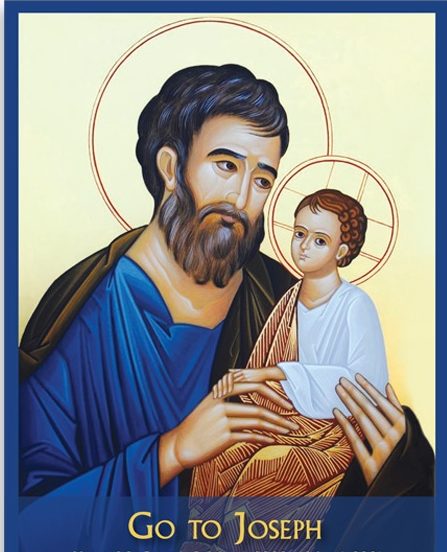
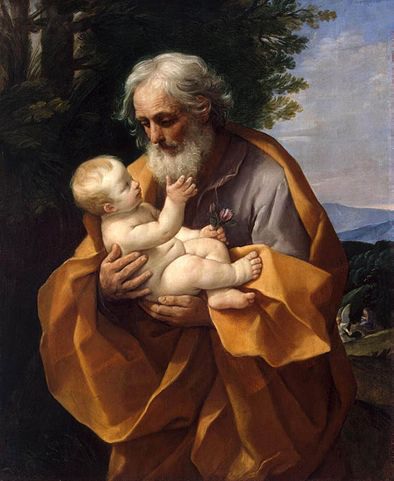
This week, on the Solemnity of the Immaculate Conception and the 150th anniversary of the proclamation of St. Joseph as patron of the Universal (that is, the entire) Church, Pope Francis declared this “The Year of St. Joseph” through December 8th, 2021. The Holy Father also published an apostolic letter about Jesus’ beloved foster-father entitled “Patris Corde” (or “With a Father’s Heart”). In it, Pope Francis writes about Christian devotion to this great saint and mentions how the phrase “Go to Joseph” has an Old Testament origin. These are five of my personal reflections on St. Joseph.

Go to Joseph

In the Book of Genesis, during a time of famine across the known world, the Egyptians begged their pharaoh for bread. He in turn replied, “Go to Joseph and do whatever he tells you.” Pharaoh was referring to Joseph the son of Jacob who had risen from a very lowly state to become the viceroy of the kingdom. Enlighted by divinely-inspired dreams, this Joseph’s leadership went on to feed and save the whole world from death, including his own family. According to the genealogy at the beginning of Matthew’s Gospel, the New Testament’s Joseph also had a father named Jacob. Though poor and obscure, St. Joseph’s heaven-sent dreams enabled him to guide and protect his Holy Family, leading to the world’s salvation through the Bread of Life, Jesus Christ. Today, as a powerful intercessor in the Kingdom of God, we are wise to “go to Joseph” for needed help.

His One Word

Within the Gospels, St. Joseph has no recorded words. There is no indication the foster-father of Jesus and spouse of the Virgin Mary was physically unable to speak or ever took a vow of silence; he is simply never quoted. Yet the Gospels suggest he said at least one specific word.

Matthew’s Gospel records how an angel (probably the Archangel Gabriel though perhaps another) told Joseph in a dream: “‘[Mary, your wife,] will bear a son and you are to name him Jesus…’ When Joseph awoke, he did as the angel of the Lord had commanded him and took his wife into his home. He had no relations with her until she bore a son, and he named him Jesus.” Just as John’s Gospel tells us “Jesus did many other signs in the presence of his disciples that are not written in this book,” so St. Joseph almost certainly said many unrecorded things. But the one word that Scripture most clearly suggests St. Joseph said is “Jesus.” The name of Jesus is the sum total proclamation of St. Joseph’s life. May it be so for us as well.

Image of the Father

The Letter to the Colossians says of Christ, “He is the image of the invisible God.” Something analogous was true of St. Joseph for Jesus in being the earthly image of his Father in Heaven. Joseph’s life has no recorded beginning or end in the Bible. We know that he was a carpenter craftsman – a creator of many things to be blessing for others. Perhaps he looked at everything he made and found it very good. Alongside Mary, Jesus was obedient to Joseph; he was Jesus’ boyhood teacher, deliverer, and role-model. Jesus lovingly called him, “Abba, father.” St. Joseph was a holy and loving image of God the Father for his Son. Though imperfect, may we likewise be images of God for each of our biological and spiritual children.

The Hour of his Death

When did St. Joseph die? Luke’s Gospel tells us that when 12-year-old Jesus was found at the Temple in Jerusalem he went down with his parents to Nazareth and was obedient to them. After that joyful reunion, St. Joseph makes no further personal appearances in the Gospels. Joseph had apparently passed away by the time of Christ’s Passion since Jesus on the Cross does not entrust his blessed mother’s care to her faithful husband but to a beloved disciple. Other episodes in the Gospels suggest that Joseph died before the start of Jesus’ public ministry.

How did St. Joseph die? If Joseph, the heir to the throne of David, had been murdered we would expect this prefigurement of Jesus’ own death to be described in the Gospels like the death of St. John the Baptist. Unless some sudden catastrophe befell him, an ailing Joseph would have reached his deathbed. And who would have been compassionately comforting him and powerfully praying for him at his bedside as he reached his hour of death? His having most likely died peacefully in the loving presence of Jesus and Mary is what makes St. Joseph the patron saint of a happy death.

The Terror of Demons

St. Joseph is called “the Terror of Demons” and his spouse “the Queen of Angels.” Yet the Virgin Mary at the Annunciation was greatly troubled and afraid at the Archangel Gabriel’s greeting, and when resettling his Holy Family from Egypt Joseph feared mere flesh and blood – avoiding Judea because Herod’s son ruled there. How can this man and woman now be leaders of awesome angels or banes of dangerous demons?

One key trait Joseph and Mary shared is obedience. The Book of Exodus displays Moses’ obedience by recording God’s instructions to him and then repeatedly presenting Moses doing “just as the Lord had commanded.” Whenever St. Joseph receives instructions from God (to take Mary into his home, to escape to Egypt, or to return to Israel) the text that follows has Joseph doing exactly as God commanded. Mary was also radically open to God’s will, as when she famously said, “Behold, I am the handmaid of the Lord. May it be done to me according to your word.” The demons, for their part, fell from Heaven’s glory because they refused to do God’s will.

Joseph and Mary were also among the first on earth to accept and love the (then still-unborn) baby Jesus. The demons, in contrast, were the first to reject the Son of God. We do not know the exact reasons for their primordial rebellion but some theorize the demons took offense at God’s plan that the Eternal Son would become an incarnate human being, crowning that creature with a greater glory than the angels. “By the envy of the devil, death entered the world,” says the Book of Wisdom.

Joseph and Mary’s obedience to God’s will and their love for Jesus on earth lead to them being gloriously empowered in Heaven. Jesus told his disciples, “you who have followed me will also sit on twelve thrones, judging the twelve tribes of Israel,” and St. Paul reminded the Corinthians “we will judge angels.” It seems that faithful human creatures who, by God’s grace, love and serve the Lord in the likeness of Christ himself are best suited to become powerful, humble, servant rulers in the Kingdom of Heaven.

St. Joseph, patron of the Universal Church, pray for us throughout this holy year!

The New Eve

December 8, 2020

Solemnity of the Immaculate Conception

Eve was the first woman. God created her like Adam, a finite but flawless and sinless creature, destined to become the biological mother of the entire human race. But then an angel, a fallen angel, Satan in the form of a snake, visited her to suggest that she should disobey God’s will. Eve said yes to sin, and then Adam joined her, and through them the whole human race fell.

Their grave sin caused Adam and Eve to lose paradise, but their futures were not without hope, for God spoke in their hearing a prophesy toward that wicked, deceiving serpent, the devil. God declared, “I will put enmity (that is, I will put hostility) between you and the woman, and between your offspring and hers; he will strike at your head, while you strike at his heel.” Who is this offspring, this descendant, this son, who strikes back at the devil? It’s Jesus Christ who defeats the devil by dying on the Cross. Adam sinned, causing us to die. But St. Paul calls Jesus the second Adam, the new Adam, who obeys God and does not sin so that we may live forever.

If Jesus is the new and second Adam, then who is the new and second Eve? Who is the woman whom the devil hates most; the mother whose offspring crushes the serpent’s head; a woman created by God as a flawless, sinless creature? This New Eve was visited by angel too, a holy archangel named Gabriel, to ask that she would accept God’s will. And the Blessed Virgin Mary answered, “Behold, I am the handmaid of the Lord. May it be done to me according to your word.” The New Eve’s obedience was later echoed by the New Adam. In the Garden of Gethsemane, in his garden of temptation the night before he died, Jesus said, “Father… not my will but yours be done.” Eve said yes to sin, Adam joined her, and through them the whole human race fell. Mary and Jesus say yes to God, and through them the whole human race is redeemed.

Imagine if you could design, could create, your own mother. Wouldn’t you make her the sweetest, kindest, most lovely, and most loving woman that you could? Well, Jesus is God and he did create his own mother for himself, and Jesus shares his mom with us as well. Eve became the biological mother of all the living, but Mary is the spiritual mother of all who live in Christ. Through her sinless soul, completely filled with God’s grace, Mary knows and loves each one of us as her own children. So today, we her children rejoice and celebrate with holy Mary, that God chose her to be our New Eve, the Immaculate Conception.

The Fire of God

December 6, 2020


2nd Sunday of Advent

Eighteen years ago, when I applied to become a seminarian for our diocese, one part of the process was taking the MMPI, the Minnesota Multiphasic Personality Inventory Test — 567 True-False questions that help to detect psychological disorders. Of all of those written questions this one is for me the most memorable: “True or False: I am fascinated by fire.” How would you answer that question on a psych exam? I recall thinking at the time, “Yes, yes I am fascinated by fire, but I don’t want them to think I’m a pyromaniac. And I’m not a pyromaniac so maybe I should answer ‘False.’” But then I considered that wouldn’t be honest, so I reluctantly filled in the bubble for “True.” In the end, the diocesan psychologist did not diagnose me as crazy, so they sent me to seminary, eventually ordained me, and here I am today. But upon later reflection, I think this question is something of a trick.

Why do people pay more to have a fireplace in their home when a central heating system is sufficient to keep everyone comfortable? When people sit around a campfire, what does everybody look at for hours into the night? I strongly suspect this question (are you fascinated by fire) isn’t looking for pyromania so much as it is checking to see whether people will lie, because everyone is fascinated by fire. Fire is beautiful, it’s mesmerizing, dynamic and powerful; it’s well-known to us and yet surprising, an incredible blessing yet dangerous to the unwary.

The Sacred Scriptures often speak about fire. In today’s in gospel, we hear the preaching of St. John the Baptist. In the parallel passages of Matthew and Luke, St. John similarly cries out:

I am baptizing you with water… but the one who is coming after me is mightier than I… He will baptize you with the Holy Spirit and fire. His winnowing fan is in his hand. He will clear his threshing floor and gather his wheat into his barn, but the chaff he will burn with unquenchable fire.

Fire is also mentioned in today’s second reading. The Second Letter of St. Peter tells us:

The day of the Lord will come like a thief,
and then the heavens will pass away with a mighty roar
and the elements will be dissolved by fire…
the heavens will be dissolved in flames
and the elements melted by fire.”

The coming and presence of the Lord is associated with fire in the Old Testament as well. God first spoke to Moses through a burning bush. And during the Exodus the Lord went before his people, leading them in a pillar of cloud and fire. The appearance of God’s glory was like a devouring fire atop Mt. Sinai. The mountain was wrapped in smoke because the Lord had descended upon it in fire. Smoke rose up from it into the sky and the whole mountain greatly trembled. The Lord commanded Moses to warn the people not to approach, not to climb up the mountain, lest they be struck down in their unholiness. Listen to this vision of God the Prophet Daniel had in a dream one night:

As I looked, thrones were placed, and the Ancient of Days took his seat; his clothing was white as snow, and the hair of his head like pure wool; his throne was fiery flames; its wheels were burning fire. A stream of fire issued and came out from before him; a thousand thousands served him, and ten thousand times ten thousand stood before him; the court sat in judgment, and the books were opened.

Is the fire of God of which John the Baptist, Peter, Moses, and Daniel speak something for us to fear? Scripture says the punishment of God’s judgment is fire, but it also speaks of fire as God’s means of purifying his own. In regards to judgment, the Prophet Isaiah writes, “the Lord will come in fire, and his chariots like the whirlwind, to render his anger in fury, and his rebuke with flames of fire.” At the Last Judgment, Jesus Christ the King will turn to the goats on his left and say “Depart from me, you accursed, into the eternal fire prepared for the devil and his angels.” And the Book of Revelation says anyone whose name is not found written in the book of life will be thrown into a lake of fire: “[A]s for the cowardly, the faithless, the detestable, as for murderers, the sexually immoral, sorcerers, idolaters, & all liars, their portion will be in the lake that burns with fire and sulfur, which is the second death.” This is a fire to dread and to earnestly avoid.

Yet God’s prophets also speak of God’s purifying fire which perfects his people. Psalm 66 says “you, O God, have tested us; you have tried us as silver is tried;” and a verse from the Book of Proverbs says, “The crucible is for silver, and the furnace is for gold, and the Lord tests hearts.” Ancient gold and silversmiths would melt their precious metals with fire to separate out and burn away any impurities which they contained. Likewise, through the Prophet Zechariah, God says, “[I will put my people] into the fire, and refine them as one refines silver, and test them as gold is tested. They will call upon my name, and I will answer them. I will say, ‘They are my people’; and they will say, ‘The Lord is my God.’” This is why Jesus exclaims, “I have come to set the earth on fire, and how I wish it were already blazing!

Jesus would separate and burn away in us everything impure, false, and worthless. This purification can happen for God’s faithful friends in this life on earth or afterwards in Purgatory. St. Peter writes to the Church in his First Letter, “Now for a little while you may have to suffer through various trials, so that the genuineness of your faith, more precious than gold that is perishable even though tested by fire, may prove to be for praise, glory, and honor at the revelation of Jesus Christ.” And St. Paul tells the Corinthians, “If anyone builds on the foundation with gold, silver, precious stones, wood, hay, straw — each one’s work will become manifest, for the Day [of the Lord] will disclose it, because it will be revealed by fire, and the fire will test what sort of work each one has done.” Is this a fire we should fear and dread? No, as illustrated by this story from the Book of Daniel:

In the days of the Babylonian Empire, King Nebuchadnezzar had three servants named Shadrach, Meshach, and Abednego. When the king set up a tall, golden statue and commanded that all bow down and worship it, these three faithful Jewish men refused. Enraged, the king commanded that they be bound with rope and cast into a white-hot furnace. Once this had been done, the king looked inside the furnace. He became startled and rose in haste, asking his counselors, “Did we not cast three men bound into the fire?” “Certainly, O king,” they answered. “But, I see four men unbound and unhurt, walking in the fire, and the fourth looks like a son of God.” Then Nebuchadnezzar came to the opening of the furnace and called: “Shadrach, Meshach, and Abednego, servants of the Most High God, come out,” and the trio came out of the fire.

The fire had had no power over their bodies; not a hair of their heads had been singed, nor were their garments altered; there was not even a smell of fire about them. Yet notice, all of the ropes which had bound them were burned away and gone. Recall that the burning bush at Mt. Sinai was not destroyed by God’s fire. And when the Holy Spirit came down as tongues of fire at Pentecost, the disciples touched by the Holy Flame were not tormented by pain but rather filled with rejoicing. The process of conversion may entail some pains because change is often hard, whether on earth or in Purgatory, but I urge you not to fear it. God’s purifying fire would take away what binds you, it will not destroy what is good in you, and its fruit will be joy.

The Book of Wisdom tells us:

Chastised a little, [the souls of the just] shall be greatly blessed, because God tried them and found them worthy of himself.
As gold in the furnace, he proved them, and as sacrificial offerings he took them to himself.
In the time of their visitation they shall shine, and shall dart about as sparks through stubble;”
They shall judge nations and rule over peoples, and the Lord shall be their King forever.

So just souls become as sparks of fire and rule over the nations. They will rule like God their King and they will share in God’s fire. The New and Old Testaments agree, as the Books of Hebrews and Deuteronomy say, that “our God is a consuming fire.” The Lord your God is a consuming fire – beautiful, dynamic and powerful; well-known to us and yet surprising, an incredible blessing yet dangerous to the unwary. There is no approaching God without encountering his fire. Perhaps the delights of the saints and pains of damned have the same source – the unveiled presence of God. In this life, many people dismiss God while others long to see Him. But beyond the veil of this life the Holy One can no longer be ignored. Either we will eagerly run toward him or desperately desire to flee. The same Holy Fire is loved or despised according to our openness to love and honor and serve like him.

The call of Prophets Isaiah and John the Baptist to prepare the way of the Lord is addressed to us this Advent. In the wasteland of your imperfect soul prepare a straight and smooth highway for our God. Repent and confess your sins for forgiveness. When St. John the Baptist appeared in the desert, people from the whole Judean countryside and the city of Jerusalem were going out to him and being baptized by him in the Jordan River as they acknowledged their sins aloud. They would devote an entire day to walk or ride an animal out to where John was baptizing; wait in a single, very long line; and then confess their sinfulness in front of everybody in the mere hope of being forgiven by God. Jesus Christ makes it so much easier for us in the Sacrament of Confession. His minsters are not just one, but many, and his churches are not far away. We get to confess our sins privately in the quiet of the confessional, and with every good confession our forgiveness is assured.

St. Peter tells us “the day of the Lord will come like a thief,” that is, by surprise; we know not when. “(Then) the elements will be dissolved by fire, and the earth and everything done on it will be found out.” Since this is the case, St. Peter asks, “what sort of persons ought you to be?” Conduct yourselves in holiness and devotion. Do not delay your repentance and conversion. Jesus says, “If your hand or your foot causes you to sin, cut it off and throw it away. It is better for you to enter life crippled or lame than with two hands or two feet to be thrown into the eternal fire.” If this would be the case with precious limbs, how much more surely should we now cast off our worthless sins?

To give you that opportunity, for the forgiveness of your sins and a new infusion of God’s graces, I will be hearing confessions all day this Wednesday, December 9th at St. Paul’s. This Wednesday, from 10 AM to 8 PM, at the top of every hour, I will come to St. Paul’s main sacristy to hear the confessions of all penitents, either face-to-face or anonymously, masked and socially-distanced until all are heard. I sincerely hope you will come, and bring your family too, for the purifying fire of God is far sweeter than his fire which will punish unrepentance.

Our Glorious Friends

October 31, 2020

Solemnity of All Saints

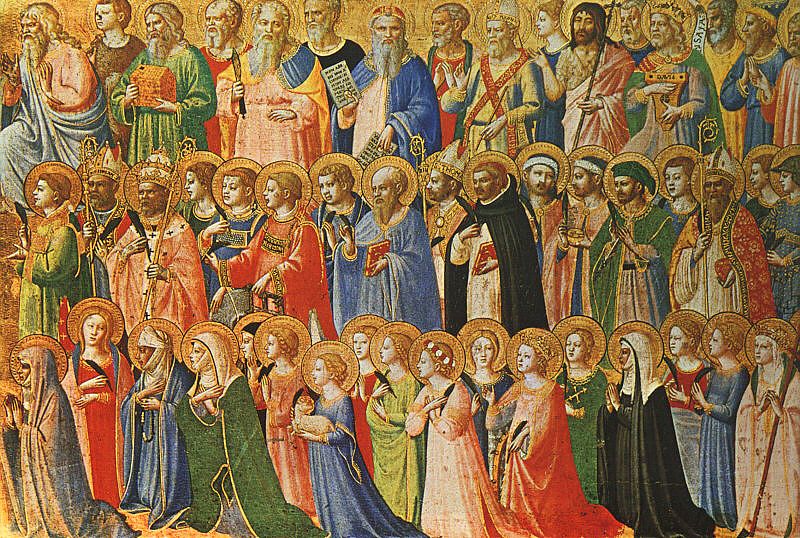
The saints who have died are not dead – they are more alive than we are now. The human saints in Heaven lived in times past, but they were made of the same stuff and faced similar struggles then as you and I today. Though the Catholic Church has canonized thousands of saints, when you consider the billions of Christians throughout history canonizations are relatively rare, yet there are more saints in Heaven than we can count. We know this because of St. John’s Revelation of Heaven: “I had a vision of a great multitude, which no one could count, from every nation, race, people, and tongue.” The Lord Jesus Christ wants you to be in that number. Unfortunately, common misconceptions about saints can keep us further from them. So, in this homily, I would like to help you to grow closer to them in friendship and in likeness.

First realize that the saints are not dead and gone but still living. This is why whenever I preach about the deceased I try to speak of them using the present tense whenever some fact about them remains true. For instance, if a kind and generous Christian father of three dies he is still a kind and generous father of three. Rather than saying “his name was David,” faithfully witness that “his name is David” even after he has died. Though deprived of their bodies for the moment, those who are in Heaven are more alive than we are here. There they experience God opening himself to them an inexhaustible way. This is called the beatific vision, an ever-flowing well-spring of happiness, peace, and mutual communion. The saints in Heaven see God face to face, and they have become like him for they see him as he is.

What is a glorified human being or exulted human nature like? Let’s consider the Blessed Virgin Mary. How much does she know us? How much does she love us? Does she hear each one of our prayers addressed to her? It is our sense of the Faith that our spiritual mother does indeed know us and loves us individually as her children. But consider this: if every Catholic in the world offers one Hail Mary a day, this means an average of more than fifteen thousand new prayers come her way each second. Therefore, if Mary hears all our prayers, her experience of time and/or the capacity of her glorified consciousness must far surpass our own.

The other glorified saints in Heaven, our brothers and sisters in Christ, know and care about you too. They understand you because they’ve walked in our shoes. Governments and borders and technologies change over time, but human nature is constant. The saints began with the same humanity as you and I, experienced challenges like our own, and prevailed. Lots of canonized saints have been priests, nuns, bishops, popes, or martyrs, but Heaven is certainly not limited to these backgrounds. Saints come from varied walks of life. Some canonized saints did extraordinary miracles or had visions here on earth, but even for these most of their days were ordinary, spent faithfully doing very ordinary things like us.

The saints in Heaven are our friends who lend us constant aid even if we do not know their names yet. In response, I encourage you to befriend them back. Which ones? Try doing this holy experiment: ask Jesus to introduce you to a saint and then keep your eyes open. Watch for a saint to providentially present him or herself to you, perhaps through an icon, a painting, or a photograph, a book or a film, or mentioned in a conversation thereafter. I look forward to hearing whom you’ll meet. Take these saints as teachers you learn from, role models you imitate, heroes to inspire you, and holy intercessors whose prayers before God for you are very powerful. I urge you to follow the saints, because those who follow them will embody the beatitudes, become more like Jesus, and become saints themselves.

Though it is unlikely any of us here will be officially canonized by the Church, we are all called to be saints. You are called to be a saint. St. Catherine of Siena said, “If you are what you should be, you will set the world on fire.” Do not say, “I have too sinful of a past to become a saint.” Recall that St. Paul had once persecuted Christians. There is no saint without a past and no sinner without a future. And do not say, “I’m too imperfect to become a saint.” Realize that even while St. Peter was serving as the first pope he sometimes made personal mistakes in his ministry. And do not say, “I’m too late in my life to become a saint.” Remember how the Good Thief on his cross next to Jesus made the most of the time he had left. As St. John Paul the Great preached, “Become a saint, and do so quickly.” Jesus is calling you to be a saint, so befriend the saints and they will help you on the way to Heaven.

Saving Dates & Saving Souls

September 5, 2020

23rd Sunday in Ordinary Time

The just shall flourish like the palm tree… They shall bear fruit even in old age, they will stay fresh and green…” (Psalm 92)

In the time of Jesus, forests of Judean date palms covered the whole region from the Sea of Galilee to the Dead Sea. This plant, the date palm, symbolized ancient Israel. When the scriptures call Israel “the land of milk and honey” we today think of cow’s milk and the honey of bees. But milk in the Old Testament is just as likely to be goat’s milk and the honey it refers to is usually the sweet honey of dates. By the 1500’s, human activity or changes in the climate had caused the Judean date palm to disappear. Because of that species’ extinction, the date palm plants grown across Israel today were brought over from California in the 1950’s and 60’s; they’re different in species and originally native to elsewhere in the Middle East. However, the Judean date palm was not to be lost forever.

The Judean Date Palm Tree Methuselah in 2018

During the 1960’s, archaeologists excavated the mountaintop palace fortress of Masasda built by King Herod the Great near the Dead Sea. There they found, preserved dry and sheltered in an ancient jar, a cache of date seeds which carbon testing indicates are 2,000 years old. These seeds were kept in storage at an Israeli university in Tel Aviv for forty years. Then, in 2006, an American-educated horticulturalist in Israel planted several of those seeds. To her and her colleagues’ delighted surprise, one sprouted. They named that plant after the oldest person in the Old Testament, Methuselah. Today it’s over eleven feet tall. After their success with Methuselah, they planted more ancient date seeds from Masada and the caves in which the Dead Sea Scrolls were found, and six new samplings have grown. They hope to pollinate one or more of the new female palms with pollen from Methuselah, which is male palm, eventually yielding the famous delicious dates of ancient times.

While the fruit of Judean date palms was celebrated for its sweet flavor and medicinal uses, its palm branches are also noteworthy. They were probably the kind of palm branches that the crowds waved and laid before Jesus as he entered Jerusalem on the Sunday before he was killed, the day we call Palm Sunday. Jesus once lamented: “Jerusalem, Jerusalem, you who kill the prophets and stone those sent to you, how many times I yearned to gather your children together, as a hen gathers her young under her wings, but you were unwilling! Behold, your house will be abandoned, desolate. I tell you, you will not see me again until you say, ‘Blessed is he who comes in the name of the Lord.’”

Jesus knew the history of the prophets as he entered Jerusalem – how God would send them to proclaim the right path to his people, usually urging conversion from their sins. Heeding the truth will set you free; but first, it may make you uncomfortable, defensive, and angry. God’s people typically resisted the saving message and derided, denounced, attacked, imprisoned, and killed the prophets. And then, the unhappy consequences the prophets had foretold would follow naturally and unchecked. Knowing how reluctant sinners are to listen and change, why did the prophets bother? And what was the point of it all when people so rarely listened? I suggest God’s prophets had three motivations.

One was to personally avoid God’s judgment themselves. In our first reading, the Lord warns the prophet Ezekiel: “You, son of man, I have appointed watchman for the house of Israel; when you hear me say anything, you shall warn them for me. If I tell the wicked, “O wicked one, you shall surely die,” and you do not speak out to dissuade the wicked from his way, the wicked shall die for his guilt, but I will hold you responsible for his death. But if you warn the wicked, trying to turn him from his way, and he refuses to turn from his way, he shall die for his guilt, but you shall save yourself.” The prophets did not want to be condemned for failing to do their holy duty.

A second motivation of the prophets was love, love for God and love for their neighbors. As St. Paul told the Romans in our second reading: “the one who loves another has fulfilled the law… whatever other commandment there may be, [is] summed up in this saying, namely, “You shall love your neighbor as yourself.” If you were in danger, recklessly or unknowingly headed towards some serious physical or spiritual harm, don’t you wish someone would warn you? The prophets loved enough to try.

And a third motivation of the prophets was hope, hope that one day, perhaps many years later, the people they spoke to would be saved. The previously rebellious people, seeing their city ruined and their kingdom conquered as the prophets had foretold, would know that God had warned them and know that their next step should be to return to the Lord and walk in his ways. What motivated the prophets of old should motivate us as well, for many people go astray today.

Brothers… if a person is caught in some transgression,” St. Paul tells the Galatians, “you who are spiritual should correct that one in a gentle spirit…” Jesus teaches us in today’s gospel, “If your brother sins against you, go and tell him his fault (privately,) between you and him alone. If he listens to you, you have (successfully) won over your brother.” And as St. James writes in his New Testament letter, “My brothers, if anyone among you should stray from the truth and someone bring him back, he should know that whoever brings back a sinner from the error of his way will save his soul from death and will cover a multitude of sins.

Fraternal correction isn’t fun, I know, but “admonishing the sinner” is a spiritual work of mercy you and I as Christians are called to do. Like the prophets, we are to place seeds, seeds containing the power and potential to yield sweet and healing fruit. Sometimes these seeds produce an immediate holy harvest through conversion. Yet we know our seeds will often be set aside, discarded, and forgotten; until, perhaps many years later after much desolation, these dormant seeds’ true and precious value is recognized, they’re allowed to sprout with deep new roots, and life that was once lost and dead is fully restored, producing good fruits again, to the joy of all God’s people.

Her Very Close Friends — Funeral Homily for Doris Prince, 92

September 2, 2020

Doris has been a faithful and longtime parishioner of St. John the Baptist’s in Cooks Valley. At the end of this hour, we will be taking her earthly remains there, to St. John’s Cemetery, to await day of the resurrection. The reason we gathered here at St. Paul’s Church for Doris’ funeral Mass was to guarantee that there would be enough space in church for all of you to attend. There are now more than seven and a half billion people living on this earth. Consider that you who are gathered here (plus those who attended Doris’ visitation yesterday) are the people on earth who know her best and love her best. There are many ways one could preach a funeral homily for a devout woman like Doris, but I believe Doris is pleased to know that I am going to speak to you about friends of hers who have known her and loved her better than any of us here. You’ve probably never met them and you don’t know most of their names. They formally introduced themselves to Doris herself for the first time only just last week, but they have been faithfully there for her and she has been fond of them for many years. I speak of the angels.

Doris had a huge collection of angels she collected over the past fifty years or more. There were more than two hundred of them within her house, some in almost every room. She had angels of all kinds; porcelain angels, plastic angels, cloth angels, some glittery angels, some outdoor angels, some that glowed in the dark, and that some played music, all for Doris to delight in. In her later years, an angel was the go-to gift one gave to her. After moving into the nursing home seven years ago, Doris began giving away her angels as gifts herself. She even gave them out to surprised trick-or-treaters. God has similarly collected angels for his own delight, and the Lord has shared his angels with us, to lead us to the Father’s house on the mountain of God to share in their heavenly joy.

What is an angel? Angels are purely spiritual beings, created by God but not made of matter. Angels are personal and immortal creatures possessing intellect and will, knowing and choosing. They surpass in perfection every earthly creature we can see. Never having fallen, they are sinless and glorious; loving God, one another, and human beings with a intense and extraordinary devotion. Precious Moments statues rightly depict angels as pure and innocent, but these small and fragile figurines do not reflect angels’ awesome power and often intimidating presence. The Bible records that angels who reveal their otherworldly glory to human beings throughout salvation history have typically needed to first calm and reassure, “Be not afraid.”

God sends angels to us as his servants and messengers. As the Book of Hebrews rhetorically confirms, “Are they not all ministering spirits sent forth to serve, for the sake of those who are to obtain salvation?” Though “some have entertained angels unawares,” we seem to rarely see angels; yet, angels are never far from us, even the smallest children. Jesus said, “See that you do not despise one of these little ones, for I say to you that their angels in Heaven always look upon the face of my heavenly Father.” So, even the littlest ones have angels. Each of us, from the beginning to the end of our lives, have been assigned a guardian angel whose mission from God is to help to enlighten, and guard, and rule, and guide us through this world. In the words of St. Basil, “Beside each believer stands an angel as protector and shepherd leading him to life.

Each angel has a name, but we know only three individual angels’ names from Scripture, all of them archangels: St. Michael, St. Gabriel, and St. Raphael. An archangel announced the first coming of Jesus to the Virgin Mary; and today’s second reading from St. Paul says an archangel’s voice will announce to us the Second Coming of the Lord Jesus descending from Heaven. We have no authority to name our angels; they are named by God and belong to him.

Your relationship with Jesus Christ, the Good Shepherd, is most essential, but do you have a personal relationship with your guardian angel as well? We can and should have a relationship with our angels. Thank them for their assistance and ask them for their help. We can ask them to pray for us. The New Testament Letter of St. James says, “The prayers of a righteous person are very powerful,” so imagine how powerful these sinless creatures’ prayers are before God.

We can ask them to remind us of important things because angels never forget. They are brilliant creatures, more intelligent than any of us, and we can ask them to enlighten us. (For instance, I asked angels’ help in writing this homily.) We can also ask them to go on small missions for us, to lend aid to others we care about wherever they may be. Our angel guardians’ ultimate mission is to lead us to salvation. The angels are more glorious than any creature on earth, but their humble and earnest desire is that we would become even more glorious than themselves in Heaven.

Doris has been a friend to the angels. May you be their Christian friends as well. For our beloved, devout, and faithful Doris, who surrounded herself with angels, and someday for all of us here:

“May choirs of angels lead you into paradise,
and may the martyrs come to welcome you,
to bring you home into the holy city,
so you may dwell in new Jerusalem.

May holy angels be there at your welcoming,
with all the saints who go before you there,
that you may know the peace and joy of paradise;
that you may enter into everlasting rest.”

Your Chosen Cross

August 30, 2020

22nd Sunday in Ordinary Time

In last Sunday’s gospel, Simon Peter was inspired to declare of Jesus, ‘you are the Messiah, you are the Christ,‘ and Jesus affirmed that it was true. Then, immediately following in Matthew’s Gospel, Jesus begins to show his disciples that he must go to Jerusalem and suffer greatly from the Jewish religious leaders, be killed, and on the third day be raised. Peter is scandalized by this news. The Messiah is supposed to be our triumphant king! How could the Christ suffer and be killed? Peter has seen Jesus’ powers; like curing the sick, casting out demons, multiplying loaves and fish. The Lord doesn’t have to let anyone get the better of him. Peter took Jesus aside and began to rebuke him, “God forbid, Lord! No such thing shall ever happen to you.” Peter presumes that he knows better than the Lord. Jesus turns and says to Peter, “Get behind me, Satan!” (“Satan” is the Hebrew word for “adversary.”) You are [being] an obstacle to me. You are thinking not as God does, but as human beings do.

God the Father did not prepare an easy life for his beloved Son. That’s what Peter had hoped for, a smooth and easy path to glory. Jesus’ life was marked by joy and sadness, struggles and sacrifice, death and resurrection. Christ’s was not an easy life but a great and glorious life, and Jesus calls you and I to follow him. Jesus says to his disciples, “whoever wishes to save his life (from every trial, hardship, and sacrifice) will lose it, but whoever loses his life for my sake (whoever devotes himself in love and service for me) will find it. Whoever wishes to come after me must deny himself, take up his cross, and follow me.” This call included Peter. Notice how Jesus in correcting Peter does not say to him “Depart from me, you accursed,” but rather “Get behind me”; in other words, “Follow me.

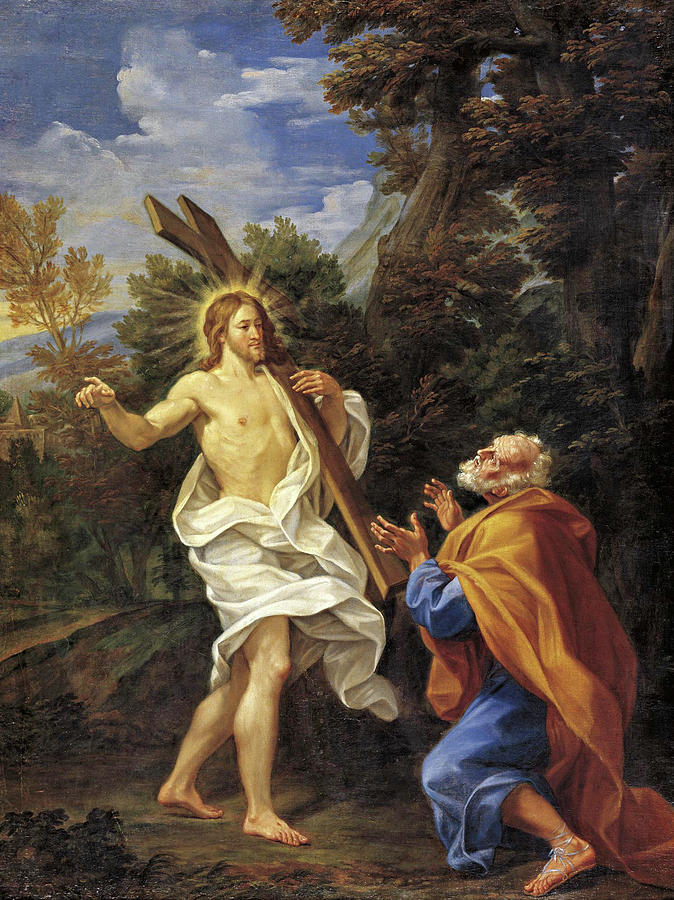
In the New Testament, we see that Simon Peter was not perfect. Both before and after Jesus’ resurrection, Peter made mistakes. Yet Peter’s faith in Jesus Christ was a foundation the Lord could build upon. And through a lifetime of providential trials, Simon Peter grew more and more into Christ’s likeness. Peter became the first pope, the first bishop of Rome, and while there, in 64 A.D., the Roman Emperor Nero unleashed a severe persecution of Christians, scapegoating the Church for a six-day fire that devastated Rome in July of that year. One tradition says that Peter, seeing the danger, reasoned that it would be better to flee the persecution so he could continue to lead the Church. However, on his way out of the city, Peter had a vision of Jesus walking in the opposite direction. Peter asked, “Lord, where are you going?” (“Domine, quo vadis,” in Latin.) “I am going to Rome to be crucified again,” Jesus replied.

This story comes to us from a late second century text and may or may not be pious legend, but what follows is very firmly known. St. Peter was arrested and condemned to die by crucifixion at Rome. However, Peter did not consider himself worthy to die in the very same manner as our Lord, so he made an unusual request. He asked to be crucified upside down, with his feet toward Heaven and his head toward the earth, and this is what the soldiers did. Peter died, his body was taken down from his cross, and Christians buried him in a grave very close-by. That place, a Roman hill, bears the same name now as it did then: Vatican Hill. The Emperor Constantine built a church over the place in the fourth century, and an even more magnificent St. Peter’s Basilica was built over the same site in the 1500’s and stands there to this day.

In the mid-twentieth century, archaeologists uncovered and forensic scientists studied ancient bones from below St. Peter’s, found some sixty feet directly below the main altar. Analysis indicates these bones came from a man between sixty and seventy years old, about five foot seven inches tall; and possessing a robust frame, as we might expect a fisherman to have. These bones were formerly wrapped in a very expensive cloth comprised of gold and purple threads in the pattern of an ancient Roman weave. The skeleton is largely complete but the feet are missing. If the Roman soldiers had no respect for Peter’s remains, it’s easy to imagine them using a sword to hack down his body from the cross, leaving his feet behind, nailed high on the wood. Jesus once declared, “You are Peter and upon this Rock I will build my Church.” It appears that Jesus has not only fulfilled his words spiritually, through St. Peter’s faithful life, but has literally built his Church over St. Peter’s bones as well. This is what Jesus did and achieved with a man formerly so flawed and fickle as St. Peter. The Lord would do great things through the transformative trials of our lives as well.

Once upon a time, one night, a Christian had a dream. They were carrying a cross, representing all of their burdens, temptations, and trials, and approached Jesus standing beside a large warehouse. The Christian said, “Lord, my cross is hard to carry. May I exchange it for another?” Jesus invited them inside the warehouse containing millions of crosses of different styles, materials, and sizes. Walking the aisles, the Christian sees an attractive, short cross with straight edges and flat sides made of pure gold. Gold is extremely heavy, about ten times denser than brick, so the Christian was not strong enough to lift it up. Going further on, there was a beautiful, tall and thin cross made entirely of diamonds. Now diamonds are very hard; they are sometimes employed at the tips of drill bits because they are harder than pretty much anything else. The Christian could lift this cross, but it poked and gnawed and cut into one’s palms and shoulder, so it was set down again. Circling back, the Christian saw a wooden cross of head-height leaning against the wall. Its sides were uneven but wear had smoothed them. It was not light, but not too heavy to carry. It was a simple cross, but a noble one. The Christian returned to Jesus and said, “This is the cross I’d like to carry.” And Jesus replied, “That’s the cross you came here with.

Jesus says, “Whoever wishes to come after me must deny himself, take up his cross, and follow me.”

The Saint Lawrence

August 10, 2020

The Feast of St. Lawrence

The Great Lakes (Superior, Michigan, Huron, Erie, and Ontario) comprise the largest body of freshwater in the world. All told, these five lakes contain one-fifth of all the freshwater on the surface of the earth, about six quadrillion gallons (that’s six million billions) a figure not fully fathomable for the human mind. Like all moving waters, these flow downhill from high to low. Near Buffalo, New York, between Lake Erie and Lake Ontario, they descend 167 feet with a mighty rushing sound at Niagara Falls. Leaving Lake Ontario, they become a river that flows past a “royal mountain” and city of the same name: Montréal. The name of this river in which whales swim, which empties into the world-spanning ocean, is the Saint Lawrence River.

The river is named for St. Lawrence, one of the Seven Deacons of Rome under St. Pope Sixtus II. (Both of these saints’ names are invoked at Mass in Eucharistic Prayer I.) In 258 A.D., the Roman Emperor Valerian issued an edict commanding that all bishops, priests, and deacons should immediately be put to death. The pope and many others were martyred, including St. Lawrence on his present feast day, August 10th. Back then, deacons managed the Church’s funds and charitable efforts. Though the tale is uncertain, St. Ambrose of Milan writes that when his persecutors demanded that Archdeacon Lawrence handover the Church’s treasures, he showed them the poor and the sick. This same source also recounts how during his slow death upon a gridiron over a fire St. Lawrence quipped, “I am cooked on that side; turn me over…

God’s graces are like The Great Lakes; vast, life-giving waters beyond our full comprehension. They flow down from above into a channel open to receive them, like the Saint Lawrence. Through such rivers, waters pour forth across the world in the sight of the Royal Mountain and the City of God to the delight of the angels. Let us imitate St. Lawrence and God’s other saints who by humble willingness became mighty streams of His goodness and glory.


Praying Like Jesus

August 9, 2020

19th Sunday in Ordinary Time

From the start to the finish of his public ministry, Jesus makes time for private, personal prayer. We see this throughout the gospels. In the first chapter of Mark’s Gospel, the morning after Jesus cured Simon Peter’s mother-in-law and others in the town of Capernaum, it says, “Rising very early before dawn, (Jesus) left and went off to a deserted place, where he prayed.” Then, before calling certain men from among his many followers to form his key inner circle, Luke’s Gospel notes: “(Jesus) departed to the mountain to pray, and he spent the night in prayer to God. When day came, he called his disciples to himself, and from them he chose Twelve, whom he also named apostles.” And Matthew’s Gospel records how, on the night before he died, “Jesus came with (eleven of those Apostles) to a place called Gethsemane, and he said to his apostles, “Sit here while I go over there and pray.” He took along Peter, James, and John, and began to feel sorrow and distress. Then he said to them, “My soul is sorrowful even to death. Remain here and keep watch with me.” He advanced a little and fell prostrate in prayer, saying, “My Father, if it is possible, let this cup pass from me; yet, not as I will, but as you will.” Today’s gospel begins with another example of Jesus’ commitment to private, personal prayer.

After Jesus had fed the crowds with the loaves and the fishes (which we heard about last Sunday) he made the apostles get into a boat and depart before him for the other side of the Sea of Galilee. Then Jesus went up on the mountain by himself to pray. When it was evening, he was there alone. Like the Prophet Elijah in our first reading, who retreated to a mountain to encounter God, Jesus seeks out a quiet and deserted place to pray. Though the wind, the earthquake, and the fire outside of Elijah’s cave all reflect something of God’s glory, chasing after these would be a distraction. God’s presence is revealed to Elijah as “a tiny whispering sound.” Do you put yourself in a place, do you give yourself enough time and space and silence, to encounter within you God’s tiny whispering sound through prayer? If it was very important for Jesus Christ the Son of God to devote focused time for prayer (and he did) how much moreso for you and me?

What was on Jesus’ mind and heart the night he prayed in today’s gospel? What did Jesus take to prayer? Recall that John the Baptist had recently been murdered. John’s disciples, after burying his body, went and told Jesus. When Jesus hears this news, he withdraws in a boat for a deserted place with the apostles where he finds thousands awaiting him. He heals them and teaches them and feeds them all. Then he dismisses the crowds, sends the apostles off ahead of him, and goes up the mountain to pray alone.

Was Jesus feeling sad that evening? Our Blessed Lord once said, “Blessed are they who mourn.” And he himself wept at the tomb of Lazarus. Jesus mourning at the death of John the Baptist, his friend, relative, and ally, is easy to imagine. Might Jesus have felt angry that night? Anger is the natural human reaction to a perceived injustice, and what happened to John was gravely wrong, a great injustice. Anger, like all human emotion, can be turned toward good or evil. For instance, zeal for his Father’s house moved Jesus to make a righteous mess of a marketplace that was hindering peoples’ worship and profaning the temple in Jerusalem. There are a number a divinely-inspired prayers among the Psalms which give voice to human sorrows, frustrations, and anxieties.

Did Jesus feel stress and strain about the steps of the path ahead of him? When people saw Jesus multiply those loaves and fishes, John’s Gospel tells us the crowd was going to carry him off to make him King of Israel, the Messiah of their dreams. But that would have derailed Christ’s redemptive mission as the Lamb of God, so Jesus did not permit his followers to do so. Jesus’ enemies, of course, presented obstacles as well. How was Jesus to reach and drink the cup at his mission’s end? In the Garden of Gethsemane, we see Jesus under great stress and strain even speak to his Father about the course of the Father’s plan. In prayer, Jesus could bring to God his Father, whatever he thought or felt.

Did Jesus pray for other people? In our second reading, St. Paul reveals a “great sorrow and constant anguish” in his heart. He swears by the Holy Spirit that he could wish himself “cut off from Christ,” could wish himself condemned to Hell, if that would somehow lead his people, the Jews, to Heaven. Do you think Paul prayed with that sorrow and anguish for others’ salvation? If Paul prays with such intense feeling, how much moreso does Jesus pray for the salvation of others from his Sacred Heart?

Jesus Christ is not only our Lord and Savior, he’s the best example for our Christian life. We must learn from him and imitate him. Here are three things Jesus does that we all should do likewise. First, Jesus makes time for private, personal prayer. Whether early morning or late at night, he created time for communing with the God who loves and leads him. Turn off the car radio, the TV, the devices, to make some silence to hear within you the “tiny whispering sound” of God. Second, Jesus prays with everything on his mind and heart. No thought or feeling need be hidden from the God who knows and loves you better than you do yourself. The Holy Trinity and our other heavenly friends want us to share these things, so that we may grow close together in their likeness and friendship. And third, Jesus prays for himself and others. Jesus says, “You shall love your neighbor as yourself.” Therefore, if you only pray for yourself, or only pray for other people, something is out of balance in your prayer. In conclusion, make time for personal private prayer. Pray about anything on your mind and heart. And pray for yourself and others. Make this sacrifice, give yourself this gift, of communing in prayer with the Lord who loves and leads you.

Virtuous Thomas

July 14, 2020

Doubting Thomas — That is how the apostle is remembered since he said, “Unless I see the mark of the nails in his hands and put my finger into the nailmarks and put my hand into his side, I will not believe.” Upon seeing Jesus alive he professed, “My Lord and my God,” but the ignoble nickname endures. St. Thomas has just four quotes in the gospels, all of them found in John; his two other quotes reveal more of his character.

After Lazarus had died, Jesus said, “Let us go back to Judea,” and the disciples objected, “Rabbi, the Jews were just trying to stone you and you want to go back there?” When Jesus insists on going, Thomas says to his fellow disciples, “Let us also go to die with him.” Then later, Jesus says at the Last Supper, “Where I am going you know the way.” And Thomas relies, “Master, we do not know where you are going; how can we know the way?

From his four quotes we glimpse Thomas’ weakness and his strengths. He should have believed his friends’ testimony that they had indeed seen and touched and spoken with Jesus resurrected (especially after having witnessed Lazarus risen from the dead) but Thomas was lacking in trust. Yet at the same time, Thomas possesses great loyalty and courage.

Where is Thomas one week after Easter Sunday? The disciples are gathered in the upper room, hiding behind locked doors for fear of those who murdered Jesus, and Thomas is right there with them. He could have chosen to retreat to someplace safer but he is loyal and brave and these virtues lead him to encounter the risen Christ.

We typically focus on our faults and flaws, on the vices and sins that hinder us. However we each possess virtues as well, areas where God has had success in us. Know and acknowledge these virtues, give thanks to God for them, and utilize them to grow. Pray for grace and use your strengths to lead you to perfect holiness like St. Thomas’ virtues led him to glory with Jesus Christ.

“As Nothing Compared with the Glory”

July 11, 2020

15th Sunday in Ordinary Time

Cardinal Timothy Dolan, the current archbishop of New York, tells a story from his first Lent as a newly ordained associate priest in a small Missouri parish. The president of their church’s men’s group told him unenthusiastically, “Father, you’re supposed to give us an evening of recollection in Lent.” So Fr. Tim, on fire to share the treasures of our Faith, worked earnestly for weeks preparing spiritual reflections about characters appearing in the Stations of the Cross. The big night for his men’s talk came. He opened the church doors early for all those who would be coming — and just two guys showed up. Fr. Tim gave his talk anyway, of course, but the young priest was crestfallen, crushed. When he returned to the rectory, his pastor said, “Oh, I should have told you those never work.” All of his devoted time and effort seemed wasted.

Twelve years later, the same Fr. Timothy Dolan was visiting a woman in the parish who was dying of Lou Gehrig’s disease. He was amazed at how tenderly her elderly husband was taking care of her, staying by her side and helping her with everything. As he was being walked to the door to leave, Father told the husband how much he admired his devotion to his wife. The man replied “Oh, Father, I’m just trying to be that Simon of Cyrene you talked about.” Father Dolan looked at him confused. “Remember that Lenten evening of recollection when you told us that just as Simon of Cyrene helped our Lord carry His cross, we do the same every time we help somebody else carry theirs? I’m just trying to help Ramona carry hers.

I first read about this story as a seminarian and it has stuck with me ever since. It’s a story of suffering. Granted, the young priest’s suffering was not so great as having a terminal disease or accompanying a dying loved one, but it was an experience of suffering whose value — though invisible at the time — was later wonderfully revealed. What Fr. Dolan had sown in painful labor and imagined to have been worthless toil proved beautifully precious and important. As one of the psalms say:

They go out, they go out, full of tears,
carrying seed for the sowing:
they come back, they come back, full of song,
carrying their [harvest] sheaves.

All suffering is painful, but any sort of suffering is worse when we think it has no meaning and all suffering is made easier when we know that it has worth. I speak of all this because of St. Paul’s words to the Romans in our second reading today: “I consider that the sufferings of this present time are as nothing compared with the glory to be revealed for us.” The sufferings of this present time are as nothing compared with the glory to be revealed for us.

Nobody likes suffering, but we all experience it in various ways regardless. We suffer from uncertainties and misunderstandings, from tribulations and persecutions, from worldly anxieties and temptations, but the saints tell us trials of suffering are rich soil which bear fruit manyfold for ourselves and others. St. Vincent de Paul declares, “If we only knew the precious treasure hidden in infirmities, we would receive them with the same joy with which we receive the greatest benefits, and we would bear them without ever complaining or showing signs of weariness.” In light of divine justice, St. Mary Magdalen de’Pazzi assures us, “You will be consoled according to the greatness of your sorrow and affliction; the greater the suffering, the greater will be the reward.” And St. Teresa of Avila encourages us, “Suffering is a great favor. Remember that everything soon comes to an end… and take courage. Think of how our gain is eternal.”

Sometimes God permits or sends sufferings for correction, that sinners may repent and be saved. But other times, sufferings are given in order to further purify, perfect, and glorify his friends. As St. Ignatius Loyola says, “If God sends you many sufferings, it is a sign that He has great plans for you and certainly wants to make you a saint.” St. Faustina Kowalska notes, “Suffering is a great grace; [for] through suffering the soul becomes like the Savior; in suffering love becomes crystallised; the greater the suffering, the purer the love.” And St. Augustine of Hippo observes truly, “God had one son on earth without sin, but never one without suffering.”

It was through the innocent suffering of his Passion that Jesus offered the sacrifice which converts hearts, forgives sins, and achieves Christ’s greatest earthly glory. Do you believe in the power of the Cross to save you? Then believe in the power of your own sufferings — lovingly endured and patiently offered up — to perfect you, save souls, and achieve your greatest glory.

A Prophet’s Reward

June 27, 2020

13th Sunday in Ordinary Time

Jesus says, “Whoever receives a prophet because he is a prophet will receive a prophet’s reward.” So what is a prophet’s reward? Being a prophet in this world is a kind of a mixed bag.

On the positive side, a prophets’ words and deeds and their role in working miracles can give great blessings and yield joyful fruits for both the preacher and the people. For instance, the Shunammite woman in our first reading repeatedly received the prophet Elisha into her home and to her table, and he was pleased to be so warmly welcomed. First, she was graced by the holy man’s words and presence, then she was blessed through the miracle he announced: “This time next year you will be fondling a baby son.” She was overjoyed at the birth of a son, and Elisha surely shared that joy. Those who heed the word of God are blessed to see its fruits.

On the other hand, on the negative side of the ledger, the prophets and their words were not always welcomed and received. In fact, they were usually met with hostility. The Letter to the Hebrews recalls how some of the prophets “endured mockery, scourging, even chains and imprisonment. They were stoned, sawed in two, put to death at sword’s point; they went about in skins of sheep or goats, needy, afflicted, tormented.” Knowing this, is it worth it for a prophet to answer God’s call?

Well, consider what else belongs to the prophet’s reward: Consider the value of living a holy life with a clear conscience. There is a great peace in doing what is right that is unlike the spiritual disquiet of sin. Consider the value of a life doing good with holy purpose, helping to save others’ souls. A selfish life lacks deeper, greater meaning, and its emptiness is a terrible taste of what Hell is like forever. Consider the value of a life that will be remembered. Remembered by people on earth? Maybe, maybe not, beyond the people whose lives you bless— but certainly remembered by God, who will reward his faithful ones with the joy of Heaven, an everlasting reward beyond our imagining. And all along this way to Heaven, you will share in the personal, intimate, friendship of God.

Now Jesus says, “Whoever receives a prophet because he is a prophet will receive a prophet’s reward” and “whoever receives a righteous man because he is a righteous man will receive a righteous man’s reward.” But where can we today find a prophet and righteous man to share in his reward? Long ago, Moses said, “A prophet like me will the Lord, your God, raise up for you from among your own kinsmen; to him you shall listen in all that he may say to you. Everyone who does not listen to that prophet will be cut off from the people.” Remembering this, when the crowds saw Jesus perform the miracle of the multiplication the loaves they said, “This is truly the Prophet who is to come into the world.” On one occasion, Jesus stated that the men of Nineveh “repented at the preaching of (the Prophet) Jonah; and there is something greater than Jonah here.” Then, after Jesus’ Ascension, St. Stephen the first martyr preached that the prophets had “previously announced the coming of the Righteous One…” and St. Ananias announced to Saul, who had encountered the Lord Jesus on the road to Damascus, “The God of our fathers has appointed you to know His will and to see the Righteous One.” Thus, the one who receives Jesus Christ will receive a prophet’s and righteous man’s reward. “And whoever gives only a cup of cold water to one of these little ones to drink because the little one is a disciple —amen, I say to you, he will surely not lose his reward,” for Jesus says, “whatever you did for one of these least brothers of mine you did it for me.

How can we receive the Lord? First of all, through the sacraments. Are you unaware that in baptism you were baptized into Christ? To quote St. Paul, “all of you who were baptized into Christ have clothed yourselves with Christ.” And your baptism has led you here today, to receive him anew in the supreme gift of the Holy Eucharist, the Most Blessed Sacrament. (For some of you, you are blessed to be about to receive Jesus in this way for the very first time, and we’re all very happy for you.) In this sacrament Jesus Christ comes to visit and dine with you with you: “Behold, I stand at the door and knock. If anyone hears my voice and opens the door, I will enter his house and dine with him, and he with me.” And if we have prepared a place for him and welcome him to dwell, Jesus stays and remains with us. The good Shunammite woman prepared room for Elisha in the highest place of her home, upon the cool rooftop, and furnished it for him with a bed, table, chair, and lamp, so that he could comfortably stay. She converted and reorganized her house for her holy guest. Jesus expects the same of us; the conversion and dedication of our lives, our souls, our homes; for Jesus wishes to dwell with us.

Receiving Jesus Christ in the Eucharist is not a one and done event. Even returning to encounter him here again at Mass every Sunday – as we are rightly commanded to do – is not all that he desires of us or for us. Jesus says, “Whoever does not take up his cross and follow after me is not worthy of me.” Following Jesus requires us to die to sin and offer loving sacrifices like himself. It’s often hard to live for Christ. Knowing this, is it worth it to answer his call?

Consider the value of living a holy life with a clear conscience, with the peace that come from doing what is right. Consider the value of a life doing good with holy purpose, helping to save others’ souls. Consider the value of a life that will be remembered by God and those whose lives you bless forever. And consider how Christ will reward you with Heaven, an unending joy beyond imagining, and share his personal, intimate, friendship with you all along your way there. Jesus says, “Whoever finds his life will lose it,” but “whoever loses his life for my sake will find it.” And whoever truly receives our Lord Jesus Christ will receive the Christ’s reward.

A Man for our Seasons

June 22, 2020

12th Sunday in Ordinary Time

June 22nd is the feast day of St. Thomas More, one of my favorite saints. Back in 1929, the great Catholic writer G.K. Chesterton wrote: “Thomas More is more important at this moment than at any moment since his death, even perhaps the great moment of his dying; but he is not quite so important as he will be in about a hundred years’ time.” This prediction’s one hundred year anniversary arrives this decade. So who is St. Thomas More, what made him a martyr, and what lessons does he have for us today?

In 1509, the new eighteen-year-old Catholic King of England, Henry VIII, married a smart and extremely beautiful Spanish princess, Catherine of Aragon. Seventeen years later, King Henry, without a male heir, with his affections now shifted toward a mistress, began citing a passage from the Old Testament book of Leviticus to argue that his marriage to Catherine was invalid and he asked the pope to annul his marriage. What happened thereafter is a story retold in my favorite movie, 1966’s Best Picture Winning film, A Man for All Seasons. That remarkable man for all seasons – adept in all circumstances – was St. Sir Thomas More.

A successful attorney, judge, diplomat, and statesman, Thomas More served in many official roles, including as Speaker of the British House of Commons. His brilliance is reflected by his witty quotes and writings. Four hundred ten English words have their invention (or at least their first-known appearances) from him, including the word “Utopia,” the title of his most famous book. A deeply devout Catholic, Thomas More had seriously considered becoming a monk, but instead discerned a call to marriage, family, and a career in public life. All these traits combined made him a great asset to the King. For instance, More once helped Henry VIII write a treatise in “Defense of the the Seven Sacraments” against Martin Luther’s errors for which the pope bestowed upon the king the title “Defender of the Faith.” The king trusted and admired Thomas More for years and appointed him to be the Lord Chancellor of England, a very high office. Then a season of great evil came to that land.

When King Henry asked Pope Clement VII to annul his marriage the pope refused. What Henry sought would have been a divorce, and Jesus said, “Whoever divorces his wife and marries another commits adultery.” Henry continued petitioning, but the Holy Father’s refusal was steadfast against this king spurning his queen. In response, Henry divorced and remarried anyway and went on to assert his supremacy over and against the pope, declaring himself to be the leader of the Catholic Church throughout his realm. Henry then used the power of the state to make all his subjects fall into line. It became a crime to agree with the pope against the king and all public figures were required to swear oaths affirming the king’s supreme headship over the Church in England. Those who denied the king’s claims would be executed.

Thomas had resigned his office and withdrawn from public life because of and prior to the king’s illegitimate remarriage and Thomas did not attend the wedding ceremony. Thomas was not going to endorse, by his words or actions what he did not believe. The king’s remarriage was wrong, but Thomas hoped that by maintaining public silence he and his family would be left alone. However, the compelled oath affirming the king’s supremacy would no longer tolerate Thomas’ neutrality. The oath was evil. Jesus, from his own lips while on this earth, had entrusted the role of supreme governance of the Church to St. Peter and his successors, the popes. Thomas was absolutely resolved not to swear a false oath, for Jesus warns us, “Whoever denies me before others, I will deny before my heavenly Father.”

When Thomas would not take the oath, he was imprisoned in the Tower of London and was charged with high treason. Thomas, the brilliant expert of law and debate, put up a sound defense that under the law they had no grounds to punish him, but following evidently false testimony from an ambitious acquaintance who betrayed him, Thomas More, under this pretext, was found guilty. The condemned man then spoke out against the unchristian oath and the injustice being done, yet in closing he said this to his judges: “More have I not to say, my lords, but that like as the blessed apostle Saint Paul, as we read in the Acts of the Apostles, was present and consented to the death of St. Stephen, and kept their clothes that stoned him to death, and yet be they now [both] holy saints in heaven and shall continue there friends forever: so I verily trust and shall therefore right heartily pray, that though your lordships have now in earth been judges to my condemnation, we may yet hereafter in Heaven merrily all meet together to our everlasting salvation.” At his beheading for being condemned as a traitor, at his martyrdom for being faithful to Christ and his Church, St. Thomas More spoke these words: “I die the king’s good servant and God’s first.”

Today, like willful King Henry VIII, much of our prevailing culture also wants things contrary to God’s will and Christ’s teachings. They declare that all who do not fully agree with them are evil and should be expelled, cancelled from society. And the powers of government, our courts and leaders, seem to be taking their side. Jesus said:

“Have you not read that from the beginning the Creator ‘made them male and female’ and said, ‘For this reason a man shall leave his father and mother and be joined to his wife, and the two shall become one flesh’? So they are no longer two, but one flesh. Therefore, what God has joined together, no human being must separate.”

God made us male and female, he created marriage, all peoples and races share a common origin and dignity from him, and Christ was sent to save us all. Thus, marriage is a lifelong union between one man and one woman, an adult female is a woman and an adult male is a man, no one should be judged for the color of their skin, and Jesus Christ is the only way to the Father. These beliefs are not always popular, but ignoring these truths leads to pain and loss. The story of St. Thomas More shows us that public silence and private disagreement may not be tolerated by this world. Sooner or later, it may be demanded that you too either submit or suffer. At that time, and all times, remember: do not lie, never ever lie, and do not be a party to a lie.

Jesus says, “Blessed are they who are persecuted for the sake of righteousness… thus they persecuted the prophets who were before you.” In years past, this passage made me think of suffering Christians in the distant mission lands of Asia or Africa, where they are the vulnerable minority, or of how the Roman pagans persecuted the early Church. But who was Jesus referring to when he said “they persecuted the prophets who were before you”? Who persecuted the Jewish prophets in the Old Testament? It wasn’t so much the unbelieving pagans as the prophets’ own leaders and neighbors they were sent to, the people of God. Likewise, a Christian can easily become a betrayer or a passive party to evil if he or she does not resolve like St. Thomas More to live in the truth and stand with Christ no matter what.

Though Thomas More was clearly innocent, it took his twelve jurors only fifteen minutes to find him guilty. They were afraid. There were fifteen judges at his trial, many of whom had been his friends, but none of them were willing to defend him. They were all afraid too. The saint might have been saved if only one had stood firm instead of just standing by. The Church in England might not have collapsed if there had been more upright men like St. Thomas More. What we do in the time that is given us matters. Stand with him and the Lord will strengthen you like he did the Prophet Jeremiah. You may feel alone, but you won’t be, and Jesus Christ will be proud of you.

This stand may cost you dearly. Will it be worth it? Jesus tells us, “Blessed are you when they insult you and persecute you and utter every kind of evil against you falsely because of me. Rejoice and be glad, for your reward will be great in Heaven.” So do not be afraid. Jesus says, “Fear no one.” Remember there is only One whose opinion ultimately matters. “Do not be afraid of those who kill the body but cannot kill the soul; rather, be afraid of the one who can destroy both soul and body in Gehenna. Everyone who acknowledges me before others I will acknowledge before my heavenly Father.” St. Thomas More said, “I do not care very much what men say of me, provided that God approves of me.”

Last Friday evening, a statue of St. Junipero Serra, the Franciscan missionary to California, was pulled down and desecrated by about one hundred people in San Francisco. The police did nothing to stop them. Those people who did this probably believed false and horrible things about the saint, and that would be some encouragement except that many people believe false and terrible things about our Church today. Along this path it’s not hard to imagine Catholic churches being firebombed sooner or later. But remember, even if this happens, whatever may come, whatever persecution we may face, Jesus says, “love your enemies and pray for those who persecute you.” Love God and everyone because it’s Christian love that saves. This is what Jesus Christ, St. Thomas More, and all the martyrs showed in their courageous words and actions. Let’s learn from them and imitate them in whatever seasons await us, and so come to share in the eternal reward of the Just in Christ’s Kingdom.