Archive for the ‘Saintly People’ Category

Sound Interpretations

February 17, 2019

Last year, the internet hotly debated whether a particular sound clip was saying Yanny” or “Laurel.” While most people can only hear one name or the other, some people can make out each. In fact, both of the names are sounding in the clip together but at higher and lower pitches. In another online curiosity, a short video shows a small figurine glowing and emitting a sound, either “Brainstorm” or “Green Needle.” The amazing thing is that if you listen to this clip with either phrase in mind then that is the phrase you’ll hear. You can even alternate back and forth between the two. In each of these examples, the messages are indeed there to be heard if one has the ears to hear them.

These phenomena suggest how people in the Bible may have been present to the same auditory events but heard things quite differently. On one occasion recorded in John’s Gospel, Jesus prayed aloud, “Father, glorify your name.” Then a voice came from Heaven, “I have glorified it and will glorify it again.” John notes, “The crowd there heard it and said it was thunder; but others said, ‘An angel has spoken to him.‘” Later, at Pentecost in The Acts of the Apostles, the disciples “were filled with the Holy Spirit and began to speak in different tongues, as the Spirit enabled them to proclaim.” At the sound of it others in Jerusalem from many nations gathered in a large crowd “but they were confused because each one heard them speaking in his own language. … They were all astounded and bewildered, and said to one another, ‘What does this mean?’ But others said, scoffing, ‘They have had too much new wine.’” Sometimes people can hear more than one thing in the same divine message, or dismiss it all as nonsense.

Does each passage of the Bible have only one true interpretation? Some reject that Isaiah 7:14 (“The virgin shall be with child and bear a son, and they shall name him Emmanuel”) could foretell the virgin birth of Jesus, arguing “the author was referring only to the political situation of his day, not to an event centuries later he couldn’t possibly have known.” But this view forgets or denies that human beings are not the sole authors of Scripture. They are co-authors inspired by the Holy Spirit. God is all-knowing and alive outside of time. He can inspire prophesies with both near and distant fulfillments. And God can invest passages with multiple true and divinely-intended meanings. For example, in the Book of Revelation, John beholds in the sky, “a woman clothed with the sun, with the moon under her feet, and on her head a crown of twelve stars.” She gives birth to a son, the Christ, and then she is protected by God from a red dragon, the Devil. Does this represent God’s people of the Old and the New Covenants, or does it symbolize Mary the Mother of God? Yes. The answer is both.

Sacred Scripture, like other things of God, may be compared to a magic pool. It is a pool in which a small toddler may safely play and a great whale may deeply swim. Let us not remain shallow in our understandings, but explore the true depths of God’s Word.

Mary in History: A Surprising Lady

February 11, 2019

February 11, 1858 – Lourdes, France

On the Tuesday before Ash Wednesday (which is called “Fat” or “Shrove” Tuesday,) Bernadette Soubirous, her sister, and a friend were gathering firewood in the cold outside their small French town. They were near a river and a grotto (a shallow cave) where the locals would dump their garbage. Then fourteen-year-old Bernadette heard the sound of a sudden swish of wind. As Bernadette would later recall:

“I had just begun to take off my first stocking [intending to cross the shallow river barefooted as my companions had done] when suddenly I heard a great noise like the sound of a storm. I looked to the right, to the left, under the trees of the river, but nothing moved; I thought I was mistaken. I went on taking off my shoes and stockings, when I heard a fresh noise like the first. Then I was frightened and stood straight up. I lost all power of speech and thought, when, turning my head toward the grotto, I saw at one of the openings of the rock a [rose] bush, one only, moving as if it were very windy. Almost at the same time there came out of the interior of the grotto a golden colored cloud, and soon after a Lady, young and beautiful, exceedingly beautiful, the like of whom I had never seen, came and placed herself at the entrance of the opening above the bush. She looked at me immediately, smiled at me and signed me to advance, as if she had been my mother. All fear had left me, but I seemed to know no longer where I was. I rubbed my eyes, I shut them, I opened them; but the Lady was still there continuing to smile at me and making me understand that I was not mistaken. Without thinking of what I was doing, I took my Rosary in my hands and fell on my knees. The Lady made a sign of approval with her head and took into her hands a rosary which hung on her right arm. When I attempted to begin the Rosary and tried to lift my hand to my forehead, my arm remained paralyzed, and it was only after the Lady had signed herself that I could do the same. The Lady left me to pray all alone; she passed the beads of her Rosary between her fingers but she said nothing; only at the end of each decade did she say the ‘Glory Be’ with me.”

St. Bernadette Soubirous then returned to her family’s poor home, but this would be just the first of eighteen apparitions to her by the Blessed Virgin Mary, Our Lady of Lourdes, over the five months to follow.

Mary in History: The Conversion of Marie-Alphonse Ratisbonne

January 20, 2019

January 20, 1842 – Italy

Alphonse, a French, upper-class, secular Jew, was no fan of religion. He particularly opposed Catholicism after his brother converted and became a priest. Yet providential circumstances brought Alphonse to Rome where Baron Theodore de Bussières, a family friend and fervent Catholic, challenged the 27-year-old skeptic to wear the Miraculous Medal and say the Memorare prayer each day. Alphonse obliged and, on the morning of January 20th, he felt drawn to walk into a church.

I was scarcely in the church when a total confusion came over me,” he later wrote. “When I looked up, it seemed to me that the entire church had been swallowed up in shadow, except one chapel. It was as though all the light was concentrated in that single place. I looked over towards this chapel whence so much light shone, and above the altar was a living figure, tall, majestic, beautiful and full of mercy. It was the most holy Virgin Mary, resembling her figure on the Miraculous Medal. At this sight I fell on my knees right where I stood. Unable to look up because of the blinding light, I fixed my glance on her hands, and in them I could read the expression of mercy and pardon. In the presence of the Most Blessed Virgin, even though she did not speak a word to me, I understood the frightful situation I was in, my sins and the beauty of the Catholic Faith.

That day, he went to meet a Catholic priest. Eleven days after, Alphonse was baptized, confirmed, received Holy Communion, and added “Marie” (that is, “Mary”) to his name. That same year a formal Vatican investigation into his instant conversion judged it a divine miracle operated through the intercession of the Blessed Virgin Mary. Marie-Alphonse was ordained a priest five years later and alongside his priest-brother labored twenty-nine years establishing religious houses and evangelizing Jews in Palestine, or present-day Israel. At the first Pentecost, 3,000 people in Jerusalem were converted to Christ through the Apostles. The Lord Jesus would have us also use our personal testimonies, invitations, and prayers to win souls for him today.

Christ Calls in Ordinary Time

January 16, 2019

As [Jesus] passed by the Sea of Galilee, he saw Simon and his brother Andrew casting their nets into the sea; they were fishermen. Jesus said to them, “Come after me, and I will make you fishers of men.” Then they left their nets and followed him.

— Mark 1:16-18

A remarkable thing about this calling of Simon Peter and Andrew is its ordinariness. The pair are not called through a vision or by angels. Mark mentions no miracles performed there on the shore. We know from John’s Gospel that they have met this rabbi before. Jesus simply tells them to follow him.

This call does not happen on a Jewish holy day, in the Temple, or in a palace, nor at Jerusalem or Rome. (The region of Galilee was an unesteemed place for the Jews and doubly so for the Romans.) Simon and Andrew are not clergy nor scholars, neither governors nor generals. They’re fishermen who work nights doing manual labor. They’re not on spiritual retreat or pilgrimage, they haven’t journeyed for days to a holy mountain of God. Yet Christ walks up to them and calls these two brothers during an ordinary day at their place of work.

Jesus Christ the God-Man does extraordinary things through the ordinary. He makes use of water for his baptism, bread for his Eucharist, and human pairing to reveal his loving union with the Church. He uses our human words to communicate God’s Word in the most published book on earth. He dwells (and waits) for us in every Catholic tabernacle. He makes himself so accessible that, if we are unattentive to him, we can disregard his presence and graces amidst familiar things.

Ordinary Time has returned in the Church. Though not a “special” season like Advent, Lent, Christmas, or Easter, its name does not derive from a lack of value but from the ordinal numbers which count its weeks (1st, 2nd, 3rd, etc.) The color of this time is green because it is a season for our ongoing growth. So let us follow the Christ who greets and calls us like Simon Peter and Andrew even in Ordinary Time.

Mary in History: Help of Christians

January 12, 2019

January 12-13, 1866 – Czech Republic

For more than a decade, Magdalena Kade suffered from very poor health. At age 30, her condition took a turn for the worse such that her two physicians thought she would soon die and her priest gave her the Sacrament of the Anointing of the Sick with Last Rites. One Friday night, while Magdalena lay in bed attended to by Veronika Kindermannová, her friend from next door, “All of a sudden the room became luminous, full of more light than daytime.” As Magdalena would later testify in the bishop’s investigation, “I was frightened. I elbowed Veronika, saying to her: ‘Veronika, wake up, do you not see this glow?’ Veronika said: ‘But I do not see anything.’ In front of my bed was a figure that emanated a very white light, with a golden crown on its head. I quickly thought it was the Mother of God. I united my hands in prayer and began to pray: ‘My soul magnifies the Lord, and my spirit exults in God, my Savior.‘ [Mary spoke these words at the Visitation.] Having said this, I heard a voice – but an unusual voice, different from that of people: ‘My child, from this moment on you will be healed.’ And in that moment the person disappeared and I no longer felt any pain.

That night, Magdalena rose from her bed to the great joy of her family and on Saturday morning she walked to the local bakery to buy bread. When the townspeople of Filipov saw her and asked how she was well, she replied, “Last night I saw the Virgin Mary and she told me I would be healed. And I am healed. Nothing more and nothing less happened.” Magdalena would go on to retell her story many times to inquirers and the room where she was healed became a place of pilgrimage. After her bishop’s investigation affirmed the supernatural character of Magdalena’s cure, a church was built on the site. In 1885, Pope Leo XIII elevated it to a minor basilica and officially consecrated and dedicated it to “Mary, Help of Christians.” Like Mary before her, Magdalena could rejoice that “the Almighty has done great things for me” and, by plainly sharing her firsthand experience, she led others to deeper faith in Christ. Let us likewise share the stories our own miraculous, God-touched moments with family, friends, and neighbors as well.

Mary in History: Our Lady of Prompt Succor

January 8, 2019

January 8, 1815 – Louisiana

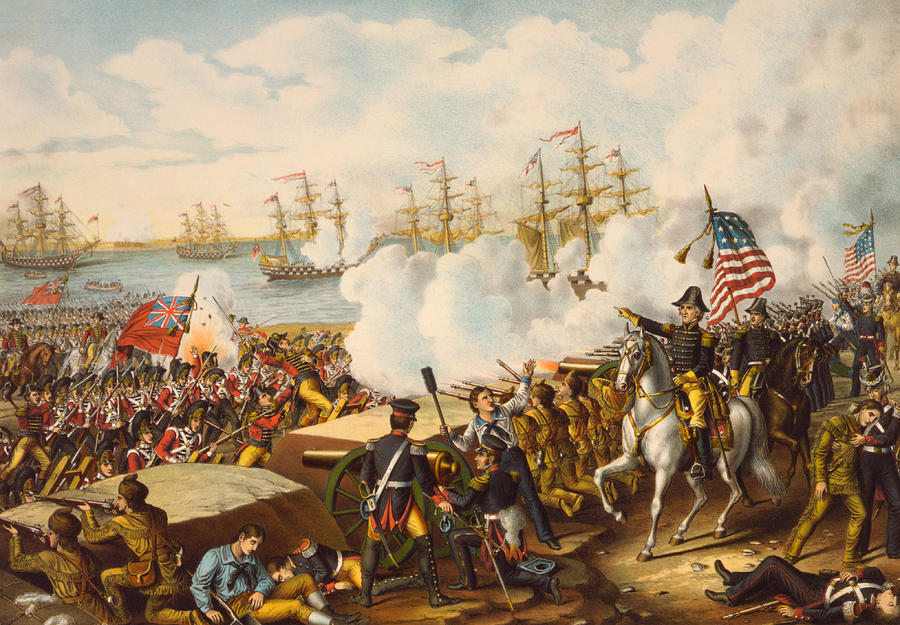
Mary as Our Lady of Prompt Succor (which means, “rapid aid”) has been celebrated in New Orleans, Louisiana on this date for more than 200 years since a famous military victory. The Ursuline Sisters in New Orleans had honored a statue of Mary by this title for several years in their chapel, but when the British army threatened to capture their city during the War of 1812 these nuns and many townsfolk spent the night beseeching her help. The convent’s prioress made a vow to have a Mass of Thanksgiving sung annually should the American forces prevail. During Mass the next morning, as Holy Communion was being distributed, a messenger rushed into the chapel with the news that the British had been defeated.

Though the British army had outnumbered the American troops (about 8,000 to 5,700) the invaders were repulsed and swiftly defeated in just over a half hour of fighting. The commanding general of the American side, the future president Andrew Jackson, went to nuns’ convent afterwards to thank them for their prayers: “By the blessing of heaven, directing the valor of the troops under my command, one of the most brilliant victories in the annals of war was obtained.” For each American soldier lost or wounded in that battle, the British had experienced roughly thirty casualties. This victory was commemorated by Johnny Horton’s 1959 #1 hit song “The Battle of New Orleans.” Since 1928, Our Lady of Prompt Succor has been honored as the principal patroness of the City of New Orleans and the State of Louisiana.

Mary in History: Our Lady of the Flowers

December 29, 2018

December 29, 1336 – Italy

Egidia Mathis, a pregnant, young wife, was walking alone at the edge of nightfall near Bra, Italy. Near a pillar bearing a coarsely painted image of the Virgin Mary with Child, she crossed paths with two foreign soldiers-for-hire (that is, mercenaries) whom she sensed wished to do her harm. Incapable of defense or escape, Egidia flung herself towards the pillar, begging Mary’s help. A great light came forth from the image. Mary scared off the wicked men with a commanding gesture and smiled at Egidia with maternal empathy. The stress of the moment caused Egidia to go into labor and she delivered her baby there. As she held her newborn closely in the winter cold, the blackthorn thicket surrounding the pillar was now in full bloom with thousands of white flowers. Upon reaching home, she told her husband of the whole episode and he with their relatives and neighbors all beheld the miraculous, out-of season flowering.

Some might dismiss this tale as merely pious legend. But virtually every winter since 1336, this blackthorn thicket, contrary to its species and scientific explanation, has flowered between December 25th and January 15th. Two rare exceptions were 1914 and 1939, the years the two World Wars began. Furthermore, on three occasions, this winter flowering has extended for months, corresponding each time with rare public expositions of the Shroud of Turin (the possible burial cloth of Christ) housed twenty-seven miles away.

Christ, the Peace Light, is Born

December 27, 2018

In the city of Israel that is called Bethlehem, the ancient Church of the Nativity marks the site of the first Christmas. There one can actually stoop and bend down beneath the central altar & touch the celebrated spot where Jesus Christ was born. It is fitting that the pilgrims bend low to do this, because the miracle of God becoming a human being — to live and die and rise for us — surely deserves humble reverence with everything that we are.

Earlier this year, as has happened for a number of years now, an Austrian child and their family was selected to travel to Bethlehem. Candles and lamps are always burning within the Church of the Nativity, and there this chosen child transferred their fire into two blast-proof lanterns. Then they all flew back to Austria, where this flame (called “The Peace Light”) has spread from lamp to lamp, light to light, candle to candle, into more than thirty European countries and to places around the world. On December 1st of this year, the Peace Light arrived at J.F.K. Airport in New York City and it has traveled from there across our country. This week, it providentially came to our parish.

Last Friday, a Hudson couple traveling with the Peace Light approached me after morning Mass at St. Paul’s. I had never heard of the Peace Light before, but I happily received it and kept it for this Christmas celebration. All the flames you see burning our sanctuary this Christmas were originally lit from Bethlehem’s flame. Now I carefully carried, protected, and preserved this light; especially when I only had one vigil candle. I realized that one error, one jostling of the liquid wax, could extinguish the fire; and then what would become of this, my Christmas homily? I’d be lost. But, thanks be to God, these candles are lit here today.

So why do we have candles at Mass? Since the early days of Christianity, when Catholic Mass was celebrated in hiding, underground in the catacombs, lamps have provided useful illumination. But these lights are not merely practical. In the late 300’s A.D., a heretic named Vigilantius criticized Christians in the East about many of their practices, including their lighting of great piles of candles while the sun was still shining in the sky. St. Jerome declared in answer to him that candles are lighted where the Gospel is proclaimed not merely to put darkness to flight, but as a sign of joy. As an added symbol, these candles on the altar (and the Easter Candle) are, by tradition, mostly made of beeswax. Because beeswax, which is the product of the virginal female bee, is like the flesh of Our Lord supplied by the Blessed Virgin Mary.

Of course, the celebrated Peace Light is not merely a symbol of some abstract notion or idea of peace; it’s a symbol of the very real person of Jesus Christ. The “Light of the World” entered our world from his mother’s womb in Bethlehem. And his light has spread across the world and throughout time to this place and our day. Today, our candles burn and shine for him.

Within you there is also candle, but it is a very vulnerable light. Through error or neglect its light can go out. And without this light we are in darkness without true joy. So Jesus commands us to regularly gather all our candles together here, to be re-lit from the Source, the Light of Christ. In conclusion, in case my symbolism has been too subtle: Have a very joyful Christmas, and know that Jesus Christ (who loves you) wishes you to return here again for his Holy Mass next Sunday.

Mary in History: Our Lady of Guadalupe

December 11, 2018

December 12, 1531 – Mexico

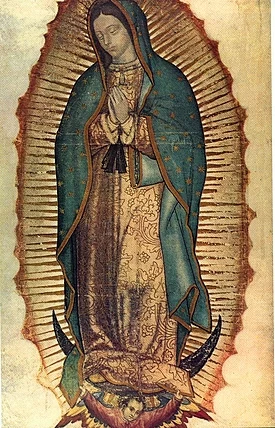
The Blessed Virgin had previously appeared to St. Juan Diego, a Native American, Catholic convert, twice sending him to the local bishop to ask that a church be built near Tepeyac Hill in what is today Mexico City, Mexico. The bishop was not persuaded by the native’s story but asked him for some kind of sign from Mary. On this date, Mary directed Juan to pick some non-native roses miraculously in bloom out of season on that hill and to bring them to the bishop. Juan gathered these in the front of his poncho-like garment (called a tilma) and set off.

When Juan opened the front of his tilma before the bishop to reveal the roses, Our Lady of Guadalupe’s image was found on the humble fabric of his garment. Her appearance was that of an Aztec princess, clothed in the Sun with the Moon under her feet, bearing a Divine Child in her womb. The image’s rich symbolism spoke compellingly to the native people and Mexico was converted to Christ.

That tilma, made of rough cactus fibers, should have deteriorated centuries ago, but this garment and its brushstroke-less image remain on display in Mexico’s greatest shrine to this day. Like many things, it’s a miracle existing in plain sight. Our diocese also has a beautiful shrine dedicated to Our Lady of Guadalupe, Patroness of the Americas, located just south of La Crosse. If you’ve never visited, it’s worth the pilgrimage.

Mary in History: The Immaculate Conception

December 8, 2018

December 8, 1854

On this date, to the delight of the Church in Heaven and earth, Pope Pius IX employed the gift of papal infallibility to dogmatically affirm our ancient belief in the sinlessness of the Mother of God: “We declare, pronounce, and define that the doctrine which holds that the most Blessed Virgin Mary, in the first instance of her conception, by a singular grace and privilege granted by Almighty God, in view of the merits of Jesus Christ, the Savior of the human race, was preserved free from all stain of original sin, is a doctrine revealed by God and therefore to be believed firmly and constantly by all the faithful.

In her apparitions at Lourdes, France three years after, Mary affirmed, “I am the Immaculate Conception.” The Church celebrates Mary’s Immaculate Conception on December 8th and her birthday nine months later, on September 8th. Every one of us, from the greatest to the least, begins very, very small. But God loves to make great things of the small.

Mary in History: The Miraculous Medal

November 29, 2018

November 27, 1830 – France

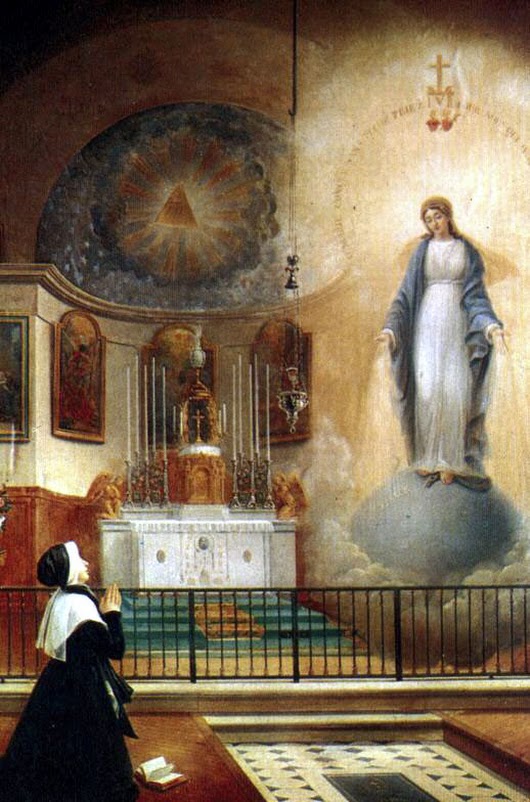
Our Lady appeared to St. Catherine Labouré, a 24-year-old novice (training to become a vowed religious sister,) in the Daughters of Charity’s convent chapel in Paris, France. In this, Mary’s second of three appearances to her, Catherine saw something like two living paintings, one fading into the other, in which the Blessed Virgin stood in a white silk dress upon a half-globe, her feet crushing a serpent. Mary held a small golden globe topped with a cross which she lifted up towards Heaven. Catherine heard a voice say, “This globe represents the entire world, including France, and every person.”

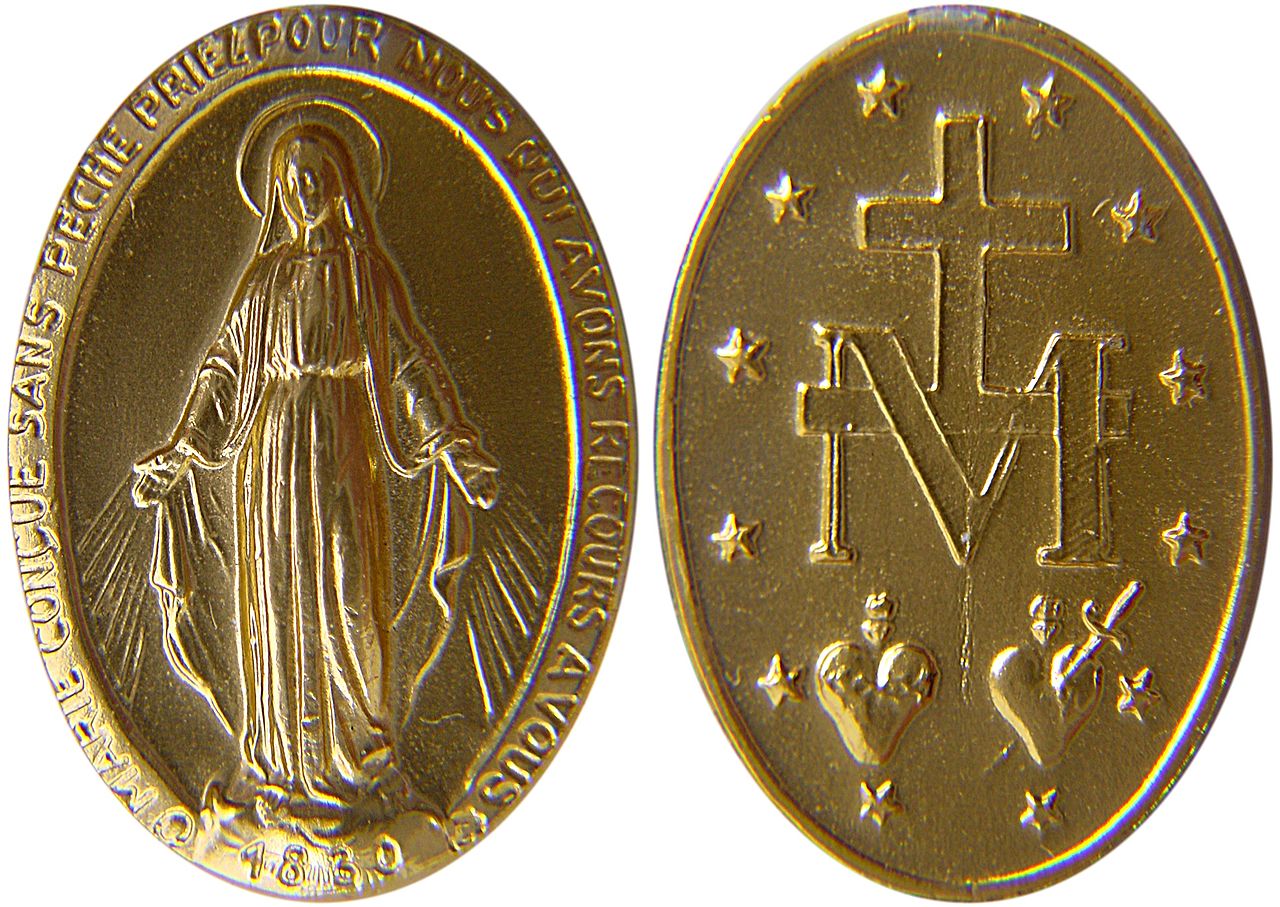
In the second image, beautiful rays of light streamed from Mary’s open hands, her fingers covered with jeweled rings. Catherine heard, “These rays are a symbol of the graces that I pour out on those who ask them of me. The gems from which rays do not fall are the graces for which souls forget to ask.” Then an oval formed around the apparition and Catherine saw in a semi-circle these words in gold letters: “O Mary, conceived without sin, pray for us who have recourse to you.”

Then a voice commanded Catherine, “Have a medal made according to this model. For those who wear it with confidence, there will be abundant graces.” The image turned and Catherine saw the reverse side of the medal: an “M” topped with a little cross and two hearts, one crowned with thorns and the other pierced by a sword. With approval by the Archbishop of Paris, the medal was minted and shared, leading to such gifts of grace that it came to be called “The Miraculous Medal.”

Christ the King & His Kingdom Among Us

November 27, 2018

We tend to think of Mexico as one of the most Catholic countries on earth, but for a time in 1920’s it was illegal to publicly celebrate Mass there. Following a revolution, the new, socialist, Mexican government effectively sought to outlaw the Catholic Church. They seized church property, expelled all foreign priests, and closed the monasteries, convents and religious schools.

But this did not stop priests like Blessed Miguel Pro from secretly ministering to the faithful; celebrating the Eucharist, distributing Holy Communion, hearing confessions, and anointing the sick clandestinely. He would often sneak from place to place in disguise, sometimes as a mechanic, or an office worker, or as a beggar. After many close calls, Fr. Pro was arrested by the government and, without trial, condemned to death on false charges that he was connected to a bombing assassination plot.

On November 23, 1927, Fr. Pro was led out for his execution by firing squad. He blessed the soldiers, knelt and quietly prayed for a time. He declined the blindfold and faced his executioners with a crucifix in one hand and a rosary in the other. He held out his arms like the crucified Christ and shouted, “May God have mercy on you! May God bless you! Lord, you know that I am innocent! With all my heart I forgive my enemies!”

Just before the order was given to fire, he proclaimed, “Viva Cristo Rey!” (which means “Long live Christ the King!”) When the initial bullets failed to kill him, a soldier shot him point-blank. The anti-Catholic government had a photographer on hand to capture these moments for propaganda purposes, but soon after these images were published in all the newspapers the possession of these pictures was outlawed. Seeing this Catholic priest dying innocently, bravely, and faithfully was an inspiration to the oppressed people of Mexico, who eventually won back their freedom of religion and freedom for Christ’s Catholic Church.

Today we celebrate “Christ the King,” but where is his Kingdom? During his ministry, Jesus said, “If I cast out devils by the finger of God, [and he did] then the kingdom of God has come upon you.” On another occasion he said, “Behold, the Kingdom of God is among you.” And at the Last Supper he declared, “Amen, I say to you, I shall not drink again the fruit of the vine until the day when I drink it new in the kingdom of God.” The next time he drank the fruit of the vine (that is to say, wine) was the next day, Good Friday, when he drank it from a sponge held to his lips as he hung upon the Cross. So when Jesus tells Pilate, “My kingdom does not belong to this world,” and, “My kingdom is not here,” he is not saying it is entirely absent from this world, that we will only begin to see it in Heaven or at his Second Coming when his Kingdom will come in its fullness. His Kingdom is not here because it is not yet here fully, and his Kingdom does not belong to this world because it is not from this world but from Heaven.

So where is Jesus’ Kingdom on earth? Jesus was called the “Son of David,” that is, the descendant of King David and heir to his throne. It was believed that the Christ would become the new King of Israel. And in fact, when Jesus was put to death on the Cross, the written charge declared above his head was: “This is Jesus the Nazarene, King of the Jews.” The Kingdom of David and his successors (the old, Davidic dynasty) was imperfect but it prefigured Jesus’ Kingdom. As St. Augustine taught, the Old Testament is the New Testament concealed, and the New Testament is the Old Testament revealed. The old foreshadows and points to the new. So, we can draw clues from the old Davidic Kingdom to identify Jesus’ new Kingdom in our midst.

The kings in the Davidic dynasty had many, many wives. From the beginning, God intended marriage to be between one man and one woman, but the kings of Israel – thinking blood is thicker than water – used marriages to seal their peace treaties and alliances with other nations. But this presented a problem: when the king has many wives, who is the queen? You can imagine the rivalry and discord this question could generate. The solution in the Davidic dynasty was to have the mother of the king fulfill that role, as Queen Mother. She had a throne of honor at the king’s right hand and served as an intercessor for the people of the kingdom. If someone had a request, one might bring it to her to present to the king. If the request were pleasing to the king and good for the kingdom he would happily grant it to please his well-loved mother.

The king of Israel had many ministers, but there was one prime minister among them: the king’s chief steward, the master of the royal household. As a sign of that man’s office and authority, the chief steward carried a large wooden key on his shoulders. When he would retire, or die, or be removed from office, another would take his place. His power was that of the king, on whose and with whose authority he acted. But a chief steward acting contrary to the king’s will would soon find himself replaced.

In the courts of ancient kingdoms, including Israel’s, you would find eunuchs. A eunuch is a man born or rendered physically incapable of marrying or having children. Eunuchs were preferred for practical reasons. First, they were safe to be around the king’s wives and harem. Secondly, since they had no wife or children of their own, eunuchs were entirely focused on the king and the kingdom. Their mission, personal success, and legacy were entirely wedded to that of the king’s.

Now we can see how the old conceals the new, and how the new reveals what the old prefigured. Jesus called all those willing and able to be “eunuchs for the sake of the Kingdom of Heaven.” Today, many ministers serve him devotedly in his celibate Priesthood. Jesus told Peter, “I give you the Keys to the Kingdom of Heaven. Whatever you bind on earth shall be bound in Heaven, and whatever you loose on earth shall be loosed in Heaven.” Jesus made Peter the first Pope, the first prime minister, chief steward, and master of his royal household on earth. Jesus has sealed his peace treaty and alliance with peoples of all nations through a single marriage: his marriage to his bride, the Church. But among the Church’s many members, is anyone the queen? As before, she is the mother of the King. The Lord has called Mary to a throne at his right hand where she intercedes for his people. If we have a request, we can ask her to present it to her Son, and if the request is pleasing to the King and good for his Kingdom he will happily grant it because he loves his mother so.

We are called to be good citizens of this country, but we are first and foremost citizens of Christ’s Kingdom. We are to vote and participate in the political process (for good polices and laws do good, while bad laws and policies do great harm) but we are not to put our trust in princes or politicians. We are to obey the law, but we know there is a higher law that supersedes unjust laws, and we know that above every earthly leader there is a higher King. That is why Blessed Miguel Pro was willing to defy the laws and president of Mexico to celebrate the Church’s sacraments and was not too terrified to face death before a firing squad. Let us remain loyal to Christ our King, and remain loyal to his Kingdom, a Kingdom which is among you, in His Holy Catholic Church.

Reintroducing the St. Michael Prayer

October 22, 2018

Our Bishop William Callahan has asked that we begin regularly reciting the St. Michael Prayer at the end of our parish Masses. In last week’s pastoral letter he wrote that “this prayer, given to us by Pope Leo XIII, is a sure defense against the wickedness and snares of the Devil. Now as much as ever we need the assistance of St. Michael to help rid us, the Church, of its current evils.” So, we will be praying this prayer together at each Sunday and weekday Mass following the final blessing (and preceding the closing hymn.)

Who is St. Michael? He is a mighty archangel, a leader among God’s angels. He has several appearances in the Bible, but most famously in the Book of Revelation. There he is beheld leading good angels in battle against the Devil (referred to here as the dragon): “Then war broke out in heaven; Michael and his angels battled against the dragon. The dragon and its angels fought back, but they did not prevail and there was no longer any place for them in Heaven.” (Revelation 12:7-8) St. Michael’s name is Hebrew for the phrase “Who is like God?” Tradition says that this was Michael’s challenging battle cry against the proud, rebellious demons – for no creature is equal our all-glorious God.

The St. Michael Prayer was written by the long-reigning Pope Leo XIII. In 1886, he instituted that it be recited after the celebration of Masses. Though the inspiration for this prayer is uncertain, many historians accept accounts that it followed from Pope Leo experiencing a profound vision. A cardinal from that time explained, “Pope Leo XIII truly had a vision of demonic spirits, who were gathering on the Eternal City (i.e., Rome.) From that experience… comes the prayer which he wanted the whole Church to recite.

Since the St. Michael Prayer in English is a translation from the original Latin text, some versions of the prayer slightly differ from one another. (For instance, some translations ask St. Michael to “cast” Satan and all the evil spirits into Hell, while others use the word “thrust.”) To keep everyone on the same page, please refer to the prayer cards at the end of the pews or the version below. Together, let us pray for aid in our battle against the iniquitous spirits active within God’s Church and our world.

St. Michael the Archangel, defend us in battle.
Be our defense against
the wickedness and snares of the devil.

May God rebuke him, we humbly pray;
and do thou, O Prince of the heavenly hosts,
by the power of God,
thrust into hell Satan and all the evil spirits,
who prowl about the world seeking the ruin of souls.
Amen.

The Time St. Paul Corrected St. Peter

August 31, 2018

Jesus gave Simon the fisherman the keys to his kingdom and changed his name to “Rock” (that is, “Petros” in Greek, or Peter):

I say to you, you are Peter, and upon this rock I will build my church, and the gates of the netherworld shall not prevail against it. I will give you the keys to the kingdom of heaven.” (Matthew 16:18-19a)

The significance of these things is found in the Old Testament. The Lord changed the names of Abram, Sarai, and Jacob to Abraham, Sarah, and Israel to declare what God would achieve through their lives. (Abraham, for example, means “father of a multitude.”) In the old Davidic dynasty, the king’s chief steward and master of the royal household would carry a key symbolizing his authority. Thus, for Jesus’ Kingdom – the Church – Peter is given the great power and office of prime minister:

Whatever you bind on earth shall be bound in heaven; and whatever you loose on earth shall be loosed in heaven.” (Matthew 16:19b)

Yet, despite his divine calling, St. Peter was not always perfect in his personal example. The New Testament records that on one occasion he had to be fraternally corrected by St. Paul.

In the early years of the Church, as belief in the Gospel began to spread from Jerusalem into pagan lands, the question arose of how much of what God commanded through Moses needed to be observed by the Gentile (that is, non-Jewish) converts to the New Covenent. God gave not only the Ten Commandments in the Old Covenant but some 613 religious rules, touching on many areas of daily life, including food and clothing. These precepts were called the Mosaic law.

St. Peter’s vision at Joppa and his subsequent visit to Cornelius the centurion’s house in Caesarea (recounted in Acts 10) revealed to him God’s will that Gentile converts to Christianity need not be obliged to observe the full Mosaic law. Yet others were teaching, “Unless you are circumcised according to the Mosaic practice, you cannot be saved.” Around the year 50 A.D., the Apostles and other Church leaders gathered for the Council of Jerusalem to settle this question.

There, some from the party of the Pharisees who had become believers in Christ stood up and said to the assembly, “It is necessary to circumcise them and direct them to observe the Mosaic law.” But St. Peter replied, “[Why] are you now putting God to the test by placing on the shoulders of the disciples a yoke that neither our ancestors nor we have been able to bear? On the contrary, we believe that we are saved through the grace of the Lord Jesus, in the same way as they.” (Acts 15:10-11) And the Council decreed that Gentile Christians were free from observing the bulk of Jewish religious rules and customs.

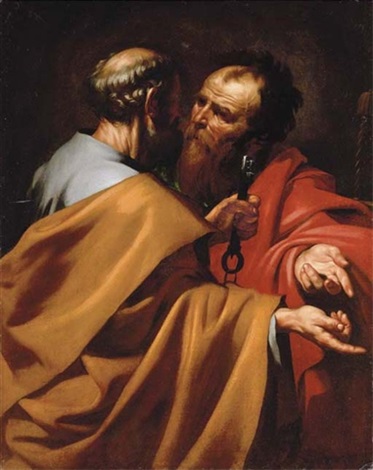
The Dispute at Antioch: Saints Peter & Paul by Jusepe de Ribera

But there was a later episode at Antioch where Peter’s personal example did not match his professed beliefs, and St. Paul was moved to correct him:

[W]hen Cephas (the Aramaic word for “Rock” or “Peter”) came to Antioch, I opposed him to his face because he clearly was wrong. For, until some people came from James, he used to eat with the Gentiles; but when they came, he began to draw back and separated himself, because he was afraid of the circumcised. And the rest of the Jews also acted hypocritically along with him, with the result that even Barnabas was carried away by their hypocrisy. But when I saw that they were not on the right road in line with the truth of the gospel, I said to Cephas in front of all, “If you, though a Jew, are living like a Gentile and not like a Jew, how can you compel the Gentiles to live like Jews?” (Galatians 2:11-14)

Apparently, the “people from James” were Jewish Christians who were disapproving of Peter eating non-kosher meals with the Gentile Christians, leading Peter to withdraw from table fellowship with those non-Jewish converts. St. Peter, the first Pope, was preserved by God from teaching error, but he was not immune to personal faults. Paul publicly corrected Peter because his failure in leadership was leading to scandal within the Church. Spirit-led fraternal correction is a spiritual work of mercy and a duty of Christian love.

The Catholic Church’s Code of Canon Law says:

[The Christian faithful] have the right, indeed at times the duty, in keeping with their knowledge, competence and position, to manifest to the sacred Pastors their views on matters which concern the good of the Church. They have the right also to make their views known to others of Christ’s faithful, but in doing so they must always respect the integrity of faith and morals, show due reverence to the Pastors and take into account both the common good and the dignity of individuals.” (Canon 212, Section 3)

In this present, painful season in the Church, let us remain faithful but not silent. Let us insist of our shepherds that these scandals may lead to cleansing through true leadership and effective reform.

Things You Probably Don’t Know About Contraception & Natural Family Planning

August 31, 2018

We Just Passed a Historic Milestone
July 25, 2018 marked the 50th anniversary of Blessed Pope Paul VI’s encyclical Humanae Vitae (“Of Human Life”) on the moral and immoral regulation of human births. In that document, Pope Paul reaffirmed the Church’s teachings on marriage, the marital embrace, and the prohibition of artificial birth control.

Artificial Contraception Existed in Ancient Times
Egyptian scrolls dating to 1850 B.C. describe various barrier and sperm-killing methods. Pagans practiced contraception techniques in the Roman Empire at the time of Jesus Christ and the Early Church.

God Smote a Man in the Bible for Contracepting
Genesis 38 relates how a man named Onan repeatedly “wasted his seed on the ground” during intercourse to avoid conceiving children. “What he did greatly offended the Lord, and the Lord took his life…”

The Church Fathers Condemned Artificial Birth Control
For example, St. Clement of Alexandria, St. Augustine, St. John Chrysostom all condemned acts of contraception and/or sterilization.

Famous Protestants Also Denounced Contraception
Martin Luther the founder of Lutheranism, John Calvin the founder of Calvinism, and John Wesley the co-founder of Methodism all wrote against it.

All Christian Groups Agreed About This a Century Ago
In 1930, the Anglicans were the very first Protestant denomination to officially approve the use of artificial contraception methods for hard cases. (As recently as 1917, that the same group had declared contraception “demoralizing to character and hostile to national welfare.”)

Protestant Denominations Changed Their Teachings
By 1961, the National Council of Churches could pronounce that “Most of the Protestant churches hold contraception… to be morally right when the motives are right,” adding, “Protestant Christians are agreed in condemning abortion or any method which destroys human life, except when the health or life of the mother is at stake.”

The Catholic Church has Stood Firm
At the end of 1930 and again in 1968, popes issued encyclical letters reaffirming the constant teaching of Christ’s Church. Pope Pius XI’s Casti Connubii and Pope Paul VI’s Humanae Vitae taught truths about the nature, purpose, and goodness of marriage and the marital act. Both repeated our consistent and ancient rejection of all directly-willed acts of contraception, sterilization, and abortion.

Good Intentions are not Enough
As The Catechism of the Catholic Church teaches, “Legitimate intentions on the part of the spouses do not justify recourse to morally unacceptable means… for example, direct sterilization or contraception.” (#2399)

Humanae Vitae Foretold Great Harms
Paul VI predicted that the widespread use of contraception would broadly lower morality, increase marital infidelity, lessen respect towards women, be coercively imposed by governments, and promote the self-harming belief that we have unlimited dominion over our bodies and human life in general.

Contraception has Broken its Promises
According to its advocates, contraception was supposed to strengthen marriages, prevent unplanned pregnancies, reduce abortions, and increase women’s happiness. Today, even after decades of cheap and common contraceptive use, half of all pregnancies are unplanned and half of all marriages end in divorce, about one-in-five U.S. pregnancies are aborted (with more than 60 million killed since Roe vs. Wade in 1973), and women have reported lower and lower levels of happiness throughout the decades since the 1970’s.

The Lord is Pro-Family and Pro-Children
The first commandment in the Garden of Eden was “be fruitful and multiply,” and the the Bible always speaks of having many children and descendants as a blessing rather than a curse. Jesus presents marriage as a holy union of life and love saying “what God has joined together, no human being must separate” and adds “whoever receives one child such as this in my name receives me.”

NFP Regulates Births Both Virtuously and Effectively
Natural Family Planning (also known as NFP) uses signs from a woman’s body to identify the days in her cycle when she can conceive. Equipped with this knowledge, a couple may abstain from marital embrace to avoid a pregnancy or engage in order to achieve one.

There can be Holy Reasons not to Have More Babies
As Pope Paul VI wrote in his famous 1968 encyclical Humanae Vitae, “With regard to physical, economic, psychological, and social conditions, responsible parenthood is exercised by those who prudently and generously decide to have more children, and by those who, for serious reasons and with due respect to moral precepts, decide not to have additional children for either a certain or an indefinite period of time.”

NFP is not the Rhythm Method
The old Rhythm Method simply counted how many days had passed since the woman’s last cycle and was a moral but ineffective approach to avoiding conception. For comparison, faithfully-followed NFP techniques have a 99% effectiveness rate (meaning that up to one in one hundred woman will become pregnant in a year, a rate comparable to widespread methods of artificial contraception.)

NFP Causes None of Contraception’s Harms
Unlike chemical contraceptives, NFP never causes:
– Spontaneous abortions (by preventing implantation
of newly conceived embryos into the uterine wall)
– Increased risks of breast, liver, and cervical cancer
– Nausea, vomiting, stomach problems, or diarrhea
– Depression or mood swings
– Decreased libido
– Or other published side-effects

NFP Strengthens Married Life
Couples who practice Natural Family Planning grow in communication, self-control, and intimacy. They are more open to discerning and embracing God’s plan for their families and are statistically less likely to divorce. Not only is NFP completely natural, the information it tracks about a woman’s body commonly leads to the diagnosis, treatment, and cure of health disorders, from infertility to life-threatening illnesses.

You can Learn NFP From Home
Visit the Diocese of La Crosse’s website (at diolc.org) and search for “NFP”. There you can investigate more about various NFP techniques, its science and benefits, and register for on-line courses.

* * * * * * * * * * * * *

“In destroying the power of giving life through contraception a husband or wife is doing something to self. This turns the attention to self and so it destroys the gift of love in him or her. In loving, the husband and wife must turn the attention to each other as happens in natural family planning, and not to self, as happens in contraception. Once that living love is destroyed by contraception, abortion follows very easily.”  – St. Mother Teresa of Calcutta

“In the conjugal act, husband and wife are called to confirm in a responsible way the mutual gift of self which they have made to each other in the marriage covenant. The logic of the total gift of self to the other involves a potential openness to procreation: in this way the marriage is called to even greater fulfillment as a family. Certainly the mutual gift of husband and wife does not have the begetting of children as its only end, but is in itself a mutual communion of love and of life. The intimate truth of this gift must always be safeguarded. … The two dimensions of conjugal union, the unitive and the procreative, cannot be artificially separated without damaging the deepest truth of the conjugal act itself.”  —Pope St. John Paul II, Letter to Families, 1994

“Marriage must include openness to the gift of children. Generous openness to accept children from God as the gift to their love is the mark of the Christian couple. Respect the God-given cycle of life, for this respect is part of our respect for God himself, who created male and female, who created them in his own image, reflecting his own life-giving love in the patterns of their sexual being.”  —Pope St. John Paul II, 1979