Archive for the ‘Saintly People’ Category

Tuesday, 27th Week in Ordinary Time—Year I

October 6, 2009

Velazquez, Christ in the House of Martha and Mary. 1618

Today you heard two familiar Bible stories. In the first reading, Jonah reluctantly preaches and the Ninevites, who wholeheartedly convert. In the Gospel, Martha serves while Mary listens at Jesus’ feet. The characters in these two stories would seem to have nothing in common with each other… but that is not so.

What do Martha and Jonah have in common? Both Martha and Jonah are doing work for the Lord, work which they found to be unpleasant. What do Mary and the Ninevites share? What do they have in common? Both Mary and the Ninevites are doing the one thing that is needed, they have turned themselves towards the Lord. Now let’s apply their lesson to ourselves as students.

Ever since I was five years old, up to this very year, I have been in school as a student every year of my life. So I’ve sat through a lot of classes; some which I really enjoyed, and others that I didn’t. Now it’s easy to work on a subject we enjoy, but in other classes we’re like Martha and Jonah, it’s God’s will for us that we be there, doing what we’re doing, but we’re certainly not thrilled about it.

So the next time you feel bummed-out in one of your classes (hopefully not in one of my classes) try doing this: Turn your eyes and your heart to the Lord, like Mary and the Ninevites, and offer yourself and that hour’s work to Jesus.   You already have your cross, so use it for a spiritual sacrifice. What difference will it make when you redirect yourself and your work like this to the Lord? There’s only one way to find out.

October 2 – Guardian Angels

October 2, 2009

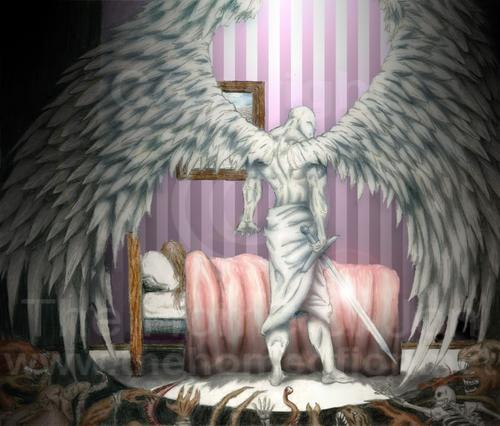
There are members of our Church gathered here today, who are always with us, but whom we all-to-easily overlook. It is to this group of persons that I wish to speak to today: our holy guardian angels. I invite you to share in my thoughts and sentiments of my words to them.

Holy Guardian Angels,
First, I want to apologize for our tendency to forget about you and the important part you play in our lives. Though we do not say it enough, thank you Holy Ones, for everything you do for us and we ask you for your continued help.

May we be always docile to your promptings. Please accept this invitation to enter our thoughts and emotions as through an open door. You are Christ’s perfectly sinless creatures, and you discern His will with far more clarity than we do. Please make His will clear for us and make it easy for us to follow it.

Holy Angels, you know the hearts and minds of men with penetrating insight. Please help us through your mediation to communicate graciously with the people in our lives. Please help mediate good resolutions to the conflicts and tensions we have with others. Please help us to know how to best communicate Christ’s love to others in ways that are tailored for them.

Holy Guardians, just as some of your angelic peers ministered to Jesus Christ amidst His sufferings, please bring us support and consolation in our difficult moments. And please defend us against spiritual attacks, for you understand these threats far better than we do.

Please join us in our prayers. Perfect in them and add to them whatever may be lacking. Please pray with us for our loved ones and for the intentions which are dear to us. You are blessed to see God face-to-face and you worship Him day and night. Please lead us to perfect worship.

Holy Guardian Angels, thank you, for everything you do for us. Know that we will someday thank you even more profusely when it is revealed to us in detail all that you’ve done to light, to guard, to rule and to guide our lives.

October 1 – St. Therese of Lisieux

October 1, 2009

Today we celebrate the young woman Pope Pius XI called, “The greatest saint of modern times.” At the age of 15, she entered the Carmelite convent in Lisieux, France to give her whole life to God. There, she would take on a new religious name which would profoundly capture her identity: Sister Therese of the Child Jesus and the Holy Face.

St. Therese

How did her life resemble the Child Jesus? Early on, Therese saw her own weakness and littleness, and she believed that great and mighty deeds were beyond her, so she committed herself to a “little way of spiritual childhood.” She always tried to love and trust like a little child, modeling herself on the Child Jesus; not doing great things, but doing everything with great love.

The second title of St. Therese, that of the Holy Face, refers to the image Jesus’ bloodied face left upon St. Veronica’s veil during the Passion. How did Therese’s life resemble the Holy Face? Whatever she suffered, from small annoyances of daily life to the great pains of her final illness, Therese offered it all to God as a sacrifice for the good of souls. The image and likeness of Christ’s redemptive suffering was made present in her, like the image Christ’s face upon a clean, white cloth.

We can follow St. Therese’s example in our own lives, whenever we approach our Father in prayer with child’s fearless trust, whenever we do our daily tasks with a intention to do them with great love, and whenever we offer our sufferings as a sacrifice in Christ, for our good and the good of all His Church.

September 29 – The Archangels

September 29, 2009

Today we celebrate Saints Michael, Gabriel, and Raphael. God created lots of angels, so that they might enjoy, share and manifest His glory. Within this multitude, Michael, Gabriel, and Raphael hold special rank as archangels. The angels and archangels are like us in important ways, but in other ways they’re very different.

Just like us, God did not create the angels to fulfill some need He had. God needs nothing to be happy and complete. God made heaven and earth, all that is seen and unseen, out of sheer love, overflowing. God created us because love likes to share.

Just like us, God created the angels as persons. We are persons because we both have intellect and will, the capacity to know and the ability to freely choose. Just like us, angels are persons, having souls which will never die. But unlike us, angels don’t have a physical body united to their soul. Instead of body and spirit, angels are spirit alone.

Like us, angels know things and choose things. Like us, they’re made for interpersonal-communion. They interact with God, with each other, with us, and our world. But like God, and unlike us, angels live outside of time. We humans grow, and change, and mature, day by day. We’re incomplete and we develop over time. We can choose holiness one day, choose to sin the next, and on the day after that, think better of it, repent, go to confession, and return to God. But in the case of angels, their natures are complete and finished. And the free choices they’ve made once are made for all time. That is why the angels are forever sinless creatures, and why the demons, who are the angels who chose to rebel and were cast down from heaven, will never turn back to God.

We do not know exactly why Satan and the many demons fell, but it is clear that they did not, in their sinful pride, want the roles in God’s kingdom which God had prepared for them. Some speculate that when the angels where created, God gave them some knowledge of His plans for the human race. God wished the angels to share in this plan, but, for some reason, some refused to serve.

Perhaps it was the scandal of the Incarnation, the idea that the eternal Second Person of the Trinity, would take on material flesh. Maybe they refused to worship the Eternal Word, Jesus Christ, in such a state as that. Perhaps, filled with pride about their own glory, which was entirely God’s gift, they refused to be Christ-like and serve creatures they deemed to be inferior to themselves.

Whatever the reason for it, a war broke out in heaven. Michael and his angels battled against Satan. Satan and his angels fought back, but they did not prevail. The demons wanted to be like God, but without God. Perhaps Michael challenged them with the meaning of his name, “Who is like God?” They wanted to be God, but without God, and there was no longer any place for them in heaven.

And now we arrive at the lesson we learn from the demons’ Fall that I want you to take to heart…

When the demons refused to be what they were made and called by God to be, they became something far less than what they were meant to be. By turning away from God, the source of their life, they became stupid, ugly, and weak compared to what they should have been.

Compared to what God makes us, calls us, and longs for us to be, sin makes us stupid, ugly, and weak too.

Do you have any sins?

Every Tuesday I sit in my office as much time as can, from the end of morning Mass until 3:00 PM, when prayers are offered in the Columbus chapel that God the Father would have mercy on us. I’ve spent hours at my desk, behind my confessional screen, catching up various work. And in all that time, not a single student has come for the sacrament that reconciles sinners with our Lord Jesus Christ. Now don’t think that I’m angry about this. Tuesdays for me as they are now are very productive days. I get a lot done behind my desk. But I would very much prefer, that so many of you would come, to the healing forgiveness, and strengthening graces, that Jesus is waiting to give you in this sacrament, that I would get nothing else done.

I want you to come to the sacrament that cleans your slate and lightens your heart. I want you to come to the sacrament that makes you wiser, stronger, and more attractive as a person than you are when you’re in sin. I want you to come to the sacrament of reconciliation, not for my sake, but for your sake.

Through the intercession of St. Raphael, whose name means “God’s healing,” may we believe in God’s power to heal our wounds. Through the intercession of St. Gabriel, whose name means “God’s power,” may we believe in God’s power to recreate the repentant sinner. And through the intercession of St. Michael, may we consider “who is like God,” who shows mercy to all who come to Him.

26th Sunday in Ordinary Time—Year B

September 27, 2009

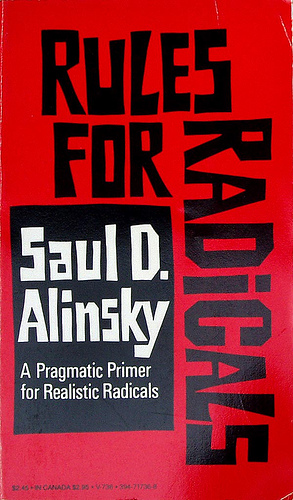
There are many things wrong with our society and the world, but how are we to go about changing them? One approach was presented by a fellow named Saul Alinsky. He, and his highly-influential 1971 book entitled Rules for Radicals: A Practical Primer for Realistic Radicals, have been popping up a lot lately. Reading his list of 11 rules you can see how they are widely used in politics & culture today.

The dedication of the book reads like this: “Lest we forget at least an over-the-shoulder acknowledgment to the very first radical: from all our legends, mythology, and history (and who is to know where mythology leaves off and history begins — or which is which), the first radical known to man who rebelled against the establishment and did it so effectively that he at least won his own kingdom — Lucifer.”

I doubt Alinsky believed in the devil at all.  He probably wrote that because it was a clever and effective attention-grabber for his book. But the book’s dedication was truer than he realized.  The book recalls the first rebel’s rejection of the kingdom of God and then goes on to explicate rules which often reject the approaches embodied and advocated by Christ, whose approaches the world often considers too impotent to defeat evil in the world.

The tactics this book advocates are often the same used by demons in spiritual warfare against us—a war fought on the battlefields of our hearts and minds, for the defense or the capture our souls.

Consider, for example, “Rules for Radicals #1: Power is not only what you have, but what an opponent thinks you have. If your organization is small, hide your numbers in the dark and raise a din that will make everyone think you have many more people than you do.” And, “Rule 9: The threat is more terrifying than the thing itself.” Demons fight us most effectively when they deceive us into imagining they are more powerful than they are. In fact, the only real weapon they have against us is to play on our fears, for we protected against demons in Christ.

Rules for Radicals # 4: “Make opponents live up to their own book of rules.” Alinsky writes, “You can kill them with this, for they can no more obey their own rules than the Christian church can live up to Christianity.” In following this rule, one follows the example of the Great accuser, the devil, who (as the book of Revelation says) night and day accuses us before God for sins. Alinsky’s charge against Christians, that the Christian Church cannot live up to Christianity, blends the truth and lies, just like the words of the demons when they speak to our thoughts.

The truth is that we are God’s servants, that we care deeply about Christ’s teachings, and that all of us commit sins, sins that we would say we truly oppose. But, like the psalmist, we pray for God to cleanse us from even our unknown faults. And from wanton sin especially, we sincerely ask the Lord to restrain us; to not let it rule us, so that we may be blameless and innocent of serious sin. Even though we do not yet follow Christ perfectly, we are truly made better people, more Christ-like, through our relationship with Him.

Yet demons want us to convince us we’re all hypocrites. They want to make us silent, out of shame for our sins, about what is right and what is wrong. They would even cause us to give up on trying to live-out lives of perfect love. Though we are sinners, we trust in God’s mercy and love. Jesus was always merciful toward sinners who acknowledged their guilt and He enabled them to become more perfect through a relationship with Himself.

Rules for Radicals #11: “Pick the target, freeze it, personalize it, polarize it. Don’t try to attack abstract corporations or bureaucracies. Identify a responsible individual. Ignore attempts to shift or spread the blame.” Alinsky writes, “One acts decisively only in the conviction that all the angels are on one side and all the devils on the other.” You’ve seen this polarizing tactic employed through the media, and you see it all the time. It’s called the politics of personal destruction.

It is the demonizing of individuals who we don’t agree with. Christians must not be indifferent to wrongs wherever they are committed, but when it comes to persons, what Christians seek and pray for is the conversion of sinners, not their destruction. “For God did not send his Son into the world to condemn the world, but that the world might be saved through him.”

Do tactics like those which Saul Alinsky laid out actually work at effecting change?  The answer is both Yes and No. Lots of influential people use them because they make lots of noise and heat and angry waves; they can end people’s careers, and they can extort institutions into making concessions. The power of these tactics makes them a strong temptation. But temptations they remain, for they do not have the power to bring about the kingdom of God.

Is the Church interested in social change? The Church is very much interested in social change, just like Jesus was, but we follow the way of His example. Allow me to present another influential writer of the 20th century, as an example, someone who was interested in radical social change of the Christian sort: Pope John Paul the Great. He is rightly called “the Great” for he must be counted among the greatest men of the last century.

Consider how he opposed the great evils and injustices of the communist empire. John Paul did not deal in deceptions. He spoke the truth, because he believed that the truth is powerful enough to set us free. He cared deeply and passionately about the grave injustices being committed, but he never seemed hateful because he was driven by true Christian love. He taught that some actions are wrong, even unspeakably wrong, but that all persons are worthy of love, and he radiated this love of God for all to see through his smile. His focus was not in personal attacks, but in speaking the truth to the human consciences. He insisted that all people should be given the recognition of the dignity and the rights they have from God: to live, and live freely, to speak the truth, and live the truth.

This is what he did, and the communist dictators literally trembled before him. When the communist leader of Poland welcomed the pope to his homeland in a speech at the airport broadcast on state-controlled TV, the dictator’s voice, and the paper he held in his hand, both quivered. The pope was so powerful against them, simply with the message and example of Christ, that the communists tried to kill him in St. Peter’s square, but the Pope miraculously survived the bullets, and forgave his would-be assassin.

By the mercy and the power of God, and in no small part through the words, deeds, and prayers of Pope John Paul the Great, the Soviet empire, which did so many evils for the sake of a utopia that never came to be, that empire ended; not with the fire of a thousand nuclear blasts, but with a harmless dying gasp. It was miracle, a peaceful victory for Christ and the Kingdom of God.

There are many things wrong with our society and the world, but how are we to go about changing them? Pope Paul VI said, “If you want peace, work for justice.” It’s good to work for justice, and we must work for justice, but we must remember this: true justice comes through the way of peace, the way embodied by our Lord, Jesus Christ. So whose example will we be dedicated to as we work for change in the world; that of Lucifer or that of Jesus Christ?

September 24 – Sts. Cosmas and Damien

September 25, 2009

A number of years back, there were two twin brothers, the eldest of a widowed single-mother’s five sons. From their youth, they had a profound love for their Catholic faith and they viewed God’s creations, especially the human body, with great wonder. The two brothers studied medicine and became general practitioners.

Two things made them stand out among other doctors in their profession: first, their willingness to share their Catholic faith with others; and second, their refusal to accept payment for their work.  The two worked for free, pro bono, for the good. They healed the sick, in both body and soul. And they were gratefully admired by many. But then it happened that their government instituted new laws which were contrary to the Catholic faith, offensive to human dignity, and universally binding without exception.

The two brothers might have said to each other, “Our work helps so many people.  If we don’t go along with this we won’t be able to practice medicine anymore. We should compromise, for the sake of the greater good.” However, these two doctors were adamant in their convictions. They understood that if they chose to forfeit their Catholic faith, then they would have nothing else of truly lasting value to offer to anyone. They did not yield, and it cost the two of them their careers, and much more, but the brothers preserved their faith, their clear consciences, and their heavenly rewards in Christ.

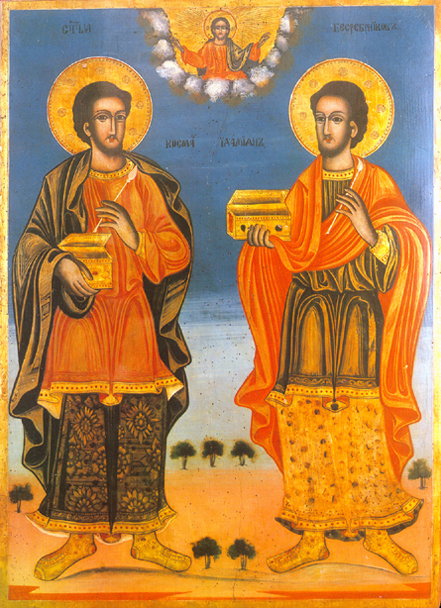
You’ve heard of the names of these brothers before, but you’ve probably never heard their story until today. The twin brothers, the two doctors who were unwilling to compromise on their Catholic faith when the Emperor Diocletian decreed in the year 303 that everyone worship idols or be killed, these men are the saints we celebrate today: Saints Cosmas and Damian.

May we learn from their example and benefit from their prayers.

Petitions:


Saints Cosmas and Damian are the patron saints of physicians, surgeons and pharmacists.  Let’s pray for those who care for the sick… We pray to the Lord.

Through the intercession of Saints Cosmas and Damian, may Catholic healthcare workers in our time never have to face a test of faith like theirs because of unjust laws… We pray to the Lord.

Through the intercession Saints Cosmas and Damian, may we have the courage to share our faith in the workplace, by both our silent deeds and our spoken words… We pray to the Lord. 

For my intention in this Mass, for Congress which is now considering amendments to the healthcare bill which would grant conscience exceptions and prohibit the federal government from subsidizing, reimbursing, and paying for abortions, and for your Mass intentions… We pray to the Lord.

September 15 – Our Lady of Sorrows

September 16, 2009

Imagine if you had to start a whole new life. I don’t mean just changing schools, or moving away from home, or even entering the federal witness protection program. Imagine if you had to start a whole new life from the very beginning, as a tiny little embryo. And imagine that this reincarnation of yours required you to choose a new mother for yourself, from among all the women in all the world. What qualities would you look for in choosing a new mom?

You would want her to be beautiful, not only on the outside, but on the inside too, for what we desire most of all from our mothers, is a great and beautiful love.

You would want her to be wise and full of goodness, someone who could introduce you to the world and show you how to live in it well.

You would want her to be the perfection of femininity, so you girls could see how to grow into excellent women, and to show you boys what to look for in an excellent wife someday.

You would want a mother with patience, and tenderness, and compassion, who would be at your side if you were sick or in pain, and who would comfort you just by her presence.

As fantastic as this sounds, Jesus faced a scenario a lot like this one. He had to choose from among all the women in all the history of all the world, the one woman who would become His mother. For his incarnation, Jesus chose Mary to be His own mother.

She was beautiful, inside and out. She introduced Him to life in our world. She loved Jesus with a great and beautiful love. And when Jesus looked at Mary, he saw the likeness of His future bride, because Mary is the icon of the Church perfected. She stood at His cross with compassionate strength and her presence helped Him amidst his suffering.

Mary was so great a mother, that Jesus wanted to share her with us. He wanted her to be our mother, too. Jesus looked down from the cross, on her and the beloved disciple, and said, “Woman, behold, your son,” and to the beloved disciple, “Behold, your mother.” You and I are the beloved disciple. Jesus gives us Mary to be a mother for us. He created her perfectly, to be His own mother and our mother, too.

From that hour, at the cross, the beloved disciple took Mary into the heart of his life. From this hour, at this Eucharist, take Mary deeper into the heart of your life; because she loves you more than you know.

September 8 – Nativity of Mary

September 9, 2009

I once heard a man express why he believed that of all the causes for celebration, birthdays were among the stupidest. I don’t remember his arguments word for word, but they went along these lines…

“Why celebrate a birthday? I mean it’s not as if you’ve done anything to reach that ‘special day,’ besides living for another 365 days and riding the earth another lap around the sun. Your mom was the one who actually did something on the day you were born. All you did was show up. How does merely showing up for another year merit a party?”

He had an interesting argument, but he was entirely missing the point when it comes to why we celebrate birthdays.  It’s not that the person has done any one, big, special thing that makes us celebrate that day.  It is for the countless little things, for all the things which make them who they are for us, this is why we rejoice over them just being around for another year of life. The reason we celebrate birthdays is to celebrate the very fact of a person’s existence, to celebrate who they are, in their own unique and unrepeatable goodness, to celebrate the gift of their presence in our lives.

Today, we celebrate Mary’s birthday. We celebrate the fact that God created her and has given her to us. We celebrate who she is, in her own unique and unrepeatable goodness. We celebrate the gift of her presence in our lives. Today we rejoice over Mary, our mother, our sister, and our close friend, and we wish her a very happy birthday, just for being who she is.

Thursday, 22nd Week in Ordinary Time—Year I

September 3, 2009

Peter has worked hard all night and has nothing to show for it. He’s frustrated and tired. Then Jesus comes along. The two men had met before. Peter met Jesus through his brother. Apparently, Peter had been impressed by this man whom Andrew insisted was the messiah; for when Jesus asks Peter to take the boat from the shore, to give some space for speaking to the crowds, Peter obliges.

How long do you think Jesus spoke out there, sitting in the boat? It probably wasn’t a short while. And when Jesus finishes talking, he turns again to Peter and wants him to go out further, to cast his nets into the deeper waters. Peter thinks it’s pointless, and he says so, but He continues showing a willingness to oblige Jesus.

Peter casts the nets and brings in his biggest catch ever. And here, seeing himself richly blessed, by a great and holy man, Peter hits the limit of his capacity to serve. It’s not that Peter’s too tired or hungry, too busy or lazy. It’s his shame for his sins. Peter’s shame would prevent him from serving Jesus any farther.

Peter turns to Jesus and says, “Depart from me, Lord, for I am a sinful man.” It’s the opposite from what we should ask of Jesus when we acknowledge our sinfulness. Jesus tells him, “Do not be afraid. (I will do great things with you.)”

We are not worthy to receive Him, but we are called to His supper and to serve Him all the same. And even with recovering sinners like us, He can do great things.

Wednesday, 22nd Week in Ordinary Time—Year I

September 2, 2009

Notice in today’s Gospel how Jesus does not let the demons speak.

[D]emons also came out from many, shouting, “You are the Son of God.” But [Jesus] rebuked them and did not allow them to speak because they knew that he was the Christ.

Jesus does not allow them to speak, even about the truth of his being the messiah, because demons mix lies within truth.

In the garden, the serpent asked the Eve, “Did God really tell you not to eat from any of the trees in the garden?” No, God hadn’t told them that, but God had told them not to eat from one particular tree, or they would die. The serpent insisted, “You certainly will not die!” and it is true that when they ate of the tree Adam and Eve did not keel over dead right then and there, but the divine life within them did die to be followed by natural deaths many years later.

The book of Acts records how St. Paul once encountered a slave girl who carried a demon. The slave girl used to bring profits to her owners through her fortune-telling. For many days she followed Paul, shouting out, “These people are slaves of the Most High God, who proclaim to you a way of salvation.” Finally, Paul became annoyed, turned, and said to the spirit, “I command you in the name of Jesus Christ to come out of her,” and at that moment it left her. Did you catch the lie amidst the truth in what the slave girl’s demon said? “These people are slaves of the Most High God, who proclaim to you ‘a’ way of salvation.”

Demons smuggle lies into the truth. If a man accepts and carries a compass that is just off just a few degrees, he may not notice that anything’s wrong with it until he’s horribly lost. If there are angels helping us throughout our daily lives, encouraging us and prompting us to do good, then there are also demons trying to do the opposite.

Don’t have conversations with demons. They are spirits far more clever than us and they can confuse or discourage us greatly. However, as Christians, we should not be afraid of them. If and when you feel their oppression, make the sign of the cross (for this is an exorcistic gesture) or say, “In the name of our Lord, Jesus Christ, depart from me and go where you can hurt no one.” Such is our authority in Christ, that we too can command spirits. Holy water is helpful, too; it’s power can sometimes make a palpable difference.

And here’s a final tip for discerning whether a spirit be good or bad, of God or not: From time to time our friends in heaven my correct us or challenge us in our lives as disciples of Christ. But, if you ever feel discouraged or weakened, as if by an accusation or a rebuke, that is not from them. Such condemnation is either coming from of your own, lingering, internal brokenness or from an external oppressor. When one of our heavenly friends corrects or challenges us, they leave us feeling their love and with increased strength to do what is good. Recognizing this difference will help you in receiving grace and peace from God our Father.

Tuesday, 22nd Week in Ordinary Time—Year I

September 1, 2009

According to my very accurate clock, it’s [7:08] in the morning… and you’re here at Church. If you wanted, maybe you could still be sleeping in bed, but you’re here instead. You could be sitting at home, watching the morning shows, or reading something over coffee if you wanted, but instead you’re here. You could be already at work, or on your way there if you wanted, getting an early start to earn an early release, but you’re here at Mass instead. Nobody’s paying you to come here. Nobody’s forcing you to be here. So do you realize why you’re here?

It seems obvious to me that you’re here because you want to dwell in the house of the Lord, all the days of your life. You’re here to gaze, on the loveliness of the Lord and to contemplate in his temple. Though your repeated sins may discourage you, you have the longings of a saint, or at least, a saint under-construction. So be encouraged before Christ, for you, brothers and sisters, are not in darkness. It’s [7:09] in the morning, and you are children of the light and children of the day.

Monday, 22nd Week in Ordinary Time—Year I

August 31, 2009

Why does Saint Paul say that the dead are “fallen asleep?” Are we to think of the dead as unaware and unconscious until the general resurrection? No. We believe that all the saints in heaven are actively alive in Christ.

As the dying St. Dominic said to his religious brothers, “Do not weep, for I shall be more useful to you after my death and I shall help you then more effectively than during my life.” And as St. Therese of Lisieux said in her last conversations, “I want to spend my heaven in doing good on earth.”

The saints continue to cooperate in Christ’s messianic work. The Spirit of the Lord is with the saints, He has anointed them, to bring gifts to the poor, liberty to captives, sight to the blind, freedom to the oppressed, and to make times and seasons acceptable to the Lord.

Though death is not unconsciousness, going to sleep is a fitting image for it. The deceased Christian arrives home from a long-road’s journey. After blisters, sunburns, and dehydration are attended to, not to mention a needed bath (I speak of the business of purgatory), dying begins the Christian traveler’s transition to a lasting, comfortable rest.

Those who have arrived at this home before of us are not cut off from those of us who are still journeying there. As Lumen Gentium and the Catechism says, “the union of the wayfarers with the brethren who sleep in the peace of Christ is in no way interrupted, but on the contrary, according to the constant faith of the Church, this union is reinforced by an exchange of spiritual goods.”

So today, why not ask your favorite saints to provide you with something special for this day’s journey? I suspect that they’re here, waiting, eagerly listening, for us simply to ask for something good.

August 27 – St. Monica

August 27, 2009

Today I would like to tell you a true story, the story of a Catholic woman in a very difficult marriage to a non-Christian husband. Her husband was a man with a hot temper and hostility towards Christianity. He was unfaithful in their marriage, but she remained faithful to him—not out of weakness, but out of an inner-strength.

She bore his faults with patience and persistently sought after his conversion. The daily example of her gentleness and kindness finally had its victory. Her husband became a Christian one year before his death. However, the year after that, she had to face a new burden alone.

The oldest of her three children joined an anti-Catholic religious cult. It started him down a path of sinful pride and many sensual sins. It broke her heart. Then one night, she had a dream.

She was standing on top of a wooden ruler, and she saw a young man coming towards her, surrounded by a glorious halo. Although she felt sad and full of grief, the young man smiled at her joyfully. He asked her for the reason for her sadness and daily tears. (This wasn’t because he didn’t know, but because he had something to tell her—this is the way things happen in visions.) When she answered that her tears were for the lost soul of her son he told her to take heart for, if she looked carefully, she would see that where she was, there also was he. And when she looked, she saw her son standing beside her on the same ruler. Reassured by this dream she continued, for years to come, praying tearful prayers for his conversion.

She even asked the bishop to intervene in winning over her son. He counseled her to be patient, saying, “God’s time will come.” When she persisted in asking, the bishop (perhaps busy with many other things) famously reassured her: “Go now, I beg you; it is impossible that the son of so many tears should perish.”

That son, as you may have guessed by now, was the great St. Augustine. And his mother is St. Monica. May her story encourage us to pray and strive for the conversion of our loved ones to the Catholic faith. Remember and take hope: God loves us with a human heart and He cares about your loved ones even more than you do.

2nd Sunday of Easter—Year B

August 23, 2009

Jesus said to “Doubting” Thomas, “Have you come to believe because you have seen me? Blessed are those who have not seen and believed.”

This gospel passage has a very fond and special place in my heart, because when I was younger it used to really tick me off. If I had had my choice between either seeing and believing, or not seeing and being blessed, I’d have picked the seeing option every time. But now looking back, I realize  that if Jesus had actually appeared to me in a vision that would have just raised more doubts and questions in me. I once shared my various frustrations about faith and doubt with a priest.  After he had patiently listened, He suggested that perhaps I was going through these kinds of trials so that I could help others through similar trials someday.  At the time, that also ticked me off… but he was right. I hope that six lessons I’ve learned in the years since will be of help for you today. Today the Church celebrates Divine Mercy Sunday, but on account of Doubting Thomas one might also call it Doubter’s Sunday. I feel a lot of mercy for the doubters out there, and Jesus does too.

Lesson One:  Jesus does not condemn the honest doubter, the sincere questioner, the genuine seeker.

When Jesus appears to doubting Thomas notice that he is not angry with him.  He says, “Peace be with you!”  Then he says, “Put your finger here and see my hands, and bring your hand and put it into my side, and do not be unbelieving but believe.” The Gospel does not say whether Thomas actually took Jesus up on touching his wounds, but Jesus was not patronizing him when he made the offer—it was an sincere invitation that met Thomas where he was at.

Still today, Jesus is not angered by our honest questions.  In fact, it is a compliment to him to ask tough questions of our faith because it shows that we believe there are good answers out there to be found. Honest questions make our faith stronger, not weaker. However, our questioning must be sincere. We must not build a comfortable home upon our doubts, doing nothing to answer or resolve them. This sort of questioning is not sincere, but often self-serving.  Jesus wants to give to those who ask, to reveal to those who seek, to open for those who knock, so that they will not be unbelieving, but believe.  But, when we refuse to ask, or to seek, or  to knock, we frustrate the Lord.  Jesus is pleased, however, by the genuine seeker because the genuine seeker will find him.

Lesson Two:  Having beliefs is unavoidable and our faith is reasonable.

Some people object to faith saying that “reason” or “science” is certain while “belief” is doubtful.  But in reality, all of our knowledge depends upon trusted beliefs. We cannot live, or even reason, without accepting beliefs. Before the scientist calmly walks across the street he assumes a thousand things without certain proof of them. We can learn many valuable things from science, but science itself cannot prove all of its own assumptions. There are even questions that science cannot answer, such as the transcendent goodness, worth, or purpose of things. Our faith answers such questions and our faith is not unreasonable. Our true faith is no more in conflict with reason than the truth could contradict the truth. Not everyone shares our faith, but you cannot live as fully alive without it.

Lesson Three:  If you ever worry about whether you really believe in God, you shouldn’t be worried.

Some people experience real spiritual anxiety when they ask themselves, “Do I really believe in God?” Realize this: people who don’t believe in God, don’t spend time worrying about whether they believe in God. Only a believer would do that. So if you ever worry about your belief in God, you shouldn’t be worried; you’re actually a believer and your mind should be at ease.

Lesson Four:  You already have enough faith to do what Jesus asks of you today.

Some people say, “I believe in Jesus Christ, but I just don’t have enough faith to do what he wants me to do.” These people experience a spiritual paralysis: they’re waiting for faith to show up, before they’ll take the next step in living the Gospel, whatever that might be. They’re actually psyching themselves out. They are like the apostles who once begged the Lord, “Increase our faith!” Jesus told them if they had faith the size of a mustard seed they could uproot trees or mountains with a word and plant them in the sea. At first this might seem like a word of discouragement, but it is actually a word of hope. Your tiny, microscopic speck of faith is already enough for you to accomplish everything Christ asks of you today. Your faith right now may be only a pinhole-sized trust in him, but the God who can fit a camel through the eye of a needle can pour a river through your pinhole-sized faith. You already have enough faith to do what Jesus asks of you today.

Lesson Five:  Faith grows through being exercised.

We often keep very low expectations of God.  Maybe we think that if we don’t expect too much from him he won’t expect too much from us. Or maybe we think we won’t be disappointed by him, if we never get our hopes up. In this way our faith stays small. Our faith, which is our openness to the Gospel and our trust in Jesus Christ, remains small and weak because our faith is so rarely exercised. Do we really want to come to the end of our lives and have to look back and wonder what our lives could have been if we had committed ourselves more completely to Jesus Christ and his Gospel?

Consider this question:  If you had all the faith in the world, how would you pray, what would you pray for, and what would you do? If you want to see you faith grow, if you want to see the power of Jesus Christ active in your life, then try doing these things today.

Now sometimes Christ comes out of nowhere and powerfully reveals himself to those who have never really striven for him, or even looked for him, but it is more often the case with Christ that the more we give him the more we get. Imagine you hold in your hand seeds which symbolize your life; your time, your talents, and your treasure. You received all these seeds from Christ as pure gift. As long as we cling to the seeds in our hand, they will never bear fruit. But once we begin letting Christ plant these seeds, and we see the good fruit they produce, we will eagerly give him more and more. In this way, our faith grows through being exercised.

And finally, the sixth lesson:  Faith is about trusting in Jesus Christ.

Faith is not so much about generating a certain feeling, or a feeling of certainty, about particular facts.  The demons know that Jesus is Lord—and shudder. Faith is more about trust, trusting in a person who is worthy of our trust, Jesus Christ. Living-out such trust requires a personal relationship of knowledge and love with him.

What might be holding us back in the life of faith could be that we have unresolved sins, past and present, impeding our relationship with Christ. This Divine Mercy Sunday we celebrate the infinite mercy God shows toward all those who ask for it. Through the sacrament of reconciliation, we can receive a fresh start, a clean slate, an infusion of grace, a healing of the heart and mind, a full restoration of personal relationship with Jesus Christ.

Whenever I go to confession, I encounter Christ through the priest, like Thomas encountered Jesus in the upper room. Jesus enters into the locked inner room of my heart, where I would otherwise hide out of fear on account of my sins. I see his wounds, I admit the ways that I helped to put them there, and I tell him I’m sorry. And his response is always the same: mercy. “Peace be with you. Your sins are forgiven.” Confession gives us pardon and peace, it increases our trust and love for Jesus Christ, and strengthens our faith in him.

This Divine Mercy Sunday, let us pray the prayer that he has given us for our uncertain times: “Jesus, I trust in you.”

29th Sunday in Ordinary Time—Year A

August 23, 2009

[Given before the 2008 presidential election]

I think it is by God’s providence that this Gospel about money, politics, and religious faith, is being read today in Catholic Churches throughout our country, and especially here in Ohio. We are now experiencing what people are calling a financial crisis, and we are on the verge of a pivotal election. First I would like to speak to you about the Gospel, then our financial fears, and then about this election.

In today’s Gospel, we see the Pharisees engaging in the politics of personal destruction against Jesus. They don’t like Jesus so they have launched a negative campaign to trap him in a damaging sound bite. The Pharisees’ dirty tricks squad comes to Jesus to set him up.  They begin with some flattery and then they ask Jesus about the religious lawfulness of paying the census tax. Notice that they don’t ask about the rightness or wrongness of paying taxes to the occupying Romans in general. They focus on one particular tax, the census tax, because census-taking was condemned in the Law of Moses.

God told Moses that the future leaders of His people should not make a count of the whole people. Knowing these figures, a king would know how to maximize his tax revenues. He would also know the size of the pool of men available to him to draft for his conquests. But with the king clearly knowing these things, knowing the great wealth and power at his disposal, he would be tempted to hubris. The king would be likely to fall to ambition and pride, to be forgetful of God and indifferent to God’s will. This would lead him, and all the people, towards disaster. The Law of Moses forbid the census-taking of the people, because a census-taking king is inclined to think that the people and everything belong to him, to do with as he wishes. But in truth, God’s people and everything else really belongs to God.

But isn’t this a lot like us? When we become overconfident in our position and wealth and power, when we live beyond our needs and live beyond our means, when our passions and pride are leading us, we are forgetful of God and indifferent to God’s will, and this leads us towards disaster. From time to time we should ask ourselves: is it in coins we trust, or is it in God we trust?

Now Back to Jesus, the Pharisees, and the Herodians. The disciples of the Pharisees hope that Jesus will answer this way: “The census tax is unlawful and no faithful Jew should pay it.” Because when he does that, the Herodians will step in and have Jesus arrested. You see the Herodians are the supporters of King Herod, the Roman-backed puppet king of Galilee. If the Herodians hear Jesus say that it is wrong to pay the Roman tax, they’ll have Jesus arrested for sedition, for preaching rebellion. Now you understand something of the difficult and dangerous spot in which the Pharisees and the Herodians have placed Jesus.

But Jesus answers with a phrase you already know well, “Repay to Caesar what belongs to Caesar and to God what belongs to God.”  This answer amazes Jesus’ hearers. All they can do is walk away. But what does this statement mean? I believe he is saying this to us: “Coins are of little consequence. Whose image and inscription is on this coin? Caesar’s? Then they belong to Caesar, let him have them. But as for you, whose image and inscription do you bear? The image and the likeness and the name that you bear is God’s.  So you belong to God. Give yourself to Him.”

[The fears raised by this financial crisis]

Jesus said, time and again, perhaps more than anything else, “Don’t be afraid.” So do not be afraid. It’s going to be ok. Worry is worthless, concern is enough. If you are doing the little that is in your power, be at peace with that.  Pray, and leave the rest to God. Because it’s going to be ok. Why? Because as much as Caesar loves his money, God loves you a thousand times more.  How great of a compliment is it to God when we choose not to worry, because this is an act of faith and trust in His goodness and His love for us.

Now please don’t dismiss me when I say “it’s going to be ok” because you think I’m Pollyannish, or that I’m youthful and overly optimistic about life. I say it because this is the good news our faith. The worst scenario that you can imagine happening in the future is very unlikely to occur, but let’s imagine for a moment that this financial crisis results in the very worst for you.  What if you’re stripped naked, left in complete poverty and humiliation? What if you experience pain like the palms of your hands and the soles of your feet nailed to beams of wood? What if you become so powerless that you can’t even wipe away blood and tears from your eyes? Even if this happens to you, even then, it’s going to be ok. Even if everyone else abandons you, you will not be alone. God our loving Father, who might seem distant, will never abandon you. He will be helping you. Mary our Mother, who always loves us, will never be far. She will be interceding for you. In your suffering, you will be with Christ, and you will rise again and be glorified with Him. So don’t be afraid, because no matter what, even if this happens to you, it’s going to be ok.

[What to consider in this pivotal election]

What makes America great? Is it our wealth and our military strength? I don’t think so, at least not in themselves, for a miser is wealthy, but he is hardly a great man. And a violent criminal may be very strong, but he is hardly a great man. If you judge greatness according to wealth and military strength, then Caesar was a great man and Jesus wasn’t. I believe America is great because it is founded upon human dignity.

“We hold certain truths to be self-evident, that all people are created equal, that they are endowed by God, their Creator, with certain rights that cannot be taken away, and that among these are the right to pursue happiness, the right to liberty, and the right to life.” We recognize that people do not have value or rights merely because the government says so, but because we are valued by God and invested with just rights by Him.

The greatest and proudest moments in American history have been when we defended human dignity. The WWII generation, which is called the Greatest Generation, defended the world from Nazism and liberated the concentration camps. In our time, we have given hundreds of millions of dollars in tsunami relief for people in Southeast Asia. We have never meet these people and will likely never meet them in this life, but when we saw them on TV we knew they were human beings just like us and we had to do something. I also believe we have good reason in our day to be proud of our armed forces because they are protecting the innocent from the kind of people who execute women in soccer stadiums and who strap bombs to the young and send them into market places. In as much as our troops are defending human dignity abroad, I believe that’s something to be very, very proud of.

On the other hand, the saddest and most regrettable moments in our history have been where we failed to defend human dignity. Such as the oppression of the Native Americans, the institution of slavery, or our history of racial prejudice. Remember learning about history when you were a kid?  Perhaps you remember saying things like this: “If I had lived in the South in those days, I wouldn’t have owned slaves,” or, “If I had lived in Nazi Germany, I wouldn’t have been silent.” But the truth is that when you are living in a particular time it can be frighteningly easy to accept things as just the way things are. In one hundred years, when American school children look back at our times, about what will they say, “How could they have been so blinded, so indifferent, to what was going on in their midst? Why didn’t they do more to defend human dignity from conception to natural death?”

In short, everything I have said today, about the Gospel, our financial fears and this pivotal election can be summed up in this: We belong to God, we bear His image and He values us, so give yourself to Him.