Archive for the ‘Saintly People’ Category

Christ Chooses to Make us Great

August 27, 2023

21st Sunday in Ordinary Time
By Fr. Chinnappan Pelavendran
God has all power and authority over earth and heaven. He is the source of all that lives and moves in this world and the next world. Authority for civil and religious leaders comes from God, so that they might govern His people and take care of the spiritual and material welfare of His children. The Lord could have found many different ways to establish His church. He could have entrusted it to the angels. Instead, the Lord puts the church in the hands of the faithful. Though He is all-powerful and has authority over everything, He needs to appoint a faithful person to work in His name.

In the first reading, God sent the prophet Isaiah to tell Shebna that the keys of authority would be taken away from him because he was not faithful to the Lord and His teaching. In his place, God exalted the humble and faithful Eliakim. The Lord demands faithfulness to His ways and His word.

In the responsorial Psalm, King David thanks God for having raised him from lowly origins and given him authority as a King over the people of Israel. In the second reading, St. Paul points out that God is the Source of all authority on earth and in Heaven. Again, St. Paul invites us to discipline ourselves because bad things still happen to good people.

In today’s Gospel, we have Peter’s confession about Jesus. “You are the Christ, the Son of the living God.” Peter was the first one to recognize Jesus as the Messiah, the Christ who came to save all his people. Jesus was pleased with Peter’s answer and said to Peter, “Blessed are you, Simon son of John.” Again, Jesus explained to His disciples that He was not a political Messiah. Rather, He is a Messiah who must suffer, die, and be raised to life again.

St. Peter was a man who grew in his faith. He was a fisherman. He was neither wealthy nor educated. When Jesus called Peter and his brother Andrew, they left everything and followed Him. Throughout Peter’s three-year journey with Jesus, He had moments of faith and doubts. When Jesus appeared to the disciples, walking on the water, Peter had enough faith to get out of the boat and come to Jesus. However, once he started having doubts, his faith began to shake and he began to sink. Immediately, Jesus stretched out his hand and saved him.

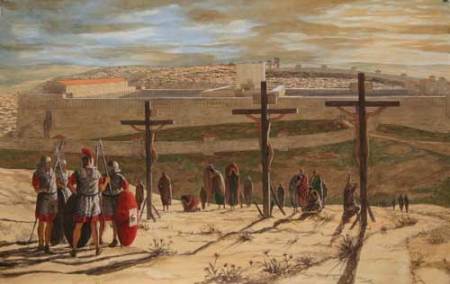
On the night of Jesus’ crucifixion, Peter denied Jesus not once but three times. Prior to this denial, Peter claimed that he would never deny Jesus and that he would even die for him. Even during Christ’s darkest hour, when he was dying on the cross, Peter was nowhere to be seen. He and most of the apostles had abandoned Jesus when he needed them the most.

Despite all of Peter’s shortcomings and failures, Jesus saw the best in him. Jesus saw so much potential in Peter that He made him the first leader and ‘Rock of His Church.’ If God used a man like him, it causes us to think that God can use our lives for greatness, too.

Eliakim in the first reading and St. Peter in the Gospel reading are prime examples of someone who was considered inadequate or not worthy enough to serve God. Jesus did not look at Peter’s inadequacy, he looked at His heart. When we feel inadequate or unworthy of Christ’s love, we can look at St. Peter. God looks at our hearts and invites us to be faithful to Him.

The Keys to the Kingdom

August 26, 2023

21st Sunday in Ordinary Time
By Fr. Victor Feltes

The great doctor of the Church St. Augustine of Hippo taught that the New Testament is concealed in the Old and that the Old Testament is revealed in the New. We see an example of this in our readings. In the days of the Prophet Isaiah, the Lord chose “Eliakim son of Hilkiah” to become chief steward of the royal house, that is, prime minister for the reigning Davidic king. The Lord declared, “I will place the key of the House of David on Eliakim’s shoulder; when he opens, no one shall shut, when he shuts, no one shall open.” The holder of this office possessed plenary power under the king throughout the kingdom. He reportedly carried a visible key indicating this authority that he would pass on to his successors.

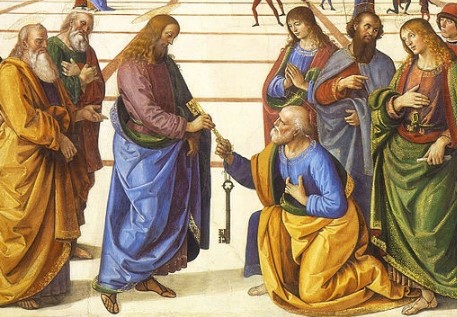
In our gospel today, when Jesus asks his disciples, “Who do you say that I am,” Simon answers, “You are the Christ, the Son of the living God.” And Jesus replies, “Blessed are you, Simon son of Jonah. For flesh and blood has not revealed this to you, but my heavenly Father. And so I say to you, you are Peter, and upon this rock I will build my Church.” Jesus changes Simon son of Jonah’s name to “Rock,” or “Petros” in Greek, which we render as “Peter.” In the entire Old Testament, God only changed the names of three people: Abram to Abraham, Abram’s wife Sarai to Sarah, and Jacob to Israel, so the changing of Simon’s name is a big deal in salvation history.

Jesus then declares to Peter, “I will give you the keys to the Kingdom of Heaven. Whatever you bind on earth shall be bound in Heaven; and whatever you loose on earth shall be loosed in Heaven.” In the Old Testament, the Lord gave Eliakim “the key of the House of David” and authority to open and close. Likewise here, Jesus Christ the new Davidic king gives Peter “the keys to the Kingdom of Heaven” and authority to bind and loose. Eliakim’s power extended throughout an earthly kingdom, but the Lord promises Peter that his earthly decrees for the Church will also be confirmed in heaven. Eliakim would become, in the words of the Lord through the Prophet Isaiah, “a father to the inhabitants of Jerusalem and to the house of Judah.” St. Peter became the Church’s first “pope,” a title that comes from the Greek word for a “papa” and an office held today by Peter’s successor, our Holy Father Pope Francis. Jesus knew that without a visible shepherd his Christian flock would inevitably scatter. Like Moses for the Hebrews in the desert, or like King David for God’s people in Israel, Christ establishes a chief shepherd for his Church on earth through his popes, beginning with St. Peter.

Yet, this highlight moment in Simon Peter’s life is immediately followed by a humbling event in St. Matthew’s Gospel, which will be our gospel reading next Sunday. Jesus starts revealing to his disciples that he must suffer greatly from the Jewish leaders, be killed, and be raised on the third day. So Peter takes Jesus aside and begins to rebuke him, saying, “God forbid, Lord! No such thing shall ever happen to you!” Jesus turns and says to Peter, “Get behind me, Satan! (That is, “Get behind me, Adversary!”) You are (being) an obstacle to me. You are thinking not as God does, but as human beings do.” Notice how Jesus here reproaches Peter differently than how he rebuked Satan in the desert, to whom he said, “Get away, Satan!” Jesus does not cast Peter away. He tells him to “get behind me,” that is, ‘Follow me again.” Whenever you or I go wrong, Jesus calls us to follow him anew.

For what was Peter praised by Jesus and for what was he corrected? First Jesus tells him, “Blessed are you, Simon…. For flesh and blood has not revealed this to you, but my heavenly Father.” But later Jesus reproves him, “You are thinking not as God does, but as human beings do.” Peter was praised for accepting the truth God had revealed and rebuked for trying to substitute his own ideas for God’s will. In today’s second reading, St. Paul reflects, “Oh, the depth of the riches and wisdom and knowledge of God! How inscrutable are his judgments and how unsearchable his ways! For who has known the mind of the Lord or who has been his counselor?” Our Catholic Faith is a revealed religion with infallible teachings about what is true and how we are to live. Who could discover all of these things correctly apart from Christ’s one Church built on rock? Jesus says, “Whoever wishes to come after me must deny himself… and follow me.” To get fully behind Jesus Christ, always accept what God has revealed to us through his Holy Catholic Church.

Glimpses of our Future Glory

August 17, 2023

Solemnity of the Assumption
By Fr. Victor Feltes

The Church of Jesus Christ celebrates our Blessed Mother Mary. For instance, we mark her conception, her birth, and today the beginning of her life in glory. It is fitting the Church does this since her Lord commands us: “Honor your Father and mother.” And when the people we love have birthdays or anniversaries, we love to celebrate with them. Today we celebrate how the Virgin Mother of God was assumed body and soul into heaven.

She is the icon of the Church, the beginning and image of the Church’s coming to perfection. We are happy for Mary, but what we see in her is good news for us too. She is a sign of sure hope and comfort for our future, for what awaits for us in our resurrection to glory. To unpack what I mean, consider what the Blessed Virgin Mary has been up to in the centuries since her Assumption.

Enthroned beside her Son in a place of close intimacy and high honor, she is an intercessor for us, her spiritual children. How many children does Mary have? The Book of Revelation says “her offspring [are] those who keep God’s commandments and bear witness to Jesus.” Therefore, she has many, many millions of children. And how many “Hail Marys” and other prayers are sent her way every minute? Yet we believe that she hears us without becoming overwhelmed and that she knows each of us personally, as a mother knows her children. We also have reason to think that Mary has not merely remained in heaven for nearly 2,000 years, but has been active here below.

Though we are not obliged to hold belief any particular Marian apparition (since none of these later events belong to the ancient Deposit of the Faith) the Church has judged many proclaimed appearances of Mary to be credible, or “worthy of belief.” These apparitions offer us clues about Mary’s life now and what life will be like for us in resurrected glory.

In her Church-approved apparitions, the Blessed Virgin Mary comes in varying appearances. For example, in her appearances to St. Juan Diego in 1531, Our Lady of Guadalupe in Mexico had darker skin and black hair and wore traditional clothing indicating she was with child. In her appearances to the Belgian immigrant Adele Brise in 1859 near Green Bay, Wisconsin, Our Lady of Good Help had white skin and blonde hair in different apparel.

In Mary’s Church-approved apparitions she also speaks in varied languages. For instance, to St. Bernadette Soubirous at Lourdes, or the three shepherd children at Fatima, she did not speak ancient Aramaic, Hebrew, Greek, or Latin. She spoke to them in their local dialects. Mary resembles her seers and speaks their mother tongues because she is the mother of each of them.

Mary’s apparitions suggest a saint in his or her glorified body will have the power to change its age or appearance. Mary remains a woman, but race presents no barrier and different languages are no hindrance to communication. And if our glorified consciousness will become like hers, it will be no strain to know and be close friends with more than a billion people at once. Won’t that be wonderful?

Another detail that seers of Mary’s apparitions agree on is that she is now exceedingly beautiful. During the years of her life on earth, Mary may have looked quite ordinary. We do not imagine that Jesus Christ had to be the tallest, most muscular, or handsomest man who ever lived, so Mary need not have been the most beautiful woman alive either. In this fallen world, the holy can look ugly while the wicked can look very attractive. But now there appears to be no mismatch between Mary’s inner and outer beauty. This interior beauty is called holiness.

After our resurrection, the abundance (or lack) of holiness we have cultivated with God within us will be seen in our endless beauty (or ugliness) forever. The glory we are called to in Christ is like Mary’s and that gives us reason to rejoice with her today all the more.

The Voice & the Noise

August 13, 2023

19th Sunday of Ordinary Time
By Fr. Victor Feltes

When God visits the Prophet Elijah at Mt. Horeb the Divine Presence is preceded by powerful winds, quaking earth, and raging fire. Yet the Lord is not in the wind, nor the earthquake, nor the fire. Then there is a tiny whispering sound. Hearing this, Elijah goes forth to speak with God. In today’s gospel, Jesus calls Peter to “Come” forth to him out of the boat. Peter begins walking on the water, but seeing how strong the wind is he becomes frightened, begins sinking, and shouts “Lord, save me!” Jesus immediately stretches out his hand, lifts him up, and speaks to him. There is a common theme in these two episodes. In these encounters with God, Elijah and Peter must distinguish the Divine Voice from the noise. God is speaking to us, or he would like to. How can we listen without getting distracted or misled?

What do the demons want? They want the worst for us. They don’t want us listening to the Lord. They want us fully preoccupied with less important things. They want us too afraid or too discouraged to take good steps forward. How much time do we waste obsessing on things that don’t matter? How often do we worry about things that won’t happen? And how easily do we accept the lie that life cannot be better, that there’s nothing we can do? When our eyes and ears drift away from Jesus we sink. He chides us, ‘O you of little faith, of small trust in me, why do you doubt?’ Today I wish to share three great mens’ true discernment stories.

My first story is one about the 19th century saint, John Vianney, the patron saint of parish priests. His humble holiness and miraculous ability to read souls made crowds flock to his small French town for confessions, which he would hear for hours on end. His faithful fruitfulness made him a target of demonic harassment. Apparently, typical temptations were ineffective against him, so sometimes they would assault him as he tried to sleep at night, but Fr. John would take this as a good sign. It usually meant some “great sinner” was coming to town the next day to be reconciled to God in the confessional.

I have encountered people whose emotions very much did not want to go to confession or attend a spiritual retreat yet they could think of an actual good reason not to go. So they come, and experience God’s grace, and it’s more wonderful than they imagined! Who do you think was influencing their feelings in hopes they would not come encounter and listen to God? Emotions can be helpful and powerful fuel in your gas tank, but let your informed conscience and sound reason hold your steering wheel.

My second discernment story is about our former bishop, Cardinal Raymond Burke. He saw a need for a richer devotional culture in our diocese and felt peace and joy in the thought of establishing a pilgrimage shrine. He has a personal devotion to Our Lady of Fatima and initially pursued a shrine dedicated to her 1917 Portuguese apparitions, but nothing was coming together. So he revised the plan, opting to create a Marian shrine dedicated to Our Lady of Guadalupe and her Mexican apparitions in 1531. With that adjustment, everything began falling into place; a donation of beautiful land and financial contributions resulting in the shrine we know today. So not all obstacles come from the enemy. Some hindrances can be God’s providence to channel us into doing his will.

Midway through my time in seminary, I really believed for good reasons that priesthood was my calling, yet I still could easily question my vocation. (How could I be sure?) I would go in circles doubting myself with no greater clarity or benefit. So I decided to say to God, “Lord, this is my fair warning and my RSVP: I intend to continue towards ordination, but if that’s not what you want please make it obvious or impossible for me. If it’s not your will, I don’t want it to happen.” I left it to him, and after that I felt much more peace, and here I am now. Peace is a strong sign that you’re doing the will of God.

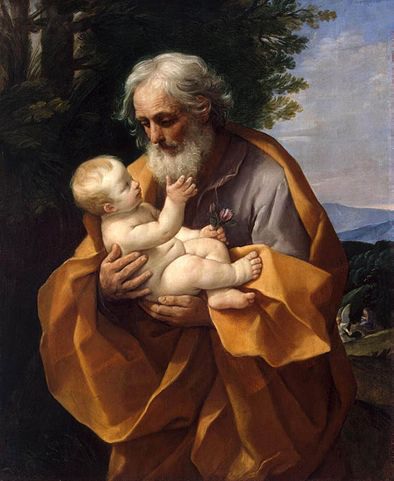
My third discernment story is about of St. Joseph. You will recall that when he learned that Mary was with child (either because he doubted her and thought her unworthy of him, or else because he believed her and thought himself unworthy or her and her holy child) Joseph concluded he should not be Mary’s husband. However, it only took an angel’s visit in one night’s dream to get Joseph back on the right track. This is because Joseph was a just man who wanted to do whatever God willed. God is supremely intelligent, powerful, and creative; so he can provide a clear sign if he needs to. However, having a heart and mind open to doing God’s will is a necessity.

You cannot see God’s signs with your eyes closed shut. You cannot hear him if you refuse to listen. God prefers to speak to us with a tiny whispering Voice, but if we ignore him he may allow some disruption in our lives. Those figurative winds, earthquakes, and fires are supposed to get our attention so that we will heed him and listen to his Voice. Our psalmist says, “I will hear what God proclaims; the Lord — for he proclaims peace. Near indeed is his salvation to those who fear him…” Fearing God is not about terror, but regarding and respecting him. Those who do, seek God’s will. They hear his Voice and listen, and thereby gain his blessings.

Jesus Saves Us From Sinking

August 12, 2023

19th Sunday in Ordinary Time
By Fr. Chinnappan Pelavendran

God’s presence is usually felt in tiny and small ways. He comes to us in gentle, little ways, and He will be with us when we need him the most. Jesus expects from us the openness to call on him for help and he will be there to support us and guide us. He wants us to be aware of his voice in our life, which often goes unnoticed. Jesus is always there with his guiding and supporting hands.

The background of the first reading is that, after the death of Solomon, the northern tribes broke away from the tribe of Judah and from its priests. They formed an independent country called Israel. As the years passed, many of the Jews in this country lost their Faith in Yahweh. Their seventh king, Ahab, married Jezebel, the daughter of a pagan king. He allowed her to build a temple for her god Baal and then she encouraged him to take part in idol worship and immorality. During this time, the prophet Elijah was sent by God to Israel to bring His people back to true worship. Having faith and confidence in Yahweh, he defeated and killed the 450 pagan priests of Baal on Mount Carmel.

For this reason, Queen Jezebel sent murderers to kill the prophet Elijah. However, God saved him from the dangers and gave him food through an angel. He fled for forty days and forty nights to Mount Horeb. Once there, he realized that the presence of God was not in the thunder, earthquake, or fire but in a tiny “whispering sound.” Elijah acknowledged God’s presence by covering his face and coming out of the cave where he had taken shelter. The first reading remains us that we have to experience God’s presence in our lives. We must listen carefully to everything going on around us because we encounter God in all the small events of our life. Failure, as well as success, offers us the opportunity to feel the presence of God, who saved the Prophet Elijah’s life.

In today’s Gospel, Jesus approaches his disciples walking on the water. The disciples are terrified by seeing someone walking on the water so they cried out in fear. Jesus reveals himself to them, saying “Courage, it is I. Do not be afraid.” Encouraged by the words of Jesus, Peter is the first to respond. At his invitation, he walks towards Jesus across the water, but his courage fails and begins to sink. Jesus reaches out his hand to him and saves him. The Gospel ends with Jesus calming the storm and being acknowledged as the Son of God by the disciples.

Courage! It is I Do not be afraid.” Jesus speaks these same words to us every day in our life. The gospel invites us to deepen our faith and maintain our focus on Jesus. We need to fix our eyes on Jesus.

We need to realize that the presence of Jesus is always with us. He gives us peace even in the storms of life. The storms of anxiety and worries about the future, storms of sorrow, storms of doubt, storms of tension, storms of anger and despair, storms of temptations, and storms in family relationships. So, try to feel the presence of God always in your life.

We need to imitate the short prayer of sinking Peter, “Lord, save me,” or the prayer of the mother of the possessed girl, “Lord, help me,” or the blind man’s prayer, “Son of David, have mercy on me,” or the repentant sinner’s prayer, “Lord have mercy on me a sinner.” We must begin every day by offering all our day’s activities to God and asking for His grace to do His will. Then we must conclude every day before we go to sleep by asking God’s pardon and forgiveness for our sins.

Fruitful Love Despite Our Flaws — The Justin Wachtendonk & Brenna Werner Wedding

July 8, 2023

By Fr. Victor Feltes

Justin and Brenna, you have chosen beautiful readings for your wedding Mass. Including your second reading, the most popular of all wedding reading options: St. Paul’s famous poetic hymn about love. In the 13th chapter of his 1st Letter to the Corinthians, St. Paul teaches what love does and does not do. These words contain blessed lessons for us all. Today, I wish to highlight the rarely-considered context of those passages to help married couples and people within Christ’s Church of our day.

When we think of the early Church, we tend to picture it as a golden age. The apostles were still alive on earth preaching the Gospel, performing miracles, and founding Christian communities. Divinely inspired books were still being written for what would become the New Testament of the Bible. The Church’s membership was growing widely and rapidly, while producing great saints and martyrs. But this does not mean that everything was perfect. Far from it!

You can see this in St. Paul’s 1st Letter to the Corinthians. He writes them to address the many things that were going wrong at the Church in Corinth. For instance, Paul corrects the Corinthian Christians’ bitter internal rivalries and factionalism. He notes the external scandal caused by them suing each other in secular courts. He critiques the Corinthians’ inflated pride. He excommunicates a certain man for his unrepentant sexual sins. He condemns the Church at Corinth’s liturgical abuses (against the Real Presence of Jesus and one another) at their celebrations of the Holy Eucharist. And St. Paul cites still more controversies than these. So things in the early Church were not so idyllic as we might imagine. And that can be a great encouragement for us today!

The early Church, despite the many flaws of her members, produced good, much good, world-transforming good and the salvation of many souls, in those days and thereafter. The Church today, despite the many flaws of her members, still produces much good, world-transforming good and the salvation of many souls. His Church build upon a rock is, as Jesus says in our Gospel, “a city set on a mountain which cannot be hidden.” She remains, “the salt of the earth” and “the light of the world” — purifying, enlightening, enhancing, and saving.

Whatever goodness is found in Christ’s Bride, the Church, is like the worthy wife the Book of Proverbs describes in our first reading. As the pearl of great price, “her value is far beyond pearls.” “Her husband, entrusting his heart to her, has an unfailing prize. She brings him good, and not evil, all the days of her life.” She labors alongside him, “reaches out her hands to the poor,” and he will “give her a reward of her labors, and let her works praise her.” This is a great encouragement for us in his Church, but also a great encouragement for all Christian married couples here.

Justin and Brenna, you are about to enter a new covenant with Christ. In your sacramental marriage, you will encounter each other’s flaws and experience trials, as every married couple will. Do not be surprised when not everything is perfect and do not be alarmed. Maintain your peace. With a love that is patient, a love that is kind, a love that most importantly has its origin and strength in Christ, you will ‘bear all things and endure all things.’ His “love never fails.” Like his Church, which despite the imperfections of her members produces much good fruit, your marriage — if united to Christ — will never fail.

Great Rewards From Small Deeds

July 2, 2023

13th Sunday in Ordinary Time
By Fr. Victor Feltes

The Old Testament Prophet Elisha was the immediate successor to the Prophet Elijah, ministering as a traveling prophet and wonderworker in the 800’s BC. One day, he came to a town of northern Israel called Shunem in which lived a “woman of influence.” Other Bible translations of this same text describe her as “prominent, influential, and wealthy”—“a great lady.” Curiously, she along with her husband go unnamed in the text. Perhaps, as with “the beloved disciple” in the Gospel of John, this is intended by providence to encourage us to envision ourselves in her place.

This great lady urges the prophet to dine with her. He accepts, and thereafter, whenever passing through that town, he would visit to eat there. So she says to her husband, “I know that Elisha is a holy man of God. Since he visits us often, let’s arrange a little room on the roof and furnish it for him with a bed, table, chair, and lamp, so that when he comes to us he can stay there.” Her husband apparently agreed, because sometime later Elisha lodges in that new room overnight. They may have been simple accommodations but Elisha really appreciated them.

While staying there, Elisha asks his servant to call the woman. Once she stands before him Elisha asks his servant to say to her (apparently in her own language): “You have troubled yourself greatly for us; what can we do for you? Can we say a good word for you to the king or to the commander of the army?’” She replies, “I am living among my own people.” By this response, she is expressing that she lives contently and secure, far removed from the royal court and its concerns. Her needs are satisfied. She has not shown Elisha hospitality to win favors from him. She receives him because he is a prophet. She receives him because he is a righteous man. She serves him because she knows he is a holy man of God.

Later Elisha asks, “Can something be done for her?” His servant, with great confidence in the prophet, replies, “Yes! She has no son, and her husband is getting on in years.” So Elisha has her called again and once she stands at the door, Elisha promises, “This time next year, you will be fondling a baby son.” She replies, “My lord, you are a man of God; do not deceive your servant.” Yet, the woman would conceive, and by that time the following year she had joyfully given birth to a son as promised. From God, she receives the prophet’s great reward.

Jesus says, “Whoever receives a prophet because he is a prophet will receive a prophet’s reward, and whoever receives a righteous man because he is a righteous man will receive a righteous man’s reward.” And what of goodness shown toward those of lesser stature? “Whoever gives but a cup of cold water to one of these little ones to drink because the little one is my disciple—amen, I say to you, he will surely not lose his reward.”

Sometimes, Catholics look at our great saints and imagine we must do extraordinary things to be holy and greatly blessed. Thinking that such great deeds are beyond them, they despair of ever becoming saints themselves. In the late 1800’s, young St. Therese of Lisieux felt that way too, but then she found her “Little Way” to holiness. Her little way to great holiness was to do many little things for the right reason, with the right heart, that is, with great love.

In her highly recommended autobiography “Story of a Soul”, she writes:

Miss no single opportunity of making some small sacrifice, here by a smiling look, there by a kindly word; always doing the smallest right and doing it all for love.” “You know well enough that our Lord does not look so much at the greatness of our actions, nor even at their difficulty, but at the love with which we do them.” “Without love, deeds, even the most brilliant, count as nothing.” “To pick up a pin for love can convert a soul.

Like the great lady of Shunem and St. Therese of Lisieux, realize and remember that doing many little things for the right reason, with the right heart, out of love, will surely not lose its reward.

A Mother’s Love — Memorial Mass Homily for Georgetta Thibeau, 94

May 15, 2023

By Fr. Victor Feltes

Georgetta was born here in Bloomer in 1928. She grew up in this parish, attending our St. Paul’s School. Her funeral Mass was offered in Racine after she passed away this January. And following this morning’s Mass, her remains will be laid to rest in our South Catholic Cemetery.

In the gospel for today, Jesus says, “Love one another as I love you. No one has greater love than this, to lay down one’s life for one’s friends.” So I asked Georgetta’s daughter, Sue, whether her mother had laid down her life for her friends. She replied, “No,” — her mother laid down her life for her family.

Georgetta raised her six children all by herself in Racine for most of their youth. Her two boys and four girls knew it was not easy for her and helped out as they could. In an era with much less government support, Georgetta worked night shifts to provide for her family. But she lovingly provided them more than just food and shelter. She also gave them the example of her Catholic Faith.

Georgetta, it is said, was never without a rosary in her hands, day or night. Whenever she came across a rosary she would pick it up and place it into her prayer rotation. But there was one rosary in particular about which she gave her children special instructions. On more than one occasion, she told them to take the rosary she kept on her headboard and place it into the urn (this urn) with her ashes when she died. Why? “Because that one glows in the dark.”

The Holy Rosary and our Blessed Mother Mary were always near to her heart. And the Blessed Mother she loved leads me to a final reflection. Jesus Christ perfected his mother in love to love like himself. Jesus said, “Love one another as I love you.” Who besides the Lord has loved with a greater love than her? Jesus said, “No one has greater love than this, to lay down one’s life for one’s friends.” Yet this presents a puzzle, since the Virgin Mary never died a martyr’s bloody death.

From Mother Mary we discover that a person can lay down one’s life with the greatest love as a loving offering for others even without dying a red martyrdom. And these others (these “friends” one loves and lays down one’s life for) can be one’s own sons and daughters, since Mary is our spiritual mother and we are her dearly beloved sons and daughters. Mother Mary learned how to love like Jesus loves us, and Georgetta learned how to love like Mary loves us. That is why, even in death, Georgetta remains in the light.

The People at the Passion (Part 3 of 3)

April 1, 2023

By Fr. Chinnappan Pelavendran

From history, we know that our Lord Jesus Christ died because He was condemned to death by the Jewish authorities who handed Him over to the Romans to be executed. He was put to death, because he said He was the Messiah, the Son of God, the one to whom God had given the power to judge all men. This statement was considered blasphemy, so the Sanhedrin said that He had to die. The Sanhedrin closely followed the teachings of Moses. They did not believe that Jesus was the Messiah. Throughout the history of Israel, the prophets often had to suffer injustices in order to carry out the mission God had given to them.

On Wednesday night, I talked about many of the people who were against Jesus. They inflicted very much pain and abuse on Jesus. Today, I want to remind you of the people who loved, trusted, and followed Jesus through His life and to His death.

The Blessed Virgin Mary

Jesus’s Mother was the most faithful of His followers. From the Annunciation to the Crucifixion of her Son, Mary can be seen as God’s ultimate validation of free will. She was obedient to God when He sent the Angel Gabriel to her. She was a very young woman, but her faith in God was strong. She was willing to do whatever God asked of her. She and St. Joseph were very loving parents. They protected Jesus from His birth, and during His years of growing to manhood. They taught Him and took him to the temple, where He learned the Jewish laws about God.

St. Joseph died before Jesus began His public ministry, but Mary continued to follow Jesus to His death. Mary was actually His first apostle. She was the first human to kiss the face of God and the first to believe in Jesus as her Savior. She was the first Christian. She was also probably the only disciple of Jesus who never left his side or doubted Him. She stayed and accepted to the very end, even as Jesus died on the Cross. Down through the ages, the weeping Mary of the Cross witnessing her son’s torture and death stands in solidarity with all believers who also suffer and live under the shadow of the Cross. Can you imagine how Mary felt watching her child die such a terrible death? She was helpless and all she could do was watch. She stayed at the foot of the Cross until the end. She never left all morning and was there in the afternoon when Jesus took His last breath. When His body was taken down from the Cross, she followed Him to the grave. She wanted to stay with Him as long as possible, even though it hurt her to watch Him suffer. Mary loved her son so much, she did not want to leave Him even after He died.

As Christians, we know we have to accept that suffering and death are just a part of life. It does not make it easier when we are living through it, but we should look to Mary as an example. We can copy her strength and bravery for the sake of our family and do whatever we can out of love, it will help us through those times. Mary showed incredible love, courage, and strength.

Peter the Apostle

St. Peter was a fisherman. He and his brother Andrew, were among the first four disciples of Jesus. Jesus called and they left everything behind, including their boats and fishing equipment. Peter was always a leader. He wanted to protect Jesus and keep Him safe. When Jesus told him that he would suffer and die, Peter would not believe it. When Jesus was arrested in the Garden of Gethsemane, Peter drew his sword and cut the soldier’s ear off. Peter was with Jesus and witnessed all the miracles, including the cure of Peter’s mother–in–law, and in the home of Jairus. He was at the Transfiguration, the Last Supper, and the Garden of Gethsemane. During the passion, he followed Jesus along the road to Calvary. Jesus gave him the keys to make him the head of the church. He was our first pope.

John the Apostle

At the very beginning of his public ministry, Jesus chose John and his brother as His disciples. The two are the sons of Zebedee, a fisherman. Jesus calls them, “Sons of Thunder.” It is a title that James and John earn by their quick judgment of others and eager enthusiasm. The gospels give John a position of importance among the twelve apostles. He is one of the first four disciples called by Jesus.

From the very beginning of his call, John is always with Jesus. He is one of the few who was with Jesus during the public ministry. He is probably one of the few disciples to witness all of the miracles performed by Jesus. During the passion and death of Jesus, John was with Him. He even stayed at the foot of the Cross as Jesus suffered and died.

St. John is also the author of the fourth gospel. His gospel is the only one that tells us that St. John and Mary were among those at the foot of the Cross when Jesus died. As Jesus was dying, He looked down at them and said; “Woman, behold your son!” Then He said to the disciple, “Behold, your mother.” And from that hour the disciple took her to his own home. (John 19:26–27) When Jesus said this, He was actually giving Mary to all of us as our Spiritual Mother. John at the foot of the Cross is a loyal friend. Faithfulness and loyalty are Love.

The Roman Centurion

In the Bible, we are given a glimpse of the roman centurion. He was the commander of over 100 soldiers in the Roman army. He was in charge of overseeing the crucifixion of Jesus. He may have been in charge of arresting Jesus. And he would have accompanied Jesus on the road to Golgotha. He had probably presided over the crucifixion of hundreds or even thousands of men and had probably become insensitive to the agony these men suffered.

The Roman Centurion is mentioned in three of the four gospel accounts. He is not mentioned for his cruelty, but for a marvelous transformation that occurred at the death of Jesus. Most of the men that were crucified were criminals, thieves, and murderers. They cried out in agony and pleaded for their lives. When Jesus died, he knew that this was not an ordinary execution. The darkness, the earthquake, and the cry of abandonment from Jesus convinced the soldiers that this was NOT an ordinary man. The events terrified them. The roman centurion said this man IS TRULY THE SON OF GOD.

The Good Thief

We know from St. Luke’s Gospel, that there were two thieves crucified with Jesus, one on either side of Him. One of the thieves mocked Jesus saying, “Are you not the Christ? Save yourself and us!” But the other thief said to him, “do you not fear God, since you are under the same sentence of condemnation? And we indeed justly, for we are receiving the due reward of our deeds, but this man has done nothing wrong.” Then he said to our Lord, “Jesus remember me when you come in your kingly power.” Jesus replied, “truly, I say to you today you will be with me in Paradise.” (Luke 23:3943) This second criminal has become known to us as St. Dismas, he is the patron saint of all criminals and convicts, especially thieves.

Mary Magdalene

St. Luke’s gospel tells us that Jesus cast seven devils out of Mary Magdalene. He also tells us that she poured expensive perfume over Jesus’ feet as she cried. She dried his feet with her long hair. Mary Magdalene, Mary the mother of Jesus, and several other women followed Jesus on the road to Golgotha, and remained at the foot of the Cross, even following to His burial place. She was a faithful disciple, following Jesus during most of His public ministry, passion, death, and resurrection.

Joseph of Arimathea and Nicodemus

Joseph of Arimathea is described as a good and just man, he was apparently wealthy, and a follower of Jesus. After the crucifixion, he requested permission from Pilate to remove Jesus’ body from the Cross. With the help of Nicodemus, he wrapped the body in fine linen and had it placed in his own unused tomb. These men were both members of the Sanhedrin, the supreme Jewish council. They were secret followers of Jesus. Nicodemus came to Jesus secretly at night to discuss the Jewish laws.

Both Joseph and Nicodemus did a great sacrifice—Joseph gave up his tomb and Nicodemus paid for costly burial spices and ointments. The Gospel of John (19:39) says it was seventy-five pounds, an extraordinary amount. This was an act of love for Joseph and Nicodemus. Two high-ranking religious officials, exhausting themselves to honor their Lord.

The worst night of their lives, when darkness seemed to cover the world, became the dawn of something new. The men and women who witnessed the trial, crucifixion, death, and resurrection of Christ saw more than words could ever express. What they saw in their lifetime, we have seen in the scripture, and the result is amazingly the same. We may not have seen Him physically, but we see Him in our Faith.
The People at the Passion (Part 2 of 3)

March 30, 2023

By Fr. Victor Feltes

Hopeful for the help of the Holy Spirit, I will share with you meditations about people personally present for Jesus’ Passion. In particular, I will reflect on those persons featured in the Fifth, Sixth, and Eighth Stations of the Cross; Simon of Cyrene, who helped carry Jesus’ Cross; Veronica, who wiped Jesus’ face with her veil; and the women of Jerusalem, who followed and openly wept for Jesus along the Way of the Cross. While considering these reflections, I encourage you to look for two or three golden nuggets that sparkle for you. Tuck them into the pocket of your mind or into your notes and later bring them to prayer for meditation.

Prologue – Pontius Pilate and the Roman Soldiers

Good Friday morning, the hostile crowd cried out for Jesus’ blood. Like Joseph’s brothers in the Old Testament, this crowd intended evil for Jesus, but God intended this for good, in hopes of achieving the salvation of these sinners and the whole world. Governor Pontius Pilate, even after having Jesus gruesomely whipped, was unable to placate the mob. So Pilate washed his hands and sentenced Jesus to death despite admitting that he had committed no crime. Much evil in the world is not only from active hatred like the crowds but from the callous indifference of people like Pilate. “Blessed are those who hunger and thirst for righteous, for they shall be satisfied.”

Then, St. John records in his Gospel, the soldiers “took Jesus, and carrying the Cross himself he went out to what is called the Place of the Skull, in Hebrew, Golgotha.” The Romans would compel men condemned to death to bear the instrument of their own torture, a cross. This was an added psychological punishment and humiliation. It is like having to tie your own noose before they use it to hang you. It is like being forced to dig your own grave before they kill and bury you. It is akin to modern totalitarian states that have executed people by a gunshot to the back of the head and then sent the family a bill for the bullet. The correction and punishment of wrongdoing may be necessary both in nations and in households, but we must never do either without respect for others’ dignity.

Jesus was forced to carry his own Cross, a Cross he carried for us sinners. He carried his Cross towards a place called Golgotha, or Calvary. Golgotha was a rock mound within a limestone quarry alongside a road leading to and from Jerusalem. The Romans chose this execution site a short distance outside one of the city gates for its high-visibility to many passersby. The guards with Jesus had orders to crucify him there along with two other condemned men. But after Jesus’ violent scourging, he was in agony, dehydrated, and physically weakened. He had already fallen down at least once under the Cross’s weight.

Perhaps his guards grew impatient because Jesus was progressing so slowly. The soldiers also may have feared that Jesus would collapse from exhaustion and be unable to be made to stand up and continue. And they might get in big trouble with their superiors if Jesus died on the way to Golgotha without receiving the sentence the governor had decreed. We may feel discouraged by the power of wicked people and groups in our world but I think we underestimate their inherent weaknesses, like those reflected in these Roman soldiers. “The foolishness of God is wiser than human wisdom, and the weakness of God is stronger than human strength.” About three hundred fifty years after the mighty pagan Romans executed Christ and began persecuting his peaceful Church, Christ conquered the Roman Empire; Christianity became its official state religion. “Blessed are the meek, for they will inherit the land.”

The 5th Station – Simon of Cyrene

Saints Matthew, Mark, and Luke all note in their Gospels that the Roman guards found a helper for Jesus. As they were going out, they met a passer-by who was coming in from the country. They took hold of him and pressed him into service to carry his Cross. By law, a Roman soldier could compel a man in a conquered land to carry a load for him for as much as one mile. Daring to refuse would bring on a beating, so this traveler to Jerusalem submitted. Laying the Cross on him, they made him carry it behind Jesus. This man’s name was Simon, a Cyrenian from Cyrene. Cyrene was a region in Northern Africa. It had a Roman colony and a sizable population of Jews.

Perhaps Simon the Cyrene, like so many other Jews, was on pilgrimage to Jerusalem for Passover. But however far his previous journeying had been, that day Simon had a place to be and things to do before the feast. Having to carry the Cross that Friday felt like a major inconvenience for Simon, but it was most likely the greatest thing he ever did. Some of the greatest things you have done in your life were probably unpleasant and inconvenient, too. Mentally, let us reframe the interruptions which arise during our days and within our lives as providential opportunities. This way we can make the most of them and engage them at our best.

One can imagine Simon feeling very reluctant to bear a stranger’s cross. Since Simon was a freeman who had not been found guilty of any crime, he may have viewed this forced servitude to be doubly degrading. Simon may have also dreaded that insults, spitting, dirt, and stones would be hurled at him by ignorant bystanders while he made his way through the streets in the procession of the condemned. Yet, even if unwillingly, Simon picked up the Cross and followed Jesus. Simon did not freely choose this burden but, because of it, Simon was probably physically closer to Jesus for most of the journey to Golgotha than Mother Mary, John the Beloved, or Mary Magdalene. We will not choose many of our life’s burdens, especially our illnesses or personal losses, but these can be God’s providential means to bring us closer to the Lord.

I find it interesting that Simon of Cyrene was chosen to carry Jesus’ Cross on the morning after another Simon, Simon Peter, denied Jesus three times and withdrew for a time out of shame. Perhaps this was just a coincidence, another apostle, Simon the Zealot, shared that name as well. But I wonder if Simon of Cyrene was a fill-in substitute for Peter. If Simon Peter had not denied the Lord, or had returned to him more rapidly, would he have been the one to carry Jesus’ Cross? How beautiful and inspiring would that have been! I do not mention this possibility to encourage you ruminate, to lament the unchangeable past and any good things left unrealized on account of your sins. I mention this so that in a moment of testing you might consider how taking the next good step makes many good paths possible.

God providentially allowed Simon to take part in Jesus’ glorious work for the salvation of the world on Good Friday. The Lord likewise invites you and me to play a role in salvation and entrusts a share in his saving work to us today. St. Pope John Paul the Great noted this in 2001 during his meditation on the Fifth Station of the Cross at the Coliseum in Rome:

Jesus could bear his Cross alone, did he so will; but he permits Simon to help him, in order to remind us that we must take part in his sufferings, and have a fellowship in his work. His merit is infinite, yet he condescends to let his people add their merit to it. The sanctity of the Blessed Virgin, the blood of the martyrs, the prayers and penances of the saints, the good deeds of all the faithful, take part in that work which, nevertheless, is perfect without them. He saves us by his blood, but it is through and with ourselves that he saves us.”

If Simon did not know or believe in Jesus before, it appears that this experience of carrying his cross helped lead to Simon’s Christian conversion and the conversion of his family as well. Amongst the four Gospels, only St. Mark notes that Simon of Cyrene was “the father of Alexander and Rufus.” Scripture scholars believe that the names of Simon’s sons were mentioned here because the first audience Mark’s Gospel was written for knew who Alexander and Rufus were. Church tradition reports that St. Mark the Gospel writer was the scribe for St. Peter the Apostle, the first bishop of Rome. And St. Paul in his Letter to the Romans writes, “Greet Rufus, chosen in the Lord, and his mother, who has been a mother to me, too.” Simon’s endurance through a trial with Christ grew his faith in Christ. Simon shared this testimony with his family. And by his faithful example, they became faithful Christians too. Your non-practicing children already know that you believe, but have they heard you say why you believe and the difference that religious faith has made in your life? Be sure to tell them.

The 6th Station – Veronica

The Sixth Station of the Cross recounts an event unrecorded in the Gospels. Despite the crowd and the soldiers, a woman approaches Jesus. His face is covered with blood, sweat, dust, and spit. Moved with compassion, she removes the veil covering her head, and offers it for Jesus to wipe his face. We know this woman as St. Veronica. The Western Church calls her Veronica, while the Eastern Church calls her Berenike. Providence may have arranged that this reflects her proper name, but it seems more likely that we know her by a title which the Church has given her. We see this with other people at the Passion. The name of St. Longinus, the soldier who pierced Jesus’ side, means “Long, Extended,” suggesting “Spearman.” And the name of the Good Thief crucified with Jesus, St. Dismas, means “Sunset” or “Death.” For her part, the name Veronica is Latin for “True Image,” while the name Berenike is Greek for “Bearer of Victory.” May the good deeds we do be so impactful on earth as hers, so that long after the world forgets our names our fruits will still be seen.

Veronica is a female counterpart to Simon of Cyrene in the Stations of the Cross. They both helped Jesus along the way according to their feminine and masculine traits. Simon served Jesus with his physical strength, while Veronica served him with her beautiful tenderness. St. Pope John Paul the Great shared this meditation on Veronica and the Sixth Station of the Cross on Good Friday in 2003:

As a woman, she could not physically carry the Cross or even be called upon to do so, yet in fact she did carry the Cross with Jesus: she carried it in the only way possible to her at the moment and in obedience to the dictates of her heart: she wiped his Face.

Though our traits may differ, both men and women have valuable gifts to offer. Consider sometime what are your unique gifts as a woman or a man.

When Veronica held out her veil to Jesus, he pressed it to his face. The blood, sweat, dust, and spit on Jesus’ face wiped off on her cloth, leaving a likeness of his face, a self-portrait of Jesus. Today several places claim to possess this relic, or else an early copy of the Holy Face. Veronica’s gift of her veil to the Lord resulted in a greater gift in return. Veronica got back what she had given and received still more besides, for God will not be outdone in generosity. As Jesus says:

Give and gifts will be given to you; a good measure, packed together, shaken down, and overflowing, will be poured into your lap. For the measure with which you measure will in return be measured out to you.”

With this in mind, how generous should we be?

The holy veil is a memento of Veronica’s good deed which reveals Jesus Christ. All of our good deeds in Christ leave behind an impression of our Lord. In the words of St. Pope John Paul the Great meditation on Veronica from the year 2000’s Good Friday Stations:

[E]very act of goodness, every gesture of true love towards one’s neighbor, strengthens the likeness of the Redeemer of the world in the one who acts that way. Acts of love do not pass away. Every act of goodness, of understanding, of service leaves on people’s hearts an indelible imprint and makes us ever more like the One who ‘emptied himself, taking the form of a servant.’ This is what shapes our identity and gives us our true name.

The 8th Station –  The Women of Jerusalem

Finally, we come to the Eighth Station. St. Luke’s Gospel records how a large crowd of people followed Jesus, including many women who mourned and lamented him. Jesus turned to them and said:

Daughters of Jerusalem, do not weep for me; weep instead for yourselves and for your children, for indeed, the days are coming when people will say, ‘Blessed are the barren, the wombs that never bore and the breasts that never nursed.’ At that time people will say to the mountains, ‘Fall upon us!’ and to the hills, ‘Cover us!’ for if these things are done when the wood is green what will happen when it is dry?’”

(This is to say, ‘The evil you see now occurs while I am with you; what terrible evils will come later when I am no longer visibly here?’) Jesus prophetically speaks of how, forty years after the beginning of his public ministry, Jerusalem would be destroyed. The Romans conquered the rebellious city in 70 A.D., destroyed its temple, and put her people to the sword. Before Jesus entered Jerusalem on Palm Sunday, Jesus had wept over the city, saying:

If this day you only knew what makes for peace—but now it is hidden from your eyes. For the days are coming upon you when your enemies will raise a palisade against you; they will encircle you and hem you in on all sides. They will smash you to the ground and your children within you, and they will not leave one stone upon another within you because you did not recognize the time of your visitation.”

People rejecting Christ naturally leads to personal and national consequences.

Jesus had been falsely condemned as a religious heretic, he had been falsely condemned as a political rebel, but these women did not fear to publicly mourn for him. Some of these women had accompanied him during his public ministry. As Jesus “journeyed from one town and village to another, preaching and proclaiming the good news of the Kingdom of God… some women who had been cured of evil spirits and infirmities (accompanied him. For instance), Mary, called Magdalene, from whom seven demons had gone out, Joanna, the wife of Herod’s steward Chuza, Susanna, and many others who provided for [Jesus and his apostles] out of their resources.

An interesting observation is that throughout the Gospels Jesus has no female enemies. Surely, there were some women in Nazareth or Jerusalem who despised Jesus, but the Gospels do not introduce us to any of them. Even the wife of Pilate advocates for Jesus, calling him a “righteous man!” This reflects that both men and women are called to be close to Christ. Though Jesus reserved the Sacrament of Ordination for men alone, without the prayers and works of holy women the mission of Christ and his Church would be hobbled, if not impossible. Just try to imagine the Gospels or the Catholic Church without them.

On Good Friday, the women of Jerusalem now saw Jesus struggling. They watched him fall down more than once. They openly wept for him and wished they could do more. Though grateful for and encouraged by the women’s outpouring of loving support, Jesus expressed his concern for them instead:

Daughters of Jerusalem, do not weep for me; weep instead for yourselves and for your children…

The openness of a woman’s heart for others is beautiful, but Jesus reminds them that it is not selfish to attend to the wellbeing of yourself and your own. Even Jesus took naps. Even Jesus accepted help. Even Jesus took time away, to commune with the Father. Wives and husbands are called to prioritize the salvation their spouses and their children before the world’s affairs. And if you do not take care for yourself, you cannot care for others very well.

In the days ahead into Holy Week, I invite you to meditate on these reflections that stick with you. Contemplate the lessons of Simon of Cyrene, Veronica, and the women of Jerusalem on the way of the Golgotha.

Why Did Jesus Delay?

March 25, 2023

5th Sunday of Lent
By Fr. Victor Feltes

In 1582, St. Teresa of Ávila was journeying across Spain to establish new Carmelite convents. The rivers that season were so high that in some places the entire road was covered and obscured by water. It was clearly too dangerous to continue through those waters aboard the carriage, so Teresa and her companions advanced cautiously on foot, with Teresa leading the way. At one point, she lost her footing and fell down into the muddy water. Upon securing herself against the flowing current she exclaimed, “Oh, my Lord, when will you cease from scattering obstacles in our path?” Jesus replied to the mystical nun, “Do not complain, Daughter, for it is ever thus that I treat my friends.” And Teresa famously and dryly replied, “Ah, Lord, it is also on that account that you have so few!

In today’s Gospel, Martha and Mary send word to Jesus about their ailing brother, Lazarus: “Master, the one you love is ill.” “Now,” St. John records in his Gospel, “Jesus loved Martha and her sister and Lazarus. So when he heard that he was ill, he remained for two days in the place where he was.” Is not this a surprising twist? Because Jesus loved Lazarus and his sisters he delayed departing for their village for two additional days. And by the time Jesus arrives in Bethany with his disciples, Lazarus has been four days dead in the tomb.

Martha and Mary each say to Jesus what they had likely already lamented to each other: “Lord, if you had been here, my brother would not have died!” You can imagine their unspoken, anguished question: ‘You’ve healed others, you’ve helped strangers, so why didn’t you come to help us, your dear friends, when we needed you?’ When Jesus saw Mary weeping and those with her weeping, he became perturbed and deeply troubled, and Jesus wept. So the Judeans remarked, “See how he loved him.” But some of them said, “Could not the one who opened the eyes of the blind man have done something so that this man would not have died?” And Jesus, perturbed again, went to Lazarus’ tomb to resurrect him.

Jesus had told his disciples days before, “Our friend Lazarus is asleep, but I am going to awaken him.” And when they mistook him as saying Lazarus was merely napping, Jesus clarified, “Lazarus has died.” So Jesus came to Bethany fully-intending to raise Lazarus from the dead. But what troubled Jesus and why did Jesus weep? Was he mourning for Lazarus? Imagine if you learned one of your friends had died this morning but you were also certain that you friend would be alive and well again just fifteen minutes from now. How much would you mourn? As much as Jesus was crying for Lazarus, I believe Jesus wept more so for Mary and Martha and those in the crowd. He weeps for them and for all humanity in all of history who mourn and struggle with fear, doubt, and pain because of the scandal of suffering and death in our world.

We naturally desire to live easy lives; to be untouched by hardship or losses. But Jesus desires far greater things for us than mere ease. Before they left for Bethany, Jesus told his disciples, “This illness is not to end in death, but is for the glory of God, that the Son of God may be glorified through it.” These events were divinely permitted and intended for the greater glory of Lazarus and his sisters, too. Imagine if Lazarus had never gotten sick and died and been raised by Jesus — would we even know his name today? Instead, his story with Christ, his life because of Christ, has blessed the world, including us. Martha and Mary, through enduring this trial, were also blessed. Imagine the intensity of their faith in Christ and their courage in facing death after this experience. Jesus made these sisters a blessing for every generation to come.

Because Jesus loved Lazarus, Martha, and Mary, and St. Teresa of Ávila, he allowed all of them to experience trials. It is ever thus that he treats his friends. So be open to walking, to accepting, to trusting, Christ’s providential path for your life. Even if this journey may be harder than we would choose for ourselves, his path leads to better blessings and greater glory with Christ.

God Calls Unlikely People

March 19, 2023

4th Sunday of Lent
By Fr. Chinnappan Pelavendran

Today is the fourth Sunday of Lent, also known as Laetare Sunday, which means “rejoice.” The Church is joyful in anticipation of the Resurrection of our Lord. Today’s readings remind us that it is God who gives us proper vision in the body as well as in the soul. We need to be constantly on guard against spiritual blindness. God has a plan for each of us. He can call any of us to the vocation He has chosen for us. Being a priest, nun, or religious are not the only vocations. God has called some to married life or to be single. Prayer is very important to us in discerning our vocation.

When God called Moses, he was tending the sheep of his father–in–law, Jethro. God called him from the burning bush, but Moses had many excuses. If I say to the sons of Israel, the God of your father sent me, and they ask me what is His name? what shall I say to them? God said to Moses, “I am Who am.” I don’t think they will listen to me, I am not eloquent, I am afraid, I don’t want to go alone. God told him to take his brother Aaron with him and God would also be with him. Because God was with him, Moses was able to fulfill God’s request. He went to Pharaoh and led the Israelites out of Egypt. They were in the desert for forty years, and God provided everything they needed. Moses was able, with God’s help, to deliver His people to the land flowing with milk and honey.

In the New Testament, we have the call of Matthew. When Jesus called him, Matthew was a tax collector. Tax collectors were not upstanding citizens, they worked for the Romans, they kept some of the tax money for themselves, and they went after people to get the tax money from them. They did whatever it took to get the money. When Jesus said, “Follow me,” He followed Jesus leaving his work, money, and everything behind. He was completely changed. He became one of the Apostles and wrote the Gospel of Matthew in the Bible. He is the one who wrote the genealogy of Jesus.

In the first reading today, God sent the Prophet Samuel to the house of Jesse to anoint a king for Israel. Jesse had seven sons with him and presented each one to the Prophet Samuel. Samuel thought each one would be acceptable, but God said No. Jesse had one other son, David, who was tending the sheep. They sent for him and the Lord said, “Arise, anoint him, for this is he.” (1 Samuel 15:12) God chose the most unlikely candidate, the shepherd boy to be king of Israel. God told Samuel, Not as man sees does God see, because man sees the appearance, but the Lord looks into the heart.

Our Gospel today tells us about the healing of the blind man. After receiving his sight, he believed in Jesus and followed Him. Let us not be blind to Jesus, we need to believe and follow him as this man did. We are all called by God to be faithful to our vocation, whatever it is in life. Moses, Matthew, and David were faithful to God. As a religious, married, or single we also need to be faithful to God.

Those of you who are parents, bring your children to God. You presented them to God for baptism, don’t stop there. Pray with them. Bring them to church, and teach them to love God as you love them. Be a good example to them. Let them see you praying on your knees at home and in church. Teach them to be faithful to God by your example. God is calling us today to follow Him.

5 Deep Wells of Encounter with Christ

March 12, 2023

3rd Sunday of Lent
By Fr. Victor Feltes

Jesus Christ desires every person to know him better. Today we watch him draw a Samaritan woman into a deeper relationship with himself. He meets her at a well outside of her town in the middle of the day. People in that era typically fetched water in the cooler morning or evening, but she comes to draw water around noon apparently to avoid her neighbors. When she comes to the well, Jesus initiates an encounter: “Give me a drink.”

She replies, “How can you, a Jew, ask me, a Samaritan woman, for a drink?” Jesus is stranger to her and she is wary of him as a presumed enemy, for Jews and Samaritans often felt mutual hostility. How many people today keep God at a distance like a stranger, fearing he does not really love them or truly will their good?

When Jesus suggests he could give the woman “living water,” she skeptically replies, “Sir, you do not even have a bucket and the cistern is deep; where then can you get this living water? Are you greater than our father Jacob, who gave us this cistern and drank from it himself with his children and his flocks?” She seems to wonder, ‘Is this man a fool, incredibly arrogant, or delusional?’ Indeed, in light of other claims Jesus makes about his own authority and himself he is either a liar, or a lunatic, or our Lord.

Many today relegate Jesus to merely being “a wise teacher” or “a good man” while simultaneously denying he is Lord. However, if Jesus is not Lord, then he was neither good nor wise in claiming to be the Christ and to demand our full devotion. To be consistent we must be for him or against him, either hot or cold. We cannot safely cover our bets by going just halfway. As Jesus warns in the Book of Revelation, “because you are lukewarm, neither hot nor cold, I will spit you out of my mouth.”

When Jesus describes to her the water he will give, which shall satisfy all thirst and well up to eternal life she says, “Sir, give me this water, so that I may not be thirsty or have to keep coming here to draw water.” Though not yet convinced, the woman is intrigued by Jesus’ words and manner. Many people today, though only vaguely familiar with Jesus, are interested in his person.

Then, even though this is their very first meeting, Jesus gently alludes to the moral irregularities of her life. The Lord is not out to shame us, but our hidden sins do matter and he calls us to conversion. The amazed woman replies, “Sir, I can see that you are a prophet,” and understandably redirects the conversation to a less personal topic.

Now convinced Jesus is a man of God, she believes and seeks and finds. She says, “I know that the Messiah is coming, the one called the Christ; when he comes, he will tell us everything.” Jesus answers, “I am he, the one speaking with you.”

Full of joyful faith, the woman runs off to town leaving her water jar behind. She shares good news with her neighbors saying, “Come see a man who told me everything I have done! Could he possibly be the Christ?” From this, many of the Samaritans in that town began to believe in Jesus because of her personal witness to him.

The woman at the well began by regarding Jesus as a stranger, a presumed enemy, a crazy or arrogant fool, but she goes on to recognize him as an intriguing figure, then a holy man, a prophet, the Messiah, and the Savior of the world. Today, you and I are further blessed with the knowledge that Jesus Christ is God. However, Jesus not only desires that we know things about him, he wants us to believe in him. How do we move from the one to the other?

The Risen Jesus, though ascended into heaven, is alive and active in our world and in your life already. He would draw you into a deeper relationship with himself through personal encounters like he had with the woman at the well. I suggest to you five deep wells of personal encounter with Christ: Scripture, prayer, Sacraments, the stories of others, and your lived experiences.

  • Encounter Jesus Christ, the eternal Word of God, through Sacred Scripture, the inspired word of God. St. Jerome said ‘ignorance of Scripture is ignorance of Christ.’ So meet him in the Scriptures, especially the four Gospels.
  • Encounter Jesus in daily prayer. Jesus says in the Book of Revelation, “Behold, I stand at the door and knock. If anyone hears my voice and opens the door, I will enter his house and dine with him, and he with me.” He knocks on the door of our soul, and daily prayer opens our door to meet him.
  • Encounter Jesus in his Sacraments. In the Eucharist, Confession, Marriage, Anointing of the Sick, in every Sacrament, Jesus meets us in a personal, mystical, and grace-giving way.
  • Encounter Jesus in the stories of others; the stories of the saints whose lives are reflections of Christ and those told by other Christians who have personally experienced Jesus’ goodness and power. Meet Jesus through stories like those townspeople came to meet Jesus through the Samaritan woman’s report.
  • And encounter Jesus in your own lived experiences. The Lord who guides the galaxies likewise attends to the small things as well. Jesus would meet us in many moments of our days using our experiences of work or leisure, of nature or other people, to share revelatory signs of himself.

So encounter Jesus Christ in Scripture, prayer, Sacraments, in others’ stories, and your own experiences, that the living Lord may lead you into a deeper relationship with himself.

In conclusion, I wish to speak on a different but related topic. One year ago last week, St. Paul’s Church Renovation Subcommittee began exploring options to renew and beautify St. Paul’s Church — our first, major, interior renovation in three decades. This spring, enjoying the consensus support of our parish councils, we are excited to unveil our renovation plan and a capital campaign to fund it. Stay tuned for comprehensive details to be shared through talks and materials in the next few months. Until then, I ask for your patience and your prayers for the success of this effort for the greater glory of God and the salvation of souls through many people encountering him here in a renewed and beautified church.

All Need Water for Life

March 11, 2023

3rd Sunday of Lent
By Fr. Chinnappan Pelavendran

Many years ago, when kings still lived in palaces and castles, they had servants who would bring water to the palace every day. They would bring the water in earthen pots. One of the servants had two pots; one was cracked but the other was not cracked. The other servants told him to throw away the cracked pot, He said, “No. Where the cracked pot leaks, there are beautiful flowers growing for the king’s pleasure.” Everything needs water to have life.

On this Third Sunday of Lent, the Church invites us to accept the love of God. God gives us the gift of the Holy Spirit. In the Gospel today, Jesus meets the Samaritan woman at the well and gives her the living water. She and the other people of this place are able to recognize Jesus as the Messiah, the Savior of the world.

In our first reading, God enabled Moses to provide water for the Israelites who were thirsting. This was life-giving water. Without it, they would have died. Water is as important to life as air, without either, there is no life. St. Paul tells us in our second reading that Jesus poured the living water, the gift of the Holy Spirit into our hearts. We need the Holy Spirit to sustain us spiritually, just as we need water to sustain us physically. The Jews thought that they only needed to keep God’s law, but St. Paul told them they also needed the Holy Spirit to nourish them. According to St. Paul, redemption is a gift from God manifested in Jesus’ death on the cross. Through the Holy Spirit, we have received the gift of Faith.

The Samaritan woman understood that Jesus was the Messiah when He told her about the living water. He speaks about the living water, which gives eternal life. The living water represents divine grace, which is God’s life within the soul. The woman craves this type of water because she wants to have eternal life. She now realizes what it means to take freely of the water of life, which is the spiritual refreshment that comes into her soul after her confession with Jesus.

She is impressed that Jesus knew all of her sins, and she had the opportunity to have her sins forgiven. She believes that He is truly the Messiah. She is sorry for all of her sins and goes to tell her family and friends about Jesus. Large numbers of people came to hear Jesus. Jesus was honest with the woman about what was right morally and wrong in her life. The gift of truth helped to set her free. It is important to remember that Jesus wants to share the Good News of the Gospel with everyone, including us.

We need to allow Jesus into our personal lives. We need to be open to accepting others, as Jesus did. Let us turn to Jesus with all of our hopes and dreams. His love is always non-judgmental, and unconditional. Let us rest, assured that Jesus accepts us warmly, and helps us to see that he will give us strength, In Him, we have the power we need to overcome any problems.

Encounter Him & Return

March 4, 2023

2nd Sunday of Lent
Fr. Victor Feltes

What a grace for Peter, James, and John to see the Transfiguration of Jesus. Can you imagine? It was like a preview of the glory we all hope to share in heaven. Jesus shared other special times with Peter, James, and John. Earlier in the gospel, we read that Jesus only allowed Peter, James, and John to be with Him in the house of a synagogue official whose daughter he raised from the dead. These three apostles were also with Jesus in the Garden of Gethsemane.

Before the Transfiguration, Jesus told His disciples that He must suffer greatly, be rejected by the elders, the chief priest, and the scribes, be killed, and be raised from the dead in three days. They did not want to believe Him because they thought they could protect Him. Jesus responded, “Get behind me, Satan! You are thinking not as God does but as human beings.” The disciples had to learn that Jesus was not an earthly king, as they were expecting. They needed the special graces from Jesus so they could continue to follow Him and believe in Him. During the Transfiguration, God the Father said, “Listen to Him.” He revealed His glory to the disciples in order to strengthen them for the passion and death of Jesus Christ.

Let us review the events of Jesus’ Passion and Death, Peter denied Jesus three times. James, like the rest of the disciples, ran away. John was the only one who continued to follow Jesus during His Passion and Death on the Cross. He stayed with the women who followed Jesus. After the Resurrection and Pentecost, Peter, James, and John became great witnesses to Jesus. Peter became the first pope and was later martyred. James was killed by King Herod for witnessing Jesus. John wrote the fourth gospel in the bible, the Gospel of St. John.

How many times in your life have you let Jesus down or disappointed Him? We do this many times because we meet Jesus every day in our lives. The most intimate way we meet Jesus is when we receive Him in the Eucharist. It is the time when we are the closest to Jesus. We meet Jesus in the readings from the Bible as they touch our hearts. The Bible is not just about reading the life of Jesus, it is also about listening to His words. He is speaking to us about our lives. We meet Jesus in a very special way in all the sacraments.

Baptism makes us sons and daughters of God and heirs of heaven. Confirmation makes us the temples of the Holy Spirit. By the Sacrament of Reconciliation, God brings us, sinners, back to the path of holiness. By receiving the Sacrament of the Anointing of the Sick in Faith, we are spiritually, and, if God wills it, physically, healed but most importantly our sins are forgiven. The Sacrament of Marriage unites a man and a woman together for life according to His laws. In the Eucharist, we receive Christ’s Soul and Divinity into our body. With Holy Orders, a man becomes a Priest, an altar of Christ, and by the Power of the Holy Spirit, offers the Sacrifice of the Mass and serves as a shepherd of Jesus’ sheep.

We can share experiences like those of Peter, James, and John when we spend some extra time with Jesus in prayer during Lent. Maybe, we may want to fast for one day, taking only water, thus releasing spiritual energy, which in turn, can lift our thoughts to a higher level.