Archive for the ‘Saintly People’ Category

The Allegory of the Jordan River

December 4, 2022

2nd Sunday of Advent
By Fr. Victor Feltes

Preceding Jesus’ public ministry, St. John the Baptist appeared preaching in the Judean wilderness. People from Jerusalem, all Judea, and the Jordan River region were going out to see him. John said, “Repent, for the kingdom of heaven is at hand!” The crowds regarded him as a prophet and were being baptized by him as they acknowledged their sins. Like a bath which cleanses one’s outer self of dirt and odor, John’s baptism was an appeal to God for an inner self cleansed from sin. John’s ministry prepared for Jesus Christ and foreshadowed Christian baptism. The Jordan River in which John baptized embodies an allegory whose symbolism remains important for us today.

The fresh waters of the Jordan River originate in the north from the living Sea of Galilee, a large lake full of fish and ringed by trees. The Jordan’s waters flow south and come to one of either two notable ends. Most of the river’s water just goes with the flow. It flows downhill (as all rivers naturally do) ultimately descending seven hundred vertical feet. These waters remain on the edge of the Promised Land without entering in. And at the end of their journey, they empty out into the Dead Sea. The Dead Sea is the lowest place on the face of the earth. After the river drains there, the water has nowhere else to go. As it evaporates to nothingness, the water leaves behind trace amounts of salt which over many, many millennia has made that sea ten times saltier than the oceans. In this oppressive saltiness, no plants nor fish can live. The Dead Sea is thoroughly dead.

Some of the Jordan River’s water, however, does not simply go with the flow downhill. This water escapes the fate of the Dead Sea, by giving itself to the Promised Land. This water enables life and generates fruit among many trees in an otherwise arid place. Jeremiah the Prophet writes of a tree planted beside the stream: “It does not fear heat when it comes; its leaves stay green. In the year of drought it shows no distress, but still produces fruit.” And the 1st Psalm likewise says: “a tree planted near streams of water… yields its fruit in due season; its leaves never wither.” These baptismal waters are willed by God to give life and bear fruit for the Promised Land.

Most of John the Baptist’s contemporaries were convinced he was a prophet, yet the Jewish religious leaders disbelieved. When John saw many Pharisees and Sadducees coming to his baptism, he admonished them: “Produce good fruit as evidence of your repentance! … Every tree that does not bear good fruit will be cut down and thrown into the fire!” It would not be enough (for them or us) to just say the right things and go through the motions. Our faith and repentance must be real, producing of good fruit.

As the life-giving Sea of Galilee is the River Jordan’s source, so God above is the source of every spiritual grace and good thing in creation here below. Having received Christian baptism, we can respond in one of two ways on this life’s journey. In this world, we can go with the natural flow of things, descending more and more, ending in the dead abyss without entering the Promised Land. But that is not Jesus’ will for us. As G.K. Chesterton once observed: “A dead thing can go with the stream, but only a living thing can go against it.” Jesus wills for us to cooperate with him, to be changed, and to change the world around us. So believe in the Lord, acknowledge your sins and repent, and bear good fruit with Christ. What is one area — just one thing — one habit or virtue, you can acknowledge today and grow in throughout this Advent season with the grace of God?

“Keep Watch!”

November 27, 2022

1st Sunday of Advent
By Fr. Chinnappan Pelavendran

Today we begin the season of Advent. The Church invites us to be ready and prepared to receive the Lord. The word Advent means waiting. The 1st Sunday of Advent gives us the warning to be watchful, waiting, and prepared.

The Titanic was the world’s largest ship when it was built. It was considered unsinkable. During the night of April 14–15, 1912 it struck an iceberg, ripping a three–hundred-foot hole in the ship. The crew received many warnings that they were speeding into an ice field, but the messages were ignored. The crew was preoccupied with dinner menus and other unimportant matters. They disregarded the danger of the weather and there were not enough lifeboats on board. It sank in two and a half hours killing 1,513 people. Sometimes we believe that our ‘ship’ is unsinkable, our life is all well planned, and the unthinkable can never happen to us. We need to pay attention to the warning signals.

Jesus is coming again and He is coming whether we are ready or not. Today’s Gospel tells the story of what happened in the time of Noah. In the days leading up to the flood, people were very naughty, not keeping the commandments and they did not care. They did not heed the warnings of God. God sent the flood. Only Noah and his family were safe inside the Ark. Everyone else was destroyed by the flood. No one knows when the end will come, ONLY GOD KNOWS!

Jesus gives us another example “Two men will be in a field; one will be taken and the other will be left. Two women will be grinding their meal; one will be taken and the other will be left behind.” Jesus then says to his listeners: “Stay awake! You do not know the day your Lord is coming. Be sure of this, if the owner of a house knew when a thief was coming, he would be watchful and prepared. You also must be prepared. The Son of Man is coming when you least expect it.

To be ready means to be awake. It means that we live in the present moment with God. Always be aware of His presence in our life. Everything we do, work, rest, eat and drink, we give glory to God. Today we celebrate the Sunday of Hope in God, and His Son, Jesus Christ, through whom God has promised to save and redeem us.

What is the pattern of your life? Do you share your time, talents and love with your family, your neighbor or even people you do not know? if we choose to do these things, we are preparing to welcome Christ. Shouldn’t we pray every day Lord, Show me someone today with whom I am to share your love, mercy, and forgiveness. St. Mother Teresa said, “Whatever you do in your family, for your children, for your husband, for your wife, you do for Jesus.” Every night let’s ask ourselves, where have I found Christ today? The answer will be God’s Advent gift to us that day. By being alert and watchful, we will be getting an extra gift: Christ Himself.

Ready for Christ’s Coming? Then & Now

November 26, 2022

1st Sunday of Advent
By Fr. Victor Feltes

Our season of Advent has now begun — a season of Christian preparation. Throughout Advent, we the Church are getting ready in two different respects: we are preparing to celebrate and commemorate the historical birth of Christ at Christmas and, at the same time, we are preparing for the day Jesus will return to this world in unveiled glory. In today’s Gospel, Jesus recalls the story of the days of Noah’s Ark, in which a few were prepared for the flood and saved while most were unprepared and swept away. “So too, you also must be prepared,” Jesus tells us, “for at an hour you do not expect, the Son of Man will come.” Will we be prepared for the day of Jesus’ return? How well prepared and open were people for Christ’s first arrival and what can their examples teach us?

Local shepherds of Bethlehem were the first to hear of Christ’s birth on Christmas. An angel of the Lord appeared to them and said, “[B]ehold, I proclaim to you good news of great joy… a savior has been born for you who is Messiah and Lord!” Now these shepherds were working, keeping night watch over their flock. They could have claimed they were too busy to accommodate Christ into their schedules. Instead they said, “Let us go… to see this thing… which the Lord has made known to us!” They went in haste and found Mary and Joseph, and their Lord lying in the manger.

Sometime later, word of Christ’s birth came to King Herod in Jerusalem, but he did not welcome this good news into his heart. This man loved to reign in his own domain and did not wish to share control. So the king sent soldiers to kill the children who could be Jesus. King Herod refused to change for Christ.

Where had Herod learned of Christ’s birth? Through Magi from the east who came to Jerusalem in good faith expecting to find the newborn king of the Jews. “We saw his star at its rising,” they said. They came with their gifts to honor him. Now most had missed the important sign from heaven (they were focused on other things) but the Magis’ attentions were not distracted, and based on what they saw, they acted. They too found the Lord amidst his Holy Family.

The examples of the shepherds, King Herod, and the Magi show us ways of either being ready and open for Christ or not. So ask yourself this Advent, will I allow work and responsibilities to crowd out my time for Jesus, or will I be like the shepherds who came to him and his Holy Family with joy? Will I cling to my own control, my wealth and my sinful pleasures like King Herod did, or will I offer and sacrifice these things to Christ? Will be distracted by the many diversions of this world and overlook what really matters, or will I be attentive like the Magi to act for the Lord?

At the start of this Advent season, St. Paul tells us, “You know the time; it is now the hour for you to awake from sleep. For our salvation is nearer now than when we first believed; the night is advanced, the day is at hand.” Let us prepare to celebrate and commemorate the historical birth of Christ at Christmas, while at the same time preparing for the day Jesus will return to this world in unveiled glory.

David’s Kingdom Prefigures Christ’s Kingdom

November 20, 2022

Solemnity of Christ the King
By Fr. Victor Feltes

When the ancient Romans would crucify someone they displayed upon the cross the person’s name and the reason they were punished. For the Holy Cross on Good Friday, Governor Pilate had a sign inscribed in Hebrew, Latin, and Greek with Christ’s identity and the why he was condemned. It read: “Jesus the Nazorean, the King of the Jews.” (The famous first letters of this phrase in Latin were “I.N.R.I.”) The Jewish chief priests told Pilate, “Do not write ‘The King of the Jews,’ but that he said, ‘I am the King of the Jews.’” But Pilate replied, “What I have written, I have written.” Pilate did not have faith in Jesus — he wrote what he did to troll the Jewish leaders — but what he had written was true. Jesus was condemned, suffered, and rose again as the King of the Jews and King of the Universe. This Sunday, we celebrate Christ the King, but where is Christ’s Kingdom today?

During his public ministry, Jesus preached, “Behold, the Kingdom of God is among you!” And at the Last Supper, Jesus prophesied, “Amen, I say to you, I shall not drink again the fruit of the vine until the day when I drink it new in the Kingdom of God.” The next time Jesus drinks “the fruit of the vine,” (that is to say, wine) is on his Cross, when he drinks it from a sponge held up to his lips. From these passages, we can gather that the Kingdom of God has arrived. Yet we can also see that his Kingdom has not yet reached every place and every heart in every way. This is why the world was able to hand Jesus over to death and why Christians still pray to our Father above: “thy Kingdom come, thy will be done, on earth as it is in Heaven.” So where are we to find Christ’s Kingdom on earth? There are clues for us present in Sacred Scripture and history.

In our first reading, all the tribes of Israel become joined to David as their king. The Jews believed that the coming Messiah, their Christ, would be the King of Israel. And Jesus in the Gospels is repeatedly called the Son of David (that is, King David’s descendant, the heir to David’s throne). As St. Augustine taught, the Old Testament is the New Testament concealed, and the New Testament is the Old Testament revealed. The old foreshadows and points to the new. And though imperfect, the Old Testament Kingdom of David and his successors prefigures Jesus’ New Testament Kingdom. Several aspects of the old Davidic Kingdom help us to identify Jesus’ Kingdom in our midst; in particular, the Queen Mother, the Chief Steward, and the royal eunuchs.

One flawed feature of the old Davidic dynasty was that the kings each had multiple wives. From the beginning, God intended marriage to be a union of one man and one woman, but the kings of Israel — believing blood is thicker than water — used multiple marriages to seal their peace treaties and alliances with other lands. However, this creates a problem: when the king has many wives, who is the queen? You can imagine the rivalry and discord this question could cause. The Davidic dynasty’s solution to this problem was for the mother of the king to hold that prominent place as Queen Mother. The Queen Mother had a throne of honor at the king’s right hand and she served as an intercessor for the kingdom. If people had a request, they might bring it to her to present to the king. And if her request were pleasing to her son and served the kingdom’s good, the king would happily grant it to please his beloved mother.

Like in other kingdoms of past and present, the Davidic Kingdom had many royal ministers serving the king. But there was one prime minister among them: the king’s chief steward, the master of the royal household. The Davidic king’s chief steward bore on his shoulders a large wooden key as a sign of his office and authority. Today we honor citizens by giving them a symbolic key to the city; but this chief steward carried a symbolic key to the kingdom. His power was that of the king, on whose authority and with whose authority he acted, to open or to close, to permit or to forbid. However, any chief steward acting contrary to the king’s will would soon find himself replaced by another.

In the courts of ancient kingdoms like Israel’s, one would find royal eunuchs. A eunuch is a male who is either born or made physically incapable of marrying and having children. Kings preferred eunuchs for practical reasons: first, these men were safe to be around the king’s harem; and second, since they had no wife or children of their own, these eunuchs were fully-focused on the work of the kingdom.

The trusted eunuch’s mission, personal success, and legacy were wedded to that of the king and his kingdom. Perhaps you may already realize how the old Davidic kingdom foreshadows the Kingdom of God among us now. Jesus calls disciples who are willing and able to be “eunuchs for the sake of the Kingdom of Heaven.” Today, in his Church, celibate clergy and consecrated religious are dedicated to serving Christ’s Kingdom. Jesus told St. Peter, “I give you the Keys to the Kingdom of Heaven. Whatever you bind on earth shall be bound in Heaven, and whatever you loose on earth shall be loosed in Heaven.” Jesus made Peter his prime minister, the first Pope, his chief steward and master of his household on earth Pope Francis is St. Peter’s successor in that office today.

Jesus has sealed his peace treaty and alliance with peoples of all lands through a single marriage: his marriage to his bride, the Church, bone of his bone and flesh of his flesh. But among the Church’s many members, is anyone the queen? As before, our queen is the mother of our King. Christ the King has raised up his Blessed Mother Mary to a throne at his right hand where she intercedes for his Church. We can ask her to present any request to her Son, and if it is pleasing to him and serves his Kingdom’s good, Christ our King will happily grant it, because he loves his mother and us so much.

The beginning of the Kingdom of God on earth is the one Church of Jesus Christ. Let us remain loyal to Christ our King, and remain loyal to his Kingdom, a Kingdom that is among us now, his Holy Catholic Church.

Three Strengths of Saint Zacchaeus

October 30, 2022

31st Sunday of Ordinary Time
By Fr. Victor Feltes

The Jews in Jericho looked down on Zacchaeus (and not just because he was short). He was a tax collector regarded as a sinner. When Zacchaeus chose his occupation he knew his neighbors would despise him. Even if he had never extorted or cheated anybody, he still would be resented for serving the unpopular political powers ruling over Israel. It’s easy to imagine him being insulted and shunned by the Jews in his territory. He needed a thick skin to do his job, caring little about what others thought of him. He was not only a tax collector but a chief tax collector, and this made him a very wealthy man. Yet his riches did not fulfill him. He was searching for something more than money and this led him to Jesus.

[Zacchaeus] was seeking to see who Jesus was; but he could not see him because of the crowd, for he was short in stature. So he ran ahead and climbed a sycamore tree in order to see Jesus, who was about to pass that way.” Now apart from tree trimmers and deer hunters, when was the last time you saw a grown man sitting in a tree? It’s something children do, and Zacchaeus likely looked ridiculous in the eyes of the unfriendly crowd below. But “when [Jesus] reached the place, [he] looked up and said, ‘Zacchaeus, come down quickly, for today I must stay at your house.’ And he came down quickly and received him with joy.

When the crowd saw this they began to grumble, “He has gone to stay at the house of a sinner!” But Zacchaeus stood there and said to Jesus, “Behold, half of my possessions, Lord, I give to the poor, and if I have extorted anything from anyone I shall repay it four times over.” As a wealthy man, Zacchaeus came to know how great wealth disappoints. He had developed significant detachment from his wealth, which allowed him to give up half (and perhaps much more than half) of everything he owned. And Jesus declared to him, “Today salvation has come to this house because this man too is a descendant of Abraham. For the Son of Man has come to seek and to save what was lost.”

Zacchaeus had these three strengths helping him to find and follow Jesus: firstly, his honest acknowledgement of his dissatisfaction in this world; secondly, his indifference towards what others thought of him; and thirdly, his healthy detachment towards his riches. Why was he “seeking to see who Jesus was?” Why was he so joyfully eager to host Jesus at his house? Because Zacchaeus could admit that he was dissatisfied, with himself and what this sinful world offers, and he believed that Jesus could help him find salvation. Zacchaeus had developed a thick skin as a tax collector. He did not care about others’ mockery, gossip, and dim opinions about him. This allowed him to climb that tree to see Jesus even if others might laugh at him as a fool. And Zacchaeus’ healthy detachment concerning riches allowed him to be generous and fulfill justice with his wealth, as our Lord wished him to do.

Let us take stock of ourselves from the example of St. Zacchaeus. Can you admit where you are not yet fully the Christian you are called to be and then present yourself to Jesus? Are you dissatisfied enough with this unjust world to hope and act for more than the status quo, to sacrifice for this world’s betterment while longing for a world to come? Are you willing to be unapologetically Catholic before others; a person, for example, willing to pray before a meal at a restaurant even if someone might see you; a Christian who does not allow others’ opinions prevent you from being openly faithful to Jesus Christ and his Catholic Church? And are you detached enough from your wealth to generously share it and serve justice with it boldly, as our Lord would have you do? In what ways is Jesus calling you to go out on a limb for him?

Our Divine Physician

October 22, 2022

30th Sunday in Ordinary Time
By Fr. Victor Feltes

Jesus tells us a story of two men who go up to the temple to pray. One is a Pharisee, a group with a reputation for holiness. The other is a tax collector, a profession associated with injustice. The Pharisee, entering the temple courtyard, walks to a more prominent place and speaks this prayer to himself: “O God, I thank you that I am not like the rest of humanity — greedy, dishonest, adulterous — or even like this tax collector. I fast twice a week, and I pay tithes on my whole income.” Jesus presents this Pharisee as an example of someone convinced of his own righteousness and despising of everyone else.

The tax collector, in contrast, stands at the distant edge of the temple court, keeps his eyes cast down, and beats his breast (an ancient sign of contrition) praying, “O God, be merciful to me a sinner.” The Pharisee exults himself while the tax collector humbles himself before God. And Jesus tells us the tax collector went home justified, reconciled with God, while the Pharisee did not.

Imagine going to the hospital clinic for your annual check-up. Sitting there in the waiting area, you glance discretely at the other people around the room. Your secret thoughts become filled with observations and guesses at what ailments brought them there. “I’m in much better health than these people,” you think to yourself with pride. Then your name gets called. The doctor greets you, you sit down, and asks if you are having any issues with your health. “No, nothing’s wrong” you say, but that’s not true.

Awhile back, you cut your hip on an exposed piece of jagged metal, and your concealed wound is not healing. It’s been oozing a smelly, yellow fluid and the skin all around the wound is swollen, red, and painful to touch, but you’ve been mostly able to ignore it. Either embarrassed at your injury or oblivious to the danger, you say, “I’m fine,” and leave without presenting this infection to your physician who has the ability to heal you.

In a sermon about Jesus’ story of the Pharisee and the Tax Collector, St. Augustine once preached:

How useful and necessary a medicine is repentance! People who remember that they are only human will readily understand this. It is written, ‘God resists the proud, but gives grace to the humble.’ The Pharisee was not rejoicing so much in his own clean bill of health as in comparing it with the diseases of others. He came to the doctor. It would have been more worthwhile to inform him by confession of the things that were wrong with himself instead of keeping his wounds secret and having the nerve to crow over the scars of others. It is not surprising that the tax collector went away cured, since he had not been ashamed of showing where he felt pain.

Do the sins of others bother you more than your own? Do you know what your sins are? Are you contrite for them? When was the last time you went to Confession? Will you present your infected wounds to our Divine Physician and then follow his prescription for your good health?

Plant Using Your Tiny Seed of Faith

October 1, 2022

27th Sunday in Ordinary Time
By Fr. Victor Feltes

Today the apostles beg our Lord, “Increase our faith.” They feel apprehension at Jesus’ teachings. Christ asks extraordinary things of his disciples, and they fear their faith is insufficient. The Lord replies, “If you have faith the size of a mustard seed, you would say to this mulberry tree, ‘Be uprooted and planted in the sea,’ and it would obey you.” Realize that faith (like courage or love) is not necessarily a feeling. You can be courageous, even while feeling fear, by doing the right thing anyway. You can be loving, even while feeling strong dislike for your enemies, by willing their good anyway. And you can be faithful, even when you feel apprehensive like the apostles, by acting on your trust in God anyway.

Perhaps you feel nervous when you fly on an airplane, yet you buy your ticket and board the flight because you believe commercial jet is a very safe way to travel—and it is. If you were a business traveler, taking dozens of flights each year, your anxious feelings would calm and come to better resemble your sincere conviction about the safety of flying. Faith is like this, too. You may or may not have feelings of great faith, but when you choose to trust God and do the faithful thing you are acting in faith. Exercise your faith and your faith will strengthen, because you will see that God is faithful, and then your emotions touching on faith will naturally follow.

Jesus says, “If you have faith the size of a mustard seed,” you could miraculously transplant a tree with your command. When I was younger, the first time I read Jesus’ answer, I was discouraged by it—“I’ve never performed a miracle like that. How microscopic must my faith be!” But I had misunderstood him. Jesus’ reply is meant as an encouragement. Our Lord is saying, “Even if your faith is tiny, it is more than enough for you to fulfill my will.” What is God’s will for you? What does he want you to do? If you do not know this already ask him to reveal it to you. And “if today you hear his voice, harden not your hearts.”

On another occasion, Jesus said “the Kingdom of Heaven is like a mustard seed that a person took and sowed in a field. It is the smallest of all the seeds, yet when full-grown it is the largest of plants. It becomes a large bush, and the ‘birds of the sky come and dwell in its branches.’” So using your tiny seed of faith, plant in the field of your life as the Lord commands you. It may take awhile for the results to sprout but be patient. As the Lord said to Habakkuk, “The vision still has its time, presses on to fulfillment, and will not disappoint; if it delays, wait for it, it will surely come, it will not be late. The rash one has no integrity; but the just one, because of his faith, shall live.

Mustard bushes grow very large and the mustard it produces has a very potent taste. Given time, what you plant in faith will change the landscape and the flavor of our world. When you go on to see the incredible transforming results which faith allows you may become inflated and vulnerable to pride. People through whom God has accomplished great things may be tempted to think their serious sins are therefore no big deal, or may abandon serving the Lord before their days on earth are done. For this reason, Jesus follows his parable about faith and the mustard bush with another parable about a servant and his master.

Jesus asked his apostles, “Who among you would say to your servant who has just come in from plowing or tending sheep in the field, ‘Come here immediately and take your place at table’? Would he not rather say to him, ‘Prepare something for me to eat. Put on your apron and wait on me while I eat and drink. You may eat and drink when I am finished’? Is he grateful to that servant because he did what was commanded?” Jesus here is not describing how the world ought to be, but describing how their familiar, ancient world actually operated; where the stronger dominated the weaker. It is like when Jesus told them, “You know that the rulers of the Gentiles lord it over them, and their great ones make their authority over them felt. But it shall not be so among you. Rather, whoever wishes to be great among you shall be your servant.”

The apostles would not expect a slave’s master to be much grateful to his slave, and they would judge a slave to be most prudent in his position to remain humble and obey his master. “So should it be with you,” Jesus says, “When you have done all you have been commanded, say, ‘We are unprofitable servants; we have done what we were obliged to do.’” Indeed, apart from God we can do nothing, and keeping a humble servant’s attitude protects us from dangerous pride and presumption and helps us to fulfill what Christ commands. But the Master who is our Lord differs from other masters of the earth.

At the Last Supper, after he had washed his apostles’ feet, Jesus asked them, “Do you realize what I have done for you? You call me ‘teacher’ and ‘master,’ and rightly so, for indeed I am. If I, therefore, the master and teacher, have washed your feet, you ought to wash one another’s feet. I have given you a model to follow, so that as I have done for you, you should also do.” Although our Lord, being God, is rightfully entitled to all we have and are, he is grateful for our labors. If we do not let up our efforts, when our hard days on this earth are complete we can look forward to hearing him say: “Well done, my good and faithful servant… Come, share your master’s joy!

So while your faith may feel small, it is more than enough to do Christ’s will. If you do not know God’s will already, seek and ask to know it. Then plant your seed of faith in action and patiently watch it grow. And when you see the great things our Lord achieves through you do not let up your efforts slip, knowing that his reward for you is eternal joy in Heaven.

Caring For Our Neighbor

September 25, 2022

26th Sunday of Ordinary Time
By Fr. Chinnappan Pelavendran

The story is told of a Franciscan monk in Australia, who was assigned to be the guide to St. Mother Teresa when she visited New South Wales. The monk was thrilled and excited at being so close to this great woman. He dreamed of how much he would learn from her. But, during her visit, he became frustrated. There were always other people for her to meet. Finally, her tour was over and she was about to fly to her next destination. The Franciscan friar spoke to Mother Teresa: “If I pay my own fare to New Guinea, can I sit next to you on the plane so I can talk to you and learn from you?” Mother Teresa looked at him and said: “Do you have enough money to pay airfare to New Guinea?” He replied eagerly, “Yes!” Mother said, “Give that money to the poor. You will learn more from that than anything I can tell you.

God speaks to us in many ways and touches our lives but we often fail to listen to him. He speaks to us in gentle ways and guides us in our weaknesses. The readings of today give us the values of the kingdom of God, which is different from all worldly values. It tells us that we, as the children of God, have the obligation and duty to look after our brothers and sisters and care for them. We all belong to the one family of God.

The prophet Amos, in the first reading, gives a powerful warning to those who seek wealth at the expense of the poor: people who spend their time and their money on themselves alone. He prophesies that those rich and self-indulgent people will be punished by God because they don’t care for their poor, suffering brothers and sisters.

In today’s second reading, St. Paul reminds Timothy, who was an ordained priest and consecrated Bishop, of the Faith he had confessed at his Baptism, He reminded him of his obligation to pursue righteousness, devotion, faith, love, patience, and gentleness. He reminded him of his ongoing call to bear witness to Christ as a loyal teacher and example of that faith. The message for us is that the generous sharing of our talents and resources is the necessary response to our Christian commitment.

All the parables of our Lord are based on everyday happenings. In today’s gospel, we are tempted to ask the question, “Why was the rich man punished?” He did not kick Lazarus, he was not cruel to him. He was punished because he continued to commit a sin of omission. He never noticed Lazarus as a human being and a brother. He did no wrong, but he did nothing good, either. He neglected the poor beggar at his door by not helping him to treat his illness nor giving him a small house to live in. He totally ignored the poor people around him, which was Cain’s attitude: “Am I the guardian of my brother?” It is not wrong to be rich, but it is wrong not to share our blessings with our brothers and sisters.

Today’s readings teach us an important lesson: it reminds us that all of us will experience God’s justice after our death. We are all rich enough to share our blessings with others. God has blessed each one of us with wealth, health, special talents, social power, political influence, or many other blessings. The parable invites us to share, in various ways, what we have been given, not use everything for selfish gains.

In today’s world, who are the poor we must not neglect? The unborn. We need to treat the unborn as our brother or sister Lazarus of this century. The rich man was condemned for not treating Lazarus as his brother. We also will be condemned for our selfishness if we do not treat the preborn as our brother and sister. We might think: “Who am I to interfere with a woman’s choice to abort?” I am a brother, a sister of that child in the womb. Finally, I am a follower of the One who said, “Whatsoever you do to the least of my brothers and sisters, you do to me.

St. Andrew & Discipleship

September 3, 2022

23rd Sunday of Ordinary Time
By Fr. Chinnappan Pelavendran

If anyone comes to me without hating his father and mother, wife and children, brothers and sisters, and even his own life, he cannot be my disciple.” Luke 14:26

St. Andrew was an Apostle of Jesus Christ. After preaching the Gospel and founding many Churches in Russia, and Turkey, and moved to Greece he converted many people to Christianity. He even converted Maximilla, the proconsul’s Aegue’s wife. Maximilla was furious and sought revenge so much that he arrested St. Andrew and commanded him to give up his faith by offering incense to the idols. If he did this would let him live. But St. Andrew pleaded with him to accept Christ and thus save his soul. St. Andrew was scourged and condemned to die upon the cross. He hung upon the cross for three days suffering great agony. Before his death, he prayed “accept me, O Christ Jesus whom I love, accept my spirit in peace in your eternal realm.” He died on an X-shaped cross. St. Andrew loved God more than his life, his brothers, his sisters, and even his parents.

Christ is not literally calling us to hate the members of our family to be his disciples. He loved and obeyed his parents. Also, His mother was his first and best disciple. So, we too must love members of our families. He is not in any way preaching the gospel of hatred, rather He wants us to be more committed to his ministry.

The Gospel reading today mentions at least three things that we need to do so we can become Jesus disciple. First, we need to ‘hate’ our family and our life. This means we should make Jesus our priority and everything will fall into place. We love our families and friends but if they tell us to stop going to church, we should not listen to them. Instead, we pray for them, and in due time, they will understand and even become fellow Christians.

Second, it is necessary to carry our cross if we want to follow Jesus. This means death to ourselves, to our ego, to our old habits and behavior so that we can have a new life with Him.

Third, we are asked to renounce our possessions to be a disciple. Many times, our devotion to our business or profession gives us less time for our spiritual growth. Likewise, our material wealth becomes a source of sin because we are too attached to it. We should use our possession to glorify God and not to bring us damnation.

Jesus is telling us that we should not let anyone, including family members and even friends, hinder us from following Him. To be a true disciple, we must make Jesus our foremost priority like St. Andrew, who gave his life for Jesus and His Mission. All the other things become secondary.

Commitment and sacrifice help us to give anything to follow Jesus. These dispose us to be a better disciple of Christ. These helps us to be better husbands, wives, parents, and children. They help us to be better leaders and even servants. In the spirit of commitment and sacrifice, the wisdom of God becomes fully alive and active in us. They also help us deepen our trust in God’s divine providence and protection so that we can follow Jesus.

Our Many Friends in Heaven

August 14, 2022

20th Sunday in Ordinary Time
By Fr. Victor Feltes

We are surrounded by a great cloud of witnesses. The New Testament Letter to the Hebrews celebrates the faith and actions of Old Testament heroes: beginning with Abel, Enoch, and Noah; Abraham and Sarah; Isaac, Jacob, and Joseph; Moses and Rahab; Israel’s judges Gideon, Barak, Samson, and Jephthah; David, Samuel, and all the prophets. Then comes the passages of today’s second reading:

Since we are surrounded by so great a cloud of witnesses, let us rid ourselves of every burden and sin that clings to us and persevere in running the race that lies before us while keeping our eyes fixed on Jesus, the leader and perfecter of faith.”

These witnesses surrounding us who can help us follow Jesus are not far away. As The Letter to the Hebrews tells us later in the same chapter:

You have approached Mount Zion and the city of the living God, the heavenly Jerusalem, and countless angels in festal gathering, and the assembly of the firstborn enrolled in heaven, and God the judge of all, and the spirits of the just made perfect, and Jesus, the mediator of a new covenant, and the sprinkled blood that speaks more eloquently than that of Abel.

St. Paul once wrote, “Be imitators of me, as I am of Christ.” But can the holy dead help us in more ways than merely being a good examples? Indeed. First we must understand that the holy dead are still alive.

The Sadducees who questioned Jesus about the resurrection of the dead did not believe in life after death and only accepted the first five books of the Old Testament. So using only those five books (known as the Torah), Jesus proves that the dead still live. Jesus asks them: “Have you not read in the Book of Moses, in the passage about the [burning] bush, how God told him, ‘I AM the God of Abraham, the God of Isaac, and the God of Jacob’? He is not God of the dead, but of the living, for to him all are alive.

But have the holy dead ever been of any help to the living? “Behold,” at Jesus’ Transfiguration on Mount Tabor, “two men were conversing with him, Moses and Elijah, who appeared in glory and spoke of his exodus that he was going to accomplish in Jerusalem.” Even before he opened the gates of heaven, they are aware of the nature of Jesus’ salvific mission and encourage him before he undergoes his Passion. By the will of God, Jesus was aided by the saints and they would help us too. The Book of Revelation shows saints in heaven now, before the end of the world. They express concern about events down here on earth and offer their prayers to God.

Offering prayers to the saints above goes back to the Early Church. The first centuries saw huge theological fights over things like deciding on which date to celebrate Easter or choosing the very best word in Greek to articulate a tenet about the Trinity, but the Early Church never blinked at prayers asking the intercession of the saints. If this practice had been some novel innovation alien to the Faith passed down by the apostles, it would have raised major upheaval. The presence of such prayers in the historical record and the simultaneous absence of major controversy tells us something.

Now when some non-Catholic Christians hear about us praying to saints, they assume this means we worship saints. We love and honor saints, but we worship God alone. The objectors misunderstand by equating all prayer with worship. The word “pray” is an old English word which means “to ask, or request.” This word is commonly seen in Shakespeare plays, as in “I pray thee, hold thy peace.” Praying to saints is asking them to ask God to help us.

At this point some critics counter, “Then why not simply go to Jesus? Why not just pray directly to him?” We can and we do, but I would ask these persons if they ever ask their family members or friends to pray for them and whether they consider this a good and worthwhile thing to do. Scripture indeed teaches us to “pray for one another,” noting that “the fervent prayer of a righteous person is very powerful.” If you’re going to ask anyone to pray for you, who better than a holy saint in Heaven?

In preparing for this homily, it occurred to me to look up the saint for today to use as an illustration of what we can learn from them and how they can help us. I typed into my search engine: “August 13 feast day” and information about St. Anthony of Padua popped up. This was both a outstanding and peculiar result; outstanding because he’s a great and fascinating saint, peculiar because his feast day is not August 13th but June 13th. I took this as a sign that acquaintance with St. Anthony is meant to be more widely shared today.
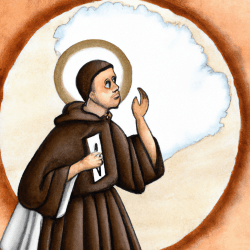
St. Anthony of Padua was born in Portugal in 1095. Though from a prominent family, he entered religious order at the age of fifteen. He sought to become a martyr by preaching Christ in Muslim lands, and eventually received his superiors’ permission to do so, but illness prevented his journey. He then tried to live quiet life of prayer and penance as a hermit, but God again had other plans for him. When asked to give a short sermon during a meal held for Dominicans and Franciscans following an ordination Mass, Anthony’s previously unknown brilliance shined through.

Anthony was reportedly “gifted with a prodigious memory, so that he retained all he read, and could have it ready at hand whenever needed.” St. Thomas Aquinas is also said to have had a memory like that, having written his book “The Golden Chain” (a collection of the Church Fathers’ commentary on each chapter of the Gospels) from memory. These anecdotes are plausible to me because I personally know a cardinal who could have met you once years before and at your next meeting would remember your face, your name, where you had met, and what you talked about. Though you and I lack this incredible gift, there is an encouragement for us in it. If natural human brains in this fallen world can sometimes possess this amazing ability, then our minds in glorified bodies will be capable of the same and more one day.

St. Anthony met and befriended St. Francis of Assisi, who sent him forth to be a traveling preacher. His preaching drew crowds so large that the churches could not hold all of the people. One of the things I love about saints’ stories is learning about how they handled difficulties, be they personal, interpersonal, or practical problems. For instance, how does one preach to a crowd of 30,000 gathered in an open field in the time before electricity? St. Anthony would stand and speak from a raised platform in the center, then brothers posted at increasing distances around him would repeat his message, phrase by phrase, to the crowd.

Like many other saints, we can read St. Anthony’s wisdom online for free. Some quotes from St. Anthony include: “Actions speak louder than words; let your words teach and your actions speak.” He said, “Earthly riches are like the reed. Its roots are sunk in the swamp, and its exterior is fair to behold; but inside it is hollow. If a man leans on such a reed, it will snap off and pierce his soul.” And, “Attribute to God every good that you have received. If you take credit for something that does not belong to you, you will be guilty of theft.”

St. Anthony was once a victim of theft. One of the monks ran away from his monastery and took with him one of Anthony’s books. In those days before the printing press, books could be very pricey and might be resold for fast cash. This particular book was dear to St. Anthony so he prayed it might return. His prayer was answered when the runaway brother had a change of heart, returned to the community, and repentantly gave back the book. This story is the reason why St. Anthony is the patron saint of lost items.

His intercession in finding lost items is powerful. I encourage small children be taught to say this delightful prayer while spinning: “Tony, Tony, come around, help what’s lost to soon be found.” (Of course, adults may choose different words and omit the action entirely if they prefer). This February, during the process of selling St. Jude’s Church, I realized that the key to the church I needed for a meeting in New Auburn that same hour was missing. I checked all over my rectory’s floors, tables, and countertops. It occurred to me I might have lost it amongst the dirty laundry, so I took my hamper down to the laundry room. Before searching my fresh, clean clothes I began checking my dirty clothes’ pockets. Then I thought, ‘I should pray for St. Anthony of Padua’s help.’ At the very moment I began to speak to him, my hand touched the key in a pants pocket. It was surreal and I felt very, very grateful.

Like the story I told at yesterday’s funeral, as Anthony lay dying (at the age of 35 from an illness) he had a vision of a heavenly visitor. One of the friars asked Anthony what he was staring at so intently. He replied, “I see my Lord!” Saints’ stories also contain weird and wonderful miracles, which show that there is more to reality than the world we see. When Anthony’s tomb was opened thirteen years after his passing, his body had naturally decayed to dusty bones, but his motionless tongue—which had proclaimed Jesus Christ so well—appeared healthy, moistened, and alive.

Are you called to be a European religious brother, priest, and Doctor of the Church like St. Anthony of Padua? Almost certainly not. Nor are you called to be an celibate Middle Eastern carpenter like Jesus Christ. But the saints show us powerful and beautiful reflections of Christ, different ways of being like our Lord, in every age and walk of life.

I hope that you will get closer to St. Anthony and the many friends we have in heaven. Ask God to introduce you, learn about them and befriend them. By the time you discover a new saint, he or she knows and loves you already, for the knowledge and love possessed by the saints in glory partakes of the wisdom and love of God.

Abraham, Martha, and Our Lord

July 16, 2022

16th Sunday in Ordinary Time
By Fr. Victor Feltes

In this Sunday’s readings, Abraham and Martha play host and hostess to our Lord. The Book of Genesis tells how “the Lord appeared to Abraham… as he sat in the entrance of his tent,” and that Abraham ran to offer his three visitors hospitality. Today’s gospel from Luke recounts how “Jesus entered a village where… Martha welcomed him.” Both Abraham and Martha served the Lord but Martha, unlike Abraham, receives a gentle correction from him. So in what ways did Martha and Abraham’s actions differ?

The pair share similarities. Both of them wanted to put other people to work. Abraham tasked his wife Sarah to make bread rolls and his servant to prepare a tender, choice steer, while Martha sought for her sister Mary to help her. Both Abraham and Martha were a flurry of activity. After running to set Sarah and his servant to work, Abraham fetched curds and milk and the meat that had been prepared and served these to his guests in the tree shade. And Martha was famously “burdened with much serving.” So what are the key differences between them? I would like to highlight three.

First, Martha gives the Lord an command, while Abraham politely invites. She says, “Tell [my sister] to help me.” Abraham also asks things of the Lord but in a different spirit: “Sir, if I may ask you this favor, please do not go on past your servant.” Abraham is respectful and open to whatever the Lord thinks best. When the Blessed Mother brings Jesus the news that the wedding feast of Cana has run out of wine, she does not order him what to do; instead she instructs the servants to “do whatever he tells you.” We are free and invited to ask the Lord Jesus for anything, large or small, but ask him with reverence and trusting that whatever he decides will be best.

A second difference between Martha and Abraham is that Martha gets noticeably stressed out while Abraham, though vigorously active, appears to maintain his peace. “Martha, burdened with much serving,” complains and criticizes. “Lord, do you not care that my sister has left me by myself to do the serving?” But Jesus says to her in reply, “Martha, Martha, you are anxious and worried about many things. There is need of only one thing.” Martha has placed expectations on herself for how she needs to show hospitality, she’s failing to meet these self-imposed standards and it is depriving her of peace. Martha has fallen into an anxiety trap. Anytime we feel like, “I have to do this, but I can’t. I have to, but I can’t,” it’s not true. Jesus does not demand the impossible from us. So either you do not really have to do that thing, or (if God is calling you to do it) with the help of God you can accomplish it. When the yoke you carry on your shoulders feels heavy and grinding, consider whether it may be a yoke of your own making. Jesus says, “Take my yoke upon you… and you will find rest for yourselves. For my yoke is easy, and my burden light.” Some reevaluation may be necessary to exchange your yoke for his.

A third and final difference between Martha and Abraham, is that Martha allows her work to get in the way of her relationship with the Lord. Abraham labors too, but he enjoys the company of his heavenly guests even as he serves and waits on them under the tree. He and his guests converse together, leading to Abraham’s great blessing. One of his guests declares to him, “I will surely return to you about this time next year, and Sarah will then have a son.” Jesus said Martha’s sister Mary, sharing the Lord’s company listening at his feet, had “chosen the better part and it [would] not be taken from her.” Abraham did not exclude this better portion from his labors. We too should spiritually commune with the Lord throughout our day’s tasks, for he is always near.

Whatever good works we do for Jesus are not nearly as important as who we are for each other. Jesus says that at the Judgment, “Many will say to me on that day, ‘Lord, Lord, did we not prophesy in your name? Did we not drive out demons in your name? Did we not do mighty deeds in your name?’ Then I will declare to them solemnly, ‘I never knew you. Depart from me, you evildoers.’” Do not merely serve and obey Jesus, on the level of a slave. Love him as your dearest friend, for he is already the greatest friend towards you. The one thing needed is Jesus Christ.

The Cardinal, the Angel, and Us — Funeral Homily for Joan Johnson, 88

July 12, 2022

By Fr. Victor Feltes

A Christian life like Joan’s contains many good memories. No funeral homily could recount them all. Today, I would like highlight two family stories from Joan’s life which connect the past and the present and point to our shared future. Did you know that a cardinal has visited St. Paul’s and that an angel been seen in this church? Their appearances were as characters in Christmas pageants when Joan’s beloved grandchildren were both students attending our grade school.

One year, little’s Casie role in the Christmas play was a bird, specifically a cardinal. Hers was a minor role, but grandma made her a major costume. Joan’s daughters, Debra and Terri, recall Casie in that great, red plumage, molting feathers as she walked down this aisle. At another Christmas pageant, McKenzie’s role was to be a little angel. Her mother had prepared a fine costume (which would prove to be only a first draft). When Joan saw it, she didn’t say anything. Joan has a sweet disposition, she is quiet, patient, and no complainer, but Joan desired greater glory for her beloved and set to work. The next day, McKenzie’s angel wings were significantly bigger than they were before.

Those stories connect the past to the present. Joan’s family still has that big, little angel costume, and Joan’s granddaughters, Casie and McKenzie, have grown up to be the lectors reading at her funeral at St. Paul’s Church today. These stories also point to our shared future as well. Our first reading from the Prophet Daniels foretells, “At that time… those who sleep in the dust of the earth shall awake; some shall live forever, others shall be an everlasting horror and disgrace. But the wise shall shine brightly like the splendor of the firmament, and those who lead the many to justice shall be like the stars forever.” In our Gospel, Jesus reechoes his plan: “The hour is coming in which all who are in the tombs will hear his voice and will come out, those who have done good deeds to the resurrection of life, but those who have done wicked deeds to the resurrection of condemnation.”

Joan loves her family with a likeness to how Jesus Christ loves his. He is patient, he is kind. He is slow to anger and not a grumbler. But his intense desire is for our greater glory and he has set to work. Christ’s will is not to merely change our clothes but to transform us, not to make us birds or angels (for we shall always be human creatures) but to make us godlike, saints sharing in his resurrected glory.

It is a serious thing to live in a society of possible gods and goddesses,” C.S. Lewis wrote, “to remember that the dullest most uninteresting person you can talk to may one day be a creature which, if you saw it now, you would be strongly tempted to worship, or else a horror and a corruption such as you now meet, if at all, only in a nightmare. All day long we are, in some degree helping each other to one or the other of these destinations. It is in the light of these overwhelming possibilities… that we should conduct all of our dealings with one another, all friendships, all loves, all play, all politics. There are no ordinary people. You have never talked to a mere mortal. Nations, cultures, arts, civilizations – these are mortal, and their life is to ours as the life of a gnat. But it is immortals whom we joke with, work with, marry, snub, and exploit – immortal horrors or everlasting splendors.”

Today we pray for Joan, that her fully-purified soul may enter God’s unveiled presence, and — seeing him as he is — she shall be like him, a glorious saint, dwelling in the house of the Lord forever. Never forget and do not doubt that the Lord desires the same for you. Christ calls you to possess his holiness. Jesus calls you to share his glory.

Essential Conversation — Funeral Homily for Marcel Sobotta, 86

July 11, 2022

By Fr. Victor Feltes

Marcel’s family moved here to Bloomer when he was just three years old. And back then, starting out, the only language he knew was Polish. Marcel had to learn how to speak English here, partly from his friends, who reportedly taught him how to say useful words like “potato.” Consider how essential practicing this new language was for his life. How isolated would his more than eighty years of life on earth have been, if Marcel had never practiced such conversation?

About Marcel, Beverly and their children have shared many memories. Of his love for his wife and kids, grandkids and great grandkids. Of his delight in farming and gardening. Of his work ethic at the dairy and driving school bus. Of his raising the beagles and rabbits. Of his joy in fishing and hunting in God’s creation. Of his frustration with The Green Bay Packers. But the particular aspect which stood out to me most is what his family shared about Marcel’s life of prayer.

Marcel prayed at every meal time and prayed every single night. He would kneel down by his bedside and was not ashamed to let his children see it. In fact, he taught his children to do the same. They tell me he was very faithful to God. Prayer, it seems, was a constant throughout Marcel’s life. When I visited him with Beverly, just days before he died, to give him the Holy Eucharist and the anointing for the sick, he joined us in the prayers as he was able, and he was happy. Marcel had learned and practiced the language of prayer.

Prayer is simply a conversation with our friends in heaven. Prayer is how we talk to God. And through the important practice of prayer, a Christian becomes more and more conformed to Christ and shares in his blessedness. The Christian who prays recognizes their poverty in spirit, that they need God. The Christian who prays will mourn the evils of this world, for Jesus will share with them his heart, and there is much to mourn. The Christian who prays meekly asks the Lord to intervene with his wise solutions, for “man’s wrath does not accomplish the righteousness of God” and “his ways are above our ways.” The Christian who prays increasingly hungers and thirsts for righteousness, within themselves and others, for Christ calls us all to be holy saints. The Christian who prays grows merciful, because they know they have received great mercy. The Christian who prays is clean of heart, desiring one thing, God, above all. And the Christian who prays is a peacemaker, nurturing peace within themselves and for all around them.

Connected to Christ in daily prayer, we no longer live an isolated human life, cut off from deeper meaning and purpose, settling for small potatoes. Our Lord has a purpose for you and has prepared a feast for you. Jesus says in the Book of Revelation, “Behold, I stand at the door and knock. If anyone hears my voice and opens the door, I will come to him and dine with him and he with me.” Behold, he stands at your door and knocks. He knocks at the door of your soul, and prayer is how you open the door to him. Blessed is he who opens that door, for consolation, the Kingdom, and the vision of God await. May we learn this valuable lesson from Marcel’s lived example.

A Heaven-Sent Hug

July 10, 2022

15th Sunday in Ordinary Time
By Fr. Victor Feltes

Last month, a parishioner told me she looked forward to the great stories I would bring back from vacation. Today, I would like to tell you the best story from my time away. It’s actually a story of Tori, the wife of a former college roommate I visited. It is a God story which all involved are happy to share with others, and this story is entirely true.

Tori worked ten years at a Christian school in Oregon with a much-beloved Bible teacher named Dave. He was like a father figure for her. Tori did not really know his wife, Marcy, but he often spoke of her in glowing terms. When Tori had left her teaching job and moved away, Dave was diagnosed with an aggressive form of cancer shortly after his retirement. Dave and Marcy helped keep their friends and family in the loop through their joint Facebook account until he passed in 2017.

Amanda Robin Sandberg

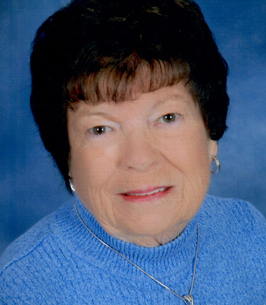
Fast-forward to May of 2022. Tori and her family have lived in Northern Idaho for a little more than a year. And it so happens that Marcy, the now remarried widow, has also moved to Idaho and lives less than two miles away from Tori, though they still remain merely acquaintances. One Monday, Tori is scrolling Facebook and sees one of Marcy’s posts: it’s the picture (right) of a smiling 42-year-old woman paired with the caption “My beautiful daughter.” This seems like a rather benign item, but Tori’s thoughts keep returning back to it, over and over. So Tori revisits the post the next day and reads its many replies. From this she learns that Marcy’s daughter Amanda has died, recently and suddenly, in an unmentioned way.

Being a mother herself, Tori’s heart breaks; she weeps, moved with compassion. Seeing far away Facebook friends writing to Marcy saying “I wish we could be there for you,” Tori prays, “I’m right here, I’m close. God, what can I do?” And the idea she receives is, “Go! Go to her house!” Tori thinks, “I don’t know her very well. I should bring her cookies or flowers.” But this was answered with, “No, don’t bring anything. … Bring her a hug. That’s what you’re allowed to bring her and nothing else.”

Now Tori is very kind, but naturally an introvert. This plan to just drop-in on a mourning acquaintance was not her preference. She asked, “Is this really what you want me to do?” And the compelling idea continued urging her like a mantra: “Show up, bring her a hug. Show up, bring her a hug.” Like she had experienced in previous inspired episodes, this thought’s persistence despite Tori’s personal fears and doubts were a sign to her that it was coming from the Lord. Tori reports, “I felt stronger and stronger: ‘This hug is from her daughter. This is what she wants to give her.’

Late Tuesday afternoon, her stomach sick with anxiety, Tori went to Marcy’s home and rang the bell. Marcy soon opened the door with a surprised but friendly expression. Tori said, “I believe I saw something on Facebook.” Marcy’s face fell and she nodded. Extending her arms, Tori said, “I’m here to give you…” and Marcy interrupted, “A Hug!” Tori is ordinarily a light hugger but she gave Marcy strong embraces. Marcy joyfully said to her husband, “She hugs just like Amanda!” The two women smiled, cried, and hugged again and again.

Amanda had died just four days before in a car accident. She was the same age as Tori. Marcy had Christian faith her daughter was in heaven but was asking God for a sign that Amanda was alright. Just hours before Tori’s visit, Marcy had told her husband one of the things she was going to miss most were Amanda’s hugs. Marcy told Tori that Amanda had once hugged her mom so tightly that she broke some of her mother’s ribs. “I never told her,” Marcy said, “but I guess she knows now!” What beautiful things would the Lord do through us if we were more open to his promptings?

This morning, Jesus shares with us one of his greatest Gospel stories. In this famous parable, after evil befalls a traveler on the road at least three people happen by. When the priest, Levite, and Samaritan began their days’ journeys none of their plans had foreseen a detour to help a stranger in need. The priest and the Levite both saw the robbers’ victim but they were too busy or too afraid to help, or they simply assumed God didn’t want them to get involved. The Samaritan, however, was open to the will of the Lord that day in a way the other two were not. The Samaritan was moved with compassion and approached the man; cared for him, lifted him up, provided help for him, and left him better than he found him. Of the three, Jesus presents the Good Samaritan as an example for us to follow, telling us to “go and do likewise.”

You can do likewise by being open and asking, by asking the Lord and being open to his promptings. First, choose to increase your openness to loving “the Lord, your God, with all your heart, with all your being, with all your strength, and with all your mind, and your neighbor as yourself.” Then ask the Lord in prayer to use you as his voice, hands, and feet; as his conduit, his vessel, his powerful instrument in your daily life. (“God, please show me your will.”) Finally, as you go throughout your day, be open to his invitations.

What are the Lord’s promptings like? When some innocuous thing seems highlighted in Tori’s attention or when someone comes to her mind during prayer, in a dream, or in the course of her day, she pauses to ask Jesus about it. Maybe she is supposed to reach out to someone with inspired words or some good deed. Tori notices the Lord’s ideas hit her differently than her own, they stick with her rather than fade away, returning to her in quiet moments. And if she were ever to hear an evil suggestion, she would then know it’s not from him. Provided Tori does not give in to busyness or distraction, when she is welcoming heaven’s invitations, “Every time I’m open to God doing something,” she says, “he does stuff.”

This spiritual openness, asking and listening and doing, is a skill to practice. Like when cultivating a new garden or starting to lift weights, it is better to begin small and to grow over time than to never start at all. Be prepared to take some risks for Jesus. It is better to make small mistakes than to miss amazing opportunities. Christ died for us. We must be concerned about more than merely our own comfort and plans. Like the Good Samaritan, be interested in helping to save and bless others. Be open and ask God to use you, ask our loving Lord and be open to his great ideas.

His Power Shall be Known to his Servants

July 2, 2022

14th Sunday in Ordinary Time
By Fr. Victor Feltes

Today’s psalm tells us: “Shout joyfully to God… proclaim his glorious praise. Say to God, ‘How tremendous are your deeds!‘” When the Berlin Wall came down in 1989 and the Soviet Union dissolved two years after, I remember my dad remarking that those were things he thought he would never live to see. It seemed like Russian power would dominate Eastern Europe forever. But then, the Soviet Union suddenly collapsed, something which no one — not even the C.I.A. — saw coming.

At Fatima in 1917, before the Russian Bolshevik Revolution, the Blessed Virgin Mary accurately warned that Russia’s errors spreading throughout the world would cause wars and persecutions of the Church. But Mary said, “In the end, my immaculate heart will triumph.” In 1984, on the Feast of the Annunciation, the day when we celebrate the conception of Jesus in his mother’s womb, Pope St. John Paul the Great consecrated Russia and the whole world to Mary’s immaculate heart. Seven years later in 1991, on Christmas day, when we celebrate Jesus’ birth, Mikhail Gorbachev resigned as leader of the USSR and the Soviet flag was removed from atop the Kremlin forever. The Evil Empire ended, not with millions of deaths from nuclear blasts, but peacefully. This was a great miracle orchestrated by heaven.

Shout joyfully to God… proclaim his glorious praise. Say to God, ‘How tremendous are your deeds!‘” The Lord has brought about another tremendous victory in our time, and we do right to recognize and joyfully praise his glorious deed.

Once Wisconsin became a state in 1848, we quickly passed laws respecting the sanctity of human life from conception to natural death. In 1849, our state legislature outlawed abortion in all cases (except to preserve the life of the mother) and then, in 1853, our state government abolished capital punishment. Whenever possible, we do not kill people, not even people who are guilty or highly inconvenient, because killing is not the way of Christ and his Kingdom. We are instead to show merciful love for all.

In 1973, Wisconsin was one of thirty U.S. states which prohibited abortion at all stages. But that year, the Supreme Court’s ruling in Roe vs. Wade (a decision which even pro-abortion legal scholars acknowledge lacked constitutional justification) legalized the killing of unborn children everywhere in the United States. In response, for forty-nine years, pro-life people prayed and marched and voted. Through thousands of organizations across the land they provided moms better, holier, more loving options (like adoption) and practical resources (like diapers, formula, cribs, and clothes). Yet, despite their persistent efforts, many pro-lifers doubted they would ever live to see abortion end anywhere in our country. Last month, after seven sets of seven years of prayer and sacrifice, the Supreme Court returned the issue of abortion to the states. Wisconsin abortion laws were never repealed. And so, this Fourth of July weekend, Wisconsin is a pro-life state once again.

Today Isaiah says, “Rejoice with Jerusalem and be glad because of her, all you who love her; exult, exult with her, all you who were mourning over her!” Nurslings shall be carried in her arms and fondled in her lap; they shall now find comfort. “When you see this, your heart shall rejoice… the Lord’s power shall be known to his servants.”

The date on which the Supreme Court overturned Roe vs. Wade (June 24th) is usually the Solemnity of the Nativity of St. John the Baptist. In future years we will mark the anniversary of this victory by celebrating the birth of him who leapt for joy in his mother’s womb in the presence of the newly-conceived Christ. But this year, 2022, St. John’s day was superseded by an even greater feast which is always celebrated on the third Friday after Pentecost. This year, Friday, June 24th was the Solemnity of the Sacred Heart of Jesus. Indeed, in the end, his Sacred Heart has triumphed.

The reversal of Roe is a landmark victory, but of course there remains much work to do. “The harvest is abundant but the laborers are few; so ask the master of the harvest to send out laborers for his harvest,” and be open to being sent yourself. Like the seventy-two in today’s Gospel, Jesus Christ sends us forth to those he seeks to save. Wishing peace on everyone, peace to each house and peace in every household, we shall defend and extend his Kingdom’s Culture of Life throughout this land and around the world. And though literal demons will rage and resist us, we shall not be afraid but prevail, for Jesus, his mother, and the angels are with us for the victory. “When you see this, your heart shall rejoice… the Lord’s power shall be known to his servants.