Archive for the ‘St. Paul’ Category

Enduring Injustices — Tuesday, 23rd Week in Ordinary Time—Year II

September 7, 2010

St. Paul rebukes the Corinthians today, saying, “[It is] a failure on your part that you have lawsuits against one another.” Then he says something that rubs us the wrong way: Paul asks, “Why not rather put up with injustice? Why not rather let yourselves be cheated?” We resist, saying, “It’s just common sense that we shouldn’t let ourselves be cheated.” But sometimes common sense falls short. That’s why we need the teachings Jesus Christ revealed. Jesus said:

“When someone strikes you on your right cheek, turn the other one to him as well. If anyone wants to go to law with you over your tunic, hand him your cloak as well. Should anyone press you into service for one mile, go with him for two miles. Give to the one who asks of you, and do not turn your back on one who wants to borrow.”

Now this does not mean that we should be indifferent to injustices done to others, nor that we should seek out opportunities to be wronged by others ourselves. But when we are personally wronged, Paul suggests that we try imitating Jesus. St. Peter would agree, for he wrote:

“If you are patient when you suffer for doing what is good, this is a grace before God. For to this you have been called, because Christ also suffered for you, leaving you an example that you should follow in his footsteps. ‘He committed no sin, and no deceit was found in his mouth.’ When he was insulted, he returned no insult; when he suffered, he did not threaten; instead, he handed himself over to the one who judges justly. He himself bore our sins in his body upon the cross, so that, free from sin, we might live for righteousness. By his wounds you have been healed.”

The next time you find yourself wronged, try imitating Christ. Jesus trusted that the Father would provide for Him, and He was provided for. Jesus accepted His unjust suffering, and it changed the world. Jesus invites you to accept a cross and to follow Him into this mystery.

Gospel Movies

July 1, 2010

Below are five original shorts drawn from the Scriptures. Click the images to watch them.

Teddy Bear Annunciation


The Annunciation of the Archangel Gabriel to the Blessed Virgin Mary; the Gospel of Luke, chapter 1, with teddy bears.

Robot Jesus at the Watering Hole

 
Jesus meets the woman at the well; the Gosple of John, chapter 4, starring robots.

The Rich Young Rapper

 
A rich young rapper questions Jesus on the subway; a remix of Matthew, chapter 19 and Mark, chapter 10.  

Doubting Thomas

 The resurrected Christ appears to a skeptical disciple in the Gospel of John, chapter 20.

The Importance of the Resurrection


From St. Paul’s 1st Letter to the Corinthians, chapter 15.

God’s Favorite Instrument — Tuesday, 6th Week of Easter

May 11, 2010

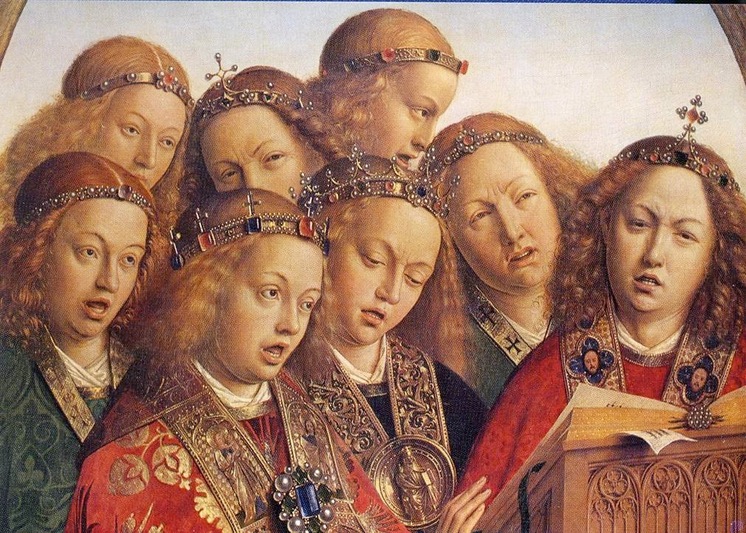
What is God’s favorite musical instrument? Harps? Organs? Bongos? I believe it is the instrument He created Himself, the one which He loved so much that He gave one to each of us for free–the human voice.

God is pleased when we sing for Him. St. Augustine said, “The person who sings prays twice.” Some people say this is because singing adds melody to our words of prayer. But it could be that a person sings twice because singing enlists the heart to join in the prayer of the mind. Singing lifts up our hearts to the Lord.

In today’s first reading, the missionaries St. Paul and Silas get beaten and stripped. They are locked in prison with their ankles placed in stocks. Things are at their darkest and most difficult time, but the night finds them not only praying, but singing hymns. This lifts their spirits, shakes loose their bonds, and pours out grace on that place. Singing makes a difference.

Maybe you feel like coming to our weekly school Masses is like being led somewhere in shackles. But if you must be here either way, why not make the most of it? Singing at Mass (and I mean really singing) is liberating, and a gift to God. 

If God has blessed you with a beautiful voice, sing strongly, as if to say to God, “You gave me this gift, and I offer it back to you.” If He has not blessed you with a good voice, you should still sing boldly, as though to say, “You gave me this voice, and I’m going to let you have it.” Your voice is God’s favorite instrument. So at this Mass and at every Mass, let Him hear it.

Hearing Him — Friday, 3rd Week of Easter

April 23, 2010

Jesus says, “Whoever eats my Flesh and drinks my Blood,” as we are about to do in at this Mass, “remains in me and I in him.” After we receive Him, He remains with us and we with Him.  And He stays with us, provided we do not cast Him out through committing serious sin, until we receive Him again.

Jesus remains close to us throughout our day. Wouldn’t it make sense, that time to time, He would occasionally have something to tell us? Maybe we don’t hear Him because He knows we would refuse to listen. Perhaps He knows we would dismiss hearing Him speak to us out of hand, or maybe He knows we don’t trust Him enough to go out on a limb. For example, if you got the feeling that the Lord wanted you to relay to a message, a message you didn’t really understand, to particular person what would you do?

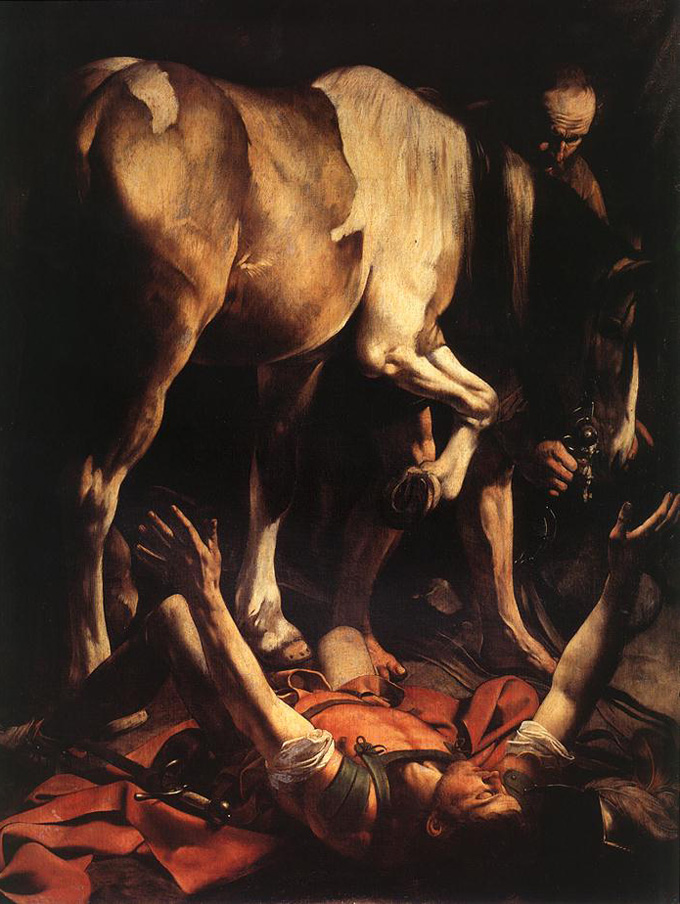
In the first reading, the Lord speaks to Ananias and Ananias answers, “Here I am.” Then the Lord gives Him an entirely wholesome, but very counter-intuitive task: lay your hands on Saul and heal him. Ananias hesitates a little. Ananias might be wondering if this is really coming from the Lord, or maybe he’s not sure he wants to risk this much for the Lord. But in the end, Ananias listens, and because of it, Saul became St. Paul.

If we would like the Lord to do such things with us let us be faithful in little things, faithful to the commands of our consciences and to the gentle nudges of the Holy Spirit throughout our daily lives. If we are willing to trust Him, Jesus will ask us to be His chosen instrument in greater matters too. So let’s listen, let’s be docile, and see what He does with us.

Mary and Pilate — 6th Sunday in Ordinary Time—Year C

February 14, 2010

In a few moments, after this homily, we will recite our creed, the summary of our faith. Every Sunday, we profess, in union with the Christians who came before us, our belief in these truths and our resolve to live our lives according to them. This morning we will look at just one rich aspect of our creed and consider its implications for our lives.

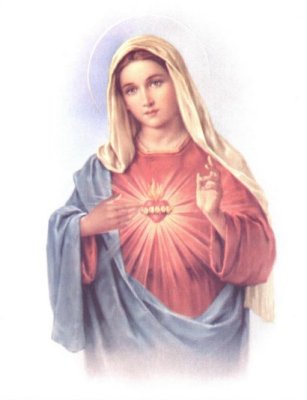
Have you ever noticed that in the entire creed, only two non-divine persons are mentioned by name? These are the Virgin Mary and Pontius Pilate.

“By the power of the Holy Spirit, He was born of the Virgin Mary and became man. For our sake He was crucified under Pontius Pilate; He suffered, died and was buried.”

Now many other figures from the Old and New Testaments could have justifiably been included in our creed; such as Adam and Eve, Abraham, Moses, David, Mary Magdalene, Peter, Paul, and many others. Yet, only Mary and Pilate get mentioned. So why is this? There seems to be two very good reasons. The first of these reasons I will give now—and the second I will save for the end.

The first reason why Mary and Pilate receive special mention is that they ground Jesus’ life, death, and resurrection in our real history. Jesus was ‘born of the Virgin Mary, suffered and died under Pontius Pilate, and on the third day, He rose again.’ Now other pre-Christian religions sometimes had stories about dying gods who came to life again, but those stories were always said to have happened ‘once upon a time,’ in some remote and mythic past. But with Jesus Christ, this ancient intuition and longing of humanity is actually realized. The inclusion of Mary and Pilate in the creed witness to this: that God became man, died, and rose for us, in this world and in real history.

Some people try to be too sophisticated by saying it doesn’t really matter if Jesus rose from the dead, or even if He lived at all, because His teachings are what’s important. But St. Paul blows this idea out of the water. “If Christ has not been raised, your faith is vain; you are still in your sins. Then those who have fallen asleep in Christ have perished” and “we are the most pitiable people of all.” Without Jesus Christ and His resurrection there is no Gospel, there is no Good News.

Just like Jesus Christ, Mary His Mother and Pontius Pilate His executioner are not fictional characters made up for some story. They are real people, from a time not that much different from our own. Our styles and technologies may have changed, but human beings themselves remain much the same. When we look at Mary and Pilate we can see ourselves in these two people whom Christ encountered twenty centuries ago.

Pilate is the secular Man of the World.
Mary is the devoted Disciple of Christ.

Pilate seeks the glory of men.
Mary seeks the glory of God.

Pilate knows worldly wisdom, he is clever and cunning.
But Mary knows God’s wisdom, and she is truly wise.

Pilate thinks he knows how the world works and the pragmatic way to get things done. For Pilate, our world is totally shaped by of power, money, and influence, with some blind luck thrown into the mix. When Jesus stands silent before him, Pilate says, “Do you not speak to me? Do you not know that I have the power to release you and I have the power to crucify you?” Jesus replies, “You would have no power over me if it had not been given you from above.”

Pilate is a very post-modern man.  He’s a moral relativist. When he asks Jesus, “What is truth,” he doesn’t bother to wait for an answer from Truth Himself. That’s because Pilate thinks that the ‘truth’ cannot be known except for the ‘truths’ which we choose for ourselves or impose upon others.

The Gospels show that Pilate knows Jesus is innocent, or at least that he poses no real threat to society, yet Pilate is willing to have this innocent man whipped and even crucified when that becomes the most expedient thing to do. The crowd threatens Pilate, “If you release him, you are not a friend of Caesar,” and he quickly caves and hands Jesus over.

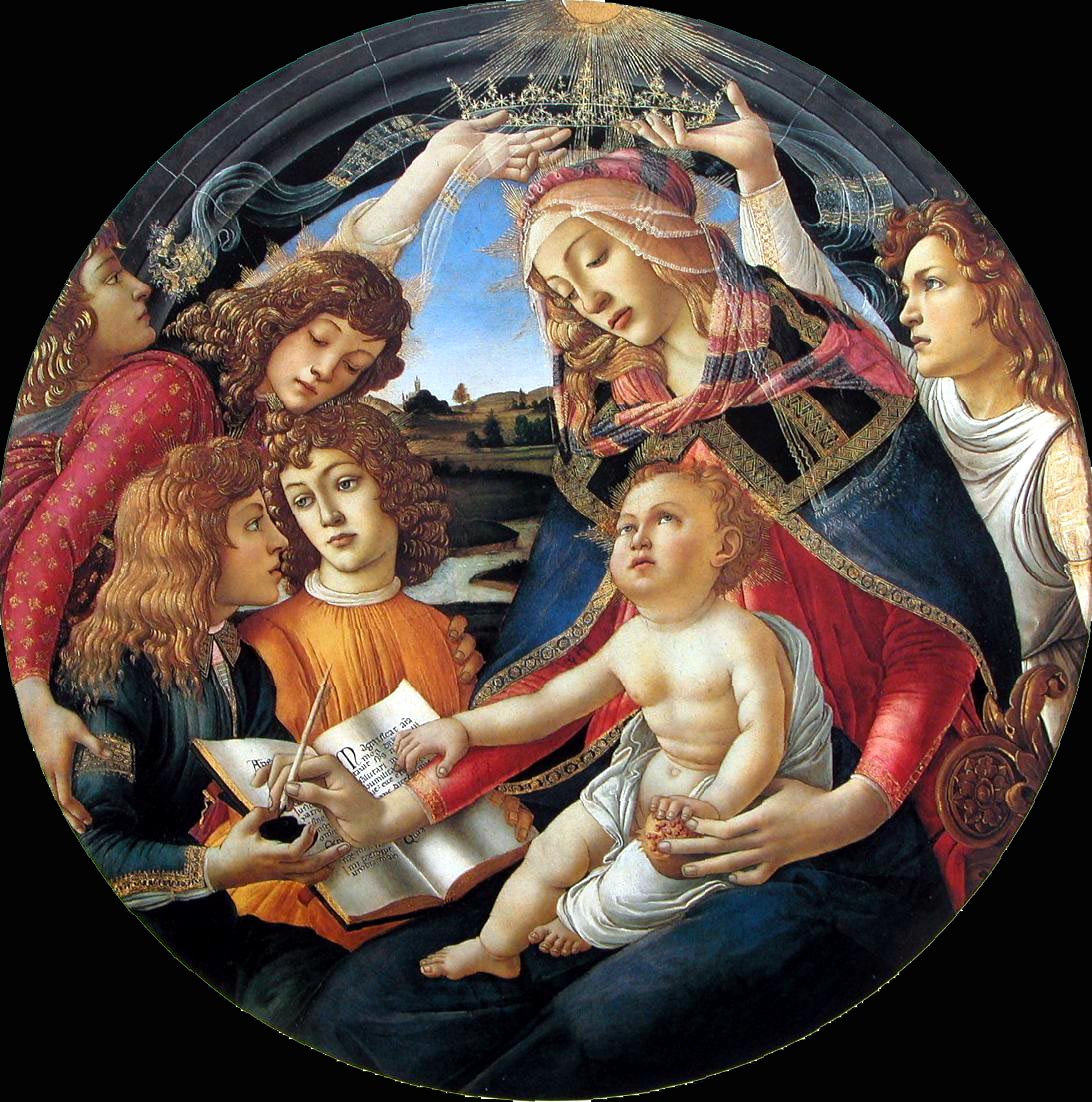
Pilate washes his hands of responsibility, and extends Christ’s arms on the cross. Mary had extended her arms declaring, “Let it be done to me according to your word,” and lovingly held the infant savior in her hands.

Pilate, despite all his power, is ruled by fear.
Mary, despite her weaknesses, is freed from it.

Governor Pilate is rich in wealth and power and yet he has no peace.
Mary, the poor widow, has peace and everything she needs from God.

Pilate has no faith in the God of Israel. He says, “I am not Jew, am I?” But for Mary, God is her rock and this makes all the difference in the world. Mary is defined by her faith, hope and love.

Mary never attends an academy, but she is profoundly wise because she reflects in her heart on the words and deeds of God and because she lives by her own advice: “Do whatever he tells you.” She knows that we do not manufacture the truth for ourselves, we receive it, ultimately from God. We love it, we defend it, and we share it with others. “Blessed [is she],” as Elizabeth said, “who believed that what was spoken to [her] by the Lord would be fulfilled.” Mary trusted and believed, for she saw the evidence through history that God “has mercy on those who fear Him in every generation,” that “He scatters the proud in their pride, and casts down the mighty from their throwns, but He lifts up the lowly.”

Mary’s life was full, but was not free from trials. When Mary consents to be found with child through the Holy Spirit she is uncertain of what will happen to her, but she trusts in God. She does not know how she and her husband will get by as poor immigrants in foreign country, but she continues to trust. Mary’s response to every trial in life, even to the death of her son, is to trust in God. Despite men’s sins, she trusts in God as the Lord of history, that He casts down the proud and mighty from their throwns and raises up the lowly.

Pilate is indifferent to Christ, and he consents to sending Him to the cross, but Mary is wholly devoted to Christ, and she consents to share in His Passion. Pilate’s heart is hardened despite Christ’s Passion, while Mary’s heart is pierced by it.

Governor Pilate was once the most powerful man in Judea, but where is he now? Mary, the poor widow, is now our glorious queen, the most beautiful and powerful woman in heaven or earth, and through her reign she draws millions to Christ our king.

She is the one who wept and now laughs.
He is the one who laughed and now weeps.

He was rich in the world and now he is poor.
She was poor in the world and now the kingdom is hers.

He took root in the desert, he was barren and uprooted.
But she was planted beside the flowing waters, she endured and bore much fruit.

So what do all of these reflections about Mary and Pilate have to do with us? I promised you at the beginning a second good reason why Mary and Pilate are mentioned in the creed; and here it is: Mary and Pilate represent us. They stand as archetypes, models or patterns, for every person.

The faithful one and the faithless one.

The one who serves God and the one who serves himself.

The one who gives Christ life and the one who puts him to death.

We live our daily lives as either Mary or Pilate, with shades of the other thrown in. As we come to the season of Lent, let us examine and discern who we are. “How am I Pilate, and how am I Mary?” And at this Eucharist, let us ask Jesus to exchange in us the ways of Pilate for the ways of Mary, for hers is the way of Christ.

Jesus is Love — 4th Sunday in Ordinary Time—Year C

January 30, 2010

Today’s second reading from St. Paul is perhaps his most known and most loved. You’ve probably heard it at weddings—perhaps you remember hearing it at your own, but most people don’t realize that St. Paul wrote these words to a community in disunity.

The Christian church in Corinth, Greece was divided. Various factions insisted that they were right, that they had “wisdom,” even as they bitterly quarreled with each other. St. Paul acknowledged what the Corinthians possessed in gifts and knowledge, and they had both, but he shined light upon how incomplete they were. “Strive eagerly for the greatest spiritual gifts,” he says, “But I shall show you a still more excellent way.” And then he teaches them about love.

Love is easy when it’s warm and fuzzy, and no one needs a lesson on doing what comes naturally. But how are we to behave when personalities conflict and there are serious disagreements and old resentments within our families, at work, or in our parish? During these times of tension, let us think of Christ and embrace Him as our model for action.

Jesus is patient.  Jesus is kind. In a way, Jesus is jealous, He’s jealous for our souls, but Jesus never manipulates others. He is not pompous. He is not inflated. He is not rude. Jesus is humble. He does not seek His own interests. He is not quick-tempered. He does not brood over injuries, no matter how unjust. He does not rejoice over wrongdoing but rejoices with the truth. Jesus bears all things and endures all things. Look at how He responded in Nazareth when His own acquaintances, whom He had known almost all of His life, turned against Him:

“They were all filled with fury. They rose up, drove him out of the town, and led him to the brow of the hill on which their town had been built, to hurl him down headlong.  But Jesus passed through the midst of them and went away.”

Jesus knew exactly what they were up to as they led Him towards the plummeting edge of town, and He could have turned and walked out on them whenever He chose, so why did He give even them the time of day? Jesus was patient, he was humble, and He endured this trial in hopes that He might lead them from their wrong way and restore personal communion with them. When they were just about to throw Him down, Jesus walked away, for the time had not yet come for Him to lay down His life for love of them.

God assures us through St. Paul that “love never fails.” The love of Jesus Christ never fails, even if we can’t see how, even if His victory, as for the souls for the community of Nazareth, takes more than a single day to accomplish. “Love never fails,” so follow Christ in this most excellent way; at home, at work, and in our church, and the promise of this Scripture passage, that “love never fails,” will be fulfilled in us.

Thursday, 29th Week in Ordinary Time—Year I

October 28, 2009

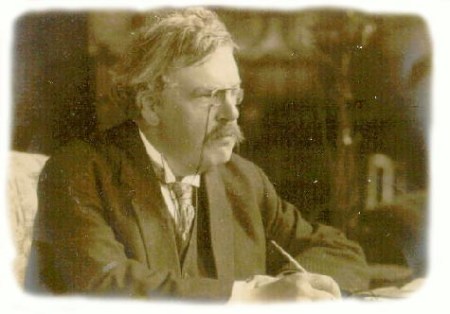
G.K. Chesterton

G.K. Chesterton, the British Catholic writer, lived one hundred years ago, but his writings are still witty, insightful, and relevant today. Once he wrote in answer to the question, “Why I am a Catholic.”  Chesterton explained, “The difficulty of explaining ‘why I am a Catholic’ is that there are ten thousand reasons all amounting to one reason: that Catholicism is true. I could fill all my space with separate sentences each beginning with the words, ‘It is the only thing that…’”  One of the examples of this he gave was that Catholicism “is the only thing that frees a man from the degrading slavery of being a child of his age.”

Why is it that after so many centuries we remain divided, three against two and two against three, on so many important matters?  We may be far more technologically advanced than they were in Jesus’ time, but every generation seems to repeat falling into the same, or slightly differing, forms of foolishness.  While science and technology is cumulative, part of every generation thinks they have to rediscover wisdom from scratch.  That’s why we still have ethical debates about questions that Jesus has settled.

Can we do evil in the hopes that good will come of it? [This is Ethics 101.  St. Paul teaches about this to the Romans, “And why not say—as we are accused and as some claim we say—that we should do evil that good may come of it? Their penalty is what they deserve.”] What if we’re [almost] certain that really good things will come from the evil we do? [Even if the evil does result in some good, what does freely-choosing evil make us?] Should we let the progress of science be bogged down by questions of morality? Should morality and private conscience have a place in politics and public life? [If not, then what will science, public life and policy be guided by beyond base desires and power?] Is it really always wrong to intentionally kill the innocent? What if intentionally killing 100,000 civilians will end a war?

If this is how things are when the wood is green in our country, then what will it be like when the wood is brown, dry, and dead, as it may well be in years ahead? What is the Christian to do?  Remain closely rooted to Christ, the source of our wisdom and waters of life. To borrow the words from the psalmist today:

The Christian “is like a tree
planted near running water,
That yields its fruit in due season,
and whose leaves never fade.
Whatever he does, prospers.”

Even if he is martyred, whatever the faithful Christian does prospers; for he is not a child and a slave of his age, but a child of the age to come.