Archive for the ‘St. Peter’ Category

Catholic Diversity In Unity

July 3, 2025

Solemnity of Saints Peter & Paul
By Fr. Victor Feltes

Today, I wish to speak to you about Saints Peter and Paul, vocations, the Catholic Church and the Churches in her, and two aspects of the Holy Mass. This homily will be a bit longer than usual, but each of its parts are interesting. Saints Peter and Paul shared many similarities but manifested in different ways:

🔸 Both were personally called by Christ to become apostles; Peter quite early during Jesus’ public ministry, but Paul rather late, after Jesus’ Ascension.

🔸 Both beheld Jesus in his transfigured glory; making his friend Peter feel ecstatic, but making his persecutor Paul go temporarily blind.

🔸 Both preached the Gospel; Peter primarily to the Jews, but Paul particularly to the Gentiles.

🔸 Both taught the Faith; Paul the Pharisee was highly-educated, but Peter the uneducated fisherman was not.

🔸 Both experienced weakness; Peter in conquering his passions, but Paul by enduring “a thorn in the flesh.”

🔸 Both were martyred by the Roman Empire in Rome; Peter was crucified upside-down, but Paul the Roman citizen was beheaded.

That Saints Peter and Paul whom we celebrate this Sunday shared one Faith, one Lord, and one calling, and yet manifested these differently in their faithful lives. We also see this in the Catholic Church today. Peter and Paul were called to be apostles. Today, some are called to be bishops, priests, or deacons. Others are called to be consecrated male or female religious. Many more are called to the vocation of holy marriage. Others live out their baptismal mission and call as single persons or consecrated virgins. Which of these ways is the greatest way to live a Christian life? The greatest, most glorious, most fruitful path for you is the one Christ has called or is calling you to. Your life may look differently than others’, even amongst people living out the same vocation, but you can still be living a faithful, fruitful Christian life.

We belong to Christ’s Catholic Church. The word “Catholic” comes from Greek, meaning “universal, worldwide, (or) all-inclusive.” The Catholic Church, established by God for all people and places in this present age, unites humanity in our diversity, but even within our unity we see legitimate variety. Did you know that the one Catholic Church contains 24 Churches with apostolic roots and varying liturgical traditions practiced in full communion with the pope? The largest of these Catholic Churches is the Roman Catholic Church, to which we belong along with more than 98% of the world’s 1.3 billion Catholics. About 18 million other Catholics are in Churches in full communion with Rome; the three largest being the Ukrainian Greek Catholic Church (mainly in Western Ukraine), the Syro-Malabar Catholic Church (mainly in India), and the Maronite Church (mainly in Lebanon). Our one Faith differently celebrated. (Other Churches called the Orthodox Churches have nearly 300 million members put together, with valid priests and bishops and all seven sacraments like us, yet they are not in communion with the pope. Pray for our reunion. The gap between us is less than any Protestant group.) There is even legitimate variation within the Holy Mass of our Roman Catholic Church. I wish to highlight two examples: one in how one receives the Eucharist and another in how the Eucharist is celebrated.

The early Church Fathers mention the Eucharist being placed upon communicants’ hands. Other Communion customs also existed but Communion in the hand was explicitly described. For instance, St. Cyril in Jerusalem and St. Theodore in Turkey instructed the faithful to lay one hand over the other to create a throne (for both saints declare one is about to receive a King) cupping one’s palm to receive “The Body of Christ” and answering “Amen.” St. John Chrysostom observes how a communicant’s hands “hold [the Eucharistic Sacrifice] but for a time.” He writes, “Oh! What a marvel! What love of God to man! He who sits on high with the Father is at that hour held in the hands of all…” And St. Basil the Great records “in the church, when the priest gives the portion, the recipient takes it with complete power over it, and so lifts it to his lips with his own hand.” These and the writings of other Church Fathers show that receiving Communion in the hand existed in the Early Church.

However, though Communion in the hand is allowed today, the many-centuries-long tradition of receiving Communion on one’s tongue is also permitted, either standing or kneeling. Some find receiving our Lord on the tongue strengthens their reverence and devotion; acknowledging the glory of their Great Guest, extending the red carpet of one’s tongue for him to enter under one’s roof through the doors of one’s lips, humbly receiving this priceless Gift of pure grace. After next summer’s church renovation, once there is more space in front of these steps to our sanctuary, I plan to place a kneeler in the center-front as an option, as you may have seen offered already at churches in Chippewa Falls. How you receive our Lord, standing or kneeling, on your hand or on your tongue, is for you to personally discern, since they each option is permitted for you by the present liturgical rules of the Church.

The next legitimate Mass option I would like to explain pertains to the celebrant leading the congregation. Since the Second Vatican Council, the most common way priests have celebrated Mass is versus populum, or “towards the people.” Yet the much-longer-practiced custom has been for the priest and the people to face (literally or symbolically) towards the east together, or “ad orientem.” Like the Jews used to pray towards the Holy Temple in Jerusalem, the writings of the Church Fathers show the early Christians prayed toward the east. St. Clement of Alexandria writes “prayers are made looking towards the sunrise in the east.” And Origen notes: “…Of all the quarters of the heavens, the east is the only direction we turn to when we pour out prayer…” Tertullian records that Christians facing east to pray caused some non-Christians to mistakenly believe we worshiped the sun. But the Christians praying toward the sunrise saw a symbol of Christ rising from the dead and of his promised return to earth in radiant glory one day. Throughout the centuries, even in churches which were not built to face east like our St. Paul’s Church, the priest and the people faced the same direction (or “liturgical east”) together. However, since the 1970’s the prevailing custom has been for the priest to face the congregation.

The Catholic Church approves both versus populum and ad orientem as valid options, and these two ways of celebrating the Mass emphasize different truths. Celebrating versus populum, toward the people, emphasizes the horizontal aspect, the communal meal. And the Holy Mass is indeed a meal, a memorial of the Last Supper, where Jesus Christ and his disciples gather at his table. Celebrating ad orientem, toward the east, emphasizes the vertical aspect, the sacrificial offering. And the Holy Mass is indeed a sacrifice, a memorial of the Cross, where Jesus Christ is offered up for us from his altar.

I experienced my first ad orientem Mass when I was still in seminary. The celebrant was a visiting alumnus and priest of our diocese, Fr. Derek Sakowski. I remember fearing that I would hate the Mass being said that way because I often dislike changes. (For instance, our seminary once changed the toaster in the dining hall and—even though I almost never used the old familiar toaster—I was annoyed when they had replaced it with a new one.) Fr. Sakowski said the same English prayers as at other Masses but watching him celebrate that Mass ad orientem, facing us when speaking to us and facing God when praying to God, I found it surprisingly beautiful and it made a lot of sense. When weekday Massgoers at St. John the Baptist Parish first experienced Mass ad orientem more than five years ago, the attendees reported positive experiences similar to mine.

I mention all this because I would like our weekday Massgoers to experience ad orientem in at least a few Masses this July and hear their feedback. After Vatican II, when Mass facing the people became the prevailing custom in the Church, pastors often introduced that liturgical change abruptly, without consultation, and without adequate explanation. It was jarring, and many lay people were bewildered and hurt. I do not wish to repeat such mistakes going in the opposite direction. Nothing will change without thorough consultation and consensus support. At the end of such a dialogue at St. John the Baptist’s Parish, one weekend Mass changed and the other stayed the same and today everyone seems happy or content with that. Our Faith, our calling, and our Lord are one, even as our faithful lives will manifest them differently. We are Catholic. So in essential things, unity. In non-essential things, liberty. And in all things, charity—that is, love.

The Church Reveals His Beauty

May 11, 2025

4th Sunday of Easter
By Fr. Victor Feltes

Churches should be marked by great beauty. Beauty attracts and delights. God, among his other perfections, is capital “B” Beauty, so a beautiful church glorifies God among us and helps draw people to him. One of the most famous and beautiful churches in the world is St. Peter’s Basilica in Rome. St. Peter’s Basilica is actually a shrine for the burial site of St. Peter the Apostle. He was crucified upside-down on Vatican Hill by the Romans and buried in a nearby cemetery. And in the early 1940s, archeological excavations below the main altar discovered what are most likely his bones. Jesus gave Peter his name, which means “Rock,” and said, “Upon this Rock, I will build my Church.” And today we see the largest and most renowned Christian Church in the world is built above that Rock.

It is wonderful for churches to be beautiful, but it is also important for our church architecture and decorations and to be meaningful—reflecting truths of our faith. For instance, St. Peter’s Basilica is capped by a dome designed by Michelangelo which is the world’s tallest. And two colonnades designed by Bernini, extend out in front of the basilica on both sides around St. Peter’s Square. The effect of this dome and these colonnades together present an image of God the Father. As one approaches St. Peter’s Square, the dome is like his head, the church is like his chest, and the colonnades are like his arms. God the Father is reaching out to beckon, welcome, receive, and embrace all people of the world. When St. Peter’s Square is filled with pilgrims as we saw last week it is like St. John’s vision in today’s second reading, “a great multitude… from every nation, race, people, and tongue,” joyfully standing before God the Father and the Lamb of God. The Kingdom of Heaven begins for us now in his Church on earth.

Once you enter inside St. Peter’s Basilica the architecture there also conveys spiritual truth. The dimensions are huge. The distance from the floor to ceiling—not under dome but in the nave of the basilica—is 152 feet. That’s about twelve stories high; and yet because of architectural tricks of perspective you do not feel tiny. For instance, there are two tiers of statues in alcoves along the sides—lower and higher—but the statues on the higher level are actually bigger than the lower statues so that when you look up at those saints they do not seem so distant. The scale of the arches, doors, and windows make you feel like you are inside of, not a hollow skyscraper, but a great, beautiful mansion. It is an image of the Father’s house, where there is room enough for a countless multitude but where no one is made to feel small or unimportant. In heaven, everyone is valued and has a place with God.

Last Thursday, from the exterior balcony of St. Peter’s Basilica called the Loggia of the Blessings, Pope Leo XIV was introduced to the world. It was quite a surprise and a moment we will remember the rest of our lives. In this Sunday’s Gospel, Jesus says his sheep have been given into his hand by the Father. Our Lord has now entrusted us into Pope Leo’s hands as well. I did not know much about him before the conclave, but I am excited by what I have seen and heard since.

Some people have predicted and hoped for a quiet papacy where very little will happen. But I do not want a quiet pope when so many people need Jesus, his Gospel, and his Church. Pope Leo has spoken insightfully—both years before and following his election—about evangelization in our time, and I look forward to him being a “Lion” for the Gospel. I do not expect our American pope to show the United States special favoritism, nor should he, but I believe this pope will be a great blessing for the Church in our country. When you freeze or boil water, nothing happens before the temperature reaches a threshold. But with the addition or subtraction of just a few more degrees the liquid transforms into a solid or gas. I believe this new American pope will trigger many fruitful responses in those whom God is already calling. There is a new openness and hunger in our culture and I believe great things will happen.

Yet do not just sit back and wait for the pope and priests to draw people closer to Christ. By your sacrificial love, by your Christian joy, by your growing devotion, by your deepening holiness, by your Catholic witness, by your unashamed invitations, the Lord wants you to help bring others—people you know—to a fuller relationship with him and his Church. The papal motto of Pope Leo XIV is the same as he chose when he became a bishop. It comes from a homily of St. Augustine: “In the One, we are one.” (That is, “In Christ, we are one.”) In Christ we are called to all be truly one, and each of us in these years of Pope Leo ahead have important parts to play.

Upon This Rock Christ Built His Church

May 4, 2025

3rd Sunday of Easter
By Fr. Victor Feltes

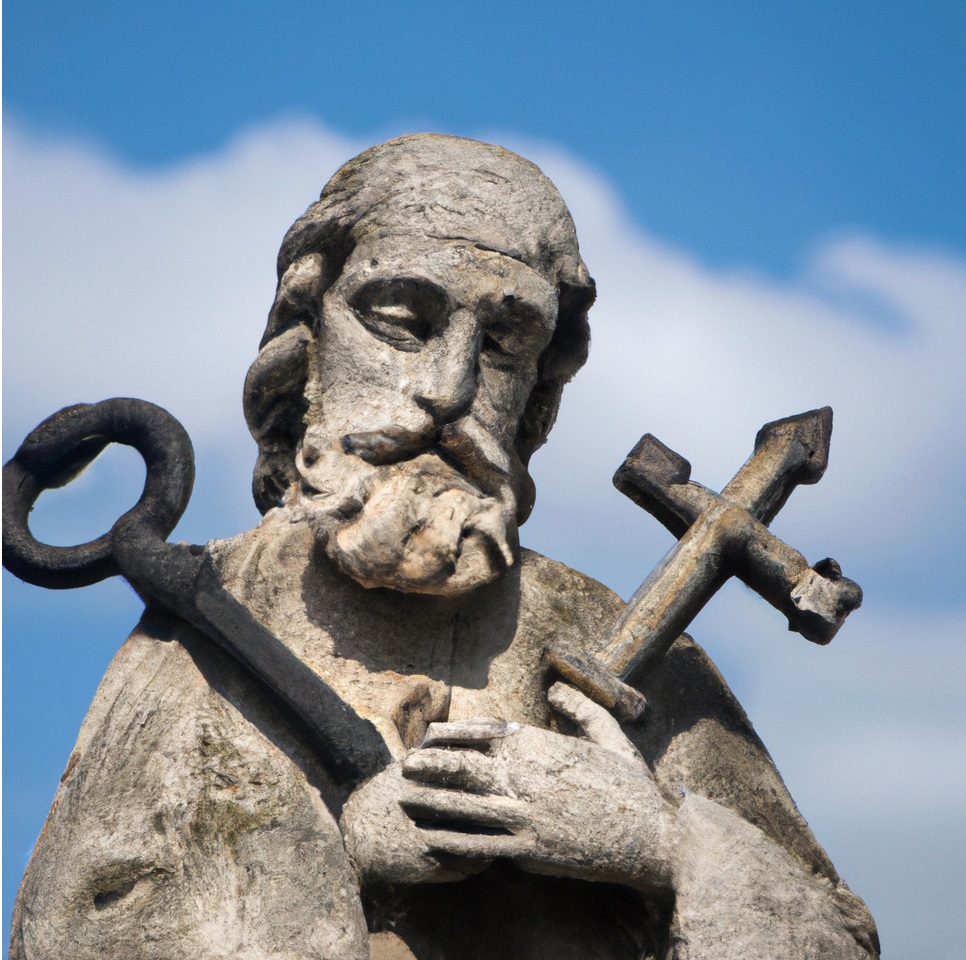
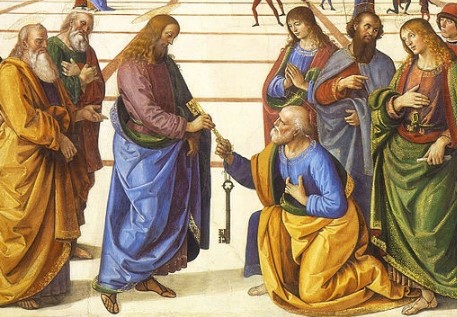
Jesus changed Simon the Apostle’s name to Peter or “Rock” and said, “Upon this rock I will build my Church, and the gates of the netherworld shall not prevail against it.” Jesus told him, “I will give you the keys to the Kingdom of Heaven,” and declared “Whatever you bind on earth shall be bound in heaven; and whatever you loose on earth shall be loosed in heaven.” This promise assures us that Peter would not bind the Church to error, for binding the Church on earth to lies would bind heaven to the same. What is the purpose of this awesome authority to teach and lead? Jesus tells him and us in today’s Gospel: it is to ‘Feed his lambs, tend his sheep, and feed his sheep.’

Jesus had specifically told Simon at the Last Supper, “Behold, Satan has demanded to sift all of you like wheat, but I have prayed that your own faith may not fail; and once you have turned back, you must strengthen your brothers.” In the Gospels, Simon Peter’s name is always first among his fellow apostles in any listing where he appears, while Judas Iscariot’s name is always placed last. All of this reflects the God-given preeminence of St. Peter as the servant-leader of Christ’s Church on earth. Jesus remains the invisible Head of his One, Holy, Catholic Church, but he knew that without providing clear and visible apostolic shepherds to give us clarity and unity his flock would surely scatter.

This was true in the 1st century with St. Peter as 1st bishop of Rome, and Peter’s office has continued in his successors, the popes, as recognized by Christians throughout the first millennium. Jesus had told the apostles “whoever hears you hears me” and promised the Holy Spirit would guide them “into all the truth.” The New Testament also proclaims the Church to be “the pillar and foundation of truth.” Was only the first century to be graced with such divine gifts and assurances? No. Jesus is the wise man who built his house on Rock so that even when the rains fell, the floods came, and winds blew and buffeted his Church it would not collapse into heresy.

Indeed, when a pope (or a Church council together with him) definitively defines a doctrine of faith or morals to be held by the whole Church, the Holy Spirit protects their teaching from error. This is called infallibility. Through divine inspiration, the Holy Spirit previously utilized imperfect men to pen precisely what he wished to be written as Holy Scripture; so simply protecting Holy Church from officially teaching errors is an important but lesser miracle. Though popes can teach infallibly and possess full authority as chief shepherds, they are not flawless people. Simon Peter, even after denying, repenting, and returning to Christ, sometimes still slipped up.

Through St. Paul’s Letter to the Galatians we learn that St. Peter was accustomed to eating with Gentile Christians who did not keep the Old Covenant’s rules about ritually clean and unclean foods, as Christ’s New Covenant allowed. That was all well and good, but once when some Jewish Christians arrived in town who cared about keeping all those dietary laws, Peter began to withdraw from his previous table companions. Peter probably wished to avoid causing offense and division, but this action caused confusing scandal by implying that keeping all the Old Laws of Moses was necessary for salvation.

St. Paul writes, “I opposed him to his face because he clearly was wrong.” Paul corrected Peter in front everyone, saying, “If you, though a Jew, are living like a Gentile and not like a Jew, how can you compel the Gentiles to live like Jews?” St. Peter had not denied the Gospel but his personal example in this case caused harm and he received a fraternal correction from St. Paul. In the Church’s two-millennium-long history there have been some very bad and scandalous popes, but by God’s grace none of them bound the Church to heresy, and that’s a priceless blessing.

Having mourned and prayed for Pope Francis, the cardinals will gather this Wednesday inside the Sistine Chapel at the Vatican for the important task of electing a new pope. Some 133 cardinals, appointed by previous popes from places around the world, will sequester themselves away until they elect a Holy Father. After any failed rounds of voting, they will burn the ballots to make black smoke. But once a pope has been elected by a two-thirds of the vote they will burn the ballots to make white smoke accompanied by the ringing of St. Peter’s Basilica’s bells. Then our new pope will be introduced to the world and impart his papal blessing. All the conclaves in recent decades have been short, concluding within three days, but do not be alarmed even if this conclave takes more than a week. We will have a pope again soon.

People sometimes wonder, “Does the Holy Spirit choose who will be the pope?” Before he became Pope Benedict XVI in 2005, Cardinal Joseph Ratzinger was asked about this in a 1997 interview. He replied, “I would not say so, in the sense that the Holy Spirit picks out the Pope…. [“There are too many contrary instances of popes the Holy Spirit obviously would not have picked!”] I would say that the Spirit does not exactly take control of the affair but rather like a good educator, as it were, leaves us much space, much freedom, without entirely abandoning us. Thus the Spirit’s role should be understood in a much more elastic sense, not that he dictates the candidate for whom one must vote. Probably the only assurance He offers is that the thing cannot be totally ruined….”

When I was younger, I would have imagined there was just one cardinal in any conclave who could be the right pope; but now I suspect the Holy Spirit perhaps beholds dozens of cardinals with whom he could accomplish comparable good fruits. God works with what we give him. So pray that the cardinals will be receptive to the Holy Spirit’s guidance, but do not be anxious or afraid. Whatever happens, we already know that Christ and his Church will endure and triumph in the end, for “the gates of the netherworld shall not prevail against it.” Pray this week that the Church of Christ on earth may soon be led by another great pope who will feed his lambs, tend his sheep, and feed his sheep.

Encountering Our Risen Lord

March 31, 2024

Easter Sunday
Fr. Victor Feltes

This gospel reading is a curious one to proclaim on Easter Sunday. It’s the one we read on Easter Sunday morning every year: John’s story of Mary Magdalene, Peter, and the Beloved Disciple at the empty tomb. Other gospel reports about Jesus’ resurrection have miracles and appearances of angels or of Christ himself. St. John’s Gospel recounts examples of these on Easter as well; for instance, after where our reading ends, Mary is greeted by Jesus and angels at the tomb, and Peter sees and touches the Risen Lord in the Upper Room. This morning’s gospel reading, however, does not find Jesus and sees no angels or miracles in progress. Mary Magdalene discovers Jesus’ body is missing and runs away distressed. She finds Peter and the Beloved Disciple (traditionally, the Apostle John) and the men run back to the tomb. Both of them go inside but only find burial cloths. They had not yet understood Jesus’ previous remarks nor the Old Testament passages which foretold “that [Christ] had to rise from the dead.” But, when the other disciple went inside the tomb after Peter, “he saw and believed.”

So what convinced him? Was it something about those burial cloths? Was it because the cloth which had covered Jesus’ head was “not with the burial cloths but rolled up in a separate place” with a tender delicacy which a grave robber would not show? Was it because tomb raiders in the ancient world would typically steal fine burial linens and leave the body behind? Was it because a body-snatcher would not peel the dry-blood-caked shroud away from the body to carry away a naked corpse? Perhaps the cloths looked deflated, as though Jesus’ body had vanished or passed through without disturbing them. Or maybe a miraculous image of Jesus’ body had been left behind upon the shroud. Whatever it was, the Beloved Disciple reasoned from what he saw to firm conviction. Was Peter convinced by seeing the same scene? Maybe not. Mary Magdalene was not consoled by her first glances at the tomb. It was later encounters, typically together with other friends of Jesus, which led Christ’s disciples to faith in him as the risen Lord.

Many people come to church on Easter Sunday morning. And this is a good thing. Our Lord is pleased that you are here. On the first Easter Sunday evening, when Jesus Christ appeared in the Upper Room even though he had died for their sins, even though they had previously deserted him, he said to all those gathered: “Peace be with you… Peace be with you.” Many people come to church on Easter Sunday morning. But typically, on the following Sunday, a fewer number attend. Jesus may touch your heart this morning, he may give new insight to your mind, you may “see and believe” in a new way. Or maybe you will encounter Jesus’ empty Easter tomb this morning and walk away unchanged. Remember that it was later encounters, typically together with other friends of Jesus, which led disciples to faith in him as the risen Lord.

Jesus desires a personal relationship with each one of us; a relationship which will bless, console, strengthen, and guide us. A life of daily prayer, weekly worship, and true devotion. Praying to God only when I need something is like talking to a friend only when I want something. If you have been away from Christ, he calling you to return, to draw nearer, so your personal relationship and conviction may deepen. Realize that if Jesus Christ had not been risen, nothing else in life would matter. But since Jesus Christ has been risen, nothing else in life matters as much as this.

The Meaning of Malchus

March 21, 2024

By Fr. Victor Feltes

Judas Iscariot came to the Garden of Gethsemane with soldiers and guards who carried swords and clubs, lanterns and torches. Jesus’ disciples realized what was about to happen and asked, “Lord, shall we strike with a sword?” When one struck the high priest’s slave, cutting off his right ear, Jesus shouted, “Stop, no more of this!” Jesus then touched the man’s ear and healed him. All four gospels record the event but only St. John reveals it was St. Peter who had wielded the sword. Perhaps there was no longer a need to conceal his role in this violent episode once Peter had been martyred. St. John also tells us the wounded man was named Malchus.

Why did Peter strike at Malchus? It’s hard to imagine Peter attacking him if Malchus were unarmed and posed no immediate threat. That Peter slashed at him suggests Malchus was one of the most aggressive among those threatening to capture Jesus dead or alive. Why do all four gospels note that Malchus’ wound was his ear? Perhaps this is highlighting the truth that it’s harder for people to hear the Good News when the use of violence deafens them. Christ converts through loving persuasion, not force.

Given the apparent zealousness with which this slave served his master, risking life and limb to achieve Jesus’ quick arrest, Malchus may have been the kind of slave described in Deuteronomy 15. A Hebrew could sell himself into slavery but it was not automatically for life. The Old Covenant said: “If your kin, a Hebrew man or woman, sells himself or herself to you, he or she is to serve you for six years, but in the seventh year you shall release him or her as a free person. However, if your slave says to you, ‘I do not wish to leave you,’ because he loves you and your household, since he is well off with you, you shall take an awl and put it through his ear into the door, and he shall be your slave forever.” An awl resembles an icepick, a small pointed tool typically used to pierce holes through leather or wood. A Hebrew slave whose devotion was such that he wished to permanently serve the same household would get his ear pierced in this way. The hole in the servant’s ear and the matching imprint and blood stain on the house’s wooden door would be visible signs of the servant’s permanent commitment.

To whom did Malchus belong? Whether his ear had been awl-pierced or not, Malchus was enslaved to the high priest. “Malchus” comes from the Hebrew word for “King,” with sources saying the name means “My King.” His name providentially pointed to whom he truly belonged. Like everyone, Malchus rightfully belongs to Christ our King. Perhaps Jesus restored the ear of Malchus renewed, healed unpierced as a sign, since Christ through his Passion was setting him free. Jesus Christ is the Suffering Servant foretold of by Isaiah the Prophet. Jesus, because he loves you and your household, freely chose to dedicate himself to us forever. His body still bears the marks where we pierced him. And the wood of his Cross, which bears puncture holes and Christ’s blood stains, is our doorway to salvation—to living together with him forever.

We’re Called To Follow Jesus Together

January 20, 2024

3rd Sunday in Ordinary Time
By Fr. Victor Feltes

Imagine four teenagers growing up in the same small town. They’re seniors in high school and play on the same varsity football team together. What are the odds of all of them going on to play and eventually being inducted into the Hall of Fame? The odds are tiny. Not many players are drafted by the NFL and fewer still get their names enshrined at Canton, Ohio. This scenario would require an incredible concentration of athletic talent emerging in the same place at the same time.

In today’s gospel, as Jesus passes by the Sea of Galilee, he sees two brothers, Simon and Andrew, casting their fishing nets into the sea. When Jesus says, “Come after me and I will make you fishers of men,” they abandon their nets to follow him. Walking along a little farther, Jesus sees James and John, the sons of Zebedee, mending their nets in a boat. Jesus calls them too and they leave to follow him. What were the odds of these four, young, uneducated men, living and laboring together in the same small seaside town, going on to become some of the Church’s greatest saints?

Was this all arranged through divine providence? Had God been gently guiding the course of history to prepare for the day of their calling by Christ? Or, can Jesus do great works with anyone who answers his call? Yes and yes. “God works all things for the good of those who love him,” preparing, and calling, and making them fruitful when they follow him. Look at the Prophet Jonah. Just one day’s preaching in an enormous city accomplished the people of Nineveh’s repentance, delivering them from destruction. Had God been preparing the Ninevites’ minds and hearts for that day, or did God graciously empower Jonah’s words? Yes. God prepares to do great things with us in our free cooperation with him.

There is another interesting reflection found in the calling of Simon, Andrew, James and John. These four fishermen already knew each other. They were coworkers in business together, two pairs of biological brothers, and familiar friends. These future-apostles began as Jesus’ disciples already sharing close relationships with one another. Not all twelve apostles knew each other before they followed Jesus, but they came to know each other very well. And when Jesus would send them out on missions he did not send them out alone, he sent them two by two. Jesus understands that such community and friendship is important for Christians to support each other and grow together.

Consider again the Prophet Jonah. At first, he fled alone from doing God’s will. And then, from the dark depths, he feared to die alone. Reluctantly, he came alone to preach at Nineveh, yet he still refused to forgive and pray and hope for the Ninevites’ salvation. After Jonah’s dreams were dashed (that is, when the Ninevites were not destroyed) he became angry and wished to die alone. Imagine if Jonah had had a Christian friend accompanying and supporting him. Someone to caution him to do God’s will. Someone to comfort him as he faces death. Someone to challenge him to forgive his enemies. Someone to encourage him to see the goodness in his own life and in other people. Jonah could have greatly benefited from having a companion like that.

Jesus knows Christian friendship and fellowship helps us become saints together. So cultivate such community. If you lack it, pray for it and actively pursue it. Reach out to people, have phone or video chats, invite them out to lunch, or have them over for coffee. Find fellowship in “That Man Is You,” or with our Knights of Columbus, or in our parish ladies’ group. Stick around after Masses to chat with people in our vestibule. If you see someone new at church, please make them feel welcome. Christ calls every one of us and plans to make us fruitful as we cooperate with him, but it is unlikely Jesus is asking you to follow him all by yourself. He calls us to follow him together.

Jesus’ Praising & Rebuking of Simon Peter

September 3, 2023

22nd Sunday in Ordinary Time
By Fr. Victor Feltes

When Jesus asked his disciples, “Who do you say that I am,” Simon answered, “You are the Christ, the Son of the living God.” And Jesus replied, “Blessed are you, Simon son of Jonah. For flesh and blood has not revealed this to you, but my heavenly Father. And so I say to you, you are Peter, and upon this rock I will build my Church.” Jesus changed Simon son of Jonah’s name to “Rock,” or “Petros” in Greek, which we render as “Peter.” In the entire Old Testament, God changed the names of only three people: Abram to Abraham, Abram’s wife Sarai to Sarah, and Jacob to Israel, so the changing of Simon’s name is a big deal in salvation history. Jesus then declared to Peter, “I will give you the keys to the Kingdom of Heaven. Whatever you bind on earth shall be bound in Heaven; and whatever you loose on earth shall be loosed in Heaven.”

In last Sunday’s readings we heard of how in the days of the Prophet Isaiah the Lord chose “Eliakim son of Hilkiah” to become chief steward of the royal house, that is, prime minister for the reigning Davidic king. The Lord declared, “I will place the key of the House of David on Eliakim’s shoulder; when he opens, no one shall shut, when he shuts, no one shall open.” The holder of that office possessed plenary power under the king throughout the kingdom and reportedly carried a visible key indicating this authority that he would pass on to his successors.

The great Doctor of the Church, St. Augustine of Hippo, taught that the New Testament is concealed in the Old and that the Old Testament is revealed in the New. In the Old Testament, the Lord gave Eliakim “the key of the House of David” and authority to open and close. Likewise, Jesus Christ the new Davidic king gave Peter “the keys to the Kingdom of Heaven” and authority to bind and loose. Eliakim’s authority extended throughout an earthly kingdom, but Jesus promised Peter that his earthly decrees for the Church would also be confirmed in Heaven. Eliakim would become, in the words of the Lord through Isaiah, “a father to the inhabitants of Jerusalem and to the house of Judah.” St. Peter became the Church’s first “pope,” a title which comes from the Greek word for a “papa” and an office held today by Peter’s successor, our Holy Father Pope Francis. Jesus foresaw that without a visible shepherd his Christian flock would inevitably scatter. Like Moses for the Hebrews in the desert, or like King David for God’s people in Israel, Christ established a chief shepherd for his Church on earth through his popes, beginning with St. Peter.

That highlight moment for Simon Peter is followed this Sunday in St. Matthew’s Gospel by a very humbling event. Jesus begins revealing to his disciples that he must suffer greatly from the Jewish leaders, be killed, and be raised on the third day. So Peter takes Jesus aside and starts rebuking him, “God forbid, Lord! No such thing shall ever happen to you!” Jesus turns and says to Peter, “Get behind me, Satan! (That is, “Get behind me, Adversary!”) You are (being) an obstacle to me. You are thinking not as God does but as human beings do.” Notice how Jesus here reproaches Peter differently than how he once rebuked Satan in the desert, to whom he said, “Get away, Satan!” Jesus does not cast Peter away but tells him to “get behind me,” that is, “Follow me again.” Whenever you or I go wrong, Jesus calls us to follow him anew. Satan wants you to fall and stay down, but Jesus wants you to rise again.

Why was Simon Peter praised last week and why was he corrected today? First, Jesus tells him, “Blessed are you, Simon…. Flesh and blood has not revealed this to you but my heavenly Father.” Now, Jesus reproves him, “You are thinking not as God does but as human beings do.” Peter was praised for accepting the truth God had revealed and rebuked for trying to substitute his own ideas for God’s will. In today’s second reading, St. Paul urges us:

Do not conform yourselves to this age
but be transformed by the renewal of your mind,
that you may discern what is the will of God,
what is good and pleasing and perfect.”

Who in this age could correctly discover these things in our world apart from Christ’s one Church built on rock? Our Catholic Faith is a religion revealed by God with infallible teachings about what is true and how we are to live. Being faithful can be a cross, but our Lord always sees us, and he will repay each person according to our deeds with punishments or rewards. Jesus tells us, “Whoever wishes to come after me must deny himself, take up his cross, and follow me.” To get fully behind Christ and receive his endless blessings, receive everything that God has revealed to us through his Holy Catholic Church.

Christ Chooses to Make us Great

August 27, 2023

21st Sunday in Ordinary Time
By Fr. Chinnappan Pelavendran

God has all power and authority over earth and heaven. He is the source of all that lives and moves in this world and the next world. Authority for civil and religious leaders comes from God, so that they might govern His people and take care of the spiritual and material welfare of His children. The Lord could have found many different ways to establish His church. He could have entrusted it to the angels. Instead, the Lord puts the church in the hands of the faithful. Though He is all-powerful and has authority over everything, He needs to appoint a faithful person to work in His name.

In the first reading, God sent the prophet Isaiah to tell Shebna that the keys of authority would be taken away from him because he was not faithful to the Lord and His teaching. In his place, God exalted the humble and faithful Eliakim. The Lord demands faithfulness to His ways and His word.

In the responsorial Psalm, King David thanks God for having raised him from lowly origins and given him authority as a King over the people of Israel. In the second reading, St. Paul points out that God is the Source of all authority on earth and in Heaven. Again, St. Paul invites us to discipline ourselves because bad things still happen to good people.

In today’s Gospel, we have Peter’s confession about Jesus. “You are the Christ, the Son of the living God.” Peter was the first one to recognize Jesus as the Messiah, the Christ who came to save all his people. Jesus was pleased with Peter’s answer and said to Peter, “Blessed are you, Simon son of John.” Again, Jesus explained to His disciples that He was not a political Messiah. Rather, He is a Messiah who must suffer, die, and be raised to life again.

St. Peter was a man who grew in his faith. He was a fisherman. He was neither wealthy nor educated. When Jesus called Peter and his brother Andrew, they left everything and followed Him. Throughout Peter’s three-year journey with Jesus, He had moments of faith and doubts. When Jesus appeared to the disciples, walking on the water, Peter had enough faith to get out of the boat and come to Jesus. However, once he started having doubts, his faith began to shake and he began to sink. Immediately, Jesus stretched out his hand and saved him.

On the night of Jesus’ crucifixion, Peter denied Jesus not once but three times. Prior to this denial, Peter claimed that he would never deny Jesus and that he would even die for him. Even during Christ’s darkest hour, when he was dying on the cross, Peter was nowhere to be seen. He and most of the apostles had abandoned Jesus when he needed them the most.

Despite all of Peter’s shortcomings and failures, Jesus saw the best in him. Jesus saw so much potential in Peter that He made him the first leader and ‘Rock of His Church.’ If God used a man like him, it causes us to think that God can use our lives for greatness, too.

Eliakim in the first reading and St. Peter in the Gospel reading are prime examples of someone who was considered inadequate or not worthy enough to serve God. Jesus did not look at Peter’s inadequacy, he looked at His heart. When we feel inadequate or unworthy of Christ’s love, we can look at St. Peter. God looks at our hearts and invites us to be faithful to Him.

The Keys to the Kingdom

August 26, 2023

21st Sunday in Ordinary Time
By Fr. Victor Feltes

The great doctor of the Church St. Augustine of Hippo taught that the New Testament is concealed in the Old and that the Old Testament is revealed in the New. We see an example of this in our readings. In the days of the Prophet Isaiah, the Lord chose “Eliakim son of Hilkiah” to become chief steward of the royal house, that is, prime minister for the reigning Davidic king. The Lord declared, “I will place the key of the House of David on Eliakim’s shoulder; when he opens, no one shall shut, when he shuts, no one shall open.” The holder of this office possessed plenary power under the king throughout the kingdom. He reportedly carried a visible key indicating this authority that he would pass on to his successors.

In our gospel today, when Jesus asks his disciples, “Who do you say that I am,” Simon answers, “You are the Christ, the Son of the living God.” And Jesus replies, “Blessed are you, Simon son of Jonah. For flesh and blood has not revealed this to you, but my heavenly Father. And so I say to you, you are Peter, and upon this rock I will build my Church.” Jesus changes Simon son of Jonah’s name to “Rock,” or “Petros” in Greek, which we render as “Peter.” In the entire Old Testament, God only changed the names of three people: Abram to Abraham, Abram’s wife Sarai to Sarah, and Jacob to Israel, so the changing of Simon’s name is a big deal in salvation history.

Jesus then declares to Peter, “I will give you the keys to the Kingdom of Heaven. Whatever you bind on earth shall be bound in Heaven; and whatever you loose on earth shall be loosed in Heaven.” In the Old Testament, the Lord gave Eliakim “the key of the House of David” and authority to open and close. Likewise here, Jesus Christ the new Davidic king gives Peter “the keys to the Kingdom of Heaven” and authority to bind and loose. Eliakim’s power extended throughout an earthly kingdom, but the Lord promises Peter that his earthly decrees for the Church will also be confirmed in heaven. Eliakim would become, in the words of the Lord through the Prophet Isaiah, “a father to the inhabitants of Jerusalem and to the house of Judah.” St. Peter became the Church’s first “pope,” a title that comes from the Greek word for a “papa” and an office held today by Peter’s successor, our Holy Father Pope Francis. Jesus knew that without a visible shepherd his Christian flock would inevitably scatter. Like Moses for the Hebrews in the desert, or like King David for God’s people in Israel, Christ establishes a chief shepherd for his Church on earth through his popes, beginning with St. Peter.

Yet, this highlight moment in Simon Peter’s life is immediately followed by a humbling event in St. Matthew’s Gospel, which will be our gospel reading next Sunday. Jesus starts revealing to his disciples that he must suffer greatly from the Jewish leaders, be killed, and be raised on the third day. So Peter takes Jesus aside and begins to rebuke him, saying, “God forbid, Lord! No such thing shall ever happen to you!” Jesus turns and says to Peter, “Get behind me, Satan! (That is, “Get behind me, Adversary!”) You are (being) an obstacle to me. You are thinking not as God does, but as human beings do.” Notice how Jesus here reproaches Peter differently than how he rebuked Satan in the desert, to whom he said, “Get away, Satan!” Jesus does not cast Peter away. He tells him to “get behind me,” that is, ‘Follow me again.” Whenever you or I go wrong, Jesus calls us to follow him anew.

For what was Peter praised by Jesus and for what was he corrected? First Jesus tells him, “Blessed are you, Simon…. For flesh and blood has not revealed this to you, but my heavenly Father.” But later Jesus reproves him, “You are thinking not as God does, but as human beings do.” Peter was praised for accepting the truth God had revealed and rebuked for trying to substitute his own ideas for God’s will. In today’s second reading, St. Paul reflects, “Oh, the depth of the riches and wisdom and knowledge of God! How inscrutable are his judgments and how unsearchable his ways! For who has known the mind of the Lord or who has been his counselor?” Our Catholic Faith is a revealed religion with infallible teachings about what is true and how we are to live. Who could discover all of these things correctly apart from Christ’s one Church built on rock? Jesus says, “Whoever wishes to come after me must deny himself… and follow me.” To get fully behind Jesus Christ, always accept what God has revealed to us through his Holy Catholic Church.

The Voice & the Noise

August 13, 2023

19th Sunday of Ordinary Time
By Fr. Victor Feltes

When God visits the Prophet Elijah at Mt. Horeb the Divine Presence is preceded by powerful winds, quaking earth, and raging fire. Yet the Lord is not in the wind, nor the earthquake, nor the fire. Then there is a tiny whispering sound. Hearing this, Elijah goes forth to speak with God. In today’s gospel, Jesus calls Peter to “Come” forth to him out of the boat. Peter begins walking on the water, but seeing how strong the wind is he becomes frightened, begins sinking, and shouts “Lord, save me!” Jesus immediately stretches out his hand, lifts him up, and speaks to him. There is a common theme in these two episodes. In these encounters with God, Elijah and Peter must distinguish the Divine Voice from the noise. God is speaking to us, or he would like to. How can we listen without getting distracted or misled?

What do the demons want? They want the worst for us. They don’t want us listening to the Lord. They want us fully preoccupied with less important things. They want us too afraid or too discouraged to take good steps forward. How much time do we waste obsessing on things that don’t matter? How often do we worry about things that won’t happen? And how easily do we accept the lie that life cannot be better, that there’s nothing we can do? When our eyes and ears drift away from Jesus we sink. He chides us, ‘O you of little faith, of small trust in me, why do you doubt?’ Today I wish to share three great mens’ true discernment stories.

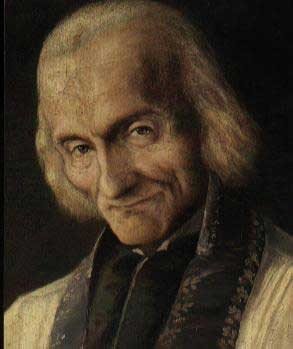
My first story is one about the 19th century saint, John Vianney, the patron saint of parish priests. His humble holiness and miraculous ability to read souls made crowds flock to his small French town for confessions, which he would hear for hours on end. His faithful fruitfulness made him a target of demonic harassment. Apparently, typical temptations were ineffective against him, so sometimes they would assault him as he tried to sleep at night, but Fr. John would take this as a good sign. It usually meant some “great sinner” was coming to town the next day to be reconciled to God in the confessional.

I have encountered people whose emotions very much did not want to go to confession or attend a spiritual retreat yet they could think of an actual good reason not to go. So they come, and experience God’s grace, and it’s more wonderful than they imagined! Who do you think was influencing their feelings in hopes they would not come encounter and listen to God? Emotions can be helpful and powerful fuel in your gas tank, but let your informed conscience and sound reason hold your steering wheel.

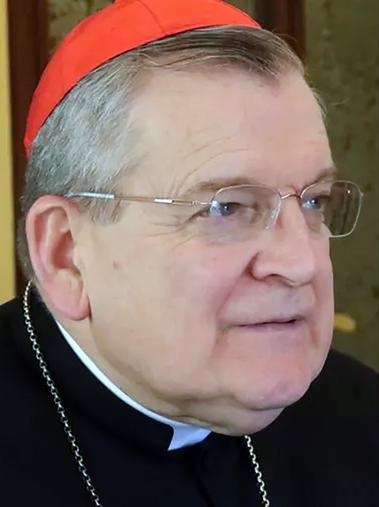
My second discernment story is about our former bishop, Cardinal Raymond Burke. He saw a need for a richer devotional culture in our diocese and felt peace and joy in the thought of establishing a pilgrimage shrine. He has a personal devotion to Our Lady of Fatima and initially pursued a shrine dedicated to her 1917 Portuguese apparitions, but nothing was coming together. So he revised the plan, opting to create a Marian shrine dedicated to Our Lady of Guadalupe and her Mexican apparitions in 1531. With that adjustment, everything began falling into place; a donation of beautiful land and financial contributions resulting in the shrine we know today. So not all obstacles come from the enemy. Some hindrances can be God’s providence to channel us into doing his will.

Midway through my time in seminary, I really believed for good reasons that priesthood was my calling, yet I still could easily question my vocation. (How could I be sure?) I would go in circles doubting myself with no greater clarity or benefit. So I decided to say to God, “Lord, this is my fair warning and my RSVP: I intend to continue towards ordination, but if that’s not what you want please make it obvious or impossible for me. If it’s not your will, I don’t want it to happen.” I left it to him, and after that I felt much more peace, and here I am now. Peace is a strong sign that you’re doing the will of God.

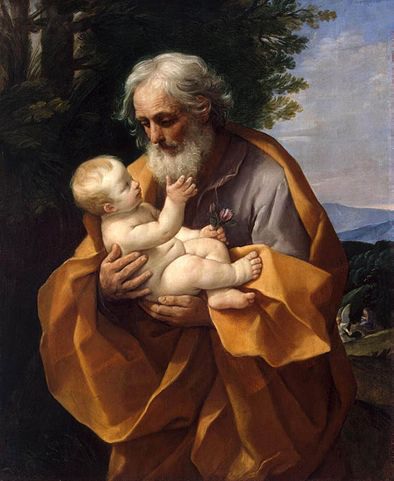
My third discernment story is about of St. Joseph. You will recall that when he learned that Mary was with child (either because he doubted her and thought her unworthy of him, or else because he believed her and thought himself unworthy or her and her holy child) Joseph concluded he should not be Mary’s husband. However, it only took an angel’s visit in one night’s dream to get Joseph back on the right track. This is because Joseph was a just man who wanted to do whatever God willed. God is supremely intelligent, powerful, and creative; so he can provide a clear sign if he needs to. However, having a heart and mind open to doing God’s will is a necessity.

You cannot see God’s signs with your eyes closed shut. You cannot hear him if you refuse to listen. God prefers to speak to us with a tiny whispering Voice, but if we ignore him he may allow some disruption in our lives. Those figurative winds, earthquakes, and fires are supposed to get our attention so that we will heed him and listen to his Voice. Our psalmist says, “I will hear what God proclaims; the Lord — for he proclaims peace. Near indeed is his salvation to those who fear him…” Fearing God is not about terror, but regarding and respecting him. Those who do, seek God’s will. They hear his Voice and listen, and thereby gain his blessings.

Jesus Saves Us From Sinking

August 12, 2023

19th Sunday in Ordinary Time
By Fr. Chinnappan Pelavendran

God’s presence is usually felt in tiny and small ways. He comes to us in gentle, little ways, and He will be with us when we need him the most. Jesus expects from us the openness to call on him for help and he will be there to support us and guide us. He wants us to be aware of his voice in our life, which often goes unnoticed. Jesus is always there with his guiding and supporting hands.

The background of the first reading is that, after the death of Solomon, the northern tribes broke away from the tribe of Judah and from its priests. They formed an independent country called Israel. As the years passed, many of the Jews in this country lost their Faith in Yahweh. Their seventh king, Ahab, married Jezebel, the daughter of a pagan king. He allowed her to build a temple for her god Baal and then she encouraged him to take part in idol worship and immorality. During this time, the prophet Elijah was sent by God to Israel to bring His people back to true worship. Having faith and confidence in Yahweh, he defeated and killed the 450 pagan priests of Baal on Mount Carmel.

For this reason, Queen Jezebel sent murderers to kill the prophet Elijah. However, God saved him from the dangers and gave him food through an angel. He fled for forty days and forty nights to Mount Horeb. Once there, he realized that the presence of God was not in the thunder, earthquake, or fire but in a tiny “whispering sound.” Elijah acknowledged God’s presence by covering his face and coming out of the cave where he had taken shelter. The first reading remains us that we have to experience God’s presence in our lives. We must listen carefully to everything going on around us because we encounter God in all the small events of our life. Failure, as well as success, offers us the opportunity to feel the presence of God, who saved the Prophet Elijah’s life.

In today’s Gospel, Jesus approaches his disciples walking on the water. The disciples are terrified by seeing someone walking on the water so they cried out in fear. Jesus reveals himself to them, saying “Courage, it is I. Do not be afraid.” Encouraged by the words of Jesus, Peter is the first to respond. At his invitation, he walks towards Jesus across the water, but his courage fails and begins to sink. Jesus reaches out his hand to him and saves him. The Gospel ends with Jesus calming the storm and being acknowledged as the Son of God by the disciples.

Courage! It is I Do not be afraid.” Jesus speaks these same words to us every day in our life. The gospel invites us to deepen our faith and maintain our focus on Jesus. We need to fix our eyes on Jesus.

We need to realize that the presence of Jesus is always with us. He gives us peace even in the storms of life. The storms of anxiety and worries about the future, storms of sorrow, storms of doubt, storms of tension, storms of anger and despair, storms of temptations, and storms in family relationships. So, try to feel the presence of God always in your life.

We need to imitate the short prayer of sinking Peter, “Lord, save me,” or the prayer of the mother of the possessed girl, “Lord, help me,” or the blind man’s prayer, “Son of David, have mercy on me,” or the repentant sinner’s prayer, “Lord have mercy on me a sinner.” We must begin every day by offering all our day’s activities to God and asking for His grace to do His will. Then we must conclude every day before we go to sleep by asking God’s pardon and forgiveness for our sins.

How Could They Follow Him?

January 21, 2023

3rd Sunday of Ordinary Time
By Fr. Victor Feltes

When I read the four Gospels for the first time, I naturally began with Matthew’s Gospel, and I remember being offended by today’s gospel reading. Matthew tells us Jesus was walking by the Sea of Galilee and saw two brothers, Simon and Andrew, with their fishing nets. He said, “Come after me, and I will make you fishers of men.” And they followed him. Then the Lord saw two other brothers, James and John, mending their nets. He called them too, and they immediately left their boat and their father to follow him. This episode really bothered me. Imagine being at your home or at your workplace, and a stranger knocks on your front door or walks up to your desk and says, “Follow me.” So you quit your job and leave your family to follow this person. Who would do that? It’s crazy. How can the Lord expect anyone to do that? But John’s Gospel reveals that today’s gospel was not the first time Jesus had met these future apostles.

Simon Peter’s brother Andrew and (traditionally) John the son of Zebedee were the two disciples who heard John the Baptist point out Jesus and say, “Behold, the Lamb of God.” This declaration led them to meet Jesus and spend the day with him. After this, Andrew first found his brother Simon and told him, “We have found the Messiah!” (that is, the Christ). Then Andrew brought Simon to Jesus. Jesus looked at him and said, “You are Simon the son of John; you will be called Cephas” (which is translated Peter). If John the son of Zebedee was that other unnamed disciple, then he likely told his older brother James all about meeting Jesus too. So in today’s gospel, when Jesus called the four men to follow him as “fishers of men” he was not some total stranger.

The various Gospels sometimes include or omit different details when recounting the same events. Luke’s Gospel adds further context to this scene. He records there was a crowd pressing in on Jesus that day by the Sea of Galilee. So Jesus got into Simon and Andrew’s boat, sat down, and taught the people from there a short distance from the shore. When Jesus finished speaking, he told Simon, “Put out into deep water and lower your nets for a catch.” Skeptical Simon reluctantly agreed, and they proceeded to catch such a great number of fish that their nets were tearing. They signaled to their partners in the other boat to come help and both boats became so filled that they were in danger of sinking. Astonishment at that catch of fish seized Simon and Andrew, and likewise James and John, who were Simon’s business partners. Jesus said to Simon, “Do not be afraid; from now on you will be catching men.”

Therefore, reading the Gospels together, we learn that Jesus was not a random stranger who just showed up one day demanding their full devotion. They were already familiar with Jesus, had heard his teaching, and witnessed his power. This enabled Simon, Andrew, James, and John to reasonably and radically follow Jesus Christ like they did.

Among all famous figures, Jesus Christ may have the highest name recognition in the world. Everyone has heard of Jesus, but how well do people know him? Surely, Jesus would like to call many to more; to a deeper relationship with himself and a closer connection to his one, holy, catholic, and apostolic Church. How can you help? Your non-Catholic or non-practicing family, friends, and acquaintances know you, they like you, and regard you. They rarely (if ever) see or hear me, but they frequently encounter you. Simon Peter took Jesus seriously because his brother Andrew. Andrew already knew Jesus, told stories and spoke highly of him, and encouraged Simon to meet him. You can be like Andrew for people in your life. As I preached at the other Masses last Sunday, three ways you can draw people closer to Christ and his Church are by sharing your prayers, sharing your stories, and sharing your invitations.

Share your Prayers
When you share your prayers with others it reflects that you know Jesus. Whenever someone asks for your prayers, or even when someone entrusts their burdens to you, offer to pray with them then and there. It’s easy—just talk to Jesus out loud. The words of your prayer don’t need to be eloquent, just sincere. People are typically receptive to this and very grateful for it, and your shared prayer can open the door for a miracle in their lives.

Share your Stories
When you share your faith stories with others it reveals the power of Jesus in our world. How have you encountered Jesus? What has the Lord done for you? What are your personal miracles and spirit stories? Don’t hide these highlight experiences of your spiritual life under bushel baskets, but be humble enough to share them for others’ good. When the disciples realized what Jesus Christ could do, through the miracle of the great catch of fish, they left everything to follow him.

Share your Invitations
When you share your holy invitations with others this offers them an opportunity to encounter Jesus and his Church. Invite them to join you here in the house of the Lord, for Holy Mass, Eucharistic Adoration, or parish events. Invite them to share in our Christ-centered worship and close community. Even if they decline, you will have planted a seed that may bear fruit someday.

Simon, Andrew, James, and John encountered friends of Jesus, discovered his power to do good, and had the opportunity to personally encounter him. Your faithful prayers, your powerful stories, and your holy invitations, can offer your non-practicing or non-Catholic dear ones the opportunity to follow Jesus Christ more closely. Here is your homework for this week: share a prayer, or a story, or an invitation with someone it could help. Cast your net so that Jesus Christ may be better known, and let’s see what Jesus does with it.

David’s Kingdom Prefigures Christ’s Kingdom

November 20, 2022

Solemnity of Christ the King
By Fr. Victor Feltes

When the ancient Romans would crucify someone they displayed upon the cross the person’s name and the reason they were punished. For the Holy Cross on Good Friday, Governor Pilate had a sign inscribed in Hebrew, Latin, and Greek with Christ’s identity and the why he was condemned. It read: “Jesus the Nazorean, the King of the Jews.” (The famous first letters of this phrase in Latin were “I.N.R.I.”) The Jewish chief priests told Pilate, “Do not write ‘The King of the Jews,’ but that he said, ‘I am the King of the Jews.’” But Pilate replied, “What I have written, I have written.” Pilate did not have faith in Jesus — he wrote what he did to troll the Jewish leaders — but what he had written was true. Jesus was condemned, suffered, and rose again as the King of the Jews and King of the Universe. This Sunday, we celebrate Christ the King, but where is Christ’s Kingdom today?

During his public ministry, Jesus preached, “Behold, the Kingdom of God is among you!” And at the Last Supper, Jesus prophesied, “Amen, I say to you, I shall not drink again the fruit of the vine until the day when I drink it new in the Kingdom of God.” The next time Jesus drinks “the fruit of the vine,” (that is to say, wine) is on his Cross, when he drinks it from a sponge held up to his lips. From these passages, we can gather that the Kingdom of God has arrived. Yet we can also see that his Kingdom has not yet reached every place and every heart in every way. This is why the world was able to hand Jesus over to death and why Christians still pray to our Father above: “thy Kingdom come, thy will be done, on earth as it is in Heaven.” So where are we to find Christ’s Kingdom on earth? There are clues for us present in Sacred Scripture and history.

In our first reading, all the tribes of Israel become joined to David as their king. The Jews believed that the coming Messiah, their Christ, would be the King of Israel. And Jesus in the Gospels is repeatedly called the Son of David (that is, King David’s descendant, the heir to David’s throne). As St. Augustine taught, the Old Testament is the New Testament concealed, and the New Testament is the Old Testament revealed. The old foreshadows and points to the new. And though imperfect, the Old Testament Kingdom of David and his successors prefigures Jesus’ New Testament Kingdom. Several aspects of the old Davidic Kingdom help us to identify Jesus’ Kingdom in our midst; in particular, the Queen Mother, the Chief Steward, and the royal eunuchs.

One flawed feature of the old Davidic dynasty was that the kings each had multiple wives. From the beginning, God intended marriage to be a union of one man and one woman, but the kings of Israel — believing blood is thicker than water — used multiple marriages to seal their peace treaties and alliances with other lands. However, this creates a problem: when the king has many wives, who is the queen? You can imagine the rivalry and discord this question could cause. The Davidic dynasty’s solution to this problem was for the mother of the king to hold that prominent place as Queen Mother. The Queen Mother had a throne of honor at the king’s right hand and she served as an intercessor for the kingdom. If people had a request, they might bring it to her to present to the king. And if her request were pleasing to her son and served the kingdom’s good, the king would happily grant it to please his beloved mother.

Like in other kingdoms of past and present, the Davidic Kingdom had many royal ministers serving the king. But there was one prime minister among them: the king’s chief steward, the master of the royal household. The Davidic king’s chief steward bore on his shoulders a large wooden key as a sign of his office and authority. Today we honor citizens by giving them a symbolic key to the city; but this chief steward carried a symbolic key to the kingdom. His power was that of the king, on whose authority and with whose authority he acted, to open or to close, to permit or to forbid. However, any chief steward acting contrary to the king’s will would soon find himself replaced by another.

In the courts of ancient kingdoms like Israel’s, one would find royal eunuchs. A eunuch is a male who is either born or made physically incapable of marrying and having children. Kings preferred eunuchs for practical reasons: first, these men were safe to be around the king’s harem; and second, since they had no wife or children of their own, these eunuchs were fully-focused on the work of the kingdom.

The trusted eunuch’s mission, personal success, and legacy were wedded to that of the king and his kingdom. Perhaps you may already realize how the old Davidic kingdom foreshadows the Kingdom of God among us now. Jesus calls disciples who are willing and able to be “eunuchs for the sake of the Kingdom of Heaven.” Today, in his Church, celibate clergy and consecrated religious are dedicated to serving Christ’s Kingdom. Jesus told St. Peter, “I give you the Keys to the Kingdom of Heaven. Whatever you bind on earth shall be bound in Heaven, and whatever you loose on earth shall be loosed in Heaven.” Jesus made Peter his prime minister, the first Pope, his chief steward and master of his household on earth Pope Francis is St. Peter’s successor in that office today.

Jesus has sealed his peace treaty and alliance with peoples of all lands through a single marriage: his marriage to his bride, the Church, bone of his bone and flesh of his flesh. But among the Church’s many members, is anyone the queen? As before, our queen is the mother of our King. Christ the King has raised up his Blessed Mother Mary to a throne at his right hand where she intercedes for his Church. We can ask her to present any request to her Son, and if it is pleasing to him and serves his Kingdom’s good, Christ our King will happily grant it, because he loves his mother and us so much.

The beginning of the Kingdom of God on earth is the one Church of Jesus Christ. Let us remain loyal to Christ our King, and remain loyal to his Kingdom, a Kingdom that is among us now, his Holy Catholic Church.

Transforming Love

May 1, 2022

3rd Sunday of Easter
By Fr. Chinnappan Pelavendran

Today we have another account of Jesus appearing to his disciples on Easter Sunday wherein he prepares a meal for them and gives them support. He comes constantly to the disciples to be with them, guide them and encourage them. All the three readings of today tell us of our vocation and our mission to be at the service of the word and not to hesitate to proclaim our closeness to Jesus. We admire the courage of the Disciples of Jesus who preach with boldness and are ready to face sufferings happily for His sake.

John the Evangelist tells us that God is love. God’s love is unconditional, unmerited, and without limit. It lasts forever. It’s the beginning and end. And it’s the essence of what it means to be a Christian – one who knows God’s love and forgiveness and who loves God in return with all one’s heart, soul, mind, body, and strength. God’s love heals and transforms our lives and frees us from fear, selfishness, and greed. It draws us to the very heart of God and it compels us to give to him the best we have and all we possess – our gifts, our time, our resources, and our very lives. St. Paul the Apostle tells us that God’s love has been poured into our hearts through the Holy Spirit which has been given us.

Why did Jesus question Peter’s love and fidelity three times in front of the other apostles? It must have caused Peter pain and sorrow since he had publicly denied Jesus three times. Now Peter, full of remorse and humility, stated that he loved his master and was willing to serve him whatever it might cost. Jesus asks him “do you love me more than these?

Jesus may have pointed to the boats, nets, and catch of fish. Do you love me more than these things? He may have challenged Peter to abandon his work as a fisherman for the task of shepherding God’s people. Jesus also may have pointed to the other disciples and to Peter’s previous boast: “Though they all fall away because of you, I will never fall away.” (Matthew 26:33) Peter now makes no boast or comparison but humbly responds: “You know I love you.”

The Lord Jesus calls each one of us, even in our weakness, sin, and failings, to love him above all else. Saint Augustine in his Confessions wrote: “Late have I loved you, O Beauty so ancient and so new. Late have I loved you! …You shone your Self upon me to drive away my blindness. You breathed your fragrance upon me… and in astonishment I drew my breath…now I pant for you! I tasted you, and now I hunger and thirst for you. You touched me! – and I burn to live within your peace.” (Confessions 10:27) Nothing but our sinful pride and willfulness can keep us from the love of God. It is a free gift, unmerited and beyond payment. We can never outmatch God in giving love. He loved us first and our love for him is a response to his exceeding graciousness and mercy towards us. Do you allow God’s love to change and transform your heart? “Lord Jesus, inflame my heart with your love and remove everything that is unloving, unkind, ungrateful, unholy, and not in accord with your will.”

“Do You Love Me?”

April 30, 2022

3rd Sunday of Easter
By Fr. Victor Feltes

At the Last Supper, Simon Peter assures Jesus, “Lord, I am prepared to go to prison and to die with you.” But Jesus replies, “Peter, before the rooster crows this day, you will deny three times that you know me.” Later that night, during Jesus’ trial before the Jewish high priest, Peter stands with the servants and soldiers outside. It’s a cold night, so they warm themselves around a charcoal fire in the middle of the courtyard. This is where Peter denies three times that he is in any way connected to Jesus. A rooster crows, Jesus turns and makes eye-contact with Peter, and Peter breaks down and weeps.

In our gospel, the risen Jesus appears to seven of his disciples at the Sea of Galilee (also known as the Sea of Tiberius). He invites them to breakfast with him around another charcoal fire. This is the context for the conversation between Jesus and Peter today. After Peter’s three denials, Jesus provides him an opportunity to thrice-reaffirm his love. Jesus meets Peter by that charcoal fire like he mercifully encounters you and me in the confessional.

Now there is more going on in the original Greek of this gospel text than can be seen in our English translation. In English, the word “love” does a lot of heavy lifting. We say: “I love my family,” “I love my car,” “I love my country,” “I love pizza,” and “I love God.” But in Greek, there are multiple words for “love.” For example, “Phileo” refers to friendship or brotherly love, “Eros” refers to romantic love, and “Agape” refers to self-sacrificial, unconditional love. Agape is the way God actively loves us and how we are called to love too. “This is my commandment,” says the Lord, “that you (apage) one another, just as I have (agaped) you.

In today’s gospel, Jesus first asks: “Simon, son of John, do you love me (do you agape me) more than these?” And Simon Peter answers, “Yes, Lord, you know that I (phileo) you.” Simon loves Jesus as a dear brother and friend, but Peter, now humbled, recognizes that he does not love Jesus perfectly. Then Jesus asks again, “Simon, son of John, do you (agape) me?” Simon Peter answers, “Yes, Lord, you know that I (phileo) you.” But the third and final time, Jesus asks, “Simon, son of John, do you (phileo) me?

Peter is distressed that Jesus switches this time to asking, “Do you (phileo) me?” Peter may be wondering, “Is Jesus questioning whether I even love him that much?” He says, “Lord, you know everything; you know that I (phileo) you.” Jesus is not doubting Peter’s phileo love for him, but rather meeting him where he’s at, allowing him to answer with an unqualified “yes.” Peter’s love is not yet perfect, they both recognize that, but Jesus tells him to feed his lambs, tend his sheep, and feed his sheep as the chief shepherd of Christ’s flock on earth as the first pope. Jesus reveals to Peter that his faithful service will lead him to the perfection of self-sacrificial, agape love in end.

Amen, amen,” Jesus tells him, “when you were younger, you used to dress yourself and go where you wanted; but when you grow old, you will stretch out your hands, and someone else will dress you and lead you where you do not want to go.” Jesus said this signifying by what kind of death Peter would glorify God; that is, a martyr’s death. Peter would go on to be crucified upside-down and buried on Vatican Hill. Our gospel concludes with Jesus telling St. Peter and us: “Follow me.”

Like Peter there on the seashore, we probably realize that our love for God is real though imperfect. Jesus knows this too, of course, but he still loves us here and now. He meets us where we’re at, he loves us as we are, but he will not settle for that. He intends to call us, lead us, press us forward to more perfect love. His providence will lead us to places we may not want to go, to experience trials we would not choose for ourselves. But his purpose is to make us into a person, a person who loves, like Jesus Christ himself.

A final story…
In C.S. Lewis’ Christian fantasy novel, “The Lion, The Witch, and The Wardrobe,” a little girl named Lucy is told about a great lion named Aslan. Aslan is the Christ figure in the world of Narnia. Mr. Tumnus tells Lucy, “He’s wild, you know. Not like a tame lion.” Lucy asks, “Is he—quite safe?” And Mr. Beaver replies, “Who said anything about safe? [Of] course he isn’t safe. But he’s good.”