Archive for the ‘St. Therese of Lisieux’ Category

Invest Yourself in Heaven’s Reward

November 19, 2023

33rd Sunday in Ordinary Time
By Fr. Victor Feltes

As Jesus traveled from place to place he preached parables to different people. He told stories, for instance, featuring fields, fish, and flocks to teach farmers, fishermen, and shepherds about the Kingdom of God. It makes sense that Jesus would tell the same stories more than once, for different crowds to hear them for the first time and for his apostles to hear them repeatedly. But the gospels suggest Jesus sometimes changed his parables’ details to highlight different truths. What Jesus says in his Sermon on the Plain is similar but not identical to his Sermon on the Mount. As the Church journeys through our three-year cycle of Sunday readings we hear some parables retold by more than one gospel. And each fall, as we near the end of the Church year, our readings reflect upon the Four Last Things. Today, we have another such parable, about death and judgment, Heaven and Hell, Jesus Christ and us.

Christ is our Lord, our journeying master who shall return. We are his servants to whom he has entrusted our fortunes. And each of us one day will stand before him to give an account of our faithful or unfaithful service, with generous rewards or just punishments to follow. In Jesus’ telling through St. Matthew’s Gospel, the master entrusts weighty slabs of precious metal (called talents) in varying numbers to his servants, each according to their abilities. Upon his return, his faithful servants have doubled what they were given and receive the same words of praise: “Well done, my good and faithful servant! Since you were faithful in small matters, I will give you great responsibilities. Come, share your master’s joy!” One servant, however, who buried his talent and returned it ungrown, receives his master’s condemnation and is tossed into the darkness outside.

When Jesus retells his parable in St. Luke’s Gospel, the master is a nobleman who goes off to claim his kingdom, entrusting to ten servants one gold coin each. Upon his return, his faithful servants reveal their various positive returns on his investment. One has earned ten more gold coins and his king declares, “Well done, good servant! You have been faithful in this very small matter; take charge of ten cities.” Another servant has earned five more coins and the king decrees, “You, take charge of five cities.” One servant, however, hid his coin in a napkin and returned it unmultiplied. The king condemns that servant and orders all of his enemies who did not want him as their king to be slain.

The differences between these two parables highlight different truths about Heaven. In the first parable, the master speaks the same blessing to each faithful one: “Well done, good servant! … Come, share your master’s joy!” But in the other parable, the king gives his servant with ten additional coins ten cities and gives his servant with five additional coins five cities. So is Heaven’s reward the same for all the saints or can one’s reward be greater than another’s? One parable suggests their reward is the same, while the other suggests their rewards vary. On one hand, the reward of every saint is the same: they experience God’s unveiled glory forever in happy, loving communion with him and all who are in Christ. On the other hand, a great saint’s capacity for love and joy and glory may be greater than another’s.

Doctor of the Church St. Therese of Lisieux recounts in her great autobiography (“Story of a Soul”) how this idea once troubled her as a child: “One day, I expressed surprise that God does not give an equal amount of glory to all the elect in Heaven—I was afraid that they would not all be quite happy. [My older sister Pauline] sent me to fetch Papa’s big tumbler and put it beside my tiny thimble, then, filling both with water, she asked me which seemed the fuller. I replied that one was as full as the other—it was impossible to pour more water into either of them, for they could not hold it. In this way [she] made it clear to me that in Heaven the least of the Blessed does not envy the happiness of the greatest…

Notice how in both forms of Jesus’ parable all the faithful servants are entrusted with greater responsibilities. The saints in Heaven are likewise given higher roles as our intercessors now and in the family and household of God forever. Consider how many churches, religious communities, and cities around the world are dedicated to St. Paul. They are blessed to have him as a loving patron praying for them. And consider how the Blessed Virgin Mary shall always hold a privileged place in Heaven as the spiritual mother of every Christian.

St. Paul says, “Consider this: whoever sows sparingly will also reap sparingly, and whoever sows bountifully will also reap bountifully.” The generosity of our loving gifts to Christ, the additional sacrifices we make and good deeds we do, will surely not go unrewarded. Jesus tells us, “Give, and it will be given to you. Good measure, pressed down, shaken together, running over, will be put into your lap. For the measure with which you measure will be measured out to you.” Our individual hustle, cooperating with Christ’s grace, can win us greater glory, therefore “run so as to win!

We should not fear that we lack sufficient talents or gifts to produce good fruits for glory. In the first parable, every faithful servant was able to double his money and won his master’s praise. The issue with that unfruitful, condemned servant is that he never tried. His master calls him “wicked” and “lazy” because that servant did not make even the most minimal effort to grow his gift. “Should you not then have put my money in the bank so that I could have got it back with interest on my return?” That servant did not love his lord but rather resented his lordship over him. Which is easier: to digging a hole or visiting the bank? He did not want to be his master’s servant, he did not want him as his king, and so he finds himself condemned and cast out forever. But if we love our Lord we will produce fruit, just as “every good tree bears good fruit.” As Jesus declares, “Whoever remains in me and I in him will bear much fruit.”

What is something more that you will do with the talents and gifts our Lord has lent you? It could be something large or small, in private or with others. You could be a more-focused prayer warrior, or offer secret penances for the salvation of souls. You could start a Catholic book or movie club at your home, or organize a regular Bible study that discusses the upcoming Sunday readings. You could visit shut-ins as an extraordinary Eucharistic minister, or invite somebody new each week to come with you to Mass. There are many good things you could do and I urge you to consider and answer this call, for Jesus Christ will honor your faithful, loving efforts with glorious rewards.

Great Rewards From Small Deeds

July 2, 2023

13th Sunday in Ordinary Time
By Fr. Victor Feltes

The Old Testament Prophet Elisha was the immediate successor to the Prophet Elijah, ministering as a traveling prophet and wonderworker in the 800’s BC. One day, he came to a town of northern Israel called Shunem in which lived a “woman of influence.” Other Bible translations of this same text describe her as “prominent, influential, and wealthy”—“a great lady.” Curiously, she along with her husband go unnamed in the text. Perhaps, as with “the beloved disciple” in the Gospel of John, this is intended by providence to encourage us to envision ourselves in her place.

This great lady urges the prophet to dine with her. He accepts, and thereafter, whenever passing through that town, he would visit to eat there. So she says to her husband, “I know that Elisha is a holy man of God. Since he visits us often, let’s arrange a little room on the roof and furnish it for him with a bed, table, chair, and lamp, so that when he comes to us he can stay there.” Her husband apparently agreed, because sometime later Elisha lodges in that new room overnight. They may have been simple accommodations but Elisha really appreciated them.

While staying there, Elisha asks his servant to call the woman. Once she stands before him Elisha asks his servant to say to her (apparently in her own language): “You have troubled yourself greatly for us; what can we do for you? Can we say a good word for you to the king or to the commander of the army?’” She replies, “I am living among my own people.” By this response, she is expressing that she lives contently and secure, far removed from the royal court and its concerns. Her needs are satisfied. She has not shown Elisha hospitality to win favors from him. She receives him because he is a prophet. She receives him because he is a righteous man. She serves him because she knows he is a holy man of God.

Later Elisha asks, “Can something be done for her?” His servant, with great confidence in the prophet, replies, “Yes! She has no son, and her husband is getting on in years.” So Elisha has her called again and once she stands at the door, Elisha promises, “This time next year, you will be fondling a baby son.” She replies, “My lord, you are a man of God; do not deceive your servant.” Yet, the woman would conceive, and by that time the following year she had joyfully given birth to a son as promised. From God, she receives the prophet’s great reward.

Jesus says, “Whoever receives a prophet because he is a prophet will receive a prophet’s reward, and whoever receives a righteous man because he is a righteous man will receive a righteous man’s reward.” And what of goodness shown toward those of lesser stature? “Whoever gives but a cup of cold water to one of these little ones to drink because the little one is my disciple—amen, I say to you, he will surely not lose his reward.”

Sometimes, Catholics look at our great saints and imagine we must do extraordinary things to be holy and greatly blessed. Thinking that such great deeds are beyond them, they despair of ever becoming saints themselves. In the late 1800’s, young St. Therese of Lisieux felt that way too, but then she found her “Little Way” to holiness. Her little way to great holiness was to do many little things for the right reason, with the right heart, that is, with great love.

In her highly recommended autobiography “Story of a Soul”, she writes:

Miss no single opportunity of making some small sacrifice, here by a smiling look, there by a kindly word; always doing the smallest right and doing it all for love.” “You know well enough that our Lord does not look so much at the greatness of our actions, nor even at their difficulty, but at the love with which we do them.” “Without love, deeds, even the most brilliant, count as nothing.” “To pick up a pin for love can convert a soul.

Like the great lady of Shunem and St. Therese of Lisieux, realize and remember that doing many little things for the right reason, with the right heart, out of love, will surely not lose its reward.

Meet the Holy Child

January 3, 2021

Feast of the Epiphany

In today’s Gospel, the Magi find the Holy Family now dwelling inside of a house in Bethlehem. This is not the same as Christmas night or Christmas day, but maybe weeks, or months, or even up to three years after. “On entering the house, they saw the child with Mary his mother. They prostrated themselves and did him homage.” Eastern cultures, especially Persians, would do homage by falling to their knees and touching their foreheads to the ground. Though this poor, tiny king’s only throne is his holy mother’s lap, these Magi love and honor him. He does not appear to them as a frightful overlord but as a little infant because his wish is not to be feared but loved. God the Father will have baby Jesus flee and hide from the wicked King Herod, but the Holy Child is happily revealed to these first foreigners from afar who seek him out as friends. The Magi were blessed to encounter Jesus as a little child, but they would not be the last to do so.

One day in the 16th century, St. Teresa of Avila was preparing to climb a stairway to the upper rooms of her Spanish convent when she was met at the stairs by a beautiful boy. He asked her “Who are you?” She replied, “I am Teresa of Jesus. And who are you?” The child responded, “I am Jesus of Teresa,” and vanished.

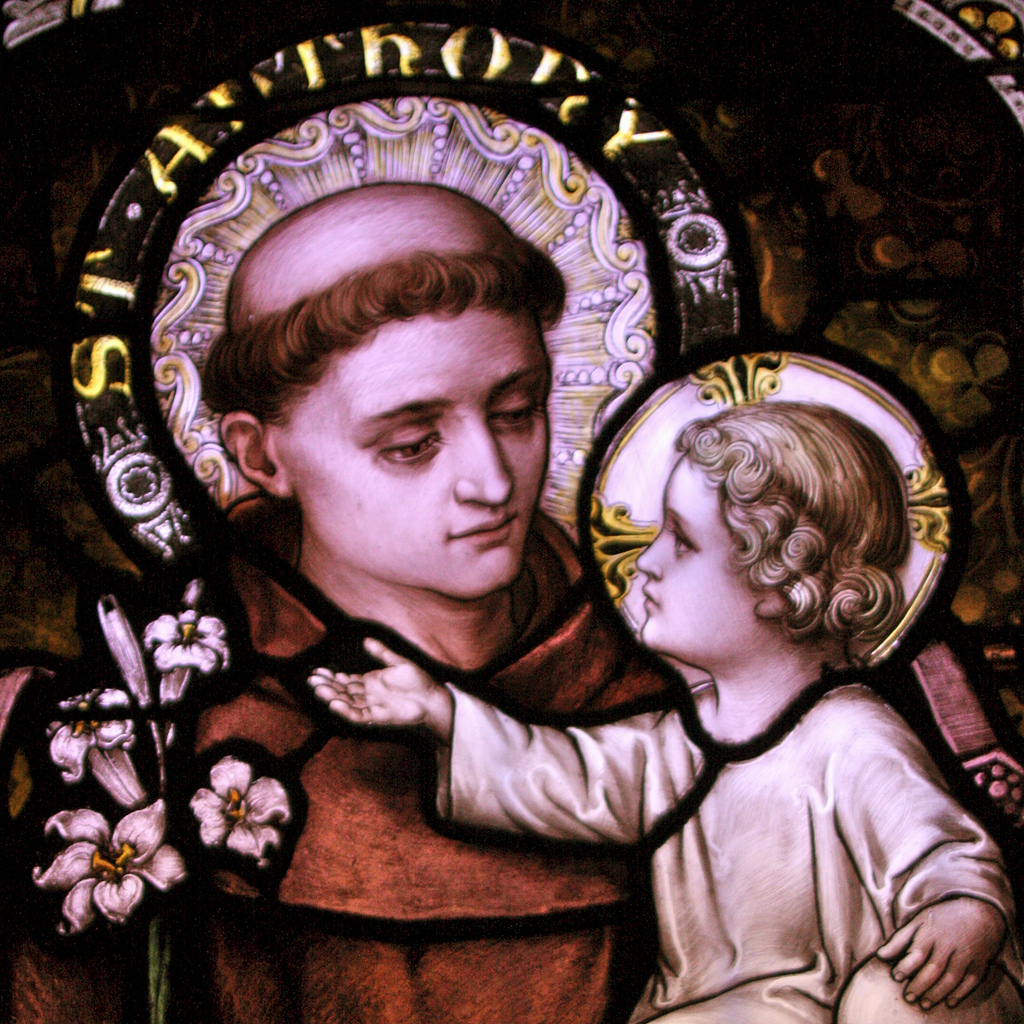
In the 13th century, while St. Anthony of Padua was traveling through France to preach against heresy, he was granted a quiet room for lodging. His host passed by the room one night and noticed an unusual light shining around the door. Peering inside, he saw Anthony kneeling and full of wonder, admiring a glorious child who hugged him. Seeing the boy’s supernatural beauty and hearing their conversation, the onlooker knew that this was Jesus visiting his saint. This encounter is why St. Anthony of Padua is depicted (as in our own stained-glass window of him) holding the Christ Child.

In the 1930’s, the Polish mystic St. Faustina Kowalska recorded in her diary, “I often see the Child Jesus during Holy Mass. He is extremely beautiful. He appears to be about one year old. Once, when I saw the same Child during Mass in our chapel, I was seized with a violent desire and an irresistible longing to approach the altar and take the Child Jesus. At that moment, the Child Jesus was standing by me on the side of my kneeler, and he leaned with his two little hands against my shoulder, gracious and joyful, his look deep and penetrating. But when the priest broke the Host, Jesus was once again on the altar, and was broken and consumed by the priest.

Even without miraculously beholding him, the great devotion of other saints toward the Christ Child is well-known. St. Francis of Assisi, having received permission from the pope, created the very first nativity scene in the year 1223; with hay and a manger along with a live ox and donkey in a cave. He then invited the Italian villagers to come and gaze upon it while he preached about “the Babe of Bethlehem” — Francis was too overcome by heartfelt emotion to say the name “Jesus.”

In the 12th century, Doctor of the Church St. Bernard of Clairvaux wrote this in a touching prayer:

“You have come to us as a small child…
Caress us with your tiny hands,
embrace us with your tiny arms
and pierce our hearts
with your soft, sweet cries.”

In the late 1800’s, the beloved St. Therese of Lisieux, also known as St. Therese of the Child Jesus and of the Holy Face, would pray this amidst her joys and trials:

“O Jesus, dear Holy Child, my only Treasure, I abandon myself to your every whim. I seek no other joy than that of calling forth your sweet smile. Grant me the graces and the virtues of your Holy Childhood, so that on the day of my birth into Heaven, the angels and saints may recognize your spouse, Therese of the Child Jesus.”

And for centuries, the Infant Child of Prague, a 19-inch statute of the Infant Jesus dressed in royal regalia, has been a beloved Czech devotion.

Despite all of these examples of mystical encounters and pious devotions with the Child Jesus, one might still wonder whether it is fitting to pray to a baby. Jesus does not even talk at that immature age, and he has since grown up beyond that phase of life. Yet even though he is a child, the Infant Jesus is still Almighty God who hears all of our prayers. If it would be wrong to pray across time to Our Savior in his manger, it would be wrong to now pray to Our Savior on his Cross as well. You and I were not born too late to adore the newborn King.

What benefits are there in praying to the Holy Infant? Jesus Christ is the same person yesterday, today, and forever, but some will find approaching the Baby Jesus less intimidating. His little form communicates his innocence, purity, gentleness, and tender affection; inviting us to share these virtues. In fact, Jesus tells us we must become as little children, like himself: “Amen, I say to you, unless you turn and become like children, you will not enter the Kingdom of Heaven. Whoever humbles himself like this child is the greatest in the Kingdom of Heaven.

During one Holy Hour, St. Faustina Kowalska was trying to meditate on Our Lord’s Passion, but her soul was filled with joy and she suddenly saw the Child Jesus. She writes, “His majesty penetrated me to such an extent that I said, ‘Jesus, you are so little, and yet I know that you are my Creator and Lord.’” And Jesus answered, “I am, and I keep company with you as a child to teach you humility and simplicity.

On another occasion, St. Faustina saw the Infant Jesus near her kneeler, once again appearing to be about one year old. She writes that, “He asked me to take him in my arms. When I did take him in my arms, he cuddled up close to my bosom and said, “It is good for me to be close to your heart… because I want to teach you spiritual childhood. I want you to be very little, because when you are little I carry you close to my Heart, just as you are holding me close to your heart right now.

So in conclusion, I encourage you to approach the Infant Jesus in your prayers; at this Mass, in this Christmas season, and throughout this year ahead. Picture and imagine him, speak and listen to him, and hold him close to your heart. The Holy Babe of Bethlehem has gifts of grace and consolation to offer you, and he awaits you with open arms.

The Saints Speak of the Holy Eucharist

May 30, 2018

“If the Angels could envy, they would envy us for Holy Communion.”  —St. Pope Pius X

“Man should tremble, the world should vibrate, all Heaven should be deeply moved when the Son of God appears on the altar in the hands of the priest.”  —St. Francis of Assisi

“One single Mass gives more honor to God than all the penances of the Saints, the labors of the Apostles, the sufferings of the martyrs, and even the burning love of the Blessed Mother of God.”  —St. Alphonsus Liguori

“All the good works in the world are not equal to the Holy Sacrifice of the Mass because they are the works of men; but the Mass is the work of God. Martyrdom is nothing in comparison for it is but the sacrifice of man to God; but the Mass is the sacrifice of God for man.”  —St. John Vianney

“The Eucharist is the Sacrament of love; it signifies love, it produces love.”  —St. Thomas Aquinas

“The Eucharist is a never-ending sacrifice. It is the Sacrament of love, the supreme love, the act of love.”  —St. Katherine Drexel

“The Eucharist is that love which surpasses all loves in Heaven and on earth.”  —St. Bernard of Clairvaux

“The Eucharist is Divine Love made visible in the Sacred Host!”   —St. Teresa of Calcutta

“Do you realize that Jesus is there in the tabernacle expressly for you – for you alone? He burns with the desire to come into your heart.”   —St. Thérèse of Lisieux

“The Eucharist is a fire which inflames us.”  —St. John Damascene

“The Eucharist is the source and summit of the Christian life.”   —St. Pope John Paul II, quoting Vatican II

“The Eucharist is the supreme proof of the love of Jesus. After this, there is nothing more but Heaven itself.”  —St. Peter Julian Eymard

Saint Paul’s Grade School Patron Saint Candidates

October 12, 2017

Our grade schoolers will soon be voting on who they want to be our school’s patron saint this year (in addition to St. Paul, of course.) The winner of the election will be announced at our school Mass on All Saints’ Day. These are the candidates:

Saint Aloysius Gonzaga (Al-low-wish-ous Gone-za-gah)

  • Though born to a very rich and powerful Italian family, his first words were the holy names of Jesus and Mary and he resolved as a teenagers to become a priest and missionary.
  • During his last year of seminary, while caring for plague victims in Rome, he died at age twenty-three with Jesus’ name as his last word.
  • He is the patron saint of Catholic youths.

The Blessed Virgin Mary

  • Jesus’ momma, St. Joseph’s wife, and the mother of all Christians.
  • By God’s grace she lived a sinless life and was taken up body and soul into Heaven.
  • Since that time, she has appeared in Mexico, France, Portugal, Wisconsin, and elsewhere.

Saint Anthony of Padua (Pah-du-ah)

  • This Portuguese priest became close friends with St. Francis of Assisi.
  • An amazing preacher, when his tomb was opened after thirteen years his tongue still looked alive and moist even though the rest of him was dusty bones.
  • One of history’s most quickly canonized saints, he is the patron saint of lost things.

Saint Thérèse of Lisieux (Tur-rez of Liz-sue) also known as “The Little Flower”

  • She begged Pope Leo XIII for permission and entered a French convent at age fifteen.
  • Her “Little Way” spirituality teaches about doing little things with great love.
  • She is known to give roses at the end of novenas (nine days of prayer) asking her help.

The Little, Great Saint

September 21, 2016

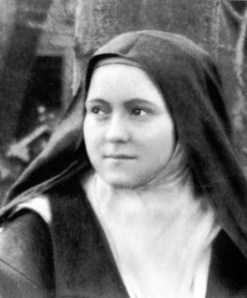
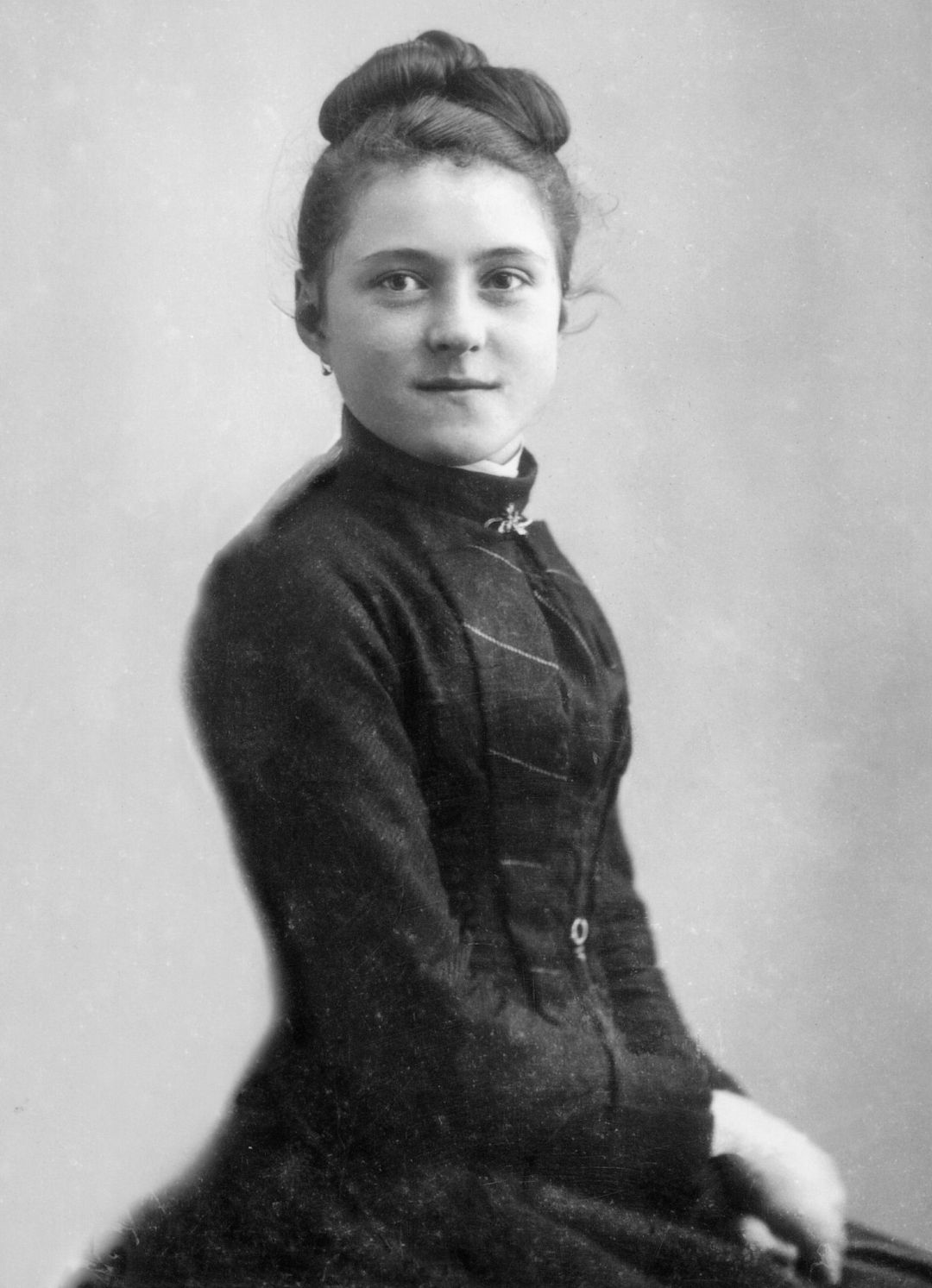
st-therese-of-lisieuxSt. Thérèse Martin  (1873–1897 AD) was born in France into a devout, Catholic family. All five daughters entered religious life and both parents (Louis & Zélie) went on to be canonized in 2015. Thérèse received special permission to join the Carmelite convent in her hometown of Lisieux at the young age of 15. She would live and pray and work there in obscurity until her death from tuberculosis at the age of 24.

After her passing, the publishing of her spiritual autobiography, “The Story of a Soul,” was phenomenally successful and there were widespread reports of prayers being answered through her intercession. St. Pope Pius X (1903-1914) privately described her as “the greatest saint of modern times” and she was canonized in 1925. Her feast day is October 1st.

Despite her greatness, Thérèse experienced everyday difficulties like our own. Amidst these she sought to do small things with great love; calling this her “Little Way” to holiness and Heaven. This is one episode St. Thérèse relates in her (highly-recommended) autobiography:

The practice of charity, as I have said, dear Mother [Mother Agnes, that is, her biological sister, Pauline, who was prioress at the time,] was not always so sweet for me, and to prove it to you I am going to recount certain little struggles which will certainly make you smile. For a long time at evening meditation, I was placed in front of a sister who had a strange habit and I think many lights [spiritual insights] because she rarely used a book during meditation. This is what I noticed: as soon as this sister arrived, she began making a strange little noise which resembled the noise one would make when rubbing two shells, one against the other. I was the only one to notice it because I had extremely sensitive hearing (too much so at times.) Mother, it would be impossible for me to tell you how much this little noise wearied me. I had a great desire to turn my head and stare at the culprit who was very certainly unaware of her ‘click.’ This would be the only way of enlightening her. However, in the bottom of my heart I felt it was much better to suffer this out of love for God and not to cause the sister any pain. I remained calm, therefore, and tried to unite myself to God and to forget the little noise. Everything was useless. I felt the perspiration inundate me, and I was obliged simply to make a prayer of doing it without annoyance and with peace and joy, at least in the interior of my soul. I tried to love the little noise which was so displeasing; instead of trying not to hear it (impossible), I paid close attention so as to hear it well, as though it were a delightful concert, and my prayer (which was not the Prayer of Quiet) was spent in offering this concert to Jesus.”

St. Thérèse Rose Novena

September 21, 2016

September 22nd is the day for beginning a nine-day novena to St. Thérèse of Lisieux, also known as “the Little Flower,” leading up to her October 1st feast day. Below is a novena prayer that you may use:


St. ThereseO Little Thérèse of the Child Jesus, please pick for me a rose from the heavenly gardens and send it to me as a message of love. O Little Flower of Jesus, ask God today to grant the favors I now place with confidence in your hands…

(Express your personal prayer intentions.)

St. Thérèse, help me to always believe as you did in God’s great love for me, so that I might imitate your “Little Way” each day. Amen.

Our Father…
Hail Mary…
Glory Be…


After completing this novena, do not be surprised if you find a rose.

The Heights of Holiness

April 12, 2016
Tall G.K. Chesterton shakes a girl's hand

Servant of God G.K. Chesterton

How tall have the famous Catholic men and women of past and present been? Precise figures can be hard to find, but here is a sampling:

6’ 4” — Servant of God G.K. Chesterton

6’ 0” — Venerable Pope Pius XII

5’ 10” — Our Lord Jesus Christ (based upon the Shroud of Turin) , Pope St. John Paul II

5’ 9” — Pope Francis

5’ 8½” — Servant of God Bishop Fulton Sheen  (or 5’ 7” according to his niece )

5’ 8” — Blessed Pope Paul VI

5’ 7” — St. Peter the Apostle (based on the bones found beneath St. Peter’s Basilica’s high altar) , Pope Emeritus Benedict XVI

5’ 6” — Pope St. John XXIII

5’ 5” — Servant of God Pope John Paul I

5’ 4” — St. Therese of Lisieux

5’ 2½”— St. John Neumann

5’ 2” — St. Joan of Arc , St. Junipero Serra

5’ 1½”— St. Ignatius Loyola

5’ 0” — Blessed Mother Teresa of Calcutta

The Dying Words of Jesus & His Saints

November 14, 2014

Each November, when the dark nights lengthen and trees become bare skeletons, we especially pray for the souls of those who have gone before us in death. This is also a fitting time of year to remember and consider the certainty of our own mortality. How did Jesus and his holy ones face the end of their lives? Their dying words can both instruct and inspire us:

“Father, into your hands I commend my spirit.”

—Our Lord Jesus Christ, c. 33 AD

“Lord Jesus, receive my spirit. Lord, do not hold this sin against them.”

—St. Stephen, martyr, c. 34 AD

“Glory to God for all things!”

—St. John Chrysostom, 407 AD

“Your will be done. Come, Lord Jesus!”

—St. Augustine, 430 AD

“May God forgive you, brother.”

—St. Wenceslaus, martyr, 935 AD

“I have loved justice and hated iniquity. Therefore I die in exile.”

—Pope St. Gregory VII, 1085 AD

“If all the swords in England were pointed against my head, your threats would not move me. I am ready to die for my Lord, that in my blood the Church may obtain liberty and peace.”

—St. Thomas Becket, martyr, 1170 AD

“When you see that I am brought to my last moments, place me naked upon the ground just as you saw me the day before yesterday; and let me lie there after I am dead for the length of time it takes one to walk a mile unhurriedly.”

—St. Francis of Assisi, 1226 AD

“Be assured that he who shall always walk faithfully in God’s presence, always ready to give him an account of all his actions, shall never be separated from him by consenting to sin.”

—St. Thomas Aquinas, 1274 AD

“Leave the doors open, so that everyone may enter and see how a pope dies.”

—Bl. Pope Urban V, 1370 AD

“Into your hands, O Lord, I commend my spirit.”

—St. Bridget of Sweden, 1373 AD

“Blood! Blood! Father, into your hands I commend my spirit.”

—St. Catherine of Siena, 1380 AD

“Jesus, Jesus, Jesus!”

—St. Joan of Arc, martyr, 1431 AD

“I die the king’s good servant, but God’s first.”

—St. Thomas More, martyr, 1535 AD

“O, my God!”

—St. Ignatius of Loyola, 1556 AD

“After all I die as a child of the Church. My Lord, it is time to move on. Well then, may your will be done. O my Lord and my spouse, the hour that I have longed for has come. It is time for us to meet one another.”

—St. Teresa of Avila, 1582 AD

“Jesus, I love you.”

—St. Kateri Tekakwitha, 1680 AD

“In all things I adore the will of God in my regard.”

—St. Jean Baptiste de la Salle, 1719 AD

“Be children of the Church.”

—St. Elizabeth Ann Seton, 1821 AD

“My immortal life is on the point of beginning. Become Christians if you wish to be happy after death, because God has eternal chastisements in store for those who have refused to know Him.”

—St. Andrew Kim Taegon, martyr, 1846 AD

“Holy Mary, pray for me, a poor sinner.”

—St. Bernadette Soubirous, 1879 AD

“I have reached the point of not being able to suffer any more, because all suffering is sweet to me. My God, I love you.”

—St. Therese of Lisieux, 1897 AD

“To restore all things in Christ.”

—Pope St. Pius X, 1914 AD

“Long live Christ the King!”

—Bl. Miguel Pro, S.J., martyr, 1927 AD

“Jesus. Maria.”

—St. Pio of Pietrelcina, 1968 AD

“Jesus, I love you. Jesus, I love you.”

—Bl. Mother Teresa of Calcutta, 1997 AD

“Let me go to the house of the Father.”

—St. John Paul the Great, 2005 AD

What do you want to be your dying words?

Caring for the Sick & Yourself

July 2, 2014
St. Therese of Lisieux on her Sick Bed

St. Therese of Lisieux on her sickbed

What do Casey Kasem, Terri Schiavo, and an increasing number of recently deceased elderly or disabled people have in common? They have all been killed by being deprived of hydration and nutrition, rather than dying naturally because of some underlying illness. Sometimes such “treatment” is chosen by the families and encouraged by the doctors, but starving the hungry, parching the thirsty, and killing the innocent is not the will of Jesus.

Christ’s bride, the Church, teaches that the sick and those who care for them may forgo extraordinary treatments in support of health or life, but she insists that providing food and drink belong to basic care. Therefore, except in cases where someone’s condition is both imminently terminal and irreversible, we are morally obliged to provide the sick or disabled with nutrition and hydration, even if artificially.

It is prudent to fill-out a “Living Will” or an “Advance Medical Directive” to declare your treatment wishes and whom you want to make your healthcare decisions if you become incapacitated. However, sometimes such documents suggest check-boxes for immoral or unwise medical options. I recommend (and have prepared for myself) Pro-Life Wisconsin’s Advance Directive to ensure that your medical treatment will accord with Catholic teaching.

A Rose Novena to St. Therese of Lisieux

September 22, 2013

Today, September 22nd, is the day to begin your nine-day novena to St. Therese, the Little Flower. Here’s a prayer you can use:

O Little Therese of the Child Jesus, please pick for me a rose from the heavenly gardens and send it to me as a message of love. O Little Flower of Jesus, ask God today to grant the favors I now place with confidence in your hands…

(State your personal intentions)

St. Therese, help me to always believe as you did, in God’s great love for me, so that I might imitate your “Little Way” each day. Amen.

Our Father…
Hail Mary…
Glory Be…

(After this novena, don’t be surprised if you find a rose.)

The Wisdom of the Saints

July 25, 2013

“You cannot be half a saint; you must be a whole saint
or no saint at all.”

-St. Therese of Lisieux

“If you are what you should be, you will set the whole world ablaze!”

St. Catherine of Sienna

“You learn to speak by speaking, to study by studying, to run by running, to work by  working, and just so, you learn to love by loving. All those who think to learn in any other way deceive themselves.”

-St. Francis de Sales

“Let us go forward in peace, our eyes upon heaven,
the only one goal of our labors.”

-St. Therese of Lisieux

“Love God, serve God; everything is in that.”

-St. Clare of Assisi

“Pray as though everything depended on God.
Work as though everything depended on you.”

-St. Augustine

“Pray, hope, and don’t worry”

-St. Pio of Pietrelcino

Jesus Christ’s Holy Mass

April 25, 2013

“The celebration of Holy Mass is as valuable as the death of Jesus on the cross.” —St. Thomas Aquinas

“Man should tremble, the world should vibrate, all Heaven should be deeply moved when the Son of God appears on the altar in the hands of the priest.” —St. Francis of Assisi

“It would be easier for the world to survive without the sun than to do without Holy Mass.” —St. Padre Pio of Pietrelcina

“One single Mass gives more honor to God than all the penances of the Saints, the labors of the Apostles, the sufferings of the martyrs, and even the burning love of the Blessed Mother of God.” —St. Alphonsus Liguori

“All the good works in the world are not equal to the Holy Sacrifice of the Mass because they are the works of men; but the Mass is the work of God. Martyrdom is nothing in comparison for it is but the sacrifice of man to God; but the Mass is the sacrifice of God for man.” —St. John Vianney

 “If the Angels could envy, they would envy us for Holy Communion.” —St. Pope Pius X

 “Do you realize that Jesus is there in the tabernacle expressly for you–for you alone? He burns with the desire to come into your heart.” —St. Thérèse of Lisieux

The Little Flower — October 1 — St. Therese of Lisieux

October 1, 2010

Why do we call St. Therese of Lisieux “the Little Flower?” This imagery comes from Therese’s autobiography and she applies the name to herself.  She writes:

“[Jesus] showed me the book of nature, and I understood that every flower created by Him is beautiful, that the brilliance of the rose and the whiteness of the lily do not lessen the perfume of the violet or the sweet simplicity of the daisy. I understood that if all the lowly flowers wished to be roses, nature would lose its springtime beauty, and the fields would no longer be enameled with lovely hues. And so it is in the world of souls, which is the garden of Jesus.  He has been pleased to create great saints who may be compared to the lily and the rose, but He has also created lesser ones, who must be content to be daisies or simple violets flowering at His feet, and whose mission it is to gladden His divine eyes when he deigns to look down on them.”

She writes that her autobiography is “the story of the Little Flower gathered by Jesus.”

Therese thought she was only a little flower, yet she was greater than she realized. Just 27 years after her death she would be canonized a saint. John Paul the Great would name her a Doctor of the Church (the third, female Doctor, after Catherine of Sienna and Teresa of Avila.) Pope Pius XI even called her, “The greatest saint of modern times.” Such was the greatness of her life, her words, and her friendship with God.  And yet, Therese didn’t realize her greatness while she lived.

If St. Therese, the Doctor of the Church, could so misjudge her importance in the garden of the Lord, then how easy might it be for a humble, daily, Mass-goer to under-appraise his or her significance in the eyes of God too?

Praise is Fireproof — Tuesday, 17th Week in Ordinary Time—Year II

July 27, 2010

St. Therese of Lisieux, one of the greatest and most beloved saints in modern time, once remarked that she almost wished that she could go to Hell.  That way, she said, at least her small, solitary voice would lovingly praise Him from there. Of course, this is impossible. Those in Hell ‘wail’ in sadness, and ‘grind their teeth’ in anger, but they never praise God. No one praising Him would remain in Hell. Let us take comfort in the knowledge that if we persevere in our praise of God we shall not join their number.