Archive for the ‘The Magi’ Category

3 Things I Didn’t Know About Christmas

December 24, 2024

Christmas Eve
By Fr. Victor Feltes
O holy night! Christmas has come! Jesus Christ is born! Tonight we celebrate and hear the story again of his world-changing birth. And though it is a familiar story, we all still have things to learn from it. For example, do you know what swaddling clothes are? “Mary wrapped her Son in swaddling clothes and laid him in a manger.

When I was younger, I didn’t know what swaddling clothes were. Maybe because “swaddle” sounded like “squalid” and I had seen the inside of messy barns, I imagined they were dirty pajamas. It’s actually an ancient and modern practice to use cloth to wrap up infants’ arms and legs tightly to their bodies. This is called “swaddling,” and babies enjoy it — it reminds them of the warm close comfort of the womb.

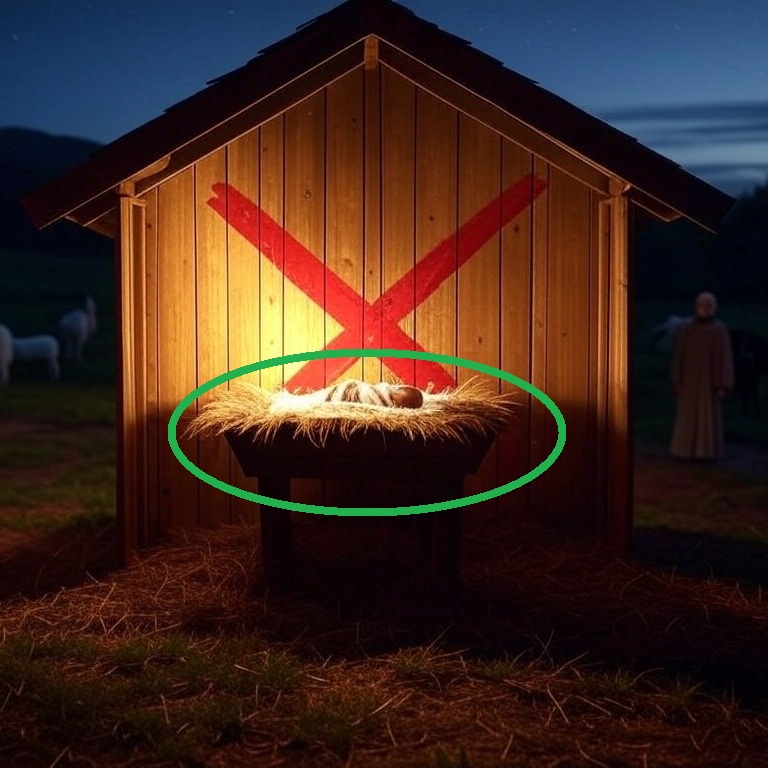
Another thing I didn’t know when I was younger was what a manger is. I assumed the manger was the stable because whenever someone would point out a “manger scene” what I always noticed was the big wooden barn. The shelter in Bethlehem where Jesus was born was actually more like a cave. But regardless, a manger is not a barn; it’s an animal feeding trough that holds dry feeds, like grain. So Mary wrapped up Jesus in swaddling clothes and laid him in a feed box.

These are interesting details, but why does St. Luke mention them? The details do reflect the humility of our Savior and King. Our Lord could have arranged providence instead to have himself born inside a palace with wealth, but he chose to enter into our human poverty and discomfort. But there is another reason why St. Luke notes these things: they foreshadow what would come later.

One day, decades after Christmas, assisted by another Joseph, the Blessed Mother Mary would wrap her Son’s body with cloths and lay him down inside another borrowed cave. And it is fitting that on Christmas night Jesus’ body was placed inside of a feedbox for grain, for he would go on to offer his full self as food for us, as Bread for the life of the world. It’s all connected and the beginning contains the end. Christmas leads to Holy Week, and Holy Week gives us the Faith, the Church, the Holy Eucharist.

A third and final thing I misunderstood when I was younger was when the Magi (or “Wisemen”) really arrived in Bethlehem. Having followed ‘the Christmas Star,’ I assumed they showed up on Christmas night. The Magi actually came later, sometime between forty days and perhaps two years after Christmas. We know this because Joseph and Mary did not yet have the Magi’s gift of gold to buy a sacrificial lamb for the Presentation at the Temple. And King Herod, in his attempt to kill Baby Jesus in Bethlehem, ordered the death of all the baby boys “two-years-old and under.The Magi responded to Christ’s birth and came after Christmas. They entered the house of the Holy Family and they came with gifts.

It is good that we are gathered for this holy night. Jesus has called you here to be with him and to be with us. But like the Magi, we all are also called to respond to his birth by coming after Christmas. This is the house of his Holy Family, and we must honor and adore him, bearing for him the gift of ourselves. Jesus’ wish this Christmas is for you, and each of us need him. Christmas, Easter, the Holy Mass; the Faith, the Church, the Eucharist; the past, the present, eternity; they’re all connected here, in Jesus Christ. Behold, I proclaim to you good news of great joy! A Savior has been born for you who is Christ and Lord. So come, let us adore him!

Lessons from the Magi

January 7, 2024

Feast of the Epiphany
By Fr. Victor Feltes

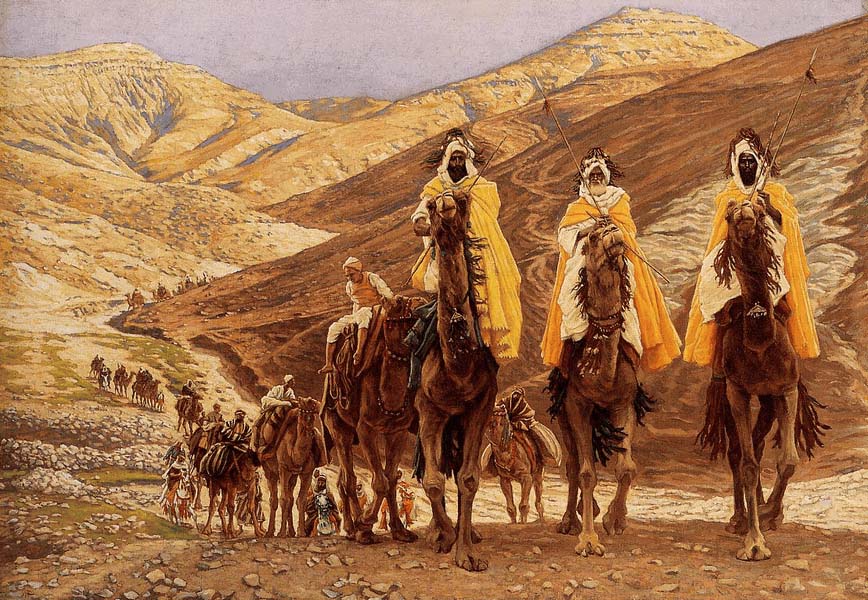
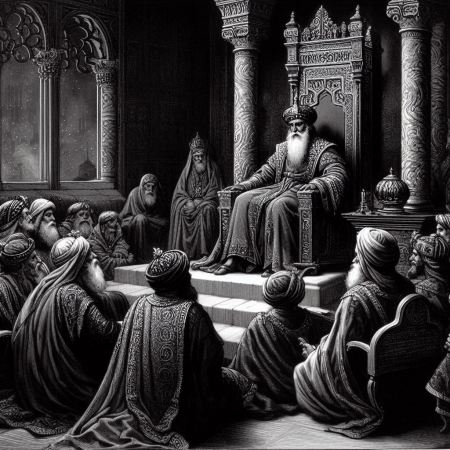
The city of Bethlehem was the birthplace and hometown of King David, the place where the sheep offered at the Temple were raised, a place whose name means “House of Bread.” There is where the Magi found Jesus Christ, the Son of David, the Lamb of God, and the Bread that came down from heaven. The Magi came from the east, perhaps responding to some sign the Prophet Daniel had foretold centuries before during his Babylonian Captivity. They arrived in Jerusalem saying, “Where is the newborn king of the Jews? We saw his star at its rising and have come to do him homage.”

King Herod and all of Jerusalem heard about this and Herod took the rumor seriously. He asked the chief priests and the scribes where the Christ (or Messiah) would be born. They answered with the prophesy of Micah: “in Bethlehem of Judea.” So King Herod sent the Magi to search there, using them as his unwitting spies. The Magi found the home of the Holy Family and showed homage to Jesus with his mother Mary, presenting gifts of gold, frankincense, and myrrh; gold for our King, frankincense for our Priest and God, and myrrh, an ancient-world embalming resin, for him who would die and rise again.

Now the town of Bethlehem is only a two hour walk from Jerusalem, but there is no record of any others who heard the rumor going there in search of the infant Christ. If they had gone and asked around, some locals would likely know the shepherds who had joyfully proclaimed the birth of the Messiah on Christmas night. “All who heard it were amazed by what had been told them by the shepherds,” so it would have left an impression. With a little grace, an encounter with Jesus and his Holy Family would have been found by anyone who had bothered to look. The Magi traveled hundreds of miles to find him yet many priests and scribes neglected to go a mere six miles. In your life, beware of practicing your Christian faith so feebly that you forego making the simplest sacrifices in service of Christ. Consider what simple steps—in prayer or with the sacraments, in penance or in study—you could take in this new year to draw closer to Jesus Christ.

Matthew’s gospel tells us that “having been warned in a dream not to return to Herod, [the Magi] departed for their country by another way.” Recall again how Bethlehem was not far at all from Jerusalem or from Herod’s nearby palaces, so it seems the Magi had this dream before departing from the Holy Family. If the Magi had sensed that the Holy Family were in danger they would have warned them before embarking for home. The Magi either informed them, or — not sensing danger — did not.

Maybe they did warn the Holy Family of possible danger but Joseph and Mary simply did not know what to do next. Sometimes, even when trying our best, we won’t know what to do. Trust the Lord to guide your way. If the path you choose is important in God’s plan he will help you go in the right direction. Previously, when Joseph had been about to make a mistake by separating himself from Mary, God sent him an angelic message in a dream. Here again, “when [the Magi] had departed, behold, the angel of the Lord appeared to Joseph in a dream and said, ‘Rise, take the child and his mother, [and] flee to Egypt…’” God is supremely brilliant and resourceful. He can send you signs if you need them but, to receive God’s promptings, cultivating a heart which is open to God’s will (like St. Joseph’s was) is essential.

What if the Magi were told in the dream not to return to Herod, and perhaps even mentioned this to the Holy Family, without anyone perceiving the active threat which Herod posed? That too would contain a valuable lesson for us. If the Magi obeyed God before fully understanding his purposes, through trusting him and following his instructions their lives were saved from Herod’s sword and the Holy Family had time to escape.

Jesus Christ and his Church teach us many things about what we must or must not do, or what we should or should not do. People can be challenged by and may not yet fully understand Catholic teachings about the Sacraments, human sexuality, the beginning and end of human life, social justice, or other topics. There are good reasons behind all these teachings and it is good to explore them by researching and asking questions to understand them better, but there will be times in your life when you are called to be faithfully obedient even before you fully understand. The obedience of the Magi served Christ and likely saved their lives. Your obedience to God will bless you as well, and more than you may realize.

Let Us Be Like the Magi

January 6, 2024

Feast of the Epiphany
By Fr. Chinnappan Pelavendran

Today we celebrate the feast of Epiphany. The word epiphany means revelation or manifestation. This feast is the revelation of God’s love for his people in the birth of Jesus Christ, who is Emmanuel: God is with us. For centuries, the prophets had proclaimed God’s love for his people, and now that love has been revealed to his people. God himself has been born into the world as a human child. He is with us, close to us in each moment, sharing his life with us. Jesus came into our human condition to seek out what was lost, and to bring us back into union with God and to himself. This is the good news for everyone: no one is excluded. Today’s psalm makes this clear. “Lord, every nation on earth will adore you.

In the gospel, we see two kinds of people. On the one hand, the Gentile ‘Magi from the East’ seek out the newborn king of the Jews to do him homage. On the other hand, Herod and his court seek the Messiah not to do him homage but to destroy him. Let us focus our attention on the Magi; the actions of the Magi in the presence of Jesus give us a beautiful example of divine worship. The Gospel tells us: “They prostrated themselves and did him homage. Then they opened their treasures and offered him gifts of gold, frankincense, and myrrh.”

Their first gift was gold. Among ancient people, gold was regarded as the king of metals. It was therefore the ideal gift for a king. The Magi gave Jesus all their love as pure, solid, lasting, and purified from selfish motives. They wanted to love Jesus with all their heart and mind. Their love was sincere. The second gift was frankincense. Ancient people used incense in their religious worship. The aroma and smoke, spiraling upward to heaven, spoke to them of gods and divinity. The gift of incense, therefore, is a symbol of the divinity of Jesus. It tells us that Jesus always had the nature of God but became a man and appeared in human likeness. The magi adored Jesus as God. Even today, we use incense in the liturgy as a sign of worship. We incense the gospel in which Jesus is present, the altar representing Christ, and the gifts of bread and wine on the altar, which will become the Body and Blood of Christ. The third gift was myrrh. Myrrh was used to prepare the dead for burial. Later in the Gospel, we see that the women brought myrrh to the tomb of Jesus. This gift of the Magi made an ideal symbol of human vulnerability and foreshadowed the Lord’s death. Jesus experienced sorrows, joys, fears, frustrations, loneliness, and all human emotions. He was like us in all things but sin.

The Magi also teach us how to proceed on our journey. They do not return the way they came, which would have taken them back to Herod. Their experience of being with Jesus has enlightened them. They have an inner light, a new gift of discernment and wisdom. When we meet Jesus and worship him, we do not have to return to Herod, back to the darkness, fear, and selfishness of our past and our sinful nature. The Lord gives us the grace to walk a new way. It is the way that is love: love of God and love of our neighbor.

Just as the Magi did, let us prostrate ourselves before the Lord, offering him our love, praise, and gratitude. Our “gold” is everything we have, all that we possess, and all that we consider most precious; we offer it all to him. Our “frankincense” is our prayer, devotion, zeal, contrition, thanksgiving, and all our petitions. Our “myrrh” is our sacrifices and sufferings which we offer in union with Jesus’ Passion, for the glory of God and the salvation of souls. We know our gifts are imperfect and they certainly seem meager as we set them before him. However, his humility as he reveals himself before us as a poor, helpless infant strengthens our humility, and therefore makes us bold enough to give whatever we have, knowing that our every gift comes from his generosity to us.

The Magi & King Herod

December 6, 2023

By Fr. Victor Feltes

When Jesus was born in Bethlehem of Judea, in the days of King Herod, behold, Magi from the east arrived in Jerusalem, saying, “Where is the newborn king of the Jews? We saw his star at its rising and have come to do him homage.”

This is how the second chapter of St. Matthew’s Gospel introduces us to the noble Magi and the infamous King Herod. Their good and bad examples in the story of Christmas present much for us to learn from and reflect on.

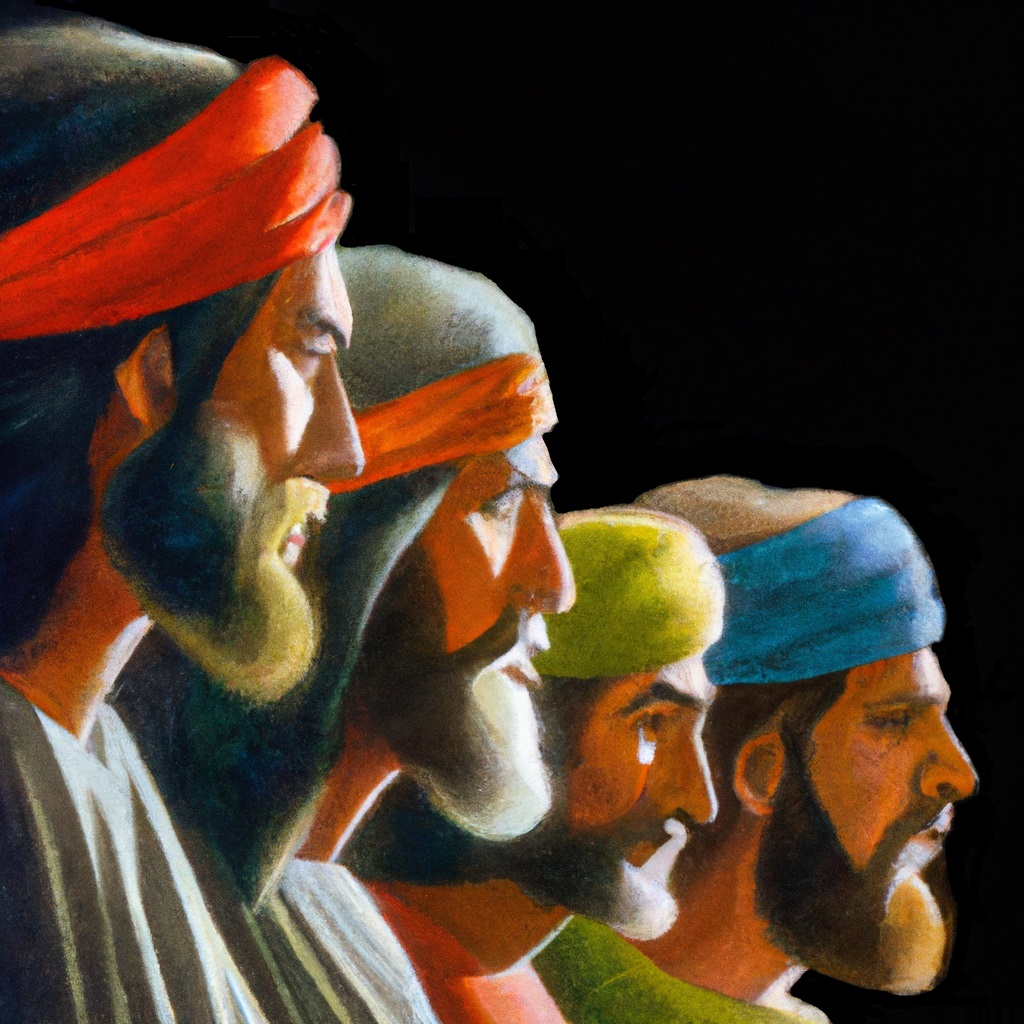
The gospel tells us the Magi were astrologers from the East who saw a celestial sign which firmly convinced them the heir to the Jewish throne was born. The Magi were so convinced by this sign that they packed up valuable gifts and traveled far from their home to honor this newborn king. What are magi? “Magus” is the title which ancient civilizations east of Israel, such as the Persians and the Babylonians (or Chaldeans), bestowed upon their individual men of wisdom. These experts, their various teachers, priests, physicians, astrologers, soothsayers, Magicians, or interpreters of dreams, were collectively called magi.

How did the Magi who journeyed to Herod know how to recognize Heaven’s sign? In the 6th century before Christ., King Nebuchadnezzar of Babylon came and laid siege to Jerusalem. In response to his people’s unfaithfulness, God permitted them to be conquered and many Jews were taken east into Babylonian Captivity. The Babylonians reasoned that conquered peoples were more productive alive than dead and less likely to stage a successful rebellion when resettled outside of their homeland. Thus the Jews’ relocation deeper into the Babylonian Empire.

At that time, King Nebuchadnezzar told his chief chamberlain to bring in some of the Israelites of the royal line and of the nobility. He said, “They should be young men without any defect, handsome, proficient in wisdom, well informed, and insightful, such as could take their place in the king’s palace.” He was to teach them the language and literature of the Chaldeans. Among these chosen young men was the Prophet Daniel, who would go on to give prophesies about the coming of Christ recorded in the Old Testament book which bears his name.

Impressed by Daniel’s wisdom, Babylonian King Nebuchadnezzar “advanced Daniel to a high post… made him ruler of the whole province of Babylon and chief prefect over all the wise men of Babylon.” Perhaps Daniel’s prophetic wisdom, handed down for centuries, enabled these wise Magi from the East to recognize the significance of the starry sign and inspired them to journey to Jerusalem. The Bible does not record the Magi’s names, but a tradition hands down their names to us as Caspar, Melchior, and Balthasar.

Behold, Magi from the east arrived in Jerusalem, saying, “Where is the newborn king of the Jews? We saw his star at its rising and have come to do him homage.” When King Herod heard this, he was greatly troubled, and all Jerusalem with him.

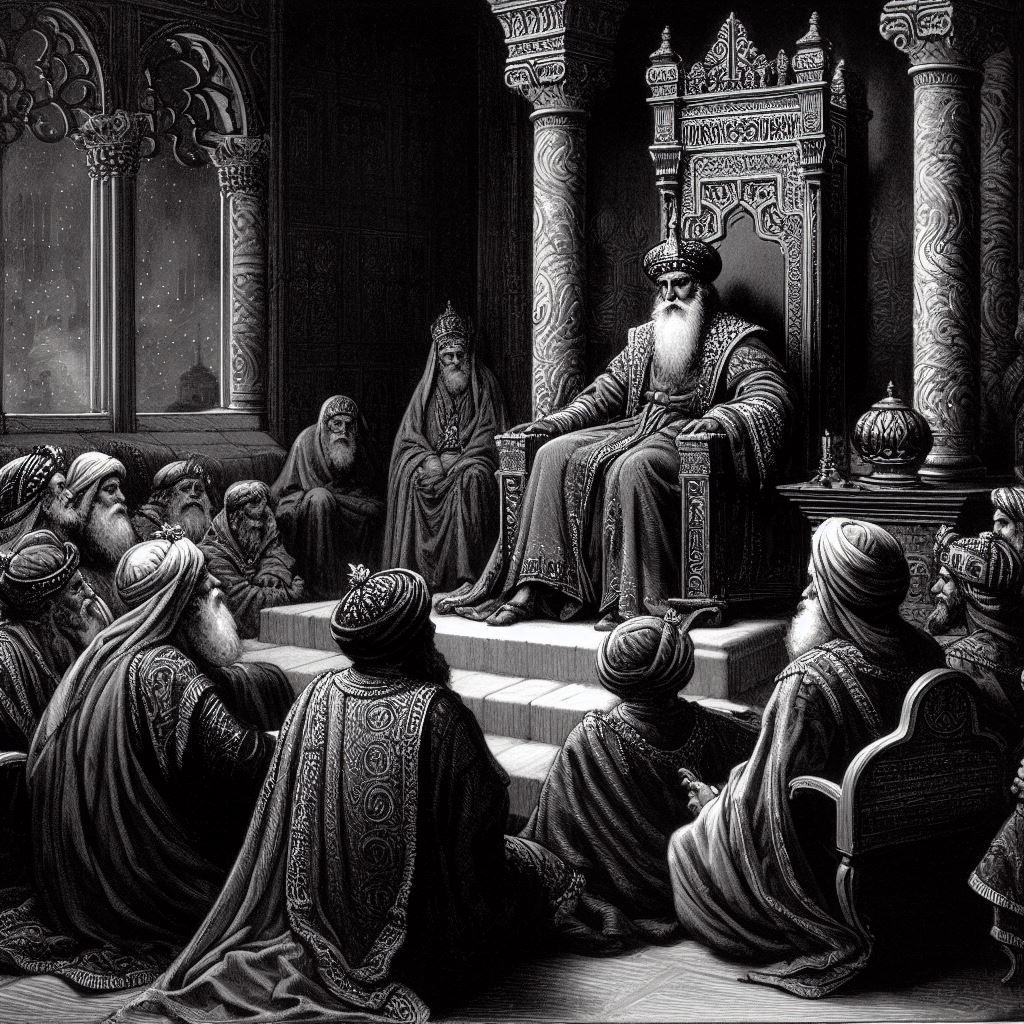
More than thirty years prior to the arrival of the Magi, the pagan Roman Senate had appointed Herod as the region’s king. He is known as “Herod the Great” because of his vast territories and many building projects, including new cities, massive fortresses, and a complete renovation of the Jewish temple in Jerusalem. Herod heightened the architectural beauty of the temple to such greatness like it had in the days of King Solomon. However, Herod was not greatly loved.

He imposed extremely harsh taxes for the ancient world and ruled ruthlessly, executing many of his political opponents and family relatives, including three of his sons and at least one of his ten wives. No one ever mistook him for being the Messiah; besides being more of a pagan king than a Jewish one, Herod was not a descendant of Kind David like Scripture said the Christ would be. So when foreign Magi came to Jerusalem seeking the Messiah, word got around and King Herod became greatly troubled and all Jerusalem with him.

Why were the whole of Jerusalem troubled (that is, “stirred or agitated as in roiling water”) along with King Herod by this news of Christ’s possible coming? Because they knew Herod better than the foreign Magi did. The Magi had swooped in as innocent doves, but Herod was a cunning serpent. The Jews of Jerusalem realized King Herod was not eager to freely hand over power. Even if the Messiah had indeed been born, violence or a civil war would likely follow.

Assembling all the chief priests and the scribes of the people, [King Herod] inquired of them where the Messiah was to be born. They said to him, “In Bethlehem of Judea, for thus it has been written through the prophet: ‘And you, Bethlehem, land of Judah, are by no means least among the rulers of Judah; since from you shall come a ruler, who is to shepherd my people Israel.’”

There is a Jewish joke that two rabbis together produces three opinions, but here all of the priests and scribes assembled by King Herod cite the Old Testament Prophet Micah to identify Bethlehem as the promised Messiah’s birthplace. Maybe Herod asked them subtly amongst many other questions, inquiring about the Messiah’s birth in such a way that they did not suspect his motives. But if they grasped what Herod was after and why, then this was the first time Jewish religious leaders betrayed the Christ. Perhaps they reasoned that if God’s Anointed One had indeed been born in Bethlehem, then God would protect him, “For if the righteous one is the son of God, God will help him and deliver him from the hand of his foes.” God did protect the Infant Jesus, but Herod ended the precious lives of innocents in the little town of Bethlehem.

Our God will win in the end, all evil will ultimately be defeated, but we must not go along to get along in this world by cravenly cooperating with evil. Imagine if those religious leaders had refused to tell wicked Herod where the Messiah would be born; then they might now be celebrated throughout Heaven and earth as men who defended and died for Christ, instead of Bethlehem’s baby boys. We are all called to practice courage as Catholic Christians. Remember that it is better to innocently suffer or even die for Christ than to die as one of his enemies or betrayers.

I do not know whether the chief priests and scribes of the people knowingly betrayed the infant Christ, but there is no record in the Gospels of any of them going in search of the child. The Magi traveled hundreds of miles to find him, but it appears the priests and scribes never went the six miles from Jerusalem to Bethlehem in search of him. Beware of practicing your faith so feebly that you forego making the simplest sacrifices in service of Christ.

Then Herod called the Magi secretly and ascertained from them the time of the star’s appearance.

What was the star which the Magi saw? There are several interesting theories. It may have been one of the planets in a meaningful position, or perhaps a pair of planets combining their light. This is a possibility since the ancients deemed the other planets in our Solar System to be ‘wandering stars.’ Our word “planet” comes from the Greek word for “wanderer,” because the planets wander across the constellations. Some have suggested the Christmas star was a comet or a star’s supernova, but whatever the star was it was something too subtle for Herod to recall. In the ancient world, comets were regarded as foreboding omens and some supernovas have been notably bright to eye at night in recorded human history; however, the star which arose at Jesus’ birth was not of particular note to Herod and his royal counselors. This is why Herod must ascertain from the Magi the time of the star’s appearance.

As God once said, “As the heavens are higher than the earth, so are my ways higher than your ways and my thoughts than your thoughts.” This world and worldly people miss what is important, and what the world pays attention to are often fleeting things. So many things talked about today will be forgotten by next week, discarded like last week’s newspaper. Sports, movies, music, TV, social media, advertising, celebrities, politicians, and even much of the 24-hour news cycle will not show you what really matters. God tells us through St. Paul, “Do not conform yourselves to this age, but be transformed by the renewal of your mind, that you may discern what is the will of God, what is good and pleasing and perfect.” If you follow the nightly news you might naturally conclude that nothing good is happening anywhere, but remember that God is always quietly at work. I believe that many of the most important things which happened in the world today are good things, and things which the world will not notice, like the appearance of the star which announced our Savior’s birth, or a caravan of Magi beginning a journey west to meet God.

Herod called the Magi secretly and ascertained from them the time of the star’s appearance. He sent them to Bethlehem and said, “Go and search diligently for the child. When you have found him, bring me word, that I too may go and do him homage.”

Though their meeting was secret, Jesus says “nothing is concealed that will not be revealed, nor secret that will not be known.” Looking back, we can see that the Magi were sincere and faithful and sought to honor the Christ Child, while Herod was a cynical liar who sought to destroy him. No good or bad secret, of yours or mine or others’, will not be revealed in the end. St. Peter writes that “the day of the Lord will come like a thief… and the earth and everything done on it will be found out. Since everything is to be dissolved in this way, what sort of persons ought you to be? Conducting yourselves in holiness and devotion.” At the Presentation in the Temple, Simeon had told Mary that through her Son ‘the thoughts of many hearts would be revealed.’ That was true in the lives of King Herod and the Magi. In your personal response to Jesus Christ, your own heart is revealed, too.

After their audience with the king [the Magi] set out. And behold, the star that they had seen at its rising preceded them, until it came and stopped over the place where the child was. They were overjoyed at seeing the star, and on entering the house they saw the child with Mary his mother.

Notice that the Holy Family is no longer dwelling in a cave or a barn, but inside a house. This was not Christmas night but at least forty days later. We know this because when Joseph and Mary came to present Jesus at the temple, to offer a sacrifice God’s law required following the birth of a firstborn son, they could not afford a yearling lamb, so they offered “a pair of turtledoves or two young pigeons” instead, as the law of God permitted. And their humble gift pleased God. If the Magi had already visited them and provided their gift of gold, the Holy Family would have had the ability to purchase the more expensive lamb instead. The Magi arrived in Bethlehem between forty days and two years after Christmas. We know that upper bound from the cruel command which Herod issues later in hopes of destroying the Christ Child, targeting baby boys “two years old and under, in accordance with the time he had ascertained from the Magi.”

Upon entering the house the Magi unsurprisingly find the child with Mary his mother. She is the Lord’s new ark, his throne, the seat of Wisdom Incarnate. Sadly, some Christians consider her a harmful distraction from Jesus. However, the mother of the Christ is no hindrance to Jesus, for when you meet Mary she will joyfully show her Son to you.

[The Magi] prostrated themselves and did him homage. Then they opened their treasures and offered him gifts of gold, frankincense, and myrrh.

Unlike Herod, who grasps and clutches what he has, the Magi freely give gifts to Jesus. Three gifts of the Magi are mentioned by St. Matthew since they reveal who Jesus is; gold for a king, frankincense for a high priest and the true God, and myrrh resin used for external embalming, for one who has come to die. But the Magi’s best gift was the gift of themselves. What Christmas gift will you prepare for Jesus this Advent?

The Magi prostrated themselves, laying down on the floor with their faces towards the ground before Little Jesus in homage. Did they feel embarrassed to be bowing down to a baby, a child of poor parents in a humble house, far from the trappings of obvious power and glory? The Magi had deep faith in who Jesus was and faith in his future glory so they did not refuse to be seen paying him respect and honor. Do you feel embarrassed to be seen praying or honoring Jesus? Jesus says, “Everyone who acknowledges me before others I will acknowledge before my heavenly Father. But whoever denies me before others, I will deny before my heavenly Father.” Let us not be ashamed to acknowledge Jesus in others’ presence.

Having been warned in a dream not to return to Herod, [the Magi] departed for their country by another way.

These Magi took signs seriously. They previously followed such one sign hundreds of miles from home and it led them to the Christ Child. So they heed this message and bypass Herod on their trip back home. In that dream, the Magi might not have been warned that the Christ Child was in danger. Recall how Bethlehem is only six miles away from Jerusalem, just a two or three hour walk. If the Magi had sensed that Jesus was in danger, wouldn’t they have warned the Holy Family before they departed to caravan back east? Perhaps they did warn the Holy Family of possible danger, but Joseph and Mary simply did not know what to do next. But if this inspired dream told the Magi not to return to Herod without revealing the reason why, the Magi’s obedience provides a beautiful lesson for us.

Jesus and his Church teach us many precepts about what we must or must not do, what we should or should not do. There are good reasons behind these commands, and it is good to explore these teachings and ask questions to better understand them, but there will be times in your life when you are called to be faithfully obedient even before you fully understand. The Magi’s obedience served Jesus and likely saved the Magi’s lives. Your obedience to God will bless you, and more than you may realize.

[The Magi] departed for their country by another way.

They came to Jesus from one direction, but they departed for their country by another way. Servant of God Bishop Fulton Sheen makes a famous observation about this fact. He writes that it is fitting that the Magi left this way, since “no one who ever meets Christ with a good will returns the same way as he came.

When Herod realized that he had been deceived by the Magi, he became furious. He ordered the massacre of all the boys in Bethlehem and its vicinity two years old and under, in accordance with the time he had ascertained from the Magi.

Did Herod actually believe that the Christ Child has been born in Bethlehem? Probably not, but he was afraid that other people would believe it, rally around this child, and attempt to overthrow him. He reasoned that, ‘If all the baby boys in Bethlehem are dead, none of them can rise up against me as a rival.’

His calculation is like that of Pharaoh’s at the start of the Book of Exodus. Pharaoh said to his people in Egypt, “See! The Israelite people have multiplied and become more numerous than we are! Come, let us deal shrewdly with them to stop their increase; otherwise, in time of war they too may join our enemies to fight against us….” After enslaving the Hebrews, Pharaoh commanded all his people to “throw into the Nile every boy that is born, but you may let all the girls live.” Both Herod and Pharaoh aimed to prevent a future rebellion through the murder of baby boys. As ancient Machiavellians, they were willing to do great evils in hope of gaining good outcomes.

To the Romans, St. Paul records that ‘we are accused and some claim we say that we should do evil that good may come of it.’ Denying their false charge, he says, “Their penalty is what they deserve.” Remember that Christians are never allowed to do evil or sin in the hopes that good things will result. Good ends do not justify sinful means. Beware of how readily any evil deed can and will be justified with practical arguments.

When [the Magi] had departed, behold, the angel of the Lord appeared to Joseph in a dream and said, “Rise, take the child and his mother, flee to Egypt, and stay there until I tell you. Herod is going to search for the child to destroy him.” Joseph rose and took the child and his mother by night and departed for Egypt. He stayed there until the death of Herod, that what the Lord had said through the prophets might be fulfilled, “Out of Egypt I called my son.”

The Holy Family remained in Egypt until Herod’s death. Then Herod’s kingdom was divided among three of his sons: Archelaus who ruled Samaria and Judaea, Philip who ruled the Golan Heights, and Herod Antipas who ruled Galilee and the east bank of the Jordan River. This Herod Antipas is the Herod who would go on to murder St. John the Baptist and meet Jesus during the Passion, mocking him, dressing him in a splendid robe, and sending him back to Pilate. Fathers are important. I like to believe the sons of the Magi went on to find saving faith in Jesus Christ, then these sons would have born fruit following the example modeled by their fathers.

In conclusion, I invite you to take one or two of these ideas to contemplate and pray with. “Do not conform yourselves to this age, but be transformed by the renewal of your mind, that you may discern what is the will of God, what is good and pleasing and perfect.” What worldly things do you need to pay less attention to? What heavenly things do you need to pay more attention to? “The day of the Lord will come like a thief… and the earth and everything done on it will be found out.” So “what sort of persons ought you to be? Do not do evils in the hope that goods will follow. Do not justify your sins with rationalizations like Herod. Anyone searching for excuses can easily find them forever. Remember how simple obedience saved and blessed the Magi. We are called to be courageous and go extra miles for Christ. How can you better acknowledge him before others? In your personal response to Jesus, your heart will be revealed. Ask Mary’s help in this, for believers draw closer to her Son with her. What Christmas gift will you prepare for Jesus this Advent? Remember that the greatest gift to him is yourself. Embrace this Advent season with our Lord, for “no one who ever meets Christ with a good will returns the same way as he came.”

Let Us Become Stars

January 8, 2023

Feast of the Epiphany
By Fr. Chinnappan Pelavendran

Today is the Feast of Epiphany. Christ our light has come into the world and dispels the darkness. The Epiphany occurred when the magi came to honor the Christ Child. The gifts they brought were rare and expensive. They brought gold, frankincense, and myrrh. These gifts had a spiritual meaning: gold was a symbol of Kingship on the earth, frankincense or incense was a symbol of priesthood, and myrrh the embalming oil was a symbol of death. These gifts point to the future of Jesus.

Today’s first reading talks about non–Jews bringing gifts to honor the God of Israel. The prophet was consoling the people in exile. He wanted them to know that they would be redeemed and restored, and be able to live a new life in their own land. The Messiah would soon rise among his people and his glory would be seen by all. They were God’s chosen people and it was prophesied that the Jewish nation would be the light of the world. The prophecy of Isaiah tells the people that Jesus Christ is God’s anointed one. He is the Messiah and the Savior of the world. In His Church, the New Jerusalem is made up of Jews and Gentiles.

In today’s second reading, St. Paul reveals that God’s plan includes the Jews and the Gentiles. To God, we are all equally important, Jews and Gentiles. There are no second-class members in the Church among Christian believers. St. Paul declares that he has been commissioned by Christ to make this known to the world.

Today Gospel tells us the Magi followed the star that led them to the Child Jesus. The star must have been very bright to allow them to follow it. To them, the light of the star was a symbol of hope, joy, and of peace. Christ enriches those who bring him their hearts.

The Magi came with humble joy in their hearts to visit the Christ Child. Traditionally we are told they were Melchior, Balthazar, and Caspar. God has revealed himself in many different ways. The Bible is full of many examples. The magi were in search of the divine, and their joy was immense when they found Jesus. They followed the star and they encountered God. That tells us that we too have to search for God in our lives. We too should be a light in the world.

Let us be an example to others by actively worshiping Jesus at Mass, by giving a new direction to our lives, let us choose a better way of life. Let us become stars, leading others to Jesus. Let us remove the darkness of any evil around us by radiating the light of Jesus’ love.

Like the Magi, let us offer Jesus our gifts on this feast of the Epiphany and every day.  We can offer the gift of our lives during the Holy Mass and every morning as soon as we get up. The gift of a relationship with God, by talking to him in prayer and listing to him through reading the Holy Bible daily. The gift of friendship with God by recognizing Jesus’ presence in everyone we encounter and getting reconciled to God every night, asking for his pardon and forgiveness for our sins and failures during the day.

God’s Amazing Encouragements for Joseph and Mary

January 8, 2023

Feast of the Epiphany
By Fr. Victor Feltes

Unlike how some imagine the event, the magi were not in Bethlehem on Christmas night or even the following day. (You will notice that our magi statues did not reach our Nativity scene until this Feast of the Epiphany.) On Christmas night, the Holy Family was visited by local shepherds. The shepherds had seen a vision of angels proclaiming the birth of Christ. St. Luke records that Joseph and Mary “were amazed by what had been told them by the shepherds. And Mary kept all these things, reflecting on them in her heart.”

At least forty days later, Joseph and Mary presented Baby Jesus in the Temple to offer a sacrifice for him. When they carried Jesus in, an aged prophet and prophetess named Simeon and Anna came forward to proclaim great things about the child. And again, St. Luke writes that Jesus’ “father and mother were amazed at what was said about him.” Under Old Testament Law, a firstborn son required the sacrifice of a lamb, but if his parents could not afford this, two turtledoves or pigeons could be offered instead. Joseph and Mary sacrificed a pair of birds because they did not have enough money to purchase a lamb. The magi had not yet arrived with their gift of gold.

Sometime after the Presentation in the Temple, magi from the east came to Bethlehem. (Based upon whom wicked King Herod hunted afterwards, the magi may have arrived even two years after Christ’s birth.) The Holy Family, having moved out of the Christmas stable, was now living in a house. And “on entering the house [the magi] saw the child with Mary his mother. They prostrated themselves and did him homage. Then they opened their treasures and offered him gifts of gold, frankincense, and myrrh.” The magi explained how a certain rising star had informed them of this new king’s birth; how the star had preceded them and stopped over this place where the child was. Though St. Mathew’s Gospel does not explicitly say so, Joseph and Mary were surely amazed by this encounter as well.

The shepherds on Christmas, Simeon and Anna at the Temple, and the magi preceding the Holy Family’s escape into Egypt were amazing consolations for Joseph and Mary at challenging times in their lives. Imagine the stress of delivering a baby in a stable after being unable to find any place better. Imagine feeling embarrassment at being too poor to afford the best sacrifice for the Son of God at the Temple. Imagine the anxiety of having to flee to another land to save your family’s lives. One could imagine a person asking in such circumstances “Why is this happening? Have we done something wrong? Is God really with us in all this?” But in the midst of their difficult trials, God gave Joseph and Mary encouraging signs to reassure them that he was indeed with them and that their faithful struggles really mattered.

Our missions may not be as lofty as Joseph and Mary’s, but we can be helped by divine consolations too. In our trials, we can either choose to fall to the temptation of clinging to bitterness and settling for cynicism, or instead be receptive to signs and open to wonders. We can recall in our hearts (like Mary) the great things God has done. We can also pray to God for new gifts of consolation. We can ask to receive his strengthening reassurances, that he is with us and that our personal sacrifices truly matter. As St. Paul says, “God is faithful; he will not let you be tested beyond what you can bear. But when you are tested he will also provide a way [through] so that you can endure it.” God gives us his own Son at Christmas, on the Cross, and in the Holy Eucharist — how will he refuse to give us whatever else we truly need? As he did for Joseph and Mary before us, God will answer our prayers in times of burden with amazing and helpful encouragements.

Ready for Christ’s Coming? Then & Now

November 26, 2022

1st Sunday of Advent
By Fr. Victor Feltes

Our season of Advent has now begun — a season of Christian preparation. Throughout Advent, we the Church are getting ready in two different respects: we are preparing to celebrate and commemorate the historical birth of Christ at Christmas and, at the same time, we are preparing for the day Jesus will return to this world in unveiled glory. In today’s Gospel, Jesus recalls the story of the days of Noah’s Ark, in which a few were prepared for the flood and saved while most were unprepared and swept away. “So too, you also must be prepared,” Jesus tells us, “for at an hour you do not expect, the Son of Man will come.” Will we be prepared for the day of Jesus’ return? How well prepared and open were people for Christ’s first arrival and what can their examples teach us?

Local shepherds of Bethlehem were the first to hear of Christ’s birth on Christmas. An angel of the Lord appeared to them and said, “[B]ehold, I proclaim to you good news of great joy… a savior has been born for you who is Messiah and Lord!” Now these shepherds were working, keeping night watch over their flock. They could have claimed they were too busy to accommodate Christ into their schedules. Instead they said, “Let us go… to see this thing… which the Lord has made known to us!” They went in haste and found Mary and Joseph, and their Lord lying in the manger.

Sometime later, word of Christ’s birth came to King Herod in Jerusalem, but he did not welcome this good news into his heart. This man loved to reign in his own domain and did not wish to share control. So the king sent soldiers to kill the children who could be Jesus. King Herod refused to change for Christ.

Where had Herod learned of Christ’s birth? Through Magi from the east who came to Jerusalem in good faith expecting to find the newborn king of the Jews. “We saw his star at its rising,” they said. They came with their gifts to honor him. Now most had missed the important sign from heaven (they were focused on other things) but the Magis’ attentions were not distracted, and based on what they saw, they acted. They too found the Lord amidst his Holy Family.

The examples of the shepherds, King Herod, and the Magi show us ways of either being ready and open for Christ or not. So ask yourself this Advent, will I allow work and responsibilities to crowd out my time for Jesus, or will I be like the shepherds who came to him and his Holy Family with joy? Will I cling to my own control, my wealth and my sinful pleasures like King Herod did, or will I offer and sacrifice these things to Christ? Will be distracted by the many diversions of this world and overlook what really matters, or will I be attentive like the Magi to act for the Lord?

At the start of this Advent season, St. Paul tells us, “You know the time; it is now the hour for you to awake from sleep. For our salvation is nearer now than when we first believed; the night is advanced, the day is at hand.” Let us prepare to celebrate and commemorate the historical birth of Christ at Christmas, while at the same time preparing for the day Jesus will return to this world in unveiled glory.

How we Know the Magi Arrived Later (and What That Means for Us)

January 2, 2022

Feast of the Epiphany

Did you notice that our three wise men statues arrived in our manger scene only on this Sunday of the Epiphany? That’s because the Magi were not in Bethlehem on Christmas Day. In many movies and imaginations, the visit of the shepherds and the arrival of the Magi get smushed together as events of the same night. St. Luke’s Gospel recalls Jesus being wrapped and laid in a feedbox and speaks about the shepherds, but St. Matthew’s Gospel tells us the Magis’ tale with several signs that the Magi came quite a bit later.

For starters, the Magi arrive in Jerusalem after their long journey from the east expecting that the new king has already been born. “Where is the newborn king of the Jews?” they ask. “We saw his star at its rising and have come to do him homage.” Once Herod had “ascertained from them the time of the star’s appearance” and had learned from the Jewish chief priests and scribes where the Christ was to be born, the wicked king sent the Magi to Bethlehem.

St. Matthew says “on entering the house they saw the child with Mary his mother.” There’s no mention of a cave or stable; it appears that the Holy Family has moved into better lodgings since Jesus’ birth. The Magi “prostrated themselves and did him homage. Then they opened their treasures and offered him gifts of gold, frankincense, and myrrh.” This happy encounter occurs at least forty days after Christmas. We know this because of a detail from the Gospel of Luke.

According to the Law of the Old Covenant, a Jewish woman who had given birth was required to wait a certain number of days and then provide sacrifices at the temple. For a baby boy, the mother had to wait at least forty days, then she was to bring the priest two animals for sacrifice; namely, a one-year-old lamb and either a turtledove or a pigeon. However, if she could not afford the lamb, God’s Law allowed her to just offer either two turtledoves or two pigeons instead.

St. Luke indicates that for Jesus’ Presentation at the Temple, after the completion of those forty days, Mary and Joseph were poor enough to take that second option, offering “a pair of turtledoves or two young pigeons in accordance with the dictate in the law of the Lord.” If the Magi had already visited, the Holy Family would have had some gold for buying a lamb. But Mary and Joseph did not have that gift because the Magi had not yet come. In fact, what King Herod goes on to do suggests it could have been more than a year later before the Magi arrived.

When Herod realizes the Magi have evaded him (for they were warned in a dream not to return to Herod) the paranoid and ruthless king does a horrifically evil thing. He orders that all the baby boys in Bethlehem – not just newborns but all those two years old and younger – be killed. This suggests King Herod thought the baby which the Magi sought could already be up to one or two years old.

The Magi arrive at our manger scene today on Epiphany Sunday because the Gospels show they celebrated the birth of Jesus Christ together with his Holy Family a time after Christmas Day. It’s interesting to learn about the Gospels and the life and times of Jesus, but collecting bits of biblical or historical trivia is not the point. What significance does the Magis’ later arrival have for our lives as Christians? One thing it means for Christ’s Church is that Christmas is not just a one day event but a whole season to celebrate.

What happens in our world on December 26th or 27th? Lots of people take down their decorations and throw out their Christmas trees. The Christmas songs played since before Thanksgiving disappear from the radio. Mentions of Christmas vanish from mass media because the opportunity to sell things to people has passed. Our secular culture uses Advent as its Christmas season, filling it with stressful hustling and hassles like Joseph and Mary experienced preceding Jesus’ birth. That birth is allowed one day of restful, spiritual, joyful peace and then the event is over. But for Catholics and Christians of times past, Christmas Eve is not the beginning of the end of Christmas, but the start of the Christmas Season. We are in that season now, decked in the liturgical color of white through the third Sunday after December 25th, the Feast of the Baptism of the Lord, which is next Sunday.

Beware of taking too many cues from the world of Herod, whose interests in Christmas are not pure. Let us learn instead from the Magi about celebrating this season. They come after Christmas day but are still “overjoyed” to celebrate his birth. They come to him, honor him, savor their time with him. They rest with him at Bethlehem. It appears the Magi did not come and leave in just one day, but were able to be warned in a dream not to return to Herod because they chose to rest with Christ and his Holy Family.

Living differently for Christ bears unexpected blessings and benefits. For instance, my good friend Katie told me yesterday that she gets a Christmas tree and puts it up on Christmas Eve. Doing it this way not only helps keep the whole season special but she gets a tree each year for free. (By that point, Christmas tree sellers are just happy to have her take one away.) Imagine no longer having to fit everything that is Christmas into the month of December. Like the Magi, you can plan trips and gatherings for after Christmas Day.

There’s still one week of Christmas left this year. Make a plan to keep it special. Play and sing your Christmas songs. Keep on feasting. Create some fun. And think of how next year you and yours can celebrate throughout the entire Christmas season. Like the Magi before you, let how you celebrate Christmas be guided by heavenly light.

Meet the Holy Child

January 3, 2021

Feast of the Epiphany

In today’s Gospel, the Magi find the Holy Family now dwelling inside of a house in Bethlehem. This is not the same as Christmas night or Christmas day, but maybe weeks, or months, or even up to three years after. “On entering the house, they saw the child with Mary his mother. They prostrated themselves and did him homage.” Eastern cultures, especially Persians, would do homage by falling to their knees and touching their foreheads to the ground. Though this poor, tiny king’s only throne is his holy mother’s lap, these Magi love and honor him. He does not appear to them as a frightful overlord but as a little infant because his wish is not to be feared but loved. God the Father will have baby Jesus flee and hide from the wicked King Herod, but the Holy Child is happily revealed to these first foreigners from afar who seek him out as friends. The Magi were blessed to encounter Jesus as a little child, but they would not be the last to do so.

One day in the 16th century, St. Teresa of Avila was preparing to climb a stairway to the upper rooms of her Spanish convent when she was met at the stairs by a beautiful boy. He asked her “Who are you?” She replied, “I am Teresa of Jesus. And who are you?” The child responded, “I am Jesus of Teresa,” and vanished.

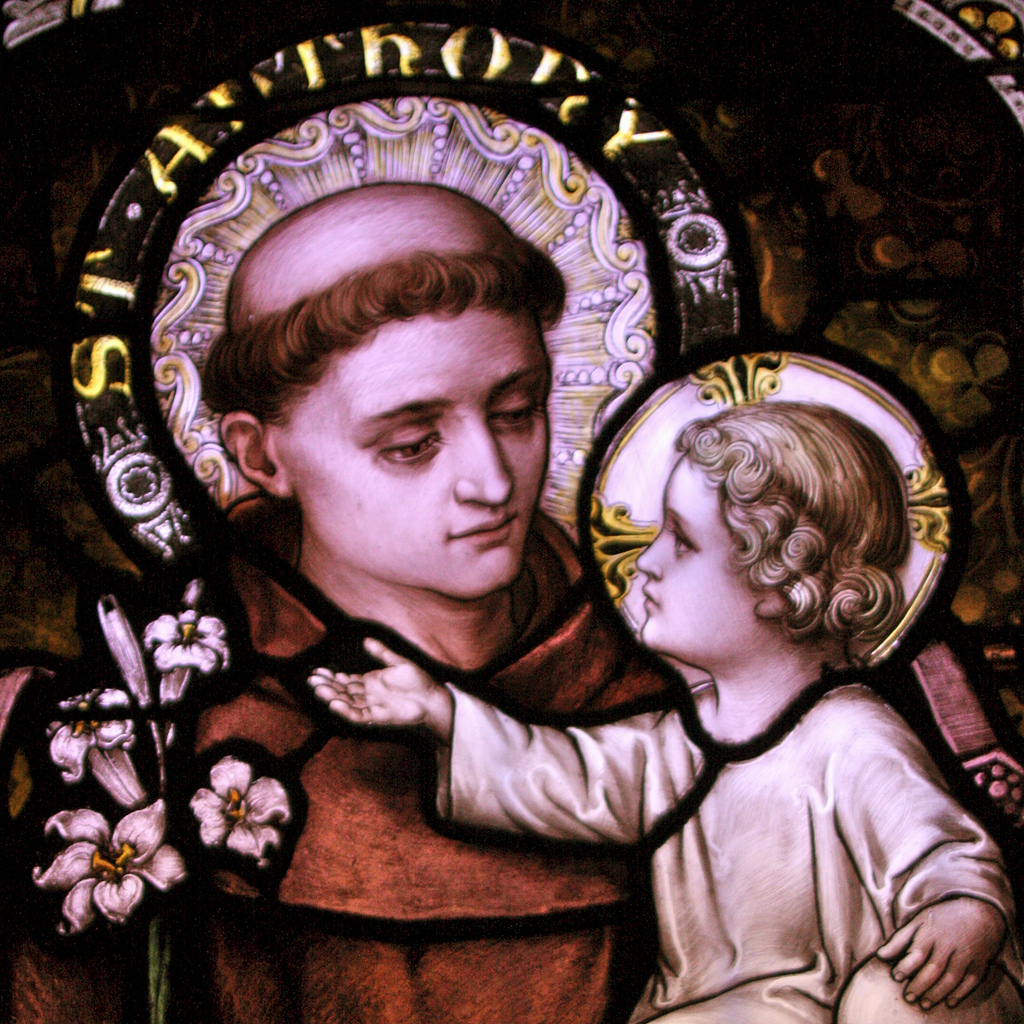
In the 13th century, while St. Anthony of Padua was traveling through France to preach against heresy, he was granted a quiet room for lodging. His host passed by the room one night and noticed an unusual light shining around the door. Peering inside, he saw Anthony kneeling and full of wonder, admiring a glorious child who hugged him. Seeing the boy’s supernatural beauty and hearing their conversation, the onlooker knew that this was Jesus visiting his saint. This encounter is why St. Anthony of Padua is depicted (as in our own stained-glass window of him) holding the Christ Child.

In the 1930’s, the Polish mystic St. Faustina Kowalska recorded in her diary, “I often see the Child Jesus during Holy Mass. He is extremely beautiful. He appears to be about one year old. Once, when I saw the same Child during Mass in our chapel, I was seized with a violent desire and an irresistible longing to approach the altar and take the Child Jesus. At that moment, the Child Jesus was standing by me on the side of my kneeler, and he leaned with his two little hands against my shoulder, gracious and joyful, his look deep and penetrating. But when the priest broke the Host, Jesus was once again on the altar, and was broken and consumed by the priest.

Even without miraculously beholding him, the great devotion of other saints toward the Christ Child is well-known. St. Francis of Assisi, having received permission from the pope, created the very first nativity scene in the year 1223; with hay and a manger along with a live ox and donkey in a cave. He then invited the Italian villagers to come and gaze upon it while he preached about “the Babe of Bethlehem” — Francis was too overcome by heartfelt emotion to say the name “Jesus.”

In the 12th century, Doctor of the Church St. Bernard of Clairvaux wrote this in a touching prayer:

“You have come to us as a small child…
Caress us with your tiny hands,
embrace us with your tiny arms
and pierce our hearts
with your soft, sweet cries.”

In the late 1800’s, the beloved St. Therese of Lisieux, also known as St. Therese of the Child Jesus and of the Holy Face, would pray this amidst her joys and trials:

“O Jesus, dear Holy Child, my only Treasure, I abandon myself to your every whim. I seek no other joy than that of calling forth your sweet smile. Grant me the graces and the virtues of your Holy Childhood, so that on the day of my birth into Heaven, the angels and saints may recognize your spouse, Therese of the Child Jesus.”

And for centuries, the Infant Child of Prague, a 19-inch statute of the Infant Jesus dressed in royal regalia, has been a beloved Czech devotion.

Despite all of these examples of mystical encounters and pious devotions with the Child Jesus, one might still wonder whether it is fitting to pray to a baby. Jesus does not even talk at that immature age, and he has since grown up beyond that phase of life. Yet even though he is a child, the Infant Jesus is still Almighty God who hears all of our prayers. If it would be wrong to pray across time to Our Savior in his manger, it would be wrong to now pray to Our Savior on his Cross as well. You and I were not born too late to adore the newborn King.

What benefits are there in praying to the Holy Infant? Jesus Christ is the same person yesterday, today, and forever, but some will find approaching the Baby Jesus less intimidating. His little form communicates his innocence, purity, gentleness, and tender affection; inviting us to share these virtues. In fact, Jesus tells us we must become as little children, like himself: “Amen, I say to you, unless you turn and become like children, you will not enter the Kingdom of Heaven. Whoever humbles himself like this child is the greatest in the Kingdom of Heaven.

During one Holy Hour, St. Faustina Kowalska was trying to meditate on Our Lord’s Passion, but her soul was filled with joy and she suddenly saw the Child Jesus. She writes, “His majesty penetrated me to such an extent that I said, ‘Jesus, you are so little, and yet I know that you are my Creator and Lord.’” And Jesus answered, “I am, and I keep company with you as a child to teach you humility and simplicity.

On another occasion, St. Faustina saw the Infant Jesus near her kneeler, once again appearing to be about one year old. She writes that, “He asked me to take him in my arms. When I did take him in my arms, he cuddled up close to my bosom and said, “It is good for me to be close to your heart… because I want to teach you spiritual childhood. I want you to be very little, because when you are little I carry you close to my Heart, just as you are holding me close to your heart right now.

So in conclusion, I encourage you to approach the Infant Jesus in your prayers; at this Mass, in this Christmas season, and throughout this year ahead. Picture and imagine him, speak and listen to him, and hold him close to your heart. The Holy Babe of Bethlehem has gifts of grace and consolation to offer you, and he awaits you with open arms.

A New Light in the Darkness

December 19, 2020

4th Sunday of Advent

The largest planet in our Solar System is Jupiter. Named for the king of all the Roman gods (whose name means “Sky Father”), Jupiter is over three hundred times more massive than Earth. The second largest planet in our Solar System is Saturn, the planet God liked so much that he put a ring on it. Every twenty years, the orbits of Jupiter and Saturn align closely together in our sky. And, as you may have already heard, this Monday on the Winter Solstice these two planets will appear so close to each other that their light will be joined as one. The last time these planets appeared this close in our sky was almost eight centuries ago. That previous conjunction, in March of the year 1226 AD, may have been witnessed by St. Francis of Assisi seven months before he died; the saint who once wrote: “Glory to you, my Lord, for sister moon and the stars you have made in heaven clear, precious, and beautiful.

Why do we wonder at the planets and the stars? Because they sparkle as gifts of light in the darkness. Because they reflect the vastness of God’s intricate plans and mighty works across the universe. And because we know their sparkling light we see comes to us from the past, even from thousands of years ago. They are stars of wonder, stars of night.

Could the conjunction of these two planets be the sign, that Christmas Star, which the Magi saw as recorded in St. Matthew’s Gospel? Perhaps. The word “planet” comes from the Greek word for “wanderer” since the ancients deemed other planets to be wandering stars. And in the year 7 B.C., Jupiter and Saturn conjoined in three different months. Will we see this Monday what the Magi rejoiced to behold? Maybe, maybe not.

Monday, in the first hour after sunset, during the longest night of the year, when Jupiter and Saturn form a new star low in the southwestern sky, it’s quite possible—even probable—that our skies will be overcast. That would be disappointing, but even this would be a sign for us. Even if we cannot see it, this joining of Saturn with the much brighter Jupiter will still be there. By Christmas Day, this event will surely have occurred. So it is with our Faith.

Two thousand years ago, in accord with his vast and intricate plan, God our King and Father in Heaven, whose great glory far surpasses any creature on earth or throughout the universe, began a new and wondrous work. He approached his most gracious creature, a young woman named Mary, and proposed to her that together they give birth to a new star, “a light for revelation to the nations, and the glory of (his) people Israel.” The virgin agreed and the true light, Jesus Christ, entered the world. So whatever clouds or darkness may accompany this week at the end of this terribly trying year, we will still be witnesses to something supremely special. “The light shines in the darkness, and the darkness has not overcome it.

The Magi Sought Jesus — Epiphany of the Lord

January 7, 2020


The Magi from the east arrived in Jerusalem, saying, “Where is the newborn king of the Jews? We saw his star at its rising and have come to do him homage.” When King Herod heard this, he was greatly troubled, and all Jerusalem with him.

Why was King Herod greatly troubled? Because he saw this rumored, newborn king as a threat to his power and rule. No one ever mistook King Herod himself for being the Messiah or the Christ. Herod was not descended from David (as it was prophesied the great king of the Jews would be) and King Herod was not a godly ruler. The Roman Senate had installed him as king of Jerusalem and Judea, and he ruled as a brutal tyrant. Herod imposed harsh taxes, killed large numbers of his political opponents, and executed members of his family as well, including several of his wives and sons. The Magi, these wise astronomers from the east, had rightly interpreted the signs of heaven, but they badly misjudged Herod’s intentions. They had come, naturally enough, to Jerusalem to find the newborn King, but King Herod had no such son, so Herod hatched a wicked plan to murder any innocent child reputed to be the Christ.

Assembling all the chief priests and the scribes of the people, He inquired of them where the Christ was to be born. They said to him, “In Bethlehem of Judea, for thus it has been written through the prophet  [Micah]: And you, Bethlehem, land of Judah, are by no means least among the rulers of Judah; since from you shall come a ruler, who is to shepherd my people Israel.”

When King Herod was greatly troubled, all of Jerusalem was troubled with him because, knowing Herod, they knew the Magis’ message would likely lead to death and violence. Why did the Jewish religious leaders plainly-reveal to Herod where the Messiah might be born? They had reason to fear Herod, yet they could have demurred in Herod’s presence at responding to his inquiry. We must never tell lies, but we need not tell everything we know to everyone who asks us; for example, you don’t tell a killer where to find his next victim. The religious leaders could have replied to Herod, “Well, there are various disagreeing opinions about where the Christ will be born,” and that would have been true. The Jewish rabbis enjoyed theological debates about every question – and there was no need to let Herod know their best and most-accepted answer. Or, they could have replied, “Moses does not clearly tell us where the Christ will be born,” and that also could have been true – the prophet Micah provides that particular answer. Instead, the religious leaders tell Herod exactly where to look: “In Bethlehem of Judea,” they said to him. Without even realizing it, this was the Jewish religious leaders’ first betrayal, first denial, first rejection of Jesus Christ on earth.

Then King Herod called the magi secretly and ascertained from them the time of the star’s appearance. He sent them to Bethlehem and said, “Go and search diligently for the child. When you have found him, bring me word, that I too may go and do him homage.” After their audience with the king they set out [and found the fulfillment of their hearts’ hopes.]

If the Magi were “overjoyed at seeing the star,” imagine how they felt upon entering the house and finding Jesus with his mother. The Magi had traveled hundreds of miles to seek out the newborn king, to give him their precious gifts, and to show him their homage. But did any of Jerusalem’s priests or scribes travel the five miles to Bethlehem to do the same? Did any of them seek out the Magi or the Holy Family to privately warm them that they were in grave danger? Apparently not, for it required dreams from Heaven to warn the Holy Family and the Magi to flee from Herod. It is as if the religious leaders didn’t believe the Messiah, their Christ, would or could be born for them; like they did not believe that God was alive and active in their present day. Despite their vast religious knowledge, these men lacked faith. You and I profess to be Catholic Christians, and that is important. We have come to Mass today, and that is very well. But the Jewish leaders show us the danger of our faith being just a theory, an idea we hold without it prompting our full response to God.

The Magi sought out Jesus. Are we seeking a daily encounter with Christ? The Magi gave Jesus their precious gifts. Are we offering our Lord our time, talents, and treasures generously? The Magi prostrated themselves before Jesus and showed him their homage. Are we loving Jesus as merely an idea, or as the most important person in our lives? The beginning of this new year is a good time to take stock of ourselves and make resolutions to follow Christ better. Do not be afraid, for it will be the fulfillment of your heart’s hopes. If you are willing, he will lead and guide you on your journey.

Lord of wonder, Lord of light,
Lord with royal beauty bright,
Heaven leading, still proceeding,
guide us to thy perfect light.

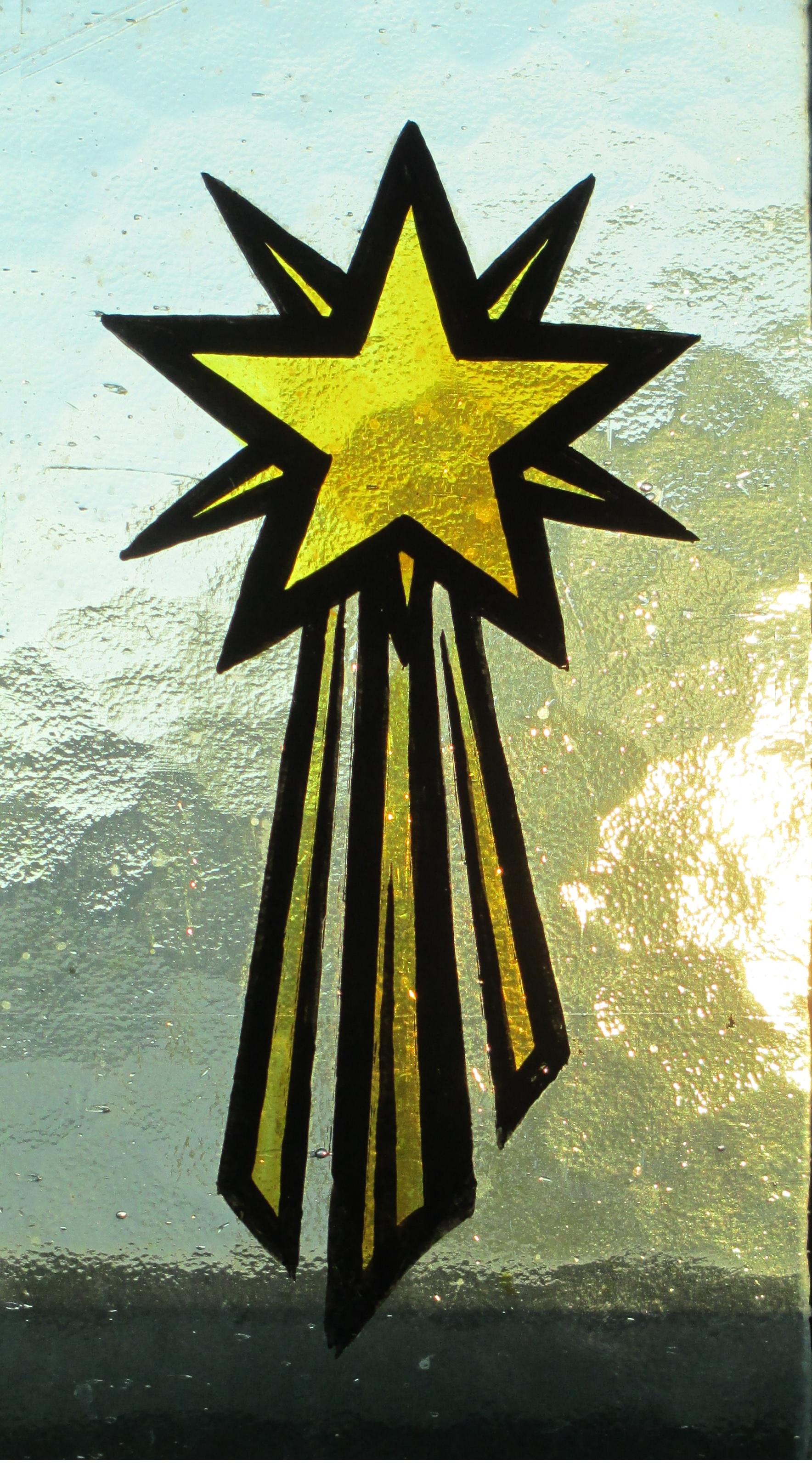
Stained Glass Symbols — The Star

February 1, 2014

Star - Sacred Heart Catholic Church -  Wauzeka WIA Symbol of Christ’s Coming

In ancient Old Testament times, a prophet declared, “I see him, though not now; I observe him, though not near: A star shall advance from Jacob, and a scepter shall rise from Israel…” (Numbers 24:17) Later, a psalmist mused to the Lord, “When I see your heavens, the work of your fingers, the moon and stars that you set in place—What is man that you are mindful of him, and a son of man that you care for him?” (Psalm 8:4-5) Then in the fullness of time, the God who cares for man and who set the stars according to His plan, gave a Savior to the world and announced Him by a star: “Behold, magi from the east arrived in Jerusalem, saying, ‘Where is the newborn king of the Jews? We saw his star at its rising and have come to do him homage.'” (Matthew 2:2)

Great Gifts — Epiphany of the Lord

March 3, 2013

Today we celebrate the Epiphany. Today the magi from the East arrive in Bethlehem. They do not come on Christmas day, but much later, months or perhaps a year later. The Holy Family has moved from the stable into a house. The magi enter the house and find the child with his mother, Mary. (This is still true today, for we will find Jesus wherever Mary is.) The magi bow down before the little one and give him gifts of gold, frankincense, and myrrh. These are strange gifts for an ordinary child, but they are poetically appropriate for Jesus.

Still today, gold symbolizes wealth and power. They give Jesus gold because he is a king, the newborn king of the Jews. Since ancient times, incense has been used in temples and chapels for the worship of God. Jesus should be offered incense because he is not only our great high priest but he is also God. Myrrh is a fragrant spice which people formerly used to prepare dead bodies for burial. Jesus shall be the divine and human sacrifice who will die for us.

The gospel tells us that the magi went back home by another way. Our ways should change after encountering the Christ child. He is our king. He comes not to dominate, but to liberate, yet he demands our obedience. We need to read the gospels and adopt the habits he teaches. Imagine how the world would be different if everyone did this. At first, we can be converted ourselves, but this by itself is enough to make our lives, our families, and our community noticeably better.

The baby Jesus comes to us in the least intimidating way conceivable. Do not fear the infant Jesus, like King Herod did. Do not fear his kingship over you. Let Jesus be the Lord of your life.

Hoy celebramos la Epifanía. Hoy los magos de Oriente llegan a Belén. Los magos no vienen en el día de Navidad, pero más tarde, tal vez meses o un año más tarde. La Sagrada Familia se ha movido desde el establo en una casa. Los magos entran en la casa y encontrar al niño con su madre, María. (Esto es aún cierto hoy, vamos a encontrar a Jesús donde María está.) Los magos se postran ante del pequeño y le dan regalos de oro, incienso y mirra. Estos son regalos extraños para un niño ordinario, sino les son apropiados para Jesús.

Aún hoy, el oro simboliza la riqueza y el poder. Los magos dan a Jesús oro, porque él es un rey, el rey recién nacido.  Desde tiempos antiguos, el incienso se ha utilizado en los templos y capillas para la adoración de Dios. Jesús se debe ofrecer incienso, porque no es sólo nuestro gran sumo sacerdote, sino que también es Dios. Mirra es una especia aromática que la gente antiguamente utiliza para preparar los cadáveres para el entierro. Jesús será el sacrificio divino y humano que va a morir por nosotros.

El Evangelio nos dice que los magos regresaron a a su tierra por otro camino. Nuestros caminos se debe cambiar después de encontrarse con el niño Jesús. Él es nuestro rey. Él no viene a dominar sino para liberar, sin embargo, demanda nuestra obediencia. Debemos leer los evangelios y adoptar los hábitos de que enseña. Imagínese cómo el mundo sería diferente si todo el mundo lo hizo. Al principio, puede ser convertido a nosotros mismos, pero esto, por sí misma, es suficiente para hacer que nuestras vidas, nuestras familias y nuestra comunidad notablemente mejores.

El niño Jesús viene a nosotros en la forma menos intimidante concebible.  No temas al niño Jesús, como el rey Herodes hizo.  No tengas miedo de su reinado sobre ti.  Permita que Jesús sea el Señor de tu vida.

Traveling to God — Epiphany of the Lord

January 3, 2010

Today the nations come to Christ, to bring Him their gifts and to worship Him. We see it in the gospel, where great, wise ones called Magi travel afar to Bethlehem of Judea. And we see it in our world today, wherever those honored to be called Christians gather in Christ’s Church throughout the world. Every Sunday is a little Epiphany where, like the Magi, all the nations come to worship the One whom all the world ought not to be able to contain.

Our responsorial psalm prayed, “Lord, every nation on earth will adore you.” In another psalm, Psalm 87, the Lord foretells that every nation on earth would adore Him. The Lord says,

“Babylon and Egypt I will count among those who know me; Philistia, Tyre, Ethiopia, these will be her children and Zion shall be called ‘Mother’ for all shall be her children.”

Today there are Christians in all of these places: in Egypt and Iraq, in the Holy Land and Africa.  In fact Christians span entire continents about which the ancients never knew. There are Christians all nations who have entered the Lord’s house and found Jesus with Mary, who is the symbol of Mother Church. She is rightly called mother, for all nations are her children.

In many lands Christians suffer harsh persecution, as in China, where a red dragon like that of Revelation still seeks to destroy the Christ Child and the God-bearing mother. How fortunate we are to be able to safely gather here, to be free to practice our faith without fear, to come to Christ’s house easily and often, not in hiding or in secret, and without having to travel for months across desert expanses like the Magi.

Yet, in our ease, we can take our religion for granted. In our routine, we can be blind to how we are blessed. And in our closeness to Christ, we can overlook Him. So, from time to time, it is important for our faith to be renewed. One way we can do this is to imitate what the Magi did. At least once every year we should make a pilgrimage to Christ and stay to retreat some days with Him.

After spending precious time with Jesus in the heart of their pilgrimage the gospel says the Magi “departed for their country by another way.” Their physical journey changed (for they had been warned in a dream not to return to Herod,) but their spiritual way changed as well. The Magi were believers even before they came, but after adoring Jesus and giving their gifts, they went away spiritually richer. We too would be spiritually richer if we were to give Christ some gift of our time and treasure to pilgrimage and retreat with Him.

As busy as priests are, the Church requires all of them to go on several days of retreat each year, for she knows how important this is for spiritual renewal and intimacy with Christ. Imagine what difference a pilgrimage to a shrine and a quiet, prayerful weekend on retreat center would have for you.

You must love and care for your children, so show them by your own example the importance of seeking after Christ. Give your spouse the opportunity to spend two days alone with the Lord, or take the whole family along for a trip to a holy shrine. For instance, there is a new, magnificent shire to Our Lady of Guadalupe which everyone should make it a priority to see. If you are looking for destinations or ideas, I’m more than happy to help.

In this year of our Lord, 2010, 51 weekends remain. Let us act now to prepare even just one of those many weekends for a gift-bearing journey. Pilgrimages and retreats are a gift to Christ and a gift to ourselves. Let us follow the Magi and come, let us adore Him this year, with days of pilgrimage and retreat.